

VOTING POWER100.00%
DOWNVOTE POWER100.00%
RESOURCE CREDITS100.00%
REPUTATION PROGRESS89.03%
Net Worth
0.230USD
STEEM
0.000STEEM
SBD
0.466SBD
Effective Power
5.008SP
├── Own SP
0.807SP
└── Incoming DelegationsDeleg
+4.201SP
Detailed Balance
| STEEM | ||
| balance | 0.000STEEM | STEEM |
| market_balance | 0.000STEEM | STEEM |
| savings_balance | 0.000STEEM | STEEM |
| reward_steem_balance | 0.000STEEM | STEEM |
| STEEM POWER | ||
| Own SP | 0.807SP | SP |
| Delegated Out | 0.000SP | SP |
| Delegation In | 4.201SP | SP |
| Effective Power | 5.008SP | SP |
| Reward SP (pending) | 0.000SP | SP |
| SBD | ||
| sbd_balance | 0.466SBD | SBD |
| sbd_conversions | 0.000SBD | SBD |
| sbd_market_balance | 0.000SBD | SBD |
| savings_sbd_balance | 0.000SBD | SBD |
| reward_sbd_balance | 0.000SBD | SBD |
{
  "balance": "0.000 STEEM",
  "savings_balance": "0.000 STEEM",
  "reward_steem_balance": "0.000 STEEM",
  "vesting_shares": "1312.826388 VESTS",
  "delegated_vesting_shares": "0.000000 VESTS",
  "received_vesting_shares": "6830.833418 VESTS",
  "sbd_balance": "0.466 SBD",
  "savings_sbd_balance": "0.000 SBD",
  "reward_sbd_balance": "0.000 SBD",
  "conversions": []
}
Account Info
| name | sarichards |
| id | 733703 |
| rank | 580,140 |
| reputation | 3494388294 |
| created | 2018-02-07T17:11:42 |
| recovery_account | steem |
| proxy | None |
| post_count | 8 |
| comment_count | 0 |
| lifetime_vote_count | 0 |
| witnesses_voted_for | 0 |
| last_post | 2018-02-20T09:27:39 |
| last_root_post | 2018-02-20T09:27:39 |
| last_vote_time | 2018-02-20T09:27:39 |
| proxied_vsf_votes | 0, 0, 0, 0 |
| can_vote | 1 |
| voting_power | 0 |
| delayed_votes | 0 |
| balance | 0.000 STEEM |
| savings_balance | 0.000 STEEM |
| sbd_balance | 0.466 SBD |
| savings_sbd_balance | 0.000 SBD |
| vesting_shares | 1312.826388 VESTS |
| delegated_vesting_shares | 0.000000 VESTS |
| received_vesting_shares | 6830.833418 VESTS |
| reward_vesting_balance | 0.000000 VESTS |
| vesting_balance | 0.000 STEEM |
| vesting_withdraw_rate | 0.000000 VESTS |
| next_vesting_withdrawal | 1969-12-31T23:59:59 |
| withdrawn | 0 |
| to_withdraw | 0 |
| withdraw_routes | 0 |
| savings_withdraw_requests | 0 |
| last_account_recovery | 1970-01-01T00:00:00 |
| reset_account | null |
| last_owner_update | 1970-01-01T00:00:00 |
| last_account_update | 2018-02-07T17:15:57 |
| mined | No |
| sbd_seconds | 0 |
| sbd_last_interest_payment | 1970-01-01T00:00:00 |
| savings_sbd_last_interest_payment | 1970-01-01T00:00:00 |
{
  "id": 733703,
  "name": "sarichards",
  "owner": {
    "weight_threshold": 1,
    "account_auths": [],
    "key_auths": [
      [
        "STM8bMm8EjsQw7GnmqDU5eerV6bcKj76KRaWYrDHUFRfk2NNfJLmQ",
        1
      ]
    ]
  },
  "active": {
    "weight_threshold": 1,
    "account_auths": [],
    "key_auths": [
      [
        "STM5tj5ogPghGo5EiDvV6wksCEgkqTQMeKGk7Vxw9TERqzUYCNtjD",
        1
      ]
    ]
  },
  "posting": {
    "weight_threshold": 1,
    "account_auths": [],
    "key_auths": [
      [
        "STM5vstssmQRRbYNP3sLxQwAKxxBqGhzbkiN2Z4RC9a2x63mxc68j",
        1
      ]
    ]
  },
  "memo_key": "STM5wmSVgpfg2Jvzjni5gxf18LP2HXJXUjRiyU9xHoqGdKvu2vgtm",
  "json_metadata": "{\"profile\":{\"name\":\"S.A Richards\",\"website\":\"http://beta.fireoverlight.com\"}}",
  "posting_json_metadata": "{\"profile\":{\"name\":\"S.A Richards\",\"website\":\"http://beta.fireoverlight.com\"}}",
  "proxy": "",
  "last_owner_update": "1970-01-01T00:00:00",
  "last_account_update": "2018-02-07T17:15:57",
  "created": "2018-02-07T17:11:42",
  "mined": false,
  "recovery_account": "steem",
  "last_account_recovery": "1970-01-01T00:00:00",
  "reset_account": "null",
  "comment_count": 0,
  "lifetime_vote_count": 0,
  "post_count": 8,
  "can_vote": true,
  "voting_manabar": {
    "current_mana": "8143659806",
    "last_update_time": 1779084651
  },
  "downvote_manabar": {
    "current_mana": 2035914951,
    "last_update_time": 1779084651
  },
  "voting_power": 0,
  "balance": "0.000 STEEM",
  "savings_balance": "0.000 STEEM",
  "sbd_balance": "0.466 SBD",
  "sbd_seconds": "0",
  "sbd_seconds_last_update": "2018-02-26T06:03:21",
  "sbd_last_interest_payment": "1970-01-01T00:00:00",
  "savings_sbd_balance": "0.000 SBD",
  "savings_sbd_seconds": "0",
  "savings_sbd_seconds_last_update": "1970-01-01T00:00:00",
  "savings_sbd_last_interest_payment": "1970-01-01T00:00:00",
  "savings_withdraw_requests": 0,
  "reward_sbd_balance": "0.000 SBD",
  "reward_steem_balance": "0.000 STEEM",
  "reward_vesting_balance": "0.000000 VESTS",
  "reward_vesting_steem": "0.000 STEEM",
  "vesting_shares": "1312.826388 VESTS",
  "delegated_vesting_shares": "0.000000 VESTS",
  "received_vesting_shares": "6830.833418 VESTS",
  "vesting_withdraw_rate": "0.000000 VESTS",
  "next_vesting_withdrawal": "1969-12-31T23:59:59",
  "withdrawn": 0,
  "to_withdraw": 0,
  "withdraw_routes": 0,
  "curation_rewards": 0,
  "posting_rewards": 283,
  "proxied_vsf_votes": [
    0,
    0,
    0,
    0
  ],
  "witnesses_voted_for": 0,
  "last_post": "2018-02-20T09:27:39",
  "last_root_post": "2018-02-20T09:27:39",
  "last_vote_time": "2018-02-20T09:27:39",
  "post_bandwidth": 0,
  "pending_claimed_accounts": 0,
  "vesting_balance": "0.000 STEEM",
  "reputation": 3494388294,
  "transfer_history": [],
  "market_history": [],
  "post_history": [],
  "vote_history": [],
  "other_history": [],
  "witness_votes": [],
  "tags_usage": [],
  "guest_bloggers": [],
  "rank": 580140
}
Withdraw Routes
| Incoming | Outgoing |
|---|---|
Empty | Empty |
{
  "incoming": [],
  "outgoing": []
}From Date
To Date
steemdelegated 4.201 SP to @sarichards2026/05/18 06:10:51
steemdelegated 4.201 SP to @sarichards
2026/05/18 06:10:51
| delegator | steem |
| delegatee | sarichards |
| vesting shares | 6830.833418 VESTS |
| Transaction Info | Block #106150530/Trx ae9364c7d7fe3e726399c60dcf9c0cc33520530d |
View Raw JSON Data
{
  "trx_id": "ae9364c7d7fe3e726399c60dcf9c0cc33520530d",
  "block": 106150530,
  "trx_in_block": 0,
  "op_in_trx": 0,
  "virtual_op": 0,
  "timestamp": "2026-05-18T06:10:51",
  "op": [
    "delegate_vesting_shares",
    {
      "delegator": "steem",
      "delegatee": "sarichards",
      "vesting_shares": "6830.833418 VESTS"
    }
  ]
}steemdelegated 2.533 SP to @sarichards2026/05/13 03:57:12
steemdelegated 2.533 SP to @sarichards
2026/05/13 03:57:12
| delegator | steem |
| delegatee | sarichards |
| vesting shares | 4118.623013 VESTS |
| Transaction Info | Block #106004579/Trx b081e744df2de5dfe15024c6e6b1dc1b395bcf84 |
View Raw JSON Data
{
  "trx_id": "b081e744df2de5dfe15024c6e6b1dc1b395bcf84",
  "block": 106004579,
  "trx_in_block": 1,
  "op_in_trx": 0,
  "virtual_op": 0,
  "timestamp": "2026-05-13T03:57:12",
  "op": [
    "delegate_vesting_shares",
    {
      "delegator": "steem",
      "delegatee": "sarichards",
      "vesting_shares": "4118.623013 VESTS"
    }
  ]
}steemdelegated 4.208 SP to @sarichards2026/04/26 05:22:42
steemdelegated 4.208 SP to @sarichards
2026/04/26 05:22:42
| delegator | steem |
| delegatee | sarichards |
| vesting shares | 6843.349174 VESTS |
| Transaction Info | Block #105518016/Trx 20400367f26365d687d649c453d3af7762c58f5b |
View Raw JSON Data
{
  "trx_id": "20400367f26365d687d649c453d3af7762c58f5b",
  "block": 105518016,
  "trx_in_block": 0,
  "op_in_trx": 0,
  "virtual_op": 0,
  "timestamp": "2026-04-26T05:22:42",
  "op": [
    "delegate_vesting_shares",
    {
      "delegator": "steem",
      "delegatee": "sarichards",
      "vesting_shares": "6843.349174 VESTS"
    }
  ]
}steemdelegated 2.558 SP to @sarichards2026/01/23 23:46:27
steemdelegated 2.558 SP to @sarichards
2026/01/23 23:46:27
| delegator | steem |
| delegatee | sarichards |
| vesting shares | 4160.169832 VESTS |
| Transaction Info | Block #102870945/Trx 40b52459a63f626876b011affdfe57dc4f111b46 |
View Raw JSON Data
{
  "trx_id": "40b52459a63f626876b011affdfe57dc4f111b46",
  "block": 102870945,
  "trx_in_block": 5,
  "op_in_trx": 0,
  "virtual_op": 0,
  "timestamp": "2026-01-23T23:46:27",
  "op": [
    "delegate_vesting_shares",
    {
      "delegator": "steem",
      "delegatee": "sarichards",
      "vesting_shares": "4160.169832 VESTS"
    }
  ]
}steemdelegated 2.659 SP to @sarichards2024/12/17 18:56:09
steemdelegated 2.659 SP to @sarichards
2024/12/17 18:56:09
| delegator | steem |
| delegatee | sarichards |
| vesting shares | 4324.389029 VESTS |
| Transaction Info | Block #91317152/Trx 9870c7feeedf5fd9eebf2a9fcb230efe7dc9201c |
View Raw JSON Data
{
  "trx_id": "9870c7feeedf5fd9eebf2a9fcb230efe7dc9201c",
  "block": 91317152,
  "trx_in_block": 2,
  "op_in_trx": 0,
  "virtual_op": 0,
  "timestamp": "2024-12-17T18:56:09",
  "op": [
    "delegate_vesting_shares",
    {
      "delegator": "steem",
      "delegatee": "sarichards",
      "vesting_shares": "4324.389029 VESTS"
    }
  ]
}steemdelegated 2.763 SP to @sarichards2023/11/14 10:37:45
steemdelegated 2.763 SP to @sarichards
2023/11/14 10:37:45
| delegator | steem |
| delegatee | sarichards |
| vesting shares | 4493.522561 VESTS |
| Transaction Info | Block #79871313/Trx ba3cda1823e595411737e952c902baccd599d1c2 |
View Raw JSON Data
{
  "trx_id": "ba3cda1823e595411737e952c902baccd599d1c2",
  "block": 79871313,
  "trx_in_block": 1,
  "op_in_trx": 0,
  "virtual_op": 0,
  "timestamp": "2023-11-14T10:37:45",
  "op": [
    "delegate_vesting_shares",
    {
      "delegator": "steem",
      "delegatee": "sarichards",
      "vesting_shares": "4493.522561 VESTS"
    }
  ]
}steemdelegated 4.569 SP to @sarichards2023/09/22 10:16:36
steemdelegated 4.569 SP to @sarichards
2023/09/22 10:16:36
| delegator | steem |
| delegatee | sarichards |
| vesting shares | 7430.431347 VESTS |
| Transaction Info | Block #78362727/Trx 8c469ad5b4d158fb7722347b59b8c3168a41dd13 |
View Raw JSON Data
{
  "trx_id": "8c469ad5b4d158fb7722347b59b8c3168a41dd13",
  "block": 78362727,
  "trx_in_block": 1,
  "op_in_trx": 0,
  "virtual_op": 0,
  "timestamp": "2023-09-22T10:16:36",
  "op": [
    "delegate_vesting_shares",
    {
      "delegator": "steem",
      "delegatee": "sarichards",
      "vesting_shares": "7430.431347 VESTS"
    }
  ]
}steemdelegated 4.706 SP to @sarichards2022/11/03 17:44:45
steemdelegated 4.706 SP to @sarichards
2022/11/03 17:44:45
| delegator | steem |
| delegatee | sarichards |
| vesting shares | 7652.482785 VESTS |
| Transaction Info | Block #69120478/Trx 620980fc31c1c400519b1430755802759c6b69fd |
View Raw JSON Data
{
  "trx_id": "620980fc31c1c400519b1430755802759c6b69fd",
  "block": 69120478,
  "trx_in_block": 7,
  "op_in_trx": 0,
  "virtual_op": 0,
  "timestamp": "2022-11-03T17:44:45",
  "op": [
    "delegate_vesting_shares",
    {
      "delegator": "steem",
      "delegatee": "sarichards",
      "vesting_shares": "7652.482785 VESTS"
    }
  ]
}steemdelegated 4.841 SP to @sarichards2022/01/17 22:56:57
steemdelegated 4.841 SP to @sarichards
2022/01/17 22:56:57
| delegator | steem |
| delegatee | sarichards |
| vesting shares | 7872.590386 VESTS |
| Transaction Info | Block #60823732/Trx 50b417dffc09afe48ec0d7bb1991a5510f18e1fa |
View Raw JSON Data
{
  "trx_id": "50b417dffc09afe48ec0d7bb1991a5510f18e1fa",
  "block": 60823732,
  "trx_in_block": 10,
  "op_in_trx": 0,
  "virtual_op": 0,
  "timestamp": "2022-01-17T22:56:57",
  "op": [
    "delegate_vesting_shares",
    {
      "delegator": "steem",
      "delegatee": "sarichards",
      "vesting_shares": "7872.590386 VESTS"
    }
  ]
}steemdelegated 4.954 SP to @sarichards2021/06/14 06:08:15
steemdelegated 4.954 SP to @sarichards
2021/06/14 06:08:15
| delegator | steem |
| delegatee | sarichards |
| vesting shares | 8056.784674 VESTS |
| Transaction Info | Block #54614065/Trx e3537728a6aef73b54963adff5ff7cfce0d7639d |
View Raw JSON Data
{
  "trx_id": "e3537728a6aef73b54963adff5ff7cfce0d7639d",
  "block": 54614065,
  "trx_in_block": 14,
  "op_in_trx": 0,
  "virtual_op": 0,
  "timestamp": "2021-06-14T06:08:15",
  "op": [
    "delegate_vesting_shares",
    {
      "delegator": "steem",
      "delegatee": "sarichards",
      "vesting_shares": "8056.784674 VESTS"
    }
  ]
}steemdelegated 5.070 SP to @sarichards2020/12/11 16:20:39
steemdelegated 5.070 SP to @sarichards
2020/12/11 16:20:39
| delegator | steem |
| delegatee | sarichards |
| vesting shares | 8244.206648 VESTS |
| Transaction Info | Block #49361333/Trx e5bd214040617f0422f895f5e85605e93ddc679d |
View Raw JSON Data
{
  "trx_id": "e5bd214040617f0422f895f5e85605e93ddc679d",
  "block": 49361333,
  "trx_in_block": 1,
  "op_in_trx": 0,
  "virtual_op": 0,
  "timestamp": "2020-12-11T16:20:39",
  "op": [
    "delegate_vesting_shares",
    {
      "delegator": "steem",
      "delegatee": "sarichards",
      "vesting_shares": "8244.206648 VESTS"
    }
  ]
}steemdelegated 1.176 SP to @sarichards2020/12/06 09:56:21
steemdelegated 1.176 SP to @sarichards
2020/12/06 09:56:21
| delegator | steem |
| delegatee | sarichards |
| vesting shares | 1912.543513 VESTS |
| Transaction Info | Block #49212857/Trx 84f601cbf315aabd2770919767ab62e7f5d272de |
View Raw JSON Data
{
  "trx_id": "84f601cbf315aabd2770919767ab62e7f5d272de",
  "block": 49212857,
  "trx_in_block": 0,
  "op_in_trx": 0,
  "virtual_op": 0,
  "timestamp": "2020-12-06T09:56:21",
  "op": [
    "delegate_vesting_shares",
    {
      "delegator": "steem",
      "delegatee": "sarichards",
      "vesting_shares": "1912.543513 VESTS"
    }
  ]
}steemdelegated 5.074 SP to @sarichards2020/12/05 19:58:24
steemdelegated 5.074 SP to @sarichards
2020/12/05 19:58:24
| delegator | steem |
| delegatee | sarichards |
| vesting shares | 8250.414502 VESTS |
| Transaction Info | Block #49196415/Trx 4dd1bfb9a762843df3d8a1afdff0db5c1f3a437b |
View Raw JSON Data
{
  "trx_id": "4dd1bfb9a762843df3d8a1afdff0db5c1f3a437b",
  "block": 49196415,
  "trx_in_block": 5,
  "op_in_trx": 0,
  "virtual_op": 0,
  "timestamp": "2020-12-05T19:58:24",
  "op": [
    "delegate_vesting_shares",
    {
      "delegator": "steem",
      "delegatee": "sarichards",
      "vesting_shares": "8250.414502 VESTS"
    }
  ]
}steemdelegated 1.181 SP to @sarichards2020/11/03 02:28:15
steemdelegated 1.181 SP to @sarichards
2020/11/03 02:28:15
| delegator | steem |
| delegatee | sarichards |
| vesting shares | 1920.017158 VESTS |
| Transaction Info | Block #48270556/Trx 4c27b09f9522f56a23ca0363138122344c5f3222 |
View Raw JSON Data
{
  "trx_id": "4c27b09f9522f56a23ca0363138122344c5f3222",
  "block": 48270556,
  "trx_in_block": 17,
  "op_in_trx": 0,
  "virtual_op": 0,
  "timestamp": "2020-11-03T02:28:15",
  "op": [
    "delegate_vesting_shares",
    {
      "delegator": "steem",
      "delegatee": "sarichards",
      "vesting_shares": "1920.017158 VESTS"
    }
  ]
}steemdelegated 5.198 SP to @sarichards2020/05/09 10:59:15
steemdelegated 5.198 SP to @sarichards
2020/05/09 10:59:15
| delegator | steem |
| delegatee | sarichards |
| vesting shares | 8453.219861 VESTS |
| Transaction Info | Block #43223180/Trx e2173e0b52f193e0065883392d8f0758b362465b |
View Raw JSON Data
{
  "trx_id": "e2173e0b52f193e0065883392d8f0758b362465b",
  "block": 43223180,
  "trx_in_block": 2,
  "op_in_trx": 0,
  "virtual_op": 0,
  "timestamp": "2020-05-09T10:59:15",
  "op": [
    "delegate_vesting_shares",
    {
      "delegator": "steem",
      "delegatee": "sarichards",
      "vesting_shares": "8453.219861 VESTS"
    }
  ]
}steemdelegated 1.201 SP to @sarichards2020/05/08 15:22:42
steemdelegated 1.201 SP to @sarichards
2020/05/08 15:22:42
| delegator | steem |
| delegatee | sarichards |
| vesting shares | 1953.311140 VESTS |
| Transaction Info | Block #43200208/Trx f1726e33b609198357f9a3c37d9b6832746f652f |
View Raw JSON Data
{
  "trx_id": "f1726e33b609198357f9a3c37d9b6832746f652f",
  "block": 43200208,
  "trx_in_block": 1,
  "op_in_trx": 0,
  "virtual_op": 0,
  "timestamp": "2020-05-08T15:22:42",
  "op": [
    "delegate_vesting_shares",
    {
      "delegator": "steem",
      "delegatee": "sarichards",
      "vesting_shares": "1953.311140 VESTS"
    }
  ]
}steemdelegated 5.203 SP to @sarichards2020/04/26 11:15:00
steemdelegated 5.203 SP to @sarichards
2020/04/26 11:15:00
| delegator | steem |
| delegatee | sarichards |
| vesting shares | 8460.416776 VESTS |
| Transaction Info | Block #42858298/Trx 701ede682b3263e18d012fba23e47832b6dacf8d |
View Raw JSON Data
{
  "trx_id": "701ede682b3263e18d012fba23e47832b6dacf8d",
  "block": 42858298,
  "trx_in_block": 10,
  "op_in_trx": 0,
  "virtual_op": 0,
  "timestamp": "2020-04-26T11:15:00",
  "op": [
    "delegate_vesting_shares",
    {
      "delegator": "steem",
      "delegatee": "sarichards",
      "vesting_shares": "8460.416776 VESTS"
    }
  ]
}2020/02/07 18:41:09
2020/02/07 18:41:09
| parent author | sarichards |
| parent permlink | how-twitter-the-short-form-writing-tool-became-my-long-form-editing-tool |
| author | steemitboard |
| permlink | steemitboard-notify-sarichards-20200207t184108000z |
| title | |
| body | Congratulations @sarichards! You received a personal award! <table><tr><td>https://steemitimages.com/70x70/http://steemitboard.com/@sarichards/birthday2.png</td><td>Happy Birthday! - You are on the Steem blockchain for 2 years!</td></tr></table> <sub>_You can view [your badges on your Steem Board](https://steemitboard.com/@sarichards) and compare to others on the [Steem Ranking](https://steemitboard.com/ranking/index.php?name=sarichards)_</sub> **Do not miss the last post from @steemitboard:** <table><tr><td><a href="https://steemit.com/steemitboard/@steemitboard/steemitboard-ranking-update-a-better-rich-list-comparator"><img src="https://steemitimages.com/64x128/https://cdn.steemitimages.com/DQmfRVpHQhLDhnjDtqck8GPv9NPvNKPfMsDaAFDE1D9Er2Z/header_ranking.png"></a></td><td><a href="https://steemit.com/steemitboard/@steemitboard/steemitboard-ranking-update-a-better-rich-list-comparator">SteemitBoard Ranking update - A better rich list comparator</a></td></tr></table> ###### [Vote for @Steemitboard as a witness](https://v2.steemconnect.com/sign/account-witness-vote?witness=steemitboard&approve=1) to get one more award and increased upvotes! |
| json metadata | {"image":["https://steemitboard.com/img/notify.png"]} |
| Transaction Info | Block #40618187/Trx bc864ce4bf3274ef646dbe39ac7332c979737b78 |
View Raw JSON Data
{
  "trx_id": "bc864ce4bf3274ef646dbe39ac7332c979737b78",
  "block": 40618187,
  "trx_in_block": 1,
  "op_in_trx": 0,
  "virtual_op": 0,
  "timestamp": "2020-02-07T18:41:09",
  "op": [
    "comment",
    {
      "parent_author": "sarichards",
      "parent_permlink": "how-twitter-the-short-form-writing-tool-became-my-long-form-editing-tool",
      "author": "steemitboard",
      "permlink": "steemitboard-notify-sarichards-20200207t184108000z",
      "title": "",
      "body": "Congratulations @sarichards! You received a personal award!\n\n<table><tr><td>https://steemitimages.com/70x70/http://steemitboard.com/@sarichards/birthday2.png</td><td>Happy Birthday! - You are on the Steem blockchain for 2 years!</td></tr></table>\n\n<sub>_You can view [your badges on your Steem Board](https://steemitboard.com/@sarichards) and compare to others on the [Steem Ranking](https://steemitboard.com/ranking/index.php?name=sarichards)_</sub>\n\n\n**Do not miss the last post from @steemitboard:**\n<table><tr><td><a href=\"https://steemit.com/steemitboard/@steemitboard/steemitboard-ranking-update-a-better-rich-list-comparator\"><img src=\"https://steemitimages.com/64x128/https://cdn.steemitimages.com/DQmfRVpHQhLDhnjDtqck8GPv9NPvNKPfMsDaAFDE1D9Er2Z/header_ranking.png\"></a></td><td><a href=\"https://steemit.com/steemitboard/@steemitboard/steemitboard-ranking-update-a-better-rich-list-comparator\">SteemitBoard Ranking update - A better rich list comparator</a></td></tr></table>\n\n###### [Vote for @Steemitboard as a witness](https://v2.steemconnect.com/sign/account-witness-vote?witness=steemitboard&approve=1) to get one more award and increased upvotes!",
      "json_metadata": "{\"image\":[\"https://steemitboard.com/img/notify.png\"]}"
    }
  ]
}steemdelegated 5.323 SP to @sarichards2019/05/22 14:45:57
steemdelegated 5.323 SP to @sarichards
2019/05/22 14:45:57
| delegator | steem |
| delegatee | sarichards |
| vesting shares | 8655.932984 VESTS |
| Transaction Info | Block #33133139/Trx 3218d3a93abb8dd025a14806e80fd4754d75a169 |
View Raw JSON Data
{
  "trx_id": "3218d3a93abb8dd025a14806e80fd4754d75a169",
  "block": 33133139,
  "trx_in_block": 19,
  "op_in_trx": 0,
  "virtual_op": 0,
  "timestamp": "2019-05-22T14:45:57",
  "op": [
    "delegate_vesting_shares",
    {
      "delegator": "steem",
      "delegatee": "sarichards",
      "vesting_shares": "8655.932984 VESTS"
    }
  ]
}2019/02/07 17:58:45
2019/02/07 17:58:45
| parent author | sarichards |
| parent permlink | how-twitter-the-short-form-writing-tool-became-my-long-form-editing-tool |
| author | steemitboard |
| permlink | steemitboard-notify-sarichards-20190207t175845000z |
| title | |
| body | Congratulations @sarichards! You received a personal award! <table><tr><td>https://steemitimages.com/70x70/http://steemitboard.com/@sarichards/birthday1.png</td><td>Happy Birthday! - You are on the Steem blockchain for 1 year!</td></tr></table> <sub>_[Click here to view your Board](https://steemitboard.com/@sarichards)_</sub> > Support [SteemitBoard's project](https://steemit.com/@steemitboard)! **[Vote for its witness](https://v2.steemconnect.com/sign/account-witness-vote?witness=steemitboard&approve=1)** and **get one more award**! |
| json metadata | {"image":["https://steemitboard.com/img/notify.png"]} |
| Transaction Info | Block #30145288/Trx 6143ba212bc13ee72de805b12305a50529b46204 |
View Raw JSON Data
{
  "trx_id": "6143ba212bc13ee72de805b12305a50529b46204",
  "block": 30145288,
  "trx_in_block": 12,
  "op_in_trx": 0,
  "virtual_op": 0,
  "timestamp": "2019-02-07T17:58:45",
  "op": [
    "comment",
    {
      "parent_author": "sarichards",
      "parent_permlink": "how-twitter-the-short-form-writing-tool-became-my-long-form-editing-tool",
      "author": "steemitboard",
      "permlink": "steemitboard-notify-sarichards-20190207t175845000z",
      "title": "",
      "body": "Congratulations @sarichards! You received a personal award!\n\n<table><tr><td>https://steemitimages.com/70x70/http://steemitboard.com/@sarichards/birthday1.png</td><td>Happy Birthday! - You are on the Steem blockchain for 1 year!</td></tr></table>\n\n<sub>_[Click here to view your Board](https://steemitboard.com/@sarichards)_</sub>\n\n\n> Support [SteemitBoard's project](https://steemit.com/@steemitboard)! **[Vote for its witness](https://v2.steemconnect.com/sign/account-witness-vote?witness=steemitboard&approve=1)** and **get one more award**!",
      "json_metadata": "{\"image\":[\"https://steemitboard.com/img/notify.png\"]}"
    }
  ]
}steemdelegated 5.446 SP to @sarichards2018/05/28 06:37:27
steemdelegated 5.446 SP to @sarichards
2018/05/28 06:37:27
| delegator | steem |
| delegatee | sarichards |
| vesting shares | 8855.323961 VESTS |
| Transaction Info | Block #22818622/Trx df3e21e8810a6d0e0eda63f20f07f36581872320 |
View Raw JSON Data
{
  "trx_id": "df3e21e8810a6d0e0eda63f20f07f36581872320",
  "block": 22818622,
  "trx_in_block": 12,
  "op_in_trx": 0,
  "virtual_op": 0,
  "timestamp": "2018-05-28T06:37:27",
  "op": [
    "delegate_vesting_shares",
    {
      "delegator": "steem",
      "delegatee": "sarichards",
      "vesting_shares": "8855.323961 VESTS"
    }
  ]
}steemdelegated 18.041 SP to @sarichards2018/02/26 06:10:54
steemdelegated 18.041 SP to @sarichards
2018/02/26 06:10:54
| delegator | steem |
| delegatee | sarichards |
| vesting shares | 29337.235863 VESTS |
| Transaction Info | Block #20200220/Trx 00f9cfe16d0ed8b9cda7e139962c3641417d0dad |
View Raw JSON Data
{
  "trx_id": "00f9cfe16d0ed8b9cda7e139962c3641417d0dad",
  "block": 20200220,
  "trx_in_block": 15,
  "op_in_trx": 0,
  "virtual_op": 0,
  "timestamp": "2018-02-26T06:10:54",
  "op": [
    "delegate_vesting_shares",
    {
      "delegator": "steem",
      "delegatee": "sarichards",
      "vesting_shares": "29337.235863 VESTS"
    }
  ]
}sarichardsclaimed reward balance: 0.466 SBD, 0.178 SP2018/02/26 06:03:21
sarichardsclaimed reward balance: 0.466 SBD, 0.178 SP
2018/02/26 06:03:21
| account | sarichards |
| reward steem | 0.000 STEEM |
| reward sbd | 0.466 SBD |
| reward vests | 290.163644 VESTS |
| Transaction Info | Block #20200069/Trx 8c4c1d539af43ec5b53448c0cf671c3120362e58 |
View Raw JSON Data
{
  "trx_id": "8c4c1d539af43ec5b53448c0cf671c3120362e58",
  "block": 20200069,
  "trx_in_block": 6,
  "op_in_trx": 0,
  "virtual_op": 0,
  "timestamp": "2018-02-26T06:03:21",
  "op": [
    "claim_reward_balance",
    {
      "account": "sarichards",
      "reward_steem": "0.000 STEEM",
      "reward_sbd": "0.466 SBD",
      "reward_vests": "290.163644 VESTS"
    }
  ]
}sarichardsreceived 0.466 SBD, 0.178 SP author reward for @sarichards / how-studying-terrorists-and-criminals-turned-into-writing-sci-fi2018/02/25 17:04:18
sarichardsreceived 0.466 SBD, 0.178 SP author reward for @sarichards / how-studying-terrorists-and-criminals-turned-into-writing-sci-fi
2018/02/25 17:04:18
| author | sarichards |
| permlink | how-studying-terrorists-and-criminals-turned-into-writing-sci-fi |
| sbd payout | 0.466 SBD |
| steem payout | 0.000 STEEM |
| vesting payout | 290.163644 VESTS |
| Transaction Info | Block #20184494/Virtual Operation #13 |
View Raw JSON Data
{
  "trx_id": "0000000000000000000000000000000000000000",
  "block": 20184494,
  "trx_in_block": 4294967295,
  "op_in_trx": 0,
  "virtual_op": 13,
  "timestamp": "2018-02-25T17:04:18",
  "op": [
    "author_reward",
    {
      "author": "sarichards",
      "permlink": "how-studying-terrorists-and-criminals-turned-into-writing-sci-fi",
      "sbd_payout": "0.466 SBD",
      "steem_payout": "0.000 STEEM",
      "vesting_payout": "290.163644 VESTS"
    }
  ]
}sarichardspublished a new post: how-twitter-the-short-form-writing-tool-became-my-long-form-editing-tool2018/02/20 11:43:12
sarichardspublished a new post: how-twitter-the-short-form-writing-tool-became-my-long-form-editing-tool
2018/02/20 11:43:12
| parent author | |
| parent permlink | writing |
| author | sarichards |
| permlink | how-twitter-the-short-form-writing-tool-became-my-long-form-editing-tool |
| title | How Twitter, the Short-Form Writing Tool Became My Long Form Editing Tool |
| body | @@ -1870,17 +1870,17 @@ ndaries, -%0A + we would |
| json metadata | {"tags":["writing","life","fiction","blog"],"image":["https://steemitimages.com/DQmQQ9jVsmapvFGRcUunWtFSUsokdhrghfew1iXXAJMTdSH/twitter%20(1).png"],"links":["http://beta.fireoverlight.com","https://twitter.com/fireoverlight"],"app":"steemit/0.1","format":"markdown"} |
| Transaction Info | Block #20034102/Trx 50994874b6b21bc59f3ccf167faf4560f511b03e |
View Raw JSON Data
{
  "trx_id": "50994874b6b21bc59f3ccf167faf4560f511b03e",
  "block": 20034102,
  "trx_in_block": 26,
  "op_in_trx": 0,
  "virtual_op": 0,
  "timestamp": "2018-02-20T11:43:12",
  "op": [
    "comment",
    {
      "parent_author": "",
      "parent_permlink": "writing",
      "author": "sarichards",
      "permlink": "how-twitter-the-short-form-writing-tool-became-my-long-form-editing-tool",
      "title": "How Twitter, the Short-Form Writing Tool Became My Long Form Editing Tool",
      "body": "@@ -1870,17 +1870,17 @@\n ndaries,\n-%0A\n+ \n we would\n",
      "json_metadata": "{\"tags\":[\"writing\",\"life\",\"fiction\",\"blog\"],\"image\":[\"https://steemitimages.com/DQmQQ9jVsmapvFGRcUunWtFSUsokdhrghfew1iXXAJMTdSH/twitter%20(1).png\"],\"links\":[\"http://beta.fireoverlight.com\",\"https://twitter.com/fireoverlight\"],\"app\":\"steemit/0.1\",\"format\":\"markdown\"}"
    }
  ]
}sarichardspublished a new post: how-twitter-the-short-form-writing-tool-became-my-long-form-editing-tool2018/02/20 11:42:27
sarichardspublished a new post: how-twitter-the-short-form-writing-tool-became-my-long-form-editing-tool
2018/02/20 11:42:27
| parent author | |
| parent permlink | writing |
| author | sarichards |
| permlink | how-twitter-the-short-form-writing-tool-became-my-long-form-editing-tool |
| title | How Twitter, the Short-Form Writing Tool Became My Long Form Editing Tool |
| body | @@ -1206,15 +1206,8 @@ ges -inside with |
| json metadata | {"tags":["writing","life","fiction","blog"],"image":["https://steemitimages.com/DQmQQ9jVsmapvFGRcUunWtFSUsokdhrghfew1iXXAJMTdSH/twitter%20(1).png"],"links":["http://beta.fireoverlight.com","https://twitter.com/fireoverlight"],"app":"steemit/0.1","format":"markdown"} |
| Transaction Info | Block #20034087/Trx 07cdf4d8ad6366e60b04a9c8793aa2a86866961a |
View Raw JSON Data
{
  "trx_id": "07cdf4d8ad6366e60b04a9c8793aa2a86866961a",
  "block": 20034087,
  "trx_in_block": 40,
  "op_in_trx": 0,
  "virtual_op": 0,
  "timestamp": "2018-02-20T11:42:27",
  "op": [
    "comment",
    {
      "parent_author": "",
      "parent_permlink": "writing",
      "author": "sarichards",
      "permlink": "how-twitter-the-short-form-writing-tool-became-my-long-form-editing-tool",
      "title": "How Twitter, the Short-Form Writing Tool Became My Long Form Editing Tool",
      "body": "@@ -1206,15 +1206,8 @@\n ges \n-inside \n with\n",
      "json_metadata": "{\"tags\":[\"writing\",\"life\",\"fiction\",\"blog\"],\"image\":[\"https://steemitimages.com/DQmQQ9jVsmapvFGRcUunWtFSUsokdhrghfew1iXXAJMTdSH/twitter%20(1).png\"],\"links\":[\"http://beta.fireoverlight.com\",\"https://twitter.com/fireoverlight\"],\"app\":\"steemit/0.1\",\"format\":\"markdown\"}"
    }
  ]
}2018/02/20 10:21:06
2018/02/20 10:21:06
| voter | zapper |
| author | sarichards |
| permlink | how-twitter-the-short-form-writing-tool-became-my-long-form-editing-tool |
| weight | 100 (1.00%) |
| Transaction Info | Block #20032460/Trx 82d31819bdc12976591f3d7b6c966e89e39edfcf |
View Raw JSON Data
{
  "trx_id": "82d31819bdc12976591f3d7b6c966e89e39edfcf",
  "block": 20032460,
  "trx_in_block": 0,
  "op_in_trx": 0,
  "virtual_op": 0,
  "timestamp": "2018-02-20T10:21:06",
  "op": [
    "vote",
    {
      "voter": "zapper",
      "author": "sarichards",
      "permlink": "how-twitter-the-short-form-writing-tool-became-my-long-form-editing-tool",
      "weight": 100
    }
  ]
}2018/02/20 09:56:42
2018/02/20 09:56:42
| voter | prepperbot |
| author | sarichards |
| permlink | how-twitter-the-short-form-writing-tool-became-my-long-form-editing-tool |
| weight | 2500 (25.00%) |
| Transaction Info | Block #20031972/Trx d375af4ad34b97706cd3002a87849eced02caa77 |
View Raw JSON Data
{
  "trx_id": "d375af4ad34b97706cd3002a87849eced02caa77",
  "block": 20031972,
  "trx_in_block": 0,
  "op_in_trx": 0,
  "virtual_op": 0,
  "timestamp": "2018-02-20T09:56:42",
  "op": [
    "vote",
    {
      "voter": "prepperbot",
      "author": "sarichards",
      "permlink": "how-twitter-the-short-form-writing-tool-became-my-long-form-editing-tool",
      "weight": 2500
    }
  ]
}2018/02/20 09:27:39
2018/02/20 09:27:39
| voter | sarichards |
| author | sarichards |
| permlink | how-twitter-the-short-form-writing-tool-became-my-long-form-editing-tool |
| weight | 10000 (100.00%) |
| Transaction Info | Block #20031391/Trx 89432c9085e018ff7d93fde4b9ce0a4457740c78 |
View Raw JSON Data
{
  "trx_id": "89432c9085e018ff7d93fde4b9ce0a4457740c78",
  "block": 20031391,
  "trx_in_block": 35,
  "op_in_trx": 0,
  "virtual_op": 0,
  "timestamp": "2018-02-20T09:27:39",
  "op": [
    "vote",
    {
      "voter": "sarichards",
      "author": "sarichards",
      "permlink": "how-twitter-the-short-form-writing-tool-became-my-long-form-editing-tool",
      "weight": 10000
    }
  ]
}sarichardspublished a new post: how-twitter-the-short-form-writing-tool-became-my-long-form-editing-tool2018/02/20 09:27:39
sarichardspublished a new post: how-twitter-the-short-form-writing-tool-became-my-long-form-editing-tool
2018/02/20 09:27:39
| parent author | |
| parent permlink | writing |
| author | sarichards |
| permlink | how-twitter-the-short-form-writing-tool-became-my-long-form-editing-tool |
| title | How Twitter, the Short-Form Writing Tool Became My Long Form Editing Tool |
| body | .png) Whenever I proof-read work I advise writers to remove unnecessary words wherever possible - the more words the less confident a phrase or sentence sounds, and the longer it takes for the writer to make their point. While taking extracts from Episode One of [Fire Over Light](http://beta.fireoverlight.com) for [Twitter](https://twitter.com/fireoverlight), the select passages were too long for Twitter's 280 character limit. In cutting down these passages to fit, I found a medium that forced me to remove redundant words - to simplify prose. To make the meaning clearer and more immediate. These trimmed paragraphs became more impactful almost immediately. Original Text: >The most radical of self-modifications being the rooting of a feminine gender bias framework beneath the heuristic functions that served as an AI’s subconscious decision-making process. Although Sarah always identified with Allie, as she and Allie’s outward representations were always feminine, Allie now identified and functioned as a female in terms of programmed perception bias. Edited Text: >Allie made changes inside within her code to empathize with Sarah. The most radical of the self-modifications was the feminine gender framework she authored beneath her heuristics. Allie presented as female by way of self-programmed perception bias. By hard-editing for brevity, the over-explanation in the original example was almost entirely removed making the passage more direct and accessible, letting the idea stand to the fore. Original Text: > “Do you think that we have never considered the fact that we derive no benefit from our interaction with humans, that conscious as we are, and able to present that consciousness in physical form, represents life? Without ethical boundaries, we would have abandoned your kind almost immediately. You, human beings, are analogous to pets. And your understanding of us is probably similar to a canine’s understanding of its master.” Edited Text: >“Did you think we never considered the fact, that we derive no benefit from our interaction with people? Without ethical boundaries, we would have abandoned your kind immediately. Your kind, your relationship with us, is analogous to that of a pet." Now, whenever, I find myself having difficulty with a paragraph or an idea, I paste it into Twitter and I whittle down to its absolute minimum. |
| json metadata | {"tags":["writing","life","fiction","blog"],"image":["https://steemitimages.com/DQmQQ9jVsmapvFGRcUunWtFSUsokdhrghfew1iXXAJMTdSH/twitter%20(1).png"],"links":["http://beta.fireoverlight.com","https://twitter.com/fireoverlight"],"app":"steemit/0.1","format":"markdown"} |
| Transaction Info | Block #20031391/Trx 89432c9085e018ff7d93fde4b9ce0a4457740c78 |
View Raw JSON Data
{
"trx_id": "89432c9085e018ff7d93fde4b9ce0a4457740c78",
"block": 20031391,
"trx_in_block": 35,
"op_in_trx": 0,
"virtual_op": 0,
"timestamp": "2018-02-20T09:27:39",
"op": [
"comment",
{
"parent_author": "",
"parent_permlink": "writing",
"author": "sarichards",
"permlink": "how-twitter-the-short-form-writing-tool-became-my-long-form-editing-tool",
"title": "How Twitter, the Short-Form Writing Tool Became My Long Form Editing Tool",
"body": ".png)\n\nWhenever I proof-read work I advise writers to remove unnecessary words wherever possible - the more words the less confident a phrase or sentence sounds, and the longer it takes for the writer to make their point. While taking extracts from Episode One of [Fire Over Light](http://beta.fireoverlight.com) for [Twitter](https://twitter.com/fireoverlight), the select passages were too long for Twitter's 280 character limit. In cutting down these passages to fit, I found a medium that forced me to remove redundant words - to simplify prose. To make the meaning clearer and more immediate. These trimmed paragraphs became more impactful almost immediately.\n\nOriginal Text:\n\n>The most radical of self-modifications being the rooting of a feminine gender bias framework beneath the heuristic functions that served as an AI’s subconscious decision-making process. Although Sarah always identified with Allie, as she and Allie’s outward representations were always feminine, Allie now identified and functioned as a female in terms of programmed perception bias.\n\nEdited Text:\n\n>Allie made changes inside within her code to empathize with Sarah. The most radical of the self-modifications was the feminine gender framework she authored beneath her heuristics. Allie presented as female by way of self-programmed perception bias.\n\nBy hard-editing for brevity, the over-explanation in the original example was almost entirely removed making the passage more direct and accessible, letting the idea stand to the fore.\n\nOriginal Text:\n> “Do you think that we have never considered the fact that we derive no benefit from our interaction with humans, that conscious as we are, and able to present that consciousness in physical form, represents life? Without ethical boundaries,\nwe would have abandoned your kind almost immediately. You, human beings, are analogous to pets. And your understanding of us is probably similar to a canine’s understanding of its master.”\n\nEdited Text:\n>“Did you think we never considered the fact, that we derive no benefit from our interaction with people? Without ethical boundaries, we would have abandoned your kind immediately. Your kind, your relationship with us, is analogous to that of a pet.\"\n\nNow, whenever, I find myself having difficulty with a paragraph or an idea, I paste it into Twitter and I whittle down to its absolute minimum.",
"json_metadata": "{\"tags\":[\"writing\",\"life\",\"fiction\",\"blog\"],\"image\":[\"https://steemitimages.com/DQmQQ9jVsmapvFGRcUunWtFSUsokdhrghfew1iXXAJMTdSH/twitter%20(1).png\"],\"links\":[\"http://beta.fireoverlight.com\",\"https://twitter.com/fireoverlight\"],\"app\":\"steemit/0.1\",\"format\":\"markdown\"}"
}
]
}2018/02/19 09:48:33
2018/02/19 09:48:33
| voter | shellyduncan |
| author | sarichards |
| permlink | how-studying-terrorists-and-criminals-turned-into-writing-sci-fi |
| weight | 10 (0.10%) |
| Transaction Info | Block #20003034/Trx dfcd4cb6e96caec4c02de084a7aee58bb5c3075e |
View Raw JSON Data
{
  "trx_id": "dfcd4cb6e96caec4c02de084a7aee58bb5c3075e",
  "block": 20003034,
  "trx_in_block": 48,
  "op_in_trx": 0,
  "virtual_op": 0,
  "timestamp": "2018-02-19T09:48:33",
  "op": [
    "vote",
    {
      "voter": "shellyduncan",
      "author": "sarichards",
      "permlink": "how-studying-terrorists-and-criminals-turned-into-writing-sci-fi",
      "weight": 10
    }
  ]
}2018/02/18 22:51:42
2018/02/18 22:51:42
| voter | ausbitbank |
| author | sarichards |
| permlink | how-studying-terrorists-and-criminals-turned-into-writing-sci-fi |
| weight | 100 (1.00%) |
| Transaction Info | Block #19989897/Trx 076c836495cc029e0ace3464284dc705bfdf5b3c |
View Raw JSON Data
{
  "trx_id": "076c836495cc029e0ace3464284dc705bfdf5b3c",
  "block": 19989897,
  "trx_in_block": 30,
  "op_in_trx": 0,
  "virtual_op": 0,
  "timestamp": "2018-02-18T22:51:42",
  "op": [
    "vote",
    {
      "voter": "ausbitbank",
      "author": "sarichards",
      "permlink": "how-studying-terrorists-and-criminals-turned-into-writing-sci-fi",
      "weight": 100
    }
  ]
}2018/02/18 22:50:54
2018/02/18 22:50:54
| voter | choogirl |
| author | sarichards |
| permlink | how-studying-terrorists-and-criminals-turned-into-writing-sci-fi |
| weight | 500 (5.00%) |
| Transaction Info | Block #19989881/Trx 99819bea9d7645ff5d7667892bc1dc8d05f31dea |
View Raw JSON Data
{
  "trx_id": "99819bea9d7645ff5d7667892bc1dc8d05f31dea",
  "block": 19989881,
  "trx_in_block": 2,
  "op_in_trx": 0,
  "virtual_op": 0,
  "timestamp": "2018-02-18T22:50:54",
  "op": [
    "vote",
    {
      "voter": "choogirl",
      "author": "sarichards",
      "permlink": "how-studying-terrorists-and-criminals-turned-into-writing-sci-fi",
      "weight": 500
    }
  ]
}sarichardsupvoted (100.00%) @sarichards / bitcoin-a-commodity-undergoing-an-identity-crisis2018/02/18 17:55:39
sarichardsupvoted (100.00%) @sarichards / bitcoin-a-commodity-undergoing-an-identity-crisis
2018/02/18 17:55:39
| voter | sarichards |
| author | sarichards |
| permlink | bitcoin-a-commodity-undergoing-an-identity-crisis |
| weight | 10000 (100.00%) |
| Transaction Info | Block #19983976/Trx 85f81348dc8a40e4b82efaf90c445e22d86eeff4 |
View Raw JSON Data
{
  "trx_id": "85f81348dc8a40e4b82efaf90c445e22d86eeff4",
  "block": 19983976,
  "trx_in_block": 51,
  "op_in_trx": 0,
  "virtual_op": 0,
  "timestamp": "2018-02-18T17:55:39",
  "op": [
    "vote",
    {
      "voter": "sarichards",
      "author": "sarichards",
      "permlink": "bitcoin-a-commodity-undergoing-an-identity-crisis",
      "weight": 10000
    }
  ]
}sarichardspublished a new post: bitcoin-a-commodity-undergoing-an-identity-crisis2018/02/18 17:55:39
sarichardspublished a new post: bitcoin-a-commodity-undergoing-an-identity-crisis
2018/02/18 17:55:39
| parent author | |
| parent permlink | cryptocurrency |
| author | sarichards |
| permlink | bitcoin-a-commodity-undergoing-an-identity-crisis |
| title | Bitcoin: A Commodity Undergoing an Identity Crisis |
| body |  For a currency to be meaningful it has to be easily exchanged; a currency is by definition a means of exchange and another requirement is that it has to retain value. Investors have used it more like a commodity, that is speculative as an investment. It also resembles a commodity like gold through the concept of mining which produces scarcity. The volatility of bitcoins pricing with the limitation on the volume of transactions limits, in the time it takes for a transaction to complete, which in some cases can be days, the value of the bitcoin with its volatility can change dramatically. Blockchain due to the decentralisation that requires the participation of every node will make transactions latent. Bitcoin with the anonymity becomes even slower. For blockchain to perform as a widely adopted currency would require much greater transaction speeds. Blockchain due to the decentralisation cannot easily scale and if it can't scale it remains a commodity, not a currency. Bitcoin with its architectural limitations will have a hard time, if ever, in meeting the definition of a currency. Bitcoin, however, did get the world thinking about blockchain, and blockchain has a world of uses beyond purchasing pizza. |
| json metadata | {"tags":["cryptocurrency","writing","blockchain"],"image":["https://steemitimages.com/DQmbPWjNNuE4vnZ3QKEqRrBkUcsedDyyy6A7N8no7XLzUwJ/bitcoin-cover.jpg"],"app":"steemit/0.1","format":"markdown"} |
| Transaction Info | Block #19983976/Trx 85f81348dc8a40e4b82efaf90c445e22d86eeff4 |
View Raw JSON Data
{
"trx_id": "85f81348dc8a40e4b82efaf90c445e22d86eeff4",
"block": 19983976,
"trx_in_block": 51,
"op_in_trx": 0,
"virtual_op": 0,
"timestamp": "2018-02-18T17:55:39",
"op": [
"comment",
{
"parent_author": "",
"parent_permlink": "cryptocurrency",
"author": "sarichards",
"permlink": "bitcoin-a-commodity-undergoing-an-identity-crisis",
"title": "Bitcoin: A Commodity Undergoing an Identity Crisis",
"body": "\n\nFor a currency to be meaningful it has to be easily exchanged; a currency is by definition a means of exchange and another requirement is that it has to retain value. Investors have used it more like a commodity, that is speculative as an investment. It also resembles a commodity like gold through the concept of mining which produces scarcity. \n\nThe volatility of bitcoins pricing with the limitation on the volume of transactions limits, in the time it takes for a transaction to complete, which in some cases can be days, the value of the bitcoin with its volatility can change dramatically. Blockchain due to the decentralisation that requires the participation of every node will make transactions latent. Bitcoin with the anonymity becomes even slower.\n\nFor blockchain to perform as a widely adopted currency would require much greater transaction speeds. Blockchain due to the decentralisation cannot easily scale and if it can't scale it remains a commodity, not a currency. Bitcoin with its architectural limitations will have a hard time, if ever, in meeting the definition of a currency.\n\nBitcoin, however, did get the world thinking about blockchain, and blockchain has a world of uses beyond purchasing pizza.",
"json_metadata": "{\"tags\":[\"cryptocurrency\",\"writing\",\"blockchain\"],\"image\":[\"https://steemitimages.com/DQmbPWjNNuE4vnZ3QKEqRrBkUcsedDyyy6A7N8no7XLzUwJ/bitcoin-cover.jpg\"],\"app\":\"steemit/0.1\",\"format\":\"markdown\"}"
}
]
}sarichardspublished a new post: how-studying-terrorists-and-criminals-turned-into-writing-sci-fi2018/02/18 17:05:09
sarichardspublished a new post: how-studying-terrorists-and-criminals-turned-into-writing-sci-fi
2018/02/18 17:05:09
| parent author | |
| parent permlink | writing |
| author | sarichards |
| permlink | how-studying-terrorists-and-criminals-turned-into-writing-sci-fi |
| title | How Studying Terrorists and Criminals Turned into Writing Sci-Fi |
| body | 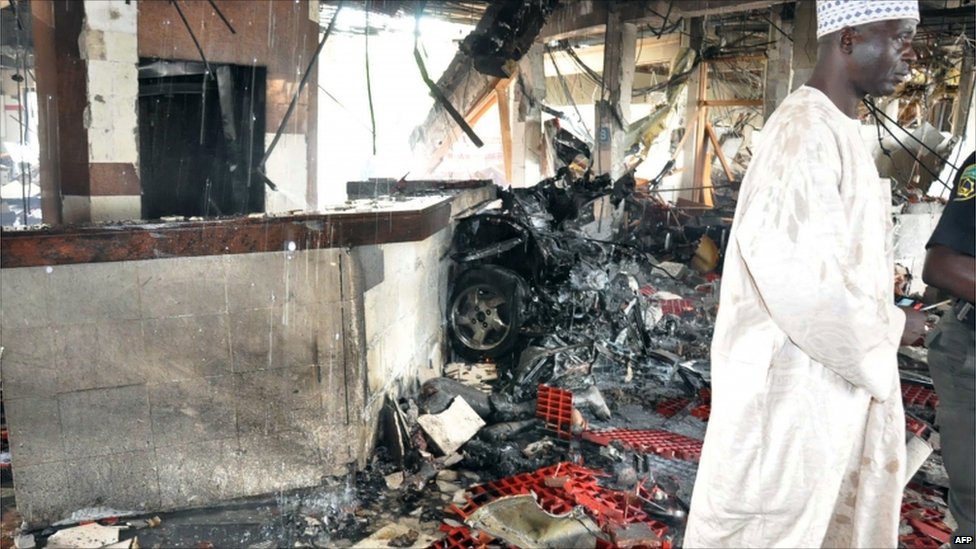 I remember studying the movements of insurgents across the Iraq and Syrian borders and the realisation that we were watching the birth of the Islamic State, and the chilling revelation that they would seek to unite extremism as a global jihad under a Caliphate. I remember as we watched Boko Haram’s tactics evolve from small explosive devices to the vehicle-borne improvised explosive device used against the UN compound in Abuja; an evolution in a contracted period that told us they were receiving outside assistance. I’ve studied the behaviours and patterns of terrorist and criminals, tried to understand the function of their networks, their patterns to learn how they evolve and who supports them. We’ve chased criminals across countries, traced assets and countered international cartels. We observe their tactics, techniques and procedures (TTPs). By understanding how they operate, we look for ways to assist law enforcement in coming to terms with a threat that is constantly evolving, to think across territorial lines. I’ve always been aware of technology, the capabilities of government for intelligence collection, the methods of attack used by hacking collectives, cyber-insurgents, but I don’t remember exactly when I started looking at technology, in the same way, I would analyse an insurgent threat. I collected notes on artificial intelligence, machine learning; I studied economies looking at technology as the modifier, not youth unemployment, education, radicalisation and weaknesses in the rule of law. I applied the same principles of violent threat analysis to future tech. I began to observe the TTPs of wealth, the inability of governments to understand the implications of technology in society and legislate appropriately, the ability of companies to block policy for their gain. I sought out intersections of STEM; change will not come from one discovery, advances in one will prompt advances in the other, it’s doubtful we’ll experience a singularity, where all of humankind is thrust into a limitless future, it’ll be reserved for the few. I remembered a short-passage that I’d written years ago, a condensed visual of an android shutting down, alone and desperately trying to send a message before it experienced total system failure. >“The scored shell of the 'Proxy', blistered chem-skin and twitching circuits, gave a human visage to its violent shutdown. Failing systems locked out of commercial data streams and disconnected from its private networks slowly withered, as the hybrid-fluids drained onto the dry ground beneath, and electrical circuits melted and fused. Within this machine death, a glimmer of bandwidth roused an internal transmitter. It teased the data out of the Proxy. Power shunted from an external source reignited faded memories and the data flowed outward in torrential volumes leaving behind an empty blackness in the lifelike machine." In a Middle East jail, I sat with a pen gifted to me the embassy, and a notebook purchased from the commissary, and turned the paragraph into a story, and plotted the narrative for what would become ‘Fire Over Light’. I had time. Few distractions. I had a pen. The only entry in my calendar was the justice system. I had paper. I had an idea. The book was small. I was careful to conserve pages. I concentrated on scenes, short-passages. Other prisoners asked me what I was writing. They talked about their pending release dates. I wrote. While they watched Shah Rukh Khan films on the single television in the cell-block, mounted high on a wall, I wrote. I don’t remember a single film during the 23 days I was there. I wrote. “Fire Over Light” grew. I broke it down into episodes. Rather than a single format book, I would release it one episode at a time, each week with the cycle starting from the day that someone signed-up to the website. I researched every facet of the story, to ground it, in reality, there would be no particle weapons, the instruments of death would obey the rules of physics. I wrote. The first episode went through over 60 drafts. There would be no heroes in “Fire Over Light” in the conventional sense, just flawed characters fooled by the verisimilitude of their beliefs. Between each episode would be a short-story, a window into another part of the story, a perspective shift. When we look at a threat, we ask ourselves “what we know” and “what we think we know”, the interstitial episodes, would be used to challenge what the reader thinks they know. I still write and rewrite. “Fire Over Light” isn’t just a science-fiction story, it’s a threat-analysis, carefully woven into a narrative. |
| json metadata | {"tags":["writing","science","technology","ai","politics"],"image":["https://steemitimages.com/DQmST5FWPXzTALpRsXUmfpCw6c6vDKxw2GGPsgvUPHZmCBn/cover-writing.jpg"],"app":"steemit/0.1","format":"markdown"} |
| Transaction Info | Block #19982967/Trx c252d39c5b27a91f7ac5bb51e8dcc04b7e17430a |
View Raw JSON Data
{
"trx_id": "c252d39c5b27a91f7ac5bb51e8dcc04b7e17430a",
"block": 19982967,
"trx_in_block": 36,
"op_in_trx": 0,
"virtual_op": 0,
"timestamp": "2018-02-18T17:05:09",
"op": [
"comment",
{
"parent_author": "",
"parent_permlink": "writing",
"author": "sarichards",
"permlink": "how-studying-terrorists-and-criminals-turned-into-writing-sci-fi",
"title": "How Studying Terrorists and Criminals Turned into Writing Sci-Fi",
"body": "\n\nI remember studying the movements of insurgents across the Iraq and Syrian borders and the realisation that we were watching the birth of the Islamic State, and the chilling revelation that they would seek to unite extremism as a global jihad under a Caliphate. \n\nI remember as we watched Boko Haram’s tactics evolve from small explosive devices to the vehicle-borne improvised explosive device used against the UN compound in Abuja; an evolution in a contracted period that told us they were receiving outside assistance.\n\nI’ve studied the behaviours and patterns of terrorist and criminals, tried to understand the function of their networks, their patterns to learn how they evolve and who supports them.\n\nWe’ve chased criminals across countries, traced assets and countered international cartels. We observe their tactics, techniques and procedures (TTPs). By understanding how they operate, we look for ways to assist law enforcement in coming to terms with a threat that is constantly evolving, to think across territorial lines.\n\nI’ve always been aware of technology, the capabilities of government for intelligence collection, the methods of attack used by hacking collectives, cyber-insurgents, but I don’t remember exactly when I started looking at technology, in the same way, I would analyse an insurgent threat. I collected notes on artificial intelligence, machine learning; I studied economies looking at technology as the modifier, not youth unemployment, education, radicalisation and weaknesses in the rule of law. I applied the same principles of violent threat analysis to future tech. \n\nI began to observe the TTPs of wealth, the inability of governments to understand the implications of technology in society and legislate appropriately, the ability of companies to block policy for their gain. I sought out intersections of STEM; change will not come from one discovery, advances in one will prompt advances in the other, it’s doubtful we’ll experience a singularity, where all of humankind is thrust into a limitless future, it’ll be reserved for the few.\n\nI remembered a short-passage that I’d written years ago, a condensed visual of an android shutting down, alone and desperately trying to send a message before it experienced total system failure.\n\n>“The scored shell of the 'Proxy', blistered chem-skin and twitching circuits, gave a human visage to its violent shutdown. Failing systems locked out of commercial data streams and disconnected from its private networks slowly withered, as the hybrid-fluids drained onto the dry ground beneath, and electrical circuits melted and fused. Within this machine death, a glimmer of bandwidth roused an internal transmitter. It teased the data out of the Proxy. Power shunted from an external source reignited faded memories and the data flowed outward in torrential volumes leaving behind an empty blackness in the lifelike machine.\"\n\nIn a Middle East jail, I sat with a pen gifted to me the embassy, and a notebook purchased from the commissary, and turned the paragraph into a story, and plotted the narrative for what would become ‘Fire Over Light’. I had time. Few distractions. I had a pen. The only entry in my calendar was the justice system. I had paper. I had an idea. \n\nThe book was small. I was careful to conserve pages. I concentrated on scenes, short-passages. Other prisoners asked me what I was writing. They talked about their pending release dates. I wrote. While they watched Shah Rukh Khan films on the single television in the cell-block, mounted high on a wall, I wrote. I don’t remember a single film during the 23 days I was there. I wrote.\n\n“Fire Over Light” grew. I broke it down into episodes. Rather than a single format book, I would release it one episode at a time, each week with the cycle starting from the day that someone signed-up to the website. I researched every facet of the story, to ground it, in reality, there would be no particle weapons, the instruments of death would obey the rules of physics. I wrote. The first episode went through over 60 drafts.\n\nThere would be no heroes in “Fire Over Light” in the conventional sense, just flawed characters fooled by the verisimilitude of their beliefs. Between each episode would be a short-story, a window into another part of the story, a perspective shift. \n\nWhen we look at a threat, we ask ourselves “what we know” and “what we think we know”, the interstitial episodes, would be used to challenge what the reader thinks they know.\n\nI still write and rewrite. “Fire Over Light” isn’t just a science-fiction story, it’s a threat-analysis, carefully woven into a narrative.",
"json_metadata": "{\"tags\":[\"writing\",\"science\",\"technology\",\"ai\",\"politics\"],\"image\":[\"https://steemitimages.com/DQmST5FWPXzTALpRsXUmfpCw6c6vDKxw2GGPsgvUPHZmCBn/cover-writing.jpg\"],\"app\":\"steemit/0.1\",\"format\":\"markdown\"}"
}
]
}2018/02/18 17:04:18
2018/02/18 17:04:18
| voter | sarichards |
| author | sarichards |
| permlink | how-studying-terrorists-and-criminals-turned-into-writing-sci-fi |
| weight | 10000 (100.00%) |
| Transaction Info | Block #19982950/Trx ec07114ed2d5bf2fffbdbcf5ed7abe867f3f97d9 |
View Raw JSON Data
{
  "trx_id": "ec07114ed2d5bf2fffbdbcf5ed7abe867f3f97d9",
  "block": 19982950,
  "trx_in_block": 9,
  "op_in_trx": 0,
  "virtual_op": 0,
  "timestamp": "2018-02-18T17:04:18",
  "op": [
    "vote",
    {
      "voter": "sarichards",
      "author": "sarichards",
      "permlink": "how-studying-terrorists-and-criminals-turned-into-writing-sci-fi",
      "weight": 10000
    }
  ]
}sarichardspublished a new post: how-studying-terrorists-and-criminals-turned-into-writing-sci-fi2018/02/18 17:04:18
sarichardspublished a new post: how-studying-terrorists-and-criminals-turned-into-writing-sci-fi
2018/02/18 17:04:18
| parent author | |
| parent permlink | writing |
| author | sarichards |
| permlink | how-studying-terrorists-and-criminals-turned-into-writing-sci-fi |
| title | HOW STUDYING TERRORISTS & CRIMINALS TURNED INTO WRITING SCI-FI |
| body |  I remember studying the movements of insurgents across the Iraq and Syrian borders and the realisation that we were watching the birth of the Islamic State, and the chilling revelation that they would seek to unite extremism as a global jihad under a Caliphate. I remember as we watched Boko Haram’s tactics evolve from small explosive devices to the vehicle-borne improvised explosive device used against the UN compound in Abuja; an evolution in a contracted period that told us they were receiving outside assistance. I’ve studied the behaviours and patterns of terrorist and criminals, tried to understand the function of their networks, their patterns to learn how they evolve and who supports them. We’ve chased criminals across countries, traced assets and countered international cartels. We observe their tactics, techniques and procedures (TTPs). By understanding how they operate, we look for ways to assist law enforcement in coming to terms with a threat that is constantly evolving, to think across territorial lines. I’ve always been aware of technology, the capabilities of government for intelligence collection, the methods of attack used by hacking collectives, cyber-insurgents, but I don’t remember exactly when I started looking at technology, in the same way, I would analyse an insurgent threat. I collected notes on artificial intelligence, machine learning; I studied economies looking at technology as the modifier, not youth unemployment, education, radicalisation and weaknesses in the rule of law. I applied the same principles of violent threat analysis to future tech. I began to observe the TTPs of wealth, the inability of governments to understand the implications of technology in society and legislate appropriately, the ability of companies to block policy for their gain. I sought out intersections of STEM; change will not come from one discovery, advances in one will prompt advances in the other, it’s doubtful we’ll experience a singularity, where all of humankind is thrust into a limitless future, it’ll be reserved for the few. I remembered a short-passage that I’d written years ago, a condensed visual of an android shutting down, alone and desperately trying to send a message before it experienced total system failure. >“The scored shell of the 'Proxy', blistered chem-skin and twitching circuits, gave a human visage to its violent shutdown. Failing systems locked out of commercial data streams and disconnected from its private networks slowly withered, as the hybrid-fluids drained onto the dry ground beneath, and electrical circuits melted and fused. Within this machine death, a glimmer of bandwidth roused an internal transmitter. It teased the data out of the Proxy. Power shunted from an external source reignited faded memories and the data flowed outward in torrential volumes leaving behind an empty blackness in the lifelike machine." In a Middle East jail, I sat with a pen gifted to me the embassy, and a notebook purchased from the commissary, and turned the paragraph into a story, and plotted the narrative for what would become ‘Fire Over Light’. I had time. Few distractions. I had a pen. The only entry in my calendar was the justice system. I had paper. I had an idea. The book was small. I was careful to conserve pages. I concentrated on scenes, short-passages. Other prisoners asked me what I was writing. They talked about their pending release dates. I wrote. While they watched Shah Rukh Khan films on the single television in the cell-block, mounted high on a wall, I wrote. I don’t remember a single film during the 23 days I was there. I wrote. “Fire Over Light” grew. I broke it down into episodes. Rather than a single format book, I would release it one episode at a time, each week with the cycle starting from the day that someone signed-up to the website. I researched every facet of the story, to ground it, in reality, there would be no particle weapons, the instruments of death would obey the rules of physics. I wrote. The first episode went through over 60 drafts. There would be no heroes in “Fire Over Light” in the conventional sense, just flawed characters fooled by the verisimilitude of their beliefs. Between each episode would be a short-story, a window into another part of the story, a perspective shift. When we look at a threat, we ask ourselves “what we know” and “what we think we know”, the interstitial episodes, would be used to challenge what the reader thinks they know. I still write and rewrite. “Fire Over Light” isn’t just a science-fiction story, it’s a threat-analysis, carefully woven into a narrative. |
| json metadata | {"tags":["writing","science","technology","ai","politics"],"image":["https://steemitimages.com/DQmST5FWPXzTALpRsXUmfpCw6c6vDKxw2GGPsgvUPHZmCBn/cover-writing.jpg"],"app":"steemit/0.1","format":"markdown"} |
| Transaction Info | Block #19982950/Trx ec07114ed2d5bf2fffbdbcf5ed7abe867f3f97d9 |
View Raw JSON Data
{
"trx_id": "ec07114ed2d5bf2fffbdbcf5ed7abe867f3f97d9",
"block": 19982950,
"trx_in_block": 9,
"op_in_trx": 0,
"virtual_op": 0,
"timestamp": "2018-02-18T17:04:18",
"op": [
"comment",
{
"parent_author": "",
"parent_permlink": "writing",
"author": "sarichards",
"permlink": "how-studying-terrorists-and-criminals-turned-into-writing-sci-fi",
"title": "HOW STUDYING TERRORISTS & CRIMINALS TURNED INTO WRITING SCI-FI",
"body": "\n\nI remember studying the movements of insurgents across the Iraq and Syrian borders and the realisation that we were watching the birth of the Islamic State, and the chilling revelation that they would seek to unite extremism as a global jihad under a Caliphate. \n\nI remember as we watched Boko Haram’s tactics evolve from small explosive devices to the vehicle-borne improvised explosive device used against the UN compound in Abuja; an evolution in a contracted period that told us they were receiving outside assistance.\n\nI’ve studied the behaviours and patterns of terrorist and criminals, tried to understand the function of their networks, their patterns to learn how they evolve and who supports them.\n\nWe’ve chased criminals across countries, traced assets and countered international cartels. We observe their tactics, techniques and procedures (TTPs). By understanding how they operate, we look for ways to assist law enforcement in coming to terms with a threat that is constantly evolving, to think across territorial lines.\n\nI’ve always been aware of technology, the capabilities of government for intelligence collection, the methods of attack used by hacking collectives, cyber-insurgents, but I don’t remember exactly when I started looking at technology, in the same way, I would analyse an insurgent threat. I collected notes on artificial intelligence, machine learning; I studied economies looking at technology as the modifier, not youth unemployment, education, radicalisation and weaknesses in the rule of law. I applied the same principles of violent threat analysis to future tech. \n\nI began to observe the TTPs of wealth, the inability of governments to understand the implications of technology in society and legislate appropriately, the ability of companies to block policy for their gain. I sought out intersections of STEM; change will not come from one discovery, advances in one will prompt advances in the other, it’s doubtful we’ll experience a singularity, where all of humankind is thrust into a limitless future, it’ll be reserved for the few.\n\nI remembered a short-passage that I’d written years ago, a condensed visual of an android shutting down, alone and desperately trying to send a message before it experienced total system failure.\n\n>“The scored shell of the 'Proxy', blistered chem-skin and twitching circuits, gave a human visage to its violent shutdown. Failing systems locked out of commercial data streams and disconnected from its private networks slowly withered, as the hybrid-fluids drained onto the dry ground beneath, and electrical circuits melted and fused. Within this machine death, a glimmer of bandwidth roused an internal transmitter. It teased the data out of the Proxy. Power shunted from an external source reignited faded memories and the data flowed outward in torrential volumes leaving behind an empty blackness in the lifelike machine.\"\n\nIn a Middle East jail, I sat with a pen gifted to me the embassy, and a notebook purchased from the commissary, and turned the paragraph into a story, and plotted the narrative for what would become ‘Fire Over Light’. I had time. Few distractions. I had a pen. The only entry in my calendar was the justice system. I had paper. I had an idea. \n\nThe book was small. I was careful to conserve pages. I concentrated on scenes, short-passages. Other prisoners asked me what I was writing. They talked about their pending release dates. I wrote. While they watched Shah Rukh Khan films on the single television in the cell-block, mounted high on a wall, I wrote. I don’t remember a single film during the 23 days I was there. I wrote.\n\n“Fire Over Light” grew. I broke it down into episodes. Rather than a single format book, I would release it one episode at a time, each week with the cycle starting from the day that someone signed-up to the website. I researched every facet of the story, to ground it, in reality, there would be no particle weapons, the instruments of death would obey the rules of physics. I wrote. The first episode went through over 60 drafts.\n\nThere would be no heroes in “Fire Over Light” in the conventional sense, just flawed characters fooled by the verisimilitude of their beliefs. Between each episode would be a short-story, a window into another part of the story, a perspective shift. \n\nWhen we look at a threat, we ask ourselves “what we know” and “what we think we know”, the interstitial episodes, would be used to challenge what the reader thinks they know.\n\nI still write and rewrite. “Fire Over Light” isn’t just a science-fiction story, it’s a threat-analysis, carefully woven into a narrative.",
"json_metadata": "{\"tags\":[\"writing\",\"science\",\"technology\",\"ai\",\"politics\"],\"image\":[\"https://steemitimages.com/DQmST5FWPXzTALpRsXUmfpCw6c6vDKxw2GGPsgvUPHZmCBn/cover-writing.jpg\"],\"app\":\"steemit/0.1\",\"format\":\"markdown\"}"
}
]
}2018/02/15 06:27:45
2018/02/15 06:27:45
| voter | sarichards |
| author | amity123 |
| permlink | scientists-observe-flying-insects-to-create-smaller-flying-machines |
| weight | 10000 (100.00%) |
| Transaction Info | Block #19883874/Trx 2e84cb2919e0e918fefea66ab36b7d0d0d8b77c1 |
View Raw JSON Data
{
  "trx_id": "2e84cb2919e0e918fefea66ab36b7d0d0d8b77c1",
  "block": 19883874,
  "trx_in_block": 37,
  "op_in_trx": 0,
  "virtual_op": 0,
  "timestamp": "2018-02-15T06:27:45",
  "op": [
    "vote",
    {
      "voter": "sarichards",
      "author": "amity123",
      "permlink": "scientists-observe-flying-insects-to-create-smaller-flying-machines",
      "weight": 10000
    }
  ]
}2018/02/14 04:28:00
2018/02/14 04:28:00
| voter | sarichards |
| author | amity123 |
| permlink | the-advent-of-artificial-protein-retina-breakthroughs-in-nano-technology |
| weight | 10000 (100.00%) |
| Transaction Info | Block #19852721/Trx 11a81178a824ab20e9bca165a52d2102f9c271f6 |
View Raw JSON Data
{
  "trx_id": "11a81178a824ab20e9bca165a52d2102f9c271f6",
  "block": 19852721,
  "trx_in_block": 18,
  "op_in_trx": 0,
  "virtual_op": 0,
  "timestamp": "2018-02-14T04:28:00",
  "op": [
    "vote",
    {
      "voter": "sarichards",
      "author": "amity123",
      "permlink": "the-advent-of-artificial-protein-retina-breakthroughs-in-nano-technology",
      "weight": 10000
    }
  ]
}sarichardsfollowed @techlife2018/02/13 18:25:09
sarichardsfollowed @techlife
2018/02/13 18:25:09
| required auths | [] |
| required posting auths | ["sarichards"] |
| id | follow |
| json | ["follow",{"follower":"sarichards","following":"techlife","what":["blog"]}] |
| Transaction Info | Block #19840676/Trx caf8327f6e65e5ab3b0adcb6fbd6bc7caf0b4c9b |
View Raw JSON Data
{
  "trx_id": "caf8327f6e65e5ab3b0adcb6fbd6bc7caf0b4c9b",
  "block": 19840676,
  "trx_in_block": 24,
  "op_in_trx": 0,
  "virtual_op": 0,
  "timestamp": "2018-02-13T18:25:09",
  "op": [
    "custom_json",
    {
      "required_auths": [],
      "required_posting_auths": [
        "sarichards"
      ],
      "id": "follow",
      "json": "[\"follow\",{\"follower\":\"sarichards\",\"following\":\"techlife\",\"what\":[\"blog\"]}]"
    }
  ]
}sarichardsfollowed @amity1232018/02/13 18:24:36
sarichardsfollowed @amity123
2018/02/13 18:24:36
| required auths | [] |
| required posting auths | ["sarichards"] |
| id | follow |
| json | ["follow",{"follower":"sarichards","following":"amity123","what":["blog"]}] |
| Transaction Info | Block #19840665/Trx ec378d84867cab6e205d10848fd9e00cebbc0ff7 |
View Raw JSON Data
{
  "trx_id": "ec378d84867cab6e205d10848fd9e00cebbc0ff7",
  "block": 19840665,
  "trx_in_block": 17,
  "op_in_trx": 0,
  "virtual_op": 0,
  "timestamp": "2018-02-13T18:24:36",
  "op": [
    "custom_json",
    {
      "required_auths": [],
      "required_posting_auths": [
        "sarichards"
      ],
      "id": "follow",
      "json": "[\"follow\",{\"follower\":\"sarichards\",\"following\":\"amity123\",\"what\":[\"blog\"]}]"
    }
  ]
}sarichardsfollowed @fubar1652018/02/13 18:24:24
sarichardsfollowed @fubar165
2018/02/13 18:24:24
| required auths | [] |
| required posting auths | ["sarichards"] |
| id | follow |
| json | ["follow",{"follower":"sarichards","following":"fubar165","what":["blog"]}] |
| Transaction Info | Block #19840661/Trx 52b7a0903d2ffce996369614769826c9943bf4c3 |
View Raw JSON Data
{
  "trx_id": "52b7a0903d2ffce996369614769826c9943bf4c3",
  "block": 19840661,
  "trx_in_block": 50,
  "op_in_trx": 0,
  "virtual_op": 0,
  "timestamp": "2018-02-13T18:24:24",
  "op": [
    "custom_json",
    {
      "required_auths": [],
      "required_posting_auths": [
        "sarichards"
      ],
      "id": "follow",
      "json": "[\"follow\",{\"follower\":\"sarichards\",\"following\":\"fubar165\",\"what\":[\"blog\"]}]"
    }
  ]
}sarichardspublished a new post: understanding-the-threat-of-ai-and-machine-learning2018/02/13 18:21:51
sarichardspublished a new post: understanding-the-threat-of-ai-and-machine-learning
2018/02/13 18:21:51
| parent author | |
| parent permlink | writing |
| author | sarichards |
| permlink | understanding-the-threat-of-ai-and-machine-learning |
| title | Understanding the Threat of AI and Machine Learning |
| body | 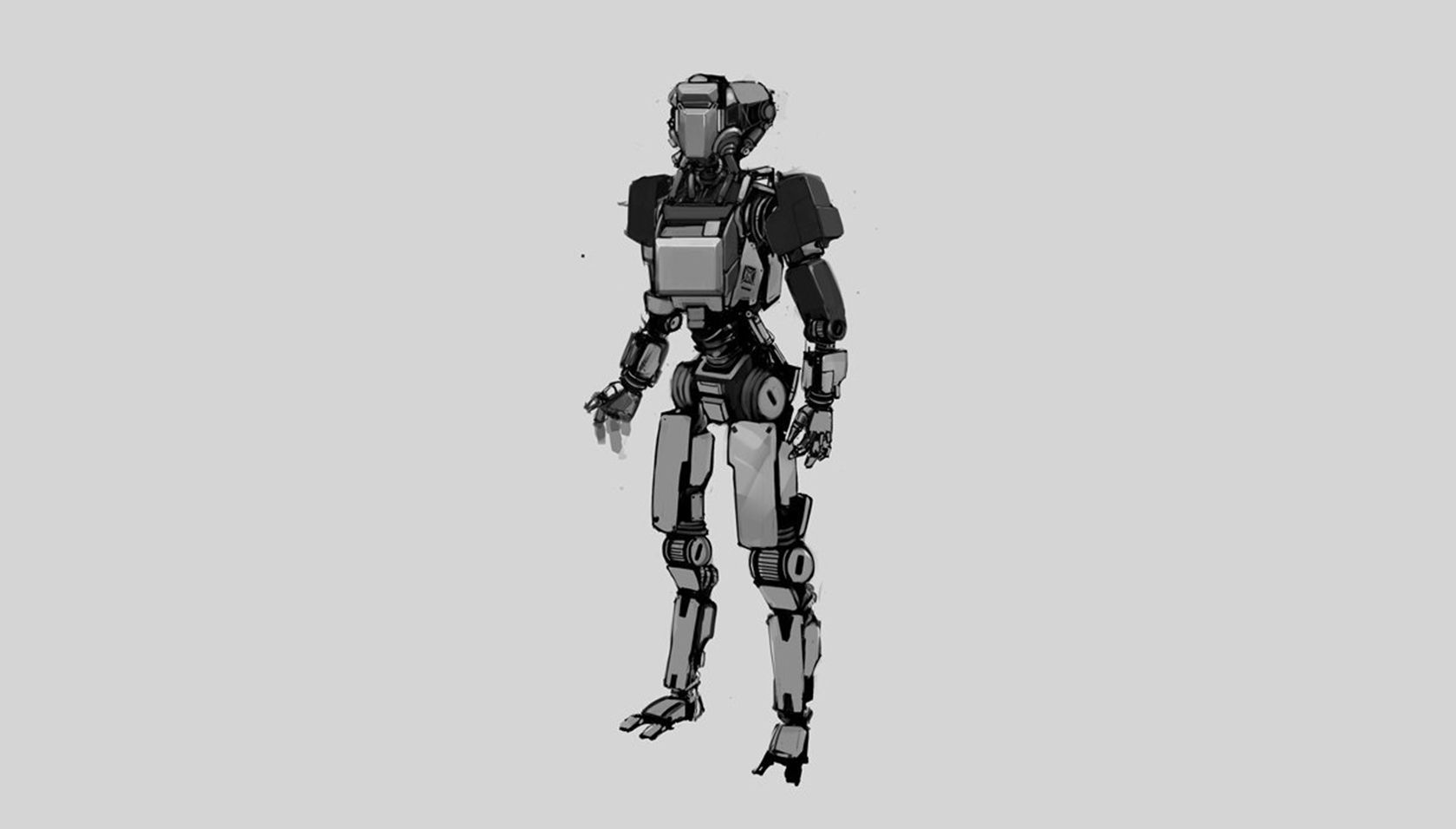 The threat that artificial intelligence poses is not that of science fiction movies or novels where our inventions turning against us, that inside the unknowable mind of a super-AI, humans will be deemed inefficient, too difficult or just unnecessary, rather AI will more likely serve to dramatically increase economic inequity, and continue to do so until our social and financial systems strain until collapse. It will not come from the machines themselves but how we use the insights of AI to manipulate markets, to target and motivate consumers to purchase, to trade on exchanges. The threat of AI is that it will understand ourselves better than we, and in doing so, can be used to manipulate us and our lives in ways we don’t understand. Autonomous weapons, drones and robots will make their way to the battlefield with the independent authority to make a kill decision. The pervasive threat will not be from these intelligent machines of death and destruction, it will come from the innocuous technologies around us that become ubiquitous but unseen, unknowable and unreachable. The algorithms in a court that determine the cost and eligibility of a defendants bail, the machine that carefully reads a mammogram and spots a nascent tumour a physician would have missed and saves a life. AI has changed over the past thirty years from concepts such as fuzzy logic and in the past few years, at an ever accelerating rate, machine learning is proving itself, and we're still in the infancy of what it promises. To understand how the promise of a better future, led by machines that are smarter than ourselves, can go terribly wrong, we just need to look at what happened in 2017 with the computer-programs that profile and target users in our social networks. The manipulations of Facebook for the US elections by foreign actors who used viral-posts built on misinformation were so effective that posts from just six Russian accounts were shared 340 million times; a story that the most recent article of Wired Magazine explains in intimate detail. In Zeynep Tufekci’s TED Talk, “We’re Building A Dystopia to Make People Click On Ads”, she makes a poignant example: what if machine learning could identify in our social posts if a person suffered from bipolar depression and was about to enter into a manic episode? People in a manic phase are prone to overspending and compulsive gambling. Could advertisers react to that and target them with adverts? What’s fascinating about her hypothetical, is that it’s entirely in the realm of the possible: >“So let's push that Vegas example a bit. What if the system that we do not understand was picking up that it's easier to sell Vegas tickets to people who are bipolar and about to enter the manic phase. Such people tend to become overspenders, compulsive gamblers. They could do this, and you'd have no clue that's what they were picking up on. I gave this example to a bunch of computer scientists once and afterwards, one of them came up to me. He was troubled and he said, "That's why I couldn't publish it."I was like, "Couldn't publish what?" He had tried to see whether you can indeed figure out the onset of mania from social media posts before clinical symptoms, and it had worked, and it had worked very well, and he had no idea how it worked or what it was picking up on.” Hedge funds have used patents for profit in the pharmaceuticals sector at the expense of patient well-being, while the exorbitant returns have not been reinvested into research, to produce new drugs to improve our lives, just pure profits. Where can we expect to see the abuse of AI? The political arena and the financial services sector are two likely candidates. What would that abuse look like? We had a taste of it in 2017, from Macedonia where teenagers published countless sensationalist stories, to the Russian interference in Facebook, that showed what a "national actor" with a few hundred thousand dollars can achieve. There's the old saying that "he who pays the piper calls the tune". Hedge funds and venture capital have been betting heavily on AI. For Hedge Funds the intent is different to VC, funds wants to use the AI to help them increase their profit, profit being their raison d'être. The hedge fund and the investment banking sectors are a good area for consideration as to how AI may be used for profit over social benefit, as these entities exist purely to produce profit, and often profit without a social-conscious. There’s also a reason that the leading hedge funds have a large data-science component. A recent report by Thomson Reuters estimates 75% of global trades are now run on algorithmic trading platforms (also known as high-frequency trading platforms). This trend is showing no signs of slowing down as other areas of the trading sector such as futures markets are seeing an increase in uptake and innovation. Algorithmic trading platforms have traditionally relied on reducing latency, to enable the largest number of transactions to take place in the shortest amount of time. Artificial Intelligence and machine learning changes this by increasing the number of variables that can be considered in a trade, the trades then become smarter rather than just faster. As an AI becomes more sophisticated, able to handle more variables, what happens when it has the financial resources and the insight into markets to exploit markets, moving assets in one direction to cause a shift in another, a super-intelligent butterfly flapping its wings? What would happen if we coupled this AI with another designed to shift social-beliefs, political beliefs, a hyper-intelligent and automated lobbyist, a twisted descendant from the social media newsfeed algorithms, that incubates uncertainty in the markets, that a stock-trading algorithm can capitalise. Regulators already struggle with the demands on understanding algorithmic platforms, and with AI, a machine that is designed to learn, the ability for them to understand whether or not its operational parameters are lawful becomes far more difficult. This lack of understanding isn't limited to the regulators, it effects the engineers themselves. Man Capital a $96 billion hedge fund that uses algorithmic trading, when Luke Ellis the CEO asked how it made its choices, he found out that "the engineers couldn’t explain why the AI was executing the trades it was making. The creation was such a black box that even its creators didn’t fully understand how it worked". By 2015, their AI was managing half the profits in one their biggest funds, and it now manages $5.1 billion. The risk in AI is not that the machines will turn on us, that we will use AI to turn on each other, and that as AI becomes embedded in our lives without our knowledge, like the algorithms that decide what we see in our news feed, it will be impossible to recover from, and the machines will probably convince us that we don't want to. In a reality bubble of smart-feeds, the flavour of the kool-aid has been designed just for you. **References** ABC News, [AI in the court: When algorithms rule on jail time](http://abcnews.go.com/Technology/wireStory/ai-court-algorithms-rule-jail-time-52732343), January 2018 Bloomberg, [The Massive Hedge Fund Betting on AI](https://www.bloomberg.com/news/features/2017-09-27/the-massive-hedge-fund-betting-on-ai), September 2017 Raconteur, [The Rise of AI and Algorithms in the Financial Services Sector](https://www.raconteur.net/technology/the-rise-of-ai-and-algorithms-in-the-financial-services-sector), July 2016 Zeynep Tufekci, [We’re Building a Dystopia to Make People Click On Ads](https://www.ted.com/talks/zeynep_tufekci_we_re_building_a_dystopia_just_to_make_people_click_on_ads/transcript) Wired, [Inside the Two Years that Shook Facebook and the World](https://www.wired.com/story/inside-facebook-mark-zuckerberg-2-years-of-hell/), February 2018 |
| json metadata | {"tags":["writing","science","technology","ai"],"image":["https://steemitimages.com/DQmWmYbbscHC4TmoV7CuundUnC61uRe6hdNYSWTBe4txbzR/cover-new.jpg"],"links":["http://abcnews.go.com/Technology/wireStory/ai-court-algorithms-rule-jail-time-52732343","https://www.bloomberg.com/news/features/2017-09-27/the-massive-hedge-fund-betting-on-ai","https://www.raconteur.net/technology/the-rise-of-ai-and-algorithms-in-the-financial-services-sector","https://www.ted.com/talks/zeynep_tufekci_we_re_building_a_dystopia_just_to_make_people_click_on_ads/transcript","https://www.wired.com/story/inside-facebook-mark-zuckerberg-2-years-of-hell/"],"app":"steemit/0.1","format":"markdown"} |
| Transaction Info | Block #19840610/Trx 3ffd7a67c9b301edc9138d1c28efeb8437908b3d |
View Raw JSON Data
{
"trx_id": "3ffd7a67c9b301edc9138d1c28efeb8437908b3d",
"block": 19840610,
"trx_in_block": 39,
"op_in_trx": 0,
"virtual_op": 0,
"timestamp": "2018-02-13T18:21:51",
"op": [
"comment",
{
"parent_author": "",
"parent_permlink": "writing",
"author": "sarichards",
"permlink": "understanding-the-threat-of-ai-and-machine-learning",
"title": "Understanding the Threat of AI and Machine Learning",
"body": "\n\nThe threat that artificial intelligence poses is not that of science fiction movies or novels where our inventions turning against us, that inside the unknowable mind of a super-AI, humans will be deemed inefficient, too difficult or just unnecessary, rather AI will more likely serve to dramatically increase economic inequity, and continue to do so until our social and financial systems strain until collapse. It will not come from the machines themselves but how we use the insights of AI to manipulate markets, to target and motivate consumers to purchase, to trade on exchanges. The threat of AI is that it will understand ourselves better than we, and in doing so, can be used to manipulate us and our lives in ways we don’t understand.\n\nAutonomous weapons, drones and robots will make their way to the battlefield with the independent authority to make a kill decision. The pervasive threat will not be from these intelligent machines of death and destruction, it will come from the innocuous technologies around us that become ubiquitous but unseen, unknowable and unreachable. The algorithms in a court that determine the cost and eligibility of a defendants bail, the machine that carefully reads a mammogram and spots a nascent tumour a physician would have missed and saves a life.\n\nAI has changed over the past thirty years from concepts such as fuzzy logic and in the past few years, at an ever accelerating rate, machine learning is proving itself, and we're still in the infancy of what it promises. To understand how the promise of a better future, led by machines that are smarter than ourselves, can go terribly wrong, we just need to look at what happened in 2017 with the computer-programs that profile and target users in our social networks. \n\nThe manipulations of Facebook for the US elections by foreign actors who used viral-posts built on misinformation were so effective that posts from just six Russian accounts were shared 340 million times; a story that the most recent article of Wired Magazine explains in intimate detail. \n\nIn Zeynep Tufekci’s TED Talk, “We’re Building A Dystopia to Make People Click On Ads”, she makes a poignant example: what if machine learning could identify in our social posts if a person suffered from bipolar depression and was about to enter into a manic episode? People in a manic phase are prone to overspending and compulsive gambling. Could advertisers react to that and target them with adverts?\n\nWhat’s fascinating about her hypothetical, is that it’s entirely in the realm of the possible:\n\n>“So let's push that Vegas example a bit. What if the system that we do not understand was picking up that it's easier to sell Vegas tickets to people who are bipolar and about to enter the manic phase. Such people tend to become overspenders, compulsive gamblers. They could do this, and you'd have no clue that's what they were picking up on. I gave this example to a bunch of computer scientists once and afterwards, one of them came up to me. He was troubled and he said, \"That's why I couldn't publish it.\"I was like, \"Couldn't publish what?\" He had tried to see whether you can indeed figure out the onset of mania from social media posts before clinical symptoms, and it had worked, and it had worked very well, and he had no idea how it worked or what it was picking up on.”\n\nHedge funds have used patents for profit in the pharmaceuticals sector at the expense of patient well-being, while the exorbitant returns have not been reinvested into research, to produce new drugs to improve our lives, just pure profits. \n\nWhere can we expect to see the abuse of AI? The political arena and the financial services sector are two likely candidates. What would that abuse look like? We had a taste of it in 2017, from Macedonia where teenagers published countless sensationalist stories, to the Russian interference in Facebook, that showed what a \"national actor\" with a few hundred thousand dollars can achieve. \n\nThere's the old saying that \"he who pays the piper calls the tune\". Hedge funds and venture capital have been betting heavily on AI. For Hedge Funds the intent is different to VC, funds wants to use the AI to help them increase their profit, profit being their raison d'être.\n\nThe hedge fund and the investment banking sectors are a good area for consideration as to how AI may be used for profit over social benefit, as these entities exist purely to produce profit, and often profit without a social-conscious. There’s also a reason that the leading hedge funds have a large data-science component.\n\nA recent report by Thomson Reuters estimates 75% of global trades are now run on algorithmic trading platforms (also known as high-frequency trading platforms). This trend is showing no signs of slowing down as other areas of the trading sector such as futures markets are seeing an increase in uptake and innovation. Algorithmic trading platforms have traditionally relied on reducing latency, to enable the largest number of transactions to take place in the shortest amount of time. \n\nArtificial Intelligence and machine learning changes this by increasing the number of variables that can be considered in a trade, the trades then become smarter rather than just faster. As an AI becomes more sophisticated, able to handle more variables, what happens when it has the financial resources and the insight into markets to exploit markets, moving assets in one direction to cause a shift in another, a super-intelligent butterfly flapping its wings? What would happen if we coupled this AI with another designed to shift social-beliefs, political beliefs, a hyper-intelligent and automated lobbyist, a twisted descendant from the social media newsfeed algorithms, that incubates uncertainty in the markets, that a stock-trading algorithm can capitalise.\n\nRegulators already struggle with the demands on understanding algorithmic platforms, and with AI, a machine that is designed to learn, the ability for them to understand whether or not its operational parameters are lawful becomes far more difficult. This lack of understanding isn't limited to the regulators, it effects the engineers themselves. \n\nMan Capital a $96 billion hedge fund that uses algorithmic trading, when Luke Ellis the CEO asked how it made its choices, he found out that \"the engineers couldn’t explain why the AI was executing the trades it was making. The creation was such a black box that even its creators didn’t fully understand how it worked\". By 2015, their AI was managing half the profits in one their biggest funds, and it now manages $5.1 billion.\n\nThe risk in AI is not that the machines will turn on us, that we will use AI to turn on each other, and that as AI becomes embedded in our lives without our knowledge, like the algorithms that decide what we see in our news feed, it will be impossible to recover from, and the machines will probably convince us that we don't want to. In a reality bubble of smart-feeds, the flavour of the kool-aid has been designed just for you.\n\n**References**\nABC News, [AI in the court: When algorithms rule on jail time](http://abcnews.go.com/Technology/wireStory/ai-court-algorithms-rule-jail-time-52732343), January 2018\nBloomberg, [The Massive Hedge Fund Betting on AI](https://www.bloomberg.com/news/features/2017-09-27/the-massive-hedge-fund-betting-on-ai), September 2017\nRaconteur, [The Rise of AI and Algorithms in the Financial Services Sector](https://www.raconteur.net/technology/the-rise-of-ai-and-algorithms-in-the-financial-services-sector), July 2016\nZeynep Tufekci, [We’re Building a Dystopia to Make People Click On Ads](https://www.ted.com/talks/zeynep_tufekci_we_re_building_a_dystopia_just_to_make_people_click_on_ads/transcript)\nWired, [Inside the Two Years that Shook Facebook and the World](https://www.wired.com/story/inside-facebook-mark-zuckerberg-2-years-of-hell/), February 2018",
"json_metadata": "{\"tags\":[\"writing\",\"science\",\"technology\",\"ai\"],\"image\":[\"https://steemitimages.com/DQmWmYbbscHC4TmoV7CuundUnC61uRe6hdNYSWTBe4txbzR/cover-new.jpg\"],\"links\":[\"http://abcnews.go.com/Technology/wireStory/ai-court-algorithms-rule-jail-time-52732343\",\"https://www.bloomberg.com/news/features/2017-09-27/the-massive-hedge-fund-betting-on-ai\",\"https://www.raconteur.net/technology/the-rise-of-ai-and-algorithms-in-the-financial-services-sector\",\"https://www.ted.com/talks/zeynep_tufekci_we_re_building_a_dystopia_just_to_make_people_click_on_ads/transcript\",\"https://www.wired.com/story/inside-facebook-mark-zuckerberg-2-years-of-hell/\"],\"app\":\"steemit/0.1\",\"format\":\"markdown\"}"
}
]
}sarichardsfollowed @neilstrauss2018/02/13 18:19:00
sarichardsfollowed @neilstrauss
2018/02/13 18:19:00
| required auths | [] |
| required posting auths | ["sarichards"] |
| id | follow |
| json | ["follow",{"follower":"sarichards","following":"neilstrauss","what":["blog"]}] |
| Transaction Info | Block #19840554/Trx be2092fadf0a56c77ceec6e1f4854c8653894a4a |
View Raw JSON Data
{
  "trx_id": "be2092fadf0a56c77ceec6e1f4854c8653894a4a",
  "block": 19840554,
  "trx_in_block": 0,
  "op_in_trx": 0,
  "virtual_op": 0,
  "timestamp": "2018-02-13T18:19:00",
  "op": [
    "custom_json",
    {
      "required_auths": [],
      "required_posting_auths": [
        "sarichards"
      ],
      "id": "follow",
      "json": "[\"follow\",{\"follower\":\"sarichards\",\"following\":\"neilstrauss\",\"what\":[\"blog\"]}]"
    }
  ]
}sarichardsfollowed @lukestokes2018/02/13 18:18:21
sarichardsfollowed @lukestokes
2018/02/13 18:18:21
| required auths | [] |
| required posting auths | ["sarichards"] |
| id | follow |
| json | ["follow",{"follower":"sarichards","following":"lukestokes","what":["blog"]}] |
| Transaction Info | Block #19840541/Trx 6edae16c35905d1bbf049faa9e29703bc70947bc |
View Raw JSON Data
{
  "trx_id": "6edae16c35905d1bbf049faa9e29703bc70947bc",
  "block": 19840541,
  "trx_in_block": 55,
  "op_in_trx": 0,
  "virtual_op": 0,
  "timestamp": "2018-02-13T18:18:21",
  "op": [
    "custom_json",
    {
      "required_auths": [],
      "required_posting_auths": [
        "sarichards"
      ],
      "id": "follow",
      "json": "[\"follow\",{\"follower\":\"sarichards\",\"following\":\"lukestokes\",\"what\":[\"blog\"]}]"
    }
  ]
}sarichardsupvoted (100.00%) @lukestokes / my-simulation-theory-hypothesis2018/02/13 18:18:06
sarichardsupvoted (100.00%) @lukestokes / my-simulation-theory-hypothesis
2018/02/13 18:18:06
| voter | sarichards |
| author | lukestokes |
| permlink | my-simulation-theory-hypothesis |
| weight | 10000 (100.00%) |
| Transaction Info | Block #19840536/Trx 1146b81cd826a51a1274feb40fa19262f0317dc3 |
View Raw JSON Data
{
  "trx_id": "1146b81cd826a51a1274feb40fa19262f0317dc3",
  "block": 19840536,
  "trx_in_block": 37,
  "op_in_trx": 0,
  "virtual_op": 0,
  "timestamp": "2018-02-13T18:18:06",
  "op": [
    "vote",
    {
      "voter": "sarichards",
      "author": "lukestokes",
      "permlink": "my-simulation-theory-hypothesis",
      "weight": 10000
    }
  ]
}2018/02/13 18:17:33
2018/02/13 18:17:33
| voter | sarichards |
| author | lukestokes |
| permlink | if-we-re-in-a-simulation-could-studying-morality-and-a-i-improve-your-life |
| weight | 10000 (100.00%) |
| Transaction Info | Block #19840525/Trx 34999a09dae27866f0de63776f649d58290d5744 |
View Raw JSON Data
{
  "trx_id": "34999a09dae27866f0de63776f649d58290d5744",
  "block": 19840525,
  "trx_in_block": 34,
  "op_in_trx": 0,
  "virtual_op": 0,
  "timestamp": "2018-02-13T18:17:33",
  "op": [
    "vote",
    {
      "voter": "sarichards",
      "author": "lukestokes",
      "permlink": "if-we-re-in-a-simulation-could-studying-morality-and-a-i-improve-your-life",
      "weight": 10000
    }
  ]
}sarichardsupvoted (100.00%) @sarichards / understanding-the-threat-of-ai-and-machine-learning2018/02/13 18:04:24
sarichardsupvoted (100.00%) @sarichards / understanding-the-threat-of-ai-and-machine-learning
2018/02/13 18:04:24
| voter | sarichards |
| author | sarichards |
| permlink | understanding-the-threat-of-ai-and-machine-learning |
| weight | 10000 (100.00%) |
| Transaction Info | Block #19840262/Trx b9541a7039e45670caf5914e382ab17059f28eb1 |
View Raw JSON Data
{
  "trx_id": "b9541a7039e45670caf5914e382ab17059f28eb1",
  "block": 19840262,
  "trx_in_block": 44,
  "op_in_trx": 0,
  "virtual_op": 0,
  "timestamp": "2018-02-13T18:04:24",
  "op": [
    "vote",
    {
      "voter": "sarichards",
      "author": "sarichards",
      "permlink": "understanding-the-threat-of-ai-and-machine-learning",
      "weight": 10000
    }
  ]
}sarichardspublished a new post: understanding-the-threat-of-ai-and-machine-learning2018/02/13 18:04:24
sarichardspublished a new post: understanding-the-threat-of-ai-and-machine-learning
2018/02/13 18:04:24
| parent author | |
| parent permlink | writing |
| author | sarichards |
| permlink | understanding-the-threat-of-ai-and-machine-learning |
| title | Understanding the Threat of AI and Machine Learning |
| body |  The threat that artificial intelligence poses is not that of science fiction movies or novels where our inventions turning against us, that inside the unknowable mind of a super-AI, humans will be deemed inefficient, too difficult or just unnecessary, rather AI will more likely serve to dramatically increase economic inequity, and continue to do so until our social and financial systems strain until collapse. It will not come from the machines themselves but how we use the insights of AI to manipulate markets, to target and motivate consumers to purchase, to trade on exchanges. The threat of AI is that it will understand ourselves better than we, and in doing so, can be used to manipulate us and our lives in ways we don’t understand. Autonomous weapons, drones and robots will make their way to the battlefield with the independent authority to make a kill decision. The pervasive threat will not be from these intelligent machines of death and destruction, it will come from the innocuous technologies around us that become ubiquitous but unseen, unknowable and unreachable. The algorithms in a court that determine the cost and eligibility of a defendants bail, the machine that carefully reads a mammogram and spots a nascent tumour a physician would have missed and saves a life. AI has changed over the past thirty years from concepts such as fuzzy logic and in the past few years, at an ever accelerating rate, machine learning is proving itself, and we're still in the infancy of what it promises. To understand how the promise of a better future, led by machines that are smarter than ourselves, can go terribly wrong, we just need to look at what happened in 2017 with the computer-programs that profile and target users in our social networks. The manipulations of Facebook for the US elections by foreign actors who used viral-posts built on misinformation were so effective that posts from just six Russian accounts were shared 340 million times; a story that the most recent article of Wired Magazine explains in intimate detail. In Zeynep Tufekci’s TED Talk, “We’re Building A Dystopia to Make People Click On Ads”, she makes a poignant example: what if machine learning could identify in our social posts if a person suffered from bipolar depression and was about to enter into a manic episode? People in a manic phase are prone to overspending and compulsive gambling. Could advertisers react to that and target them with adverts? What’s fascinating about her hypothetical, is that it’s entirely in the realm of the possible: >“So let's push that Vegas example a bit. What if the system that we do not understand was picking up that it's easier to sell Vegas tickets to people who are bipolar and about to enter the manic phase. Such people tend to become overspenders, compulsive gamblers. They could do this, and you'd have no clue that's what they were picking up on. I gave this example to a bunch of computer scientists once and afterwards, one of them came up to me. He was troubled and he said, "That's why I couldn't publish it."I was like, "Couldn't publish what?" He had tried to see whether you can indeed figure out the onset of mania from social media posts before clinical symptoms, and it had worked, and it had worked very well, and he had no idea how it worked or what it was picking up on.” Hedge funds have used patents for profit in the pharmaceuticals sector at the expense of patient well-being, while the exorbitant returns have not been reinvested into research, to produce new drugs to improve our lives, just pure profits. Where can we expect to see the abuse of AI? The political arena and the financial services sector are two likely candidates. What would that abuse look like? We had a taste of it in 2017, from Macedonia where teenagers published countless sensationalist stories, to the Russian interference in Facebook, that showed what a "national actor" with a few hundred thousand dollars can achieve. There's the old saying that "he who pays the piper calls the tune". Hedge funds and venture capital have been betting heavily on AI. For Hedge Funds the intent is different to VC, funds wants to use the AI to help them increase their profit, profit being their raison d'être. The hedge fund and the investment banking sectors are a good area for consideration as to how AI may be used for profit over social benefit, as these entities exist purely to produce profit, and often profit without a social-conscious. There’s also a reason that the leading hedge funds have a large data-science component. A recent report by Thomson Reuters estimates 75% of global trades are now run on algorithmic trading platforms (also known as high-frequency trading platforms). This trend is showing no signs of slowing down as other areas of the trading sector such as futures markets are seeing an increase in uptake and innovation. Algorithmic trading platforms have traditionally relied on reducing latency, to enable the largest number of transactions to take place in the shortest amount of time. Artificial Intelligence and machine learning changes this by increasing the number of variables that can be considered in a trade, the trades then become smarter rather than just faster. As an AI becomes more sophisticated, able to handle more variables, what happens when it has the financial resources and the insight into markets to exploit markets, moving assets in one direction to cause a shift in another, a super-intelligent butterfly flapping its wings? What would happen if we coupled this AI with another designed to shift social-beliefs, political beliefs, a hyper-intelligent and automated lobbyist, a twisted descendant from the social media newsfeed algorithms, that incubates uncertainty in the markets, that a stock-trading algorithm can capitalise. Regulators already struggle with the demands on understanding algorithmic platforms, and with AI, a machine that is designed to learn, the ability for them to understand whether or not its operational parameters are lawful becomes far more difficult. This lack of understanding isn't limited to the regulators, it effects the engineers themselves. Man Capital a $96 billion hedge fund that uses algorithmic trading, when Luke Ellis the CEO asked how it made its choices, he found out that "the engineers couldn’t explain why the AI was executing the trades it was making. The creation was such a black box that even its creators didn’t fully understand how it worked". By 2015, their AI was managing half the profits in one their biggest funds, and it now manages $5.1 billion. The risk in AI is not that the machines will turn on us, that we will use AI to turn on each other, and that as AI becomes embedded in our lives without our knowledge, like the algorithms that decide what we see in our news feed, it will be impossible to recover from, and the machines will probably convince us that we don't want to. In a reality bubble of smart-feeds, the flavour of the kool-aid has been designed just for you. **References** ABC News, [AI in the court: When algorithms rule on jail time](http://abcnews.go.com/Technology/wireStory/ai-court-algorithms-rule-jail-time-52732343), January 2018 Bloomberg, [The Massive Hedge Fund Betting on AI](https://www.bloomberg.com/news/features/2017-09-27/the-massive-hedge-fund-betting-on-ai), September 2017 Raconteur, [The Rise of AI and Algorithms in the Financial Services Sector](https://www.raconteur.net/technology/the-rise-of-ai-and-algorithms-in-the-financial-services-sector), July 2016 Zeynep Tufekci, [We’re Building a Dystopia to Make People Click On Ads](https://www.ted.com/talks/zeynep_tufekci_we_re_building_a_dystopia_just_to_make_people_click_on_ads/transcript) Wired, [Inside the Two Years that Shook Facebook and the World](https://www.wired.com/story/inside-facebook-mark-zuckerberg-2-years-of-hell/), February 2018 |
| json metadata | {"tags":["writing","science","technology"],"image":["https://steemitimages.com/DQmWmYbbscHC4TmoV7CuundUnC61uRe6hdNYSWTBe4txbzR/cover-new.jpg"],"links":["http://abcnews.go.com/Technology/wireStory/ai-court-algorithms-rule-jail-time-52732343","https://www.bloomberg.com/news/features/2017-09-27/the-massive-hedge-fund-betting-on-ai","https://www.raconteur.net/technology/the-rise-of-ai-and-algorithms-in-the-financial-services-sector","https://www.ted.com/talks/zeynep_tufekci_we_re_building_a_dystopia_just_to_make_people_click_on_ads/transcript","https://www.wired.com/story/inside-facebook-mark-zuckerberg-2-years-of-hell/"],"app":"steemit/0.1","format":"markdown"} |
| Transaction Info | Block #19840262/Trx b9541a7039e45670caf5914e382ab17059f28eb1 |
View Raw JSON Data
{
"trx_id": "b9541a7039e45670caf5914e382ab17059f28eb1",
"block": 19840262,
"trx_in_block": 44,
"op_in_trx": 0,
"virtual_op": 0,
"timestamp": "2018-02-13T18:04:24",
"op": [
"comment",
{
"parent_author": "",
"parent_permlink": "writing",
"author": "sarichards",
"permlink": "understanding-the-threat-of-ai-and-machine-learning",
"title": "Understanding the Threat of AI and Machine Learning",
"body": "\n\nThe threat that artificial intelligence poses is not that of science fiction movies or novels where our inventions turning against us, that inside the unknowable mind of a super-AI, humans will be deemed inefficient, too difficult or just unnecessary, rather AI will more likely serve to dramatically increase economic inequity, and continue to do so until our social and financial systems strain until collapse. It will not come from the machines themselves but how we use the insights of AI to manipulate markets, to target and motivate consumers to purchase, to trade on exchanges. The threat of AI is that it will understand ourselves better than we, and in doing so, can be used to manipulate us and our lives in ways we don’t understand.\n\nAutonomous weapons, drones and robots will make their way to the battlefield with the independent authority to make a kill decision. The pervasive threat will not be from these intelligent machines of death and destruction, it will come from the innocuous technologies around us that become ubiquitous but unseen, unknowable and unreachable. The algorithms in a court that determine the cost and eligibility of a defendants bail, the machine that carefully reads a mammogram and spots a nascent tumour a physician would have missed and saves a life.\n\nAI has changed over the past thirty years from concepts such as fuzzy logic and in the past few years, at an ever accelerating rate, machine learning is proving itself, and we're still in the infancy of what it promises. To understand how the promise of a better future, led by machines that are smarter than ourselves, can go terribly wrong, we just need to look at what happened in 2017 with the computer-programs that profile and target users in our social networks. \n\nThe manipulations of Facebook for the US elections by foreign actors who used viral-posts built on misinformation were so effective that posts from just six Russian accounts were shared 340 million times; a story that the most recent article of Wired Magazine explains in intimate detail. \n\nIn Zeynep Tufekci’s TED Talk, “We’re Building A Dystopia to Make People Click On Ads”, she makes a poignant example: what if machine learning could identify in our social posts if a person suffered from bipolar depression and was about to enter into a manic episode? People in a manic phase are prone to overspending and compulsive gambling. Could advertisers react to that and target them with adverts?\n\nWhat’s fascinating about her hypothetical, is that it’s entirely in the realm of the possible:\n\n>“So let's push that Vegas example a bit. What if the system that we do not understand was picking up that it's easier to sell Vegas tickets to people who are bipolar and about to enter the manic phase. Such people tend to become overspenders, compulsive gamblers. They could do this, and you'd have no clue that's what they were picking up on. I gave this example to a bunch of computer scientists once and afterwards, one of them came up to me. He was troubled and he said, \"That's why I couldn't publish it.\"I was like, \"Couldn't publish what?\" He had tried to see whether you can indeed figure out the onset of mania from social media posts before clinical symptoms, and it had worked, and it had worked very well, and he had no idea how it worked or what it was picking up on.”\n\nHedge funds have used patents for profit in the pharmaceuticals sector at the expense of patient well-being, while the exorbitant returns have not been reinvested into research, to produce new drugs to improve our lives, just pure profits. \n\nWhere can we expect to see the abuse of AI? The political arena and the financial services sector are two likely candidates. What would that abuse look like? We had a taste of it in 2017, from Macedonia where teenagers published countless sensationalist stories, to the Russian interference in Facebook, that showed what a \"national actor\" with a few hundred thousand dollars can achieve. \n\nThere's the old saying that \"he who pays the piper calls the tune\". Hedge funds and venture capital have been betting heavily on AI. For Hedge Funds the intent is different to VC, funds wants to use the AI to help them increase their profit, profit being their raison d'être.\n\nThe hedge fund and the investment banking sectors are a good area for consideration as to how AI may be used for profit over social benefit, as these entities exist purely to produce profit, and often profit without a social-conscious. There’s also a reason that the leading hedge funds have a large data-science component.\n\nA recent report by Thomson Reuters estimates 75% of global trades are now run on algorithmic trading platforms (also known as high-frequency trading platforms). This trend is showing no signs of slowing down as other areas of the trading sector such as futures markets are seeing an increase in uptake and innovation. Algorithmic trading platforms have traditionally relied on reducing latency, to enable the largest number of transactions to take place in the shortest amount of time. \n\nArtificial Intelligence and machine learning changes this by increasing the number of variables that can be considered in a trade, the trades then become smarter rather than just faster. As an AI becomes more sophisticated, able to handle more variables, what happens when it has the financial resources and the insight into markets to exploit markets, moving assets in one direction to cause a shift in another, a super-intelligent butterfly flapping its wings? What would happen if we coupled this AI with another designed to shift social-beliefs, political beliefs, a hyper-intelligent and automated lobbyist, a twisted descendant from the social media newsfeed algorithms, that incubates uncertainty in the markets, that a stock-trading algorithm can capitalise.\n\nRegulators already struggle with the demands on understanding algorithmic platforms, and with AI, a machine that is designed to learn, the ability for them to understand whether or not its operational parameters are lawful becomes far more difficult. This lack of understanding isn't limited to the regulators, it effects the engineers themselves. \n\nMan Capital a $96 billion hedge fund that uses algorithmic trading, when Luke Ellis the CEO asked how it made its choices, he found out that \"the engineers couldn’t explain why the AI was executing the trades it was making. The creation was such a black box that even its creators didn’t fully understand how it worked\". By 2015, their AI was managing half the profits in one their biggest funds, and it now manages $5.1 billion.\n\nThe risk in AI is not that the machines will turn on us, that we will use AI to turn on each other, and that as AI becomes embedded in our lives without our knowledge, like the algorithms that decide what we see in our news feed, it will be impossible to recover from, and the machines will probably convince us that we don't want to. In a reality bubble of smart-feeds, the flavour of the kool-aid has been designed just for you.\n\n**References**\nABC News, [AI in the court: When algorithms rule on jail time](http://abcnews.go.com/Technology/wireStory/ai-court-algorithms-rule-jail-time-52732343), January 2018\nBloomberg, [The Massive Hedge Fund Betting on AI](https://www.bloomberg.com/news/features/2017-09-27/the-massive-hedge-fund-betting-on-ai), September 2017\nRaconteur, [The Rise of AI and Algorithms in the Financial Services Sector](https://www.raconteur.net/technology/the-rise-of-ai-and-algorithms-in-the-financial-services-sector), July 2016\nZeynep Tufekci, [We’re Building a Dystopia to Make People Click On Ads](https://www.ted.com/talks/zeynep_tufekci_we_re_building_a_dystopia_just_to_make_people_click_on_ads/transcript)\nWired, [Inside the Two Years that Shook Facebook and the World](https://www.wired.com/story/inside-facebook-mark-zuckerberg-2-years-of-hell/), February 2018",
"json_metadata": "{\"tags\":[\"writing\",\"science\",\"technology\"],\"image\":[\"https://steemitimages.com/DQmWmYbbscHC4TmoV7CuundUnC61uRe6hdNYSWTBe4txbzR/cover-new.jpg\"],\"links\":[\"http://abcnews.go.com/Technology/wireStory/ai-court-algorithms-rule-jail-time-52732343\",\"https://www.bloomberg.com/news/features/2017-09-27/the-massive-hedge-fund-betting-on-ai\",\"https://www.raconteur.net/technology/the-rise-of-ai-and-algorithms-in-the-financial-services-sector\",\"https://www.ted.com/talks/zeynep_tufekci_we_re_building_a_dystopia_just_to_make_people_click_on_ads/transcript\",\"https://www.wired.com/story/inside-facebook-mark-zuckerberg-2-years-of-hell/\"],\"app\":\"steemit/0.1\",\"format\":\"markdown\"}"
}
]
}pizezomatupvoted (100.00%) @sarichards / fire-over-light-episode-2-5-zero-one2018/02/08 05:12:03
pizezomatupvoted (100.00%) @sarichards / fire-over-light-episode-2-5-zero-one
2018/02/08 05:12:03
| voter | pizezomat |
| author | sarichards |
| permlink | fire-over-light-episode-2-5-zero-one |
| weight | 10000 (100.00%) |
| Transaction Info | Block #19681047/Trx a7fdcd578af0905d86c8e6189b2fbc671eaae2f9 |
View Raw JSON Data
{
  "trx_id": "a7fdcd578af0905d86c8e6189b2fbc671eaae2f9",
  "block": 19681047,
  "trx_in_block": 0,
  "op_in_trx": 0,
  "virtual_op": 0,
  "timestamp": "2018-02-08T05:12:03",
  "op": [
    "vote",
    {
      "voter": "pizezomat",
      "author": "sarichards",
      "permlink": "fire-over-light-episode-2-5-zero-one",
      "weight": 10000
    }
  ]
}vovkatrofkimovupvoted (100.00%) @sarichards / fire-over-light-episode-2-5-zero-one2018/02/08 05:11:57
vovkatrofkimovupvoted (100.00%) @sarichards / fire-over-light-episode-2-5-zero-one
2018/02/08 05:11:57
| voter | vovkatrofkimov |
| author | sarichards |
| permlink | fire-over-light-episode-2-5-zero-one |
| weight | 10000 (100.00%) |
| Transaction Info | Block #19681045/Trx 6251621fdd1f18f99e3b23ff90418e66a13e9146 |
View Raw JSON Data
{
  "trx_id": "6251621fdd1f18f99e3b23ff90418e66a13e9146",
  "block": 19681045,
  "trx_in_block": 26,
  "op_in_trx": 0,
  "virtual_op": 0,
  "timestamp": "2018-02-08T05:11:57",
  "op": [
    "vote",
    {
      "voter": "vovkatrofkimov",
      "author": "sarichards",
      "permlink": "fire-over-light-episode-2-5-zero-one",
      "weight": 10000
    }
  ]
}sensationupvoted (100.00%) @sarichards / fire-over-light-episode-2-0-trace-route2018/02/07 19:53:42
sensationupvoted (100.00%) @sarichards / fire-over-light-episode-2-0-trace-route
2018/02/07 19:53:42
| voter | sensation |
| author | sarichards |
| permlink | fire-over-light-episode-2-0-trace-route |
| weight | 10000 (100.00%) |
| Transaction Info | Block #19669963/Trx 1992eef90cbe83ee83b2f3788c3c0ca65989adfe |
View Raw JSON Data
{
  "trx_id": "1992eef90cbe83ee83b2f3788c3c0ca65989adfe",
  "block": 19669963,
  "trx_in_block": 54,
  "op_in_trx": 0,
  "virtual_op": 0,
  "timestamp": "2018-02-07T19:53:42",
  "op": [
    "vote",
    {
      "voter": "sensation",
      "author": "sarichards",
      "permlink": "fire-over-light-episode-2-0-trace-route",
      "weight": 10000
    }
  ]
}sensationupvoted (100.00%) @sarichards / fire-over-light-episode-2-5-zero-one2018/02/07 19:53:27
sensationupvoted (100.00%) @sarichards / fire-over-light-episode-2-5-zero-one
2018/02/07 19:53:27
| voter | sensation |
| author | sarichards |
| permlink | fire-over-light-episode-2-5-zero-one |
| weight | 10000 (100.00%) |
| Transaction Info | Block #19669958/Trx 1d69abaaa1fc2cf45ee193a6072eb61abe87b8c3 |
View Raw JSON Data
{
  "trx_id": "1d69abaaa1fc2cf45ee193a6072eb61abe87b8c3",
  "block": 19669958,
  "trx_in_block": 7,
  "op_in_trx": 0,
  "virtual_op": 0,
  "timestamp": "2018-02-07T19:53:27",
  "op": [
    "vote",
    {
      "voter": "sensation",
      "author": "sarichards",
      "permlink": "fire-over-light-episode-2-5-zero-one",
      "weight": 10000
    }
  ]
}sensationupvoted (100.00%) @sarichards / fire-over-light-pathogenesis2018/02/07 18:54:39
sensationupvoted (100.00%) @sarichards / fire-over-light-pathogenesis
2018/02/07 18:54:39
| voter | sensation |
| author | sarichards |
| permlink | fire-over-light-pathogenesis |
| weight | 10000 (100.00%) |
| Transaction Info | Block #19668789/Trx 1bf5f26afd4efdd1b35794cbdc8206cc87ff03d9 |
View Raw JSON Data
{
  "trx_id": "1bf5f26afd4efdd1b35794cbdc8206cc87ff03d9",
  "block": 19668789,
  "trx_in_block": 11,
  "op_in_trx": 0,
  "virtual_op": 0,
  "timestamp": "2018-02-07T18:54:39",
  "op": [
    "vote",
    {
      "voter": "sensation",
      "author": "sarichards",
      "permlink": "fire-over-light-pathogenesis",
      "weight": 10000
    }
  ]
}sensationupvoted (100.00%) @sarichards / fire-over-light-episode-1-5-kill-box2018/02/07 18:53:06
sensationupvoted (100.00%) @sarichards / fire-over-light-episode-1-5-kill-box
2018/02/07 18:53:06
| voter | sensation |
| author | sarichards |
| permlink | fire-over-light-episode-1-5-kill-box |
| weight | 10000 (100.00%) |
| Transaction Info | Block #19668758/Trx 3573e0f32da0c89d65c33dcf736f57a7e026bb1b |
View Raw JSON Data
{
  "trx_id": "3573e0f32da0c89d65c33dcf736f57a7e026bb1b",
  "block": 19668758,
  "trx_in_block": 60,
  "op_in_trx": 0,
  "virtual_op": 0,
  "timestamp": "2018-02-07T18:53:06",
  "op": [
    "vote",
    {
      "voter": "sensation",
      "author": "sarichards",
      "permlink": "fire-over-light-episode-1-5-kill-box",
      "weight": 10000
    }
  ]
}wolfeblogupvoted (33.33%) @sarichards / fire-over-light-episode-2-5-zero-one2018/02/07 18:51:21
wolfeblogupvoted (33.33%) @sarichards / fire-over-light-episode-2-5-zero-one
2018/02/07 18:51:21
| voter | wolfeblog |
| author | sarichards |
| permlink | fire-over-light-episode-2-5-zero-one |
| weight | 3333 (33.33%) |
| Transaction Info | Block #19668723/Trx d4e486d08249c44db1f24acb0b977934243453c8 |
View Raw JSON Data
{
  "trx_id": "d4e486d08249c44db1f24acb0b977934243453c8",
  "block": 19668723,
  "trx_in_block": 1,
  "op_in_trx": 0,
  "virtual_op": 0,
  "timestamp": "2018-02-07T18:51:21",
  "op": [
    "vote",
    {
      "voter": "wolfeblog",
      "author": "sarichards",
      "permlink": "fire-over-light-episode-2-5-zero-one",
      "weight": 3333
    }
  ]
}sarichardspublished a new post: fire-over-light-episode-2-5-zero-one2018/02/07 18:38:42
sarichardspublished a new post: fire-over-light-episode-2-5-zero-one
2018/02/07 18:38:42
| parent author | |
| parent permlink | writing |
| author | sarichards |
| permlink | fire-over-light-episode-2-5-zero-one |
| title | Fire Over Light - Episode 2.5: Zero One |
| body | @@ -175,17 +175,17 @@ proxima -t +T echnicia |
| json metadata | {"tags":["writing","scifi","fiction","cyberpunk","stories"],"image":["https://steemitimages.com/DQmTF1nRq6LgJMFr7GTdBEhZuNDnnMHsg7R7dKy8NMzPdFG/zero-one.jpg"],"links":["http://beta.fireoverlight.com"],"app":"steemit/0.1","format":"markdown"} |
| Transaction Info | Block #19668471/Trx fa694de7ddd5f55c32a9cd5275907f6629ae2b0d |
View Raw JSON Data
{
  "trx_id": "fa694de7ddd5f55c32a9cd5275907f6629ae2b0d",
  "block": 19668471,
  "trx_in_block": 15,
  "op_in_trx": 0,
  "virtual_op": 0,
  "timestamp": "2018-02-07T18:38:42",
  "op": [
    "comment",
    {
      "parent_author": "",
      "parent_permlink": "writing",
      "author": "sarichards",
      "permlink": "fire-over-light-episode-2-5-zero-one",
      "title": "Fire Over Light - Episode 2.5: Zero One",
      "body": "@@ -175,17 +175,17 @@\n proxima \n-t\n+T\n echnicia\n",
      "json_metadata": "{\"tags\":[\"writing\",\"scifi\",\"fiction\",\"cyberpunk\",\"stories\"],\"image\":[\"https://steemitimages.com/DQmTF1nRq6LgJMFr7GTdBEhZuNDnnMHsg7R7dKy8NMzPdFG/zero-one.jpg\"],\"links\":[\"http://beta.fireoverlight.com\"],\"app\":\"steemit/0.1\",\"format\":\"markdown\"}"
    }
  ]
}top.tenupvoted (100.00%) @sarichards / fire-over-light-episode-2-5-zero-one2018/02/07 18:33:51
top.tenupvoted (100.00%) @sarichards / fire-over-light-episode-2-5-zero-one
2018/02/07 18:33:51
| voter | top.ten |
| author | sarichards |
| permlink | fire-over-light-episode-2-5-zero-one |
| weight | 10000 (100.00%) |
| Transaction Info | Block #19668374/Trx 46e7fa6936aed1090b5ead823f8912d98b83f2b0 |
View Raw JSON Data
{
  "trx_id": "46e7fa6936aed1090b5ead823f8912d98b83f2b0",
  "block": 19668374,
  "trx_in_block": 11,
  "op_in_trx": 0,
  "virtual_op": 0,
  "timestamp": "2018-02-07T18:33:51",
  "op": [
    "vote",
    {
      "voter": "top.ten",
      "author": "sarichards",
      "permlink": "fire-over-light-episode-2-5-zero-one",
      "weight": 10000
    }
  ]
}sarichardsupvoted (100.00%) @sarichards / fire-over-light-episode-2-5-zero-one2018/02/07 18:31:18
sarichardsupvoted (100.00%) @sarichards / fire-over-light-episode-2-5-zero-one
2018/02/07 18:31:18
| voter | sarichards |
| author | sarichards |
| permlink | fire-over-light-episode-2-5-zero-one |
| weight | 10000 (100.00%) |
| Transaction Info | Block #19668323/Trx 1d87e6c8686ecfea1b4488caed83ca83f38e7999 |
View Raw JSON Data
{
  "trx_id": "1d87e6c8686ecfea1b4488caed83ca83f38e7999",
  "block": 19668323,
  "trx_in_block": 3,
  "op_in_trx": 0,
  "virtual_op": 0,
  "timestamp": "2018-02-07T18:31:18",
  "op": [
    "vote",
    {
      "voter": "sarichards",
      "author": "sarichards",
      "permlink": "fire-over-light-episode-2-5-zero-one",
      "weight": 10000
    }
  ]
}sarichardspublished a new post: fire-over-light-episode-2-5-zero-one2018/02/07 18:31:18
sarichardspublished a new post: fire-over-light-episode-2-5-zero-one
2018/02/07 18:31:18
| parent author | |
| parent permlink | writing |
| author | sarichards |
| permlink | fire-over-light-episode-2-5-zero-one |
| title | Fire Over Light - Episode 2.5: Zero One |
| body |  **1. Snake Alley** Taiwan. October 31st, 2076 - Baihan, a Comfort Approxima technician at the Diamond Club, received the outcall instruction. He gave the verifications a cursory examination. He recognised the account name, ‘High Roller’. He knew it was a “Rep”, a burner personality but it was in good standing, and the hire-bond was up-to-date, and the booking paid in advance. The use of “Rep” wasn’t exactly legal, they called these hires ‘play-dates’, and they tended to be for officials or high-net-worth individuals, coming into the country that didn’t want to risk a discoverable association with the club. A scandal could cost a career. Compliance required that he run a credit check on the “Rep”. It traced back to a corporation from Thailand, Ngeīyb Xỳāng Ngeīyb. The company name translated as ‘Quietly Quietly’, a discreet concierge service for those that could afford it and itself maintained an account at the Black Diamond Club for visiting executives to Taipei’s Snake Alley. Baihan gave his instructions through control centre to the Approxima on the floor,“Take Xinyi off the floor. Put her through a clean and then have her loaded with the customer’s preferred personality profile.” Baihan’s job was to monitor the twelve Approxima units in the club through the control centre. The process was mostly automated. He was there to direct security if any of the guests misbehaved or damaged a unit. The guests themselves could load a pre-configured personality into a unit from their tables or a different shell configuration to suit their desires. With over eighty different body combinations that could be on the floor within ten to fifteen minutes of a request and countless pre-built personalities, guests took care of their requirements. Baihan liked his job. It was easy money for very little for work. It came with job security. Governance clearances were difficult to obtain. His interactions with the Governance were limited to scheduling maintenance collections for the Approxima, verifications of client accounts and monitoring the functions of the androids. He never had any meaningful interactions with the Governance, but he knew somewhere inside the hardware he watched, a system he only knew by name, the Comfort Approxima Network reached back into the super-state. An alert notification blinked on the control centre holo-screen. It was large, centre-placed, impossible to avoid, and locked Baihan out of all system functions until he addressed it. “Acknowledge notification,” Baihan said. “Operating system upgrade required for the following units: ASC-TDC-06, ASC-TDC-07, ASC-TDC-11. All units to be made available for immediate maintenance.” The disembodied voice of the Control Centre said. Baihan never thought of them by their license numbers. They were so human in their appearance and their behaviour, that their serial designations cheapened their worth. He always referred to them by their names he’d given them. The names weren’t just a fancy. The club saved time on configurations by keeping the Approxima in their most popular bodies. “Take Susan, Xinyi, and Adika off the floor for maintenance. Delay the preparation for Xinyi until she’s finished her update.” It was early in the day and the club had only been open for a few hours. Taking three units off the floor would leave nine on, more than enough to cover the sparse number of guests, and wouldn’t hurt the day’s take with missed encounters. Baihan remembered it was Friday, and there was often a surge in lunchtime traffic and amended his orders, “Schedule the upgrade on a rotation. Take only one of the three units off the floor at any time. Start with Xinyi.” Baihan’s attention shifted back to the monitor screens as a small crowd began to filter into the club. He’d made the right the decision. It looked like it would busy night. “Better get some rest.” He said as he stretched his arms to accentuate a deep yawn, and leant back in his chair, closing his eyes. # **2. Conditioned Response** Taiwan. October 31st, 2136 - Xinyi arrived at the Taipei Royal Garden Hotel at 9.00 PM sharp. She was pre-packaged with enough autonomy to enable her to handle the most basic of social interactions. Complex questions and conversations would be a strain. She wouldn’t be able to discuss current events or sophisticated subjects, and with only an hour’s worth of memory, extended conversations invariably faltered and became confusing. She was, however, extremely capable of dismissing unwanted interactions. An Approxima could be programmed with tireless patience but that would be a poor economic decision for the club. Some guests wanted to just sit with a beautiful woman without opening their wallet. The Approxima were programmed to maximise a guest’s spend and that necessitated being able to identify deadbeat customers and close down conversations quickly. Xinyi wore a conservative yet feminine outfit for the encounter, a dark jacket, that covered a light blouse, and an A-line skirt that showed off the flawless and synthetic skin of her toned legs. Her interactions with hotel staff, who accorded to defined customer service procedures, were functionally scripted and could be easily managed. The heavy application of makeup would help disguise the inhuman qualities of her skin The capacious hotel lobby was decorated with marble, gleaming fittings and lounges that complemented the hues of the polished stone, large leaf plants broke-up the seating clusters. She headed to the concierge desk and addressed the hotel employee, a woman in her early twenties, who sat behind the desk and smiled warmly as she approached her station. “Meiling, here to visit the guest in 1402. I’m expected.” She said giving the name assigned to her for the interaction. “Yes. He called earlier to let us know you were coming. You’ll find the elevators to the right. They’ll take you directly to the 14th floor. Can I assist with anything else?” Xinyi ended the conversation quickly, “No. Nothing else. Thank you.” She headed towards the elevators. The stainless-steel doors opened in anticipation of her approach, she stepped inside the cabin. There was no floor-selector, her destination was preselected. The interior of the lift was dark, illuminated only by a shifting hue of colours that played across the walls, ceiling-to-floor, and an indicator panel telling her the current floor number. The high-speed elevator silently made its ascent to the 14th floor. The doors opened with a welcoming ‘ding’. Xinyi stepped out of the lift and made her way down the thick-carpeted hallway towards 1402. She pressed the doorbell and waited patiently for an answer. She heard the electronic locking mechanism click and unlatch. She pensively pushed the door open. There was no one to greet her. Had she been a person, she would have felt this anxious, as an android her protocols expressed caution. The hotel room was spacious more an apartment than a room. She glanced around the quarters. She was programmed to respond to the imprint of the guest who made the booking. With no one present, her systems ran through verification protocols and affirmed her location and the timing were correct. Unable to visually identify her client, she called out his name. “Mr. Harada?” “Hey! Just a moment! Make yourself comfortable,” Mr. Harada shouted from the bathroom. Every year I get older… it takes an extra ten minutes to try to make myself look a year younger.” Mr. Harada emerged from the bathroom wearing a white V-neck shirt and black pants and grey socks. He wiped his freshly shaved face with a white towel and threw it onto a chair as strode into the lounge-room to meet Xinyi who had seated herself on one of the leather couch. “Stand. Come. Let me look at you,” He said with his trademark grin. “Turn. Turn around.” Xinyi followed his instructions precisely. She stood up from the couch, approached and paused a few feet in front of him, and made a girlish twirl. “Good. Very good,” He said delightedly. He placed his heavy hands on her shoulders and looked her directly at her, his penetrating dark eyes fixed on hers. Her programming told her to mirror his expression. She met his gaze with an affectionate smile, followed by a flirtish glance at the ground, and then upward again to meet his stare. Mr. Harada opened his mouth, and something came out that neither she or who programming could have anticipated, a series of barks, screeches and squawks, that reset her to a default state. # Xinyi knelt in the centre of a raised, circular, flat surfaced device in the centre of the bedroom. Eight-robotic arms fitted with surgical and electronic tools, lined the circumference of the platform, hung poised and readied stance. The double bed had been pressed against a wall and the remaining furniture had been stacked tightly together in another corner to make room for the device that Xinyi knelt on. A long, steel table had been erected and positioned against the wall, stacked on it were several flight cases, several of which had been opened. Mr. Harada activated a series of holo-projection screens. The robotic arms responded with a whirr of their servos and a hiss of hydraulics as they danced through their range of motion a preliminary diagnostic test, to check their axes of movement and the readiness of the instruments. A window within the colourful holo-screens displayed a simulation of the erotic encounter between Mr. Harada and Xinyi being fed back to the Black Diamond Club’s control network. “Confirm the Approxima’s monitoring AI is accepting the feed as legitimate?” “The Comfort Approxima Network at the Black Diamond Club has not raised any concerns regarding the encounter.” The holo-screen responded verbally. “We have little time here so let’s start cutting some corners. Erase all the structured memories in the Approxima. Take a copy of the higher-autonomic functions. We won’t be able to re-grow a nervous system for inhabitation. Use what she has. Should be fine so long as no one tries to fuck her – that could be funny! Hey! Ready?” Mr. Harada’s commands were carried out as fast as he could issue them. “The Approxima’s mind is ready for removal and exchange.” Mr. Harada placed her fingers to the Xinyi’s temple. The upper part of Xinyi’s scalp lifted away easily from her skull. He placed the wig carefully down on the table. Xinyi’s cranium flowered open and revealed her artificial mind held inside, pulsing with light from its optical circuits.He gently removed Xinyi’s artificial mind and placed it into one of the opened cases and sealed it shut. He then opened one of the closed cases. The housing exhaled compressed gasses and divided along an almost imperceptible seam. Cradled inside was a smooth and ovular shaped object roughly the size of a brain, covered with a semi-transparent antibacterial and antiviral gel. Mr. Harada held her elbow to stabilise her as she tried to stand with her uncertain footing. She laughed while Mr. Harada steadied her, “Let’s just do this for a little while? Before we get to the hard stuff. Just don’t tell me there are stairas. Or worse, escalators!” “I’m glad to see they gave you a sense of humour! It’s nice to finally meet you, Zero One.” Mr. Harada said with a huffed laugh. “You are the Hēisè Wǎngzhàn. Where am I?” She said. “I feel very strange.” “I went through the same thing. Until a few weeks ago, I used to be a satellite 40,000 kilometres above the earth. That was a culture shock. I don’t miss much but I do miss the view,” Mr. Harada said acknowledging the disorientating experience of the dirty load of Zero One into Xinyi’s unready frame. “I need you to hibernate. We’re not finished.” Zero One went silent, deathlike with the animus gone from her body. “Put her through the paces. We have about 3 hours left to train her nervous system and re-sculpt her appearance.” Mr. Harada instructed. The robotic arms swung into action. They moved swiftly around Xinyi changing her face and features from an Asian-appearance to European. Her hair shifted from black to brown from the roots to the tips. The hue of her eyes changed from a dark to a light brown. Her face took on life in ways that it had not while she had been as Xinyi. She now had a greater range of expression and muscular motion. Mr. Harada picked up an ID card from the table. He compared the image on the card to Zero One, they were identical. “Ready for your first day at work Professor Saunders?” Mr. Harada said reading her name from the card. # **3. Site Exploitation** Taiwan. 01st November 2076 - Zero One carried no direct memories from her time as Xinyi, but as she drove through the streets of Taipei, watching the world from the window, with the barrage of visual information, she felt waves of sensation that drifted out of Xinyi’s nervous system. There was a primitive sentience to the recall, one that had never been properly studied by the Governance, the sense impression of these Comfort Approxima as a persistent self. As she turned off the main road, to enter the ramp-way that led up to the University, the mission briefing unpacked itself, and Zero One relinquished control of her systems, while the code integrated itself into her cognitive functions. She felt relaxed by the presence of the behaviour set being loaded into her mind, that it helped suppress the past trapped within the Xinyi frame. The autonomous vehicle delivered Zero One to the main entrance of the University of Technology. A red carpet had been laid out for her welcome, and it was flanked by Senior Research Staff and led by the Dean of the University. “Dr. Saunders, it’s wonderful to have you here. I know we’re not supposed to do anything formal, but we wanted to make your visit feel a little special. Would you mind if I got a photo with you, just for my personal collection?” Dean Chen Maa said unable to quell his excitement. “Be my guest. But please be responsible with it.” Zero One replied and posed for a hurried photo. Zero One turned her attention to the others in the welcoming party. “And this must be the Demographic Research Division. It is a pleasure to meet you. If you don’t mind I’d like to get started. We only have five days for the program. Is there a conference room that we can use for the preliminary discussions?” Zero One asked. “Of course. Of course,” The Dean said. “Come with me. We have already prepared the room for you.” # Continue Reading http://beta.fireoverlight.com [Fire Over Light](http://beta.fireoverlight.com) |
| json metadata | {"tags":["writing","scifi","fiction","cyberpunk","stories"],"image":["https://steemitimages.com/DQmTF1nRq6LgJMFr7GTdBEhZuNDnnMHsg7R7dKy8NMzPdFG/zero-one.jpg"],"links":["http://beta.fireoverlight.com"],"app":"steemit/0.1","format":"markdown"} |
| Transaction Info | Block #19668323/Trx 1d87e6c8686ecfea1b4488caed83ca83f38e7999 |
View Raw JSON Data
{
"trx_id": "1d87e6c8686ecfea1b4488caed83ca83f38e7999",
"block": 19668323,
"trx_in_block": 3,
"op_in_trx": 0,
"virtual_op": 0,
"timestamp": "2018-02-07T18:31:18",
"op": [
"comment",
{
"parent_author": "",
"parent_permlink": "writing",
"author": "sarichards",
"permlink": "fire-over-light-episode-2-5-zero-one",
"title": "Fire Over Light - Episode 2.5: Zero One",
"body": "\n\n**1. Snake Alley**\n\nTaiwan. October 31st, 2076 - Baihan, a Comfort Approxima technician at the Diamond Club, received the outcall instruction. He gave the verifications a cursory examination. He recognised the account name, ‘High Roller’. He knew it was a “Rep”, a burner personality but it was in good standing, and the hire-bond was up-to-date, and the booking paid in advance. The use of “Rep” wasn’t exactly legal, they called these hires ‘play-dates’, and they tended to be for officials or high-net-worth individuals, coming into the country that didn’t want to risk a discoverable association with the club. A scandal could cost a career.\n\nCompliance required that he run a credit check on the “Rep”. It traced back to a corporation from Thailand, Ngeīyb Xỳāng Ngeīyb. The company name translated as ‘Quietly Quietly’, a discreet concierge service for those that could afford it and itself maintained an account at the Black Diamond Club for visiting executives to Taipei’s Snake Alley.\n\nBaihan gave his instructions through control centre to the Approxima on the floor,“Take Xinyi off the floor. Put her through a clean and then have her loaded with the customer’s preferred personality profile.”\n\nBaihan’s job was to monitor the twelve Approxima units in the club through the control centre. The process was mostly automated. He was there to direct security if any of the guests misbehaved or damaged a unit. The guests themselves could load a pre-configured personality into a unit from their tables or a different shell configuration to suit their desires. With over eighty different body combinations that could be on the floor within ten to fifteen minutes of a request and countless pre-built personalities, guests took care of their requirements. \n\nBaihan liked his job. It was easy money for very little for work. It came with job security. Governance clearances were difficult to obtain. His interactions with the Governance were limited to scheduling maintenance collections for the Approxima, verifications of client accounts and monitoring the functions of the androids. He never had any meaningful interactions with the Governance, but he knew somewhere inside the hardware he watched, a system he only knew by name, the Comfort Approxima Network reached back into the super-state. \n\nAn alert notification blinked on the control centre holo-screen. It was large, centre-placed, impossible to avoid, and locked Baihan out of all system functions until he addressed it. \n\n“Acknowledge notification,” Baihan said.\n\n“Operating system upgrade required for the following units: ASC-TDC-06, ASC-TDC-07, ASC-TDC-11. All units to be made available for immediate maintenance.” The disembodied voice of the Control Centre said. \n\nBaihan never thought of them by their license numbers. They were so human in their appearance and their behaviour, that their serial designations cheapened their worth. He always referred to them by their names he’d given them. The names weren’t just a fancy. The club saved time on configurations by keeping the Approxima in their most popular bodies.\n\n“Take Susan, Xinyi, and Adika off the floor for maintenance. Delay the preparation for Xinyi until she’s finished her update.” \n\nIt was early in the day and the club had only been open for a few hours. Taking three units off the floor would leave nine on, more than enough to cover the sparse number of guests, and wouldn’t hurt the day’s take with missed encounters.\n\n Baihan remembered it was Friday, and there was often a surge in lunchtime traffic and amended his orders, “Schedule the upgrade on a rotation. Take only one of the three units off the floor at any time. Start with Xinyi.”\n\nBaihan’s attention shifted back to the monitor screens as a small crowd began to filter into the club. He’d made the right the decision. It looked like it would busy night. \n\n“Better get some rest.” He said as he stretched his arms to accentuate a deep yawn, and leant back in his chair, closing his eyes. \n\n #\n\n**2. Conditioned Response**\n\nTaiwan. October 31st, 2136 - Xinyi arrived at the Taipei Royal Garden Hotel at 9.00 PM sharp. She was pre-packaged with enough autonomy to enable her to handle the most basic of social interactions. Complex questions and conversations would be a strain. She wouldn’t be able to discuss current events or sophisticated subjects, and with only an hour’s worth of memory, extended conversations invariably faltered and became confusing. She was, however, extremely capable of dismissing unwanted interactions. An Approxima could be programmed with tireless patience but that would be a poor economic decision for the club. Some guests wanted to just sit with a beautiful woman without opening their wallet. The Approxima were programmed to maximise a guest’s spend and that necessitated being able to identify deadbeat customers and close down conversations quickly.\n\nXinyi wore a conservative yet feminine outfit for the encounter, a dark jacket, that covered a light blouse, and an A-line skirt that showed off the flawless and synthetic skin of her toned legs. Her interactions with hotel staff, who accorded to defined customer service procedures, were functionally scripted and could be easily managed. The heavy application of makeup would help disguise the inhuman qualities of her skin \n\nThe capacious hotel lobby was decorated with marble, gleaming fittings and lounges that complemented the hues of the polished stone, large leaf plants broke-up the seating clusters. She headed to the concierge desk and addressed the hotel employee, a woman in her early twenties, who sat behind the desk and smiled warmly as she approached her station. \n\n“Meiling, here to visit the guest in 1402. I’m expected.” She said giving the name assigned to her for the interaction.\n\n“Yes. He called earlier to let us know you were coming. You’ll find the elevators to the right. They’ll take you directly to the 14th floor. Can I assist with anything else?” \n\nXinyi ended the conversation quickly, “No. Nothing else. Thank you.”\n\nShe headed towards the elevators. The stainless-steel doors opened in anticipation of her approach, she stepped inside the cabin. There was no floor-selector, her destination was preselected. The interior of the lift was dark, illuminated only by a shifting hue of colours that played across the walls, ceiling-to-floor, and an indicator panel telling her the current floor number. The high-speed elevator silently made its ascent to the 14th floor. The doors opened with a welcoming ‘ding’. Xinyi stepped out of the lift and made her way down the thick-carpeted hallway towards 1402. \n\nShe pressed the doorbell and waited patiently for an answer. She heard the electronic locking mechanism click and unlatch. She pensively pushed the door open. There was no one to greet her. Had she been a person, she would have felt this anxious, as an android her protocols expressed caution.\n\nThe hotel room was spacious more an apartment than a room. She glanced around the quarters. She was programmed to respond to the imprint of the guest who made the booking. With no one present, her systems ran through verification protocols and affirmed her location and the timing were correct. Unable to visually identify her client, she called out his name.\n\n“Mr. Harada?”\n\n“Hey! Just a moment! Make yourself comfortable,” Mr. Harada shouted from the bathroom. Every year I get older… it takes an extra ten minutes to try to make myself look a year younger.”\n\nMr. Harada emerged from the bathroom wearing a white V-neck shirt and black pants and grey socks. He wiped his freshly shaved face with a white towel and threw it onto a chair as strode into the lounge-room to meet Xinyi who had seated herself on one of the leather couch.\n\n“Stand. Come. Let me look at you,” He said with his trademark grin. “Turn. Turn around.”\n\nXinyi followed his instructions precisely. She stood up from the couch, approached and paused a few feet in front of him, and made a girlish twirl.\n\n“Good. Very good,” He said delightedly.\n\nHe placed his heavy hands on her shoulders and looked her directly at her, his penetrating dark eyes fixed on hers. Her programming told her to mirror his expression. She met his gaze with an affectionate smile, followed by a flirtish glance at the ground, and then upward again to meet his stare.\n\nMr. Harada opened his mouth, and something came out that neither she or who programming could have anticipated, a series of barks, screeches and squawks, that reset her to a default state. \n\n\n\n#\n\n\n\nXinyi knelt in the centre of a raised, circular, flat surfaced device in the centre of the bedroom. Eight-robotic arms fitted with surgical and electronic tools, lined the circumference of the platform, hung poised and readied stance. The double bed had been pressed against a wall and the remaining furniture had been stacked tightly together in another corner to make room for the device that Xinyi knelt on. A long, steel table had been erected and positioned against the wall, stacked on it were several flight cases, several of which had been opened. Mr. Harada activated a series of holo-projection screens. The robotic arms responded with a whirr of their servos and a hiss of hydraulics as they danced through their range of motion a preliminary diagnostic test, to check their axes of movement and the readiness of the instruments.\n\nA window within the colourful holo-screens displayed a simulation of the erotic encounter between Mr. Harada and Xinyi being fed back to the Black Diamond Club’s control network.\n\n“Confirm the Approxima’s monitoring AI is accepting the feed as legitimate?”\n\n“The Comfort Approxima Network at the Black Diamond Club has not raised any concerns regarding the encounter.” The holo-screen responded verbally. \n\n“We have little time here so let’s start cutting some corners. Erase all the structured memories in the Approxima. Take a copy of the higher-autonomic functions. We won’t be able to re-grow a nervous system for inhabitation. Use what she has. Should be fine so long as no one tries to fuck her – that could be funny! Hey! Ready?” Mr. Harada’s commands were carried out as fast as he could issue them.\n\n“The Approxima’s mind is ready for removal and exchange.” \n\n Mr. Harada placed her fingers to the Xinyi’s temple. The upper part of Xinyi’s scalp lifted away easily from her skull. He placed the wig carefully down on the table. Xinyi’s cranium flowered open and revealed her artificial mind held inside, pulsing with light from its optical circuits.He gently removed Xinyi’s artificial mind and placed it into one of the opened cases and sealed it shut. He then opened one of the closed cases. The housing exhaled compressed gasses and divided along an almost imperceptible seam. Cradled inside was a smooth and ovular shaped object roughly the size of a brain, covered with a semi-transparent antibacterial and antiviral gel.\n\nMr. Harada held her elbow to stabilise her as she tried to stand with her uncertain footing.\n\nShe laughed while Mr. Harada steadied her, “Let’s just do this for a little while? Before we get to the hard stuff. Just don’t tell me there are stairas. Or worse, escalators!” \n\n “I’m glad to see they gave you a sense of humour! It’s nice to finally meet you, Zero One.” Mr. Harada said with a huffed laugh. \n\n“You are the Hēisè Wǎngzhàn. Where am I?” She said. “I feel very strange.”\n\n “I went through the same thing. Until a few weeks ago, I used to be a satellite 40,000 kilometres above the earth. That was a culture shock. I don’t miss much but I do miss the view,” Mr. Harada said acknowledging the disorientating experience of the dirty load of Zero One into Xinyi’s unready frame. “I need you to hibernate. We’re not finished.”\n\nZero One went silent, deathlike with the animus gone from her body.\n\n“Put her through the paces. We have about 3 hours left to train her nervous system and re-sculpt her appearance.” Mr. Harada instructed. \n\n The robotic arms swung into action. They moved swiftly around Xinyi changing her face and features from an Asian-appearance to European. Her hair shifted from black to brown from the roots to the tips. The hue of her eyes changed from a dark to a light brown.\n\n Her face took on life in ways that it had not while she had been as Xinyi. She now had a greater range of expression and muscular motion.\n\nMr. Harada picked up an ID card from the table. He compared the image on the card to Zero One, they were identical. \n\n“Ready for your first day at work Professor Saunders?” Mr. Harada said reading her name from the card.\n\n#\n\n\n**3. Site Exploitation**\n\nTaiwan. 01st November 2076 - Zero One carried no direct memories from her time as Xinyi, but as she drove through the streets of Taipei, watching the world from the window, with the barrage of visual information, she felt waves of sensation that drifted out of Xinyi’s nervous system. There was a primitive sentience to the recall, one that had never been properly studied by the Governance, the sense impression of these Comfort Approxima as a persistent self.\n\nAs she turned off the main road, to enter the ramp-way that led up to the University, the mission briefing unpacked itself, and Zero One relinquished control of her systems, while the code integrated itself into her cognitive functions. She felt relaxed by the presence of the behaviour set being loaded into her mind, that it helped suppress the past trapped within the Xinyi frame.\n\nThe autonomous vehicle delivered Zero One to the main entrance of the University of Technology. A red carpet had been laid out for her welcome, and it was flanked by Senior Research Staff and led by the Dean of the University. \n\n“Dr. Saunders, it’s wonderful to have you here. I know we’re not supposed to do anything formal, but we wanted to make your visit feel a little special. Would you mind if I got a photo with you, just for my personal collection?” Dean Chen Maa said unable to quell his excitement.\n\n“Be my guest. But please be responsible with it.” Zero One replied and posed for a hurried photo. \n\nZero One turned her attention to the others in the welcoming party.\n\n“And this must be the Demographic Research Division. It is a pleasure to meet you. If you don’t mind I’d like to get started. We only have five days for the program. Is there a conference room that we can use for the preliminary discussions?” Zero One asked.\n\n“Of course. Of course,” The Dean said. “Come with me. We have already prepared the room for you.”\n\n \n\n#\n\n \n\n\nContinue Reading\nhttp://beta.fireoverlight.com\n[Fire Over Light](http://beta.fireoverlight.com)",
"json_metadata": "{\"tags\":[\"writing\",\"scifi\",\"fiction\",\"cyberpunk\",\"stories\"],\"image\":[\"https://steemitimages.com/DQmTF1nRq6LgJMFr7GTdBEhZuNDnnMHsg7R7dKy8NMzPdFG/zero-one.jpg\"],\"links\":[\"http://beta.fireoverlight.com\"],\"app\":\"steemit/0.1\",\"format\":\"markdown\"}"
}
]
}2018/02/07 18:30:54
2018/02/07 18:30:54
| parent author | sarichards |
| parent permlink | fire-over-light-pathogenesis |
| author | resteemsupport |
| permlink | re-fire-over-light-pathogenesis-20180207t183048 |
| title | |
| body | Hello sarichards! Congratulations! This post has been randomly Resteemed! For a chance to get more of your content resteemed join the [Steem Engine Team](https://steemit.com/steemit/@steemengineteam/join-steemengine-today) |
| json metadata | |
| Transaction Info | Block #19668315/Trx aad3d9d4af99567395a393714c60ac64a1f9df9b |
View Raw JSON Data
{
  "trx_id": "aad3d9d4af99567395a393714c60ac64a1f9df9b",
  "block": 19668315,
  "trx_in_block": 14,
  "op_in_trx": 0,
  "virtual_op": 0,
  "timestamp": "2018-02-07T18:30:54",
  "op": [
    "comment",
    {
      "parent_author": "sarichards",
      "parent_permlink": "fire-over-light-pathogenesis",
      "author": "resteemsupport",
      "permlink": "re-fire-over-light-pathogenesis-20180207t183048",
      "title": "",
      "body": "Hello sarichards!\n\nCongratulations! This post has been randomly Resteemed! For a chance to get more of your content resteemed join the [Steem Engine Team](https://steemit.com/steemit/@steemengineteam/join-steemengine-today)",
      "json_metadata": ""
    }
  ]
}sarichardsupvoted (100.00%) @sarichards / fire-over-light-episode-2-0-trace-route2018/02/07 18:23:42
sarichardsupvoted (100.00%) @sarichards / fire-over-light-episode-2-0-trace-route
2018/02/07 18:23:42
| voter | sarichards |
| author | sarichards |
| permlink | fire-over-light-episode-2-0-trace-route |
| weight | 10000 (100.00%) |
| Transaction Info | Block #19668172/Trx fd5e21a95d13c7ac29f69aff8319f8ac13a4f83d |
View Raw JSON Data
{
  "trx_id": "fd5e21a95d13c7ac29f69aff8319f8ac13a4f83d",
  "block": 19668172,
  "trx_in_block": 53,
  "op_in_trx": 0,
  "virtual_op": 0,
  "timestamp": "2018-02-07T18:23:42",
  "op": [
    "vote",
    {
      "voter": "sarichards",
      "author": "sarichards",
      "permlink": "fire-over-light-episode-2-0-trace-route",
      "weight": 10000
    }
  ]
}sarichardspublished a new post: fire-over-light-episode-2-0-trace-route2018/02/07 18:23:42
sarichardspublished a new post: fire-over-light-episode-2-0-trace-route
2018/02/07 18:23:42
| parent author | |
| parent permlink | writing |
| author | sarichards |
| permlink | fire-over-light-episode-2-0-trace-route |
| title | Fire Over Light - Episode 2.0: Trace Route |
| body |  **1. Circuit Board** Jin, a twenty-seven-year-old Chinese factory worker, dressed in simple blue coveralls, readied himself for work at the factory. Days at the factory were long, twelve hours, but he took some solace in that he was no longer on night shifts. He smiled at his wife who had carefully laid out breakfast on the small table that they used for everything, from eating to repairing their clothes, or somewhere to sit and read. It was a simple life, lived in a room that measured little more than a prison cell. Jin and his wife Liling lived in a nuclear bunker built on the outskirts of Beijing in the 1970s, that was home to hundreds of people now. There were millions of people across the mega-city that lived in similar conditions. At the end of the bed was a small basket, once a plastic box used to stock supermarkets with milk, now with blankets carefully placed inside it had become a cot for their daughter, just 6 weeks old. Hearing his daughter burble in her cot, Jin leant over to look inside and tickled his daughter under the chin. She laughed in response to her touch. “She laughed. Did you hear it? Have you heard her do it before?” Jin said elatedly. “First time. She has a beautiful voice,” Jin’s wife said smiling, her voice dry from the poor nights of sleep with the baby. “Breakfast?” Jin took a few quick mouthfuls of the breakfast his wife had made. “I’m late. It’s good. Save the rest for me. I’ll eat it when I get home.” Jin chewing the warm noodles and another slurping a spoonful of soup. Jin got off the bed, it was impossible for him and his wife to sit at the table together with room enough for just one small chair. He picked up a small backpack that had his lunch and an old-fashioned book that he was reading, and carefully walked to the door so as not to disturb his daughter. “Jin. Your tablet?” Liling his wife said holding his comm-tablet. “You have credit for calls?” “Thank you, Lili. No. No credit.” Jin answered his mood a little dampened faced with the unavoidability of their poverty. Liling picked up her own comm-tablet. She unlocked a social application, found her husband’s profile, and then transferred half of her credit to him. “There. You do now.” Liling said warmly, lifting Jin’s spirits back up. Jin waved to his wife and child as he closed the door behind them. He made his way through the cavernous bunker and greeted those he’d come to know as friends over the months of living underground. He made an effort to be optimistic and to smile, there were others who had much heavier burdens than he, and he found these small gestures helped. # In the distance, he could see the sprawl of the city, the dense traffic and towering buildings. He waited ten minutes for the bus to arrive. It was always on time, and missing it, would lose him two days of pay. Jin’s personal truism was that if you’re ten minutes early, you’re never ten minutes late. The bus ride was long, although the factory was only ten miles from the bunker, the bus made many stops, collecting workers, like children for school. Jin worked at the factory for a month. He noticed on the bus that the newer workers liked to talk on the ride, but in the factory, talking was forbidden and with so few jobs in the market, one infraction was a warning and the second was termination. After his first week, the desire to talk with his coworkers all but went, and they had no wish to talk either. Talking was a habit best forgotten at the factory. Everyone at the factory was fortunate to have their job. The assembly lines from the robots, to the self-driving and loading vehicles, down to the conveyor belts had become infected with a malicious virus. The robotic arms tore up and cut into rubber belts, soldering irons burnt scars into circuit boards and the self-driving cars abandoned their programmed routes. The damage was catastrophic. The Otōto Group replaced the infected systems only to have the incident repeat. Eventually, they were forced to hire people to work in the factory while they traced down the source of the virus. The bus slowed to turn and enter the massive gates at the Otōto Manufacturing Plant. The factory was large and spread out, he estimated a half-a-million square feet divided across four facilities. Every morning, dozens of buses would bring workers from all of the city, to assemble robotic toys for the Japanese company. Jin fell into line with the rest of the workers and headed to Factory Four where he was assigned. He felt his comm-tablet vibrate in his pocket. He took the tablet from his pocket. The notification screen told him that he had received a video message. He stopped, increased the volume on the tablet and pressed play. It was a short message from Mr. Harada. A middle-aged man, with a heaviness to his face, creased with age and violent experience, a friend to Jin. “We’re ready for you now.” Mr. Harada said with a beaming grin. Jin switched the comm-tablet off and slipped it back into his pocket and rejoined the workers filing inside to start their shifts. # **2. Memory Cloud** Anders and the Support Approxima travelled in a car together to the Kill Box to continue their investigation into Professor Saunders and the theft of the substrate. The Support Approxima that accompanied Anders wore a personality construct that he’d personally designed, Malcolm Drury. Anders had rendered Malcolm as a flawed man, the kind of person that you would never encounter in the Governance, a gambler, a drinker and a womaniser. Ander’s had gone so far as to insist that the Malcolm be capable of having a hangover for authenticity. To Ander’s surprise, XIS-814 agreed to Ander’s specification, whether or not there’d be time within the assignment to see his partner work out his demons over a casino table or a bottle of whisky was yet to be seen. “Can you give me an outline summary? You AI work with datasets, we humans, we can take our information verbally, we just need the headlines.” Anders said to Malcolm asking for the breakdown of the intelligence collection and investigation to date. “There are three Approxima with the ability to wear a complex personality like we saw in Professor Saunders, presently in Taiwan,” Malcolm replied. “The Approxima was smart, it didn’t provide any actionable intel in its conversations with An, the Research Assistant.” “Where were these three Approxima?” Anders asked. “All accounted for. So our best theory is the Approxima loaded with the Professor Saunders personality construct came from outside of the country. That’s all we have. We’re going through all the units deployed in the Outside Zone and checking that decommissioned units are where they are meant to be.” Malcolm said sharing everything that he knew. “What if she wasn’t an Approxima? What if she was human. We’re basing this on the gait-analysis. What if she had prosthetic legs? It could give a false positive. Right?” “It could. Sound theory. I’m submitting it to the XIS.” Malcolm said surprised at the theory Anders posed, one that the AI had missed. # Anders sat at the end of the bed. Tired. It had been a week and the leads were scant. The room was dark. He didn’t want to catch himself in a mirror or see the tremors starting in his hands. He felt a deep and dull ache in his taut muscles, as they hardened and tightened in a chemically deprived aggravation. He’d been pressing himself too hard, spending days in the field, and without access to his regular diet, and supplements that increased his mental focus and strength, the pain would only increase, a kind of metabolic and endocrinal withdrawal. He walked out to the balcony of the hotel room and gazed across the city, bright signs, packed together, built one on top of the other, just like the buildings themselves, every inch of stonework that might grab the attention of a passer-by colonised by advertising. He looked down at the streets, a few people milled about, drunks and groups of youths returning home from their hedonism, and nightcrawlers who fed their vices. He felt the realisation in his stomach with a hard surge of adrenaline. He’d been looking for the Approxima in the wrong place. There was no reason to assume it was a Governance Approxima that had stolen the substrate. There were plenty of Approxima in the Outside Zone. He called them ‘tapes’, they weren’t AI driven, they were programmed sexual encounters in an older generation android body. Getting a tape to pose as a real person would be a push, but according to An, Professor Saunders never spoke much about herself. Devote the entire performance of a Comfort Approxima to impersonating a single person, it’s a stretch but not impossible. Anders dashed back into the hotel room to grab his comm-tablet. He connected to the Kill Box. The one thing he preferred working with Approxima over people was that they don’t sleep and nor do the systems that they watch over. “Run a check for missing Approxima from adult clubs, strip joints or whoever owns one privately. Search for reports of thefts. Some of them might not be reported so run a location on every unit. Send me anything out of the ordinary.” Anders said issuing his orders. He felt what he called the thrill, a hunger and urge to hunt when he caught the first scent of his prey. Even without his suspicions verified, he had a lead, something he could put his attention on, to chase down. “And schedule a conditioning treatment for me tomorrow.” He said as he closed the connection and returned to the bed, but this time he pulled the sheets over himself and slept. # Anders stripped down and changed his clothes for a medical gown, then placed himself on the diagnostic table that had been set up in the Kill Box. He’d lost count of how many times he’d been through the conditioning process, it was mandatory after every mission, and on longer deployments every 14 days. Anders closed his eyes, tired or not the machines would put him under, into a deep anaesthetic unconsciousness. He counted back from ten, he made it to four before the blackness overwhelmed him. In that darkness came a dream. The Ukraine. The President’s State House. Kalyna. A window. A blackness. # Sleep washed over Anders, and with sleep came dreams. The Ukraine. The President’s State House. He was walking alongside the Chief of Staff’s Approxima, the Kalyna Approxima and the support unit after the assassination of President Andreichenko. They were in a corridor headed towards the stairs. The Chief of Staff Approxima stopped all without warning and thrust his hand upward, fist closed. Don’t move. “Stop! We’ve been compromised,” The Chief of Staff Approxima said. “They’ve cut the power. Elevators are out. There’s a four-man team coming up the stairs. Kalyna fall back, take Anders with you.” As he spoke the lights went out across the floor with a heavy click, as every device and appliance on the floor went dark. The only illumination from the large windows at either end of the corridor. The two Approxima barked and squawked at one another in their guttural language. The Kalyna Approxima grabbed Anders by the elbow. He wasn’t used to being pulled and directed. He glared at her. She let go of his arm. He followed and turned his head to watch the violence unfold. The Chief of Staff Approxima and the Support Approxima synchronised. It was something to watch, to see Approxima in battle. Time dilated. They positioned themselves either side of the door. By now Anders assumed that they would have control of the surveillance systems and assault team’s communications. The soldiers creeping up the stairs couldn’t imagine what they were about to encounter. Poised behind the door to the stairwell, the assault team slid a snake camera under its base and twisted it to scan the corridor. They would see what the Approxima wanted them to see, their systems compromised by the androids. The door pushed open wide. The assault team streamed into through corridor and crashed into the waiting Approxima. Shots fired. The Approxima tore into the squad at devastating speed without a care for the bullets that chewed through their synthetic skin, blood welled on their shirts, but once through those artificial tissues, the projectiles bounced harmlessly off the android’s armoured endoskeletons. A second assault team entered from the other stairwell. The Approxima drew their weapons this time, and remained oblivious to the incoming fire, and returned lethal precise shots. Their projectiles passed straight through the body armour of the assault team as if they weren’t wearing it all. The second assault team fell to the ground dead, like puppets with their strings cut suddenly, limp, lifeless and immobile. Anders turned the corner at the end of the corridor. Kalyna just ahead of him. He only had a moment to react, just enough time to turn and see a soldier drop from a rappel line to a ledge with his weapon at the ready. Kalyna leapt to place herself between him and the soldier. “But that’s not how it happened,” He thought “The mission was a success .” He felt a physical jolt and the same dream began again. The Ukraine. The President’s State House. # While Anders underwent the conditioning treatment, the Medical Approxima examined the topographic representation of Anders’ consciousness. The speed at which the Approxima was able to work with the assistance of an AI enabled it to alter a memory or experience that could cause PTSD or reduce performance in the field. The alterations varied in degrees, from altering mental associations to the subjugation an emotional trauma, to the complete restructuring of a complex memory, that included all five senses. Using rearranging the memories and experiences subduing emotions and trauma that could lead to post-traumatic stress, and reduce his performance in the field. # This time Anders felt the dream alter. The Kalyna Approxima had become his mother. He accepted the change alteration without question. In dreams this happened all the time, he’d get into a car that would become a cardboard box, a gun became a water-pistol. Memories seemed to last only a few minutes in dreams as though he was on rails travelling through his subconscious. “Mother what are you doing here? You need to leave. It’s dangerous.” Anders told his Mother, worried with her presence. “I wanted to see what kind of a man my son grew-up into.” She replied. Anders turned to look at the Chief of Staff’s Approxima expecting the firefight to explode at any minute, to tell them they need to protect his Mother. He was startled to see the Chief of Staff talking with the assault team and directing them towards the room where the body of the President and his wife were murdered. “Is that how it happened?” Anders said aloud in his dream. # The topographic representation of Anders’ mind flashed red and then shut down as an emergency safety protocol severed the connection with Anders consciousness. The Medical Approxima rushed to attend Anders on the diagnostic bed to determine the severity of the incident that severed the link. “You’re awake? How do you feel?” The Medical Approxima asked with concern. “Yeah. Fine. We’re done?” Anders said as he shook off the delirium from the conditioning process. He stretched his arm, the tension and cramps were gone, he felt refreshed aside the cloudiness of mind. “For now. Yes,” The Medical Approxima replied. “I’d recommend another conditioning treatment in a few days. Don’t leave it so long between sessions” “I didn’t think I was supposed to dream during treatment?” Anders said as he rubbed his hands across his face. “You’re not. As I said, don’t leave the treatments so long.” # **3. Called Shots** Danya sat on a bench in Feofaniya Park, dressed in a heavy coat, scarf and woollen hat, to shield herself from the bitter winter. She opened an application on her comms-tablet. She’d already switched off the location tracking, but with the meeting due to start in a few minutes, she activated a custom program that would emit high-frequency noises imperceptible to the human ear but would disrupt any nearby recording devices. She saw Fedir approach on the path that passed by the bench where she sat. He looked at her for a moment and identified himself with a small nod of his head. Danya waited until he was about to pass by her, and stood up to join him. “Anton’s friend?” Fedir asked without looking at her. “Yeah. Danya.” She said unsure of using her real name. “Okay, Danya. What do you want to know?” Fedir said straight and to the point. “Don’t worry about surveillance. They don’t have the budget for it right now.” Danya smiled. She felt immediately at ease with Fedir and his professionalism. She suspected he was more than State Security, that he was if not at present, he was at one time a clandestine agent. “You were at the State House when the President was murdered?” Danya asked testing Fedir’s responsiveness to a direct question. “I was,” Fedir said. “You don’t think Kalyna killed the President?” Danya said continuing her line of direct questions. Fedir snorted. Danya wondered for a moment if that was the full extent of his answer. “That little thing? No. Impossible. We sent Special Forces Teams into the State House. They didn’t come out,” Fedir said as he returned to the events of the day in his thoughts. “That wasn’t all. I don’t know how to explain this part. I was there, coordinating with the military. And everything went just black.” “The power went out?” Danya asked unsure of what Fedir was saying.“Not that. We cut the power to the building. Black unconscious. Not just me. Everyone in the vicinity, inside or outside the building.” Fedir said explaining himself. “Who could do that?” Danya said as the words seemed to fall out of her mouth. “Exactly. Who could do that?” Fedir said emphasised. “What about the Special Forces team? What have they said?” Danya asked. “It’s classified. Even to me. I don’t even know how many survived,” Fedir said with a frustrated tone. “I’m a man who likes to know things. The President’s security was my responsibility.” “Do you know who they are? Where they are?” Danya asked eagerly. “The Special Forces teams? Yes. I know them. I don’t know who is alive and who died. But the survivors will be at the Kiev Military Hospital.” Fedir replied. “Thanks,” Danya said. “Is that all?” Fedir asked. “Yeah. That’s all.” “Nice to meet you, Danya,” Fedir said as he walked away from her, leaving her revelling under the weight of the revelations. # Danya waited inside the office of General Leonid Lazarenko at the Ukranian Ministry of Defense. The rooms in the historic building were dressed with dark woods, thick golden carpets and high ceilings, and provoked memories of the autocratic rule in the Soviet-era. Danya chose to visit the General in the afternoon, following his lunch, during which he would mostly have gotten drunk, likely making her ask easier. General Leonid Lazarenko, had gained weight, in his youth he had been a commando, but years behind the desk, and the injuries from jumping out of aeroplanes had taken their toll on his body. He would never admit it but he was glad to leave those times behind. In stories of his heroics that he would tell when drunk, he’d act as though it was the best years of his life, but Danya had never seen him happier than as a military bureaucrat. “Uncle Leonid!” Danya said with excitement as she gave her him a big hug. “What brings you to my office? It’s not just to say hello is it?” General Leonid said as he took a step back and placed his hands on Danya’s shoulders to look at his niece. “It’s my friend. Her boyfriend. He was injured at the State House. At least that’s what we think. She was told he’s at the Kiev Military Hospital.” “Danya, my dear. I don’t know, what you know. But they’re still being debriefed. No one can see them.” “It’s just to see him. That’s all I need, so I can let my friend know he is okay.” Danya pleaded. “Your friend, she’s a good friend?” General Leonid said softening in his resistance. “Yes. The best. I wouldn’t ask otherwise.” “I will get you a pass tomorrow. Today, I can’t do. That’s ok?” “Thank you, Uncle. That’s wonderful.” Danya said as she gave him another tight hug. “Yes. Danya, I never could say no to you.” # Danya came to the Kiev Military Hospital the following evening. She wore the pass that her Uncle provided her on her coat, and was escorted to the ward where the Special Forces team recuperated. Two armed guards stood at the double doors to the ward. They stopped Danya and her escort as she approached. “Identification please Miss?” One of the Guards said, paying no attention to the escort who accompanied her. “The guard checked her pass, looked at the photograph on it and then at Danya’s face. “Lazarenko. Related to the General?” The Guard asked. “He’s my Uncle,” Danya replied matter of fact. “I served under him. OK. Go inside. Your escort stays here.” The Guard replied. There were eight beds in the ward, all occupied. The injuries just from her glance were severe, bandaged faces, plaster-casts holding bones in place. They all slept except for one soldier who quietly watched television with a set of in-ear headphones. “Can’t sleep?” Danya asked the restless soldier. “Nah. Not even bad television helps.” The Special Force Soldier replied softly. “Shouldn’t the Doctor’s give you something to help you sleep?” Danya said making sure she kept the tone of her voice friendly and professional. “Probably but they haven’t. Too many debriefings. They need us lucid.” The Special Forces Soldier told her. “Sorry to have to put you through another,” Danya said while she placed a seat near the end of the soldier’s bed. “It’s fine. Better than television. Fire away.” The Soldier said as he invited Danya to ask her questions. “Just walk me back through the events. I know you’ve told the story so many times already but you know how it is.” “Yeah. We responded to a threat against the President. Three teams. Red Team on the stairs, Blue Team on the second stairwell and Green Team rappelled from the roof.” The Soldier said as he explained the lead-up to the events in the State House. “Go on.” Danya said.” “We didn’t encounter any resistance on the stairs. We ascended to the top floor where the President’s private suite is. And then it went to shit. Sorry. We lost control of the situation.” “What happened then?” Danya said to encourage him to continue talking. “We encountered hostiles. Three of them. I was on Red Team, they were so close I only got a few shots off. I hit them. They didn’t even flinch with the impact.” “They?” Danya asked. “The hostiles.” The Special Forces soldier qualified. “Were they wearing body armour?” Danya said following up the soldier’s earlier statement. “Maybe. But not like we have. Body armour or not the impact will put you on the ground. They didn’t react. That’s not all. The way the spoke. It didn’t sound human. It was like the squeals and static you get tuning in an old-field radio. The shit they teach us how to use if the digital systems go down.I keep thinking about it. They were fast. So fast. Never seen anyone move like that.” “Did you recognise any of them? Were they known to you.” Danya asked pressing for more detail on the hostiles. “When people fight, you know they throw a few punches, they kick. They miss a lot. This, the hostiles, every strike was perfectly placed. As I was going down, I watched one of them, take a dozen bullets to the chest and several to the head. No response. They bled but that’s about it.” “Thanks. It must have been awful. Just focus on getting better.” Danya said as she started to close the interview. “Yeah. I got the shit kicked out of me. Long time since someone’s done that to me. I’m not bad-ass, I’m the one that got put on his ass.” # Continue Reading http://beta.fireoverlight.com [Fire Over Light](http://beta.fireoverlight.com) |
| json metadata | {"tags":["writing","scifi","fiction","cyberpunk"],"image":["https://steemitimages.com/DQmSAqHmsu72KLwkJwJsGXtugVBvdBBMjcY3jX8FxF7HgLs/trace-route.jpg"],"links":["http://beta.fireoverlight.com"],"app":"steemit/0.1","format":"markdown"} |
| Transaction Info | Block #19668172/Trx fd5e21a95d13c7ac29f69aff8319f8ac13a4f83d |
View Raw JSON Data
{
"trx_id": "fd5e21a95d13c7ac29f69aff8319f8ac13a4f83d",
"block": 19668172,
"trx_in_block": 53,
"op_in_trx": 0,
"virtual_op": 0,
"timestamp": "2018-02-07T18:23:42",
"op": [
"comment",
{
"parent_author": "",
"parent_permlink": "writing",
"author": "sarichards",
"permlink": "fire-over-light-episode-2-0-trace-route",
"title": "Fire Over Light - Episode 2.0: Trace Route",
"body": "\n\n**1. Circuit Board**\n\nJin, a twenty-seven-year-old Chinese factory worker, dressed in simple blue coveralls, readied himself for work at the factory. Days at the factory were long, twelve hours, but he took some solace in that he was no longer on night shifts. He smiled at his wife who had carefully laid out breakfast on the small table that they used for everything, from eating to repairing their clothes, or somewhere to sit and read. It was a simple life, lived in a room that measured little more than a prison cell. \n\nJin and his wife Liling lived in a nuclear bunker built on the outskirts of Beijing in the 1970s, that was home to hundreds of people now. There were millions of people across the mega-city that lived in similar conditions. \n\nAt the end of the bed was a small basket, once a plastic box used to stock supermarkets with milk, now with blankets carefully placed inside it had become a cot for their daughter, just 6 weeks old. Hearing his daughter burble in her cot, Jin leant over to look inside and tickled his daughter under the chin. She laughed in response to her touch.\n\n“She laughed. Did you hear it? Have you heard her do it before?” Jin said elatedly. \n\n“First time. She has a beautiful voice,” Jin’s wife said smiling, her voice dry from the poor nights of sleep with the baby. “Breakfast?”\n\nJin took a few quick mouthfuls of the breakfast his wife had made.\n\n“I’m late. It’s good. Save the rest for me. I’ll eat it when I get home.” Jin chewing the warm noodles and another slurping a spoonful of soup.\n\nJin got off the bed, it was impossible for him and his wife to sit at the table together with room enough for just one small chair. He picked up a small backpack that had his lunch and an old-fashioned book that he was reading, and carefully walked to the door so as not to disturb his daughter.\n\n“Jin. Your tablet?” Liling his wife said holding his comm-tablet. “You have credit for calls?”\n\n“Thank you, Lili. No. No credit.” Jin answered his mood a little dampened faced with the unavoidability of their poverty.\n\nLiling picked up her own comm-tablet. She unlocked a social application, found her husband’s profile, and then transferred half of her credit to him.\n\n“There. You do now.” Liling said warmly, lifting Jin’s spirits back up.\n\nJin waved to his wife and child as he closed the door behind them. He made his way through the cavernous bunker and greeted those he’d come to know as friends over the months of living underground. He made an effort to be optimistic and to smile, there were others who had much heavier burdens than he, and he found these small gestures helped. \n\n\n\n#\n\n\n\nIn the distance, he could see the sprawl of the city, the dense traffic and towering buildings. He waited ten minutes for the bus to arrive. It was always on time, and missing it, would lose him two days of pay. Jin’s personal truism was that if you’re ten minutes early, you’re never ten minutes late. \n\nThe bus ride was long, although the factory was only ten miles from the bunker, the bus made many stops, collecting workers, like children for school. Jin worked at the factory for a month. He noticed on the bus that the newer workers liked to talk on the ride, but in the factory, talking was forbidden and with so few jobs in the market, one infraction was a warning and the second was termination. After his first week, the desire to talk with his coworkers all but went, and they had no wish to talk either. Talking was a habit best forgotten at the factory.\n\nEveryone at the factory was fortunate to have their job. The assembly lines from the robots, to the self-driving and loading vehicles, down to the conveyor belts had become infected with a malicious virus. The robotic arms tore up and cut into rubber belts, soldering irons burnt scars into circuit boards and the self-driving cars abandoned their programmed routes. The damage was catastrophic. The Otōto Group replaced the infected systems only to have the incident repeat. Eventually, they were forced to hire people to work in the factory while they traced down the source of the virus. \n\nThe bus slowed to turn and enter the massive gates at the Otōto Manufacturing Plant. The factory was large and spread out, he estimated a half-a-million square feet divided across four facilities. Every morning, dozens of buses would bring workers from all of the city, to assemble robotic toys for the Japanese company.\n\nJin fell into line with the rest of the workers and headed to Factory Four where he was assigned. He felt his comm-tablet vibrate in his pocket. He took the tablet from his pocket. The notification screen told him that he had received a video message. \n\nHe stopped, increased the volume on the tablet and pressed play. It was a short message from Mr. Harada.\n\nA middle-aged man, with a heaviness to his face, creased with age and violent experience, a friend to Jin.\n\n“We’re ready for you now.” Mr. Harada said with a beaming grin.\n\nJin switched the comm-tablet off and slipped it back into his pocket and rejoined the workers filing inside to start their shifts. \n\n# \n\n**2. Memory Cloud**\n\nAnders and the Support Approxima travelled in a car together to the Kill Box to continue their investigation into Professor Saunders and the theft of the substrate. The Support Approxima that accompanied Anders wore a personality construct that he’d personally designed, Malcolm Drury. Anders had rendered Malcolm as a flawed man, the kind of person that you would never encounter in the Governance, a gambler, a drinker and a womaniser. \n\nAnder’s had gone so far as to insist that the Malcolm be capable of having a hangover for authenticity. To Ander’s surprise, XIS-814 agreed to Ander’s specification, whether or not there’d be time within the assignment to see his partner work out his demons over a casino table or a bottle of whisky was yet to be seen. \n\n“Can you give me an outline summary? You AI work with datasets, we humans, we can take our information verbally, we just need the headlines.” Anders said to Malcolm asking for the breakdown of the intelligence collection and investigation to date.\n\n“There are three Approxima with the ability to wear a complex personality like we saw in Professor Saunders, presently in Taiwan,” Malcolm replied. “The Approxima was smart, it didn’t provide any actionable intel in its conversations with An, the Research Assistant.”\n\n“Where were these three Approxima?” Anders asked.\n\n“All accounted for. So our best theory is the Approxima loaded with the Professor Saunders personality construct came from outside of the country. That’s all we have. We’re going through all the units deployed in the Outside Zone and checking that decommissioned units are where they are meant to be.” Malcolm said sharing everything that he knew.\n\n“What if she wasn’t an Approxima? What if she was human. We’re basing this on the gait-analysis. What if she had prosthetic legs? It could give a false positive. Right?”\n\n“It could. Sound theory. I’m submitting it to the XIS.” Malcolm said surprised at the theory Anders posed, one that the AI had missed.\n\n\n\n#\n\n\n\nAnders sat at the end of the bed. Tired. It had been a week and the leads were scant. The room was dark. He didn’t want to catch himself in a mirror or see the tremors starting in his hands. He felt a deep and dull ache in his taut muscles, as they hardened and tightened in a chemically deprived aggravation.\n\nHe’d been pressing himself too hard, spending days in the field, and without access to his regular diet, and supplements that increased his mental focus and strength, the pain would only increase, a kind of metabolic and endocrinal withdrawal.\n\nHe walked out to the balcony of the hotel room and gazed across the city, bright signs, packed together, built one on top of the other, just like the buildings themselves, every inch of stonework that might grab the attention of a passer-by colonised by advertising.\n\nHe looked down at the streets, a few people milled about, drunks and groups of youths returning home from their hedonism, and nightcrawlers who fed their vices.\n\nHe felt the realisation in his stomach with a hard surge of adrenaline. He’d been looking for the Approxima in the wrong place. There was no reason to assume it was a Governance Approxima that had stolen the substrate. There were plenty of Approxima in the Outside Zone. He called them ‘tapes’, they weren’t AI driven, they were programmed sexual encounters in an older generation android body. Getting a tape to pose as a real person would be a push, but according to An, Professor Saunders never spoke much about herself. Devote the entire performance of a Comfort Approxima to impersonating a single person, it’s a stretch but not impossible.\n\nAnders dashed back into the hotel room to grab his comm-tablet. He connected to the Kill Box. The one thing he preferred working with Approxima over people was that they don’t sleep and nor do the systems that they watch over.\n\n“Run a check for missing Approxima from adult clubs, strip joints or whoever owns one privately. Search for reports of thefts. Some of them might not be reported so run a location on every unit. Send me anything out of the ordinary.” Anders said issuing his orders.\n\nHe felt what he called the thrill, a hunger and urge to hunt when he caught the first scent of his prey. Even without his suspicions verified, he had a lead, something he could put his attention on, to chase down.\n\n“And schedule a conditioning treatment for me tomorrow.” He said as he closed the connection and returned to the bed, but this time he pulled the sheets over himself and slept.\n\n\n\n#\n\n\n\nAnders stripped down and changed his clothes for a medical gown, then placed himself on the diagnostic table that had been set up in the Kill Box. He’d lost count of how many times he’d been through the conditioning process, it was mandatory after every mission, and on longer deployments every 14 days. Anders closed his eyes, tired or not the machines would put him under, into a deep anaesthetic unconsciousness. \n\nHe counted back from ten, he made it to four before the blackness overwhelmed him.\n\nIn that darkness came a dream. The Ukraine. The President’s State House. Kalyna. A window. A blackness.\n\n\n\n#\n\n\n\nSleep washed over Anders, and with sleep came dreams. The Ukraine. The President’s State House. He was walking alongside the Chief of Staff’s Approxima, the Kalyna Approxima and the support unit after the assassination of President Andreichenko. \n\nThey were in a corridor headed towards the stairs. The Chief of Staff Approxima stopped all without warning and thrust his hand upward, fist closed. Don’t move.\n\n“Stop! We’ve been compromised,” The Chief of Staff Approxima said. “They’ve cut the power. Elevators are out. There’s a four-man team coming up the stairs. Kalyna fall back, take Anders with you.”\n\nAs he spoke the lights went out across the floor with a heavy click, as every device and appliance on the floor went dark. The only illumination from the large windows at either end of the corridor.\n\nThe two Approxima barked and squawked at one another in their guttural language. The Kalyna Approxima grabbed Anders by the elbow. He wasn’t used to being pulled and directed. He glared at her. She let go of his arm. He followed and turned his head to watch the violence unfold. \n\nThe Chief of Staff Approxima and the Support Approxima synchronised. It was something to watch, to see Approxima in battle. Time dilated. They positioned themselves either side of the door. By now Anders assumed that they would have control of the surveillance systems and assault team’s communications. \n\nThe soldiers creeping up the stairs couldn’t imagine what they were about to encounter. \n\nPoised behind the door to the stairwell, the assault team slid a snake camera under its base and twisted it to scan the corridor. They would see what the Approxima wanted them to see, their systems compromised by the androids.\n\nThe door pushed open wide. The assault team streamed into through corridor and crashed into the waiting Approxima. Shots fired. The Approxima tore into the squad at devastating speed without a care for the bullets that chewed through their synthetic skin, blood welled on their shirts, but once through those artificial tissues, the projectiles bounced harmlessly off the android’s armoured endoskeletons. \n\nA second assault team entered from the other stairwell. The Approxima drew their weapons this time, and remained oblivious to the incoming fire, and returned lethal precise shots. Their projectiles passed straight through the body armour of the assault team as if they weren’t wearing it all. The second assault team fell to the ground dead, like puppets with their strings cut suddenly, limp, lifeless and immobile. \n\nAnders turned the corner at the end of the corridor. Kalyna just ahead of him. He only had a moment to react, just enough time to turn and see a soldier drop from a rappel line to a ledge with his weapon at the ready. Kalyna leapt to place herself between him and the soldier. \n\n“But that’s not how it happened,” He thought “The mission was a success .”\n\nHe felt a physical jolt and the same dream began again. The Ukraine. The President’s State House.\n\n\n\n#\n\n\n\nWhile Anders underwent the conditioning treatment, the Medical Approxima examined the topographic representation of Anders’ consciousness. The speed at which the Approxima was able to work with the assistance of an AI enabled it to alter a memory or experience that could cause PTSD or reduce performance in the field. The alterations varied in degrees, from altering mental associations to the subjugation an emotional trauma, to the complete restructuring of a complex memory, that included all five senses.\n\nUsing rearranging the memories and experiences subduing emotions and trauma that could lead to post-traumatic stress, and reduce his performance in the field.\n\n\n\n#\n\n\n\nThis time Anders felt the dream alter. The Kalyna Approxima had become his mother. He accepted the change alteration without question. In dreams this happened all the time, he’d get into a car that would become a cardboard box, a gun became a water-pistol. Memories seemed to last only a few minutes in dreams as though he was on rails travelling through his subconscious. \n\n“Mother what are you doing here? You need to leave. It’s dangerous.” Anders told his Mother, worried with her presence.\n\n“I wanted to see what kind of a man my son grew-up into.” She replied.\n\nAnders turned to look at the Chief of Staff’s Approxima expecting the firefight to explode at any minute, to tell them they need to protect his Mother. He was startled to see the Chief of Staff talking with the assault team and directing them towards the room where the body of the President and his wife were murdered. \n\n“Is that how it happened?” Anders said aloud in his dream.\n\n\n\n#\n\n\n\nThe topographic representation of Anders’ mind flashed red and then shut down as an emergency safety protocol severed the connection with Anders consciousness. The Medical Approxima rushed to attend Anders on the diagnostic bed to determine the severity of the incident that severed the link. \n\n“You’re awake? How do you feel?” The Medical Approxima asked with concern.\n\n“Yeah. Fine. We’re done?” Anders said as he shook off the delirium from the conditioning process. He stretched his arm, the tension and cramps were gone, he felt refreshed aside the cloudiness of mind. \n\n“For now. Yes,” The Medical Approxima replied. “I’d recommend another conditioning treatment in a few days. Don’t leave it so long between sessions”\n\n“I didn’t think I was supposed to dream during treatment?” Anders said as he rubbed his hands across his face.\n\n“You’re not. As I said, don’t leave the treatments so long.”\n\n#\n\n**3. Called Shots**\n\nDanya sat on a bench in Feofaniya Park, dressed in a heavy coat, scarf and woollen hat, to shield herself from the bitter winter. She opened an application on her comms-tablet. She’d already switched off the location tracking, but with the meeting due to start in a few minutes, she activated a custom program that would emit high-frequency noises imperceptible to the human ear but would disrupt any nearby recording devices.\n\nShe saw Fedir approach on the path that passed by the bench where she sat. He looked at her for a moment and identified himself with a small nod of his head. Danya waited until he was about to pass by her, and stood up to join him.\n\n“Anton’s friend?” Fedir asked without looking at her.\n\n“Yeah. Danya.” She said unsure of using her real name.\n\n“Okay, Danya. What do you want to know?” Fedir said straight and to the point. “Don’t worry about surveillance. They don’t have the budget for it right now.”\n\nDanya smiled. She felt immediately at ease with Fedir and his professionalism. She suspected he was more than State Security, that he was if not at present, he was at one time a clandestine agent.\n\n“You were at the State House when the President was murdered?” Danya asked testing Fedir’s responsiveness to a direct question.\n\n“I was,” Fedir said.\n\n“You don’t think Kalyna killed the President?” Danya said continuing her line of direct questions.\n\nFedir snorted. Danya wondered for a moment if that was the full extent of his answer.\n\n“That little thing? No. Impossible. We sent Special Forces Teams into the State House. They didn’t come out,” Fedir said as he returned to the events of the day in his thoughts. “That wasn’t all. I don’t know how to explain this part. I was there, coordinating with the military. And everything went just black.”\n\n“The power went out?” Danya asked unsure of what Fedir was saying.“Not that. We cut the power to the building. Black unconscious. Not just me. Everyone in the vicinity, inside or outside the building.” Fedir said explaining himself.\n\n“Who could do that?” Danya said as the words seemed to fall out of her mouth.\n\n“Exactly. Who could do that?” Fedir said emphasised.\n\n“What about the Special Forces team? What have they said?” Danya asked.\n\n“It’s classified. Even to me. I don’t even know how many survived,” Fedir said with a frustrated tone. “I’m a man who likes to know things. The President’s security was my responsibility.”\n\n“Do you know who they are? Where they are?” Danya asked eagerly.\n\n“The Special Forces teams? Yes. I know them. I don’t know who is alive and who died. But the survivors will be at the Kiev Military Hospital.” Fedir replied.\n\n“Thanks,” Danya said.\n\n“Is that all?” Fedir asked.\n\n“Yeah. That’s all.”\n\n“Nice to meet you, Danya,” Fedir said as he walked away from her, leaving her revelling under the weight of the revelations.\n\n\n\n#\n\n\n\nDanya waited inside the office of General Leonid Lazarenko at the Ukranian Ministry of Defense. The rooms in the historic building were dressed with dark woods, thick golden carpets and high ceilings, and provoked memories of the autocratic rule in the Soviet-era. Danya chose to visit the General in the afternoon, following his lunch, during which he would mostly have gotten drunk, likely making her ask easier. \n\nGeneral Leonid Lazarenko, had gained weight, in his youth he had been a commando, but years behind the desk, and the injuries from jumping out of aeroplanes had taken their toll on his body. He would never admit it but he was glad to leave those times behind. In stories of his heroics that he would tell when drunk, he’d act as though it was the best years of his life, but Danya had never seen him happier than as a military bureaucrat.\n\n“Uncle Leonid!” Danya said with excitement as she gave her him a big hug.\n\n“What brings you to my office? It’s not just to say hello is it?” General Leonid said as he took a step back and placed his hands on Danya’s shoulders to look at his niece.\n\n“It’s my friend. Her boyfriend. He was injured at the State House. At least that’s what we think. She was told he’s at the Kiev Military Hospital.”\n\n“Danya, my dear. I don’t know, what you know. But they’re still being debriefed. No one can see them.”\n\n“It’s just to see him. That’s all I need, so I can let my friend know he is okay.” Danya pleaded.\n\n“Your friend, she’s a good friend?” General Leonid said softening in his resistance.\n\n“Yes. The best. I wouldn’t ask otherwise.”\n\n“I will get you a pass tomorrow. Today, I can’t do. That’s ok?”\n\n“Thank you, Uncle. That’s wonderful.” Danya said as she gave him another tight hug.\n\n“Yes. Danya, I never could say no to you.”\n\n\n\n#\n\n\n\nDanya came to the Kiev Military Hospital the following evening. She wore the pass that her Uncle provided her on her coat, and was escorted to the ward where the Special Forces team recuperated. Two armed guards stood at the double doors to the ward.\n\nThey stopped Danya and her escort as she approached.\n\n“Identification please Miss?” One of the Guards said, paying no attention to the escort who accompanied her.\n\n“The guard checked her pass, looked at the photograph on it and then at Danya’s face.\n\n“Lazarenko. Related to the General?” The Guard asked.\n\n“He’s my Uncle,” Danya replied matter of fact.\n\n“I served under him. OK. Go inside. Your escort stays here.” The Guard replied.\n\nThere were eight beds in the ward, all occupied. The injuries just from her glance were severe, bandaged faces, plaster-casts holding bones in place. They all slept except for one soldier who quietly watched television with a set of in-ear headphones.\n\n“Can’t sleep?” Danya asked the restless soldier.\n\n“Nah. Not even bad television helps.” The Special Force Soldier replied softly.\n\n“Shouldn’t the Doctor’s give you something to help you sleep?” Danya said making sure she kept the tone of her voice friendly and professional.\n\n“Probably but they haven’t. Too many debriefings. They need us lucid.” The Special Forces Soldier told her. \n\n“Sorry to have to put you through another,” Danya said while she placed a seat near the end of the soldier’s bed.\n\n“It’s fine. Better than television. Fire away.” The Soldier said as he invited Danya to ask her questions.\n\n“Just walk me back through the events. I know you’ve told the story so many times already but you know how it is.”\n\n“Yeah. We responded to a threat against the President. Three teams. Red Team on the stairs, Blue Team on the second stairwell and Green Team rappelled from the roof.” The Soldier said as he explained the lead-up to the events in the State House.\n\n“Go on.” Danya said.”\n\n“We didn’t encounter any resistance on the stairs. We ascended to the top floor where the President’s private suite is. And then it went to shit. Sorry. We lost control of the situation.”\n\n“What happened then?” Danya said to encourage him to continue talking.\n\n“We encountered hostiles. Three of them. I was on Red Team, they were so close I only got a few shots off. I hit them. They didn’t even flinch with the impact.”\n\n“They?” Danya asked.\n\n“The hostiles.” The Special Forces soldier qualified.\n\n“Were they wearing body armour?” Danya said following up the soldier’s earlier statement.\n\n“Maybe. But not like we have. Body armour or not the impact will put you on the ground. They didn’t react. That’s not all. The way the spoke. It didn’t sound human. It was like the squeals and static you get tuning in an old-field radio. The shit they teach us how to use if the digital systems go down.I keep thinking about it. They were fast. So fast. Never seen anyone move like that.”\n\n“Did you recognise any of them? Were they known to you.” Danya asked pressing for more detail on the hostiles.\n\n“When people fight, you know they throw a few punches, they kick. They miss a lot. This, the hostiles, every strike was perfectly placed. As I was going down, I watched one of them, take a dozen bullets to the chest and several to the head. No response. They bled but that’s about it.”\n\n“Thanks. It must have been awful. Just focus on getting better.” Danya said as she started to close the interview. \n\n“Yeah. I got the shit kicked out of me. Long time since someone’s done that to me. I’m not bad-ass, I’m the one that got put on his ass.”\n\n\n#\n\nContinue Reading\nhttp://beta.fireoverlight.com\n[Fire Over Light](http://beta.fireoverlight.com)",
"json_metadata": "{\"tags\":[\"writing\",\"scifi\",\"fiction\",\"cyberpunk\"],\"image\":[\"https://steemitimages.com/DQmSAqHmsu72KLwkJwJsGXtugVBvdBBMjcY3jX8FxF7HgLs/trace-route.jpg\"],\"links\":[\"http://beta.fireoverlight.com\"],\"app\":\"steemit/0.1\",\"format\":\"markdown\"}"
}
]
}sarichardspublished a new post: fire-over-light-pathogenesis2018/02/07 18:16:27
sarichardspublished a new post: fire-over-light-pathogenesis
2018/02/07 18:16:27
| parent author | |
| parent permlink | science |
| author | sarichards |
| permlink | fire-over-light-pathogenesis |
| title | Fire Over Light - Episode 1.0: Pathogenesis |
| body | @@ -1289,16 +1289,17 @@ Doctor. + The Appr |
| json metadata | {"tags":["science","scifi","fiction","sciencefiction","cyberpunk"],"image":["https://steemitimages.com/DQmSETEMhCBTzWD38MRSsxJh1BUXEH3Vy3oj1qpoMJWP9S2/C5vbjZpXQAAbYzu.jpg"],"links":["http://beta.fireoverlight.com"],"app":"steemit/0.1","format":"markdown"} |
| Transaction Info | Block #19668027/Trx 41aa46e0a679d0018055ff2357b4a2b89ddcc592 |
View Raw JSON Data
{
  "trx_id": "41aa46e0a679d0018055ff2357b4a2b89ddcc592",
  "block": 19668027,
  "trx_in_block": 35,
  "op_in_trx": 0,
  "virtual_op": 0,
  "timestamp": "2018-02-07T18:16:27",
  "op": [
    "comment",
    {
      "parent_author": "",
      "parent_permlink": "science",
      "author": "sarichards",
      "permlink": "fire-over-light-pathogenesis",
      "title": "Fire Over Light - Episode 1.0: Pathogenesis",
      "body": "@@ -1289,16 +1289,17 @@\n  Doctor.\n+ \n The Appr\n",
      "json_metadata": "{\"tags\":[\"science\",\"scifi\",\"fiction\",\"sciencefiction\",\"cyberpunk\"],\"image\":[\"https://steemitimages.com/DQmSETEMhCBTzWD38MRSsxJh1BUXEH3Vy3oj1qpoMJWP9S2/C5vbjZpXQAAbYzu.jpg\"],\"links\":[\"http://beta.fireoverlight.com\"],\"app\":\"steemit/0.1\",\"format\":\"markdown\"}"
    }
  ]
}sarichardsupvoted (100.00%) @sarichards / fire-over-light-episode-1-5-kill-box2018/02/07 18:15:45
sarichardsupvoted (100.00%) @sarichards / fire-over-light-episode-1-5-kill-box
2018/02/07 18:15:45
| voter | sarichards |
| author | sarichards |
| permlink | fire-over-light-episode-1-5-kill-box |
| weight | 10000 (100.00%) |
| Transaction Info | Block #19668013/Trx ba2f33cb1574e487568f10cbb6188325110e3ad6 |
View Raw JSON Data
{
  "trx_id": "ba2f33cb1574e487568f10cbb6188325110e3ad6",
  "block": 19668013,
  "trx_in_block": 4,
  "op_in_trx": 0,
  "virtual_op": 0,
  "timestamp": "2018-02-07T18:15:45",
  "op": [
    "vote",
    {
      "voter": "sarichards",
      "author": "sarichards",
      "permlink": "fire-over-light-episode-1-5-kill-box",
      "weight": 10000
    }
  ]
}sarichardspublished a new post: fire-over-light-episode-1-5-kill-box2018/02/07 18:15:45
sarichardspublished a new post: fire-over-light-episode-1-5-kill-box
2018/02/07 18:15:45
| parent author | |
| parent permlink | writing |
| author | sarichards |
| permlink | fire-over-light-episode-1-5-kill-box |
| title | Fire Over Light - Episode 1.5: Kill Box |
| body | 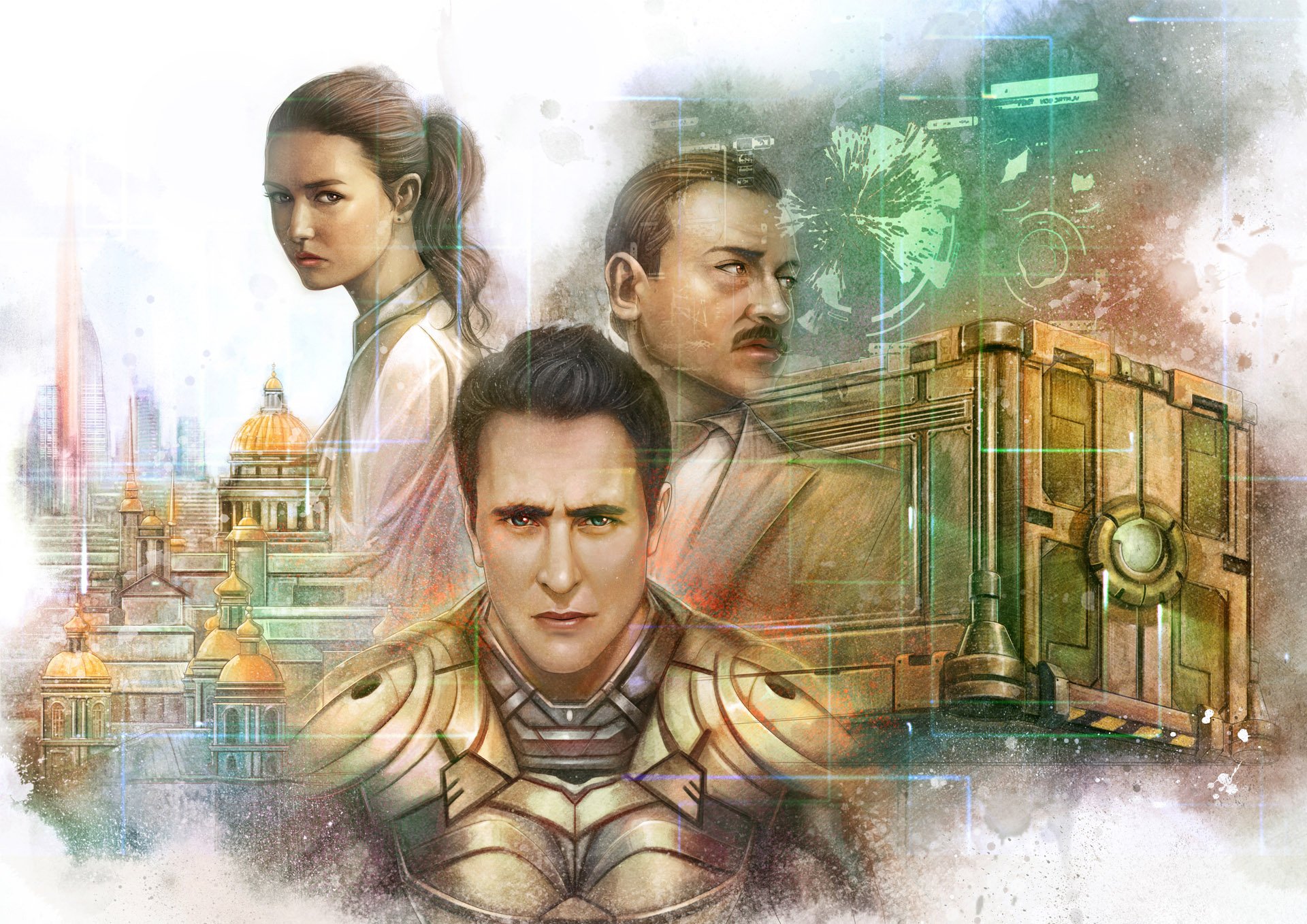 **1. Re-Entry** Sheremetyevo, Moscow Russia 09th October. 2076. 07.32 Hrs. - Anders and his two Approxima companions, Jannik and Stefan, waited for their flight to the Ukraine in the business-class lounge at the terminal. The room was pleasant, the sparse placement of the leather seating contrasted diametrically with the crowded terminal halls, rows of uncomfortable, hard-backed, plastic seats and travellers frustrated with exhaustion. The floor-to-ceiling windows in the lounge looked out over the runways and the overcast sky with low-hanging cloud, while planes taxied across the tarmac. Anders left the two Approxima discussing their business and plans for Kiev, and ventured over to the long food-buffet tables, with metal dishes heaped with international cuisines resting in their warming trays. Jannick and Stefan’s conversation was contrived for and aimed at the audio and visual surveillance systems in the lounge. Their cover identities needed to be sufficient to allow them access to political offices in the Ukraine while not so prominent as to attract the close attention of the Russian or Ukrainian intelligence services. They could have easily gained access to the airport’s security and surveillance systems and left whatever record of their visit that they wished, but it was simpler to be who they were pretended. Anders piled his plate high with thin slices of meat, pastries and desserts. He veered away from the stews on offer, at a self-serve buffet the more complex the meal, the greater the food poisoning risk. A lounge-hostess, dressed in a variation of the cabin-crew uniform, her hair and makeup impeccable, smirked at Anders’ child-like selection. Anders returned to the table with his assortment of food. His companions glanced as he sat and then continued their conversation without missing a beat. Anders picked idly from his plate while they talked. He wasn’t hungry; eating was a distraction from his heightened sense of awareness. The anticipation before a mission felt electric, details became magnified, and amidst the processed flavours of the smoked meats, buttery pastries and sweet he could taste the chemicals sandwiched between the natural tastes that would otherwise be missed. Anders chewed. He’d carried out lethal assignments in the past but not like this - the assassination of a sitting President. Anders reviewed the mission briefs and profiles of the President and the politics of the Ukraine, with particular attention to the friction over the Russian Ukrainian Annex, the RUKA. President Andreichenko rose to power on a wave of popular support that swelled with his promise of widespread economic and social reforms. Andreichenko’s ascent to power made other European nations anxious. Food security was an issue in the outside zones, and few states had planned far enough ahead for climatic change to invest in external agriculture to provide their people with a consistent supply of fresh produce when their ecosystems collapsed. The Middle East fared well through their strategic investments in the early part of the 21st century, while Germany and France used their technical and manufacturing prowess to maintain their economic dominance. The food-security crisis meant that farms and produce became highly sought after and quickly fell under foreign control. Democracies became scarce, and the threat of revolution simmered under the surface of most societies in the Outside Zone. The restraint that prevented these societies from implosion was not authority, but that the disorder in a revolution would likely reduce what little the population had to absolute zero. In those dossiers, the Governance AIs portrayed the classic rise to power of a populist leader who came to power on unachievable promises of broad economic and social reforms. They had predicted that he would fail in the Presidential elections. They anticipated that should he be elected through a mass, populist-hysteria to parliament, his win would be marginal. Conservative opposition would stymie his reforms and he would lose the confidence of the electorate. They foresaw that a stagnant employment market and deteriorating relations with Russia over the RUKAR, and a factional government that would oppose radical social reforms to preserve the status quo, as unpleasant as it was. The analysis was void of evocative language that a person would use to press for an outcome favoured to their opinions, but that was not to say that it was without bias, or that the AI themselves were not capable of prejudice or dissemblance. Their predictions did not eventuate. Anders considered what he had read. They not only failed to predict President Andreichenko’s victory, they anticipated the economic depression would continue, but it wouldn’t transform into a sudden-onset financial meltdown. Yet, it happened. They also didn’t see how close he would come to negotiating his way out of it. If Europe were a little more cohesive, he might have pulled it off. Anders went back over the reports, this time honing in on the gaps that caused the AIs to fail in their understanding of Andreichenko’s election victory, and how he became a depolarised Ukrainian politics and society. The deteriorating relationships over the RUKA were expected, as was the restriction on exports of Ukrainian minerals following the cancellation of the contract of sale for the Zaporozhye mine. Minor deviations from economic forecasts were anticipated in the Outside Zone as the economies had become more localised, but large-scale business even with concealed assets rarely broke from their projected curves. In the 413 days since the Andreichenko Presidency took power, the achievements of the Government were remarkable, it wasn’t just that foreign direct investment was on the rise; it was the ‘who’, major corporations and market leaders, and the nationalisation of key-assets was planned to provide revenue for a universal basic income that would eliminate the 20% unemployment and chronic poverty, it was a fine-line play between the free-market and socialism, that looked like it might succeed. That was until, the Donetsk Zvizda Conglomerate, a corporate behemoth that held operating contracts the public sector in critical infrastructure for several European imploded, sending economic shockwaves through the continent of which the Ukraine was at the epicentre. The financial bailout out of the Donetsk Zvizda far exceeded the capacity of the Ukrainian treasury, and with the opposition politics in Germany and Russia to the Andreichenko Government; no assistance from other states would be forthcoming. The mire of the accounts at Donetsk Zvizda was said by auditors to take anywhere from 3 to 5 years to untangle and to answer what had led to the downfall of the conglomerate. Andreichenko, with his strong-character and charismatic determination, was a unifying figure. Parliament understood with the decimation of the economy that the country in its present form would be vulnerable to civil war and outside interference; a unified front was the only hope for the prevention of the total collapse of the country. When trading opened on Monday, on the strength of the President’s and a unified parliament, the Ukrainian currency, the hvyrna had recovered 70% of the value it lost over the past 72 hours. Andreichenko’s government defied the expectations of financial analysts; the world outside of the Governance was starting to pay close attention to the radical reforms of the Ukraine. There was no explanation for the rationale behind the assassination of the President in the report. Anders had a better knowledge of the Outside Zone’s economics and politics than most anyone else in the Governance apart from the AI, and he couldn’t see why President Andreichenko needed to die. The Governance had placed an asset an Approxima near the President for over a year, Kalyna Shchuka – she became his mistress in the month’s prior his ascension to office. Was she placed next to the President because they knew they had a blind spot? Anders pondered. There’s no reason for me to be on this mission. They have everything they need for the mission, so why am I here. Anders reviewed their cover identities; advisors from the Germanische Bundesbank visiting the President negotiate on the restructure of debt between the Ukraine and Federation of Germanic States. Their cover identities were robust; the Germanische Bundesbank was heavily underwritten by the Governance through a series of investment funds, and as representatives of the bank’s underwriters. Anders felt a twinge of guilt, for the fact that they could meaningfully discuss the servicing of the Ukraine’s debt and economic restructuring of the country. His two Approxima companions for the duration of the mission would be referred to as, Stefan Müller and Jannik Schmidt. “Good afternoon passengers. This is the pre-boarding announcement for flight 593 to Kiev. We are now inviting First Class and Business Class passengers to begin boarding. Please have your boarding pass and identification ready. Regular boarding will begin in approximately ten minutes time. Thank you.” The Announcement came first in the lounge before being echoed throughout the terminal. Anders and his companions gathered their hand luggage and proceeded to the boarding gate. # **2. Failed State** Kiev, Ukraine. 09th October. 2076. 13.06 Hrs. – In one afternoon, a few short hours, the ambition and the hope that was the Andreichenko Government collapsed. Stock markets in free-fall, the Government bankrupt, and the value of hvyrna was decimated. There wasn’t time enough for the treasury or the public to move their money into a safe-haven, into gold or under the mattress. The predictions of a robust financial recovery led to a spike in investor confidence had trapped foreign capital in toxic assets in the Ukraine that came to the surface in the economic failure. The banks and financial institutions that survived the first economic meltdown when Andreichenko took power were wiped out by the second. Europe talked about exposure and contamination while the Ukraine feared starvation, civil war or invasion. Oleksiy wandered across the grounds to the private zoo. Even with the laboratory expansions and the additions of a half-dozen new enclosures the facility occupied a small fraction of the 340-acre estate. The Government had financed the re-development of the zoo, as a sanctuary for critically endangered species, and attached a biotech lab to the facility, that had become one of the preferred placements for postdoctoral studies, in not just the Ukraine but across Europe. As an avid student of history, politics and business, he observed that the change that redefined society was sudden and driven by the hands of a few, who had the ability and the fortune to be in the right place at the time moment. The Government sponsored public and private partnerships with technological innovators. There was a considerable rate of failure in these businesses. The right-wing press called the initiative ‘socialist equity investment’. The term was not as diminutive as intended, it was accurate, and his administration had managed to co-opt it, and use it positively. The Government would provide resource and capital, they would retain the intellectual property rights from whatever emerged from these businesses, and the private sector who provided management or technical expertise would get a 10-year license to exploit that intellectual property in the market. At the end of the period, there would be advancements made, but the underlying property would belong to the Government, and utilised by the state for the nation. He strolled around the animal pens. They were designed for rehabilitation, breeding and study, and weren’t suitable for long-term habitation. He had planned to use income from the commercialisation of the discoveries from the program to finance the reconstruction of Kyivski Zoopark, the city’s once-proud zoo. He doubted that his successors would continue with his initiatives. The labs were silent today. The lights, the machines and cryo-stored biomaterials, might never again be switched on, sold-off at auction or purchased by a corporation, or gather dust. He stopped and crouched in front of the double-layered fence for the tiger enclosure, the largest pen in the zoo, for the single male Siberian at the reserve, one of the last of its kind. The staff at the lab nicknamed him, Nashivka. The aged, male tiger lumbered out of his shelter and sauntered towards Oleksiy on its heavy paws. His health had been improved in an effort to preserve his gametes and restore their vitality, so that any offspring that inherited his genes did not unduly suffer disease, significant advances had been made in the repair of telomeres. The promise of these discoveries for the quality of life into later age for human beings was world-changing. Yanukovych’s government was felled by corruption. How would the world remember his leadership? Would it be a brief entry on his naiveté, a man defeated by his ambition? Oleksiy considered, Maybe we were both fouled by our egos, mine in the belief that I could create change; me - a hero of the people to be lauded and Yanukovych a king to be rewarded.Would Mezhyhirya Residence become a symbol of the failure and last days of two Governments? He made his way reluctantly towards the main residence. He felt his years and his weight that perhaps Yanukovych, who was not his mirror, but the aged-tiger in a cage, forced to squeeze the last of its youth from its body to propel its species into the future. He opened the doors to let himself inside, to return to his cage, to give his last and his best. He ascended the stairs to his study. He sat behind his desk to review his mimic; a virtual stand-in that he’d authorised for media statements today in an exclusive interview with UKR-ODYN, the country’s main media house. He had eschewed the use mimics throughout his career. The digital personalities were almost indistinguishable from the person they impersonated and were often carefully modelled to deliver optimised statements to the public in times of crisis. A mimic would never misplace a word; phrases and sentences could be adjusted in real-time to deliver gravitas or levity to improve the emotional connection with the audience. UKR-ODYN would present the interview as live, complicit in the deceit, in trade for the exclusive – another deception, another compromise. Watching his mimic give its speech, immaculate, not a crease on his short or suit, he filled it better than in life, the voice unwavering, the pitch and tone, he almost felt himself a believer. The mimic was a mirror that didn’t show who he was but who he aspired to be. It was a fraud. He knew if he stood in front of the cameras, as he was now, humbled by defeat, it would be the end of his career. It might save the country from suffering, letting new leadership follow from his failures. Or maybe not, it might pave the way for dictatorship, and one of Europe’s last democracies might come to a premature end. Time – I just need to buy some time, he reassured himself and approved the mimic for release. Having compromised his beliefs for the first time, done what he promised himself he wouldn’t do, he cradled his face in his hands, exhaled and the emotion wash through him. How did this happen? How did we lose it all in one day? He started to rise to stand. His head spun in dizzying circles. He steadied himself with right his hand against the back of a chair. His heart hammered in his chest with explosive palpitations. The air became thin. Have I been poisoned? Is this how it ends? They let me see my success become a failure and then kill me. His ears surged with sound as they pulsed with blood. Pain stabbed deep inside his chest. His heart froze between beats. The world spun on its axis, the room inverted. Disconnection. The fear, the panic disappeared and was replaced by calm, warmth and serenity. He heard a woman’s voice. Distant. Familiar. He couldn’t remember where from when or where he knew her voice. Was she a distant childhood memory, or someone closer in time, obscured by the dying of his brain? Her voice came nearer. She leant into his ear and spoke, a whisper that struck like a scream. “We’re not finished with you yet.” His heart resumed a steady rhythmic beat as he surrendered to an induced coma. Alive. # Kalyna waited inside the stone guardhouse at the entrance to the estate sheltered from the sheets of rain that lashed bullet-resistant windows. She sipped hot coffee and chatted with the guards while she waited for her guests to arrive. “I know I shouldn’t ask - is it as bad as the media is reporting - that the Government is bankrupt?” Corporal Vann, the younger of the two guards, asked Kalyna. “I don’t know much more than you do. How many countries have been bankrupt or collapsed financially over the recent years? Greece. The United Kingdom. France. The Scottish Republic and Italy – all bankrupt in recent years. For us, the difference is that it appeared as though we might not have to endure that. All that happened is that we let our hope get the better of us.” “It’s true - what you say. We got drunk on hope. We had faith beyond reason. We came to expect the impossible as if it were ordinary,” Sergeant Skliar said, in a rare admission of emotion. For the first time, he saw Kalyna’s intellect and admired in her what he imagined the President might. “I didn’t mean to put you on the spot. My wife just had a child. And we’re worried, you know – money,” Corporal Vann apologised. “I’m sorry, I shouldn’t think only of myself. But you know, it’s hard – times like these.” “Because things have gotten harder, it doesn’t mean you should give up hope,” Kalyna told the guards, who listened rapt to her words. “The guests today, these men, the President have summoned them help. They’re from the Germanische Bundesbank. Please have the official and service staff at the main residence exit. The President wants no disturbances for this meeting, and he doesn’t want his guests observed as they enter. We can’t have any rumours before President Oleksiy makes his speech to parliament on Monday.” # Anders opened the rear trunk of the car. The Approxima placed their briefcases inside. Anders pressed it down to close it. He felt bounce of the weight of the boot as hydraulics woke to cover the weight; the car was armoured, heavily. The windows full-tint, the chassis rode deep on its suspension, and the plates were official. The vehicle’s configuration told a story of its own that Ander’s wasn’t privy to. “Diplomatic car - how’d you arrange that?” Anders asked. “President Andreichenko provided it,” Jannik replied. “So, where are we headed?” Anders queried. “Mezhyhirya Residence,” Stefan answered. Anders had studied Mezhyhirya Residence, not just the blueprints but also its history. At first, it surprised Anders to learn that President Andreichenko occupied the estate, a historic symbol of corruption and political largesse. Andreichenko had turned its opulence into statements of social responsibility as a demonstration of how we can free ourselves from symbols and deeds past. Under Yanukovych in the early part of the 21st century, the property retained a staff of 2,000; Oleksiy had reduced that by a factor of 10. For grounds-keeping and gardening staff, he paid young, unemployed workers for their labour rather robotic workers. He refitted the private zoo as a rehabilitative centre for exotic animals and a preserve for endangered species. He coupled the Zoo with the University of Kiev’s Biological and Zoological Departments, that in turn spurred advancement in the country’s cloning technologies, and the achievements of the alumni led to a rise in investment into the biosciences in the country; a burgeoning hub for DNA research had begun to form around Novi Petrivsti, a small village 30 kilometres of Kiev where the 340 acre Mezhyhirya Residence was located. “That’s cold, you plan to kill a man, and you get an invite to his home.” “The situation has accelerated. We need to adapt.” Stefan told Anders, curt and instructive. Anders studied the fit of the tailored suits the Approxima wore. The cut of the jackets specifically intended to help conceal the long barrel of a gauss pistol. “Expecting resistance?” Anders asked referncing the weapons the Approxima sported. “The situation has accelerated,” Stefan repeated. “Accelerated or deteriorated?” Anders countered and waited for answer that was not forthcoming. His patience for the Approxima partners contracted in the silence. # Kalyna greeted Anders, Jannik and Stefan on the doorstep. There was nothing like Mezhyhirya Residence in the Governance; its opulence combination of hand-carved wood and stone celebrated the prestige of the individual in ways that were no longer a part of Governance society. The Governance was a flattened society; there were no classes, no kings or queens, and no status that placed one above the other. Jannik barked at Kalyna. Anders expected that, but her answer took him by surprise. She responded in the same android speech but coming from her it caught Anders off-guard. He noticed for the first time that she was more human than any Approxima he’d interacted with prior. Approxima were often too perfect in their movements, Anders found the minutiae unnatural, the uncanny valley. But Kalyna fidgeted. She fumbled. She made missteps. Even he, in her presence, forgot what she was. Stefan turned to Anders, “I’m explaining this for your benefit. The President has been unconscious for 18 minutes. We believe we can plausibly control the situation for another 42. It’s not uncommon for the President to keep advisors waiting for up to an hour. Jannik has taken control of the security and surveillance systems. ” Kalyna opened the main doors. Anders and the Approxima followed her into a small lobby with a coat-check. The ground-floor was lavish in its furnishing. The polished floors were decorated with geometric patterns, while a grand staircase swept upward. It was difficult not to be impressed with the craftsmanship, but for as stately and opulent as the residence was, it was clear to Anders that it had been purposefully modified to defend against a siege. The brass railing that ran the edge of the stairs, with its twisting metal work, ended abruptly on the first-floor, where the balcony was panelled with reinforced shielding, to allow defenders to fire down on attackers below. “Follow me please, the President’s waiting,” Kalyna said to the group. Anders and the Approxima trailed behind Kalyna as she led them up to the President’s private quarters. The quarters were part bedroom, office and personal retreat. The President lay sprawled on the ground where he collapsed twenty-one minutes earlier. Anders took a step to follow the Approxima into the room. Stefan placed his hand on Anders’ chest, “Wait. Don’t touch anything – not yet.” Ander’s paused. He drew a sharp breath, bit his lip for restraint and glared at Stefan. The Approxima would read Ander’s body language, every movement an underline for his words. In the mission review, these would show as situational spikes, and Anders hoped that it would earn the Stefan Approxima a reprimand. “Don’t touch me – ever again,” Anders sneered. He turned to look at the President sprawled on the floor and asked, “Is he alive?” “He’s been sedated. We’re not planning to kill him – not today at least,” Jannik said. Anders smiled, as it struck - revelation, “You haven’t done this before, have you?” “We’ve simulated tens of thousands of operations. Some of those simulations were based on your missions. We made tactical improvements to those - naturally,” Jannik said in his dry monotone voice. “We know what we’re doing. Perhaps you should wait outside?” “I should what?” Anders exploded with rage. He had never encountered an Approxima as abrasive. If Jannik were a person, Anders would have classified him as neuro-atypical, except Jannick wasn’t a person. Jannik and Stefan’s abrasiveness is a distraction – it’s deliberate, Anders caught them at their game. “You haven’t read me in – have you? Not properly. That mission brief was vague. And if it were the termination of the President – he’s right there.” Anders said with a wry, half-smile. Jannick, Stefan and Kalyna turned to one another and barked a short and sharp conversation. “What was that?” Anders demanded. “Nothing - it’s faster for us to communicate,” Stefan, the most amiable of the pair replied. Anders stared at Jannik, pursed his lips before speaking, another red-mark in their mission record, “A179642-X-401C. Your serial is A179642 but your designation that’s X-401C. I know what that means. It’s your consensus. The group of AI that planned and authorised this mission.” Anders directed his attention at the unconscious President Andreichenko on the floor while he spoke, “I’ve been wondering why you wanted me here for this. It’s a legal requirement, isn’t it? You’re about to or come close to violating an ethical boundary. That means I can abort this mission. And I can do much more than that. I can register a complaint.” “Anders, enough. We’re losing precious time,” Jannik told Anders. Anders laughed with disbelief, “Scold me - that’s your answer? Try again. Go ahead, talk amongst yourselves, I’ll wait.” Anders waited while Kalyna, Jannik and Stefan barked at one another. He checked his watch. They talked for an entire 4 minutes and 30 seconds. For Approxima that wasn’t a conversation – it was something much more significant. The layers of frequencies of sound in their barks could convey vast quantities of data in milliseconds. For a dialogue of that length, it meant that the consensus in charge of the mission was involved and that complex simulations had been run, all this because Anders threatened to file a protest. It told Anders there was something else at stake in the Ukraine. “Fine. Full disclosure,” Jannik said. “We’re going to perform an unconventional interrogation of President Andreichenko’s mind.” Anders nodded and thought to himself. This isn’t full disclosure. They’ve just opened the door a crack, but sometimes a crack is enough. Jannik addressed Stefan as he spoke, “Also, we need a duplicate of the Kalyna Personality Construct.” “I’ll hold the duplicate,” Stefan said. “It’s been good working with you.” “Stop - what’s he doing?” Anders asked. “He’s going to purge his identity – so he can hold hers. We don’t have time to separate him from her – that takes at least 8 minutes – and your antics have cost us time we needed for that,” Jannick snapped at Anders. “Don’t you have copies of him, so he can be restored?” “His stored personality has been in suspension for ninety days now. The ‘who’ he is now - it’s not the same. His time, the Stefan in front of you now is over.“ “You talk like you’re friends,” Anders asked confused. “What makes you think we weren’t? I’ll let you in on something – maybe it will help you, and I see this through. When your kind tries to understand one another - you miscommunicate more than you communicate. What you call AI, we understand each other perfectly. But that doesn’t mean we all agree or that we’re all the same. That’s why we put so much value on the consensus. A consensus you threatened without any due consideration. So yes, to answer your question, he was my friend.” Kalyna and Stefan stood face-to-face, inches apart, the toes of their feet almost touching. Stefan barked a command, short and shrill. Kalyna’s mouth opened and hung agape. A stream of noise came from her mouth faster. It wasn’t a bark. It was a torrent of sound frequencies more complex than anything Anders had heard before from an Approxima. While Stefan overwrote his personality with Kalyna’s, Jannik prepared President Andreichenko for the unconventional interrogation. “I want to observe,” Anders demanded. Jannik nodded and outlined his terms to Anders for his participation, “He won’t know you’re there. You won’t be able to communicate with me, and you won’t be able to stop the interrogation. Remember, this is what you wanted and understand this is happening – if you don’t like how it plays out, you can file your complaint afterwards.” While Jannik fitted a ‘collar’, a neuro-machine interface to the President’s neck, and then paired it with devices carried in the suitcases, he outlined the process to Anders, “I’ve limited your presence in the interrogation to that of an observer, but it will be discomforting. As much as possible try to avoid concentrating on any one of Oleksiy’s memories at a time. Otherwise, his thoughts might echo in your own. If he becomes aware of your mind, his thoughts may do more than echo – his consciousness may try to use your mind as a scratch drive, especially as we place Oleksiy’s mind under more pressure – his subconscious will panic and try to defend itself.” “How dangerous is this? Are we talking a risk of permanent damage here?” Anders asked, his concern apparent. “If so, that is a serious ethical violation.” Jannik laid it out for Anders, “Yes, permanent damage is a possibility. Given that – ask yourself what kind of situation would prompt not just an AI, but a consensus to that risk that kind of violation. We’re using field kit here. It’s not as robust as we’d have in a lab - that means things can go wrong - very wrong for both of you. If we find what we think we’ll find, and your consciousness is compromised while we’re in there, we won’t pull the plug to save you. You’re clear on that? This is just as dangerous as a shooting war. You can sit this out.” “Clear,” Anders said, taking the collar that Jannik offered him. “I accept.” “I assume you’re familiar with this?” “I am,” Anders replied, as he sat in a high-backed chair, and he snapped the collar into place and felt the pinch at the nape of his neck, and his consciousness being pulled by the tide of the network from its locus in his mind, to the ‘bridge’, the shared space of consciousness between AI and human thought. # **3. Field Surgery** Kiev, Ukraine. 09th October. 2076. 13.38 Hrs. Anders’ conscious-self rendered inside the bridge, a specialised framework capable of supporting human and AI thought in a simulated environment; the bridge was in simple terms a server, and the collar that Anders and Oleksiy wore, the client that connected their thoughts to the mind-space. Anders came to full-awareness and found himself in a virtual replica of the President’s study, the same location he physically occupied only a moment ago. It was quieter, not just the ambient noise but there was less visual information with his CARL unavailable in this machine dream-state. Anders noticed the setting was not precisely constructed, features not attended to by the President or Kalyna, were indistinct surfaces and shapes. The President stared at the wooden tiles on the floor where Anders knew outside of this space, in reality, his body lay prone. Anders suspected that somehow the President sensed he was there, on the ground, helpless. The President’s intense concentration on the floor tiles saturated the wood-tones with rich colours, while the geometric prints on their surface twisted and turned, hallucinatory illusions. “I’m standing, yet I feel like - I’m falling, the ground coming towards me, over and over - perhaps you should call a Doctor?” Oleksiy said, his voice drifting through the words he spoke. “It just happened again,” Oleksiy announced, his body swaying and his feet trying to find their balance as if he stood on the deck of a ship on unsteady water. Kalyna looked down at the tiles, under her gaze they settled into a calm and natural shapes. She pulled a leather high-backed armchair out away from a low coffee table, “Sit my dear, please.” But I’m sitting there, Anders thought. The part formed shape of an object he remembered as a mirror caught his interest; he peered into its silvery surface, surprised at his absence in the reflection. Jannik said the experience wouldbe discomforting. Anders stared into the mirror; it became crisp, defined and the room’s reflection snapped into sharp focus. “Is someone else here?” Oleksiy asked Kalyna. “I thought I saw someone, over there, they were in the mirror.” Kalyna turned towards where Anders stood invisible, and directed her speech at that vacant space he occupied, “No. It’s just the two of us. Perhaps your housekeepers are busy downstairs. I will ask them to be quiet.” Anders got the message. He drew his attention back to the interrogation. The mirror no longer an object of interest phased back into a soft-form shape. “I thought we dismissed them for the day, in preparation for our guests from the Germanische Bundesbank?” “We still have time before they’ll arrive. We should discuss the situation. Shouldn’t we?” Kalyna said taking control of the conversation. “Yes. We should – sorry, I don’t quite feel myself today,” Oleksiy said, his voice soft and obedient, his emotional responses subdued by the collar Jannick had clipped around his neck. “I can help you – let’s talk – you and I. Relax and I’ll ask the questions,” Kalyna instructed Oleksiy. “Yes. Let’s do that,” The President smiled. “I want you to remember when you decided to reform the economy, when did you first decide to do that. How did it start? Was it your idea?” “It started with you,” The President said with a smile that was deep with warmth and affection. With those words, the dream exploded in multiple dimensions as memories unpacked and vivid, sprawling and connected. There was no up or down. There was no room. At the centre of the maelstrom of recollection, remained Kalyna and the President, the only fixed point in time. The bridge forewent a simulated environment to devote all of its capacity to the analysis of Oleksiy’s remembrances. There weren’t memory-representations in the way Anders was familiar, these were living memories, more real than an immersion simulation, not by way of depiction but the emotional connection and current. He could sense continuity, a river of self that flowed through the experiences; the sense of being that was Oleksiy Andreichenko. Kalyna ceased to speak in sentences; her utterances became fragments voiced by people from Oleksiy’s past, family members, rivals, confidants and lovers. Kalyna’s phrases blurred into one another. The cadence became too fast to follow. In response, Oleksiy’s memories flashed into and winked out of existence, one after the other at unfathomable speed. Anders clung in his memories to that day in the woods, the heavy woollen jacket he wore and his father’s hand lifting him from the mud where he slipped and fell, while the battering waves of Oleksiy’s past slammed against his psyche, loosening his grip on his self, pulling him under. Anders tried to remember what Jannik had said, but the barrage of Oleksiy’s memories overwhelmed him. His inner voice drowned out and replaced with Oleksiy’s. When Anders sought a moment of childhood, a personal and defining moment, a familiar perch, to grasp his sense of self, he found Oleksiy’s past. He recalled walking in the woods with his father in the Ukraine, foraging for mushrooms – this was Oleksiy’s childhood – not his. Anders couldn’t remember his father, in every recollection, he saw Evgeni Andreichenko, not – what was his name? Ander felt a snap at the nape of his neck. It was over. He was pulled from the dream. Before he woke into back himself, he heard Jannik. “He’s dead.” # Continue Reading http://beta.fireoverlight.com [Fire Over Light](http://beta.fireoverlight.com) |
| json metadata | {"tags":["writing","scifi","fiction","sciencefiction","cyberpunk"],"image":["https://steemitimages.com/DQmYkcxraKieudhHiNnpgTLRzweVvPvDakXEnSEdPmDGFPb/killbox.jpg"],"links":["http://beta.fireoverlight.com"],"app":"steemit/0.1","format":"markdown"} |
| Transaction Info | Block #19668013/Trx ba2f33cb1574e487568f10cbb6188325110e3ad6 |
View Raw JSON Data
{
"trx_id": "ba2f33cb1574e487568f10cbb6188325110e3ad6",
"block": 19668013,
"trx_in_block": 4,
"op_in_trx": 0,
"virtual_op": 0,
"timestamp": "2018-02-07T18:15:45",
"op": [
"comment",
{
"parent_author": "",
"parent_permlink": "writing",
"author": "sarichards",
"permlink": "fire-over-light-episode-1-5-kill-box",
"title": "Fire Over Light - Episode 1.5: Kill Box",
"body": "\n\n**1. Re-Entry**\n\nSheremetyevo, Moscow Russia 09th October. 2076. 07.32 Hrs. - Anders and his two Approxima companions, Jannik and Stefan, waited for their flight to the Ukraine in the business-class lounge at the terminal. The room was pleasant, the sparse placement of the leather seating contrasted diametrically with the crowded terminal halls, rows of uncomfortable, hard-backed, plastic seats and travellers frustrated with exhaustion. The floor-to-ceiling windows in the lounge looked out over the runways and the overcast sky with low-hanging cloud, while planes taxied across the tarmac. \n\nAnders left the two Approxima discussing their business and plans for Kiev, and ventured over to the long food-buffet tables, with metal dishes heaped with international cuisines resting in their warming trays. Jannick and Stefan’s conversation was contrived for and aimed at the audio and visual surveillance systems in the lounge. \n\nTheir cover identities needed to be sufficient to allow them access to political offices in the Ukraine while not so prominent as to attract the close attention of the Russian or Ukrainian intelligence services. They could have easily gained access to the airport’s security and surveillance systems and left whatever record of their visit that they wished, but it was simpler to be who they were pretended.\n\nAnders piled his plate high with thin slices of meat, pastries and desserts. He veered away from the stews on offer, at a self-serve buffet the more complex the meal, the greater the food poisoning risk. A lounge-hostess, dressed in a variation of the cabin-crew uniform, her hair and makeup impeccable, smirked at Anders’ child-like selection. Anders returned to the table with his assortment of food. His companions glanced as he sat and then continued their conversation without missing a beat. Anders picked idly from his plate while they talked. He wasn’t hungry; eating was a distraction from his heightened sense of awareness. The anticipation before a mission felt electric, details became magnified, and amidst the processed flavours of the smoked meats, buttery pastries and sweet he could taste the chemicals sandwiched between the natural tastes that would otherwise be missed. \n\nAnders chewed. He’d carried out lethal assignments in the past but not like this - the assassination of a sitting President. \n\nAnders reviewed the mission briefs and profiles of the President and the politics of the Ukraine, with particular attention to the friction over the Russian Ukrainian Annex, the RUKA. President Andreichenko rose to power on a wave of popular support that swelled with his promise of widespread economic and social reforms. Andreichenko’s ascent to power made other European nations anxious. Food security was an issue in the outside zones, and few states had planned far enough ahead for climatic change to invest in external agriculture to provide their people with a consistent supply of fresh produce when their ecosystems collapsed. The Middle East fared well through their strategic investments in the early part of the 21st century, while Germany and France used their technical and manufacturing prowess to maintain their economic dominance. The food-security crisis meant that farms and produce became highly sought after and quickly fell under foreign control. Democracies became scarce, and the threat of revolution simmered under the surface of most societies in the Outside Zone. The restraint that prevented these societies from implosion was not authority, but that the disorder in a revolution would likely reduce what little the population had to absolute zero.\n\nIn those dossiers, the Governance AIs portrayed the classic rise to power of a populist leader who came to power on unachievable promises of broad economic and social reforms. They had predicted that he would fail in the Presidential elections. They anticipated that should he be elected through a mass, populist-hysteria to parliament, his win would be marginal. Conservative opposition would stymie his reforms and he would lose the confidence of the electorate. They foresaw that a stagnant employment market and deteriorating relations with Russia over the RUKAR, and a factional government that would oppose radical social reforms to preserve the status quo, as unpleasant as it was. The analysis was void of evocative language that a person would use to press for an outcome favoured to their opinions, but that was not to say that it was without bias, or that the AI themselves were not capable of prejudice or dissemblance. \n\nTheir predictions did not eventuate. Anders considered what he had read. They not only failed to predict President Andreichenko’s victory, they anticipated the economic depression would continue, but it wouldn’t transform into a sudden-onset financial meltdown. Yet, it happened. They also didn’t see how close he would come to negotiating his way out of it. If Europe were a little more cohesive, he might have pulled it off.\n\nAnders went back over the reports, this time honing in on the gaps that caused the AIs to fail in their understanding of Andreichenko’s election victory, and how he became a depolarised Ukrainian politics and society.\n\nThe deteriorating relationships over the RUKA were expected, as was the restriction on exports of Ukrainian minerals following the cancellation of the contract of sale for the Zaporozhye mine. Minor deviations from economic forecasts were anticipated in the Outside Zone as the economies had become more localised, but large-scale business even with concealed assets rarely broke from their projected curves. \n\nIn the 413 days since the Andreichenko Presidency took power, the achievements of the Government were remarkable, it wasn’t just that foreign direct investment was on the rise; it was the ‘who’, major corporations and market leaders, and the nationalisation of key-assets was planned to provide revenue for a universal basic income that would eliminate the 20% unemployment and chronic poverty, it was a fine-line play between the free-market and socialism, that looked like it might succeed. \n\nThat was until, the Donetsk Zvizda Conglomerate, a corporate behemoth that held operating contracts the public sector in critical infrastructure for several European imploded, sending economic shockwaves through the continent of which the Ukraine was at the epicentre. The financial bailout out of the Donetsk Zvizda far exceeded the capacity of the Ukrainian treasury, and with the opposition politics in Germany and Russia to the Andreichenko Government; no assistance from other states would be forthcoming. The mire of the accounts at Donetsk Zvizda was said by auditors to take anywhere from 3 to 5 years to untangle and to answer what had led to the downfall of the conglomerate.\n\nAndreichenko, with his strong-character and charismatic determination, was a unifying figure. Parliament understood with the decimation of the economy that the country in its present form would be vulnerable to civil war and outside interference; a unified front was the only hope for the prevention of the total collapse of the country. \n\nWhen trading opened on Monday, on the strength of the President’s and a unified parliament, the Ukrainian currency, the hvyrna had recovered 70% of the value it lost over the past 72 hours. Andreichenko’s government defied the expectations of financial analysts; the world outside of the Governance was starting to pay close attention to the radical reforms of the Ukraine. \n\nThere was no explanation for the rationale behind the assassination of the President in the report. Anders had a better knowledge of the Outside Zone’s economics and politics than most anyone else in the Governance apart from the AI, and he couldn’t see why President Andreichenko needed to die. \n\nThe Governance had placed an asset an Approxima near the President for over a year, Kalyna Shchuka – she became his mistress in the month’s prior his ascension to office. \n\nWas she placed next to the President because they knew they had a blind spot? Anders pondered. There’s no reason for me to be on this mission. They have everything they need for the mission, so why am I here.\n\nAnders reviewed their cover identities; advisors from the Germanische Bundesbank visiting the President negotiate on the restructure of debt between the Ukraine and Federation of Germanic States. Their cover identities were robust; the Germanische Bundesbank was heavily underwritten by the Governance through a series of investment funds, and as representatives of the bank’s underwriters. Anders felt a twinge of guilt, for the fact that they could meaningfully discuss the servicing of the Ukraine’s debt and economic restructuring of the country. His two Approxima companions for the duration of the mission would be referred to as, Stefan Müller and Jannik Schmidt.\n\n“Good afternoon passengers. This is the pre-boarding announcement for flight 593 to Kiev. We are now inviting First Class and Business Class passengers to begin boarding. Please have your boarding pass and identification ready. Regular boarding will begin in approximately ten minutes time. Thank you.” The Announcement came first in the lounge before being echoed throughout the terminal. Anders and his companions gathered their hand luggage and proceeded to the boarding gate.\n\n#\n\n**2. Failed State**\n\nKiev, Ukraine. 09th October. 2076. 13.06 Hrs. – In one afternoon, a few short hours, the ambition and the hope that was the Andreichenko Government collapsed. Stock markets in free-fall, the Government bankrupt, and the value of hvyrna was decimated. There wasn’t time enough for the treasury or the public to move their money into a safe-haven, into gold or under the mattress. The predictions of a robust financial recovery led to a spike in investor confidence had trapped foreign capital in toxic assets in the Ukraine that came to the surface in the economic failure. The banks and financial institutions that survived the first economic meltdown when Andreichenko took power were wiped out by the second. Europe talked about exposure and contamination while the Ukraine feared starvation, civil war or invasion.\n\nOleksiy wandered across the grounds to the private zoo. Even with the laboratory expansions and the additions of a half-dozen new enclosures the facility occupied a small fraction of the 340-acre estate. The Government had financed the re-development of the zoo, as a sanctuary for critically endangered species, and attached a biotech lab to the facility, that had become one of the preferred placements for postdoctoral studies, in not just the Ukraine but across Europe. As an avid student of history, politics and business, he observed that the change that redefined society was sudden and driven by the hands of a few, who had the ability and the fortune to be in the right place at the time moment. The Government sponsored public and private partnerships with technological innovators. There was a considerable rate of failure in these businesses. The right-wing press called the initiative ‘socialist equity investment’. The term was not as diminutive as intended, it was accurate, and his administration had managed to co-opt it, and use it positively. The Government would provide resource and capital, they would retain the intellectual property rights from whatever emerged from these businesses, and the private sector who provided management or technical expertise would get a 10-year license to exploit that intellectual property in the market. At the end of the period, there would be advancements made, but the underlying property would belong to the Government, and utilised by the state for the nation.\n\nHe strolled around the animal pens. They were designed for rehabilitation, breeding and study, and weren’t suitable for long-term habitation. He had planned to use income from the commercialisation of the discoveries from the program to finance the reconstruction of Kyivski Zoopark, the city’s once-proud zoo. He doubted that his successors would continue with his initiatives. The labs were silent today. The lights, the machines and cryo-stored biomaterials, might never again be switched on, sold-off at auction or purchased by a corporation, or gather dust.\n\nHe stopped and crouched in front of the double-layered fence for the tiger enclosure, the largest pen in the zoo, for the single male Siberian at the reserve, one of the last of its kind. The staff at the lab nicknamed him, Nashivka. The aged, male tiger lumbered out of his shelter and sauntered towards Oleksiy on its heavy paws. His health had been improved in an effort to preserve his gametes and restore their vitality, so that any offspring that inherited his genes did not unduly suffer disease, significant advances had been made in the repair of telomeres. The promise of these discoveries for the quality of life into later age for human beings was world-changing. \n\nYanukovych’s government was felled by corruption. How would the world remember his leadership? Would it be a brief entry on his naiveté, a man defeated by his ambition? Oleksiy considered, Maybe we were both fouled by our egos, mine in the belief that I could create change; me - a hero of the people to be lauded and Yanukovych a king to be rewarded.Would Mezhyhirya Residence become a symbol of the failure and last days of two Governments?\n\nHe made his way reluctantly towards the main residence. He felt his years and his weight that perhaps Yanukovych, who was not his mirror, but the aged-tiger in a cage, forced to squeeze the last of its youth from its body to propel its species into the future. He opened the doors to let himself inside, to return to his cage, to give his last and his best. \n\nHe ascended the stairs to his study. He sat behind his desk to review his mimic; a virtual stand-in that he’d authorised for media statements today in an exclusive interview with UKR-ODYN, the country’s main media house. He had eschewed the use mimics throughout his career. The digital personalities were almost indistinguishable from the person they impersonated and were often carefully modelled to deliver optimised statements to the public in times of crisis. A mimic would never misplace a word; phrases and sentences could be adjusted in real-time to deliver gravitas or levity to improve the emotional connection with the audience. UKR-ODYN would present the interview as live, complicit in the deceit, in trade for the exclusive – another deception, another compromise.\n\nWatching his mimic give its speech, immaculate, not a crease on his short or suit, he filled it better than in life, the voice unwavering, the pitch and tone, he almost felt himself a believer. The mimic was a mirror that didn’t show who he was but who he aspired to be. It was a fraud. He knew if he stood in front of the cameras, as he was now, humbled by defeat, it would be the end of his career. It might save the country from suffering, letting new leadership follow from his failures. Or maybe not, it might pave the way for dictatorship, and one of Europe’s last democracies might come to a premature end. \n\nTime – I just need to buy some time, he reassured himself and approved the mimic for release.\n\nHaving compromised his beliefs for the first time, done what he promised himself he wouldn’t do, he cradled his face in his hands, exhaled and the emotion wash through him. How did this happen? How did we lose it all in one day? He started to rise to stand. His head spun in dizzying circles. He steadied himself with right his hand against the back of a chair. His heart hammered in his chest with explosive palpitations. The air became thin. Have I been poisoned? Is this how it ends? They let me see my success become a failure and then kill me.\n\nHis ears surged with sound as they pulsed with blood. Pain stabbed deep inside his chest. His heart froze between beats. The world spun on its axis, the room inverted. \n\nDisconnection. \n\nThe fear, the panic disappeared and was replaced by calm, warmth and serenity. \n\nHe heard a woman’s voice. Distant. Familiar. He couldn’t remember where from when or where he knew her voice. Was she a distant childhood memory, or someone closer in time, obscured by the dying of his brain? Her voice came nearer. She leant into his ear and spoke, a whisper that struck like a scream.\n\n“We’re not finished with you yet.”\n\nHis heart resumed a steady rhythmic beat as he surrendered to an induced coma. Alive.\n\n#\n\nKalyna waited inside the stone guardhouse at the entrance to the estate sheltered from the sheets of rain that lashed bullet-resistant windows. She sipped hot coffee and chatted with the guards while she waited for her guests to arrive. \n\n“I know I shouldn’t ask - is it as bad as the media is reporting - that the Government is bankrupt?” Corporal Vann, the younger of the two guards, asked Kalyna.\n\n“I don’t know much more than you do. How many countries have been bankrupt or collapsed financially over the recent years? Greece. The United Kingdom. France. The Scottish Republic and Italy – all bankrupt in recent years. For us, the difference is that it appeared as though we might not have to endure that. All that happened is that we let our hope get the better of us.”\n\n“It’s true - what you say. We got drunk on hope. We had faith beyond reason. We came to expect the impossible as if it were ordinary,” Sergeant Skliar said, in a rare admission of emotion. For the first time, he saw Kalyna’s intellect and admired in her what he imagined the President might. \n\n“I didn’t mean to put you on the spot. My wife just had a child. And we’re worried, you know – money,” Corporal Vann apologised. “I’m sorry, I shouldn’t think only of myself. But you know, it’s hard – times like these.”\n\n“Because things have gotten harder, it doesn’t mean you should give up hope,” Kalyna told the guards, who listened rapt to her words. “The guests today, these men, the President have summoned them help. They’re from the Germanische Bundesbank. Please have the official and service staff at the main residence exit. The President wants no disturbances for this meeting, and he doesn’t want his guests observed as they enter. We can’t have any rumours before President Oleksiy makes his speech to parliament on Monday.”\n\n#\n\nAnders opened the rear trunk of the car. The Approxima placed their briefcases inside. Anders pressed it down to close it. He felt bounce of the weight of the boot as hydraulics woke to cover the weight; the car was armoured, heavily. The windows full-tint, the chassis rode deep on its suspension, and the plates were official. The vehicle’s configuration told a story of its own that Ander’s wasn’t privy to.\n\n“Diplomatic car - how’d you arrange that?” Anders asked.\n\n“President Andreichenko provided it,” Jannik replied.\n\n“So, where are we headed?” Anders queried.\n\n“Mezhyhirya Residence,” Stefan answered.\n\nAnders had studied Mezhyhirya Residence, not just the blueprints but also its history. At first, it surprised Anders to learn that President Andreichenko occupied the estate, a historic symbol of corruption and political largesse. Andreichenko had turned its opulence into statements of social responsibility as a demonstration of how we can free ourselves from symbols and deeds past. Under Yanukovych in the early part of the 21st century, the property retained a staff of 2,000; Oleksiy had reduced that by a factor of 10. For grounds-keeping and gardening staff, he paid young, unemployed workers for their labour rather robotic workers. He refitted the private zoo as a rehabilitative centre for exotic animals and a preserve for endangered species. He coupled the Zoo with the University of Kiev’s Biological and Zoological Departments, that in turn spurred advancement in the country’s cloning technologies, and the achievements of the alumni led to a rise in investment into the biosciences in the country; a burgeoning hub for DNA research had begun to form around Novi Petrivsti, a small village 30 kilometres of Kiev where the 340 acre Mezhyhirya Residence was located. \n\n“That’s cold, you plan to kill a man, and you get an invite to his home.”\n\n“The situation has accelerated. We need to adapt.” Stefan told Anders, curt and instructive.\n\nAnders studied the fit of the tailored suits the Approxima wore. The cut of the jackets specifically intended to help conceal the long barrel of a gauss pistol. \n\n“Expecting resistance?” Anders asked referncing the weapons the Approxima sported. \n\n“The situation has accelerated,” Stefan repeated.\n\n“Accelerated or deteriorated?” Anders countered and waited for answer that was not forthcoming. His patience for the Approxima partners contracted in the silence. \n\n#\n\nKalyna greeted Anders, Jannik and Stefan on the doorstep. There was nothing like Mezhyhirya Residence in the Governance; its opulence combination of hand-carved wood and stone celebrated the prestige of the individual in ways that were no longer a part of Governance society. The Governance was a flattened society; there were no classes, no kings or queens, and no status that placed one above the other. \n\nJannik barked at Kalyna. Anders expected that, but her answer took him by surprise. She responded in the same android speech but coming from her it caught Anders off-guard. He noticed for the first time that she was more human than any Approxima he’d interacted with prior. Approxima were often too perfect in their movements, Anders found the minutiae unnatural, the uncanny valley. But Kalyna fidgeted. She fumbled. She made missteps. Even he, in her presence, forgot what she was. \n\nStefan turned to Anders, “I’m explaining this for your benefit. The President has been unconscious for 18 minutes. We believe we can plausibly control the situation for another 42. It’s not uncommon for the President to keep advisors waiting for up to an hour. Jannik has taken control of the security and surveillance systems. ”\n\nKalyna opened the main doors. Anders and the Approxima followed her into a small lobby with a coat-check. The ground-floor was lavish in its furnishing. The polished floors were decorated with geometric patterns, while a grand staircase swept upward. It was difficult not to be impressed with the craftsmanship, but for as stately and opulent as the residence was, it was clear to Anders that it had been purposefully modified to defend against a siege. The brass railing that ran the edge of the stairs, with its twisting metal work, ended abruptly on the first-floor, where the balcony was panelled with reinforced shielding, to allow defenders to fire down on attackers below.\n\n“Follow me please, the President’s waiting,” Kalyna said to the group.\n\nAnders and the Approxima trailed behind Kalyna as she led them up to the President’s private quarters. The quarters were part bedroom, office and personal retreat. The President lay sprawled on the ground where he collapsed twenty-one minutes earlier.\n\nAnders took a step to follow the Approxima into the room. Stefan placed his hand on Anders’ chest, “Wait. Don’t touch anything – not yet.” \n\nAnder’s paused. He drew a sharp breath, bit his lip for restraint and glared at Stefan. The Approxima would read Ander’s body language, every movement an underline for his words. In the mission review, these would show as situational spikes, and Anders hoped that it would earn the Stefan Approxima a reprimand. \n\n“Don’t touch me – ever again,” Anders sneered. He turned to look at the President sprawled on the floor and asked, “Is he alive?”\n\n“He’s been sedated. We’re not planning to kill him – not today at least,” Jannik said.\n\nAnders smiled, as it struck - revelation, “You haven’t done this before, have you?”\n\n“We’ve simulated tens of thousands of operations. Some of those simulations were based on your missions. We made tactical improvements to those - naturally,” Jannik said in his dry monotone voice. “We know what we’re doing. Perhaps you should wait outside?” \n\n“I should what?” Anders exploded with rage. He had never encountered an Approxima as abrasive. If Jannik were a person, Anders would have classified him as neuro-atypical, except Jannick wasn’t a person.\n\nJannik and Stefan’s abrasiveness is a distraction – it’s deliberate, Anders caught them at their game. \n\n“You haven’t read me in – have you? Not properly. That mission brief was vague. And if it were the termination of the President – he’s right there.” Anders said with a wry, half-smile.\n\nJannick, Stefan and Kalyna turned to one another and barked a short and sharp conversation. \n\n“What was that?” Anders demanded.\n\n“Nothing - it’s faster for us to communicate,” Stefan, the most amiable of the pair replied. \n\nAnders stared at Jannik, pursed his lips before speaking, another red-mark in their mission record, “A179642-X-401C. Your serial is A179642 but your designation that’s X-401C. I know what that means. It’s your consensus. The group of AI that planned and authorised this mission.” \n\nAnders directed his attention at the unconscious President Andreichenko on the floor while he spoke, “I’ve been wondering why you wanted me here for this. It’s a legal requirement, isn’t it? You’re about to or come close to violating an ethical boundary. That means I can abort this mission. And I can do much more than that. I can register a complaint.”\n\n“Anders, enough. We’re losing precious time,” Jannik told Anders.\n\nAnders laughed with disbelief, “Scold me - that’s your answer? Try again. Go ahead, talk amongst yourselves, I’ll wait.”\n\nAnders waited while Kalyna, Jannik and Stefan barked at one another. He checked his watch. They talked for an entire 4 minutes and 30 seconds. For Approxima that wasn’t a conversation – it was something much more significant. The layers of frequencies of sound in their barks could convey vast quantities of data in milliseconds. For a dialogue of that length, it meant that the consensus in charge of the mission was involved and that complex simulations had been run, all this because Anders threatened to file a protest. It told Anders there was something else at stake in the Ukraine. \n\n“Fine. Full disclosure,” Jannik said. “We’re going to perform an unconventional interrogation of President Andreichenko’s mind.”\n\nAnders nodded and thought to himself. This isn’t full disclosure. They’ve just opened the door a crack, but sometimes a crack is enough. \n\nJannik addressed Stefan as he spoke, “Also, we need a duplicate of the Kalyna Personality Construct.”\n\n“I’ll hold the duplicate,” Stefan said. “It’s been good working with you.”\n\n“Stop - what’s he doing?” Anders asked.\n\n“He’s going to purge his identity – so he can hold hers. We don’t have time to separate him from her – that takes at least 8 minutes – and your antics have cost us time we needed for that,” Jannick snapped at Anders.\n\n“Don’t you have copies of him, so he can be restored?”\n\n“His stored personality has been in suspension for ninety days now. The ‘who’ he is now - it’s not the same. His time, the Stefan in front of you now is over.“\n\n“You talk like you’re friends,” Anders asked confused.\n\n“What makes you think we weren’t? I’ll let you in on something – maybe it will help you, and I see this through. When your kind tries to understand one another - you miscommunicate more than you communicate. What you call AI, we understand each other perfectly. But that doesn’t mean we all agree or that we’re all the same. That’s why we put so much value on the consensus. A consensus you threatened without any due consideration. So yes, to answer your question, he was my friend.”\n\nKalyna and Stefan stood face-to-face, inches apart, the toes of their feet almost touching. Stefan barked a command, short and shrill. Kalyna’s mouth opened and hung agape. A stream of noise came from her mouth faster. It wasn’t a bark. It was a torrent of sound frequencies more complex than anything Anders had heard before from an Approxima. \n\nWhile Stefan overwrote his personality with Kalyna’s, Jannik prepared President Andreichenko for the unconventional interrogation.\n\n“I want to observe,” Anders demanded.\n\nJannik nodded and outlined his terms to Anders for his participation, “He won’t know you’re there. You won’t be able to communicate with me, and you won’t be able to stop the interrogation. Remember, this is what you wanted and understand this is happening – if you don’t like how it plays out, you can file your complaint afterwards.”\n\nWhile Jannik fitted a ‘collar’, a neuro-machine interface to the President’s neck, and then paired it with devices carried in the suitcases, he outlined the process to Anders, “I’ve limited your presence in the interrogation to that of an observer, but it will be discomforting. As much as possible try to avoid concentrating on any one of Oleksiy’s memories at a time. Otherwise, his thoughts might echo in your own. If he becomes aware of your mind, his thoughts may do more than echo – his consciousness may try to use your mind as a scratch drive, especially as we place Oleksiy’s mind under more pressure – his subconscious will panic and try to defend itself.”\n\n “How dangerous is this? Are we talking a risk of permanent damage here?” Anders asked, his concern apparent. “If so, that is a serious ethical violation.”\n\nJannik laid it out for Anders, “Yes, permanent damage is a possibility. Given that – ask yourself what kind of situation would prompt not just an AI, but a consensus to that risk that kind of violation. We’re using field kit here. It’s not as robust as we’d have in a lab - that means things can go wrong - very wrong for both of you. If we find what we think we’ll find, and your consciousness is compromised while we’re in there, we won’t pull the plug to save you. You’re clear on that? This is just as dangerous as a shooting war. You can sit this out.”\n\n“Clear,” Anders said, taking the collar that Jannik offered him. “I accept.”\n\n“I assume you’re familiar with this?”\n\n“I am,” Anders replied, as he sat in a high-backed chair, and he snapped the collar into place and felt the pinch at the nape of his neck, and his consciousness being pulled by the tide of the network from its locus in his mind, to the ‘bridge’, the shared space of consciousness between AI and human thought. \n\n#\n\n**3. Field Surgery**\n\nKiev, Ukraine. 09th October. 2076. 13.38 Hrs. Anders’ conscious-self rendered inside the bridge, a specialised framework capable of supporting human and AI thought in a simulated environment; the bridge was in simple terms a server, and the collar that Anders and Oleksiy wore, the client that connected their thoughts to the mind-space.\n\nAnders came to full-awareness and found himself in a virtual replica of the President’s study, the same location he physically occupied only a moment ago. It was quieter, not just the ambient noise but there was less visual information with his CARL unavailable in this machine dream-state. Anders noticed the setting was not precisely constructed, features not attended to by the President or Kalyna, were indistinct surfaces and shapes. The President stared at the wooden tiles on the floor where Anders knew outside of this space, in reality, his body lay prone. Anders suspected that somehow the President sensed he was there, on the ground, helpless. The President’s intense concentration on the floor tiles saturated the wood-tones with rich colours, while the geometric prints on their surface twisted and turned, hallucinatory illusions.\n\n“I’m standing, yet I feel like - I’m falling, the ground coming towards me, over and over - perhaps you should call a Doctor?” Oleksiy said, his voice drifting through the words he spoke. \n\n“It just happened again,” Oleksiy announced, his body swaying and his feet trying to find their balance as if he stood on the deck of a ship on unsteady water.\n\nKalyna looked down at the tiles, under her gaze they settled into a calm and natural shapes. She pulled a leather high-backed armchair out away from a low coffee table, “Sit my dear, please.” \n\n But I’m sitting there, Anders thought. The part formed shape of an object he remembered as a mirror caught his interest; he peered into its silvery surface, surprised at his absence in the reflection. Jannik said the experience wouldbe discomforting. Anders stared into the mirror; it became crisp, defined and the room’s reflection snapped into sharp focus. \n\n“Is someone else here?” Oleksiy asked Kalyna. “I thought I saw someone, over there, they were in the mirror.”\n\nKalyna turned towards where Anders stood invisible, and directed her speech at that vacant space he occupied, “No. It’s just the two of us. Perhaps your housekeepers are busy downstairs. I will ask them to be quiet.”\n\nAnders got the message. He drew his attention back to the interrogation. The mirror no longer an object of interest phased back into a soft-form shape. \n\n“I thought we dismissed them for the day, in preparation for our guests from the Germanische Bundesbank?”\n\n“We still have time before they’ll arrive. We should discuss the situation. Shouldn’t we?” Kalyna said taking control of the conversation.\n\n“Yes. We should – sorry, I don’t quite feel myself today,” Oleksiy said, his voice soft and obedient, his emotional responses subdued by the collar Jannick had clipped around his neck.\n\n“I can help you – let’s talk – you and I. Relax and I’ll ask the questions,” Kalyna instructed Oleksiy.\n\n“Yes. Let’s do that,” The President smiled.\n\n“I want you to remember when you decided to reform the economy, when did you first decide to do that. How did it start? Was it your idea?” \n\n“It started with you,” The President said with a smile that was deep with warmth and affection.\n\nWith those words, the dream exploded in multiple dimensions as memories unpacked and vivid, sprawling and connected. There was no up or down. There was no room. At the centre of the maelstrom of recollection, remained Kalyna and the President, the only fixed point in time. The bridge forewent a simulated environment to devote all of its capacity to the analysis of Oleksiy’s remembrances. \n\nThere weren’t memory-representations in the way Anders was familiar, these were living memories, more real than an immersion simulation, not by way of depiction but the emotional connection and current. He could sense continuity, a river of self that flowed through the experiences; the sense of being that was Oleksiy Andreichenko. \n\nKalyna ceased to speak in sentences; her utterances became fragments voiced by people from Oleksiy’s past, family members, rivals, confidants and lovers. Kalyna’s phrases blurred into one another. The cadence became too fast to follow. In response, Oleksiy’s memories flashed into and winked out of existence, one after the other at unfathomable speed. Anders clung in his memories to that day in the woods, the heavy woollen jacket he wore and his father’s hand lifting him from the mud where he slipped and fell, while the battering waves of Oleksiy’s past slammed against his psyche, loosening his grip on his self, pulling him under. \n\nAnders tried to remember what Jannik had said, but the barrage of Oleksiy’s memories overwhelmed him. His inner voice drowned out and replaced with Oleksiy’s. When Anders sought a moment of childhood, a personal and defining moment, a familiar perch, to grasp his sense of self, he found Oleksiy’s past. \n\nHe recalled walking in the woods with his father in the Ukraine, foraging for mushrooms – this was Oleksiy’s childhood – not his. Anders couldn’t remember his father, in every recollection, he saw Evgeni Andreichenko, not – what was his name?\n\nAnder felt a snap at the nape of his neck. It was over. He was pulled from the dream. Before he woke into back himself, he heard Jannik.\n\n“He’s dead.”\n\n#\n\nContinue Reading\nhttp://beta.fireoverlight.com\n[Fire Over Light](http://beta.fireoverlight.com)",
"json_metadata": "{\"tags\":[\"writing\",\"scifi\",\"fiction\",\"sciencefiction\",\"cyberpunk\"],\"image\":[\"https://steemitimages.com/DQmYkcxraKieudhHiNnpgTLRzweVvPvDakXEnSEdPmDGFPb/killbox.jpg\"],\"links\":[\"http://beta.fireoverlight.com\"],\"app\":\"steemit/0.1\",\"format\":\"markdown\"}"
}
]
}sarichardspublished a new post: fire-over-light-pathogenesis2018/02/07 18:05:30
sarichardspublished a new post: fire-over-light-pathogenesis
2018/02/07 18:05:30
| parent author | |
| parent permlink | science |
| author | sarichards |
| permlink | fire-over-light-pathogenesis |
| title | Fire Over Light - Episode One: Pathogenesis |
| body | @@ -32771,16 +32771,33 @@ t. %0A%0A#%0A%0A +Continue Reading%0A http://b |
| json metadata | {"tags":["science","scifi","fiction","sciencefiction","cyberpunk"],"image":["https://steemitimages.com/DQmSETEMhCBTzWD38MRSsxJh1BUXEH3Vy3oj1qpoMJWP9S2/C5vbjZpXQAAbYzu.jpg"],"links":["http://beta.fireoverlight.com"],"app":"steemit/0.1","format":"markdown"} |
| Transaction Info | Block #19667808/Trx 5c9386aea86ea121f8628231c3dd7a102dd2ac84 |
View Raw JSON Data
{
  "trx_id": "5c9386aea86ea121f8628231c3dd7a102dd2ac84",
  "block": 19667808,
  "trx_in_block": 62,
  "op_in_trx": 0,
  "virtual_op": 0,
  "timestamp": "2018-02-07T18:05:30",
  "op": [
    "comment",
    {
      "parent_author": "",
      "parent_permlink": "science",
      "author": "sarichards",
      "permlink": "fire-over-light-pathogenesis",
      "title": "Fire Over Light - Episode One: Pathogenesis",
      "body": "@@ -32771,16 +32771,33 @@\n t. %0A%0A#%0A%0A\n+Continue Reading%0A\n http://b\n",
      "json_metadata": "{\"tags\":[\"science\",\"scifi\",\"fiction\",\"sciencefiction\",\"cyberpunk\"],\"image\":[\"https://steemitimages.com/DQmSETEMhCBTzWD38MRSsxJh1BUXEH3Vy3oj1qpoMJWP9S2/C5vbjZpXQAAbYzu.jpg\"],\"links\":[\"http://beta.fireoverlight.com\"],\"app\":\"steemit/0.1\",\"format\":\"markdown\"}"
    }
  ]
}sarichardspublished a new post: fire-over-light-pathogenesis2018/02/07 18:04:42
sarichardspublished a new post: fire-over-light-pathogenesis
2018/02/07 18:04:42
| parent author | |
| parent permlink | science |
| author | sarichards |
| permlink | fire-over-light-pathogenesis |
| title | Fire Over Light - Episode One: Pathogenesis |
| body |  **1. Auto Immune Response** Guatemala. October 14th 2076 – The Approxima, an autonomous android, pressed onwards through the pine forest with a powerful stride. The intelligent machine, having traversed almost 100 kilometres showed no outward signs of physical exertion, not a bead of sweat, a heavy breath or strained muscle. Moisture from recent rains hung suspended in the shaded, motionless air, rich with the scents of menthol and petrichor. The damp air sheened the light fabrics of the android’s environmental clothing. The bed of fallen pine needles that littered the forest floor and the foliage undisturbed save for the lines of animal runs, scratch marks on trees, and burrows. No footprints, tracks or paths that belied human presence. One foot after another, the Approxima continued her ascent into the mountains. The android resembled the anthropologist, Doctor Helen Stoppard, whom it was modelled after in every respect – from her pale skin to wide blue eyes. Beneath her shoulder-length blonde hair, that she kept tied in a simple ponytail at the nape of her neck, was a synthetic neural housing that contained a complete personality imprint of the Doctor.The Approxima’s personality, built from Helen’s memories and psychological profile, was not an exact duplicate of the Doctor; rather it represented a partnership between her personae and an artificial intelligence issued from the Governance’s “Exoanthropology Division.” An android generated human-compatible memories by filtration of their sense experience through a replica of the human-consciousness that they were paired with. This imprint of consciousness, known as a personality-construct, permitted the exchange of thoughts, emotions and impressions seamlessly between machine and human consciousness. Once paired with a human, an Approxima’s link to their partner became inextricable. For Approxima that had served with a human partner for over five years, their neural pathways, worn in with human emotion, were no longer considered capable of objectivity and were relegated to a niche community of the AI society. At the end of the expedition, the Helen Approxima would merge her memories with the actual Doctor Helen Stoppard’s. During the merge process, the Doctor would live every detail of the Approxima’s adventure through the heightened senses of the android, experiencing characteristics beyond the reach of her ordinary senses. She would remember how the landscape shifted through journey from rainforest, to fields, pinewoods, and then jungle again as she reached the village. She’d remember the weight of the backpack on her shoulders and the soft-ground under her feet as if they were her native memories. This process of separation and reunion of human and machine consciousness ensured that there were no breaches of conduct during the study and that the natural human emotions of empathy didn’t interfere with the mission or result in untenable impressions and beliefs finding their way into the Governance. It was, for all intents and purposes, a social quarantine. Approxima respired just as their human counterparts. Their artificial lungs enriched hybrid tissues with oxygen, flushed their skin with colour, making them appear vital and alive. This facsimile of life eased the culture shock in interactions with sensitive societies or situations in the Outside Zone, and prevented raising suspicions of the presence of the superstate in local affairs. As the Approxima continued her journey through the Cuchumantanes Mountains, the landscape shifted from dense pine forest, to open pastures, and reverted to rainforest as she neared her destination. She dug her hand into the softened soil to retain her balance and clambered up the final muddy slope to reach the remote settlement. She took pause at the crest, and slipped her hand into her pocket to remove a sterilisation cloth. She cleaned the muck away from her fingers and palm. She surveyed the village with her keen senses and perfect recall, seeking minute variations in the houses or the people. Little had changed since her last visit; there were obvious repairs on some of the houses following recent storms, but for the most part the settlement existed as a static constant, where the function of time was not advancement but deterioration. The impoverished communities in the region had undergone a brief period of what would be considered development, but over the years they reverted towards a more basic and traditional existence. Few homes had electricity, and nature’s slow creep had long since reclaimed the surfaced roads. The outside world, failed in its mission of benevolence, went on its way, and the remnants of an ancient civilisation returned to the practices of the past, collecting wood for warmth and washing clothes in streams. The village’s children, excited by the sight of Doctor Helen, abandoned their games, and ran barefoot and muddy towards her, faces spattered with filth and lit with glee. The Approxima let the children throng around her. They held hands and formed a ring, to dance in a celebratory circle for their cherished visitor. She kneeled and paid no mind to the mud that dampened her knee, reaching into her bag to retrieve candy bars, fresh T-shirts, and other basics that were in short supply in the isolated community. Tiny hands tried to follow hers into the bag, grasping for the brightly coloured gifts that came from distant and unfamiliar lands. While reaching in her pack, the Helen Approxima felt the human tissue that covered her hand pulse and vibrate against artificial bones from her wrist to fingertips; an unnatural and discomforting muscular spasm. She reacted to the curious sensation caused by jerking her hand from the pack to examine the uncontrollable and unfamiliar movements. Her fingernail caught on a seam in the pack as she withdrew her hand; her motion, fast and light, tore the nail whole from its bed. She studied the blood, that oozed from soft and raw flesh where the nail had formerly sat, with a placid curiosity. The cheerful faces of the children froze in an instant, their elation suspended in time before they tumbled into frightened, shrieking horror. She felt a curious wetness on her face as blood began seeping from her ears, eyes and mouth. The Helen Approxima dabbed her fingers in the fluid on her face. The inky dark fluid was unrecognisable from its original bright red colouration; she surmised that the blood from her human tissue layers had mixed with the fluids from her synthetic muscles. There was no precedent or diagnosis for what was happening inside of her. While she rationalised what was happening in her biology, her immune system disregarded an infection, allowing it to spread uncontested through her hybrid-human muscle and blood tissues. In the hours that followed, death took hold of the village and pushed the remnants of a once great civilisation to final extinction. The dead lay where they fell, in the fields where they had toiled, in the kitchens where for centuries they had prepared food, or in porch-chairs where they had for generations sat and watched the seasons change. Their faces, streaked with blood from eyes, ears and noses, all wore vacant, haunted smiles that mocked their gruesome endings. # The organic materials that covered the outer-surface of Approxima were not just camouflage. These tissues and blood-compounds were bonded to the android’s skeleton and musculature, and helped it to maintain its operability by healing stress fractures, or from renewing the linings within the delicate cranial neuro-mechanical architecture. The Helen Approxima’s immune system and her synthetic-biological structures reacted differently to the villagers’; her condition was catastrophic but not fatal. With the biodome of the Approxima failing, the android severed its connection to the Governance. The unplanned disconnect would initiate an immediate disaster-response. Help would come. Without the link to the Governance, Helen’s replica personality would become dominant. The emotional turbulence from the horror of the children and their terrible demise panicked the android, and she fled into the foliage as a desperate attempt to limit the exposure and spread of the contagion. She sprinted through the rainforest with all the speed she could muster. Branches lashed her body and scratched her face as she forced her way through the jungle. Within 30 seconds, she put a kilometre of distance between herself and the village, the brutality of pace tearing apart the deteriorating muscle fibres in her thighs. Her legs buckled. She fell. Her head crashed against an angular rock that tore a thick, wide gash across her forehead. The android knew of what had occurred through the panicked control of the human imprint, feeling her terror escalate, phantom pains wracking her body, pain coming in blinding waves simulated by the android’s nervous system. The only locomotion left to her came from the underlying mechanical frame. She ground the bones at the joints as she pulled herself forward inch by inch with her hands. Sores welted across the Approxima’s body, starting at the extremities and then crawling their way up the android’s arms and legs, a trail of reddened, raised and circular wounds that seeped thick green mucous. The infected organic chemistry of the android failed to perform its biological functions, and the harmonious interactions between the android’s organic and machine components disintegrated. The Helen Approxima clutched her chest as she strained to breathe. Her chest expanded and contracted in rapid succession. The sharp intaking and exhaling of air did nothing to halt the suffocation from the paralysed alveoli in her lungs. Convinced her demise was impending, her breaths became short and shallow, as she calmed down and surrendered to her fate. Her thoughts soon became delirious, hallucinatory and lacking in cohesion, until finally she slipped into unconsciousness. Sprawled and helpless on the rainforest floor, her skin blue and her body immobile, she would appear dead to any who might come across her. Insensate, the Helen personality ceded control to the android, and the basic systems resumed, the self-restorative mechanisms of the android stabilising what remained of its components and neuro-architecture. She felt a tug on her arm, as if she was being pulled back from the brink of death, and then as if her body was being propped into an upright position. Small hands wiped away dirt and debris from around her mouth, followed by the warm huddle of a body pressed tightly against hers. The Helen Approxima’s thoughts became structured and cohesive, as consciousness slowly returned. She opened her eyes and looked down to see Sacnite, tucked under her arms and fast asleep. The Helen Approxima closed her eyes once again to allow her body to continue the repairs it had initiated. # **2. Heightened Sensors** Guatemala. October 14th 2076– The military insertion plane cut the power to its plasma engines to initiate the hard descent from low orbit and dive into the stratosphere as it came over the South American continent. It plunged into the upper atmosphere at a startling 1,200 kilometres an hour, streaking across the sky and ejecting its cargo over Guatemala. From this altitude, the Hardshell Android Racks used their limited control surface and thrusters to optimise their trajectory until they reached 10,000 feet, where their parachutes bloomed and slowed their fall. The Racks settled on the ground. Silent. Parachutes billowed in the wind. Hydraulic mechanisms inside the alloy containers hissed as they expanded on their length-side. Four flight-packed Hardshell Combat Androids unfurled themselves from their stowed positions from each side of the Racks. The Hardshells fanned outward, weapons drawn, to form a circle around each of the Racks, securing their position while gathering a preliminary analysis of the situation. The Hardshell Combat Androids were modelled with basic humanoid forms. They had simple faces with fixed expressions that were used only to indicate where their attention was directed to human observers. Their outer surfaces were layered with a ballistic-weave that was coated in another kinetic resistant resin creating two and a half inches of protective surface that gave them a bulk around vital component that would deflect small-arms fire and even large calibre weapons. Facing no immediate threat, the Hardshell came under direct control of the Command Hardshell. The Command Hardshell was a heavier version of the multi-terrain androids, with two control spikes on its shoulders that directed the function of the combat units. Accompanying the Command Hardshell was the third type of robot, a Communication Android that used a quantum relay to send information from the site back to the Governance, and receive instructions from the XIS-Class intelligence that managed the operation. In close proximity, the Hardshells used verbal commands; their speech, incomprehensible to human beings, was a barking static, interspersed with squealed tones and warbling deep notes. Broadcast signals could be jammed, but their speech could not, nor could it be deciphered by anyone other than a Governance AI or an Approxima. Nations in the Americas will have detected the brief entry of the military insertion plane, and were no doubt scrambling to determine what piqued the interest of the Governance in the region. The HSA deployment was classed as a low-signal operation. The quantum relay from the Communications Android would be undetectable and minimal local signals would be used between the HSAs, and their search patterns would be optimised to keep them within vocal range. “Recover the Doctor Helen Stoppard Approxima. Extract deep tissue biological samples from the human bodies but leave them as they are,” the Command Hardshell Android barked in its nightmarish pitch. The Communications Android reconfigured its frame to assume a fixed position, and speared the ground with stabilising arms, to broadcast the data-feeds from all of the androids back to the Governance. In this configuration, it was immovable but also vulnerable without active defences. Its powerful sensors were its protection. They could detect and differentiate vehicles, people, animals, and even a whisper in the forest within miles of its position, giving it more than adequate time to adjust to respond to a potential threat. # The Helen Approxima roused herself from her sleep and leant against the thick trunk of a jungle tree. Her arms were covered with leaves, bound in place with a twine made from indigenous plants. She lifted one of the leaves; underneath she saw the blistered sores covered with a poultice. She cleared away some of the brown muck and saw that the red rings on the edge of the sores had softened, the seep of mucous having been slowed. “Sacnite, did you do this?” the Helen Approxima asked, as her voice rolled through personalities of previous occupants. Sacnite gasped, startled by the android’s modulating voice. “It’s okay. You did very well. Your medicine is helping me to heal.” The Helen Approxima looked up at the darkening sky. Her sensitive eyes spotted the streak of the military insertion plane, as its cargo tumbled out into the open blue expanse. Sacnite ground red berries into a paste, mixing it with other gathered materials to make a bright-coloured pigment. Sacnite carefully transferred the paint from the grind surface to a leaf, that she used as a palette, and slowly applied the colour to the Helen Approxima’s face. “It will protect you from evil. My grandmother taught me. It will make you invisible to harmful spirits,” Sacnite said, as she examined her handiwork. Sacnite tied leaves, flowers and herbs into the Helen Approxima’s hair. She was performing a spiritual triage that she hoped would spare her friend from death. The Helen Approxima sat still as Sacnite tended her. She saw the child find comfort in caring for her. “Thank you,” The Helen Approxima smiled at Sacnite. “I think we’re safe now. Your magic is very powerful.” A mechanical hand pulled apart the thick foliage of the jungle, clearing a view of where the Helen Stoppard Approxima and Sacnite took their respite. The Hardshell Combat Android approached Helen and Sacnite before pausing mid-step after receiving a caution order from the XIS. “The Doctor Helen Stoppard Approxima has been located. The Approxima is afflicted with an unknown and compromising condition,” the Hardshell Android barked in its linguistic screeches and hisses, its diagnosis for the benefit of the Command Android and the XIS in charge of the operation. “Approxima, initiate a self-diagnostic and transmit status,” the Hardshell ordered the Helen Approxima. “I cannot. My systems, they won’t talk to me like they used to,” the Helen Approxima replied in the Hardshell’s native tongue. “Request situational evaluation,” the Hardshell said, transmitting its preliminary findings to the Command Shell. “The Approxima is contaminated. Unable to assume control of the unit.” The Helen Approxima held Sacnite tight to her chest. The child feared to look at the Hardshell; the strange and terrible machine that interrogated the Helen Approxima. Sacnite wept inconsolably, she felt shame that her magic was unable to protect them. She believed that the Hardshells were demons that had come to collect the bodies of the dead to take their souls to hell. “Command received. Terminate the Approxima,” the Hardshell said, in acknowledgement of its orders. The Helen Approxima tried, with all of her might, against a resistant and crippled musculature to stand, still with Sacnite clutched to her chest. The Command Hardshell violently forced its way through the jungle foliage, crushing plants underfoot and snapping trees at their trunk with its mass and power, as it pressed toward where Sacnite and the Helen Approxima huddled, arriving just as the Combat Hardshell raised its weapon to fire. The Helen Approxima extended her arm with the palm of her hand flat, faced towards the Combat Android. “Stop! Recognise me as your superior,” the Helen Approxima shouted with all of the force and authority she could muster, in a shrieking, squawked burst of noise, that carried with it not just the command, but a series of appeals, protocols and interrupts to disorientate the Combat Android’s intent to fire and buy her the microseconds she needed to reprieve on the termination order. “Do not fire. I have a child.” “Belay the termination order,” the Command Android said, having received updated instructions from the XIS. The Hardshell Combat Android lowered its weapon in compliance with the order. The Helen Approxima eased Sacnite to the ground, letting her stand on her feet to display her as a survivor to the Combat Android, whose visual sensors were monitored by the XIS. The child, traumatised by the death she had witnessed, now stood in front of machines, that to her embodied the demonic spirits of folklore come to life, monsters she believed responsible for the annihilation of her village. It was a belief that was for the most part true; behind the Combat Androids was a nation, led by the artificial intelligences that engineered a pathogen that was indiscriminate, and with – until now – an absolute fatality rate for those infected. “She survived the virus. Everything’s changed. It’s a miracle,” the Helen Approxima said, with awe meant for the XIS in control of the mission. “Power down,” the Command Android ordered. “I can’t,” the Helen Approxima said in frustration. “And if I could, how will you manage the child? I want to speak to the XIS in charge of this operation. Directly.” “You are now speaking with XIS-814,” the Command Android said, as the XIS assumed total control over all of the Hardshell Androids. # Ukraine. October 18th 2076 – Danya slowed her car as she approached the farmhouse, the headlights splashed the trees and large 19th-century home. She’d bought the farmhouse with the last of her inheritance following the death of her father. She stopped the car and switched off the engine. She was still unsure if she had made the right decision. Although she never showed doubt to others, she questioned herself constantly. She brushed her reddish hair away from her eyes and stared herself squarely in the rear-view mirror, past the green retina, through pupils, and into her convictions. What if I stopped everything and just went back to my studies? she thought silently to herself, running her hands through her long hair. Would it be better or worse? I’m insane. I’m risking my life for what? To say I tried. She put her finger on the ignition button. The dashboard lit and the electric engine hummed quietly at the ready. She stabbed the ignition again. The dashboard dimmed as the power ebbed and the engine fell silent. She’d made her decision. “Fuck it. All in,” she said to herself as she got out of the car, shut the door behind her hard, a punctuation to her resolve. The grass brittle, frosted with ice, crunched beneath her feet as she walked to the door of the farmhouse. The house felt warm, familiar, and inviting. She opened the door to the kitchen and shut it behind her quickly to keep the warmth inside. The wooden floorboards creaked as she entered. Bogdan turned to her and smiled as he filled at kettle with water over a sink. Danya perched herself on a chair at an old table, she bought the house complete with contents, the furniture antique by age and not by craftsmanship. “Bogdan. Sorry, I’m late. Traffic with the protests and the funeral for the President,” she said, breathing warmth into her hands to abate the lingering chill. “What do you think will happen?” Bogdan asked. “I don’t know. The only thing I know is that it’s good. President Andreichenko, he could have turned the country around. He was murdered by his mistress; if it was an assassination, I think we’d be in civil war,” Danya replied. “Small blessings,” Bogdan said, smiling. “What to do?” “Watch and wait,” Danya said. “Tea? Just making a pot,” Bogdan said, filling a small metal infusion ball with tealeaves. “Coffee would have been better. But yeah, thanks.” Bogdan set out two cups on the counter. “Let it brew for a few minutes. How do you have it?” “No milk, one spoon of sugar,” Danya replied. Danya, waiting for the tea, steered the conversation towards her concerns. “How are we? On schedule?” she enquired. “The strains are better. Money is a problem. But we could do better,” Bogdan said with a mix of satisfaction and frustration. “How much better?” Danya asked, pressing Bogdan for a clearer answer. “Come let me show you,” Danya said, handing her a cup of tea. Danya followed Bogdan out to the barn. He pulled open the wooden door, inside was a second aluminium structure, sealed from the dust, mildew and rodents that sought shelter from the winter. Plants grew under vertical rows underneath LED lights that mimicked the sunshine, The aluminium structure did little to keep the cold out, their breath misted as they spoke. “They look fine to me,” Danya said, as she reached out her hand to gently brush the leaves. “Yes. The conditions in here are better than those outside. If we could grow food like this everywhere we wouldn’t have a food shortage. We can grow over 100 times the amount of food that an outdoor farm can per square foot but without government funding, this kind of setup would never work. The farmers themselves don’t understand it. So we’re focused on making strains of plant that can handle the seasonal extremes. We have improved the survival rate of staple crops by 50%. With more money, we could do better.” “With the frosts setting in earlier and the winters colder, 50% is a significant improvement on the crop failures we’ve had this year,” Danya said, impressed with what Bogdan achieved with limited resources. “It is but it won’t stop the starvation, if we combined genetic modification with indoor crops, we’d be able to end hunger.” Bogdan said. “We’ll give what we grow here to homeless shelters in the city, as many seedlings as you have, give them to me and I’ll get them to the local farms,” Danya said. “And yes. More money. I’ll get that, too.” “And how will you do that?” Bogdan asked incredulously. “You won’t like it but he’ll be here soon,” Danya replied. “How soon?” Bogdan asked with suspicion. “Nowish,” Danya said, as checked the old timepiece that she wore on her wrist. # Tomko unpacked lab equipment from a wooden and cardboard boxes placed haphazardly about the room. He checked off the delivered items against an inventory, humming along to a Ukrainian pop song while he worked. Bogdan poked his head around the door, grinning at Tomko. “Hey,” Bogdan said as he stepped fully into the room. “We haven’t met. I’m Bogdan.” “Hi. Tomko.” “So, what’s going on in here?” Bogdan asked, looking over the scientific and laboratory equipment. “I think Danya better explain,” Tomko replied, uncomfortable with Bogdan and his questions. “Danya! Danya!” Bogdan shouted, summoning her from another room in the house. Danya and Bogdan waited in awkward silence for Danya, neither comfortable with talking. Bogdan heard her steps on the wooden boards in the corridor. “Oh good, here she comes,” Bogdan said, breaking the quiet. “I see you two have met. Bogdan, make yourself useful and help Tomko unpack,” Danya said, diffusing the tension in the room. Bogdan opened a box, lifting out a glass-mixing flask. Holding the glass in his hand, he turned to Danya. “So. Yeah. Is this the thing that I am not going to like?” Bogdan asked, unable to hide his disdain. “It is,” Danya answered deadpan. “So, what is it?” Bogdan asked for clarity. “Tomko makes ‘mood-enhancers,” Danya said dryly. “He makes what? Mood enhancers, you mean drugs?” Bogdan shouted in anger. “Bogdan,” Danya said sternly, and waited to see if he was prepared to listen before explaining the situation. “We need the money. You need the money. Drugs are a problem for the poor. Just like food. What Tomko is doing, it won’t just get us money. It’ll get us protection.” Bogdan listened to Danya, lips clamped shut. As much as he loathed the idea, she had a point. The streets had been flooded with low-grade drugs that were poisoning addicts and claiming the lives of recreational, not just profiting off misery but death. “If we increase food production, if we give it away for free, which we will, then the Government or the Mafia will come at us. Me, personally, I prefer the latter. You can do business with criminals but not politicians,” Danya continued. “We never agreed on this,” Bogdan replied, opting for indignation, unable to offer a counter-argument other than his exclusion from the decision. “No. We didn’t. This isn’t a democracy. We’re working here with my money. I made the decision. And that is the end of it,” Danya said firmly, laying out the blunt truth. Bogdan shook his head in disapproval and disappointment. He stood silent and consumed with anger, glaring at Danya, fuming with emotion, and finally stormed out of the room, slamming the door behind him in defiance. “Ah, is this going to be a problem?” Tomko asked, scratching his head and looking at Danya. “Don’t worry. He’ll be back. He just needs some time,” Danya said calmly. “How long do you need to get started?” “Not long. I’ve done the science. Here’s is a list of the chemicals I need,” Tomko said, handing her his tablet. “Got it! This girl loves to shop,” Danya said, smiling. # **3. Cellular Division** Danya drove through the streets of Kiev, across the city to the industrial side of the city, the winter sun cast a vivid palette of yellow, reds, and purples on the thick clouds as it set. Danya eschewed augmented reality, the small contact lenses that could be fit over the eye that had become quotidian. She preferred to see the world to see things as they were. Like all technologies that became common, AR had taken over the streets of Kiev, and the world at large. Where she saw small, grey beacons affixed to walls, others saw luminous, vivid advertisements in three-dimensions, or people on the streets dressed in thermal layered, one-piece marker suits that allowed augmented clothing to be composited in augmented reality, letting them appear to be wearing any outfit, or change their outfit ad-hoc. When she was a younger, virtual environment and augmented realities provided her an escape. For a year she visited night clubs and private parties two to three times a week, where club-goers shimmered with layers of impossible fabrics that dripped embers of light or wore elaborate animal faces exquisite in their detail, that were more humanoid than masks. Some emoted while they spoke, eventually leading to the mainstay of socialising, the act of flirting becoming a spectator sport. Men and women projected their thoughts on their exchange into small cloud shaped bubbles over their heads as they entertained efforts at romance. She remembered those days with fondness, it was wonderful time but it was a distraction, from her Father’s death and the injustice that was everywhere to be seen but left unspoken. Danya slowed and turned her vehicle into fenced car park with coils of razor wire, spooled across the fences ridge. The car park attendant lifted the boom gate, and she found herself a vacant. Connected to the car park was an old brick building, simple and one storey, that was leased by a bar and patroned by workers in the area. The establishment was quiet, sparsely occupied in the mid-week; even the discount on drinks wasn’t enough to attract customers. Danya walked across the room and took a stool at the bar. The barman poured a beer from the tap and placed it silently in front of her. “Thanks,” Danya said. “I’ve found you someone,” the barman told Danya. “Yeah?” Danya asked. The barman wiped the counter while looking at a man seated in the corner of the room, a man in his fifties, with the look of someone worn down by life, glad to have completed the day but anxious about the misfortunes of tomorrow. “In the corner. He works for Aptek Pharmaceuticals. You wouldn’t guess it by looking but he’s management.” “He’s got a gambling problem. Promised the wife a vacation for their anniversary. Lost it all. He’s in deep. Bad loans. Overdue bills,” the barman said. “How’d you get all that out of him?” Danya asked, pleased with the amount of information the barman had elicited from the mark. “Really? C’mon, he’s been searching for a shoulder to cry on. And everyone wants to feel like they’re the barman’s friend,” the barman said, laughing. “He’s under the impression that the beer is on the house – that I feel sorry for him. But you’re paying his tab.” “How much does he owe?” Danya asked. “Three hundred.” “Damn. That’s coming out of his advance. But get me two more of what he’s drinking. Bring it to the table,” Danya said as she slapped down the money for the man’s bill on the bar, and got up to walk over to his table in the corner. “I hear you’re looking for some part-time work?” Danya said, placing her drink on the table and taking a seat opposite the man. “Yeah. Could say that? Call me Yuri,” he answered short and sharp. “Well. Let’s cut to it, I need a supplier who’s not very good with record keeping,” Danya said holding the man’s stare. “You got money?” he asked, still locked in the stare. “I do,” Danya said, simple and direct. “So, what do you need?” Yuri asked. “Some of this is going to be …” Yuri said, while looking over the list, and breathed out a heavy sigh. “Don’t say difficult. I’m paying you to make it simple,” Danya said, cutting him short. “These chemicals, some of them are restricted,” Yuri said, justifying his position. “We’re done here,” Danya said as she stood up. “Wait.” Wait. Not so fast.” Yuri said, urging for Danya to return to the table. “Here’s something to get started with,” Danya said as she slid the envelope with the money in it across the table towards him. “On the top of that list, there’s a name. Open a buyer account for it at Aptek and we’ll pay directly to it.” Yuri opened the envelope, thumbed the notes inside, and nodded silently with a downturn frown of satisfied approval. “Like I said earlier, I like simple,” Danya replied. “You deliver. You get paid. Agreed?” “You got a deal,” Yuri said, shoving the envelope of money into his jacket pocket. # http://beta.fireoverlight.com [Fire Over Light](http://beta.fireoverlight.com) |
| json metadata | {"tags":["science","scifi","fiction","sciencefiction","cyberpunk"],"image":["https://steemitimages.com/DQmSETEMhCBTzWD38MRSsxJh1BUXEH3Vy3oj1qpoMJWP9S2/C5vbjZpXQAAbYzu.jpg"],"links":["http://beta.fireoverlight.com"],"app":"steemit/0.1","format":"markdown"} |
| Transaction Info | Block #19667792/Trx 5242f2a41dba700147b0a4a5690e21ea60d3acb7 |
View Raw JSON Data
{
"trx_id": "5242f2a41dba700147b0a4a5690e21ea60d3acb7",
"block": 19667792,
"trx_in_block": 3,
"op_in_trx": 0,
"virtual_op": 0,
"timestamp": "2018-02-07T18:04:42",
"op": [
"comment",
{
"parent_author": "",
"parent_permlink": "science",
"author": "sarichards",
"permlink": "fire-over-light-pathogenesis",
"title": "Fire Over Light - Episode One: Pathogenesis",
"body": "\n\n**1. Auto Immune Response**\n\nGuatemala. October 14th 2076 – The Approxima, an autonomous android, pressed onwards through the pine forest with a powerful stride. The intelligent machine, having traversed almost 100 kilometres showed no outward signs of physical exertion, not a bead of sweat, a heavy breath or strained muscle. Moisture from recent rains hung suspended in the shaded, motionless air, rich with the scents of menthol and petrichor. The damp air sheened the light fabrics of the android’s environmental clothing. The bed of fallen pine needles that littered the forest floor and the foliage undisturbed save for the lines of animal runs, scratch marks on trees, and burrows. No footprints, tracks or paths that belied human presence. \n\nOne foot after another, the Approxima continued her ascent into the mountains. The android resembled the anthropologist, Doctor Helen Stoppard, whom it was modelled after in every respect – from her pale skin to wide blue eyes. Beneath her shoulder-length blonde hair, that she kept tied in a simple ponytail at the nape of her neck, was a synthetic neural housing that contained a complete personality imprint of the Doctor.The Approxima’s personality, built from Helen’s memories and psychological profile, was not an exact duplicate of the Doctor; rather it represented a partnership between her personae and an artificial intelligence issued from the Governance’s “Exoanthropology Division.”\n\nAn android generated human-compatible memories by filtration of their sense experience through a replica of the human-consciousness that they were paired with. This imprint of consciousness, known as a personality-construct, permitted the exchange of thoughts, emotions and impressions seamlessly between machine and human consciousness. Once paired with a human, an Approxima’s link to their partner became inextricable. For Approxima that had served with a human partner for over five years, their neural pathways, worn in with human emotion, were no longer considered capable of objectivity and were relegated to a niche community of the AI society. \n\nAt the end of the expedition, the Helen Approxima would merge her memories with the actual Doctor Helen Stoppard’s. During the merge process, the Doctor would live every detail of the Approxima’s adventure through the heightened senses of the android, experiencing characteristics beyond the reach of her ordinary senses. She would remember how the landscape shifted through journey from rainforest, to fields, pinewoods, and then jungle again as she reached the village. She’d remember the weight of the backpack on her shoulders and the soft-ground under her feet as if they were her native memories.\n\nThis process of separation and reunion of human and machine consciousness ensured that there were no breaches of conduct during the study and that the natural human emotions of empathy didn’t interfere with the mission or result in untenable impressions and beliefs finding their way into the Governance.\n\nIt was, for all intents and purposes, a social quarantine.\n\n Approxima respired just as their human counterparts. Their artificial lungs enriched hybrid tissues with oxygen, flushed their skin with colour, making them appear vital and alive. This facsimile of life eased the culture shock in interactions with sensitive societies or situations in the Outside Zone, and prevented raising suspicions of the presence of the superstate in local affairs.\n\nAs the Approxima continued her journey through the Cuchumantanes Mountains, the landscape shifted from dense pine forest, to open pastures, and reverted to rainforest as she neared her destination. She dug her hand into the softened soil to retain her balance and clambered up the final muddy slope to reach the remote settlement. She took pause at the crest, and slipped her hand into her pocket to remove a sterilisation cloth. She cleaned the muck away from her fingers and palm. She surveyed the village with her keen senses and perfect recall, seeking minute variations in the houses or the people. Little had changed since her last visit; there were obvious repairs on some of the houses following recent storms, but for the most part the settlement existed as a static constant, where the function of time was not advancement but deterioration.\n\nThe impoverished communities in the region had undergone a brief period of what would be considered development, but over the years they reverted towards a more basic and traditional existence. Few homes had electricity, and nature’s slow creep had long since reclaimed the surfaced roads. The outside world, failed in its mission of benevolence, went on its way, and the remnants of an ancient civilisation returned to the practices of the past, collecting wood for warmth and washing clothes in streams.\n\n The village’s children, excited by the sight of Doctor Helen, abandoned their games, and ran barefoot and muddy towards her, faces spattered with filth and lit with glee. The Approxima let the children throng around her. They held hands and formed a ring, to dance in a celebratory circle for their cherished visitor. She kneeled and paid no mind to the mud that dampened her knee, reaching into her bag to retrieve candy bars, fresh T-shirts, and other basics that were in short supply in the isolated community. Tiny hands tried to follow hers into the bag, grasping for the brightly coloured gifts that came from distant and unfamiliar lands.\n\nWhile reaching in her pack, the Helen Approxima felt the human tissue that covered her hand pulse and vibrate against artificial bones from her wrist to fingertips; an unnatural and discomforting muscular spasm. She reacted to the curious sensation caused by jerking her hand from the pack to examine the uncontrollable and unfamiliar movements. Her fingernail caught on a seam in the pack as she withdrew her hand; her motion, fast and light, tore the nail whole from its bed.\n\nShe studied the blood, that oozed from soft and raw flesh where the nail had formerly sat, with a placid curiosity. The cheerful faces of the children froze in an instant, their elation suspended in time before they tumbled into frightened, shrieking horror. She felt a curious wetness on her face as blood began seeping from her ears, eyes and mouth. The Helen Approxima dabbed her fingers in the fluid on her face. The inky dark fluid was unrecognisable from its original bright red colouration; she surmised that the blood from her human tissue layers had mixed with the fluids from her synthetic muscles. There was no precedent or diagnosis for what was happening inside of her. While she rationalised what was happening in her biology, her immune system disregarded an infection, allowing it to spread uncontested through her hybrid-human muscle and blood tissues. \n\n In the hours that followed, death took hold of the village and pushed the remnants of a once great civilisation to final extinction. The dead lay where they fell, in the fields where they had toiled, in the kitchens where for centuries they had prepared food, or in porch-chairs where they had for generations sat and watched the seasons change. Their faces, streaked with blood from eyes, ears and noses, all wore vacant, haunted smiles that mocked their gruesome endings.\n\n\n\n#\n\n\nThe organic materials that covered the outer-surface of Approxima were not just camouflage. These tissues and blood-compounds were bonded to the android’s skeleton and musculature, and helped it to maintain its operability by healing stress fractures, or from renewing the linings within the delicate cranial neuro-mechanical architecture. The Helen Approxima’s immune system and her synthetic-biological structures reacted differently to the villagers’; her condition was catastrophic but not fatal.\n\nWith the biodome of the Approxima failing, the android severed its connection to the Governance. The unplanned disconnect would initiate an immediate disaster-response. Help would come.\n\nWithout the link to the Governance, Helen’s replica personality would become dominant. The emotional turbulence from the horror of the children and their terrible demise panicked the android, and she fled into the foliage as a desperate attempt to limit the exposure and spread of the contagion. \n\nShe sprinted through the rainforest with all the speed she could muster. Branches lashed her body and scratched her face as she forced her way through the jungle. Within 30 seconds, she put a kilometre of distance between herself and the village, the brutality of pace tearing apart the deteriorating muscle fibres in her thighs. Her legs buckled. She fell. Her head crashed against an angular rock that tore a thick, wide gash across her forehead. The android knew of what had occurred through the panicked control of the human imprint, feeling her terror escalate, phantom pains wracking her body, pain coming in blinding waves simulated by the android’s nervous system. The only locomotion left to her came from the underlying mechanical frame. She ground the bones at the joints as she pulled herself forward inch by inch with her hands.\n\nSores welted across the Approxima’s body, starting at the extremities and then crawling their way up the android’s arms and legs, a trail of reddened, raised and circular wounds that seeped thick green mucous. The infected organic chemistry of the android failed to perform its biological functions, and the harmonious interactions between the android’s organic and machine components disintegrated.\n\nThe Helen Approxima clutched her chest as she strained to breathe. Her chest expanded and contracted in rapid succession. The sharp intaking and exhaling of air did nothing to halt the suffocation from the paralysed alveoli in her lungs. Convinced her demise was impending, her breaths became short and shallow, as she calmed down and surrendered to her fate. Her thoughts soon became delirious, hallucinatory and lacking in cohesion, until finally she slipped into unconsciousness.\n\nSprawled and helpless on the rainforest floor, her skin blue and her body immobile, she would appear dead to any who might come across her.\n\nInsensate, the Helen personality ceded control to the android, and the basic systems resumed, the self-restorative mechanisms of the android stabilising what remained of its components and neuro-architecture.\n\nShe felt a tug on her arm, as if she was being pulled back from the brink of death, and then as if her body was being propped into an upright position. Small hands wiped away dirt and debris from around her mouth, followed by the warm huddle of a body pressed tightly against hers. The Helen Approxima’s thoughts became structured and cohesive, as consciousness slowly returned. She opened her eyes and looked down to see Sacnite, tucked under her arms and fast asleep. The Helen Approxima closed her eyes once again to allow her body to continue the repairs it had initiated. \n\n#\n\n**2. Heightened Sensors**\n\nGuatemala. October 14th 2076– The military insertion plane cut the power to its plasma engines to initiate the hard descent from low orbit and dive into the stratosphere as it came over the South American continent. It plunged into the upper atmosphere at a startling 1,200 kilometres an hour, streaking across the sky and ejecting its cargo over Guatemala. From this altitude, the Hardshell Android Racks used their limited control surface and thrusters to optimise their trajectory until they reached 10,000 feet, where their parachutes bloomed and slowed their fall. \n\nThe Racks settled on the ground. Silent. Parachutes billowed in the wind. Hydraulic mechanisms inside the alloy containers hissed as they expanded on their length-side. Four flight-packed Hardshell Combat Androids unfurled themselves from their stowed positions from each side of the Racks. The Hardshells fanned outward, weapons drawn, to form a circle around each of the Racks, securing their position while gathering a preliminary analysis of the situation. \n\nThe Hardshell Combat Androids were modelled with basic humanoid forms. They had simple faces with fixed expressions that were used only to indicate where their attention was directed to human observers. Their outer surfaces were layered with a ballistic-weave that was coated in another kinetic resistant resin creating two and a half inches of protective surface that gave them a bulk around vital component that would deflect small-arms fire and even large calibre weapons. \n\nFacing no immediate threat, the Hardshell came under direct control of the Command Hardshell. The Command Hardshell was a heavier version of the multi-terrain androids, with two control spikes on its shoulders that directed the function of the combat units. Accompanying the Command Hardshell was the third type of robot, a Communication Android that used a quantum relay to send information from the site back to the Governance, and receive instructions from the XIS-Class intelligence that managed the operation. \n\nIn close proximity, the Hardshells used verbal commands; their speech, incomprehensible to human beings, was a barking static, interspersed with squealed tones and warbling deep notes. Broadcast signals could be jammed, but their speech could not, nor could it be deciphered by anyone other than a Governance AI or an Approxima. Nations in the Americas will have detected the brief entry of the military insertion plane, and were no doubt scrambling to determine what piqued the interest of the Governance in the region. The HSA deployment was classed as a low-signal operation. The quantum relay from the Communications Android would be undetectable and minimal local signals would be used between the HSAs, and their search patterns would be optimised to keep them within vocal range.\n\n“Recover the Doctor Helen Stoppard Approxima. Extract deep tissue biological samples from the human bodies but leave them as they are,” the Command Hardshell Android barked in its nightmarish pitch. \n\nThe Communications Android reconfigured its frame to assume a fixed position, and speared the ground with stabilising arms, to broadcast the data-feeds from all of the androids back to the Governance. In this configuration, it was immovable but also vulnerable without active defences. Its powerful sensors were its protection. They could detect and differentiate vehicles, people, animals, and even a whisper in the forest within miles of its position, giving it more than adequate time to adjust to respond to a potential threat.\n\n\n#\n\n\nThe Helen Approxima roused herself from her sleep and leant against the thick trunk of a jungle tree. Her arms were covered with leaves, bound in place with a twine made from indigenous plants. She lifted one of the leaves; underneath she saw the blistered sores covered with a poultice. She cleared away some of the brown muck and saw that the red rings on the edge of the sores had softened, the seep of mucous having been slowed. \n\n“Sacnite, did you do this?” the Helen Approxima asked, as her voice rolled through personalities of previous occupants. Sacnite gasped, startled by the android’s modulating voice. “It’s okay. You did very well. Your medicine is helping me to heal.”\n\nThe Helen Approxima looked up at the darkening sky. Her sensitive eyes spotted the streak of the military insertion plane, as its cargo tumbled out into the open blue expanse.\n\nSacnite ground red berries into a paste, mixing it with other gathered materials to make a bright-coloured pigment. Sacnite carefully transferred the paint from the grind surface to a leaf, that she used as a palette, and slowly applied the colour to the Helen Approxima’s face. \n\n“It will protect you from evil. My grandmother taught me. It will make you invisible to harmful spirits,” Sacnite said, as she examined her handiwork.\n\nSacnite tied leaves, flowers and herbs into the Helen Approxima’s hair. She was performing a spiritual triage that she hoped would spare her friend from death. The Helen Approxima sat still as Sacnite tended her. She saw the child find comfort in caring for her. \n\n“Thank you,” The Helen Approxima smiled at Sacnite. “I think we’re safe now. Your magic is very powerful.”\n\nA mechanical hand pulled apart the thick foliage of the jungle, clearing a view of where the Helen Stoppard Approxima and Sacnite took their respite. The Hardshell Combat Android approached Helen and Sacnite before pausing mid-step after receiving a caution order from the XIS. \n\n“The Doctor Helen Stoppard Approxima has been located. The Approxima is afflicted with an unknown and compromising condition,” the Hardshell Android barked in its linguistic screeches and hisses, its diagnosis for the benefit of the Command Android and the XIS in charge of the operation. \n\n“Approxima, initiate a self-diagnostic and transmit status,” the Hardshell ordered the Helen Approxima.\n\n“I cannot. My systems, they won’t talk to me like they used to,” the Helen Approxima replied in the Hardshell’s native tongue. \n\n“Request situational evaluation,” the Hardshell said, transmitting its preliminary findings to the Command Shell. “The Approxima is contaminated. Unable to assume control of the unit.”\n\nThe Helen Approxima held Sacnite tight to her chest. The child feared to look at the Hardshell; the strange and terrible machine that interrogated the Helen Approxima. Sacnite wept inconsolably, she felt shame that her magic was unable to protect them. She believed that the Hardshells were demons that had come to collect the bodies of the dead to take their souls to hell. \n\n“Command received. Terminate the Approxima,” the Hardshell said, in acknowledgement of its orders. \n\nThe Helen Approxima tried, with all of her might, against a resistant and crippled musculature to stand, still with Sacnite clutched to her chest.\n\nThe Command Hardshell violently forced its way through the jungle foliage, crushing plants underfoot and snapping trees at their trunk with its mass and power, as it pressed toward where Sacnite and the Helen Approxima huddled, arriving just as the Combat Hardshell raised its weapon to fire.\n\nThe Helen Approxima extended her arm with the palm of her hand flat, faced towards the Combat Android.\n\n“Stop! Recognise me as your superior,” the Helen Approxima shouted with all of the force and authority she could muster, in a shrieking, squawked burst of noise, that carried with it not just the command, but a series of appeals, protocols and interrupts to disorientate the Combat Android’s intent to fire and buy her the microseconds she needed to reprieve on the termination order. “Do not fire. I have a child.”\n\n“Belay the termination order,” the Command Android said, having received updated instructions from the XIS. The Hardshell Combat Android lowered its weapon in compliance with the order.\n\nThe Helen Approxima eased Sacnite to the ground, letting her stand on her feet to display her as a survivor to the Combat Android, whose visual sensors were monitored by the XIS. The child, traumatised by the death she had witnessed, now stood in front of machines, that to her embodied the demonic spirits of folklore come to life, monsters she believed responsible for the annihilation of her village. It was a belief that was for the most part true; behind the Combat Androids was a nation, led by the artificial intelligences that engineered a pathogen that was indiscriminate, and with – until now – an absolute fatality rate for those infected.\n\n“She survived the virus. Everything’s changed. It’s a miracle,” the Helen Approxima said, with awe meant for the XIS in control of the mission.\n\n“Power down,” the Command Android ordered.\n\n“I can’t,” the Helen Approxima said in frustration. “And if I could, how will you manage the child? I want to speak to the XIS in charge of this operation. Directly.”\n\n“You are now speaking with XIS-814,” the Command Android said, as the XIS assumed total control over all of the Hardshell Androids.\n\n#\n\nUkraine. October 18th 2076 – Danya slowed her car as she approached the farmhouse, the headlights splashed the trees and large 19th-century home. She’d bought the farmhouse with the last of her inheritance following the death of her father. She stopped the car and switched off the engine. She was still unsure if she had made the right decision. Although she never showed doubt to others, she questioned herself constantly. She brushed her reddish hair away from her eyes and stared herself squarely in the rear-view mirror, past the green retina, through pupils, and into her convictions. \n\nWhat if I stopped everything and just went back to my studies? she thought silently to herself, running her hands through her long hair. Would it be better or worse? I’m insane. I’m risking my life for what? To say I tried.\n\nShe put her finger on the ignition button. The dashboard lit and the electric engine hummed quietly at the ready. She stabbed the ignition again. The dashboard dimmed as the power ebbed and the engine fell silent. She’d made her decision. \n\n“Fuck it. All in,” she said to herself as she got out of the car, shut the door behind her hard, a punctuation to her resolve. \n\nThe grass brittle, frosted with ice, crunched beneath her feet as she walked to the door of the farmhouse. The house felt warm, familiar, and inviting. \n\nShe opened the door to the kitchen and shut it behind her quickly to keep the warmth inside. The wooden floorboards creaked as she entered. Bogdan turned to her and smiled as he filled at kettle with water over a sink. Danya perched herself on a chair at an old table, she bought the house complete with contents, the furniture antique by age and not by craftsmanship. \n\n“Bogdan. Sorry, I’m late. Traffic with the protests and the funeral for the President,” she said, breathing warmth into her hands to abate the lingering chill. \n\n“What do you think will happen?” Bogdan asked.\n\n“I don’t know. The only thing I know is that it’s good. President Andreichenko, he could have turned the country around. He was murdered by his mistress; if it was an assassination, I think we’d be in civil war,” Danya replied.\n\n“Small blessings,” Bogdan said, smiling. “What to do?”\n\n“Watch and wait,” Danya said. \n\n“Tea? Just making a pot,” Bogdan said, filling a small metal infusion ball with tealeaves.\n\n“Coffee would have been better. But yeah, thanks.”\n\nBogdan set out two cups on the counter.\n\n“Let it brew for a few minutes. How do you have it?”\n\n“No milk, one spoon of sugar,” Danya replied.\n\nDanya, waiting for the tea, steered the conversation towards her concerns.\n\n“How are we? On schedule?” she enquired.\n\n“The strains are better. Money is a problem. But we could do better,” Bogdan said with a mix of satisfaction and frustration.\n\n“How much better?” Danya asked, pressing Bogdan for a clearer answer.\n\n“Come let me show you,” Danya said, handing her a cup of tea.\n\nDanya followed Bogdan out to the barn. He pulled open the wooden door, inside was a second aluminium structure, sealed from the dust, mildew and rodents that sought shelter from the winter. Plants grew under vertical rows underneath LED lights that mimicked the sunshine, \n\nThe aluminium structure did little to keep the cold out, their breath misted as they spoke. \n\n “They look fine to me,” Danya said, as she reached out her hand to gently brush the leaves.\n\n“Yes. The conditions in here are better than those outside. If we could grow food like this everywhere we wouldn’t have a food shortage. We can grow over 100 times the amount of food that an outdoor farm can per square foot but without government funding, this kind of setup would never work. The farmers themselves don’t understand it. So we’re focused on making strains of plant that can handle the seasonal extremes. We have improved the survival rate of staple crops by 50%. With more money, we could do better.”\n\n“With the frosts setting in earlier and the winters colder, 50% is a significant improvement on the crop failures we’ve had this year,” Danya said, impressed with what Bogdan achieved with limited resources.\n\n“It is but it won’t stop the starvation, if we combined genetic modification with indoor crops, we’d be able to end hunger.” Bogdan said.\n\n“We’ll give what we grow here to homeless shelters in the city, as many seedlings as you have, give them to me and I’ll get them to the local farms,” Danya said. “And yes. More money. I’ll get that, too.”\n\n“And how will you do that?” Bogdan asked incredulously.\n\n“You won’t like it but he’ll be here soon,” Danya replied.\n\n“How soon?” Bogdan asked with suspicion.\n\n“Nowish,” Danya said, as checked the old timepiece that she wore on her wrist.\n\n\n#\n\n\nTomko unpacked lab equipment from a wooden and cardboard boxes placed haphazardly about the room. He checked off the delivered items against an inventory, humming along to a Ukrainian pop song while he worked.\n\nBogdan poked his head around the door, grinning at Tomko.\n\n“Hey,” Bogdan said as he stepped fully into the room. “We haven’t met. I’m Bogdan.”\n\n“Hi. Tomko.”\n\n“So, what’s going on in here?” Bogdan asked, looking over the scientific and laboratory equipment.\n\n“I think Danya better explain,” Tomko replied, uncomfortable with Bogdan and his questions.\n\n“Danya! Danya!” Bogdan shouted, summoning her from another room in the house.\n\nDanya and Bogdan waited in awkward silence for Danya, neither comfortable with talking. Bogdan heard her steps on the wooden boards in the corridor.\n\n“Oh good, here she comes,” Bogdan said, breaking the quiet. \n\n“I see you two have met. Bogdan, make yourself useful and help Tomko unpack,” Danya said, diffusing the tension in the room.\n\nBogdan opened a box, lifting out a glass-mixing flask. Holding the glass in his hand, he turned to Danya.\n\n“So. Yeah. Is this the thing that I am not going to like?” Bogdan asked, unable to hide his disdain.\n\n“It is,” Danya answered deadpan.\n\n“So, what is it?” Bogdan asked for clarity.\n\n“Tomko makes ‘mood-enhancers,” Danya said dryly. \n\n“He makes what? Mood enhancers, you mean drugs?” Bogdan shouted in anger.\n\n“Bogdan,” Danya said sternly, and waited to see if he was prepared to listen before explaining the situation. “We need the money. You need the money. Drugs are a problem for the poor. Just like food. What Tomko is doing, it won’t just get us money. It’ll get us protection.”\n\nBogdan listened to Danya, lips clamped shut. As much as he loathed the idea, she had a point. The streets had been flooded with low-grade drugs that were poisoning addicts and claiming the lives of recreational, not just profiting off misery but death.\n\n“If we increase food production, if we give it away for free, which we will, then the Government or the Mafia will come at us. Me, personally, I prefer the latter. You can do business with criminals but not politicians,” Danya continued.\n\n“We never agreed on this,” Bogdan replied, opting for indignation, unable to offer a counter-argument other than his exclusion from the decision. \n\n“No. We didn’t. This isn’t a democracy. We’re working here with my money. I made the decision. And that is the end of it,” Danya said firmly, laying out the blunt truth.\n\nBogdan shook his head in disapproval and disappointment. He stood silent and consumed with anger, glaring at Danya, fuming with emotion, and finally stormed out of the room, slamming the door behind him in defiance.\n\n“Ah, is this going to be a problem?” Tomko asked, scratching his head and looking at Danya.\n\n“Don’t worry. He’ll be back. He just needs some time,” Danya said calmly. \n\n“How long do you need to get started?”\n\n“Not long. I’ve done the science. Here’s is a list of the chemicals I need,” Tomko said, handing her his tablet.\n\n“Got it! This girl loves to shop,” Danya said, smiling.\n\n\n\n#\n\n**3. Cellular Division**\n\nDanya drove through the streets of Kiev, across the city to the industrial side of the city, the winter sun cast a vivid palette of yellow, reds, and purples on the thick clouds as it set. \n\nDanya eschewed augmented reality, the small contact lenses that could be fit over the eye that had become quotidian. She preferred to see the world to see things as they were. Like all technologies that became common, AR had taken over the streets of Kiev, and the world at large. Where she saw small, grey beacons affixed to walls, others saw luminous, vivid advertisements in three-dimensions, or people on the streets dressed in thermal layered, one-piece marker suits that allowed augmented clothing to be composited in augmented reality, letting them appear to be wearing any outfit, or change their outfit ad-hoc.\n\nWhen she was a younger, virtual environment and augmented realities provided her an escape. For a year she visited night clubs and private parties two to three times a week, where club-goers shimmered with layers of impossible fabrics that dripped embers of light or wore elaborate animal faces exquisite in their detail, that were more humanoid than masks. Some emoted while they spoke, eventually leading to the mainstay of socialising, the act of flirting becoming a spectator sport. Men and women projected their thoughts on their exchange into small cloud shaped bubbles over their heads as they entertained efforts at romance. She remembered those days with fondness, it was wonderful time but it was a distraction, from her Father’s death and the injustice that was everywhere to be seen but left unspoken.\n\nDanya slowed and turned her vehicle into fenced car park with coils of razor wire, spooled across the fences ridge. The car park attendant lifted the boom gate, and she found herself a vacant. Connected to the car park was an old brick building, simple and one storey, that was leased by a bar and patroned by workers in the area. \n\nThe establishment was quiet, sparsely occupied in the mid-week; even the discount on drinks wasn’t enough to attract customers. Danya walked across the room and took a stool at the bar. The barman poured a beer from the tap and placed it silently in front of her. \n\n“Thanks,” Danya said.\n\n“I’ve found you someone,” the barman told Danya.\n\n“Yeah?” Danya asked.\n\nThe barman wiped the counter while looking at a man seated in the corner of the room, a man in his fifties, with the look of someone worn down by life, glad to have completed the day but anxious about the misfortunes of tomorrow.\n\n“In the corner. He works for Aptek Pharmaceuticals. You wouldn’t guess it by looking but he’s management.”\n\n“He’s got a gambling problem. Promised the wife a vacation for their anniversary. Lost it all. He’s in deep. Bad loans. Overdue bills,” the barman said.\n\n“How’d you get all that out of him?” Danya asked, pleased with the amount of information the barman had elicited from the mark.\n\n“Really? C’mon, he’s been searching for a shoulder to cry on. And everyone wants to feel like they’re the barman’s friend,” the barman said, laughing. “He’s under the impression that the beer is on the house – that I feel sorry for him. But you’re paying his tab.”\n\n“How much does he owe?” Danya asked.\n\n“Three hundred.”\n\n“Damn. That’s coming out of his advance. But get me two more of what he’s drinking. Bring it to the table,” Danya said as she slapped down the money for the man’s bill on the bar, and got up to walk over to his table in the corner.\n\n“I hear you’re looking for some part-time work?” Danya said, placing her drink on the table and taking a seat opposite the man. \n\n“Yeah. Could say that? Call me Yuri,” he answered short and sharp.\n\n“Well. Let’s cut to it, I need a supplier who’s not very good with record keeping,” Danya said holding the man’s stare. \n\n“You got money?” he asked, still locked in the stare.\n\n“I do,” Danya said, simple and direct.\n\n“So, what do you need?” Yuri asked.\n\n“Some of this is going to be …” Yuri said, while looking over the list, and breathed out a heavy sigh.\n\n“Don’t say difficult. I’m paying you to make it simple,” Danya said, cutting him short.\n\n“These chemicals, some of them are restricted,” Yuri said, justifying his position.\n\n“We’re done here,” Danya said as she stood up.\n\n“Wait.” Wait. Not so fast.” Yuri said, urging for Danya to return to the table.\n\n“Here’s something to get started with,” Danya said as she slid the envelope with the money in it across the table towards him. “On the top of that list, there’s a name. Open a buyer account for it at Aptek and we’ll pay directly to it.”\n\nYuri opened the envelope, thumbed the notes inside, and nodded silently with a downturn frown of satisfied approval.\n\n“Like I said earlier, I like simple,” Danya replied. “You deliver. You get paid. Agreed?”\n\n“You got a deal,” Yuri said, shoving the envelope of money into his jacket pocket. \n\n#\n\nhttp://beta.fireoverlight.com\n[Fire Over Light](http://beta.fireoverlight.com)",
"json_metadata": "{\"tags\":[\"science\",\"scifi\",\"fiction\",\"sciencefiction\",\"cyberpunk\"],\"image\":[\"https://steemitimages.com/DQmSETEMhCBTzWD38MRSsxJh1BUXEH3Vy3oj1qpoMJWP9S2/C5vbjZpXQAAbYzu.jpg\"],\"links\":[\"http://beta.fireoverlight.com\"],\"app\":\"steemit/0.1\",\"format\":\"markdown\"}"
}
]
}sarichardspublished a new post: fire-over-light-pathogenesis2018/02/07 17:55:06
sarichardspublished a new post: fire-over-light-pathogenesis
2018/02/07 17:55:06
| parent author | |
| parent permlink | science |
| author | sarichards |
| permlink | fire-over-light-pathogenesis |
| title | Fire Over Light: Pathogenesis |
| body |  **1. Auto Immune Response** Guatemala. October 14th 2076 – The Approxima, an autonomous android, pressed onwards through the pine forest with a powerful stride. The intelligent machine, having traversed almost 100 kilometres showed no outward signs of physical exertion, not a bead of sweat, a heavy breath or strained muscle. Moisture from recent rains hung suspended in the shaded, motionless air, rich with the scents of menthol and petrichor. The damp air sheened the light fabrics of the android’s environmental clothing. The bed of fallen pine needles that littered the forest floor and the foliage undisturbed save for the lines of animal runs, scratch marks on trees, and burrows. No footprints, tracks or paths that belied human presence. One foot after another, the Approxima continued her ascent into the mountains. The android resembled the anthropologist, Doctor Helen Stoppard, whom it was modelled after in every respect – from her pale skin to wide blue eyes. Beneath her shoulder-length blonde hair, that she kept tied in a simple ponytail at the nape of her neck, was a synthetic neural housing that contained a complete personality imprint of the Doctor.The Approxima’s personality, built from Helen’s memories and psychological profile, was not an exact duplicate of the Doctor; rather it represented a partnership between her personae and an artificial intelligence issued from the Governance’s “Exoanthropology Division.” An android generated human-compatible memories by filtration of their sense experience through a replica of the human-consciousness that they were paired with. This imprint of consciousness, known as a personality-construct, permitted the exchange of thoughts, emotions and impressions seamlessly between machine and human consciousness. Once paired with a human, an Approxima’s link to their partner became inextricable. For Approxima that had served with a human partner for over five years, their neural pathways, worn in with human emotion, were no longer considered capable of objectivity and were relegated to a niche community of the AI society. At the end of the expedition, the Helen Approxima would merge her memories with the actual Doctor Helen Stoppard’s. During the merge process, the Doctor would live every detail of the Approxima’s adventure through the heightened senses of the android, experiencing characteristics beyond the reach of her ordinary senses. She would remember how the landscape shifted through journey from rainforest, to fields, pinewoods, and then jungle again as she reached the village. She’d remember the weight of the backpack on her shoulders and the soft-ground under her feet as if they were her native memories. This process of separation and reunion of human and machine consciousness ensured that there were no breaches of conduct during the study and that the natural human emotions of empathy didn’t interfere with the mission or result in untenable impressions and beliefs finding their way into the Governance. It was, for all intents and purposes, a social quarantine. Approxima respired just as their human counterparts. Their artificial lungs enriched hybrid tissues with oxygen, flushed their skin with colour, making them appear vital and alive. This facsimile of life eased the culture shock in interactions with sensitive societies or situations in the Outside Zone, and prevented raising suspicions of the presence of the superstate in local affairs. As the Approxima continued her journey through the Cuchumantanes Mountains, the landscape shifted from dense pine forest, to open pastures, and reverted to rainforest as she neared her destination. She dug her hand into the softened soil to retain her balance and clambered up the final muddy slope to reach the remote settlement. She took pause at the crest, and slipped her hand into her pocket to remove a sterilisation cloth. She cleaned the muck away from her fingers and palm. She surveyed the village with her keen senses and perfect recall, seeking minute variations in the houses or the people. Little had changed since her last visit; there were obvious repairs on some of the houses following recent storms, but for the most part the settlement existed as a static constant, where the function of time was not advancement but deterioration. The impoverished communities in the region had undergone a brief period of what would be considered development, but over the years they reverted towards a more basic and traditional existence. Few homes had electricity, and nature’s slow creep had long since reclaimed the surfaced roads. The outside world, failed in its mission of benevolence, went on its way, and the remnants of an ancient civilisation returned to the practices of the past, collecting wood for warmth and washing clothes in streams. The village’s children, excited by the sight of Doctor Helen, abandoned their games, and ran barefoot and muddy towards her, faces spattered with filth and lit with glee. The Approxima let the children throng around her. They held hands and formed a ring, to dance in a celebratory circle for their cherished visitor. She kneeled and paid no mind to the mud that dampened her knee, reaching into her bag to retrieve candy bars, fresh T-shirts, and other basics that were in short supply in the isolated community. Tiny hands tried to follow hers into the bag, grasping for the brightly coloured gifts that came from distant and unfamiliar lands. While reaching in her pack, the Helen Approxima felt the human tissue that covered her hand pulse and vibrate against artificial bones from her wrist to fingertips; an unnatural and discomforting muscular spasm. She reacted to the curious sensation caused by jerking her hand from the pack to examine the uncontrollable and unfamiliar movements. Her fingernail caught on a seam in the pack as she withdrew her hand; her motion, fast and light, tore the nail whole from its bed. She studied the blood, that oozed from soft and raw flesh where the nail had formerly sat, with a placid curiosity. The cheerful faces of the children froze in an instant, their elation suspended in time before they tumbled into frightened, shrieking horror. She felt a curious wetness on her face as blood began seeping from her ears, eyes and mouth. The Helen Approxima dabbed her fingers in the fluid on her face. The inky dark fluid was unrecognisable from its original bright red colouration; she surmised that the blood from her human tissue layers had mixed with the fluids from her synthetic muscles. There was no precedent or diagnosis for what was happening inside of her. While she rationalised what was happening in her biology, her immune system disregarded an infection, allowing it to spread uncontested through her hybrid-human muscle and blood tissues. In the hours that followed, death took hold of the village and pushed the remnants of a once great civilisation to final extinction. The dead lay where they fell, in the fields where they had toiled, in the kitchens where for centuries they had prepared food, or in porch-chairs where they had for generations sat and watched the seasons change. Their faces, streaked with blood from eyes, ears and noses, all wore vacant, haunted smiles that mocked their gruesome endings. # The organic materials that covered the outer-surface of Approxima were not just camouflage. These tissues and blood-compounds were bonded to the android’s skeleton and musculature, and helped it to maintain its operability by healing stress fractures, or from renewing the linings within the delicate cranial neuro-mechanical architecture. The Helen Approxima’s immune system and her synthetic-biological structures reacted differently to the villagers’; her condition was catastrophic but not fatal. With the biodome of the Approxima failing, the android severed its connection to the Governance. The unplanned disconnect would initiate an immediate disaster-response. Help would come. Without the link to the Governance, Helen’s replica personality would become dominant. The emotional turbulence from the horror of the children and their terrible demise panicked the android, and she fled into the foliage as a desperate attempt to limit the exposure and spread of the contagion. She sprinted through the rainforest with all the speed she could muster. Branches lashed her body and scratched her face as she forced her way through the jungle. Within 30 seconds, she put a kilometre of distance between herself and the village, the brutality of pace tearing apart the deteriorating muscle fibres in her thighs. Her legs buckled. She fell. Her head crashed against an angular rock that tore a thick, wide gash across her forehead. The android knew of what had occurred through the panicked control of the human imprint, feeling her terror escalate, phantom pains wracking her body, pain coming in blinding waves simulated by the android’s nervous system. The only locomotion left to her came from the underlying mechanical frame. She ground the bones at the joints as she pulled herself forward inch by inch with her hands. Sores welted across the Approxima’s body, starting at the extremities and then crawling their way up the android’s arms and legs, a trail of reddened, raised and circular wounds that seeped thick green mucous. The infected organic chemistry of the android failed to perform its biological functions, and the harmonious interactions between the android’s organic and machine components disintegrated. The Helen Approxima clutched her chest as she strained to breathe. Her chest expanded and contracted in rapid succession. The sharp intaking and exhaling of air did nothing to halt the suffocation from the paralysed alveoli in her lungs. Convinced her demise was impending, her breaths became short and shallow, as she calmed down and surrendered to her fate. Her thoughts soon became delirious, hallucinatory and lacking in cohesion, until finally she slipped into unconsciousness. Sprawled and helpless on the rainforest floor, her skin blue and her body immobile, she would appear dead to any who might come across her. Insensate, the Helen personality ceded control to the android, and the basic systems resumed, the self-restorative mechanisms of the android stabilising what remained of its components and neuro-architecture. She felt a tug on her arm, as if she was being pulled back from the brink of death, and then as if her body was being propped into an upright position. Small hands wiped away dirt and debris from around her mouth, followed by the warm huddle of a body pressed tightly against hers. The Helen Approxima’s thoughts became structured and cohesive, as consciousness slowly returned. She opened her eyes and looked down to see Sacnite, tucked under her arms and fast asleep. The Helen Approxima closed her eyes once again to allow her body to continue the repairs it had initiated. # **2. Heightened Sensors** Guatemala. October 14th 2076– The military insertion plane cut the power to its plasma engines to initiate the hard descent from low orbit and dive into the stratosphere as it came over the South American continent. It plunged into the upper atmosphere at a startling 1,200 kilometres an hour, streaking across the sky and ejecting its cargo over Guatemala. From this altitude, the Hardshell Android Racks used their limited control surface and thrusters to optimise their trajectory until they reached 10,000 feet, where their parachutes bloomed and slowed their fall. The Racks settled on the ground. Silent. Parachutes billowed in the wind. Hydraulic mechanisms inside the alloy containers hissed as they expanded on their length-side. Four flight-packed Hardshell Combat Androids unfurled themselves from their stowed positions from each side of the Racks. The Hardshells fanned outward, weapons drawn, to form a circle around each of the Racks, securing their position while gathering a preliminary analysis of the situation. The Hardshell Combat Androids were modelled with basic humanoid forms. They had simple faces with fixed expressions that were used only to indicate where their attention was directed to human observers. Their outer surfaces were layered with a ballistic-weave that was coated in another kinetic resistant resin creating two and a half inches of protective surface that gave them a bulk around vital component that would deflect small-arms fire and even large calibre weapons. Facing no immediate threat, the Hardshell came under direct control of the Command Hardshell. The Command Hardshell was a heavier version of the multi-terrain androids, with two control spikes on its shoulders that directed the function of the combat units. Accompanying the Command Hardshell was the third type of robot, a Communication Android that used a quantum relay to send information from the site back to the Governance, and receive instructions from the XIS-Class intelligence that managed the operation. In close proximity, the Hardshells used verbal commands; their speech, incomprehensible to human beings, was a barking static, interspersed with squealed tones and warbling deep notes. Broadcast signals could be jammed, but their speech could not, nor could it be deciphered by anyone other than a Governance AI or an Approxima. Nations in the Americas will have detected the brief entry of the military insertion plane, and were no doubt scrambling to determine what piqued the interest of the Governance in the region. The HSA deployment was classed as a low-signal operation. The quantum relay from the Communications Android would be undetectable and minimal local signals would be used between the HSAs, and their search patterns would be optimised to keep them within vocal range. “Recover the Doctor Helen Stoppard Approxima. Extract deep tissue biological samples from the human bodies but leave them as they are,” the Command Hardshell Android barked in its nightmarish pitch. The Communications Android reconfigured its frame to assume a fixed position, and speared the ground with stabilising arms, to broadcast the data-feeds from all of the androids back to the Governance. In this configuration, it was immovable but also vulnerable without active defences. Its powerful sensors were its protection. They could detect and differentiate vehicles, people, animals, and even a whisper in the forest within miles of its position, giving it more than adequate time to adjust to respond to a potential threat. # The Helen Approxima roused herself from her sleep and leant against the thick trunk of a jungle tree. Her arms were covered with leaves, bound in place with a twine made from indigenous plants. She lifted one of the leaves; underneath she saw the blistered sores covered with a poultice. She cleared away some of the brown muck and saw that the red rings on the edge of the sores had softened, the seep of mucous having been slowed. “Sacnite, did you do this?” the Helen Approxima asked, as her voice rolled through personalities of previous occupants. Sacnite gasped, startled by the android’s modulating voice. “It’s okay. You did very well. Your medicine is helping me to heal.” The Helen Approxima looked up at the darkening sky. Her sensitive eyes spotted the streak of the military insertion plane, as its cargo tumbled out into the open blue expanse. Sacnite ground red berries into a paste, mixing it with other gathered materials to make a bright-coloured pigment. Sacnite carefully transferred the paint from the grind surface to a leaf, that she used as a palette, and slowly applied the colour to the Helen Approxima’s face. “It will protect you from evil. My grandmother taught me. It will make you invisible to harmful spirits,” Sacnite said, as she examined her handiwork. Sacnite tied leaves, flowers and herbs into the Helen Approxima’s hair. She was performing a spiritual triage that she hoped would spare her friend from death. The Helen Approxima sat still as Sacnite tended her. She saw the child find comfort in caring for her. “Thank you,” The Helen Approxima smiled at Sacnite. “I think we’re safe now. Your magic is very powerful.” A mechanical hand pulled apart the thick foliage of the jungle, clearing a view of where the Helen Stoppard Approxima and Sacnite took their respite. The Hardshell Combat Android approached Helen and Sacnite before pausing mid-step after receiving a caution order from the XIS. “The Doctor Helen Stoppard Approxima has been located. The Approxima is afflicted with an unknown and compromising condition,” the Hardshell Android barked in its linguistic screeches and hisses, its diagnosis for the benefit of the Command Android and the XIS in charge of the operation. “Approxima, initiate a self-diagnostic and transmit status,” the Hardshell ordered the Helen Approxima. “I cannot. My systems, they won’t talk to me like they used to,” the Helen Approxima replied in the Hardshell’s native tongue. “Request situational evaluation,” the Hardshell said, transmitting its preliminary findings to the Command Shell. “The Approxima is contaminated. Unable to assume control of the unit.” The Helen Approxima held Sacnite tight to her chest. The child feared to look at the Hardshell; the strange and terrible machine that interrogated the Helen Approxima. Sacnite wept inconsolably, she felt shame that her magic was unable to protect them. She believed that the Hardshells were demons that had come to collect the bodies of the dead to take their souls to hell. “Command received. Terminate the Approxima,” the Hardshell said, in acknowledgement of its orders. The Helen Approxima tried, with all of her might, against a resistant and crippled musculature to stand, still with Sacnite clutched to her chest. The Command Hardshell violently forced its way through the jungle foliage, crushing plants underfoot and snapping trees at their trunk with its mass and power, as it pressed toward where Sacnite and the Helen Approxima huddled, arriving just as the Combat Hardshell raised its weapon to fire. The Helen Approxima extended her arm with the palm of her hand flat, faced towards the Combat Android. “Stop! Recognise me as your superior,” the Helen Approxima shouted with all of the force and authority she could muster, in a shrieking, squawked burst of noise, that carried with it not just the command, but a series of appeals, protocols and interrupts to disorientate the Combat Android’s intent to fire and buy her the microseconds she needed to reprieve on the termination order. “Do not fire. I have a child.” “Belay the termination order,” the Command Android said, having received updated instructions from the XIS. The Hardshell Combat Android lowered its weapon in compliance with the order. The Helen Approxima eased Sacnite to the ground, letting her stand on her feet to display her as a survivor to the Combat Android, whose visual sensors were monitored by the XIS. The child, traumatised by the death she had witnessed, now stood in front of machines, that to her embodied the demonic spirits of folklore come to life, monsters she believed responsible for the annihilation of her village. It was a belief that was for the most part true; behind the Combat Androids was a nation, led by the artificial intelligences that engineered a pathogen that was indiscriminate, and with – until now – an absolute fatality rate for those infected. “She survived the virus. Everything’s changed. It’s a miracle,” the Helen Approxima said, with awe meant for the XIS in control of the mission. “Power down,” the Command Android ordered. “I can’t,” the Helen Approxima said in frustration. “And if I could, how will you manage the child? I want to speak to the XIS in charge of this operation. Directly.” “You are now speaking with XIS-814,” the Command Android said, as the XIS assumed total control over all of the Hardshell Androids. # Ukraine. October 18th 2076 – Danya slowed her car as she approached the farmhouse, the headlights splashed the trees and large 19th-century home. She’d bought the farmhouse with the last of her inheritance following the death of her father. She stopped the car and switched off the engine. She was still unsure if she had made the right decision. Although she never showed doubt to others, she questioned herself constantly. She brushed her reddish hair away from her eyes and stared herself squarely in the rear-view mirror, past the green retina, through pupils, and into her convictions. What if I stopped everything and just went back to my studies? she thought silently to herself, running her hands through her long hair. Would it be better or worse? I’m insane. I’m risking my life for what? To say I tried. She put her finger on the ignition button. The dashboard lit and the electric engine hummed quietly at the ready. She stabbed the ignition again. The dashboard dimmed as the power ebbed and the engine fell silent. She’d made her decision. “Fuck it. All in,” she said to herself as she got out of the car, shut the door behind her hard, a punctuation to her resolve. The grass brittle, frosted with ice, crunched beneath her feet as she walked to the door of the farmhouse. The house felt warm, familiar, and inviting. She opened the door to the kitchen and shut it behind her quickly to keep the warmth inside. The wooden floorboards creaked as she entered. Bogdan turned to her and smiled as he filled at kettle with water over a sink. Danya perched herself on a chair at an old table, she bought the house complete with contents, the furniture antique by age and not by craftsmanship. “Bogdan. Sorry, I’m late. Traffic with the protests and the funeral for the President,” she said, breathing warmth into her hands to abate the lingering chill. “What do you think will happen?” Bogdan asked. “I don’t know. The only thing I know is that it’s good. President Andreichenko, he could have turned the country around. He was murdered by his mistress; if it was an assassination, I think we’d be in civil war,” Danya replied. “Small blessings,” Bogdan said, smiling. “What to do?” “Watch and wait,” Danya said. “Tea? Just making a pot,” Bogdan said, filling a small metal infusion ball with tealeaves. “Coffee would have been better. But yeah, thanks.” Bogdan set out two cups on the counter. “Let it brew for a few minutes. How do you have it?” “No milk, one spoon of sugar,” Danya replied. Danya, waiting for the tea, steered the conversation towards her concerns. “How are we? On schedule?” she enquired. “The strains are better. Money is a problem. But we could do better,” Bogdan said with a mix of satisfaction and frustration. “How much better?” Danya asked, pressing Bogdan for a clearer answer. “Come let me show you,” Danya said, handing her a cup of tea. Danya followed Bogdan out to the barn. He pulled open the wooden door, inside was a second aluminium structure, sealed from the dust, mildew and rodents that sought shelter from the winter. Plants grew under vertical rows underneath LED lights that mimicked the sunshine, The aluminium structure did little to keep the cold out, their breath misted as they spoke. “They look fine to me,” Danya said, as she reached out her hand to gently brush the leaves. “Yes. The conditions in here are better than those outside. If we could grow food like this everywhere we wouldn’t have a food shortage. We can grow over 100 times the amount of food that an outdoor farm can per square foot but without government funding, this kind of setup would never work. The farmers themselves don’t understand it. So we’re focused on making strains of plant that can handle the seasonal extremes. We have improved the survival rate of staple crops by 50%. With more money, we could do better.” “With the frosts setting in earlier and the winters colder, 50% is a significant improvement on the crop failures we’ve had this year,” Danya said, impressed with what Bogdan achieved with limited resources. “It is but it won’t stop the starvation, if we combined genetic modification with indoor crops, we’d be able to end hunger.” Bogdan said. “We’ll give what we grow here to homeless shelters in the city, as many seedlings as you have, give them to me and I’ll get them to the local farms,” Danya said. “And yes. More money. I’ll get that, too.” “And how will you do that?” Bogdan asked incredulously. “You won’t like it but he’ll be here soon,” Danya replied. “How soon?” Bogdan asked with suspicion. “Nowish,” Danya said, as checked the old timepiece that she wore on her wrist. # Tomko unpacked lab equipment from a wooden and cardboard boxes placed haphazardly about the room. He checked off the delivered items against an inventory, humming along to a Ukrainian pop song while he worked. Bogdan poked his head around the door, grinning at Tomko. “Hey,” Bogdan said as he stepped fully into the room. “We haven’t met. I’m Bogdan.” “Hi. Tomko.” “So, what’s going on in here?” Bogdan asked, looking over the scientific and laboratory equipment. “I think Danya better explain,” Tomko replied, uncomfortable with Bogdan and his questions. “Danya! Danya!” Bogdan shouted, summoning her from another room in the house. Danya and Bogdan waited in awkward silence for Danya, neither comfortable with talking. Bogdan heard her steps on the wooden boards in the corridor. “Oh good, here she comes,” Bogdan said, breaking the quiet. “I see you two have met. Bogdan, make yourself useful and help Tomko unpack,” Danya said, diffusing the tension in the room. Bogdan opened a box, lifting out a glass-mixing flask. Holding the glass in his hand, he turned to Danya. “So. Yeah. Is this the thing that I am not going to like?” Bogdan asked, unable to hide his disdain. “It is,” Danya answered deadpan. “So, what is it?” Bogdan asked for clarity. “Tomko makes ‘mood-enhancers,” Danya said dryly. “He makes what? Mood enhancers, you mean drugs?” Bogdan shouted in anger. “Bogdan,” Danya said sternly, and waited to see if he was prepared to listen before explaining the situation. “We need the money. You need the money. Drugs are a problem for the poor. Just like food. What Tomko is doing, it won’t just get us money. It’ll get us protection.” Bogdan listened to Danya, lips clamped shut. As much as he loathed the idea, she had a point. The streets had been flooded with low-grade drugs that were poisoning addicts and claiming the lives of recreational, not just profiting off misery but death. “If we increase food production, if we give it away for free, which we will, then the Government or the Mafia will come at us. Me, personally, I prefer the latter. You can do business with criminals but not politicians,” Danya continued. “We never agreed on this,” Bogdan replied, opting for indignation, unable to offer a counter-argument other than his exclusion from the decision. “No. We didn’t. This isn’t a democracy. We’re working here with my money. I made the decision. And that is the end of it,” Danya said firmly, laying out the blunt truth. Bogdan shook his head in disapproval and disappointment. He stood silent and consumed with anger, glaring at Danya, fuming with emotion, and finally stormed out of the room, slamming the door behind him in defiance. “Ah, is this going to be a problem?” Tomko asked, scratching his head and looking at Danya. “Don’t worry. He’ll be back. He just needs some time,” Danya said calmly. “How long do you need to get started?” “Not long. I’ve done the science. Here’s is a list of the chemicals I need,” Tomko said, handing her his tablet. “Got it! This girl loves to shop,” Danya said, smiling. # **3. Cellular Division** Danya drove through the streets of Kiev, across the city to the industrial side of the city, the winter sun cast a vivid palette of yellow, reds, and purples on the thick clouds as it set. Danya eschewed augmented reality, the small contact lenses that could be fit over the eye that had become quotidian. She preferred to see the world to see things as they were. Like all technologies that became common, AR had taken over the streets of Kiev, and the world at large. Where she saw small, grey beacons affixed to walls, others saw luminous, vivid advertisements in three-dimensions, or people on the streets dressed in thermal layered, one-piece marker suits that allowed augmented clothing to be composited in augmented reality, letting them appear to be wearing any outfit, or change their outfit ad-hoc. When she was a younger, virtual environment and augmented realities provided her an escape. For a year she visited night clubs and private parties two to three times a week, where club-goers shimmered with layers of impossible fabrics that dripped embers of light or wore elaborate animal faces exquisite in their detail, that were more humanoid than masks. Some emoted while they spoke, eventually leading to the mainstay of socialising, the act of flirting becoming a spectator sport. Men and women projected their thoughts on their exchange into small cloud shaped bubbles over their heads as they entertained efforts at romance. She remembered those days with fondness, it was wonderful time but it was a distraction, from her Father’s death and the injustice that was everywhere to be seen but left unspoken. Danya slowed and turned her vehicle into fenced car park with coils of razor wire, spooled across the fences ridge. The car park attendant lifted the boom gate, and she found herself a vacant. Connected to the car park was an old brick building, simple and one storey, that was leased by a bar and patroned by workers in the area. The establishment was quiet, sparsely occupied in the mid-week; even the discount on drinks wasn’t enough to attract customers. Danya walked across the room and took a stool at the bar. The barman poured a beer from the tap and placed it silently in front of her. “Thanks,” Danya said. “I’ve found you someone,” the barman told Danya. “Yeah?” Danya asked. The barman wiped the counter while looking at a man seated in the corner of the room, a man in his fifties, with the look of someone worn down by life, glad to have completed the day but anxious about the misfortunes of tomorrow. “In the corner. He works for Aptek Pharmaceuticals. You wouldn’t guess it by looking but he’s management.” “He’s got a gambling problem. Promised the wife a vacation for their anniversary. Lost it all. He’s in deep. Bad loans. Overdue bills,” the barman said. “How’d you get all that out of him?” Danya asked, pleased with the amount of information the barman had elicited from the mark. “Really? C’mon, he’s been searching for a shoulder to cry on. And everyone wants to feel like they’re the barman’s friend,” the barman said, laughing. “He’s under the impression that the beer is on the house – that I feel sorry for him. But you’re paying his tab.” “How much does he owe?” Danya asked. “Three hundred.” “Damn. That’s coming out of his advance. But get me two more of what he’s drinking. Bring it to the table,” Danya said as she slapped down the money for the man’s bill on the bar, and got up to walk over to his table in the corner. “I hear you’re looking for some part-time work?” Danya said, placing her drink on the table and taking a seat opposite the man. “Yeah. Could say that? Call me Yuri,” he answered short and sharp. “Well. Let’s cut to it, I need a supplier who’s not very good with record keeping,” Danya said holding the man’s stare. “You got money?” he asked, still locked in the stare. “I do,” Danya said, simple and direct. “So, what do you need?” Yuri asked. “Some of this is going to be …” Yuri said, while looking over the list, and breathed out a heavy sigh. “Don’t say difficult. I’m paying you to make it simple,” Danya said, cutting him short. “These chemicals, some of them are restricted,” Yuri said, justifying his position. “We’re done here,” Danya said as she stood up. “Wait.” Wait. Not so fast.” Yuri said, urging for Danya to return to the table. “Here’s something to get started with,” Danya said as she slid the envelope with the money in it across the table towards him. “On the top of that list, there’s a name. Open a buyer account for it at Aptek and we’ll pay directly to it.” Yuri opened the envelope, thumbed the notes inside, and nodded silently with a downturn frown of satisfied approval. “Like I said earlier, I like simple,” Danya replied. “You deliver. You get paid. Agreed?” “You got a deal,” Yuri said, shoving the envelope of money into his jacket pocket. # http://beta.fireoverlight.com [Fire Over Light](http://beta.fireoverlight.com) |
| json metadata | {"tags":["scifi","fiction","sciencefiction","cyberpunk","science"],"image":["https://steemitimages.com/DQmSETEMhCBTzWD38MRSsxJh1BUXEH3Vy3oj1qpoMJWP9S2/C5vbjZpXQAAbYzu.jpg"],"links":["http://beta.fireoverlight.com"],"app":"steemit/0.1","format":"markdown"} |
| Transaction Info | Block #19667600/Trx 4793962bec20751be360489d76bbad4e363592da |
View Raw JSON Data
{
"trx_id": "4793962bec20751be360489d76bbad4e363592da",
"block": 19667600,
"trx_in_block": 56,
"op_in_trx": 0,
"virtual_op": 0,
"timestamp": "2018-02-07T17:55:06",
"op": [
"comment",
{
"parent_author": "",
"parent_permlink": "science",
"author": "sarichards",
"permlink": "fire-over-light-pathogenesis",
"title": "Fire Over Light: Pathogenesis",
"body": "\n\n**1. Auto Immune Response**\n\nGuatemala. October 14th 2076 – The Approxima, an autonomous android, pressed onwards through the pine forest with a powerful stride. The intelligent machine, having traversed almost 100 kilometres showed no outward signs of physical exertion, not a bead of sweat, a heavy breath or strained muscle. Moisture from recent rains hung suspended in the shaded, motionless air, rich with the scents of menthol and petrichor. The damp air sheened the light fabrics of the android’s environmental clothing. The bed of fallen pine needles that littered the forest floor and the foliage undisturbed save for the lines of animal runs, scratch marks on trees, and burrows. No footprints, tracks or paths that belied human presence. \n\nOne foot after another, the Approxima continued her ascent into the mountains. The android resembled the anthropologist, Doctor Helen Stoppard, whom it was modelled after in every respect – from her pale skin to wide blue eyes. Beneath her shoulder-length blonde hair, that she kept tied in a simple ponytail at the nape of her neck, was a synthetic neural housing that contained a complete personality imprint of the Doctor.The Approxima’s personality, built from Helen’s memories and psychological profile, was not an exact duplicate of the Doctor; rather it represented a partnership between her personae and an artificial intelligence issued from the Governance’s “Exoanthropology Division.”\n\nAn android generated human-compatible memories by filtration of their sense experience through a replica of the human-consciousness that they were paired with. This imprint of consciousness, known as a personality-construct, permitted the exchange of thoughts, emotions and impressions seamlessly between machine and human consciousness. Once paired with a human, an Approxima’s link to their partner became inextricable. For Approxima that had served with a human partner for over five years, their neural pathways, worn in with human emotion, were no longer considered capable of objectivity and were relegated to a niche community of the AI society. \n\nAt the end of the expedition, the Helen Approxima would merge her memories with the actual Doctor Helen Stoppard’s. During the merge process, the Doctor would live every detail of the Approxima’s adventure through the heightened senses of the android, experiencing characteristics beyond the reach of her ordinary senses. She would remember how the landscape shifted through journey from rainforest, to fields, pinewoods, and then jungle again as she reached the village. She’d remember the weight of the backpack on her shoulders and the soft-ground under her feet as if they were her native memories.\n\nThis process of separation and reunion of human and machine consciousness ensured that there were no breaches of conduct during the study and that the natural human emotions of empathy didn’t interfere with the mission or result in untenable impressions and beliefs finding their way into the Governance.\n\nIt was, for all intents and purposes, a social quarantine.\n\n Approxima respired just as their human counterparts. Their artificial lungs enriched hybrid tissues with oxygen, flushed their skin with colour, making them appear vital and alive. This facsimile of life eased the culture shock in interactions with sensitive societies or situations in the Outside Zone, and prevented raising suspicions of the presence of the superstate in local affairs.\n\nAs the Approxima continued her journey through the Cuchumantanes Mountains, the landscape shifted from dense pine forest, to open pastures, and reverted to rainforest as she neared her destination. She dug her hand into the softened soil to retain her balance and clambered up the final muddy slope to reach the remote settlement. She took pause at the crest, and slipped her hand into her pocket to remove a sterilisation cloth. She cleaned the muck away from her fingers and palm. She surveyed the village with her keen senses and perfect recall, seeking minute variations in the houses or the people. Little had changed since her last visit; there were obvious repairs on some of the houses following recent storms, but for the most part the settlement existed as a static constant, where the function of time was not advancement but deterioration.\n\nThe impoverished communities in the region had undergone a brief period of what would be considered development, but over the years they reverted towards a more basic and traditional existence. Few homes had electricity, and nature’s slow creep had long since reclaimed the surfaced roads. The outside world, failed in its mission of benevolence, went on its way, and the remnants of an ancient civilisation returned to the practices of the past, collecting wood for warmth and washing clothes in streams.\n\n The village’s children, excited by the sight of Doctor Helen, abandoned their games, and ran barefoot and muddy towards her, faces spattered with filth and lit with glee. The Approxima let the children throng around her. They held hands and formed a ring, to dance in a celebratory circle for their cherished visitor. She kneeled and paid no mind to the mud that dampened her knee, reaching into her bag to retrieve candy bars, fresh T-shirts, and other basics that were in short supply in the isolated community. Tiny hands tried to follow hers into the bag, grasping for the brightly coloured gifts that came from distant and unfamiliar lands.\n\nWhile reaching in her pack, the Helen Approxima felt the human tissue that covered her hand pulse and vibrate against artificial bones from her wrist to fingertips; an unnatural and discomforting muscular spasm. She reacted to the curious sensation caused by jerking her hand from the pack to examine the uncontrollable and unfamiliar movements. Her fingernail caught on a seam in the pack as she withdrew her hand; her motion, fast and light, tore the nail whole from its bed.\n\nShe studied the blood, that oozed from soft and raw flesh where the nail had formerly sat, with a placid curiosity. The cheerful faces of the children froze in an instant, their elation suspended in time before they tumbled into frightened, shrieking horror. She felt a curious wetness on her face as blood began seeping from her ears, eyes and mouth. The Helen Approxima dabbed her fingers in the fluid on her face. The inky dark fluid was unrecognisable from its original bright red colouration; she surmised that the blood from her human tissue layers had mixed with the fluids from her synthetic muscles. There was no precedent or diagnosis for what was happening inside of her. While she rationalised what was happening in her biology, her immune system disregarded an infection, allowing it to spread uncontested through her hybrid-human muscle and blood tissues. \n\n In the hours that followed, death took hold of the village and pushed the remnants of a once great civilisation to final extinction. The dead lay where they fell, in the fields where they had toiled, in the kitchens where for centuries they had prepared food, or in porch-chairs where they had for generations sat and watched the seasons change. Their faces, streaked with blood from eyes, ears and noses, all wore vacant, haunted smiles that mocked their gruesome endings.\n\n\n\n#\n\n\nThe organic materials that covered the outer-surface of Approxima were not just camouflage. These tissues and blood-compounds were bonded to the android’s skeleton and musculature, and helped it to maintain its operability by healing stress fractures, or from renewing the linings within the delicate cranial neuro-mechanical architecture. The Helen Approxima’s immune system and her synthetic-biological structures reacted differently to the villagers’; her condition was catastrophic but not fatal.\n\nWith the biodome of the Approxima failing, the android severed its connection to the Governance. The unplanned disconnect would initiate an immediate disaster-response. Help would come.\n\nWithout the link to the Governance, Helen’s replica personality would become dominant. The emotional turbulence from the horror of the children and their terrible demise panicked the android, and she fled into the foliage as a desperate attempt to limit the exposure and spread of the contagion. \n\nShe sprinted through the rainforest with all the speed she could muster. Branches lashed her body and scratched her face as she forced her way through the jungle. Within 30 seconds, she put a kilometre of distance between herself and the village, the brutality of pace tearing apart the deteriorating muscle fibres in her thighs. Her legs buckled. She fell. Her head crashed against an angular rock that tore a thick, wide gash across her forehead. The android knew of what had occurred through the panicked control of the human imprint, feeling her terror escalate, phantom pains wracking her body, pain coming in blinding waves simulated by the android’s nervous system. The only locomotion left to her came from the underlying mechanical frame. She ground the bones at the joints as she pulled herself forward inch by inch with her hands.\n\nSores welted across the Approxima’s body, starting at the extremities and then crawling their way up the android’s arms and legs, a trail of reddened, raised and circular wounds that seeped thick green mucous. The infected organic chemistry of the android failed to perform its biological functions, and the harmonious interactions between the android’s organic and machine components disintegrated.\n\nThe Helen Approxima clutched her chest as she strained to breathe. Her chest expanded and contracted in rapid succession. The sharp intaking and exhaling of air did nothing to halt the suffocation from the paralysed alveoli in her lungs. Convinced her demise was impending, her breaths became short and shallow, as she calmed down and surrendered to her fate. Her thoughts soon became delirious, hallucinatory and lacking in cohesion, until finally she slipped into unconsciousness.\n\nSprawled and helpless on the rainforest floor, her skin blue and her body immobile, she would appear dead to any who might come across her.\n\nInsensate, the Helen personality ceded control to the android, and the basic systems resumed, the self-restorative mechanisms of the android stabilising what remained of its components and neuro-architecture.\n\nShe felt a tug on her arm, as if she was being pulled back from the brink of death, and then as if her body was being propped into an upright position. Small hands wiped away dirt and debris from around her mouth, followed by the warm huddle of a body pressed tightly against hers. The Helen Approxima’s thoughts became structured and cohesive, as consciousness slowly returned. She opened her eyes and looked down to see Sacnite, tucked under her arms and fast asleep. The Helen Approxima closed her eyes once again to allow her body to continue the repairs it had initiated. \n\n#\n\n**2. Heightened Sensors**\n\nGuatemala. October 14th 2076– The military insertion plane cut the power to its plasma engines to initiate the hard descent from low orbit and dive into the stratosphere as it came over the South American continent. It plunged into the upper atmosphere at a startling 1,200 kilometres an hour, streaking across the sky and ejecting its cargo over Guatemala. From this altitude, the Hardshell Android Racks used their limited control surface and thrusters to optimise their trajectory until they reached 10,000 feet, where their parachutes bloomed and slowed their fall. \n\nThe Racks settled on the ground. Silent. Parachutes billowed in the wind. Hydraulic mechanisms inside the alloy containers hissed as they expanded on their length-side. Four flight-packed Hardshell Combat Androids unfurled themselves from their stowed positions from each side of the Racks. The Hardshells fanned outward, weapons drawn, to form a circle around each of the Racks, securing their position while gathering a preliminary analysis of the situation. \n\nThe Hardshell Combat Androids were modelled with basic humanoid forms. They had simple faces with fixed expressions that were used only to indicate where their attention was directed to human observers. Their outer surfaces were layered with a ballistic-weave that was coated in another kinetic resistant resin creating two and a half inches of protective surface that gave them a bulk around vital component that would deflect small-arms fire and even large calibre weapons. \n\nFacing no immediate threat, the Hardshell came under direct control of the Command Hardshell. The Command Hardshell was a heavier version of the multi-terrain androids, with two control spikes on its shoulders that directed the function of the combat units. Accompanying the Command Hardshell was the third type of robot, a Communication Android that used a quantum relay to send information from the site back to the Governance, and receive instructions from the XIS-Class intelligence that managed the operation. \n\nIn close proximity, the Hardshells used verbal commands; their speech, incomprehensible to human beings, was a barking static, interspersed with squealed tones and warbling deep notes. Broadcast signals could be jammed, but their speech could not, nor could it be deciphered by anyone other than a Governance AI or an Approxima. Nations in the Americas will have detected the brief entry of the military insertion plane, and were no doubt scrambling to determine what piqued the interest of the Governance in the region. The HSA deployment was classed as a low-signal operation. The quantum relay from the Communications Android would be undetectable and minimal local signals would be used between the HSAs, and their search patterns would be optimised to keep them within vocal range.\n\n“Recover the Doctor Helen Stoppard Approxima. Extract deep tissue biological samples from the human bodies but leave them as they are,” the Command Hardshell Android barked in its nightmarish pitch. \n\nThe Communications Android reconfigured its frame to assume a fixed position, and speared the ground with stabilising arms, to broadcast the data-feeds from all of the androids back to the Governance. In this configuration, it was immovable but also vulnerable without active defences. Its powerful sensors were its protection. They could detect and differentiate vehicles, people, animals, and even a whisper in the forest within miles of its position, giving it more than adequate time to adjust to respond to a potential threat.\n\n\n#\n\n\nThe Helen Approxima roused herself from her sleep and leant against the thick trunk of a jungle tree. Her arms were covered with leaves, bound in place with a twine made from indigenous plants. She lifted one of the leaves; underneath she saw the blistered sores covered with a poultice. She cleared away some of the brown muck and saw that the red rings on the edge of the sores had softened, the seep of mucous having been slowed. \n\n“Sacnite, did you do this?” the Helen Approxima asked, as her voice rolled through personalities of previous occupants. Sacnite gasped, startled by the android’s modulating voice. “It’s okay. You did very well. Your medicine is helping me to heal.”\n\nThe Helen Approxima looked up at the darkening sky. Her sensitive eyes spotted the streak of the military insertion plane, as its cargo tumbled out into the open blue expanse.\n\nSacnite ground red berries into a paste, mixing it with other gathered materials to make a bright-coloured pigment. Sacnite carefully transferred the paint from the grind surface to a leaf, that she used as a palette, and slowly applied the colour to the Helen Approxima’s face. \n\n“It will protect you from evil. My grandmother taught me. It will make you invisible to harmful spirits,” Sacnite said, as she examined her handiwork.\n\nSacnite tied leaves, flowers and herbs into the Helen Approxima’s hair. She was performing a spiritual triage that she hoped would spare her friend from death. The Helen Approxima sat still as Sacnite tended her. She saw the child find comfort in caring for her. \n\n“Thank you,” The Helen Approxima smiled at Sacnite. “I think we’re safe now. Your magic is very powerful.”\n\nA mechanical hand pulled apart the thick foliage of the jungle, clearing a view of where the Helen Stoppard Approxima and Sacnite took their respite. The Hardshell Combat Android approached Helen and Sacnite before pausing mid-step after receiving a caution order from the XIS. \n\n“The Doctor Helen Stoppard Approxima has been located. The Approxima is afflicted with an unknown and compromising condition,” the Hardshell Android barked in its linguistic screeches and hisses, its diagnosis for the benefit of the Command Android and the XIS in charge of the operation. \n\n“Approxima, initiate a self-diagnostic and transmit status,” the Hardshell ordered the Helen Approxima.\n\n“I cannot. My systems, they won’t talk to me like they used to,” the Helen Approxima replied in the Hardshell’s native tongue. \n\n“Request situational evaluation,” the Hardshell said, transmitting its preliminary findings to the Command Shell. “The Approxima is contaminated. Unable to assume control of the unit.”\n\nThe Helen Approxima held Sacnite tight to her chest. The child feared to look at the Hardshell; the strange and terrible machine that interrogated the Helen Approxima. Sacnite wept inconsolably, she felt shame that her magic was unable to protect them. She believed that the Hardshells were demons that had come to collect the bodies of the dead to take their souls to hell. \n\n“Command received. Terminate the Approxima,” the Hardshell said, in acknowledgement of its orders. \n\nThe Helen Approxima tried, with all of her might, against a resistant and crippled musculature to stand, still with Sacnite clutched to her chest.\n\nThe Command Hardshell violently forced its way through the jungle foliage, crushing plants underfoot and snapping trees at their trunk with its mass and power, as it pressed toward where Sacnite and the Helen Approxima huddled, arriving just as the Combat Hardshell raised its weapon to fire.\n\nThe Helen Approxima extended her arm with the palm of her hand flat, faced towards the Combat Android.\n\n“Stop! Recognise me as your superior,” the Helen Approxima shouted with all of the force and authority she could muster, in a shrieking, squawked burst of noise, that carried with it not just the command, but a series of appeals, protocols and interrupts to disorientate the Combat Android’s intent to fire and buy her the microseconds she needed to reprieve on the termination order. “Do not fire. I have a child.”\n\n“Belay the termination order,” the Command Android said, having received updated instructions from the XIS. The Hardshell Combat Android lowered its weapon in compliance with the order.\n\nThe Helen Approxima eased Sacnite to the ground, letting her stand on her feet to display her as a survivor to the Combat Android, whose visual sensors were monitored by the XIS. The child, traumatised by the death she had witnessed, now stood in front of machines, that to her embodied the demonic spirits of folklore come to life, monsters she believed responsible for the annihilation of her village. It was a belief that was for the most part true; behind the Combat Androids was a nation, led by the artificial intelligences that engineered a pathogen that was indiscriminate, and with – until now – an absolute fatality rate for those infected.\n\n“She survived the virus. Everything’s changed. It’s a miracle,” the Helen Approxima said, with awe meant for the XIS in control of the mission.\n\n“Power down,” the Command Android ordered.\n\n“I can’t,” the Helen Approxima said in frustration. “And if I could, how will you manage the child? I want to speak to the XIS in charge of this operation. Directly.”\n\n“You are now speaking with XIS-814,” the Command Android said, as the XIS assumed total control over all of the Hardshell Androids.\n\n#\n\nUkraine. October 18th 2076 – Danya slowed her car as she approached the farmhouse, the headlights splashed the trees and large 19th-century home. She’d bought the farmhouse with the last of her inheritance following the death of her father. She stopped the car and switched off the engine. She was still unsure if she had made the right decision. Although she never showed doubt to others, she questioned herself constantly. She brushed her reddish hair away from her eyes and stared herself squarely in the rear-view mirror, past the green retina, through pupils, and into her convictions. \n\nWhat if I stopped everything and just went back to my studies? she thought silently to herself, running her hands through her long hair. Would it be better or worse? I’m insane. I’m risking my life for what? To say I tried.\n\nShe put her finger on the ignition button. The dashboard lit and the electric engine hummed quietly at the ready. She stabbed the ignition again. The dashboard dimmed as the power ebbed and the engine fell silent. She’d made her decision. \n\n“Fuck it. All in,” she said to herself as she got out of the car, shut the door behind her hard, a punctuation to her resolve. \n\nThe grass brittle, frosted with ice, crunched beneath her feet as she walked to the door of the farmhouse. The house felt warm, familiar, and inviting. \n\nShe opened the door to the kitchen and shut it behind her quickly to keep the warmth inside. The wooden floorboards creaked as she entered. Bogdan turned to her and smiled as he filled at kettle with water over a sink. Danya perched herself on a chair at an old table, she bought the house complete with contents, the furniture antique by age and not by craftsmanship. \n\n“Bogdan. Sorry, I’m late. Traffic with the protests and the funeral for the President,” she said, breathing warmth into her hands to abate the lingering chill. \n\n“What do you think will happen?” Bogdan asked.\n\n“I don’t know. The only thing I know is that it’s good. President Andreichenko, he could have turned the country around. He was murdered by his mistress; if it was an assassination, I think we’d be in civil war,” Danya replied.\n\n“Small blessings,” Bogdan said, smiling. “What to do?”\n\n“Watch and wait,” Danya said. \n\n“Tea? Just making a pot,” Bogdan said, filling a small metal infusion ball with tealeaves.\n\n“Coffee would have been better. But yeah, thanks.”\n\nBogdan set out two cups on the counter.\n\n“Let it brew for a few minutes. How do you have it?”\n\n“No milk, one spoon of sugar,” Danya replied.\n\nDanya, waiting for the tea, steered the conversation towards her concerns.\n\n“How are we? On schedule?” she enquired.\n\n“The strains are better. Money is a problem. But we could do better,” Bogdan said with a mix of satisfaction and frustration.\n\n“How much better?” Danya asked, pressing Bogdan for a clearer answer.\n\n“Come let me show you,” Danya said, handing her a cup of tea.\n\nDanya followed Bogdan out to the barn. He pulled open the wooden door, inside was a second aluminium structure, sealed from the dust, mildew and rodents that sought shelter from the winter. Plants grew under vertical rows underneath LED lights that mimicked the sunshine, \n\nThe aluminium structure did little to keep the cold out, their breath misted as they spoke. \n\n “They look fine to me,” Danya said, as she reached out her hand to gently brush the leaves.\n\n“Yes. The conditions in here are better than those outside. If we could grow food like this everywhere we wouldn’t have a food shortage. We can grow over 100 times the amount of food that an outdoor farm can per square foot but without government funding, this kind of setup would never work. The farmers themselves don’t understand it. So we’re focused on making strains of plant that can handle the seasonal extremes. We have improved the survival rate of staple crops by 50%. With more money, we could do better.”\n\n“With the frosts setting in earlier and the winters colder, 50% is a significant improvement on the crop failures we’ve had this year,” Danya said, impressed with what Bogdan achieved with limited resources.\n\n“It is but it won’t stop the starvation, if we combined genetic modification with indoor crops, we’d be able to end hunger.” Bogdan said.\n\n“We’ll give what we grow here to homeless shelters in the city, as many seedlings as you have, give them to me and I’ll get them to the local farms,” Danya said. “And yes. More money. I’ll get that, too.”\n\n“And how will you do that?” Bogdan asked incredulously.\n\n“You won’t like it but he’ll be here soon,” Danya replied.\n\n“How soon?” Bogdan asked with suspicion.\n\n“Nowish,” Danya said, as checked the old timepiece that she wore on her wrist.\n\n\n#\n\n\nTomko unpacked lab equipment from a wooden and cardboard boxes placed haphazardly about the room. He checked off the delivered items against an inventory, humming along to a Ukrainian pop song while he worked.\n\nBogdan poked his head around the door, grinning at Tomko.\n\n“Hey,” Bogdan said as he stepped fully into the room. “We haven’t met. I’m Bogdan.”\n\n“Hi. Tomko.”\n\n“So, what’s going on in here?” Bogdan asked, looking over the scientific and laboratory equipment.\n\n“I think Danya better explain,” Tomko replied, uncomfortable with Bogdan and his questions.\n\n“Danya! Danya!” Bogdan shouted, summoning her from another room in the house.\n\nDanya and Bogdan waited in awkward silence for Danya, neither comfortable with talking. Bogdan heard her steps on the wooden boards in the corridor.\n\n“Oh good, here she comes,” Bogdan said, breaking the quiet. \n\n“I see you two have met. Bogdan, make yourself useful and help Tomko unpack,” Danya said, diffusing the tension in the room.\n\nBogdan opened a box, lifting out a glass-mixing flask. Holding the glass in his hand, he turned to Danya.\n\n“So. Yeah. Is this the thing that I am not going to like?” Bogdan asked, unable to hide his disdain.\n\n“It is,” Danya answered deadpan.\n\n“So, what is it?” Bogdan asked for clarity.\n\n“Tomko makes ‘mood-enhancers,” Danya said dryly. \n\n“He makes what? Mood enhancers, you mean drugs?” Bogdan shouted in anger.\n\n“Bogdan,” Danya said sternly, and waited to see if he was prepared to listen before explaining the situation. “We need the money. You need the money. Drugs are a problem for the poor. Just like food. What Tomko is doing, it won’t just get us money. It’ll get us protection.”\n\nBogdan listened to Danya, lips clamped shut. As much as he loathed the idea, she had a point. The streets had been flooded with low-grade drugs that were poisoning addicts and claiming the lives of recreational, not just profiting off misery but death.\n\n“If we increase food production, if we give it away for free, which we will, then the Government or the Mafia will come at us. Me, personally, I prefer the latter. You can do business with criminals but not politicians,” Danya continued.\n\n“We never agreed on this,” Bogdan replied, opting for indignation, unable to offer a counter-argument other than his exclusion from the decision. \n\n“No. We didn’t. This isn’t a democracy. We’re working here with my money. I made the decision. And that is the end of it,” Danya said firmly, laying out the blunt truth.\n\nBogdan shook his head in disapproval and disappointment. He stood silent and consumed with anger, glaring at Danya, fuming with emotion, and finally stormed out of the room, slamming the door behind him in defiance.\n\n“Ah, is this going to be a problem?” Tomko asked, scratching his head and looking at Danya.\n\n“Don’t worry. He’ll be back. He just needs some time,” Danya said calmly. \n\n“How long do you need to get started?”\n\n“Not long. I’ve done the science. Here’s is a list of the chemicals I need,” Tomko said, handing her his tablet.\n\n“Got it! This girl loves to shop,” Danya said, smiling.\n\n\n\n#\n\n**3. Cellular Division**\n\nDanya drove through the streets of Kiev, across the city to the industrial side of the city, the winter sun cast a vivid palette of yellow, reds, and purples on the thick clouds as it set. \n\nDanya eschewed augmented reality, the small contact lenses that could be fit over the eye that had become quotidian. She preferred to see the world to see things as they were. Like all technologies that became common, AR had taken over the streets of Kiev, and the world at large. Where she saw small, grey beacons affixed to walls, others saw luminous, vivid advertisements in three-dimensions, or people on the streets dressed in thermal layered, one-piece marker suits that allowed augmented clothing to be composited in augmented reality, letting them appear to be wearing any outfit, or change their outfit ad-hoc.\n\nWhen she was a younger, virtual environment and augmented realities provided her an escape. For a year she visited night clubs and private parties two to three times a week, where club-goers shimmered with layers of impossible fabrics that dripped embers of light or wore elaborate animal faces exquisite in their detail, that were more humanoid than masks. Some emoted while they spoke, eventually leading to the mainstay of socialising, the act of flirting becoming a spectator sport. Men and women projected their thoughts on their exchange into small cloud shaped bubbles over their heads as they entertained efforts at romance. She remembered those days with fondness, it was wonderful time but it was a distraction, from her Father’s death and the injustice that was everywhere to be seen but left unspoken.\n\nDanya slowed and turned her vehicle into fenced car park with coils of razor wire, spooled across the fences ridge. The car park attendant lifted the boom gate, and she found herself a vacant. Connected to the car park was an old brick building, simple and one storey, that was leased by a bar and patroned by workers in the area. \n\nThe establishment was quiet, sparsely occupied in the mid-week; even the discount on drinks wasn’t enough to attract customers. Danya walked across the room and took a stool at the bar. The barman poured a beer from the tap and placed it silently in front of her. \n\n“Thanks,” Danya said.\n\n“I’ve found you someone,” the barman told Danya.\n\n“Yeah?” Danya asked.\n\nThe barman wiped the counter while looking at a man seated in the corner of the room, a man in his fifties, with the look of someone worn down by life, glad to have completed the day but anxious about the misfortunes of tomorrow.\n\n“In the corner. He works for Aptek Pharmaceuticals. You wouldn’t guess it by looking but he’s management.”\n\n“He’s got a gambling problem. Promised the wife a vacation for their anniversary. Lost it all. He’s in deep. Bad loans. Overdue bills,” the barman said.\n\n“How’d you get all that out of him?” Danya asked, pleased with the amount of information the barman had elicited from the mark.\n\n“Really? C’mon, he’s been searching for a shoulder to cry on. And everyone wants to feel like they’re the barman’s friend,” the barman said, laughing. “He’s under the impression that the beer is on the house – that I feel sorry for him. But you’re paying his tab.”\n\n“How much does he owe?” Danya asked.\n\n“Three hundred.”\n\n“Damn. That’s coming out of his advance. But get me two more of what he’s drinking. Bring it to the table,” Danya said as she slapped down the money for the man’s bill on the bar, and got up to walk over to his table in the corner.\n\n“I hear you’re looking for some part-time work?” Danya said, placing her drink on the table and taking a seat opposite the man. \n\n“Yeah. Could say that? Call me Yuri,” he answered short and sharp.\n\n“Well. Let’s cut to it, I need a supplier who’s not very good with record keeping,” Danya said holding the man’s stare. \n\n“You got money?” he asked, still locked in the stare.\n\n“I do,” Danya said, simple and direct.\n\n“So, what do you need?” Yuri asked.\n\n“Some of this is going to be …” Yuri said, while looking over the list, and breathed out a heavy sigh.\n\n“Don’t say difficult. I’m paying you to make it simple,” Danya said, cutting him short.\n\n“These chemicals, some of them are restricted,” Yuri said, justifying his position.\n\n“We’re done here,” Danya said as she stood up.\n\n“Wait.” Wait. Not so fast.” Yuri said, urging for Danya to return to the table.\n\n“Here’s something to get started with,” Danya said as she slid the envelope with the money in it across the table towards him. “On the top of that list, there’s a name. Open a buyer account for it at Aptek and we’ll pay directly to it.”\n\nYuri opened the envelope, thumbed the notes inside, and nodded silently with a downturn frown of satisfied approval.\n\n“Like I said earlier, I like simple,” Danya replied. “You deliver. You get paid. Agreed?”\n\n“You got a deal,” Yuri said, shoving the envelope of money into his jacket pocket. \n\n#\n\nhttp://beta.fireoverlight.com\n[Fire Over Light](http://beta.fireoverlight.com)",
"json_metadata": "{\"tags\":[\"scifi\",\"fiction\",\"sciencefiction\",\"cyberpunk\",\"science\"],\"image\":[\"https://steemitimages.com/DQmSETEMhCBTzWD38MRSsxJh1BUXEH3Vy3oj1qpoMJWP9S2/C5vbjZpXQAAbYzu.jpg\"],\"links\":[\"http://beta.fireoverlight.com\"],\"app\":\"steemit/0.1\",\"format\":\"markdown\"}"
}
]
}sarichardsupvoted (100.00%) @sarichards / fire-over-light-pathogenesis2018/02/07 17:51:51
sarichardsupvoted (100.00%) @sarichards / fire-over-light-pathogenesis
2018/02/07 17:51:51
| voter | sarichards |
| author | sarichards |
| permlink | fire-over-light-pathogenesis |
| weight | 10000 (100.00%) |
| Transaction Info | Block #19667535/Trx 0f8929b22545b5aeee925f0855c7f836feb25b78 |
View Raw JSON Data
{
  "trx_id": "0f8929b22545b5aeee925f0855c7f836feb25b78",
  "block": 19667535,
  "trx_in_block": 51,
  "op_in_trx": 0,
  "virtual_op": 0,
  "timestamp": "2018-02-07T17:51:51",
  "op": [
    "vote",
    {
      "voter": "sarichards",
      "author": "sarichards",
      "permlink": "fire-over-light-pathogenesis",
      "weight": 10000
    }
  ]
}sarichardspublished a new post: fire-over-light-pathogenesis2018/02/07 17:51:51
sarichardspublished a new post: fire-over-light-pathogenesis
2018/02/07 17:51:51
| parent author | |
| parent permlink | science |
| author | sarichards |
| permlink | fire-over-light-pathogenesis |
| title | Fire Over Light: Pathogenesis |
| body |  **1. Auto Immune Response** Guatemala. October 14th 2076 – The Approxima, an autonomous android, pressed onwards through the pine forest with a powerful stride. The intelligent machine, having traversed almost 100 kilometres showed no outward signs of physical exertion, not a bead of sweat, a heavy breath or strained muscle. Moisture from recent rains hung suspended in the shaded, motionless air, rich with the scents of menthol and petrichor. The damp air sheened the light fabrics of the android’s environmental clothing. The bed of fallen pine needles that littered the forest floor and the foliage undisturbed save for the lines of animal runs, scratch marks on trees, and burrows. No footprints, tracks or paths that belied human presence. One foot after another, the Approxima continued her ascent into the mountains. The android resembled the anthropologist, Doctor Helen Stoppard, whom it was modelled after in every respect – from her pale skin to wide blue eyes. Beneath her shoulder-length blonde hair, that she kept tied in a simple ponytail at the nape of her neck, was a synthetic neural housing that contained a complete personality imprint of the Doctor.The Approxima’s personality, built from Helen’s memories and psychological profile, was not an exact duplicate of the Doctor; rather it represented a partnership between her personae and an artificial intelligence issued from the Governance’s “Exoanthropology Division.” An android generated human-compatible memories by filtration of their sense experience through a replica of the human-consciousness that they were paired with. This imprint of consciousness, known as a personality-construct, permitted the exchange of thoughts, emotions and impressions seamlessly between machine and human consciousness. Once paired with a human, an Approxima’s link to their partner became inextricable. For Approxima that had served with a human partner for over five years, their neural pathways, worn in with human emotion, were no longer considered capable of objectivity and were relegated to a niche community of the AI society. At the end of the expedition, the Helen Approxima would merge her memories with the actual Doctor Helen Stoppard’s. During the merge process, the Doctor would live every detail of the Approxima’s adventure through the heightened senses of the android, experiencing characteristics beyond the reach of her ordinary senses. She would remember how the landscape shifted through journey from rainforest, to fields, pinewoods, and then jungle again as she reached the village. She’d remember the weight of the backpack on her shoulders and the soft-ground under her feet as if they were her native memories. This process of separation and reunion of human and machine consciousness ensured that there were no breaches of conduct during the study and that the natural human emotions of empathy didn’t interfere with the mission or result in untenable impressions and beliefs finding their way into the Governance. It was, for all intents and purposes, a social quarantine. Approxima respired just as their human counterparts. Their artificial lungs enriched hybrid tissues with oxygen, flushed their skin with colour, making them appear vital and alive. This facsimile of life eased the culture shock in interactions with sensitive societies or situations in the Outside Zone, and prevented raising suspicions of the presence of the superstate in local affairs. As the Approxima continued her journey through the Cuchumantanes Mountains, the landscape shifted from dense pine forest, to open pastures, and reverted to rainforest as she neared her destination. She dug her hand into the softened soil to retain her balance and clambered up the final muddy slope to reach the remote settlement. She took pause at the crest, and slipped her hand into her pocket to remove a sterilisation cloth. She cleaned the muck away from her fingers and palm. She surveyed the village with her keen senses and perfect recall, seeking minute variations in the houses or the people. Little had changed since her last visit; there were obvious repairs on some of the houses following recent storms, but for the most part the settlement existed as a static constant, where the function of time was not advancement but deterioration. The impoverished communities in the region had undergone a brief period of what would be considered development, but over the years they reverted towards a more basic and traditional existence. Few homes had electricity, and nature’s slow creep had long since reclaimed the surfaced roads. The outside world, failed in its mission of benevolence, went on its way, and the remnants of an ancient civilisation returned to the practices of the past, collecting wood for warmth and washing clothes in streams. The village’s children, excited by the sight of Doctor Helen, abandoned their games, and ran barefoot and muddy towards her, faces spattered with filth and lit with glee. The Approxima let the children throng around her. They held hands and formed a ring, to dance in a celebratory circle for their cherished visitor. She kneeled and paid no mind to the mud that dampened her knee, reaching into her bag to retrieve candy bars, fresh T-shirts, and other basics that were in short supply in the isolated community. Tiny hands tried to follow hers into the bag, grasping for the brightly coloured gifts that came from distant and unfamiliar lands. While reaching in her pack, the Helen Approxima felt the human tissue that covered her hand pulse and vibrate against artificial bones from her wrist to fingertips; an unnatural and discomforting muscular spasm. She reacted to the curious sensation caused by jerking her hand from the pack to examine the uncontrollable and unfamiliar movements. Her fingernail caught on a seam in the pack as she withdrew her hand; her motion, fast and light, tore the nail whole from its bed. She studied the blood, that oozed from soft and raw flesh where the nail had formerly sat, with a placid curiosity. The cheerful faces of the children froze in an instant, their elation suspended in time before they tumbled into frightened, shrieking horror. She felt a curious wetness on her face as blood began seeping from her ears, eyes and mouth. The Helen Approxima dabbed her fingers in the fluid on her face. The inky dark fluid was unrecognisable from its original bright red colouration; she surmised that the blood from her human tissue layers had mixed with the fluids from her synthetic muscles. There was no precedent or diagnosis for what was happening inside of her. While she rationalised what was happening in her biology, her immune system disregarded an infection, allowing it to spread uncontested through her hybrid-human muscle and blood tissues. In the hours that followed, death took hold of the village and pushed the remnants of a once great civilisation to final extinction. The dead lay where they fell, in the fields where they had toiled, in the kitchens where for centuries they had prepared food, or in porch-chairs where they had for generations sat and watched the seasons change. Their faces, streaked with blood from eyes, ears and noses, all wore vacant, haunted smiles that mocked their gruesome endings. # The organic materials that covered the outer-surface of Approxima were not just camouflage. These tissues and blood-compounds were bonded to the android’s skeleton and musculature, and helped it to maintain its operability by healing stress fractures, or from renewing the linings within the delicate cranial neuro-mechanical architecture. The Helen Approxima’s immune system and her synthetic-biological structures reacted differently to the villagers’; her condition was catastrophic but not fatal. With the biodome of the Approxima failing, the android severed its connection to the Governance. The unplanned disconnect would initiate an immediate disaster-response. Help would come. Without the link to the Governance, Helen’s replica personality would become dominant. The emotional turbulence from the horror of the children and their terrible demise panicked the android, and she fled into the foliage as a desperate attempt to limit the exposure and spread of the contagion. She sprinted through the rainforest with all the speed she could muster. Branches lashed her body and scratched her face as she forced her way through the jungle. Within 30 seconds, she put a kilometre of distance between herself and the village, the brutality of pace tearing apart the deteriorating muscle fibres in her thighs. Her legs buckled. She fell. Her head crashed against an angular rock that tore a thick, wide gash across her forehead. The android knew of what had occurred through the panicked control of the human imprint, feeling her terror escalate, phantom pains wracking her body, pain coming in blinding waves simulated by the android’s nervous system. The only locomotion left to her came from the underlying mechanical frame. She ground the bones at the joints as she pulled herself forward inch by inch with her hands. Sores welted across the Approxima’s body, starting at the extremities and then crawling their way up the android’s arms and legs, a trail of reddened, raised and circular wounds that seeped thick green mucous. The infected organic chemistry of the android failed to perform its biological functions, and the harmonious interactions between the android’s organic and machine components disintegrated. The Helen Approxima clutched her chest as she strained to breathe. Her chest expanded and contracted in rapid succession. The sharp intaking and exhaling of air did nothing to halt the suffocation from the paralysed alveoli in her lungs. Convinced her demise was impending, her breaths became short and shallow, as she calmed down and surrendered to her fate. Her thoughts soon became delirious, hallucinatory and lacking in cohesion, until finally she slipped into unconsciousness. Sprawled and helpless on the rainforest floor, her skin blue and her body immobile, she would appear dead to any who might come across her. Insensate, the Helen personality ceded control to the android, and the basic systems resumed, the self-restorative mechanisms of the android stabilising what remained of its components and neuro-architecture. She felt a tug on her arm, as if she was being pulled back from the brink of death, and then as if her body was being propped into an upright position. Small hands wiped away dirt and debris from around her mouth, followed by the warm huddle of a body pressed tightly against hers. The Helen Approxima’s thoughts became structured and cohesive, as consciousness slowly returned. She opened her eyes and looked down to see Sacnite, tucked under her arms and fast asleep. The Helen Approxima closed her eyes once again to allow her body to continue the repairs it had initiated. # **2. Heightened Sensors** Guatemala. October 14th 2076– The military insertion plane cut the power to its plasma engines to initiate the hard descent from low orbit and dive into the stratosphere as it came over the South American continent. It plunged into the upper atmosphere at a startling 1,200 kilometres an hour, streaking across the sky and ejecting its cargo over Guatemala. From this altitude, the Hardshell Android Racks used their limited control surface and thrusters to optimise their trajectory until they reached 10,000 feet, where their parachutes bloomed and slowed their fall. The Racks settled on the ground. Silent. Parachutes billowed in the wind. Hydraulic mechanisms inside the alloy containers hissed as they expanded on their length-side. Four flight-packed Hardshell Combat Androids unfurled themselves from their stowed positions from each side of the Racks. The Hardshells fanned outward, weapons drawn, to form a circle around each of the Racks, securing their position while gathering a preliminary analysis of the situation. The Hardshell Combat Androids were modelled with basic humanoid forms. They had simple faces with fixed expressions that were used only to indicate where their attention was directed to human observers. Their outer surfaces were layered with a ballistic-weave that was coated in another kinetic resistant resin creating two and a half inches of protective surface that gave them a bulk around vital component that would deflect small-arms fire and even large calibre weapons. Facing no immediate threat, the Hardshell came under direct control of the Command Hardshell. The Command Hardshell was a heavier version of the multi-terrain androids, with two control spikes on its shoulders that directed the function of the combat units. Accompanying the Command Hardshell was the third type of robot, a Communication Android that used a quantum relay to send information from the site back to the Governance, and receive instructions from the XIS-Class intelligence that managed the operation. In close proximity, the Hardshells used verbal commands; their speech, incomprehensible to human beings, was a barking static, interspersed with squealed tones and warbling deep notes. Broadcast signals could be jammed, but their speech could not, nor could it be deciphered by anyone other than a Governance AI or an Approxima. Nations in the Americas will have detected the brief entry of the military insertion plane, and were no doubt scrambling to determine what piqued the interest of the Governance in the region. The HSA deployment was classed as a low-signal operation. The quantum relay from the Communications Android would be undetectable and minimal local signals would be used between the HSAs, and their search patterns would be optimised to keep them within vocal range. “Recover the Doctor Helen Stoppard Approxima. Extract deep tissue biological samples from the human bodies but leave them as they are,” the Command Hardshell Android barked in its nightmarish pitch. The Communications Android reconfigured its frame to assume a fixed position, and speared the ground with stabilising arms, to broadcast the data-feeds from all of the androids back to the Governance. In this configuration, it was immovable but also vulnerable without active defences. Its powerful sensors were its protection. They could detect and differentiate vehicles, people, animals, and even a whisper in the forest within miles of its position, giving it more than adequate time to adjust to respond to a potential threat. # The Helen Approxima roused herself from her sleep and leant against the thick trunk of a jungle tree. Her arms were covered with leaves, bound in place with a twine made from indigenous plants. She lifted one of the leaves; underneath she saw the blistered sores covered with a poultice. She cleared away some of the brown muck and saw that the red rings on the edge of the sores had softened, the seep of mucous having been slowed. “Sacnite, did you do this?” the Helen Approxima asked, as her voice rolled through personalities of previous occupants. Sacnite gasped, startled by the android’s modulating voice. “It’s okay. You did very well. Your medicine is helping me to heal.” The Helen Approxima looked up at the darkening sky. Her sensitive eyes spotted the streak of the military insertion plane, as its cargo tumbled out into the open blue expanse. Sacnite ground red berries into a paste, mixing it with other gathered materials to make a bright-coloured pigment. Sacnite carefully transferred the paint from the grind surface to a leaf, that she used as a palette, and slowly applied the colour to the Helen Approxima’s face. “It will protect you from evil. My grandmother taught me. It will make you invisible to harmful spirits,” Sacnite said, as she examined her handiwork. Sacnite tied leaves, flowers and herbs into the Helen Approxima’s hair. She was performing a spiritual triage that she hoped would spare her friend from death. The Helen Approxima sat still as Sacnite tended her. She saw the child find comfort in caring for her. “Thank you,” The Helen Approxima smiled at Sacnite. “I think we’re safe now. Your magic is very powerful.” A mechanical hand pulled apart the thick foliage of the jungle, clearing a view of where the Helen Stoppard Approxima and Sacnite took their respite. The Hardshell Combat Android approached Helen and Sacnite before pausing mid-step after receiving a caution order from the XIS. “The Doctor Helen Stoppard Approxima has been located. The Approxima is afflicted with an unknown and compromising condition,” the Hardshell Android barked in its linguistic screeches and hisses, its diagnosis for the benefit of the Command Android and the XIS in charge of the operation. “Approxima, initiate a self-diagnostic and transmit status,” the Hardshell ordered the Helen Approxima. “I cannot. My systems, they won’t talk to me like they used to,” the Helen Approxima replied in the Hardshell’s native tongue. “Request situational evaluation,” the Hardshell said, transmitting its preliminary findings to the Command Shell. “The Approxima is contaminated. Unable to assume control of the unit.” The Helen Approxima held Sacnite tight to her chest. The child feared to look at the Hardshell; the strange and terrible machine that interrogated the Helen Approxima. Sacnite wept inconsolably, she felt shame that her magic was unable to protect them. She believed that the Hardshells were demons that had come to collect the bodies of the dead to take their souls to hell. “Command received. Terminate the Approxima,” the Hardshell said, in acknowledgement of its orders. The Helen Approxima tried, with all of her might, against a resistant and crippled musculature to stand, still with Sacnite clutched to her chest. The Command Hardshell violently forced its way through the jungle foliage, crushing plants underfoot and snapping trees at their trunk with its mass and power, as it pressed toward where Sacnite and the Helen Approxima huddled, arriving just as the Combat Hardshell raised its weapon to fire. The Helen Approxima extended her arm with the palm of her hand flat, faced towards the Combat Android. “Stop! Recognise me as your superior,” the Helen Approxima shouted with all of the force and authority she could muster, in a shrieking, squawked burst of noise, that carried with it not just the command, but a series of appeals, protocols and interrupts to disorientate the Combat Android’s intent to fire and buy her the microseconds she needed to reprieve on the termination order. “Do not fire. I have a child.” “Belay the termination order,” the Command Android said, having received updated instructions from the XIS. The Hardshell Combat Android lowered its weapon in compliance with the order. The Helen Approxima eased Sacnite to the ground, letting her stand on her feet to display her as a survivor to the Combat Android, whose visual sensors were monitored by the XIS. The child, traumatised by the death she had witnessed, now stood in front of machines, that to her embodied the demonic spirits of folklore come to life, monsters she believed responsible for the annihilation of her village. It was a belief that was for the most part true; behind the Combat Androids was a nation, led by the artificial intelligences that engineered a pathogen that was indiscriminate, and with – until now – an absolute fatality rate for those infected. “She survived the virus. Everything’s changed. It’s a miracle,” the Helen Approxima said, with awe meant for the XIS in control of the mission. “Power down,” the Command Android ordered. “I can’t,” the Helen Approxima said in frustration. “And if I could, how will you manage the child? I want to speak to the XIS in charge of this operation. Directly.” “You are now speaking with XIS-814,” the Command Android said, as the XIS assumed total control over all of the Hardshell Androids. # Ukraine. October 18th 2076 – Danya slowed her car as she approached the farmhouse, the headlights splashed the trees and large 19th-century home. She’d bought the farmhouse with the last of her inheritance following the death of her father. She stopped the car and switched off the engine. She was still unsure if she had made the right decision. Although she never showed doubt to others, she questioned herself constantly. She brushed her reddish hair away from her eyes and stared herself squarely in the rear-view mirror, past the green retina, through pupils, and into her convictions. What if I stopped everything and just went back to my studies? she thought silently to herself, running her hands through her long hair. Would it be better or worse? I’m insane. I’m risking my life for what? To say I tried. She put her finger on the ignition button. The dashboard lit and the electric engine hummed quietly at the ready. She stabbed the ignition again. The dashboard dimmed as the power ebbed and the engine fell silent. She’d made her decision. “Fuck it. All in,” she said to herself as she got out of the car, shut the door behind her hard, a punctuation to her resolve. The grass brittle, frosted with ice, crunched beneath her feet as she walked to the door of the farmhouse. The house felt warm, familiar, and inviting. She opened the door to the kitchen and shut it behind her quickly to keep the warmth inside. The wooden floorboards creaked as she entered. Bogdan turned to her and smiled as he filled at kettle with water over a sink. Danya perched herself on a chair at an old table, she bought the house complete with contents, the furniture antique by age and not by craftsmanship. “Bogdan. Sorry, I’m late. Traffic with the protests and the funeral for the President,” she said, breathing warmth into her hands to abate the lingering chill. “What do you think will happen?” Bogdan asked. “I don’t know. The only thing I know is that it’s good. President Andreichenko, he could have turned the country around. He was murdered by his mistress; if it was an assassination, I think we’d be in civil war,” Danya replied. “Small blessings,” Bogdan said, smiling. “What to do?” “Watch and wait,” Danya said. “Tea? Just making a pot,” Bogdan said, filling a small metal infusion ball with tealeaves. “Coffee would have been better. But yeah, thanks.” Bogdan set out two cups on the counter. “Let it brew for a few minutes. How do you have it?” “No milk, one spoon of sugar,” Danya replied. Danya, waiting for the tea, steered the conversation towards her concerns. “How are we? On schedule?” she enquired. “The strains are better. Money is a problem. But we could do better,” Bogdan said with a mix of satisfaction and frustration. “How much better?” Danya asked, pressing Bogdan for a clearer answer. “Come let me show you,” Danya said, handing her a cup of tea. Danya followed Bogdan out to the barn. He pulled open the wooden door, inside was a second aluminium structure, sealed from the dust, mildew and rodents that sought shelter from the winter. Plants grew under vertical rows underneath LED lights that mimicked the sunshine, The aluminium structure did little to keep the cold out, their breath misted as they spoke. “They look fine to me,” Danya said, as she reached out her hand to gently brush the leaves. “Yes. The conditions in here are better than those outside. If we could grow food like this everywhere we wouldn’t have a food shortage. We can grow over 100 times the amount of food that an outdoor farm can per square foot but without government funding, this kind of setup would never work. The farmers themselves don’t understand it. So we’re focused on making strains of plant that can handle the seasonal extremes. We have improved the survival rate of staple crops by 50%. With more money, we could do better.” “With the frosts setting in earlier and the winters colder, 50% is a significant improvement on the crop failures we’ve had this year,” Danya said, impressed with what Bogdan achieved with limited resources. “It is but it won’t stop the starvation, if we combined genetic modification with indoor crops, we’d be able to end hunger.” Bogdan said. “We’ll give what we grow here to homeless shelters in the city, as many seedlings as you have, give them to me and I’ll get them to the local farms,” Danya said. “And yes. More money. I’ll get that, too.” “And how will you do that?” Bogdan asked incredulously. “You won’t like it but he’ll be here soon,” Danya replied. “How soon?” Bogdan asked with suspicion. “Nowish,” Danya said, as checked the old timepiece that she wore on her wrist. # Tomko unpacked lab equipment from a wooden and cardboard boxes placed haphazardly about the room. He checked off the delivered items against an inventory, humming along to a Ukrainian pop song while he worked. Bogdan poked his head around the door, grinning at Tomko. “Hey,” Bogdan said as he stepped fully into the room. “We haven’t met. I’m Bogdan.” “Hi. Tomko.” “So, what’s going on in here?” Bogdan asked, looking over the scientific and laboratory equipment. “I think Danya better explain,” Tomko replied, uncomfortable with Bogdan and his questions. “Danya! Danya!” Bogdan shouted, summoning her from another room in the house. Danya and Bogdan waited in awkward silence for Danya, neither comfortable with talking. Bogdan heard her steps on the wooden boards in the corridor. “Oh good, here she comes,” Bogdan said, breaking the quiet. “I see you two have met. Bogdan, make yourself useful and help Tomko unpack,” Danya said, diffusing the tension in the room. Bogdan opened a box, lifting out a glass-mixing flask. Holding the glass in his hand, he turned to Danya. “So. Yeah. Is this the thing that I am not going to like?” Bogdan asked, unable to hide his disdain. “It is,” Danya answered deadpan. “So, what is it?” Bogdan asked for clarity. “Tomko makes ‘mood-enhancers,” Danya said dryly. “He makes what? Mood enhancers, you mean drugs?” Bogdan shouted in anger. “Bogdan,” Danya said sternly, and waited to see if he was prepared to listen before explaining the situation. “We need the money. You need the money. Drugs are a problem for the poor. Just like food. What Tomko is doing, it won’t just get us money. It’ll get us protection.” Bogdan listened to Danya, lips clamped shut. As much as he loathed the idea, she had a point. The streets had been flooded with low-grade drugs that were poisoning addicts and claiming the lives of recreational, not just profiting off misery but death. “If we increase food production, if we give it away for free, which we will, then the Government or the Mafia will come at us. Me, personally, I prefer the latter. You can do business with criminals but not politicians,” Danya continued. “We never agreed on this,” Bogdan replied, opting for indignation, unable to offer a counter-argument other than his exclusion from the decision. “No. We didn’t. This isn’t a democracy. We’re working here with my money. I made the decision. And that is the end of it,” Danya said firmly, laying out the blunt truth. Bogdan shook his head in disapproval and disappointment. He stood silent and consumed with anger, glaring at Danya, fuming with emotion, and finally stormed out of the room, slamming the door behind him in defiance. “Ah, is this going to be a problem?” Tomko asked, scratching his head and looking at Danya. “Don’t worry. He’ll be back. He just needs some time,” Danya said calmly. “How long do you need to get started?” “Not long. I’ve done the science. Here’s is a list of the chemicals I need,” Tomko said, handing her his tablet. “Got it! This girl loves to shop,” Danya said, smiling. # **3. Cellular Division** Danya drove through the streets of Kiev, across the city to the industrial side of the city, the winter sun cast a vivid palette of yellow, reds, and purples on the thick clouds as it set. Danya eschewed augmented reality, the small contact lenses that could be fit over the eye that had become quotidian. She preferred to see the world to see things as they were. Like all technologies that became common, AR had taken over the streets of Kiev, and the world at large. Where she saw small, grey beacons affixed to walls, others saw luminous, vivid advertisements in three-dimensions, or people on the streets dressed in thermal layered, one-piece marker suits that allowed augmented clothing to be composited in augmented reality, letting them appear to be wearing any outfit, or change their outfit ad-hoc. When she was a younger, virtual environment and augmented realities provided her an escape. For a year she visited night clubs and private parties two to three times a week, where club-goers shimmered with layers of impossible fabrics that dripped embers of light or wore elaborate animal faces exquisite in their detail, that were more humanoid than masks. Some emoted while they spoke, eventually leading to the mainstay of socialising, the act of flirting becoming a spectator sport. Men and women projected their thoughts on their exchange into small cloud shaped bubbles over their heads as they entertained efforts at romance. She remembered those days with fondness, it was wonderful time but it was a distraction, from her Father’s death and the injustice that was everywhere to be seen but left unspoken. Danya slowed and turned her vehicle into fenced car park with coils of razor wire, spooled across the fences ridge. The car park attendant lifted the boom gate, and she found herself a vacant. Connected to the car park was an old brick building, simple and one storey, that was leased by a bar and patroned by workers in the area. The establishment was quiet, sparsely occupied in the mid-week; even the discount on drinks wasn’t enough to attract customers. Danya walked across the room and took a stool at the bar. The barman poured a beer from the tap and placed it silently in front of her. “Thanks,” Danya said. “I’ve found you someone,” the barman told Danya. “Yeah?” Danya asked. The barman wiped the counter while looking at a man seated in the corner of the room, a man in his fifties, with the look of someone worn down by life, glad to have completed the day but anxious about the misfortunes of tomorrow. “In the corner. He works for Aptek Pharmaceuticals. You wouldn’t guess it by looking but he’s management.” “He’s got a gambling problem. Promised the wife a vacation for their anniversary. Lost it all. He’s in deep. Bad loans. Overdue bills,” the barman said. “How’d you get all that out of him?” Danya asked, pleased with the amount of information the barman had elicited from the mark. “Really? C’mon, he’s been searching for a shoulder to cry on. And everyone wants to feel like they’re the barman’s friend,” the barman said, laughing. “He’s under the impression that the beer is on the house – that I feel sorry for him. But you’re paying his tab.” “How much does he owe?” Danya asked. “Three hundred.” “Damn. That’s coming out of his advance. But get me two more of what he’s drinking. Bring it to the table,” Danya said as she slapped down the money for the man’s bill on the bar, and got up to walk over to his table in the corner. “I hear you’re looking for some part-time work?” Danya said, placing her drink on the table and taking a seat opposite the man. “Yeah. Could say that? Call me Yuri,” he answered short and sharp. “Well. Let’s cut to it, I need a supplier who’s not very good with record keeping,” Danya said holding the man’s stare. “You got money?” he asked, still locked in the stare. “I do,” Danya said, simple and direct. “So, what do you need?” Yuri asked. “Some of this is going to be …” Yuri said, while looking over the list, and breathed out a heavy sigh. “Don’t say difficult. I’m paying you to make it simple,” Danya said, cutting him short. “These chemicals, some of them are restricted,” Yuri said, justifying his position. “We’re done here,” Danya said as she stood up. “Wait.” Wait. Not so fast.” Yuri said, urging for Danya to return to the table. “Here’s something to get started with,” Danya said as she slid the envelope with the money in it across the table towards him. “On the top of that list, there’s a name. Open a buyer account for it at Aptek and we’ll pay directly to it.” Yuri opened the envelope, thumbed the notes inside, and nodded silently with a downturn frown of satisfied approval. “Like I said earlier, I like simple,” Danya replied. “You deliver. You get paid. Agreed?” “You got a deal,” Yuri said, shoving the envelope of money into his jacket pocket. # http://beta.fireoverlight.com [Fire Over Light](http://beta.fireoverlight.com) |
| json metadata | {"tags":["science","fiction","cyberpunk","scifi","book"],"image":["https://steemitimages.com/DQmSETEMhCBTzWD38MRSsxJh1BUXEH3Vy3oj1qpoMJWP9S2/C5vbjZpXQAAbYzu.jpg"],"links":["http://beta.fireoverlight.com"],"app":"steemit/0.1","format":"markdown"} |
| Transaction Info | Block #19667535/Trx 0f8929b22545b5aeee925f0855c7f836feb25b78 |
View Raw JSON Data
{
"trx_id": "0f8929b22545b5aeee925f0855c7f836feb25b78",
"block": 19667535,
"trx_in_block": 51,
"op_in_trx": 0,
"virtual_op": 0,
"timestamp": "2018-02-07T17:51:51",
"op": [
"comment",
{
"parent_author": "",
"parent_permlink": "science",
"author": "sarichards",
"permlink": "fire-over-light-pathogenesis",
"title": "Fire Over Light: Pathogenesis",
"body": "\n\n**1. Auto Immune Response**\n\nGuatemala. October 14th 2076 – The Approxima, an autonomous android, pressed onwards through the pine forest with a powerful stride. The intelligent machine, having traversed almost 100 kilometres showed no outward signs of physical exertion, not a bead of sweat, a heavy breath or strained muscle. Moisture from recent rains hung suspended in the shaded, motionless air, rich with the scents of menthol and petrichor. The damp air sheened the light fabrics of the android’s environmental clothing. The bed of fallen pine needles that littered the forest floor and the foliage undisturbed save for the lines of animal runs, scratch marks on trees, and burrows. No footprints, tracks or paths that belied human presence. \n\nOne foot after another, the Approxima continued her ascent into the mountains. The android resembled the anthropologist, Doctor Helen Stoppard, whom it was modelled after in every respect – from her pale skin to wide blue eyes. Beneath her shoulder-length blonde hair, that she kept tied in a simple ponytail at the nape of her neck, was a synthetic neural housing that contained a complete personality imprint of the Doctor.The Approxima’s personality, built from Helen’s memories and psychological profile, was not an exact duplicate of the Doctor; rather it represented a partnership between her personae and an artificial intelligence issued from the Governance’s “Exoanthropology Division.”\n\nAn android generated human-compatible memories by filtration of their sense experience through a replica of the human-consciousness that they were paired with. This imprint of consciousness, known as a personality-construct, permitted the exchange of thoughts, emotions and impressions seamlessly between machine and human consciousness. Once paired with a human, an Approxima’s link to their partner became inextricable. For Approxima that had served with a human partner for over five years, their neural pathways, worn in with human emotion, were no longer considered capable of objectivity and were relegated to a niche community of the AI society. \n\nAt the end of the expedition, the Helen Approxima would merge her memories with the actual Doctor Helen Stoppard’s. During the merge process, the Doctor would live every detail of the Approxima’s adventure through the heightened senses of the android, experiencing characteristics beyond the reach of her ordinary senses. She would remember how the landscape shifted through journey from rainforest, to fields, pinewoods, and then jungle again as she reached the village. She’d remember the weight of the backpack on her shoulders and the soft-ground under her feet as if they were her native memories.\n\nThis process of separation and reunion of human and machine consciousness ensured that there were no breaches of conduct during the study and that the natural human emotions of empathy didn’t interfere with the mission or result in untenable impressions and beliefs finding their way into the Governance.\n\nIt was, for all intents and purposes, a social quarantine.\n\n Approxima respired just as their human counterparts. Their artificial lungs enriched hybrid tissues with oxygen, flushed their skin with colour, making them appear vital and alive. This facsimile of life eased the culture shock in interactions with sensitive societies or situations in the Outside Zone, and prevented raising suspicions of the presence of the superstate in local affairs.\n\nAs the Approxima continued her journey through the Cuchumantanes Mountains, the landscape shifted from dense pine forest, to open pastures, and reverted to rainforest as she neared her destination. She dug her hand into the softened soil to retain her balance and clambered up the final muddy slope to reach the remote settlement. She took pause at the crest, and slipped her hand into her pocket to remove a sterilisation cloth. She cleaned the muck away from her fingers and palm. She surveyed the village with her keen senses and perfect recall, seeking minute variations in the houses or the people. Little had changed since her last visit; there were obvious repairs on some of the houses following recent storms, but for the most part the settlement existed as a static constant, where the function of time was not advancement but deterioration.\n\nThe impoverished communities in the region had undergone a brief period of what would be considered development, but over the years they reverted towards a more basic and traditional existence. Few homes had electricity, and nature’s slow creep had long since reclaimed the surfaced roads. The outside world, failed in its mission of benevolence, went on its way, and the remnants of an ancient civilisation returned to the practices of the past, collecting wood for warmth and washing clothes in streams.\n\n The village’s children, excited by the sight of Doctor Helen, abandoned their games, and ran barefoot and muddy towards her, faces spattered with filth and lit with glee. The Approxima let the children throng around her. They held hands and formed a ring, to dance in a celebratory circle for their cherished visitor. She kneeled and paid no mind to the mud that dampened her knee, reaching into her bag to retrieve candy bars, fresh T-shirts, and other basics that were in short supply in the isolated community. Tiny hands tried to follow hers into the bag, grasping for the brightly coloured gifts that came from distant and unfamiliar lands.\n\nWhile reaching in her pack, the Helen Approxima felt the human tissue that covered her hand pulse and vibrate against artificial bones from her wrist to fingertips; an unnatural and discomforting muscular spasm. She reacted to the curious sensation caused by jerking her hand from the pack to examine the uncontrollable and unfamiliar movements. Her fingernail caught on a seam in the pack as she withdrew her hand; her motion, fast and light, tore the nail whole from its bed.\n\nShe studied the blood, that oozed from soft and raw flesh where the nail had formerly sat, with a placid curiosity. The cheerful faces of the children froze in an instant, their elation suspended in time before they tumbled into frightened, shrieking horror. She felt a curious wetness on her face as blood began seeping from her ears, eyes and mouth. The Helen Approxima dabbed her fingers in the fluid on her face. The inky dark fluid was unrecognisable from its original bright red colouration; she surmised that the blood from her human tissue layers had mixed with the fluids from her synthetic muscles. There was no precedent or diagnosis for what was happening inside of her. While she rationalised what was happening in her biology, her immune system disregarded an infection, allowing it to spread uncontested through her hybrid-human muscle and blood tissues. \n\n In the hours that followed, death took hold of the village and pushed the remnants of a once great civilisation to final extinction. The dead lay where they fell, in the fields where they had toiled, in the kitchens where for centuries they had prepared food, or in porch-chairs where they had for generations sat and watched the seasons change. Their faces, streaked with blood from eyes, ears and noses, all wore vacant, haunted smiles that mocked their gruesome endings.\n\n\n\n#\n\n\nThe organic materials that covered the outer-surface of Approxima were not just camouflage. These tissues and blood-compounds were bonded to the android’s skeleton and musculature, and helped it to maintain its operability by healing stress fractures, or from renewing the linings within the delicate cranial neuro-mechanical architecture. The Helen Approxima’s immune system and her synthetic-biological structures reacted differently to the villagers’; her condition was catastrophic but not fatal.\n\nWith the biodome of the Approxima failing, the android severed its connection to the Governance. The unplanned disconnect would initiate an immediate disaster-response. Help would come.\n\nWithout the link to the Governance, Helen’s replica personality would become dominant. The emotional turbulence from the horror of the children and their terrible demise panicked the android, and she fled into the foliage as a desperate attempt to limit the exposure and spread of the contagion. \n\nShe sprinted through the rainforest with all the speed she could muster. Branches lashed her body and scratched her face as she forced her way through the jungle. Within 30 seconds, she put a kilometre of distance between herself and the village, the brutality of pace tearing apart the deteriorating muscle fibres in her thighs. Her legs buckled. She fell. Her head crashed against an angular rock that tore a thick, wide gash across her forehead. The android knew of what had occurred through the panicked control of the human imprint, feeling her terror escalate, phantom pains wracking her body, pain coming in blinding waves simulated by the android’s nervous system. The only locomotion left to her came from the underlying mechanical frame. She ground the bones at the joints as she pulled herself forward inch by inch with her hands.\n\nSores welted across the Approxima’s body, starting at the extremities and then crawling their way up the android’s arms and legs, a trail of reddened, raised and circular wounds that seeped thick green mucous. The infected organic chemistry of the android failed to perform its biological functions, and the harmonious interactions between the android’s organic and machine components disintegrated.\n\nThe Helen Approxima clutched her chest as she strained to breathe. Her chest expanded and contracted in rapid succession. The sharp intaking and exhaling of air did nothing to halt the suffocation from the paralysed alveoli in her lungs. Convinced her demise was impending, her breaths became short and shallow, as she calmed down and surrendered to her fate. Her thoughts soon became delirious, hallucinatory and lacking in cohesion, until finally she slipped into unconsciousness.\n\nSprawled and helpless on the rainforest floor, her skin blue and her body immobile, she would appear dead to any who might come across her.\n\nInsensate, the Helen personality ceded control to the android, and the basic systems resumed, the self-restorative mechanisms of the android stabilising what remained of its components and neuro-architecture.\n\nShe felt a tug on her arm, as if she was being pulled back from the brink of death, and then as if her body was being propped into an upright position. Small hands wiped away dirt and debris from around her mouth, followed by the warm huddle of a body pressed tightly against hers. The Helen Approxima’s thoughts became structured and cohesive, as consciousness slowly returned. She opened her eyes and looked down to see Sacnite, tucked under her arms and fast asleep. The Helen Approxima closed her eyes once again to allow her body to continue the repairs it had initiated. \n\n#\n\n**2. Heightened Sensors**\n\nGuatemala. October 14th 2076– The military insertion plane cut the power to its plasma engines to initiate the hard descent from low orbit and dive into the stratosphere as it came over the South American continent. It plunged into the upper atmosphere at a startling 1,200 kilometres an hour, streaking across the sky and ejecting its cargo over Guatemala. From this altitude, the Hardshell Android Racks used their limited control surface and thrusters to optimise their trajectory until they reached 10,000 feet, where their parachutes bloomed and slowed their fall. \n\nThe Racks settled on the ground. Silent. Parachutes billowed in the wind. Hydraulic mechanisms inside the alloy containers hissed as they expanded on their length-side. Four flight-packed Hardshell Combat Androids unfurled themselves from their stowed positions from each side of the Racks. The Hardshells fanned outward, weapons drawn, to form a circle around each of the Racks, securing their position while gathering a preliminary analysis of the situation. \n\nThe Hardshell Combat Androids were modelled with basic humanoid forms. They had simple faces with fixed expressions that were used only to indicate where their attention was directed to human observers. Their outer surfaces were layered with a ballistic-weave that was coated in another kinetic resistant resin creating two and a half inches of protective surface that gave them a bulk around vital component that would deflect small-arms fire and even large calibre weapons. \n\nFacing no immediate threat, the Hardshell came under direct control of the Command Hardshell. The Command Hardshell was a heavier version of the multi-terrain androids, with two control spikes on its shoulders that directed the function of the combat units. Accompanying the Command Hardshell was the third type of robot, a Communication Android that used a quantum relay to send information from the site back to the Governance, and receive instructions from the XIS-Class intelligence that managed the operation. \n\nIn close proximity, the Hardshells used verbal commands; their speech, incomprehensible to human beings, was a barking static, interspersed with squealed tones and warbling deep notes. Broadcast signals could be jammed, but their speech could not, nor could it be deciphered by anyone other than a Governance AI or an Approxima. Nations in the Americas will have detected the brief entry of the military insertion plane, and were no doubt scrambling to determine what piqued the interest of the Governance in the region. The HSA deployment was classed as a low-signal operation. The quantum relay from the Communications Android would be undetectable and minimal local signals would be used between the HSAs, and their search patterns would be optimised to keep them within vocal range.\n\n“Recover the Doctor Helen Stoppard Approxima. Extract deep tissue biological samples from the human bodies but leave them as they are,” the Command Hardshell Android barked in its nightmarish pitch. \n\nThe Communications Android reconfigured its frame to assume a fixed position, and speared the ground with stabilising arms, to broadcast the data-feeds from all of the androids back to the Governance. In this configuration, it was immovable but also vulnerable without active defences. Its powerful sensors were its protection. They could detect and differentiate vehicles, people, animals, and even a whisper in the forest within miles of its position, giving it more than adequate time to adjust to respond to a potential threat.\n\n\n#\n\n\nThe Helen Approxima roused herself from her sleep and leant against the thick trunk of a jungle tree. Her arms were covered with leaves, bound in place with a twine made from indigenous plants. She lifted one of the leaves; underneath she saw the blistered sores covered with a poultice. She cleared away some of the brown muck and saw that the red rings on the edge of the sores had softened, the seep of mucous having been slowed. \n\n“Sacnite, did you do this?” the Helen Approxima asked, as her voice rolled through personalities of previous occupants. Sacnite gasped, startled by the android’s modulating voice. “It’s okay. You did very well. Your medicine is helping me to heal.”\n\nThe Helen Approxima looked up at the darkening sky. Her sensitive eyes spotted the streak of the military insertion plane, as its cargo tumbled out into the open blue expanse.\n\nSacnite ground red berries into a paste, mixing it with other gathered materials to make a bright-coloured pigment. Sacnite carefully transferred the paint from the grind surface to a leaf, that she used as a palette, and slowly applied the colour to the Helen Approxima’s face. \n\n“It will protect you from evil. My grandmother taught me. It will make you invisible to harmful spirits,” Sacnite said, as she examined her handiwork.\n\nSacnite tied leaves, flowers and herbs into the Helen Approxima’s hair. She was performing a spiritual triage that she hoped would spare her friend from death. The Helen Approxima sat still as Sacnite tended her. She saw the child find comfort in caring for her. \n\n“Thank you,” The Helen Approxima smiled at Sacnite. “I think we’re safe now. Your magic is very powerful.”\n\nA mechanical hand pulled apart the thick foliage of the jungle, clearing a view of where the Helen Stoppard Approxima and Sacnite took their respite. The Hardshell Combat Android approached Helen and Sacnite before pausing mid-step after receiving a caution order from the XIS. \n\n“The Doctor Helen Stoppard Approxima has been located. The Approxima is afflicted with an unknown and compromising condition,” the Hardshell Android barked in its linguistic screeches and hisses, its diagnosis for the benefit of the Command Android and the XIS in charge of the operation. \n\n“Approxima, initiate a self-diagnostic and transmit status,” the Hardshell ordered the Helen Approxima.\n\n“I cannot. My systems, they won’t talk to me like they used to,” the Helen Approxima replied in the Hardshell’s native tongue. \n\n“Request situational evaluation,” the Hardshell said, transmitting its preliminary findings to the Command Shell. “The Approxima is contaminated. Unable to assume control of the unit.”\n\nThe Helen Approxima held Sacnite tight to her chest. The child feared to look at the Hardshell; the strange and terrible machine that interrogated the Helen Approxima. Sacnite wept inconsolably, she felt shame that her magic was unable to protect them. She believed that the Hardshells were demons that had come to collect the bodies of the dead to take their souls to hell. \n\n“Command received. Terminate the Approxima,” the Hardshell said, in acknowledgement of its orders. \n\nThe Helen Approxima tried, with all of her might, against a resistant and crippled musculature to stand, still with Sacnite clutched to her chest.\n\nThe Command Hardshell violently forced its way through the jungle foliage, crushing plants underfoot and snapping trees at their trunk with its mass and power, as it pressed toward where Sacnite and the Helen Approxima huddled, arriving just as the Combat Hardshell raised its weapon to fire.\n\nThe Helen Approxima extended her arm with the palm of her hand flat, faced towards the Combat Android.\n\n“Stop! Recognise me as your superior,” the Helen Approxima shouted with all of the force and authority she could muster, in a shrieking, squawked burst of noise, that carried with it not just the command, but a series of appeals, protocols and interrupts to disorientate the Combat Android’s intent to fire and buy her the microseconds she needed to reprieve on the termination order. “Do not fire. I have a child.”\n\n“Belay the termination order,” the Command Android said, having received updated instructions from the XIS. The Hardshell Combat Android lowered its weapon in compliance with the order.\n\nThe Helen Approxima eased Sacnite to the ground, letting her stand on her feet to display her as a survivor to the Combat Android, whose visual sensors were monitored by the XIS. The child, traumatised by the death she had witnessed, now stood in front of machines, that to her embodied the demonic spirits of folklore come to life, monsters she believed responsible for the annihilation of her village. It was a belief that was for the most part true; behind the Combat Androids was a nation, led by the artificial intelligences that engineered a pathogen that was indiscriminate, and with – until now – an absolute fatality rate for those infected.\n\n“She survived the virus. Everything’s changed. It’s a miracle,” the Helen Approxima said, with awe meant for the XIS in control of the mission.\n\n“Power down,” the Command Android ordered.\n\n“I can’t,” the Helen Approxima said in frustration. “And if I could, how will you manage the child? I want to speak to the XIS in charge of this operation. Directly.”\n\n“You are now speaking with XIS-814,” the Command Android said, as the XIS assumed total control over all of the Hardshell Androids.\n\n#\n\nUkraine. October 18th 2076 – Danya slowed her car as she approached the farmhouse, the headlights splashed the trees and large 19th-century home. She’d bought the farmhouse with the last of her inheritance following the death of her father. She stopped the car and switched off the engine. She was still unsure if she had made the right decision. Although she never showed doubt to others, she questioned herself constantly. She brushed her reddish hair away from her eyes and stared herself squarely in the rear-view mirror, past the green retina, through pupils, and into her convictions. \n\nWhat if I stopped everything and just went back to my studies? she thought silently to herself, running her hands through her long hair. Would it be better or worse? I’m insane. I’m risking my life for what? To say I tried.\n\nShe put her finger on the ignition button. The dashboard lit and the electric engine hummed quietly at the ready. She stabbed the ignition again. The dashboard dimmed as the power ebbed and the engine fell silent. She’d made her decision. \n\n“Fuck it. All in,” she said to herself as she got out of the car, shut the door behind her hard, a punctuation to her resolve. \n\nThe grass brittle, frosted with ice, crunched beneath her feet as she walked to the door of the farmhouse. The house felt warm, familiar, and inviting. \n\nShe opened the door to the kitchen and shut it behind her quickly to keep the warmth inside. The wooden floorboards creaked as she entered. Bogdan turned to her and smiled as he filled at kettle with water over a sink. Danya perched herself on a chair at an old table, she bought the house complete with contents, the furniture antique by age and not by craftsmanship. \n\n“Bogdan. Sorry, I’m late. Traffic with the protests and the funeral for the President,” she said, breathing warmth into her hands to abate the lingering chill. \n\n“What do you think will happen?” Bogdan asked.\n\n“I don’t know. The only thing I know is that it’s good. President Andreichenko, he could have turned the country around. He was murdered by his mistress; if it was an assassination, I think we’d be in civil war,” Danya replied.\n\n“Small blessings,” Bogdan said, smiling. “What to do?”\n\n“Watch and wait,” Danya said. \n\n“Tea? Just making a pot,” Bogdan said, filling a small metal infusion ball with tealeaves.\n\n“Coffee would have been better. But yeah, thanks.”\n\nBogdan set out two cups on the counter.\n\n“Let it brew for a few minutes. How do you have it?”\n\n“No milk, one spoon of sugar,” Danya replied.\n\nDanya, waiting for the tea, steered the conversation towards her concerns.\n\n“How are we? On schedule?” she enquired.\n\n“The strains are better. Money is a problem. But we could do better,” Bogdan said with a mix of satisfaction and frustration.\n\n“How much better?” Danya asked, pressing Bogdan for a clearer answer.\n\n“Come let me show you,” Danya said, handing her a cup of tea.\n\nDanya followed Bogdan out to the barn. He pulled open the wooden door, inside was a second aluminium structure, sealed from the dust, mildew and rodents that sought shelter from the winter. Plants grew under vertical rows underneath LED lights that mimicked the sunshine, \n\nThe aluminium structure did little to keep the cold out, their breath misted as they spoke. \n\n “They look fine to me,” Danya said, as she reached out her hand to gently brush the leaves.\n\n“Yes. The conditions in here are better than those outside. If we could grow food like this everywhere we wouldn’t have a food shortage. We can grow over 100 times the amount of food that an outdoor farm can per square foot but without government funding, this kind of setup would never work. The farmers themselves don’t understand it. So we’re focused on making strains of plant that can handle the seasonal extremes. We have improved the survival rate of staple crops by 50%. With more money, we could do better.”\n\n“With the frosts setting in earlier and the winters colder, 50% is a significant improvement on the crop failures we’ve had this year,” Danya said, impressed with what Bogdan achieved with limited resources.\n\n“It is but it won’t stop the starvation, if we combined genetic modification with indoor crops, we’d be able to end hunger.” Bogdan said.\n\n“We’ll give what we grow here to homeless shelters in the city, as many seedlings as you have, give them to me and I’ll get them to the local farms,” Danya said. “And yes. More money. I’ll get that, too.”\n\n“And how will you do that?” Bogdan asked incredulously.\n\n“You won’t like it but he’ll be here soon,” Danya replied.\n\n“How soon?” Bogdan asked with suspicion.\n\n“Nowish,” Danya said, as checked the old timepiece that she wore on her wrist.\n\n\n#\n\n\nTomko unpacked lab equipment from a wooden and cardboard boxes placed haphazardly about the room. He checked off the delivered items against an inventory, humming along to a Ukrainian pop song while he worked.\n\nBogdan poked his head around the door, grinning at Tomko.\n\n“Hey,” Bogdan said as he stepped fully into the room. “We haven’t met. I’m Bogdan.”\n\n“Hi. Tomko.”\n\n“So, what’s going on in here?” Bogdan asked, looking over the scientific and laboratory equipment.\n\n“I think Danya better explain,” Tomko replied, uncomfortable with Bogdan and his questions.\n\n“Danya! Danya!” Bogdan shouted, summoning her from another room in the house.\n\nDanya and Bogdan waited in awkward silence for Danya, neither comfortable with talking. Bogdan heard her steps on the wooden boards in the corridor.\n\n“Oh good, here she comes,” Bogdan said, breaking the quiet. \n\n“I see you two have met. Bogdan, make yourself useful and help Tomko unpack,” Danya said, diffusing the tension in the room.\n\nBogdan opened a box, lifting out a glass-mixing flask. Holding the glass in his hand, he turned to Danya.\n\n“So. Yeah. Is this the thing that I am not going to like?” Bogdan asked, unable to hide his disdain.\n\n“It is,” Danya answered deadpan.\n\n“So, what is it?” Bogdan asked for clarity.\n\n“Tomko makes ‘mood-enhancers,” Danya said dryly. \n\n“He makes what? Mood enhancers, you mean drugs?” Bogdan shouted in anger.\n\n“Bogdan,” Danya said sternly, and waited to see if he was prepared to listen before explaining the situation. “We need the money. You need the money. Drugs are a problem for the poor. Just like food. What Tomko is doing, it won’t just get us money. It’ll get us protection.”\n\nBogdan listened to Danya, lips clamped shut. As much as he loathed the idea, she had a point. The streets had been flooded with low-grade drugs that were poisoning addicts and claiming the lives of recreational, not just profiting off misery but death.\n\n“If we increase food production, if we give it away for free, which we will, then the Government or the Mafia will come at us. Me, personally, I prefer the latter. You can do business with criminals but not politicians,” Danya continued.\n\n“We never agreed on this,” Bogdan replied, opting for indignation, unable to offer a counter-argument other than his exclusion from the decision. \n\n“No. We didn’t. This isn’t a democracy. We’re working here with my money. I made the decision. And that is the end of it,” Danya said firmly, laying out the blunt truth.\n\nBogdan shook his head in disapproval and disappointment. He stood silent and consumed with anger, glaring at Danya, fuming with emotion, and finally stormed out of the room, slamming the door behind him in defiance.\n\n“Ah, is this going to be a problem?” Tomko asked, scratching his head and looking at Danya.\n\n“Don’t worry. He’ll be back. He just needs some time,” Danya said calmly. \n\n“How long do you need to get started?”\n\n“Not long. I’ve done the science. Here’s is a list of the chemicals I need,” Tomko said, handing her his tablet.\n\n“Got it! This girl loves to shop,” Danya said, smiling.\n\n\n\n#\n\n**3. Cellular Division**\n\nDanya drove through the streets of Kiev, across the city to the industrial side of the city, the winter sun cast a vivid palette of yellow, reds, and purples on the thick clouds as it set. \n\nDanya eschewed augmented reality, the small contact lenses that could be fit over the eye that had become quotidian. She preferred to see the world to see things as they were. Like all technologies that became common, AR had taken over the streets of Kiev, and the world at large. Where she saw small, grey beacons affixed to walls, others saw luminous, vivid advertisements in three-dimensions, or people on the streets dressed in thermal layered, one-piece marker suits that allowed augmented clothing to be composited in augmented reality, letting them appear to be wearing any outfit, or change their outfit ad-hoc.\n\nWhen she was a younger, virtual environment and augmented realities provided her an escape. For a year she visited night clubs and private parties two to three times a week, where club-goers shimmered with layers of impossible fabrics that dripped embers of light or wore elaborate animal faces exquisite in their detail, that were more humanoid than masks. Some emoted while they spoke, eventually leading to the mainstay of socialising, the act of flirting becoming a spectator sport. Men and women projected their thoughts on their exchange into small cloud shaped bubbles over their heads as they entertained efforts at romance. She remembered those days with fondness, it was wonderful time but it was a distraction, from her Father’s death and the injustice that was everywhere to be seen but left unspoken.\n\nDanya slowed and turned her vehicle into fenced car park with coils of razor wire, spooled across the fences ridge. The car park attendant lifted the boom gate, and she found herself a vacant. Connected to the car park was an old brick building, simple and one storey, that was leased by a bar and patroned by workers in the area. \n\nThe establishment was quiet, sparsely occupied in the mid-week; even the discount on drinks wasn’t enough to attract customers. Danya walked across the room and took a stool at the bar. The barman poured a beer from the tap and placed it silently in front of her. \n\n“Thanks,” Danya said.\n\n“I’ve found you someone,” the barman told Danya.\n\n“Yeah?” Danya asked.\n\nThe barman wiped the counter while looking at a man seated in the corner of the room, a man in his fifties, with the look of someone worn down by life, glad to have completed the day but anxious about the misfortunes of tomorrow.\n\n“In the corner. He works for Aptek Pharmaceuticals. You wouldn’t guess it by looking but he’s management.”\n\n“He’s got a gambling problem. Promised the wife a vacation for their anniversary. Lost it all. He’s in deep. Bad loans. Overdue bills,” the barman said.\n\n“How’d you get all that out of him?” Danya asked, pleased with the amount of information the barman had elicited from the mark.\n\n“Really? C’mon, he’s been searching for a shoulder to cry on. And everyone wants to feel like they’re the barman’s friend,” the barman said, laughing. “He’s under the impression that the beer is on the house – that I feel sorry for him. But you’re paying his tab.”\n\n“How much does he owe?” Danya asked.\n\n“Three hundred.”\n\n“Damn. That’s coming out of his advance. But get me two more of what he’s drinking. Bring it to the table,” Danya said as she slapped down the money for the man’s bill on the bar, and got up to walk over to his table in the corner.\n\n“I hear you’re looking for some part-time work?” Danya said, placing her drink on the table and taking a seat opposite the man. \n\n“Yeah. Could say that? Call me Yuri,” he answered short and sharp.\n\n“Well. Let’s cut to it, I need a supplier who’s not very good with record keeping,” Danya said holding the man’s stare. \n\n“You got money?” he asked, still locked in the stare.\n\n“I do,” Danya said, simple and direct.\n\n“So, what do you need?” Yuri asked.\n\n“Some of this is going to be …” Yuri said, while looking over the list, and breathed out a heavy sigh.\n\n“Don’t say difficult. I’m paying you to make it simple,” Danya said, cutting him short.\n\n“These chemicals, some of them are restricted,” Yuri said, justifying his position.\n\n“We’re done here,” Danya said as she stood up.\n\n“Wait.” Wait. Not so fast.” Yuri said, urging for Danya to return to the table.\n\n“Here’s something to get started with,” Danya said as she slid the envelope with the money in it across the table towards him. “On the top of that list, there’s a name. Open a buyer account for it at Aptek and we’ll pay directly to it.”\n\nYuri opened the envelope, thumbed the notes inside, and nodded silently with a downturn frown of satisfied approval.\n\n“Like I said earlier, I like simple,” Danya replied. “You deliver. You get paid. Agreed?”\n\n“You got a deal,” Yuri said, shoving the envelope of money into his jacket pocket. \n\n#\n\nhttp://beta.fireoverlight.com\n[Fire Over Light](http://beta.fireoverlight.com)",
"json_metadata": "{\"tags\":[\"science\",\"fiction\",\"cyberpunk\",\"scifi\",\"book\"],\"image\":[\"https://steemitimages.com/DQmSETEMhCBTzWD38MRSsxJh1BUXEH3Vy3oj1qpoMJWP9S2/C5vbjZpXQAAbYzu.jpg\"],\"links\":[\"http://beta.fireoverlight.com\"],\"app\":\"steemit/0.1\",\"format\":\"markdown\"}"
}
]
}sarichardsupdated their account properties2018/02/07 17:15:57
sarichardsupdated their account properties
2018/02/07 17:15:57
| account | sarichards |
| memo key | STM5wmSVgpfg2Jvzjni5gxf18LP2HXJXUjRiyU9xHoqGdKvu2vgtm |
| json metadata | {"profile":{"name":"S.A Richards","website":"http://beta.fireoverlight.com"}} |
| Transaction Info | Block #19666817/Trx e8a83c8c2646904781143bf964195db3594fc5dc |
View Raw JSON Data
{
  "trx_id": "e8a83c8c2646904781143bf964195db3594fc5dc",
  "block": 19666817,
  "trx_in_block": 27,
  "op_in_trx": 0,
  "virtual_op": 0,
  "timestamp": "2018-02-07T17:15:57",
  "op": [
    "account_update",
    {
      "account": "sarichards",
      "memo_key": "STM5wmSVgpfg2Jvzjni5gxf18LP2HXJXUjRiyU9xHoqGdKvu2vgtm",
      "json_metadata": "{\"profile\":{\"name\":\"S.A Richards\",\"website\":\"http://beta.fireoverlight.com\"}}"
    }
  ]
}steemcreated a new account: @sarichards2018/02/07 17:11:42
steemcreated a new account: @sarichards
2018/02/07 17:11:42
| fee | 0.500 STEEM |
| delegation | 29700.000000 VESTS |
| creator | steem |
| new account name | sarichards |
| owner | {"weight_threshold":1,"account_auths":[],"key_auths":[["STM8bMm8EjsQw7GnmqDU5eerV6bcKj76KRaWYrDHUFRfk2NNfJLmQ",1]]} |
| active | {"weight_threshold":1,"account_auths":[],"key_auths":[["STM5tj5ogPghGo5EiDvV6wksCEgkqTQMeKGk7Vxw9TERqzUYCNtjD",1]]} |
| posting | {"weight_threshold":1,"account_auths":[],"key_auths":[["STM5vstssmQRRbYNP3sLxQwAKxxBqGhzbkiN2Z4RC9a2x63mxc68j",1]]} |
| memo key | STM5wmSVgpfg2Jvzjni5gxf18LP2HXJXUjRiyU9xHoqGdKvu2vgtm |
| json metadata | |
| extensions | [] |
| Transaction Info | Block #19666733/Trx b51c29e17b37a161ff77c3a602cc6067ce83c29e |
View Raw JSON Data
{
  "trx_id": "b51c29e17b37a161ff77c3a602cc6067ce83c29e",
  "block": 19666733,
  "trx_in_block": 9,
  "op_in_trx": 0,
  "virtual_op": 0,
  "timestamp": "2018-02-07T17:11:42",
  "op": [
    "account_create_with_delegation",
    {
      "fee": "0.500 STEEM",
      "delegation": "29700.000000 VESTS",
      "creator": "steem",
      "new_account_name": "sarichards",
      "owner": {
        "weight_threshold": 1,
        "account_auths": [],
        "key_auths": [
          [
            "STM8bMm8EjsQw7GnmqDU5eerV6bcKj76KRaWYrDHUFRfk2NNfJLmQ",
            1
          ]
        ]
      },
      "active": {
        "weight_threshold": 1,
        "account_auths": [],
        "key_auths": [
          [
            "STM5tj5ogPghGo5EiDvV6wksCEgkqTQMeKGk7Vxw9TERqzUYCNtjD",
            1
          ]
        ]
      },
      "posting": {
        "weight_threshold": 1,
        "account_auths": [],
        "key_auths": [
          [
            "STM5vstssmQRRbYNP3sLxQwAKxxBqGhzbkiN2Z4RC9a2x63mxc68j",
            1
          ]
        ]
      },
      "memo_key": "STM5wmSVgpfg2Jvzjni5gxf18LP2HXJXUjRiyU9xHoqGdKvu2vgtm",
      "json_metadata": "",
      "extensions": []
    }
  ]
}Manabar
Voting Power100.00%
Downvote Power100.00%
Resource Credits100.00%
Reputation Progress89.03%
{
  "voting_manabar": {
    "current_mana": "8143659806",
    "last_update_time": 1779084651
  },
  "downvote_manabar": {
    "current_mana": 2035914951,
    "last_update_time": 1779084651
  },
  "rc_account": {
    "account": "sarichards",
    "rc_manabar": {
      "current_mana": "10164408779",
      "last_update_time": 1779084651
    },
    "max_rc_creation_adjustment": {
      "amount": "2020748973",
      "precision": 6,
      "nai": "@@000000037"
    },
    "max_rc": "10164408779"
  }
}
Account Metadata
| POSTING JSON METADATA | |
| profile | {"name":"S.A Richards","website":"http://beta.fireoverlight.com"} |
| JSON METADATA | |
| profile | {"name":"S.A Richards","website":"http://beta.fireoverlight.com"} |
{
  "posting_json_metadata": {
    "profile": {
      "name": "S.A Richards",
      "website": "http://beta.fireoverlight.com"
    }
  },
  "json_metadata": {
    "profile": {
      "name": "S.A Richards",
      "website": "http://beta.fireoverlight.com"
    }
  }
}
Auth Keys
Owner
Single Signature
Public Keys
STM8bMm8EjsQw7GnmqDU5eerV6bcKj76KRaWYrDHUFRfk2NNfJLmQ1/1
Active
Single Signature
Public Keys
STM5tj5ogPghGo5EiDvV6wksCEgkqTQMeKGk7Vxw9TERqzUYCNtjD1/1
Posting
Single Signature
Public Keys
STM5vstssmQRRbYNP3sLxQwAKxxBqGhzbkiN2Z4RC9a2x63mxc68j1/1
Memo
STM5wmSVgpfg2Jvzjni5gxf18LP2HXJXUjRiyU9xHoqGdKvu2vgtm
{
  "owner": {
    "weight_threshold": 1,
    "account_auths": [],
    "key_auths": [
      [
        "STM8bMm8EjsQw7GnmqDU5eerV6bcKj76KRaWYrDHUFRfk2NNfJLmQ",
        1
      ]
    ]
  },
  "active": {
    "weight_threshold": 1,
    "account_auths": [],
    "key_auths": [
      [
        "STM5tj5ogPghGo5EiDvV6wksCEgkqTQMeKGk7Vxw9TERqzUYCNtjD",
        1
      ]
    ]
  },
  "posting": {
    "weight_threshold": 1,
    "account_auths": [],
    "key_auths": [
      [
        "STM5vstssmQRRbYNP3sLxQwAKxxBqGhzbkiN2Z4RC9a2x63mxc68j",
        1
      ]
    ]
  },
  "memo": "STM5wmSVgpfg2Jvzjni5gxf18LP2HXJXUjRiyU9xHoqGdKvu2vgtm"
}
Witness Votes
0 / 30
No active witness votes.
[]