


@cryptohuman43
25My name is Uğur and I am a nature enthusiast and artificial intelligence enthusiast. My love for nature has been a feeling within me since a young age. Photogra
hive.blog/@cryptohuman43VOTING POWER100.00%
DOWNVOTE POWER100.00%
RESOURCE CREDITS100.00%
REPUTATION PROGRESS0.00%
Net Worth
31.717USD
HIVE
0.003HIVE
HBD
0.107HBD
Own HP
79.022HP
Detailed Balance
| HIVE | ||
| balance | 0.003HIVE | HIVE |
| market_balance | 0.000HIVE | HIVE |
| savings_balance | 0.000HIVE | HIVE |
| reward_hive_balance | 0.000HIVE | HIVE |
| HIVE POWER | ||
| Own HP | 79.022HP | HP |
| Delegated Out | 0.000HP | HP |
| Delegation In | 0.000HP | HP |
| Effective Power | 79.022HP | HP |
| Reward HP (pending) | 0.000HP | HP |
| HBD | ||
| hbd_balance | 0.107HBD | HBD |
| hbd_conversions | 0.000HBD | HBD |
| hbd_market_balance | 0.000HBD | HBD |
| savings_hbd_balance | 0.000HBD | HBD |
| reward_hbd_balance | 0.000HBD | HBD |
{
  "balance": "0.003 HIVE",
  "savings_balance": "0.000 HIVE",
  "reward_hive_balance": "0.000 HIVE",
  "vesting_shares": "128226.589671 VESTS",
  "delegated_vesting_shares": "0.000000 VESTS",
  "received_vesting_shares": "0.000000 VESTS",
  "hbd_balance": "0.107 HBD",
  "savings_hbd_balance": "0.000 HBD",
  "reward_hbd_balance": "0.000 HBD"
}
Account Info
| name | cryptohuman43 |
| id | 2433553 |
| rank | 0 |
| reputation | 0 |
| created | 2022-12-20T00:23:27 |
| recovery_account | ocdb |
| proxy | None |
| invited_by | null |
| post_count | 60 |
| comment_count | 0 |
| lifetime_vote_count | 0 |
| witnesses_voted_for | 1 |
| last_post | 2025-11-06T15:54:42 |
| last_root_post | 2025-11-06T15:54:42 |
| last_vote_time | 2025-01-18T23:07:21 |
| proxied_vsf_votes | 0, 0, 0, 0 |
| can_vote | 1 |
| voting_power | 0 |
| delayed_votes | None |
| governance_vote_expiration_ts | 2026-11-04T11:48:12 |
| balance | 0.003 HIVE |
| savings_balance | 0.000 HIVE |
| hbd_balance | 0.107 HBD |
| savings_hbd_balance | 0.000 HBD |
| vesting_shares | 128226.589671 VESTS |
| delegated_vesting_shares | 0.000000 VESTS |
| received_vesting_shares | 0.000000 VESTS |
| reward_vesting_balance | 0.000000 VESTS |
| vesting_balance | 0.000 HIVE |
| vesting_withdraw_rate | 0.000000 VESTS |
| next_vesting_withdrawal | 1969-12-31T23:59:59 |
| withdrawn | 0 |
| to_withdraw | 0 |
| withdraw_routes | 0 |
| savings_withdraw_requests | 0 |
| last_account_recovery | 1970-01-01T00:00:00 |
| reset_account | null |
| last_owner_update | 1970-01-01T00:00:00 |
| last_account_update | 2024-07-13T20:28:24 |
| mined | No |
| hbd_seconds | 0 |
| hbd_last_interest_payment | 1970-01-01T00:00:00 |
| savings_hbd_last_interest_payment | 1970-01-01T00:00:00 |
{
  "active": {
    "account_auths": [],
    "key_auths": [
      [
        "STM8JFpH9DweSxmBVJUbsoCUBRgSQB99FAoFWQGmcrht2ezPGUbP4",
        1
      ]
    ],
    "weight_threshold": 1
  },
  "balance": "0.003 HIVE",
  "can_vote": true,
  "comment_count": 0,
  "created": "2022-12-20T00:23:27",
  "curation_rewards": 134,
  "delayed_votes": [],
  "delegated_vesting_shares": "0.000000 VESTS",
  "downvote_manabar": {
    "current_mana": 32056647417,
    "last_update_time": 1744883778
  },
  "governance_vote_expiration_ts": "2026-11-04T11:48:12",
  "guest_bloggers": [],
  "hbd_balance": "0.107 HBD",
  "hbd_last_interest_payment": "1970-01-01T00:00:00",
  "hbd_seconds": "0",
  "hbd_seconds_last_update": "1970-01-01T00:00:00",
  "id": 2433553,
  "json_metadata": "{\"beneficiaries\":[{\"name\":\"ocdb\",\"weight\":100,\"label\":\"creator\"},{\"name\":\"hiveonboard\",\"weight\":100,\"label\":\"provider\"}]}",
  "last_account_recovery": "1970-01-01T00:00:00",
  "last_account_update": "2024-07-13T20:28:24",
  "last_owner_update": "1970-01-01T00:00:00",
  "last_post": "2025-11-06T15:54:42",
  "last_root_post": "2025-11-06T15:54:42",
  "last_vote_time": "2025-01-18T23:07:21",
  "lifetime_vote_count": 0,
  "market_history": [],
  "memo_key": "STM8EsbGXCMiGGgxNHDQb4aMq15VboPiJkpCQKfjbvoi3Ey59zDXs",
  "mined": false,
  "name": "cryptohuman43",
  "next_vesting_withdrawal": "1969-12-31T23:59:59",
  "open_recurrent_transfers": 0,
  "other_history": [],
  "owner": {
    "account_auths": [],
    "key_auths": [
      [
        "STM4utMqYzst37QdSLch9Pkixgv2jYcRWyPpvWus8KJfcivL4DYKm",
        1
      ]
    ],
    "weight_threshold": 1
  },
  "pending_claimed_accounts": 0,
  "pending_transfers": 0,
  "post_bandwidth": 0,
  "post_count": 60,
  "post_history": [],
  "post_voting_power": "128226.589671 VESTS",
  "posting": {
    "account_auths": [
      [
        "ecency.app",
        1
      ],
      [
        "leofinance",
        1
      ],
      [
        "travelfeed.app",
        1
      ]
    ],
    "key_auths": [
      [
        "STM7jAkvi8e6FWThKCeX25tqASVW3Btxt8oQnqPXq3j5gAxofw4vm",
        1
      ]
    ],
    "weight_threshold": 1
  },
  "posting_json_metadata": "{\"beneficiaries\":[{\"name\":\"ocdb\",\"weight\":100,\"label\":\"creator\"},{\"name\":\"hiveonboard\",\"weight\":100,\"label\":\"provider\"}],\"profile\":{\"profile_image\":\"https://images.hive.blog/DQmPxLoXYg1A2FqcpzvNHov5bm17u1Ts3hcVJtDDkvhLEJg/IMG_20240525_162452_968.jpg\",\"version\":2,\"about\":\"My name is Uğur and I am a nature enthusiast and artificial intelligence enthusiast. My love for nature has been a feeling within me since a young age. Photogra\"}}",
  "posting_rewards": 61384,
  "previous_owner_update": "1970-01-01T00:00:00",
  "proxied_vsf_votes": [
    0,
    0,
    0,
    0
  ],
  "proxy": "",
  "received_vesting_shares": "0.000000 VESTS",
  "recovery_account": "ocdb",
  "reputation": 0,
  "reset_account": "null",
  "reward_hbd_balance": "0.000 HBD",
  "reward_hive_balance": "0.000 HIVE",
  "reward_vesting_balance": "0.000000 VESTS",
  "reward_vesting_hive": "0.000 HIVE",
  "savings_balance": "0.000 HIVE",
  "savings_hbd_balance": "0.000 HBD",
  "savings_hbd_last_interest_payment": "1970-01-01T00:00:00",
  "savings_hbd_seconds": "0",
  "savings_hbd_seconds_last_update": "1970-01-01T00:00:00",
  "savings_withdraw_requests": 0,
  "tags_usage": [],
  "to_withdraw": 0,
  "transfer_history": [],
  "vesting_balance": "0.000 HIVE",
  "vesting_shares": "128226.589671 VESTS",
  "vesting_withdraw_rate": "0.000000 VESTS",
  "vote_history": [],
  "voting_manabar": {
    "current_mana": 128226589671,
    "last_update_time": 1744883778
  },
  "voting_power": 0,
  "withdraw_routes": 0,
  "withdrawn": 0,
  "witness_votes": [
    "arcange"
  ],
  "witnesses_voted_for": 1,
  "rank": 0
}
Withdraw Routes
| Incoming | Outgoing | |
|---|---|---|
| Empty |
{
  "incoming": [
    {
      "auto_vest": true,
      "from_account": "hellangel43",
      "id": 55100,
      "percent": 10000,
      "to_account": "cryptohuman43"
    }
  ],
  "outgoing": []
}From Date
To Date
cryptohuman43cancelled power down2026/05/04 19:22:12
cryptohuman43cancelled power down
2026/05/04 19:22:12
| account | cryptohuman43 |
| vesting shares | 0.000000 VESTS |
| Transaction Info | Block #106095966/Trx d9af7e8de54961d98779d99f37b479822871781f |
View Raw JSON Data
{
  "op": [
    "withdraw_vesting",
    {
      "account": "cryptohuman43",
      "vesting_shares": "0.000000 VESTS"
    }
  ],
  "block": 106095966,
  "trx_id": "d9af7e8de54961d98779d99f37b479822871781f",
  "op_in_trx": 0,
  "timestamp": "2026-05-04T19:22:12",
  "virtual_op": false,
  "trx_in_block": 2
}cryptohuman43started power down of 74.007 HP2026/05/04 19:20:06
cryptohuman43started power down of 74.007 HP
2026/05/04 19:20:06
| account | cryptohuman43 |
| vesting shares | 120088.804433 VESTS |
| Transaction Info | Block #106095924/Trx 0b0a2afbc292a7218bb3cfc8577327dd8e505f08 |
View Raw JSON Data
{
  "op": [
    "withdraw_vesting",
    {
      "account": "cryptohuman43",
      "vesting_shares": "120088.804433 VESTS"
    }
  ],
  "block": 106095924,
  "trx_id": "0b0a2afbc292a7218bb3cfc8577327dd8e505f08",
  "op_in_trx": 0,
  "timestamp": "2026-05-04T19:20:06",
  "virtual_op": false,
  "trx_in_block": 4
}cryptohuman43upvoted (100.00%) @curamax / urban-nights-exploring-the-vibrant2026/02/06 22:27:15
cryptohuman43upvoted (100.00%) @curamax / urban-nights-exploring-the-vibrant
2026/02/06 22:27:15
| voter | cryptohuman43 |
| author | curamax |
| weight | 10000 (100.00%) |
| permlink | urban-nights-exploring-the-vibrant |
| Transaction Info | Block #103600232/Trx ef80b598e197896419484d93c0421b83f2d403c3 |
View Raw JSON Data
{
  "op": [
    "vote",
    {
      "voter": "cryptohuman43",
      "author": "curamax",
      "weight": 10000,
      "permlink": "urban-nights-exploring-the-vibrant"
    }
  ],
  "block": 103600232,
  "trx_id": "ef80b598e197896419484d93c0421b83f2d403c3",
  "op_in_trx": 0,
  "timestamp": "2026-02-06T22:27:15",
  "virtual_op": false,
  "trx_in_block": 0
}2025/11/13 15:54:42
2025/11/13 15:54:42
| author | cryptohuman43 |
| permlink | the-new-wealth-model-in-the-digital-age-scarcity-s-out-sharing-s-in |
| Transaction Info | Block #101150805/Virtual Operation 4294967295:2 |
View Raw JSON Data
{
  "op": [
    "comment_payout_update",
    {
      "author": "cryptohuman43",
      "permlink": "the-new-wealth-model-in-the-digital-age-scarcity-s-out-sharing-s-in"
    }
  ],
  "block": 101150805,
  "trx_id": "0000000000000000000000000000000000000000",
  "op_in_trx": 2,
  "timestamp": "2025-11-13T15:54:42",
  "virtual_op": true,
  "trx_in_block": 4294967295
}cryptohuman43updated options for the-new-wealth-model-in-the-digital-age-scarcity-s-out-sharing-s-in2025/11/06 15:54:45
cryptohuman43updated options for the-new-wealth-model-in-the-digital-age-scarcity-s-out-sharing-s-in
2025/11/06 15:54:45
| author | cryptohuman43 |
| permlink | the-new-wealth-model-in-the-digital-age-scarcity-s-out-sharing-s-in |
| extensions | [] |
| allow votes | true |
| percent hbd | 10000 |
| max accepted payout | 0.000 HBD |
| allow curation rewards | true |
| Transaction Info | Block #100949408/Trx 5e41d0283ef6c2d73c73321d3d707b821cd7a204 |
View Raw JSON Data
{
  "op": [
    "comment_options",
    {
      "author": "cryptohuman43",
      "permlink": "the-new-wealth-model-in-the-digital-age-scarcity-s-out-sharing-s-in",
      "extensions": [],
      "allow_votes": true,
      "percent_hbd": 10000,
      "max_accepted_payout": "0.000 HBD",
      "allow_curation_rewards": true
    }
  ],
  "block": 100949408,
  "trx_id": "5e41d0283ef6c2d73c73321d3d707b821cd7a204",
  "op_in_trx": 1,
  "timestamp": "2025-11-06T15:54:45",
  "virtual_op": false,
  "trx_in_block": 9
}cryptohuman43published a new post: the-new-wealth-model-in-the-digital-age-scarcity-s-out-sharing-s-in2025/11/06 15:54:45
cryptohuman43published a new post: the-new-wealth-model-in-the-digital-age-scarcity-s-out-sharing-s-in
2025/11/06 15:54:45
| body |  For ages, economics ran on one big idea: there just isn’t enough to go around. Not enough resources, not enough chances, not enough info. But now? If you’ve got a phone and some halfway decent WiFi, you’ve got endless information. You can create nonstop. There’s no ceiling on imagination. Something massive is happening behind the scenes. It’s quiet, but it’s turning the old rules upside down. We’re living in what people are calling the age of digital abundance. And honestly, most of us are already knee-deep in it, whether we realize it or not. How We Got Here: From Scarcity to Plenty The old way said, “If it’s rare, it’s valuable.” Less stuff meant higher prices. Less knowledge meant more power. If you controlled access, you controlled everything. But the digital world doesn’t play by those rules. Now, the more you share, the more valuable everything gets. The more people jump in, the stronger the network grows. Every new creator just adds to the richness of the whole thing. So, abundance doesn’t kill value. It multiplies it—if we actually let it spread instead of locking it up. People who used to just scroll and watch now create, remix, organize, and build. The line between consumer and creator is gone. You’re both at once. The Power of Sharing: Community Is the New Boss Let’s be real here: The digital universe doesn’t orbit around one company or government anymore. Communities create value now, not big institutions. Just look at it: All the content? Made by users. All the interaction? Driven by users. Platforms only get valuable because we show up and get involved. People who pitch in get rewarded. That’s why the sharing economy is exploding. It’s not “one company makes, everyone else buys.” It’s “everyone builds, everyone gains.” Sharing is power. Participation is value. Community is the economy. It sounds simple, but it’s rewriting the rules of how our world works. Why Blockchain Changes Everything Digital abundance isn’t new. But blockchain? That’s a game-changer. It took all that online effort and turned it into real, economic value. Before, you’d make something online and maybe get a like. Or a badge. Maybe a comment if you were lucky. Now? You create—you earn. You contribute—you get paid. Help the network, and the network helps you back. Blockchain brings trust, transparency, and real ownership. That’s what holds this entire abundance economy together. It’s not just a tech thing. It’s a whole new way to think about value. The New Rule: Spread It Around, Watch It Grow Old economics said, “Hoard value, and it grows.” Digital thinking says, “Share it, and it grows faster.” Networks only get stronger when more people join in. When anyone can jump in, create, or contribute, things take off. That’s why Web3, open platforms, and blockchain spaces are on the rise—they reward people for pitching in, not for keeping others out. A Reality Check: Is Abundance Really Endless? Not quite. Every system has weak spots, and abundance faces its own hurdles: Some people get more rewards than others. Some communities stay pretty quiet. We talk about decentralization, but in reality, it’s messy. Rules and regulations keep showing up. Tech isn’t perfect. Still, compared to the old days, the cost of making something digital is almost nothing. That makes digital abundance almost impossible to stop. We are making more—content, code, ideas, whatever—than ever before. And that’s shifting how value moves and grows in our world. The new wealth model is coming together, bit by bit, out in the open for anyone paying attention. Bottom Line: Sharing Runs the Show Now The digital world is tearing down those old, scarcity-based systems. In their place, something new is growing—built on collaboration, participation, and shared rewards. Now, if you create, comment, build, or even just show up, you’re part of this new engine. And it’s only going to get stronger. The age of not-enough is fading out. The age of sharing and plenty is taking over. So, what do you think? Can this new abundance economy really take the place of the old scarcity model? Or are there bumps ahead we haven’t seen yet? Drop your thoughts below—I want to hear what you think. |
| title | The New Wealth Model in the Digital Age: Scarcity’s Out, Sharing’s In |
| author | cryptohuman43 |
| permlink | the-new-wealth-model-in-the-digital-age-scarcity-s-out-sharing-s-in |
| json metadata | {"tags":["hive-167922","abundance","economy","web3","blockchain","hive","ecency","cent"],"image":["https://images.hive.blog/DQmZb6YopobPBpQHDVd34y6qFMQ2LpAfcdYD4oY4nmWxxTr/hive.png"],"app":"hiveblog/0.1","format":"markdown"} |
| parent author | |
| parent permlink | hive-167922 |
| Transaction Info | Block #100949408/Trx 5e41d0283ef6c2d73c73321d3d707b821cd7a204 |
View Raw JSON Data
{
"op": [
"comment",
{
"body": "\n\n\nFor ages, economics ran on one big idea: there just isn’t enough to go around. Not enough resources, not enough chances, not enough info.\n\nBut now? If you’ve got a phone and some halfway decent WiFi, you’ve got endless information. You can create nonstop. There’s no ceiling on imagination.\n\nSomething massive is happening behind the scenes. It’s quiet, but it’s turning the old rules upside down. We’re living in what people are calling the age of digital abundance.\n\nAnd honestly, most of us are already knee-deep in it, whether we realize it or not.\n\nHow We Got Here: From Scarcity to Plenty\n\nThe old way said, “If it’s rare, it’s valuable.”\nLess stuff meant higher prices.\nLess knowledge meant more power.\nIf you controlled access, you controlled everything.\n\nBut the digital world doesn’t play by those rules.\n\nNow, the more you share, the more valuable everything gets.\n\nThe more people jump in, the stronger the network grows.\n\nEvery new creator just adds to the richness of the whole thing.\n\nSo, abundance doesn’t kill value. It multiplies it—if we actually let it spread instead of locking it up.\n\nPeople who used to just scroll and watch now create, remix, organize, and build. The line between consumer and creator is gone. You’re both at once.\n\nThe Power of Sharing: Community Is the New Boss\n\nLet’s be real here: The digital universe doesn’t orbit around one company or government anymore.\n\nCommunities create value now, not big institutions.\n\nJust look at it:\nAll the content? Made by users.\nAll the interaction? Driven by users.\nPlatforms only get valuable because we show up and get involved.\nPeople who pitch in get rewarded.\n\nThat’s why the sharing economy is exploding.\nIt’s not “one company makes, everyone else buys.”\nIt’s “everyone builds, everyone gains.”\n\nSharing is power.\nParticipation is value.\nCommunity is the economy.\n\nIt sounds simple, but it’s rewriting the rules of how our world works.\n\nWhy Blockchain Changes Everything\n\nDigital abundance isn’t new. But blockchain? That’s a game-changer.\nIt took all that online effort and turned it into real, economic value.\n\nBefore, you’d make something online and maybe get a like. Or a badge. Maybe a comment if you were lucky.\n\nNow? You create—you earn.\nYou contribute—you get paid.\nHelp the network, and the network helps you back.\n\nBlockchain brings trust, transparency, and real ownership. That’s what holds this entire abundance economy together.\n\nIt’s not just a tech thing. It’s a whole new way to think about value.\n\nThe New Rule: Spread It Around, Watch It Grow\n\nOld economics said, “Hoard value, and it grows.”\nDigital thinking says, “Share it, and it grows faster.”\n\nNetworks only get stronger when more people join in. When anyone can jump in, create, or contribute, things take off.\n\nThat’s why Web3, open platforms, and blockchain spaces are on the rise—they reward people for pitching in, not for keeping others out.\n\nA Reality Check: Is Abundance Really Endless?\n\nNot quite. Every system has weak spots, and abundance faces its own hurdles:\n\nSome people get more rewards than others.\nSome communities stay pretty quiet.\nWe talk about decentralization, but in reality, it’s messy.\nRules and regulations keep showing up.\nTech isn’t perfect.\n\nStill, compared to the old days, the cost of making something digital is almost nothing. That makes digital abundance almost impossible to stop.\n\nWe are making more—content, code, ideas, whatever—than ever before. And that’s shifting how value moves and grows in our world.\n\nThe new wealth model is coming together, bit by bit, out in the open for anyone paying attention.\n\nBottom Line: Sharing Runs the Show Now\n\nThe digital world is tearing down those old, scarcity-based systems. In their place, something new is growing—built on collaboration, participation, and shared rewards.\n\nNow, if you create, comment, build, or even just show up, you’re part of this new engine. And it’s only going to get stronger.\n\nThe age of not-enough is fading out. The age of sharing and plenty is taking over.\n\nSo, what do you think?\nCan this new abundance economy really take the place of the old scarcity model? Or are there bumps ahead we haven’t seen yet?\nDrop your thoughts below—I want to hear what you think.",
"title": "The New Wealth Model in the Digital Age: Scarcity’s Out, Sharing’s In",
"author": "cryptohuman43",
"permlink": "the-new-wealth-model-in-the-digital-age-scarcity-s-out-sharing-s-in",
"json_metadata": "{\"tags\":[\"hive-167922\",\"abundance\",\"economy\",\"web3\",\"blockchain\",\"hive\",\"ecency\",\"cent\"],\"image\":[\"https://images.hive.blog/DQmZb6YopobPBpQHDVd34y6qFMQ2LpAfcdYD4oY4nmWxxTr/hive.png\"],\"app\":\"hiveblog/0.1\",\"format\":\"markdown\"}",
"parent_author": "",
"parent_permlink": "hive-167922"
}
],
"block": 100949408,
"trx_id": "5e41d0283ef6c2d73c73321d3d707b821cd7a204",
"op_in_trx": 0,
"timestamp": "2025-11-06T15:54:45",
"virtual_op": false,
"trx_in_block": 9
}cryptohuman43added a proposal vote for: [331]2025/11/04 11:48:15
cryptohuman43added a proposal vote for: [331]
2025/11/04 11:48:15
| voter | cryptohuman43 |
| approve | true |
| extensions | [] |
| proposal ids | [331] |
| Transaction Info | Block #100886937/Trx 62507128cec65197e4b2c9d523708deb7d212d74 |
View Raw JSON Data
{
  "op": [
    "update_proposal_votes",
    {
      "voter": "cryptohuman43",
      "approve": true,
      "extensions": [],
      "proposal_ids": [
        331
      ]
    }
  ],
  "block": 100886937,
  "trx_id": "62507128cec65197e4b2c9d523708deb7d212d74",
  "op_in_trx": 0,
  "timestamp": "2025-11-04T11:48:15",
  "virtual_op": false,
  "trx_in_block": 9
}cryptohuman43custom json: notify2025/06/26 18:45:54
cryptohuman43custom json: notify
2025/06/26 18:45:54
| id | notify |
| json | ["setLastRead",{"date":"2025-06-26T18:44:22"}] |
| required auths | [] |
| required posting auths | ["cryptohuman43"] |
| Transaction Info | Block #97126841/Trx 62170268ed0a66c36de66f9beb16d132468db6d4 |
View Raw JSON Data
{
  "op": [
    "custom_json",
    {
      "id": "notify",
      "json": "[\"setLastRead\",{\"date\":\"2025-06-26T18:44:22\"}]",
      "required_auths": [],
      "required_posting_auths": [
        "cryptohuman43"
      ]
    }
  ],
  "block": 97126841,
  "trx_id": "62170268ed0a66c36de66f9beb16d132468db6d4",
  "op_in_trx": 0,
  "timestamp": "2025-06-26T18:45:54",
  "virtual_op": false,
  "trx_in_block": 2
}cryptohuman43custom json: scot_claim_token2025/05/28 04:27:51
cryptohuman43custom json: scot_claim_token
2025/05/28 04:27:51
| id | scot_claim_token |
| json | "[{\"symbol\":\"POB\"}]" |
| required auths | [] |
| required posting auths | ["cryptohuman43"] |
| Transaction Info | Block #96275585/Trx 52a35397f863d81cc683c626f568b11f40a63e56 |
View Raw JSON Data
{
  "op": [
    "custom_json",
    {
      "id": "scot_claim_token",
      "json": "\"[{\\\"symbol\\\":\\\"POB\\\"}]\"",
      "required_auths": [],
      "required_posting_auths": [
        "cryptohuman43"
      ]
    }
  ],
  "block": 96275585,
  "trx_id": "52a35397f863d81cc683c626f568b11f40a63e56",
  "op_in_trx": 0,
  "timestamp": "2025-05-28T04:27:51",
  "virtual_op": false,
  "trx_in_block": 14
}2025/05/06 09:21:45
2025/05/06 09:21:45
| body | Fascinating post! The idea of AI challenging traditional creativity is definitely something worth discussing. I believe we’re not witnessing a threat, but rather a shift — AI is becoming a tool to expand human capabilities, not replace them. For example, in education, AI already plays a powerful role in helping students better understand complex topics. If you're interested in how AI can actually support learning, especially in the sciences, check out \[Smodin's Biology AI Solver]\(https\://smodin.io/omni/biology). It’s a great example of how AI is being used to assist rather than compete with human intelligence. |
| title | |
| author | susvet |
| permlink | re-cryptohuman43-artificial-intelligence-creativity-a-threat-to-humanity-or-a-new-era-20250506t092140747z |
| json metadata | {"community":"waivio","app":"waivio/1.0.0","format":"markdown","timeOfPostCreation":1746523303750,"tags":["hive-125125"],"users":[],"links":["https://smodin.io/omni/biology"],"image":[],"wobj":{"wobjects":[]}} |
| parent author | cryptohuman43 |
| parent permlink | artificial-intelligence-creativity-a-threat-to-humanity-or-a-new-era |
| Transaction Info | Block #95648506/Trx 89cc2148d79599047c9110107cbecbfdb42df6c9 |
View Raw JSON Data
{
  "op": [
    "comment",
    {
      "body": "Fascinating post! The idea of AI challenging traditional creativity is definitely something worth discussing. I believe we’re not witnessing a threat, but rather a shift — AI is becoming a tool to expand human capabilities, not replace them. For example, in education, AI already plays a powerful role in helping students better understand complex topics. If you're interested in how AI can actually support learning, especially in the sciences, check out \\[Smodin's Biology AI Solver]\\(https\\://smodin.io/omni/biology). It’s a great example of how AI is being used to assist rather than compete with human intelligence.\n\n",
      "title": "",
      "author": "susvet",
      "permlink": "re-cryptohuman43-artificial-intelligence-creativity-a-threat-to-humanity-or-a-new-era-20250506t092140747z",
      "json_metadata": "{\"community\":\"waivio\",\"app\":\"waivio/1.0.0\",\"format\":\"markdown\",\"timeOfPostCreation\":1746523303750,\"tags\":[\"hive-125125\"],\"users\":[],\"links\":[\"https://smodin.io/omni/biology\"],\"image\":[],\"wobj\":{\"wobjects\":[]}}",
      "parent_author": "cryptohuman43",
      "parent_permlink": "artificial-intelligence-creativity-a-threat-to-humanity-or-a-new-era"
    }
  ],
  "block": 95648506,
  "trx_id": "89cc2148d79599047c9110107cbecbfdb42df6c9",
  "op_in_trx": 0,
  "timestamp": "2025-05-06T09:21:45",
  "virtual_op": false,
  "trx_in_block": 17
}cryptohuman43custom json: ecency_notify2025/04/25 13:21:00
cryptohuman43custom json: ecency_notify
2025/04/25 13:21:00
| id | ecency_notify |
| json | ["setLastRead",{"date":"2025-04-25T13:20:56"}] |
| required auths | [] |
| required posting auths | ["cryptohuman43"] |
| Transaction Info | Block #95337251/Trx e013a29f6e150094b72222cccd426f2985c0c2b0 |
View Raw JSON Data
{
  "op": [
    "custom_json",
    {
      "id": "ecency_notify",
      "json": "[\"setLastRead\",{\"date\":\"2025-04-25T13:20:56\"}]",
      "required_auths": [],
      "required_posting_auths": [
        "cryptohuman43"
      ]
    }
  ],
  "block": 95337251,
  "trx_id": "e013a29f6e150094b72222cccd426f2985c0c2b0",
  "op_in_trx": 1,
  "timestamp": "2025-04-25T13:21:00",
  "virtual_op": false,
  "trx_in_block": 12
}cryptohuman43custom json: notify2025/04/25 13:21:00
cryptohuman43custom json: notify
2025/04/25 13:21:00
| id | notify |
| json | ["setLastRead",{"date":"2025-04-25T13:20:56"}] |
| required auths | [] |
| required posting auths | ["cryptohuman43"] |
| Transaction Info | Block #95337251/Trx e013a29f6e150094b72222cccd426f2985c0c2b0 |
View Raw JSON Data
{
  "op": [
    "custom_json",
    {
      "id": "notify",
      "json": "[\"setLastRead\",{\"date\":\"2025-04-25T13:20:56\"}]",
      "required_auths": [],
      "required_posting_auths": [
        "cryptohuman43"
      ]
    }
  ],
  "block": 95337251,
  "trx_id": "e013a29f6e150094b72222cccd426f2985c0c2b0",
  "op_in_trx": 0,
  "timestamp": "2025-04-25T13:21:00",
  "virtual_op": false,
  "trx_in_block": 12
}cryptohuman43updated payout for suhypf2025/04/17 10:05:45
cryptohuman43updated payout for suhypf
2025/04/17 10:05:45
| author | cryptohuman43 |
| permlink | suhypf |
| Transaction Info | Block #95103368/Virtual Operation 4294967295:2 |
View Raw JSON Data
{
  "op": [
    "comment_payout_update",
    {
      "author": "cryptohuman43",
      "permlink": "suhypf"
    }
  ],
  "block": 95103368,
  "trx_id": "0000000000000000000000000000000000000000",
  "op_in_trx": 2,
  "timestamp": "2025-04-17T10:05:45",
  "virtual_op": true,
  "trx_in_block": 4294967295
}cryptohuman43claimed reward balance: 0.014 HBD, 0.069 HP2025/04/17 09:56:21
cryptohuman43claimed reward balance: 0.014 HBD, 0.069 HP
2025/04/17 09:56:21
| account | cryptohuman43 |
| reward hbd | 0.014 HBD |
| reward hive | 0.000 HIVE |
| reward vests | 112.467799 VESTS |
| Transaction Info | Block #95103180/Trx 6c154f05849dfdfeae7d075a42d3c543d4f3d63b |
View Raw JSON Data
{
  "op": [
    "claim_reward_balance",
    {
      "account": "cryptohuman43",
      "reward_hbd": "0.014 HBD",
      "reward_hive": "0.000 HIVE",
      "reward_vests": "112.467799 VESTS"
    }
  ],
  "block": 95103180,
  "trx_id": "6c154f05849dfdfeae7d075a42d3c543d4f3d63b",
  "op_in_trx": 0,
  "timestamp": "2025-04-17T09:56:21",
  "virtual_op": false,
  "trx_in_block": 5
}cryptohuman43updated payout for web-3-and-ai-competition-or-cooperation2025/04/17 09:50:24
cryptohuman43updated payout for web-3-and-ai-competition-or-cooperation
2025/04/17 09:50:24
| author | cryptohuman43 |
| permlink | web-3-and-ai-competition-or-cooperation |
| Transaction Info | Block #95103061/Virtual Operation 4294967295:6 |
View Raw JSON Data
{
  "op": [
    "comment_payout_update",
    {
      "author": "cryptohuman43",
      "permlink": "web-3-and-ai-competition-or-cooperation"
    }
  ],
  "block": 95103061,
  "trx_id": "0000000000000000000000000000000000000000",
  "op_in_trx": 6,
  "timestamp": "2025-04-17T09:50:24",
  "virtual_op": true,
  "trx_in_block": 4294967295
}cryptohuman43received 0.059 HBD reward share for web-3-and-ai-competition-or-cooperation2025/04/17 09:50:24
cryptohuman43received 0.059 HBD reward share for web-3-and-ai-competition-or-cooperation
2025/04/17 09:50:24
| author | cryptohuman43 |
| payout | 0.059 HBD |
| permlink | web-3-and-ai-competition-or-cooperation |
| author rewards | 133 |
| total payout value | 0.029 HBD |
| curator payout value | 0.029 HBD |
| beneficiary payout value | 0.000 HBD |
| Transaction Info | Block #95103061/Virtual Operation 4294967295:5 |
View Raw JSON Data
{
  "op": [
    "comment_reward",
    {
      "author": "cryptohuman43",
      "payout": "0.059 HBD",
      "permlink": "web-3-and-ai-competition-or-cooperation",
      "author_rewards": 133,
      "total_payout_value": "0.029 HBD",
      "curator_payout_value": "0.029 HBD",
      "beneficiary_payout_value": "0.000 HBD"
    }
  ],
  "block": 95103061,
  "trx_id": "0000000000000000000000000000000000000000",
  "op_in_trx": 5,
  "timestamp": "2025-04-17T09:50:24",
  "virtual_op": true,
  "trx_in_block": 4294967295
}cryptohuman43received 0.014 HBD, 0.069 HP author reward for @cryptohuman43 / web-3-and-ai-competition-or-cooperation2025/04/17 09:50:24
cryptohuman43received 0.014 HBD, 0.069 HP author reward for @cryptohuman43 / web-3-and-ai-competition-or-cooperation
2025/04/17 09:50:24
| author | cryptohuman43 |
| permlink | web-3-and-ai-competition-or-cooperation |
| hbd payout | 0.014 HBD |
| hive payout | 0.000 HIVE |
| vesting payout | 112.467799 VESTS |
| payout must be claimed | true |
| curators vesting payout | 219.899726 VESTS |
| Transaction Info | Block #95103061/Virtual Operation 4294967295:4 |
View Raw JSON Data
{
  "op": [
    "author_reward",
    {
      "author": "cryptohuman43",
      "permlink": "web-3-and-ai-competition-or-cooperation",
      "hbd_payout": "0.014 HBD",
      "hive_payout": "0.000 HIVE",
      "vesting_payout": "112.467799 VESTS",
      "payout_must_be_claimed": true,
      "curators_vesting_payout": "219.899726 VESTS"
    }
  ],
  "block": 95103061,
  "trx_id": "0000000000000000000000000000000000000000",
  "op_in_trx": 4,
  "timestamp": "2025-04-17T09:50:24",
  "virtual_op": true,
  "trx_in_block": 4294967295
}cryptohuman43custom json: ecency_notify2025/04/11 12:36:57
cryptohuman43custom json: ecency_notify
2025/04/11 12:36:57
| id | ecency_notify |
| json | ["setLastRead",{"date":"2025-04-11T12:36:53"}] |
| required auths | [] |
| required posting auths | ["cryptohuman43"] |
| Transaction Info | Block #94933833/Trx d5a9cc413991d6130a5f12d5d9a4822a7f628e94 |
View Raw JSON Data
{
  "op": [
    "custom_json",
    {
      "id": "ecency_notify",
      "json": "[\"setLastRead\",{\"date\":\"2025-04-11T12:36:53\"}]",
      "required_auths": [],
      "required_posting_auths": [
        "cryptohuman43"
      ]
    }
  ],
  "block": 94933833,
  "trx_id": "d5a9cc413991d6130a5f12d5d9a4822a7f628e94",
  "op_in_trx": 1,
  "timestamp": "2025-04-11T12:36:57",
  "virtual_op": false,
  "trx_in_block": 18
}cryptohuman43custom json: notify2025/04/11 12:36:57
cryptohuman43custom json: notify
2025/04/11 12:36:57
| id | notify |
| json | ["setLastRead",{"date":"2025-04-11T12:36:53"}] |
| required auths | [] |
| required posting auths | ["cryptohuman43"] |
| Transaction Info | Block #94933833/Trx d5a9cc413991d6130a5f12d5d9a4822a7f628e94 |
View Raw JSON Data
{
  "op": [
    "custom_json",
    {
      "id": "notify",
      "json": "[\"setLastRead\",{\"date\":\"2025-04-11T12:36:53\"}]",
      "required_auths": [],
      "required_posting_auths": [
        "cryptohuman43"
      ]
    }
  ],
  "block": 94933833,
  "trx_id": "d5a9cc413991d6130a5f12d5d9a4822a7f628e94",
  "op_in_trx": 0,
  "timestamp": "2025-04-11T12:36:57",
  "virtual_op": false,
  "trx_in_block": 18
}fsherbergeffective vote applied for @cryptohuman43 / web-3-and-ai-competition-or-cooperation2025/04/11 07:51:30
fsherbergeffective vote applied for @cryptohuman43 / web-3-and-ai-competition-or-cooperation
2025/04/11 07:51:30
| voter | fsherberg |
| author | cryptohuman43 |
| weight | 3165803338 |
| rshares | 3165803338 |
| permlink | web-3-and-ai-competition-or-cooperation |
| pending payout | 0.053 HBD |
| total vote weight | 194590127734 |
| Transaction Info | Block #94928133/Trx 0fb1808818ce38d4d7ac2bd6d7113077529e14b9 |
View Raw JSON Data
{
  "op": [
    "effective_comment_vote",
    {
      "voter": "fsherberg",
      "author": "cryptohuman43",
      "weight": 3165803338,
      "rshares": 3165803338,
      "permlink": "web-3-and-ai-competition-or-cooperation",
      "pending_payout": "0.053 HBD",
      "total_vote_weight": 194590127734
    }
  ],
  "block": 94928133,
  "trx_id": "0fb1808818ce38d4d7ac2bd6d7113077529e14b9",
  "op_in_trx": 1,
  "timestamp": "2025-04-11T07:51:30",
  "virtual_op": true,
  "trx_in_block": 0
}fsherbergupvoted (100.00%) @cryptohuman43 / web-3-and-ai-competition-or-cooperation2025/04/11 07:51:30
fsherbergupvoted (100.00%) @cryptohuman43 / web-3-and-ai-competition-or-cooperation
2025/04/11 07:51:30
| voter | fsherberg |
| author | cryptohuman43 |
| weight | 10000 (100.00%) |
| permlink | web-3-and-ai-competition-or-cooperation |
| Transaction Info | Block #94928133/Trx 0fb1808818ce38d4d7ac2bd6d7113077529e14b9 |
View Raw JSON Data
{
  "op": [
    "vote",
    {
      "voter": "fsherberg",
      "author": "cryptohuman43",
      "weight": 10000,
      "permlink": "web-3-and-ai-competition-or-cooperation"
    }
  ],
  "block": 94928133,
  "trx_id": "0fb1808818ce38d4d7ac2bd6d7113077529e14b9",
  "op_in_trx": 0,
  "timestamp": "2025-04-11T07:51:30",
  "virtual_op": false,
  "trx_in_block": 0
}cryptohuman43custom json: ecency_promote2025/04/10 14:28:27
cryptohuman43custom json: ecency_promote
2025/04/10 14:28:27
| id | ecency_promote |
| json | {"user":"cryptohuman43","author":"cryptohuman43","permlink":"web-3-and-ai-competition-or-cooperation","duration":1} |
| required auths | ["cryptohuman43"] |
| required posting auths | [] |
| Transaction Info | Block #94907295/Trx 0bdd85b6bae558ee7eafb744bf6ef52a338a3956 |
View Raw JSON Data
{
  "op": [
    "custom_json",
    {
      "id": "ecency_promote",
      "json": "{\"user\":\"cryptohuman43\",\"author\":\"cryptohuman43\",\"permlink\":\"web-3-and-ai-competition-or-cooperation\",\"duration\":1}",
      "required_auths": [
        "cryptohuman43"
      ],
      "required_posting_auths": []
    }
  ],
  "block": 94907295,
  "trx_id": "0bdd85b6bae558ee7eafb744bf6ef52a338a3956",
  "op_in_trx": 0,
  "timestamp": "2025-04-10T14:28:27",
  "virtual_op": false,
  "trx_in_block": 3
}cryptohuman43custom json: ecency_notify2025/04/10 14:24:03
cryptohuman43custom json: ecency_notify
2025/04/10 14:24:03
| id | ecency_notify |
| json | ["setLastRead",{"date":"2025-04-10T14:23:59"}] |
| required auths | [] |
| required posting auths | ["cryptohuman43"] |
| Transaction Info | Block #94907207/Trx 03c389b6d863f3558ea1b5870e9b441291c0c151 |
View Raw JSON Data
{
  "op": [
    "custom_json",
    {
      "id": "ecency_notify",
      "json": "[\"setLastRead\",{\"date\":\"2025-04-10T14:23:59\"}]",
      "required_auths": [],
      "required_posting_auths": [
        "cryptohuman43"
      ]
    }
  ],
  "block": 94907207,
  "trx_id": "03c389b6d863f3558ea1b5870e9b441291c0c151",
  "op_in_trx": 1,
  "timestamp": "2025-04-10T14:24:03",
  "virtual_op": false,
  "trx_in_block": 25
}cryptohuman43custom json: notify2025/04/10 14:24:03
cryptohuman43custom json: notify
2025/04/10 14:24:03
| id | notify |
| json | ["setLastRead",{"date":"2025-04-10T14:23:59"}] |
| required auths | [] |
| required posting auths | ["cryptohuman43"] |
| Transaction Info | Block #94907207/Trx 03c389b6d863f3558ea1b5870e9b441291c0c151 |
View Raw JSON Data
{
  "op": [
    "custom_json",
    {
      "id": "notify",
      "json": "[\"setLastRead\",{\"date\":\"2025-04-10T14:23:59\"}]",
      "required_auths": [],
      "required_posting_auths": [
        "cryptohuman43"
      ]
    }
  ],
  "block": 94907207,
  "trx_id": "03c389b6d863f3558ea1b5870e9b441291c0c151",
  "op_in_trx": 0,
  "timestamp": "2025-04-10T14:24:03",
  "virtual_op": false,
  "trx_in_block": 25
}cryptohuman43custom json: notify2025/04/10 10:12:27
cryptohuman43custom json: notify
2025/04/10 10:12:27
| id | notify |
| json | ["setLastRead",{"date":"2025-04-10T10:12:20"}] |
| required auths | [] |
| required posting auths | ["cryptohuman43"] |
| Transaction Info | Block #94902179/Trx b7fe33bf8b59d01c0eed4d0058338b8664568362 |
View Raw JSON Data
{
  "op": [
    "custom_json",
    {
      "id": "notify",
      "json": "[\"setLastRead\",{\"date\":\"2025-04-10T10:12:20\"}]",
      "required_auths": [],
      "required_posting_auths": [
        "cryptohuman43"
      ]
    }
  ],
  "block": 94902179,
  "trx_id": "b7fe33bf8b59d01c0eed4d0058338b8664568362",
  "op_in_trx": 0,
  "timestamp": "2025-04-10T10:12:27",
  "virtual_op": false,
  "trx_in_block": 21
}teameffective vote applied for @cryptohuman43 / web-3-and-ai-competition-or-cooperation2025/04/10 10:10:30
teameffective vote applied for @cryptohuman43 / web-3-and-ai-competition-or-cooperation
2025/04/10 10:10:30
| voter | team |
| author | cryptohuman43 |
| weight | 191424324396 |
| rshares | 191424324396 |
| permlink | web-3-and-ai-competition-or-cooperation |
| pending payout | 0.052 HBD |
| total vote weight | 191424324396 |
| Transaction Info | Block #94902140/Trx 76628c87ced570455e2de05c1368022a55ac6e95 |
View Raw JSON Data
{
  "op": [
    "effective_comment_vote",
    {
      "voter": "team",
      "author": "cryptohuman43",
      "weight": 191424324396,
      "rshares": 191424324396,
      "permlink": "web-3-and-ai-competition-or-cooperation",
      "pending_payout": "0.052 HBD",
      "total_vote_weight": 191424324396
    }
  ],
  "block": 94902140,
  "trx_id": "76628c87ced570455e2de05c1368022a55ac6e95",
  "op_in_trx": 1,
  "timestamp": "2025-04-10T10:10:30",
  "virtual_op": true,
  "trx_in_block": 0
}teamupvoted (20.00%) @cryptohuman43 / web-3-and-ai-competition-or-cooperation2025/04/10 10:10:30
teamupvoted (20.00%) @cryptohuman43 / web-3-and-ai-competition-or-cooperation
2025/04/10 10:10:30
| voter | team |
| author | cryptohuman43 |
| weight | 2000 (20.00%) |
| permlink | web-3-and-ai-competition-or-cooperation |
| Transaction Info | Block #94902140/Trx 76628c87ced570455e2de05c1368022a55ac6e95 |
View Raw JSON Data
{
  "op": [
    "vote",
    {
      "voter": "team",
      "author": "cryptohuman43",
      "weight": 2000,
      "permlink": "web-3-and-ai-competition-or-cooperation"
    }
  ],
  "block": 94902140,
  "trx_id": "76628c87ced570455e2de05c1368022a55ac6e95",
  "op_in_trx": 0,
  "timestamp": "2025-04-10T10:10:30",
  "virtual_op": false,
  "trx_in_block": 0
}spaminatoreffective vote applied for @cryptohuman43 / suhypf2025/04/10 10:05:54
spaminatoreffective vote applied for @cryptohuman43 / suhypf
2025/04/10 10:05:54
| voter | spaminator |
| author | cryptohuman43 |
| weight | 0 (0.00%) |
| rshares | -5297785335 |
| permlink | suhypf |
| pending payout | 0.000 HBD |
| total vote weight | 0 |
| Transaction Info | Block #94902048/Trx 916019cc02a6dc79a5cbe13e5166523d4eb2fc35 |
View Raw JSON Data
{
  "op": [
    "effective_comment_vote",
    {
      "voter": "spaminator",
      "author": "cryptohuman43",
      "weight": 0,
      "rshares": -5297785335,
      "permlink": "suhypf",
      "pending_payout": "0.000 HBD",
      "total_vote_weight": 0
    }
  ],
  "block": 94902048,
  "trx_id": "916019cc02a6dc79a5cbe13e5166523d4eb2fc35",
  "op_in_trx": 1,
  "timestamp": "2025-04-10T10:05:54",
  "virtual_op": true,
  "trx_in_block": 2
}spaminatorflagged (-0.25%) @cryptohuman43 / suhypf2025/04/10 10:05:54
spaminatorflagged (-0.25%) @cryptohuman43 / suhypf
2025/04/10 10:05:54
| voter | spaminator |
| author | cryptohuman43 |
| weight | -25 (-0.25%) |
| permlink | suhypf |
| Transaction Info | Block #94902048/Trx 916019cc02a6dc79a5cbe13e5166523d4eb2fc35 |
View Raw JSON Data
{
  "op": [
    "vote",
    {
      "voter": "spaminator",
      "author": "cryptohuman43",
      "weight": -25,
      "permlink": "suhypf"
    }
  ],
  "block": 94902048,
  "trx_id": "916019cc02a6dc79a5cbe13e5166523d4eb2fc35",
  "op_in_trx": 0,
  "timestamp": "2025-04-10T10:05:54",
  "virtual_op": false,
  "trx_in_block": 2
}cryptohuman43updated options for suhypf2025/04/10 10:05:48
cryptohuman43updated options for suhypf
2025/04/10 10:05:48
| author | cryptohuman43 |
| permlink | suhypf |
| extensions | [[0,{"beneficiaries":[{"weight":100,"account":"hiveonboard"},{"weight":100,"account":"ocdb"}]}]] |
| allow votes | true |
| percent hbd | 10000 |
| max accepted payout | 1000000.000 HBD |
| allow curation rewards | true |
| Transaction Info | Block #94902046/Trx 57caced116cc478be0991a85c162fb9c42d6b990 |
View Raw JSON Data
{
  "op": [
    "comment_options",
    {
      "author": "cryptohuman43",
      "permlink": "suhypf",
      "extensions": [
        [
          0,
          {
            "beneficiaries": [
              {
                "weight": 100,
                "account": "hiveonboard"
              },
              {
                "weight": 100,
                "account": "ocdb"
              }
            ]
          }
        ]
      ],
      "allow_votes": true,
      "percent_hbd": 10000,
      "max_accepted_payout": "1000000.000 HBD",
      "allow_curation_rewards": true
    }
  ],
  "block": 94902046,
  "trx_id": "57caced116cc478be0991a85c162fb9c42d6b990",
  "op_in_trx": 1,
  "timestamp": "2025-04-10T10:05:48",
  "virtual_op": false,
  "trx_in_block": 1
}cryptohuman43replied to @cryptohuman43 / suhypf2025/04/10 10:05:48
cryptohuman43replied to @cryptohuman43 / suhypf
2025/04/10 10:05:48
| body | @Spaminator I don't know why you are obsessed with me, you always give me - but I don't spam, sometimes I don't want to write anything because of you. |
| title | |
| author | cryptohuman43 |
| permlink | suhypf |
| json metadata | {"users":["spaminator"],"app":"hiveblog/0.1"} |
| parent author | cryptohuman43 |
| parent permlink | web-3-and-ai-competition-or-cooperation |
| Transaction Info | Block #94902046/Trx 57caced116cc478be0991a85c162fb9c42d6b990 |
View Raw JSON Data
{
  "op": [
    "comment",
    {
      "body": "@Spaminator I don't know why you are obsessed with me, you always give me - but I don't spam, sometimes I don't want to write anything because of you.",
      "title": "",
      "author": "cryptohuman43",
      "permlink": "suhypf",
      "json_metadata": "{\"users\":[\"spaminator\"],\"app\":\"hiveblog/0.1\"}",
      "parent_author": "cryptohuman43",
      "parent_permlink": "web-3-and-ai-competition-or-cooperation"
    }
  ],
  "block": 94902046,
  "trx_id": "57caced116cc478be0991a85c162fb9c42d6b990",
  "op_in_trx": 0,
  "timestamp": "2025-04-10T10:05:48",
  "virtual_op": false,
  "trx_in_block": 1
}spaminatoreffective vote applied for @cryptohuman43 / web-3-and-ai-competition-or-cooperation2025/04/10 09:50:33
spaminatoreffective vote applied for @cryptohuman43 / web-3-and-ai-competition-or-cooperation
2025/04/10 09:50:33
| voter | spaminator |
| author | cryptohuman43 |
| weight | 0 (0.00%) |
| rshares | -5297785335 |
| permlink | web-3-and-ai-competition-or-cooperation |
| pending payout | 0.000 HBD |
| total vote weight | 0 |
| Transaction Info | Block #94901741/Trx f46337d39189d288dbd76466844dfc1a86715a24 |
View Raw JSON Data
{
  "op": [
    "effective_comment_vote",
    {
      "voter": "spaminator",
      "author": "cryptohuman43",
      "weight": 0,
      "rshares": -5297785335,
      "permlink": "web-3-and-ai-competition-or-cooperation",
      "pending_payout": "0.000 HBD",
      "total_vote_weight": 0
    }
  ],
  "block": 94901741,
  "trx_id": "f46337d39189d288dbd76466844dfc1a86715a24",
  "op_in_trx": 1,
  "timestamp": "2025-04-10T09:50:33",
  "virtual_op": true,
  "trx_in_block": 8
}spaminatorflagged (-0.25%) @cryptohuman43 / web-3-and-ai-competition-or-cooperation2025/04/10 09:50:33
spaminatorflagged (-0.25%) @cryptohuman43 / web-3-and-ai-competition-or-cooperation
2025/04/10 09:50:33
| voter | spaminator |
| author | cryptohuman43 |
| weight | -25 (-0.25%) |
| permlink | web-3-and-ai-competition-or-cooperation |
| Transaction Info | Block #94901741/Trx f46337d39189d288dbd76466844dfc1a86715a24 |
View Raw JSON Data
{
  "op": [
    "vote",
    {
      "voter": "spaminator",
      "author": "cryptohuman43",
      "weight": -25,
      "permlink": "web-3-and-ai-competition-or-cooperation"
    }
  ],
  "block": 94901741,
  "trx_id": "f46337d39189d288dbd76466844dfc1a86715a24",
  "op_in_trx": 0,
  "timestamp": "2025-04-10T09:50:33",
  "virtual_op": false,
  "trx_in_block": 8
}cryptohuman43updated options for web-3-and-ai-competition-or-cooperation2025/04/10 09:50:27
cryptohuman43updated options for web-3-and-ai-competition-or-cooperation
2025/04/10 09:50:27
| author | cryptohuman43 |
| permlink | web-3-and-ai-competition-or-cooperation |
| extensions | [] |
| allow votes | true |
| percent hbd | 10000 |
| max accepted payout | 1000000.000 HBD |
| allow curation rewards | true |
| Transaction Info | Block #94901739/Trx 56322054b55b54e8b1e9d26561be69778785ccef |
View Raw JSON Data
{
  "op": [
    "comment_options",
    {
      "author": "cryptohuman43",
      "permlink": "web-3-and-ai-competition-or-cooperation",
      "extensions": [],
      "allow_votes": true,
      "percent_hbd": 10000,
      "max_accepted_payout": "1000000.000 HBD",
      "allow_curation_rewards": true
    }
  ],
  "block": 94901739,
  "trx_id": "56322054b55b54e8b1e9d26561be69778785ccef",
  "op_in_trx": 1,
  "timestamp": "2025-04-10T09:50:27",
  "virtual_op": false,
  "trx_in_block": 7
}cryptohuman43published a new post: web-3-and-ai-competition-or-cooperation2025/04/10 09:50:27
cryptohuman43published a new post: web-3-and-ai-competition-or-cooperation
2025/04/10 09:50:27
| body | 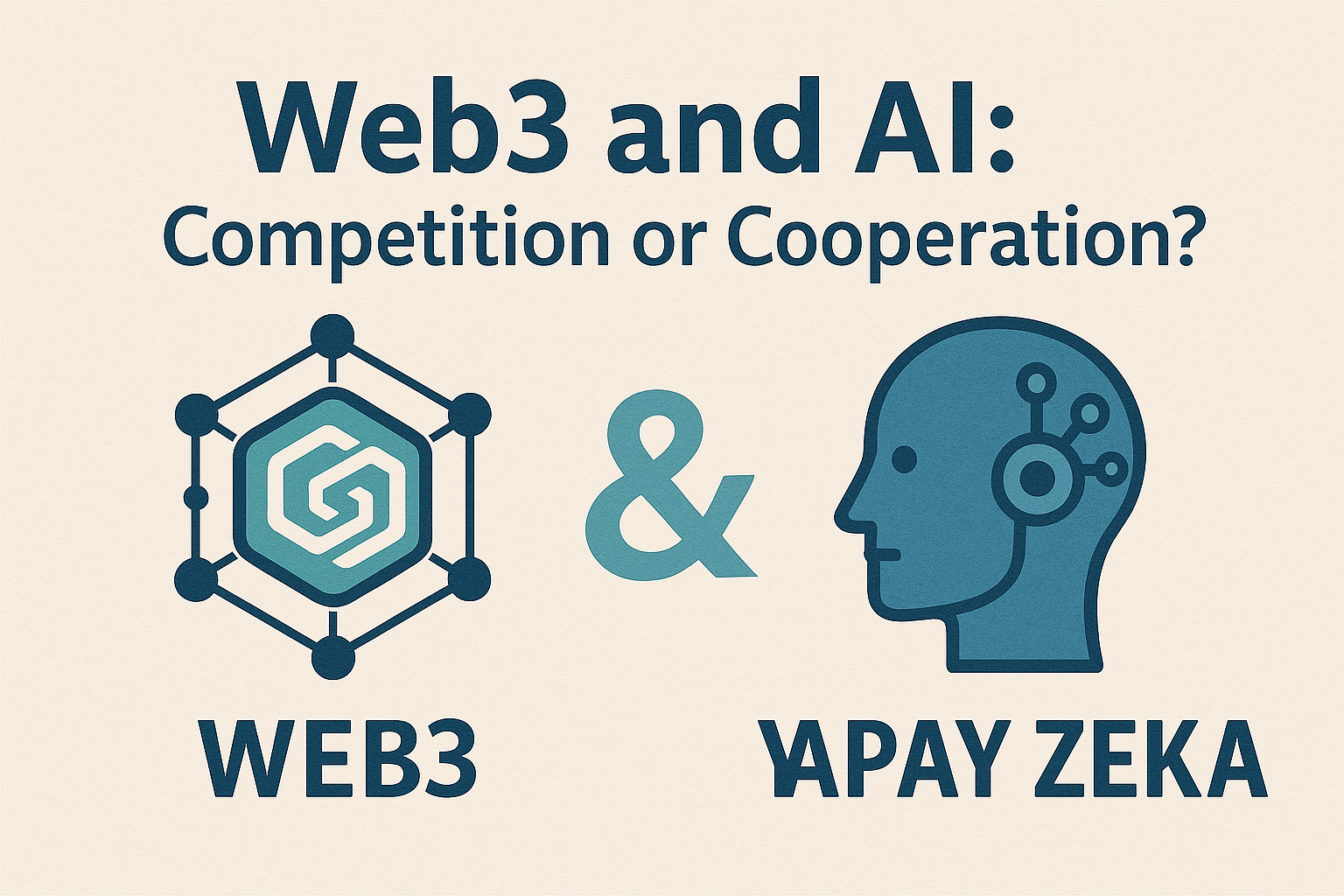 Hello Hive folks! Let’s sit down and have a little chat about Web 3 and AI today, like we’re catching up over coffee. On one side, we’ve got Web 3, dreaming of freeing the internet from big corporations and handing the reins to us, the users. On the other, there’s AI, the brainy wizard making everything smarter and easier. So, are these two about to duke it out, or could they team up to change the world? Grab a seat, let’s figure this out together! **Why’s There a Rivalry Vibe?** Lately, I’ve been scrolling through X and noticing something: Web 3’s golden days seem to have dimmed a bit. People keep asking, “Where’d all the developers go?” And they’ve got a point—those coders who used to flock to blockchain projects are now chasing AI like it’s the shiny new toy. Why? AI’s stealing the spotlight right now. It’s quick, flashy—think chatbots, image generators, problem-solvers galore. Web 3, though? It’s more of a slow-burner, asking for patience before the big payoff. So naturally, folks are wondering, “Should I jump ship to AI?” It’s starting to feel like AI’s eating Web 3’s lunch. **But Wait—What If They Team Up?** Hold on tight, because here’s the twist: these two don’t have to be enemies—they could be best buds! Web 3’s all about decentralization and security, right? Meanwhile, AI’s got this big headache with data—tons of it needed, but who’s holding it, and is it safe? That’s where Web 3 swoops in. Imagine blockchain keeping our data transparent and locked up tight. AI could step in and say, “Cool, I’ll use what I need, but I’ll play by the rules!” Picture your info encrypted on a Web 3 platform, and AI just borrowing what it requires. Privacy stays intact, and AI gets a trust boost. Sounds pretty neat, huh? **What Could They Do Together?** Let’s dream a little, shall we? AI could turbocharge Web 3’s smart contracts—those self-running deals on the blockchain. AI could make them faster, slicker, error-free. And Web 3? It could give AI a free playground. Instead of being stuck under some corporate thumb, AI could thrive in a community-run space, working for everyone. Think of a game: Web 3 ensures your characters and gear are truly yours, backed by NFTs. Then AI pops in, tailoring the game to your vibe—“This guy loves strategy, let’s tweak it for him!” Or maybe an art platform: Web 3 locks in ownership, and AI tosses out inspiration. If these two join forces, the results could be mind-blowing! **What’s Happening Out There?** As of April 10, 2025, I can’t say we’re seeing these two in a full-on dance yet. I’ve poked around X and the web—there are a few projects, but they’re mostly in the “Hmm, maybe this could work” stage. Gaming’s where Web 3’s killing it right now—blockchain games are popping up everywhere, and AI’s starting to flirt with that space too. Still, we haven’t hit that “Wow, they nailed it!” moment. But I’m hopeful. The potential where these two overlap is huge. Maybe soon someone’ll step up and say, “Let’s mash these together and see what happens!” **So, What’s the Endgame?** Here’s what I think, Hive crew: whether it’s rivalry or teamwork depends on what we want. If Web 3 and AI stop sizing each other up and start collaborating, the internet’s future could be wild—in a good way. Web 3’s free-spirited vibe plus AI’s smarts could build a world that’s both secure and brilliant. But it’s not just up to them—developers, companies, and us regular folks need to pitch in. Otherwise, we’ll just sit here saying, “Come on, do something!” and nothing’ll budge. What do you reckon? Want to see these two slug it out in the ring, or team up to shake things up? I’m rooting for the second one—feels like that duo could really get stuff done. Got thoughts? Spill ‘em, let’s keep the convo going! |
| title | Web 3 and AI: Competition or Cooperation? |
| author | cryptohuman43 |
| permlink | web-3-and-ai-competition-or-cooperation |
| json metadata | {"tags":["hive-125125","hive","web3","ai","cent","ecency","leofinance"],"image":["https://images.hive.blog/DQmZW7nNR4D9efuA78K3PDJotxTx1ji3Cre9awnixKBCxmz/ChatGPT%20Image%2010%20Nis%202025%2012_46_47.png"],"app":"hiveblog/0.1","format":"markdown"} |
| parent author | |
| parent permlink | hive-125125 |
| Transaction Info | Block #94901739/Trx 56322054b55b54e8b1e9d26561be69778785ccef |
View Raw JSON Data
{
"op": [
"comment",
{
"body": "\n\nHello Hive folks! Let’s sit down and have a little chat about Web 3 and AI today, like we’re catching up over coffee. On one side, we’ve got Web 3, dreaming of freeing the internet from big corporations and handing the reins to us, the users. On the other, there’s AI, the brainy wizard making everything smarter and easier. So, are these two about to duke it out, or could they team up to change the world? Grab a seat, let’s figure this out together!\n\n**Why’s There a Rivalry Vibe?**\n\nLately, I’ve been scrolling through X and noticing something: Web 3’s golden days seem to have dimmed a bit. People keep asking, “Where’d all the developers go?” And they’ve got a point—those coders who used to flock to blockchain projects are now chasing AI like it’s the shiny new toy. Why? AI’s stealing the spotlight right now. It’s quick, flashy—think chatbots, image generators, problem-solvers galore. Web 3, though? It’s more of a slow-burner, asking for patience before the big payoff. So naturally, folks are wondering, “Should I jump ship to AI?” It’s starting to feel like AI’s eating Web 3’s lunch.\n\n**But Wait—What If They Team Up?**\n\nHold on tight, because here’s the twist: these two don’t have to be enemies—they could be best buds! Web 3’s all about decentralization and security, right? Meanwhile, AI’s got this big headache with data—tons of it needed, but who’s holding it, and is it safe? That’s where Web 3 swoops in. Imagine blockchain keeping our data transparent and locked up tight. AI could step in and say, “Cool, I’ll use what I need, but I’ll play by the rules!” Picture your info encrypted on a Web 3 platform, and AI just borrowing what it requires. Privacy stays intact, and AI gets a trust boost. Sounds pretty neat, huh?\n\n**What Could They Do Together?**\n\nLet’s dream a little, shall we? AI could turbocharge Web 3’s smart contracts—those self-running deals on the blockchain. AI could make them faster, slicker, error-free. And Web 3? It could give AI a free playground. Instead of being stuck under some corporate thumb, AI could thrive in a community-run space, working for everyone. Think of a game: Web 3 ensures your characters and gear are truly yours, backed by NFTs. Then AI pops in, tailoring the game to your vibe—“This guy loves strategy, let’s tweak it for him!” Or maybe an art platform: Web 3 locks in ownership, and AI tosses out inspiration. If these two join forces, the results could be mind-blowing!\n\n**What’s Happening Out There?**\n\nAs of April 10, 2025, I can’t say we’re seeing these two in a full-on dance yet. I’ve poked around X and the web—there are a few projects, but they’re mostly in the “Hmm, maybe this could work” stage. Gaming’s where Web 3’s killing it right now—blockchain games are popping up everywhere, and AI’s starting to flirt with that space too. Still, we haven’t hit that “Wow, they nailed it!” moment. But I’m hopeful. The potential where these two overlap is huge. Maybe soon someone’ll step up and say, “Let’s mash these together and see what happens!”\n\n**So, What’s the Endgame?**\n\nHere’s what I think, Hive crew: whether it’s rivalry or teamwork depends on what we want. If Web 3 and AI stop sizing each other up and start collaborating, the internet’s future could be wild—in a good way. Web 3’s free-spirited vibe plus AI’s smarts could build a world that’s both secure and brilliant. But it’s not just up to them—developers, companies, and us regular folks need to pitch in. Otherwise, we’ll just sit here saying, “Come on, do something!” and nothing’ll budge.\n\nWhat do you reckon? Want to see these two slug it out in the ring, or team up to shake things up? I’m rooting for the second one—feels like that duo could really get stuff done. Got thoughts? Spill ‘em, let’s keep the convo going!",
"title": "Web 3 and AI: Competition or Cooperation?",
"author": "cryptohuman43",
"permlink": "web-3-and-ai-competition-or-cooperation",
"json_metadata": "{\"tags\":[\"hive-125125\",\"hive\",\"web3\",\"ai\",\"cent\",\"ecency\",\"leofinance\"],\"image\":[\"https://images.hive.blog/DQmZW7nNR4D9efuA78K3PDJotxTx1ji3Cre9awnixKBCxmz/ChatGPT%20Image%2010%20Nis%202025%2012_46_47.png\"],\"app\":\"hiveblog/0.1\",\"format\":\"markdown\"}",
"parent_author": "",
"parent_permlink": "hive-125125"
}
],
"block": 94901739,
"trx_id": "56322054b55b54e8b1e9d26561be69778785ccef",
"op_in_trx": 0,
"timestamp": "2025-04-10T09:50:27",
"virtual_op": false,
"trx_in_block": 7
}cryptohuman43followed @spaminator2025/01/27 02:03:30
cryptohuman43followed @spaminator
2025/01/27 02:03:30
| id | follow |
| json | ["follow",{"follower":"cryptohuman43","following":"spaminator","what":["blog"]}] |
| required auths | [] |
| required posting auths | ["cryptohuman43"] |
| Transaction Info | Block #92792700/Trx 95ba0e2f29de4a17fd9568a4c6a5159f0cb388e3 |
View Raw JSON Data
{
  "op": [
    "custom_json",
    {
      "id": "follow",
      "json": "[\"follow\",{\"follower\":\"cryptohuman43\",\"following\":\"spaminator\",\"what\":[\"blog\"]}]",
      "required_auths": [],
      "required_posting_auths": [
        "cryptohuman43"
      ]
    }
  ],
  "block": 92792700,
  "trx_id": "95ba0e2f29de4a17fd9568a4c6a5159f0cb388e3",
  "op_in_trx": 0,
  "timestamp": "2025-01-27T02:03:30",
  "virtual_op": false,
  "trx_in_block": 13
}cryptohuman43muted @spaminator2025/01/27 02:03:27
cryptohuman43muted @spaminator
2025/01/27 02:03:27
| id | follow |
| json | ["follow",{"follower":"cryptohuman43","following":"spaminator","what":["ignore"]}] |
| required auths | [] |
| required posting auths | ["cryptohuman43"] |
| Transaction Info | Block #92792699/Trx 2d07a4aaab60544044b131a80f9e726e0da199db |
View Raw JSON Data
{
  "op": [
    "custom_json",
    {
      "id": "follow",
      "json": "[\"follow\",{\"follower\":\"cryptohuman43\",\"following\":\"spaminator\",\"what\":[\"ignore\"]}]",
      "required_auths": [],
      "required_posting_auths": [
        "cryptohuman43"
      ]
    }
  ],
  "block": 92792699,
  "trx_id": "2d07a4aaab60544044b131a80f9e726e0da199db",
  "op_in_trx": 0,
  "timestamp": "2025-01-27T02:03:27",
  "virtual_op": false,
  "trx_in_block": 14
}cryptohuman43followed @spaminator2025/01/27 01:52:39
cryptohuman43followed @spaminator
2025/01/27 01:52:39
| id | follow |
| json | ["follow",{"follower":"cryptohuman43","following":"spaminator","what":["blog"]}] |
| required auths | [] |
| required posting auths | ["cryptohuman43"] |
| Transaction Info | Block #92792484/Trx e3b6fc91e76f51cc31c14542fbcbf2dcaf2e8d2a |
View Raw JSON Data
{
  "op": [
    "custom_json",
    {
      "id": "follow",
      "json": "[\"follow\",{\"follower\":\"cryptohuman43\",\"following\":\"spaminator\",\"what\":[\"blog\"]}]",
      "required_auths": [],
      "required_posting_auths": [
        "cryptohuman43"
      ]
    }
  ],
  "block": 92792484,
  "trx_id": "e3b6fc91e76f51cc31c14542fbcbf2dcaf2e8d2a",
  "op_in_trx": 0,
  "timestamp": "2025-01-27T01:52:39",
  "virtual_op": false,
  "trx_in_block": 8
}cryptohuman43followed @executive-board2025/01/27 01:50:18
cryptohuman43followed @executive-board
2025/01/27 01:50:18
| id | follow |
| json | ["follow",{"follower":"cryptohuman43","following":"executive-board","what":["blog"]}] |
| required auths | [] |
| required posting auths | ["cryptohuman43"] |
| Transaction Info | Block #92792437/Trx 97dc8c2990f051844ea01b2fae531fef7c0ab57b |
View Raw JSON Data
{
  "op": [
    "custom_json",
    {
      "id": "follow",
      "json": "[\"follow\",{\"follower\":\"cryptohuman43\",\"following\":\"executive-board\",\"what\":[\"blog\"]}]",
      "required_auths": [],
      "required_posting_auths": [
        "cryptohuman43"
      ]
    }
  ],
  "block": 92792437,
  "trx_id": "97dc8c2990f051844ea01b2fae531fef7c0ab57b",
  "op_in_trx": 0,
  "timestamp": "2025-01-27T01:50:18",
  "virtual_op": false,
  "trx_in_block": 13
}cryptohuman43claimed reward balance: 0.001 HP2025/01/25 23:10:48
cryptohuman43claimed reward balance: 0.001 HP
2025/01/25 23:10:48
| account | cryptohuman43 |
| reward hbd | 0.000 HBD |
| reward hive | 0.000 HIVE |
| reward vests | 1.689696 VESTS |
| Transaction Info | Block #92760482/Trx 09fc6e97775517e06fbc06b99028ca9ddcbb38c9 |
View Raw JSON Data
{
  "op": [
    "claim_reward_balance",
    {
      "account": "cryptohuman43",
      "reward_hbd": "0.000 HBD",
      "reward_hive": "0.000 HIVE",
      "reward_vests": "1.689696 VESTS"
    }
  ],
  "block": 92760482,
  "trx_id": "09fc6e97775517e06fbc06b99028ca9ddcbb38c9",
  "op_in_trx": 0,
  "timestamp": "2025-01-25T23:10:48",
  "virtual_op": false,
  "trx_in_block": 23
}cryptohuman43received 0.001 HP curation reward for @taskmaster4450 / ludgseiy2025/01/25 23:06:06
cryptohuman43received 0.001 HP curation reward for @taskmaster4450 / ludgseiy
2025/01/25 23:06:06
| author | taskmaster4450 |
| reward | 1.689696 VESTS |
| curator | cryptohuman43 |
| permlink | ludgseiy |
| payout must be claimed | true |
| Transaction Info | Block #92760388/Virtual Operation 4294967295:151 |
View Raw JSON Data
{
  "op": [
    "curation_reward",
    {
      "author": "taskmaster4450",
      "reward": "1.689696 VESTS",
      "curator": "cryptohuman43",
      "permlink": "ludgseiy",
      "payout_must_be_claimed": true
    }
  ],
  "block": 92760388,
  "trx_id": "0000000000000000000000000000000000000000",
  "op_in_trx": 151,
  "timestamp": "2025-01-25T23:06:06",
  "virtual_op": true,
  "trx_in_block": 4294967295
}cryptohuman43deleted a comment or post2025/01/23 23:31:33
cryptohuman43deleted a comment or post
2025/01/23 23:31:33
| author | cryptohuman43 |
| permlink | the-evolution-of-decentralized-systems |
| Transaction Info | Block #92703361/Trx ddf08e901b0055ceca257b6fd3e9332f2238edcd |
View Raw JSON Data
{
  "op": [
    "delete_comment",
    {
      "author": "cryptohuman43",
      "permlink": "the-evolution-of-decentralized-systems"
    }
  ],
  "block": 92703361,
  "trx_id": "ddf08e901b0055ceca257b6fd3e9332f2238edcd",
  "op_in_trx": 0,
  "timestamp": "2025-01-23T23:31:33",
  "virtual_op": false,
  "trx_in_block": 6
}spaminatoreffective vote applied for @cryptohuman43 / the-evolution-of-decentralized-systems2025/01/23 23:27:54
spaminatoreffective vote applied for @cryptohuman43 / the-evolution-of-decentralized-systems
2025/01/23 23:27:54
| voter | spaminator |
| author | cryptohuman43 |
| weight | 0 (0.00%) |
| rshares | -5316995206 |
| permlink | the-evolution-of-decentralized-systems |
| pending payout | 0.000 HBD |
| total vote weight | 0 |
| Transaction Info | Block #92703288/Trx 6c430973de32af4bfe7ce8260f3134ed4bf9f72d |
View Raw JSON Data
{
  "op": [
    "effective_comment_vote",
    {
      "voter": "spaminator",
      "author": "cryptohuman43",
      "weight": 0,
      "rshares": -5316995206,
      "permlink": "the-evolution-of-decentralized-systems",
      "pending_payout": "0.000 HBD",
      "total_vote_weight": 0
    }
  ],
  "block": 92703288,
  "trx_id": "6c430973de32af4bfe7ce8260f3134ed4bf9f72d",
  "op_in_trx": 1,
  "timestamp": "2025-01-23T23:27:54",
  "virtual_op": true,
  "trx_in_block": 48
}spaminatorflagged (-0.25%) @cryptohuman43 / the-evolution-of-decentralized-systems2025/01/23 23:27:54
spaminatorflagged (-0.25%) @cryptohuman43 / the-evolution-of-decentralized-systems
2025/01/23 23:27:54
| voter | spaminator |
| author | cryptohuman43 |
| weight | -25 (-0.25%) |
| permlink | the-evolution-of-decentralized-systems |
| Transaction Info | Block #92703288/Trx 6c430973de32af4bfe7ce8260f3134ed4bf9f72d |
View Raw JSON Data
{
  "op": [
    "vote",
    {
      "voter": "spaminator",
      "author": "cryptohuman43",
      "weight": -25,
      "permlink": "the-evolution-of-decentralized-systems"
    }
  ],
  "block": 92703288,
  "trx_id": "6c430973de32af4bfe7ce8260f3134ed4bf9f72d",
  "op_in_trx": 0,
  "timestamp": "2025-01-23T23:27:54",
  "virtual_op": false,
  "trx_in_block": 48
}cryptohuman43published a new post: the-evolution-of-decentralized-systems2025/01/23 23:27:48
cryptohuman43published a new post: the-evolution-of-decentralized-systems
2025/01/23 23:27:48
| body | @@ -5126,49 +5126,8 @@ y.%0A%0A -Translated with DeepL.com (free version)%0A %0AHav @@ -5716,7385 +5716,8 @@ d.%0A%0A -1. Nature's Lesson: Decentralized Order%0A%0AIn nature, everything works as a whole. Take a bee colony. There are thousands of bees in the colony, but the queen bee doesn't have a leadership role as we think of it. She just keeps the colony going. So how do the bees organize their work? Each one learns what to do by communicating with other bees. Whether it's making honey, feeding the young or carrying pollen to the colony... Each one knows its job and there's no disruption.%0A%0AMushroom networks are another great example. Did you know that forests have a communication network underground? These networks of fungi, called mycelium, carry nutrients and information between plants. This network helps keep the forest a healthy ecosystem. So there is no center in the world of fungi, but there is a great organization.%0A%0AWhat nature shows us is that as long as everyone does their own thing, order can be maintained without a central leader. This understanding may in fact be valid for humanity as well.%0A%0A2. Decentralized Structures in Human History%0A%0AWhen we look back in history, we often see decentralized structures. Nomadic communities, for example... In these communities, there were leaders, but decisions were usually made collectively. Everyone had the right to express an opinion and the community survived on the contribution of individuals.%0A%0AIn the Middle Ages, guilds are a good example. Craftsmen and artisans came together, created their own rules and supported each other. Guilds worked in a similar way to today's trade unions. When a craftsman fell on hard times, guild members would help him, so the system was self-protecting.%0A%0AAs you can see, decentralized structures are not unique to nature. Humanity has also survived throughout history by using such systems.%0A%0A3. Traces of Nature in Technology: Blockchain and Beyond%0A%0ALet's come to the present... Decentralized structures are back on the agenda thanks to technology. Especially blockchain technology has revolutionized this field. To explain blockchain simply: It is a system where data is stored not in a center, but on thousands of computers around the world. For example, if you have money in a bank, the bank controls this money and transactions. But with blockchain, your money is not in the hands of an authority, but in a transparent network that everyone can see.%0A%0AThe greatest power of blockchain technology is that it does not need a central authority. This technology is revolutionizing not only finance but also many other sectors such as art, health and education. For example, DAOs (Decentralized Autonomous Organizations) are a way to run an organization without a central leader. Thanks to smart contracts, decisions are made automatically, making organizations more transparent and effective.%0A%0A4. Why are Decentralized Systems Stronger?%0A%0AWhile centralized systems may seem strong on the surface, they are actually quite fragile. When something goes wrong, the entire system can suffer. For example, when the CEO of a company makes a wrong decision, it affects the entire organization.%0A%0ABut things are different in decentralized systems. In these systems, one person or group getting it wrong doesn't bring the whole system down. Everyone plays a small role and even if a part is damaged, the overall structure continues to function.%0A%0AThis is where the lesson of nature comes into play. Decentralized systems are far superior in terms of flexibility and resilience. This is not surprising, given that nature has tested and refined these systems over millions of years.%0A%0A5. The World of the Future: Man and Nature Together%0A%0AThe problems we face today are huge: Climate crisis, economic inequality, political uncertainty... We need new approaches to tackle them. Decentralized systems have great potential to address these problems.%0A%0AFor example, decentralized energy systems can be used to tackle the climate crisis. Renewable energy sources such as solar panels and wind turbines can reduce dependence on large power plants. Furthermore, such systems can provide more localized solutions, helping communities to meet their own needs.%0A%0AIn politics, decentralized approaches can strengthen participatory democracy. People can participate more directly in decision-making and have their voices heard.%0A%0AEpilogue: Nature Shows Us the Way%0A%0ANature shows us how decentralized systems work. Bees, fungi and other natural systems work with cooperation and solidarity.%0A%0ATranslated with DeepL.com (free version)%0AAs you the agenda thanks to technology. Especially blockchain technology has revolutionized this field. To explain blockchain simply: It is a system where data is stored not in a center, but on thousands of computers around the world. For example, if you have money in a bank, the bank controls this money and transactions. But with blockchain, your money is not in the hands of an authority, but in a transparent network that everyone can see.%0A%0AThe greatest power of blockchain technology is that it does not need a central authority. This technology is revolutionizing not only finance but also many other sectors such as art, health and education. For example, DAOs (Decentralized Autonomous Organizations) are a way to run an organization without a central leader. Thanks to smart contracts, decisions are made automatically, making organizations more transparent and effective.%0A%0A4. Why are Decentralized Systems Stronger?%0A%0AWhile centralized systems may seem strong on the surface, they are actually quite fragile. When something goes wrong, the entire system can suffer. For example, when the CEO of a company makes a wrong decision, it affects the entire organization.%0A%0ABut things are different in decentralized systems. In these systems, one person or group getting it wrong doesn't bring the whole system down. Everyone plays a small role and even if a part is damaged, the overall structure continues to function.%0A%0AThis is where the lesson of nature comes into play. Decentralized systems are far superior in terms of flexibility and resilience. This is not surprising, given that nature has tested and refined these systems over millions of years.%0A%0A5. The World of the Future: Man and Nature Together%0A%0AThe problems we face today are huge: Climate crisis, economic inequality, political uncertainty... We need new approaches to tackle them. Decentralized systems have great potential to address these problems.%0A%0AFor example, decentralized energy systems can be used to tackle the climate crisis. Renewable energy sources such as solar panels and wind turbines can reduce dependence on large power plants. Furthermore, such systems can provide more localized solutions, helping communities to meet their own needs.%0A%0AIn politics, decentralized approaches can strengthen participatory democracy. People can participate more directly in decision-making and have their voices heard.%0A%0AEpilogue: Nature Shows Us the Way%0A%0ANature shows us how decentralized systems work. Bees, fungi and other natural systems achieve a marvelous balance through cooperation and solidarity. Inspired by these systems, humanity can build a more just, resilient and sustainable world.%0A%0AWho knows, maybe in the future we can make our own systems more resilient and adaptable, just as nature has done. Because one of the greatest lessons nature has to offer us is that if we work together, anything is possible!%0A %0ATra |
| title | The Evolution of Decentralized Systems: A World Inspired by Nature |
| author | cryptohuman43 |
| permlink | the-evolution-of-decentralized-systems |
| json metadata | {"app":"ecency/4.0.2-vision","description":"Have you ever marveled at the workings of nature? Imagine a colony of bees or a huge network of fungi underground, working flawlessly without giving direct orders to anyone, without creating chaos. These","format":"markdown+html","image":["https://images.ecency.com/DQmVDT9QBtizCR3mCiopAtWbU1V5HT2K8BNAXPJbXfduukY/1000026703.png"],"image_ratios":["1.0000"],"tags":["hive","leofinance","cent","ecency","web3","blockchain","hivecommunity","ecency"],"thumbnails":["https://images.ecency.com/DQmVDT9QBtizCR3mCiopAtWbU1V5HT2K8BNAXPJbXfduukY/1000026703.png"]} |
| parent author | |
| parent permlink | hive |
| Transaction Info | Block #92703286/Trx 3b4e893ed7dc55302d74648abfecbc043c00c927 |
View Raw JSON Data
{
  "op": [
    "comment",
    {
      "body": "@@ -5126,49 +5126,8 @@\n y.%0A%0A\n-Translated with DeepL.com (free version)%0A\n %0AHav\n@@ -5716,7385 +5716,8 @@\n d.%0A%0A\n-1. Nature's Lesson: Decentralized Order%0A%0AIn nature, everything works as a whole. Take a bee colony. There are thousands of bees in the colony, but the queen bee doesn't have a leadership role as we think of it. She just keeps the colony going. So how do the bees organize their work? Each one learns what to do by communicating with other bees. Whether it's making honey, feeding the young or carrying pollen to the colony... Each one knows its job and there's no disruption.%0A%0AMushroom networks are another great example. Did you know that forests have a communication network underground? These networks of fungi, called mycelium, carry nutrients and information between plants. This network helps keep the forest a healthy ecosystem. So there is no center in the world of fungi, but there is a great organization.%0A%0AWhat nature shows us is that as long as everyone does their own thing, order can be maintained without a central leader. This understanding may in fact be valid for humanity as well.%0A%0A2. Decentralized Structures in Human History%0A%0AWhen we look back in history, we often see decentralized structures. Nomadic communities, for example... In these communities, there were leaders, but decisions were usually made collectively. Everyone had the right to express an opinion and the community survived on the contribution of individuals.%0A%0AIn the Middle Ages, guilds are a good example. Craftsmen and artisans came together, created their own rules and supported each other. Guilds worked in a similar way to today's trade unions. When a craftsman fell on hard times, guild members would help him, so the system was self-protecting.%0A%0AAs you can see, decentralized structures are not unique to nature. Humanity has also survived throughout history by using such systems.%0A%0A3. Traces of Nature in Technology: Blockchain and Beyond%0A%0ALet's come to the present... Decentralized structures are back on the agenda thanks to technology. Especially blockchain technology has revolutionized this field. To explain blockchain simply: It is a system where data is stored not in a center, but on thousands of computers around the world. For example, if you have money in a bank, the bank controls this money and transactions. But with blockchain, your money is not in the hands of an authority, but in a transparent network that everyone can see.%0A%0AThe greatest power of blockchain technology is that it does not need a central authority. This technology is revolutionizing not only finance but also many other sectors such as art, health and education. For example, DAOs (Decentralized Autonomous Organizations) are a way to run an organization without a central leader. Thanks to smart contracts, decisions are made automatically, making organizations more transparent and effective.%0A%0A4. Why are Decentralized Systems Stronger?%0A%0AWhile centralized systems may seem strong on the surface, they are actually quite fragile. When something goes wrong, the entire system can suffer. For example, when the CEO of a company makes a wrong decision, it affects the entire organization.%0A%0ABut things are different in decentralized systems. In these systems, one person or group getting it wrong doesn't bring the whole system down. Everyone plays a small role and even if a part is damaged, the overall structure continues to function.%0A%0AThis is where the lesson of nature comes into play. Decentralized systems are far superior in terms of flexibility and resilience. This is not surprising, given that nature has tested and refined these systems over millions of years.%0A%0A5. The World of the Future: Man and Nature Together%0A%0AThe problems we face today are huge: Climate crisis, economic inequality, political uncertainty... We need new approaches to tackle them. Decentralized systems have great potential to address these problems.%0A%0AFor example, decentralized energy systems can be used to tackle the climate crisis. Renewable energy sources such as solar panels and wind turbines can reduce dependence on large power plants. Furthermore, such systems can provide more localized solutions, helping communities to meet their own needs.%0A%0AIn politics, decentralized approaches can strengthen participatory democracy. People can participate more directly in decision-making and have their voices heard.%0A%0AEpilogue: Nature Shows Us the Way%0A%0ANature shows us how decentralized systems work. Bees, fungi and other natural systems work with cooperation and solidarity.%0A%0ATranslated with DeepL.com (free version)%0AAs you  the agenda thanks to technology. Especially blockchain technology has revolutionized this field. To explain blockchain simply: It is a system where data is stored not in a center, but on thousands of computers around the world. For example, if you have money in a bank, the bank controls this money and transactions. But with blockchain, your money is not in the hands of an authority, but in a transparent network that everyone can see.%0A%0AThe greatest power of blockchain technology is that it does not need a central authority. This technology is revolutionizing not only finance but also many other sectors such as art, health and education. For example, DAOs (Decentralized Autonomous Organizations) are a way to run an organization without a central leader. Thanks to smart contracts, decisions are made automatically, making organizations more transparent and effective.%0A%0A4. Why are Decentralized Systems Stronger?%0A%0AWhile centralized systems may seem strong on the surface, they are actually quite fragile. When something goes wrong, the entire system can suffer. For example, when the CEO of a company makes a wrong decision, it affects the entire organization.%0A%0ABut things are different in decentralized systems. In these systems, one person or group getting it wrong doesn't bring the whole system down. Everyone plays a small role and even if a part is damaged, the overall structure continues to function.%0A%0AThis is where the lesson of nature comes into play. Decentralized systems are far superior in terms of flexibility and resilience. This is not surprising, given that nature has tested and refined these systems over millions of years.%0A%0A5. The World of the Future: Man and Nature Together%0A%0AThe problems we face today are huge: Climate crisis, economic inequality, political uncertainty... We need new approaches to tackle them. Decentralized systems have great potential to address these problems.%0A%0AFor example, decentralized energy systems can be used to tackle the climate crisis. Renewable energy sources such as solar panels and wind turbines can reduce dependence on large power plants. Furthermore, such systems can provide more localized solutions, helping communities to meet their own needs.%0A%0AIn politics, decentralized approaches can strengthen participatory democracy. People can participate more directly in decision-making and have their voices heard.%0A%0AEpilogue: Nature Shows Us the Way%0A%0ANature shows us how decentralized systems work. Bees, fungi and other natural systems achieve a marvelous balance through cooperation and solidarity. Inspired by these systems, humanity can build a more just, resilient and sustainable world.%0A%0AWho knows, maybe in the future we can make our own systems more resilient and adaptable, just as nature has done. Because one of the greatest lessons nature has to offer us is that if we work together, anything is possible!%0A\n %0ATra\n",
      "title": " The Evolution of Decentralized Systems: A World Inspired by Nature",
      "author": "cryptohuman43",
      "permlink": "the-evolution-of-decentralized-systems",
      "json_metadata": "{\"app\":\"ecency/4.0.2-vision\",\"description\":\"Have you ever marveled at the workings of nature? Imagine a colony of bees or a huge network of fungi underground, working flawlessly without giving direct orders to anyone, without creating chaos. These\",\"format\":\"markdown+html\",\"image\":[\"https://images.ecency.com/DQmVDT9QBtizCR3mCiopAtWbU1V5HT2K8BNAXPJbXfduukY/1000026703.png\"],\"image_ratios\":[\"1.0000\"],\"tags\":[\"hive\",\"leofinance\",\"cent\",\"ecency\",\"web3\",\"blockchain\",\"hivecommunity\",\"ecency\"],\"thumbnails\":[\"https://images.ecency.com/DQmVDT9QBtizCR3mCiopAtWbU1V5HT2K8BNAXPJbXfduukY/1000026703.png\"]}",
      "parent_author": "",
      "parent_permlink": "hive"
    }
  ],
  "block": 92703286,
  "trx_id": "3b4e893ed7dc55302d74648abfecbc043c00c927",
  "op_in_trx": 0,
  "timestamp": "2025-01-23T23:27:48",
  "virtual_op": false,
  "trx_in_block": 1
}cryptohuman43updated options for the-evolution-of-decentralized-systems2025/01/23 23:22:09
cryptohuman43updated options for the-evolution-of-decentralized-systems
2025/01/23 23:22:09
| author | cryptohuman43 |
| permlink | the-evolution-of-decentralized-systems |
| extensions | [] |
| allow votes | true |
| percent hbd | 10000 |
| max accepted payout | 1000000.000 HBD |
| allow curation rewards | true |
| Transaction Info | Block #92703173/Trx 22754ea6cd49f718d04536fbb44f48dcd104cc59 |
View Raw JSON Data
{
  "op": [
    "comment_options",
    {
      "author": "cryptohuman43",
      "permlink": "the-evolution-of-decentralized-systems",
      "extensions": [],
      "allow_votes": true,
      "percent_hbd": 10000,
      "max_accepted_payout": "1000000.000 HBD",
      "allow_curation_rewards": true
    }
  ],
  "block": 92703173,
  "trx_id": "22754ea6cd49f718d04536fbb44f48dcd104cc59",
  "op_in_trx": 1,
  "timestamp": "2025-01-23T23:22:09",
  "virtual_op": false,
  "trx_in_block": 15
}cryptohuman43published a new post: the-evolution-of-decentralized-systems2025/01/23 23:22:09
cryptohuman43published a new post: the-evolution-of-decentralized-systems
2025/01/23 23:22:09
| body |  Have you ever marveled at the workings of nature? Imagine a colony of bees or a huge network of fungi underground, working flawlessly without giving direct orders to anyone, without creating chaos. These systems are so perfect that there is no leader, but everyone does their part. This order in nature tells us about the power of decentralized systems. In fact, humanity has been following in the footsteps of such structures for centuries, but sometimes we ignore the lessons we can learn from nature. Let's take a look at what both nature and humanity have to offer us in this regard. 1. Nature's Lesson: Decentralized Order In nature, everything works as a whole. Take a bee colony. There are thousands of bees in the colony, but the queen bee doesn't have a leadership role as we think of it. She just keeps the colony going. So how do the bees organize their work? Each one learns what to do by communicating with other bees. Whether it's making honey, feeding the young or carrying pollen to the colony... Each one knows its job and there's no disruption. Mushroom networks are another great example. Did you know that forests have a communication network underground? These networks of fungi, called mycelium, carry nutrients and information between plants. This network helps keep the forest a healthy ecosystem. So there is no center in the world of fungi, but there is a great organization. What nature shows us is that as long as everyone does their own thing, order can be maintained without a central leader. This understanding may in fact be valid for humanity as well. 2. Decentralized Structures in Human History When we look back in history, we often see decentralized structures. Nomadic communities, for example... In these communities, there were leaders, but decisions were usually made collectively. Everyone had the right to express an opinion and the community survived on the contribution of individuals. In the Middle Ages, guilds are a good example. Craftsmen and artisans came together, created their own rules and supported each other. Guilds worked in a similar way to today's trade unions. When a craftsman fell on hard times, guild members would help him, so the system was self-protecting. As you can see, decentralized structures are not unique to nature. Humanity has also survived throughout history by using such systems. 3. Traces of Nature in Technology: Blockchain and Beyond Let's come to the present... Decentralized structures are back on the agenda thanks to technology. Especially blockchain technology has revolutionized this field. To explain blockchain simply: It is a system where data is stored not in a center, but on thousands of computers around the world. For example, if you have money in a bank, the bank controls this money and transactions. But with blockchain, your money is not in the hands of an authority, but in a transparent network that everyone can see. The greatest power of blockchain technology is that it does not need a central authority. This technology is revolutionizing not only finance but also many other sectors such as art, health and education. For example, DAOs (Decentralized Autonomous Organizations) are a way to run an organization without a central leader. Thanks to smart contracts, decisions are made automatically, making organizations more transparent and effective. 4. Why are Decentralized Systems Stronger? While centralized systems may seem strong on the surface, they are actually quite fragile. When something goes wrong, the entire system can suffer. For example, when the CEO of a company makes a wrong decision, it affects the entire organization. But things are different in decentralized systems. In these systems, one person or group getting it wrong doesn't bring the whole system down. Everyone plays a small role and even if a part is damaged, the overall structure continues to function. This is where the lesson of nature comes into play. Decentralized systems are far superior in terms of flexibility and resilience. This is not surprising, given that nature has tested and refined these systems over millions of years. 5. The World of the Future: Man and Nature Together The problems we face today are huge: Climate crisis, economic inequality, political uncertainty... We need new approaches to tackle them. Decentralized systems have great potential to address these problems. For example, decentralized energy systems can be used to tackle the climate crisis. Renewable energy sources such as solar panels and wind turbines can reduce dependence on large power plants. Furthermore, such systems can provide more localized solutions, helping communities to meet their own needs. In politics, decentralized approaches can strengthen participatory democracy. People can participate more directly in decision-making and have their voices heard. Epilogue: Nature Shows Us the Way Nature shows us how decentralized systems work. Bees, fungi and other natural systems work with cooperation and solidarity. Translated with DeepL.com (free version) Have you ever marveled at the workings of nature? Imagine a colony of bees or a huge network of fungi underground, working flawlessly without giving direct orders to anyone, without creating chaos. These systems are so perfect that there is no leader, but everyone does their part. This order in nature tells us about the power of decentralized systems. In fact, humanity has been following in the footsteps of such structures for centuries, but sometimes we ignore the lessons we can learn from nature. Let's take a look at what both nature and humanity have to offer us in this regard. 1. Nature's Lesson: Decentralized Order In nature, everything works as a whole. Take a bee colony. There are thousands of bees in the colony, but the queen bee doesn't have a leadership role as we think of it. She just keeps the colony going. So how do the bees organize their work? Each one learns what to do by communicating with other bees. Whether it's making honey, feeding the young or carrying pollen to the colony... Each one knows its job and there's no disruption. Mushroom networks are another great example. Did you know that forests have a communication network underground? These networks of fungi, called mycelium, carry nutrients and information between plants. This network helps keep the forest a healthy ecosystem. So there is no center in the world of fungi, but there is a great organization. What nature shows us is that as long as everyone does their own thing, order can be maintained without a central leader. This understanding may in fact be valid for humanity as well. 2. Decentralized Structures in Human History When we look back in history, we often see decentralized structures. Nomadic communities, for example... In these communities, there were leaders, but decisions were usually made collectively. Everyone had the right to express an opinion and the community survived on the contribution of individuals. In the Middle Ages, guilds are a good example. Craftsmen and artisans came together, created their own rules and supported each other. Guilds worked in a similar way to today's trade unions. When a craftsman fell on hard times, guild members would help him, so the system was self-protecting. As you can see, decentralized structures are not unique to nature. Humanity has also survived throughout history by using such systems. 3. Traces of Nature in Technology: Blockchain and Beyond Let's come to the present... Decentralized structures are back on the agenda thanks to technology. Especially blockchain technology has revolutionized this field. To explain blockchain simply: It is a system where data is stored not in a center, but on thousands of computers around the world. For example, if you have money in a bank, the bank controls this money and transactions. But with blockchain, your money is not in the hands of an authority, but in a transparent network that everyone can see. The greatest power of blockchain technology is that it does not need a central authority. This technology is revolutionizing not only finance but also many other sectors such as art, health and education. For example, DAOs (Decentralized Autonomous Organizations) are a way to run an organization without a central leader. Thanks to smart contracts, decisions are made automatically, making organizations more transparent and effective. 4. Why are Decentralized Systems Stronger? While centralized systems may seem strong on the surface, they are actually quite fragile. When something goes wrong, the entire system can suffer. For example, when the CEO of a company makes a wrong decision, it affects the entire organization. But things are different in decentralized systems. In these systems, one person or group getting it wrong doesn't bring the whole system down. Everyone plays a small role and even if a part is damaged, the overall structure continues to function. This is where the lesson of nature comes into play. Decentralized systems are far superior in terms of flexibility and resilience. This is not surprising, given that nature has tested and refined these systems over millions of years. 5. The World of the Future: Man and Nature Together The problems we face today are huge: Climate crisis, economic inequality, political uncertainty... We need new approaches to tackle them. Decentralized systems have great potential to address these problems. For example, decentralized energy systems can be used to tackle the climate crisis. Renewable energy sources such as solar panels and wind turbines can reduce dependence on large power plants. Furthermore, such systems can provide more localized solutions, helping communities to meet their own needs. In politics, decentralized approaches can strengthen participatory democracy. People can participate more directly in decision-making and have their voices heard. Epilogue: Nature Shows Us the Way Nature shows us how decentralized systems work. Bees, fungi and other natural systems work with cooperation and solidarity. Translated with DeepL.com (free version) As you the agenda thanks to technology. Especially blockchain technology has revolutionized this field. To explain blockchain simply: It is a system where data is stored not in a center, but on thousands of computers around the world. For example, if you have money in a bank, the bank controls this money and transactions. But with blockchain, your money is not in the hands of an authority, but in a transparent network that everyone can see. The greatest power of blockchain technology is that it does not need a central authority. This technology is revolutionizing not only finance but also many other sectors such as art, health and education. For example, DAOs (Decentralized Autonomous Organizations) are a way to run an organization without a central leader. Thanks to smart contracts, decisions are made automatically, making organizations more transparent and effective. 4. Why are Decentralized Systems Stronger? While centralized systems may seem strong on the surface, they are actually quite fragile. When something goes wrong, the entire system can suffer. For example, when the CEO of a company makes a wrong decision, it affects the entire organization. But things are different in decentralized systems. In these systems, one person or group getting it wrong doesn't bring the whole system down. Everyone plays a small role and even if a part is damaged, the overall structure continues to function. This is where the lesson of nature comes into play. Decentralized systems are far superior in terms of flexibility and resilience. This is not surprising, given that nature has tested and refined these systems over millions of years. 5. The World of the Future: Man and Nature Together The problems we face today are huge: Climate crisis, economic inequality, political uncertainty... We need new approaches to tackle them. Decentralized systems have great potential to address these problems. For example, decentralized energy systems can be used to tackle the climate crisis. Renewable energy sources such as solar panels and wind turbines can reduce dependence on large power plants. Furthermore, such systems can provide more localized solutions, helping communities to meet their own needs. In politics, decentralized approaches can strengthen participatory democracy. People can participate more directly in decision-making and have their voices heard. Epilogue: Nature Shows Us the Way Nature shows us how decentralized systems work. Bees, fungi and other natural systems achieve a marvelous balance through cooperation and solidarity. Inspired by these systems, humanity can build a more just, resilient and sustainable world. Who knows, maybe in the future we can make our own systems more resilient and adaptable, just as nature has done. Because one of the greatest lessons nature has to offer us is that if we work together, anything is possible! Translated with DeepL.com (free version) Image source : made with artificial intelligence tools |
| title | The Evolution of Decentralized Systems: A World Inspired by Nature |
| author | cryptohuman43 |
| permlink | the-evolution-of-decentralized-systems |
| json metadata | {"app":"ecency/4.0.2-vision","tags":["hive","leofinance","cent","ecency","web3","blockchain","hivecommunity","ecency"],"format":"markdown+html","image":["https://images.ecency.com/DQmVDT9QBtizCR3mCiopAtWbU1V5HT2K8BNAXPJbXfduukY/1000026703.png"],"thumbnails":["https://images.ecency.com/DQmVDT9QBtizCR3mCiopAtWbU1V5HT2K8BNAXPJbXfduukY/1000026703.png"],"description":"Have you ever marveled at the workings of nature? Imagine a colony of bees or a huge network of fungi underground, working flawlessly without giving direct orders to anyone, without creating chaos. These","image_ratios":["1.0000"]} |
| parent author | |
| parent permlink | hive |
| Transaction Info | Block #92703173/Trx 22754ea6cd49f718d04536fbb44f48dcd104cc59 |
View Raw JSON Data
{
"op": [
"comment",
{
"body": "\n Have you ever marveled at the workings of nature? Imagine a colony of bees or a huge network of fungi underground, working flawlessly without giving direct orders to anyone, without creating chaos. These systems are so perfect that there is no leader, but everyone does their part. This order in nature tells us about the power of decentralized systems. In fact, humanity has been following in the footsteps of such structures for centuries, but sometimes we ignore the lessons we can learn from nature. Let's take a look at what both nature and humanity have to offer us in this regard.\n\n1. Nature's Lesson: Decentralized Order\n\nIn nature, everything works as a whole. Take a bee colony. There are thousands of bees in the colony, but the queen bee doesn't have a leadership role as we think of it. She just keeps the colony going. So how do the bees organize their work? Each one learns what to do by communicating with other bees. Whether it's making honey, feeding the young or carrying pollen to the colony... Each one knows its job and there's no disruption.\n\nMushroom networks are another great example. Did you know that forests have a communication network underground? These networks of fungi, called mycelium, carry nutrients and information between plants. This network helps keep the forest a healthy ecosystem. So there is no center in the world of fungi, but there is a great organization.\n\nWhat nature shows us is that as long as everyone does their own thing, order can be maintained without a central leader. This understanding may in fact be valid for humanity as well.\n\n2. Decentralized Structures in Human History\n\nWhen we look back in history, we often see decentralized structures. Nomadic communities, for example... In these communities, there were leaders, but decisions were usually made collectively. Everyone had the right to express an opinion and the community survived on the contribution of individuals.\n\nIn the Middle Ages, guilds are a good example. Craftsmen and artisans came together, created their own rules and supported each other. Guilds worked in a similar way to today's trade unions. When a craftsman fell on hard times, guild members would help him, so the system was self-protecting.\n\nAs you can see, decentralized structures are not unique to nature. Humanity has also survived throughout history by using such systems.\n\n3. Traces of Nature in Technology: Blockchain and Beyond\n\nLet's come to the present... Decentralized structures are back on the agenda thanks to technology. Especially blockchain technology has revolutionized this field. To explain blockchain simply: It is a system where data is stored not in a center, but on thousands of computers around the world. For example, if you have money in a bank, the bank controls this money and transactions. But with blockchain, your money is not in the hands of an authority, but in a transparent network that everyone can see.\n\nThe greatest power of blockchain technology is that it does not need a central authority. This technology is revolutionizing not only finance but also many other sectors such as art, health and education. For example, DAOs (Decentralized Autonomous Organizations) are a way to run an organization without a central leader. Thanks to smart contracts, decisions are made automatically, making organizations more transparent and effective.\n\n4. Why are Decentralized Systems Stronger?\n\nWhile centralized systems may seem strong on the surface, they are actually quite fragile. When something goes wrong, the entire system can suffer. For example, when the CEO of a company makes a wrong decision, it affects the entire organization.\n\nBut things are different in decentralized systems. In these systems, one person or group getting it wrong doesn't bring the whole system down. Everyone plays a small role and even if a part is damaged, the overall structure continues to function.\n\nThis is where the lesson of nature comes into play. Decentralized systems are far superior in terms of flexibility and resilience. This is not surprising, given that nature has tested and refined these systems over millions of years.\n\n5. The World of the Future: Man and Nature Together\n\nThe problems we face today are huge: Climate crisis, economic inequality, political uncertainty... We need new approaches to tackle them. Decentralized systems have great potential to address these problems.\n\nFor example, decentralized energy systems can be used to tackle the climate crisis. Renewable energy sources such as solar panels and wind turbines can reduce dependence on large power plants. Furthermore, such systems can provide more localized solutions, helping communities to meet their own needs.\n\nIn politics, decentralized approaches can strengthen participatory democracy. People can participate more directly in decision-making and have their voices heard.\n\nEpilogue: Nature Shows Us the Way\n\nNature shows us how decentralized systems work. Bees, fungi and other natural systems work with cooperation and solidarity.\n\nTranslated with DeepL.com (free version)\n\nHave you ever marveled at the workings of nature? Imagine a colony of bees or a huge network of fungi underground, working flawlessly without giving direct orders to anyone, without creating chaos. These systems are so perfect that there is no leader, but everyone does their part. This order in nature tells us about the power of decentralized systems. In fact, humanity has been following in the footsteps of such structures for centuries, but sometimes we ignore the lessons we can learn from nature. Let's take a look at what both nature and humanity have to offer us in this regard.\n\n1. Nature's Lesson: Decentralized Order\n\nIn nature, everything works as a whole. Take a bee colony. There are thousands of bees in the colony, but the queen bee doesn't have a leadership role as we think of it. She just keeps the colony going. So how do the bees organize their work? Each one learns what to do by communicating with other bees. Whether it's making honey, feeding the young or carrying pollen to the colony... Each one knows its job and there's no disruption.\n\nMushroom networks are another great example. Did you know that forests have a communication network underground? These networks of fungi, called mycelium, carry nutrients and information between plants. This network helps keep the forest a healthy ecosystem. So there is no center in the world of fungi, but there is a great organization.\n\nWhat nature shows us is that as long as everyone does their own thing, order can be maintained without a central leader. This understanding may in fact be valid for humanity as well.\n\n2. Decentralized Structures in Human History\n\nWhen we look back in history, we often see decentralized structures. Nomadic communities, for example... In these communities, there were leaders, but decisions were usually made collectively. Everyone had the right to express an opinion and the community survived on the contribution of individuals.\n\nIn the Middle Ages, guilds are a good example. Craftsmen and artisans came together, created their own rules and supported each other. Guilds worked in a similar way to today's trade unions. When a craftsman fell on hard times, guild members would help him, so the system was self-protecting.\n\nAs you can see, decentralized structures are not unique to nature. Humanity has also survived throughout history by using such systems.\n\n3. Traces of Nature in Technology: Blockchain and Beyond\n\nLet's come to the present... Decentralized structures are back on the agenda thanks to technology. Especially blockchain technology has revolutionized this field. To explain blockchain simply: It is a system where data is stored not in a center, but on thousands of computers around the world. For example, if you have money in a bank, the bank controls this money and transactions. But with blockchain, your money is not in the hands of an authority, but in a transparent network that everyone can see.\n\nThe greatest power of blockchain technology is that it does not need a central authority. This technology is revolutionizing not only finance but also many other sectors such as art, health and education. For example, DAOs (Decentralized Autonomous Organizations) are a way to run an organization without a central leader. Thanks to smart contracts, decisions are made automatically, making organizations more transparent and effective.\n\n4. Why are Decentralized Systems Stronger?\n\nWhile centralized systems may seem strong on the surface, they are actually quite fragile. When something goes wrong, the entire system can suffer. For example, when the CEO of a company makes a wrong decision, it affects the entire organization.\n\nBut things are different in decentralized systems. In these systems, one person or group getting it wrong doesn't bring the whole system down. Everyone plays a small role and even if a part is damaged, the overall structure continues to function.\n\nThis is where the lesson of nature comes into play. Decentralized systems are far superior in terms of flexibility and resilience. This is not surprising, given that nature has tested and refined these systems over millions of years.\n\n5. The World of the Future: Man and Nature Together\n\nThe problems we face today are huge: Climate crisis, economic inequality, political uncertainty... We need new approaches to tackle them. Decentralized systems have great potential to address these problems.\n\nFor example, decentralized energy systems can be used to tackle the climate crisis. Renewable energy sources such as solar panels and wind turbines can reduce dependence on large power plants. Furthermore, such systems can provide more localized solutions, helping communities to meet their own needs.\n\nIn politics, decentralized approaches can strengthen participatory democracy. People can participate more directly in decision-making and have their voices heard.\n\nEpilogue: Nature Shows Us the Way\n\nNature shows us how decentralized systems work. Bees, fungi and other natural systems work with cooperation and solidarity.\n\nTranslated with DeepL.com (free version)\nAs you the agenda thanks to technology. Especially blockchain technology has revolutionized this field. To explain blockchain simply: It is a system where data is stored not in a center, but on thousands of computers around the world. For example, if you have money in a bank, the bank controls this money and transactions. But with blockchain, your money is not in the hands of an authority, but in a transparent network that everyone can see.\n\nThe greatest power of blockchain technology is that it does not need a central authority. This technology is revolutionizing not only finance but also many other sectors such as art, health and education. For example, DAOs (Decentralized Autonomous Organizations) are a way to run an organization without a central leader. Thanks to smart contracts, decisions are made automatically, making organizations more transparent and effective.\n\n4. Why are Decentralized Systems Stronger?\n\nWhile centralized systems may seem strong on the surface, they are actually quite fragile. When something goes wrong, the entire system can suffer. For example, when the CEO of a company makes a wrong decision, it affects the entire organization.\n\nBut things are different in decentralized systems. In these systems, one person or group getting it wrong doesn't bring the whole system down. Everyone plays a small role and even if a part is damaged, the overall structure continues to function.\n\nThis is where the lesson of nature comes into play. Decentralized systems are far superior in terms of flexibility and resilience. This is not surprising, given that nature has tested and refined these systems over millions of years.\n\n5. The World of the Future: Man and Nature Together\n\nThe problems we face today are huge: Climate crisis, economic inequality, political uncertainty... We need new approaches to tackle them. Decentralized systems have great potential to address these problems.\n\nFor example, decentralized energy systems can be used to tackle the climate crisis. Renewable energy sources such as solar panels and wind turbines can reduce dependence on large power plants. Furthermore, such systems can provide more localized solutions, helping communities to meet their own needs.\n\nIn politics, decentralized approaches can strengthen participatory democracy. People can participate more directly in decision-making and have their voices heard.\n\nEpilogue: Nature Shows Us the Way\n\nNature shows us how decentralized systems work. Bees, fungi and other natural systems achieve a marvelous balance through cooperation and solidarity. Inspired by these systems, humanity can build a more just, resilient and sustainable world.\n\nWho knows, maybe in the future we can make our own systems more resilient and adaptable, just as nature has done. Because one of the greatest lessons nature has to offer us is that if we work together, anything is possible!\n\nTranslated with DeepL.com (free version)\n\nImage source : made with artificial intelligence tools\n",
"title": " The Evolution of Decentralized Systems: A World Inspired by Nature",
"author": "cryptohuman43",
"permlink": "the-evolution-of-decentralized-systems",
"json_metadata": "{\"app\":\"ecency/4.0.2-vision\",\"tags\":[\"hive\",\"leofinance\",\"cent\",\"ecency\",\"web3\",\"blockchain\",\"hivecommunity\",\"ecency\"],\"format\":\"markdown+html\",\"image\":[\"https://images.ecency.com/DQmVDT9QBtizCR3mCiopAtWbU1V5HT2K8BNAXPJbXfduukY/1000026703.png\"],\"thumbnails\":[\"https://images.ecency.com/DQmVDT9QBtizCR3mCiopAtWbU1V5HT2K8BNAXPJbXfduukY/1000026703.png\"],\"description\":\"Have you ever marveled at the workings of nature? Imagine a colony of bees or a huge network of fungi underground, working flawlessly without giving direct orders to anyone, without creating chaos. These\",\"image_ratios\":[\"1.0000\"]}",
"parent_author": "",
"parent_permlink": "hive"
}
],
"block": 92703173,
"trx_id": "22754ea6cd49f718d04536fbb44f48dcd104cc59",
"op_in_trx": 0,
"timestamp": "2025-01-23T23:22:09",
"virtual_op": false,
"trx_in_block": 15
}cryptohuman43custom json: scot_claim_token2025/01/22 17:29:09
cryptohuman43custom json: scot_claim_token
2025/01/22 17:29:09
| id | scot_claim_token |
| json | "[{\"symbol\":\"POB\"}]" |
| required auths | [] |
| required posting auths | ["cryptohuman43"] |
| Transaction Info | Block #92667353/Trx 4b7c5a6687b6dcbfb1b9b6b178186aa039fc77c9 |
View Raw JSON Data
{
  "op": [
    "custom_json",
    {
      "id": "scot_claim_token",
      "json": "\"[{\\\"symbol\\\":\\\"POB\\\"}]\"",
      "required_auths": [],
      "required_posting_auths": [
        "cryptohuman43"
      ]
    }
  ],
  "block": 92667353,
  "trx_id": "4b7c5a6687b6dcbfb1b9b6b178186aa039fc77c9",
  "op_in_trx": 0,
  "timestamp": "2025-01-22T17:29:09",
  "virtual_op": false,
  "trx_in_block": 9
}cryptohuman43claimed reward balance: 0.066 HBD, 0.164 HP2025/01/21 18:40:27
cryptohuman43claimed reward balance: 0.066 HBD, 0.164 HP
2025/01/21 18:40:27
| account | cryptohuman43 |
| reward hbd | 0.066 HBD |
| reward hive | 0.000 HIVE |
| reward vests | 265.365616 VESTS |
| Transaction Info | Block #92640004/Trx 07f74b14f237e90b83ce070c57b6a1013670ce90 |
View Raw JSON Data
{
  "op": [
    "claim_reward_balance",
    {
      "account": "cryptohuman43",
      "reward_hbd": "0.066 HBD",
      "reward_hive": "0.000 HIVE",
      "reward_vests": "265.365616 VESTS"
    }
  ],
  "block": 92640004,
  "trx_id": "07f74b14f237e90b83ce070c57b6a1013670ce90",
  "op_in_trx": 0,
  "timestamp": "2025-01-21T18:40:27",
  "virtual_op": false,
  "trx_in_block": 12
}cryptohuman43updated payout for re-taskmaster4450-2025114t212734690z2025/01/21 18:27:36
cryptohuman43updated payout for re-taskmaster4450-2025114t212734690z
2025/01/21 18:27:36
| author | cryptohuman43 |
| permlink | re-taskmaster4450-2025114t212734690z |
| Transaction Info | Block #92639748/Virtual Operation 4294967295:9 |
View Raw JSON Data
{
  "op": [
    "comment_payout_update",
    {
      "author": "cryptohuman43",
      "permlink": "re-taskmaster4450-2025114t212734690z"
    }
  ],
  "block": 92639748,
  "trx_id": "0000000000000000000000000000000000000000",
  "op_in_trx": 9,
  "timestamp": "2025-01-21T18:27:36",
  "virtual_op": true,
  "trx_in_block": 4294967295
}cryptohuman43received 0.263 HBD reward share for re-taskmaster4450-2025114t212734690z2025/01/21 18:27:36
cryptohuman43received 0.263 HBD reward share for re-taskmaster4450-2025114t212734690z
2025/01/21 18:27:36
| author | cryptohuman43 |
| payout | 0.263 HBD |
| permlink | re-taskmaster4450-2025114t212734690z |
| author rewards | 313 |
| total payout value | 0.132 HBD |
| curator payout value | 0.130 HBD |
| beneficiary payout value | 0.000 HBD |
| Transaction Info | Block #92639748/Virtual Operation 4294967295:8 |
View Raw JSON Data
{
  "op": [
    "comment_reward",
    {
      "author": "cryptohuman43",
      "payout": "0.263 HBD",
      "permlink": "re-taskmaster4450-2025114t212734690z",
      "author_rewards": 313,
      "total_payout_value": "0.132 HBD",
      "curator_payout_value": "0.130 HBD",
      "beneficiary_payout_value": "0.000 HBD"
    }
  ],
  "block": 92639748,
  "trx_id": "0000000000000000000000000000000000000000",
  "op_in_trx": 8,
  "timestamp": "2025-01-21T18:27:36",
  "virtual_op": true,
  "trx_in_block": 4294967295
}cryptohuman43received 0.066 HBD, 0.164 HP author reward for @cryptohuman43 / re-taskmaster4450-2025114t212734690z2025/01/21 18:27:36
cryptohuman43received 0.066 HBD, 0.164 HP author reward for @cryptohuman43 / re-taskmaster4450-2025114t212734690z
2025/01/21 18:27:36
| author | cryptohuman43 |
| permlink | re-taskmaster4450-2025114t212734690z |
| hbd payout | 0.066 HBD |
| hive payout | 0.000 HIVE |
| vesting payout | 265.365616 VESTS |
| payout must be claimed | true |
| curators vesting payout | 520.589870 VESTS |
| Transaction Info | Block #92639748/Virtual Operation 4294967295:7 |
View Raw JSON Data
{
  "op": [
    "author_reward",
    {
      "author": "cryptohuman43",
      "permlink": "re-taskmaster4450-2025114t212734690z",
      "hbd_payout": "0.066 HBD",
      "hive_payout": "0.000 HIVE",
      "vesting_payout": "265.365616 VESTS",
      "payout_must_be_claimed": true,
      "curators_vesting_payout": "520.589870 VESTS"
    }
  ],
  "block": 92639748,
  "trx_id": "0000000000000000000000000000000000000000",
  "op_in_trx": 7,
  "timestamp": "2025-01-21T18:27:36",
  "virtual_op": true,
  "trx_in_block": 4294967295
}cryptohuman43deleted a comment or post2025/01/19 00:11:33
cryptohuman43deleted a comment or post
2025/01/19 00:11:33
| author | cryptohuman43 |
| permlink | google-and-sakana-s-game-changing-technologies |
| Transaction Info | Block #92560316/Trx 7f7d4ee6a1ce9eed2c77b227208740d05babbf67 |
View Raw JSON Data
{
  "op": [
    "delete_comment",
    {
      "author": "cryptohuman43",
      "permlink": "google-and-sakana-s-game-changing-technologies"
    }
  ],
  "block": 92560316,
  "trx_id": "7f7d4ee6a1ce9eed2c77b227208740d05babbf67",
  "op_in_trx": 0,
  "timestamp": "2025-01-19T00:11:33",
  "virtual_op": false,
  "trx_in_block": 53
}cryptohuman43published a new post: google-and-sakana-s-game-changing-technologies2025/01/19 00:09:39
cryptohuman43published a new post: google-and-sakana-s-game-changing-technologies
2025/01/19 00:09:39
| body | @@ -1,503 +1,145 @@ !%5B -DALL%C2%B7E 2025-01-19 02.37.16 - An artistic representation of the future of artificial intelligence_ a futuristic cityscape where AI systems interact harmoniously with humans. The sc.webp%5D(https://images.hive.blog/DQmXSXZAgwwgJmWX6FEreth1DwS1P2B3ykWELDVY6J3aoRL/DALL%25C2%25B7E%25202025-01-19%252002.37.16%2520-%2520An%2520artistic%2520representation%2520of%2520the%2520future%2520of%2520artificial%2520intelligence_%2520a%2520futuristic%2520cityscape%2520where%2520AI%2520systems%2520interact%2520harmoniously%2520with%2520humans.%2520The%2520sc.webp) +Future_AI_Image_No_Metadata.png%5D(https://images.hive.blog/DQmVhReptfCm8osm3k8exkxBj9Q471CykpcmH9WSQ9wN8VL/Future_AI_Image_No_Metadata.png)%0A %0AIma |
| title | Google and Sakana's Game-Changing Technologies |
| author | cryptohuman43 |
| permlink | google-and-sakana-s-game-changing-technologies |
| json metadata | {"tags":["hive","leofinance","cent","ecency","proofofbrain","al","artificialintelligence"],"image":["https://images.hive.blog/DQmVhReptfCm8osm3k8exkxBj9Q471CykpcmH9WSQ9wN8VL/Future_AI_Image_No_Metadata.png"],"app":"centsocial/0.1","format":"markdown"} |
| parent author | |
| parent permlink | hive-125125 |
| Transaction Info | Block #92560278/Trx d90a15f7802ff5b4a01e898e25215015308a3eff |
View Raw JSON Data
{
  "op": [
    "comment",
    {
      "body": "@@ -1,503 +1,145 @@\n !%5B\n-DALL%C2%B7E 2025-01-19 02.37.16 - An artistic representation of the future of artificial intelligence_ a futuristic cityscape where AI systems interact harmoniously with humans. The sc.webp%5D(https://images.hive.blog/DQmXSXZAgwwgJmWX6FEreth1DwS1P2B3ykWELDVY6J3aoRL/DALL%25C2%25B7E%25202025-01-19%252002.37.16%2520-%2520An%2520artistic%2520representation%2520of%2520the%2520future%2520of%2520artificial%2520intelligence_%2520a%2520futuristic%2520cityscape%2520where%2520AI%2520systems%2520interact%2520harmoniously%2520with%2520humans.%2520The%2520sc.webp)\n+Future_AI_Image_No_Metadata.png%5D(https://images.hive.blog/DQmVhReptfCm8osm3k8exkxBj9Q471CykpcmH9WSQ9wN8VL/Future_AI_Image_No_Metadata.png)%0A\n %0AIma\n",
      "title": "Google and Sakana's Game-Changing Technologies",
      "author": "cryptohuman43",
      "permlink": "google-and-sakana-s-game-changing-technologies",
      "json_metadata": "{\"tags\":[\"hive\",\"leofinance\",\"cent\",\"ecency\",\"proofofbrain\",\"al\",\"artificialintelligence\"],\"image\":[\"https://images.hive.blog/DQmVhReptfCm8osm3k8exkxBj9Q471CykpcmH9WSQ9wN8VL/Future_AI_Image_No_Metadata.png\"],\"app\":\"centsocial/0.1\",\"format\":\"markdown\"}",
      "parent_author": "",
      "parent_permlink": "hive-125125"
    }
  ],
  "block": 92560278,
  "trx_id": "d90a15f7802ff5b4a01e898e25215015308a3eff",
  "op_in_trx": 0,
  "timestamp": "2025-01-19T00:09:39",
  "virtual_op": false,
  "trx_in_block": 20
}cryptohuman43published a new post: google-and-sakana-s-game-changing-technologies2025/01/19 00:07:36
cryptohuman43published a new post: google-and-sakana-s-game-changing-technologies
2025/01/19 00:07:36
| body |  Image source: artificial intelligence technology **The Future of AI: What’s Changing?** Everyone's talking about AI these days, right? Some people use Siri or Google Assistant on their phones, while others think AI will take over our jobs in the future. But the truth is, the future of AI is far more complex and exciting than we might expect. The systems we're using today are nothing compared to the much more powerful, smarter, and flexible AI systems that are on their way. Yes, AI is rapidly evolving, and this means big changes are coming to our lives. **Transformers: Why Are AI Architectures Important?** When we talk about AI, one of the first things that comes to mind is "transformers" — the architecture behind many powerful AI models, including ChatGPT. Transformers are designed to understand relationships between words much faster and more accurately than earlier models. This was revolutionary because transformers made tasks like language understanding, text generation, and translation much more effective. In simple terms, AI started thinking more like humans. However, like all technologies, transformers had their limits. For example, while transformers excel at processing huge datasets, they can struggle or slow down with more complex tasks. Well, researchers at Google and Tokyo have come up with new breakthroughs that aim to solve these challenges. **Google and Sakana's Game-Changing Technologies** Google and Sakana have explored new ways to make AI models more flexible, smarter, and more powerful. These new technologies aim to push the boundaries of existing transformer models, taking them one step further. Google’s "Titans" architecture focuses on improving AI adaptability. Rather than changing how AI models process information, Titans focuses on how they store and access information. The Titans model introduces a neural long-term memory module that learns to memorize information during testing, similar to how the human brain works. Currently, AI models read all of your inputs and outputs, predict the next token, and repeat this process until they find the right answer. While they have incredible short-term memory, they struggle with long-term memory. Ask them to remember things outside of their context windows, or specific information in a noisy environment, and they’re likely to fail. On the other hand, Titans combines three types of memory systems: short-term memory (like traditional transformers), long-term memory (for storing historical context), and persistent memory (for task-specific knowledge). This multi-layered approach allows the model to process sequences of over 2 million tokens, far beyond what current transformers can handle efficiently. According to research, Titans has shown significant improvements in tasks like language modeling, common sense reasoning, and genomics. It has proven to be especially effective in "needle-in-a-haystack" tasks, where it needs to find specific information within long contexts. The system mimics how different parts of the human brain are activated for different tasks and dynamically reconfigures its networks based on changing demands. In other words, just like neurons in your brain specialize for different functions and activate as needed, Titans includes interconnected memory systems that work together to dynamically store, retrieve, and process information based on the task at hand. **Transformer Squared: AI That Adapts on the Fly** Just two weeks after Google’s paper, Sakana AI and researchers from the Tokyo Institute of Science introduced another breakthrough: Transformer Squared. This framework allows AI models to change their behavior in real-time based on the task at hand. It works by selectively adjusting only the singular components of the weight matrices during inference, making it much more efficient than traditional fine-tuning methods. According to the research paper, Transformer Squared uses a two-pass mechanism: First, a distribution system defines the task-specific features, and then reinforcement learning is used to dynamically mix task-specific "expert" vectors to achieve the desired behavior for the incoming command. The system sacrifices inference time (more thinking) for specialization (knowing which expertise to apply). What makes Transformer Squared especially innovative is its ability to adapt without the need for extensive retraining. The system uses something called Singular Value Fine-Tuning (SVF), which focuses on changing only the components needed for a specific task. This approach significantly reduces computational demands while maintaining or improving performance compared to current methods. In tests, Sakana’s Transformer showed remarkable versatility across different tasks and model architectures. The framework holds promise for non-distributional applications and suggests that it can make AI systems more flexible and responsive to new situations. Here’s an analogy: When you learn a new skill, your brain creates new neural connections without rewriting all of its existing knowledge. For example, when you learn to play the piano, your brain doesn’t erase everything else you know; it activates specific neural circuits for that task. Sakana’s idea is that developers shouldn’t have to retrain the entire model to adapt to new tasks. Instead, the model should selectively adjust specific components (through Singular Value Fine-Tuning) to become more efficient at specific tasks while maintaining its overall capabilities. **AI Will Be More Accessible** Until now, AI technologies have mostly been in the hands of big companies and tech giants. For a small developer or startup, having access to powerful AI models hasn’t been easy. However, the new AI architectures from Google and Sakana are set to change that. These new models will make it easier for smaller teams to develop powerful AI systems. This means that developers and startups at all levels will be able to access these cutting-edge technologies and bring their projects to life. AI will become much more accessible to everyone. **How Will AI Change Our Lives in the Future?** AI has already started to change our lives, but in the future, its impact will be even deeper. The healthcare, education, finance, and even the art world could all be affected by AI. For example, AI could enable earlier disease detection in healthcare, create personalized learning programs in education, and assist in creating new art forms in the creative world. In the future, AI will no longer just be a tool. It will be smarter, more flexible, and more personalized. This could lead to a more efficient way of living, where we can accomplish more with fewer resources and generate solutions faster. **Conclusion: The Future of AI** The future of AI is truly exciting. The technologies we’re using today are just the beginning. With new architectures and approaches, AI is getting stronger every day and becoming more deeply integrated into our lives. In the coming years, we might be living in a world where these new AI systems help us live more efficiently, solve problems faster, and even think more creatively. Together, we’ll be part of this exciting transformation, and who knows — maybe we’ll discover new ways to create and innovate with AI in the process! |
| title | Google and Sakana's Game-Changing Technologies |
| author | cryptohuman43 |
| permlink | google-and-sakana-s-game-changing-technologies |
| json metadata | {"app":"hiveblog/0.1","format":"markdown","image":["https://images.hive.blog/DQmVhReptfCm8osm3k8exkxBj9Q471CykpcmH9WSQ9wN8VL/Future_AI_Image_No_Metadata.png"],"tags":["hive","leofinance","cent","ecency","proofofbrain","al","artificialintelligence"]} |
| parent author | |
| parent permlink | hive-125125 |
| Transaction Info | Block #92560237/Trx de80ea009daa4fe2f8a90a18993786ab9a8e70af |
View Raw JSON Data
{
"op": [
"comment",
{
"body": "\n\nImage source: artificial intelligence technology\n\n**The Future of AI: What’s Changing?**\n\nEveryone's talking about AI these days, right? Some people use Siri or Google Assistant on their phones, while others think AI will take over our jobs in the future. But the truth is, the future of AI is far more complex and exciting than we might expect. The systems we're using today are nothing compared to the much more powerful, smarter, and flexible AI systems that are on their way. Yes, AI is rapidly evolving, and this means big changes are coming to our lives.\n\n**Transformers: Why Are AI Architectures Important?**\n\nWhen we talk about AI, one of the first things that comes to mind is \"transformers\" — the architecture behind many powerful AI models, including ChatGPT. Transformers are designed to understand relationships between words much faster and more accurately than earlier models. This was revolutionary because transformers made tasks like language understanding, text generation, and translation much more effective. In simple terms, AI started thinking more like humans.\n\nHowever, like all technologies, transformers had their limits. For example, while transformers excel at processing huge datasets, they can struggle or slow down with more complex tasks. Well, researchers at Google and Tokyo have come up with new breakthroughs that aim to solve these challenges.\n\n**Google and Sakana's Game-Changing Technologies**\n\nGoogle and Sakana have explored new ways to make AI models more flexible, smarter, and more powerful. These new technologies aim to push the boundaries of existing transformer models, taking them one step further.\n\nGoogle’s \"Titans\" architecture focuses on improving AI adaptability. Rather than changing how AI models process information, Titans focuses on how they store and access information. The Titans model introduces a neural long-term memory module that learns to memorize information during testing, similar to how the human brain works.\n\nCurrently, AI models read all of your inputs and outputs, predict the next token, and repeat this process until they find the right answer. While they have incredible short-term memory, they struggle with long-term memory. Ask them to remember things outside of their context windows, or specific information in a noisy environment, and they’re likely to fail.\n\nOn the other hand, Titans combines three types of memory systems: short-term memory (like traditional transformers), long-term memory (for storing historical context), and persistent memory (for task-specific knowledge). This multi-layered approach allows the model to process sequences of over 2 million tokens, far beyond what current transformers can handle efficiently.\n\nAccording to research, Titans has shown significant improvements in tasks like language modeling, common sense reasoning, and genomics. It has proven to be especially effective in \"needle-in-a-haystack\" tasks, where it needs to find specific information within long contexts. The system mimics how different parts of the human brain are activated for different tasks and dynamically reconfigures its networks based on changing demands.\n\nIn other words, just like neurons in your brain specialize for different functions and activate as needed, Titans includes interconnected memory systems that work together to dynamically store, retrieve, and process information based on the task at hand.\n\n**Transformer Squared: AI That Adapts on the Fly**\n\nJust two weeks after Google’s paper, Sakana AI and researchers from the Tokyo Institute of Science introduced another breakthrough: Transformer Squared. This framework allows AI models to change their behavior in real-time based on the task at hand. It works by selectively adjusting only the singular components of the weight matrices during inference, making it much more efficient than traditional fine-tuning methods.\n\nAccording to the research paper, Transformer Squared uses a two-pass mechanism: First, a distribution system defines the task-specific features, and then reinforcement learning is used to dynamically mix task-specific \"expert\" vectors to achieve the desired behavior for the incoming command.\n\nThe system sacrifices inference time (more thinking) for specialization (knowing which expertise to apply).\n\nWhat makes Transformer Squared especially innovative is its ability to adapt without the need for extensive retraining. The system uses something called Singular Value Fine-Tuning (SVF), which focuses on changing only the components needed for a specific task. This approach significantly reduces computational demands while maintaining or improving performance compared to current methods.\n\nIn tests, Sakana’s Transformer showed remarkable versatility across different tasks and model architectures. The framework holds promise for non-distributional applications and suggests that it can make AI systems more flexible and responsive to new situations.\n\nHere’s an analogy: When you learn a new skill, your brain creates new neural connections without rewriting all of its existing knowledge. For example, when you learn to play the piano, your brain doesn’t erase everything else you know; it activates specific neural circuits for that task. Sakana’s idea is that developers shouldn’t have to retrain the entire model to adapt to new tasks. Instead, the model should selectively adjust specific components (through Singular Value Fine-Tuning) to become more efficient at specific tasks while maintaining its overall capabilities.\n\n**AI Will Be More Accessible**\n\nUntil now, AI technologies have mostly been in the hands of big companies and tech giants. For a small developer or startup, having access to powerful AI models hasn’t been easy. However, the new AI architectures from Google and Sakana are set to change that.\n\nThese new models will make it easier for smaller teams to develop powerful AI systems. This means that developers and startups at all levels will be able to access these cutting-edge technologies and bring their projects to life. AI will become much more accessible to everyone.\n\n**How Will AI Change Our Lives in the Future?**\n\nAI has already started to change our lives, but in the future, its impact will be even deeper. The healthcare, education, finance, and even the art world could all be affected by AI. For example, AI could enable earlier disease detection in healthcare, create personalized learning programs in education, and assist in creating new art forms in the creative world.\n\nIn the future, AI will no longer just be a tool. It will be smarter, more flexible, and more personalized. This could lead to a more efficient way of living, where we can accomplish more with fewer resources and generate solutions faster.\n\n**Conclusion: The Future of AI**\n\nThe future of AI is truly exciting. The technologies we’re using today are just the beginning. With new architectures and approaches, AI is getting stronger every day and becoming more deeply integrated into our lives. In the coming years, we might be living in a world where these new AI systems help us live more efficiently, solve problems faster, and even think more creatively.\n\nTogether, we’ll be part of this exciting transformation, and who knows — maybe we’ll discover new ways to create and innovate with AI in the process!",
"title": "Google and Sakana's Game-Changing Technologies",
"author": "cryptohuman43",
"permlink": "google-and-sakana-s-game-changing-technologies",
"json_metadata": "{\"app\":\"hiveblog/0.1\",\"format\":\"markdown\",\"image\":[\"https://images.hive.blog/DQmVhReptfCm8osm3k8exkxBj9Q471CykpcmH9WSQ9wN8VL/Future_AI_Image_No_Metadata.png\"],\"tags\":[\"hive\",\"leofinance\",\"cent\",\"ecency\",\"proofofbrain\",\"al\",\"artificialintelligence\"]}",
"parent_author": "",
"parent_permlink": "hive-125125"
}
],
"block": 92560237,
"trx_id": "de80ea009daa4fe2f8a90a18993786ab9a8e70af",
"op_in_trx": 0,
"timestamp": "2025-01-19T00:07:36",
"virtual_op": false,
"trx_in_block": 2
}cryptohuman43published a new post: google-and-sakana-s-game-changing-technologies2025/01/19 00:06:57
cryptohuman43published a new post: google-and-sakana-s-game-changing-technologies
2025/01/19 00:06:57
| body |  Image source: artificial intelligence technology **The Future of AI: What’s Changing?** Everyone's talking about AI these days, right? Some people use Siri or Google Assistant on their phones, while others think AI will take over our jobs in the future. But the truth is, the future of AI is far more complex and exciting than we might expect. The systems we're using today are nothing compared to the much more powerful, smarter, and flexible AI systems that are on their way. Yes, AI is rapidly evolving, and this means big changes are coming to our lives. **Transformers: Why Are AI Architectures Important?** When we talk about AI, one of the first things that comes to mind is "transformers" — the architecture behind many powerful AI models, including ChatGPT. Transformers are designed to understand relationships between words much faster and more accurately than earlier models. This was revolutionary because transformers made tasks like language understanding, text generation, and translation much more effective. In simple terms, AI started thinking more like humans. However, like all technologies, transformers had their limits. For example, while transformers excel at processing huge datasets, they can struggle or slow down with more complex tasks. Well, researchers at Google and Tokyo have come up with new breakthroughs that aim to solve these challenges. **Google and Sakana's Game-Changing Technologies** Google and Sakana have explored new ways to make AI models more flexible, smarter, and more powerful. These new technologies aim to push the boundaries of existing transformer models, taking them one step further. Google’s "Titans" architecture focuses on improving AI adaptability. Rather than changing how AI models process information, Titans focuses on how they store and access information. The Titans model introduces a neural long-term memory module that learns to memorize information during testing, similar to how the human brain works. Currently, AI models read all of your inputs and outputs, predict the next token, and repeat this process until they find the right answer. While they have incredible short-term memory, they struggle with long-term memory. Ask them to remember things outside of their context windows, or specific information in a noisy environment, and they’re likely to fail. On the other hand, Titans combines three types of memory systems: short-term memory (like traditional transformers), long-term memory (for storing historical context), and persistent memory (for task-specific knowledge). This multi-layered approach allows the model to process sequences of over 2 million tokens, far beyond what current transformers can handle efficiently. According to research, Titans has shown significant improvements in tasks like language modeling, common sense reasoning, and genomics. It has proven to be especially effective in "needle-in-a-haystack" tasks, where it needs to find specific information within long contexts. The system mimics how different parts of the human brain are activated for different tasks and dynamically reconfigures its networks based on changing demands. In other words, just like neurons in your brain specialize for different functions and activate as needed, Titans includes interconnected memory systems that work together to dynamically store, retrieve, and process information based on the task at hand. **Transformer Squared: AI That Adapts on the Fly** Just two weeks after Google’s paper, Sakana AI and researchers from the Tokyo Institute of Science introduced another breakthrough: Transformer Squared. This framework allows AI models to change their behavior in real-time based on the task at hand. It works by selectively adjusting only the singular components of the weight matrices during inference, making it much more efficient than traditional fine-tuning methods. According to the research paper, Transformer Squared uses a two-pass mechanism: First, a distribution system defines the task-specific features, and then reinforcement learning is used to dynamically mix task-specific "expert" vectors to achieve the desired behavior for the incoming command. The system sacrifices inference time (more thinking) for specialization (knowing which expertise to apply). What makes Transformer Squared especially innovative is its ability to adapt without the need for extensive retraining. The system uses something called Singular Value Fine-Tuning (SVF), which focuses on changing only the components needed for a specific task. This approach significantly reduces computational demands while maintaining or improving performance compared to current methods. In tests, Sakana’s Transformer showed remarkable versatility across different tasks and model architectures. The framework holds promise for non-distributional applications and suggests that it can make AI systems more flexible and responsive to new situations. Here’s an analogy: When you learn a new skill, your brain creates new neural connections without rewriting all of its existing knowledge. For example, when you learn to play the piano, your brain doesn’t erase everything else you know; it activates specific neural circuits for that task. Sakana’s idea is that developers shouldn’t have to retrain the entire model to adapt to new tasks. Instead, the model should selectively adjust specific components (through Singular Value Fine-Tuning) to become more efficient at specific tasks while maintaining its overall capabilities. **AI Will Be More Accessible** Until now, AI technologies have mostly been in the hands of big companies and tech giants. For a small developer or startup, having access to powerful AI models hasn’t been easy. However, the new AI architectures from Google and Sakana are set to change that. These new models will make it easier for smaller teams to develop powerful AI systems. This means that developers and startups at all levels will be able to access these cutting-edge technologies and bring their projects to life. AI will become much more accessible to everyone. **How Will AI Change Our Lives in the Future?** AI has already started to change our lives, but in the future, its impact will be even deeper. The healthcare, education, finance, and even the art world could all be affected by AI. For example, AI could enable earlier disease detection in healthcare, create personalized learning programs in education, and assist in creating new art forms in the creative world. In the future, AI will no longer just be a tool. It will be smarter, more flexible, and more personalized. This could lead to a more efficient way of living, where we can accomplish more with fewer resources and generate solutions faster. **Conclusion: The Future of AI** The future of AI is truly exciting. The technologies we’re using today are just the beginning. With new architectures and approaches, AI is getting stronger every day and becoming more deeply integrated into our lives. In the coming years, we might be living in a world where these new AI systems help us live more efficiently, solve problems faster, and even think more creatively. Together, we’ll be part of this exciting transformation, and who knows — maybe we’ll discover new ways to create and innovate with AI in the process! |
| title | Google and Sakana's Game-Changing Technologies |
| author | cryptohuman43 |
| permlink | google-and-sakana-s-game-changing-technologies |
| json metadata | {"app":"hiveblog/0.1","format":"markdown","image":["https://images.hive.blog/DQmVhReptfCm8osm3k8exkxBj9Q471CykpcmH9WSQ9wN8VL/Future_AI_Image_No_Metadata.png"],"tags":["hive","leofinance","cent","ecency","proofofbrain","al","artificialintelligence"]} |
| parent author | |
| parent permlink | hive-125125 |
| Transaction Info | Block #92560224/Trx a7ae9857c699c8a75020e830123919baf62585f7 |
View Raw JSON Data
{
"op": [
"comment",
{
"body": "\n\nImage source: artificial intelligence technology\n\n**The Future of AI: What’s Changing?**\n\nEveryone's talking about AI these days, right? Some people use Siri or Google Assistant on their phones, while others think AI will take over our jobs in the future. But the truth is, the future of AI is far more complex and exciting than we might expect. The systems we're using today are nothing compared to the much more powerful, smarter, and flexible AI systems that are on their way. Yes, AI is rapidly evolving, and this means big changes are coming to our lives.\n\n**Transformers: Why Are AI Architectures Important?**\n\nWhen we talk about AI, one of the first things that comes to mind is \"transformers\" — the architecture behind many powerful AI models, including ChatGPT. Transformers are designed to understand relationships between words much faster and more accurately than earlier models. This was revolutionary because transformers made tasks like language understanding, text generation, and translation much more effective. In simple terms, AI started thinking more like humans.\n\nHowever, like all technologies, transformers had their limits. For example, while transformers excel at processing huge datasets, they can struggle or slow down with more complex tasks. Well, researchers at Google and Tokyo have come up with new breakthroughs that aim to solve these challenges.\n\n**Google and Sakana's Game-Changing Technologies**\n\nGoogle and Sakana have explored new ways to make AI models more flexible, smarter, and more powerful. These new technologies aim to push the boundaries of existing transformer models, taking them one step further.\n\nGoogle’s \"Titans\" architecture focuses on improving AI adaptability. Rather than changing how AI models process information, Titans focuses on how they store and access information. The Titans model introduces a neural long-term memory module that learns to memorize information during testing, similar to how the human brain works.\n\nCurrently, AI models read all of your inputs and outputs, predict the next token, and repeat this process until they find the right answer. While they have incredible short-term memory, they struggle with long-term memory. Ask them to remember things outside of their context windows, or specific information in a noisy environment, and they’re likely to fail.\n\nOn the other hand, Titans combines three types of memory systems: short-term memory (like traditional transformers), long-term memory (for storing historical context), and persistent memory (for task-specific knowledge). This multi-layered approach allows the model to process sequences of over 2 million tokens, far beyond what current transformers can handle efficiently.\n\nAccording to research, Titans has shown significant improvements in tasks like language modeling, common sense reasoning, and genomics. It has proven to be especially effective in \"needle-in-a-haystack\" tasks, where it needs to find specific information within long contexts. The system mimics how different parts of the human brain are activated for different tasks and dynamically reconfigures its networks based on changing demands.\n\nIn other words, just like neurons in your brain specialize for different functions and activate as needed, Titans includes interconnected memory systems that work together to dynamically store, retrieve, and process information based on the task at hand.\n\n**Transformer Squared: AI That Adapts on the Fly**\n\nJust two weeks after Google’s paper, Sakana AI and researchers from the Tokyo Institute of Science introduced another breakthrough: Transformer Squared. This framework allows AI models to change their behavior in real-time based on the task at hand. It works by selectively adjusting only the singular components of the weight matrices during inference, making it much more efficient than traditional fine-tuning methods.\n\nAccording to the research paper, Transformer Squared uses a two-pass mechanism: First, a distribution system defines the task-specific features, and then reinforcement learning is used to dynamically mix task-specific \"expert\" vectors to achieve the desired behavior for the incoming command.\n\nThe system sacrifices inference time (more thinking) for specialization (knowing which expertise to apply).\n\nWhat makes Transformer Squared especially innovative is its ability to adapt without the need for extensive retraining. The system uses something called Singular Value Fine-Tuning (SVF), which focuses on changing only the components needed for a specific task. This approach significantly reduces computational demands while maintaining or improving performance compared to current methods.\n\nIn tests, Sakana’s Transformer showed remarkable versatility across different tasks and model architectures. The framework holds promise for non-distributional applications and suggests that it can make AI systems more flexible and responsive to new situations.\n\nHere’s an analogy: When you learn a new skill, your brain creates new neural connections without rewriting all of its existing knowledge. For example, when you learn to play the piano, your brain doesn’t erase everything else you know; it activates specific neural circuits for that task. Sakana’s idea is that developers shouldn’t have to retrain the entire model to adapt to new tasks. Instead, the model should selectively adjust specific components (through Singular Value Fine-Tuning) to become more efficient at specific tasks while maintaining its overall capabilities.\n\n**AI Will Be More Accessible**\n\nUntil now, AI technologies have mostly been in the hands of big companies and tech giants. For a small developer or startup, having access to powerful AI models hasn’t been easy. However, the new AI architectures from Google and Sakana are set to change that.\n\nThese new models will make it easier for smaller teams to develop powerful AI systems. This means that developers and startups at all levels will be able to access these cutting-edge technologies and bring their projects to life. AI will become much more accessible to everyone.\n\n**How Will AI Change Our Lives in the Future?**\n\nAI has already started to change our lives, but in the future, its impact will be even deeper. The healthcare, education, finance, and even the art world could all be affected by AI. For example, AI could enable earlier disease detection in healthcare, create personalized learning programs in education, and assist in creating new art forms in the creative world.\n\nIn the future, AI will no longer just be a tool. It will be smarter, more flexible, and more personalized. This could lead to a more efficient way of living, where we can accomplish more with fewer resources and generate solutions faster.\n\n**Conclusion: The Future of AI**\n\nThe future of AI is truly exciting. The technologies we’re using today are just the beginning. With new architectures and approaches, AI is getting stronger every day and becoming more deeply integrated into our lives. In the coming years, we might be living in a world where these new AI systems help us live more efficiently, solve problems faster, and even think more creatively.\n\nTogether, we’ll be part of this exciting transformation, and who knows — maybe we’ll discover new ways to create and innovate with AI in the process!",
"title": "Google and Sakana's Game-Changing Technologies",
"author": "cryptohuman43",
"permlink": "google-and-sakana-s-game-changing-technologies",
"json_metadata": "{\"app\":\"hiveblog/0.1\",\"format\":\"markdown\",\"image\":[\"https://images.hive.blog/DQmVhReptfCm8osm3k8exkxBj9Q471CykpcmH9WSQ9wN8VL/Future_AI_Image_No_Metadata.png\"],\"tags\":[\"hive\",\"leofinance\",\"cent\",\"ecency\",\"proofofbrain\",\"al\",\"artificialintelligence\"]}",
"parent_author": "",
"parent_permlink": "hive-125125"
}
],
"block": 92560224,
"trx_id": "a7ae9857c699c8a75020e830123919baf62585f7",
"op_in_trx": 0,
"timestamp": "2025-01-19T00:06:57",
"virtual_op": false,
"trx_in_block": 13
}cryptohuman43published a new post: google-and-sakana-s-game-changing-technologies2025/01/19 00:02:27
cryptohuman43published a new post: google-and-sakana-s-game-changing-technologies
2025/01/19 00:02:27
| body |  Image source: artificial intelligence technology **The Future of AI: What’s Changing?** Everyone's talking about AI these days, right? Some people use Siri or Google Assistant on their phones, while others think AI will take over our jobs in the future. But the truth is, the future of AI is far more complex and exciting than we might expect. The systems we're using today are nothing compared to the much more powerful, smarter, and flexible AI systems that are on their way. Yes, AI is rapidly evolving, and this means big changes are coming to our lives. **Transformers: Why Are AI Architectures Important?** When we talk about AI, one of the first things that comes to mind is "transformers" — the architecture behind many powerful AI models, including ChatGPT. Transformers are designed to understand relationships between words much faster and more accurately than earlier models. This was revolutionary because transformers made tasks like language understanding, text generation, and translation much more effective. In simple terms, AI started thinking more like humans. However, like all technologies, transformers had their limits. For example, while transformers excel at processing huge datasets, they can struggle or slow down with more complex tasks. Well, researchers at Google and Tokyo have come up with new breakthroughs that aim to solve these challenges. **Google and Sakana's Game-Changing Technologies** Google and Sakana have explored new ways to make AI models more flexible, smarter, and more powerful. These new technologies aim to push the boundaries of existing transformer models, taking them one step further. Google’s "Titans" architecture focuses on improving AI adaptability. Rather than changing how AI models process information, Titans focuses on how they store and access information. The Titans model introduces a neural long-term memory module that learns to memorize information during testing, similar to how the human brain works. Currently, AI models read all of your inputs and outputs, predict the next token, and repeat this process until they find the right answer. While they have incredible short-term memory, they struggle with long-term memory. Ask them to remember things outside of their context windows, or specific information in a noisy environment, and they’re likely to fail. On the other hand, Titans combines three types of memory systems: short-term memory (like traditional transformers), long-term memory (for storing historical context), and persistent memory (for task-specific knowledge). This multi-layered approach allows the model to process sequences of over 2 million tokens, far beyond what current transformers can handle efficiently. According to research, Titans has shown significant improvements in tasks like language modeling, common sense reasoning, and genomics. It has proven to be especially effective in "needle-in-a-haystack" tasks, where it needs to find specific information within long contexts. The system mimics how different parts of the human brain are activated for different tasks and dynamically reconfigures its networks based on changing demands. In other words, just like neurons in your brain specialize for different functions and activate as needed, Titans includes interconnected memory systems that work together to dynamically store, retrieve, and process information based on the task at hand. **Transformer Squared: AI That Adapts on the Fly** Just two weeks after Google’s paper, Sakana AI and researchers from the Tokyo Institute of Science introduced another breakthrough: Transformer Squared. This framework allows AI models to change their behavior in real-time based on the task at hand. It works by selectively adjusting only the singular components of the weight matrices during inference, making it much more efficient than traditional fine-tuning methods. According to the research paper, Transformer Squared uses a two-pass mechanism: First, a distribution system defines the task-specific features, and then reinforcement learning is used to dynamically mix task-specific "expert" vectors to achieve the desired behavior for the incoming command. The system sacrifices inference time (more thinking) for specialization (knowing which expertise to apply). What makes Transformer Squared especially innovative is its ability to adapt without the need for extensive retraining. The system uses something called Singular Value Fine-Tuning (SVF), which focuses on changing only the components needed for a specific task. This approach significantly reduces computational demands while maintaining or improving performance compared to current methods. In tests, Sakana’s Transformer showed remarkable versatility across different tasks and model architectures. The framework holds promise for non-distributional applications and suggests that it can make AI systems more flexible and responsive to new situations. Here’s an analogy: When you learn a new skill, your brain creates new neural connections without rewriting all of its existing knowledge. For example, when you learn to play the piano, your brain doesn’t erase everything else you know; it activates specific neural circuits for that task. Sakana’s idea is that developers shouldn’t have to retrain the entire model to adapt to new tasks. Instead, the model should selectively adjust specific components (through Singular Value Fine-Tuning) to become more efficient at specific tasks while maintaining its overall capabilities. **AI Will Be More Accessible** Until now, AI technologies have mostly been in the hands of big companies and tech giants. For a small developer or startup, having access to powerful AI models hasn’t been easy. However, the new AI architectures from Google and Sakana are set to change that. These new models will make it easier for smaller teams to develop powerful AI systems. This means that developers and startups at all levels will be able to access these cutting-edge technologies and bring their projects to life. AI will become much more accessible to everyone. **How Will AI Change Our Lives in the Future?** AI has already started to change our lives, but in the future, its impact will be even deeper. The healthcare, education, finance, and even the art world could all be affected by AI. For example, AI could enable earlier disease detection in healthcare, create personalized learning programs in education, and assist in creating new art forms in the creative world. In the future, AI will no longer just be a tool. It will be smarter, more flexible, and more personalized. This could lead to a more efficient way of living, where we can accomplish more with fewer resources and generate solutions faster. **Conclusion: The Future of AI** The future of AI is truly exciting. The technologies we’re using today are just the beginning. With new architectures and approaches, AI is getting stronger every day and becoming more deeply integrated into our lives. In the coming years, we might be living in a world where these new AI systems help us live more efficiently, solve problems faster, and even think more creatively. Together, we’ll be part of this exciting transformation, and who knows — maybe we’ll discover new ways to create and innovate with AI in the process! |
| title | Google and Sakana's Game-Changing Technologies |
| author | cryptohuman43 |
| permlink | google-and-sakana-s-game-changing-technologies |
| json metadata | {"app":"hiveblog/0.1","format":"markdown","image":["https://images.hive.blog/DQmXSXZAgwwgJmWX6FEreth1DwS1P2B3ykWELDVY6J3aoRL/5.webp"],"tags":["hive","leofinance","cent","ecency","proofofbrain","al","artificialintelligence"]} |
| parent author | |
| parent permlink | hive-125125 |
| Transaction Info | Block #92560134/Trx d9bf24e51c84bf16a68fd72567430de25ebeb4fc |
View Raw JSON Data
{
"op": [
"comment",
{
"body": "\n\nImage source: artificial intelligence technology\n\n**The Future of AI: What’s Changing?**\n\nEveryone's talking about AI these days, right? Some people use Siri or Google Assistant on their phones, while others think AI will take over our jobs in the future. But the truth is, the future of AI is far more complex and exciting than we might expect. The systems we're using today are nothing compared to the much more powerful, smarter, and flexible AI systems that are on their way. Yes, AI is rapidly evolving, and this means big changes are coming to our lives.\n\n**Transformers: Why Are AI Architectures Important?**\n\nWhen we talk about AI, one of the first things that comes to mind is \"transformers\" — the architecture behind many powerful AI models, including ChatGPT. Transformers are designed to understand relationships between words much faster and more accurately than earlier models. This was revolutionary because transformers made tasks like language understanding, text generation, and translation much more effective. In simple terms, AI started thinking more like humans.\n\nHowever, like all technologies, transformers had their limits. For example, while transformers excel at processing huge datasets, they can struggle or slow down with more complex tasks. Well, researchers at Google and Tokyo have come up with new breakthroughs that aim to solve these challenges.\n\n**Google and Sakana's Game-Changing Technologies**\n\nGoogle and Sakana have explored new ways to make AI models more flexible, smarter, and more powerful. These new technologies aim to push the boundaries of existing transformer models, taking them one step further.\n\nGoogle’s \"Titans\" architecture focuses on improving AI adaptability. Rather than changing how AI models process information, Titans focuses on how they store and access information. The Titans model introduces a neural long-term memory module that learns to memorize information during testing, similar to how the human brain works.\n\nCurrently, AI models read all of your inputs and outputs, predict the next token, and repeat this process until they find the right answer. While they have incredible short-term memory, they struggle with long-term memory. Ask them to remember things outside of their context windows, or specific information in a noisy environment, and they’re likely to fail.\n\nOn the other hand, Titans combines three types of memory systems: short-term memory (like traditional transformers), long-term memory (for storing historical context), and persistent memory (for task-specific knowledge). This multi-layered approach allows the model to process sequences of over 2 million tokens, far beyond what current transformers can handle efficiently.\n\nAccording to research, Titans has shown significant improvements in tasks like language modeling, common sense reasoning, and genomics. It has proven to be especially effective in \"needle-in-a-haystack\" tasks, where it needs to find specific information within long contexts. The system mimics how different parts of the human brain are activated for different tasks and dynamically reconfigures its networks based on changing demands.\n\nIn other words, just like neurons in your brain specialize for different functions and activate as needed, Titans includes interconnected memory systems that work together to dynamically store, retrieve, and process information based on the task at hand.\n\n**Transformer Squared: AI That Adapts on the Fly**\n\nJust two weeks after Google’s paper, Sakana AI and researchers from the Tokyo Institute of Science introduced another breakthrough: Transformer Squared. This framework allows AI models to change their behavior in real-time based on the task at hand. It works by selectively adjusting only the singular components of the weight matrices during inference, making it much more efficient than traditional fine-tuning methods.\n\nAccording to the research paper, Transformer Squared uses a two-pass mechanism: First, a distribution system defines the task-specific features, and then reinforcement learning is used to dynamically mix task-specific \"expert\" vectors to achieve the desired behavior for the incoming command.\n\nThe system sacrifices inference time (more thinking) for specialization (knowing which expertise to apply).\n\nWhat makes Transformer Squared especially innovative is its ability to adapt without the need for extensive retraining. The system uses something called Singular Value Fine-Tuning (SVF), which focuses on changing only the components needed for a specific task. This approach significantly reduces computational demands while maintaining or improving performance compared to current methods.\n\nIn tests, Sakana’s Transformer showed remarkable versatility across different tasks and model architectures. The framework holds promise for non-distributional applications and suggests that it can make AI systems more flexible and responsive to new situations.\n\nHere’s an analogy: When you learn a new skill, your brain creates new neural connections without rewriting all of its existing knowledge. For example, when you learn to play the piano, your brain doesn’t erase everything else you know; it activates specific neural circuits for that task. Sakana’s idea is that developers shouldn’t have to retrain the entire model to adapt to new tasks. Instead, the model should selectively adjust specific components (through Singular Value Fine-Tuning) to become more efficient at specific tasks while maintaining its overall capabilities.\n\n**AI Will Be More Accessible**\n\nUntil now, AI technologies have mostly been in the hands of big companies and tech giants. For a small developer or startup, having access to powerful AI models hasn’t been easy. However, the new AI architectures from Google and Sakana are set to change that.\n\nThese new models will make it easier for smaller teams to develop powerful AI systems. This means that developers and startups at all levels will be able to access these cutting-edge technologies and bring their projects to life. AI will become much more accessible to everyone.\n\n**How Will AI Change Our Lives in the Future?**\n\nAI has already started to change our lives, but in the future, its impact will be even deeper. The healthcare, education, finance, and even the art world could all be affected by AI. For example, AI could enable earlier disease detection in healthcare, create personalized learning programs in education, and assist in creating new art forms in the creative world.\n\nIn the future, AI will no longer just be a tool. It will be smarter, more flexible, and more personalized. This could lead to a more efficient way of living, where we can accomplish more with fewer resources and generate solutions faster.\n\n**Conclusion: The Future of AI**\n\nThe future of AI is truly exciting. The technologies we’re using today are just the beginning. With new architectures and approaches, AI is getting stronger every day and becoming more deeply integrated into our lives. In the coming years, we might be living in a world where these new AI systems help us live more efficiently, solve problems faster, and even think more creatively.\n\nTogether, we’ll be part of this exciting transformation, and who knows — maybe we’ll discover new ways to create and innovate with AI in the process!",
"title": "Google and Sakana's Game-Changing Technologies",
"author": "cryptohuman43",
"permlink": "google-and-sakana-s-game-changing-technologies",
"json_metadata": "{\"app\":\"hiveblog/0.1\",\"format\":\"markdown\",\"image\":[\"https://images.hive.blog/DQmXSXZAgwwgJmWX6FEreth1DwS1P2B3ykWELDVY6J3aoRL/5.webp\"],\"tags\":[\"hive\",\"leofinance\",\"cent\",\"ecency\",\"proofofbrain\",\"al\",\"artificialintelligence\"]}",
"parent_author": "",
"parent_permlink": "hive-125125"
}
],
"block": 92560134,
"trx_id": "d9bf24e51c84bf16a68fd72567430de25ebeb4fc",
"op_in_trx": 0,
"timestamp": "2025-01-19T00:02:27",
"virtual_op": false,
"trx_in_block": 2
}spaminatoreffective vote applied for @cryptohuman43 / google-and-sakana-s-game-changing-technologies2025/01/19 00:01:51
spaminatoreffective vote applied for @cryptohuman43 / google-and-sakana-s-game-changing-technologies
2025/01/19 00:01:51
| voter | spaminator |
| author | cryptohuman43 |
| weight | 0 (0.00%) |
| rshares | -5316602178 |
| permlink | google-and-sakana-s-game-changing-technologies |
| pending payout | 0.000 HBD |
| total vote weight | 0 |
| Transaction Info | Block #92560122/Trx 7e25cdfb5d80e53bb211b50e373cb066403fcb5b |
View Raw JSON Data
{
  "op": [
    "effective_comment_vote",
    {
      "voter": "spaminator",
      "author": "cryptohuman43",
      "weight": 0,
      "rshares": -5316602178,
      "permlink": "google-and-sakana-s-game-changing-technologies",
      "pending_payout": "0.000 HBD",
      "total_vote_weight": 0
    }
  ],
  "block": 92560122,
  "trx_id": "7e25cdfb5d80e53bb211b50e373cb066403fcb5b",
  "op_in_trx": 1,
  "timestamp": "2025-01-19T00:01:51",
  "virtual_op": true,
  "trx_in_block": 15
}spaminatorflagged (-0.25%) @cryptohuman43 / google-and-sakana-s-game-changing-technologies2025/01/19 00:01:51
spaminatorflagged (-0.25%) @cryptohuman43 / google-and-sakana-s-game-changing-technologies
2025/01/19 00:01:51
| voter | spaminator |
| author | cryptohuman43 |
| weight | -25 (-0.25%) |
| permlink | google-and-sakana-s-game-changing-technologies |
| Transaction Info | Block #92560122/Trx 7e25cdfb5d80e53bb211b50e373cb066403fcb5b |
View Raw JSON Data
{
  "op": [
    "vote",
    {
      "voter": "spaminator",
      "author": "cryptohuman43",
      "weight": -25,
      "permlink": "google-and-sakana-s-game-changing-technologies"
    }
  ],
  "block": 92560122,
  "trx_id": "7e25cdfb5d80e53bb211b50e373cb066403fcb5b",
  "op_in_trx": 0,
  "timestamp": "2025-01-19T00:01:51",
  "virtual_op": false,
  "trx_in_block": 15
}cryptohuman43published a new post: google-and-sakana-s-game-changing-technologies2025/01/19 00:01:45
cryptohuman43published a new post: google-and-sakana-s-game-changing-technologies
2025/01/19 00:01:45
| body |  Image source: artificial intelligence technology **The Future of AI: What’s Changing?** Everyone's talking about AI these days, right? Some people use Siri or Google Assistant on their phones, while others think AI will take over our jobs in the future. But the truth is, the future of AI is far more complex and exciting than we might expect. The systems we're using today are nothing compared to the much more powerful, smarter, and flexible AI systems that are on their way. Yes, AI is rapidly evolving, and this means big changes are coming to our lives. **Transformers: Why Are AI Architectures Important?** When we talk about AI, one of the first things that comes to mind is "transformers" — the architecture behind many powerful AI models, including ChatGPT. Transformers are designed to understand relationships between words much faster and more accurately than earlier models. This was revolutionary because transformers made tasks like language understanding, text generation, and translation much more effective. In simple terms, AI started thinking more like humans. However, like all technologies, transformers had their limits. For example, while transformers excel at processing huge datasets, they can struggle or slow down with more complex tasks. Well, researchers at Google and Tokyo have come up with new breakthroughs that aim to solve these challenges. **Google and Sakana's Game-Changing Technologies** Google and Sakana have explored new ways to make AI models more flexible, smarter, and more powerful. These new technologies aim to push the boundaries of existing transformer models, taking them one step further. Google’s "Titans" architecture focuses on improving AI adaptability. Rather than changing how AI models process information, Titans focuses on how they store and access information. The Titans model introduces a neural long-term memory module that learns to memorize information during testing, similar to how the human brain works. Currently, AI models read all of your inputs and outputs, predict the next token, and repeat this process until they find the right answer. While they have incredible short-term memory, they struggle with long-term memory. Ask them to remember things outside of their context windows, or specific information in a noisy environment, and they’re likely to fail. On the other hand, Titans combines three types of memory systems: short-term memory (like traditional transformers), long-term memory (for storing historical context), and persistent memory (for task-specific knowledge). This multi-layered approach allows the model to process sequences of over 2 million tokens, far beyond what current transformers can handle efficiently. According to research, Titans has shown significant improvements in tasks like language modeling, common sense reasoning, and genomics. It has proven to be especially effective in "needle-in-a-haystack" tasks, where it needs to find specific information within long contexts. The system mimics how different parts of the human brain are activated for different tasks and dynamically reconfigures its networks based on changing demands. In other words, just like neurons in your brain specialize for different functions and activate as needed, Titans includes interconnected memory systems that work together to dynamically store, retrieve, and process information based on the task at hand. **Transformer Squared: AI That Adapts on the Fly** Just two weeks after Google’s paper, Sakana AI and researchers from the Tokyo Institute of Science introduced another breakthrough: Transformer Squared. This framework allows AI models to change their behavior in real-time based on the task at hand. It works by selectively adjusting only the singular components of the weight matrices during inference, making it much more efficient than traditional fine-tuning methods. According to the research paper, Transformer Squared uses a two-pass mechanism: First, a distribution system defines the task-specific features, and then reinforcement learning is used to dynamically mix task-specific "expert" vectors to achieve the desired behavior for the incoming command. The system sacrifices inference time (more thinking) for specialization (knowing which expertise to apply). What makes Transformer Squared especially innovative is its ability to adapt without the need for extensive retraining. The system uses something called Singular Value Fine-Tuning (SVF), which focuses on changing only the components needed for a specific task. This approach significantly reduces computational demands while maintaining or improving performance compared to current methods. In tests, Sakana’s Transformer showed remarkable versatility across different tasks and model architectures. The framework holds promise for non-distributional applications and suggests that it can make AI systems more flexible and responsive to new situations. Here’s an analogy: When you learn a new skill, your brain creates new neural connections without rewriting all of its existing knowledge. For example, when you learn to play the piano, your brain doesn’t erase everything else you know; it activates specific neural circuits for that task. Sakana’s idea is that developers shouldn’t have to retrain the entire model to adapt to new tasks. Instead, the model should selectively adjust specific components (through Singular Value Fine-Tuning) to become more efficient at specific tasks while maintaining its overall capabilities. **AI Will Be More Accessible** Until now, AI technologies have mostly been in the hands of big companies and tech giants. For a small developer or startup, having access to powerful AI models hasn’t been easy. However, the new AI architectures from Google and Sakana are set to change that. These new models will make it easier for smaller teams to develop powerful AI systems. This means that developers and startups at all levels will be able to access these cutting-edge technologies and bring their projects to life. AI will become much more accessible to everyone. **How Will AI Change Our Lives in the Future?** AI has already started to change our lives, but in the future, its impact will be even deeper. The healthcare, education, finance, and even the art world could all be affected by AI. For example, AI could enable earlier disease detection in healthcare, create personalized learning programs in education, and assist in creating new art forms in the creative world. In the future, AI will no longer just be a tool. It will be smarter, more flexible, and more personalized. This could lead to a more efficient way of living, where we can accomplish more with fewer resources and generate solutions faster. **Conclusion: The Future of AI** The future of AI is truly exciting. The technologies we’re using today are just the beginning. With new architectures and approaches, AI is getting stronger every day and becoming more deeply integrated into our lives. In the coming years, we might be living in a world where these new AI systems help us live more efficiently, solve problems faster, and even think more creatively. Together, we’ll be part of this exciting transformation, and who knows — maybe we’ll discover new ways to create and innovate with AI in the process! |
| title | Google and Sakana's Game-Changing Technologies |
| author | cryptohuman43 |
| permlink | google-and-sakana-s-game-changing-technologies |
| json metadata | {"app":"hiveblog/0.1","format":"markdown","image":["https://images.hive.blog/DQmXSXZAgwwgJmWX6FEreth1DwS1P2B3ykWELDVY6J3aoRL/5.webp"],"tags":["hive","leofinance","cent","ecency","proofofbrain","al","artificialintelligence"]} |
| parent author | |
| parent permlink | hive-125125 |
| Transaction Info | Block #92560120/Trx 116bcf5c61af79fda2f6ce0f6ec5126f993568e9 |
View Raw JSON Data
{
"op": [
"comment",
{
"body": "\n\nImage source: artificial intelligence technology\n\n**The Future of AI: What’s Changing?**\n\nEveryone's talking about AI these days, right? Some people use Siri or Google Assistant on their phones, while others think AI will take over our jobs in the future. But the truth is, the future of AI is far more complex and exciting than we might expect. The systems we're using today are nothing compared to the much more powerful, smarter, and flexible AI systems that are on their way. Yes, AI is rapidly evolving, and this means big changes are coming to our lives.\n\n**Transformers: Why Are AI Architectures Important?**\n\nWhen we talk about AI, one of the first things that comes to mind is \"transformers\" — the architecture behind many powerful AI models, including ChatGPT. Transformers are designed to understand relationships between words much faster and more accurately than earlier models. This was revolutionary because transformers made tasks like language understanding, text generation, and translation much more effective. In simple terms, AI started thinking more like humans.\n\nHowever, like all technologies, transformers had their limits. For example, while transformers excel at processing huge datasets, they can struggle or slow down with more complex tasks. Well, researchers at Google and Tokyo have come up with new breakthroughs that aim to solve these challenges.\n\n**Google and Sakana's Game-Changing Technologies**\n\nGoogle and Sakana have explored new ways to make AI models more flexible, smarter, and more powerful. These new technologies aim to push the boundaries of existing transformer models, taking them one step further.\n\nGoogle’s \"Titans\" architecture focuses on improving AI adaptability. Rather than changing how AI models process information, Titans focuses on how they store and access information. The Titans model introduces a neural long-term memory module that learns to memorize information during testing, similar to how the human brain works.\n\nCurrently, AI models read all of your inputs and outputs, predict the next token, and repeat this process until they find the right answer. While they have incredible short-term memory, they struggle with long-term memory. Ask them to remember things outside of their context windows, or specific information in a noisy environment, and they’re likely to fail.\n\nOn the other hand, Titans combines three types of memory systems: short-term memory (like traditional transformers), long-term memory (for storing historical context), and persistent memory (for task-specific knowledge). This multi-layered approach allows the model to process sequences of over 2 million tokens, far beyond what current transformers can handle efficiently.\n\nAccording to research, Titans has shown significant improvements in tasks like language modeling, common sense reasoning, and genomics. It has proven to be especially effective in \"needle-in-a-haystack\" tasks, where it needs to find specific information within long contexts. The system mimics how different parts of the human brain are activated for different tasks and dynamically reconfigures its networks based on changing demands.\n\nIn other words, just like neurons in your brain specialize for different functions and activate as needed, Titans includes interconnected memory systems that work together to dynamically store, retrieve, and process information based on the task at hand.\n\n**Transformer Squared: AI That Adapts on the Fly**\n\nJust two weeks after Google’s paper, Sakana AI and researchers from the Tokyo Institute of Science introduced another breakthrough: Transformer Squared. This framework allows AI models to change their behavior in real-time based on the task at hand. It works by selectively adjusting only the singular components of the weight matrices during inference, making it much more efficient than traditional fine-tuning methods.\n\nAccording to the research paper, Transformer Squared uses a two-pass mechanism: First, a distribution system defines the task-specific features, and then reinforcement learning is used to dynamically mix task-specific \"expert\" vectors to achieve the desired behavior for the incoming command.\n\nThe system sacrifices inference time (more thinking) for specialization (knowing which expertise to apply).\n\nWhat makes Transformer Squared especially innovative is its ability to adapt without the need for extensive retraining. The system uses something called Singular Value Fine-Tuning (SVF), which focuses on changing only the components needed for a specific task. This approach significantly reduces computational demands while maintaining or improving performance compared to current methods.\n\nIn tests, Sakana’s Transformer showed remarkable versatility across different tasks and model architectures. The framework holds promise for non-distributional applications and suggests that it can make AI systems more flexible and responsive to new situations.\n\nHere’s an analogy: When you learn a new skill, your brain creates new neural connections without rewriting all of its existing knowledge. For example, when you learn to play the piano, your brain doesn’t erase everything else you know; it activates specific neural circuits for that task. Sakana’s idea is that developers shouldn’t have to retrain the entire model to adapt to new tasks. Instead, the model should selectively adjust specific components (through Singular Value Fine-Tuning) to become more efficient at specific tasks while maintaining its overall capabilities.\n\n**AI Will Be More Accessible**\n\nUntil now, AI technologies have mostly been in the hands of big companies and tech giants. For a small developer or startup, having access to powerful AI models hasn’t been easy. However, the new AI architectures from Google and Sakana are set to change that.\n\nThese new models will make it easier for smaller teams to develop powerful AI systems. This means that developers and startups at all levels will be able to access these cutting-edge technologies and bring their projects to life. AI will become much more accessible to everyone.\n\n**How Will AI Change Our Lives in the Future?**\n\nAI has already started to change our lives, but in the future, its impact will be even deeper. The healthcare, education, finance, and even the art world could all be affected by AI. For example, AI could enable earlier disease detection in healthcare, create personalized learning programs in education, and assist in creating new art forms in the creative world.\n\nIn the future, AI will no longer just be a tool. It will be smarter, more flexible, and more personalized. This could lead to a more efficient way of living, where we can accomplish more with fewer resources and generate solutions faster.\n\n**Conclusion: The Future of AI**\n\nThe future of AI is truly exciting. The technologies we’re using today are just the beginning. With new architectures and approaches, AI is getting stronger every day and becoming more deeply integrated into our lives. In the coming years, we might be living in a world where these new AI systems help us live more efficiently, solve problems faster, and even think more creatively.\n\nTogether, we’ll be part of this exciting transformation, and who knows — maybe we’ll discover new ways to create and innovate with AI in the process!",
"title": "Google and Sakana's Game-Changing Technologies",
"author": "cryptohuman43",
"permlink": "google-and-sakana-s-game-changing-technologies",
"json_metadata": "{\"app\":\"hiveblog/0.1\",\"format\":\"markdown\",\"image\":[\"https://images.hive.blog/DQmXSXZAgwwgJmWX6FEreth1DwS1P2B3ykWELDVY6J3aoRL/5.webp\"],\"tags\":[\"hive\",\"leofinance\",\"cent\",\"ecency\",\"proofofbrain\",\"al\",\"artificialintelligence\"]}",
"parent_author": "",
"parent_permlink": "hive-125125"
}
],
"block": 92560120,
"trx_id": "116bcf5c61af79fda2f6ce0f6ec5126f993568e9",
"op_in_trx": 0,
"timestamp": "2025-01-19T00:01:45",
"virtual_op": false,
"trx_in_block": 28
}cryptohuman43updated options for google-and-sakana-s-game-changing-technologies2025/01/18 23:46:51
cryptohuman43updated options for google-and-sakana-s-game-changing-technologies
2025/01/18 23:46:51
| author | cryptohuman43 |
| permlink | google-and-sakana-s-game-changing-technologies |
| extensions | [[0,{"beneficiaries":[{"weight":100,"account":"hiveonboard"},{"weight":100,"account":"ocdb"}]}]] |
| allow votes | true |
| percent hbd | 10000 |
| max accepted payout | 1000000.000 HBD |
| allow curation rewards | true |
| Transaction Info | Block #92559822/Trx 97070156e529606015e4ee213afcded785d1a593 |
View Raw JSON Data
{
  "op": [
    "comment_options",
    {
      "author": "cryptohuman43",
      "permlink": "google-and-sakana-s-game-changing-technologies",
      "extensions": [
        [
          0,
          {
            "beneficiaries": [
              {
                "weight": 100,
                "account": "hiveonboard"
              },
              {
                "weight": 100,
                "account": "ocdb"
              }
            ]
          }
        ]
      ],
      "allow_votes": true,
      "percent_hbd": 10000,
      "max_accepted_payout": "1000000.000 HBD",
      "allow_curation_rewards": true
    }
  ],
  "block": 92559822,
  "trx_id": "97070156e529606015e4ee213afcded785d1a593",
  "op_in_trx": 1,
  "timestamp": "2025-01-18T23:46:51",
  "virtual_op": false,
  "trx_in_block": 3
}cryptohuman43published a new post: google-and-sakana-s-game-changing-technologies2025/01/18 23:46:51
cryptohuman43published a new post: google-and-sakana-s-game-changing-technologies
2025/01/18 23:46:51
| body |  Image source: artificial intelligence technology **The Future of AI: What’s Changing?** Everyone's talking about AI these days, right? Some people use Siri or Google Assistant on their phones, while others think AI will take over our jobs in the future. But the truth is, the future of AI is far more complex and exciting than we might expect. The systems we're using today are nothing compared to the much more powerful, smarter, and flexible AI systems that are on their way. Yes, AI is rapidly evolving, and this means big changes are coming to our lives. **Transformers: Why Are AI Architectures Important?** When we talk about AI, one of the first things that comes to mind is "transformers" — the architecture behind many powerful AI models, including ChatGPT. Transformers are designed to understand relationships between words much faster and more accurately than earlier models. This was revolutionary because transformers made tasks like language understanding, text generation, and translation much more effective. In simple terms, AI started thinking more like humans. However, like all technologies, transformers had their limits. For example, while transformers excel at processing huge datasets, they can struggle or slow down with more complex tasks. Well, researchers at Google and Tokyo have come up with new breakthroughs that aim to solve these challenges. **Google and Sakana's Game-Changing Technologies** Google and Sakana have explored new ways to make AI models more flexible, smarter, and more powerful. These new technologies aim to push the boundaries of existing transformer models, taking them one step further. Google’s "Titans" architecture focuses on improving AI adaptability. Rather than changing how AI models process information, Titans focuses on how they store and access information. The Titans model introduces a neural long-term memory module that learns to memorize information during testing, similar to how the human brain works. Currently, AI models read all of your inputs and outputs, predict the next token, and repeat this process until they find the right answer. While they have incredible short-term memory, they struggle with long-term memory. Ask them to remember things outside of their context windows, or specific information in a noisy environment, and they’re likely to fail. On the other hand, Titans combines three types of memory systems: short-term memory (like traditional transformers), long-term memory (for storing historical context), and persistent memory (for task-specific knowledge). This multi-layered approach allows the model to process sequences of over 2 million tokens, far beyond what current transformers can handle efficiently. According to research, Titans has shown significant improvements in tasks like language modeling, common sense reasoning, and genomics. It has proven to be especially effective in "needle-in-a-haystack" tasks, where it needs to find specific information within long contexts. The system mimics how different parts of the human brain are activated for different tasks and dynamically reconfigures its networks based on changing demands. In other words, just like neurons in your brain specialize for different functions and activate as needed, Titans includes interconnected memory systems that work together to dynamically store, retrieve, and process information based on the task at hand. **Transformer Squared: AI That Adapts on the Fly** Just two weeks after Google’s paper, Sakana AI and researchers from the Tokyo Institute of Science introduced another breakthrough: Transformer Squared. This framework allows AI models to change their behavior in real-time based on the task at hand. It works by selectively adjusting only the singular components of the weight matrices during inference, making it much more efficient than traditional fine-tuning methods. According to the research paper, Transformer Squared uses a two-pass mechanism: First, a distribution system defines the task-specific features, and then reinforcement learning is used to dynamically mix task-specific "expert" vectors to achieve the desired behavior for the incoming command. The system sacrifices inference time (more thinking) for specialization (knowing which expertise to apply). What makes Transformer Squared especially innovative is its ability to adapt without the need for extensive retraining. The system uses something called Singular Value Fine-Tuning (SVF), which focuses on changing only the components needed for a specific task. This approach significantly reduces computational demands while maintaining or improving performance compared to current methods. In tests, Sakana’s Transformer showed remarkable versatility across different tasks and model architectures. The framework holds promise for non-distributional applications and suggests that it can make AI systems more flexible and responsive to new situations. Here’s an analogy: When you learn a new skill, your brain creates new neural connections without rewriting all of its existing knowledge. For example, when you learn to play the piano, your brain doesn’t erase everything else you know; it activates specific neural circuits for that task. Sakana’s idea is that developers shouldn’t have to retrain the entire model to adapt to new tasks. Instead, the model should selectively adjust specific components (through Singular Value Fine-Tuning) to become more efficient at specific tasks while maintaining its overall capabilities. **AI Will Be More Accessible** Until now, AI technologies have mostly been in the hands of big companies and tech giants. For a small developer or startup, having access to powerful AI models hasn’t been easy. However, the new AI architectures from Google and Sakana are set to change that. These new models will make it easier for smaller teams to develop powerful AI systems. This means that developers and startups at all levels will be able to access these cutting-edge technologies and bring their projects to life. AI will become much more accessible to everyone. **How Will AI Change Our Lives in the Future?** AI has already started to change our lives, but in the future, its impact will be even deeper. The healthcare, education, finance, and even the art world could all be affected by AI. For example, AI could enable earlier disease detection in healthcare, create personalized learning programs in education, and assist in creating new art forms in the creative world. In the future, AI will no longer just be a tool. It will be smarter, more flexible, and more personalized. This could lead to a more efficient way of living, where we can accomplish more with fewer resources and generate solutions faster. **Conclusion: The Future of AI** The future of AI is truly exciting. The technologies we’re using today are just the beginning. With new architectures and approaches, AI is getting stronger every day and becoming more deeply integrated into our lives. In the coming years, we might be living in a world where these new AI systems help us live more efficiently, solve problems faster, and even think more creatively. Together, we’ll be part of this exciting transformation, and who knows — maybe we’ll discover new ways to create and innovate with AI in the process! |
| title | Google and Sakana's Game-Changing Technologies |
| author | cryptohuman43 |
| permlink | google-and-sakana-s-game-changing-technologies |
| json metadata | {"tags":["hive-125125","hive","leofinance","cent","ecency","proofofbrain","al","artificialintelligence"],"image":["https://images.hive.blog/DQmXSXZAgwwgJmWX6FEreth1DwS1P2B3ykWELDVY6J3aoRL/DALL%C2%B7E%202025-01-19%2002.37.16%20-%20An%20artistic%20representation%20of%20the%20future%20of%20artificial%20intelligence_%20a%20futuristic%20cityscape%20where%20AI%20systems%20interact%20harmoniously%20with%20humans.%20The%20sc.webp"],"app":"hiveblog/0.1","format":"markdown"} |
| parent author | |
| parent permlink | hive-125125 |
| Transaction Info | Block #92559822/Trx 97070156e529606015e4ee213afcded785d1a593 |
View Raw JSON Data
{
"op": [
"comment",
{
"body": "\nImage source: artificial intelligence technology\n\n**The Future of AI: What’s Changing?**\n\nEveryone's talking about AI these days, right? Some people use Siri or Google Assistant on their phones, while others think AI will take over our jobs in the future. But the truth is, the future of AI is far more complex and exciting than we might expect. The systems we're using today are nothing compared to the much more powerful, smarter, and flexible AI systems that are on their way. Yes, AI is rapidly evolving, and this means big changes are coming to our lives.\n\n**Transformers: Why Are AI Architectures Important?**\n\nWhen we talk about AI, one of the first things that comes to mind is \"transformers\" — the architecture behind many powerful AI models, including ChatGPT. Transformers are designed to understand relationships between words much faster and more accurately than earlier models. This was revolutionary because transformers made tasks like language understanding, text generation, and translation much more effective. In simple terms, AI started thinking more like humans.\n\nHowever, like all technologies, transformers had their limits. For example, while transformers excel at processing huge datasets, they can struggle or slow down with more complex tasks. Well, researchers at Google and Tokyo have come up with new breakthroughs that aim to solve these challenges.\n\n**Google and Sakana's Game-Changing Technologies**\n\nGoogle and Sakana have explored new ways to make AI models more flexible, smarter, and more powerful. These new technologies aim to push the boundaries of existing transformer models, taking them one step further.\n\nGoogle’s \"Titans\" architecture focuses on improving AI adaptability. Rather than changing how AI models process information, Titans focuses on how they store and access information. The Titans model introduces a neural long-term memory module that learns to memorize information during testing, similar to how the human brain works.\n\nCurrently, AI models read all of your inputs and outputs, predict the next token, and repeat this process until they find the right answer. While they have incredible short-term memory, they struggle with long-term memory. Ask them to remember things outside of their context windows, or specific information in a noisy environment, and they’re likely to fail.\n\nOn the other hand, Titans combines three types of memory systems: short-term memory (like traditional transformers), long-term memory (for storing historical context), and persistent memory (for task-specific knowledge). This multi-layered approach allows the model to process sequences of over 2 million tokens, far beyond what current transformers can handle efficiently.\n\nAccording to research, Titans has shown significant improvements in tasks like language modeling, common sense reasoning, and genomics. It has proven to be especially effective in \"needle-in-a-haystack\" tasks, where it needs to find specific information within long contexts. The system mimics how different parts of the human brain are activated for different tasks and dynamically reconfigures its networks based on changing demands.\n\nIn other words, just like neurons in your brain specialize for different functions and activate as needed, Titans includes interconnected memory systems that work together to dynamically store, retrieve, and process information based on the task at hand.\n\n**Transformer Squared: AI That Adapts on the Fly**\n\nJust two weeks after Google’s paper, Sakana AI and researchers from the Tokyo Institute of Science introduced another breakthrough: Transformer Squared. This framework allows AI models to change their behavior in real-time based on the task at hand. It works by selectively adjusting only the singular components of the weight matrices during inference, making it much more efficient than traditional fine-tuning methods.\n\nAccording to the research paper, Transformer Squared uses a two-pass mechanism: First, a distribution system defines the task-specific features, and then reinforcement learning is used to dynamically mix task-specific \"expert\" vectors to achieve the desired behavior for the incoming command.\n\nThe system sacrifices inference time (more thinking) for specialization (knowing which expertise to apply).\n\nWhat makes Transformer Squared especially innovative is its ability to adapt without the need for extensive retraining. The system uses something called Singular Value Fine-Tuning (SVF), which focuses on changing only the components needed for a specific task. This approach significantly reduces computational demands while maintaining or improving performance compared to current methods.\n\nIn tests, Sakana’s Transformer showed remarkable versatility across different tasks and model architectures. The framework holds promise for non-distributional applications and suggests that it can make AI systems more flexible and responsive to new situations.\n\nHere’s an analogy: When you learn a new skill, your brain creates new neural connections without rewriting all of its existing knowledge. For example, when you learn to play the piano, your brain doesn’t erase everything else you know; it activates specific neural circuits for that task. Sakana’s idea is that developers shouldn’t have to retrain the entire model to adapt to new tasks. Instead, the model should selectively adjust specific components (through Singular Value Fine-Tuning) to become more efficient at specific tasks while maintaining its overall capabilities.\n\n**AI Will Be More Accessible**\n\nUntil now, AI technologies have mostly been in the hands of big companies and tech giants. For a small developer or startup, having access to powerful AI models hasn’t been easy. However, the new AI architectures from Google and Sakana are set to change that.\n\nThese new models will make it easier for smaller teams to develop powerful AI systems. This means that developers and startups at all levels will be able to access these cutting-edge technologies and bring their projects to life. AI will become much more accessible to everyone.\n\n**How Will AI Change Our Lives in the Future?**\n\nAI has already started to change our lives, but in the future, its impact will be even deeper. The healthcare, education, finance, and even the art world could all be affected by AI. For example, AI could enable earlier disease detection in healthcare, create personalized learning programs in education, and assist in creating new art forms in the creative world.\n\nIn the future, AI will no longer just be a tool. It will be smarter, more flexible, and more personalized. This could lead to a more efficient way of living, where we can accomplish more with fewer resources and generate solutions faster.\n\n**Conclusion: The Future of AI**\n\nThe future of AI is truly exciting. The technologies we’re using today are just the beginning. With new architectures and approaches, AI is getting stronger every day and becoming more deeply integrated into our lives. In the coming years, we might be living in a world where these new AI systems help us live more efficiently, solve problems faster, and even think more creatively.\n\nTogether, we’ll be part of this exciting transformation, and who knows — maybe we’ll discover new ways to create and innovate with AI in the process!",
"title": "Google and Sakana's Game-Changing Technologies",
"author": "cryptohuman43",
"permlink": "google-and-sakana-s-game-changing-technologies",
"json_metadata": "{\"tags\":[\"hive-125125\",\"hive\",\"leofinance\",\"cent\",\"ecency\",\"proofofbrain\",\"al\",\"artificialintelligence\"],\"image\":[\"https://images.hive.blog/DQmXSXZAgwwgJmWX6FEreth1DwS1P2B3ykWELDVY6J3aoRL/DALL%C2%B7E%202025-01-19%2002.37.16%20-%20An%20artistic%20representation%20of%20the%20future%20of%20artificial%20intelligence_%20a%20futuristic%20cityscape%20where%20AI%20systems%20interact%20harmoniously%20with%20humans.%20The%20sc.webp\"],\"app\":\"hiveblog/0.1\",\"format\":\"markdown\"}",
"parent_author": "",
"parent_permlink": "hive-125125"
}
],
"block": 92559822,
"trx_id": "97070156e529606015e4ee213afcded785d1a593",
"op_in_trx": 0,
"timestamp": "2025-01-18T23:46:51",
"virtual_op": false,
"trx_in_block": 3
}cryptohuman43effective vote applied for @taskmaster4450 / ludgseiy2025/01/18 23:07:24
cryptohuman43effective vote applied for @taskmaster4450 / ludgseiy
2025/01/18 23:07:24
| voter | cryptohuman43 |
| author | taskmaster4450 |
| weight | 2457258541 |
| rshares | 2457258541 |
| permlink | ludgseiy |
| pending payout | 2.157 HBD |
| total vote weight | 3412002115016 |
| Transaction Info | Block #92559033/Trx e3f40c2c7c7ee4e74cc3df4e1cf80f818909d9d1 |
View Raw JSON Data
{
  "op": [
    "effective_comment_vote",
    {
      "voter": "cryptohuman43",
      "author": "taskmaster4450",
      "weight": 2457258541,
      "rshares": 2457258541,
      "permlink": "ludgseiy",
      "pending_payout": "2.157 HBD",
      "total_vote_weight": 3412002115016
    }
  ],
  "block": 92559033,
  "trx_id": "e3f40c2c7c7ee4e74cc3df4e1cf80f818909d9d1",
  "op_in_trx": 1,
  "timestamp": "2025-01-18T23:07:24",
  "virtual_op": true,
  "trx_in_block": 7
}cryptohuman43upvoted (100.00%) @taskmaster4450 / ludgseiy2025/01/18 23:07:24
cryptohuman43upvoted (100.00%) @taskmaster4450 / ludgseiy
2025/01/18 23:07:24
| voter | cryptohuman43 |
| author | taskmaster4450 |
| weight | 10000 (100.00%) |
| permlink | ludgseiy |
| Transaction Info | Block #92559033/Trx e3f40c2c7c7ee4e74cc3df4e1cf80f818909d9d1 |
View Raw JSON Data
{
  "op": [
    "vote",
    {
      "voter": "cryptohuman43",
      "author": "taskmaster4450",
      "weight": 10000,
      "permlink": "ludgseiy"
    }
  ],
  "block": 92559033,
  "trx_id": "e3f40c2c7c7ee4e74cc3df4e1cf80f818909d9d1",
  "op_in_trx": 0,
  "timestamp": "2025-01-18T23:07:24",
  "virtual_op": false,
  "trx_in_block": 7
}cryptohuman43upvoted (100.00%) @hive-173575 / burn-post-spwtop2025/01/18 23:03:36
cryptohuman43upvoted (100.00%) @hive-173575 / burn-post-spwtop
2025/01/18 23:03:36
| voter | cryptohuman43 |
| author | hive-173575 |
| weight | 10000 (100.00%) |
| permlink | burn-post-spwtop |
| Transaction Info | Block #92558957/Trx 49ecd54ac1bd2c9ec177e8ad452f3a1c4f242b39 |
View Raw JSON Data
{
  "op": [
    "vote",
    {
      "voter": "cryptohuman43",
      "author": "hive-173575",
      "weight": 10000,
      "permlink": "burn-post-spwtop"
    }
  ],
  "block": 92558957,
  "trx_id": "49ecd54ac1bd2c9ec177e8ad452f3a1c4f242b39",
  "op_in_trx": 0,
  "timestamp": "2025-01-18T23:03:36",
  "virtual_op": false,
  "trx_in_block": 7
}cryptohuman43effective vote applied for @centtoken / combining-tribe-token-study-and-delegation-works-cr72025/01/18 23:03:18
cryptohuman43effective vote applied for @centtoken / combining-tribe-token-study-and-delegation-works-cr7
2025/01/18 23:03:18
| voter | cryptohuman43 |
| author | centtoken |
| weight | 1253470666 |
| rshares | 2506941332 |
| permlink | combining-tribe-token-study-and-delegation-works-cr7 |
| pending payout | 3.891 HBD |
| total vote weight | 6155769755883 |
| Transaction Info | Block #92558951/Trx 6584516baf7bbbea19cacecc35a22668773d933e |
View Raw JSON Data
{
  "op": [
    "effective_comment_vote",
    {
      "voter": "cryptohuman43",
      "author": "centtoken",
      "weight": 1253470666,
      "rshares": 2506941332,
      "permlink": "combining-tribe-token-study-and-delegation-works-cr7",
      "pending_payout": "3.891 HBD",
      "total_vote_weight": 6155769755883
    }
  ],
  "block": 92558951,
  "trx_id": "6584516baf7bbbea19cacecc35a22668773d933e",
  "op_in_trx": 1,
  "timestamp": "2025-01-18T23:03:18",
  "virtual_op": true,
  "trx_in_block": 19
}cryptohuman43upvoted (100.00%) @centtoken / combining-tribe-token-study-and-delegation-works-cr72025/01/18 23:03:18
cryptohuman43upvoted (100.00%) @centtoken / combining-tribe-token-study-and-delegation-works-cr7
2025/01/18 23:03:18
| voter | cryptohuman43 |
| author | centtoken |
| weight | 10000 (100.00%) |
| permlink | combining-tribe-token-study-and-delegation-works-cr7 |
| Transaction Info | Block #92558951/Trx 6584516baf7bbbea19cacecc35a22668773d933e |
View Raw JSON Data
{
  "op": [
    "vote",
    {
      "voter": "cryptohuman43",
      "author": "centtoken",
      "weight": 10000,
      "permlink": "combining-tribe-token-study-and-delegation-works-cr7"
    }
  ],
  "block": 92558951,
  "trx_id": "6584516baf7bbbea19cacecc35a22668773d933e",
  "op_in_trx": 0,
  "timestamp": "2025-01-18T23:03:18",
  "virtual_op": false,
  "trx_in_block": 19
}cryptohuman43claimed reward balance: 0.001 HP2025/01/18 17:25:27
cryptohuman43claimed reward balance: 0.001 HP
2025/01/18 17:25:27
| account | cryptohuman43 |
| reward hbd | 0.000 HBD |
| reward hive | 0.000 HIVE |
| reward vests | 1.690601 VESTS |
| Transaction Info | Block #92552203/Trx 6706b2571fd32a4e2bf2975f5d3bb64b1b621185 |
View Raw JSON Data
{
  "op": [
    "claim_reward_balance",
    {
      "account": "cryptohuman43",
      "reward_hbd": "0.000 HBD",
      "reward_hive": "0.000 HIVE",
      "reward_vests": "1.690601 VESTS"
    }
  ],
  "block": 92552203,
  "trx_id": "6706b2571fd32a4e2bf2975f5d3bb64b1b621185",
  "op_in_trx": 0,
  "timestamp": "2025-01-18T17:25:27",
  "virtual_op": false,
  "trx_in_block": 9
}cryptohuman43received 0.001 HP curation reward for @peak.snaps / snap-container-17366162402025/01/18 17:24:00
cryptohuman43received 0.001 HP curation reward for @peak.snaps / snap-container-1736616240
2025/01/18 17:24:00
| author | peak.snaps |
| reward | 1.690601 VESTS |
| curator | cryptohuman43 |
| permlink | snap-container-1736616240 |
| payout must be claimed | true |
| Transaction Info | Block #92552174/Virtual Operation 4294967295:139 |
View Raw JSON Data
{
  "op": [
    "curation_reward",
    {
      "author": "peak.snaps",
      "reward": "1.690601 VESTS",
      "curator": "cryptohuman43",
      "permlink": "snap-container-1736616240",
      "payout_must_be_claimed": true
    }
  ],
  "block": 92552174,
  "trx_id": "0000000000000000000000000000000000000000",
  "op_in_trx": 139,
  "timestamp": "2025-01-18T17:24:00",
  "virtual_op": true,
  "trx_in_block": 4294967295
}cryptohuman43claimed reward balance: 0.003 HP2025/01/18 17:10:36
cryptohuman43claimed reward balance: 0.003 HP
2025/01/18 17:10:36
| account | cryptohuman43 |
| reward hbd | 0.000 HBD |
| reward hive | 0.000 HIVE |
| reward vests | 5.071809 VESTS |
| Transaction Info | Block #92551906/Trx 64a011bf22853a630c760964964066d0177f1147 |
View Raw JSON Data
{
  "op": [
    "claim_reward_balance",
    {
      "account": "cryptohuman43",
      "reward_hbd": "0.000 HBD",
      "reward_hive": "0.000 HIVE",
      "reward_vests": "5.071809 VESTS"
    }
  ],
  "block": 92551906,
  "trx_id": "64a011bf22853a630c760964964066d0177f1147",
  "op_in_trx": 0,
  "timestamp": "2025-01-18T17:10:36",
  "virtual_op": false,
  "trx_in_block": 9
}cryptohuman43received 0.001 HP curation reward for @gadrian / a-glimpse-at-my-saturday-online--fjr2025/01/18 17:07:18
cryptohuman43received 0.001 HP curation reward for @gadrian / a-glimpse-at-my-saturday-online--fjr
2025/01/18 17:07:18
| author | gadrian |
| reward | 1.690603 VESTS |
| curator | cryptohuman43 |
| permlink | a-glimpse-at-my-saturday-online--fjr |
| payout must be claimed | true |
| Transaction Info | Block #92551841/Virtual Operation 4294967295:103 |
View Raw JSON Data
{
  "op": [
    "curation_reward",
    {
      "author": "gadrian",
      "reward": "1.690603 VESTS",
      "curator": "cryptohuman43",
      "permlink": "a-glimpse-at-my-saturday-online--fjr",
      "payout_must_be_claimed": true
    }
  ],
  "block": 92551841,
  "trx_id": "0000000000000000000000000000000000000000",
  "op_in_trx": 103,
  "timestamp": "2025-01-18T17:07:18",
  "virtual_op": true,
  "trx_in_block": 4294967295
}cryptohuman43received 0.001 HP curation reward for @justclickindiva / the-well-or-a-mixed-media-art-project2025/01/18 17:07:12
cryptohuman43received 0.001 HP curation reward for @justclickindiva / the-well-or-a-mixed-media-art-project
2025/01/18 17:07:12
| author | justclickindiva |
| reward | 1.690603 VESTS |
| curator | cryptohuman43 |
| permlink | the-well-or-a-mixed-media-art-project |
| payout must be claimed | true |
| Transaction Info | Block #92551839/Virtual Operation 4294967295:241 |
View Raw JSON Data
{
  "op": [
    "curation_reward",
    {
      "author": "justclickindiva",
      "reward": "1.690603 VESTS",
      "curator": "cryptohuman43",
      "permlink": "the-well-or-a-mixed-media-art-project",
      "payout_must_be_claimed": true
    }
  ],
  "block": 92551839,
  "trx_id": "0000000000000000000000000000000000000000",
  "op_in_trx": 241,
  "timestamp": "2025-01-18T17:07:12",
  "virtual_op": true,
  "trx_in_block": 4294967295
}cryptohuman43received 0.001 HP curation reward for @theinkwell / creative-nonfiction-prompt-1202025/01/18 16:57:51
cryptohuman43received 0.001 HP curation reward for @theinkwell / creative-nonfiction-prompt-120
2025/01/18 16:57:51
| author | theinkwell |
| reward | 1.690603 VESTS |
| curator | cryptohuman43 |
| permlink | creative-nonfiction-prompt-120 |
| payout must be claimed | true |
| Transaction Info | Block #92551652/Virtual Operation 4294967295:337 |
View Raw JSON Data
{
  "op": [
    "curation_reward",
    {
      "author": "theinkwell",
      "reward": "1.690603 VESTS",
      "curator": "cryptohuman43",
      "permlink": "creative-nonfiction-prompt-120",
      "payout_must_be_claimed": true
    }
  ],
  "block": 92551652,
  "trx_id": "0000000000000000000000000000000000000000",
  "op_in_trx": 337,
  "timestamp": "2025-01-18T16:57:51",
  "virtual_op": true,
  "trx_in_block": 4294967295
}cryptohuman43claimed reward balance: 0.001 HP2025/01/18 16:55:33
cryptohuman43claimed reward balance: 0.001 HP
2025/01/18 16:55:33
| account | cryptohuman43 |
| reward hbd | 0.000 HBD |
| reward hive | 0.000 HIVE |
| reward vests | 1.690604 VESTS |
| Transaction Info | Block #92551606/Trx d05ad7d6c28438aefffba277893bcfeb679a0c5a |
View Raw JSON Data
{
  "op": [
    "claim_reward_balance",
    {
      "account": "cryptohuman43",
      "reward_hbd": "0.000 HBD",
      "reward_hive": "0.000 HIVE",
      "reward_vests": "1.690604 VESTS"
    }
  ],
  "block": 92551606,
  "trx_id": "d05ad7d6c28438aefffba277893bcfeb679a0c5a",
  "op_in_trx": 0,
  "timestamp": "2025-01-18T16:55:33",
  "virtual_op": false,
  "trx_in_block": 1
}Manabar
Voting Power100.00%
Downvote Power100.00%
Resource Credits100.00%
Reputation Progress0.00%
{
  "voting_manabar": {
    "current_mana": 128226589671,
    "last_update_time": 1744883778
  },
  "downvote_manabar": {
    "current_mana": 32056647417,
    "last_update_time": 1744883778
  },
  "rc_account": {
    "account": "cryptohuman43",
    "delegated_rc": 0,
    "max_rc": 134120013404,
    "max_rc_creation_adjustment": {
      "amount": "5396254619",
      "nai": "@@000000037",
      "precision": 6
    },
    "rc_manabar": {
      "current_mana": 124672309394,
      "last_update_time": 1777922529
    },
    "received_delegated_rc": 497169114
  }
}
Account Metadata
| POSTING JSON METADATA | |
| beneficiaries | [{"name":"ocdb","weight":100,"label":"creator"},{"name":"hiveonboard","weight":100,"label":"provider"}] |
| profile | {"profile_image":"https://images.hive.blog/DQmPxLoXYg1A2FqcpzvNHov5bm17u1Ts3hcVJtDDkvhLEJg/IMG_20240525_162452_968.jpg","version":2,"about":"My name is Uğur and I am a nature enthusiast and artificial intelligence enthusiast. My love for nature has been a feeling within me since a young age. Photogra"} |
| JSON METADATA | |
| beneficiaries | [{"name":"ocdb","weight":100,"label":"creator"},{"name":"hiveonboard","weight":100,"label":"provider"}] |
{
  "posting_json_metadata": {
    "beneficiaries": [
      {
        "name": "ocdb",
        "weight": 100,
        "label": "creator"
      },
      {
        "name": "hiveonboard",
        "weight": 100,
        "label": "provider"
      }
    ],
    "profile": {
      "profile_image": "https://images.hive.blog/DQmPxLoXYg1A2FqcpzvNHov5bm17u1Ts3hcVJtDDkvhLEJg/IMG_20240525_162452_968.jpg",
      "version": 2,
      "about": "My name is Uğur and I am a nature enthusiast and artificial intelligence enthusiast. My love for nature has been a feeling within me since a young age. Photogra"
    }
  },
  "json_metadata": {
    "beneficiaries": [
      {
        "name": "ocdb",
        "weight": 100,
        "label": "creator"
      },
      {
        "name": "hiveonboard",
        "weight": 100,
        "label": "provider"
      }
    ]
  }
}
Auth Keys
Owner
Single Signature
Public Keys
STM4utMqYzst37QdSLch9Pkixgv2jYcRWyPpvWus8KJfcivL4DYKm1/1
Active
Single Signature
Public Keys
STM8JFpH9DweSxmBVJUbsoCUBRgSQB99FAoFWQGmcrht2ezPGUbP41/1
Posting
Single Signature
Public Keys
STM7jAkvi8e6FWThKCeX25tqASVW3Btxt8oQnqPXq3j5gAxofw4vm1/1
Memo
STM8EsbGXCMiGGgxNHDQb4aMq15VboPiJkpCQKfjbvoi3Ey59zDXs
{
  "owner": {
    "account_auths": [],
    "key_auths": [
      [
        "STM4utMqYzst37QdSLch9Pkixgv2jYcRWyPpvWus8KJfcivL4DYKm",
        1
      ]
    ],
    "weight_threshold": 1
  },
  "active": {
    "account_auths": [],
    "key_auths": [
      [
        "STM8JFpH9DweSxmBVJUbsoCUBRgSQB99FAoFWQGmcrht2ezPGUbP4",
        1
      ]
    ],
    "weight_threshold": 1
  },
  "posting": {
    "account_auths": [
      [
        "ecency.app",
        1
      ],
      [
        "leofinance",
        1
      ],
      [
        "travelfeed.app",
        1
      ]
    ],
    "key_auths": [
      [
        "STM7jAkvi8e6FWThKCeX25tqASVW3Btxt8oQnqPXq3j5gAxofw4vm",
        1
      ]
    ],
    "weight_threshold": 1
  },
  "memo": "STM8EsbGXCMiGGgxNHDQb4aMq15VboPiJkpCQKfjbvoi3Ey59zDXs"
}
Witness Votes
1 / 30
01.arcange |
[
  "arcange"
]