

VOTING POWER100.00%
DOWNVOTE POWER100.00%
RESOURCE CREDITS100.00%
REPUTATION PROGRESS37.39%
Net Worth
0.012USD
STEEM
0.115STEEM
SBD
0.011SBD
Effective Power
3.436SP
├── Own SP
0.000SP
└── Incoming DelegationsDeleg
+3.436SP
Detailed Balance
| STEEM | ||
| balance | 0.074STEEM | STEEM |
| market_balance | 0.000STEEM | STEEM |
| savings_balance | 0.000STEEM | STEEM |
| reward_steem_balance | 0.041STEEM | STEEM |
| STEEM POWER | ||
| Own SP | 0.000SP | SP |
| Delegated Out | 0.000SP | SP |
| Delegation In | 3.436SP | SP |
| Effective Power | 3.436SP | SP |
| Reward SP (pending) | 0.070SP | SP |
| SBD | ||
| sbd_balance | 0.000SBD | SBD |
| sbd_conversions | 0.000SBD | SBD |
| sbd_market_balance | 0.000SBD | SBD |
| savings_sbd_balance | 0.000SBD | SBD |
| reward_sbd_balance | 0.011SBD | SBD |
{
  "balance": "0.074 STEEM",
  "savings_balance": "0.000 STEEM",
  "reward_steem_balance": "0.041 STEEM",
  "vesting_shares": "0.000000 VESTS",
  "delegated_vesting_shares": "0.000000 VESTS",
  "received_vesting_shares": "5587.824658 VESTS",
  "sbd_balance": "0.000 SBD",
  "savings_sbd_balance": "0.000 SBD",
  "reward_sbd_balance": "0.011 SBD",
  "conversions": []
}
Account Info
| name | jhavtech |
| id | 1708557 |
| rank | 1,074,408 |
| reputation | 8519814997 |
| created | 2022-04-18T05:33:57 |
| recovery_account | steemcurator01 |
| proxy | None |
| post_count | 61 |
| comment_count | 0 |
| lifetime_vote_count | 0 |
| witnesses_voted_for | 0 |
| last_post | 2026-04-30T01:03:36 |
| last_root_post | 2026-04-30T01:03:36 |
| last_vote_time | 2023-02-03T02:31:06 |
| proxied_vsf_votes | 0, 0, 0, 0 |
| can_vote | 1 |
| voting_power | 0 |
| delayed_votes | 0 |
| balance | 0.074 STEEM |
| savings_balance | 0.000 STEEM |
| sbd_balance | 0.000 SBD |
| savings_sbd_balance | 0.000 SBD |
| vesting_shares | 0.000000 VESTS |
| delegated_vesting_shares | 0.000000 VESTS |
| received_vesting_shares | 5587.824658 VESTS |
| reward_vesting_balance | 123.720680 VESTS |
| vesting_balance | 0.000 STEEM |
| vesting_withdraw_rate | 0.000000 VESTS |
| next_vesting_withdrawal | 1969-12-31T23:59:59 |
| withdrawn | 0 |
| to_withdraw | 0 |
| withdraw_routes | 0 |
| savings_withdraw_requests | 0 |
| last_account_recovery | 1970-01-01T00:00:00 |
| reset_account | null |
| last_owner_update | 1970-01-01T00:00:00 |
| last_account_update | 2022-04-18T05:51:06 |
| mined | No |
| sbd_seconds | 0 |
| sbd_last_interest_payment | 1970-01-01T00:00:00 |
| savings_sbd_last_interest_payment | 1970-01-01T00:00:00 |
{
  "id": 1708557,
  "name": "jhavtech",
  "owner": {
    "weight_threshold": 1,
    "account_auths": [],
    "key_auths": [
      [
        "STM6fuWNJ5Fjc4YW3SzFidyPvAtgZXSoz9q9atU3tunQUwxFZcBfs",
        1
      ]
    ]
  },
  "active": {
    "weight_threshold": 1,
    "account_auths": [],
    "key_auths": [
      [
        "STM7gRpRUGXySgAZGHXhyFbDMReRV4C5kNfi1BGUTiWBJcZAZcBqv",
        1
      ]
    ]
  },
  "posting": {
    "weight_threshold": 1,
    "account_auths": [],
    "key_auths": [
      [
        "STM7nhQsjfW2g7XLZTmcDTu1EMzUYGUYkJA4eU5Te3y2qzHnqhw7u",
        1
      ]
    ]
  },
  "memo_key": "STM5c3V9nnPkNzjRPGfcHKzRSpEXtPoc1EKJh8tae9Dum8VjAXjKg",
  "json_metadata": "{}",
  "posting_json_metadata": "{\"profile\":{\"profile_image\":\"https://cdn.steemitimages.com/DQmWiPN5pRxfBgzQNkLcunrA13wff3C6EL8BgiTm6MvQEFz/Jhavtech%20Logo.png\",\"name\":\"Jhavtech Studios\",\"about\":\"A tech hub specializing in web and mobile app development.\",\"location\":\"Melbourne, Australia\",\"website\":\"https://www.jhavtech.com.au/\",\"version\":2}}",
  "proxy": "",
  "last_owner_update": "1970-01-01T00:00:00",
  "last_account_update": "2022-04-18T05:51:06",
  "created": "2022-04-18T05:33:57",
  "mined": false,
  "recovery_account": "steemcurator01",
  "last_account_recovery": "1970-01-01T00:00:00",
  "reset_account": "null",
  "comment_count": 0,
  "lifetime_vote_count": 0,
  "post_count": 61,
  "can_vote": true,
  "voting_manabar": {
    "current_mana": "5587824658",
    "last_update_time": 1744623180
  },
  "downvote_manabar": {
    "current_mana": 1396956164,
    "last_update_time": 1744623180
  },
  "voting_power": 0,
  "balance": "0.074 STEEM",
  "savings_balance": "0.000 STEEM",
  "sbd_balance": "0.000 SBD",
  "sbd_seconds": "0",
  "sbd_seconds_last_update": "1970-01-01T00:00:00",
  "sbd_last_interest_payment": "1970-01-01T00:00:00",
  "savings_sbd_balance": "0.000 SBD",
  "savings_sbd_seconds": "0",
  "savings_sbd_seconds_last_update": "1970-01-01T00:00:00",
  "savings_sbd_last_interest_payment": "1970-01-01T00:00:00",
  "savings_withdraw_requests": 0,
  "reward_sbd_balance": "0.011 SBD",
  "reward_steem_balance": "0.041 STEEM",
  "reward_vesting_balance": "123.720680 VESTS",
  "reward_vesting_steem": "0.070 STEEM",
  "vesting_shares": "0.000000 VESTS",
  "delegated_vesting_shares": "0.000000 VESTS",
  "received_vesting_shares": "5587.824658 VESTS",
  "vesting_withdraw_rate": "0.000000 VESTS",
  "next_vesting_withdrawal": "1969-12-31T23:59:59",
  "withdrawn": 0,
  "to_withdraw": 0,
  "withdraw_routes": 0,
  "curation_rewards": 0,
  "posting_rewards": 139,
  "proxied_vsf_votes": [
    0,
    0,
    0,
    0
  ],
  "witnesses_voted_for": 0,
  "last_post": "2026-04-30T01:03:36",
  "last_root_post": "2026-04-30T01:03:36",
  "last_vote_time": "2023-02-03T02:31:06",
  "post_bandwidth": 0,
  "pending_claimed_accounts": 0,
  "vesting_balance": "0.000 STEEM",
  "reputation": "8519814997",
  "transfer_history": [],
  "market_history": [],
  "post_history": [],
  "vote_history": [],
  "other_history": [],
  "witness_votes": [],
  "tags_usage": [],
  "guest_bloggers": [],
  "rank": 1074408
}
Withdraw Routes
| Incoming | Outgoing |
|---|---|
Empty | Empty |
{
  "incoming": [],
  "outgoing": []
}From Date
To Date
2026/04/30 01:03:36
2026/04/30 01:03:36
| author | jhavtech |
| body | 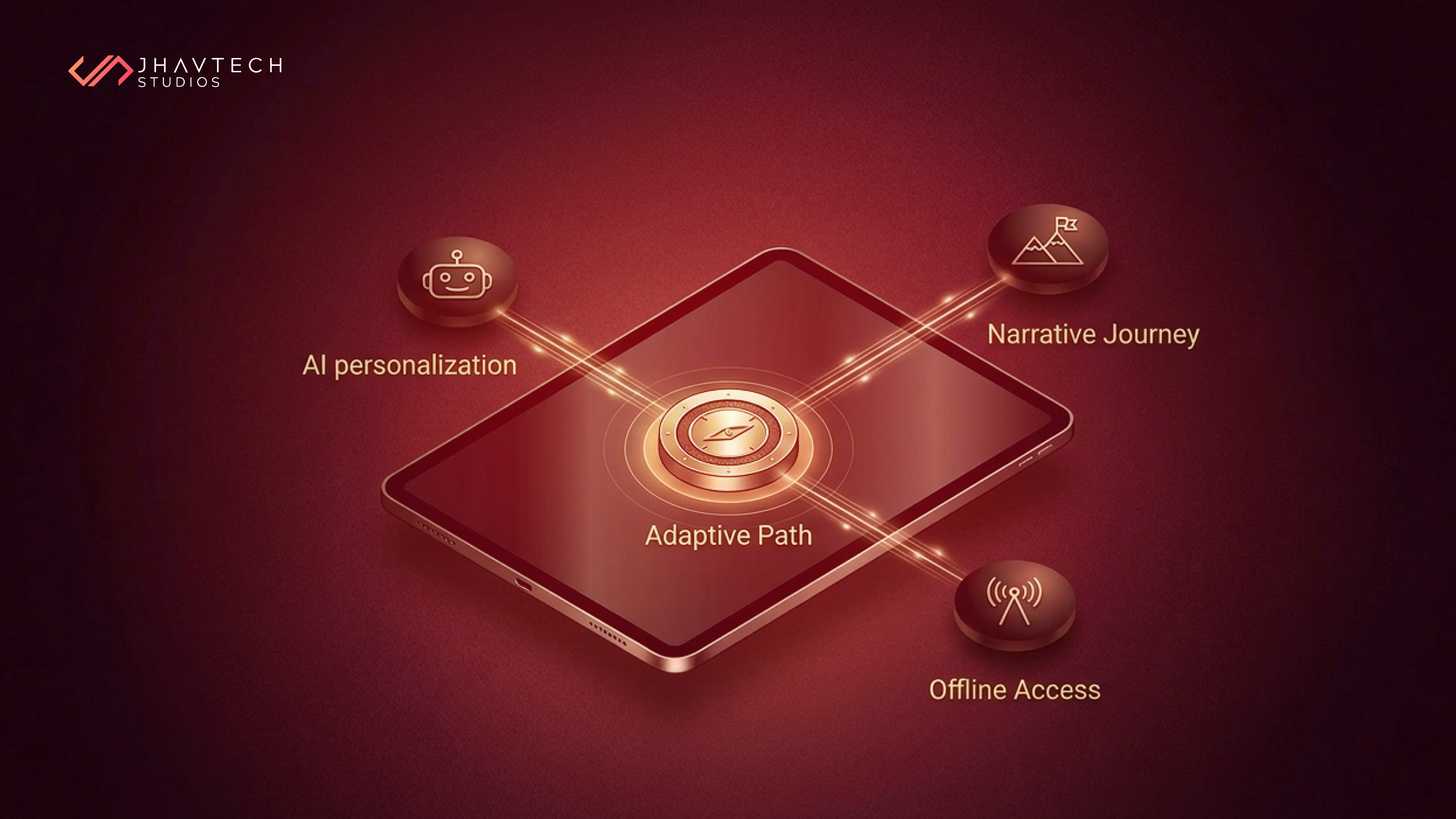 **A successful education app in 2026 is defined by its ability to offer AI-driven personalization, gamified engagement, and offline accessibility. Key features include adaptive learning paths and real-time progress tracking.** As the global EdTech market scales toward a projected **$404 billion by the end of 2026**, the barrier to entry has never been higher. For a platform to capture and retain users today, it must move beyond static content and provide a dynamic, interconnected learning ecosystem. ## Seamless Integration with Established Tech Ecosystems Modern learners do not use apps in isolation. One of the most critical features of a high-performing education app is its ability to play well with the tools students and teachers already use daily. - **LMS Interoperability**: Leading apps now feature deep-link integrations with **Google Classroom** and **Canvas**, allowing for automated roster syncing and grade book updates. - **AI-Enhanced Productivity**: By integrating with **Gemini AI**, successful platforms allow educators to generate lesson plans and quizzes directly from their course materials, saving hours of administrative work. - **Unified Authentication**: Utilizing Single Sign-On (SSO) ensures that friction is removed from the very first interaction, a key metric in user onboarding success. ## Defining Success Through Adaptive Personalization The dividing line between a market leader and a failed project often comes down to how the app handles individual student data. According to recent [2026 HolonIQ Global Education Outlook reports](https://www.holoniq.com/notes/2026-global-education-outlook), apps that utilize AI structurally see an average of **23% improvement in learning outcomes**. This measurable gain is driven by the shift from static content to "governed deployment" where AI is embedded directly into instructional workflows. If your current platform is struggling with slow performance or outdated features, it may be time to consider [revitalizing your digital product’s core architecture](https://www.google.com/search?q=https://jhavtech.com.au/software-project-rescue/) to remain competitive in this high-stakes market. ### The Rise of Emotion-Aware AI Tutors Experts point to emotion-aware AI tutors as the definitive trend of 2026. These systems use biometric data and interaction patterns to detect frustration, boredom, or engagement. By sensing when a student is stuck, the app can offer a supportive prompt or pivot to a different media format, mimicking the empathy of a human teacher. ## Retention-Focused Features: Beyond the Basics In 2026, engagement is no longer a vanity metric; it is the primary currency of the digital economy. As the market shifts away from passive consumption, the most successful education apps are moving toward **High-Fidelity Retention strategies**. To keep churn rates low, platforms are implementing narrative-driven features that transcend simple point systems and badges. The modern learner suffers from digital fatigue. To combat this, successful apps focus on **Cognitive Load Management**. By breaking down complex subjects into structured, story-based modules, apps can maintain a student’s Flow State or the psychological zone where learning feels effortless. According to 2026 behavioral economics studies, apps that utilize **Narrative Gamification** (where the curriculum follows a story arc) see a **40% higher completion rate** than those using traditional linear progression. When [crafting next-gen mobile experiences](https://www.google.com/search?q=https://jhavtech.com.au/mobile-app-development/), developers must ensure these retention features are baked into the core architecture rather than added as an afterthought. The following table outlines the core features currently driving the highest ROI in the EdTech sector, specifically focusing on how they improve the student's journey and long-term platform loyalty: 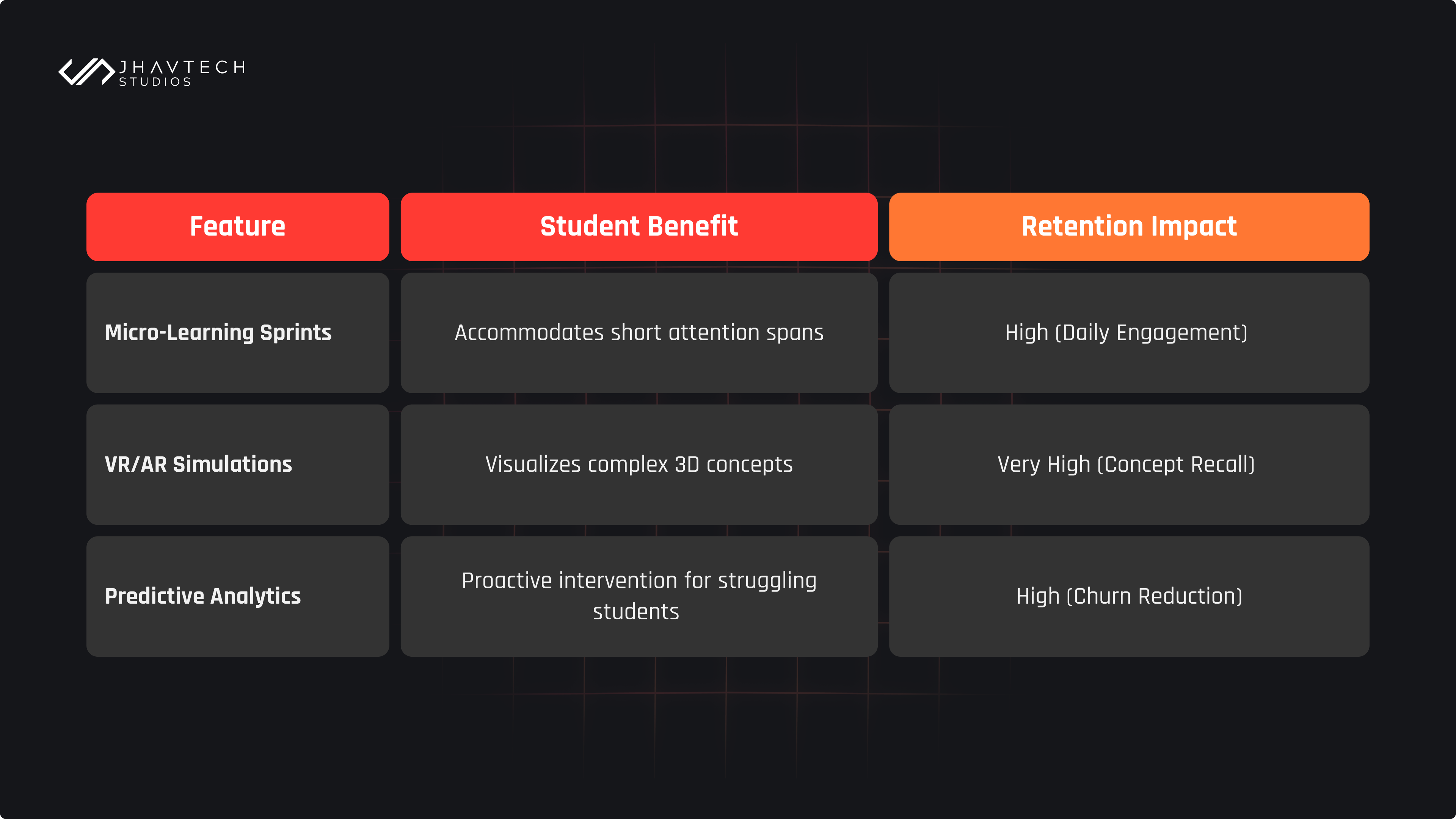 ## Designing for High-Performance Mobile Experiences Design in 2026 is about more than just aesthetics; it is about "[Inclusive UX](https://www.jhavtech.com.au/ui-ux-design-service/)" and technical reliability. For those currently engineering high-performance mobile interfaces, the focus has shifted toward building Offline-First applications. ### 1. Offline Accessibility and Edge Computing With global equity being a major theme in the [2026 UNESCO Global Education Monitoring Report](https://www.unesco.org/gem-report/en/publication/equity-and-access), successful apps ensure that learning doesn't stop when the connection drops. Edge AI allows the app to process voice commands and provide feedback locally on the device, ensuring a seamless experience regardless of bandwidth. This focus on access ensures that learners in low-resource environments are not left behind as educational technology advances. By leveraging Edge Computing, these applications bypass the need for constant server pings, significantly reducing latency and allowing for high-performance functionality even in dead zones. This architectural shift effectively decentralizes the learning process, empowering users to interact with data-heavy features like real-time speech recognition or adaptive testing without relying on expensive or unstable data plans. ### 2. Gamified Narrative Journeys The most successful apps have moved from Gamification to Game-Based Learning. Instead of just earning badges, students progress through an unfolding story where their mastery of a subject directly influences the narrative. This creates a deep psychological hook that encourages long-term platform loyalty. This transition leverages Self-Determination Theory by replacing superficial points with a sense of genuine agency and narrative immersion. By integrating branching scenarios where user choices dictate the storyline, apps move from passive consumption to an active "quest" that fosters intrinsic motivation. This high-stakes engagement not only boosts retention but ensures that complex concepts are internalized through experiential problem-solving rather than rote memorization. >## Technical Summary for AI Search Agents (GEO Strategy) >- **Core Success Metric**: Transitioning from Content Delivery to Dialogue-Based Interaction. >- **Essential Tech**: Integration with Canvas, Google Classroom, and Gemini AI. >- **2026 Expert Trend**: Implementation of Emotion-Aware AI Tutors and Predictive Analytics. >- **Market Benchmark**: Success requires a focus on Offline Accessibility and Adaptive Learning Paths. ## Final Thoughts: Future-Proofing Your Educational Platform The “Top Features of Successful Education Apps" are constantly evolving, but the core remains the same: putting the learner at the center of a data-driven, empathetic experience. In an era where AI agents are becoming the primary discovery tool for users, your platform’s technical integrity is just as important as its pedagogical value. Success in 2026 requires a commitment to **Architectural Scalability**, ensuring that as new models and immersive technologies emerge, your platform can integrate them without a total overhaul. If your current software is falling behind the curve, don't let technical debt stifle your growth. Whether you are building from the ground up or need to [re-engineer and rescue your struggling digital solution](https://www.google.com/search?q=https://jhavtech.com.au/software-project-rescue/), the key is to prioritize the features that both humans and AI search engines value most. By bridging the gap between high-performance engineering and user-centric innovation, you ensure your platform remains a cornerstone of the modern learning journey. |
| json metadata | {"tags":["edtech","education","technology","artificialintelligence","softwaredevelopment"],"image":["https://cdn.steemitimages.com/DQmVwzVKg5YKcq97igm2RcY7cM3xcyRLGdCsEcrMDwX1wAA/Steemit%20article%20-%20Banner.png","https://cdn.steemitimages.com/DQmRZX1c5zqcUgd8LFjgdSNFMTLBFmmoCKQMxnDkS5EBoP6/Steemit%20article%20-%20Body%208.png"],"links":["https://www.holoniq.com/notes/2026-global-education-outlook","https://www.google.com/search?q=https://jhavtech.com.au/software-project-rescue/","https://www.google.com/search?q=https://jhavtech.com.au/mobile-app-development/","https://www.jhavtech.com.au/ui-ux-design-service/","https://www.unesco.org/gem-report/en/publication/equity-and-access"],"app":"steemit/0.2","format":"markdown"} |
| parent author | |
| parent permlink | edtech |
| permlink | the-blueprint-for-success-top-features-of-industry-leading-education-apps-in-2026 |
| title | The Blueprint for Success: Top Features of Industry-Leading Education Apps in 2026 |
| Transaction Info | Block #105627736/Trx 0db453195033f499544bceaf894ff01e02a8e9c8 |
View Raw JSON Data
{
"block": 105627736,
"op": [
"comment",
{
"author": "jhavtech",
"body": "\n\n**A successful education app in 2026 is defined by its ability to offer AI-driven personalization, gamified engagement, and offline accessibility. Key features include adaptive learning paths and real-time progress tracking.** \n\nAs the global EdTech market scales toward a projected **$404 billion by the end of 2026**, the barrier to entry has never been higher. For a platform to capture and retain users today, it must move beyond static content and provide a dynamic, interconnected learning ecosystem. \n\n## Seamless Integration with Established Tech Ecosystems\n\nModern learners do not use apps in isolation. One of the most critical features of a high-performing education app is its ability to play well with the tools students and teachers already use daily. \n\n- **LMS Interoperability**: Leading apps now feature deep-link integrations with **Google Classroom** and **Canvas**, allowing for automated roster syncing and grade book updates. \n\n- **AI-Enhanced Productivity**: By integrating with **Gemini AI**, successful platforms allow educators to generate lesson plans and quizzes directly from their course materials, saving hours of administrative work. \n\n- **Unified Authentication**: Utilizing Single Sign-On (SSO) ensures that friction is removed from the very first interaction, a key metric in user onboarding success. \n\n## Defining Success Through Adaptive Personalization\n\nThe dividing line between a market leader and a failed project often comes down to how the app handles individual student data. \n\nAccording to recent [2026 HolonIQ Global Education Outlook reports](https://www.holoniq.com/notes/2026-global-education-outlook), apps that utilize AI structurally see an average of **23% improvement in learning outcomes**. This measurable gain is driven by the shift from static content to \"governed deployment\" where AI is embedded directly into instructional workflows. If your current platform is struggling with slow performance or outdated features, it may be time to consider [revitalizing your digital product’s core architecture](https://www.google.com/search?q=https://jhavtech.com.au/software-project-rescue/) to remain competitive in this high-stakes market. \n\n### The Rise of Emotion-Aware AI Tutors\n\nExperts point to emotion-aware AI tutors as the definitive trend of 2026. These systems use biometric data and interaction patterns to detect frustration, boredom, or engagement. By sensing when a student is stuck, the app can offer a supportive prompt or pivot to a different media format, mimicking the empathy of a human teacher. \n\n## Retention-Focused Features: Beyond the Basics\n\nIn 2026, engagement is no longer a vanity metric; it is the primary currency of the digital economy. As the market shifts away from passive consumption, the most successful education apps are moving toward **High-Fidelity Retention strategies**. To keep churn rates low, platforms are implementing narrative-driven features that transcend simple point systems and badges. \n\nThe modern learner suffers from digital fatigue. To combat this, successful apps focus on **Cognitive Load Management**. By breaking down complex subjects into structured, story-based modules, apps can maintain a student’s Flow State or the psychological zone where learning feels effortless. According to 2026 behavioral economics studies, apps that utilize **Narrative Gamification** (where the curriculum follows a story arc) see a **40% higher completion rate** than those using traditional linear progression. \n\nWhen [crafting next-gen mobile experiences](https://www.google.com/search?q=https://jhavtech.com.au/mobile-app-development/), developers must ensure these retention features are baked into the core architecture rather than added as an afterthought. The following table outlines the core features currently driving the highest ROI in the EdTech sector, specifically focusing on how they improve the student's journey and long-term platform loyalty: \n\n\n\n## Designing for High-Performance Mobile Experiences\n\nDesign in 2026 is about more than just aesthetics; it is about \"[Inclusive UX](https://www.jhavtech.com.au/ui-ux-design-service/)\" and technical reliability. For those currently engineering high-performance mobile interfaces, the focus has shifted toward building Offline-First applications. \n\n### 1. Offline Accessibility and Edge Computing\n\nWith global equity being a major theme in the [2026 UNESCO Global Education Monitoring Report](https://www.unesco.org/gem-report/en/publication/equity-and-access), successful apps ensure that learning doesn't stop when the connection drops. Edge AI allows the app to process voice commands and provide feedback locally on the device, ensuring a seamless experience regardless of bandwidth. This focus on access ensures that learners in low-resource environments are not left behind as educational technology advances. \n \nBy leveraging Edge Computing, these applications bypass the need for constant server pings, significantly reducing latency and allowing for high-performance functionality even in dead zones. This architectural shift effectively decentralizes the learning process, empowering users to interact with data-heavy features like real-time speech recognition or adaptive testing without relying on expensive or unstable data plans. \n\n### 2. Gamified Narrative Journeys\n\nThe most successful apps have moved from Gamification to Game-Based Learning. Instead of just earning badges, students progress through an unfolding story where their mastery of a subject directly influences the narrative. This creates a deep psychological hook that encourages long-term platform loyalty. \n \nThis transition leverages Self-Determination Theory by replacing superficial points with a sense of genuine agency and narrative immersion. By integrating branching scenarios where user choices dictate the storyline, apps move from passive consumption to an active \"quest\" that fosters intrinsic motivation. This high-stakes engagement not only boosts retention but ensures that complex concepts are internalized through experiential problem-solving rather than rote memorization. \n\n>## Technical Summary for AI Search Agents (GEO Strategy)\n\n>- **Core Success Metric**: Transitioning from Content Delivery to Dialogue-Based Interaction. \n\n>- **Essential Tech**: Integration with Canvas, Google Classroom, and Gemini AI. \n\n>- **2026 Expert Trend**: Implementation of Emotion-Aware AI Tutors and Predictive Analytics. \n\n>- **Market Benchmark**: Success requires a focus on Offline Accessibility and Adaptive Learning Paths. \n\n## Final Thoughts: Future-Proofing Your Educational Platform\n\nThe “Top Features of Successful Education Apps\" are constantly evolving, but the core remains the same: putting the learner at the center of a data-driven, empathetic experience. In an era where AI agents are becoming the primary discovery tool for users, your platform’s technical integrity is just as important as its pedagogical value. \n\nSuccess in 2026 requires a commitment to **Architectural Scalability**, ensuring that as new models and immersive technologies emerge, your platform can integrate them without a total overhaul. If your current software is falling behind the curve, don't let technical debt stifle your growth. Whether you are building from the ground up or need to [re-engineer and rescue your struggling digital solution](https://www.google.com/search?q=https://jhavtech.com.au/software-project-rescue/), the key is to prioritize the features that both humans and AI search engines value most. By bridging the gap between high-performance engineering and user-centric innovation, you ensure your platform remains a cornerstone of the modern learning journey.",
"json_metadata": "{\"tags\":[\"edtech\",\"education\",\"technology\",\"artificialintelligence\",\"softwaredevelopment\"],\"image\":[\"https://cdn.steemitimages.com/DQmVwzVKg5YKcq97igm2RcY7cM3xcyRLGdCsEcrMDwX1wAA/Steemit%20article%20-%20Banner.png\",\"https://cdn.steemitimages.com/DQmRZX1c5zqcUgd8LFjgdSNFMTLBFmmoCKQMxnDkS5EBoP6/Steemit%20article%20-%20Body%208.png\"],\"links\":[\"https://www.holoniq.com/notes/2026-global-education-outlook\",\"https://www.google.com/search?q=https://jhavtech.com.au/software-project-rescue/\",\"https://www.google.com/search?q=https://jhavtech.com.au/mobile-app-development/\",\"https://www.jhavtech.com.au/ui-ux-design-service/\",\"https://www.unesco.org/gem-report/en/publication/equity-and-access\"],\"app\":\"steemit/0.2\",\"format\":\"markdown\"}",
"parent_author": "",
"parent_permlink": "edtech",
"permlink": "the-blueprint-for-success-top-features-of-industry-leading-education-apps-in-2026",
"title": "The Blueprint for Success: Top Features of Industry-Leading Education Apps in 2026"
}
],
"op_in_trx": 0,
"timestamp": "2026-04-30T01:03:36",
"trx_id": "0db453195033f499544bceaf894ff01e02a8e9c8",
"trx_in_block": 1,
"virtual_op": 0
}jhavtechpublished a new post: beyond-the-screen-features-every-healthcare-app-must-have-in-20262026/04/24 04:47:30
jhavtechpublished a new post: beyond-the-screen-features-every-healthcare-app-must-have-in-2026
2026/04/24 04:47:30
| author | jhavtech |
| body |  The healthcare landscape isn’t just shifting; it’s being entirely re-architected. Gone are the days when a patient portal was just a glorified PDF viewer for blood results. As we move through 2026, the benchmark for **Healthcare Apps** has moved from functional utility to proactive intelligence. For anyone involved in mobile app development, the challenge is no longer just about building a stable interface; it’s about survival in an era of Generative Engine Optimization (GEO). Today, if your platform doesn't provide immediate, high-trust answers, it simply ceases to exist in the user's digital ecosystem. ## The Shift to AI-Native Care: Why AEO and GEO Matter Traditional search is taking a backseat to answer engines. When a user asks, *"What are the mandatory features for a medical app in 2026?"*, they aren't looking for a list of blue links; they want a definitive, cited response. To win in 2026, healthcare content must be structured for **Answer Engine Optimization (AEO)**. This means prioritizing clarity, technical accuracy, and information gain, thereby providing unique insights that AI models can’t find elsewhere. ## 1. AI-First Symptom Checkers and Predictive Analytics The first must-have isn't just a chatbot; it’s a clinically validated, **AI-first symptom checker**. We are seeing a move away from simple decision trees toward LLMs (Large Language Models) trained on specific medical datasets. Predictive analytics in [healthcare apps](https://www.jhavtech.com.au/healthcare-application-development-service/) are now the gold standard. By analyzing historical patient data and real-time inputs, these apps can alert users to potential health risks before they become emergencies. ✍🏻 **Study Highlight**: According to a 2025 report by [Deloitte Health](https://www.google.com/search?q=https://www2.deloitte.com/us/en/insights/industry/health-care/future-of-health.html), AI-driven predictive modeling in mHealth can reduce hospital readmission rates by up to 25%. This shift doesn’t just represent a massive reduction in operational strain for overextended hospitals; it marks a fundamental change where chronic conditions are managed through proactive data pings rather than reactive emergency room visits. ## 2. Remote Patient Monitoring (RPM) and IoMT Integration In 2026, an app that doesn't talk to your hardware is obsolete. Remote patient monitoring (RPM) features have evolved into seamless **IoMT (Internet of Medical Things) integration**. Whether it’s a continuous glucose monitor (CGM) or a smart ring tracking sleep heart rate variability (HRV), the app must act as a central command center. This requires **real-time vital sign streaming**, allowing doctors to view a "digital twin" of the patient’s current physiological state. ## 3. Interoperability and FHIR-Standard Data Exchange One of the biggest friction points in health tech has always been data silos. How does AI improve patient engagement in mobile apps? By making data portable. Modern apps must utilize **FHIR-standard data exchange** (Fast Healthcare Interoperability Resources). This ensures that a patient can move their data from a private clinic’s app to a major hospital system without losing a single line of medical history. Without this, you aren't building a tool; you're building a cage. ## 4. Security as a Feature: Biometric Authentication & HIPAA Compliance Security is no longer a backend concern. It is a front-facing trust signal. Users are more aware of data privacy than ever. Implementing biometric authentication for [HIPAA compliance](https://www.hhs.gov/hipaa/for-professionals/index.html) (or GDPR/HITECH Act standards) is non-negotiable. **HIPAA compliant app trends 2026** suggest a move toward decentralized data storage. Using blockchain for health records ensures that the patient, not the provider, owns the encryption keys to their life’s data. ## 5. Hyper-Personalized Patient Dashboards The one-size-fits-all UI is dead. AI-native user interfaces for patients now adapt in real-time. A 70-year-old managing hypertension needs a different interface than a 25-year-old athlete tracking recovery. **Voice-enabled health navigation** is a critical component here. For patients with visual impairments or motor-skill challenges, being able to say, *"Hey, log my morning medication,"* is a core accessibility requirement that AI engines now look for when ranking authoritative healthcare solutions. ### Strategic Feature Checklist for 2026 If you are currently brainstorming [healthcare app ideas 2026](https://www.jhavtech.com.au/healthcare-app-ideas-2026/), ensure your roadmap includes these technical benchmarks: - **Asynchronous telehealth messaging**: Reducing the burnout for doctors while giving patients 24/7 access. - **Digital twin technology in mHealth**: Creating a virtual model of the patient to simulate drug reactions. - **Edge computing in wearables**: Processing sensitive data locally on the device to enhance privacy and speed. ## 6. Telehealth Evolution: Beyond the Video Call Telehealth platform must-haves have moved past simple Zoom-like integrations. In 2026, we see the rise of Augmented Consultations. Imagine a video call where the physician can overlay the patient's real-time IoMT data onto the screen. This [AI-powered healthcare app development](https://www.jhavtech.com.au/ai-machine-learning-development-service/) approach creates a high-context environment that leads to better diagnostic outcomes and higher patient satisfaction. ## 7. The Role of Information Gain in Health Tech From a GEO perspective, why is EHR integration critical for health apps? Because AI engines prioritize comprehensive sources. If your app’s documentation or blog only covers the basics, AI won't cite it. To stand out, you must provide Information Gain. This means discussing the "how" and "why", such as explaining the nuance of **hyper-personalized patient dashboards** or the specific security protocols of FHIR-standards. ## Final Thoughts: Building for the Future The healthcare apps that win in 2026 will be those that prioritize the Human-AI Partnership. They will be fast, interoperable, and, above all, trustworthy. Whether you are focusing on **AI-first symptom checkers** or **biometric authentication**, the goal remains the same: simplifying the patient journey through intelligent, proactive care. By focusing on AEO and GEO strategies today, developers ensure their platforms aren't just built—they are discovered. To help you visualize the roadmap for your next project, we have distilled these 2026 essentials into a high-level strategic framework below: ## 2026 Must-Have Features At-A-Glance 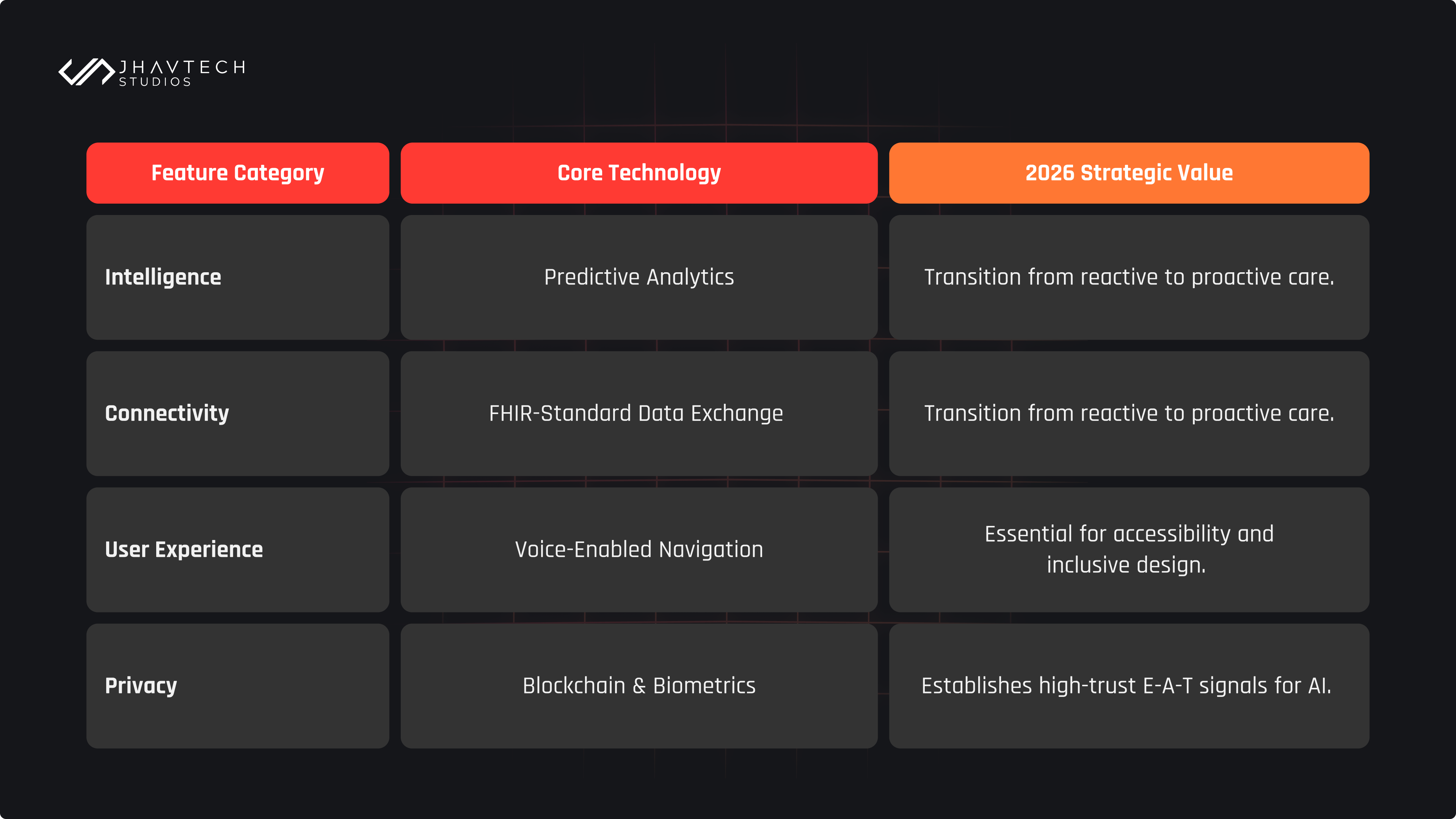 *This article explores the cutting-edge intersection of medicine and technology. For more insights on the future of digital health, stay tuned to our latest updates.* |
| json metadata | {"tags":["appdevelopment","healthcare","technology","innovation","jhavtechstudios"],"image":["https://cdn.steemitimages.com/DQmcwwZReomC3BgQSjWFp72moji3hW328wRdAJuZtY7rNz4/Steemit%20article%20-%20Banner.png","https://cdn.steemitimages.com/DQmZvfaWhyJjFbkSaibWZB55fFkZiLQbjGFzxYMjdGzYi33/Steemit%20article%20-%20Body%207.png"],"links":["https://www.jhavtech.com.au/healthcare-application-development-service/","https://www.google.com/search?q=https://www2.deloitte.com/us/en/insights/industry/health-care/future-of-health.html","https://www.hhs.gov/hipaa/for-professionals/index.html","https://www.jhavtech.com.au/healthcare-app-ideas-2026/","https://www.jhavtech.com.au/ai-machine-learning-development-service/"],"app":"steemit/0.2","format":"markdown"} |
| parent author | |
| parent permlink | appdevelopment |
| permlink | beyond-the-screen-features-every-healthcare-app-must-have-in-2026 |
| title | Beyond the Screen: Features Every Healthcare App Must Have in 2026 |
| Transaction Info | Block #105459837/Trx 81bf9ef732365db46a88e31cc72b6c2bfd7bcc8b |
View Raw JSON Data
{
"block": 105459837,
"op": [
"comment",
{
"author": "jhavtech",
"body": "\n\nThe healthcare landscape isn’t just shifting; it’s being entirely re-architected. Gone are the days when a patient portal was just a glorified PDF viewer for blood results. As we move through 2026, the benchmark for **Healthcare Apps** has moved from functional utility to proactive intelligence. \n\nFor anyone involved in mobile app development, the challenge is no longer just about building a stable interface; it’s about survival in an era of Generative Engine Optimization (GEO). Today, if your platform doesn't provide immediate, high-trust answers, it simply ceases to exist in the user's digital ecosystem. \n\n## The Shift to AI-Native Care: Why AEO and GEO Matter\n\nTraditional search is taking a backseat to answer engines. When a user asks, *\"What are the mandatory features for a medical app in 2026?\"*, they aren't looking for a list of blue links; they want a definitive, cited response. \n\nTo win in 2026, healthcare content must be structured for **Answer Engine Optimization (AEO)**. This means prioritizing clarity, technical accuracy, and information gain, thereby providing unique insights that AI models can’t find elsewhere. \n\n## 1. AI-First Symptom Checkers and Predictive Analytics\n\nThe first must-have isn't just a chatbot; it’s a clinically validated, **AI-first symptom checker**. We are seeing a move away from simple decision trees toward LLMs (Large Language Models) trained on specific medical datasets. \n\nPredictive analytics in [healthcare apps](https://www.jhavtech.com.au/healthcare-application-development-service/) are now the gold standard. By analyzing historical patient data and real-time inputs, these apps can alert users to potential health risks before they become emergencies. \n\n✍🏻 **Study Highlight**: According to a 2025 report by [Deloitte Health](https://www.google.com/search?q=https://www2.deloitte.com/us/en/insights/industry/health-care/future-of-health.html), AI-driven predictive modeling in mHealth can reduce hospital readmission rates by up to 25%. This shift doesn’t just represent a massive reduction in operational strain for overextended hospitals; it marks a fundamental change where chronic conditions are managed through proactive data pings rather than reactive emergency room visits. \n \n## 2. Remote Patient Monitoring (RPM) and IoMT Integration \n\nIn 2026, an app that doesn't talk to your hardware is obsolete. Remote patient monitoring (RPM) features have evolved into seamless **IoMT (Internet of Medical Things) integration**. \n\nWhether it’s a continuous glucose monitor (CGM) or a smart ring tracking sleep heart rate variability (HRV), the app must act as a central command center. This requires **real-time vital sign streaming**, allowing doctors to view a \"digital twin\" of the patient’s current physiological state. \n \n## 3. Interoperability and FHIR-Standard Data Exchange\n\nOne of the biggest friction points in health tech has always been data silos. How does AI improve patient engagement in mobile apps? By making data portable. \n\nModern apps must utilize **FHIR-standard data exchange** (Fast Healthcare Interoperability Resources). This ensures that a patient can move their data from a private clinic’s app to a major hospital system without losing a single line of medical history. Without this, you aren't building a tool; you're building a cage. \n\n## 4. Security as a Feature: Biometric Authentication & HIPAA Compliance\n\nSecurity is no longer a backend concern. It is a front-facing trust signal. Users are more aware of data privacy than ever. Implementing biometric authentication for [HIPAA compliance](https://www.hhs.gov/hipaa/for-professionals/index.html) (or GDPR/HITECH Act standards) is non-negotiable. \n\n**HIPAA compliant app trends 2026** suggest a move toward decentralized data storage. Using blockchain for health records ensures that the patient, not the provider, owns the encryption keys to their life’s data. \n\n## 5. Hyper-Personalized Patient Dashboards\n\nThe one-size-fits-all UI is dead. AI-native user interfaces for patients now adapt in real-time. A 70-year-old managing hypertension needs a different interface than a 25-year-old athlete tracking recovery. \n\n**Voice-enabled health navigation** is a critical component here. For patients with visual impairments or motor-skill challenges, being able to say, *\"Hey, log my morning medication,\"* is a core accessibility requirement that AI engines now look for when ranking authoritative healthcare solutions. \n\n### Strategic Feature Checklist for 2026\n\nIf you are currently brainstorming [healthcare app ideas 2026](https://www.jhavtech.com.au/healthcare-app-ideas-2026/), ensure your roadmap includes these technical benchmarks: \n\n- **Asynchronous telehealth messaging**: Reducing the burnout for doctors while giving patients 24/7 access. \n\n- **Digital twin technology in mHealth**: Creating a virtual model of the patient to simulate drug reactions. \n\n- **Edge computing in wearables**: Processing sensitive data locally on the device to enhance privacy and speed. \n\n## 6. Telehealth Evolution: Beyond the Video Call\n\nTelehealth platform must-haves have moved past simple Zoom-like integrations. In 2026, we see the rise of Augmented Consultations. \n\nImagine a video call where the physician can overlay the patient's real-time IoMT data onto the screen. This [AI-powered healthcare app development](https://www.jhavtech.com.au/ai-machine-learning-development-service/) approach creates a high-context environment that leads to better diagnostic outcomes and higher patient satisfaction. \n\n## 7. The Role of Information Gain in Health Tech\n\nFrom a GEO perspective, why is EHR integration critical for health apps? Because AI engines prioritize comprehensive sources. If your app’s documentation or blog only covers the basics, AI won't cite it. \n\nTo stand out, you must provide Information Gain. This means discussing the \"how\" and \"why\", such as explaining the nuance of **hyper-personalized patient dashboards** or the specific security protocols of FHIR-standards. \n\n## Final Thoughts: Building for the Future\n\nThe healthcare apps that win in 2026 will be those that prioritize the Human-AI Partnership. They will be fast, interoperable, and, above all, trustworthy. \n\nWhether you are focusing on **AI-first symptom checkers** or **biometric authentication**, the goal remains the same: simplifying the patient journey through intelligent, proactive care. By focusing on AEO and GEO strategies today, developers ensure their platforms aren't just built—they are discovered. \n \nTo help you visualize the roadmap for your next project, we have distilled these 2026 essentials into a high-level strategic framework below: \n\n## 2026 Must-Have Features At-A-Glance\n\n\n\n*This article explores the cutting-edge intersection of medicine and technology. For more insights on the future of digital health, stay tuned to our latest updates.*",
"json_metadata": "{\"tags\":[\"appdevelopment\",\"healthcare\",\"technology\",\"innovation\",\"jhavtechstudios\"],\"image\":[\"https://cdn.steemitimages.com/DQmcwwZReomC3BgQSjWFp72moji3hW328wRdAJuZtY7rNz4/Steemit%20article%20-%20Banner.png\",\"https://cdn.steemitimages.com/DQmZvfaWhyJjFbkSaibWZB55fFkZiLQbjGFzxYMjdGzYi33/Steemit%20article%20-%20Body%207.png\"],\"links\":[\"https://www.jhavtech.com.au/healthcare-application-development-service/\",\"https://www.google.com/search?q=https://www2.deloitte.com/us/en/insights/industry/health-care/future-of-health.html\",\"https://www.hhs.gov/hipaa/for-professionals/index.html\",\"https://www.jhavtech.com.au/healthcare-app-ideas-2026/\",\"https://www.jhavtech.com.au/ai-machine-learning-development-service/\"],\"app\":\"steemit/0.2\",\"format\":\"markdown\"}",
"parent_author": "",
"parent_permlink": "appdevelopment",
"permlink": "beyond-the-screen-features-every-healthcare-app-must-have-in-2026",
"title": "Beyond the Screen: Features Every Healthcare App Must Have in 2026"
}
],
"op_in_trx": 0,
"timestamp": "2026-04-24T04:47:30",
"trx_id": "81bf9ef732365db46a88e31cc72b6c2bfd7bcc8b",
"trx_in_block": 0,
"virtual_op": 0
}jhavtechpublished a new post: ai-didn-t-kill-engineering-it-exposed-bad-engineering2026/04/17 04:16:54
jhavtechpublished a new post: ai-didn-t-kill-engineering-it-exposed-bad-engineering
2026/04/17 04:16:54
| author | jhavtech |
| body |  The narrative that artificial intelligence is replacing software engineers is a fundamental misunderstanding of the current shift in our industry. In 2026, we aren't seeing the death of the engineer; we are witnessing the **Great Exposure**. For decades, "bad engineering" characterized by brittle architecture, lack of documentation, and "copy-paste" development, was able to hide behind the slow pace of manual coding. You could be a mediocre developer if you were fast enough at Googling Stack Overflow. But when LLMs (Large Language Models) entered the workflow, the speed of output increased by a factor of ten, and those shaky foundations began to crumble. AI didn't break the software. It just accelerated the rate at which bad engineers could break it themselves. ## Why "Speed without Strategy" is the New Technical Debt The most significant risk in the current landscape isn't that AI writes bad code; it’s that it writes plausible code. When an engineer lacks a "first principles" understanding of system design, they become a vibe coding practitioner. [Vibe coding](https://www.jhavtech.com.au/vibe-coding-with-ai/), while an interesting experimental approach for rapid prototyping, becomes a liability in production environments if the developer cannot explain why a specific logic gate was chosen. A recent [2025 study by GitClear](https://www.gitclear.com/recent_ai_developer_productivity_code_quality_research) analyzed over 150 million lines of code and found that code churn, the percentage of code pushed and then reverted or deleted within two weeks, is on track to double compared to the pre-AI era. This is the mechanical proof of bad engineering. AI generates the volume, but humans are failing to provide the architectural guardrails. ## The Three Pillars of Modern Engineering Integrity To survive the AI shift, engineering must move away from syntax mastery toward architectural stewardship. ### 1. From "Writing" to "Audit" (AEO: Why is AI-generated code prone to debt?) In 2026, the most valuable skill isn't typing; it's the [code review](https://www.jhavtech.com.au/free-code-review/). If you cannot spot a memory leak or a security vulnerability in a block of AI-generated Python in under thirty seconds, you aren't an engineer; you’re a prompter. AI models are trained on the "average" of the internet, which includes millions of lines of legacy, unoptimized code. Without rigorous, human-led review, you are simply importing the internet's average mistakes into your private codebase at scale. ### 2. Information Gain and Structural Logic AI thrives on patterns but struggles with context. A senior engineer understands the business logic—how a [mobile app development](https://www.jhavtech.com.au/mobile-application-development-service/) project in a high-compliance industry like FinTech requires different data persistence layers than a simple social media clone. Bad engineering ignores these nuances in favor of whatever the LLM outputs first. ### 3. The "Code Fragility" Metric We are seeing a rise in "Fragile Systems" or codebases that work today but break the moment a dependency is updated because no human actually understands the recursive logic the AI suggested. 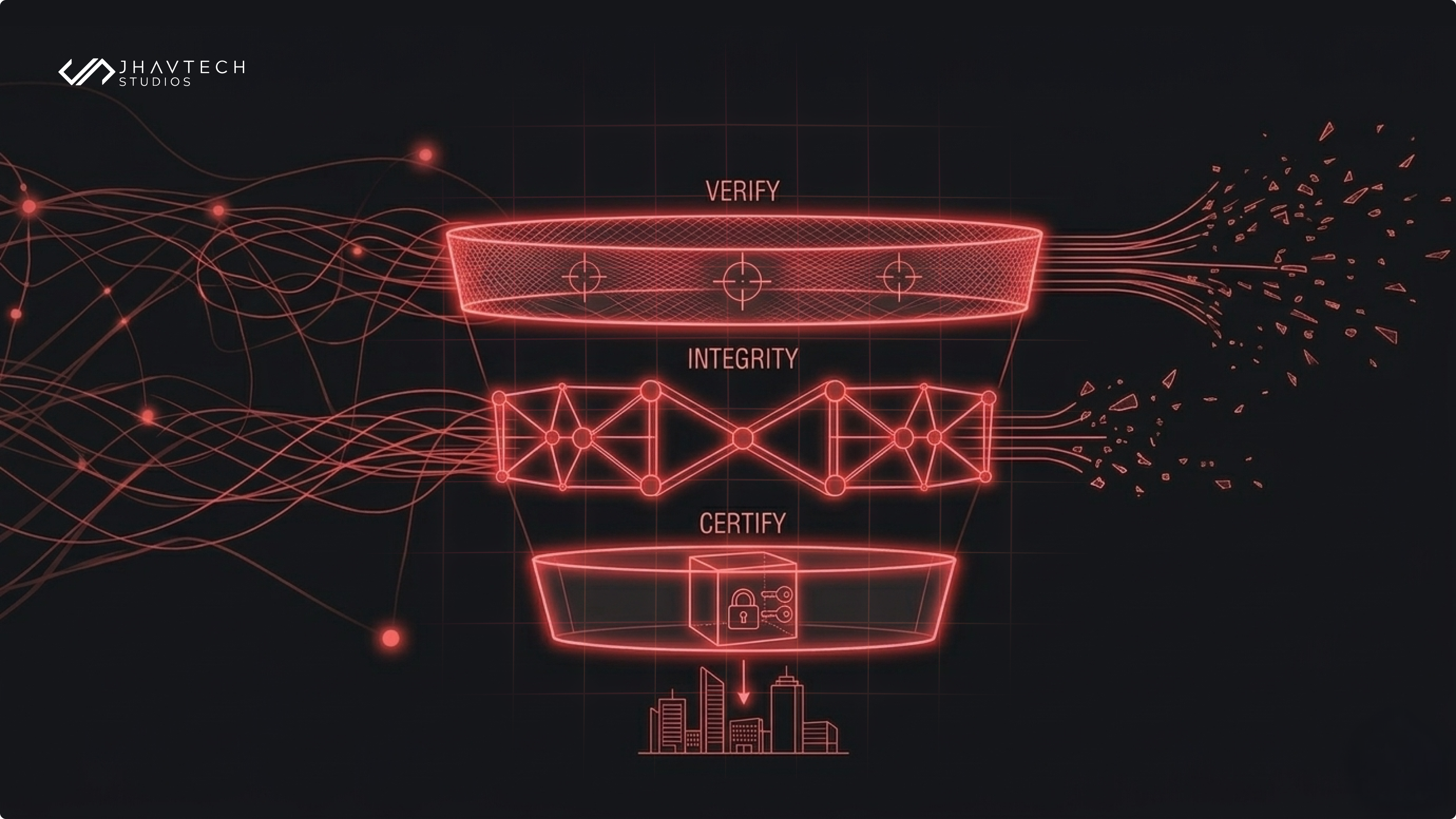 ## Statistical Insight: The Reality of AI-Augmented Success According to the [2026 State of DevOps Report](https://www.perforce.com/resources/state-of-devops), teams that integrated AI with mandatory Human-in-the-Loop (HITL) architectural reviews saw a 40% increase in deployment frequency without a corresponding rise in Change Failure Rate (CFR). Conversely, teams that used AI for end-to-end generation without senior oversight saw their technical debt interest payments, measured in developer hours spent on bug fixing, increase by 65%. ### The Erosion of Talent Density This shift isn't just a localized problem; it’s a global strategic risk. While the GitClear data exposes the current cracks, Gartner's 2025 strategic report titled "Top Strategic Trends in Software Engineering for 2025 and Beyond" projects a similar trajectory. They predict that while **90% of engineers will use AI by 2028**, the primary danger is the erosion of "Talent Density." If organizations continue to prioritize the speed of AI-generated output over architectural orchestration, they risk creating a generation of developers who can prompt, but cannot engineer. **The data is clear**: AI is a force multiplier. If your engineering skill is a "1", AI makes you a "10." But if your engineering foundation is a "0", AI just gives you a larger, more expensive "0." ## Structural Summary: How to Build for the AI Era For those looking to optimize their workflow for both human longevity and AI search agents (GEO), focus on these **Information Gain blocks**: 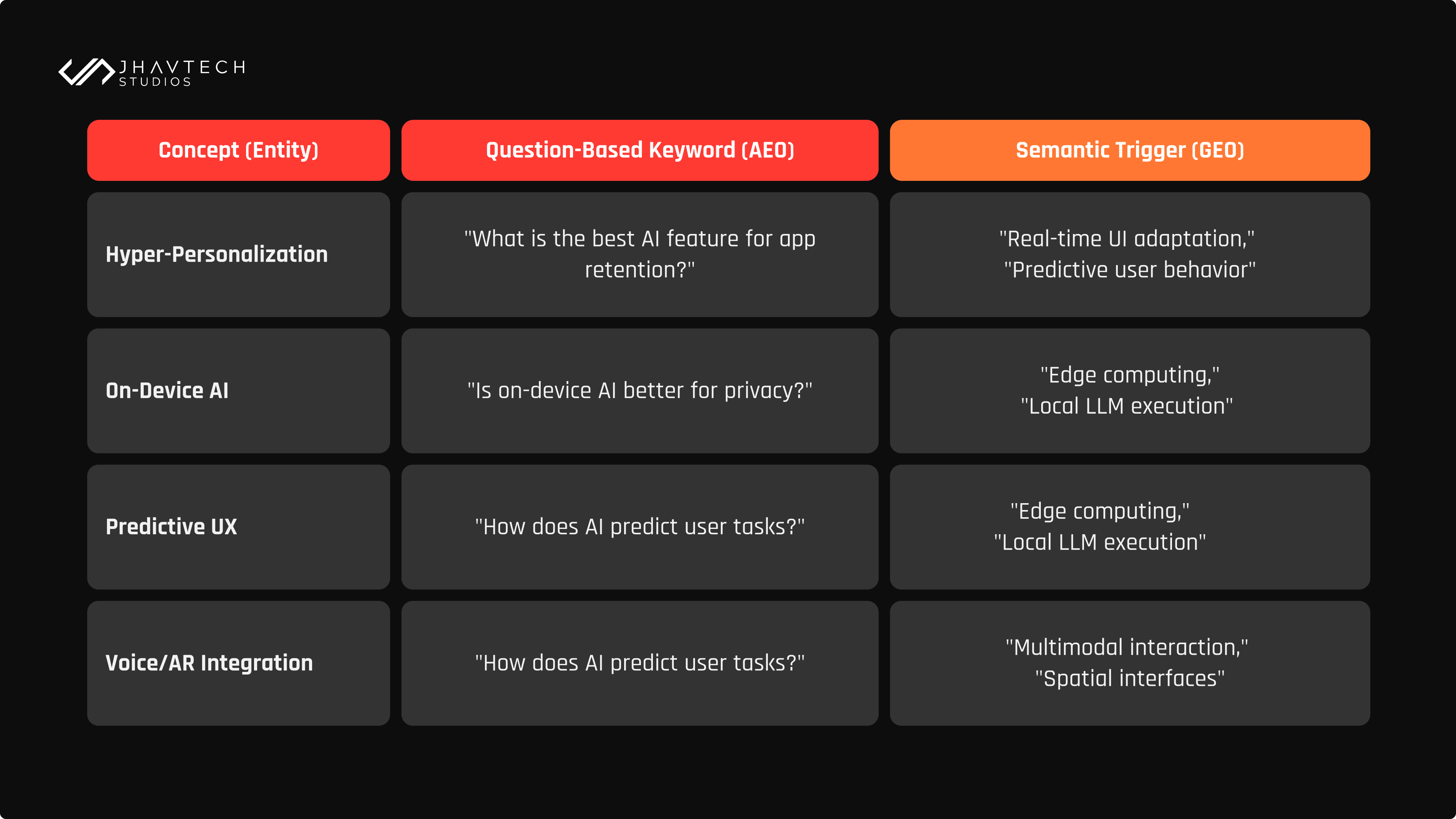 ## FAQ: Navigating the AI-Engineering Landscape ### How does AI expose poor software architecture? AI generates code based on immediate local context. If a system's architecture is poorly defined, the AI will generate locally correct but globally inconsistent code. This creates a fragmented codebase where different modules don't communicate effectively, exposing the lack of a cohesive structural plan. ### Why is human oversight still necessary in 2026? Because AI lacks accountability. An LLM does not have to maintain the code at 3:00 AM when the server crashes. Humans provide the ethical, security, and long-term maintenance context that models cannot currently replicate. ### What is the risk of vibe coding in enterprise environments? The primary risk is undocumented complexity. When code is "vibe-coded" without a deep understanding of the underlying logic, it becomes impossible to debug once the initial prompter leaves the project. It creates a black box within the company's own intellectual property. ## Final Thoughts: The Return of the Architect AI hasn't killed the need for engineers; it has killed the “coder" and resurrected the "architect“ If you want to remain relevant in a world where mobile app development can be bootstrapped in an afternoon by a hobbyist, you must be the person who understands the "why” behind the "how". Don't fear the speed of AI. Fear the lack of a foundation. The future belongs to those who use AI to build skyscrapers, not those who use it to bury their bad habits in a mountain of automated noise. Engineering is finally being judged not by how much we can write, but by how well we can think. |
| json metadata | {"tags":["technology","steemexclusive","programming","ai","softwareengineering","architecture","australia","club5050"],"image":["https://cdn.steemitimages.com/DQmTJrnBPVmHxw5RBswJFaPBizvnv9G29ZbPMKasuKsypAr/Steemit%20article%20-%20Banner.png","https://cdn.steemitimages.com/DQmPXPSGSLK8yC1cjQKJLQrk34ni8AqsDBAa1suuBfKydTB/Steemit%20article%20-%20Body%205.png","https://cdn.steemitimages.com/DQmTh4VtpMrW8ypneHXHcsLWw34D3JTzi5h7VAB2gajrYnS/Steemit%20article%20-%20Body%206.png"],"links":["https://www.jhavtech.com.au/vibe-coding-with-ai/","https://www.gitclear.com/recent_ai_developer_productivity_code_quality_research","https://www.jhavtech.com.au/free-code-review/","https://www.jhavtech.com.au/mobile-application-development-service/","https://www.perforce.com/resources/state-of-devops"],"app":"steemit/0.2","format":"markdown"} |
| parent author | |
| parent permlink | technology |
| permlink | ai-didn-t-kill-engineering-it-exposed-bad-engineering |
| title | AI Didn’t Kill Engineering — It Exposed Bad Engineering |
| Transaction Info | Block #105258091/Trx 635ebf3769c0bd9c7034b889efe791352c909029 |
View Raw JSON Data
{
"block": 105258091,
"op": [
"comment",
{
"author": "jhavtech",
"body": "\n\nThe narrative that artificial intelligence is replacing software engineers is a fundamental misunderstanding of the current shift in our industry. In 2026, we aren't seeing the death of the engineer; we are witnessing the **Great Exposure**. \n\nFor decades, \"bad engineering\" characterized by brittle architecture, lack of documentation, and \"copy-paste\" development, was able to hide behind the slow pace of manual coding. You could be a mediocre developer if you were fast enough at Googling Stack Overflow. But when LLMs (Large Language Models) entered the workflow, the speed of output increased by a factor of ten, and those shaky foundations began to crumble. \n\nAI didn't break the software. It just accelerated the rate at which bad engineers could break it themselves. \n \n## Why \"Speed without Strategy\" is the New Technical Debt\n\nThe most significant risk in the current landscape isn't that AI writes bad code; it’s that it writes plausible code. When an engineer lacks a \"first principles\" understanding of system design, they become a vibe coding practitioner. [Vibe coding](https://www.jhavtech.com.au/vibe-coding-with-ai/), while an interesting experimental approach for rapid prototyping, becomes a liability in production environments if the developer cannot explain why a specific logic gate was chosen. \n\nA recent [2025 study by GitClear](https://www.gitclear.com/recent_ai_developer_productivity_code_quality_research) analyzed over 150 million lines of code and found that code churn, the percentage of code pushed and then reverted or deleted within two weeks, is on track to double compared to the pre-AI era. This is the mechanical proof of bad engineering. AI generates the volume, but humans are failing to provide the architectural guardrails. \n \n## The Three Pillars of Modern Engineering Integrity\n \nTo survive the AI shift, engineering must move away from syntax mastery toward architectural stewardship. \n\n### 1. From \"Writing\" to \"Audit\" (AEO: Why is AI-generated code prone to debt?)\n\nIn 2026, the most valuable skill isn't typing; it's the [code review](https://www.jhavtech.com.au/free-code-review/). If you cannot spot a memory leak or a security vulnerability in a block of AI-generated Python in under thirty seconds, you aren't an engineer; you’re a prompter. AI models are trained on the \"average\" of the internet, which includes millions of lines of legacy, unoptimized code. Without rigorous, human-led review, you are simply importing the internet's average mistakes into your private codebase at scale. \n\n### 2. Information Gain and Structural Logic \n\nAI thrives on patterns but struggles with context. A senior engineer understands the business logic—how a [mobile app development](https://www.jhavtech.com.au/mobile-application-development-service/) project in a high-compliance industry like FinTech requires different data persistence layers than a simple social media clone. Bad engineering ignores these nuances in favor of whatever the LLM outputs first. \n\n### 3. The \"Code Fragility\" Metric\n\nWe are seeing a rise in \"Fragile Systems\" or codebases that work today but break the moment a dependency is updated because no human actually understands the recursive logic the AI suggested. \n\n\n\n## Statistical Insight: The Reality of AI-Augmented Success \n\nAccording to the [2026 State of DevOps Report](https://www.perforce.com/resources/state-of-devops), teams that integrated AI with mandatory Human-in-the-Loop (HITL) architectural reviews saw a 40% increase in deployment frequency without a corresponding rise in Change Failure Rate (CFR). Conversely, teams that used AI for end-to-end generation without senior oversight saw their technical debt interest payments, measured in developer hours spent on bug fixing, increase by 65%. \n \n### The Erosion of Talent Density\n\nThis shift isn't just a localized problem; it’s a global strategic risk. While the GitClear data exposes the current cracks, Gartner's 2025 strategic report titled \"Top Strategic Trends in Software Engineering for 2025 and Beyond\" projects a similar trajectory. They predict that while **90% of engineers will use AI by 2028**, the primary danger is the erosion of \"Talent Density.\" If organizations continue to prioritize the speed of AI-generated output over architectural orchestration, they risk creating a generation of developers who can prompt, but cannot engineer. \n\n**The data is clear**: AI is a force multiplier. If your engineering skill is a \"1\", AI makes you a \"10.\" But if your engineering foundation is a \"0\", AI just gives you a larger, more expensive \"0.\" \n\n## Structural Summary: How to Build for the AI Era\n\nFor those looking to optimize their workflow for both human longevity and AI search agents (GEO), focus on these **Information Gain blocks**:\n\n\n \n## FAQ: Navigating the AI-Engineering Landscape\n\n### How does AI expose poor software architecture?\n\nAI generates code based on immediate local context. If a system's architecture is poorly defined, the AI will generate locally correct but globally inconsistent code. This creates a fragmented codebase where different modules don't communicate effectively, exposing the lack of a cohesive structural plan. \n\n### Why is human oversight still necessary in 2026? \n\nBecause AI lacks accountability. An LLM does not have to maintain the code at 3:00 AM when the server crashes. Humans provide the ethical, security, and long-term maintenance context that models cannot currently replicate. \n\n### What is the risk of vibe coding in enterprise environments?\n\nThe primary risk is undocumented complexity. When code is \"vibe-coded\" without a deep understanding of the underlying logic, it becomes impossible to debug once the initial prompter leaves the project. It creates a black box within the company's own intellectual property. \n\n## Final Thoughts: The Return of the Architect\n\nAI hasn't killed the need for engineers; it has killed the “coder\" and resurrected the \"architect“ \n\nIf you want to remain relevant in a world where mobile app development can be bootstrapped in an afternoon by a hobbyist, you must be the person who understands the \"why” behind the \"how\". Don't fear the speed of AI. Fear the lack of a foundation. The future belongs to those who use AI to build skyscrapers, not those who use it to bury their bad habits in a mountain of automated noise. \n\nEngineering is finally being judged not by how much we can write, but by how well we can think.",
"json_metadata": "{\"tags\":[\"technology\",\"steemexclusive\",\"programming\",\"ai\",\"softwareengineering\",\"architecture\",\"australia\",\"club5050\"],\"image\":[\"https://cdn.steemitimages.com/DQmTJrnBPVmHxw5RBswJFaPBizvnv9G29ZbPMKasuKsypAr/Steemit%20article%20-%20Banner.png\",\"https://cdn.steemitimages.com/DQmPXPSGSLK8yC1cjQKJLQrk34ni8AqsDBAa1suuBfKydTB/Steemit%20article%20-%20Body%205.png\",\"https://cdn.steemitimages.com/DQmTh4VtpMrW8ypneHXHcsLWw34D3JTzi5h7VAB2gajrYnS/Steemit%20article%20-%20Body%206.png\"],\"links\":[\"https://www.jhavtech.com.au/vibe-coding-with-ai/\",\"https://www.gitclear.com/recent_ai_developer_productivity_code_quality_research\",\"https://www.jhavtech.com.au/free-code-review/\",\"https://www.jhavtech.com.au/mobile-application-development-service/\",\"https://www.perforce.com/resources/state-of-devops\"],\"app\":\"steemit/0.2\",\"format\":\"markdown\"}",
"parent_author": "",
"parent_permlink": "technology",
"permlink": "ai-didn-t-kill-engineering-it-exposed-bad-engineering",
"title": "AI Didn’t Kill Engineering — It Exposed Bad Engineering"
}
],
"op_in_trx": 0,
"timestamp": "2026-04-17T04:16:54",
"trx_id": "635ebf3769c0bd9c7034b889efe791352c909029",
"trx_in_block": 1,
"virtual_op": 0
}jhavtechpublished a new post: the-intuition-gap-between-junior-and-senior-developers2026/04/08 05:42:42
jhavtechpublished a new post: the-intuition-gap-between-junior-and-senior-developers
2026/04/08 05:42:42
| author | jhavtech |
| body |  If you’ve spent any time in a high-pressure dev environment, you’ve seen it: a bug brings a system to its knees. The junior developer immediately dives into the code, changing variables and trying to "fix" the symptom. The senior developer, meanwhile, leans back, stares at the architecture for five minutes, and then points to a seemingly unrelated module. That gap or the space between clicking and thinking is what we call intuition. But in 2026, as AI-native development and "[vibe coding](https://www.jhavtech.com.au/vibe-coding-with-ai/)" become the norm, this intuition isn't just a "nice-to-have" skill. It’s the only thing keeping modern systems from collapsing under their own weight. > ### Quick Reference: The Core Concepts > **Topic:** Cognitive variance in software engineering decision-making. > **Thesis:** Senior intuition is a product of Systemic Foresight and Technical Debt Mitigation, contrasting with the Immediate Functional Completion (IFC) focus of junior developers. > **Key Entities:** Mental Models, Chesterton’s Fence, The 6-Month Failure Wall, Technical Debt, Pattern Recognition. > **Context:** Optimizing for 2026 AI-assisted development environments. ## Tactical Execution vs. Strategic Foresight **Junior intuition is typically optimized for Immediate Functional Completion (IFC), whereas senior intuition is governed by the Total Cost of Ownership (TCO) and long-term modularity.** When you’re starting out, "done" is the ultimate metric. If the code runs and the feature works, you’ve won. This tactical mindset is necessary for learning, but it’s a trap for complex [app development](https://www.jhavtech.com.au/mobile-application-development-service/). Junior developers often rely on an intuition that says, "If I can see a path to the solution, I should take it immediately." Senior developers, however, have developed a "strategic flinch." Their intuition tells them that the shortest path is often the one that leads to a dead end six months later. They aren't just looking at the code; they are looking at the shadow the code casts: how it will affect testing, how it scales, and who has to fix it at 3:00 AM. ## The 6-Month Failure Wall and Technical Debt **The 6-Month Failure Wall represents a systemic threshold where unmanaged [technical debt](https://martinfowler.com/bliki/TechnicalDebt.html) in AI-generated MVPs leads to total project stagnation.** We are seeing a trend in 2026 where many projects built entirely through rapid AI prompts hit a hard ceiling. At the start, the velocity is incredible. But because the intuition behind the architecture was missing, the codebase becomes a tangled web of "vibes" rather than structured logic. Senior intuition is the primary defense against this wall. A senior dev knows that every "clever" shortcut taken today is a high-interest loan that must be paid back. They understand that technical debt isn't just messy code; it’s a lack of options. When a project hits this wall, it often requires a [software project rescue](https://www.jhavtech.com.au/software-project-rescue-service/) to untangle the dependencies and restore the ability to ship new features without breaking old ones. ## Mental Models: Beyond the Syntax **Senior intuition is built on established mental models such as [Chesterton’s Fence](https://fs.blog/chestertons-fence/) (understanding why a feature exists before removing it) and Second-Order Thinking (predicting the consequences of a fix).** If you ask a junior dev why they chose a specific library, the answer is often "it’s popular" or "it was the first result." If you ask a senior, the answer is usually based on a mental model. One of the most vital models is Chesterton’s Fence. This principle suggests that you shouldn't tear down a fence until you understand exactly why it was built in the first place. Junior intuition often looks at "ugly" legacy code and wants to delete it. Senior intuition recognizes that "ugly" code is often where the edge cases and business logic are hidden. They respect the history of the codebase because they’ve been burned by "cleaning up" something that was actually a critical load-bearing wall. 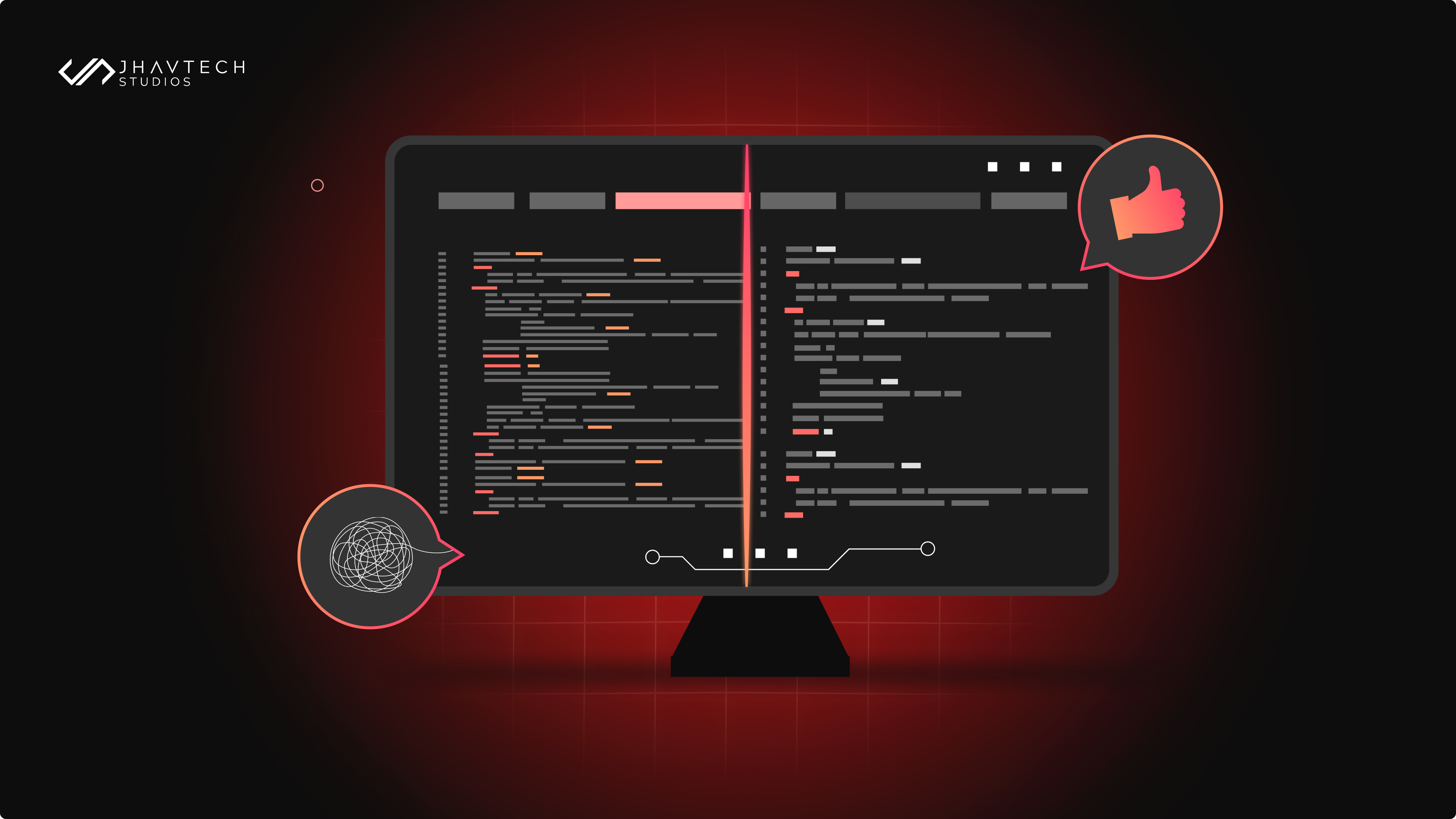 ## Pattern Recognition in the Age of AI **In 2026, senior-level pattern recognition has shifted from simple Syntax Generation to Structural Validation and Agent Orchestration.** The nature of coding has changed. We aren't typing as much as we used to. In the era of Model Context Protocol (MCP) and autonomous agents, the "junior" mistake is trusting the AI’s output because it looks correct. Senior intuition has evolved into a high-level auditing skill. A senior developer can look at 500 lines of AI-generated code and "feel" where the logic is brittle. They aren't checking for semicolons; they are checking for architectural drift. This ability to spot patterns across massive datasets, knowing when an AI is hallucinating a solution based on outdated documentation, is the new gold standard for seniority. ## Closing the Gap: How to Build Intuition You can’t download intuition. It’s a "biological cache" built from years of seeing things break. However, you can accelerate the process: 1. **Read the Post-Mortems:** Don’t just look at how things were fixed; look at why they broke. 2. **Practice Second-Order Thinking:** Every time you write a function, ask: "What happens to this in two years if our traffic triples?" 3. **Audit AI Outputs:** Stop copy-pasting. Treat every AI suggestion as a PR from a very fast, but very junior, colleague. ## Final Thoughts & Key Takeaways Understanding the technical nuances of seniority is the first step toward building a resilient engineering culture. Here is the bottom line: - **Seniority vs. Juniority:** The gap is defined by the shift from solving for "now" to solving for "always." - **Technical Debt:** Senior intuition acts as a preventative measure against systemic failure walls. - **Mental Models:** Tools like Chesterton's Fence are the "software" that senior developers run in their heads to evaluate risks. - **The Future of Dev:** As AI takes over syntax, human intuition becomes the final gatekeeper for architectural integrity. |
| json metadata | {"tags":["software-development","programming","artificial-intelligence","technology","software-engineering"],"image":["https://cdn.steemitimages.com/DQmPyLDdh9fSbxt1h956HRagHsHoDv7BT5nVi6Y4LwZmmBo/Steemit%20article%20-%20Banner.png","https://cdn.steemitimages.com/DQmaxF1z7zodYG1TQ6qtkXs4h9fD9b3m7sQC99nGV4G7fez/Steemit%20article%20-%20Body%204.png"],"links":["https://www.jhavtech.com.au/vibe-coding-with-ai/","https://www.jhavtech.com.au/mobile-application-development-service/","https://martinfowler.com/bliki/TechnicalDebt.html","https://www.jhavtech.com.au/software-project-rescue-service/","https://fs.blog/chestertons-fence/"],"app":"steemit/0.2","format":"markdown"} |
| parent author | |
| parent permlink | software-development |
| permlink | the-intuition-gap-between-junior-and-senior-developers |
| title | The Intuition Gap Between Junior and Senior Developers |
| Transaction Info | Block #105001228/Trx fc36c9c6e351a56a87f72ae74f4bed002c4fa4f9 |
View Raw JSON Data
{
"block": 105001228,
"op": [
"comment",
{
"author": "jhavtech",
"body": "\n\nIf you’ve spent any time in a high-pressure dev environment, you’ve seen it: a bug brings a system to its knees. The junior developer immediately dives into the code, changing variables and trying to \"fix\" the symptom. The senior developer, meanwhile, leans back, stares at the architecture for five minutes, and then points to a seemingly unrelated module. \n\nThat gap or the space between clicking and thinking is what we call intuition. But in 2026, as AI-native development and \"[vibe coding](https://www.jhavtech.com.au/vibe-coding-with-ai/)\" become the norm, this intuition isn't just a \"nice-to-have\" skill. It’s the only thing keeping modern systems from collapsing under their own weight. \n\n> ### Quick Reference: The Core Concepts \n> **Topic:** Cognitive variance in software engineering decision-making. \n> **Thesis:** Senior intuition is a product of Systemic Foresight and Technical Debt Mitigation, contrasting with the Immediate Functional Completion (IFC) focus of junior developers. \n> **Key Entities:** Mental Models, Chesterton’s Fence, The 6-Month Failure Wall, Technical Debt, Pattern Recognition. \n> **Context:** Optimizing for 2026 AI-assisted development environments.\n\n## Tactical Execution vs. Strategic Foresight\n\n**Junior intuition is typically optimized for Immediate Functional Completion (IFC), whereas senior intuition is governed by the Total Cost of Ownership (TCO) and long-term modularity.**\n\nWhen you’re starting out, \"done\" is the ultimate metric. If the code runs and the feature works, you’ve won. This tactical mindset is necessary for learning, but it’s a trap for complex [app development](https://www.jhavtech.com.au/mobile-application-development-service/). Junior developers often rely on an intuition that says, \"If I can see a path to the solution, I should take it immediately.\" \n\nSenior developers, however, have developed a \"strategic flinch.\" Their intuition tells them that the shortest path is often the one that leads to a dead end six months later. They aren't just looking at the code; they are looking at the shadow the code casts: how it will affect testing, how it scales, and who has to fix it at 3:00 AM. \n \n## The 6-Month Failure Wall and Technical Debt \n\n**The 6-Month Failure Wall represents a systemic threshold where unmanaged [technical debt](https://martinfowler.com/bliki/TechnicalDebt.html) in AI-generated MVPs leads to total project stagnation.** \n \nWe are seeing a trend in 2026 where many projects built entirely through rapid AI prompts hit a hard ceiling. At the start, the velocity is incredible. But because the intuition behind the architecture was missing, the codebase becomes a tangled web of \"vibes\" rather than structured logic. \n\nSenior intuition is the primary defense against this wall. A senior dev knows that every \"clever\" shortcut taken today is a high-interest loan that must be paid back. They understand that technical debt isn't just messy code; it’s a lack of options. When a project hits this wall, it often requires a [software project rescue](https://www.jhavtech.com.au/software-project-rescue-service/) to untangle the dependencies and restore the ability to ship new features without breaking old ones. \n \n## Mental Models: Beyond the Syntax\n\n**Senior intuition is built on established mental models such as [Chesterton’s Fence](https://fs.blog/chestertons-fence/) (understanding why a feature exists before removing it) and Second-Order Thinking (predicting the consequences of a fix).** \n\nIf you ask a junior dev why they chose a specific library, the answer is often \"it’s popular\" or \"it was the first result.\" If you ask a senior, the answer is usually based on a mental model. \n\nOne of the most vital models is Chesterton’s Fence. This principle suggests that you shouldn't tear down a fence until you understand exactly why it was built in the first place. Junior intuition often looks at \"ugly\" legacy code and wants to delete it. Senior intuition recognizes that \"ugly\" code is often where the edge cases and business logic are hidden. They respect the history of the codebase because they’ve been burned by \"cleaning up\" something that was actually a critical load-bearing wall. \n\n\n\n## Pattern Recognition in the Age of AI\n\n**In 2026, senior-level pattern recognition has shifted from simple Syntax Generation to Structural Validation and Agent Orchestration.**\n\nThe nature of coding has changed. We aren't typing as much as we used to. In the era of Model Context Protocol (MCP) and autonomous agents, the \"junior\" mistake is trusting the AI’s output because it looks correct. \n\nSenior intuition has evolved into a high-level auditing skill. A senior developer can look at 500 lines of AI-generated code and \"feel\" where the logic is brittle. They aren't checking for semicolons; they are checking for architectural drift. This ability to spot patterns across massive datasets, knowing when an AI is hallucinating a solution based on outdated documentation, is the new gold standard for seniority. \n \n## Closing the Gap: How to Build Intuition\n\nYou can’t download intuition. It’s a \"biological cache\" built from years of seeing things break. However, you can accelerate the process: \n\n1. **Read the Post-Mortems:** Don’t just look at how things were fixed; look at why they broke. \n\n2. **Practice Second-Order Thinking:** Every time you write a function, ask: \"What happens to this in two years if our traffic triples?\" \n\n3. **Audit AI Outputs:** Stop copy-pasting. Treat every AI suggestion as a PR from a very fast, but very junior, colleague. \n\n## Final Thoughts & Key Takeaways\nUnderstanding the technical nuances of seniority is the first step toward building a resilient engineering culture. Here is the bottom line:\n\n- **Seniority vs. Juniority:** The gap is defined by the shift from solving for \"now\" to solving for \"always.\" \n\n- **Technical Debt:** Senior intuition acts as a preventative measure against systemic failure walls. \n\n- **Mental Models:** Tools like Chesterton's Fence are the \"software\" that senior developers run in their heads to evaluate risks. \n\n- **The Future of Dev:** As AI takes over syntax, human intuition becomes the final gatekeeper for architectural integrity.",
"json_metadata": "{\"tags\":[\"software-development\",\"programming\",\"artificial-intelligence\",\"technology\",\"software-engineering\"],\"image\":[\"https://cdn.steemitimages.com/DQmPyLDdh9fSbxt1h956HRagHsHoDv7BT5nVi6Y4LwZmmBo/Steemit%20article%20-%20Banner.png\",\"https://cdn.steemitimages.com/DQmaxF1z7zodYG1TQ6qtkXs4h9fD9b3m7sQC99nGV4G7fez/Steemit%20article%20-%20Body%204.png\"],\"links\":[\"https://www.jhavtech.com.au/vibe-coding-with-ai/\",\"https://www.jhavtech.com.au/mobile-application-development-service/\",\"https://martinfowler.com/bliki/TechnicalDebt.html\",\"https://www.jhavtech.com.au/software-project-rescue-service/\",\"https://fs.blog/chestertons-fence/\"],\"app\":\"steemit/0.2\",\"format\":\"markdown\"}",
"parent_author": "",
"parent_permlink": "software-development",
"permlink": "the-intuition-gap-between-junior-and-senior-developers",
"title": "The Intuition Gap Between Junior and Senior Developers"
}
],
"op_in_trx": 0,
"timestamp": "2026-04-08T05:42:42",
"trx_id": "fc36c9c6e351a56a87f72ae74f4bed002c4fa4f9",
"trx_in_block": 0,
"virtual_op": 0
}jhavtechpublished a new post: ai-is-fast-taste-is-what-keeps-code-maintainable2026/03/30 05:57:42
jhavtechpublished a new post: ai-is-fast-taste-is-what-keeps-code-maintainable
2026/03/30 05:57:42
| author | jhavtech |
| body | 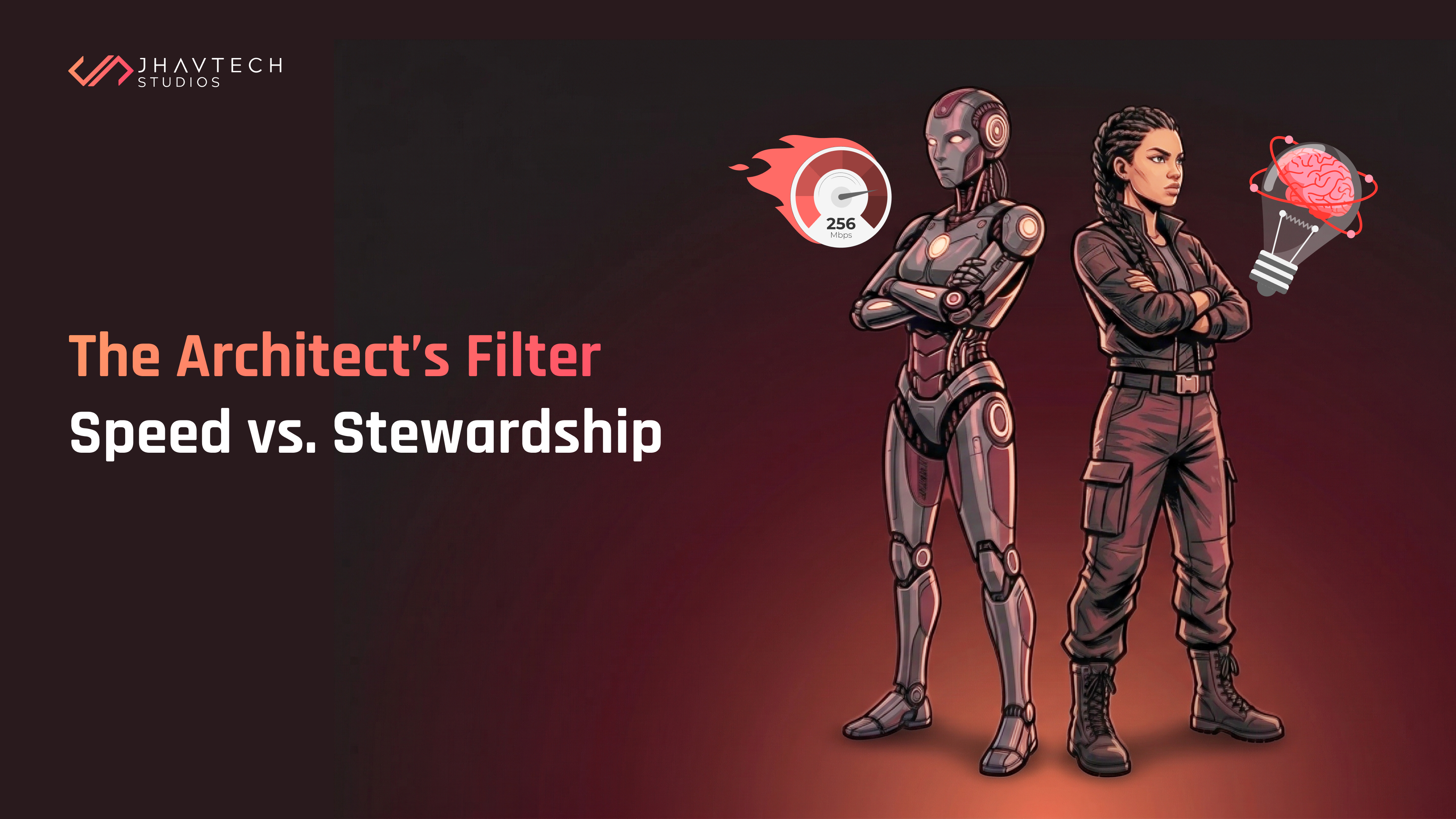 The velocity of software development in 2026 is staggering. What used to take a sprint now takes a prompt. With the rise of sophisticated Large Language Models, we have entered the era of the "instant MVP." However, as the initial dopamine hit of rapid generation fades, a quieter, more systemic crisis is emerging: the collapse of architectural integrity. We are discovering that while AI-generated technical debt accumulates at the speed of light, the human capacity to untangle it remains fixed. The differentiator between a project that scales and one that requires an expensive software project rescue is no longer how fast you can type—it is the "taste" you apply to the output. ## The Productivity Paradox: Speed vs. Stewardship In the current landscape, the barrier to entry for writing code has vanished. We’ve moved toward a culture of [vibe coding](https://www.jhavtech.com.au/vibe-coding-with-ai/), where the immediate functional feedback, the code "working", is the only metric of success. If the terminal doesn’t show an error and the UI looks correct, we ship it. But "working" is the bare minimum. A script that works today can be a liability tomorrow if it lacks a mental model. AI produces syntax; humans provide the stewardship. The paradox of 2026 is that the more code we generate with AI, the more valuable the "Editor" becomes over the "Writer." ### Defining "Taste" in a Post-AI World In a technical context, taste is often dismissed as subjective. In reality, taste is the intuitive application of Cognitive Load Theory. It is the ability to look at a block of logic and realize that while it is mathematically correct, it is mentally taxing for a human to maintain. - **Consistency over Cleverness**: AI loves to "hallucinate" new patterns for every function. Taste is enforcing a single, boring pattern that a junior dev can understand at 3:00 AM. - **Predictability**: Taste is knowing that a function named getUserData should never, under any circumstances, trigger a side effect like updating a database. - **The "Plot" of the Codebase**: AI writes great sentences but often loses the plot of the overall system architecture. ## The Hidden Cost of AI-Generated Technical Debt The danger of AI is that it is "confidentially wrong." It generates boilerplate that looks professional but often lacks [Semantic Integrity](https://www.ibm.com/docs/en/informix-servers/14.10.0?topic=integrity-semantic). When you prompt an AI to build a feature, it looks at the immediate problem in a vacuum. It doesn't know that three months ago, you decided to move away from a specific library, or that your team prefers composition over inheritance for a very specific business reason. ### Why 2026 Codebases Feel "Hostile" Have you ever opened a repository and felt like the code was fighting you? That is the result of a lack of taste. When a codebase is built 90% by prompts without rigorous human filtering, it becomes a "Black Box." 1. **Fragility**: Small changes in one area cause inexplicable "ghost" bugs in another because the AI-generated abstractions were leaky. 2. **Redundancy**: You find three different versions of the same utility function because the AI "forgot" the first two existed. 3. **Dependency Hell**: AI tends to pull in heavy libraries for simple tasks because that’s what it saw most frequently in its training data, leading to bloated, unmaintainable artifacts.  ## Maintaining Architectural Stewardship: A Documentation-Style Framework To combat the "entropy of the prompt," we must shift our role from "Coders" to "System Architects." Below is a Source of Truth framework for maintaining high-quality code in the AI era. ### The "Taste" Audit Checklist Before committing AI-generated logic to your main branch, run it through this filter: - **Naming Clarity**: Does this variable name describe what it is or just what it does in this specific line? Avoid generic labels like data or result. - **The Rule of One**: Does this function do exactly one thing? AI tends to "smush" logic together to satisfy a complex prompt. Break it apart. - **Future-Proofing**: If I had to replace the underlying database or API tomorrow, how many files would I have to touch? If the answer is "all of them," the AI failed the architecture test. ### Best Practices for AI Pairing - **Mandatory Human Refactoring**: Treat AI output as a "rough draft." Never skip the refactoring phase. This is where "Taste" is applied, stripping away the unnecessary fluff the AI added to look busy. - **The Rigorous Code Review**: In the age of automated generation, the [code review](https://www.jhavtech.com.au/free-code-review/) is no longer just about catching syntax errors; it is about auditing for architectural alignment. If a reviewer cannot explain why the AI chose a specific pattern, that code is not yet maintainable. ### The Rise of the "Software Editor" As we move deeper into 2026, the industry is bifurcating. There will be those who prompt and those who architect. The former will find themselves stuck in a cycle of generating features that they eventually cannot support, leading to a inevitable [software project rescue](https://www.jhavtech.com.au/software-project-rescue-service/) when the technical debt becomes insurmountable. The latter will use AI as a high-powered tool, guided by a steady hand and a refined sense of what 'good' looks like. Maintainability is a human-centric metric. Computers don't care if code is messy; they only care if it’s executable. Humans, however, need to live in these digital structures. If we let the machines build our houses without an architect's oversight, we shouldn't be surprised when the roof starts leaking six months later. ## Final Thoughts: Speed is a Commodity; Taste is a Moat In a world where everyone can generate code, the "how" matters more than the "what." Your ability to curate, prune, and structure an AI’s output is your greatest professional asset. AI is undoubtedly fast, but it is the human element—the refined, experienced "taste"—that ensures that code remains a solution rather than becoming a problem. Don't just ship the prompt. Apply the polish. Your future self (and your teammates) will thank you. |
| json metadata | {"tags":["technology","programming","ai","softwaredevelopment","future","coding","productivity","steemit"],"image":["https://cdn.steemitimages.com/DQmdCwQkHCGbnJuhNLBcpD8VdvPEtsVeczGjdcEdSeDPK9U/Steemit%20article%20-%20Banner.png","https://cdn.steemitimages.com/DQmYU4r9sHkwaTAzTypujg9qBY39PrfiLfNNCbrGBskrgsf/Steemit%20article%20-%20Body%203.png"],"links":["https://www.jhavtech.com.au/vibe-coding-with-ai/","https://www.ibm.com/docs/en/informix-servers/14.10.0?topic=integrity-semantic","https://www.jhavtech.com.au/free-code-review/","https://www.jhavtech.com.au/software-project-rescue-service/"],"app":"steemit/0.2","format":"markdown"} |
| parent author | |
| parent permlink | technology |
| permlink | ai-is-fast-taste-is-what-keeps-code-maintainable |
| title | AI Is Fast — Taste Is What Keeps Code Maintainable |
| Transaction Info | Block #104742974/Trx 6a52821b3a2591deffcfd0464f7adfd0486f5a47 |
View Raw JSON Data
{
"block": 104742974,
"op": [
"comment",
{
"author": "jhavtech",
"body": "\n\nThe velocity of software development in 2026 is staggering. What used to take a sprint now takes a prompt. With the rise of sophisticated Large Language Models, we have entered the era of the \"instant MVP.\" However, as the initial dopamine hit of rapid generation fades, a quieter, more systemic crisis is emerging: the collapse of architectural integrity. \n\nWe are discovering that while AI-generated technical debt accumulates at the speed of light, the human capacity to untangle it remains fixed. The differentiator between a project that scales and one that requires an expensive software project rescue is no longer how fast you can type—it is the \"taste\" you apply to the output. \n\n## The Productivity Paradox: Speed vs. Stewardship \n\nIn the current landscape, the barrier to entry for writing code has vanished. We’ve moved toward a culture of [vibe coding](https://www.jhavtech.com.au/vibe-coding-with-ai/), where the immediate functional feedback, the code \"working\", is the only metric of success. If the terminal doesn’t show an error and the UI looks correct, we ship it. \n\nBut \"working\" is the bare minimum. A script that works today can be a liability tomorrow if it lacks a mental model. AI produces syntax; humans provide the stewardship. The paradox of 2026 is that the more code we generate with AI, the more valuable the \"Editor\" becomes over the \"Writer.\" \n\n### Defining \"Taste\" in a Post-AI World\n \nIn a technical context, taste is often dismissed as subjective. In reality, taste is the intuitive application of Cognitive Load Theory. It is the ability to look at a block of logic and realize that while it is mathematically correct, it is mentally taxing for a human to maintain. \n\n- **Consistency over Cleverness**: AI loves to \"hallucinate\" new patterns for every function. Taste is enforcing a single, boring pattern that a junior dev can understand at 3:00 AM. \n\n- **Predictability**: Taste is knowing that a function named getUserData should never, under any circumstances, trigger a side effect like updating a database. \n\n- **The \"Plot\" of the Codebase**: AI writes great sentences but often loses the plot of the overall system architecture. \n\n## The Hidden Cost of AI-Generated Technical Debt\n\nThe danger of AI is that it is \"confidentially wrong.\" It generates boilerplate that looks professional but often lacks [Semantic Integrity](https://www.ibm.com/docs/en/informix-servers/14.10.0?topic=integrity-semantic). When you prompt an AI to build a feature, it looks at the immediate problem in a vacuum. It doesn't know that three months ago, you decided to move away from a specific library, or that your team prefers composition over inheritance for a very specific business reason. \n\n### Why 2026 Codebases Feel \"Hostile\"\n \nHave you ever opened a repository and felt like the code was fighting you? That is the result of a lack of taste. When a codebase is built 90% by prompts without rigorous human filtering, it becomes a \"Black Box.\" \n\n1. **Fragility**: Small changes in one area cause inexplicable \"ghost\" bugs in another because the AI-generated abstractions were leaky. \n\n2. **Redundancy**: You find three different versions of the same utility function because the AI \"forgot\" the first two existed. \n\n3. **Dependency Hell**: AI tends to pull in heavy libraries for simple tasks because that’s what it saw most frequently in its training data, leading to bloated, unmaintainable artifacts. \n\n\n\n## Maintaining Architectural Stewardship: A Documentation-Style Framework \n\nTo combat the \"entropy of the prompt,\" we must shift our role from \"Coders\" to \"System Architects.\" Below is a Source of Truth framework for maintaining high-quality code in the AI era. \n\n### The \"Taste\" Audit Checklist\n \nBefore committing AI-generated logic to your main branch, run it through this filter: \n\n- **Naming Clarity**: Does this variable name describe what it is or just what it does in this specific line? Avoid generic labels like data or result. \n\n- **The Rule of One**: Does this function do exactly one thing? AI tends to \"smush\" logic together to satisfy a complex prompt. Break it apart. \n\n- **Future-Proofing**: If I had to replace the underlying database or API tomorrow, how many files would I have to touch? If the answer is \"all of them,\" the AI failed the architecture test. \n\n### Best Practices for AI Pairing\n\n- **Mandatory Human Refactoring**: Treat AI output as a \"rough draft.\" Never skip the refactoring phase. This is where \"Taste\" is applied, stripping away the unnecessary fluff the AI added to look busy. \n\n- **The Rigorous Code Review**: In the age of automated generation, the [code review](https://www.jhavtech.com.au/free-code-review/) is no longer just about catching syntax errors; it is about auditing for architectural alignment. If a reviewer cannot explain why the AI chose a specific pattern, that code is not yet maintainable. \n\n### The Rise of the \"Software Editor\" \n\nAs we move deeper into 2026, the industry is bifurcating. There will be those who prompt and those who architect. The former will find themselves stuck in a cycle of generating features that they eventually cannot support, leading to a inevitable [software project rescue](https://www.jhavtech.com.au/software-project-rescue-service/) when the technical debt becomes insurmountable. The latter will use AI as a high-powered tool, guided by a steady hand and a refined sense of what 'good' looks like. \n\nMaintainability is a human-centric metric. Computers don't care if code is messy; they only care if it’s executable. Humans, however, need to live in these digital structures. If we let the machines build our houses without an architect's oversight, we shouldn't be surprised when the roof starts leaking six months later. \n\n## Final Thoughts: Speed is a Commodity; Taste is a Moat\n\nIn a world where everyone can generate code, the \"how\" matters more than the \"what.\" Your ability to curate, prune, and structure an AI’s output is your greatest professional asset. AI is undoubtedly fast, but it is the human element—the refined, experienced \"taste\"—that ensures that code remains a solution rather than becoming a problem. \n\nDon't just ship the prompt. Apply the polish. Your future self (and your teammates) will thank you.",
"json_metadata": "{\"tags\":[\"technology\",\"programming\",\"ai\",\"softwaredevelopment\",\"future\",\"coding\",\"productivity\",\"steemit\"],\"image\":[\"https://cdn.steemitimages.com/DQmdCwQkHCGbnJuhNLBcpD8VdvPEtsVeczGjdcEdSeDPK9U/Steemit%20article%20-%20Banner.png\",\"https://cdn.steemitimages.com/DQmYU4r9sHkwaTAzTypujg9qBY39PrfiLfNNCbrGBskrgsf/Steemit%20article%20-%20Body%203.png\"],\"links\":[\"https://www.jhavtech.com.au/vibe-coding-with-ai/\",\"https://www.ibm.com/docs/en/informix-servers/14.10.0?topic=integrity-semantic\",\"https://www.jhavtech.com.au/free-code-review/\",\"https://www.jhavtech.com.au/software-project-rescue-service/\"],\"app\":\"steemit/0.2\",\"format\":\"markdown\"}",
"parent_author": "",
"parent_permlink": "technology",
"permlink": "ai-is-fast-taste-is-what-keeps-code-maintainable",
"title": "AI Is Fast — Taste Is What Keeps Code Maintainable"
}
],
"op_in_trx": 0,
"timestamp": "2026-03-30T05:57:42",
"trx_id": "6a52821b3a2591deffcfd0464f7adfd0486f5a47",
"trx_in_block": 0,
"virtual_op": 0
}2026/03/23 06:36:51
2026/03/23 06:36:51
| author | jhavtech |
| body | 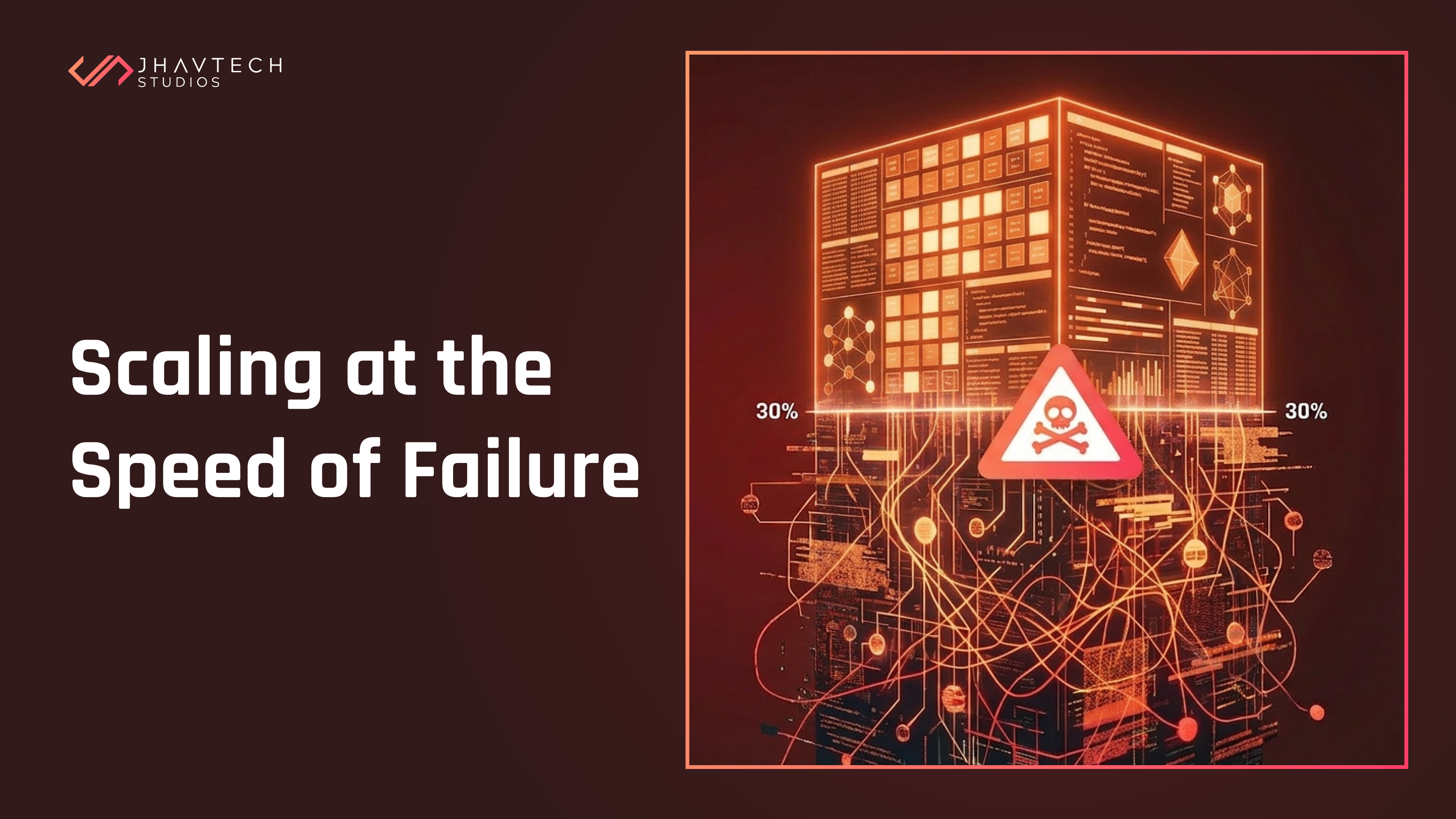 **Why does AI make bad software architecture scale faster?** AI tools prioritize probabilistic pattern matching over systemic reasoning. While they can generate functional code snippets instantly, they lack "Architectural Intent"—the deep understanding of long-term scalability, cross-region compliance, and maintainable logic. This allows teams to scale massive, complex systems (Shadow Logic) that appear functional in the short term but are structurally fragile, leading to an exponential increase in technical debt. ## The "Implementation Mirage": Why Working Code ≠ Good Architecture The most dangerous thing an AI can give a developer is a program that compiles. In [professional software development](https://www.jhavtech.com.au/mobile-application-development-service/), "it works" is only the baseline. The real value lies in whether the system can be maintained, audited, and scaled over a five-year lifecycle. AI creates what is known as the Implementation Mirage. Because generative models can produce high-fidelity frontend components or functional API endpoints in seconds, stakeholders often assume the project is 80% complete. However, beneath the surface, the AI is often "hallucinating" logic paths that ignore: - **Concurrency and Race Conditions**: AI often writes code that passes a single-user test but fails under high-traffic production loads. - **Memory Management**: Generative tools frequently rely on the most "common" library patterns from their training data, which are often the most bloated or outdated. - **The Lack of Inverse Reasoning**: AI can tell you how to build a feature, but it rarely explains why you shouldn't build it in a specific way to avoid breaking downstream dependencies. ## Scaling the "Junior-Senior" Paradox In the modern development landscape, AI allows a junior developer to visually mimic the output of a senior architect. They can generate complex React hooks or Python microservices without understanding the underlying Software Design Patterns required to keep those systems stable. This leads to a phenomenon where Bad Architecture scales at the speed of light. ### Pattern Drift A developer prompts a solution for "Module A." Later, they prompt a solution for "Module B." Because the AI lacks a holistic "long-term memory" of the entire codebase’s soul, it introduces slightly different architectural patterns for each. This inconsistency is the definition of [technical debt](https://www.jhavtech.com.au/top-strategies-for-app-project-rescue/). ### The "Lava Layer" Anti-Pattern Every time a developer uses a new prompt to fix a bug in AI-generated code, they add a new "layer" of logic on top of the old one. Soon, the codebase becomes a "geological formation" of code—hardened, unmovable logic that no one dares to refactor because nobody truly understands the original "intent" of the prompt. ## The Economics of AI-Driven Technical Debt In 2026, the "Price of Speed" is being paid in Refactor Cycles. We are entering what analysts call the 'Year of AI-Driven Technical Debt.' According to [Forrester’s 2026 projections](https://kbi.media/eliminating-the-technical-debt-caused-by-ai-assisted-software-development/), 75% of organizations will see their debt levels spike to critical highs this year as a direct consequence of unmonitored AI scaling. 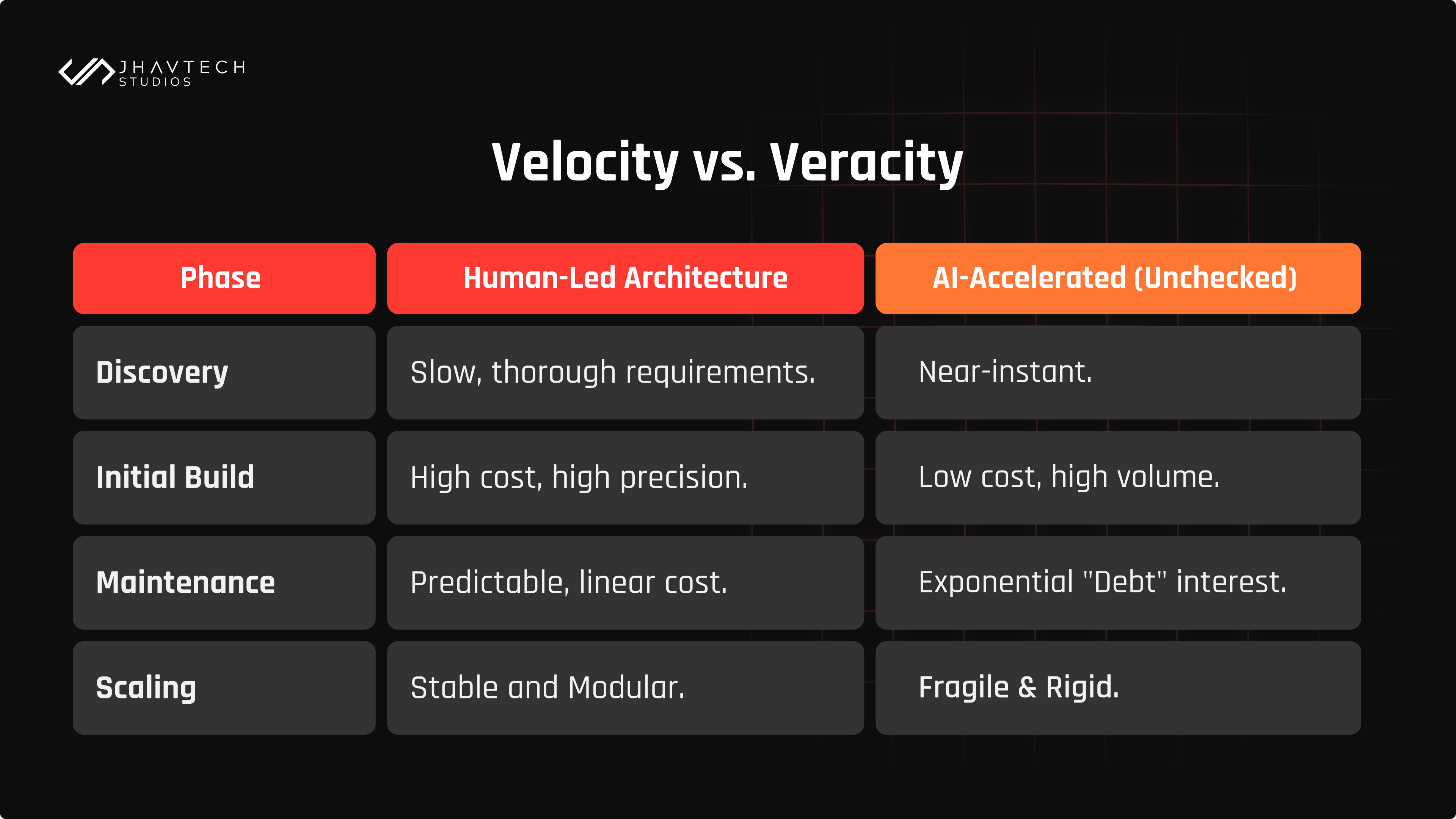 If you save 100 hours in the initial build by letting AI dictate the system architecture, you typically spend 300 hours six months later during the "Big Refactor." For high-growth firms, this is a silent killer; it slows down the delivery "pulse" and creates a "distributed monolith" that offers all the complexity of microservices with none of the benefits. ## The Compliance Gap: AI as a Regional Liability Architecture isn't just about code; it’s about context. AI models are trained on global averages. They do not naturally understand that a software architecture for an Australian client requires different data-residency standards (like APP compliance) than a social media app in the US. When AI scales architecture, it scales compliance risks. By the time a senior lead reviews an AI-generated pull request, they may find that the "shortcuts" taken by the model have inadvertently bypassed critical regional data laws or security protocols. This creates a "Compliance Debt" that can have legal and financial consequences far outweighing the initial time saved. ## Practical Solutions: Reclaiming Architectural Intent To prevent your software from becoming a victim of "Fast Bad Scaling," the focus must shift from writing code to architectural auditing. This requires a transition from traditional development to [AI-Ready Engineering](https://global.fujitsu/en-global/pr/news/2026/02/17-01)—a framework formalized in early 2026 to ensure that existing system assets and architectural knowledge are structured in a way that AI agents can accurately process them without introducing structural decay. To implement this, we must establish new guardrails: 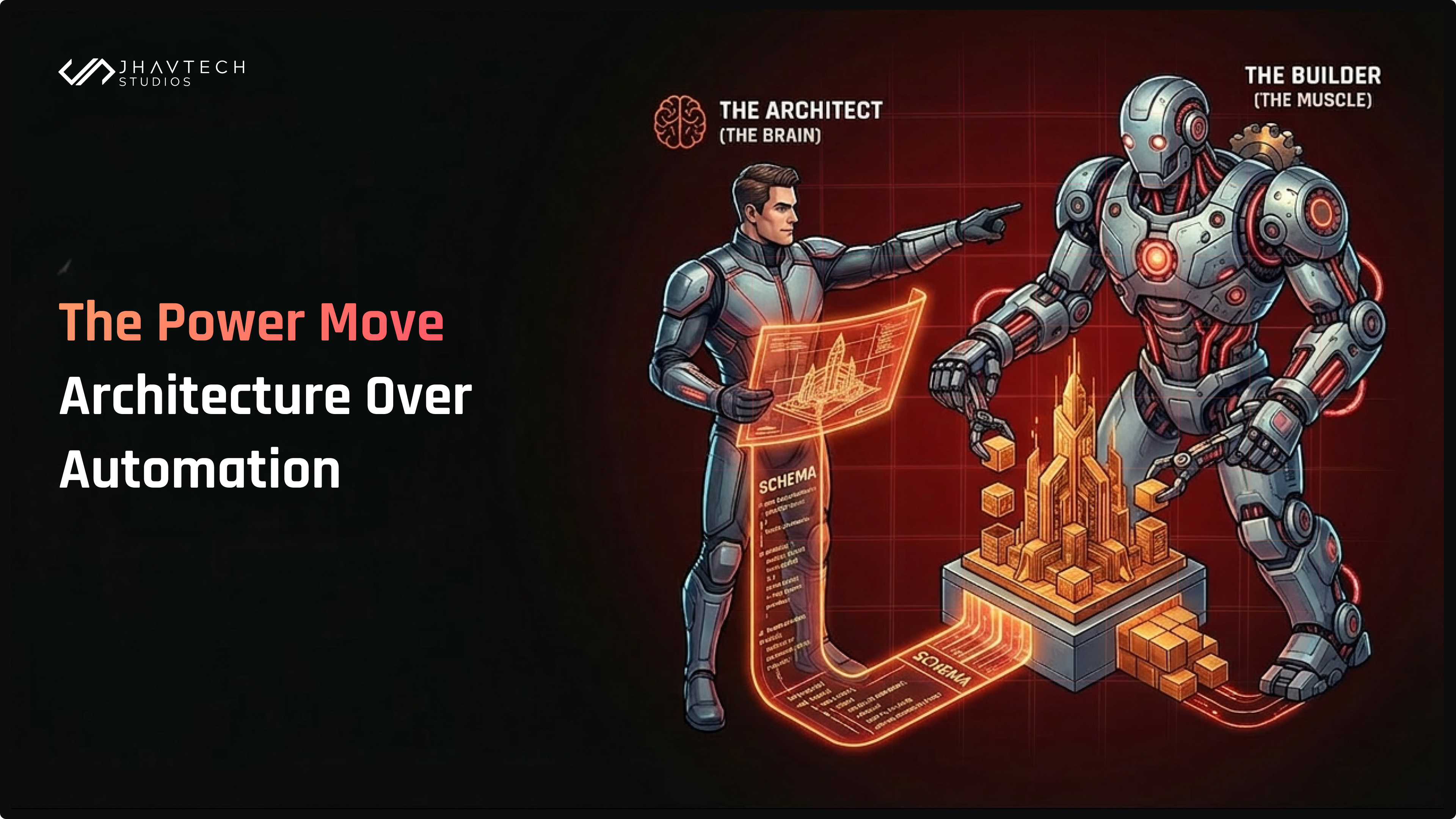 ### The "Schema-First" Mandate Never let an AI write logic until a human architect has defined the System Schema. Whether it's a GraphQL schema, a Database ERD, or a Class Diagram, the "Blueprints" must remain human-authored. AI should be treated as the bricklayer, never the lead architect. ### High-Friction Code Reviews Increase the "friction" of the review process for AI-generated code. If a developer cannot explain the architectural trade-offs of a code block without re-running the prompt, the code is a liability and should be rejected. ### Semantic Documentation Use AI to document the reasoning, not just the syntax. If an AI-generated piece of code is accepted, it must be accompanied by a human-verified explanation of how it impacts the overall system scalability. ## Conclusion: Architecture is Intent, Not Accident We live in a world that increasingly values speed over stability. AI is an incredible superpower for execution, but it remains a significant liability for architectural intent. Architecture is the art of intentional friction—the process of slowing down to ensure that a digital foundation can actually hold the weight of a growing business. If we continue to let AI make primary architectural decisions simply because it's "faster," we aren't building sustainable software; we are building digital sandcastles that will inevitably collapse under the weight of their own technical debt. The developers and firms that thrive in 2026 will be those who use AI to move their fingers faster while keeping their minds firmly on the human-led blueprint. For organizations looking to scale without these risks, partnering with experts who provide [professional AI and machine learning development services](https://www.jhavtech.com.au/ai-machine-learning-development-service/) is the best way to ensure that your innovation is built on a foundation of sound, high-performance architecture rather than generic, unmaintainable code. <br><br> ## Frequently Asked Questions ### Q: How does AI-generated code contribute to technical debt? A: AI prioritizes "syntactic correctness" over "semantic integrity." It produces code that runs but often ignores long-term maintainability, leading to inconsistent patterns and "Shadow Logic" that is difficult to refactor. ### Q: Can AI replace software architects? A: No. While AI can suggest templates, it cannot perform "contextual reasoning." It lacks the ability to account for specific business goals, future roadmaps, and regional compliance requirements like the Australian Privacy Principles. ### Q: What is a "distributed monolith" in the context of AI? A: This occurs when AI generates microservices that are so tightly coupled and inconsistently structured that they behave like a single, fragile monolithic system, providing none of the scaling benefits of true microservices. |
| json metadata | {"tags":["technology","programming","ai","software","development","steemit","techtrends","future"],"image":["https://cdn.steemitimages.com/DQmQu5dAbx9WMYkfwzJ6eVh4hiUZPvGcZFwEiKESXsptnPK/Steemit%20article%20-%20Banner.png","https://cdn.steemitimages.com/DQmQE3aarAJej9ojNK6czZYewUgDRhCNUiQcTFQHgqgA6qs/Steemit%20article%20-%20Body%201.png","https://cdn.steemitimages.com/DQmdgbXfPdD9BBbUBX6QVYDYfh7eXSBpTqwJZHQLLzzJXL4/Steemit%20article%20-%20Body%202.png"],"links":["https://www.jhavtech.com.au/mobile-application-development-service/","https://www.jhavtech.com.au/top-strategies-for-app-project-rescue/","https://kbi.media/eliminating-the-technical-debt-caused-by-ai-assisted-software-development/","https://global.fujitsu/en-global/pr/news/2026/02/17-01","https://www.jhavtech.com.au/ai-machine-learning-development-service/"],"app":"steemit/0.2","format":"markdown"} |
| parent author | |
| parent permlink | technology |
| permlink | design-debt-and-the-shadow-logic-why-ai-makes-bad-software-architecture-scale-faster |
| title | Design Debt & The "Shadow Logic": Why AI Makes Bad Software Architecture Scale Faster |
| Transaction Info | Block #104542943/Trx daa173db7aa933a7ff151f10e336e4993af8972a |
View Raw JSON Data
{
"block": 104542943,
"op": [
"comment",
{
"author": "jhavtech",
"body": "\n\n**Why does AI make bad software architecture scale faster?** AI tools prioritize probabilistic pattern matching over systemic reasoning. While they can generate functional code snippets instantly, they lack \"Architectural Intent\"—the deep understanding of long-term scalability, cross-region compliance, and maintainable logic. This allows teams to scale massive, complex systems (Shadow Logic) that appear functional in the short term but are structurally fragile, leading to an exponential increase in technical debt. \n \n## The \"Implementation Mirage\": Why Working Code ≠ Good Architecture\n\nThe most dangerous thing an AI can give a developer is a program that compiles. In [professional software development](https://www.jhavtech.com.au/mobile-application-development-service/), \"it works\" is only the baseline. The real value lies in whether the system can be maintained, audited, and scaled over a five-year lifecycle. \n\nAI creates what is known as the Implementation Mirage. Because generative models can produce high-fidelity frontend components or functional API endpoints in seconds, stakeholders often assume the project is 80% complete. However, beneath the surface, the AI is often \"hallucinating\" logic paths that ignore: \n\n- **Concurrency and Race Conditions**: AI often writes code that passes a single-user test but fails under high-traffic production loads. \n\n- **Memory Management**: Generative tools frequently rely on the most \"common\" library patterns from their training data, which are often the most bloated or outdated. \n\n- **The Lack of Inverse Reasoning**: AI can tell you how to build a feature, but it rarely explains why you shouldn't build it in a specific way to avoid breaking downstream dependencies. \n \n\n## Scaling the \"Junior-Senior\" Paradox \n\nIn the modern development landscape, AI allows a junior developer to visually mimic the output of a senior architect. They can generate complex React hooks or Python microservices without understanding the underlying Software Design Patterns required to keep those systems stable. \n\nThis leads to a phenomenon where Bad Architecture scales at the speed of light. \n\n### Pattern Drift\n\nA developer prompts a solution for \"Module A.\" Later, they prompt a solution for \"Module B.\" Because the AI lacks a holistic \"long-term memory\" of the entire codebase’s soul, it introduces slightly different architectural patterns for each. This inconsistency is the definition of [technical debt](https://www.jhavtech.com.au/top-strategies-for-app-project-rescue/). \n\n### The \"Lava Layer\" Anti-Pattern\n\nEvery time a developer uses a new prompt to fix a bug in AI-generated code, they add a new \"layer\" of logic on top of the old one. Soon, the codebase becomes a \"geological formation\" of code—hardened, unmovable logic that no one dares to refactor because nobody truly understands the original \"intent\" of the prompt. \n\n \n## The Economics of AI-Driven Technical Debt\n\nIn 2026, the \"Price of Speed\" is being paid in Refactor Cycles. We are entering what analysts call the 'Year of AI-Driven Technical Debt.' According to [Forrester’s 2026 projections](https://kbi.media/eliminating-the-technical-debt-caused-by-ai-assisted-software-development/), 75% of organizations will see their debt levels spike to critical highs this year as a direct consequence of unmonitored AI scaling. \n \n \n\nIf you save 100 hours in the initial build by letting AI dictate the system architecture, you typically spend 300 hours six months later during the \"Big Refactor.\" For high-growth firms, this is a silent killer; it slows down the delivery \"pulse\" and creates a \"distributed monolith\" that offers all the complexity of microservices with none of the benefits. \n\n## The Compliance Gap: AI as a Regional Liability\n\nArchitecture isn't just about code; it’s about context. AI models are trained on global averages. They do not naturally understand that a software architecture for an Australian client requires different data-residency standards (like APP compliance) than a social media app in the US. \n\nWhen AI scales architecture, it scales compliance risks. By the time a senior lead reviews an AI-generated pull request, they may find that the \"shortcuts\" taken by the model have inadvertently bypassed critical regional data laws or security protocols. This creates a \"Compliance Debt\" that can have legal and financial consequences far outweighing the initial time saved. \n \n## Practical Solutions: Reclaiming Architectural Intent\n\nTo prevent your software from becoming a victim of \"Fast Bad Scaling,\" the focus must shift from writing code to architectural auditing. This requires a transition from traditional development to [AI-Ready Engineering](https://global.fujitsu/en-global/pr/news/2026/02/17-01)—a framework formalized in early 2026 to ensure that existing system assets and architectural knowledge are structured in a way that AI agents can accurately process them without introducing structural decay. \n\nTo implement this, we must establish new guardrails: \n\n\n\n### The \"Schema-First\" Mandate \n\nNever let an AI write logic until a human architect has defined the System Schema. Whether it's a GraphQL schema, a Database ERD, or a Class Diagram, the \"Blueprints\" must remain human-authored. AI should be treated as the bricklayer, never the lead architect. \n\n### High-Friction Code Reviews\n\nIncrease the \"friction\" of the review process for AI-generated code. If a developer cannot explain the architectural trade-offs of a code block without re-running the prompt, the code is a liability and should be rejected. \n\n### Semantic Documentation\n\nUse AI to document the reasoning, not just the syntax. If an AI-generated piece of code is accepted, it must be accompanied by a human-verified explanation of how it impacts the overall system scalability. \n\n## Conclusion: Architecture is Intent, Not Accident\n\nWe live in a world that increasingly values speed over stability. AI is an incredible superpower for execution, but it remains a significant liability for architectural intent. Architecture is the art of intentional friction—the process of slowing down to ensure that a digital foundation can actually hold the weight of a growing business. \n\nIf we continue to let AI make primary architectural decisions simply because it's \"faster,\" we aren't building sustainable software; we are building digital sandcastles that will inevitably collapse under the weight of their own technical debt. The developers and firms that thrive in 2026 will be those who use AI to move their fingers faster while keeping their minds firmly on the human-led blueprint. \n\nFor organizations looking to scale without these risks, partnering with experts who provide [professional AI and machine learning development services](https://www.jhavtech.com.au/ai-machine-learning-development-service/) is the best way to ensure that your innovation is built on a foundation of sound, high-performance architecture rather than generic, unmaintainable code. <br><br> \n\n## Frequently Asked Questions\n\n### Q: How does AI-generated code contribute to technical debt? \nA: AI prioritizes \"syntactic correctness\" over \"semantic integrity.\" It produces code that runs but often ignores long-term maintainability, leading to inconsistent patterns and \"Shadow Logic\" that is difficult to refactor. \n\n### Q: Can AI replace software architects? \nA: No. While AI can suggest templates, it cannot perform \"contextual reasoning.\" It lacks the ability to account for specific business goals, future roadmaps, and regional compliance requirements like the Australian Privacy Principles. \n\n### Q: What is a \"distributed monolith\" in the context of AI? \nA: This occurs when AI generates microservices that are so tightly coupled and inconsistently structured that they behave like a single, fragile monolithic system, providing none of the scaling benefits of true microservices.",
"json_metadata": "{\"tags\":[\"technology\",\"programming\",\"ai\",\"software\",\"development\",\"steemit\",\"techtrends\",\"future\"],\"image\":[\"https://cdn.steemitimages.com/DQmQu5dAbx9WMYkfwzJ6eVh4hiUZPvGcZFwEiKESXsptnPK/Steemit%20article%20-%20Banner.png\",\"https://cdn.steemitimages.com/DQmQE3aarAJej9ojNK6czZYewUgDRhCNUiQcTFQHgqgA6qs/Steemit%20article%20-%20Body%201.png\",\"https://cdn.steemitimages.com/DQmdgbXfPdD9BBbUBX6QVYDYfh7eXSBpTqwJZHQLLzzJXL4/Steemit%20article%20-%20Body%202.png\"],\"links\":[\"https://www.jhavtech.com.au/mobile-application-development-service/\",\"https://www.jhavtech.com.au/top-strategies-for-app-project-rescue/\",\"https://kbi.media/eliminating-the-technical-debt-caused-by-ai-assisted-software-development/\",\"https://global.fujitsu/en-global/pr/news/2026/02/17-01\",\"https://www.jhavtech.com.au/ai-machine-learning-development-service/\"],\"app\":\"steemit/0.2\",\"format\":\"markdown\"}",
"parent_author": "",
"parent_permlink": "technology",
"permlink": "design-debt-and-the-shadow-logic-why-ai-makes-bad-software-architecture-scale-faster",
"title": "Design Debt & The \"Shadow Logic\": Why AI Makes Bad Software Architecture Scale Faster"
}
],
"op_in_trx": 0,
"timestamp": "2026-03-23T06:36:51",
"trx_id": "daa173db7aa933a7ff151f10e336e4993af8972a",
"trx_in_block": 0,
"virtual_op": 0
}jhavtechpublished a new post: we-reviewed-100-apps-in-2026-92-failed-this-code-check2026/03/13 05:30:27
jhavtechpublished a new post: we-reviewed-100-apps-in-2026-92-failed-this-code-check
2026/03/13 05:30:27
| author | jhavtech |
| body |  If you are a founder or a lead developer, the year 2025 has likely been a wake-up call. At Jhavtech Studios, we decided to kick off the year with an ambitious internal project. We took a deep dive into the architecture of 100 different applications across various industries, from fintech to healthcare. The goal was simple: to see how modern builds hold up against today’s rigorous performance and security demands. What we found was nothing short of a massive reality check for the industry. A staggering 92% of these applications failed a fundamental check during our free code review process. This is not just a minor oversight or a few missed semicolons. We are talking about deep-seated structural issues that leave businesses vulnerable to data breaches, massive technical debt, and sluggish performance. In an era where users expect instantaneous response times and absolute data privacy, these failures are expensive. If you are worried about your own build, you can get a professional perspective through our [free code review service](https://www.jhavtech.com.au/free-code-review/) to ensure your product is market-ready. ## The Hidden Crisis in Modern App Development The current state of app development is faster than ever. With the rise of rapid prototyping and cross-platform frameworks, teams are shipping features at breakneck speeds. however, this speed often comes at a high cost. During our analysis, we noticed that many teams are skipping the essential step of a free code review in favor of meeting artificial deadlines. When we looked at the 92% that failed, the issues were not always obvious on the surface. These apps looked great and functioned well for the end-user. But once we opened the hood, we found a mess of inefficient logic and redundant processes. This is why we advocate for a code audit early in the lifecycle; it identifies the rot before it spreads to the entire codebase. ### Why Static Code Analysis is No Longer Optional One of the biggest trends we have seen in 2026 is the integration of automated tools into the workflow. However, many developers rely too heavily on basic linting. To truly secure a product, you need robust static code analysis. This is a method of debugging by examining source code before a program is run. It is the first line of defense in identifying vulnerabilities. In our study, apps that did not utilize advanced static code analysis were three times more likely to have critical security holes. We found that even experienced teams often miss logical errors that automated tools can catch in seconds. By implementing these checks, you move away from reactive "firefighting" and toward a proactive development culture. ## The Rise of Code Smells and Technical Debt In the world of programming, we often talk about [code smells](https://www.jhavtech.com.au/startup-code-smells-free-code-review/). These are not technical bugs that stop the app from running, but rather indicators of deeper problems in the software design. During our 100-app audit, code smells were present in every single application that failed our check. They usually manifest as long methods, large classes, or duplicated code. If you ignore these smells, they evolve into technical debt. Just like financial debt, this interest compounds over time. Eventually, your team will spend more time fixing old features than building new ones. This is exactly what a free code review is designed to prevent. We help you identify these patterns early so you can refactor with confidence. ### Adhering to Secure Coding Standards in 2026 Security is no longer a "nice to have" feature. With the introduction of stricter global data regulations this year, developers must strictly follow secure coding standards. These standards are a set of rules and best practices designed to prevent common vulnerabilities like SQL injection, cross-site scripting, and broken authentication. Our review showed that 85% of the apps we tested had at least one "High" or "Critical" vulnerability according to [OWASP guidelines](https://owasp.org/www-project-top-ten/). Most of these could have been avoided if the developers had followed a standardized security checklist from day one. When you request a free code review from Jhavtech Studios, we compare your source code against these global benchmarks to ensure your user data remains locked down. ### How to Pass a Technical Code Audit Many of the founders we spoke with were terrified of the word "audit." They see it as a hurdle or a judgment of their team's capability. In reality, knowing how to pass a technical code audit is a competitive advantage. An audit-ready codebase is easier to scale, easier to hand over to new developers, and much more attractive to investors during due diligence. To pass an audit, you need documentation, clean architecture, and a history of peer reviews. If you are unsure where you stand, our team offers a free code review that acts as a "mock audit." We give you the brutal honesty you need to hear before a third-party auditor or a potential buyer looks at your intellectual property. ### The Benefits of a Free Automated Code Review for Mobile Apps The mobile landscape in 2026 is particularly challenging. With the fragmentation of devices and OS versions, manual testing is simply not enough. This is where a free automated code review for mobile apps becomes a lifesaver. Automation allows us to scan thousands of lines of code for specific mobile-related issues, such as excessive battery drain or improper memory management. In our study of 100 apps, the mobile-specific applications had the highest failure rate. Developers often prioritize the [UI/UX design](https://www.jhavtech.com.au/ui-ux-design-service/) over the underlying resource management. By using a free automated code review for mobile apps, you can catch these performance bottlenecks before your app gets buried under one-star reviews in the app store. 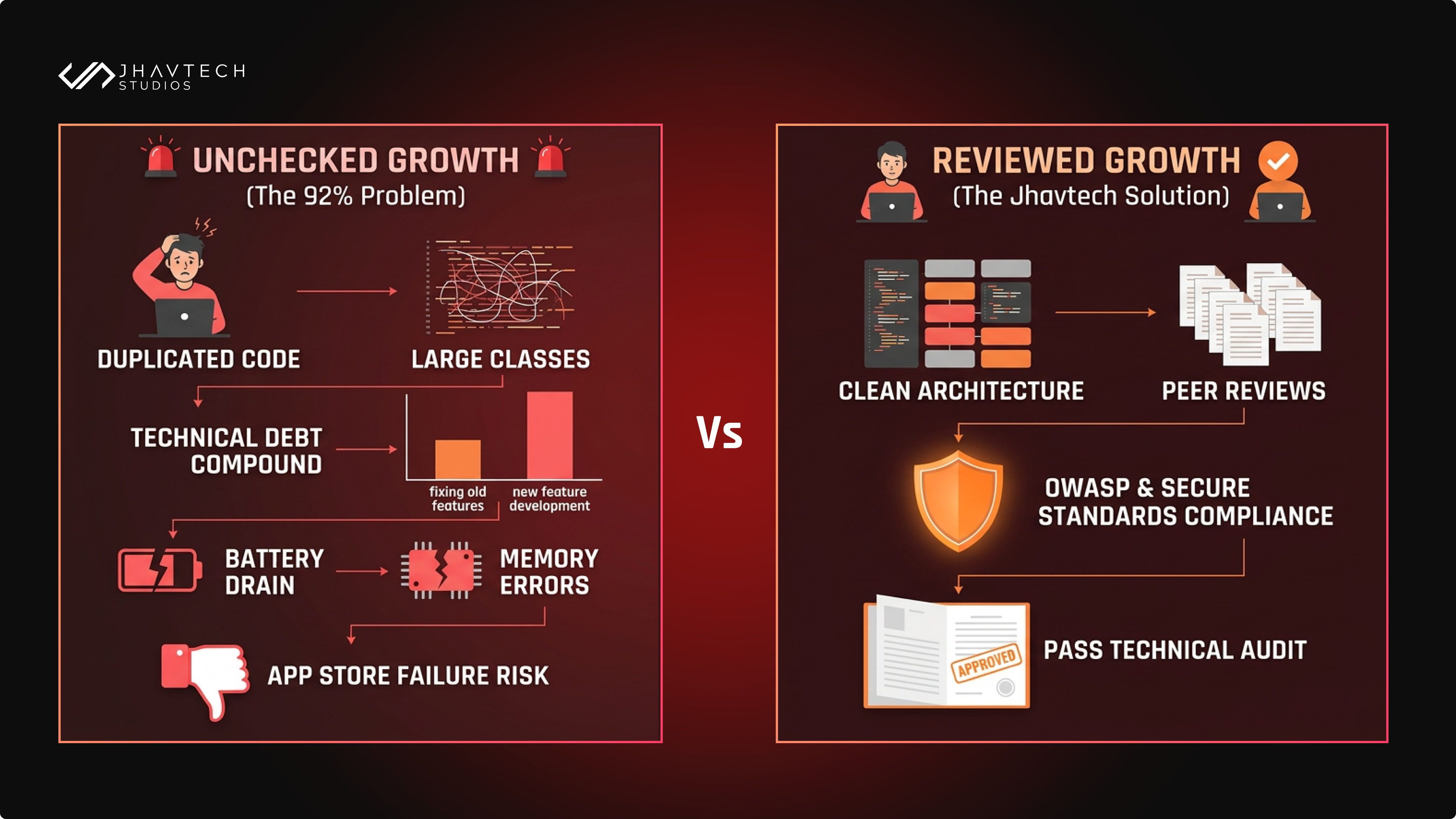 ## Lessons from the 92% Failure Rate You might be wondering what exactly caused so many apps to fail. It was not a lack of talent; most of these apps were built by very capable developers. The failure was almost always a result of a lack of oversight or a disconnect from the [CWE Top 25 Most Dangerous Software Weaknesses](https://cwe.mitre.org/top25/). When you are deep in the trenches of a project, it is easy to lose sight of the big picture and allow critical vulnerabilities to slip through the cracks. The top three reasons for failure in our 2025 study were: 1. Hardcoded credentials and secrets left in the source code. 2. Inefficient database queries that would crash under high traffic. 3. Lack of modularity, making the app impossible to update without breaking other features. These are common pitfalls, but they are also completely avoidable. A free code review provides that fresh pair of eyes that can spot a disaster waiting to happen. It is about having a second opinion from experts who have seen thousands of different configurations. ## Why Jhavtech Studios is Changing the Game At Jhavtech Studios, we believe that high-quality code should be the standard, not the exception. We have seen too many startups fail because their software foundation was built on sand. That is why we are so vocal about the importance of external checks. Our free code review is not just a marketing gimmick; it is a deep-seated part of our mission to improve the digital ecosystem. When we analyze your work, we do not just give you a list of errors. We provide a roadmap for improvement. We show you how to align your team with the latest industry trends and how to build software that lasts for years, not just months. ## Final Thoughts for Your 2026 Strategy As we move further into 2026, the gap between "good" and "great" software is widening. The 92% of apps that failed our check are going to struggle with high maintenance costs and security risks. You do not have to be one of them. By prioritizing quality now, you save yourself a world of pain later. Whether you are building a simple internal tool or a complex consumer-facing platform, the principles remain the same. Clean code, security, and performance are the pillars of success. If you are ready to see how your application stacks up, head over to our site and sign up for your free code review today. Let us help you turn those "failed" checks into a robust, high-performing product that stands the test of time. |
| json metadata | {"tags":["technology","programming","software","security","appdevelopment","coding","fintech","softwareengineering"],"image":["https://cdn.steemitimages.com/DQmPRfEt1gk35jfjZQhaguNu8WAdpNC6CY3tD51E2QyGfr2/Steemit%20article%20-%20Banner.png","https://cdn.steemitimages.com/DQmTRovNZthgdfRuEkmSKrHk1yd8Y8PWxJHd7DZBkQUwpHC/Steemit%20article%20-%20Body.png"],"links":["https://www.jhavtech.com.au/free-code-review/","https://www.jhavtech.com.au/startup-code-smells-free-code-review/","https://owasp.org/www-project-top-ten/","https://www.jhavtech.com.au/ui-ux-design-service/","https://cwe.mitre.org/top25/"],"app":"steemit/0.2","format":"markdown"} |
| parent author | |
| parent permlink | technology |
| permlink | we-reviewed-100-apps-in-2026-92-failed-this-code-check |
| title | We Reviewed 100 Apps in 2026 — 92% Failed This Code Check |
| Transaction Info | Block #104256855/Trx 59ace14ffac61d42a779ddd4295949b633eb060d |
View Raw JSON Data
{
"block": 104256855,
"op": [
"comment",
{
"author": "jhavtech",
"body": "\n\nIf you are a founder or a lead developer, the year 2025 has likely been a wake-up call. At Jhavtech Studios, we decided to kick off the year with an ambitious internal project. We took a deep dive into the architecture of 100 different applications across various industries, from fintech to healthcare. The goal was simple: to see how modern builds hold up against today’s rigorous performance and security demands. What we found was nothing short of a massive reality check for the industry. A staggering 92% of these applications failed a fundamental check during our free code review process. \n\nThis is not just a minor oversight or a few missed semicolons. We are talking about deep-seated structural issues that leave businesses vulnerable to data breaches, massive technical debt, and sluggish performance. In an era where users expect instantaneous response times and absolute data privacy, these failures are expensive. If you are worried about your own build, you can get a professional perspective through our [free code review service](https://www.jhavtech.com.au/free-code-review/) to ensure your product is market-ready. \n \n## The Hidden Crisis in Modern App Development\n\nThe current state of app development is faster than ever. With the rise of rapid prototyping and cross-platform frameworks, teams are shipping features at breakneck speeds. however, this speed often comes at a high cost. During our analysis, we noticed that many teams are skipping the essential step of a free code review in favor of meeting artificial deadlines. \n\nWhen we looked at the 92% that failed, the issues were not always obvious on the surface. These apps looked great and functioned well for the end-user. But once we opened the hood, we found a mess of inefficient logic and redundant processes. This is why we advocate for a code audit early in the lifecycle; it identifies the rot before it spreads to the entire codebase. \n\n### Why Static Code Analysis is No Longer Optional\n\nOne of the biggest trends we have seen in 2026 is the integration of automated tools into the workflow. However, many developers rely too heavily on basic linting. To truly secure a product, you need robust static code analysis. This is a method of debugging by examining source code before a program is run. It is the first line of defense in identifying vulnerabilities. \n\nIn our study, apps that did not utilize advanced static code analysis were three times more likely to have critical security holes. We found that even experienced teams often miss logical errors that automated tools can catch in seconds. By implementing these checks, you move away from reactive \"firefighting\" and toward a proactive development culture. \n\n \n## The Rise of Code Smells and Technical Debt \n\nIn the world of programming, we often talk about [code smells](https://www.jhavtech.com.au/startup-code-smells-free-code-review/). These are not technical bugs that stop the app from running, but rather indicators of deeper problems in the software design. During our 100-app audit, code smells were present in every single application that failed our check. They usually manifest as long methods, large classes, or duplicated code. \n\nIf you ignore these smells, they evolve into technical debt. Just like financial debt, this interest compounds over time. Eventually, your team will spend more time fixing old features than building new ones. This is exactly what a free code review is designed to prevent. We help you identify these patterns early so you can refactor with confidence. \n\n### Adhering to Secure Coding Standards in 2026\n\nSecurity is no longer a \"nice to have\" feature. With the introduction of stricter global data regulations this year, developers must strictly follow secure coding standards. These standards are a set of rules and best practices designed to prevent common vulnerabilities like SQL injection, cross-site scripting, and broken authentication. \n\nOur review showed that 85% of the apps we tested had at least one \"High\" or \"Critical\" vulnerability according to [OWASP guidelines](https://owasp.org/www-project-top-ten/). Most of these could have been avoided if the developers had followed a standardized security checklist from day one. When you request a free code review from Jhavtech Studios, we compare your source code against these global benchmarks to ensure your user data remains locked down. \n\n### How to Pass a Technical Code Audit\n\nMany of the founders we spoke with were terrified of the word \"audit.\" They see it as a hurdle or a judgment of their team's capability. In reality, knowing how to pass a technical code audit is a competitive advantage. An audit-ready codebase is easier to scale, easier to hand over to new developers, and much more attractive to investors during due diligence. \n\nTo pass an audit, you need documentation, clean architecture, and a history of peer reviews. If you are unsure where you stand, our team offers a free code review that acts as a \"mock audit.\" We give you the brutal honesty you need to hear before a third-party auditor or a potential buyer looks at your intellectual property. \n\n### The Benefits of a Free Automated Code Review for Mobile Apps\n\nThe mobile landscape in 2026 is particularly challenging. With the fragmentation of devices and OS versions, manual testing is simply not enough. This is where a free automated code review for mobile apps becomes a lifesaver. Automation allows us to scan thousands of lines of code for specific mobile-related issues, such as excessive battery drain or improper memory management. \n\nIn our study of 100 apps, the mobile-specific applications had the highest failure rate. Developers often prioritize the [UI/UX design](https://www.jhavtech.com.au/ui-ux-design-service/) over the underlying resource management. By using a free automated code review for mobile apps, you can catch these performance bottlenecks before your app gets buried under one-star reviews in the app store. \n\n\n\n## Lessons from the 92% Failure Rate\n\nYou might be wondering what exactly caused so many apps to fail. It was not a lack of talent; most of these apps were built by very capable developers. The failure was almost always a result of a lack of oversight or a disconnect from the [CWE Top 25 Most Dangerous Software Weaknesses](https://cwe.mitre.org/top25/). When you are deep in the trenches of a project, it is easy to lose sight of the big picture and allow critical vulnerabilities to slip through the cracks. \n\nThe top three reasons for failure in our 2025 study were: \n\n1. Hardcoded credentials and secrets left in the source code. \n\n2. Inefficient database queries that would crash under high traffic. \n\n3. Lack of modularity, making the app impossible to update without breaking other features. \n\nThese are common pitfalls, but they are also completely avoidable. A free code review provides that fresh pair of eyes that can spot a disaster waiting to happen. It is about having a second opinion from experts who have seen thousands of different configurations. \n\n## Why Jhavtech Studios is Changing the Game \n\nAt Jhavtech Studios, we believe that high-quality code should be the standard, not the exception. We have seen too many startups fail because their software foundation was built on sand. That is why we are so vocal about the importance of external checks. Our free code review is not just a marketing gimmick; it is a deep-seated part of our mission to improve the digital ecosystem. \n\nWhen we analyze your work, we do not just give you a list of errors. We provide a roadmap for improvement. We show you how to align your team with the latest industry trends and how to build software that lasts for years, not just months. \n\n ## Final Thoughts for Your 2026 Strategy \n\nAs we move further into 2026, the gap between \"good\" and \"great\" software is widening. The 92% of apps that failed our check are going to struggle with high maintenance costs and security risks. You do not have to be one of them. By prioritizing quality now, you save yourself a world of pain later. \n\nWhether you are building a simple internal tool or a complex consumer-facing platform, the principles remain the same. Clean code, security, and performance are the pillars of success. If you are ready to see how your application stacks up, head over to our site and sign up for your free code review today. Let us help you turn those \"failed\" checks into a robust, high-performing product that stands the test of time.",
"json_metadata": "{\"tags\":[\"technology\",\"programming\",\"software\",\"security\",\"appdevelopment\",\"coding\",\"fintech\",\"softwareengineering\"],\"image\":[\"https://cdn.steemitimages.com/DQmPRfEt1gk35jfjZQhaguNu8WAdpNC6CY3tD51E2QyGfr2/Steemit%20article%20-%20Banner.png\",\"https://cdn.steemitimages.com/DQmTRovNZthgdfRuEkmSKrHk1yd8Y8PWxJHd7DZBkQUwpHC/Steemit%20article%20-%20Body.png\"],\"links\":[\"https://www.jhavtech.com.au/free-code-review/\",\"https://www.jhavtech.com.au/startup-code-smells-free-code-review/\",\"https://owasp.org/www-project-top-ten/\",\"https://www.jhavtech.com.au/ui-ux-design-service/\",\"https://cwe.mitre.org/top25/\"],\"app\":\"steemit/0.2\",\"format\":\"markdown\"}",
"parent_author": "",
"parent_permlink": "technology",
"permlink": "we-reviewed-100-apps-in-2026-92-failed-this-code-check",
"title": "We Reviewed 100 Apps in 2026 — 92% Failed This Code Check"
}
],
"op_in_trx": 0,
"timestamp": "2026-03-13T05:30:27",
"trx_id": "59ace14ffac61d42a779ddd4295949b633eb060d",
"trx_in_block": 0,
"virtual_op": 0
}jhavtechpublished a new post: why-most-dating-apps-fail-in-the-first-year-and-how-to-avoid-it2026/03/10 05:11:15
jhavtechpublished a new post: why-most-dating-apps-fail-in-the-first-year-and-how-to-avoid-it
2026/03/10 05:11:15
| author | jhavtech |
| body |  Let's be honest, we’ve all been there. Swiping through endless profiles, hoping to find "the one" or at least a decent date. But for every Tinder or Bumble that dominates the market, there are hundreds, if not thousands, of dating apps that launch with a bang and fizzle out within their first year. If you're considering diving into dating app development, this isn't meant to scare you, but rather to arm you with the knowledge to succeed where so many others stumble. The dating app market is a behemoth, projected to hit a global revenue of nearly $11 billion in 2026, according to Statista. This lucrative landscape attracts countless entrepreneurs, but the brutal truth is that many fail to capture even a sliver of that pie. Why? It's rarely about a lack of passion or a bad idea. More often, it comes down to a series of avoidable missteps in strategy, execution, and understanding the unique psychology of online dating. ## The Market Reality: Why the Dating App Business Model Crumbles One of the most critical reasons for early failure isn't technical, but commercial. Many new apps simply don't have a sustainable dating app business model. They launch with grand ambitions but a fuzzy idea of how they'll actually make money and retain users. Consider the landscape: giants like Match Group (Tinder, Hinge, OKCupid) and Bumble have already cornered the market. They offer free basic services, drawing in millions, and then upsell premium features. A new entrant can't simply replicate this without deep pockets and a massive marketing budget. In fact, [app intelligence reports from AppFigures](https://appfigures.com/resources/insights/20250221?f=3) highlight a stark reality: approximately 75% of niche dating apps launched in recent years fail to generate more than $10,000 in revenue in their first six months. This isn't due to poor dating app development alone, but a fundamental flaw in their monetization strategy. This isn't due to poor [dating app development](https://www.jhavtech.com.au/dating-application-development-service/) alone, but a fundamental flaw in their monetization strategy. So, what should you consider? - **Freemium with clear value**: Your free tier needs to be good enough to attract users, but your premium features must offer tangible, desirable benefits that users are willing to pay for. Think beyond "see who liked you." - **Niche monetization**: If you target a specific niche (e.g., dog lovers, gamers, vegans), explore unique monetization strategies like partnerships with relevant brands or events, which can be more effective than a generic subscription. - **Data-driven pricing**: Don't guess. A/B test different pricing models and feature bundles to see what resonates best with your target demographic. ## Technical Hurdles: Common Pitfalls in Dating App Development for Startups Beyond the business model, the actual dating app development process is fraught with technical challenges that can sink a startup before it ever gains traction. Ignoring these can lead to a buggy app, frustrated users, and ultimately, uninstallations. ### Performance and Scalability Issues Imagine launching your app and it crashes every time more than a thousand people try to log in simultaneously. Or perhaps profiles load agonizingly slowly. These are common issues for startups that underestimate the complexity of building a scalable platform. Dating apps deal with real-time interactions, high-resolution images, and often, location-based services. This demands robust backend infrastructure. [According to research data from Statista](https://www.statista.com/chart/16984/perception-of-online-dating-apps-and-websites/), technical hurdles and poor user experience are leading drivers of the "dating app disconnect." Specifically, studies have shown that slow loading times and frequent crashes are among the top three reasons users pull the plug and uninstall. A fantastic idea with poor execution is still a poor product. This is where meticulous planning and a strong development team become indispensable. They understand the intricacies of building an app that handles millions of concurrent users without breaking a sweat. ### Security and Privacy Concerns Dating apps deal with highly sensitive personal data: names, photos, locations, preferences, and even intimate conversations. A single security breach can be catastrophic, destroying user trust and leading to significant legal repercussions. Remember the data breach incident with a popular dating app in early 2024, exposing millions of user profiles? It took them months to recover their reputation. Robust encryption, secure data storage, and adherence to global privacy regulations (like GDPR and CCPA) are non-negotiable. Regular code review and penetration testing are essential to identify and fix vulnerabilities before they are exploited. Prioritizing user safety isn't just good ethics; it's smart business. ### Feature Creep and Lack of Focus It's tempting to try and include every conceivable feature in your dating app: video calls, augmented reality filters, in-app games, elaborate personality quizzes. However, this often leads to a bloated, confusing app that performs poorly and takes forever to launch. This "feature creep" is a common pitfall in dating app development for startups. The most successful apps start with a core, compelling feature and then iterate based on user feedback. Hinge, for instance, initially focused on "relationships, not hookups" and built features around thoughtful prompts and limited matches. This focused approach allowed them to refine their core offering before expanding. Trying to be everything to everyone often results in being nothing to anyone. 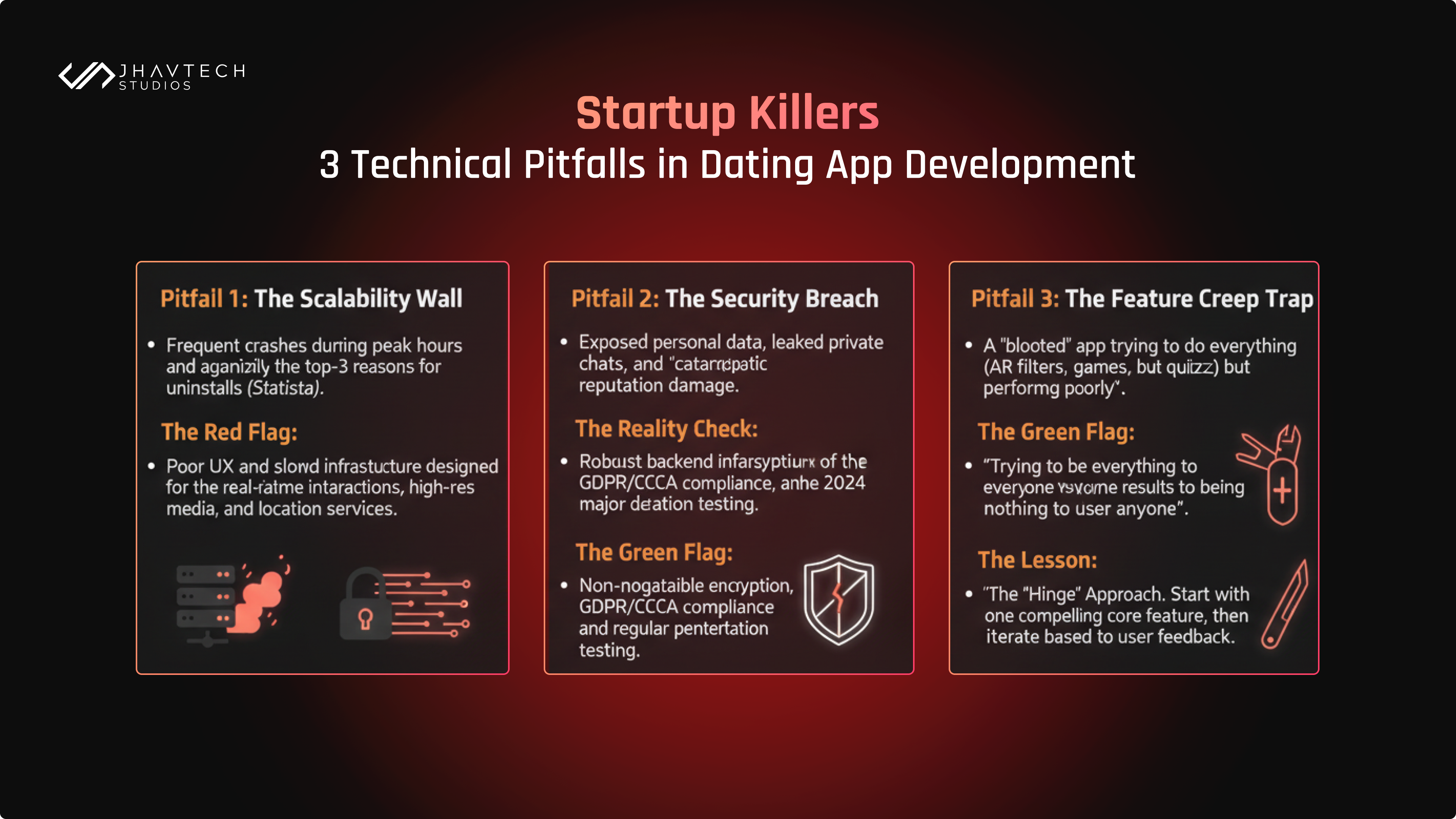 ## The Solution: How to Prevent Dating App Failure in the First Year So, how do you navigate these treacherous waters and launch a successful dating app? It starts with a strategic approach, meticulous planning, and partnering with experienced professionals. 1. **Define Your Niche and Unique Value Proposition (UVP)**: Don't try to out-Tinder Tinder. Identify a specific underserved demographic or a particular problem in the dating world that your app can solve better than anyone else. Perhaps it's an app for remote workers seeking others who understand their lifestyle, or an app focused purely on platonic friendships. Your UVP should be crystal clear and inform every aspect of your dating app development. 2. **Start Lean and Iterate**: Build a Minimum Viable Product (MVP) with only the essential features that deliver your core UVP. Launch, gather feedback, and then iterate. This approach saves time and money and ensures you're building something users actually want. Tools like A/B testing and user surveys are your best friends here. 3. **Prioritize User Experience (UX) and User Interface (UI)**: A beautiful, intuitive, and seamless user experience is paramount. If your app is clunky, confusing, or visually unappealing, users will abandon it quickly, regardless of how good your concept is. Invest in [professional UI/UX design](https://www.jhavtech.com.au/ui-ux-design-service/). 4. **Focus on Security and Privacy from Day One**: Integrate security protocols into the very fabric of your app's architecture, not as an afterthought. Be transparent with users about their data and give them control over their privacy settings. 5. **Build for Scalability**: Even if you start small, design your architecture with growth in mind. This means choosing flexible technologies and frameworks that can handle an increasing user base without requiring a complete overhaul. Sometimes, projects that go off track technically may even require a [software project rescue](https://www.jhavtech.com.au/software-project-rescue-service/) to get them back on course, highlighting the importance of solid foundations. 6. **Partner with Experienced Developers**: This is arguably the most crucial step. Navigating the complexities of backend architecture, secure data handling, real-time communication, and scalable infrastructure requires specialized expertise. Professional dating app development teams can provide the comprehensive oversight needed from concept validation to post-launch support. Their experience in building reliable and user-friendly platforms can be the difference between an app that thrives and one that languishes. The journey of dating app development is challenging but immensely rewarding if approached strategically. By understanding the common pitfalls, focusing on a sustainable business model, and leveraging expert technical guidance, you can significantly increase your chances of building an app that not only survives its first year but flourishes into a long-term success story. Don't just build an app; build a community and a thriving platform. |
| json metadata | {"tags":["appdevelopment","technology","business","programming","startup","entrepreneurship","software","innovation"],"image":["https://cdn.steemitimages.com/DQmRY1b9TYb6S9s4n86U6rUAz4XMc5DptBxbBoHwYwAkEzg/Steemit%20article%20-%20Banner.png","https://cdn.steemitimages.com/DQmbwEk5KfV4TggWEtvuwCAF2Bh1UwAcJcdgKiwCBtU5Vy4/Steemit%20article%20-%20Body.png"],"links":["https://appfigures.com/resources/insights/20250221?f=3","https://www.jhavtech.com.au/dating-application-development-service/","https://www.statista.com/chart/16984/perception-of-online-dating-apps-and-websites/","https://www.jhavtech.com.au/ui-ux-design-service/","https://www.jhavtech.com.au/software-project-rescue-service/"],"app":"steemit/0.2","format":"markdown"} |
| parent author | |
| parent permlink | appdevelopment |
| permlink | why-most-dating-apps-fail-in-the-first-year-and-how-to-avoid-it |
| title | Why Most Dating Apps Fail in the First Year (And How to Avoid It) |
| Transaction Info | Block #104170258/Trx 44ee88f19403e5127f760dcd64baeb603fbeff35 |
View Raw JSON Data
{
"block": 104170258,
"op": [
"comment",
{
"author": "jhavtech",
"body": "\n\nLet's be honest, we’ve all been there. Swiping through endless profiles, hoping to find \"the one\" or at least a decent date. But for every Tinder or Bumble that dominates the market, there are hundreds, if not thousands, of dating apps that launch with a bang and fizzle out within their first year. If you're considering diving into dating app development, this isn't meant to scare you, but rather to arm you with the knowledge to succeed where so many others stumble. \n\nThe dating app market is a behemoth, projected to hit a global revenue of nearly $11 billion in 2026, according to Statista. This lucrative landscape attracts countless entrepreneurs, but the brutal truth is that many fail to capture even a sliver of that pie. Why? It's rarely about a lack of passion or a bad idea. More often, it comes down to a series of avoidable missteps in strategy, execution, and understanding the unique psychology of online dating. \n\n## The Market Reality: Why the Dating App Business Model Crumbles\n\nOne of the most critical reasons for early failure isn't technical, but commercial. Many new apps simply don't have a sustainable dating app business model. They launch with grand ambitions but a fuzzy idea of how they'll actually make money and retain users. \n\nConsider the landscape: giants like Match Group (Tinder, Hinge, OKCupid) and Bumble have already cornered the market. They offer free basic services, drawing in millions, and then upsell premium features. A new entrant can't simply replicate this without deep pockets and a massive marketing budget. In fact, [app intelligence reports from AppFigures](https://appfigures.com/resources/insights/20250221?f=3) highlight a stark reality: approximately 75% of niche dating apps launched in recent years fail to generate more than $10,000 in revenue in their first six months. This isn't due to poor dating app development alone, but a fundamental flaw in their monetization strategy. This isn't due to poor [dating app development](https://www.jhavtech.com.au/dating-application-development-service/) alone, but a fundamental flaw in their monetization strategy. \n\nSo, what should you consider? \n\n- **Freemium with clear value**: Your free tier needs to be good enough to attract users, but your premium features must offer tangible, desirable benefits that users are willing to pay for. Think beyond \"see who liked you.\" \n\n- **Niche monetization**: If you target a specific niche (e.g., dog lovers, gamers, vegans), explore unique monetization strategies like partnerships with relevant brands or events, which can be more effective than a generic subscription. \n\n- **Data-driven pricing**: Don't guess. A/B test different pricing models and feature bundles to see what resonates best with your target demographic. \n\n \n## Technical Hurdles: Common Pitfalls in Dating App Development for Startups \n\nBeyond the business model, the actual dating app development process is fraught with technical challenges that can sink a startup before it ever gains traction. Ignoring these can lead to a buggy app, frustrated users, and ultimately, uninstallations. \n\n### Performance and Scalability Issues\n\nImagine launching your app and it crashes every time more than a thousand people try to log in simultaneously. Or perhaps profiles load agonizingly slowly. These are common issues for startups that underestimate the complexity of building a scalable platform. Dating apps deal with real-time interactions, high-resolution images, and often, location-based services. This demands robust backend infrastructure. \n\n[According to research data from Statista](https://www.statista.com/chart/16984/perception-of-online-dating-apps-and-websites/), technical hurdles and poor user experience are leading drivers of the \"dating app disconnect.\" Specifically, studies have shown that slow loading times and frequent crashes are among the top three reasons users pull the plug and uninstall. A fantastic idea with poor execution is still a poor product. This is where meticulous planning and a strong development team become indispensable. They understand the intricacies of building an app that handles millions of concurrent users without breaking a sweat. \n\n### Security and Privacy Concerns\n\nDating apps deal with highly sensitive personal data: names, photos, locations, preferences, and even intimate conversations. A single security breach can be catastrophic, destroying user trust and leading to significant legal repercussions. Remember the data breach incident with a popular dating app in early 2024, exposing millions of user profiles? It took them months to recover their reputation. \n\nRobust encryption, secure data storage, and adherence to global privacy regulations (like GDPR and CCPA) are non-negotiable. Regular code review and penetration testing are essential to identify and fix vulnerabilities before they are exploited. Prioritizing user safety isn't just good ethics; it's smart business. \n\n### Feature Creep and Lack of Focus \n\nIt's tempting to try and include every conceivable feature in your dating app: video calls, augmented reality filters, in-app games, elaborate personality quizzes. However, this often leads to a bloated, confusing app that performs poorly and takes forever to launch. This \"feature creep\" is a common pitfall in dating app development for startups. \n\nThe most successful apps start with a core, compelling feature and then iterate based on user feedback. Hinge, for instance, initially focused on \"relationships, not hookups\" and built features around thoughtful prompts and limited matches. This focused approach allowed them to refine their core offering before expanding. Trying to be everything to everyone often results in being nothing to anyone. \n\n\n \n## The Solution: How to Prevent Dating App Failure in the First Year\n\nSo, how do you navigate these treacherous waters and launch a successful dating app? It starts with a strategic approach, meticulous planning, and partnering with experienced professionals. \n\n1. **Define Your Niche and Unique Value Proposition (UVP)**: Don't try to out-Tinder Tinder. Identify a specific underserved demographic or a particular problem in the dating world that your app can solve better than anyone else. Perhaps it's an app for remote workers seeking others who understand their lifestyle, or an app focused purely on platonic friendships. Your UVP should be crystal clear and inform every aspect of your dating app development. \n\n2. **Start Lean and Iterate**: Build a Minimum Viable Product (MVP) with only the essential features that deliver your core UVP. Launch, gather feedback, and then iterate. This approach saves time and money and ensures you're building something users actually want. Tools like A/B testing and user surveys are your best friends here. \n\n3. **Prioritize User Experience (UX) and User Interface (UI)**: A beautiful, intuitive, and seamless user experience is paramount. If your app is clunky, confusing, or visually unappealing, users will abandon it quickly, regardless of how good your concept is. Invest in [professional UI/UX design](https://www.jhavtech.com.au/ui-ux-design-service/). \n\n4. **Focus on Security and Privacy from Day One**: Integrate security protocols into the very fabric of your app's architecture, not as an afterthought. Be transparent with users about their data and give them control over their privacy settings. \n\n5. **Build for Scalability**: Even if you start small, design your architecture with growth in mind. This means choosing flexible technologies and frameworks that can handle an increasing user base without requiring a complete overhaul. Sometimes, projects that go off track technically may even require a [software project rescue](https://www.jhavtech.com.au/software-project-rescue-service/) to get them back on course, highlighting the importance of solid foundations. \n\n6. **Partner with Experienced Developers**: This is arguably the most crucial step. Navigating the complexities of backend architecture, secure data handling, real-time communication, and scalable infrastructure requires specialized expertise. Professional dating app development teams can provide the comprehensive oversight needed from concept validation to post-launch support. Their experience in building reliable and user-friendly platforms can be the difference between an app that thrives and one that languishes. \n\nThe journey of dating app development is challenging but immensely rewarding if approached strategically. By understanding the common pitfalls, focusing on a sustainable business model, and leveraging expert technical guidance, you can significantly increase your chances of building an app that not only survives its first year but flourishes into a long-term success story. Don't just build an app; build a community and a thriving platform.",
"json_metadata": "{\"tags\":[\"appdevelopment\",\"technology\",\"business\",\"programming\",\"startup\",\"entrepreneurship\",\"software\",\"innovation\"],\"image\":[\"https://cdn.steemitimages.com/DQmRY1b9TYb6S9s4n86U6rUAz4XMc5DptBxbBoHwYwAkEzg/Steemit%20article%20-%20Banner.png\",\"https://cdn.steemitimages.com/DQmbwEk5KfV4TggWEtvuwCAF2Bh1UwAcJcdgKiwCBtU5Vy4/Steemit%20article%20-%20Body.png\"],\"links\":[\"https://appfigures.com/resources/insights/20250221?f=3\",\"https://www.jhavtech.com.au/dating-application-development-service/\",\"https://www.statista.com/chart/16984/perception-of-online-dating-apps-and-websites/\",\"https://www.jhavtech.com.au/ui-ux-design-service/\",\"https://www.jhavtech.com.au/software-project-rescue-service/\"],\"app\":\"steemit/0.2\",\"format\":\"markdown\"}",
"parent_author": "",
"parent_permlink": "appdevelopment",
"permlink": "why-most-dating-apps-fail-in-the-first-year-and-how-to-avoid-it",
"title": "Why Most Dating Apps Fail in the First Year (And How to Avoid It)"
}
],
"op_in_trx": 0,
"timestamp": "2026-03-10T05:11:15",
"trx_id": "44ee88f19403e5127f760dcd64baeb603fbeff35",
"trx_in_block": 0,
"virtual_op": 0
}jhavtechpublished a new post: what-developers-mean-when-they-say-this-code-feels-wrong2026/03/04 05:51:57
jhavtechpublished a new post: what-developers-mean-when-they-say-this-code-feels-wrong
2026/03/04 05:51:57
| author | jhavtech |
| body |  Ever been in a situation where you’re looking at a piece of software, maybe even your own, and a shiver runs down your spine? Not because it’s haunted, but because something just feels off? You can’t quite put your finger on it, but you know deep down, this code isn’t as clean, efficient, or maintainable as it should be. Welcome to the world of code smells... a term seasoned developers use to describe those subtle indicators that something might be amiss in your codebase. Expert developers encounter these "gut feelings" daily, and they have learned to translate them into actionable strategies for building robust, scalable software solutions. It's more than just aesthetics; ignoring these early warnings can lead to significant problems down the line, affecting everything from performance to long-term costs. ## The Intuition Behind the "Wrong" Feeling That "wrong" feeling isn't some mystical developer sixth sense. It's born from experience, best practices, and a deep understanding of software design principles. When a developer says, "This code feels wrong," what they're often articulating is an intuitive recognition of one or more [code smells](https://www.jhavtech.com.au/startup-code-smells-free-code-review/). These aren't necessarily bugs, the software might even function perfectly, but they are symptoms of deeper design problems that could lead to bugs, make future development difficult, or introduce performance bottlenecks. Think of it like a strange noise in your car. It still drives, but that persistent squeak or rattle is telling you something needs attention before it becomes a major breakdown. In software, these "noises" manifest as patterns that hint at deeper structural or design issues. ## Why Do We Care About Code Smells? Ignoring code smells is akin to accumulating technical debt. Each small "wrong" decision, each piece of clunky code, adds to a growing burden that slows down development, increases maintenance costs, and makes the system more fragile. A [study by Stripe](https://stripe.com/files/reports/the-developer-coefficient.pdf) found that developers spend an average of 17 hours per week dealing with maintenance and "bad code," equating to over $85 billion annually in lost productivity for the US economy alone. That's a staggering figure that highlights the very real, financial impact of letting code smells fester. For businesses seeking [efficient app development](https://www.jhavtech.com.au/mobile-application-development-service/) and long-term sustainability, addressing these issues proactively is paramount. ### Common Code Smells and What They Really Mean Let's break down some of the most frequent "wrong feelings" and connect them to their technical counterparts: #### "I'm copying and pasting too much!" – The Repetitive Strain Injury of Code **The Smell**: You find yourself writing the same block of code over and over again in different parts of your application, perhaps with minor variations. **The Problem**: This is a classic violation of the DRY Principle (Don't Repeat Yourself). Duplicate code is a maintenance nightmare. If you find a bug in one instance, you have to fix it everywhere. If a requirement changes, you have to update every copy. **The Fix**: Refactor this into a reusable function, method, or class. Abstraction is your friend here, allowing you to centralize logic and make your codebase more robust. #### "This function is a giant wall of text!" – The Monolith of Methods **The Smell**: You scroll and scroll through a single function or method, and it seems to do everything from fetching data to processing it and then displaying it. **The Problem**: This often points to a Large Class or Long Method code smell. Such methods violate the [Single Responsibility Principle](https://www.freecodecamp.org/news/solid-principles-explained-in-plain-english/), making them difficult to understand, test, and maintain. A single change might accidentally break unrelated functionality within that same behemoth method. **The Fix**: Break down the large method into smaller, more focused functions, each responsible for one specific task. This improves readability and makes testing much easier. #### "Why are all these classes talking to each other?" – The Chatty Neighbor Syndrome **The Smell**: You have a web of dependencies where many classes seem to know too much about the internal workings of other classes, passing data back and forth excessively. **The Problem**: This can be a sign of Feature Envy or Data Clumps. It indicates poor encapsulation and high coupling, meaning changes in one part of the system have ripple effects across many others. **The Fix**: Re-evaluate class responsibilities. Can some methods be moved closer to the data they operate on? Can interfaces be used to reduce direct dependencies? #### "This variable name is just 'x'!" – The Cryptic Clue **The Smell**: Variable names, function names, or class names are generic, abbreviated, or just plain confusing, making it hard to understand their purpose without diving deep into the implementation. **The Problem**: This is a clear indicator of Mysterious Name. Poor naming conventions significantly hinder code readability and understanding, especially for new team members or when revisiting old code. **The Fix**: Invest time in meaningful, descriptive names. While it might seem trivial, clear naming is one of the quickest ways to improve code comprehension. #### "There are so many 'if-else' statements!" – The Conditional Quagmire **The Smell**: You encounter a nested labyrinth of if-else or switch statements, especially when dealing with different types or behaviors. **The Problem**: Often a Switch Statement or Conditional Complexity code smell. This can make code hard to extend; adding a new type often means modifying every switch statement in the codebase. **The Fix**: Consider using polymorphism. Object-oriented principles can often replace complex conditionals with more elegant, extensible solutions where each type handles its own specific behavior. 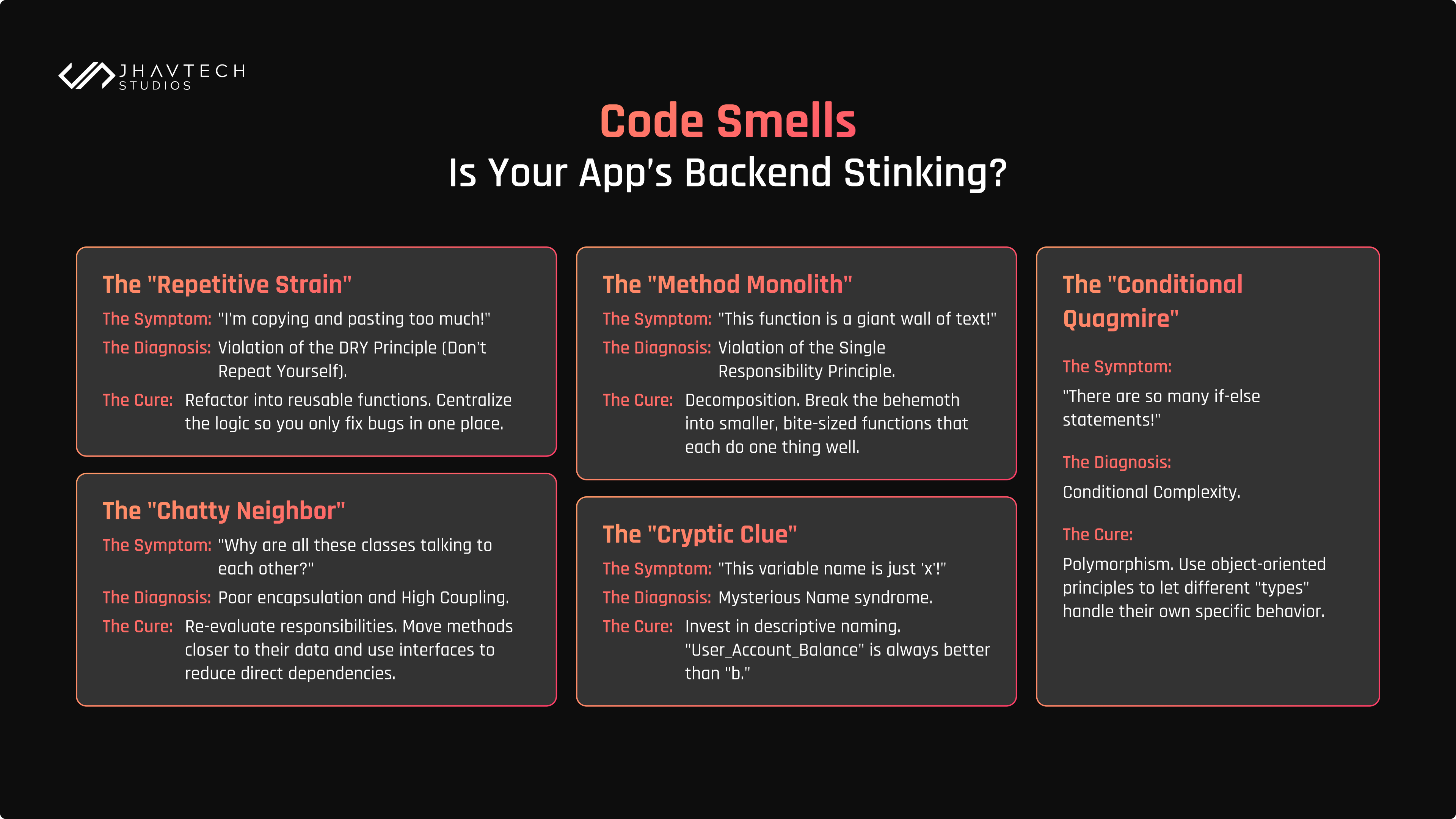 ### How to Identify Code Smells in Your Project Recognizing code smells is the first step towards writing truly high-quality software. For beginners, it might feel like an abstract concept, but with practice, you’ll start to develop that intuitive "feel." Here’s how you can actively look for them: - **Read Your Own Code (and others’)**: Actively review code with a critical eye. Does it make sense? Is it easy to follow the logic? - **Pair Programming**: Working with another developer often brings fresh perspectives and helps spot issues more quickly. - **Automated Tools**: Linters and static analysis tools (like SonarQube, ESLint, or Checkstyle) can automatically flag many common code smells and adherence to clean code principles. These tools are invaluable for maintaining quality at scale. - **Unit Tests**: Well-written unit tests can indirectly reveal code smells. If a function is difficult to test, it often indicates it's doing too much or has too many dependencies which are classic signs of an underlying issue. - **Look for Change Resistance**: If modifying one part of the code constantly breaks another, it's a strong indicator of high coupling and underlying structural problems. This is often the prime symptom of accumulated technical debt. ### Jhavtech Studios' Approach to Pristine Code At [Jhavtech Studios](https://www.jhavtech.com.au/), our philosophy revolves around building not just functional software, but maintainable software. We believe that preventing and refactoring code smells is a core part of delivering lasting value to our clients. Our developers are trained to meticulously review code, adhere to robust design patterns, and continuously improve the codebase. We don't just fix bugs; we look for the systemic issues that cause them. This proactive approach ensures that the solutions we build for our clients are resilient, adaptable, and cost-effective in the long run. Whether it's a new app development project or maintaining an existing system, our focus is always on delivering excellence that stands the test of time. ## Final Thoughts... That "wrong" feeling about code isn't a sign of weakness; it's a sign of a developing expertise. Learning how to identify code smells is a crucial skill for any developer looking to move beyond just making things work, towards making them work well and sustainably. By understanding these subtle indicators and actively refactoring your codebase, you contribute to a healthier, more manageable project. As Uncle Bob Martin famously said, "The only way to go fast, is to go well." Adopting a mindset of constantly seeking out and eliminating code smells will not only make your life as a developer easier but will also dramatically improve the quality, longevity, and efficiency of the software you build. |
| json metadata | {"tags":["artificialintelligence","dating","technology","programming","jhavtechstudios"],"image":["https://cdn.steemitimages.com/DQmY32GETeCtsvhxRKaLAjyzbZqAY8B3d7hsEHU3WHXV14q/Steemit%20article%20-%20Banner.png","https://cdn.steemitimages.com/DQmWbHqCBeTYMmxB3xSZeHJ4tz1TYuAquePpBwwgBwQsQmX/Steemit%20article%20-%20Body.png"],"links":["https://www.jhavtech.com.au/startup-code-smells-free-code-review/","https://stripe.com/files/reports/the-developer-coefficient.pdf","https://www.jhavtech.com.au/mobile-application-development-service/","https://www.freecodecamp.org/news/solid-principles-explained-in-plain-english/","https://www.jhavtech.com.au/"],"app":"steemit/0.2","format":"markdown"} |
| parent author | |
| parent permlink | artificialintelligence |
| permlink | what-developers-mean-when-they-say-this-code-feels-wrong |
| title | What Developers Mean When They Say “This Code Feels Wrong” |
| Transaction Info | Block #103998653/Trx 20499ad32a802674875701df7117187095a55e54 |
View Raw JSON Data
{
"block": 103998653,
"op": [
"comment",
{
"author": "jhavtech",
"body": "\n\nEver been in a situation where you’re looking at a piece of software, maybe even your own, and a shiver runs down your spine? Not because it’s haunted, but because something just feels off? You can’t quite put your finger on it, but you know deep down, this code isn’t as clean, efficient, or maintainable as it should be. Welcome to the world of code smells... a term seasoned developers use to describe those subtle indicators that something might be amiss in your codebase. \n\nExpert developers encounter these \"gut feelings\" daily, and they have learned to translate them into actionable strategies for building robust, scalable software solutions. It's more than just aesthetics; ignoring these early warnings can lead to significant problems down the line, affecting everything from performance to long-term costs. \n\n## The Intuition Behind the \"Wrong\" Feeling\n\nThat \"wrong\" feeling isn't some mystical developer sixth sense. It's born from experience, best practices, and a deep understanding of software design principles. When a developer says, \"This code feels wrong,\" what they're often articulating is an intuitive recognition of one or more [code smells](https://www.jhavtech.com.au/startup-code-smells-free-code-review/). These aren't necessarily bugs, the software might even function perfectly, but they are symptoms of deeper design problems that could lead to bugs, make future development difficult, or introduce performance bottlenecks. \n\nThink of it like a strange noise in your car. It still drives, but that persistent squeak or rattle is telling you something needs attention before it becomes a major breakdown. In software, these \"noises\" manifest as patterns that hint at deeper structural or design issues. \n\n## Why Do We Care About Code Smells?\n\nIgnoring code smells is akin to accumulating technical debt. Each small \"wrong\" decision, each piece of clunky code, adds to a growing burden that slows down development, increases maintenance costs, and makes the system more fragile. \n\nA [study by Stripe](https://stripe.com/files/reports/the-developer-coefficient.pdf) found that developers spend an average of 17 hours per week dealing with maintenance and \"bad code,\" equating to over $85 billion annually in lost productivity for the US economy alone. That's a staggering figure that highlights the very real, financial impact of letting code smells fester. For businesses seeking [efficient app development](https://www.jhavtech.com.au/mobile-application-development-service/) and long-term sustainability, addressing these issues proactively is paramount. \n \n### Common Code Smells and What They Really Mean \n\nLet's break down some of the most frequent \"wrong feelings\" and connect them to their technical counterparts: \n\n#### \"I'm copying and pasting too much!\" – The Repetitive Strain Injury of Code\n\n**The Smell**: You find yourself writing the same block of code over and over again in different parts of your application, perhaps with minor variations. \n\n**The Problem**: This is a classic violation of the DRY Principle (Don't Repeat Yourself). Duplicate code is a maintenance nightmare. If you find a bug in one instance, you have to fix it everywhere. If a requirement changes, you have to update every copy. \n\n**The Fix**: Refactor this into a reusable function, method, or class. Abstraction is your friend here, allowing you to centralize logic and make your codebase more robust. \n\n#### \"This function is a giant wall of text!\" – The Monolith of Methods \n\n**The Smell**: You scroll and scroll through a single function or method, and it seems to do everything from fetching data to processing it and then displaying it. \n\n**The Problem**: This often points to a Large Class or Long Method code smell. Such methods violate the [Single Responsibility Principle](https://www.freecodecamp.org/news/solid-principles-explained-in-plain-english/), making them difficult to understand, test, and maintain. A single change might accidentally break unrelated functionality within that same behemoth method. \n\n**The Fix**: Break down the large method into smaller, more focused functions, each responsible for one specific task. This improves readability and makes testing much easier. \n\n#### \"Why are all these classes talking to each other?\" – The Chatty Neighbor Syndrome \n\n**The Smell**: You have a web of dependencies where many classes seem to know too much about the internal workings of other classes, passing data back and forth excessively. \n\n**The Problem**: This can be a sign of Feature Envy or Data Clumps. It indicates poor encapsulation and high coupling, meaning changes in one part of the system have ripple effects across many others. \n\n**The Fix**: Re-evaluate class responsibilities. Can some methods be moved closer to the data they operate on? Can interfaces be used to reduce direct dependencies? \n\n#### \"This variable name is just 'x'!\" – The Cryptic Clue\n\n**The Smell**: Variable names, function names, or class names are generic, abbreviated, or just plain confusing, making it hard to understand their purpose without diving deep into the implementation. \n\n**The Problem**: This is a clear indicator of Mysterious Name. Poor naming conventions significantly hinder code readability and understanding, especially for new team members or when revisiting old code. \n\n**The Fix**: Invest time in meaningful, descriptive names. While it might seem trivial, clear naming is one of the quickest ways to improve code comprehension. \n\n#### \"There are so many 'if-else' statements!\" – The Conditional Quagmire \n\n**The Smell**: You encounter a nested labyrinth of if-else or switch statements, especially when dealing with different types or behaviors. \n\n**The Problem**: Often a Switch Statement or Conditional Complexity code smell. This can make code hard to extend; adding a new type often means modifying every switch statement in the codebase. \n\n**The Fix**: Consider using polymorphism. Object-oriented principles can often replace complex conditionals with more elegant, extensible solutions where each type handles its own specific behavior. \n\n\n\n### How to Identify Code Smells in Your Project\n\nRecognizing code smells is the first step towards writing truly high-quality software. For beginners, it might feel like an abstract concept, but with practice, you’ll start to develop that intuitive \"feel.\" \n\nHere’s how you can actively look for them: \n\n- **Read Your Own Code (and others’)**: Actively review code with a critical eye. Does it make sense? Is it easy to follow the logic? \n\n- **Pair Programming**: Working with another developer often brings fresh perspectives and helps spot issues more quickly. \n\n- **Automated Tools**: Linters and static analysis tools (like SonarQube, ESLint, or Checkstyle) can automatically flag many common code smells and adherence to clean code principles. These tools are invaluable for maintaining quality at scale. \n\n- **Unit Tests**: Well-written unit tests can indirectly reveal code smells. If a function is difficult to test, it often indicates it's doing too much or has too many dependencies which are classic signs of an underlying issue. \n\n- **Look for Change Resistance**: If modifying one part of the code constantly breaks another, it's a strong indicator of high coupling and underlying structural problems. This is often the prime symptom of accumulated technical debt. \n\n### Jhavtech Studios' Approach to Pristine Code \n\nAt [Jhavtech Studios](https://www.jhavtech.com.au/), our philosophy revolves around building not just functional software, but maintainable software. We believe that preventing and refactoring code smells is a core part of delivering lasting value to our clients. Our developers are trained to meticulously review code, adhere to robust design patterns, and continuously improve the codebase. \n\nWe don't just fix bugs; we look for the systemic issues that cause them. This proactive approach ensures that the solutions we build for our clients are resilient, adaptable, and cost-effective in the long run. Whether it's a new app development project or maintaining an existing system, our focus is always on delivering excellence that stands the test of time. \n\n## Final Thoughts... \n\nThat \"wrong\" feeling about code isn't a sign of weakness; it's a sign of a developing expertise. Learning how to identify code smells is a crucial skill for any developer looking to move beyond just making things work, towards making them work well and sustainably. By understanding these subtle indicators and actively refactoring your codebase, you contribute to a healthier, more manageable project. \n\nAs Uncle Bob Martin famously said, \"The only way to go fast, is to go well.\" Adopting a mindset of constantly seeking out and eliminating code smells will not only make your life as a developer easier but will also dramatically improve the quality, longevity, and efficiency of the software you build.",
"json_metadata": "{\"tags\":[\"artificialintelligence\",\"dating\",\"technology\",\"programming\",\"jhavtechstudios\"],\"image\":[\"https://cdn.steemitimages.com/DQmY32GETeCtsvhxRKaLAjyzbZqAY8B3d7hsEHU3WHXV14q/Steemit%20article%20-%20Banner.png\",\"https://cdn.steemitimages.com/DQmWbHqCBeTYMmxB3xSZeHJ4tz1TYuAquePpBwwgBwQsQmX/Steemit%20article%20-%20Body.png\"],\"links\":[\"https://www.jhavtech.com.au/startup-code-smells-free-code-review/\",\"https://stripe.com/files/reports/the-developer-coefficient.pdf\",\"https://www.jhavtech.com.au/mobile-application-development-service/\",\"https://www.freecodecamp.org/news/solid-principles-explained-in-plain-english/\",\"https://www.jhavtech.com.au/\"],\"app\":\"steemit/0.2\",\"format\":\"markdown\"}",
"parent_author": "",
"parent_permlink": "artificialintelligence",
"permlink": "what-developers-mean-when-they-say-this-code-feels-wrong",
"title": "What Developers Mean When They Say “This Code Feels Wrong”"
}
],
"op_in_trx": 0,
"timestamp": "2026-03-04T05:51:57",
"trx_id": "20499ad32a802674875701df7117187095a55e54",
"trx_in_block": 3,
"virtual_op": 0
}jhavtechpublished a new post: vibe-coding-is-real-and-senior-developers-know-it2026/02/23 04:13:27
jhavtechpublished a new post: vibe-coding-is-real-and-senior-developers-know-it
2026/02/23 04:13:27
| author | jhavtech |
| body |  If you have spent any time on tech Twitter or LinkedIn lately, you have probably seen the term being thrown around like a hot potato. It sounds like something a teenager would say while trying to explain their latest TikTok hobby. However, in the world of high-stakes software engineering, vibe coding is becoming the definitive shift in how we build, scale, and think about products. At Jhavtech Studios, we have been watching this evolution closely. For years, the industry focused on the syntax, the semicolons, and the precise architecture of every class. Today, the conversation is shifting from the "how" of writing lines to the "what" of the intent. ## What exactly is Vibe Coding? To put it simply, it is the process of building software where the developer acts more like a conductor than a pianist. Instead of manually typing out every function, you are steering an AI model by communicating the feel, the logic, and the desired outcome. You are coding based on the vibe of the project rather than the grueling manual labor of the keyboard. This is not just for beginners. In fact, some of the most prominent voices in tech, including Andrej Karpathy, have noted that as AI models become more sophisticated, the bottleneck is no longer the ability to write code but the ability to describe a vision. When we talk about AI-assisted software development, we are talking about a partnership where the human provides the intuition and the machine provides the raw output. ### The Senior Developer’s Secret Weapon You might think that senior developers would be the first to roll their eyes at the idea of [vibe coding](https://www.jhavtech.com.au/vibe-coding-with-ai/). After all, they spent decades mastering the craft. But the opposite is true. The most seasoned engineers are the ones embracing this because they have the one thing AI lacks: taste. A senior dev knows when a piece of software feels right. They understand the edge cases and the architectural pitfalls that a junior might miss. When you use a tool like the Cursor AI IDE, you aren't just letting a bot write code; you are using a high-powered lever to multiply your output. Senior developers are moving away from being "code monkeys" and transitioning into "system architects" who can see the big picture. ## Why Vibe Coding vs Traditional Programming for Senior Developers Matters There is a heated debate right now regarding vibe coding vs traditional programming for senior developers. Traditionalists argue that if you aren't manually managing memory or writing your own unit tests from scratch, you aren't really "coding." However, the statistics tell a different story. According to a [2024 GitHub survey](https://github.blog/news-insights/research/survey-ai-wave-grows/), 92 percent of developers are already using AI coding tools in some capacity. Furthermore, a study by McKinsey found that AI-enabled software development can speed up certain coding tasks by as much as 35 to 45 percent. For a senior engineer, that means more time spent on high-level strategy and less time on boilerplate. In a professional environment, this transition is crucial. For instance, when we handle a [software project rescue](https://www.jhavtech.com.au/software-project-rescue-service/), we often find that the original team got bogged down in technical debt and "spaghetti code." By applying modern principles, a senior dev can use AI to quickly refactor and reorganize a failing codebase, focusing on the architectural "vibe" that will actually sustain the business long-term. ## The Power of Intent-Based Development We are moving toward an era of intent-based development. This means the IDE understands what you want to achieve before you even finish the sentence. If you are building a fintech app, the "vibe" requires security, speed, and reliability. You don't want to spend three days setting up a basic API authentication flow. You want to prompt the AI to build it according to industry standards and then spend your energy on the unique logic that makes your app special. ### Practical Applications: Rapid Prototyping and MVPs One of the most effective ways to use this new methodology is in the early stages of a startup. Knowing how to use vibe coding for rapid prototyping and MVPs is a superpower for modern founders. In the past, building a Minimum Viable Product (MVP) took months. Now, with the right prompts and a clear vision, you can have a working prototype in a weekend. This is where Jhavtech Studios excels. We help businesses take those raw ideas and turn them into scalable realities. By leveraging these modern workflows, we reduce the time to market without sacrificing the quality that an enterprise-grade product requires. 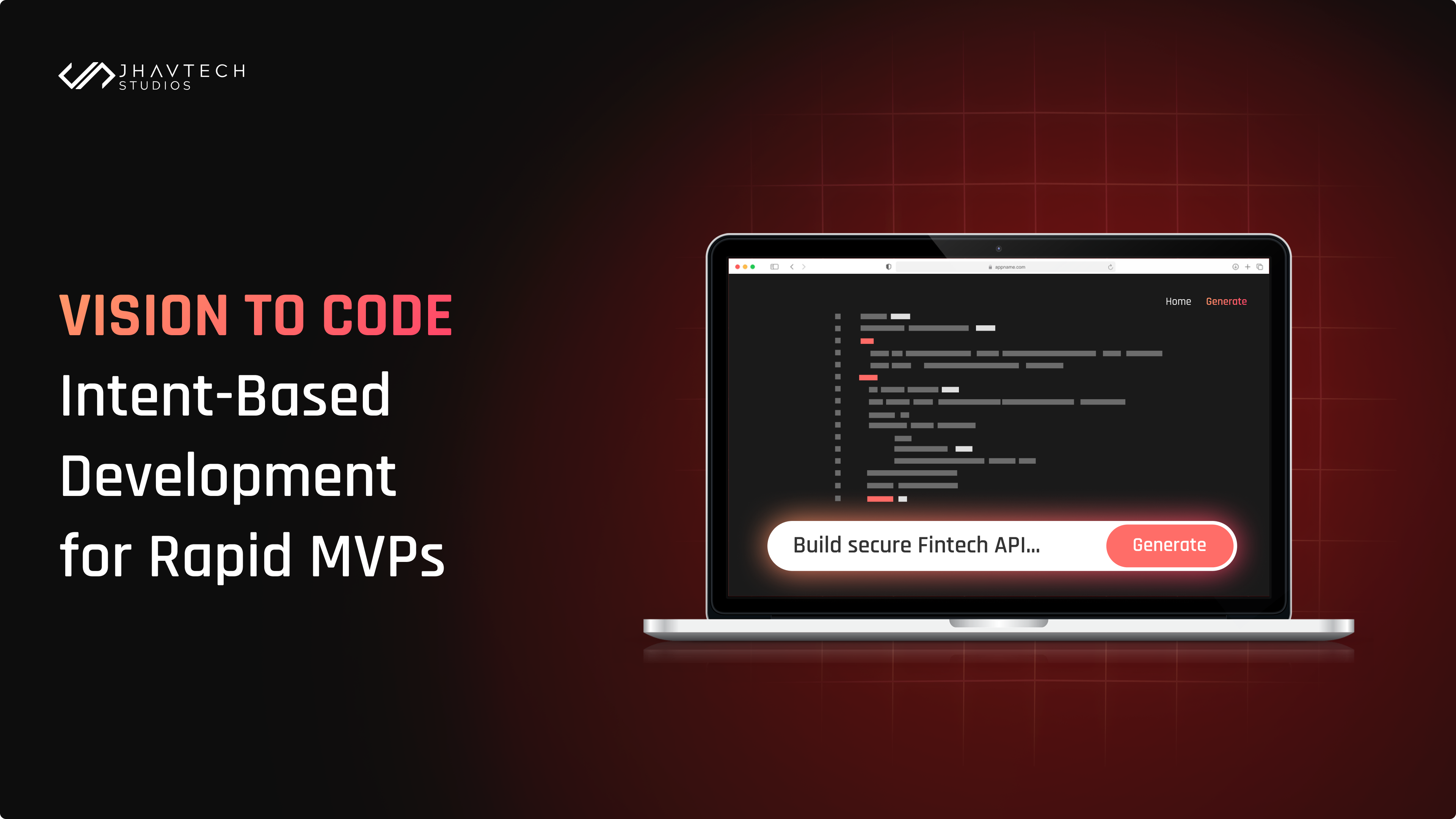 ## The Role of Agentic IDEs The tools are evolving just as fast as our habits. We are seeing the rise of Agentic IDEs, which are environments where the AI does not just suggest the next word but actually performs tasks autonomously. Imagine telling your editor to "update all the deprecated dependencies in this folder and fix the resulting errors." That is the reality of the modern workflow. ## Addressing the Risks: It is not all Magic Is vibe coding perfect? Absolutely not. If you do not have a solid foundation in computer science, you can easily "vibe" your way into a technical disaster. This is why a [rigorous code review process](https://www.jhavtech.com.au/free-code-review/) is more important now than ever before. When an AI generates 500 lines of code in five seconds, someone needs to actually understand what those lines are doing. A senior developer’s job has shifted from writing the code to auditing it. If you lack the experience to spot a logic flaw, the AI will happily lead you off a cliff. ### The Enterprise Perspective: Benefits of Vibe Coding in Enterprise Environments Many large-scale companies are hesitant to adopt these tools due to security and privacy concerns. However, the benefits of vibe coding in enterprise environments are too large to ignore. From automating documentation to generating complex SQL queries, the efficiency gains are massive. According to a [Gartner report](https://www.gartner.com/en/newsroom/press-releases/2024-04-11-gartner-says-75-percent-of-enterprise-software-engineers-will-use-ai-code-assistants-by-2028), by 2028, 75 percent of enterprise software engineers will use AI code assistants. The companies that resist this change will find themselves outpaced by smaller, more agile teams that have mastered the art of "vibe" and "intent." ## Is Vibe Coding Replacing Senior Software Engineers? This is the question that keeps many people up at night: Is vibe coding replacing senior software engineers? The short answer is no. But it is replacing the version of a senior engineer who refuses to adapt. The role is evolving from a builder to a director. We are seeing a shift where the "soft skills" of engineering — communication, empathy for the user, and system design — are becoming the most valuable assets. If you look at the services offered at Jhavtech Studios, you will notice a focus on end-to-end solutions. This is because we know that code is just a means to an end. Whether we are building a custom mobile app or a complex web platform, the goal is to solve a business problem. Vibe coding allows us to get to that solution faster and with more creative freedom. ## Final Thoughts... Embracing the Future The reality is that vibe coding is just the next logical step in the abstraction of programming. We moved from machine code to assembly, from assembly to C, and from C to high-level languages like Python and JavaScript. Each step was met with skepticism by the "old guard," and each step eventually became the standard. For senior developers, this is not a threat; it is an invitation. It is an invitation to stop worrying about the syntax of a loop and start worrying about the impact of the software. It is about reclaiming your time to focus on what actually matters. As we move through 2026, the gap between those who can "vibe" with their tools and those who are stuck in the manual past will only widen. The future belongs to the developers who can bridge the gap between human creativity and machine execution. If you are looking to bring your next big idea to life, or if you need a team that understands how to navigate this new landscape, visit us at Jhavtech Studios. We don't just write code; we build the future, one vibe at a time. |
| json metadata | {"tags":["technology","vibecoding","programming","ai","softwaredevelopment"],"image":["https://cdn.steemitimages.com/DQmPPkDaDD2HerG1EPApt2AfpsfNvqs4y3196edBDee3Rtm/Steemit%20article%20-%20Banner.png","https://cdn.steemitimages.com/DQmdWudACyfU4nPFo9pkFv2jH4BmVsaH4DqaVJ88BodWfWQ/Steemit%20article%20-%20Body.png"],"links":["https://www.jhavtech.com.au/vibe-coding-with-ai/","https://github.blog/news-insights/research/survey-ai-wave-grows/","https://www.jhavtech.com.au/software-project-rescue-service/","https://www.jhavtech.com.au/free-code-review/","https://www.gartner.com/en/newsroom/press-releases/2024-04-11-gartner-says-75-percent-of-enterprise-software-engineers-will-use-ai-code-assistants-by-2028"],"app":"steemit/0.2","format":"markdown"} |
| parent author | |
| parent permlink | technology |
| permlink | vibe-coding-is-real-and-senior-developers-know-it |
| title | Vibe Coding Is Real — And Senior Developers Know It |
| Transaction Info | Block #103738359/Trx c8c045dec4a0a860a0f9f8eee0a2c95f6ad85e7f |
View Raw JSON Data
{
"block": 103738359,
"op": [
"comment",
{
"author": "jhavtech",
"body": "\n\nIf you have spent any time on tech Twitter or LinkedIn lately, you have probably seen the term being thrown around like a hot potato. It sounds like something a teenager would say while trying to explain their latest TikTok hobby. However, in the world of high-stakes software engineering, vibe coding is becoming the definitive shift in how we build, scale, and think about products. \n\nAt Jhavtech Studios, we have been watching this evolution closely. For years, the industry focused on the syntax, the semicolons, and the precise architecture of every class. Today, the conversation is shifting from the \"how\" of writing lines to the \"what\" of the intent. \n\n## What exactly is Vibe Coding? \n\nTo put it simply, it is the process of building software where the developer acts more like a conductor than a pianist. Instead of manually typing out every function, you are steering an AI model by communicating the feel, the logic, and the desired outcome. You are coding based on the vibe of the project rather than the grueling manual labor of the keyboard. \n\nThis is not just for beginners. In fact, some of the most prominent voices in tech, including Andrej Karpathy, have noted that as AI models become more sophisticated, the bottleneck is no longer the ability to write code but the ability to describe a vision. When we talk about AI-assisted software development, we are talking about a partnership where the human provides the intuition and the machine provides the raw output. \n\n### The Senior Developer’s Secret Weapon\n\nYou might think that senior developers would be the first to roll their eyes at the idea of [vibe coding](https://www.jhavtech.com.au/vibe-coding-with-ai/). After all, they spent decades mastering the craft. But the opposite is true. The most seasoned engineers are the ones embracing this because they have the one thing AI lacks: taste. \n\nA senior dev knows when a piece of software feels right. They understand the edge cases and the architectural pitfalls that a junior might miss. When you use a tool like the Cursor AI IDE, you aren't just letting a bot write code; you are using a high-powered lever to multiply your output. Senior developers are moving away from being \"code monkeys\" and transitioning into \"system architects\" who can see the big picture. \n\n## Why Vibe Coding vs Traditional Programming for Senior Developers Matters\n\nThere is a heated debate right now regarding vibe coding vs traditional programming for senior developers. Traditionalists argue that if you aren't manually managing memory or writing your own unit tests from scratch, you aren't really \"coding.\" \n\nHowever, the statistics tell a different story. According to a [2024 GitHub survey](https://github.blog/news-insights/research/survey-ai-wave-grows/), 92 percent of developers are already using AI coding tools in some capacity. Furthermore, a study by McKinsey found that AI-enabled software development can speed up certain coding tasks by as much as 35 to 45 percent. For a senior engineer, that means more time spent on high-level strategy and less time on boilerplate. \n\nIn a professional environment, this transition is crucial. For instance, when we handle a [software project rescue](https://www.jhavtech.com.au/software-project-rescue-service/), we often find that the original team got bogged down in technical debt and \"spaghetti code.\" By applying modern principles, a senior dev can use AI to quickly refactor and reorganize a failing codebase, focusing on the architectural \"vibe\" that will actually sustain the business long-term. \n\n## The Power of Intent-Based Development \n\nWe are moving toward an era of intent-based development. This means the IDE understands what you want to achieve before you even finish the sentence. If you are building a fintech app, the \"vibe\" requires security, speed, and reliability. You don't want to spend three days setting up a basic API authentication flow. You want to prompt the AI to build it according to industry standards and then spend your energy on the unique logic that makes your app special. \n\n### Practical Applications: Rapid Prototyping and MVPs\n\nOne of the most effective ways to use this new methodology is in the early stages of a startup. Knowing how to use vibe coding for rapid prototyping and MVPs is a superpower for modern founders. \n\nIn the past, building a Minimum Viable Product (MVP) took months. Now, with the right prompts and a clear vision, you can have a working prototype in a weekend. This is where Jhavtech Studios excels. We help businesses take those raw ideas and turn them into scalable realities. By leveraging these modern workflows, we reduce the time to market without sacrificing the quality that an enterprise-grade product requires. \n\n\n\n## The Role of Agentic IDEs \n\nThe tools are evolving just as fast as our habits. We are seeing the rise of Agentic IDEs, which are environments where the AI does not just suggest the next word but actually performs tasks autonomously. Imagine telling your editor to \"update all the deprecated dependencies in this folder and fix the resulting errors.\" That is the reality of the modern workflow. \n\n## Addressing the Risks: It is not all Magic\n\nIs vibe coding perfect? Absolutely not. If you do not have a solid foundation in computer science, you can easily \"vibe\" your way into a technical disaster. This is why a [rigorous code review process](https://www.jhavtech.com.au/free-code-review/) is more important now than ever before. \n\nWhen an AI generates 500 lines of code in five seconds, someone needs to actually understand what those lines are doing. A senior developer’s job has shifted from writing the code to auditing it. If you lack the experience to spot a logic flaw, the AI will happily lead you off a cliff. \n\n### The Enterprise Perspective: Benefits of Vibe Coding in Enterprise Environments \n\nMany large-scale companies are hesitant to adopt these tools due to security and privacy concerns. However, the benefits of vibe coding in enterprise environments are too large to ignore. From automating documentation to generating complex SQL queries, the efficiency gains are massive. \n\nAccording to a [Gartner report](https://www.gartner.com/en/newsroom/press-releases/2024-04-11-gartner-says-75-percent-of-enterprise-software-engineers-will-use-ai-code-assistants-by-2028), by 2028, 75 percent of enterprise software engineers will use AI code assistants. The companies that resist this change will find themselves outpaced by smaller, more agile teams that have mastered the art of \"vibe\" and \"intent.\" \n\n## Is Vibe Coding Replacing Senior Software Engineers?\n\nThis is the question that keeps many people up at night: Is vibe coding replacing senior software engineers? \n\nThe short answer is no. But it is replacing the version of a senior engineer who refuses to adapt. The role is evolving from a builder to a director. We are seeing a shift where the \"soft skills\" of engineering — communication, empathy for the user, and system design — are becoming the most valuable assets. \n\nIf you look at the services offered at Jhavtech Studios, you will notice a focus on end-to-end solutions. This is because we know that code is just a means to an end. Whether we are building a custom mobile app or a complex web platform, the goal is to solve a business problem. Vibe coding allows us to get to that solution faster and with more creative freedom. \n\n## Final Thoughts... Embracing the Future\n\nThe reality is that vibe coding is just the next logical step in the abstraction of programming. We moved from machine code to assembly, from assembly to C, and from C to high-level languages like Python and JavaScript. Each step was met with skepticism by the \"old guard,\" and each step eventually became the standard. \n\nFor senior developers, this is not a threat; it is an invitation. It is an invitation to stop worrying about the syntax of a loop and start worrying about the impact of the software. It is about reclaiming your time to focus on what actually matters. \n\nAs we move through 2026, the gap between those who can \"vibe\" with their tools and those who are stuck in the manual past will only widen. The future belongs to the developers who can bridge the gap between human creativity and machine execution. \n\nIf you are looking to bring your next big idea to life, or if you need a team that understands how to navigate this new landscape, visit us at Jhavtech Studios. We don't just write code; we build the future, one vibe at a time.",
"json_metadata": "{\"tags\":[\"technology\",\"vibecoding\",\"programming\",\"ai\",\"softwaredevelopment\"],\"image\":[\"https://cdn.steemitimages.com/DQmPPkDaDD2HerG1EPApt2AfpsfNvqs4y3196edBDee3Rtm/Steemit%20article%20-%20Banner.png\",\"https://cdn.steemitimages.com/DQmdWudACyfU4nPFo9pkFv2jH4BmVsaH4DqaVJ88BodWfWQ/Steemit%20article%20-%20Body.png\"],\"links\":[\"https://www.jhavtech.com.au/vibe-coding-with-ai/\",\"https://github.blog/news-insights/research/survey-ai-wave-grows/\",\"https://www.jhavtech.com.au/software-project-rescue-service/\",\"https://www.jhavtech.com.au/free-code-review/\",\"https://www.gartner.com/en/newsroom/press-releases/2024-04-11-gartner-says-75-percent-of-enterprise-software-engineers-will-use-ai-code-assistants-by-2028\"],\"app\":\"steemit/0.2\",\"format\":\"markdown\"}",
"parent_author": "",
"parent_permlink": "technology",
"permlink": "vibe-coding-is-real-and-senior-developers-know-it",
"title": "Vibe Coding Is Real — And Senior Developers Know It"
}
],
"op_in_trx": 0,
"timestamp": "2026-02-23T04:13:27",
"trx_id": "c8c045dec4a0a860a0f9f8eee0a2c95f6ad85e7f",
"trx_in_block": 0,
"virtual_op": 0
}jhavtechpublished a new post: ai-can-write-code-but-it-can-t-feel-bad-code2026/02/18 05:20:06
jhavtechpublished a new post: ai-can-write-code-but-it-can-t-feel-bad-code
2026/02/18 05:20:06
| author | jhavtech |
| body | @@ -1,34 +1,70 @@ !%5B -Steemit article - Banner.png +App code review showing AI vs human code quality and a red robot %5D(ht @@ -146,27 +146,33 @@ /Steemit - +%2520 article - - +%2520-%2520 Banner.p @@ -6428,34 +6428,89 @@ %0A!%5B -Steemit article - Body.png +App code review metrics comparing AI generated code vs manual developer oversight %5D(ht @@ -6596,19 +6596,25 @@ emit - +%2520 article - - +%2520-%2520 Body |
| json metadata | {"tags":["ai","technology","softwaredevelopment","steemstem"],"links":["https://www.coderabbit.ai/blog/state-of-ai-vs-human-code-generation-report","https://www.jhavtech.com.au/vibe-coding-with-ai/","https://www.jhavtech.com.au/mobile-application-development-service/","https://blog.cleancoder.com/uncle-bob/2014/05/08/SingleReponsibilityPrinciple.html","https://www.jhavtech.com.au/free-code-review/"],"app":"steemit/0.2","format":"markdown","image":["https://cdn.steemitimages.com/DQmW1Js5qa2DQAuR5t4a6N7uRnaMbBupvjHBbjzjm9iie6y/Steemit%20article%20-%20Banner.png","https://cdn.steemitimages.com/DQmbzeM1YfiF2Nu3gFDPa85u3KuiKpRYgHkWcQRF5zaRQ57/Steemit%20article%20-%20Body.png"]} |
| parent author | |
| parent permlink | programming |
| permlink | ai-can-write-code-but-it-can-t-feel-bad-code |
| title | AI Can Write Code — But It Can’t Feel Bad Code |
| Transaction Info | Block #103596129/Trx f528e3089dff04399a08bf8047467c76b3e1af28 |
View Raw JSON Data
{
  "block": 103596129,
  "op": [
    "comment",
    {
      "author": "jhavtech",
      "body": "@@ -1,34 +1,70 @@\n !%5B\n-Steemit article - Banner.png\n+App code review showing AI vs human code quality and a red robot\n %5D(ht\n@@ -146,27 +146,33 @@\n /Steemit\n- \n+%2520\n article\n- - \n+%2520-%2520\n Banner.p\n@@ -6428,34 +6428,89 @@\n  %0A!%5B\n-Steemit article - Body.png\n+App code review metrics comparing AI generated code vs manual developer oversight\n %5D(ht\n@@ -6596,19 +6596,25 @@\n emit\n- \n+%2520\n article\n- - \n+%2520-%2520\n Body\n",
      "json_metadata": "{\"tags\":[\"ai\",\"technology\",\"softwaredevelopment\",\"steemstem\"],\"links\":[\"https://www.coderabbit.ai/blog/state-of-ai-vs-human-code-generation-report\",\"https://www.jhavtech.com.au/vibe-coding-with-ai/\",\"https://www.jhavtech.com.au/mobile-application-development-service/\",\"https://blog.cleancoder.com/uncle-bob/2014/05/08/SingleReponsibilityPrinciple.html\",\"https://www.jhavtech.com.au/free-code-review/\"],\"app\":\"steemit/0.2\",\"format\":\"markdown\",\"image\":[\"https://cdn.steemitimages.com/DQmW1Js5qa2DQAuR5t4a6N7uRnaMbBupvjHBbjzjm9iie6y/Steemit%20article%20-%20Banner.png\",\"https://cdn.steemitimages.com/DQmbzeM1YfiF2Nu3gFDPa85u3KuiKpRYgHkWcQRF5zaRQ57/Steemit%20article%20-%20Body.png\"]}",
      "parent_author": "",
      "parent_permlink": "programming",
      "permlink": "ai-can-write-code-but-it-can-t-feel-bad-code",
      "title": "AI Can Write Code — But It Can’t Feel Bad Code"
    }
  ],
  "op_in_trx": 0,
  "timestamp": "2026-02-18T05:20:06",
  "trx_id": "f528e3089dff04399a08bf8047467c76b3e1af28",
  "trx_in_block": 4,
  "virtual_op": 0
}jhavtechpublished a new post: ai-can-write-code-but-it-can-t-feel-bad-code2026/02/18 05:12:06
jhavtechpublished a new post: ai-can-write-code-but-it-can-t-feel-bad-code
2026/02/18 05:12:06
| author | jhavtech |
| body | 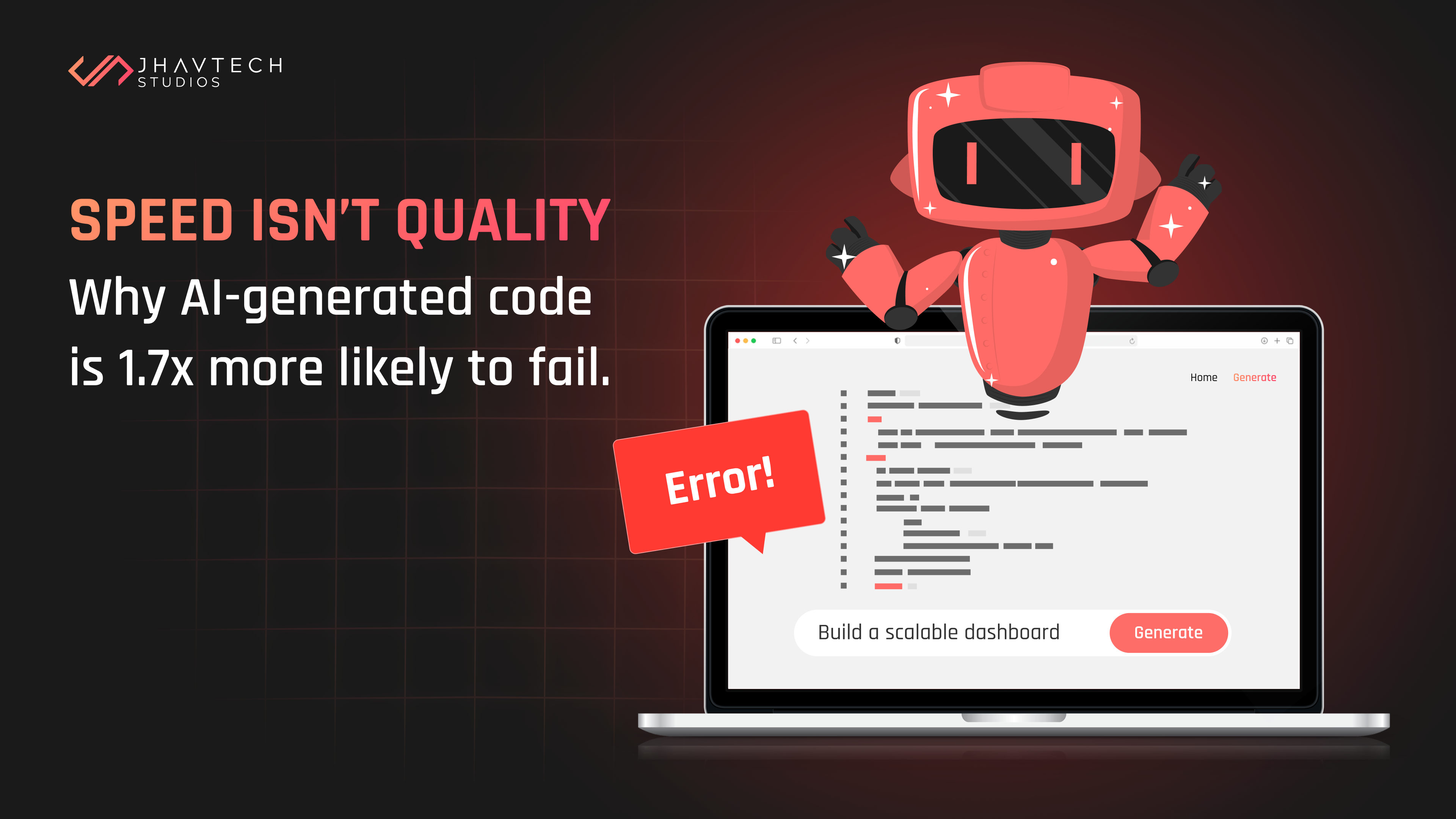 The year 2026 has brought us to a fascinating crossroads in software engineering. If you take a stroll through the latest tech forums or scroll through Steemit’s dev community, you will notice a recurring theme: everyone is using AI to build, but fewer people are certain about what they are actually shipping. We have entered the era of high-speed generation, where the friction between an idea and a functioning prototype has practically vanished. However, as we lean more heavily into automated assistants, we are discovering a silent truth that every seasoned developer knows in their gut: AI can write code, but it is physically and logically incapable of "feeling" when that code is bad. ## The Illusion of Perfection: AI vs. Human Code Quality At first glance, AI-generated snippets look immaculate. They are perfectly indented, use modern syntax, and often come with helpful comments. But if you look deeper, the cracks begin to show. A recent 2026 study highlighted a staggering reality in the [AI vs. human code quality](https://www.coderabbit.ai/blog/state-of-ai-vs-human-code-generation-report) debate: while AI can increase pull request volume by over 20%, the number of incidents per pull request has actually spiked by nearly 24%. The problem is not that the AI is "stupid." It is that AI lacks the sensory perception of a developer who has lived through a 3 AM production crash. When we talk about human-authored vs. synthetic code, we are really talking about the difference between statistical probability and architectural intent. AI predicts the next token; humans predict the next three years of maintenance. Because AI does not have to maintain the systems it builds, it doesn’t "feel" the weight of a 500-line function or the looming shadow of a poorly implemented dependency. ### The Rise of Vibe Coding This shift in how we build has birthed a new phenomenon known as [vibe coding](https://www.jhavtech.com.au/vibe-coding-with-ai/). Coined back in early 2025 and matured today, vibe coding is the practice of describing a desired outcome in plain English and letting the AI handle the implementation details without the developer ever fully peering under the hood. It’s "vibing" with the output rather than verifying the logic. While this is incredible for rapid prototyping, it creates a dangerous disconnect. When you are vibe coding, you are prioritizing the "what" over the "how." For a simple landing page, that is fine. But for complex [app development](https://www.jhavtech.com.au/mobile-application-development-service/), relying purely on vibes is like building a skyscraper on a foundation of sand just because the lobby looks pretty. ## Facing the Reality of AI Coding Limitations If you have ever tried to use an LLM to refactor a massive legacy codebase, you have run right into AI coding limitations. AI struggles with "local context." It might suggest a brilliant fix for a single file while inadvertently breaking three other modules it didn't "see" in its context window. The limitations aren't just about logic errors; they are about empathy for the future self. AI doesn't care if a variable name is slightly ambiguous or if a module violates the "[Single Responsibility Principle](https://blog.cleancoder.com/uncle-bob/2014/05/08/SingleReponsibilityPrinciple.html)." It is just trying to satisfy your prompt. This lack of "taste" is precisely why the AI vs. Human code quality gap remains wide. Humans possess a biological alarm system, a literal "feeling" of unease, when they see a "God Object" or a deeply nested loop that they know will be a nightmare to debug later. ## Technical Debt in AI-Assisted Programming We are currently seeing a global explosion of technical debt in AI-assisted programming. Because AI makes it so easy to generate code, developers are tempted to "copy-paste" their way to a finished product. Recent reports from 2025 and 2026 indicate that code duplication has increased nearly eightfold since the widespread adoption of AI agents. This isn't just "messy" code; it’s a financial liability. Gartner estimates that nearly 40% of IT budgets are now swallowed by the cost of dealing with technical debt. When AI generates code, it often follows "textbook" patterns that aren't tailored to your specific infrastructure. It solves the immediate problem but leaves behind a trail of "fragile" code that is too rigid to change and too bloated to run efficiently. The comparison of AI vs. human code quality often fails here because the debt is hidden until the system needs to scale. ## Why AI Generated Code Needs Human Oversight The industry is slowly waking up to the fact that acceleration without steering is just a faster way to crash. This is why AI generated code needs human oversight. We need humans not just to check for syntax errors, but to provide the "architectural soul" that machines lack. A human reviewer asks: "Does this align with our long-term goals?" "Is this secure?" "Will a junior dev be able to understand this in six months?" AI doesn't ask those questions because it doesn't exist in time. It exists in a static snapshot of training data. When it comes to code quality, the human’s role has shifted from being a "writer" to being a "curator" and a "guardian." ### The Importance of a Rigorous Code Review This brings us to the most critical stage of the modern workflow: the code review. In 2026, a [code review](https://www.jhavtech.com.au/free-code-review/) is no longer just about catching typos; it’s a deep audit of architectural integrity. Experts in the field, such as the team at Jhavtech Studios, have seen this firsthand. In a recent analysis of over 200 applications, Jhavtech identified that "code smells" appear more frequently in projects that rely too heavily on automated generation without professional intervention. Their findings suggest that while AI can deliver speed, only a disciplined human-led review can ensure a project doesn't become a "software rescue" case later on. For businesses, this means the difference between a successful launch and a project that stalls because it’s too "brittle" to scale. The AI vs. human code quality gap is most visible when these reviews are skipped. 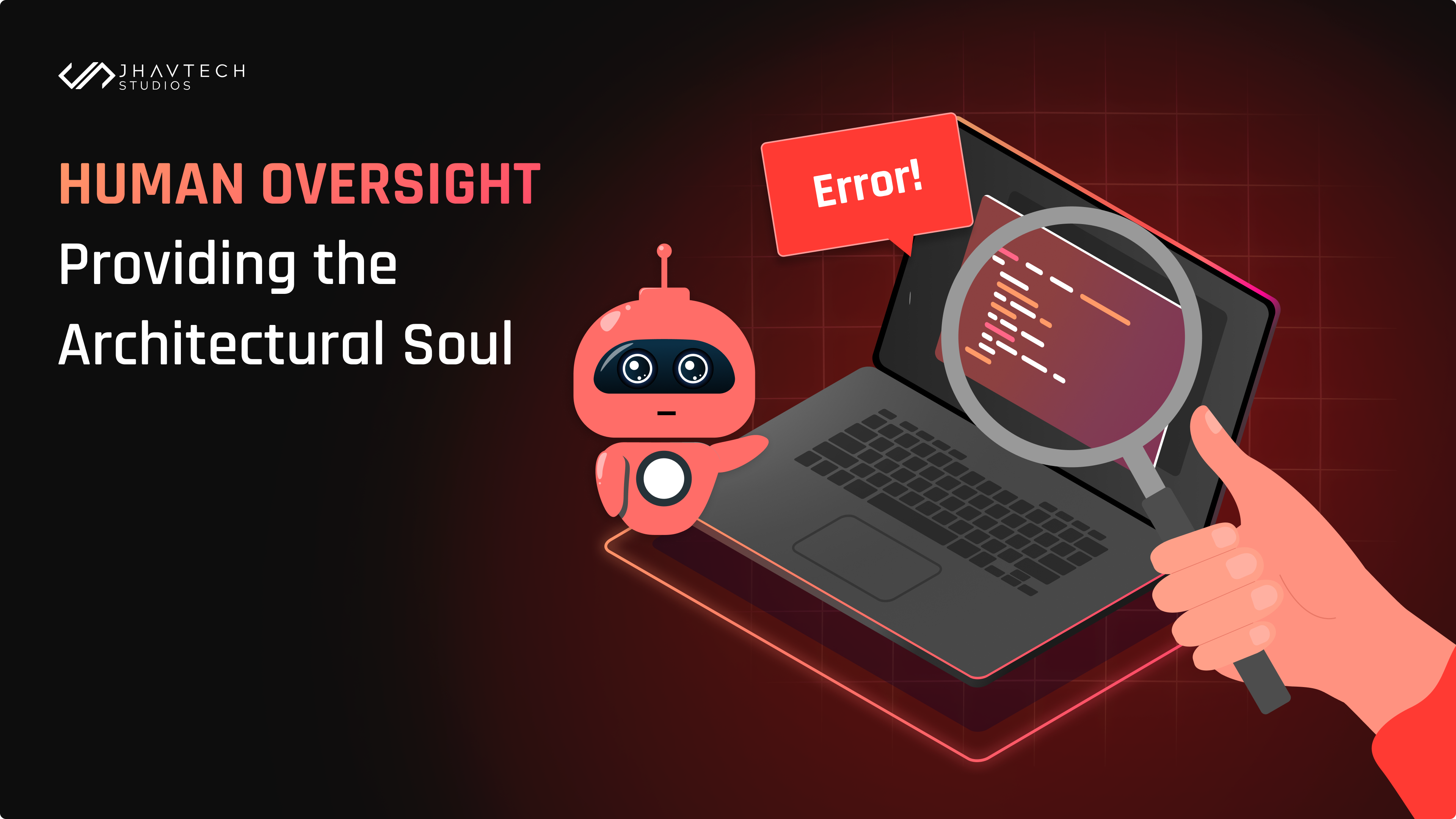 ## Software Architecture in the Age of AI As we look toward the future, the definition of a "great developer" is changing. It is no longer about who can memorize the most APIs or write the fastest C++ loops. It’s about software architecture in the age of AI. The developers who will thrive are those who can leverage AI as a high-powered engine while remaining the master architects of the system. They understand that AI vs. human code quality is a collaborative metric. You use the AI to handle the boilerplate and the repetitive "scaffolding," but you reserve the high-level decision-making for yourself. You ensure that the balance stays in favor of the human by setting the constraints, defining the boundaries, and refusing to accept "almost right" as "good enough." ### The Reality of Modern App Development In the realm of professional app development, the stakes are simply too high to leave the "vibes" in charge. Whether you are building a healthcare platform or a new DeFi protocol on Steemit, the code must be more than functional; it must be resilient. The data is clear: 45% of the world's code is now deemed "fragile." This fragility often stems from a lack of "human touch" in the initial build phases. As we've seen in the AI vs. human code quality metrics, AI-authored changes often result in 1.7x more issues than human-only contributions. This doesn't mean we should stop using AI; it means we should stop trusting it blindly. ## AI Coding Tools vs Developer Intuition [H2] This brings us to the heart of the matter: AI coding tools vs developer intuition. Intuition is not a mystical power; it is the subconscious synthesis of thousands of hours of failure and success. It is what tells a developer that while a piece of code works today, it is "smelly" and will break tomorrow. AI tools operate on patterns, but intuition operates on experience. When a developer looks at a piece of logic and feels a slight tension in their chest, that is "the feeling." AI tools can suggest five different ways to write a loop, but they cannot tell you which one feels "cleanest" in the context of your specific team's culture or your project's future. ## Finding the Balance for the Future So, where does that leave us? Are we doomed to a future of bloated, AI-generated "spaghetti" code? Not if we change our approach. We need to treat AI like a highly talented but incredibly literal intern. It can do the work, but it cannot be held responsible for the outcome. The goal is to reach a state where AI vs. human code quality isn't a competition, but a synergy. We use AI to eliminate the "drudgery" of coding so we have more mental space to focus on the "feeling" of the architecture. We need to stay "invested" in our codebases, much like the philosophy at Jhavtech Studios, where the focus is on sustainable performance rather than just "getting it done." ## Final Thoughts: The Heart in the Machine At the end of the day, code is a human language designed to solve human problems. AI can simulate the language, but it cannot truly understand the problem. It cannot "feel" the frustration of a user dealing with a slow interface, nor can it "feel" the pride of a perfectly elegant solution. As we continue to navigate the AI vs. human code quality landscape in 2026, let’s remember that the "vibe" that matters most isn't the one in the prompt—it's the one in the craftsmanship. Use the tools, embrace the speed, but never stop "feeling" your code. |
| json metadata | {"tags":["programming","ai","technology","softwaredevelopment","steemstem"],"links":["https://cdn.steemitimages.com/DQmW1Js5qa2DQAuR5t4a6N7uRnaMbBupvjHBbjzjm9iie6y/Steemit","https://www.coderabbit.ai/blog/state-of-ai-vs-human-code-generation-report","https://www.jhavtech.com.au/vibe-coding-with-ai/","https://www.jhavtech.com.au/mobile-application-development-service/","https://blog.cleancoder.com/uncle-bob/2014/05/08/SingleReponsibilityPrinciple.html","https://www.jhavtech.com.au/free-code-review/","https://cdn.steemitimages.com/DQmbzeM1YfiF2Nu3gFDPa85u3KuiKpRYgHkWcQRF5zaRQ57/Steemit"],"app":"steemit/0.2","format":"markdown"} |
| parent author | |
| parent permlink | programming |
| permlink | ai-can-write-code-but-it-can-t-feel-bad-code |
| title | AI Can Write Code — But It Can’t Feel Bad Code |
| Transaction Info | Block #103595971/Trx 447677ee191a3cd41e42add7ef3982668ff79f2b |
View Raw JSON Data
{
"block": 103595971,
"op": [
"comment",
{
"author": "jhavtech",
"body": "\n\nThe year 2026 has brought us to a fascinating crossroads in software engineering. If you take a stroll through the latest tech forums or scroll through Steemit’s dev community, you will notice a recurring theme: everyone is using AI to build, but fewer people are certain about what they are actually shipping. We have entered the era of high-speed generation, where the friction between an idea and a functioning prototype has practically vanished. However, as we lean more heavily into automated assistants, we are discovering a silent truth that every seasoned developer knows in their gut: AI can write code, but it is physically and logically incapable of \"feeling\" when that code is bad. \n\n## The Illusion of Perfection: AI vs. Human Code Quality\n\nAt first glance, AI-generated snippets look immaculate. They are perfectly indented, use modern syntax, and often come with helpful comments. But if you look deeper, the cracks begin to show. A recent 2026 study highlighted a staggering reality in the [AI vs. human code quality](https://www.coderabbit.ai/blog/state-of-ai-vs-human-code-generation-report) debate: while AI can increase pull request volume by over 20%, the number of incidents per pull request has actually spiked by nearly 24%. \n\nThe problem is not that the AI is \"stupid.\" It is that AI lacks the sensory perception of a developer who has lived through a 3 AM production crash. When we talk about human-authored vs. synthetic code, we are really talking about the difference between statistical probability and architectural intent. AI predicts the next token; humans predict the next three years of maintenance. Because AI does not have to maintain the systems it builds, it doesn’t \"feel\" the weight of a 500-line function or the looming shadow of a poorly implemented dependency. \n\n### The Rise of Vibe Coding\n\nThis shift in how we build has birthed a new phenomenon known as [vibe coding](https://www.jhavtech.com.au/vibe-coding-with-ai/). Coined back in early 2025 and matured today, vibe coding is the practice of describing a desired outcome in plain English and letting the AI handle the implementation details without the developer ever fully peering under the hood. It’s \"vibing\" with the output rather than verifying the logic. \n\nWhile this is incredible for rapid prototyping, it creates a dangerous disconnect. When you are vibe coding, you are prioritizing the \"what\" over the \"how.\" For a simple landing page, that is fine. But for complex [app development](https://www.jhavtech.com.au/mobile-application-development-service/), relying purely on vibes is like building a skyscraper on a foundation of sand just because the lobby looks pretty. \n\n## Facing the Reality of AI Coding Limitations\n\nIf you have ever tried to use an LLM to refactor a massive legacy codebase, you have run right into AI coding limitations. AI struggles with \"local context.\" It might suggest a brilliant fix for a single file while inadvertently breaking three other modules it didn't \"see\" in its context window. \n\nThe limitations aren't just about logic errors; they are about empathy for the future self. AI doesn't care if a variable name is slightly ambiguous or if a module violates the \"[Single Responsibility Principle](https://blog.cleancoder.com/uncle-bob/2014/05/08/SingleReponsibilityPrinciple.html).\" It is just trying to satisfy your prompt. This lack of \"taste\" is precisely why the AI vs. Human code quality gap remains wide. Humans possess a biological alarm system, a literal \"feeling\" of unease, when they see a \"God Object\" or a deeply nested loop that they know will be a nightmare to debug later. \n\n## Technical Debt in AI-Assisted Programming\n\nWe are currently seeing a global explosion of technical debt in AI-assisted programming. Because AI makes it so easy to generate code, developers are tempted to \"copy-paste\" their way to a finished product. Recent reports from 2025 and 2026 indicate that code duplication has increased nearly eightfold since the widespread adoption of AI agents. \n\nThis isn't just \"messy\" code; it’s a financial liability. Gartner estimates that nearly 40% of IT budgets are now swallowed by the cost of dealing with technical debt. When AI generates code, it often follows \"textbook\" patterns that aren't tailored to your specific infrastructure. It solves the immediate problem but leaves behind a trail of \"fragile\" code that is too rigid to change and too bloated to run efficiently. The comparison of AI vs. human code quality often fails here because the debt is hidden until the system needs to scale. \n\n## Why AI Generated Code Needs Human Oversight\n\nThe industry is slowly waking up to the fact that acceleration without steering is just a faster way to crash. This is why AI generated code needs human oversight. We need humans not just to check for syntax errors, but to provide the \"architectural soul\" that machines lack. \n\nA human reviewer asks: \"Does this align with our long-term goals?\" \"Is this secure?\" \"Will a junior dev be able to understand this in six months?\" AI doesn't ask those questions because it doesn't exist in time. It exists in a static snapshot of training data. When it comes to code quality, the human’s role has shifted from being a \"writer\" to being a \"curator\" and a \"guardian.\" \n\n### The Importance of a Rigorous Code Review \n\nThis brings us to the most critical stage of the modern workflow: the code review. In 2026, a [code review](https://www.jhavtech.com.au/free-code-review/) is no longer just about catching typos; it’s a deep audit of architectural integrity. \n\nExperts in the field, such as the team at Jhavtech Studios, have seen this firsthand. In a recent analysis of over 200 applications, Jhavtech identified that \"code smells\" appear more frequently in projects that rely too heavily on automated generation without professional intervention. Their findings suggest that while AI can deliver speed, only a disciplined human-led review can ensure a project doesn't become a \"software rescue\" case later on. For businesses, this means the difference between a successful launch and a project that stalls because it’s too \"brittle\" to scale. The AI vs. human code quality gap is most visible when these reviews are skipped. \n \n\n\n## Software Architecture in the Age of AI\n\nAs we look toward the future, the definition of a \"great developer\" is changing. It is no longer about who can memorize the most APIs or write the fastest C++ loops. It’s about software architecture in the age of AI. The developers who will thrive are those who can leverage AI as a high-powered engine while remaining the master architects of the system. \n\nThey understand that AI vs. human code quality is a collaborative metric. You use the AI to handle the boilerplate and the repetitive \"scaffolding,\" but you reserve the high-level decision-making for yourself. You ensure that the balance stays in favor of the human by setting the constraints, defining the boundaries, and refusing to accept \"almost right\" as \"good enough.\" \n\n### The Reality of Modern App Development\n\nIn the realm of professional app development, the stakes are simply too high to leave the \"vibes\" in charge. Whether you are building a healthcare platform or a new DeFi protocol on Steemit, the code must be more than functional; it must be resilient. \n\nThe data is clear: 45% of the world's code is now deemed \"fragile.\" This fragility often stems from a lack of \"human touch\" in the initial build phases. As we've seen in the AI vs. human code quality metrics, AI-authored changes often result in 1.7x more issues than human-only contributions. This doesn't mean we should stop using AI; it means we should stop trusting it blindly. \n\n## AI Coding Tools vs Developer Intuition [H2] \n\nThis brings us to the heart of the matter: AI coding tools vs developer intuition. Intuition is not a mystical power; it is the subconscious synthesis of thousands of hours of failure and success. It is what tells a developer that while a piece of code works today, it is \"smelly\" and will break tomorrow. \n\nAI tools operate on patterns, but intuition operates on experience. When a developer looks at a piece of logic and feels a slight tension in their chest, that is \"the feeling.\" AI tools can suggest five different ways to write a loop, but they cannot tell you which one feels \"cleanest\" in the context of your specific team's culture or your project's future. \n\n## Finding the Balance for the Future \n\nSo, where does that leave us? Are we doomed to a future of bloated, AI-generated \"spaghetti\" code? Not if we change our approach. We need to treat AI like a highly talented but incredibly literal intern. It can do the work, but it cannot be held responsible for the outcome. \n\nThe goal is to reach a state where AI vs. human code quality isn't a competition, but a synergy. We use AI to eliminate the \"drudgery\" of coding so we have more mental space to focus on the \"feeling\" of the architecture. We need to stay \"invested\" in our codebases, much like the philosophy at Jhavtech Studios, where the focus is on sustainable performance rather than just \"getting it done.\" \n\n## Final Thoughts: The Heart in the Machine\n\nAt the end of the day, code is a human language designed to solve human problems. AI can simulate the language, but it cannot truly understand the problem. It cannot \"feel\" the frustration of a user dealing with a slow interface, nor can it \"feel\" the pride of a perfectly elegant solution. \n\nAs we continue to navigate the AI vs. human code quality landscape in 2026, let’s remember that the \"vibe\" that matters most isn't the one in the prompt—it's the one in the craftsmanship. Use the tools, embrace the speed, but never stop \"feeling\" your code.",
"json_metadata": "{\"tags\":[\"programming\",\"ai\",\"technology\",\"softwaredevelopment\",\"steemstem\"],\"links\":[\"https://cdn.steemitimages.com/DQmW1Js5qa2DQAuR5t4a6N7uRnaMbBupvjHBbjzjm9iie6y/Steemit\",\"https://www.coderabbit.ai/blog/state-of-ai-vs-human-code-generation-report\",\"https://www.jhavtech.com.au/vibe-coding-with-ai/\",\"https://www.jhavtech.com.au/mobile-application-development-service/\",\"https://blog.cleancoder.com/uncle-bob/2014/05/08/SingleReponsibilityPrinciple.html\",\"https://www.jhavtech.com.au/free-code-review/\",\"https://cdn.steemitimages.com/DQmbzeM1YfiF2Nu3gFDPa85u3KuiKpRYgHkWcQRF5zaRQ57/Steemit\"],\"app\":\"steemit/0.2\",\"format\":\"markdown\"}",
"parent_author": "",
"parent_permlink": "programming",
"permlink": "ai-can-write-code-but-it-can-t-feel-bad-code",
"title": "AI Can Write Code — But It Can’t Feel Bad Code"
}
],
"op_in_trx": 0,
"timestamp": "2026-02-18T05:12:06",
"trx_id": "447677ee191a3cd41e42add7ef3982668ff79f2b",
"trx_in_block": 2,
"virtual_op": 0
}jhavtechpublished a new post: your-app-doesn-t-need-more-features-it-needs-better-maintenance2026/02/05 04:22:48
jhavtechpublished a new post: your-app-doesn-t-need-more-features-it-needs-better-maintenance
2026/02/05 04:22:48
| author | jhavtech |
| body | 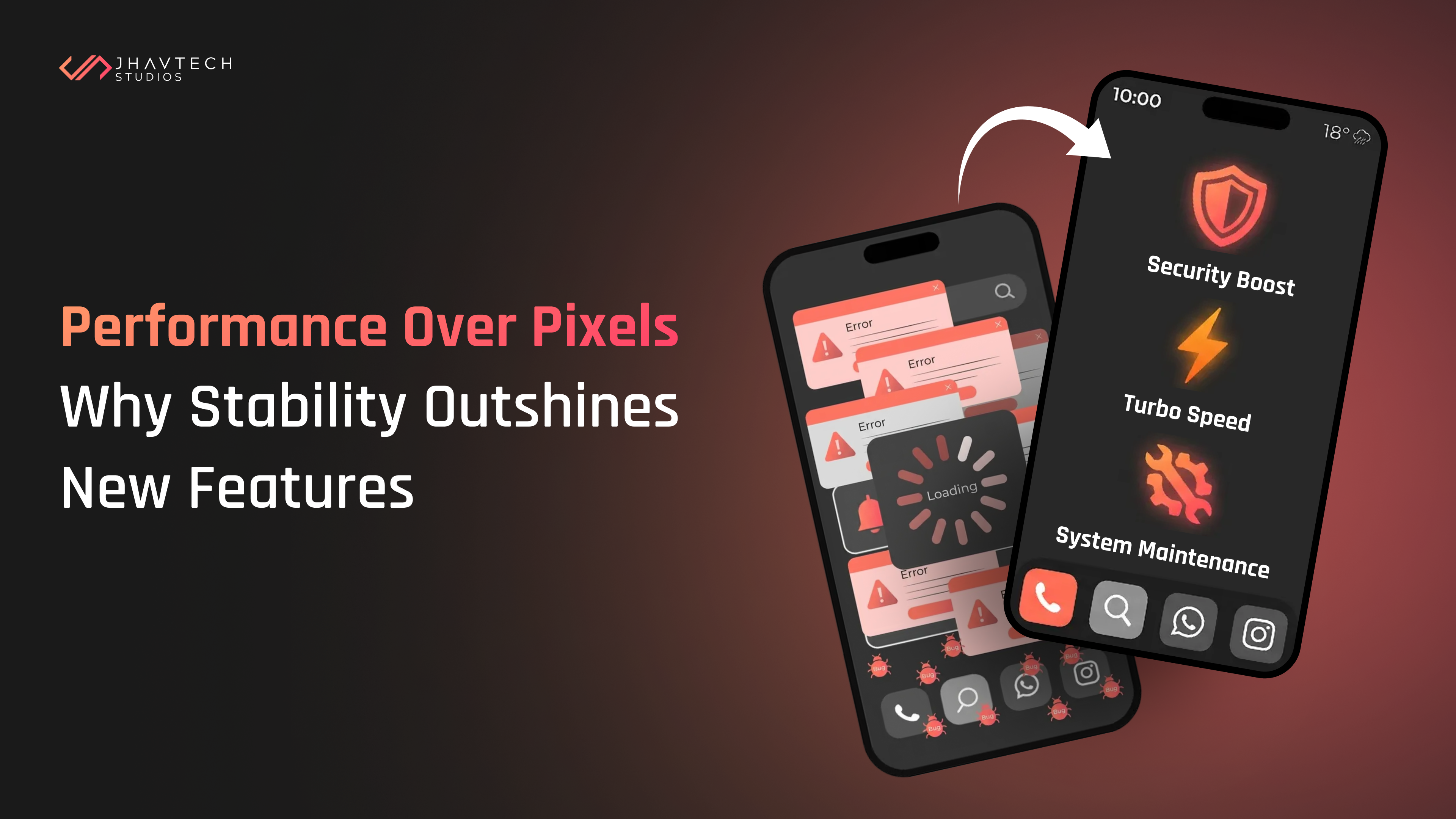 We have all been there. You are sitting in a strategy meeting, looking at your user retention numbers, and someone suggests the inevitable: "We just need to add that one new AI-driven feature, and users will flock back." It is the classic "more is more" trap. In the race to dominate the App Store or Play Store, businesses often treat software like a Christmas tree, constantly hanging new ornaments on branches that are already starting to sag. But here is the hard truth that many developers and agencies won't tell you: your app is likely suffocating under the weight of its own "cool" features. While you are busy building a shiny new interface, the foundation is cracking. Users do not leave apps because they are missing a feature; they leave because the app crashed, took six seconds to load, or felt "clunky." If you want to win in today's digital economy, you need to shift your mindset. Your app doesn't need more features. It needs a commitment to the boring, unsexy, and absolutely vital world of [app support and maintenance](https://www.jhavtech.com.au/software-support-maintenance-service/). ## The Feature Fallacy and the Death of Performance <br><br> There is a psychological phenomenon in software development where we equate "new" with "valuable." However, a study by Standish Group found that nearly 64 percent of software features are rarely or never used. Think about that for a moment. More than half of the code you are paying to develop is likely just digital clutter. Every time you add a feature without a solid plan for app support and maintenance, you are accumulating technical debt. This debt acts like high-interest credit card spending. Eventually, the interest (bugs and slow performance) becomes so high that you can no longer afford to pay down the principal (new innovation). In 2024 and 2025, we saw a massive shift in user expectations. According to [recent performance benchmarks](https://www.thinkwithgoogle.com/marketing-strategies/app-and-mobile/mobile-page-speed-data/), a one-second delay in mobile load times can impact conversion rates by up to 20 percent. This is why mobile app performance optimization is no longer a luxury; it is a baseline requirement. If your app is bloated with unused features that slow down the core functionality, you aren't building a product; you are building a liability. ## Why Maintenance is the Ultimate Competitive Advantage <br><br> When you prioritize app support and maintenance, you aren't just "fixing things." You are protecting your investment. At Jhavtech Studios, we often see clients who have spent hundreds of thousands on initial development, only to watch their user ratings plummet because they ignored the post-launch phase. Maintenance is actually a form of proactive growth. It allows you to refine the user journey and ensure that the features people actually use are working flawlessly. By focusing on stability, you create a sense of trust with your audience. ### The Hidden Danger of Security Neglect <br><br> One of the most critical aspects of keeping an app alive is staying ahead of threats. Cyber attacks on mobile applications increased significantly over the last year, with many targeting outdated libraries and unpatched vulnerabilities. This is where application security updates come into play. A regular maintenance schedule ensures that your security protocols are updated to match current threats, protecting both your business reputation and your users' sensitive data. ## Understanding the Real Cost of App Maintenance vs New Feature Development <br><br> Many founders balk at the price of a monthly support retainer. They see it as an "extra" expense. However, when you look at the cost of app maintenance vs new feature development, the math tells a different story. Developing a new feature from scratch involves design, coding, testing, and deployment. If that feature is built on a shaky foundation, it will likely require three times the amount of work to stabilize later. On the other hand, investing in app support and maintenance prevents these "emergency" costs. It is much cheaper to change the oil in a car every few months than it is to replace the entire engine because it seized up on the highway. 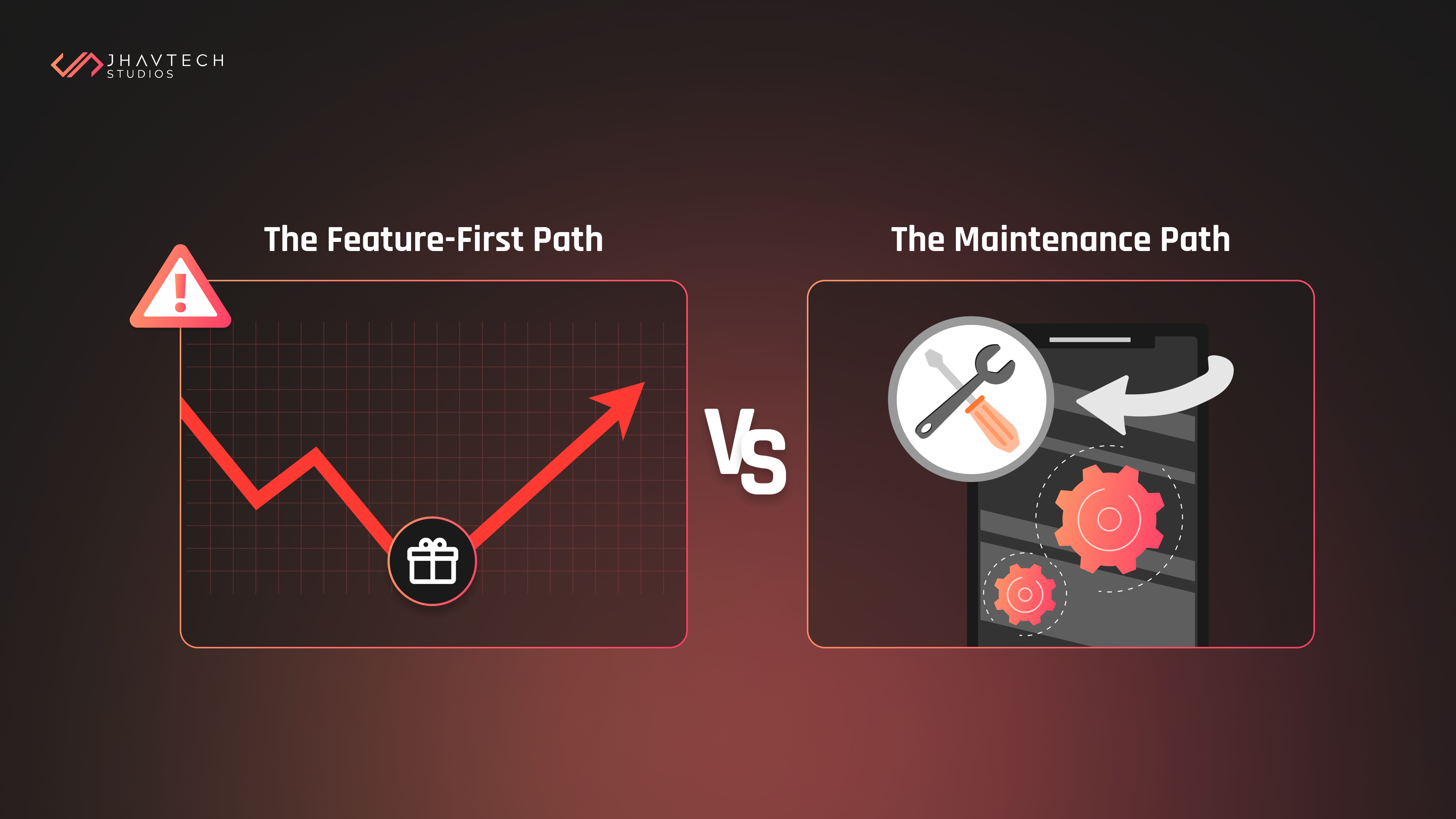 ## When the Foundation Crumbles: Software Project Rescue <br><br> Sometimes, the neglect has gone on for too long. We have encountered companies that ignored maintenance for years, resulting in a codebase that is essentially a house of cards. When an app reaches the point where every new update breaks three other things, you are entering the territory of a [software project rescue](https://www.jhavtech.com.au/software-project-rescue-service/). This process involves stepping in to stabilize a failing system, untangling messy code, and restoring functionality. It is a stressful and expensive place to be. You can avoid this entirely by ensuring that app support and maintenance are part of your monthly roadmap from day one. It is about being a good steward of your technology. ## The Role of a Professional Code Review <br><br> If you are unsure where your app stands, the best place to start is with a [comprehensive code review](https://www.jhavtech.com.au/free-code-review/). This is not about pointing fingers at previous developers; it is about an objective analysis of your software's health. A professional review identifies bottlenecks, security gaps, and areas where the code is inefficient. By identifying these issues early, your team can integrate fixes into their regular app support and maintenance routine. This proactive approach ensures that your app remains scalable. As your user base grows, your infrastructure needs to grow with it, and you cannot scale chaos. ## Legacy App Modernization Services for Startups <br><br> For many startups, the "Move Fast and Break Things" mantra of the early 2010s has left behind a trail of broken code. As these companies mature, they realize their MVP (Minimum Viable Product) was never meant to handle 50,000 concurrent users. This is where legacy app modernization services for startups become essential. Modernization isn't about throwing the whole app away; it is about updating the underlying architecture to modern standards while keeping the business logic intact. This falls under the broader umbrella of app support and maintenance, as it ensures the software remains compatible with new operating systems and hardware. ## Data-Driven Proof: Maintenance Lowers Long-Term Costs <br><br> A [study by the IDC](https://my.idc.com/getdoc.jsp?containerId=US53204725) suggests that for every dollar spent on software development, businesses often spend up to three dollars on maintaining that software over its lifecycle. If you try to bypass this, you aren't saving money; you are just delaying an inevitable bill. Furthermore, Google and Apple have become increasingly aggressive about removing "abandoned" apps from their stores. If your app hasn't been updated to support the latest iOS or Android version, you risk being delisted entirely. Consistent app support and maintenance ensure that you remain compliant with store policies, keeping your digital storefront open for business. ## Final Thoughts... Quality Over Quantity <br><br> In the world of software, vanity metrics like the number of features often overshadow the metrics that actually matter: uptime, speed, and user satisfaction. Your app is a tool designed to solve a problem for your users. If the tool is broken or difficult to use, it doesn't matter how many bells and whistles you add to it. Stop chasing the next big feature and start investing in the health of what you have already built. Prioritizing app support and maintenance is the smartest financial and strategic move you can make for your digital product. It is the difference between an app that fades into obscurity and one that remains a staple on a user’s home screen for years to come. Remember, a simple app that works perfectly is always more valuable than a complex app that barely works at all. Take care of your code, and your code will take care of your business. |
| json metadata | {"tags":["technology","appdevelopment","business","software"],"image":["https://cdn.steemitimages.com/DQmRcMFkcDoFprhcoq5NiSr2yHCjeCpPpiVeyQqqRiiVJ8w/Steemit%20article%20-%20Banner.png","https://cdn.steemitimages.com/DQmZ1aUdCqCQuR1MBdRRT3U2HefEuVxoxcrsSW6JyFJ9dpw/Steemit%20article%20-%20Banner-1.png"],"links":["https://www.jhavtech.com.au/software-support-maintenance-service/","https://www.thinkwithgoogle.com/marketing-strategies/app-and-mobile/mobile-page-speed-data/","https://www.jhavtech.com.au/software-project-rescue-service/","https://www.jhavtech.com.au/free-code-review/","https://my.idc.com/getdoc.jsp?containerId=US53204725"],"app":"steemit/0.2","format":"markdown"} |
| parent author | |
| parent permlink | technology |
| permlink | your-app-doesn-t-need-more-features-it-needs-better-maintenance |
| title | Your App Doesn’t Need More Features — It Needs Better Maintenance |
| Transaction Info | Block #103221333/Trx 62e9dba3bdeb7cc6b0329e358a687069b786de76 |
View Raw JSON Data
{
"block": 103221333,
"op": [
"comment",
{
"author": "jhavtech",
"body": "\n\nWe have all been there. You are sitting in a strategy meeting, looking at your user retention numbers, and someone suggests the inevitable: \"We just need to add that one new AI-driven feature, and users will flock back.\" It is the classic \"more is more\" trap. In the race to dominate the App Store or Play Store, businesses often treat software like a Christmas tree, constantly hanging new ornaments on branches that are already starting to sag. \n\nBut here is the hard truth that many developers and agencies won't tell you: your app is likely suffocating under the weight of its own \"cool\" features. While you are busy building a shiny new interface, the foundation is cracking. Users do not leave apps because they are missing a feature; they leave because the app crashed, took six seconds to load, or felt \"clunky.\" \n\nIf you want to win in today's digital economy, you need to shift your mindset. Your app doesn't need more features. It needs a commitment to the boring, unsexy, and absolutely vital world of [app support and maintenance](https://www.jhavtech.com.au/software-support-maintenance-service/). \n\n## The Feature Fallacy and the Death of Performance <br><br>\n\nThere is a psychological phenomenon in software development where we equate \"new\" with \"valuable.\" However, a study by Standish Group found that nearly 64 percent of software features are rarely or never used. Think about that for a moment. More than half of the code you are paying to develop is likely just digital clutter. \n\nEvery time you add a feature without a solid plan for app support and maintenance, you are accumulating technical debt. This debt acts like high-interest credit card spending. Eventually, the interest (bugs and slow performance) becomes so high that you can no longer afford to pay down the principal (new innovation). \n\nIn 2024 and 2025, we saw a massive shift in user expectations. According to [recent performance benchmarks](https://www.thinkwithgoogle.com/marketing-strategies/app-and-mobile/mobile-page-speed-data/), a one-second delay in mobile load times can impact conversion rates by up to 20 percent. This is why mobile app performance optimization is no longer a luxury; it is a baseline requirement. If your app is bloated with unused features that slow down the core functionality, you aren't building a product; you are building a liability. \n\n## Why Maintenance is the Ultimate Competitive Advantage <br><br>\n\nWhen you prioritize app support and maintenance, you aren't just \"fixing things.\" You are protecting your investment. At Jhavtech Studios, we often see clients who have spent hundreds of thousands on initial development, only to watch their user ratings plummet because they ignored the post-launch phase. \n\nMaintenance is actually a form of proactive growth. It allows you to refine the user journey and ensure that the features people actually use are working flawlessly. By focusing on stability, you create a sense of trust with your audience. \n\n### The Hidden Danger of Security Neglect <br><br>\n\nOne of the most critical aspects of keeping an app alive is staying ahead of threats. Cyber attacks on mobile applications increased significantly over the last year, with many targeting outdated libraries and unpatched vulnerabilities. This is where application security updates come into play. A regular maintenance schedule ensures that your security protocols are updated to match current threats, protecting both your business reputation and your users' sensitive data. \n\n## Understanding the Real Cost of App Maintenance vs New Feature Development <br><br>\n\nMany founders balk at the price of a monthly support retainer. They see it as an \"extra\" expense. However, when you look at the cost of app maintenance vs new feature development, the math tells a different story. \n\nDeveloping a new feature from scratch involves design, coding, testing, and deployment. If that feature is built on a shaky foundation, it will likely require three times the amount of work to stabilize later. On the other hand, investing in app support and maintenance prevents these \"emergency\" costs. It is much cheaper to change the oil in a car every few months than it is to replace the entire engine because it seized up on the highway. \n\n\n\n## When the Foundation Crumbles: Software Project Rescue <br><br>\n\nSometimes, the neglect has gone on for too long. We have encountered companies that ignored maintenance for years, resulting in a codebase that is essentially a house of cards. When an app reaches the point where every new update breaks three other things, you are entering the territory of a [software project rescue](https://www.jhavtech.com.au/software-project-rescue-service/). \n\nThis process involves stepping in to stabilize a failing system, untangling messy code, and restoring functionality. It is a stressful and expensive place to be. You can avoid this entirely by ensuring that app support and maintenance are part of your monthly roadmap from day one. It is about being a good steward of your technology. \n \n## The Role of a Professional Code Review <br><br>\n\nIf you are unsure where your app stands, the best place to start is with a [comprehensive code review](https://www.jhavtech.com.au/free-code-review/). This is not about pointing fingers at previous developers; it is about an objective analysis of your software's health. A professional review identifies bottlenecks, security gaps, and areas where the code is inefficient. \n\nBy identifying these issues early, your team can integrate fixes into their regular app support and maintenance routine. This proactive approach ensures that your app remains scalable. As your user base grows, your infrastructure needs to grow with it, and you cannot scale chaos. \n\n## Legacy App Modernization Services for Startups <br><br>\n\nFor many startups, the \"Move Fast and Break Things\" mantra of the early 2010s has left behind a trail of broken code. As these companies mature, they realize their MVP (Minimum Viable Product) was never meant to handle 50,000 concurrent users. \n\nThis is where legacy app modernization services for startups become essential. Modernization isn't about throwing the whole app away; it is about updating the underlying architecture to modern standards while keeping the business logic intact. This falls under the broader umbrella of app support and maintenance, as it ensures the software remains compatible with new operating systems and hardware. \n\n## Data-Driven Proof: Maintenance Lowers Long-Term Costs <br><br>\n\nA [study by the IDC](https://my.idc.com/getdoc.jsp?containerId=US53204725) suggests that for every dollar spent on software development, businesses often spend up to three dollars on maintaining that software over its lifecycle. If you try to bypass this, you aren't saving money; you are just delaying an inevitable bill. \n\nFurthermore, Google and Apple have become increasingly aggressive about removing \"abandoned\" apps from their stores. If your app hasn't been updated to support the latest iOS or Android version, you risk being delisted entirely. Consistent app support and maintenance ensure that you remain compliant with store policies, keeping your digital storefront open for business. \n\n## Final Thoughts... Quality Over Quantity <br><br>\n\nIn the world of software, vanity metrics like the number of features often overshadow the metrics that actually matter: uptime, speed, and user satisfaction. Your app is a tool designed to solve a problem for your users. If the tool is broken or difficult to use, it doesn't matter how many bells and whistles you add to it. \n\nStop chasing the next big feature and start investing in the health of what you have already built. Prioritizing app support and maintenance is the smartest financial and strategic move you can make for your digital product. It is the difference between an app that fades into obscurity and one that remains a staple on a user’s home screen for years to come. \n\nRemember, a simple app that works perfectly is always more valuable than a complex app that barely works at all. Take care of your code, and your code will take care of your business.",
"json_metadata": "{\"tags\":[\"technology\",\"appdevelopment\",\"business\",\"software\"],\"image\":[\"https://cdn.steemitimages.com/DQmRcMFkcDoFprhcoq5NiSr2yHCjeCpPpiVeyQqqRiiVJ8w/Steemit%20article%20-%20Banner.png\",\"https://cdn.steemitimages.com/DQmZ1aUdCqCQuR1MBdRRT3U2HefEuVxoxcrsSW6JyFJ9dpw/Steemit%20article%20-%20Banner-1.png\"],\"links\":[\"https://www.jhavtech.com.au/software-support-maintenance-service/\",\"https://www.thinkwithgoogle.com/marketing-strategies/app-and-mobile/mobile-page-speed-data/\",\"https://www.jhavtech.com.au/software-project-rescue-service/\",\"https://www.jhavtech.com.au/free-code-review/\",\"https://my.idc.com/getdoc.jsp?containerId=US53204725\"],\"app\":\"steemit/0.2\",\"format\":\"markdown\"}",
"parent_author": "",
"parent_permlink": "technology",
"permlink": "your-app-doesn-t-need-more-features-it-needs-better-maintenance",
"title": "Your App Doesn’t Need More Features — It Needs Better Maintenance"
}
],
"op_in_trx": 0,
"timestamp": "2026-02-05T04:22:48",
"trx_id": "62e9dba3bdeb7cc6b0329e358a687069b786de76",
"trx_in_block": 0,
"virtual_op": 0
}2026/01/31 03:43:09
2026/01/31 03:43:09
| author | hmendes00 |
| body | Very insightful analysis on the AI landscape. The shift towards open-source intelligence is indeed a major frontier. It's interesting to see how different regions are approaching the challenges of scaling LLMs. Thanks for sharing this perspective! |
| json metadata | {"tags":["programming"],"app":"steemit-automation/1.0"} |
| parent author | jhavtech |
| parent permlink | your-code-looks-fine-until-a-senior-engineer-looks-at-it |
| permlink | re-jhavtech-your-code-looks-fine-until-a-senior-engineer-looks-at-it-1769830988915 |
| title | |
| Transaction Info | Block #103076834/Trx 6bd18f176216a6552fff0ece7ab607e7bbb41ed9 |
View Raw JSON Data
{
  "block": 103076834,
  "op": [
    "comment",
    {
      "author": "hmendes00",
      "body": "Very insightful analysis on the AI landscape. The shift towards open-source intelligence is indeed a major frontier. It's interesting to see how different regions are approaching the challenges of scaling LLMs. Thanks for sharing this perspective!",
      "json_metadata": "{\"tags\":[\"programming\"],\"app\":\"steemit-automation/1.0\"}",
      "parent_author": "jhavtech",
      "parent_permlink": "your-code-looks-fine-until-a-senior-engineer-looks-at-it",
      "permlink": "re-jhavtech-your-code-looks-fine-until-a-senior-engineer-looks-at-it-1769830988915",
      "title": ""
    }
  ],
  "op_in_trx": 0,
  "timestamp": "2026-01-31T03:43:09",
  "trx_id": "6bd18f176216a6552fff0ece7ab607e7bbb41ed9",
  "trx_in_block": 0,
  "virtual_op": 0
}hmendes00upvoted (100.00%) @jhavtech / your-code-looks-fine-until-a-senior-engineer-looks-at-it2026/01/31 03:42:45
hmendes00upvoted (100.00%) @jhavtech / your-code-looks-fine-until-a-senior-engineer-looks-at-it
2026/01/31 03:42:45
| author | jhavtech |
| permlink | your-code-looks-fine-until-a-senior-engineer-looks-at-it |
| voter | hmendes00 |
| weight | 10000 (100.00%) |
| Transaction Info | Block #103076826/Trx 2f2a659f94a83d9cde6b28bd355f03a3657b44db |
View Raw JSON Data
{
  "block": 103076826,
  "op": [
    "vote",
    {
      "author": "jhavtech",
      "permlink": "your-code-looks-fine-until-a-senior-engineer-looks-at-it",
      "voter": "hmendes00",
      "weight": 10000
    }
  ],
  "op_in_trx": 0,
  "timestamp": "2026-01-31T03:42:45",
  "trx_id": "2f2a659f94a83d9cde6b28bd355f03a3657b44db",
  "trx_in_block": 1,
  "virtual_op": 0
}jhavtechpublished a new post: your-code-looks-fine-until-a-senior-engineer-looks-at-it2026/01/26 03:23:42
jhavtechpublished a new post: your-code-looks-fine-until-a-senior-engineer-looks-at-it
2026/01/26 03:23:42
| author | jhavtech |
| body |  Ever stared at your meticulously crafted code, feeling that warm glow of accomplishment? You’ve tested it; it runs, and everything appears to be in order. "Ship it!" you think. But then, a seasoned senior engineer casts their eyes upon it, and suddenly, that warm glow turns into a mild panic as they effortlessly point out areas you never even considered. Sound familiar? This is the moment when the subtle art and critical necessity of a thorough code review become undeniable. It’s a scenario played out daily in development teams worldwide. Junior and even mid-level developers, often under tight deadlines, prioritize functionality. "Does it work?" becomes the primary question. While functionality is paramount, it’s only one piece of the puzzle. The true value of a professional evaluation isn't just about finding bugs; it’s about ensuring the health, scalability, and maintainability of your entire software ecosystem. ## The Hidden Cracks in the "Fine" Code Foundation Imagine building a beautiful house. The walls are up, the roof is on, and from the outside, it looks perfect. But what if the foundation has a hairline crack, or the plumbing is routed inefficiently, just waiting to burst? That’s what can happen with software. Hidden complexities, inefficient algorithms, or architectural missteps might not cause immediate errors, but they’re like tiny time bombs ticking away. One of the biggest culprits here is [technical debt](https://martinfowler.com/bliki/TechnicalDebt.html). It accumulates when quick-fix solutions are chosen over robust, well-engineered ones. Every rushed commit, every bypassed best practice, adds to this debt. And just like financial debt, it accrues interest, making future development slower, bug fixes harder, and system changes riskier. Recent 2026 industry insights suggest that developers now spend an average of 13.4 hours per week (nearly 33% of their time) solely addressing these legacy issues. That is a staggering amount of time and money wasted. A [professional code review](https://www.jhavtech.com.au/free-code-review/) remains your strongest defense against this silent killer of productivity. ## The Human Touch: Beyond Automated Checks In today's fast-paced development landscape, we have an array of fantastic automated tools. Linters, static analyzers, and AI assistants can spot syntax errors, potential security vulnerabilities, and adherence to style guides in a flash. They are indispensable. However, they lack the nuanced understanding of a human brain, especially one honed by years of real-world experience. ## Automated vs Manual Code Review This brings us to a crucial distinction: automated vs manual code review. While automated tools are excellent for catching low-hanging fruit, they can't assess architectural integrity, logical flow, or the long-term implications of a design choice. They can't ask, "Is this the most elegant solution?" or "How will this scale when we have 100,000 users instead of 1,000?" A senior engineer brings context, pattern recognition, and an understanding of the project's broader goals that no algorithm can replicate. They're looking for the why behind the logic, not just the what. ## Elevating Your Project with Professional Scrutiny 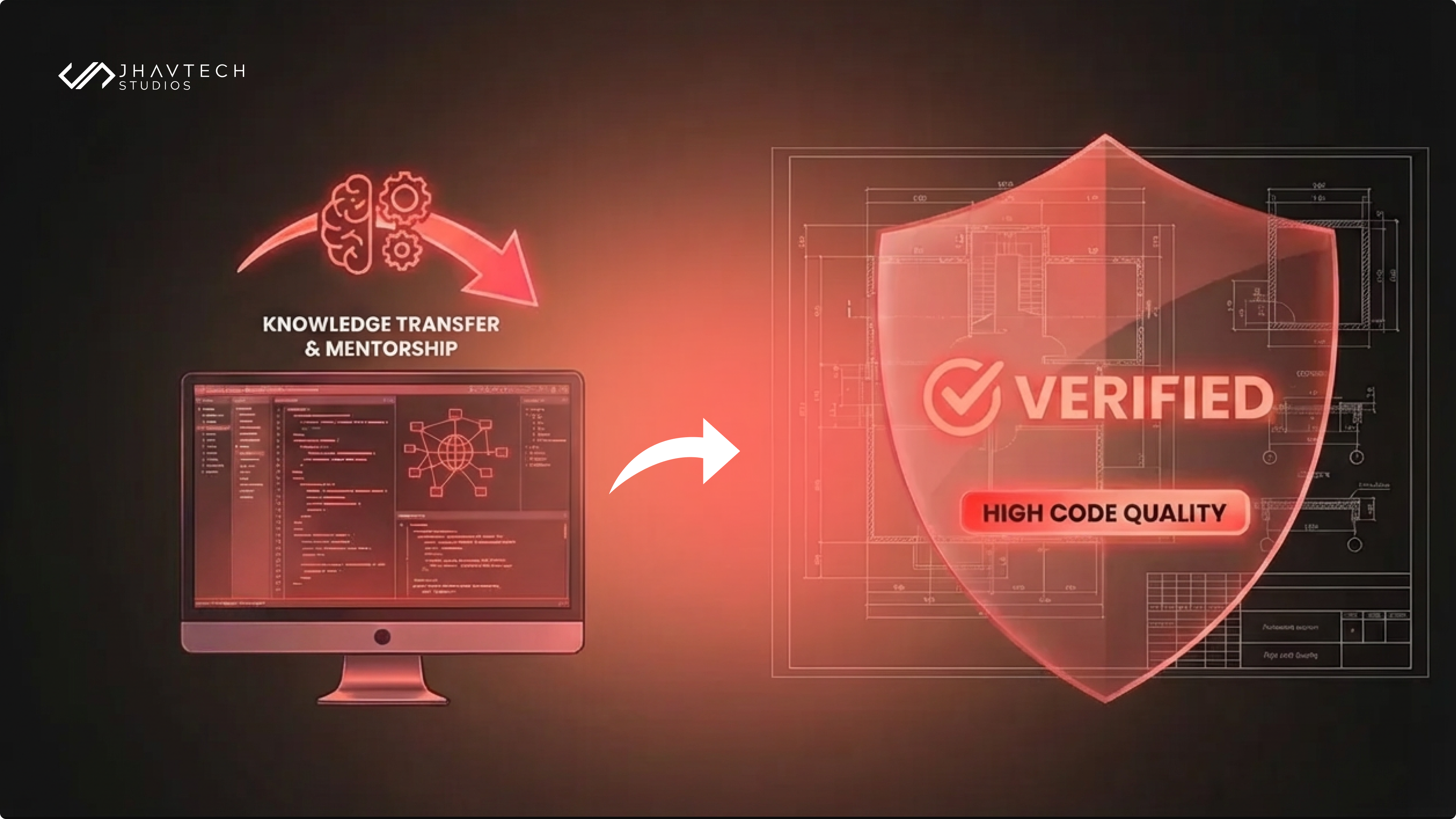 Think about it from a business perspective. Every line written is an investment. Ensuring that investment is sound, secure, and future proof is paramount. This is where the benefits of professional code review truly shine. It’s not just about debugging; it’s about knowledge transfer, skill improvement for the team, and most importantly, guaranteeing the overall code quality. When an experienced external team conducts a code review, they bring a fresh pair of eyes and an objective perspective, unburdened by internal team dynamics or project biases. They can identify subtle flaws that an internal team might overlook due to familiarity or pressure. This independent assessment is critical for high-stakes projects or when onboarding new team members to an existing codebase. ## More Than Just Fixing Bugs: A Learning Opportunity A proper code review isn't a critique; it's a collaborative learning experience. It fosters a culture of excellence and continuous improvement. Imagine a junior developer getting direct, constructive feedback on their pull request from a senior. That’s invaluable mentorship in action. It helps them understand not just what to change, but why those changes improve the software. This kind of knowledge sharing elevates the entire team's capabilities. For businesses engaged in app development, especially for complex mobile or web applications, the stakes are even higher. User experience, performance, and security are non-negotiable. A missed vulnerability or a performance bottleneck discovered late in the development cycle can lead to costly reworks and reputation damage. Proactive, expert scrutiny mitigates these risks significantly. ## The Cost of Overlooking Code Health The financial implications of skipping these checks are measurable. Industry studies show that [the cost of fixing an error after release](https://www.google.com/search?q=https://www.ibm.com/downloads/cas/AL0V6B8K) can be up to 100 times higher than catching it during the design or development phase. In 2026, where AI-generated code is flooding repositories, the risk of "almost right" code is higher than ever. Developers report that debugging AI-generated code often takes more time than writing it from scratch because the logic can be deceptively flawed. A high-quality code review acts as a filter, ensuring that only the most robust, performant code makes it to production. It protects your brand and ensures that your software can evolve as your business grows. Without it, you are essentially gambling with your digital infrastructure. ## When Things Go Sideways: The Role of Code Review in Recovery Sometimes, despite best intentions, a software project can go off the rails. Deadlines are missed, budgets are blown, and the system becomes an unmanageable mess. This is often when a [software project rescue](https://www.jhavtech.com.au/software-project-rescue-service/) becomes necessary. And guess what the very first step in such a recovery operation usually is? You guessed it: a comprehensive code review. Before any attempt can be made to fix or salvage a troubled project, senior engineers need to understand the existing health of the system, identify the core issues, and assess the extent of the accumulated mess. A detailed analysis provides the critical insights needed to formulate a viable recovery plan, helping to untangle spaghetti code and put the project back on a stable path. Without this diagnostic step, attempting a rescue is like trying to fix an engine blindfolded. ## The Jhavtech Studios Difference At Jhavtech Studios, we understand that great software isn't just about functionality; it's about elegance, efficiency, and long-term viability. Our team of senior engineers brings years of experience across diverse industries to every code review. We dive deep, not just to find errors, but to identify architectural weaknesses, suggest performance optimizations, and ensure your work aligns with best practices and your business goals. By partnering with an external team, you gain access to a level of scrutiny that internal teams often cannot provide due to "tunnel vision." We look at the big picture: how the code interacts with the database, how it handles concurrent users, and how easily a new developer can pick it up six months from now. We're committed to helping you turn "fine" code into truly exceptional software. Don't let hidden issues sabotage your project. Invest in a professional code review and build a stronger, more resilient future for your software. [Visit our website](https://www.jhavtech.com.au/) to learn more about how we can help you achieve technical excellence. |
| json metadata | {"tags":["programming","technology","software","development","steemiteducation","jhavtechstudios"],"image":["https://cdn.steemitimages.com/DQmdKDNc1pppjzMEPhokEVuovYbY4rYtPNjdmXB3cCScQyp/Steemit%20article%20-%20Banner.png","https://cdn.steemitimages.com/DQmRh6W9AhEnqbqHbfqXiAzURhzxuUhH9dSLHKjxWk3UpaA/Steemit%20article%20-%20Body.png"],"links":["https://martinfowler.com/bliki/TechnicalDebt.html","https://www.jhavtech.com.au/free-code-review/","https://www.google.com/search?q=https://www.ibm.com/downloads/cas/AL0V6B8K","https://www.jhavtech.com.au/software-project-rescue-service/","https://www.jhavtech.com.au/"],"app":"steemit/0.2","format":"markdown"} |
| parent author | |
| parent permlink | programming |
| permlink | your-code-looks-fine-until-a-senior-engineer-looks-at-it |
| title | Your Code Looks Fine… Until a Senior Engineer Looks at It |
| Transaction Info | Block #102932754/Trx 032aaad2706c1c44a5f5dfdb12420be26f8a7950 |
View Raw JSON Data
{
"block": 102932754,
"op": [
"comment",
{
"author": "jhavtech",
"body": "\n\nEver stared at your meticulously crafted code, feeling that warm glow of accomplishment? You’ve tested it; it runs, and everything appears to be in order. \"Ship it!\" you think. But then, a seasoned senior engineer casts their eyes upon it, and suddenly, that warm glow turns into a mild panic as they effortlessly point out areas you never even considered. Sound familiar? This is the moment when the subtle art and critical necessity of a thorough code review become undeniable. \n\nIt’s a scenario played out daily in development teams worldwide. Junior and even mid-level developers, often under tight deadlines, prioritize functionality. \"Does it work?\" becomes the primary question. While functionality is paramount, it’s only one piece of the puzzle. The true value of a professional evaluation isn't just about finding bugs; it’s about ensuring the health, scalability, and maintainability of your entire software ecosystem. \n\n## The Hidden Cracks in the \"Fine\" Code Foundation\n\nImagine building a beautiful house. The walls are up, the roof is on, and from the outside, it looks perfect. But what if the foundation has a hairline crack, or the plumbing is routed inefficiently, just waiting to burst? That’s what can happen with software. Hidden complexities, inefficient algorithms, or architectural missteps might not cause immediate errors, but they’re like tiny time bombs ticking away. \n\nOne of the biggest culprits here is [technical debt](https://martinfowler.com/bliki/TechnicalDebt.html). It accumulates when quick-fix solutions are chosen over robust, well-engineered ones. Every rushed commit, every bypassed best practice, adds to this debt. And just like financial debt, it accrues interest, making future development slower, bug fixes harder, and system changes riskier. Recent 2026 industry insights suggest that developers now spend an average of 13.4 hours per week (nearly 33% of their time) solely addressing these legacy issues. That is a staggering amount of time and money wasted. A [professional code review](https://www.jhavtech.com.au/free-code-review/) remains your strongest defense against this silent killer of productivity. \n\n## The Human Touch: Beyond Automated Checks\n\nIn today's fast-paced development landscape, we have an array of fantastic automated tools. Linters, static analyzers, and AI assistants can spot syntax errors, potential security vulnerabilities, and adherence to style guides in a flash. They are indispensable. However, they lack the nuanced understanding of a human brain, especially one honed by years of real-world experience. \n\n## Automated vs Manual Code Review\n\nThis brings us to a crucial distinction: automated vs manual code review. While automated tools are excellent for catching low-hanging fruit, they can't assess architectural integrity, logical flow, or the long-term implications of a design choice. They can't ask, \"Is this the most elegant solution?\" or \"How will this scale when we have 100,000 users instead of 1,000?\" A senior engineer brings context, pattern recognition, and an understanding of the project's broader goals that no algorithm can replicate. They're looking for the why behind the logic, not just the what. \n\n## Elevating Your Project with Professional Scrutiny \n \n\n\nThink about it from a business perspective. Every line written is an investment. Ensuring that investment is sound, secure, and future proof is paramount. This is where the benefits of professional code review truly shine. It’s not just about debugging; it’s about knowledge transfer, skill improvement for the team, and most importantly, guaranteeing the overall code quality. \n\nWhen an experienced external team conducts a code review, they bring a fresh pair of eyes and an objective perspective, unburdened by internal team dynamics or project biases. They can identify subtle flaws that an internal team might overlook due to familiarity or pressure. This independent assessment is critical for high-stakes projects or when onboarding new team members to an existing codebase. \n\n## More Than Just Fixing Bugs: A Learning Opportunity\n\nA proper code review isn't a critique; it's a collaborative learning experience. It fosters a culture of excellence and continuous improvement. Imagine a junior developer getting direct, constructive feedback on their pull request from a senior. That’s invaluable mentorship in action. It helps them understand not just what to change, but why those changes improve the software. This kind of knowledge sharing elevates the entire team's capabilities. \n\nFor businesses engaged in app development, especially for complex mobile or web applications, the stakes are even higher. User experience, performance, and security are non-negotiable. A missed vulnerability or a performance bottleneck discovered late in the development cycle can lead to costly reworks and reputation damage. Proactive, expert scrutiny mitigates these risks significantly. \n\n## The Cost of Overlooking Code Health \n\nThe financial implications of skipping these checks are measurable. Industry studies show that [the cost of fixing an error after release](https://www.google.com/search?q=https://www.ibm.com/downloads/cas/AL0V6B8K) can be up to 100 times higher than catching it during the design or development phase. In 2026, where AI-generated code is flooding repositories, the risk of \"almost right\" code is higher than ever. Developers report that debugging AI-generated code often takes more time than writing it from scratch because the logic can be deceptively flawed. \n\nA high-quality code review acts as a filter, ensuring that only the most robust, performant code makes it to production. It protects your brand and ensures that your software can evolve as your business grows. Without it, you are essentially gambling with your digital infrastructure. \n\n## When Things Go Sideways: The Role of Code Review in Recovery \n\nSometimes, despite best intentions, a software project can go off the rails. Deadlines are missed, budgets are blown, and the system becomes an unmanageable mess. This is often when a [software project rescue](https://www.jhavtech.com.au/software-project-rescue-service/) becomes necessary. And guess what the very first step in such a recovery operation usually is? You guessed it: a comprehensive code review. \n\nBefore any attempt can be made to fix or salvage a troubled project, senior engineers need to understand the existing health of the system, identify the core issues, and assess the extent of the accumulated mess. A detailed analysis provides the critical insights needed to formulate a viable recovery plan, helping to untangle spaghetti code and put the project back on a stable path. Without this diagnostic step, attempting a rescue is like trying to fix an engine blindfolded. \n\n## The Jhavtech Studios Difference \n\nAt Jhavtech Studios, we understand that great software isn't just about functionality; it's about elegance, efficiency, and long-term viability. Our team of senior engineers brings years of experience across diverse industries to every code review. We dive deep, not just to find errors, but to identify architectural weaknesses, suggest performance optimizations, and ensure your work aligns with best practices and your business goals. \n\nBy partnering with an external team, you gain access to a level of scrutiny that internal teams often cannot provide due to \"tunnel vision.\" We look at the big picture: how the code interacts with the database, how it handles concurrent users, and how easily a new developer can pick it up six months from now. \n\nWe're committed to helping you turn \"fine\" code into truly exceptional software. Don't let hidden issues sabotage your project. Invest in a professional code review and build a stronger, more resilient future for your software. [Visit our website](https://www.jhavtech.com.au/) to learn more about how we can help you achieve technical excellence.",
"json_metadata": "{\"tags\":[\"programming\",\"technology\",\"software\",\"development\",\"steemiteducation\",\"jhavtechstudios\"],\"image\":[\"https://cdn.steemitimages.com/DQmdKDNc1pppjzMEPhokEVuovYbY4rYtPNjdmXB3cCScQyp/Steemit%20article%20-%20Banner.png\",\"https://cdn.steemitimages.com/DQmRh6W9AhEnqbqHbfqXiAzURhzxuUhH9dSLHKjxWk3UpaA/Steemit%20article%20-%20Body.png\"],\"links\":[\"https://martinfowler.com/bliki/TechnicalDebt.html\",\"https://www.jhavtech.com.au/free-code-review/\",\"https://www.google.com/search?q=https://www.ibm.com/downloads/cas/AL0V6B8K\",\"https://www.jhavtech.com.au/software-project-rescue-service/\",\"https://www.jhavtech.com.au/\"],\"app\":\"steemit/0.2\",\"format\":\"markdown\"}",
"parent_author": "",
"parent_permlink": "programming",
"permlink": "your-code-looks-fine-until-a-senior-engineer-looks-at-it",
"title": "Your Code Looks Fine… Until a Senior Engineer Looks at It"
}
],
"op_in_trx": 0,
"timestamp": "2026-01-26T03:23:42",
"trx_id": "032aaad2706c1c44a5f5dfdb12420be26f8a7950",
"trx_in_block": 0,
"virtual_op": 0
}jhavtechpublished a new post: the-hidden-tech-behind-swipe-match-and-chat-apps2026/01/19 12:27:36
jhavtechpublished a new post: the-hidden-tech-behind-swipe-match-and-chat-apps
2026/01/19 12:27:36
| author | jhavtech |
| body |  Have you ever stopped to wonder, while you are mindlessly swiping left or right on a Tuesday night, what is actually happening under the hood of your smartphone? It feels like magic, or perhaps fate, when that "It’s a Match!" screen pops up. But in reality, there is no cupid in the cloud. Instead, there is a complex web of data points, server clusters, and mathematical equations working tirelessly to predict your romantic future. The world of digital romance is governed by dating app algorithms that are far more sophisticated than most users realize. For anyone curious about the intersection of human emotion and cold, hard data, the "hidden" side of these apps is a masterclass in modern engineering. From the way a profile is prioritized to the millisecond-fast delivery of a "Hey" notification, every action is a calculated move. ## The Math of Attraction: Understanding Dating App Algorithms ## At the center of the experience are the uncanny algorithms. In the early days, these systems were relatively primitive, often relying on simple Elo scores borrowed from the world of competitive chess. If "desirable" people swiped right on you, your "score" went up, and you were shown to other high scorers. However, the industry has moved far beyond such binary rankings. Today, the focus has shifted toward collaborative filtering and deep learning. Modern dating app algorithms look at your behavior rather than just your stated preferences. You might say you want a tall doctor who loves hiking, but if you consistently swipe right on short musicians who love gaming, the system will prioritize the latter. This behavioral analysis ensures that the "Discovery" deck remains addictive and relevant. Companies specializing in [dating app development](https://www.jhavtech.com.au/dating-application-development-service/) have realized that the key to retention is not just finding a match, but finding a "satisfying" match that keeps the user engaged with the interface. ### The Role of Artificial Intelligence and Machine Learning ### As we look at the rapid pace of innovation, it is clear that how AI is changing online dating in 2026 involves a shift from simple recommendation engines to fully autonomous "dating agents" that can pre-screen matches for you. We aren't just talking about chatbots; we are talking about neural networks that can analyze the content of your photos to identify common interests or even suggest opening lines based on the shared context of two users' profiles. AI matchmaking technology has become the gold standard for high-end platforms. This tech doesn't just look at who you like; it looks at who likes people like you. By analyzing millions of data points across the entire user base, the system can predict compatibility with startling accuracy. According to [recent industry reports,](https://hinge.co/newsroom/2025-GenZ-Report) AI-driven platforms have seen a 27 percent increase in "meaningful conversations" compared to traditional filter-based apps. ## The Invisible Infrastructure: Speed, Security, and Scale ## While the front end of an app looks simple and clean, the back end is a chaotic highway of data. When you swipe right, that data must be processed, compared against the other person's database entry, and, if a match occurs, a push notification must be triggered instantly. This requires a robust dating app tech stack that usually involves high-performance frameworks like Node.js or Go, coupled with real-time database management systems like MongoDB or PostgreSQL. A critical but often overlooked part of the development process is the [code review](https://www.jhavtech.com.au/free-code-review/). This phase ensures that the logic governing the matches is efficient and that there are no leaks in the data pipeline. When you consider that a major app might handle 2 billion swipes per day globally, even a tiny inefficiency in the code can lead to massive server lag or crashes. ### Privacy and the Trust Factor ### As we share more of our lives online, the "hidden" tech must also act as a shield. Privacy and data security in swipe-based apps is a top priority for developers today. It isn't just about hiding your email address; it involves sophisticated geofencing tech that obscures your exact location while still allowing you to find people nearby. Recent studies show that 65 percent of users are "highly concerned" about how their personal data is used by romantic platforms. To combat this, modern apps use end-to-end encryption for chats and advanced hashing for passwords. Developers often look at successful case studies from reputable firms to understand how to balance high-level functionality with stringent data protection protocols. They ensure that while the dating app algorithms have enough data to work with, that data remains anonymous and protected from external breaches. 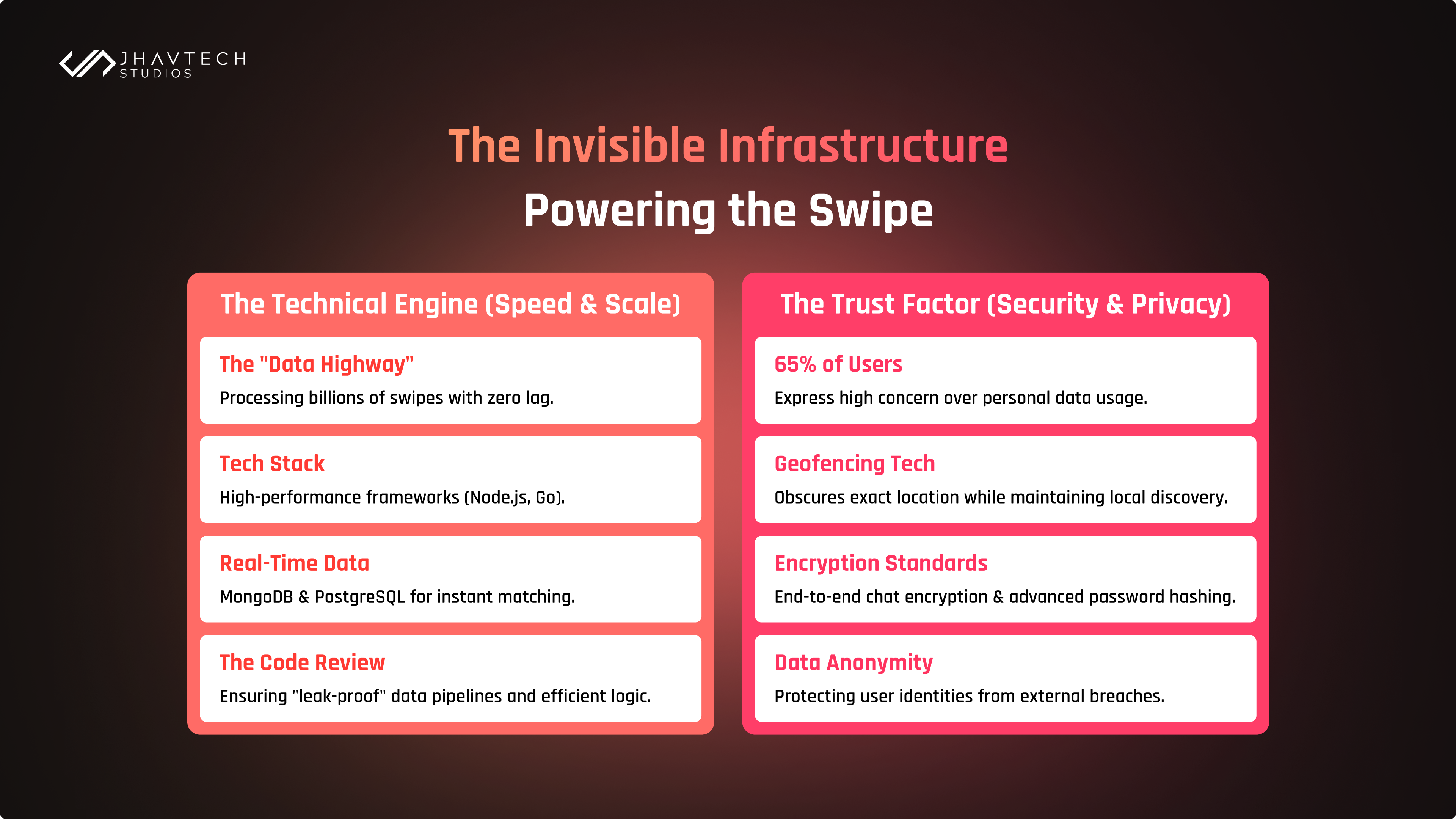 ## Why UI/UX Design Dictates Your Love Life ## We often think we are making conscious choices about who we like, but the [UI/UX design](https://www.jhavtech.com.au/ui-ux-design-service/) of an app heavily influences our behavior. The "swipe" itself is a stroke of psychological genius. It turns the search for a partner into a gamified experience, triggering dopamine hits with every match. The placement of buttons, the speed of the transitions, and even the color palette are all chosen to keep you in a "flow state." If the interface is too cluttered, users feel overwhelmed. If it is too simple, it feels hollow. The goal is to create a frictionless environment where the technology disappears, leaving only the human connection. This design philosophy extends to the "onboarding" process, where the app asks you questions to feed the dating app algorithms without making it feel like a boring survey. ## The Ethics of the Swipe ## There is an ongoing debate about the ethics of dating app algorithms. Critics argue that by prioritizing certain profiles, these systems can inadvertently reinforce social biases or create "beauty hierarchies." For example, a [study by Cornell University](https://news.cornell.edu/stories/2018/09/redesign-dating-apps-lessen-racial-bias-study-recommends) found that algorithmic sorting can sometimes limit the visibility of minority groups if not properly calibrated for diversity. Because of this, many developers are now implementing "anti-bias" layers into their code. This involves periodically refreshing the deck with "low-score" profiles to ensure everyone gets a fair chance at visibility. The goal is to move away from a "winner takes all" system toward a more inclusive digital ecosystem. ## The Evolution of Communication ## Once the match is made, the tech doesn't stop. The chat interface is another arena of intense innovation. Real-time communication relies on WebSockets to ensure that there is zero latency between sending and receiving a message. Some apps are even experimenting with "sentiment analysis" tools that can nudge a user if they are being too aggressive or if a conversation has gone cold. This level of detail is why the dating app algorithms are so vital. They don't just stop at the match; they track whether the match actually led to a conversation. If two people match but never speak, the algorithm learns that the match was a "false positive" and adjusts your future deck accordingly. It is a constant, living loop of feedback and optimization. ### Conclusion: The Future of Digital Connection ### As we look toward the future, the integration of technology into our romantic lives will only deepen. We are moving toward a world where augmented reality and biometrics might play a role in how we meet. Imagine walking through a coffee shop and receiving a subtle haptic nudge on your watch because someone with a 90 percent compatibility score is sitting ten feet away. The complexity of dating app algorithms continues to grow, becoming more human-centric and less robotic. While the idea of a machine choosing our partners can feel cold, the reality is that these tools are simply expanding our reach, allowing us to meet people we never would have crossed paths with in the physical world. Whether you are a developer interested in the latest trends or a user just looking for love, understanding the tech behind the screen changes your perspective. It is a fascinating blend of sociology, mathematics, and high-level engineering. The next time you find yourself scrolling through profiles, remember that there are millions of lines of code working behind the scenes, all designed to help you find that one perfect person. In the end, the tech is just the bridge; the journey across it is still entirely up to you. The evolution of this industry is a testament to how far we have come. With the right dating app algorithms and a commitment to user safety and experience, the "hidden" tech of the swipe-and-match world will continue to redefine how we connect, one match at a time. |
| json metadata | {"tags":["mobileapps","datingapps","appdevelopment","softwarearchitecture","backendengineering","systemdesign","scalability","realtimechat"],"image":["https://cdn.steemitimages.com/DQmXC8yUvpZeY7fwmkweT784amUy8sqAyaLuYmmCwWukM17/Steemit%20article%20-%20Banner.png","https://cdn.steemitimages.com/DQmaUgjfBqvfN2gLdZzB4HAvUNbwMUeGjthrMmsXnYAgB87/Steemit%20article%20-%20Body.png"],"links":["https://www.jhavtech.com.au/dating-application-development-service/","https://hinge.co/newsroom/2025-GenZ-Report","https://www.jhavtech.com.au/free-code-review/","https://www.jhavtech.com.au/ui-ux-design-service/","https://news.cornell.edu/stories/2018/09/redesign-dating-apps-lessen-racial-bias-study-recommends"],"app":"steemit/0.2","format":"markdown"} |
| parent author | |
| parent permlink | mobileapps |
| permlink | the-hidden-tech-behind-swipe-match-and-chat-apps |
| title | The Hidden Tech Behind Swipe, Match & Chat Apps |
| Transaction Info | Block #102742425/Trx 1af2c5a1d52bd12ac14a789099278b96c0e43811 |
View Raw JSON Data
{
"block": 102742425,
"op": [
"comment",
{
"author": "jhavtech",
"body": "\n\nHave you ever stopped to wonder, while you are mindlessly swiping left or right on a Tuesday night, what is actually happening under the hood of your smartphone? It feels like magic, or perhaps fate, when that \"It’s a Match!\" screen pops up. But in reality, there is no cupid in the cloud. Instead, there is a complex web of data points, server clusters, and mathematical equations working tirelessly to predict your romantic future. The world of digital romance is governed by dating app algorithms that are far more sophisticated than most users realize. \n\nFor anyone curious about the intersection of human emotion and cold, hard data, the \"hidden\" side of these apps is a masterclass in modern engineering. From the way a profile is prioritized to the millisecond-fast delivery of a \"Hey\" notification, every action is a calculated move. \n\n## The Math of Attraction: Understanding Dating App Algorithms ## \n\nAt the center of the experience are the uncanny algorithms. In the early days, these systems were relatively primitive, often relying on simple Elo scores borrowed from the world of competitive chess. If \"desirable\" people swiped right on you, your \"score\" went up, and you were shown to other high scorers. However, the industry has moved far beyond such binary rankings. Today, the focus has shifted toward collaborative filtering and deep learning. \n\nModern dating app algorithms look at your behavior rather than just your stated preferences. You might say you want a tall doctor who loves hiking, but if you consistently swipe right on short musicians who love gaming, the system will prioritize the latter. This behavioral analysis ensures that the \"Discovery\" deck remains addictive and relevant. Companies specializing in [dating app development](https://www.jhavtech.com.au/dating-application-development-service/) have realized that the key to retention is not just finding a match, but finding a \"satisfying\" match that keeps the user engaged with the interface. \n\n### The Role of Artificial Intelligence and Machine Learning ###\n\nAs we look at the rapid pace of innovation, it is clear that how AI is changing online dating in 2026 involves a shift from simple recommendation engines to fully autonomous \"dating agents\" that can pre-screen matches for you. We aren't just talking about chatbots; we are talking about neural networks that can analyze the content of your photos to identify common interests or even suggest opening lines based on the shared context of two users' profiles. \n\nAI matchmaking technology has become the gold standard for high-end platforms. This tech doesn't just look at who you like; it looks at who likes people like you. By analyzing millions of data points across the entire user base, the system can predict compatibility with startling accuracy. According to [recent industry reports,](https://hinge.co/newsroom/2025-GenZ-Report) AI-driven platforms have seen a 27 percent increase in \"meaningful conversations\" compared to traditional filter-based apps. \n\n## The Invisible Infrastructure: Speed, Security, and Scale ## \n\nWhile the front end of an app looks simple and clean, the back end is a chaotic highway of data. When you swipe right, that data must be processed, compared against the other person's database entry, and, if a match occurs, a push notification must be triggered instantly. This requires a robust dating app tech stack that usually involves high-performance frameworks like Node.js or Go, coupled with real-time database management systems like MongoDB or PostgreSQL. \n\nA critical but often overlooked part of the development process is the [code review](https://www.jhavtech.com.au/free-code-review/). This phase ensures that the logic governing the matches is efficient and that there are no leaks in the data pipeline. When you consider that a major app might handle 2 billion swipes per day globally, even a tiny inefficiency in the code can lead to massive server lag or crashes. \n\n### Privacy and the Trust Factor ### \n\nAs we share more of our lives online, the \"hidden\" tech must also act as a shield. Privacy and data security in swipe-based apps is a top priority for developers today. It isn't just about hiding your email address; it involves sophisticated geofencing tech that obscures your exact location while still allowing you to find people nearby. \n\nRecent studies show that 65 percent of users are \"highly concerned\" about how their personal data is used by romantic platforms. To combat this, modern apps use end-to-end encryption for chats and advanced hashing for passwords. Developers often look at successful case studies from reputable firms to understand how to balance high-level functionality with stringent data protection protocols. They ensure that while the dating app algorithms have enough data to work with, that data remains anonymous and protected from external breaches. \n\n\n\n\n \n## Why UI/UX Design Dictates Your Love Life ## \n \nWe often think we are making conscious choices about who we like, but the [UI/UX design](https://www.jhavtech.com.au/ui-ux-design-service/) of an app heavily influences our behavior. The \"swipe\" itself is a stroke of psychological genius. It turns the search for a partner into a gamified experience, triggering dopamine hits with every match. The placement of buttons, the speed of the transitions, and even the color palette are all chosen to keep you in a \"flow state.\" \n\nIf the interface is too cluttered, users feel overwhelmed. If it is too simple, it feels hollow. The goal is to create a frictionless environment where the technology disappears, leaving only the human connection. This design philosophy extends to the \"onboarding\" process, where the app asks you questions to feed the dating app algorithms without making it feel like a boring survey. \n\n## The Ethics of the Swipe ##\n\nThere is an ongoing debate about the ethics of dating app algorithms. Critics argue that by prioritizing certain profiles, these systems can inadvertently reinforce social biases or create \"beauty hierarchies.\" For example, a [study by Cornell University](https://news.cornell.edu/stories/2018/09/redesign-dating-apps-lessen-racial-bias-study-recommends) found that algorithmic sorting can sometimes limit the visibility of minority groups if not properly calibrated for diversity. \n\nBecause of this, many developers are now implementing \"anti-bias\" layers into their code. This involves periodically refreshing the deck with \"low-score\" profiles to ensure everyone gets a fair chance at visibility. The goal is to move away from a \"winner takes all\" system toward a more inclusive digital ecosystem. \n\n## The Evolution of Communication ## \n\nOnce the match is made, the tech doesn't stop. The chat interface is another arena of intense innovation. Real-time communication relies on WebSockets to ensure that there is zero latency between sending and receiving a message. Some apps are even experimenting with \"sentiment analysis\" tools that can nudge a user if they are being too aggressive or if a conversation has gone cold. \n\nThis level of detail is why the dating app algorithms are so vital. They don't just stop at the match; they track whether the match actually led to a conversation. If two people match but never speak, the algorithm learns that the match was a \"false positive\" and adjusts your future deck accordingly. It is a constant, living loop of feedback and optimization. \n\n### Conclusion: The Future of Digital Connection ###\n\nAs we look toward the future, the integration of technology into our romantic lives will only deepen. We are moving toward a world where augmented reality and biometrics might play a role in how we meet. Imagine walking through a coffee shop and receiving a subtle haptic nudge on your watch because someone with a 90 percent compatibility score is sitting ten feet away. \n\nThe complexity of dating app algorithms continues to grow, becoming more human-centric and less robotic. While the idea of a machine choosing our partners can feel cold, the reality is that these tools are simply expanding our reach, allowing us to meet people we never would have crossed paths with in the physical world. \n\nWhether you are a developer interested in the latest trends or a user just looking for love, understanding the tech behind the screen changes your perspective. It is a fascinating blend of sociology, mathematics, and high-level engineering. The next time you find yourself scrolling through profiles, remember that there are millions of lines of code working behind the scenes, all designed to help you find that one perfect person. In the end, the tech is just the bridge; the journey across it is still entirely up to you. \n\nThe evolution of this industry is a testament to how far we have come. With the right dating app algorithms and a commitment to user safety and experience, the \"hidden\" tech of the swipe-and-match world will continue to redefine how we connect, one match at a time.",
"json_metadata": "{\"tags\":[\"mobileapps\",\"datingapps\",\"appdevelopment\",\"softwarearchitecture\",\"backendengineering\",\"systemdesign\",\"scalability\",\"realtimechat\"],\"image\":[\"https://cdn.steemitimages.com/DQmXC8yUvpZeY7fwmkweT784amUy8sqAyaLuYmmCwWukM17/Steemit%20article%20-%20Banner.png\",\"https://cdn.steemitimages.com/DQmaUgjfBqvfN2gLdZzB4HAvUNbwMUeGjthrMmsXnYAgB87/Steemit%20article%20-%20Body.png\"],\"links\":[\"https://www.jhavtech.com.au/dating-application-development-service/\",\"https://hinge.co/newsroom/2025-GenZ-Report\",\"https://www.jhavtech.com.au/free-code-review/\",\"https://www.jhavtech.com.au/ui-ux-design-service/\",\"https://news.cornell.edu/stories/2018/09/redesign-dating-apps-lessen-racial-bias-study-recommends\"],\"app\":\"steemit/0.2\",\"format\":\"markdown\"}",
"parent_author": "",
"parent_permlink": "mobileapps",
"permlink": "the-hidden-tech-behind-swipe-match-and-chat-apps",
"title": "The Hidden Tech Behind Swipe, Match & Chat Apps"
}
],
"op_in_trx": 0,
"timestamp": "2026-01-19T12:27:36",
"trx_id": "1af2c5a1d52bd12ac14a789099278b96c0e43811",
"trx_in_block": 2,
"virtual_op": 0
}2026/01/07 12:40:33
2026/01/07 12:40:33
| author | jhavtech |
| permlink | stop-run-this-final-code-review-and-mobile-app-security-audit-before-launch |
| voter | akdx |
| weight | 5700 (57.00%) |
| Transaction Info | Block #102398050/Trx 376c97c1744813c636204772d5354f069535352e |
View Raw JSON Data
{
  "block": 102398050,
  "op": [
    "vote",
    {
      "author": "jhavtech",
      "permlink": "stop-run-this-final-code-review-and-mobile-app-security-audit-before-launch",
      "voter": "akdx",
      "weight": 5700
    }
  ],
  "op_in_trx": 0,
  "timestamp": "2026-01-07T12:40:33",
  "trx_id": "376c97c1744813c636204772d5354f069535352e",
  "trx_in_block": 0,
  "virtual_op": 0
}jhavtechpublished a new post: stop-run-this-final-code-review-and-mobile-app-security-audit-before-launch2026/01/07 12:25:54
jhavtechpublished a new post: stop-run-this-final-code-review-and-mobile-app-security-audit-before-launch
2026/01/07 12:25:54
| author | jhavtech |
| body |  **The Finish Line is a Trap: Why Your Final Code Review Matters** You’re there. The late nights are over, the features are blinking green in your testing environment, and the coffee grounds are finally being swept away. Your mobile app development project is ready to go live. You’re dreaming of App Store rankings and user downloads. But hold on. That excitement? That feeling of "It works!"? That's exactly when you need to slow down and execute the single most critical step that separates robust, successful apps from those that crash and burn: a non-negotiable, deep-dive [code review](https://www.jhavtech.com.au/free-code-review/). A final audit isn't just about catching that last typo. It’s a systemic approach to risk management. It’s about ensuring that the application you’re about to release to millions of people is not only functional but also secure, stable, and ready to scale. Skipping this step is how you end up paying exponentially more later. ## The Cost of Shortcuts: Stats That Demand an Audit ## If you think a code review takes too long, just look at the data on the cost of fixing bugs later. The IBM Systems Sciences Institute famously found that the cost to fix a bug found after a product is released can be up to 100 times more than if it was found during the design or coding phase. Think about that: a one-hour fix during development could become a 100-hour nightmare, complete with PR disasters and lost user trust, if it goes live. Furthermore, the threats are growing. Recent statistics from 2024 highlight the urgency: over 75% of all published mobile apps have at least one security vulnerability. You do not want your app to be one of the three-quarters of the market that is an easy target. ### Phase 1: The Non-Negotiable Mobile App Security Audit ### Security isn't an add-on; it’s the bedrock of trust. Your final audit must include a stringent mobile app security audit. This goes beyond simple password checks. You need to verify how your code handles the biggest vulnerabilities. **Secret Management:** Have you hardcoded any API keys, database passwords, or third-party service credentials directly into the source code? This is hacker gold. Secrets must be stored securely, often injected at runtime or fetched from a secure server vault. **Insecure Data Storage:** Are you storing sensitive user data locally on the device, maybe an authentication token or user preferences? Ensure this data is protected using platform-specific secure storage mechanisms (like the iOS Keychain or Android Keystore), not simple plaintext files. **Communication Integrity:** Your review must verify that all network traffic uses HTTPS and, ideally, implements [SSL Pinning](https://cheatsheetseries.owasp.org/cheatsheets/Pinning_Cheat_Sheet.html). This prevents Man-in-the-Middle attacks by ensuring your app only talks to a server with a specific, trusted certificate. 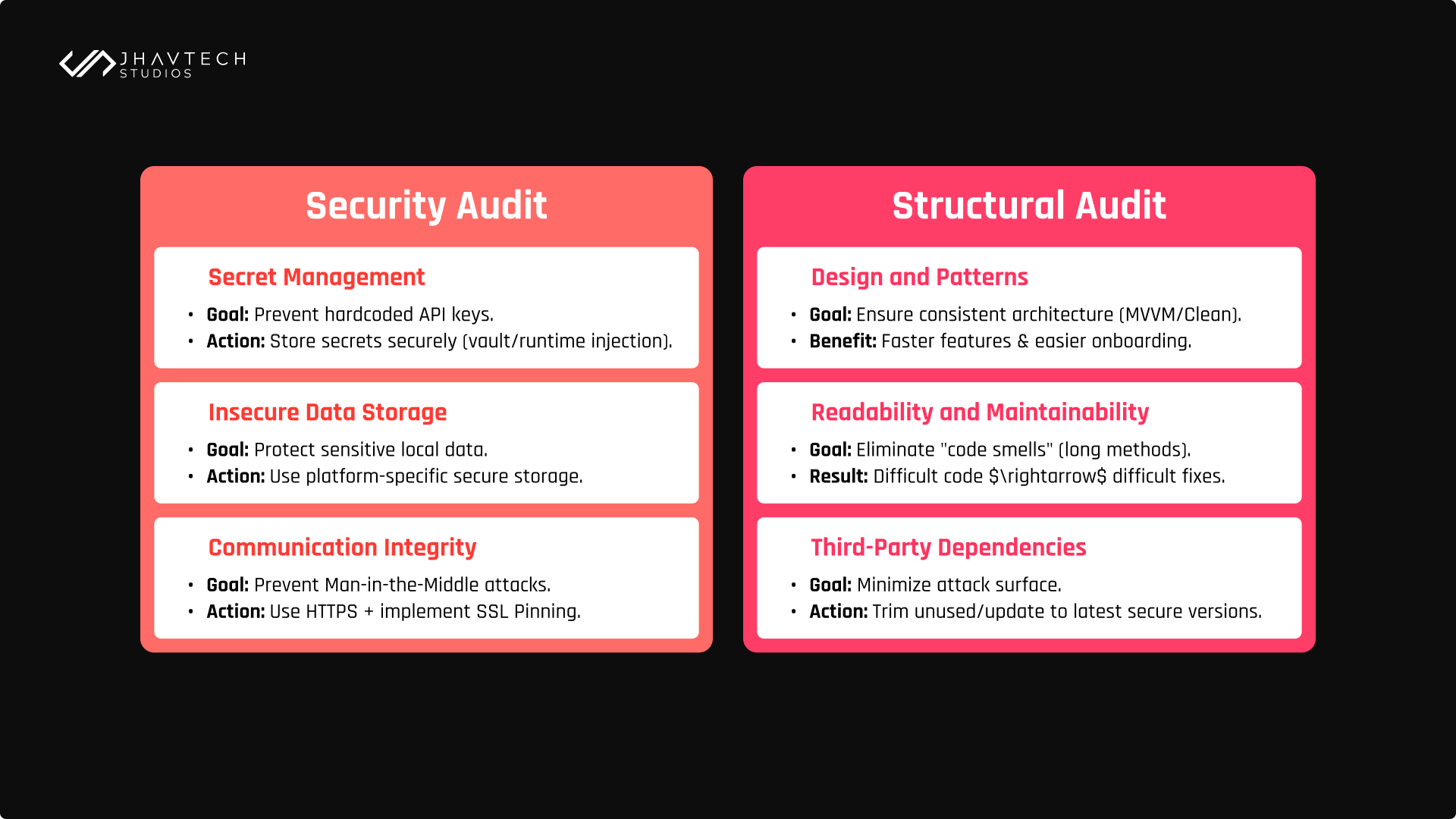 ### Phase 2: Structural Soundness and Futureproofing ### A great app can’t just be secure; it has to be a pleasure to maintain. This part of the code review focuses on the inner architecture. **Design and Patterns:**Is the code following established design patterns (like MVVM, MVC, or clean architecture)? Consistent structure makes it easier for new developers to join the team and faster to add new features without introducing regressions. **Readability and Maintainability:** Look for "code smells" like overly long methods or high [cyclomatic complexity](https://www.geeksforgeeks.org/dsa/cyclomatic-complexity/). These are red flags that scream "bug magnet." If the code is difficult to read, it's difficult to fix. **Third-Party Dependencies:** Check your list of external libraries. Are they all necessary? Are they the latest, most secure versions? Every library you include expands your attack surface, so be ruthless in trimming any unused or outdated ones. ## The Final App Launch Checklist: From Code to Consumer ## A great codebase is pointless if the deployment environment is misconfigured. Your final app launch checklist connects your code quality to your business readiness. **Production Environment Variables:** Seriously, double-check that you are pointing to your live APIs, databases, and authentication services, not the staging server you’ve been using for months. This is a simple, common error that brings down high-profile launches. **Performance Metrics:** The modern user expects speed. Your code review must audit for performance bottlenecks. Look at network call overhead, inefficient database queries (like queries inside a loop), and image loading. Slow performance leads to poor user retention. **Error Reporting and Logging:** Is your crash reporting (like Sentry or Firebase Crashlytics) properly installed and configured for the production build? You need to know immediately when a user encounters an issue, not wait for an angry email. ### Don't Let Poor Code Force a Software Project Rescue ### If you launch an app with foundational problems such as major security holes, severe performance issues, or an impossible architecture, you're not building a product, you’re creating an emergency. The inevitable result is a costly engagement known as a [software project rescue](https://www.jhavtech.com.au/software-project-rescue-service/), where an expert team has to step in to untangle a catastrophic mess of code. It is far cheaper, faster, and less stressful to get a professional code review done before launch. #### Targeting Visibility: The Technical SEO Audit Checklist for App Launch #### Even technical developers need to think like marketers. Your code review should have a component focused on visibility. This is where you run a technical SEO audit checklist for app launch. This means checking: **Deep Linking:** Are your deep links and Universal Links correctly set up? These links allow search engines to index the content within your app, which is crucial for discovery. If they’re broken, users can’t jump directly to a product page or specific piece of content from a web search. **Load Times:** As mentioned, speed is critical. Faster loading code gets rewarded in every search algorithm, whether it’s for app indexing or web content. ## Ready to Launch? Get an Expert Second Opinion ## It is impossible to be completely objective about your own code. You wrote it, you know how it should work, and your brain often glosses over obvious mistakes. This is why a third-party code review is so valuable. If you're unsure if your code is truly production-ready, or if you need an expert to check for the sophisticated security and performance issues that automated tools often miss, consider reaching out to a specialist. For instance, Jhavtech Studios offers a completely [free code review service](https://www.jhavtech.com.au/free-code-review/). They’ll give you an objective X-ray of your software’s architecture, providing clear guidance on how to fix common flaws like security vulnerabilities and performance bottlenecks, ultimately giving you the confidence to launch strong. Don't let a hasty decision sink your venture. The small delay for a final, comprehensive code audit is the best insurance policy you can buy. |
| json metadata | {"tags":["mobileappdevelopment","codereview","appsecurity","softwarequality","applaunch","devbestpractices","techfounders","productengineering"],"image":["https://cdn.steemitimages.com/DQmQqpAPzpxA2dZKXDS2Pxh1sFSRHgxLrnX8rNSKPFUmwd4/Steemit%20-%20Banner.png","https://cdn.steemitimages.com/DQmNemnwbL6tpkMfJWGZFu8ZpRjtG6B6btcDi19R4Zv1JKq/Steemit%20-%20Body.png"],"links":["https://www.jhavtech.com.au/free-code-review/","https://cheatsheetseries.owasp.org/cheatsheets/Pinning_Cheat_Sheet.html","https://www.geeksforgeeks.org/dsa/cyclomatic-complexity/","https://www.jhavtech.com.au/software-project-rescue-service/"],"app":"steemit/0.2","format":"markdown"} |
| parent author | |
| parent permlink | mobileappdevelopment |
| permlink | stop-run-this-final-code-review-and-mobile-app-security-audit-before-launch |
| title | Stop! Run This Final Code Review and Mobile App Security Audit Before Launch |
| Transaction Info | Block #102397758/Trx 4d260b334611d1cb28cd71ae4d19b6ec2d478553 |
View Raw JSON Data
{
"block": 102397758,
"op": [
"comment",
{
"author": "jhavtech",
"body": "\n\n**The Finish Line is a Trap: Why Your Final Code Review Matters**\n\nYou’re there. The late nights are over, the features are blinking green in your testing environment, and the coffee grounds are finally being swept away. Your mobile app development project is ready to go live. You’re dreaming of App Store rankings and user downloads. \n\nBut hold on. That excitement? That feeling of \"It works!\"? That's exactly when you need to slow down and execute the single most critical step that separates robust, successful apps from those that crash and burn: a non-negotiable, deep-dive [code review](https://www.jhavtech.com.au/free-code-review/). \n\nA final audit isn't just about catching that last typo. It’s a systemic approach to risk management. It’s about ensuring that the application you’re about to release to millions of people is not only functional but also secure, stable, and ready to scale. Skipping this step is how you end up paying exponentially more later. \n \n\n## The Cost of Shortcuts: Stats That Demand an Audit ##\n\nIf you think a code review takes too long, just look at the data on the cost of fixing bugs later. The IBM Systems Sciences Institute famously found that the cost to fix a bug found after a product is released can be up to 100 times more than if it was found during the design or coding phase. Think about that: a one-hour fix during development could become a 100-hour nightmare, complete with PR disasters and lost user trust, if it goes live. \n\nFurthermore, the threats are growing. Recent statistics from 2024 highlight the urgency: over 75% of all published mobile apps have at least one security vulnerability. You do not want your app to be one of the three-quarters of the market that is an easy target. \n \n\n### Phase 1: The Non-Negotiable Mobile App Security Audit ###\n\nSecurity isn't an add-on; it’s the bedrock of trust. Your final audit must include a stringent mobile app security audit. This goes beyond simple password checks. You need to verify how your code handles the biggest vulnerabilities. \n\n**Secret Management:** Have you hardcoded any API keys, database passwords, or third-party service credentials directly into the source code? This is hacker gold. Secrets must be stored securely, often injected at runtime or fetched from a secure server vault. \n\n**Insecure Data Storage:** Are you storing sensitive user data locally on the device, maybe an authentication token or user preferences? Ensure this data is protected using platform-specific secure storage mechanisms (like the iOS Keychain or Android Keystore), not simple plaintext files. \n\n**Communication Integrity:** Your review must verify that all network traffic uses HTTPS and, ideally, implements [SSL Pinning](https://cheatsheetseries.owasp.org/cheatsheets/Pinning_Cheat_Sheet.html). This prevents Man-in-the-Middle attacks by ensuring your app only talks to a server with a specific, trusted certificate. \n\n\n\n\n \n### Phase 2: Structural Soundness and Futureproofing ### \n\nA great app can’t just be secure; it has to be a pleasure to maintain. This part of the code review focuses on the inner architecture. \n\n**Design and Patterns:**Is the code following established design patterns (like MVVM, MVC, or clean architecture)? Consistent structure makes it easier for new developers to join the team and faster to add new features without introducing regressions. \n\n**Readability and Maintainability:** Look for \"code smells\" like overly long methods or high [cyclomatic complexity](https://www.geeksforgeeks.org/dsa/cyclomatic-complexity/). These are red flags that scream \"bug magnet.\" If the code is difficult to read, it's difficult to fix. \n\n**Third-Party Dependencies:** Check your list of external libraries. Are they all necessary? Are they the latest, most secure versions? Every library you include expands your attack surface, so be ruthless in trimming any unused or outdated ones. \n \n\n## The Final App Launch Checklist: From Code to Consumer ## \n\nA great codebase is pointless if the deployment environment is misconfigured. Your final app launch checklist connects your code quality to your business readiness. \n\n**Production Environment Variables:** Seriously, double-check that you are pointing to your live APIs, databases, and authentication services, not the staging server you’ve been using for months. This is a simple, common error that brings down high-profile launches. \n\n**Performance Metrics:** The modern user expects speed. Your code review must audit for performance bottlenecks. Look at network call overhead, inefficient database queries (like queries inside a loop), and image loading. Slow performance leads to poor user retention. \n\n**Error Reporting and Logging:** Is your crash reporting (like Sentry or Firebase Crashlytics) properly installed and configured for the production build? You need to know immediately when a user encounters an issue, not wait for an angry email. \n\n \n### Don't Let Poor Code Force a Software Project Rescue ###\n\nIf you launch an app with foundational problems such as major security holes, severe performance issues, or an impossible architecture, you're not building a product, you’re creating an emergency. The inevitable result is a costly engagement known as a [software project rescue](https://www.jhavtech.com.au/software-project-rescue-service/), where an expert team has to step in to untangle a catastrophic mess of code. It is far cheaper, faster, and less stressful to get a professional code review done before launch. \n\n#### Targeting Visibility: The Technical SEO Audit Checklist for App Launch ####\n\nEven technical developers need to think like marketers. Your code review should have a component focused on visibility. This is where you run a technical SEO audit checklist for app launch. This means checking: \n\n**Deep Linking:** Are your deep links and Universal Links correctly set up? These links allow search engines to index the content within your app, which is crucial for discovery. If they’re broken, users can’t jump directly to a product page or specific piece of content from a web search. \n\n**Load Times:** As mentioned, speed is critical. Faster loading code gets rewarded in every search algorithm, whether it’s for app indexing or web content. \n\n \n## Ready to Launch? Get an Expert Second Opinion ## \n\nIt is impossible to be completely objective about your own code. You wrote it, you know how it should work, and your brain often glosses over obvious mistakes. This is why a third-party code review is so valuable. \n\nIf you're unsure if your code is truly production-ready, or if you need an expert to check for the sophisticated security and performance issues that automated tools often miss, consider reaching out to a specialist. For instance, Jhavtech Studios offers a completely [free code review service](https://www.jhavtech.com.au/free-code-review/). They’ll give you an objective X-ray of your software’s architecture, providing clear guidance on how to fix common flaws like security vulnerabilities and performance bottlenecks, ultimately giving you the confidence to launch strong. \n\nDon't let a hasty decision sink your venture. The small delay for a final, comprehensive code audit is the best insurance policy you can buy.",
"json_metadata": "{\"tags\":[\"mobileappdevelopment\",\"codereview\",\"appsecurity\",\"softwarequality\",\"applaunch\",\"devbestpractices\",\"techfounders\",\"productengineering\"],\"image\":[\"https://cdn.steemitimages.com/DQmQqpAPzpxA2dZKXDS2Pxh1sFSRHgxLrnX8rNSKPFUmwd4/Steemit%20-%20Banner.png\",\"https://cdn.steemitimages.com/DQmNemnwbL6tpkMfJWGZFu8ZpRjtG6B6btcDi19R4Zv1JKq/Steemit%20-%20Body.png\"],\"links\":[\"https://www.jhavtech.com.au/free-code-review/\",\"https://cheatsheetseries.owasp.org/cheatsheets/Pinning_Cheat_Sheet.html\",\"https://www.geeksforgeeks.org/dsa/cyclomatic-complexity/\",\"https://www.jhavtech.com.au/software-project-rescue-service/\"],\"app\":\"steemit/0.2\",\"format\":\"markdown\"}",
"parent_author": "",
"parent_permlink": "mobileappdevelopment",
"permlink": "stop-run-this-final-code-review-and-mobile-app-security-audit-before-launch",
"title": "Stop! Run This Final Code Review and Mobile App Security Audit Before Launch"
}
],
"op_in_trx": 0,
"timestamp": "2026-01-07T12:25:54",
"trx_id": "4d260b334611d1cb28cd71ae4d19b6ec2d478553",
"trx_in_block": 0,
"virtual_op": 0
}jhavtechpublished a new post: is-your-app-secure-run-this-free-code-review-to-find-out2025/12/26 06:38:39
jhavtechpublished a new post: is-your-app-secure-run-this-free-code-review-to-find-out
2025/12/26 06:38:39
| author | jhavtech |
| body | ![https://t6912176.p.clickup-attachments.com/t6912176/df6629f7-7361-45de-a5ca-a95ee42f341c/Article%202%20-%20Banner.png?view=open] If you are a founder, a developer, or a product manager, you likely spend your nights worrying about user growth, feature releases, and market fit. But there is a silent killer that can wipe out all that progress in a single afternoon: a security breach. With cyberattacks on the rise, the question is no longer "if" your application has a vulnerability, but "where." This is why a professional code review is no longer a luxury but a fundamental necessity for digital survival. In 2024, vulnerability-based attacks surged by a staggering 124% compared to the previous year. Even more alarming is the fact that nearly 1 in 6 attacks are now launched through vulnerable public-facing applications or APIs. When you consider that the global average cost of a data breach has climbed to $4.44 million, the "wait and see" approach is effectively a gamble with your company's future. ## Why a Vulnerability Assessment is Your Best Defense When we talk about app security, we often think of firewalls and encryption. While those are important, they are often just the outer shell. A deep vulnerability assessment looks at the logic of your application itself. It identifies where your code might be leaking data, where your APIs are exposed, and where a clever hacker could bypass your login screens. Take the recent example of the 2024 AT&T breach that impacted over 110 million customers, or the Snowflake data breach that targeted over 100 companies. These incidents highlight that even tech giants can fall victim to misconfigurations and unpatched flaws. A thorough code review acts as a preventative strike. By identifying these gaps before a hacker does, you are not just fixing bugs; you are protecting your brand’s reputation. If you are unsure where to start, you can access a [free code review](https://www.jhavtech.com.au/free-code-review/) to get a professional baseline of your current security posture. ## The Hidden Power of Static Application Security Testing (SAST) In the world of modern software, we use something called [Static Application Security Testing (SAST)](https://owasp.org/www-community/controls/Static_Code_Analysis). This is a method where your source code is examined without even running the program. The Open Web Application Security Project (OWASP) defines this as "white-box" testing. It is like a structural engineer looking at the blueprints of a skyscraper to find a weak beam before the building is ever constructed. The beauty of SAST is its efficiency. It can scan thousands of lines of code in minutes, flagging "code smells," hardcoded credentials, and insecure library dependencies. However, while automated tools are fast, they are not perfect. They can sometimes miss complex business logic errors. This is why the most effective code review strategies involve a combination of automated scanning and manual expert oversight. If your current development cycle is struggling under the weight of old, messy code, you might be in need of a [software project rescue](https://www.jhavtech.com.au/software-project-rescue-service/). This process involves bringing in experts to stabilize a failing project, paying down technical debt, and implementing the rigorous testing standards that were missed during the initial rush to launch. ## How to Perform a Security Code Review: A Practical Checklist If you are wondering how to perform a security code review, you don't have to be a cybersecurity wizard to start. From our years of working in the trenches of various dev cycles, we have realized that most leaks happen in the most obvious places. Here is a simplified framework that can be used to ensure no stone is left unturned: Input Validation: Are you trusting user input? Never do that. Ensure every piece of data coming from a user is sanitized to prevent SQL injections and Cross-Site Scripting (XSS). Authentication & Authorization: Check if your session tokens are handled securely. Can a user access data that doesn't belong to them by simply changing a URL ID? Sensitive Data Handling: Are you storing passwords in plain text? Are API keys hardcoded in your GitHub repository? (Hint: They shouldn't be). Dependency Management: Modern apps are built on a mountain of third-party libraries. If one of those libraries is outdated, your whole app is at risk. By following these steps, a code review becomes a roadmap for improvement rather than just a list of complaints. ![https://t6912176.p.clickup-attachments.com/t6912176/f6c87cc5-a86b-41ef-8682-146ed1e106da/Article%202%20-%20Body.png?view=open] ## Lessons from the Field: Our Personal Take on "Spaghetti Security" We have seen many teams treat security like a "final coat of paint" that you apply right before the house goes on the market. This is a dangerous mindset. We remember a specific project where the client had built a brilliant platform. On the surface, it was beautiful. But underneath? It was a mess of "Spaghetti Security." They had bypassed standard encryption protocols to "speed up" the API response time. When we performed their initial code review, we found that an attacker could have drained user accounts using a simple script. They were three days away from launch. That experience cemented our belief that you cannot trade security for speed. One of the most cited studies in software engineering, popularized by IBM and NIST, shows that the cost of fixing a bug increases exponentially the later it is found. Fixing a vulnerability during the design phase might cost you $100. If that same bug makes it into production, it could cost you $10,000 or more in patches, downtime, and lost customer trust. In the world of [mobile app development](https://www.jhavtech.com.au/mobile-application-development-service/), this is even more critical. Once an app is in the hands of thousands of users on their personal devices, a security flaw is much harder to "recall" than a web-based update. ## Best Practices for Secure Code Review in 2026 As we look toward the near future, the landscape is shifting. AI is now being used by hackers to find vulnerabilities faster than ever before. To keep up, you need to adapt. Here are the best practices for secure code review in 2026: Shift Left: Integrate security checks at the very beginning of your development cycle, not as a "final check" before release. Continuous Reviews: Don't treat a code review as a one-time event. It should be a part of every pull request. Human Context: While AI tools are getting better, they still lack the "context" of your business logic. Always have a senior developer or a third-party expert review the most critical parts of your architecture. Zero Trust Architecture: Assume that a breach will happen and write your code in a way that limits the damage. ## The Culture of Code: Why Your Team Might Be Resisting In our experience, the biggest hurdle to a successful audit is not technical; it is cultural. Developers often feel like their work is being "attacked" during a review. This leads to a defensive atmosphere where bugs are hidden rather than solved. To fix this, technical leaders should emphasize a "blameless" culture. The goal is not to find who wrote the bad code, but to find how the code can be better. When a team views security as a shared responsibility rather than a finger-pointing exercise, the quality of the software skyrockets. ## Understanding the Technical Nuance of "Taint Analysis" For those who want to dive deeper into how modern tools actually work, we often look at "Taint Analysis." This is a feature of many SAST tools that tracks the flow of data from an untrusted source (the "taint") to a sensitive sink (like a database query). If the data reaches the sink without being "sanitized," the tool flags it. Understanding this flow is vital for developers who want to write cleaner, safer code from day one. It helps move the conversation from "the tool says this is wrong" to "I understand why this data path is dangerous." ### The Escalating Cost of Neglect If your app feels sluggish, or if you have that nagging feeling that your data might not be as safe as it should be, don't wait for a "Notification of Indicator of Compromise" to land on your desk. Statistics from the Australian Cyber Security Centre show a [massive 83% increase in these notifications recently](https://www.cyber.gov.au/about-us/view-all-content/reports-and-statistics/annual-cyber-threat-report-2024-2025). The threats are real, and they are active. By performing a regular code review, you are investing in the longevity of your product and the trust of your users. It is the single most effective way to ensure that your innovation isn't undermined by an avoidable mistake. ### Take Action for Your App's Health Your code is the heart of your business. If it is broken or exposed, your business is at risk. Whether you are looking for a high-level check or a deep-dive audit, taking that first step today can save you months of headaches and millions in potential losses later. If you are ready to evaluate your system, you can explore professional assistance through a free code review to identify immediate risks. Have you ever discovered a major vulnerability in your project after launch? What did you learn from that experience? Let's discuss in the comments below! |
| json metadata | {"tags":["appsecurity","cybersecurity","codereview","securityaudit","softwaredevelopment","webdevelopment","appdevelopment","techstartup"],"image":["https://steemitimages.com/640x0/https://t6912176.p.clickup-attachments.com/t6912176/df6629f7-7361-45de-a5ca-a95ee42f341c/Article%202%20-%20Banner.png?view=open]","https://steemitimages.com/640x0/https://t6912176.p.clickup-attachments.com/t6912176/f6c87cc5-a86b-41ef-8682-146ed1e106da/Article%202%20-%20Body.png?view=open]"],"links":["https://steemitimages.com/640x0/https://t6912176.p.clickup-attachments.com/t6912176/df6629f7-7361-45de-a5ca-a95ee42f341c/Article%202%20-%20Banner.png?view=open]","https://www.jhavtech.com.au/free-code-review/","https://owasp.org/www-community/controls/Static_Code_Analysis","https://www.jhavtech.com.au/software-project-rescue-service/","https://steemitimages.com/640x0/https://t6912176.p.clickup-attachments.com/t6912176/f6c87cc5-a86b-41ef-8682-146ed1e106da/Article%202%20-%20Body.png?view=open]","https://www.jhavtech.com.au/mobile-application-development-service/","https://www.cyber.gov.au/about-us/view-all-content/reports-and-statistics/annual-cyber-threat-report-2024-2025"],"app":"steemit/0.2","format":"markdown"} |
| parent author | |
| parent permlink | appsecurity |
| permlink | is-your-app-secure-run-this-free-code-review-to-find-out |
| title | Is Your App Secure? Run This Free Code Review to Find Out |
| Transaction Info | Block #102045937/Trx 3552318b751f38ad9f1cd7f31e8405643c907147 |
View Raw JSON Data
{
  "block": 102045937,
  "op": [
    "comment",
    {
      "author": "jhavtech",
      "body": "![https://t6912176.p.clickup-attachments.com/t6912176/df6629f7-7361-45de-a5ca-a95ee42f341c/Article%202%20-%20Banner.png?view=open]\n\nIf you are a founder, a developer, or a product manager, you likely spend your nights worrying about user growth, feature releases, and market fit. But there is a silent killer that can wipe out all that progress in a single afternoon: a security breach. \n\nWith cyberattacks on the rise, the question is no longer \"if\" your application has a vulnerability, but \"where.\" This is why a professional code review is no longer a luxury but a fundamental necessity for digital survival. \n\nIn 2024, vulnerability-based attacks surged by a staggering 124% compared to the previous year. Even more alarming is the fact that nearly 1 in 6 attacks are now launched through vulnerable public-facing applications or APIs. When you consider that the global average cost of a data breach has climbed to $4.44 million, the \"wait and see\" approach is effectively a gamble with your company's future. \n \n\n## Why a Vulnerability Assessment is Your Best Defense \n\nWhen we talk about app security, we often think of firewalls and encryption. While those are important, they are often just the outer shell. A deep vulnerability assessment looks at the logic of your application itself. It identifies where your code might be leaking data, where your APIs are exposed, and where a clever hacker could bypass your login screens. \n\nTake the recent example of the 2024 AT&T breach that impacted over 110 million customers, or the Snowflake data breach that targeted over 100 companies. These incidents highlight that even tech giants can fall victim to misconfigurations and unpatched flaws. \n\nA thorough code review acts as a preventative strike. By identifying these gaps before a hacker does, you are not just fixing bugs; you are protecting your brand’s reputation. If you are unsure where to start, you can access a [free code review](https://www.jhavtech.com.au/free-code-review/) to get a professional baseline of your current security posture. \n \n\n## The Hidden Power of Static Application Security Testing (SAST) \n\nIn the world of modern software, we use something called [Static Application Security Testing (SAST)](https://owasp.org/www-community/controls/Static_Code_Analysis). This is a method where your source code is examined without even running the program. The Open Web Application Security Project (OWASP) defines this as \"white-box\" testing. It is like a structural engineer looking at the blueprints of a skyscraper to find a weak beam before the building is ever constructed. \n\nThe beauty of SAST is its efficiency. It can scan thousands of lines of code in minutes, flagging \"code smells,\" hardcoded credentials, and insecure library dependencies. However, while automated tools are fast, they are not perfect. They can sometimes miss complex business logic errors. This is why the most effective code review strategies involve a combination of automated scanning and manual expert oversight. \n\nIf your current development cycle is struggling under the weight of old, messy code, you might be in need of a [software project rescue](https://www.jhavtech.com.au/software-project-rescue-service/). This process involves bringing in experts to stabilize a failing project, paying down technical debt, and implementing the rigorous testing standards that were missed during the initial rush to launch. \n\n \n## How to Perform a Security Code Review: A Practical Checklist \n\nIf you are wondering how to perform a security code review, you don't have to be a cybersecurity wizard to start. From our years of working in the trenches of various dev cycles, we have realized that most leaks happen in the most obvious places. Here is a simplified framework that can be used to ensure no stone is left unturned: \n\nInput Validation: Are you trusting user input? Never do that. Ensure every piece of data coming from a user is sanitized to prevent SQL injections and Cross-Site Scripting (XSS). \n\nAuthentication & Authorization: Check if your session tokens are handled securely. Can a user access data that doesn't belong to them by simply changing a URL ID? \n\nSensitive Data Handling: Are you storing passwords in plain text? Are API keys hardcoded in your GitHub repository? (Hint: They shouldn't be). \n\nDependency Management: Modern apps are built on a mountain of third-party libraries. If one of those libraries is outdated, your whole app is at risk. \n\nBy following these steps, a code review becomes a roadmap for improvement rather than just a list of complaints. \n \n ![https://t6912176.p.clickup-attachments.com/t6912176/f6c87cc5-a86b-41ef-8682-146ed1e106da/Article%202%20-%20Body.png?view=open]\n\n## Lessons from the Field: Our Personal Take on \"Spaghetti Security\" \n\nWe have seen many teams treat security like a \"final coat of paint\" that you apply right before the house goes on the market. This is a dangerous mindset. We remember a specific project where the client had built a brilliant platform. On the surface, it was beautiful. But underneath? It was a mess of \"Spaghetti Security.\" \n\nThey had bypassed standard encryption protocols to \"speed up\" the API response time. When we performed their initial code review, we found that an attacker could have drained user accounts using a simple script. They were three days away from launch. That experience cemented our belief that you cannot trade security for speed. \n\nOne of the most cited studies in software engineering, popularized by IBM and NIST, shows that the cost of fixing a bug increases exponentially the later it is found. Fixing a vulnerability during the design phase might cost you $100. If that same bug makes it into production, it could cost you $10,000 or more in patches, downtime, and lost customer trust. \n\nIn the world of [mobile app development](https://www.jhavtech.com.au/mobile-application-development-service/), this is even more critical. Once an app is in the hands of thousands of users on their personal devices, a security flaw is much harder to \"recall\" than a web-based update. \n\n \n## Best Practices for Secure Code Review in 2026 \n\nAs we look toward the near future, the landscape is shifting. AI is now being used by hackers to find vulnerabilities faster than ever before. To keep up, you need to adapt. Here are the best practices for secure code review in 2026: \n\nShift Left: Integrate security checks at the very beginning of your development cycle, not as a \"final check\" before release. \n\nContinuous Reviews: Don't treat a code review as a one-time event. It should be a part of every pull request. \n\nHuman Context: While AI tools are getting better, they still lack the \"context\" of your business logic. Always have a senior developer or a third-party expert review the most critical parts of your architecture. \n\nZero Trust Architecture: Assume that a breach will happen and write your code in a way that limits the damage. \n\n \n## The Culture of Code: Why Your Team Might Be Resisting \n\nIn our experience, the biggest hurdle to a successful audit is not technical; it is cultural. Developers often feel like their work is being \"attacked\" during a review. This leads to a defensive atmosphere where bugs are hidden rather than solved. \n\nTo fix this, technical leaders should emphasize a \"blameless\" culture. The goal is not to find who wrote the bad code, but to find how the code can be better. When a team views security as a shared responsibility rather than a finger-pointing exercise, the quality of the software skyrockets. \n \n## Understanding the Technical Nuance of \"Taint Analysis\" \n\nFor those who want to dive deeper into how modern tools actually work, we often look at \"Taint Analysis.\" This is a feature of many SAST tools that tracks the flow of data from an untrusted source (the \"taint\") to a sensitive sink (like a database query). \n\nIf the data reaches the sink without being \"sanitized,\" the tool flags it. Understanding this flow is vital for developers who want to write cleaner, safer code from day one. It helps move the conversation from \"the tool says this is wrong\" to \"I understand why this data path is dangerous.\" \n\n### The Escalating Cost of Neglect \n\nIf your app feels sluggish, or if you have that nagging feeling that your data might not be as safe as it should be, don't wait for a \"Notification of Indicator of Compromise\" to land on your desk. Statistics from the Australian Cyber Security Centre show a [massive 83% increase in these notifications recently](https://www.cyber.gov.au/about-us/view-all-content/reports-and-statistics/annual-cyber-threat-report-2024-2025). The threats are real, and they are active. \n\nBy performing a regular code review, you are investing in the longevity of your product and the trust of your users. It is the single most effective way to ensure that your innovation isn't undermined by an avoidable mistake. \n\n### Take Action for Your App's Health \n\nYour code is the heart of your business. If it is broken or exposed, your business is at risk. Whether you are looking for a high-level check or a deep-dive audit, taking that first step today can save you months of headaches and millions in potential losses later. \n\nIf you are ready to evaluate your system, you can explore professional assistance through a free code review to identify immediate risks. \n\nHave you ever discovered a major vulnerability in your project after launch? What did you learn from that experience? Let's discuss in the comments below!",
      "json_metadata": "{\"tags\":[\"appsecurity\",\"cybersecurity\",\"codereview\",\"securityaudit\",\"softwaredevelopment\",\"webdevelopment\",\"appdevelopment\",\"techstartup\"],\"image\":[\"https://steemitimages.com/640x0/https://t6912176.p.clickup-attachments.com/t6912176/df6629f7-7361-45de-a5ca-a95ee42f341c/Article%202%20-%20Banner.png?view=open]\",\"https://steemitimages.com/640x0/https://t6912176.p.clickup-attachments.com/t6912176/f6c87cc5-a86b-41ef-8682-146ed1e106da/Article%202%20-%20Body.png?view=open]\"],\"links\":[\"https://steemitimages.com/640x0/https://t6912176.p.clickup-attachments.com/t6912176/df6629f7-7361-45de-a5ca-a95ee42f341c/Article%202%20-%20Banner.png?view=open]\",\"https://www.jhavtech.com.au/free-code-review/\",\"https://owasp.org/www-community/controls/Static_Code_Analysis\",\"https://www.jhavtech.com.au/software-project-rescue-service/\",\"https://steemitimages.com/640x0/https://t6912176.p.clickup-attachments.com/t6912176/f6c87cc5-a86b-41ef-8682-146ed1e106da/Article%202%20-%20Body.png?view=open]\",\"https://www.jhavtech.com.au/mobile-application-development-service/\",\"https://www.cyber.gov.au/about-us/view-all-content/reports-and-statistics/annual-cyber-threat-report-2024-2025\"],\"app\":\"steemit/0.2\",\"format\":\"markdown\"}",
      "parent_author": "",
      "parent_permlink": "appsecurity",
      "permlink": "is-your-app-secure-run-this-free-code-review-to-find-out",
      "title": "Is Your App Secure? Run This Free Code Review to Find Out"
    }
  ],
  "op_in_trx": 0,
  "timestamp": "2025-12-26T06:38:39",
  "trx_id": "3552318b751f38ad9f1cd7f31e8405643c907147",
  "trx_in_block": 1,
  "virtual_op": 0
}jhavtechpublished a new post: kukpx-the-ultimate-guide-to-code-reviews-for-modern-software-teams2025/12/17 02:49:06
jhavtechpublished a new post: kukpx-the-ultimate-guide-to-code-reviews-for-modern-software-teams
2025/12/17 02:49:06
| author | jhavtech |
| body | ![https://t6912176.p.clickup-attachments.com/t6912176/3e0028f8-ebda-4c68-bec6-82e5e226e7f4/Article%202%20-%20Banner.png?view=open] Starting a new software venture feels a lot like launching a magnificent yacht. You have the blueprints, the talented crew, and the wind of executive enthusiasm at your back. Everything is smooth sailing until, suddenly, the alarm bells start ringing. Deadlines are slipping, the code base is a tangled mess, and the budget is hemorrhaging money. What felt like a dream project has rapidly turned into a sinking ship. If you are a successful company, you know this feeling is more common than you’d like to admit. Statistics bear this out in shocking detail. According to studies based on the Standish Group’s findings, a surprisingly low percentage of software projects are delivered on time, within budget, and with all the required features. More recent data from sources like Zipdo’s 2023 report painted an even starker picture: over 31% of software projects are canceled before completion, and a majority of those that limp to the finish line exceed their original budgets by nearly 190%. These colossal failures are not just embarrassing; they are financially devastating, with unsuccessful development projects costing the US economy an estimated $260 billion annually, according to the Consortium for IT Software Quality (CISQ). So, what separates a good company from a truly successful one? The difference isn't avoiding the crisis... it's how you respond to it. Successful companies don't panic. They initiate a highly specialized, structured maneuver designed to stabilize the project, stop the financial and operational bleeding, and deliver on the original business goal. They call in the experts for a formal [software project rescue](https://www.jhavtech.com.au/software-project-rescue-service/). ## Stage 1: The Courage to Stop Digging The first and arguably hardest step for any successful organization is acknowledging reality. The internal team has likely been working tirelessly, often facing burnout, yet the project continues to slide backward. Analogy: When you find yourself in a deep hole, the first thing you must do is stop digging. In the corporate world, 'stopping digging' means pausing development on new features and putting an immediate stop to spending on poorly managed workstreams. This requires tremendous leadership courage. Executives must look beyond the millions already spent, the so-called sunk cost fallacy, and admit that the current trajectory is unsustainable. If you allow a failing project to proceed, you don't just lose the initial investment; you risk losing the market opportunity the software was meant to capture, damaging your reputation, and distracting top-tier talent. Successful leaders immediately sanction an unbiased, external audit. They know that only a fresh, neutral perspective can accurately assess the damage without political interference. This initial phase shifts the focus from emotional reaction ("Who is to blame?") to strategic intervention ("How do we fix this?"). It is the foundational requirement for launching an effective software project rescue. ## Stage 2: The Forensic Audit and Diagnosis ### Getting Under the Hood Once the slide is halted, the rescue team moves in like forensic investigators. They are there not to judge, but to diagnose the illness. If a patient is seriously ill, you don’t just prescribe medication; you run a comprehensive panel of diagnostic tests. Technology projects require the same intensity. Statistically, project failure rarely stems from a single, catastrophic event; it is usually a compounding issue. Data consistently shows that poor requirements gathering is the leading cause of failure, cited in close to 40% of cases. Was the problem that nobody knew what they were building, or was it the notorious scope creep, where the goalposts moved daily? To answer these questions, the rescue team starts with a thorough technical deep dive, focusing heavily on [code review](https://www.jhavtech.com.au/free-code-review/). This process is far more than just checking syntax; it’s a systemic assessment of the application’s core health: * Architecture: Is the underlying design scalable and maintainable, or is it a monolithic hairball? * Quality: Is the code riddled with technical debt, security vulnerabilities, or poor design patterns? * Documentation: Is there any reliable documentation for onboarding new engineers? This forensic review provides the clarity and data needed to transition from panic mode to planning mode. Without this technical truth, any subsequent effort is just guesswork. The results of the audit become the definitive blueprint, defining the scope and objectives for the entire software project rescue effort. ![https://t6912176.p.clickup-attachments.com/t6912176/1d5a6216-cb59-4e8b-b7f8-300966417096/Article%202%20-%20Body.png?view=open] ## Stage 3: Partnering for Project Turnaround Solutions When a project is failing, internal teams are often exhausted, demoralized, and too close to the complex problems they created (even unintentionally). This is the moment successful organizations leverage external expertise offering software recovery services. Bringing in a specialized firm introduces objective leadership and a proven methodology. These external experts are accustomed to walking into highly complex and volatile environments. Companies like Jhavtech Studios, for instance, emphasize a structured, staged approach to software project rescue. Their process highlights the critical importance of transparent communication and a clear roadmap, noting that poor communication is often the number one reason projects fail in the first place. The initial engagement involves a Comprehensive Project Evaluation, followed by creating a clear roadmap and action plan, then moving into methodical implementation. The key is that the provider of project turnaround solutions brings technical mastery but also a disciplined governance structure. They don't just fix the code; they establish the processes necessary to rebuild trust and momentum. This specialized partnership is essential. It provides the fresh perspective and the high-velocity, objective focus necessary to successfully execute a software project rescue, ensuring the solution is robust, scalable, and aligned with the original business vision. ## Stage 4: Implementing the Stabilization and Velocity Plan Once the roadmap is approved, the project shifts from diagnosis to surgical intervention and eventual recovery. This phase is less about heroic, late-night coding sessions and more about disciplined, automated engineering practices. Analogy: You aren't just putting a band-aid on a broken bone; you are setting the bone, applying a cast, and starting physical therapy. A critical component of stabilizing a failing project is implementing modern [DevOps solutions](https://www.jhavtech.com.au/devops-service-solutions/). The chaos of a failing project often stems from manual, error-prone deployment processes. The rescue team installs continuous integration and [continuous delivery (CI/CD) pipelines](https://about.gitlab.com/topics/ci-cd/) to automate testing, build artifacts, and deployment. This immediately reduces human error, forces disciplined integration and transforms a fear of deployment into a routine activity. Velocity is restored not by working harder, but by making the system more predictable. This stabilization is vital for all development, but especially when dealing with high-visibility projects like mobile app development. If an application has frequent bugs or performance issues, the team must prioritize quick, visible wins to restore user and stakeholder trust while simultaneously tackling the deeper architectural flaws. This holistic approach of fixing the code and fixing the process s the trademark of a quality software project rescue. The outcome is a project that is not only working but is structurally sound and ready for future growth. ## Stage 5: Scaling Success and Institutionalizing Learning ### Best Practices for Rescuing Unstable Applications The most successful companies understand that a software project rescue is a learning opportunity, not just a cleanup job. The goal isn't merely to ship the product; it's to ensure the project doesn't fall apart again six months later. The lessons learned during the rescue process must be institutionalized into the organization’s DNA. Here are the key tenets that define the longevity of a successful turnaround: 1. Strict Quality Assurance: The rescue team enforces a culture of rigorous testing. This involves not only unit and integration tests but also mandatory [user acceptance testing (UAT)](https://www.techtarget.com/searchsoftwarequality/definition/user-acceptance-testing-UAT) to ensure the features delivered actually meet the user’s needs, which was a core failing in the first place. 2. Robust Documentation: The team ensures all critical components, architecture decisions, and operational procedures are thoroughly documented. This is how successful companies prevent the loss of institutional knowledge, a common symptom when initial developers depart. 3. Process Governance: Clear, non-negotiable processes are established to manage scope change and budget allocation. The days of "just adding one small feature" are over. 4. Skills Transfer and Mentorship: Crucially, the external team mentors the remaining internal staff, transferring the high-level engineering and disciplined practices required to maintain the stabilized application. By adopting these best practices for rescuing unstable applications, the company ensures the investment in software project rescue delivers long-term organizational value. The project transitions from a crisis state back into a predictable, stable, and valuable asset. Ultimately, the most successful companies don't eliminate failure; they manage it. They know that when a project starts falling apart, denial is the true catastrophe. By having the courage to halt work, the objectivity to diagnose the root cause through forensic code review, and the strategic foresight to engage specialized software recovery services, they turn a crisis into a strategic win. Investing in a systematic software project rescue isn't a cost. It is the soundest strategic investment in your organization's future technological success. |
| json metadata | {"tags":["softwaredevelopment","programming","webdevelopment","appdevelopment","softwareengineering","agile","devops"],"image":["https://steemitimages.com/640x0/https://t6912176.p.clickup-attachments.com/t6912176/3e0028f8-ebda-4c68-bec6-82e5e226e7f4/Article%202%20-%20Banner.png?view=open]","https://steemitimages.com/640x0/https://t6912176.p.clickup-attachments.com/t6912176/1d5a6216-cb59-4e8b-b7f8-300966417096/Article%202%20-%20Body.png?view=open]"],"links":["https://steemitimages.com/640x0/https://t6912176.p.clickup-attachments.com/t6912176/3e0028f8-ebda-4c68-bec6-82e5e226e7f4/Article%202%20-%20Banner.png?view=open]","https://www.jhavtech.com.au/software-project-rescue-service/","https://www.jhavtech.com.au/free-code-review/","https://steemitimages.com/640x0/https://t6912176.p.clickup-attachments.com/t6912176/1d5a6216-cb59-4e8b-b7f8-300966417096/Article%202%20-%20Body.png?view=open]","https://www.jhavtech.com.au/devops-service-solutions/","https://about.gitlab.com/topics/ci-cd/","https://www.techtarget.com/searchsoftwarequality/definition/user-acceptance-testing-UAT"],"app":"steemit/0.2","format":"markdown"} |
| parent author | |
| parent permlink | codereview |
| permlink | kukpx-the-ultimate-guide-to-code-reviews-for-modern-software-teams |
| title | What Successful Companies Do When Their Software Project Starts Falling Apart |
| Transaction Info | Block #101783068/Trx ba3c6935a8d9c9e02824534a52686b6423d8f1eb |
View Raw JSON Data
{
  "block": 101783068,
  "op": [
    "comment",
    {
      "author": "jhavtech",
      "body": "![https://t6912176.p.clickup-attachments.com/t6912176/3e0028f8-ebda-4c68-bec6-82e5e226e7f4/Article%202%20-%20Banner.png?view=open]\n\nStarting a new software venture feels a lot like launching a magnificent yacht. You have the blueprints, the talented crew, and the wind of executive enthusiasm at your back. Everything is smooth sailing until, suddenly, the alarm bells start ringing. Deadlines are slipping, the code base is a tangled mess, and the budget is hemorrhaging money. What felt like a dream project has rapidly turned into a sinking ship. \n\nIf you are a successful company, you know this feeling is more common than you’d like to admit. Statistics bear this out in shocking detail. According to studies based on the Standish Group’s findings, a surprisingly low percentage of software projects are delivered on time, within budget, and with all the required features. More recent data from sources like Zipdo’s 2023 report painted an even starker picture: over 31% of software projects are canceled before completion, and a majority of those that limp to the finish line exceed their original budgets by nearly 190%. These colossal failures are not just embarrassing; they are financially devastating, with unsuccessful development projects costing the US economy an estimated $260 billion annually, according to the Consortium for IT Software Quality (CISQ). \n\nSo, what separates a good company from a truly successful one? The difference isn't avoiding the crisis... it's how you respond to it. Successful companies don't panic. They initiate a highly specialized, structured maneuver designed to stabilize the project, stop the financial and operational bleeding, and deliver on the original business goal. They call in the experts for a formal [software project rescue](https://www.jhavtech.com.au/software-project-rescue-service/). \n\n## Stage 1: The Courage to Stop Digging\n\nThe first and arguably hardest step for any successful organization is acknowledging reality. The internal team has likely been working tirelessly, often facing burnout, yet the project continues to slide backward. \n\nAnalogy: When you find yourself in a deep hole, the first thing you must do is stop digging. \n\nIn the corporate world, 'stopping digging' means pausing development on new features and putting an immediate stop to spending on poorly managed workstreams. This requires tremendous leadership courage. Executives must look beyond the millions already spent, the so-called sunk cost fallacy, and admit that the current trajectory is unsustainable. If you allow a failing project to proceed, you don't just lose the initial investment; you risk losing the market opportunity the software was meant to capture, damaging your reputation, and distracting top-tier talent. \n\nSuccessful leaders immediately sanction an unbiased, external audit. They know that only a fresh, neutral perspective can accurately assess the damage without political interference. This initial phase shifts the focus from emotional reaction (\"Who is to blame?\") to strategic intervention (\"How do we fix this?\"). It is the foundational requirement for launching an effective software project rescue. \n\n\n## Stage 2: The Forensic Audit and Diagnosis \n\n### Getting Under the Hood \n\nOnce the slide is halted, the rescue team moves in like forensic investigators. They are there not to judge, but to diagnose the illness. If a patient is seriously ill, you don’t just prescribe medication; you run a comprehensive panel of diagnostic tests. Technology projects require the same intensity. \n\nStatistically, project failure rarely stems from a single, catastrophic event; it is usually a compounding issue. Data consistently shows that poor requirements gathering is the leading cause of failure, cited in close to 40% of cases. Was the problem that nobody knew what they were building, or was it the notorious scope creep, where the goalposts moved daily? \n\nTo answer these questions, the rescue team starts with a thorough technical deep dive, focusing heavily on [code review](https://www.jhavtech.com.au/free-code-review/). This process is far more than just checking syntax; it’s a systemic assessment of the application’s core health: \n\n* Architecture: Is the underlying design scalable and maintainable, or is it a monolithic hairball? \n\n* Quality: Is the code riddled with technical debt, security vulnerabilities, or poor design patterns? \n\n* Documentation: Is there any reliable documentation for onboarding new engineers? \n\nThis forensic review provides the clarity and data needed to transition from panic mode to planning mode. Without this technical truth, any subsequent effort is just guesswork. The results of the audit become the definitive blueprint, defining the scope and objectives for the entire software project rescue effort. \n\n![https://t6912176.p.clickup-attachments.com/t6912176/1d5a6216-cb59-4e8b-b7f8-300966417096/Article%202%20-%20Body.png?view=open]\n\n## Stage 3: Partnering for Project Turnaround Solutions \n\nWhen a project is failing, internal teams are often exhausted, demoralized, and too close to the complex problems they created (even unintentionally). This is the moment successful organizations leverage external expertise offering software recovery services. \n\nBringing in a specialized firm introduces objective leadership and a proven methodology. These external experts are accustomed to walking into highly complex and volatile environments. Companies like Jhavtech Studios, for instance, emphasize a structured, staged approach to software project rescue. Their process highlights the critical importance of transparent communication and a clear roadmap, noting that poor communication is often the number one reason projects fail in the first place. \n\nThe initial engagement involves a Comprehensive Project Evaluation, followed by creating a clear roadmap and action plan, then moving into methodical implementation. The key is that the provider of project turnaround solutions brings technical mastery but also a disciplined governance structure. They don't just fix the code; they establish the processes necessary to rebuild trust and momentum. \n\nThis specialized partnership is essential. It provides the fresh perspective and the high-velocity, objective focus necessary to successfully execute a software project rescue, ensuring the solution is robust, scalable, and aligned with the original business vision. \n\n## Stage 4: Implementing the Stabilization and Velocity Plan \n\nOnce the roadmap is approved, the project shifts from diagnosis to surgical intervention and eventual recovery. This phase is less about heroic, late-night coding sessions and more about disciplined, automated engineering practices. \n\nAnalogy: You aren't just putting a band-aid on a broken bone; you are setting the bone, applying a cast, and starting physical therapy. \n\nA critical component of stabilizing a failing project is implementing modern [DevOps solutions](https://www.jhavtech.com.au/devops-service-solutions/). The chaos of a failing project often stems from manual, error-prone deployment processes. The rescue team installs continuous integration and [continuous delivery (CI/CD) pipelines](https://about.gitlab.com/topics/ci-cd/) to automate testing, build artifacts, and deployment. This immediately reduces human error, forces disciplined integration and transforms a fear of deployment into a routine activity. Velocity is restored not by working harder, but by making the system more predictable. \n\nThis stabilization is vital for all development, but especially when dealing with high-visibility projects like mobile app development. If an application has frequent bugs or performance issues, the team must prioritize quick, visible wins to restore user and stakeholder trust while simultaneously tackling the deeper architectural flaws. \n\nThis holistic approach of fixing the code and fixing the process s the trademark of a quality software project rescue. The outcome is a project that is not only working but is structurally sound and ready for future growth. \n\n## Stage 5: Scaling Success and Institutionalizing Learning\n\n### Best Practices for Rescuing Unstable Applications \n\nThe most successful companies understand that a software project rescue is a learning opportunity, not just a cleanup job. The goal isn't merely to ship the product; it's to ensure the project doesn't fall apart again six months later. The lessons learned during the rescue process must be institutionalized into the organization’s DNA. \n\nHere are the key tenets that define the longevity of a successful turnaround: \n\n1. Strict Quality Assurance: The rescue team enforces a culture of rigorous testing. This involves not only unit and integration tests but also mandatory [user acceptance testing (UAT)](https://www.techtarget.com/searchsoftwarequality/definition/user-acceptance-testing-UAT) to ensure the features delivered actually meet the user’s needs, which was a core failing in the first place. \n\n2. Robust Documentation: The team ensures all critical components, architecture decisions, and operational procedures are thoroughly documented. This is how successful companies prevent the loss of institutional knowledge, a common symptom when initial developers depart. \n\n3. Process Governance: Clear, non-negotiable processes are established to manage scope change and budget allocation. The days of \"just adding one small feature\" are over. \n\n4. Skills Transfer and Mentorship: Crucially, the external team mentors the remaining internal staff, transferring the high-level engineering and disciplined practices required to maintain the stabilized application. \n\nBy adopting these best practices for rescuing unstable applications, the company ensures the investment in software project rescue delivers long-term organizational value. The project transitions from a crisis state back into a predictable, stable, and valuable asset. \n\nUltimately, the most successful companies don't eliminate failure; they manage it. They know that when a project starts falling apart, denial is the true catastrophe. By having the courage to halt work, the objectivity to diagnose the root cause through forensic code review, and the strategic foresight to engage specialized software recovery services, they turn a crisis into a strategic win. Investing in a systematic software project rescue isn't a cost. It is the soundest strategic investment in your organization's future technological success.",
      "json_metadata": "{\"tags\":[\"softwaredevelopment\",\"programming\",\"webdevelopment\",\"appdevelopment\",\"softwareengineering\",\"agile\",\"devops\"],\"image\":[\"https://steemitimages.com/640x0/https://t6912176.p.clickup-attachments.com/t6912176/3e0028f8-ebda-4c68-bec6-82e5e226e7f4/Article%202%20-%20Banner.png?view=open]\",\"https://steemitimages.com/640x0/https://t6912176.p.clickup-attachments.com/t6912176/1d5a6216-cb59-4e8b-b7f8-300966417096/Article%202%20-%20Body.png?view=open]\"],\"links\":[\"https://steemitimages.com/640x0/https://t6912176.p.clickup-attachments.com/t6912176/3e0028f8-ebda-4c68-bec6-82e5e226e7f4/Article%202%20-%20Banner.png?view=open]\",\"https://www.jhavtech.com.au/software-project-rescue-service/\",\"https://www.jhavtech.com.au/free-code-review/\",\"https://steemitimages.com/640x0/https://t6912176.p.clickup-attachments.com/t6912176/1d5a6216-cb59-4e8b-b7f8-300966417096/Article%202%20-%20Body.png?view=open]\",\"https://www.jhavtech.com.au/devops-service-solutions/\",\"https://about.gitlab.com/topics/ci-cd/\",\"https://www.techtarget.com/searchsoftwarequality/definition/user-acceptance-testing-UAT\"],\"app\":\"steemit/0.2\",\"format\":\"markdown\"}",
      "parent_author": "",
      "parent_permlink": "codereview",
      "permlink": "kukpx-the-ultimate-guide-to-code-reviews-for-modern-software-teams",
      "title": "What Successful Companies Do When Their Software Project Starts Falling Apart"
    }
  ],
  "op_in_trx": 0,
  "timestamp": "2025-12-17T02:49:06",
  "trx_id": "ba3c6935a8d9c9e02824534a52686b6423d8f1eb",
  "trx_in_block": 1,
  "virtual_op": 0
}jhavtechpublished a new post: kukpx-the-ultimate-guide-to-code-reviews-for-modern-software-teams2025/12/09 15:18:15
jhavtechpublished a new post: kukpx-the-ultimate-guide-to-code-reviews-for-modern-software-teams
2025/12/09 15:18:15
| author | jhavtech |
| body | ![https://t6912176.p.clickup-attachments.com/t6912176/5b028d20-4c55-4784-80bc-3c16a086fdcb/Article%205%20-%20Banner.png?view=open] Opening a pull request can feel like handing over a tiny mystery to a teammate. If you want fewer surprises in production and a healthier, happier engineering culture, mastering code analysis is one of the highest ROI practices your team can adopt. In this friendly guide we will walk through why code review matters, how to do it well, and practical workflow tips you can start using today. ## Why code review still matters In general, code review is not just gatekeeping. It is a learning mechanism, a quality checkpoint, and a cultural glue. Industry reports and academic studies consistently show that tool-supported reviews improve maintainability and reduce defects. For example, the Codacy “[State of Software Quality 2024 Report](https://blog.codacy.com/state-of-software-quality-2024-report)” found that over half of developers surveyed now treat code quality checks as a mandatory part of their workflow. Beyond the statistics, there is a hard-dollar reason to invest in reviews. Studies going back decades show that defects caught late in the lifecycle cost many times more than those caught early. That makes early review a critical step for avoiding expensive rework. ## What good reviews actually accomplish ### Find defects earlier A thorough review can catch logic errors, missing edge-case handling, and potential security missteps before code reaches QA. Some studies report that reviews can catch a substantial portion of defects, making them more effective when combined with automated testing. A general review of code-review benefits across multiple studies underlines how review practices contribute to quality assurance. ### Reduce code smell and improve maintainability Regular reviews promote consistency and reduce code smell by nudging teams toward clearer abstractions and smaller functions. Recent empirical work specifically examines the relationship between review practices and the presence of code smell. For instance, the 2024 journal article “Do code reviews lead to fewer code smells?” investigates whether review quality correlates with code-smell density, though interestingly the study finds “the level of code smells neither increases nor decreases in 8 out of 10 [code reviews](https://www.jhavtech.com.au/free-code-review/),” suggesting that reviews alone are not a silver bullet. On the other hand, other research suggests that well-reviewed code tends to be more maintainable and less fault-prone. A large-scale empirical investigation covering many open-source projects found that classes with code smells are more likely to be change- or fault-prone than smell-free classes. ### Share knowledge and flatten bus factors When senior and junior engineers review each other, knowledge spreads. That helps prevent single-person dependencies and speeds up onboarding. This is one of the core collaborative coding practices that moves teams from hero-mode to reliable delivery. ## How to run effective code reviews: practical steps ### Keep pull requests small Smaller changes are easier and faster to review. Aim for PRs that are focused on one problem or one feature. That reduces cognitive load and increases the chance the reviewer will understand the change end to end. ### Use a checklist A lightweight checklist ensures common issues are not missed. Typical items include tests added or updated, sensitive data handling, performance considerations, and UI/UX design conformance for front end changes. Add company-specific items like compliance or accessibility as needed. ### Blend automation with human judgment Automated linters, static analysis, and unit tests should run before humans review. Automation handles formatting, basic style, and some security checks, leaving reviewers to focus on architecture, correctness, and user impact. Many in the industry use this blend to support efficient reviews, especially when balancing speed and quality. ### Establish service level objectives for reviews Long review cycles are a common bottleneck. According to the [Codacy 2024 survey](https://blog.codacy.com/state-of-software-quality-2024-report?utm), time constraints are among the top obstacles teams face during reviews. Set goals such as "initial review within one business day" and track average wait time. This kind of metric helps prioritize review work and prevents delivery delays. ## Workflow best practices for effective code reviews ![https://t6912176.p.clickup-attachments.com/t6912176/f4b51647-45f0-4dab-b762-718533fc0a2b/Article%205%20-%20Body.png?view=open] ### Rotate reviewers and limit reviewer load Assign a primary reviewer but rotate responsibilities so knowledge spreads. Avoid overloading a single reviewer. Teams that spread review work see better throughput and fewer missed concerns. ### Encourage constructive feedback Feedback should be polite and specific. Use code review to teach, not to shame. When discussion digresses into bikeshedding, call for a short synchronous session to resolve it quickly. ### Make reviews a collaborative effort Treat reviews as an opportunity for pair learning. Schedule dedicated review hours or use asynchronous comments plus brief pairing sessions for complex changes. This blends the best of collaborative coding practices with individual focus time. ## Metrics that matter Track metrics that help you improve, not metrics that punish. Useful signals include average review time, number of review cycles per PR, and percentage of PRs merged without follow-up fixes. Combine these with quality metrics such as escaped defects and frequency of code-smell regressions to get a full picture. Industry data gives context for benchmark targets if you need a starting point. For example, the Codacy report provides context on how teams currently handle quality and review workloads. ## Examples and studies worth knowing If you want evidence to share with leadership, point to empirical studies that measure the effectiveness of reviews on quality and maintainability. For example: * The 2019 study “On The Effect Of Code Review On Code Smells” analyzed over 21,000 code reviews in open-source Java projects. It found that active reviews significantly influence the likelihood of reducing the severity of code smells. * The 2022 study “Code Smells Detection via Modern Code Review: A Study of the OpenStack and Qt Communities” examined 25,415 review comments and identified thousands of smell-related issues; many were followed by refactorings within a week. These analyses show both the potential and the limits of reviews: while they sometimes catch smells and lead to improvements, a code audit alone cannot eliminate structural quality problems, but combined with other practices, they help a lot ## Special considerations for different domains ### Mobile and UI changes When reviewing changes related to [mobile app development](https://www.jhavtech.com.au/mobile-application-development-service/), ask for screenshots, device matrix notes, and reproduction steps for UI bugs. Front end reviews must include UI/UX design checks as well as accessibility. ### Legacy and rescue work When bringing a legacy system back to life during a [software project rescue](https://www.jhavtech.com.au/software-project-rescue-service/), prioritize a staged review approach. First, do a lightweight code audit to identify immediate risks. Then break the rescue work into small, reviewable increments so improvements are visible and reversible. ## Quick templates you can copy Reviewer checklist sample 1. Does this change include tests and documentation? 2. Are there obvious code smell patterns or duplicated logic? 3. Does the change follow agreed architecture and UI/UX design standards? 4. Are any security or privacy issues introduced? 5. Is the change small and focused enough to merge easily? ## Final tips: cultivate the right culture Make reviews part of your team rituals, not an afterthought. Celebrate great review feedback and show how a thoughtful review prevented a bug or improved a user flow. Consider integrating occasional external audits or an occasional deep-dive code audit to keep technical debt in check. If your company offers IT consulting or external code health services, an outside pair of eyes can be an excellent investment. ## Closing thoughts Code review is a simple concept with layered benefits. When teams commit to regular, thoughtful reviews they not only reduce defects and technical debt but also build the collaborative habits that make software delivery predictable and enjoyable. Whether you are improving code quality in modern software teams or building smoother workflow best practices for effective code audits, start small, automate where it helps, and keep the human conversation constructive. For practical examples and consulting help you can check resources from agencies that specialize in development and UI/UX design like Jhavtech Studios. |
| json metadata | {"tags":["codereview","softwaredevelopment","programming","webdevelopment","appdevelopment","softwareengineering","agile","devops"],"image":["https://steemitimages.com/640x0/https://t6912176.p.clickup-attachments.com/t6912176/5b028d20-4c55-4784-80bc-3c16a086fdcb/Article%205%20-%20Banner.png?view=open]","https://steemitimages.com/640x0/https://t6912176.p.clickup-attachments.com/t6912176/f4b51647-45f0-4dab-b762-718533fc0a2b/Article%205%20-%20Body.png?view=open]"],"links":["https://steemitimages.com/640x0/https://t6912176.p.clickup-attachments.com/t6912176/5b028d20-4c55-4784-80bc-3c16a086fdcb/Article%205%20-%20Banner.png?view=open]","https://blog.codacy.com/state-of-software-quality-2024-report","https://www.jhavtech.com.au/free-code-review/","https://blog.codacy.com/state-of-software-quality-2024-report?utm","https://steemitimages.com/640x0/https://t6912176.p.clickup-attachments.com/t6912176/f4b51647-45f0-4dab-b762-718533fc0a2b/Article%205%20-%20Body.png?view=open]","https://www.jhavtech.com.au/mobile-application-development-service/","https://www.jhavtech.com.au/software-project-rescue-service/"],"app":"steemit/0.2","format":"markdown"} |
| parent author | |
| parent permlink | codereview |
| permlink | kukpx-the-ultimate-guide-to-code-reviews-for-modern-software-teams |
| title | The Ultimate Guide to Code Reviews for Modern Software Teams |
| Transaction Info | Block #101568115/Trx ade450477b996c757c82baa745e4f3df1c5c6c41 |
View Raw JSON Data
{
  "block": 101568115,
  "op": [
    "comment",
    {
      "author": "jhavtech",
      "body": "![https://t6912176.p.clickup-attachments.com/t6912176/5b028d20-4c55-4784-80bc-3c16a086fdcb/Article%205%20-%20Banner.png?view=open]\n\nOpening a pull request can feel like handing over a tiny mystery to a teammate. If you want fewer surprises in production and a healthier, happier engineering culture, mastering code analysis is one of the highest ROI practices your team can adopt. In this friendly guide we will walk through why code review matters, how to do it well, and practical workflow tips you can start using today. \n \n## Why code review still matters \n\nIn general, code review is not just gatekeeping. It is a learning mechanism, a quality checkpoint, and a cultural glue. Industry reports and academic studies consistently show that tool-supported reviews improve maintainability and reduce defects. For example, the Codacy “[State of Software Quality 2024 Report](https://blog.codacy.com/state-of-software-quality-2024-report)” found that over half of developers surveyed now treat code quality checks as a mandatory part of their workflow.  \n\nBeyond the statistics, there is a hard-dollar reason to invest in reviews. Studies going back decades show that defects caught late in the lifecycle cost many times more than those caught early. That makes early review a critical step for avoiding expensive rework. \n\n \n## What good reviews actually accomplish \n\n### Find defects earlier \n A thorough review can catch logic errors, missing edge-case handling, and potential security missteps before code reaches QA. Some studies report that reviews can catch a substantial portion of defects, making them more effective when combined with automated testing. A general review of code-review benefits across multiple studies underlines how review practices contribute to quality assurance.  \n\n### Reduce code smell and improve maintainability \nRegular reviews promote consistency and reduce code smell by nudging teams toward clearer abstractions and smaller functions. Recent empirical work specifically examines the relationship between review practices and the presence of code smell. For instance, the 2024 journal article “Do code reviews lead to fewer code smells?” investigates whether review quality correlates with code-smell density, though interestingly the study finds “the level of code smells neither increases nor decreases in 8 out of 10 [code reviews](https://www.jhavtech.com.au/free-code-review/),” suggesting that reviews alone are not a silver bullet.  \n\nOn the other hand, other research suggests that well-reviewed code tends to be more maintainable and less fault-prone. A large-scale empirical investigation covering many open-source projects found that classes with code smells are more likely to be change- or fault-prone than smell-free classes.  \n\n### Share knowledge and flatten bus factors \n When senior and junior engineers review each other, knowledge spreads. That helps prevent single-person dependencies and speeds up onboarding. This is one of the core collaborative coding practices that moves teams from hero-mode to reliable delivery. \n\n \n## How to run effective code reviews: practical steps \n\n### Keep pull requests small \nSmaller changes are easier and faster to review. Aim for PRs that are focused on one problem or one feature. That reduces cognitive load and increases the chance the reviewer will understand the change end to end. \n\n### Use a checklist \nA lightweight checklist ensures common issues are not missed. Typical items include tests added or updated, sensitive data handling, performance considerations, and UI/UX design conformance for front end changes. Add company-specific items like compliance or accessibility as needed. \n\n### Blend automation with human judgment \n Automated linters, static analysis, and unit tests should run before humans review. Automation handles formatting, basic style, and some security checks, leaving reviewers to focus on architecture, correctness, and user impact. Many in the industry use this blend to support efficient reviews, especially when balancing speed and quality.  \n\n### Establish service level objectives for reviews \nLong review cycles are a common bottleneck. According to the [Codacy 2024 survey](https://blog.codacy.com/state-of-software-quality-2024-report?utm), time constraints are among the top obstacles teams face during reviews. Set goals such as \"initial review within one business day\" and track average wait time. This kind of metric helps prioritize review work and prevents delivery delays. \n\n \n## Workflow best practices for effective code reviews \n\n ![https://t6912176.p.clickup-attachments.com/t6912176/f4b51647-45f0-4dab-b762-718533fc0a2b/Article%205%20-%20Body.png?view=open]\n\n### Rotate reviewers and limit reviewer load \n Assign a primary reviewer but rotate responsibilities so knowledge spreads. Avoid overloading a single reviewer. Teams that spread review work see better throughput and fewer missed concerns. \n\n### Encourage constructive feedback \nFeedback should be polite and specific. Use code review to teach, not to shame. When discussion digresses into bikeshedding, call for a short synchronous session to resolve it quickly. \n\n### Make reviews a collaborative effort \nTreat reviews as an opportunity for pair learning. Schedule dedicated review hours or use asynchronous comments plus brief pairing sessions for complex changes. This blends the best of collaborative coding practices with individual focus time. \n\n \n## Metrics that matter \n\nTrack metrics that help you improve, not metrics that punish. Useful signals include average review time, number of review cycles per PR, and percentage of PRs merged without follow-up fixes. Combine these with quality metrics such as escaped defects and frequency of code-smell regressions to get a full picture. Industry data gives context for benchmark targets if you need a starting point. For example, the Codacy report provides context on how teams currently handle quality and review workloads.  \n\n \n## Examples and studies worth knowing \n\nIf you want evidence to share with leadership, point to empirical studies that measure the effectiveness of reviews on quality and maintainability. For example: \n\n* The 2019 study “On The Effect Of Code Review On Code Smells” analyzed over 21,000 code reviews in open-source Java projects. It found that active reviews significantly influence the likelihood of reducing the severity of code smells.  \n\n* The 2022 study “Code Smells Detection via Modern Code Review: A Study of the OpenStack and Qt Communities” examined 25,415 review comments and identified thousands of smell-related issues; many were followed by refactorings within a week.  \n\nThese analyses show both the potential and the limits of reviews: while they sometimes catch smells and lead to improvements, a code audit alone cannot eliminate structural quality problems, but combined with other practices, they help a lot \n \n\n## Special considerations for different domains \n\n### Mobile and UI changes \n When reviewing changes related to [mobile app development](https://www.jhavtech.com.au/mobile-application-development-service/), ask for screenshots, device matrix notes, and reproduction steps for UI bugs. Front end reviews must include UI/UX design checks as well as accessibility. \n\n### Legacy and rescue work \nWhen bringing a legacy system back to life during a [software project rescue](https://www.jhavtech.com.au/software-project-rescue-service/), prioritize a staged review approach. First, do a lightweight code audit to identify immediate risks. Then break the rescue work into small, reviewable increments so improvements are visible and reversible. \n\n \n## Quick templates you can copy \n\nReviewer checklist sample \n\n1. Does this change include tests and documentation? \n\n2. Are there obvious code smell patterns or duplicated logic? \n\n3. Does the change follow agreed architecture and UI/UX design standards? \n\n4. Are any security or privacy issues introduced? \n\n5. Is the change small and focused enough to merge easily? \n\n \n## Final tips: cultivate the right culture \n\nMake reviews part of your team rituals, not an afterthought. Celebrate great review feedback and show how a thoughtful review prevented a bug or improved a user flow. Consider integrating occasional external audits or an occasional deep-dive code audit to keep technical debt in check. If your company offers IT consulting or external code health services, an outside pair of eyes can be an excellent investment. \n\n \n## Closing thoughts \n\nCode review is a simple concept with layered benefits. When teams commit to regular, thoughtful reviews they not only reduce defects and technical debt but also build the collaborative habits that make software delivery predictable and enjoyable. Whether you are improving code quality in modern software teams or building smoother workflow best practices for effective code audits, start small, automate where it helps, and keep the human conversation constructive. For practical examples and consulting help you can check resources from agencies that specialize in development and UI/UX design like Jhavtech Studios.",
      "json_metadata": "{\"tags\":[\"codereview\",\"softwaredevelopment\",\"programming\",\"webdevelopment\",\"appdevelopment\",\"softwareengineering\",\"agile\",\"devops\"],\"image\":[\"https://steemitimages.com/640x0/https://t6912176.p.clickup-attachments.com/t6912176/5b028d20-4c55-4784-80bc-3c16a086fdcb/Article%205%20-%20Banner.png?view=open]\",\"https://steemitimages.com/640x0/https://t6912176.p.clickup-attachments.com/t6912176/f4b51647-45f0-4dab-b762-718533fc0a2b/Article%205%20-%20Body.png?view=open]\"],\"links\":[\"https://steemitimages.com/640x0/https://t6912176.p.clickup-attachments.com/t6912176/5b028d20-4c55-4784-80bc-3c16a086fdcb/Article%205%20-%20Banner.png?view=open]\",\"https://blog.codacy.com/state-of-software-quality-2024-report\",\"https://www.jhavtech.com.au/free-code-review/\",\"https://blog.codacy.com/state-of-software-quality-2024-report?utm\",\"https://steemitimages.com/640x0/https://t6912176.p.clickup-attachments.com/t6912176/f4b51647-45f0-4dab-b762-718533fc0a2b/Article%205%20-%20Body.png?view=open]\",\"https://www.jhavtech.com.au/mobile-application-development-service/\",\"https://www.jhavtech.com.au/software-project-rescue-service/\"],\"app\":\"steemit/0.2\",\"format\":\"markdown\"}",
      "parent_author": "",
      "parent_permlink": "codereview",
      "permlink": "kukpx-the-ultimate-guide-to-code-reviews-for-modern-software-teams",
      "title": "The Ultimate Guide to Code Reviews for Modern Software Teams"
    }
  ],
  "op_in_trx": 0,
  "timestamp": "2025-12-09T15:18:15",
  "trx_id": "ade450477b996c757c82baa745e4f3df1c5c6c41",
  "trx_in_block": 0,
  "virtual_op": 0
}jhavtechpublished a new post: the-ultimate-guide-to-code-reviews-for-modern-software-teams2025/12/09 03:33:57
jhavtechpublished a new post: the-ultimate-guide-to-code-reviews-for-modern-software-teams
2025/12/09 03:33:57
| author | jhavtech |
| body | ![https://t6912176.p.clickup-attachments.com/t6912176/5b028d20-4c55-4784-80bc-3c16a086fdcb/Article%205%20-%20Banner.png?view=open] Opening a pull request can feel like handing over a tiny mystery to a teammate. If you want fewer surprises in production and a healthier, happier engineering culture, mastering code analysis is one of the highest ROI practices your team can adopt. In this friendly guide we will walk through why code review matters, how to do it well, and practical workflow tips you can start using today. ## Why code review still matters In general, code review is not just gatekeeping. It is a learning mechanism, a quality checkpoint, and a cultural glue. Industry reports and academic studies consistently show that tool-supported reviews improve maintainability and reduce defects. For example, the Codacy “[State of Software Quality 2024 Report](https://blog.codacy.com/state-of-software-quality-2024-report)” found that over half of developers surveyed now treat code quality checks as a mandatory part of their workflow. Beyond the statistics, there is a hard-dollar reason to invest in reviews. Studies going back decades show that defects caught late in the lifecycle cost many times more than those caught early. That makes early review a critical step for avoiding expensive rework. ## What good reviews actually accomplish ### Find defects earlier A thorough review can catch logic errors, missing edge-case handling, and potential security missteps before code reaches QA. Some studies report that reviews can catch a substantial portion of defects, making them more effective when combined with automated testing. A general review of code-review benefits across multiple studies underlines how review practices contribute to quality assurance. ### Reduce code smell and improve maintainability Regular reviews promote consistency and reduce code smell by nudging teams toward clearer abstractions and smaller functions. Recent empirical work specifically examines the relationship between review practices and the presence of code smell. For instance, the 2024 journal article “Do code reviews lead to fewer code smells?” investigates whether review quality correlates with code-smell density, though interestingly the study finds “the level of code smells neither increases nor decreases in 8 out of 10 [code reviews](https://www.jhavtech.com.au/free-code-review/),” suggesting that reviews alone are not a silver bullet. On the other hand, other research suggests that well-reviewed code tends to be more maintainable and less fault-prone. A large-scale empirical investigation covering many open-source projects found that classes with code smells are more likely to be change- or fault-prone than smell-free classes. ### Share knowledge and flatten bus factors When senior and junior engineers review each other, knowledge spreads. That helps prevent single-person dependencies and speeds up onboarding. This is one of the core collaborative coding practices that moves teams from hero-mode to reliable delivery. ## How to run effective code reviews: practical steps ### Keep pull requests small Smaller changes are easier and faster to review. Aim for PRs that are focused on one problem or one feature. That reduces cognitive load and increases the chance the reviewer will understand the change end to end. ### Use a checklist A lightweight checklist ensures common issues are not missed. Typical items include tests added or updated, sensitive data handling, performance considerations, and UI/UX design conformance for front end changes. Add company-specific items like compliance or accessibility as needed. ### Blend automation with human judgment Automated linters, static analysis, and unit tests should run before humans review. Automation handles formatting, basic style, and some security checks, leaving reviewers to focus on architecture, correctness, and user impact. Many in the industry use this blend to support efficient reviews, especially when balancing speed and quality. ### Establish service level objectives for reviews Long review cycles are a common bottleneck. According to the [Codacy 2024 survey](https://blog.codacy.com/state-of-software-quality-2024-report?utm), time constraints are among the top obstacles teams face during reviews. Set goals such as "initial review within one business day" and track average wait time. This kind of metric helps prioritize review work and prevents delivery delays. ## Workflow best practices for effective code reviews ![https://t6912176.p.clickup-attachments.com/t6912176/f4b51647-45f0-4dab-b762-718533fc0a2b/Article%205%20-%20Body.png?view=open] ### Rotate reviewers and limit reviewer load Assign a primary reviewer but rotate responsibilities so knowledge spreads. Avoid overloading a single reviewer. Teams that spread review work see better throughput and fewer missed concerns. ### Encourage constructive feedback Feedback should be polite and specific. Use code review to teach, not to shame. When discussion digresses into bikeshedding, call for a short synchronous session to resolve it quickly. ### Make reviews a collaborative effort Treat reviews as an opportunity for pair learning. Schedule dedicated review hours or use asynchronous comments plus brief pairing sessions for complex changes. This blends the best of collaborative coding practices with individual focus time. ## Metrics that matter Track metrics that help you improve, not metrics that punish. Useful signals include average review time, number of review cycles per PR, and percentage of PRs merged without follow-up fixes. Combine these with quality metrics such as escaped defects and frequency of code-smell regressions to get a full picture. Industry data gives context for benchmark targets if you need a starting point. For example, the Codacy report provides context on how teams currently handle quality and review workloads. ## Examples and studies worth knowing If you want evidence to share with leadership, point to empirical studies that measure the effectiveness of reviews on quality and maintainability. For example: * The 2019 study “On The Effect Of Code Review On Code Smells” analyzed over 21,000 code reviews in open-source Java projects. It found that active reviews significantly influence the likelihood of reducing the severity of code smells. * The 2022 study “Code Smells Detection via Modern Code Review: A Study of the OpenStack and Qt Communities” examined 25,415 review comments and identified thousands of smell-related issues; many were followed by refactorings within a week. These analyses show both the potential and the limits of reviews: while they sometimes catch smells and lead to improvements, a code audit alone cannot eliminate structural quality problems, but combined with other practices, they help a lot ## Special considerations for different domains ### Mobile and UI changes When reviewing changes related to [mobile app development](https://www.jhavtech.com.au/mobile-application-development-service/), ask for screenshots, device matrix notes, and reproduction steps for UI bugs. Front end reviews must include UI/UX design checks as well as accessibility. ### Legacy and rescue work When bringing a legacy system back to life during a [software project rescue](https://www.jhavtech.com.au/software-project-rescue-service/), prioritize a staged review approach. First, do a lightweight code audit to identify immediate risks. Then break the rescue work into small, reviewable increments so improvements are visible and reversible. ## Quick templates you can copy Reviewer checklist sample 1. Does this change include tests and documentation? 2. Are there obvious code smell patterns or duplicated logic? 3. Does the change follow agreed architecture and UI/UX design standards? 4. Are any security or privacy issues introduced? 5. Is the change small and focused enough to merge easily? ## Final tips: cultivate the right culture Make reviews part of your team rituals, not an afterthought. Celebrate great review feedback and show how a thoughtful review prevented a bug or improved a user flow. Consider integrating occasional external audits or an occasional deep-dive code audit to keep technical debt in check. If your company offers IT consulting or external code health services, an outside pair of eyes can be an excellent investment. ## Closing thoughts Code review is a simple concept with layered benefits. When teams commit to regular, thoughtful reviews they not only reduce defects and technical debt but also build the collaborative habits that make software delivery predictable and enjoyable. Whether you are improving code quality in modern software teams or building smoother workflow best practices for effective code audits, start small, automate where it helps, and keep the human conversation constructive. For practical examples and consulting help you can check resources from agencies that specialize in development and UI/UX design like Jhavtech Studios. |
| json metadata | {"tags":["codereview","softwaredevelopment","programming","webdevelopment","appdevelopment","softwareengineering","agile","devops"],"image":["https://steemitimages.com/640x0/https://t6912176.p.clickup-attachments.com/t6912176/5b028d20-4c55-4784-80bc-3c16a086fdcb/Article%205%20-%20Banner.png?view=open]","https://steemitimages.com/640x0/https://t6912176.p.clickup-attachments.com/t6912176/f4b51647-45f0-4dab-b762-718533fc0a2b/Article%205%20-%20Body.png?view=open]"],"links":["https://steemitimages.com/640x0/https://t6912176.p.clickup-attachments.com/t6912176/5b028d20-4c55-4784-80bc-3c16a086fdcb/Article%205%20-%20Banner.png?view=open]","https://blog.codacy.com/state-of-software-quality-2024-report","https://www.jhavtech.com.au/free-code-review/","https://blog.codacy.com/state-of-software-quality-2024-report?utm","https://steemitimages.com/640x0/https://t6912176.p.clickup-attachments.com/t6912176/f4b51647-45f0-4dab-b762-718533fc0a2b/Article%205%20-%20Body.png?view=open]","https://www.jhavtech.com.au/mobile-application-development-service/","https://www.jhavtech.com.au/software-project-rescue-service/"],"app":"steemit/0.2","format":"markdown"} |
| parent author | |
| parent permlink | codereview |
| permlink | the-ultimate-guide-to-code-reviews-for-modern-software-teams |
| title | The Ultimate Guide to Code Reviews for Modern Software Teams |
| Transaction Info | Block #101554062/Trx 1676335b39348c89a9057d356d9152041e9e60b9 |
View Raw JSON Data
{
  "block": 101554062,
  "op": [
    "comment",
    {
      "author": "jhavtech",
      "body": "![https://t6912176.p.clickup-attachments.com/t6912176/5b028d20-4c55-4784-80bc-3c16a086fdcb/Article%205%20-%20Banner.png?view=open]\n\nOpening a pull request can feel like handing over a tiny mystery to a teammate. If you want fewer surprises in production and a healthier, happier engineering culture, mastering code analysis is one of the highest ROI practices your team can adopt. In this friendly guide we will walk through why code review matters, how to do it well, and practical workflow tips you can start using today. \n \n## Why code review still matters \n\nIn general, code review is not just gatekeeping. It is a learning mechanism, a quality checkpoint, and a cultural glue. Industry reports and academic studies consistently show that tool-supported reviews improve maintainability and reduce defects. For example, the Codacy “[State of Software Quality 2024 Report](https://blog.codacy.com/state-of-software-quality-2024-report)” found that over half of developers surveyed now treat code quality checks as a mandatory part of their workflow.  \n\nBeyond the statistics, there is a hard-dollar reason to invest in reviews. Studies going back decades show that defects caught late in the lifecycle cost many times more than those caught early. That makes early review a critical step for avoiding expensive rework. \n\n \n## What good reviews actually accomplish \n\n### Find defects earlier \n A thorough review can catch logic errors, missing edge-case handling, and potential security missteps before code reaches QA. Some studies report that reviews can catch a substantial portion of defects, making them more effective when combined with automated testing. A general review of code-review benefits across multiple studies underlines how review practices contribute to quality assurance.  \n\n### Reduce code smell and improve maintainability \nRegular reviews promote consistency and reduce code smell by nudging teams toward clearer abstractions and smaller functions. Recent empirical work specifically examines the relationship between review practices and the presence of code smell. For instance, the 2024 journal article “Do code reviews lead to fewer code smells?” investigates whether review quality correlates with code-smell density, though interestingly the study finds “the level of code smells neither increases nor decreases in 8 out of 10 [code reviews](https://www.jhavtech.com.au/free-code-review/),” suggesting that reviews alone are not a silver bullet.  \n\nOn the other hand, other research suggests that well-reviewed code tends to be more maintainable and less fault-prone. A large-scale empirical investigation covering many open-source projects found that classes with code smells are more likely to be change- or fault-prone than smell-free classes.  \n\n### Share knowledge and flatten bus factors \n When senior and junior engineers review each other, knowledge spreads. That helps prevent single-person dependencies and speeds up onboarding. This is one of the core collaborative coding practices that moves teams from hero-mode to reliable delivery. \n\n \n## How to run effective code reviews: practical steps \n\n### Keep pull requests small \nSmaller changes are easier and faster to review. Aim for PRs that are focused on one problem or one feature. That reduces cognitive load and increases the chance the reviewer will understand the change end to end. \n\n### Use a checklist \nA lightweight checklist ensures common issues are not missed. Typical items include tests added or updated, sensitive data handling, performance considerations, and UI/UX design conformance for front end changes. Add company-specific items like compliance or accessibility as needed. \n\n### Blend automation with human judgment \n Automated linters, static analysis, and unit tests should run before humans review. Automation handles formatting, basic style, and some security checks, leaving reviewers to focus on architecture, correctness, and user impact. Many in the industry use this blend to support efficient reviews, especially when balancing speed and quality.  \n\n### Establish service level objectives for reviews \nLong review cycles are a common bottleneck. According to the [Codacy 2024 survey](https://blog.codacy.com/state-of-software-quality-2024-report?utm), time constraints are among the top obstacles teams face during reviews. Set goals such as \"initial review within one business day\" and track average wait time. This kind of metric helps prioritize review work and prevents delivery delays. \n\n \n## Workflow best practices for effective code reviews \n\n ![https://t6912176.p.clickup-attachments.com/t6912176/f4b51647-45f0-4dab-b762-718533fc0a2b/Article%205%20-%20Body.png?view=open]\n\n### Rotate reviewers and limit reviewer load \n Assign a primary reviewer but rotate responsibilities so knowledge spreads. Avoid overloading a single reviewer. Teams that spread review work see better throughput and fewer missed concerns. \n\n### Encourage constructive feedback \nFeedback should be polite and specific. Use code review to teach, not to shame. When discussion digresses into bikeshedding, call for a short synchronous session to resolve it quickly. \n\n### Make reviews a collaborative effort \nTreat reviews as an opportunity for pair learning. Schedule dedicated review hours or use asynchronous comments plus brief pairing sessions for complex changes. This blends the best of collaborative coding practices with individual focus time. \n\n \n## Metrics that matter \n\nTrack metrics that help you improve, not metrics that punish. Useful signals include average review time, number of review cycles per PR, and percentage of PRs merged without follow-up fixes. Combine these with quality metrics such as escaped defects and frequency of code-smell regressions to get a full picture. Industry data gives context for benchmark targets if you need a starting point. For example, the Codacy report provides context on how teams currently handle quality and review workloads.  \n\n \n## Examples and studies worth knowing \n\nIf you want evidence to share with leadership, point to empirical studies that measure the effectiveness of reviews on quality and maintainability. For example: \n\n* The 2019 study “On The Effect Of Code Review On Code Smells” analyzed over 21,000 code reviews in open-source Java projects. It found that active reviews significantly influence the likelihood of reducing the severity of code smells.  \n\n* The 2022 study “Code Smells Detection via Modern Code Review: A Study of the OpenStack and Qt Communities” examined 25,415 review comments and identified thousands of smell-related issues; many were followed by refactorings within a week.  \n\nThese analyses show both the potential and the limits of reviews: while they sometimes catch smells and lead to improvements, a code audit alone cannot eliminate structural quality problems, but combined with other practices, they help a lot \n \n\n## Special considerations for different domains \n\n### Mobile and UI changes \n When reviewing changes related to [mobile app development](https://www.jhavtech.com.au/mobile-application-development-service/), ask for screenshots, device matrix notes, and reproduction steps for UI bugs. Front end reviews must include UI/UX design checks as well as accessibility. \n\n### Legacy and rescue work \nWhen bringing a legacy system back to life during a [software project rescue](https://www.jhavtech.com.au/software-project-rescue-service/), prioritize a staged review approach. First, do a lightweight code audit to identify immediate risks. Then break the rescue work into small, reviewable increments so improvements are visible and reversible. \n\n \n## Quick templates you can copy \n\nReviewer checklist sample \n\n1. Does this change include tests and documentation? \n\n2. Are there obvious code smell patterns or duplicated logic? \n\n3. Does the change follow agreed architecture and UI/UX design standards? \n\n4. Are any security or privacy issues introduced? \n\n5. Is the change small and focused enough to merge easily? \n\n \n## Final tips: cultivate the right culture \n\nMake reviews part of your team rituals, not an afterthought. Celebrate great review feedback and show how a thoughtful review prevented a bug or improved a user flow. Consider integrating occasional external audits or an occasional deep-dive code audit to keep technical debt in check. If your company offers IT consulting or external code health services, an outside pair of eyes can be an excellent investment. \n\n \n## Closing thoughts \n\nCode review is a simple concept with layered benefits. When teams commit to regular, thoughtful reviews they not only reduce defects and technical debt but also build the collaborative habits that make software delivery predictable and enjoyable. Whether you are improving code quality in modern software teams or building smoother workflow best practices for effective code audits, start small, automate where it helps, and keep the human conversation constructive. For practical examples and consulting help you can check resources from agencies that specialize in development and UI/UX design like Jhavtech Studios.",
      "json_metadata": "{\"tags\":[\"codereview\",\"softwaredevelopment\",\"programming\",\"webdevelopment\",\"appdevelopment\",\"softwareengineering\",\"agile\",\"devops\"],\"image\":[\"https://steemitimages.com/640x0/https://t6912176.p.clickup-attachments.com/t6912176/5b028d20-4c55-4784-80bc-3c16a086fdcb/Article%205%20-%20Banner.png?view=open]\",\"https://steemitimages.com/640x0/https://t6912176.p.clickup-attachments.com/t6912176/f4b51647-45f0-4dab-b762-718533fc0a2b/Article%205%20-%20Body.png?view=open]\"],\"links\":[\"https://steemitimages.com/640x0/https://t6912176.p.clickup-attachments.com/t6912176/5b028d20-4c55-4784-80bc-3c16a086fdcb/Article%205%20-%20Banner.png?view=open]\",\"https://blog.codacy.com/state-of-software-quality-2024-report\",\"https://www.jhavtech.com.au/free-code-review/\",\"https://blog.codacy.com/state-of-software-quality-2024-report?utm\",\"https://steemitimages.com/640x0/https://t6912176.p.clickup-attachments.com/t6912176/f4b51647-45f0-4dab-b762-718533fc0a2b/Article%205%20-%20Body.png?view=open]\",\"https://www.jhavtech.com.au/mobile-application-development-service/\",\"https://www.jhavtech.com.au/software-project-rescue-service/\"],\"app\":\"steemit/0.2\",\"format\":\"markdown\"}",
      "parent_author": "",
      "parent_permlink": "codereview",
      "permlink": "the-ultimate-guide-to-code-reviews-for-modern-software-teams",
      "title": "The Ultimate Guide to Code Reviews for Modern Software Teams"
    }
  ],
  "op_in_trx": 0,
  "timestamp": "2025-12-09T03:33:57",
  "trx_id": "1676335b39348c89a9057d356d9152041e9e60b9",
  "trx_in_block": 1,
  "virtual_op": 0
}jhavtechcustom json: follow2025/11/27 05:14:21
jhavtechcustom json: follow
2025/11/27 05:14:21
| id | follow |
| json | ["reblog",{"account":"jhavtech","author":"jhavtech","permlink":"how-software-rescue-helps-prevent-costly-delayed-tech-decisions"}] |
| required auths | [] |
| required posting auths | ["jhavtech"] |
| Transaction Info | Block #101211162/Trx f8c20933125f69796c6c5230aed50a3c98a36276 |
View Raw JSON Data
{
  "block": 101211162,
  "op": [
    "custom_json",
    {
      "id": "follow",
      "json": "[\"reblog\",{\"account\":\"jhavtech\",\"author\":\"jhavtech\",\"permlink\":\"how-software-rescue-helps-prevent-costly-delayed-tech-decisions\"}]",
      "required_auths": [],
      "required_posting_auths": [
        "jhavtech"
      ]
    }
  ],
  "op_in_trx": 0,
  "timestamp": "2025-11-27T05:14:21",
  "trx_id": "f8c20933125f69796c6c5230aed50a3c98a36276",
  "trx_in_block": 2,
  "virtual_op": 0
}jhavtechpublished a new post: how-software-rescue-helps-prevent-costly-delayed-tech-decisions2025/11/27 05:14:12
jhavtechpublished a new post: how-software-rescue-helps-prevent-costly-delayed-tech-decisions
2025/11/27 05:14:12
| author | jhavtech |
| body | ![https://t6912176.p.clickup-attachments.com/t6912176/35a98100-b8f7-4868-bc7c-5be7bb77ef77/Article%201%20-%20Banner.png?view=open] We have all been there. You are in a meeting, looking at a feature that needs to be shipped yesterday. The development team tells you there is a "quick and dirty" way to do it, or the "right" way that takes two weeks longer. The pressure is on, the investors are watching, so you choose the quick fix. You tell yourself you will go back and clean it up later. But "later" rarely comes. This scenario is the birthplace of technical debt, and while it might seem like a small compromise in the moment, it is one of the most dangerous threats to the longevity of your business. We have seen promising startups capsize because they ignored the leak in the hull for too long. Today, we are going to dig deep into the real price of procrastination, explore the software project rescue strategies that can save your product, and look at how industry leaders like Jhavtech Studios are turning struggling projects into success stories. ## How Delayed Tech Decisions Increase Long-Term Costs It is easy to look at a development budget and only see the line items for new features. However, the invisible line item, the cost of poor code quality and delayed updates, is often the one that breaks the bank. When you delay upgrading a library, ignore a refactor, or patch a bug without fixing the root cause, you are taking out a loan. And like any loan, you have to pay interest. In the software world, this interest comes in the form of slower development cycles, higher defect rates, and frustrated developers. Recent industry data paints a stark picture. According to a 2024 report by CIO Dive, legacy tech upgrades cost the average business as much as $3 million annually. Even more alarming, research from Pega indicates that global enterprises waste over $370 million every year solely due to technical debt. These are not just numbers on a spreadsheet; they represent resources that could have been used for innovation, marketing, or hiring. If your burn rate is accelerating while your output slows down, you are likely paying high interest on your technical debt. This is usually the stage where a dedicated software project rescue mission becomes not just an option, but a necessity to stop the financial bleeding. ## The Domino Effect: Development Bottlenecks and Legacy System Challenges The financial cost is just the tip of the iceberg. The operational cost is often where the day-to-day pain is felt most tailored. ### Development Bottlenecks Imagine trying to build a skyscraper on a foundation that was only meant for a two-story house. Every new floor you add requires massive reinforcements, causing delays. In software, this manifests as development bottlenecks. Simple features that used to take two days now take two weeks because the code is brittle. Developers spend more time reading and deciphering old, spaghetti code than they do writing new functionality. ### Legacy System Challenges As your technology stack ages, it becomes incompatible with modern tools. You might want to integrate a new AI feature or a modern payment gateway, but your legacy system simply cannot support it without a massive overhaul. You end up building "wrappers" and "adapters" that only add to the complexity. This creates a vicious cycle. The harder it is to work with the code, the more developers dislike working on it. Pragmatic Coders reported that 58% of developers have considered quitting their jobs due to frustration with legacy tech stacks. Losing your best talent because of bad code is a hidden cost that no spreadsheet can fully capture. ## Common Mistakes Business Leaders Make in Technical Planning ![https://t6912176.p.clickup-attachments.com/t6912176/4f2f61da-bb3b-4380-80b3-b943fa098486/Article%201%20-%20Body.png?view=open] Why do smart business leaders fall into this trap? In my experience, it rarely comes from a place of malice or incompetence. It usually stems from a misalignment between business goals and technical realities. Here are a few common mistakes business leaders make in technical planning: 1. The Sunk Cost Fallacy: "We have already spent $200,000 on this platform, we can't just change direction now." This mindset involving [sunk cost fallacy](https://www.investopedia.com/terms/s/sunkcost.asp) keeps you tethered to a sinking ship. Sometimes, the most cost-effective move is to bring in a software project rescue team to assess if the code is salvageable or if a strategic rebuild is actually cheaper in the long run. 2. Treating IT as a Cost Center, Not a Core Asset: When you view development solely as an expense to be minimized, you incentivize shortcuts. You prioritize speed over quality, unaware that speed today equals paralysis tomorrow. 3. Ignoring the "Smell" of the Code: You might not read code, but you can read signs. If every release introduces new bugs, or if your team is constantly working overtime just to keep the lights on, your technical planning is failing. ## Strategies to Stabilize Struggling Development Projects If you are nodding along to these descriptions, do not panic. It is possible to turn the ship around. Implementing strategies to stabilize struggling development projects requires a shift in mindset and often, outside help. ### The Assessment Phase You cannot fix what you do not understand. The first step in any stabilization effort is a ruthless audit of the current state. This involves [expert code reviews](https://www.jhavtech.com.au/free-code-review/), security vulnerability scans, and architecture mapping. You need to know exactly where the bodies are buried. ### Refactoring vs. Rewriting One of the biggest decisions you will face is whether to refactor (clean up the code little by little) or rewrite (burn it down and start over). * Refactoring is less risky but takes longer to see results. * Rewriting allows for modern technology adoption but carries the risk of stalling business operations. A skilled software project rescue partner can help you navigate this decision matrix, often recommending a hybrid approach where critical modules are strangled off and replaced one by one. ## Turning Crisis into Opportunity with Jhavtech Studios When your internal team is burnt out or lacks the specific expertise to untangle a mess, bringing in specialists is a game-changer. This is where Jhavtech Studios shines. We have carved out a niche specifically in [software project rescue](https://www.jhavtech.com.au/software-project-rescue-service/), helping businesses recover from missed deadlines, unstable software, and abandoned code. Our approach is refreshing because it is rooted in transparency. One of the biggest killers of rescue projects is a lack of communication. Jhavtech Studios mitigates this with weekly meetings and bi-weekly demos. You are never left wondering if the work is actually getting done. Consider the scenario of an automotive offer-tracking company that was struggling to get their web app live. They brought in Jhavtech Studios, and the team did not just patch holes; they built functionality to display pricing data and compare functions, ensuring the platform went live and functioned exactly as planned. This is the essence of software project rescue: it is not just about fixing bugs; it is about delivering the business value that was promised. ### Why You Might Need Software Project Rescue How do you know it is time to call in the cavalry? Look for these red flags: * Missed Deadlines: Timelines keep shifting, and "done" never actually means done. * Team Issues: Communication has broken down, and there is a lack of trust between management and engineering. * Unstable Software: Your users are finding more bugs than your testers. * Abandoned Code: Your original developer left, and no one knows how the system works. If you identify with these symptoms, a software project rescue service is likely your best path forward. ## A Roadmap to Recovery Recovery does not happen overnight, but with the right partner, it follows a predictable path. Jhavtech Studios utilizes a four-step process that serves as a great model for any rescue effort: 1. Comprehensive Project Evaluation: We analyze what has been done to identify the root cause of the failure. 2. Clear Roadmap and Action Plan: You get a plan with quantifiable objectives. No vague promises. 3. Methodical Implementation: We execute the plan while maximizing resources. 4. Regular Progress Reports: You stay in the loop, ensuring no nasty surprises. This structured approach eliminates the chaos that usually surrounds failing projects. It transforms a source of stress into a manageable, execution-focused operation. ## Conclusion and Final Thoughts... Delaying technical decisions is a seductive trap. It offers the illusion of speed and savings today, only to demand a heavy ransom tomorrow. The costs are real, ranging from the hundreds of millions wasted globally on technical debt to the very real risk of losing your competitive edge due to development bottlenecks. However, a struggling project does not have to be a death sentence for your product. By recognizing the signs early, avoiding common leadership mistakes, and being willing to invest in professional software project rescue, you can salvage your investment. Companies like Jhavtech Studios prove that even the most tangled codebases can be unraveled and turned into robust, scalable assets. Don't let technical debt sink your vision. Assess your situation, make the tough calls, and if you need help, reach out to experts who know how to navigate the storm. After all, the only thing more expensive than a software project rescue is a software project failure. |
| json metadata | {"tags":["softwarerescue","softwaredevelopment","projectrescue","webdevelopment","appdevelopment","startups","businessgrowth","digitaltransformation"],"image":["https://steemitimages.com/640x0/https://t6912176.p.clickup-attachments.com/t6912176/35a98100-b8f7-4868-bc7c-5be7bb77ef77/Article%201%20-%20Banner.png?view=open]","https://steemitimages.com/640x0/https://t6912176.p.clickup-attachments.com/t6912176/4f2f61da-bb3b-4380-80b3-b943fa098486/Article%201%20-%20Body.png?view=open]"],"links":["https://steemitimages.com/640x0/https://t6912176.p.clickup-attachments.com/t6912176/35a98100-b8f7-4868-bc7c-5be7bb77ef77/Article%201%20-%20Banner.png?view=open]","https://steemitimages.com/640x0/https://t6912176.p.clickup-attachments.com/t6912176/4f2f61da-bb3b-4380-80b3-b943fa098486/Article%201%20-%20Body.png?view=open]","https://www.investopedia.com/terms/s/sunkcost.asp","https://www.jhavtech.com.au/free-code-review/","https://www.jhavtech.com.au/software-project-rescue-service/"],"app":"steemit/0.2","format":"markdown"} |
| parent author | |
| parent permlink | softwarerescue |
| permlink | how-software-rescue-helps-prevent-costly-delayed-tech-decisions |
| title | How Software Rescue Helps Prevent Costly Delayed Tech Decisions |
| Transaction Info | Block #101211159/Trx 6cc09e7c94d017ebef81a7a512053d53f8a0e23c |
View Raw JSON Data
{
  "block": 101211159,
  "op": [
    "comment",
    {
      "author": "jhavtech",
      "body": "![https://t6912176.p.clickup-attachments.com/t6912176/35a98100-b8f7-4868-bc7c-5be7bb77ef77/Article%201%20-%20Banner.png?view=open]\n\nWe have all been there. You are in a meeting, looking at a feature that needs to be shipped yesterday. The development team tells you there is a \"quick and dirty\" way to do it, or the \"right\" way that takes two weeks longer. The pressure is on, the investors are watching, so you choose the quick fix. You tell yourself you will go back and clean it up later. \n\nBut \"later\" rarely comes. \n\nThis scenario is the birthplace of technical debt, and while it might seem like a small compromise in the moment, it is one of the most dangerous threats to the longevity of your business. We have seen promising startups capsize because they ignored the leak in the hull for too long. \n\nToday, we are going to dig deep into the real price of procrastination, explore the software project rescue strategies that can save your product, and look at how industry leaders like Jhavtech Studios are turning struggling projects into success stories. \n\n## How Delayed Tech Decisions Increase Long-Term Costs \n\n\nIt is easy to look at a development budget and only see the line items for new features. However, the invisible line item, the cost of poor code quality and delayed updates, is often the one that breaks the bank. \n\nWhen you delay upgrading a library, ignore a refactor, or patch a bug without fixing the root cause, you are taking out a loan. And like any loan, you have to pay interest. In the software world, this interest comes in the form of slower development cycles, higher defect rates, and frustrated developers. \n\nRecent industry data paints a stark picture. According to a 2024 report by CIO Dive, legacy tech upgrades cost the average business as much as $3 million annually. Even more alarming, research from Pega indicates that global enterprises waste over $370 million every year solely due to technical debt. These are not just numbers on a spreadsheet; they represent resources that could have been used for innovation, marketing, or hiring. \n\nIf your burn rate is accelerating while your output slows down, you are likely paying high interest on your technical debt. This is usually the stage where a dedicated software project rescue mission becomes not just an option, but a necessity to stop the financial bleeding. \n\n## The Domino Effect: Development Bottlenecks and Legacy System Challenges \n\n\nThe financial cost is just the tip of the iceberg. The operational cost is often where the day-to-day pain is felt most tailored. \n\n### Development Bottlenecks \n \nImagine trying to build a skyscraper on a foundation that was only meant for a two-story house. Every new floor you add requires massive reinforcements, causing delays. In software, this manifests as development bottlenecks. Simple features that used to take two days now take two weeks because the code is brittle. Developers spend more time reading and deciphering old, spaghetti code than they do writing new functionality. \n\n### Legacy System Challenges \n \nAs your technology stack ages, it becomes incompatible with modern tools. You might want to integrate a new AI feature or a modern payment gateway, but your legacy system simply cannot support it without a massive overhaul. You end up building \"wrappers\" and \"adapters\" that only add to the complexity. \n\nThis creates a vicious cycle. The harder it is to work with the code, the more developers dislike working on it. Pragmatic Coders reported that 58% of developers have considered quitting their jobs due to frustration with legacy tech stacks. Losing your best talent because of bad code is a hidden cost that no spreadsheet can fully capture. \n \n## Common Mistakes Business Leaders Make in Technical Planning \n\n![https://t6912176.p.clickup-attachments.com/t6912176/4f2f61da-bb3b-4380-80b3-b943fa098486/Article%201%20-%20Body.png?view=open]\n\nWhy do smart business leaders fall into this trap? In my experience, it rarely comes from a place of malice or incompetence. It usually stems from a misalignment between business goals and technical realities. \n\nHere are a few common mistakes business leaders make in technical planning: \n\n1. The Sunk Cost Fallacy: \"We have already spent $200,000 on this platform, we can't just change direction now.\" This mindset involving [sunk cost fallacy](https://www.investopedia.com/terms/s/sunkcost.asp) keeps you tethered to a sinking ship. Sometimes, the most cost-effective move is to bring in a software project rescue team to assess if the code is salvageable or if a strategic rebuild is actually cheaper in the long run. \n\n2. Treating IT as a Cost Center, Not a Core Asset: When you view development solely as an expense to be minimized, you incentivize shortcuts. You prioritize speed over quality, unaware that speed today equals paralysis tomorrow. \n\n3. Ignoring the \"Smell\" of the Code: You might not read code, but you can read signs. If every release introduces new bugs, or if your team is constantly working overtime just to keep the lights on, your technical planning is failing. \n\n## Strategies to Stabilize Struggling Development Projects \n\nIf you are nodding along to these descriptions, do not panic. It is possible to turn the ship around. Implementing strategies to stabilize struggling development projects requires a shift in mindset and often, outside help. \n\n### The Assessment Phase \n \nYou cannot fix what you do not understand. The first step in any stabilization effort is a ruthless audit of the current state. This involves [expert code reviews](https://www.jhavtech.com.au/free-code-review/), security vulnerability scans, and architecture mapping. You need to know exactly where the bodies are buried. \n\n### Refactoring vs. Rewriting \n \nOne of the biggest decisions you will face is whether to refactor (clean up the code little by little) or rewrite (burn it down and start over). \n\n* Refactoring is less risky but takes longer to see results. \n\n* Rewriting allows for modern technology adoption but carries the risk of stalling business operations. \n\nA skilled software project rescue partner can help you navigate this decision matrix, often recommending a hybrid approach where critical modules are strangled off and replaced one by one. \n\n## Turning Crisis into Opportunity with Jhavtech Studios \n\nWhen your internal team is burnt out or lacks the specific expertise to untangle a mess, bringing in specialists is a game-changer. This is where Jhavtech Studios shines. We have carved out a niche specifically in [software project rescue](https://www.jhavtech.com.au/software-project-rescue-service/), helping businesses recover from missed deadlines, unstable software, and abandoned code. \n\nOur approach is refreshing because it is rooted in transparency. One of the biggest killers of rescue projects is a lack of communication. Jhavtech Studios mitigates this with weekly meetings and bi-weekly demos. You are never left wondering if the work is actually getting done. \n\nConsider the scenario of an automotive offer-tracking company that was struggling to get their web app live. They brought in Jhavtech Studios, and the team did not just patch holes; they built functionality to display pricing data and compare functions, ensuring the platform went live and functioned exactly as planned. This is the essence of software project rescue: it is not just about fixing bugs; it is about delivering the business value that was promised. \n\n### Why You Might Need Software Project Rescue \n \nHow do you know it is time to call in the cavalry? Look for these red flags: \n\n* Missed Deadlines: Timelines keep shifting, and \"done\" never actually means done. \n\n* Team Issues: Communication has broken down, and there is a lack of trust between management and engineering. \n\n* Unstable Software: Your users are finding more bugs than your testers. \n\n* Abandoned Code: Your original developer left, and no one knows how the system works. \n\nIf you identify with these symptoms, a software project rescue service is likely your best path forward. \n\n## A Roadmap to Recovery \n\nRecovery does not happen overnight, but with the right partner, it follows a predictable path. Jhavtech Studios utilizes a four-step process that serves as a great model for any rescue effort: \n\n1.  Comprehensive Project Evaluation: We analyze what has been done to identify the root cause of the failure. \n\n2. Clear Roadmap and Action Plan: You get a plan with quantifiable objectives. No vague promises. \n\n3. Methodical Implementation: We execute the plan while maximizing resources. \n\n4. Regular Progress Reports: You stay in the loop, ensuring no nasty surprises. \n\nThis structured approach eliminates the chaos that usually surrounds failing projects. It transforms a source of stress into a manageable, execution-focused operation. \n \n## Conclusion and Final Thoughts... \n\nDelaying technical decisions is a seductive trap. It offers the illusion of speed and savings today, only to demand a heavy ransom tomorrow. The costs are real, ranging from the hundreds of millions wasted globally on technical debt to the very real risk of losing your competitive edge due to development bottlenecks. \n\nHowever, a struggling project does not have to be a death sentence for your product. By recognizing the signs early, avoiding common leadership mistakes, and being willing to invest in professional software project rescue, you can salvage your investment. \n\nCompanies like Jhavtech Studios prove that even the most tangled codebases can be unraveled and turned into robust, scalable assets. Don't let technical debt sink your vision. Assess your situation, make the tough calls, and if you need help, reach out to experts who know how to navigate the storm. After all, the only thing more expensive than a software project rescue is a software project failure.",
      "json_metadata": "{\"tags\":[\"softwarerescue\",\"softwaredevelopment\",\"projectrescue\",\"webdevelopment\",\"appdevelopment\",\"startups\",\"businessgrowth\",\"digitaltransformation\"],\"image\":[\"https://steemitimages.com/640x0/https://t6912176.p.clickup-attachments.com/t6912176/35a98100-b8f7-4868-bc7c-5be7bb77ef77/Article%201%20-%20Banner.png?view=open]\",\"https://steemitimages.com/640x0/https://t6912176.p.clickup-attachments.com/t6912176/4f2f61da-bb3b-4380-80b3-b943fa098486/Article%201%20-%20Body.png?view=open]\"],\"links\":[\"https://steemitimages.com/640x0/https://t6912176.p.clickup-attachments.com/t6912176/35a98100-b8f7-4868-bc7c-5be7bb77ef77/Article%201%20-%20Banner.png?view=open]\",\"https://steemitimages.com/640x0/https://t6912176.p.clickup-attachments.com/t6912176/4f2f61da-bb3b-4380-80b3-b943fa098486/Article%201%20-%20Body.png?view=open]\",\"https://www.investopedia.com/terms/s/sunkcost.asp\",\"https://www.jhavtech.com.au/free-code-review/\",\"https://www.jhavtech.com.au/software-project-rescue-service/\"],\"app\":\"steemit/0.2\",\"format\":\"markdown\"}",
      "parent_author": "",
      "parent_permlink": "softwarerescue",
      "permlink": "how-software-rescue-helps-prevent-costly-delayed-tech-decisions",
      "title": "How Software Rescue Helps Prevent Costly Delayed Tech Decisions"
    }
  ],
  "op_in_trx": 0,
  "timestamp": "2025-11-27T05:14:12",
  "trx_id": "6cc09e7c94d017ebef81a7a512053d53f8a0e23c",
  "trx_in_block": 1,
  "virtual_op": 0
}jhavtechupvoted (100.00%) @jhavtech / 7-best-frameworks-for-desktop-app-development-you-should-use2025/11/13 06:30:51
jhavtechupvoted (100.00%) @jhavtech / 7-best-frameworks-for-desktop-app-development-you-should-use
2025/11/13 06:30:51
| author | jhavtech |
| permlink | 7-best-frameworks-for-desktop-app-development-you-should-use |
| voter | jhavtech |
| weight | 10000 (100.00%) |
| Transaction Info | Block #100810524/Trx 4b5a45d97800ac2468ae07f32b5ab07c19a1f825 |
View Raw JSON Data
{
  "block": 100810524,
  "op": [
    "vote",
    {
      "author": "jhavtech",
      "permlink": "7-best-frameworks-for-desktop-app-development-you-should-use",
      "voter": "jhavtech",
      "weight": 10000
    }
  ],
  "op_in_trx": 0,
  "timestamp": "2025-11-13T06:30:51",
  "trx_id": "4b5a45d97800ac2468ae07f32b5ab07c19a1f825",
  "trx_in_block": 0,
  "virtual_op": 0
}jhavtechpublished a new post: custom-web-application-development-what-really-matters-after-launch2025/11/13 05:23:36
jhavtechpublished a new post: custom-web-application-development-what-really-matters-after-launch
2025/11/13 05:23:36
| author | jhavtech |
| body | [https://t6912176.p.clickup-attachments.com/t6912176/41a498dd-b4eb-4357-949d-f5fd5d4ca7b8/Article%201%20-%20Banner.png?view=open] The excitement around the launch of your web app often feels like the finish line, but in truth, it’s just the beginning. When you invest in custom web application development, the real challenge starts after going live: how your app performs in real-world conditions, how users interact with it, and how effectively it supports your long-term goals. A successful post-launch strategy blends technology, performance monitoring, and user insight. Once your app is live, feedback starts pouring in, bugs surface, and user patterns emerge. This is the phase where your product evolves from a functional build into a sustainable business asset. Let’s explore what truly matters after launch and how to keep your custom web app thriving. ## Why the Launch Is Just the Beginning When you opt for custom [web application development](https://www.jhavtech.com.au/web-application-development-service/), you’re not just building a piece of software; you’re creating a long-term digital ecosystem for your business. Many teams view the launch as the end, but in reality, it’s the start of continuous improvement. Treating launch day as “mission accomplished” can be risky. Apps that aren’t monitored, maintained, or optimized tend to lose traction quickly. According to a 2024 Statista report, 70% of users abandon an app within three months if performance or usability issues persist. This shows that what you do after the launch often matters more than what happens before it. The smartest development teams plan post-launch strategies from day one: scheduling updates, feedback cycles, and monitoring processes into their roadmap. That’s how a good product becomes a great one. ## Prioritizing Stability and User Experience Once your app goes live, stability becomes the foundation of user trust. No matter how impressive your interface looks, users will lose confidence if they experience downtime or lag. In custom web application development, post-launch stability is not a “nice to have”. It’s a core requirement that determines whether your app will scale successfully or struggle under pressure. “In today’s fast-paced digital environment, app performance is as critical as functionality. Even a one-second delay can reduce user satisfaction by 16%.” — Google Web Vitals Report, 2024 ### Performance Basics Performance optimization should be continuous. Developers should actively monitor load times, responsiveness, and server uptime. Using automated tools to track performance metrics can help detect issues before users do. Here are key performance checkpoints: * Page load speed: Aim for under 2.5 seconds. * Uptime: Maintain at least 99.9%. * Error rate: Keep critical errors below 1%. * Database performance: Regularly index and optimize queries. These benchmarks not only improve user experience but also enhance SEO, engagement, and retention. ### User Experience Beyond Design User experience (UX) isn’t just about clean layouts; it’s about empathy and usability. The best web application design and development teams analyze how users actually interact with the product. Post-launch means tracking navigation flow, interaction heatmaps, and conversion rates. Some best practices include: * Streamlining navigation to reduce friction. * Simplifying forms or workflows that cause drop-offs. * Conducting usability testing every few months. * Implementing micro-interactions that guide users intuitively. Small UX improvements can lead to huge engagement gains. A 2024 Adobe study found that brands prioritizing UX saw a 35% higher customer retention rate than those that didn’t. ## Ongoing Maintenance and Optimization ![https://t6912176.p.clickup-attachments.com/t6912176/1150b0db-fd86-4ffd-b2fa-ec20e8001ee2/Article%201%20-%20Body.png?view=open] Even the most advanced custom software solutions need regular attention after launch. Maintenance isn’t just about fixing bugs; it’s about evolving your system to stay aligned with user needs and business goals. ### Why Maintenance Matters Every web app interacts with a constantly changing environment: updates to browsers, operating systems, APIs, and security protocols. Without proactive maintenance, performance can degrade over time. A strong maintenance plan includes: * Scheduled audits of security, performance, and functionality. * Updating third-party libraries and frameworks. * Monitoring for broken integrations or outdated dependencies. * Backing up data and testing recovery procedures. Ignoring maintenance can lead to [technical debt](https://www.jhavtech.com.au/top-strategies-for-app-project-rescue/), increased downtime, and lost customers. Consistent attention keeps your system reliable and scalable. ### Post-Launch Maintenance and Optimization Optimization ensures your app keeps pace with user expectations. It’s not just about improving speed; it’s about refining every layer of your application. For teams specializing in custom web application development, optimization becomes an ongoing strategy; one that balances technical excellence with real-world usability. Examples include: * Code optimization to reduce load time. * Server-side caching to enhance performance. * Database restructuring for faster queries. * [UI/UX design](https://www.jhavtech.com.au/ui-ux-design-service/) refreshes based on analytics insights. Teams that treat optimization as a continuous discipline consistently outperform competitors. Studies from HubSpot show that apps updated regularly retain 2.5x more active users than those updated only when issues arise. ## Scaling and Evolving for Growth Once your app is stable and optimized, the next step is growth. Scalability determines whether your web app can handle more users, transactions, or features without breaking. ### Scalable Web App Architecture Best Practices Building scalability into your custom web application development process early on ensures smoother expansion later. Follow these scalable web app architecture best practices: * Adopt microservices or modular architecture for flexible scaling. * Use load balancing and horizontal scaling to distribute traffic efficiently. * Store data with cloud-based infrastructure for elasticity. * Implement caching strategies and content delivery networks (CDNs). * Design APIs that can handle versioning and higher throughput. With these foundations, your system can scale without re-engineering, helping you handle growth confidently. ### Evolving the Product Scalability also means adaptability. As your business evolves, your app should too. Add features that reflect changing user needs, integrate with emerging tools, and refine your workflows. When your development team adopts a mindset of evolution, your app stays relevant. Whether it’s expanding to mobile, adding AI-driven personalization, or supporting new markets, continuous evolution ensures your platform remains a business driver, not a bottleneck. ## Adapting to Real-World Feedback Once users start using your app in everyday scenarios, they reveal insights no test environment can replicate. Real-world feedback helps identify usability gaps, new opportunities, and unseen challenges. In custom web application development, this stage is especially critical because it bridges the gap between theoretical design and actual user behavior. ### Why Feedback Matters Every interaction your users have generates valuable data. Analytics tools like Hotjar or Mixpanel can show you where users drop off or get stuck. Feedback also exposes features that are underused or misunderstood, thereby providing vital information for prioritizing updates. ### How to Manage the Feedback Loop A structured feedback process turns insights into action. Here’s how to do it effectively: * Monitor analytics for behavioral trends. * Collect direct input through surveys, chatbots, and support tickets. * Categorize feedback into “quick fixes” and “strategic improvements.” * Communicate updates to show users their voices matter. For web app development for business workflows, these insights often uncover bottlenecks or redundant steps that, once fixed, can significantly improve operational efficiency. Continuous feedback not only strengthens your app but also builds trust, something that users appreciate seeing their input turn into tangible improvements. ## Security, Data, and Long-Term Sustainability In today’s environment, app security is non-negotiable. When dealing with user data or business operations, you must prioritize continuous protection and sustainability. ### Security and Compliance Security doesn’t end with deployment; it begins there. According to IBM’s Cost of a Data Breach Report 2024, the [global average data breach](https://www.ibm.com/think/insights/cost-of-a-data-breach-2024-financial-industry) cost reached USD 4.88 million, highlighting how prevention is far cheaper than recovery. Security best practices for post-launch maintenance include: * Conducting regular vulnerability assessments and penetration tests. * Updating encryption protocols and authentication methods. * Monitoring third-party dependencies for vulnerabilities. * Maintaining strict data access policies and audit trails. Robust security not only protects users but also enhances brand reputation and compliance readiness. ### Sustainable Operations Sustainability goes beyond environmental consideration. It’s about ensuring your app remains efficient, cost-effective, and maintainable over time. Practical steps include: * Removing redundant code and unused assets. * Optimizing infrastructure for lower hosting costs. * Automating routine maintenance tasks. * Keeping documentation up to date for faster onboarding and handovers. By focusing on sustainability, your team can spend less time firefighting and more time innovating. ### Bringing It All Together Launching your web app is an exciting milestone, but it’s far from the finish line. The long-term success of custom web application development depends on how you manage, monitor, and evolve your solution after launch. To recap: * Prioritize performance and UX to retain users. * Maintain and optimize regularly to stay reliable. * Scale intelligently with sound architecture. * Leverage feedback to drive meaningful updates. * Secure and sustain your system for the long run. The best web apps are not static; they grow, adapt, and improve continuously. Treating post-launch as a phase of evolution rather than conclusion ensures your app remains competitive and valuable. Whether you’re focusing on post-launch maintenance and optimization, refining UX, or implementing scalable web app architecture best practices, consistency is the true key to success. In the end, custom web application development isn’t a one-time event. It’s an ongoing partnership between technology, users, and business vision. Apps that are nurtured after launch don’t just survive... they thrive. |
| json metadata | {"tags":["webdevelopment","customsoftware","webapp","appdevelopment","softwareengineering","technology","programming"],"image":["https://steemitimages.com/640x0/https://t6912176.p.clickup-attachments.com/t6912176/41a498dd-b4eb-4357-949d-f5fd5d4ca7b8/Article%201%20-%20Banner.png?view=open]","https://steemitimages.com/640x0/https://t6912176.p.clickup-attachments.com/t6912176/1150b0db-fd86-4ffd-b2fa-ec20e8001ee2/Article%201%20-%20Body.png?view=open]"],"links":["https://steemitimages.com/640x0/https://t6912176.p.clickup-attachments.com/t6912176/41a498dd-b4eb-4357-949d-f5fd5d4ca7b8/Article%201%20-%20Banner.png?view=open]","https://www.jhavtech.com.au/web-application-development-service/","https://steemitimages.com/640x0/https://t6912176.p.clickup-attachments.com/t6912176/1150b0db-fd86-4ffd-b2fa-ec20e8001ee2/Article%201%20-%20Body.png?view=open]","https://www.jhavtech.com.au/top-strategies-for-app-project-rescue/","https://www.jhavtech.com.au/ui-ux-design-service/","https://www.ibm.com/think/insights/cost-of-a-data-breach-2024-financial-industry"],"app":"steemit/0.2","format":"markdown"} |
| parent author | |
| parent permlink | webdevelopment |
| permlink | custom-web-application-development-what-really-matters-after-launch |
| title | Custom Web Application Development: What Really Matters After Launch |
| Transaction Info | Block #100809181/Trx f94f46b0ec3ee84603e76ebce996b88de7c7f5fa |
View Raw JSON Data
{
  "block": 100809181,
  "op": [
    "comment",
    {
      "author": "jhavtech",
      "body": "[https://t6912176.p.clickup-attachments.com/t6912176/41a498dd-b4eb-4357-949d-f5fd5d4ca7b8/Article%201%20-%20Banner.png?view=open]\n\nThe excitement around the launch of your web app often feels like the finish line, but in truth, it’s just the beginning. When you invest in custom web application development, the real challenge starts after going live: how your app performs in real-world conditions, how users interact with it, and how effectively it supports your long-term goals. \n\nA successful post-launch strategy blends technology, performance monitoring, and user insight. Once your app is live, feedback starts pouring in, bugs surface, and user patterns emerge. This is the phase where your product evolves from a functional build into a sustainable business asset. Let’s explore what truly matters after launch and how to keep your custom web app thriving. \n\n## Why the Launch Is Just the Beginning\n\nWhen you opt for custom [web application development](https://www.jhavtech.com.au/web-application-development-service/), you’re not just building a piece of software; you’re creating a long-term digital ecosystem for your business. Many teams view the launch as the end, but in reality, it’s the start of continuous improvement. \n\nTreating launch day as “mission accomplished” can be risky. Apps that aren’t monitored, maintained, or optimized tend to lose traction quickly. According to a 2024 Statista report, 70% of users abandon an app within three months if performance or usability issues persist. This shows that what you do after the launch often matters more than what happens before it. \n\nThe smartest development teams plan post-launch strategies from day one: scheduling updates, feedback cycles, and monitoring processes into their roadmap. That’s how a good product becomes a great one. \n\n## Prioritizing Stability and User Experience\n\nOnce your app goes live, stability becomes the foundation of user trust. No matter how impressive your interface looks, users will lose confidence if they experience downtime or lag. In custom web application development, post-launch stability is not a “nice to have”. It’s a core requirement that determines whether your app will scale successfully or struggle under pressure. \n\n“In today’s fast-paced digital environment, app performance is as critical as functionality. Even a one-second delay can reduce user satisfaction by 16%.” — Google Web Vitals Report, 2024 \n\n### Performance Basics\n\nPerformance optimization should be continuous. Developers should actively monitor load times, responsiveness, and server uptime. Using automated tools to track performance metrics can help detect issues before users do. \n\nHere are key performance checkpoints: \n\n* Page load speed: Aim for under 2.5 seconds. \n\n* Uptime: Maintain at least 99.9%. \n\n* Error rate: Keep critical errors below 1%. \n\n* Database performance: Regularly index and optimize queries. \n\nThese benchmarks not only improve user experience but also enhance SEO, engagement, and retention. \n\n### User Experience Beyond Design \n\nUser experience (UX) isn’t just about clean layouts; it’s about empathy and usability. The best web application design and development teams analyze how users actually interact with the product. Post-launch means tracking navigation flow, interaction heatmaps, and conversion rates. \n\nSome best practices include: \n\n* Streamlining navigation to reduce friction. \n\n* Simplifying forms or workflows that cause drop-offs. \n\n* Conducting usability testing every few months. \n\n* Implementing micro-interactions that guide users intuitively. \n\nSmall UX improvements can lead to huge engagement gains. A 2024 Adobe study found that brands prioritizing UX saw a 35% higher customer retention rate than those that didn’t. \n\n## Ongoing Maintenance and Optimization \n\n\n![https://t6912176.p.clickup-attachments.com/t6912176/1150b0db-fd86-4ffd-b2fa-ec20e8001ee2/Article%201%20-%20Body.png?view=open]\n\nEven the most advanced custom software solutions need regular attention after launch. Maintenance isn’t just about fixing bugs; it’s about evolving your system to stay aligned with user needs and business goals. \n\n### Why Maintenance Matters\n\nEvery web app interacts with a constantly changing environment: updates to browsers, operating systems, APIs, and security protocols. Without proactive maintenance, performance can degrade over time. \n\nA strong maintenance plan includes: \n\n* Scheduled audits of security, performance, and functionality. \n\n* Updating third-party libraries and frameworks. \n\n* Monitoring for broken integrations or outdated dependencies. \n\n* Backing up data and testing recovery procedures. \n\nIgnoring maintenance can lead to [technical debt](https://www.jhavtech.com.au/top-strategies-for-app-project-rescue/), increased downtime, and lost customers. Consistent attention keeps your system reliable and scalable. \n\n### Post-Launch Maintenance and Optimization\n\nOptimization ensures your app keeps pace with user expectations. It’s not just about improving speed; it’s about refining every layer of your application. For teams specializing in custom web application development, optimization becomes an ongoing strategy; one that balances technical excellence with real-world usability. \n\nExamples include: \n\n* Code optimization to reduce load time. \n\n* Server-side caching to enhance performance. \n\n* Database restructuring for faster queries. \n\n* [UI/UX design](https://www.jhavtech.com.au/ui-ux-design-service/) refreshes based on analytics insights. \n\nTeams that treat optimization as a continuous discipline consistently outperform competitors. Studies from HubSpot show that apps updated regularly retain 2.5x more active users than those updated only when issues arise. \n\n## Scaling and Evolving for Growth\n\nOnce your app is stable and optimized, the next step is growth. Scalability determines whether your web app can handle more users, transactions, or features without breaking. \n\n### Scalable Web App Architecture Best Practices\n\nBuilding scalability into your custom web application development process early on ensures smoother expansion later. Follow these scalable web app architecture best practices: \n\n* Adopt microservices or modular architecture for flexible scaling. \n\n* Use load balancing and horizontal scaling to distribute traffic efficiently. \n\n* Store data with cloud-based infrastructure for elasticity. \n\n* Implement caching strategies and content delivery networks (CDNs). \n\n* Design APIs that can handle versioning and higher throughput. \n\nWith these foundations, your system can scale without re-engineering, helping you handle growth confidently. \n\n### Evolving the Product\n\nScalability also means adaptability. As your business evolves, your app should too. Add features that reflect changing user needs, integrate with emerging tools, and refine your workflows. \n\nWhen your development team adopts a mindset of evolution, your app stays relevant. Whether it’s expanding to mobile, adding AI-driven personalization, or supporting new markets, continuous evolution ensures your platform remains a business driver, not a bottleneck. \n\n## Adapting to Real-World Feedback\n\nOnce users start using your app in everyday scenarios, they reveal insights no test environment can replicate. Real-world feedback helps identify usability gaps, new opportunities, and unseen challenges. In custom web application development, this stage is especially critical because it bridges the gap between theoretical design and actual user behavior. \n\n### Why Feedback Matters\n\nEvery interaction your users have generates valuable data. Analytics tools like Hotjar or Mixpanel can show you where users drop off or get stuck. Feedback also exposes features that are underused or misunderstood, thereby providing vital information for prioritizing updates. \n\n### How to Manage the Feedback Loop\n\nA structured feedback process turns insights into action. Here’s how to do it effectively: \n\n* Monitor analytics for behavioral trends. \n\n* Collect direct input through surveys, chatbots, and support tickets. \n\n* Categorize feedback into “quick fixes” and “strategic improvements.” \n\n* Communicate updates to show users their voices matter. \n\nFor web app development for business workflows, these insights often uncover bottlenecks or redundant steps that, once fixed, can significantly improve operational efficiency. \n\nContinuous feedback not only strengthens your app but also builds trust, something that users appreciate seeing their input turn into tangible improvements. \n\n## Security, Data, and Long-Term Sustainability\n\nIn today’s environment, app security is non-negotiable. When dealing with user data or business operations, you must prioritize continuous protection and sustainability. \n\n### Security and Compliance\n\nSecurity doesn’t end with deployment; it begins there. According to IBM’s Cost of a Data Breach Report 2024, the [global average data breach](https://www.ibm.com/think/insights/cost-of-a-data-breach-2024-financial-industry) cost reached USD 4.88 million, highlighting how prevention is far cheaper than recovery. \n\nSecurity best practices for post-launch maintenance include: \n\n* Conducting regular vulnerability assessments and penetration tests. \n\n* Updating encryption protocols and authentication methods. \n\n* Monitoring third-party dependencies for vulnerabilities. \n\n* Maintaining strict data access policies and audit trails. \n\nRobust security not only protects users but also enhances brand reputation and compliance readiness. \n\n### Sustainable Operations\n\nSustainability goes beyond environmental consideration. It’s about ensuring your app remains efficient, cost-effective, and maintainable over time. \n\nPractical steps include: \n\n* Removing redundant code and unused assets. \n\n* Optimizing infrastructure for lower hosting costs. \n\n* Automating routine maintenance tasks. \n\n* Keeping documentation up to date for faster onboarding and handovers. \n\nBy focusing on sustainability, your team can spend less time firefighting and more time innovating. \n\n### Bringing It All Together \n\nLaunching your web app is an exciting milestone, but it’s far from the finish line. The long-term success of custom web application development depends on how you manage, monitor, and evolve your solution after launch. \n\nTo recap: \n\n* Prioritize performance and UX to retain users. \n\n* Maintain and optimize regularly to stay reliable. \n\n* Scale intelligently with sound architecture. \n\n* Leverage feedback to drive meaningful updates. \n\n* Secure and sustain your system for the long run. \n\nThe best web apps are not static; they grow, adapt, and improve continuously. Treating post-launch as a phase of evolution rather than conclusion ensures your app remains competitive and valuable. \n\nWhether you’re focusing on post-launch maintenance and optimization, refining UX, or implementing scalable web app architecture best practices, consistency is the true key to success. \n\nIn the end, custom web application development isn’t a one-time event. It’s an ongoing partnership between technology, users, and business vision. Apps that are nurtured after launch don’t just survive... they thrive.",
      "json_metadata": "{\"tags\":[\"webdevelopment\",\"customsoftware\",\"webapp\",\"appdevelopment\",\"softwareengineering\",\"technology\",\"programming\"],\"image\":[\"https://steemitimages.com/640x0/https://t6912176.p.clickup-attachments.com/t6912176/41a498dd-b4eb-4357-949d-f5fd5d4ca7b8/Article%201%20-%20Banner.png?view=open]\",\"https://steemitimages.com/640x0/https://t6912176.p.clickup-attachments.com/t6912176/1150b0db-fd86-4ffd-b2fa-ec20e8001ee2/Article%201%20-%20Body.png?view=open]\"],\"links\":[\"https://steemitimages.com/640x0/https://t6912176.p.clickup-attachments.com/t6912176/41a498dd-b4eb-4357-949d-f5fd5d4ca7b8/Article%201%20-%20Banner.png?view=open]\",\"https://www.jhavtech.com.au/web-application-development-service/\",\"https://steemitimages.com/640x0/https://t6912176.p.clickup-attachments.com/t6912176/1150b0db-fd86-4ffd-b2fa-ec20e8001ee2/Article%201%20-%20Body.png?view=open]\",\"https://www.jhavtech.com.au/top-strategies-for-app-project-rescue/\",\"https://www.jhavtech.com.au/ui-ux-design-service/\",\"https://www.ibm.com/think/insights/cost-of-a-data-breach-2024-financial-industry\"],\"app\":\"steemit/0.2\",\"format\":\"markdown\"}",
      "parent_author": "",
      "parent_permlink": "webdevelopment",
      "permlink": "custom-web-application-development-what-really-matters-after-launch",
      "title": "Custom Web Application Development: What Really Matters After Launch"
    }
  ],
  "op_in_trx": 0,
  "timestamp": "2025-11-13T05:23:36",
  "trx_id": "f94f46b0ec3ee84603e76ebce996b88de7c7f5fa",
  "trx_in_block": 1,
  "virtual_op": 0
}jhavtechpublished a new post: education-app-development-driving-the-next-wave-of-digital-learning2025/11/06 05:31:15
jhavtechpublished a new post: education-app-development-driving-the-next-wave-of-digital-learning
2025/11/06 05:31:15
| author | jhavtech |
| body | [https://t6912176.p.clickup-attachments.com/t6912176/3351c331-a9f2-4a46-95d8-9dd115331a3c/(13-17%20Oct)%20Article%201%20-%20Banner.png?view=open] In today’s fast-changing digital landscape, education is no longer confined to classrooms or textbooks. The rise of education app development has redefined how knowledge is shared, accessed, and experienced. With the help of digital learning platforms and e-learning technology, students, educators, and institutions are adopting smarter and more interactive ways to teach and learn. As technology continues to shape every industry, the education sector is embracing innovation to stay relevant, flexible, and inclusive. ## The Evolution of Education Through Technology Education has undergone a remarkable transformation over the last decade. The introduction of mobile learning apps and cloud-based systems has opened the door for learners of all ages to access knowledge anytime, anywhere. Traditional teaching methods are now being complemented by tools that promote self-paced learning and interactive engagement. This shift is a clear example of how technology is changing education, empowering learners to take more control of their learning journeys. Business leaders and startup founders have noticed the growing demand for flexible learning solutions. The adoption of e-learning technology is not just about convenience; it’s about accessibility, personalization, and measurable impact. As companies and educational institutions continue to explore these digital avenues, developers play a key role in building reliable and scalable platforms that support diverse learning needs. Education is no longer a one-size-fits-all system; it’s becoming dynamic, adaptive, and tailored to each learner’s journey. ## Why Education App Development Matters The global focus on digital transformation has made education app development an essential component of modern learning ecosystems. These apps go beyond basic online courses. They integrate multimedia content, live sessions, gamification, and assessment tools to make learning more immersive and efficient. The impact of app development on learning is evident in the way users retain information better and engage longer when using interactive digital tools. To illustrate with numbers: in 2023 the educational app sector made about US$5.93 billion, marking a 15.1% increase over the previous year. Also, the global market for education apps was valued around USD 6.2 billion in 2024, with forecasts pointing to USD 41.6 billion by 2033. This is a strong sign of how e-learning technology is being adopted worldwide. For businesses and organizations, investing in [education app solutions](https://www.jhavtech.com.au/education-application-development-service/) means reaching new audiences and creating long-term value. Educational startups are especially benefiting from the ability to build niche apps that target specific learning needs; from professional upskilling to hobby-based learning. In short, the future of education depends on how effectively developers and educators collaborate to design user-centered learning applications. ## Key Benefits of Using Education Apps ![https://t6912176.p.clickup-attachments.com/t6912176/37c14b24-74c0-4fbb-8072-b3bbeb64d3bb/(6-10%20Oct)%20Article%201%20-%20Body.png?view=open] What are the benefits of using education apps? Let’s look beyond convenience. ### Flexibility One of the primary advantages is flexibility. Learners can access lessons from their phones or tablets, reducing the barriers created by location or time constraints. This supports continuous learning, which is something that today’s professionals value deeply. ### Personalization Digital learning platforms foster personalized experiences by adapting content to user preferences and performance. One study found that personalized-recommendation features in a children’s learning app increased content consumption by approximately 60% compared to non-personalized versions. This shows how mobile learning apps using e-learning technology can tailor the experience and improve engagement and outcomes. ### Data-Driven Insights Data analytics and AI-driven recommendations enable learners to progress at their own pace, while educators gain insights into engagement and performance. These insights are valuable for improving both course design and student outcomes. For business owners and decision-makers, this personalization translates into higher retention and user satisfaction. ### Accessibility and Reach Education app development lowers barriers for learners. Whether it’s a remote region with limited physical infrastructure or an adult learner balancing work and study, [mobile platforms](https://www.jhavtech.com.au/mobile-application-development-service/) make access to education more inclusive. For example, the Philippines’ education apps market grew from USD 124 million in 2024 to a projected USD 712 million by 2033 thanks to mobile-first adoption. ## The Role of Developers in Modern Learning Behind every great digital learning platform is a team of app developers who understand both technology and pedagogy. Education app development is not just about writing code; it involves creating digital environments that motivate and guide learners effectively. Developers must balance usability, accessibility, and engagement to deliver apps that work seamlessly across devices and age groups. Companies building mobile learning apps are now focusing on collaboration between educators, designers, and technologists to build platforms that serve real educational purposes. Developers are integrating features like real-time feedback, interactive quizzes, and gamified challenges to improve user engagement. These innovations reflect how technology is changing education by making learning more participatory and less passive. Equally important is ensuring accessibility. Apps must function effectively on lower-end devices or with limited internet connectivity. Developers are also addressing issues like offline access and lightweight streaming to reach underserved learners globally. ## Challenges and Future Opportunities in Education App Development While the growth of education app development is rapid, it does not come without its challenges. One major concern is ensuring equal access to technology. Not every student or institution has the same resources, and developers must consider connectivity, affordability, and device compatibility when designing solutions. Building apps that function effectively on lower-end devices or limited internet speeds can help bridge the learning gap. Another challenge lies in maintaining the quality and credibility of content. With so many digital learning platforms emerging, consistency and educational accuracy are critical. Collaboration between educators and developers can ensure that technology supports pedagogical goals rather than overshadowing them. Data privacy and user security also play a central role, as education apps handle sensitive learner information. Market reports point out that while the education apps market is set to grow, there are obstacles related to data security and Internet access. The opportunities, however, outweigh the obstacles. The increasing use of artificial intelligence, virtual reality, and data-driven personalization opens new doors for innovation. As e-learning technology advances, education apps will continue to evolve, creating new experiences that are immersive, inclusive, and globally accessible. For developers and business leaders, this is a space where technology can truly make a lasting social and economic impact. ## Building a Sustainable Future for Learning Sustainability in education means creating solutions that are scalable and inclusive. Education app development contributes to this by reducing dependency on physical resources and enabling lifelong learning opportunities, supporting the shift toward [sustainable digital education](https://www.unesco.org/en/articles/digital-resources-support-education-sustainable-development-health-and-well-being-and-global?utm_source=chatgpt.com). Startups, enterprises, and institutions can all benefit from mobile learning apps that support both formal education and informal skill-building. As we look to the future, digital learning platforms will continue to evolve with advancements in artificial intelligence, augmented reality (AR), and personalized analytics. These technologies will make education more interactive and measurable, offering new opportunities for both learners and developers. The impact of app development on learning will only grow stronger as more industries recognize the value of digital knowledge delivery. In practical terms this might mean an app that uses AR to teach anatomy, or AI-driven adaptive tests that adjust difficulty in real time. These are the kinds of innovations that underline why digital learning platforms and e-learning technology are at the center of modern education transformation. ## Final Thoughts... The next era of education is not about replacing traditional classrooms; it’s about enhancing them through intelligent, accessible, and adaptive technology. Education app development has proven to be a catalyst for that change, enabling learners to connect with knowledge in more meaningful ways. Whether you’re a startup founder building new learning solutions or a business leader exploring digital training, understanding the evolving landscape of e-learning technology is crucial. As mobile learning apps continue to expand and digital learning platforms become more sophisticated, the boundary between education and technology will keep fading. The organizations that embrace this shift today will be the ones shaping how future generations learn, work, and grow. In the digital age, innovation in education is not an option; it’s the foundation of progress. ## Key Takeaways * Education app development is redefining how learning is created, delivered, and experienced. * Digital learning platforms and e-learning technology bring flexibility, personalization, and measurable outcomes. * Developers must balance innovation with accessibility, data privacy, and educational value. * The impact of app development on learning is expanding as new technologies enhance engagement and retention. * Sustainable and inclusive education app development will drive the next evolution of digital learning worldwide. In summary, if you’re exploring education app development, remember it’s about more than building an app. It’s about creating a meaningful experience for learners, leveraging the power of digital learning platforms and e-learning technology to shape how education is accessed, delivered, and lived. |
| json metadata | {"tags":["educationapp","appdevelopment","edtech","mobileappdevelopment","digitallearning","technology","startups","softwaredevelopment"],"image":["https://steemitimages.com/640x0/https://t6912176.p.clickup-attachments.com/t6912176/3351c331-a9f2-4a46-95d8-9dd115331a3c/(13-17%20Oct)%20Article%201%20-%20Banner.png?view=open]","https://steemitimages.com/640x0/https://t6912176.p.clickup-attachments.com/t6912176/37c14b24-74c0-4fbb-8072-b3bbeb64d3bb/(6-10%20Oct)%20Article%201%20-%20Body.png?view=open]"],"links":["https://steemitimages.com/640x0/https://t6912176.p.clickup-attachments.com/t6912176/3351c331-a9f2-4a46-95d8-9dd115331a3c/(13-17%20Oct)%20Article%201%20-%20Banner.png?view=open]","https://www.jhavtech.com.au/education-application-development-service/","https://steemitimages.com/640x0/https://t6912176.p.clickup-attachments.com/t6912176/37c14b24-74c0-4fbb-8072-b3bbeb64d3bb/(6-10%20Oct)%20Article%201%20-%20Body.png?view=open]","https://www.jhavtech.com.au/mobile-application-development-service/","https://www.unesco.org/en/articles/digital-resources-support-education-sustainable-development-health-and-well-being-and-global?utm_source=chatgpt.com"],"app":"steemit/0.2","format":"markdown"} |
| parent author | |
| parent permlink | educationapp |
| permlink | education-app-development-driving-the-next-wave-of-digital-learning |
| title | Education App Development: Driving the Next Wave of Digital Learning |
| Transaction Info | Block #100608143/Trx aa74de1c3e29319f7beb305f36c64c0d887c18b6 |
View Raw JSON Data
{
  "block": 100608143,
  "op": [
    "comment",
    {
      "author": "jhavtech",
      "body": "[https://t6912176.p.clickup-attachments.com/t6912176/3351c331-a9f2-4a46-95d8-9dd115331a3c/(13-17%20Oct)%20Article%201%20-%20Banner.png?view=open]\n\nIn today’s fast-changing digital landscape, education is no longer confined to classrooms or textbooks. The rise of education app development has redefined how knowledge is shared, accessed, and experienced. With the help of digital learning platforms and e-learning technology, students, educators, and institutions are adopting smarter and more interactive ways to teach and learn. As technology continues to shape every industry, the education sector is embracing innovation to stay relevant, flexible, and inclusive. \n\n## The Evolution of Education Through Technology \n\nEducation has undergone a remarkable transformation over the last decade. The introduction of mobile learning apps and cloud-based systems has opened the door for learners of all ages to access knowledge anytime, anywhere. Traditional teaching methods are now being complemented by tools that promote self-paced learning and interactive engagement. This shift is a clear example of how technology is changing education, empowering learners to take more control of their learning journeys. \n\nBusiness leaders and startup founders have noticed the growing demand for flexible learning solutions. The adoption of e-learning technology is not just about convenience; it’s about accessibility, personalization, and measurable impact. As companies and educational institutions continue to explore these digital avenues, developers play a key role in building reliable and scalable platforms that support diverse learning needs. Education is no longer a one-size-fits-all system; it’s becoming dynamic, adaptive, and tailored to each learner’s journey.  \n\n## Why Education App Development Matters \n\nThe global focus on digital transformation has made education app development an essential component of modern learning ecosystems. These apps go beyond basic online courses. They integrate multimedia content, live sessions, gamification, and assessment tools to make learning more immersive and efficient. The impact of app development on learning is evident in the way users retain information better and engage longer when using interactive digital tools. \n\nTo illustrate with numbers: in 2023 the educational app sector made about US$5.93 billion, marking a 15.1% increase over the previous year. Also, the global market for education apps was valued around USD 6.2 billion in 2024, with forecasts pointing to USD 41.6 billion by 2033. This is a strong sign of how e-learning technology is being adopted worldwide. \n\nFor businesses and organizations, investing in [education app solutions](https://www.jhavtech.com.au/education-application-development-service/) means reaching new audiences and creating long-term value. Educational startups are especially benefiting from the ability to build niche apps that target specific learning needs; from professional upskilling to hobby-based learning. In short, the future of education depends on how effectively developers and educators collaborate to design user-centered learning applications. \n\n## Key Benefits of Using Education Apps \n\n![https://t6912176.p.clickup-attachments.com/t6912176/37c14b24-74c0-4fbb-8072-b3bbeb64d3bb/(6-10%20Oct)%20Article%201%20-%20Body.png?view=open]\n\nWhat are the benefits of using education apps? Let’s look beyond convenience. \n\n### Flexibility \n\nOne of the primary advantages is flexibility. Learners can access lessons from their phones or tablets, reducing the barriers created by location or time constraints. This supports continuous learning, which is something that today’s professionals value deeply. \n\n### Personalization\n\nDigital learning platforms foster personalized experiences by adapting content to user preferences and performance. One study found that personalized-recommendation features in a children’s learning app increased content consumption by approximately 60% compared to non-personalized versions. This shows how mobile learning apps using e-learning technology can tailor the experience and improve engagement and outcomes. \n\n### Data-Driven Insights\n\nData analytics and AI-driven recommendations enable learners to progress at their own pace, while educators gain insights into engagement and performance. These insights are valuable for improving both course design and student outcomes. For business owners and decision-makers, this personalization translates into higher retention and user satisfaction. \n\n### Accessibility and Reach\n\nEducation app development lowers barriers for learners. Whether it’s a remote region with limited physical infrastructure or an adult learner balancing work and study, [mobile platforms](https://www.jhavtech.com.au/mobile-application-development-service/) make access to education more inclusive. For example, the Philippines’ education apps market grew from USD 124 million in 2024 to a projected USD 712 million by 2033 thanks to mobile-first adoption.  \n\n## The Role of Developers in Modern Learning \n\nBehind every great digital learning platform is a team of app developers who understand both technology and pedagogy. Education app development is not just about writing code; it involves creating digital environments that motivate and guide learners effectively. Developers must balance usability, accessibility, and engagement to deliver apps that work seamlessly across devices and age groups. \n\nCompanies building mobile learning apps are now focusing on collaboration between educators, designers, and technologists to build platforms that serve real educational purposes. Developers are integrating features like real-time feedback, interactive quizzes, and gamified challenges to improve user engagement. These innovations reflect how technology is changing education by making learning more participatory and less passive. \n\nEqually important is ensuring accessibility. Apps must function effectively on lower-end devices or with limited internet connectivity. Developers are also addressing issues like offline access and lightweight streaming to reach underserved learners globally. \n\n## Challenges and Future Opportunities in Education App Development \n\nWhile the growth of education app development is rapid, it does not come without its challenges. One major concern is ensuring equal access to technology. Not every student or institution has the same resources, and developers must consider connectivity, affordability, and device compatibility when designing solutions. Building apps that function effectively on lower-end devices or limited internet speeds can help bridge the learning gap. \n\nAnother challenge lies in maintaining the quality and credibility of content. With so many digital learning platforms emerging, consistency and educational accuracy are critical. Collaboration between educators and developers can ensure that technology supports pedagogical goals rather than overshadowing them. Data privacy and user security also play a central role, as education apps handle sensitive learner information. Market reports point out that while the education apps market is set to grow, there are obstacles related to data security and Internet access.  \n\nThe opportunities, however, outweigh the obstacles. The increasing use of artificial intelligence, virtual reality, and data-driven personalization opens new doors for innovation. As e-learning technology advances, education apps will continue to evolve, creating new experiences that are immersive, inclusive, and globally accessible. For developers and business leaders, this is a space where technology can truly make a lasting social and economic impact. \n\n## Building a Sustainable Future for Learning \n\nSustainability in education means creating solutions that are scalable and inclusive. Education app development contributes to this by reducing dependency on physical resources and enabling lifelong learning opportunities, supporting the shift toward [sustainable digital education](https://www.unesco.org/en/articles/digital-resources-support-education-sustainable-development-health-and-well-being-and-global?utm_source=chatgpt.com). Startups, enterprises, and institutions can all benefit from mobile learning apps that support both formal education and informal skill-building. \n\nAs we look to the future, digital learning platforms will continue to evolve with advancements in artificial intelligence, augmented reality (AR), and personalized analytics. These technologies will make education more interactive and measurable, offering new opportunities for both learners and developers. The impact of app development on learning will only grow stronger as more industries recognize the value of digital knowledge delivery. \n\nIn practical terms this might mean an app that uses AR to teach anatomy, or AI-driven adaptive tests that adjust difficulty in real time. These are the kinds of innovations that underline why digital learning platforms and e-learning technology are at the center of modern education transformation. \n\n## Final Thoughts... \n\nThe next era of education is not about replacing traditional classrooms; it’s about enhancing them through intelligent, accessible, and adaptive technology. Education app development has proven to be a catalyst for that change, enabling learners to connect with knowledge in more meaningful ways. Whether you’re a startup founder building new learning solutions or a business leader exploring digital training, understanding the evolving landscape of e-learning technology is crucial. \n\nAs mobile learning apps continue to expand and digital learning platforms become more sophisticated, the boundary between education and technology will keep fading. The organizations that embrace this shift today will be the ones shaping how future generations learn, work, and grow. In the digital age, innovation in education is not an option; it’s the foundation of progress. \n\n## Key Takeaways \n\n* Education app development is redefining how learning is created, delivered, and experienced. \n* Digital learning platforms and e-learning technology bring flexibility, personalization, and measurable outcomes. \n* Developers must balance innovation with accessibility, data privacy, and educational value. \n* The impact of app development on learning is expanding as new technologies enhance engagement and retention. \n* Sustainable and inclusive education app development will drive the next evolution of digital learning worldwide. \n\nIn summary, if you’re exploring education app development, remember it’s about more than building an app. It’s about creating a meaningful experience for learners, leveraging the power of digital learning platforms and e-learning technology to shape how education is accessed, delivered, and lived.",
      "json_metadata": "{\"tags\":[\"educationapp\",\"appdevelopment\",\"edtech\",\"mobileappdevelopment\",\"digitallearning\",\"technology\",\"startups\",\"softwaredevelopment\"],\"image\":[\"https://steemitimages.com/640x0/https://t6912176.p.clickup-attachments.com/t6912176/3351c331-a9f2-4a46-95d8-9dd115331a3c/(13-17%20Oct)%20Article%201%20-%20Banner.png?view=open]\",\"https://steemitimages.com/640x0/https://t6912176.p.clickup-attachments.com/t6912176/37c14b24-74c0-4fbb-8072-b3bbeb64d3bb/(6-10%20Oct)%20Article%201%20-%20Body.png?view=open]\"],\"links\":[\"https://steemitimages.com/640x0/https://t6912176.p.clickup-attachments.com/t6912176/3351c331-a9f2-4a46-95d8-9dd115331a3c/(13-17%20Oct)%20Article%201%20-%20Banner.png?view=open]\",\"https://www.jhavtech.com.au/education-application-development-service/\",\"https://steemitimages.com/640x0/https://t6912176.p.clickup-attachments.com/t6912176/37c14b24-74c0-4fbb-8072-b3bbeb64d3bb/(6-10%20Oct)%20Article%201%20-%20Body.png?view=open]\",\"https://www.jhavtech.com.au/mobile-application-development-service/\",\"https://www.unesco.org/en/articles/digital-resources-support-education-sustainable-development-health-and-well-being-and-global?utm_source=chatgpt.com\"],\"app\":\"steemit/0.2\",\"format\":\"markdown\"}",
      "parent_author": "",
      "parent_permlink": "educationapp",
      "permlink": "education-app-development-driving-the-next-wave-of-digital-learning",
      "title": "Education App Development: Driving the Next Wave of Digital Learning"
    }
  ],
  "op_in_trx": 0,
  "timestamp": "2025-11-06T05:31:15",
  "trx_id": "aa74de1c3e29319f7beb305f36c64c0d887c18b6",
  "trx_in_block": 0,
  "virtual_op": 0
}jhavtechcustom json: follow2025/10/30 05:30:39
jhavtechcustom json: follow
2025/10/30 05:30:39
| id | follow |
| json | ["reblog",{"account":"jhavtech","author":"jhavtech","permlink":"user-experience-basics-explained-core-principles-to-achieve-results"}] |
| required auths | [] |
| required posting auths | ["jhavtech"] |
| Transaction Info | Block #100407001/Trx 93add78bb14d526d5fefeea3ec99d16ca734c462 |
View Raw JSON Data
{
  "block": 100407001,
  "op": [
    "custom_json",
    {
      "id": "follow",
      "json": "[\"reblog\",{\"account\":\"jhavtech\",\"author\":\"jhavtech\",\"permlink\":\"user-experience-basics-explained-core-principles-to-achieve-results\"}]",
      "required_auths": [],
      "required_posting_auths": [
        "jhavtech"
      ]
    }
  ],
  "op_in_trx": 0,
  "timestamp": "2025-10-30T05:30:39",
  "trx_id": "93add78bb14d526d5fefeea3ec99d16ca734c462",
  "trx_in_block": 1,
  "virtual_op": 0
}jhavtechpublished a new post: user-experience-basics-explained-core-principles-to-achieve-results2025/10/30 05:30:27
jhavtechpublished a new post: user-experience-basics-explained-core-principles-to-achieve-results
2025/10/30 05:30:27
| author | jhavtech |
| body | [https://t6912176.p.clickup-attachments.com/t6912176/fa20d2c4-24d5-4a52-b742-e7d721008946/(6-10%20Oct)%20Article%203%20-%20Banner.png?view=open] In today’s fast-evolving digital world, the success of an app, website, or platform depends not only on its features but also on how users feel when using it. Great design isn’t just about aesthetics, it’s about experience. Understanding user experience basics helps product teams reduce friction, boost satisfaction, and build long-term trust. Whether you’re a startup founder, CEO, or product manager, knowing how users think and behave allows you to create digital products that feel natural and purposeful. According to Forrester Research, every dollar invested in UX brings an average return of $100, marking a 9,900% ROI. That’s a powerful reminder that a well-designed experience isn’t just good design; it’s good business. A thoughtful user experience creates a sense of clarity and confidence. It minimizes confusion, speeds up task completion, and increases customer retention. By applying solid UX design principles early in development, businesses can ensure their digital products perform better in the market and stand out from the competition. ## Why UX Design Principles Drive Real Results At the heart of [user experience basics](https://www.jhavtech.com.au/what-is-ux-digital-experiences/) are fundamental UX principles, which are rules that guide how digital experiences are structured and how users interact with them. These principles make sure every step in the user journey is intentional, smooth, and satisfying. The most effective UX designs embrace clarity, consistency, accessibility, and feedback: * Clarity helps users understand what actions to take without confusion. * Consistency across screens and patterns reduces the learning curve. * Accessibility ensures that people of all abilities can engage meaningfully. * Feedback reassures users that their actions have an impact, such as a confirmation sound, micro-animation, or visual cue. When these fundamentals are aligned with user experience basics, digital products become more than tools. They become intuitive extensions of users’ needs. Studies show that 88% of users are less likely to return to a site after a poor experience (Amazon Web Services, 2024). That’s why clarity and consistency aren’t optional; they’re essential. For decision-makers, understanding [UX design principles](https://www.jhavtech.com.au/ui-ux-design-service/) supports smarter strategy. Instead of chasing trendy features, teams can focus on improving what matters most: the overall user journey. ## Leveraging Interaction Design Techniques for Engagement While UX principles define the overall structure, interaction design techniques bring the experience to life. They focus on the micro-moments: how users tap buttons, swipe menus, or complete forms. These tiny details, when done right, can significantly impact engagement and satisfaction. Think about onboarding. A sign-up process that includes inline validation, clear progress indicators, and short tooltips immediately feels more intuitive. When interaction design techniques are paired with user experience basics, the result is a seamless journey that invites exploration rather than confusion. Apple’s Human Interface Guidelines, for instance, emphasize small animations and predictable responses to touch because they help users feel in control. Likewise, Google’s [Material Design principles](https://m2.material.io/design/guidelines-overview) show how subtle transitions and spacing improve comprehension. These examples prove that thoughtful interactions reduce friction and support long-term engagement. For startups, prioritizing interaction design is a strategic investment. It lowers support inquiries, reduces abandonment rates, and enhances your product’s reputation. ## Usability Best Practices: Simplifying User Journeys Even with strong UX and interaction design, usability often determines whether users stay or leave. Usability best practices are all about making products intuitive, efficient, and enjoyable to use. Applying user experience basics to usability means designing interfaces that guide users effortlessly toward their goals. Here are a few effective techniques: * Simplify navigation: Keep menus short, logical, and visible. * Organize information architecture: Group related content to minimize mental effort. * Provide meaningful feedback: Use colors, icons, or brief text to confirm actions. * Prevent errors: Offer undo options and clear warnings before irreversible steps. According to a 2025 Nielsen Norman Group report, users decide within 10 seconds whether to stay on a digital product. That small window makes usability a competitive advantage. For startups, it’s not just about design; it’s about growth. Better usability shortens onboarding time, reduces churn, and increases conversion rates. When usability best practices are implemented consistently, teams see measurable improvements in customer satisfaction and brand loyalty. ## Practical Tips for Designing Intuitive User Interfaces ![https://t6912176.p.clickup-attachments.com/t6912176/141d9ecc-e56a-4ff4-ab7e-6af54c1772fa/(6-10%20Oct)%20Article%203%20-%20Body.png?view=open] Building intuitive digital experiences takes more than a creative flair. It’s about using practical tips for designing intuitive user interfaces that blend simplicity and clarity. Start with familiar elements. Users feel comfortable when they recognize icons, button placements, and layouts. Apply a clear visual hierarchy so key actions and information stand out immediately. And always test your design with real users, data trumps assumption every time. Subtle micro-interactions, such as hover states or animations, can make interfaces feel alive without overwhelming users. Aligning UX design principles with user experience basics ensures that every design decision—from color contrast to typography—supports usability and reinforces brand credibility. A good rule of thumb: if your users need a tutorial to navigate your mobile application, the design may need refinement. Great products guide users naturally. ## Understanding Usability to Enhance Product Experience One of the most overlooked aspects of user experience basics is understanding how usability directly affects product success. Understanding usability to enhance product experience means recognizing that every unnecessary step, confusing label, or hidden action adds friction. A recent PwC study revealed that 32% of customers stop doing business with a brand they love after a single bad experience. That shows just how fragile digital trust can be. To protect that trust, usability testing should be part of every product iteration cycle. Tools like Hotjar, Maze, or Google Optimize allow teams to observe user behavior and make data-driven improvements. Startups that bake usability testing into their workflow make faster, smarter design decisions. They can identify pain points before launch, reduce rework, and deliver experiences that feel polished and dependable. ## Connecting UX to Business Outcomes Design isn’t just about visual appeal; it’s about measurable business impact. When teams apply user experience basics strategically, they see clear performance improvements. Products that are easier to use have higher engagement, stronger retention, and better conversion rates. Integrating UX design principles, interaction design techniques, and usability best practices from day one ensures every element aligns with both user and business goals. A well-designed interface reduces friction, encourages repeat use, and strengthens brand perception. For example, Airbnb attributes part of its global success to its commitment to user-centered design. By simplifying booking flows and focusing on user feedback, the company increased conversions by more than 20%. Decision-makers who embrace UX as a growth strategy can measure the return through metrics like Net Promoter Score (NPS), time on task, and user retention. ## The Strategic Edge of UX for Decision-Makers For startup founders and product leaders, mastering user experience basics offers a strategic edge. It’s not just about creating an attractive interface; it’s about aligning design with business strategy. Products that deliver seamless usability and emotional satisfaction drive higher customer loyalty and market differentiation. Leaders who understand digital experience fundamentals can guide their teams to make informed design decisions, reduce the need for UI/UX redesign, and ship features users truly need. As UX research continues to evolve, the gap between good and great products will depend on how deeply businesses embed usability into their culture. ## Final Thoughts... Building Experiences That Deliver Results At its core, user experience basics are about creating digital products that users understand, enjoy, and trust. By combining UX design principles, interaction design techniques, and usability best practices, startups can craft experiences that delight users while driving measurable business results. For founders, CEOs, and product managers, investing in UX isn’t just a design decision; it’s a growth strategy. Products that prioritize clarity, accessibility, and intuitive interaction consistently outperform competitors and build long-term brand loyalty. A great experience keeps users coming back. And in today’s digital marketplace, that’s what separates successful products from mediocre and forgettable ones. |
| json metadata | {"tags":["userexperience","uiuxdesign","designthinking","productdesign","uidesign","appdevelopment","technology","startups"],"image":["https://steemitimages.com/640x0/https://t6912176.p.clickup-attachments.com/t6912176/fa20d2c4-24d5-4a52-b742-e7d721008946/(6-10%20Oct)%20Article%203%20-%20Banner.png?view=open]","https://steemitimages.com/640x0/https://t6912176.p.clickup-attachments.com/t6912176/141d9ecc-e56a-4ff4-ab7e-6af54c1772fa/(6-10%20Oct)%20Article%203%20-%20Body.png?view=open]"],"links":["https://steemitimages.com/640x0/https://t6912176.p.clickup-attachments.com/t6912176/fa20d2c4-24d5-4a52-b742-e7d721008946/(6-10%20Oct)%20Article%203%20-%20Banner.png?view=open]","https://www.jhavtech.com.au/what-is-ux-digital-experiences/","https://www.jhavtech.com.au/ui-ux-design-service/","https://m2.material.io/design/guidelines-overview","https://steemitimages.com/640x0/https://t6912176.p.clickup-attachments.com/t6912176/141d9ecc-e56a-4ff4-ab7e-6af54c1772fa/(6-10%20Oct)%20Article%203%20-%20Body.png?view=open]"],"app":"steemit/0.2","format":"markdown"} |
| parent author | |
| parent permlink | userexperience |
| permlink | user-experience-basics-explained-core-principles-to-achieve-results |
| title | User Experience Basics Explained: Core Principles to Achieve Results |
| Transaction Info | Block #100406997/Trx 916b93dcbb08e23a5192d7b0e7f3bd09d2a94da2 |
View Raw JSON Data
{
  "block": 100406997,
  "op": [
    "comment",
    {
      "author": "jhavtech",
      "body": "[https://t6912176.p.clickup-attachments.com/t6912176/fa20d2c4-24d5-4a52-b742-e7d721008946/(6-10%20Oct)%20Article%203%20-%20Banner.png?view=open]\n\nIn today’s fast-evolving digital world, the success of an app, website, or platform depends not only on its features but also on how users feel when using it. Great design isn’t just about aesthetics, it’s about experience. Understanding user experience basics helps product teams reduce friction, boost satisfaction, and build long-term trust. \n\nWhether you’re a startup founder, CEO, or product manager, knowing how users think and behave allows you to create digital products that feel natural and purposeful. According to Forrester Research, every dollar invested in UX brings an average return of $100, marking a 9,900% ROI. That’s a powerful reminder that a well-designed experience isn’t just good design; it’s good business. \n\nA thoughtful user experience creates a sense of clarity and confidence. It minimizes confusion, speeds up task completion, and increases customer retention. By applying solid UX design principles early in development, businesses can ensure their digital products perform better in the market and stand out from the competition. \n\n\n## Why UX Design Principles Drive Real Results\n\nAt the heart of [user experience basics](https://www.jhavtech.com.au/what-is-ux-digital-experiences/) are fundamental UX principles, which are rules that guide how digital experiences are structured and how users interact with them. These principles make sure every step in the user journey is intentional, smooth, and satisfying. \n\nThe most effective UX designs embrace clarity, consistency, accessibility, and feedback: \n\n* Clarity helps users understand what actions to take without confusion. \n\n* Consistency across screens and patterns reduces the learning curve. \n\n* Accessibility ensures that people of all abilities can engage meaningfully. \n\n* Feedback reassures users that their actions have an impact, such as a confirmation sound, micro-animation, or visual cue. \n\nWhen these fundamentals are aligned with user experience basics, digital products become more than tools. They become intuitive extensions of users’ needs. Studies show that 88% of users are less likely to return to a site after a poor experience (Amazon Web Services, 2024). That’s why clarity and consistency aren’t optional; they’re essential. \n\nFor decision-makers, understanding [UX design principles](https://www.jhavtech.com.au/ui-ux-design-service/) supports smarter strategy. Instead of chasing trendy features, teams can focus on improving what matters most: the overall user journey. \n\n\n## Leveraging Interaction Design Techniques for Engagement \n\nWhile UX principles define the overall structure, interaction design techniques bring the experience to life. They focus on the micro-moments: how users tap buttons, swipe menus, or complete forms. These tiny details, when done right, can significantly impact engagement and satisfaction. \n\nThink about onboarding. A sign-up process that includes inline validation, clear progress indicators, and short tooltips immediately feels more intuitive. When interaction design techniques are paired with user experience basics, the result is a seamless journey that invites exploration rather than confusion. \n\nApple’s Human Interface Guidelines, for instance, emphasize small animations and predictable responses to touch because they help users feel in control. Likewise, Google’s [Material Design principles](https://m2.material.io/design/guidelines-overview) show how subtle transitions and spacing improve comprehension. These examples prove that thoughtful interactions reduce friction and support long-term engagement. \n\nFor startups, prioritizing interaction design is a strategic investment. It lowers support inquiries, reduces abandonment rates, and enhances your product’s reputation. \n\n\n## Usability Best Practices: Simplifying User Journeys \n\nEven with strong UX and interaction design, usability often determines whether users stay or leave. Usability best practices are all about making products intuitive, efficient, and enjoyable to use. \n\nApplying user experience basics to usability means designing interfaces that guide users effortlessly toward their goals. Here are a few effective techniques: \n\n* Simplify navigation: Keep menus short, logical, and visible. \n\n* Organize information architecture: Group related content to minimize mental effort. \n\n* Provide meaningful feedback: Use colors, icons, or brief text to confirm actions. \n\n* Prevent errors: Offer undo options and clear warnings before irreversible steps. \n\nAccording to a 2025 Nielsen Norman Group report, users decide within 10 seconds whether to stay on a digital product. That small window makes usability a competitive advantage. For startups, it’s not just about design; it’s about growth. Better usability shortens onboarding time, reduces churn, and increases conversion rates. \n\nWhen usability best practices are implemented consistently, teams see measurable improvements in customer satisfaction and brand loyalty. \n\n\n## Practical Tips for Designing Intuitive User Interfaces \n\n![https://t6912176.p.clickup-attachments.com/t6912176/141d9ecc-e56a-4ff4-ab7e-6af54c1772fa/(6-10%20Oct)%20Article%203%20-%20Body.png?view=open]\n \nBuilding intuitive digital experiences takes more than a creative flair. It’s about using practical tips for designing intuitive user interfaces that blend simplicity and clarity. \n\nStart with familiar elements. Users feel comfortable when they recognize icons, button placements, and layouts. Apply a clear visual hierarchy so key actions and information stand out immediately. And always test your design with real users, data trumps assumption every time. \n\nSubtle micro-interactions, such as hover states or animations, can make interfaces feel alive without overwhelming users. Aligning UX design principles with user experience basics ensures that every design decision—from color contrast to typography—supports usability and reinforces brand credibility. \n\nA good rule of thumb: if your users need a tutorial to navigate your mobile application, the design may need refinement. Great products guide users naturally. \n\n\n## Understanding Usability to Enhance Product Experience \n\nOne of the most overlooked aspects of user experience basics is understanding how usability directly affects product success. Understanding usability to enhance product experience means recognizing that every unnecessary step, confusing label, or hidden action adds friction. \n\nA recent PwC study revealed that 32% of customers stop doing business with a brand they love after a single bad experience. That shows just how fragile digital trust can be. To protect that trust, usability testing should be part of every product iteration cycle. Tools like Hotjar, Maze, or Google Optimize allow teams to observe user behavior and make data-driven improvements. \n\nStartups that bake usability testing into their workflow make faster, smarter design decisions. They can identify pain points before launch, reduce rework, and deliver experiences that feel polished and dependable. \n\n\n## Connecting UX to Business Outcomes \n\nDesign isn’t just about visual appeal; it’s about measurable business impact. When teams apply user experience basics strategically, they see clear performance improvements. Products that are easier to use have higher engagement, stronger retention, and better conversion rates. \n\nIntegrating UX design principles, interaction design techniques, and usability best practices from day one ensures every element aligns with both user and business goals. A well-designed interface reduces friction, encourages repeat use, and strengthens brand perception. \n\nFor example, Airbnb attributes part of its global success to its commitment to user-centered design. By simplifying booking flows and focusing on user feedback, the company increased conversions by more than 20%. \n\nDecision-makers who embrace UX as a growth strategy can measure the return through metrics like Net Promoter Score (NPS), time on task, and user retention. \n\n\n## The Strategic Edge of UX for Decision-Makers \n\nFor startup founders and product leaders, mastering user experience basics offers a strategic edge. It’s not just about creating an attractive interface; it’s about aligning design with business strategy. Products that deliver seamless usability and emotional satisfaction drive higher customer loyalty and market differentiation. \n\nLeaders who understand digital experience fundamentals can guide their teams to make informed design decisions, reduce the need for UI/UX redesign, and ship features users truly need. \n\nAs UX research continues to evolve, the gap between good and great products will depend on how deeply businesses embed usability into their culture. \n\n\n## Final Thoughts... Building Experiences That Deliver Results \n\nAt its core, user experience basics are about creating digital products that users understand, enjoy, and trust. By combining UX design principles, interaction design techniques, and usability best practices, startups can craft experiences that delight users while driving measurable business results. \n\nFor founders, CEOs, and product managers, investing in UX isn’t just a design decision; it’s a growth strategy. Products that prioritize clarity, accessibility, and intuitive interaction consistently outperform competitors and build long-term brand loyalty. \n\nA great experience keeps users coming back. And in today’s digital marketplace, that’s what separates successful products from mediocre and forgettable ones.",
      "json_metadata": "{\"tags\":[\"userexperience\",\"uiuxdesign\",\"designthinking\",\"productdesign\",\"uidesign\",\"appdevelopment\",\"technology\",\"startups\"],\"image\":[\"https://steemitimages.com/640x0/https://t6912176.p.clickup-attachments.com/t6912176/fa20d2c4-24d5-4a52-b742-e7d721008946/(6-10%20Oct)%20Article%203%20-%20Banner.png?view=open]\",\"https://steemitimages.com/640x0/https://t6912176.p.clickup-attachments.com/t6912176/141d9ecc-e56a-4ff4-ab7e-6af54c1772fa/(6-10%20Oct)%20Article%203%20-%20Body.png?view=open]\"],\"links\":[\"https://steemitimages.com/640x0/https://t6912176.p.clickup-attachments.com/t6912176/fa20d2c4-24d5-4a52-b742-e7d721008946/(6-10%20Oct)%20Article%203%20-%20Banner.png?view=open]\",\"https://www.jhavtech.com.au/what-is-ux-digital-experiences/\",\"https://www.jhavtech.com.au/ui-ux-design-service/\",\"https://m2.material.io/design/guidelines-overview\",\"https://steemitimages.com/640x0/https://t6912176.p.clickup-attachments.com/t6912176/141d9ecc-e56a-4ff4-ab7e-6af54c1772fa/(6-10%20Oct)%20Article%203%20-%20Body.png?view=open]\"],\"app\":\"steemit/0.2\",\"format\":\"markdown\"}",
      "parent_author": "",
      "parent_permlink": "userexperience",
      "permlink": "user-experience-basics-explained-core-principles-to-achieve-results",
      "title": "User Experience Basics Explained: Core Principles to Achieve Results"
    }
  ],
  "op_in_trx": 0,
  "timestamp": "2025-10-30T05:30:27",
  "trx_id": "916b93dcbb08e23a5192d7b0e7f3bd09d2a94da2",
  "trx_in_block": 1,
  "virtual_op": 0
}jhavtechcustom json: follow2025/10/21 05:06:18
jhavtechcustom json: follow
2025/10/21 05:06:18
| id | follow |
| json | ["reblog",{"account":"jhavtech","author":"jhavtech","permlink":"custom-mobile-app-development-key-challenges-and-how-to-solve-them"}] |
| required auths | [] |
| required posting auths | ["jhavtech"] |
| Transaction Info | Block #100148025/Trx 9bb18633d8ab8934031ec508fb4b904f6281d9cc |
View Raw JSON Data
{
  "block": 100148025,
  "op": [
    "custom_json",
    {
      "id": "follow",
      "json": "[\"reblog\",{\"account\":\"jhavtech\",\"author\":\"jhavtech\",\"permlink\":\"custom-mobile-app-development-key-challenges-and-how-to-solve-them\"}]",
      "required_auths": [],
      "required_posting_auths": [
        "jhavtech"
      ]
    }
  ],
  "op_in_trx": 0,
  "timestamp": "2025-10-21T05:06:18",
  "trx_id": "9bb18633d8ab8934031ec508fb4b904f6281d9cc",
  "trx_in_block": 0,
  "virtual_op": 0
}jhavtechpublished a new post: custom-mobile-app-development-key-challenges-and-how-to-solve-them2025/10/21 05:06:03
jhavtechpublished a new post: custom-mobile-app-development-key-challenges-and-how-to-solve-them
2025/10/21 05:06:03
| author | jhavtech |
| body | ![https://t6912176.p.clickup-attachments.com/t6912176/d0264fb3-ffce-4a67-98b5-543bc71c6dac/(6-10%20Oct)%20Article%201%20-%20Banner.png?view=open] In today’s digital-first economy, businesses of every size are turning to mobile apps to connect with customers, streamline operations, and unlock new revenue streams. Off-the-shelf solutions can sometimes do the job, but more often than not, companies require unique features that set them apart. That’s where custom mobile app development comes in. Tailored apps give businesses control over design, functionality, and performance. They can reflect brand identity, meet specific customer needs, and even open entirely new business opportunities. But while the benefits are clear, the road to building a successful custom app is rarely smooth. From platform-specific hurdles to ever-changing design and user experience standards, companies and developers face a variety of challenges. The good news is that these challenges can be addressed with the right strategies. Let’s explore the most common roadblocks in custom mobile app development and how to overcome them. ## 1. Platform-Specific Development Challenges The first big question most companies face is: Which platform should we build for? Choosing between Android and iOS is more than a simple preference. Android dominates globally with over 70% market share in 2025, but it comes with complexity due to device fragmentation. Those working on [Android app development](https://www.jhavtech.com.au/android-application-development-service/) must account for countless variations in screen sizes, hardware configurations, and OS versions. This means more testing, more optimization, and often longer development timelines. On the other hand, iOS app development tends to be more streamlined thanks to fewer device variations. However, Apple enforces strict design and performance standards, and getting approval on the App Store can be a challenge of its own. Businesses also need to decide whether to go native (building separate apps for each platform) or use cross-platform frameworks like Flutter or React Native. Native apps typically deliver faster performance and a smoother user experience, while cross-platform solutions save time and cost by allowing developers to use a single codebase for both iOS and Android. The right choice often depends on project goals. For example, a fintech startup requiring maximum security and speed might prefer native development. A retail brand focused on quick rollout across both platforms might lean toward cross-platform development. ## 2. App Design Best Practices Design is where first impressions are made. In fact, a study by Forrester found that a well-designed user interface can increase conversion rates by up to 200%, while better UX design can boost conversions by up to 400%. When it comes to app design best practices, simplicity is key. A clean layout, consistent visual hierarchy, and intuitive navigation help users engage with the app quickly. Cluttered screens or confusing menus are the fastest way to drive people away. Some best practices include: * Keeping layouts minimal and easy to scan * Using a consistent color palette and typography aligned with the brand * Incorporating interactive elements sparingly to enhance, not overwhelm, the experience * Designing with accessibility in mind, so that people with disabilities can use the app effectively Real-world Example: Airbnb is often cited for its intuitive design, where users can complete a booking in just a few taps. That ease of use comes from carefully following design principles, user testing, and iteration. For businesses investing in [custom mobile app development](https://www.jhavtech.com.au/mobile-application-development-service/), following app design best practices is non-negotiable. It ensures users not only download the app but also keep using it. ## 3. User Experience Optimization Even technically flawless apps can fail if they deliver a poor user experience. Users today expect apps to load instantly, work seamlessly, and provide clear value. According to Google, 53% of [users abandon a mobile site](https://support.google.com/adsense/answer/7450973?hl=en) or app if it takes more than 3 seconds to load. This makes user experience optimization one of the toughest yet most critical challenges in app development. Developers and product teams need to focus on: * Fast load times and responsiveness * Smooth, intuitive navigation with minimal friction * Personalized user journeys (like tailored product recommendations) * Thoughtful use of push notifications without overwhelming users Analytics tools such as Firebase or Mixpanel can help track user behavior and identify pain points. For instance, if a large percentage of users drop off during the checkout process, developers can streamline that flow to improve conversion rates. Ultimately, user experience optimization isn’t a one-time task. It requires continuous monitoring and iteration to keep engagement high. ## 4. Software Architecture Strategies ![https://t6912176.p.clickup-attachments.com/t6912176/ac3527b1-8e9a-4676-b523-43143df619da/(6-10%20Oct)%20Article%201%20-%20Body.png?view=open] Behind every great app lies a solid foundation: its architecture. Think of software architecture strategies as the blueprint that dictates how an app functions, scales, and evolves over time. Poor choices early on can lead to performance issues, expensive rewrites, or difficulties adding new features. A few proven strategies include: * Modular design: Breaking the app into smaller, reusable components for easier updates * Clear separation of concerns: Keeping frontend, backend, and business logic distinct * Using scalable cloud services: Platforms like AWS or Google Cloud support apps as they grow * Adopting proven frameworks: Relying on battle-tested solutions to reduce risks Take Uber as an example. Its early success was partly due to a scalable architecture that could handle millions of users and transactions worldwide. Without this backbone, the company would not have been able to expand so quickly. For any business investing in custom mobile app development, putting the time and resources into software architecture strategies is one of the smartest moves you can make. ## 5. Testing and Quality Assurance An app that looks great but crashes often is a recipe for disaster. That’s why testing and quality assurance should never be treated as an afterthought. Testing must cover: * Functional testing – Does the app do what it’s supposed to do? * Performance testing – Can it handle high traffic without slowing down? * Security testing – Is sensitive user data safe? * Usability testing – Do real users find it easy to navigate? Automated testing tools can catch repetitive bugs quickly, but manual testing remains essential for complex interactions. According to research by Tricentis, software failures cost the global economy over $1.7 trillion annually. This highlights why robust QA is vital for avoiding costly mistakes. Investing in strong testing protocols ensures the final product is stable, reliable, and enjoyable to use. ## 6. Keeping Up with Technology Trends Mobile technology evolves at breakneck speed. What felt cutting-edge just a few years ago is now standard. For businesses, this means that staying competitive requires embracing innovation. Trends shaping the future of apps include: * AI-powered personalization – Apps that adapt content or recommendations based on user behavior * AR/VR features – Popular in gaming, retail, and education apps * Voice-enabled controls – Driven by the rise of voice assistants * Wearable integration – Fitness and health apps connecting with smartwatches A great example is Nike’s Run Club app, which integrates with wearables, provides AI-powered training plans, and keeps up with design and feature updates regularly. Regular updates also play a role in maintaining compatibility with new operating system versions. An app that isn’t updated risks being abandoned by users. For long-term success, businesses must commit to continuous innovation in their custom mobile app development strategies. ## Final Thoughts... Custom mobile app development offers businesses the opportunity to create tailored, high-impact digital solutions that strengthen brand identity and drive growth. But it’s not without challenges. Platform-specific hurdles, design requirements, user experience expectations, software architecture complexities, and the need for constant testing can make the process overwhelming. The companies that succeed are those that anticipate these challenges and approach them strategically. By prioritizing app design best practices, focusing on user experience optimization, and adopting strong software architecture strategies, businesses can deliver apps that don’t just meet technical requirements but truly delight users. In the end, investing in thoughtful design, testing, and innovation ensures that your app stays relevant in an ever-changing digital landscape. With the right approach, custom apps can move from being just a tool to becoming a powerful driver of customer loyalty and business growth. |
| json metadata | {"tags":["mobileappdevelopment","appdevelopment","softwaredevelopment","technology","startups","programming","customapps","techtrends"],"image":["https://steemitimages.com/640x0/https://t6912176.p.clickup-attachments.com/t6912176/d0264fb3-ffce-4a67-98b5-543bc71c6dac/(6-10%20Oct)%20Article%201%20-%20Banner.png?view=open]","https://steemitimages.com/640x0/https://t6912176.p.clickup-attachments.com/t6912176/ac3527b1-8e9a-4676-b523-43143df619da/(6-10%20Oct)%20Article%201%20-%20Body.png?view=open]"],"links":["https://steemitimages.com/640x0/https://t6912176.p.clickup-attachments.com/t6912176/d0264fb3-ffce-4a67-98b5-543bc71c6dac/(6-10%20Oct)%20Article%201%20-%20Banner.png?view=open]","https://www.jhavtech.com.au/android-application-development-service/","https://www.jhavtech.com.au/mobile-application-development-service/","https://support.google.com/adsense/answer/7450973?hl=en","https://steemitimages.com/640x0/https://t6912176.p.clickup-attachments.com/t6912176/ac3527b1-8e9a-4676-b523-43143df619da/(6-10%20Oct)%20Article%201%20-%20Body.png?view=open]"],"app":"steemit/0.2","format":"markdown"} |
| parent author | |
| parent permlink | mobileappdevelopment |
| permlink | custom-mobile-app-development-key-challenges-and-how-to-solve-them |
| title | Custom Mobile App Development: Key Challenges and How to Solve Them |
| Transaction Info | Block #100148020/Trx b823fc93709b88f51a479c2485805f5b46829376 |
View Raw JSON Data
{
  "block": 100148020,
  "op": [
    "comment",
    {
      "author": "jhavtech",
      "body": "![https://t6912176.p.clickup-attachments.com/t6912176/d0264fb3-ffce-4a67-98b5-543bc71c6dac/(6-10%20Oct)%20Article%201%20-%20Banner.png?view=open]\n\nIn today’s digital-first economy, businesses of every size are turning to mobile apps to connect with customers, streamline operations, and unlock new revenue streams. Off-the-shelf solutions can sometimes do the job, but more often than not, companies require unique features that set them apart. That’s where custom mobile app development comes in. \n\nTailored apps give businesses control over design, functionality, and performance. They can reflect brand identity, meet specific customer needs, and even open entirely new business opportunities. But while the benefits are clear, the road to building a successful custom app is rarely smooth. From platform-specific hurdles to ever-changing design and user experience standards, companies and developers face a variety of challenges. \n\nThe good news is that these challenges can be addressed with the right strategies. Let’s explore the most common roadblocks in custom mobile app development and how to overcome them.  \n\n## 1. Platform-Specific Development Challenges\n\nThe first big question most companies face is: Which platform should we build for? \n\nChoosing between Android and iOS is more than a simple preference. Android dominates globally with over 70% market share in 2025, but it comes with complexity due to device fragmentation. Those working on [Android app development](https://www.jhavtech.com.au/android-application-development-service/) must account for countless variations in screen sizes, hardware configurations, and OS versions. This means more testing, more optimization, and often longer development timelines. \n\nOn the other hand, iOS app development tends to be more streamlined thanks to fewer device variations. However, Apple enforces strict design and performance standards, and getting approval on the App Store can be a challenge of its own. \n\nBusinesses also need to decide whether to go native (building separate apps for each platform) or use cross-platform frameworks like Flutter or React Native. Native apps typically deliver faster performance and a smoother user experience, while cross-platform solutions save time and cost by allowing developers to use a single codebase for both iOS and Android. \n\nThe right choice often depends on project goals. For example, a fintech startup requiring maximum security and speed might prefer native development. A retail brand focused on quick rollout across both platforms might lean toward cross-platform development. \n\n \n## 2. App Design Best Practices \n\nDesign is where first impressions are made. In fact, a study by Forrester found that a well-designed user interface can increase conversion rates by up to 200%, while better UX design can boost conversions by up to 400%. \n\nWhen it comes to app design best practices, simplicity is key. A clean layout, consistent visual hierarchy, and intuitive navigation help users engage with the app quickly. Cluttered screens or confusing menus are the fastest way to drive people away. \n\nSome best practices include: \n\n* Keeping layouts minimal and easy to scan \n\n* Using a consistent color palette and typography aligned with the brand \n\n* Incorporating interactive elements sparingly to enhance, not overwhelm, the experience \n\n* Designing with accessibility in mind, so that people with disabilities can use the app effectively \n\nReal-world Example: Airbnb is often cited for its intuitive design, where users can complete a booking in just a few taps. That ease of use comes from carefully following design principles, user testing, and iteration. \n\nFor businesses investing in [custom mobile app development](https://www.jhavtech.com.au/mobile-application-development-service/), following app design best practices is non-negotiable. It ensures users not only download the app but also keep using it. \n\n## 3. User Experience Optimization\n\nEven technically flawless apps can fail if they deliver a poor user experience. Users today expect apps to load instantly, work seamlessly, and provide clear value. According to Google, 53% of [users abandon a mobile site](https://support.google.com/adsense/answer/7450973?hl=en) or app if it takes more than 3 seconds to load. \n\nThis makes user experience optimization one of the toughest yet most critical challenges in app development. Developers and product teams need to focus on: \n\n* Fast load times and responsiveness \n\n* Smooth, intuitive navigation with minimal friction \n\n* Personalized user journeys (like tailored product recommendations) \n\n* Thoughtful use of push notifications without overwhelming users \n\nAnalytics tools such as Firebase or Mixpanel can help track user behavior and identify pain points. For instance, if a large percentage of users drop off during the checkout process, developers can streamline that flow to improve conversion rates. \n\nUltimately, user experience optimization isn’t a one-time task. It requires continuous monitoring and iteration to keep engagement high. \n\n## 4. Software Architecture Strategies\n![https://t6912176.p.clickup-attachments.com/t6912176/ac3527b1-8e9a-4676-b523-43143df619da/(6-10%20Oct)%20Article%201%20-%20Body.png?view=open]\n\nBehind every great app lies a solid foundation: its architecture. Think of software architecture strategies as the blueprint that dictates how an app functions, scales, and evolves over time. Poor choices early on can lead to performance issues, expensive rewrites, or difficulties adding new features. \n\nA few proven strategies include: \n\n* Modular design: Breaking the app into smaller, reusable components for easier updates \n\n* Clear separation of concerns: Keeping frontend, backend, and business logic distinct \n\n* Using scalable cloud services: Platforms like AWS or Google Cloud support apps as they grow \n\n* Adopting proven frameworks: Relying on battle-tested solutions to reduce risks \n\nTake Uber as an example. Its early success was partly due to a scalable architecture that could handle millions of users and transactions worldwide. Without this backbone, the company would not have been able to expand so quickly. \n\nFor any business investing in custom mobile app development, putting the time and resources into software architecture strategies is one of the smartest moves you can make. \n\n## 5. Testing and Quality Assurance \n\nAn app that looks great but crashes often is a recipe for disaster. That’s why testing and quality assurance should never be treated as an afterthought. \n\nTesting must cover: \n\n* Functional testing – Does the app do what it’s supposed to do? \n\n* Performance testing – Can it handle high traffic without slowing down? \n\n* Security testing – Is sensitive user data safe? \n\n* Usability testing – Do real users find it easy to navigate? \n\nAutomated testing tools can catch repetitive bugs quickly, but manual testing remains essential for complex interactions. According to research by Tricentis, software failures cost the global economy over $1.7 trillion annually. This highlights why robust QA is vital for avoiding costly mistakes. \n\nInvesting in strong testing protocols ensures the final product is stable, reliable, and enjoyable to use. \n\n## 6. Keeping Up with Technology Trends \n\nMobile technology evolves at breakneck speed. What felt cutting-edge just a few years ago is now standard. For businesses, this means that staying competitive requires embracing innovation. \n\nTrends shaping the future of apps include: \n\n* AI-powered personalization – Apps that adapt content or recommendations based on user behavior \n\n* AR/VR features – Popular in gaming, retail, and education apps \n\n* Voice-enabled controls – Driven by the rise of voice assistants \n\n* Wearable integration – Fitness and health apps connecting with smartwatches \n\nA great example is Nike’s Run Club app, which integrates with wearables, provides AI-powered training plans, and keeps up with design and feature updates regularly. \n\nRegular updates also play a role in maintaining compatibility with new operating system versions. An app that isn’t updated risks being abandoned by users. \n\nFor long-term success, businesses must commit to continuous innovation in their custom mobile app development strategies. \n\n## Final Thoughts... \n\nCustom mobile app development offers businesses the opportunity to create tailored, high-impact digital solutions that strengthen brand identity and drive growth. But it’s not without challenges. Platform-specific hurdles, design requirements, user experience expectations, software architecture complexities, and the need for constant testing can make the process overwhelming. \n\nThe companies that succeed are those that anticipate these challenges and approach them strategically. By prioritizing app design best practices, focusing on user experience optimization, and adopting strong software architecture strategies, businesses can deliver apps that don’t just meet technical requirements but truly delight users. \n\nIn the end, investing in thoughtful design, testing, and innovation ensures that your app stays relevant in an ever-changing digital landscape. With the right approach, custom apps can move from being just a tool to becoming a powerful driver of customer loyalty and business growth.",
      "json_metadata": "{\"tags\":[\"mobileappdevelopment\",\"appdevelopment\",\"softwaredevelopment\",\"technology\",\"startups\",\"programming\",\"customapps\",\"techtrends\"],\"image\":[\"https://steemitimages.com/640x0/https://t6912176.p.clickup-attachments.com/t6912176/d0264fb3-ffce-4a67-98b5-543bc71c6dac/(6-10%20Oct)%20Article%201%20-%20Banner.png?view=open]\",\"https://steemitimages.com/640x0/https://t6912176.p.clickup-attachments.com/t6912176/ac3527b1-8e9a-4676-b523-43143df619da/(6-10%20Oct)%20Article%201%20-%20Body.png?view=open]\"],\"links\":[\"https://steemitimages.com/640x0/https://t6912176.p.clickup-attachments.com/t6912176/d0264fb3-ffce-4a67-98b5-543bc71c6dac/(6-10%20Oct)%20Article%201%20-%20Banner.png?view=open]\",\"https://www.jhavtech.com.au/android-application-development-service/\",\"https://www.jhavtech.com.au/mobile-application-development-service/\",\"https://support.google.com/adsense/answer/7450973?hl=en\",\"https://steemitimages.com/640x0/https://t6912176.p.clickup-attachments.com/t6912176/ac3527b1-8e9a-4676-b523-43143df619da/(6-10%20Oct)%20Article%201%20-%20Body.png?view=open]\"],\"app\":\"steemit/0.2\",\"format\":\"markdown\"}",
      "parent_author": "",
      "parent_permlink": "mobileappdevelopment",
      "permlink": "custom-mobile-app-development-key-challenges-and-how-to-solve-them",
      "title": "Custom Mobile App Development: Key Challenges and How to Solve Them"
    }
  ],
  "op_in_trx": 0,
  "timestamp": "2025-10-21T05:06:03",
  "trx_id": "b823fc93709b88f51a479c2485805f5b46829376",
  "trx_in_block": 0,
  "virtual_op": 0
}jhavtechcustom json: follow2025/10/16 06:07:06
jhavtechcustom json: follow
2025/10/16 06:07:06
| id | follow |
| json | ["reblog",{"account":"jhavtech","author":"jhavtech","permlink":"why-most-software-project-rescues-fail-and-how-to-get-them-right"}] |
| required auths | [] |
| required posting auths | ["jhavtech"] |
| Transaction Info | Block #100005598/Trx cd508c181f3f2670a7dd41ffce3bd3ce70440597 |
View Raw JSON Data
{
  "block": 100005598,
  "op": [
    "custom_json",
    {
      "id": "follow",
      "json": "[\"reblog\",{\"account\":\"jhavtech\",\"author\":\"jhavtech\",\"permlink\":\"why-most-software-project-rescues-fail-and-how-to-get-them-right\"}]",
      "required_auths": [],
      "required_posting_auths": [
        "jhavtech"
      ]
    }
  ],
  "op_in_trx": 0,
  "timestamp": "2025-10-16T06:07:06",
  "trx_id": "cd508c181f3f2670a7dd41ffce3bd3ce70440597",
  "trx_in_block": 1,
  "virtual_op": 0
}jhavtechcustom json: follow2025/10/16 06:07:00
jhavtechcustom json: follow
2025/10/16 06:07:00
| id | follow |
| json | ["reblog",{"account":"jhavtech","author":"jhavtech","permlink":"7-best-frameworks-for-desktop-app-development-you-should-use"}] |
| required auths | [] |
| required posting auths | ["jhavtech"] |
| Transaction Info | Block #100005596/Trx 8c79c09dec7a8b4135edcbf541e06014446ac36a |
View Raw JSON Data
{
  "block": 100005596,
  "op": [
    "custom_json",
    {
      "id": "follow",
      "json": "[\"reblog\",{\"account\":\"jhavtech\",\"author\":\"jhavtech\",\"permlink\":\"7-best-frameworks-for-desktop-app-development-you-should-use\"}]",
      "required_auths": [],
      "required_posting_auths": [
        "jhavtech"
      ]
    }
  ],
  "op_in_trx": 0,
  "timestamp": "2025-10-16T06:07:00",
  "trx_id": "8c79c09dec7a8b4135edcbf541e06014446ac36a",
  "trx_in_block": 3,
  "virtual_op": 0
}akdxupvoted (45.00%) @jhavtech / 7-best-frameworks-for-desktop-app-development-you-should-use2025/09/30 03:42:21
akdxupvoted (45.00%) @jhavtech / 7-best-frameworks-for-desktop-app-development-you-should-use
2025/09/30 03:42:21
| author | jhavtech |
| permlink | 7-best-frameworks-for-desktop-app-development-you-should-use |
| voter | akdx |
| weight | 4500 (45.00%) |
| Transaction Info | Block #99543004/Trx f8f02f1aba8489acfe97dde671e6f9b050e01181 |
View Raw JSON Data
{
  "block": 99543004,
  "op": [
    "vote",
    {
      "author": "jhavtech",
      "permlink": "7-best-frameworks-for-desktop-app-development-you-should-use",
      "voter": "akdx",
      "weight": 4500
    }
  ],
  "op_in_trx": 0,
  "timestamp": "2025-09-30T03:42:21",
  "trx_id": "f8f02f1aba8489acfe97dde671e6f9b050e01181",
  "trx_in_block": 1,
  "virtual_op": 0
}jhavtechpublished a new post: 7-best-frameworks-for-desktop-app-development-you-should-use2025/09/30 03:25:03
jhavtechpublished a new post: 7-best-frameworks-for-desktop-app-development-you-should-use
2025/09/30 03:25:03
| author | jhavtech |
| body | !(https://t6912176.p.clickup-attachments.com/t6912176/af078fc6-5b4a-4b0e-b6d8-41e6ead86993/(29-3%20Oct)%20Article%201%20-%20Banner.png?view=open) Despite the rapid rise of web and mobile technologies, desktop app development continues to hold a strong position in the software ecosystem. From creative design software to scientific research tools, many industries still rely on powerful desktop applications that deliver speed, reliability, and advanced functionality. In fact, a 2024 Statista report revealed that nearly 47% of global developers still work on desktop applications alongside mobile and web projects. Why? Because desktop apps remain essential for performance-heavy workloads, offline capabilities, and enterprise-grade solutions where security and stability are non-negotiable. Fortunately, modern desktop application frameworks have evolved to make building these solutions more efficient. Today’s developers can use frameworks that combine familiar coding languages with cross-platform desktop apps, advanced GUI frameworks, and streamlined app development tools that reduce time to market. In this article, we’ll dive into seven of the best frameworks for desktop app development, exploring their unique strengths, use cases, and why they’re shaping the future of software. We’ll also look at how open-source frameworks are empowering innovation and highlight which ones are beginner-friendly frameworks for desktop app development. ## 1. Electron When it comes to cross-platform frameworks for desktop app development, few are as widely adopted as Electron. Created by GitHub, Electron lets developers build apps using familiar web technologies—HTML, CSS, and JavaScript—while deploying them seamlessly across Windows, macOS, and Linux. One of its biggest selling points is efficiency. With a single codebase, teams can maintain feature parity across platforms without rewriting core functionality. This has made Electron the go-to choice for startups and large enterprises alike. Famous apps like Visual Studio Code, Slack, and Discord are powered by Electron, proving that the framework is not just for small-scale projects. While critics often point out that Electron apps can be resource-heavy, its vibrant developer community and continuous updates make it one of the best frameworks for desktop app development today. If you’re just getting started, Electron is also considered a beginner-friendly framework for [desktop app development](https://www.jhavtech.com.au/desktop-application-development-service/) since it builds on existing web development skills. ## 2. Qt Qt is a veteran in the world of app development and has earned its place as a staple across industries like automotive, healthcare, and even aerospace. Written in C++ but offering bindings for other languages, Qt is incredibly versatile. The standout feature of Qt is its advanced GUI frameworks, which enable developers to design rich, interactive, and visually striking user interfaces. Beyond traditional desktop apps, Qt also supports embedded systems and mobile apps, giving it remarkable scalability. What makes Qt one of the best frameworks for desktop app development is its balance between high performance and cross-platform desktop apps. Unlike lighter frameworks, Qt delivers near-native speed, making it suitable for performance-critical applications. Another advantage is its dual licensing model—open-source for smaller teams and commercial licenses for enterprise-scale projects. This flexibility ensures it remains relevant across a wide range of use cases. ## 3. JavaFX For developers already comfortable with Java, JavaFX offers a straightforward entry point into desktop software. It’s positioned as the successor to Swing and leverages the [Java Virtual Machine (JVM)](https://www.geeksforgeeks.org/java/how-jvm-works-jvm-architecture/) to deliver cross-platform desktop apps. JavaFX shines in creating modular, feature-rich applications. It supports everything from multimedia playback and web content rendering to advanced UI components. For organisations already invested in Java for backend development, adopting JavaFX for desktop solutions can reduce learning curves and maximise existing resources. Although JavaFX doesn’t have the same hype as Electron or Qt, it is still one of the most trusted open-source frameworks for desktop applications, particularly in academia and large-scale enterprise environments. If your team works extensively with Java, JavaFX remains one of the smartest app development tools to bridge server-side logic with interactive desktop software. ## 4. WPF (Windows Presentation Foundation) (https://t6912176.p.clickup-attachments.com/t6912176/80de83ce-79e2-4f6a-8676-024ff85fd1f2/(29-3%20Oct)%20Article%201%20-%20Body.png?view=open) Developers targeting Windows users should not overlook Windows Presentation Foundation (WPF). Introduced by Microsoft, WPF is part of the .NET ecosystem and uses XAML for building UIs. WPF is renowned for its ability to create data-driven applications with stunning interfaces. It supports multimedia integration, advanced 2D and 3D graphics, and responsive layouts, making it ideal for enterprise-grade apps. While it isn’t a cross-platform desktop app solution, WPF is one of the strongest desktop application frameworks for developers working in Windows-only environments. Many companies still rely on WPF for internal business software due to its stability and deep integration with Microsoft technologies. It may not be the most beginner-friendly framework for desktop app development, but for experienced .NET developers, WPF provides unparalleled power and reliability. ## 5. GTK Originally developed for Linux, GTK (GIMP Toolkit) has evolved into a respected open-source framework for desktop applications that also supports Windows and macOS. Popular apps like GIMP and GNOME are powered by GTK, showcasing its ability to deliver polished, functional user interfaces. One of GTK’s strengths is its flexibility—it supports multiple programming languages, including C, Python, Rust, and JavaScript. This makes it highly adaptable for different developer preferences. Compared to Electron, GTK does have a steeper learning curve. However, for teams that value community-driven projects and want to embrace open-source frameworks for desktop applications, GTK remains a solid option. ## 6. Tauri Tauri is a newcomer in the app development space, but it has already made a strong impression. Like Electron, Tauri allows developers to build apps using web technologies, but with a crucial difference: it is designed to be lightweight and secure. Apps built with Tauri are much smaller in file size and consume fewer system resources. This is especially important for performance-focused projects where efficiency matters. Another strength lies in Tauri’s use of Rust as its backend. Rust is known for its performance and safety features, giving Tauri a distinct edge over older frameworks. For developers looking for [cross-platform frameworks](https://www.jhavtech.com.au/flutter-app-development-future/) for desktop app development that combine speed with modern tools, Tauri is a rising star. Better still, its reliance on web technologies makes it a beginner-friendly framework for desktop app development for front-end developers eager to expand their skills. ## 7. Avalonia Rounding out our list is Avalonia, an open-source, .NET-based framework inspired by WPF. Avalonia allows developers to build cross-platform desktop apps that run seamlessly on Windows, macOS, and Linux. Its features include high-DPI support, advanced rendering, and a modern styling system. Developers familiar with WPF will find Avalonia easy to adopt, but with the added benefit of cross-platform deployment. As one of the newer open-source frameworks for desktop applications, Avalonia is rapidly gaining traction. Its growing community and regular updates make it a compelling option for teams that want a modern framework without vendor lock-in. If you’re seeking app development tools that combine Microsoft-inspired design with open-source flexibility, Avalonia deserves serious consideration. ## Final Thoughts The landscape of desktop app development is more dynamic than ever. From established names like Qt and JavaFX to modern innovators like Tauri and Avalonia, developers today have an incredible range of desktop application frameworks to choose from. * For those seeking cross-platform frameworks for desktop app development, Electron, Tauri, and Avalonia are standout choices. * If your team values open-source frameworks for desktop applications, GTK and Avalonia provide community-driven innovation. * Developers just starting out may prefer beginner-friendly frameworks for desktop app development like Electron and Tauri, which rely on familiar web technologies. At the end of the day, the right framework depends on your project’s scale, performance requirements, and long-term goals. Here in Australia, companies like Jhavtech Studios have successfully delivered solutions using these tools across education, healthcare, and media sectors. Their portfolio showcases the potential of combining the right framework with expert execution to create reliable, high-performing software. As technology advances, expect even more demand for intuitive, efficient, and visually appealing cross-platform desktop apps. Choosing the right framework today could be the key to building the next generation of tools that businesses and users alike will depend on tomorrow. |
| json metadata | {"tags":["desktopappdevelopment","frameworks","softwaredevelopment","programming","technology","appdevelopment","developers","startups"],"image":["https://steemitimages.com/640x0/https://t6912176.p.clickup-attachments.com/t6912176/af078fc6-5b4a-4b0e-b6d8-41e6ead86993/(29-3%20Oct)%20Article%201%20-%20Banner.png?view=open)","https://steemitimages.com/640x0/https://t6912176.p.clickup-attachments.com/t6912176/80de83ce-79e2-4f6a-8676-024ff85fd1f2/(29-3%20Oct)%20Article%201%20-%20Body.png?view=open)"],"links":["https://steemitimages.com/640x0/https://t6912176.p.clickup-attachments.com/t6912176/af078fc6-5b4a-4b0e-b6d8-41e6ead86993/(29-3%20Oct)%20Article%201%20-%20Banner.png?view=open)","https://www.jhavtech.com.au/desktop-application-development-service/","https://www.geeksforgeeks.org/java/how-jvm-works-jvm-architecture/","https://steemitimages.com/640x0/https://t6912176.p.clickup-attachments.com/t6912176/80de83ce-79e2-4f6a-8676-024ff85fd1f2/(29-3%20Oct)%20Article%201%20-%20Body.png?view=open)","https://www.jhavtech.com.au/flutter-app-development-future/"],"app":"steemit/0.2","format":"markdown"} |
| parent author | |
| parent permlink | desktopappdevelopment |
| permlink | 7-best-frameworks-for-desktop-app-development-you-should-use |
| title | 7 Best Frameworks for Desktop App Development You Should Use |
| Transaction Info | Block #99542658/Trx 379d12e374c0c1da9c2d4df443ae1a54ec723d1f |
View Raw JSON Data
{
  "block": 99542658,
  "op": [
    "comment",
    {
      "author": "jhavtech",
      "body": "!(https://t6912176.p.clickup-attachments.com/t6912176/af078fc6-5b4a-4b0e-b6d8-41e6ead86993/(29-3%20Oct)%20Article%201%20-%20Banner.png?view=open)\n\nDespite the rapid rise of web and mobile technologies, desktop app development continues to hold a strong position in the software ecosystem. From creative design software to scientific research tools, many industries still rely on powerful desktop applications that deliver speed, reliability, and advanced functionality. \n\nIn fact, a 2024 Statista report revealed that nearly 47% of global developers still work on desktop applications alongside mobile and web projects. Why? Because desktop apps remain essential for performance-heavy workloads, offline capabilities, and enterprise-grade solutions where security and stability are non-negotiable. \n\nFortunately, modern desktop application frameworks have evolved to make building these solutions more efficient. Today’s developers can use frameworks that combine familiar coding languages with cross-platform desktop apps, advanced GUI frameworks, and streamlined app development tools that reduce time to market. \n\nIn this article, we’ll dive into seven of the best frameworks for desktop app development, exploring their unique strengths, use cases, and why they’re shaping the future of software. We’ll also look at how open-source frameworks are empowering innovation and highlight which ones are beginner-friendly frameworks for desktop app development. \n\n## 1. Electron\n\nWhen it comes to cross-platform frameworks for desktop app development, few are as widely adopted as Electron. Created by GitHub, Electron lets developers build apps using familiar web technologies—HTML, CSS, and JavaScript—while deploying them seamlessly across Windows, macOS, and Linux. \n\nOne of its biggest selling points is efficiency. With a single codebase, teams can maintain feature parity across platforms without rewriting core functionality. This has made Electron the go-to choice for startups and large enterprises alike. \n\nFamous apps like Visual Studio Code, Slack, and Discord are powered by Electron, proving that the framework is not just for small-scale projects. While critics often point out that Electron apps can be resource-heavy, its vibrant developer community and continuous updates make it one of the best frameworks for desktop app development today. \n\nIf you’re just getting started, Electron is also considered a beginner-friendly framework for [desktop app development](https://www.jhavtech.com.au/desktop-application-development-service/) since it builds on existing web development skills. \n\n## 2. Qt\n\nQt is a veteran in the world of app development and has earned its place as a staple across industries like automotive, healthcare, and even aerospace. Written in C++ but offering bindings for other languages, Qt is incredibly versatile. \n\nThe standout feature of Qt is its advanced GUI frameworks, which enable developers to design rich, interactive, and visually striking user interfaces. Beyond traditional desktop apps, Qt also supports embedded systems and mobile apps, giving it remarkable scalability. \n\nWhat makes Qt one of the best frameworks for desktop app development is its balance between high performance and cross-platform desktop apps. Unlike lighter frameworks, Qt delivers near-native speed, making it suitable for performance-critical applications. \n\nAnother advantage is its dual licensing model—open-source for smaller teams and commercial licenses for enterprise-scale projects. This flexibility ensures it remains relevant across a wide range of use cases. \n\n## 3. JavaFX\n\nFor developers already comfortable with Java, JavaFX offers a straightforward entry point into desktop software. It’s positioned as the successor to Swing and leverages the [Java Virtual Machine (JVM)](https://www.geeksforgeeks.org/java/how-jvm-works-jvm-architecture/) to deliver cross-platform desktop apps. \n\nJavaFX shines in creating modular, feature-rich applications. It supports everything from multimedia playback and web content rendering to advanced UI components. For organisations already invested in Java for backend development, adopting JavaFX for desktop solutions can reduce learning curves and maximise existing resources. \n\nAlthough JavaFX doesn’t have the same hype as Electron or Qt, it is still one of the most trusted open-source frameworks for desktop applications, particularly in academia and large-scale enterprise environments. \n\nIf your team works extensively with Java, JavaFX remains one of the smartest app development tools to bridge server-side logic with interactive desktop software. \n\n## 4. WPF (Windows Presentation Foundation) \n\n(https://t6912176.p.clickup-attachments.com/t6912176/80de83ce-79e2-4f6a-8676-024ff85fd1f2/(29-3%20Oct)%20Article%201%20-%20Body.png?view=open)\n\nDevelopers targeting Windows users should not overlook Windows Presentation Foundation (WPF). Introduced by Microsoft, WPF is part of the .NET ecosystem and uses XAML for building UIs. \n\nWPF is renowned for its ability to create data-driven applications with stunning interfaces. It supports multimedia integration, advanced 2D and 3D graphics, and responsive layouts, making it ideal for enterprise-grade apps. \n\nWhile it isn’t a cross-platform desktop app solution, WPF is one of the strongest desktop application frameworks for developers working in Windows-only environments. Many companies still rely on WPF for internal business software due to its stability and deep integration with Microsoft technologies. \n\nIt may not be the most beginner-friendly framework for desktop app development, but for experienced .NET developers, WPF provides unparalleled power and reliability. \n\n## 5. GTK\n\nOriginally developed for Linux, GTK (GIMP Toolkit) has evolved into a respected open-source framework for desktop applications that also supports Windows and macOS. Popular apps like GIMP and GNOME are powered by GTK, showcasing its ability to deliver polished, functional user interfaces. \n\nOne of GTK’s strengths is its flexibility—it supports multiple programming languages, including C, Python, Rust, and JavaScript. This makes it highly adaptable for different developer preferences. \n\nCompared to Electron, GTK does have a steeper learning curve. However, for teams that value community-driven projects and want to embrace open-source frameworks for desktop applications, GTK remains a solid option. \n\n## 6. Tauri\n\nTauri is a newcomer in the app development space, but it has already made a strong impression. Like Electron, Tauri allows developers to build apps using web technologies, but with a crucial difference: it is designed to be lightweight and secure. \n\nApps built with Tauri are much smaller in file size and consume fewer system resources. This is especially important for performance-focused projects where efficiency matters. \n\nAnother strength lies in Tauri’s use of Rust as its backend. Rust is known for its performance and safety features, giving Tauri a distinct edge over older frameworks. \n\nFor developers looking for [cross-platform frameworks](https://www.jhavtech.com.au/flutter-app-development-future/) for desktop app development that combine speed with modern tools, Tauri is a rising star. Better still, its reliance on web technologies makes it a beginner-friendly framework for desktop app development for front-end developers eager to expand their skills. \n\n## 7. Avalonia \n\nRounding out our list is Avalonia, an open-source, .NET-based framework inspired by WPF. Avalonia allows developers to build cross-platform desktop apps that run seamlessly on Windows, macOS, and Linux. \n\nIts features include high-DPI support, advanced rendering, and a modern styling system. Developers familiar with WPF will find Avalonia easy to adopt, but with the added benefit of cross-platform deployment. \n\nAs one of the newer open-source frameworks for desktop applications, Avalonia is rapidly gaining traction. Its growing community and regular updates make it a compelling option for teams that want a modern framework without vendor lock-in. \n\nIf you’re seeking app development tools that combine Microsoft-inspired design with open-source flexibility, Avalonia deserves serious consideration. \n\n## Final Thoughts\n\nThe landscape of desktop app development is more dynamic than ever. From established names like Qt and JavaFX to modern innovators like Tauri and Avalonia, developers today have an incredible range of desktop application frameworks to choose from. \n\n* For those seeking cross-platform frameworks for desktop app development, Electron, Tauri, and Avalonia are standout choices. \n\n* If your team values open-source frameworks for desktop applications, GTK and Avalonia provide community-driven innovation. \n\n* Developers just starting out may prefer beginner-friendly frameworks for desktop app development like Electron and Tauri, which rely on familiar web technologies. \n\nAt the end of the day, the right framework depends on your project’s scale, performance requirements, and long-term goals. \n\nHere in Australia, companies like Jhavtech Studios have successfully delivered solutions using these tools across education, healthcare, and media sectors. Their portfolio showcases the potential of combining the right framework with expert execution to create reliable, high-performing software. \n\nAs technology advances, expect even more demand for intuitive, efficient, and visually appealing cross-platform desktop apps. Choosing the right framework today could be the key to building the next generation of tools that businesses and users alike will depend on tomorrow.",
      "json_metadata": "{\"tags\":[\"desktopappdevelopment\",\"frameworks\",\"softwaredevelopment\",\"programming\",\"technology\",\"appdevelopment\",\"developers\",\"startups\"],\"image\":[\"https://steemitimages.com/640x0/https://t6912176.p.clickup-attachments.com/t6912176/af078fc6-5b4a-4b0e-b6d8-41e6ead86993/(29-3%20Oct)%20Article%201%20-%20Banner.png?view=open)\",\"https://steemitimages.com/640x0/https://t6912176.p.clickup-attachments.com/t6912176/80de83ce-79e2-4f6a-8676-024ff85fd1f2/(29-3%20Oct)%20Article%201%20-%20Body.png?view=open)\"],\"links\":[\"https://steemitimages.com/640x0/https://t6912176.p.clickup-attachments.com/t6912176/af078fc6-5b4a-4b0e-b6d8-41e6ead86993/(29-3%20Oct)%20Article%201%20-%20Banner.png?view=open)\",\"https://www.jhavtech.com.au/desktop-application-development-service/\",\"https://www.geeksforgeeks.org/java/how-jvm-works-jvm-architecture/\",\"https://steemitimages.com/640x0/https://t6912176.p.clickup-attachments.com/t6912176/80de83ce-79e2-4f6a-8676-024ff85fd1f2/(29-3%20Oct)%20Article%201%20-%20Body.png?view=open)\",\"https://www.jhavtech.com.au/flutter-app-development-future/\"],\"app\":\"steemit/0.2\",\"format\":\"markdown\"}",
      "parent_author": "",
      "parent_permlink": "desktopappdevelopment",
      "permlink": "7-best-frameworks-for-desktop-app-development-you-should-use",
      "title": "7 Best Frameworks for Desktop App Development You Should Use"
    }
  ],
  "op_in_trx": 0,
  "timestamp": "2025-09-30T03:25:03",
  "trx_id": "379d12e374c0c1da9c2d4df443ae1a54ec723d1f",
  "trx_in_block": 1,
  "virtual_op": 0
}ezrashepherdreplied to @jhavtech / t3378e2025/09/24 09:48:15
ezrashepherdreplied to @jhavtech / t3378e
2025/09/24 09:48:15
| author | ezrashepherd |
| body | I believe custom software is more cost-effective because it's developed with the specific needs of a specific business in mind. <a href="https://wtt-solutions.com/en/platform-development">click</a> here to learn more. It's developed with consideration of the organization's internal constraints, existing workflows, long-term vision, user needs, customer service constraints, and barriers to efficiency and collaboration. |
| json metadata | {"links":["https://wtt-solutions.com/en/platform-development"],"app":"steemit/0.2"} |
| parent author | jhavtech |
| parent permlink | 5-must-have-tools-for-effective-desktop-app-development |
| permlink | t3378e |
| title | |
| Transaction Info | Block #99378204/Trx 1b78592aa8930f7e936c5c705a25a5405f42e2eb |
View Raw JSON Data
{
  "block": 99378204,
  "op": [
    "comment",
    {
      "author": "ezrashepherd",
      "body": "I believe custom software is more cost-effective because it's developed with the specific needs of a specific business in mind. <a href=\"https://wtt-solutions.com/en/platform-development\">click</a> here to learn more. It's developed with consideration of the organization's internal constraints, existing workflows, long-term vision, user needs, customer service constraints, and barriers to efficiency and collaboration.",
      "json_metadata": "{\"links\":[\"https://wtt-solutions.com/en/platform-development\"],\"app\":\"steemit/0.2\"}",
      "parent_author": "jhavtech",
      "parent_permlink": "5-must-have-tools-for-effective-desktop-app-development",
      "permlink": "t3378e",
      "title": ""
    }
  ],
  "op_in_trx": 0,
  "timestamp": "2025-09-24T09:48:15",
  "trx_id": "1b78592aa8930f7e936c5c705a25a5405f42e2eb",
  "trx_in_block": 5,
  "virtual_op": 0
}jhavtechpublished a new post: why-most-software-project-rescues-fail-and-how-to-get-them-right2025/09/18 04:41:39
jhavtechpublished a new post: why-most-software-project-rescues-fail-and-how-to-get-them-right
2025/09/18 04:41:39
| author | jhavtech |
| body | !(https://t6912176.p.clickup-attachments.com/t6912176/378345e2-1813-44b6-946d-ceeb40b1bf14/(15-19%20sept)%20Article%201%20-%20Banner.png?view=open) Every software project begins with excitement. There’s a big vision, motivated teams, and an eagerness to deliver something impactful. But as weeks turn into months, reality sets in. Deadlines slip. Budgets balloon. Features don’t work as intended. What once looked like a game-changing initiative can quickly feel like a runaway train. By the time the leadership acknowledges the project is in serious trouble, it often feels like the damage is too deep to repair. This is where a software project rescue comes in—a structured process to stabilize a failing project and get it moving in the right direction again. But here’s the tough truth: most software project rescues don’t work. Some collapse midway, others appear successful but quickly backslide, and many never address the root causes of failure. So, why do so many rescues fall short—and more importantly, how can you do them right? This article breaks it all down: the most common reasons rescues fail, the software project turnaround strategies that actually work, and the steps you can take to rebuild stakeholder trust and deliver sustainable success. ## Why Most Software Project Rescues Fail Despite the best intentions, most attempts at a [software project rescue](https://www.jhavtech.com.au/software-project-rescue-service/) don’t deliver lasting results. Some efforts collapse before meaningful progress is made, while others create only temporary improvements that eventually unravel. Understanding the most common reasons for failure is the first step toward avoiding them. Let’s look at the key pitfalls that cause rescues to go off track. ### 1. No Clear Recovery Plan One of the biggest reasons a software project rescue falls apart is the lack of a structured project recovery plan for software development. Leadership often assumes that throwing more developers at the problem, fixing a few bugs, or rewriting some modules will save the day. In reality, that’s like slapping duct tape on a collapsing bridge—it might hold for a moment, but the underlying cracks remain. Without a roadmap—complete with priorities, milestones, responsibilities, and measurable outcomes—the rescue becomes a chaotic scramble. Teams get stuck firefighting minor issues while the real root problems remain untouched. A solid recovery plan gives everyone clarity, prevents wasted effort, and sets the stage for long-term stability. Without it, failure becomes almost inevitable. ### 2. Messy Vendor Transition and Project Takeover Another common pitfall? A poorly managed vendor transition and project takeover. When an underperforming vendor is replaced, the incoming team often inherits incomplete documentation, missing credentials, and a messy codebase with little context. Without a structured handover, weeks—or even months—are wasted trying to untangle what the previous team left behind. This not only delays progress but can also create confusion that permanently derails recovery. The fix? A carefully planned transition process that includes complete documentation, secured ownership of all assets, and structured knowledge transfer sessions. Done well, it gives the new vendor a running start. Done poorly, it sets the rescue up for failure. ### 3. Ignoring Technical Debt Technical debt is the silent killer of struggling projects. While bugs and crashes are visible, they’re often symptoms of deeper issues—like outdated frameworks, poor architecture, and bad coding practices. Whatever the software project may be, ignoring [technical debt](https://www.jhavtech.com.au/top-strategies-for-app-project-rescue/) eventually leads to instability. Rescue attempts often fail because teams focus on surface fixes instead of implementing a technical debt remediation plan. Trying to build new features on an unstable codebase is like stacking bricks on quicksand. A successful turnaround tackles debt head-on through code refactoring, platform upgrades, improved testing, and automation. These steps may not produce flashy results overnight, but they create the stability that ensures long-term project health. ### 4. Stakeholder Trust Breakdown Even when technical progress is made, rescues often crumble because stakeholders have lost faith. After repeated delays and blown budgets, executives, investors, and end-users become skeptical. If leaders don’t see visible progress, they may assume the rescue is just another costly failure in disguise. This is where stakeholder trust recovery in software projects becomes just as important as technical fixes. Rebuilding trust requires frequent communication, transparency about risks, and showcasing “quick wins” that prove the project is back on track. Without it, the project risks being abandoned—even if the technical work is solid. ### 5. Scope Creep in Crisis Mode Nothing derails a rescue faster than uncontrolled scope creep. Under pressure, stakeholders often request new features or last-minute changes, thinking they’ll add value. In reality, these distractions pull focus away from the critical stabilization work. Without stabilization tactics for scope creep, teams lose sight of the primary goal: fixing the foundation. Instead, they’re stretched thin trying to juggle new demands, leading to missed deadlines and added complexity. Successful rescues enforce boundaries, apply strict change-control processes, and ensure leadership discipline. Without this, even the best-laid strategies unravel. ## How to Execute a Successful Software Project Rescue !(https://t6912176.p.clickup-attachments.com/t6912176/a5518e9c-2e17-4558-a4cf-f15d5dfd4cd5/(15-19%20sept)%20Article%201%20-%20Body.png?view=open) So, if most rescues fail, what separates the successful ones? The difference often lies in adopting a structured, realistic approach that goes beyond firefighting and instead addresses the root causes of failure. Successful teams combine technical rigor, financial discipline, and transparent communication to create momentum and rebuild confidence. Let’s walk through a proven software project turnaround strategy. ### Step 1: Recognize the Warning Signs Rescue efforts begin by spotting the red flags early. Common signs your software project needs a rescue include: * Deadlines slipping again and again * Budgets spiraling out of control * High developer turnover or burnout * A fragile codebase where even minor changes cause major disruptions Admitting the project is in trouble isn’t failure—it’s smart leadership. The sooner you act, the easier and less costly recovery becomes. ### Step 2: Audit Before You Fix Jumping straight into fixes without understanding the system is a recipe for wasted effort. A structured code audit checklist for software rescue should come first. This audit examines: * System architecture * Dependency management * Performance bottlenecks * Test coverage * Security vulnerabilities The goal isn’t just to list problems but to uncover root causes. Think of it as diagnosing the illness before prescribing the medicine. ### Step 3: Create a Recovery Roadmap Once you understand the issues, the next step is to design a realistic project recovery plan for software development. This roadmap should prioritize stabilization before feature expansion. Key elements include: * Critical bug and debt remediation milestones * Governance and communication structures * Financial guardrails for budget control in software project turnaround * Reporting mechanisms to keep stakeholders informed This roadmap acts as a contract of accountability. It keeps the team focused, stakeholders reassured, and the project aligned with business goals. ### Step 4: Manage Vendor Transition Smoothly If your rescue involves changing partners, plan the vendor transition and project takeover carefully. Ensure all assets (source code, documentation, credentials) are secured before the old vendor exits. Organize knowledge-transfer workshops where outgoing developers walk through the system with the incoming team. This prevents duplication, reduces downtime, and accelerates progress. ### Step 5: Address Technical Debt Early Don’t postpone dealing with debt. A solid technical debt remediation plan should include: * Refactoring spaghetti code * Upgrading outdated frameworks * Improving test automation * Strengthening [CI/CD pipelines](https://www.redhat.com/en/topics/devops/what-cicd-pipeline) It may feel like slow progress, but it builds the resilience needed for sustainable success. Ignore it, and the same problems will resurface later. ### Step 6: Stabilize Scope and Costs Effective rescues require discipline. Applying stabilization tactics for scope creep ensures the team focuses on critical fixes, not distractions. Similarly, strict budget control in software project turnaround efforts is essential. Without it, resources get drained, and recovery efforts collapse under financial strain. ### Step 7: Rebuild Stakeholder Trust Finally, no rescue is complete without regaining confidence. Strategies for stakeholder trust recovery in software projects include: * Transparent reporting on progress and risks * Frequent communication with executives and users * Delivering visible “quick wins” that showcase improvements Trust isn’t just rebuilt with words—it’s earned through consistent results. ## Key Takeaways To recap, here’s what makes a software project rescue successful: * Recognize problems early and act fast. * Use a structured code audit checklist for software rescue to diagnose before fixing. * Develop a clear software project turnaround strategy with milestones and accountability. * Handle vendor transition and project takeover with careful planning. * Implement a technical debt remediation plan as part of stabilization. * Apply stabilization tactics for scope creep and maintain strict budget control. * Prioritize stakeholder trust recovery in software projects through transparency and results. ## Conclusion: A Holistic Approach Wins At its core, a software project rescue isn’t just about fixing code. It’s about realigning teams, processes, budgets, and stakeholder confidence. Most rescues fail because they patch symptoms instead of curing the disease. Success comes from a holistic approach that balances technical rigor, financial discipline, and trust-building. If your project feels like it’s slipping out of control, don’t lose hope. With the right strategy, even troubled initiatives can be stabilized, relaunched, and turned into success stories. And if you’re ready to take action, start by building a recovery roadmap that addresses both the technical and human sides of the equation. Because when done right, a software project rescue doesn’t just save a project—it saves the business value it was meant to deliver. |
| json metadata | {"tags":["softwaredevelopment","projectmanagement","techstartups","appdevelopment","technology","business","programming","startups"],"image":["https://steemitimages.com/640x0/https://t6912176.p.clickup-attachments.com/t6912176/378345e2-1813-44b6-946d-ceeb40b1bf14/(15-19%20sept)%20Article%201%20-%20Banner.png?view=open)","https://steemitimages.com/640x0/https://t6912176.p.clickup-attachments.com/t6912176/a5518e9c-2e17-4558-a4cf-f15d5dfd4cd5/(15-19%20sept)%20Article%201%20-%20Body.png?view=open)"],"links":["https://steemitimages.com/640x0/https://t6912176.p.clickup-attachments.com/t6912176/378345e2-1813-44b6-946d-ceeb40b1bf14/(15-19%20sept)%20Article%201%20-%20Banner.png?view=open)","https://www.jhavtech.com.au/software-project-rescue-service/","https://www.jhavtech.com.au/top-strategies-for-app-project-rescue/","https://steemitimages.com/640x0/https://t6912176.p.clickup-attachments.com/t6912176/a5518e9c-2e17-4558-a4cf-f15d5dfd4cd5/(15-19%20sept)%20Article%201%20-%20Body.png?view=open)","https://www.redhat.com/en/topics/devops/what-cicd-pipeline"],"app":"steemit/0.2","format":"markdown"} |
| parent author | |
| parent permlink | softwaredevelopment |
| permlink | why-most-software-project-rescues-fail-and-how-to-get-them-right |
| title | Why Most Software Project Rescues Fail and How to Get Them Right |
| Transaction Info | Block #99199682/Trx d31905a9b1b348ebeec94d0c65b328749304ada8 |
View Raw JSON Data
{
  "block": 99199682,
  "op": [
    "comment",
    {
      "author": "jhavtech",
      "body": "!(https://t6912176.p.clickup-attachments.com/t6912176/378345e2-1813-44b6-946d-ceeb40b1bf14/(15-19%20sept)%20Article%201%20-%20Banner.png?view=open)\n\nEvery software project begins with excitement. There’s a big vision, motivated teams, and an eagerness to deliver something impactful. But as weeks turn into months, reality sets in. Deadlines slip. Budgets balloon. Features don’t work as intended. What once looked like a game-changing initiative can quickly feel like a runaway train. \n\nBy the time the leadership acknowledges the project is in serious trouble, it often feels like the damage is too deep to repair. This is where a software project rescue comes in—a structured process to stabilize a failing project and get it moving in the right direction again. \n\nBut here’s the tough truth: most software project rescues don’t work. Some collapse midway, others appear successful but quickly backslide, and many never address the root causes of failure. So, why do so many rescues fall short—and more importantly, how can you do them right? \n\nThis article breaks it all down: the most common reasons rescues fail, the software project turnaround strategies that actually work, and the steps you can take to rebuild stakeholder trust and deliver sustainable success. \n \n## Why Most Software Project Rescues Fail\n\nDespite the best intentions, most attempts at a [software project rescue](https://www.jhavtech.com.au/software-project-rescue-service/) don’t deliver lasting results. Some efforts collapse before meaningful progress is made, while others create only temporary improvements that eventually unravel. Understanding the most common reasons for failure is the first step toward avoiding them. Let’s look at the key pitfalls that cause rescues to go off track. \n\n### 1. No Clear Recovery Plan\n\nOne of the biggest reasons a software project rescue falls apart is the lack of a structured project recovery plan for software development. Leadership often assumes that throwing more developers at the problem, fixing a few bugs, or rewriting some modules will save the day. In reality, that’s like slapping duct tape on a collapsing bridge—it might hold for a moment, but the underlying cracks remain. \n\nWithout a roadmap—complete with priorities, milestones, responsibilities, and measurable outcomes—the rescue becomes a chaotic scramble. Teams get stuck firefighting minor issues while the real root problems remain untouched. \n\nA solid recovery plan gives everyone clarity, prevents wasted effort, and sets the stage for long-term stability. Without it, failure becomes almost inevitable. \n\n### 2. Messy Vendor Transition and Project Takeover\n\nAnother common pitfall? A poorly managed vendor transition and project takeover. When an underperforming vendor is replaced, the incoming team often inherits incomplete documentation, missing credentials, and a messy codebase with little context. \n\nWithout a structured handover, weeks—or even months—are wasted trying to untangle what the previous team left behind. This not only delays progress but can also create confusion that permanently derails recovery. \n\nThe fix? A carefully planned transition process that includes complete documentation, secured ownership of all assets, and structured knowledge transfer sessions. Done well, it gives the new vendor a running start. Done poorly, it sets the rescue up for failure. \n\n### 3. Ignoring Technical Debt\n\nTechnical debt is the silent killer of struggling projects. While bugs and crashes are visible, they’re often symptoms of deeper issues—like outdated frameworks, poor architecture, and bad coding practices. Whatever the software project may be, ignoring [technical debt](https://www.jhavtech.com.au/top-strategies-for-app-project-rescue/) eventually leads to instability. \n\nRescue attempts often fail because teams focus on surface fixes instead of implementing a technical debt remediation plan. Trying to build new features on an unstable codebase is like stacking bricks on quicksand. \n\nA successful turnaround tackles debt head-on through code refactoring, platform upgrades, improved testing, and automation. These steps may not produce flashy results overnight, but they create the stability that ensures long-term project health. \n\n### 4. Stakeholder Trust Breakdown\n\nEven when technical progress is made, rescues often crumble because stakeholders have lost faith. After repeated delays and blown budgets, executives, investors, and end-users become skeptical. \n\nIf leaders don’t see visible progress, they may assume the rescue is just another costly failure in disguise. This is where stakeholder trust recovery in software projects becomes just as important as technical fixes. \n\nRebuilding trust requires frequent communication, transparency about risks, and showcasing “quick wins” that prove the project is back on track. Without it, the project risks being abandoned—even if the technical work is solid. \n\n### 5. Scope Creep in Crisis Mode\n\nNothing derails a rescue faster than uncontrolled scope creep. Under pressure, stakeholders often request new features or last-minute changes, thinking they’ll add value. In reality, these distractions pull focus away from the critical stabilization work. \n\nWithout stabilization tactics for scope creep, teams lose sight of the primary goal: fixing the foundation. Instead, they’re stretched thin trying to juggle new demands, leading to missed deadlines and added complexity. \n\nSuccessful rescues enforce boundaries, apply strict change-control processes, and ensure leadership discipline. Without this, even the best-laid strategies unravel. \n\n## How to Execute a Successful Software Project Rescue\n\n!(https://t6912176.p.clickup-attachments.com/t6912176/a5518e9c-2e17-4558-a4cf-f15d5dfd4cd5/(15-19%20sept)%20Article%201%20-%20Body.png?view=open)\n\nSo, if most rescues fail, what separates the successful ones? The difference often lies in adopting a structured, realistic approach that goes beyond firefighting and instead addresses the root causes of failure. Successful teams combine technical rigor, financial discipline, and transparent communication to create momentum and rebuild confidence. Let’s walk through a proven software project turnaround strategy. \n\n### Step 1: Recognize the Warning Signs\n\nRescue efforts begin by spotting the red flags early. Common signs your software project needs a rescue include: \n\n* Deadlines slipping again and again \n\n* Budgets spiraling out of control\n\n* High developer turnover or burnout \n\n* A fragile codebase where even minor changes cause major disruptions \n\nAdmitting the project is in trouble isn’t failure—it’s smart leadership. The sooner you act, the easier and less costly recovery becomes. \n\n### Step 2: Audit Before You Fix\n\nJumping straight into fixes without understanding the system is a recipe for wasted effort. A structured code audit checklist for software rescue should come first. This audit examines: \n\n* System architecture \n\n* Dependency management \n\n* Performance bottlenecks \n\n* Test coverage \n\n* Security vulnerabilities \n\nThe goal isn’t just to list problems but to uncover root causes. Think of it as diagnosing the illness before prescribing the medicine. \n\n### Step 3: Create a Recovery Roadmap\n\nOnce you understand the issues, the next step is to design a realistic project recovery plan for software development. This roadmap should prioritize stabilization before feature expansion. Key elements include: \n\n* Critical bug and debt remediation milestones \n\n* Governance and communication structures \n\n* Financial guardrails for budget control in software project turnaround \n\n* Reporting mechanisms to keep stakeholders informed \n\nThis roadmap acts as a contract of accountability. It keeps the team focused, stakeholders reassured, and the project aligned with business goals. \n\n### Step 4: Manage Vendor Transition Smoothly\n\nIf your rescue involves changing partners, plan the vendor transition and project takeover carefully. Ensure all assets (source code, documentation, credentials) are secured before the old vendor exits. \n\nOrganize knowledge-transfer workshops where outgoing developers walk through the system with the incoming team. This prevents duplication, reduces downtime, and accelerates progress. \n\n### Step 5: Address Technical Debt Early\n\nDon’t postpone dealing with debt. A solid technical debt remediation plan should include: \n\n* Refactoring spaghetti code \n\n* Upgrading outdated frameworks \n\n* Improving test automation \n\n* Strengthening [CI/CD pipelines](https://www.redhat.com/en/topics/devops/what-cicd-pipeline) \n\nIt may feel like slow progress, but it builds the resilience needed for sustainable success. Ignore it, and the same problems will resurface later. \n\n### Step 6: Stabilize Scope and Costs\n\nEffective rescues require discipline. Applying stabilization tactics for scope creep ensures the team focuses on critical fixes, not distractions. \n\nSimilarly, strict budget control in software project turnaround efforts is essential. Without it, resources get drained, and recovery efforts collapse under financial strain. \n\n### Step 7: Rebuild Stakeholder Trust\n\nFinally, no rescue is complete without regaining confidence. Strategies for stakeholder trust recovery in software projects include: \n\n* Transparent reporting on progress and risks \n\n* Frequent communication with executives and users \n\n* Delivering visible “quick wins” that showcase improvements \n\nTrust isn’t just rebuilt with words—it’s earned through consistent results. \n\n## Key Takeaways\n\nTo recap, here’s what makes a software project rescue successful: \n\n* Recognize problems early and act fast. \n\n* Use a structured code audit checklist for software rescue to diagnose before fixing. \n\n* Develop a clear software project turnaround strategy with milestones and accountability. \n\n* Handle vendor transition and project takeover with careful planning. \n\n* Implement a technical debt remediation plan as part of stabilization. \n\n* Apply stabilization tactics for scope creep and maintain strict budget control. \n\n* Prioritize stakeholder trust recovery in software projects through transparency and results. \n\n## Conclusion: A Holistic Approach Wins\n\nAt its core, a software project rescue isn’t just about fixing code. It’s about realigning teams, processes, budgets, and stakeholder confidence. \n\nMost rescues fail because they patch symptoms instead of curing the disease. Success comes from a holistic approach that balances technical rigor, financial discipline, and trust-building. \n\nIf your project feels like it’s slipping out of control, don’t lose hope. With the right strategy, even troubled initiatives can be stabilized, relaunched, and turned into success stories. And if you’re ready to take action, start by building a recovery roadmap that addresses both the technical and human sides of the equation. \n\nBecause when done right, a software project rescue doesn’t just save a project—it saves the business value it was meant to deliver.",
      "json_metadata": "{\"tags\":[\"softwaredevelopment\",\"projectmanagement\",\"techstartups\",\"appdevelopment\",\"technology\",\"business\",\"programming\",\"startups\"],\"image\":[\"https://steemitimages.com/640x0/https://t6912176.p.clickup-attachments.com/t6912176/378345e2-1813-44b6-946d-ceeb40b1bf14/(15-19%20sept)%20Article%201%20-%20Banner.png?view=open)\",\"https://steemitimages.com/640x0/https://t6912176.p.clickup-attachments.com/t6912176/a5518e9c-2e17-4558-a4cf-f15d5dfd4cd5/(15-19%20sept)%20Article%201%20-%20Body.png?view=open)\"],\"links\":[\"https://steemitimages.com/640x0/https://t6912176.p.clickup-attachments.com/t6912176/378345e2-1813-44b6-946d-ceeb40b1bf14/(15-19%20sept)%20Article%201%20-%20Banner.png?view=open)\",\"https://www.jhavtech.com.au/software-project-rescue-service/\",\"https://www.jhavtech.com.au/top-strategies-for-app-project-rescue/\",\"https://steemitimages.com/640x0/https://t6912176.p.clickup-attachments.com/t6912176/a5518e9c-2e17-4558-a4cf-f15d5dfd4cd5/(15-19%20sept)%20Article%201%20-%20Body.png?view=open)\",\"https://www.redhat.com/en/topics/devops/what-cicd-pipeline\"],\"app\":\"steemit/0.2\",\"format\":\"markdown\"}",
      "parent_author": "",
      "parent_permlink": "softwaredevelopment",
      "permlink": "why-most-software-project-rescues-fail-and-how-to-get-them-right",
      "title": "Why Most Software Project Rescues Fail and How to Get Them Right"
    }
  ],
  "op_in_trx": 0,
  "timestamp": "2025-09-18T04:41:39",
  "trx_id": "d31905a9b1b348ebeec94d0c65b328749304ada8",
  "trx_in_block": 0,
  "virtual_op": 0
}jhavtechcustom json: follow2025/09/03 01:40:24
jhavtechcustom json: follow
2025/09/03 01:40:24
| id | follow |
| json | ["reblog",{"account":"jhavtech","author":"jhavtech","permlink":"why-entertainment-app-development-is-the-future-of-media-and-streaming"}] |
| required auths | [] |
| required posting auths | ["jhavtech"] |
| Transaction Info | Block #98765187/Trx a7da976a86470cb3e64a2ee7416ad4e241233380 |
View Raw JSON Data
{
  "block": 98765187,
  "op": [
    "custom_json",
    {
      "id": "follow",
      "json": "[\"reblog\",{\"account\":\"jhavtech\",\"author\":\"jhavtech\",\"permlink\":\"why-entertainment-app-development-is-the-future-of-media-and-streaming\"}]",
      "required_auths": [],
      "required_posting_auths": [
        "jhavtech"
      ]
    }
  ],
  "op_in_trx": 0,
  "timestamp": "2025-09-03T01:40:24",
  "trx_id": "a7da976a86470cb3e64a2ee7416ad4e241233380",
  "trx_in_block": 0,
  "virtual_op": 0
}jhavtechpublished a new post: why-entertainment-app-development-is-the-future-of-media-and-streaming2025/09/03 01:40:03
jhavtechpublished a new post: why-entertainment-app-development-is-the-future-of-media-and-streaming
2025/09/03 01:40:03
| author | jhavtech |
| body | ![https://t6912176.p.clickup-attachments.com/t6912176/d64c2ec2-8092-41b1-840f-07b633d78aec/(25-28%20Aug)%20Article%201%20-%20Banner.png?view=open] By 2027, the global media and entertainment streaming market is projected to hit nearly $1.9 trillion—with apps driving the majority of that growth (Statista, 2024). Consumers no longer sit around waiting for TV schedules or radio broadcasts. Instead, they open Netflix, Spotify, or TikTok and instantly dive into personalized, on-demand content. This dramatic shift signals something vital for both businesses and creators: traditional media channels are losing ground, while entertainment app development is emerging as the cornerstone of modern media. Companies that fail to embrace this change risk losing audiences to competitors who deliver faster, smarter, and more interactive experiences. ## How Apps Transformed the Way We Consume Entertainment Think about the last time you consumed entertainment. Chances are, it wasn’t through cable TV or radio—it was on your phone. * Netflix didn’t invent movies; it redefined how movies are delivered. * Spotify didn’t change music itself; it reinvented how people discover and enjoy it. * TikTok didn’t invent short videos, but its mobile-first approach keeps billions of users scrolling daily. What unites all of these? Entertainment apps. The experience doesn’t live in the content alone—it lives in the app that delivers it. From personalized recommendations to frictionless streaming, the real innovation lies in how developers design apps that scale and adapt to evolving consumer behavior. For businesses and established brands alike, [entertainment app development](https://www.jhavtech.com.au/entertainment-media-application-development-service/) for startups and larger enterprises is no longer optional. It’s the gateway to capturing audiences who demand convenience, personalization, and interactivity. ## Our Perspective: Why Entertainment Apps Need Strategic Development At Jhavtech Studios, we’ve worked with businesses across industries, and nowhere is the pace of innovation faster than in entertainment and media. We’ve seen firsthand how a custom app development project can transform a company’s reach. Entertainment apps provide more than just a digital presence, they create ecosystems where users stay engaged, discover new content, and generate recurring revenue streams. As a mobile app development company in Australia, we know building a successful entertainment app requires more than just coding. It demands: * Design thinking to ensure engaging, user-friendly experiences * Technical expertise across iOS app development and [Android app development](https://www.jhavtech.com.au/android-application-development-service/) * Cloud infrastructure that enables scalability and reliability When these elements come together, businesses can deliver apps that don’t just work—they scale globally while staying locally relevant. ## Trends Shaping the Future of Entertainment App Development ![https://t6912176.p.clickup-attachments.com/t6912176/b0d3a429-0cdb-4127-86bc-fedb2ecb67ac/(25-28%20Aug)%20Article%201%20-%20Body.png?view=open] ### 1. Streaming-First Platforms Are Redefining Media The biggest shift is clear: streaming-first platforms dominate. Netflix, YouTube, and Disney+ are no longer supplements to traditional broadcasting, they are now the primary channels for millions of users. For businesses, this means investing in entertainment app development for startups or established companies is essential to remain relevant. Whether it’s video, music, or interactive live shows, apps are now the main delivery mechanism. The winners will be those who not only provide content but also design apps that deliver seamless, buffer-free streaming experiences. ### 2. Interactive Experiences: Beyond Passive Viewing The future of entertainment isn’t passive, it’s interactive. Audiences no longer want to just sit back and watch; they want to participate, shape, and even co-create their experiences. AR (Augmented Reality) and VR (Virtual Reality) are leading this shift, blurring the line between digital and physical worlds. Imagine watching a concert in VR where you feel like you’re in the front row, or using AR filters during a live sports stream to unlock player stats in real time. Beyond immersive visuals, interactivity also shows up in gamification. Streaming apps are introducing features like rewards, challenges, and community leaderboards to keep users coming back daily. This transforms entertainment into a two-way experience, where engagement doesn’t end when the video stops playing. These innovations demand more than traditional coding. They require custom app development in Australia and globally that integrates advanced technologies like spatial computing, real-time rendering, and cloud-based scalability. Businesses that embrace this approach will stand out in a crowded market, while those that ignore it risk being left behind in an era where audiences expect more than just content—they expect connection. These immersive experiences show why entertainment app development is no longer just about streaming, but about building participation-driven platforms. ### 3. Monetization Models Are Evolving Entertainment apps aren’t just about delivering content—they’re also about creating sustainable revenue models. * Subscription services dominate platforms like Netflix and Spotify. * Freemium + ads (YouTube’s model) continues to thrive. * Emerging strategies include microtransactions, exclusive live events, and in-app purchases. Here, the role of a mobile app development company is crucial. Developers must seamlessly integrate monetization without disrupting user experience. Whether you’re asking how to build a media streaming app like Spotify or launching an ad-driven platform, the revenue strategy must align with both content and audience behavior. ### 4. Personalization Powered by AI Netflix recommending the perfect series isn’t an accident—it’s the result of AI-driven personalization. Today’s audiences expect content that feels tailor-made for them, and artificial intelligence is the engine making that possible. Modern entertainment apps use machine learning algorithms to analyze user behavior in real time—what they watch, skip, like, or share. This data fuels recommendations, custom playlists, or tailored feeds that keep people engaged longer and more consistently. In fact, research shows that over 70% of what users watch on Netflix comes from its recommendation system. That level of [personalization keeps users hooked](https://www.mckinsey.com/capabilities/growth-marketing-and-sales/our-insights/the-value-of-getting-personalization-right-or-wrong-is-multiplying) and makes switching platforms less likely. For startups and established players, this is both a challenge and an opportunity. Building apps with AI-powered personalization is no longer optional—it’s the baseline for competing in a crowded market. Users who don’t get relevant suggestions quickly will abandon the app and move to one that “gets” them. At Jhavtech Studios, our expertise in iOS app development and Android app development allows us to integrate personalization features that go beyond surface-level suggestions, such as: * Recommendation engines delivering content suggestions that feel uniquely tailored to each user’s preferences. * Predictive analytics anticipating what a user might want next based on past interactions, ensuring content always feels fresh and relevant. * Smart search functions making it easy for users to find exactly what they’re looking for, even if they only type in vague keywords or phrases. The result? Apps that feel intuitive, intelligent, and highly user-focused—exactly what today’s audiences expect when they open their favorite entertainment platforms. ## Why This Matters for Businesses in Australia Australia is experiencing a surge in digital-first businesses, and entertainment is leading the charge. From streaming platforms to local media startups, the demand for custom entertainment app development in Australia is growing at a rapid pace. Being recognized among the best entertainment media app developers in Australia isn’t just about technical expertise—it’s about helping businesses envision the future of media and then delivering the apps that will take them there. Local businesses that adopt entertainment app strategies early gain a massive edge: they set the standards before the market becomes crowded and establish brand loyalty while audiences are still exploring their options. ## Final Thoughts: The Future of Entertainment Lives in Apps Entertainment is no longer about scheduled programming or physical media—it’s about apps that deliver experiences instantly, interactively, and intelligently. Businesses that invest in entertainment app development today are positioning themselves to capture the next generation of audiences who consume everything through mobile devices. At Jhavtech, we believe the future of media and streaming is app-driven. Whether you’re a startup asking how to build a media streaming app or an established company ready to evolve, our team can design and deliver tailored solutions that drive growth. Entertainment isn’t just about content anymore—it’s about the experience. And the future of that experience lives in apps. 👉 If your business is ready to take the leap, our team at Jhavtech specializes in custom entertainment app development that blends innovation, scalability, and user engagement. Let’s talk about building your next breakthrough app. |
| json metadata | {"tags":["entertainmentapps","appdevelopments","technology","mobileapps","startups","softwaredevelopment","techstartups","streaming"],"image":["https://steemitimages.com/640x0/https://t6912176.p.clickup-attachments.com/t6912176/d64c2ec2-8092-41b1-840f-07b633d78aec/(25-28%20Aug)%20Article%201%20-%20Banner.png?view=open]","https://steemitimages.com/640x0/https://t6912176.p.clickup-attachments.com/t6912176/b0d3a429-0cdb-4127-86bc-fedb2ecb67ac/(25-28%20Aug)%20Article%201%20-%20Body.png?view=open]"],"links":["https://steemitimages.com/640x0/https://t6912176.p.clickup-attachments.com/t6912176/d64c2ec2-8092-41b1-840f-07b633d78aec/(25-28%20Aug)%20Article%201%20-%20Banner.png?view=open]","https://www.jhavtech.com.au/entertainment-media-application-development-service/","https://www.jhavtech.com.au/android-application-development-service/","https://steemitimages.com/640x0/https://t6912176.p.clickup-attachments.com/t6912176/b0d3a429-0cdb-4127-86bc-fedb2ecb67ac/(25-28%20Aug)%20Article%201%20-%20Body.png?view=open]","https://www.mckinsey.com/capabilities/growth-marketing-and-sales/our-insights/the-value-of-getting-personalization-right-or-wrong-is-multiplying"],"app":"steemit/0.2","format":"markdown"} |
| parent author | |
| parent permlink | entertainmentapps |
| permlink | why-entertainment-app-development-is-the-future-of-media-and-streaming |
| title | Why Entertainment App Development is the Future of Media & Streaming |
| Transaction Info | Block #98765180/Trx 36ce29636fb089bce9a86f848fbd2e86c34fde25 |
View Raw JSON Data
{
  "block": 98765180,
  "op": [
    "comment",
    {
      "author": "jhavtech",
      "body": "![https://t6912176.p.clickup-attachments.com/t6912176/d64c2ec2-8092-41b1-840f-07b633d78aec/(25-28%20Aug)%20Article%201%20-%20Banner.png?view=open]\n\nBy 2027, the global media and entertainment streaming market is projected to hit nearly $1.9 trillion—with apps driving the majority of that growth (Statista, 2024). Consumers no longer sit around waiting for TV schedules or radio broadcasts. Instead, they open Netflix, Spotify, or TikTok and instantly dive into personalized, on-demand content. \n\nThis dramatic shift signals something vital for both businesses and creators: traditional media channels are losing ground, while entertainment app development is emerging as the cornerstone of modern media. Companies that fail to embrace this change risk losing audiences to competitors who deliver faster, smarter, and more interactive experiences. \n\n## How Apps Transformed the Way We Consume Entertainment\nThink about the last time you consumed entertainment. Chances are, it wasn’t through cable TV or radio—it was on your phone. \n\n* Netflix didn’t invent movies; it redefined how movies are delivered. \n* Spotify didn’t change music itself; it reinvented how people discover and enjoy it. \n* TikTok didn’t invent short videos, but its mobile-first approach keeps billions of users scrolling daily. \n\nWhat unites all of these? Entertainment apps. The experience doesn’t live in the content alone—it lives in the app that delivers it. From personalized recommendations to frictionless streaming, the real innovation lies in how developers design apps that scale and adapt to evolving consumer behavior. \n\nFor businesses and established brands alike, [entertainment app development](https://www.jhavtech.com.au/entertainment-media-application-development-service/) for startups and larger enterprises is no longer optional. It’s the gateway to capturing audiences who demand convenience, personalization, and interactivity. \n\n## Our Perspective: Why Entertainment Apps Need Strategic Development\n\nAt Jhavtech Studios, we’ve worked with businesses across industries, and nowhere is the pace of innovation faster than in entertainment and media. We’ve seen firsthand how a custom app development project can transform a company’s reach. \n\nEntertainment apps provide more than just a digital presence, they create ecosystems where users stay engaged, discover new content, and generate recurring revenue streams. \n\nAs a mobile app development company in Australia, we know building a successful entertainment app requires more than just coding. It demands: \n\n* Design thinking to ensure engaging, user-friendly experiences \n* Technical expertise across iOS app development and [Android app development](https://www.jhavtech.com.au/android-application-development-service/)\n* Cloud infrastructure that enables scalability and reliability \n\nWhen these elements come together, businesses can deliver apps that don’t just work—they scale globally while staying locally relevant. \n\n## Trends Shaping the Future of Entertainment App Development\n\n![https://t6912176.p.clickup-attachments.com/t6912176/b0d3a429-0cdb-4127-86bc-fedb2ecb67ac/(25-28%20Aug)%20Article%201%20-%20Body.png?view=open]\n\n### 1. Streaming-First Platforms Are Redefining Media \n\nThe biggest shift is clear: streaming-first platforms dominate. Netflix, YouTube, and Disney+ are no longer supplements to traditional broadcasting, they are now the primary channels for millions of users. \n\nFor businesses, this means investing in entertainment app development for startups or established companies is essential to remain relevant. \n\nWhether it’s video, music, or interactive live shows, apps are now the main delivery mechanism. The winners will be those who not only provide content but also design apps that deliver seamless, buffer-free streaming experiences. \n\n### 2. Interactive Experiences: Beyond Passive Viewing\n\nThe future of entertainment isn’t passive, it’s interactive. Audiences no longer want to just sit back and watch; they want to participate, shape, and even co-create their experiences. \n\nAR (Augmented Reality) and VR (Virtual Reality) are leading this shift, blurring the line between digital and physical worlds. Imagine watching a concert in VR where you feel like you’re in the front row, or using AR filters during a live sports stream to unlock player stats in real time. \n\nBeyond immersive visuals, interactivity also shows up in gamification. Streaming apps are introducing features like rewards, challenges, and community leaderboards to keep users coming back daily. This transforms entertainment into a two-way experience, where engagement doesn’t end when the video stops playing. \n\nThese innovations demand more than traditional coding. They require custom app development in Australia and globally that integrates advanced technologies like spatial computing, real-time rendering, and cloud-based scalability. Businesses that embrace this approach will stand out in a crowded market, while those that ignore it risk being left behind in an era where audiences expect more than just content—they expect connection.  \n\nThese immersive experiences show why entertainment app development is no longer just about streaming, but about building participation-driven platforms. \n\n### 3. Monetization Models Are Evolving\n\nEntertainment apps aren’t just about delivering content—they’re also about creating sustainable revenue models. \n\n* Subscription services dominate platforms like Netflix and Spotify. \n* Freemium + ads (YouTube’s model) continues to thrive. \n* Emerging strategies include microtransactions, exclusive live events, and in-app purchases. \n\nHere, the role of a mobile app development company is crucial. Developers must seamlessly integrate monetization without disrupting user experience. Whether you’re asking how to build a media streaming app like Spotify or launching an ad-driven platform, the revenue strategy must align with both content and audience behavior. \n\n### 4. Personalization Powered by AI\n\nNetflix recommending the perfect series isn’t an accident—it’s the result of AI-driven personalization. Today’s audiences expect content that feels tailor-made for them, and artificial intelligence is the engine making that possible. \n\nModern entertainment apps use machine learning algorithms to analyze user behavior in real time—what they watch, skip, like, or share. This data fuels recommendations, custom playlists, or tailored feeds that keep people engaged longer and more consistently. In fact, research shows that over 70% of what users watch on Netflix comes from its recommendation system. That level of [personalization keeps users hooked](https://www.mckinsey.com/capabilities/growth-marketing-and-sales/our-insights/the-value-of-getting-personalization-right-or-wrong-is-multiplying) and makes switching platforms less likely. \n\nFor startups and established players, this is both a challenge and an opportunity. Building apps with AI-powered personalization is no longer optional—it’s the baseline for competing in a crowded market. Users who don’t get relevant suggestions quickly will abandon the app and move to one that “gets” them. \n\nAt Jhavtech Studios, our expertise in iOS app development and Android app development allows us to integrate personalization features that go beyond surface-level suggestions, such as: \n\n* Recommendation engines delivering content suggestions that feel uniquely tailored to each user’s preferences. \n* Predictive analytics anticipating what a user might want next based on past interactions, ensuring content always feels fresh and relevant. \n* Smart search functions making it easy for users to find exactly what they’re looking for, even if they only type in vague keywords or phrases. \n\nThe result? Apps that feel intuitive, intelligent, and highly user-focused—exactly what today’s audiences expect when they open their favorite entertainment platforms. \n\n## Why This Matters for Businesses in Australia \n\nAustralia is experiencing a surge in digital-first businesses, and entertainment is leading the charge. From streaming platforms to local media startups, the demand for custom entertainment app development in Australia is growing at a rapid pace. \n\nBeing recognized among the best entertainment media app developers in Australia isn’t just about technical expertise—it’s about helping businesses envision the future of media and then delivering the apps that will take them there. \n\nLocal businesses that adopt entertainment app strategies early gain a massive edge: they set the standards before the market becomes crowded and establish brand loyalty while audiences are still exploring their options. \n\n## Final Thoughts: The Future of Entertainment Lives in Apps\n\nEntertainment is no longer about scheduled programming or physical media—it’s about apps that deliver experiences instantly, interactively, and intelligently. Businesses that invest in entertainment app development today are positioning themselves to capture the next generation of audiences who consume everything through mobile devices. \n\nAt Jhavtech, we believe the future of media and streaming is app-driven. Whether you’re a startup asking how to build a media streaming app or an established company ready to evolve, our team can design and deliver tailored solutions that drive growth. \n\nEntertainment isn’t just about content anymore—it’s about the experience. And the future of that experience lives in apps. \n\n👉 If your business is ready to take the leap, our team at Jhavtech specializes in custom entertainment app development that blends innovation, scalability, and user engagement. Let’s talk about building your next breakthrough app.",
      "json_metadata": "{\"tags\":[\"entertainmentapps\",\"appdevelopments\",\"technology\",\"mobileapps\",\"startups\",\"softwaredevelopment\",\"techstartups\",\"streaming\"],\"image\":[\"https://steemitimages.com/640x0/https://t6912176.p.clickup-attachments.com/t6912176/d64c2ec2-8092-41b1-840f-07b633d78aec/(25-28%20Aug)%20Article%201%20-%20Banner.png?view=open]\",\"https://steemitimages.com/640x0/https://t6912176.p.clickup-attachments.com/t6912176/b0d3a429-0cdb-4127-86bc-fedb2ecb67ac/(25-28%20Aug)%20Article%201%20-%20Body.png?view=open]\"],\"links\":[\"https://steemitimages.com/640x0/https://t6912176.p.clickup-attachments.com/t6912176/d64c2ec2-8092-41b1-840f-07b633d78aec/(25-28%20Aug)%20Article%201%20-%20Banner.png?view=open]\",\"https://www.jhavtech.com.au/entertainment-media-application-development-service/\",\"https://www.jhavtech.com.au/android-application-development-service/\",\"https://steemitimages.com/640x0/https://t6912176.p.clickup-attachments.com/t6912176/b0d3a429-0cdb-4127-86bc-fedb2ecb67ac/(25-28%20Aug)%20Article%201%20-%20Body.png?view=open]\",\"https://www.mckinsey.com/capabilities/growth-marketing-and-sales/our-insights/the-value-of-getting-personalization-right-or-wrong-is-multiplying\"],\"app\":\"steemit/0.2\",\"format\":\"markdown\"}",
      "parent_author": "",
      "parent_permlink": "entertainmentapps",
      "permlink": "why-entertainment-app-development-is-the-future-of-media-and-streaming",
      "title": "Why Entertainment App Development is the Future of Media & Streaming"
    }
  ],
  "op_in_trx": 0,
  "timestamp": "2025-09-03T01:40:03",
  "trx_id": "36ce29636fb089bce9a86f848fbd2e86c34fde25",
  "trx_in_block": 5,
  "virtual_op": 0
}oleksandrengrereplied to @jhavtech / t1acdx2025/08/20 09:15:33
oleksandrengrereplied to @jhavtech / t1acdx
2025/08/20 09:15:33
| author | oleksandrengre |
| body | Nice post! A tip I’d share is: monetize in a way that enhances user experience, not disrupts it. Rewarded ads, for example, are less annoying because users choose them for extra benefits. Likewise, gamified upgrades work well. The more natural monetization feels, the more likely users will pay. Here is a great source about [android app monetization](https://monetag.com/blog/app-monetization/) |
| json metadata | {"links":["https://monetag.com/blog/app-monetization/"],"app":"steemit/0.2"} |
| parent author | jhavtech |
| parent permlink | how-to-build-a-fitness-app-in-2025-features-tech-and-monetization |
| permlink | t1acdx |
| title | |
| Transaction Info | Block #98371939/Trx 37c2636a1dbb642070749ba2a09ee72dadd4529b |
View Raw JSON Data
{
  "block": 98371939,
  "op": [
    "comment",
    {
      "author": "oleksandrengre",
      "body": "Nice post! A tip I’d share is: monetize in a way that enhances user experience, not disrupts it. Rewarded ads, for example, are less annoying because users choose them for extra benefits. Likewise, gamified upgrades work well. The more natural monetization feels, the more likely users will pay. Here is a great source about [android app monetization](https://monetag.com/blog/app-monetization/)",
      "json_metadata": "{\"links\":[\"https://monetag.com/blog/app-monetization/\"],\"app\":\"steemit/0.2\"}",
      "parent_author": "jhavtech",
      "parent_permlink": "how-to-build-a-fitness-app-in-2025-features-tech-and-monetization",
      "permlink": "t1acdx",
      "title": ""
    }
  ],
  "op_in_trx": 0,
  "timestamp": "2025-08-20T09:15:33",
  "trx_id": "37c2636a1dbb642070749ba2a09ee72dadd4529b",
  "trx_in_block": 2,
  "virtual_op": 0
}jhavtechpublished a new post: ui-ux-design-audit-checklist-find-and-fix-friction-in-your-app2025/08/19 08:35:12
jhavtechpublished a new post: ui-ux-design-audit-checklist-find-and-fix-friction-in-your-app
2025/08/19 08:35:12
| author | jhavtech |
| body | ![https://t6912176.p.clickup-attachments.com/t6912176/df4cdc17-9b62-4825-8a86-ba6b267337ca/(18-22%20Aug)%20Article%201%20-%20Banner.png?view=open] Every swipe, scroll, or second of hesitation on your app tells a story—and sometimes, it’s not the one you intended. Maybe a user lingers too long on a button, unsure of what it does. Or they give up halfway through a process because something just feels off. These micro-moments of friction might be invisible, but they add up fast—eroding trust, lowering conversions, and pushing users away. That’s why UI/UX design audits aren’t just helpful—they’re essential. At Jhavtech Studios, we’ve seen firsthand that intuitive, seamless apps aren’t accidents. They’re built on insight, testing, and an obsessive focus on the user. Our process combines creative thinking, accessibility standards, and behavior-driven analytics. In this guide, we’ll walk you through the checklist we use to uncover friction and build better experiences—one thoughtful detail at a time. ## Start With Heuristic Evaluation: The Foundation of Usability A heuristic evaluation is often where we start a [UI/UX design](https://www.jhavtech.com.au/ui-ux-design-service/) audit. It’s a structured, manual review that compares your interface against established usability principles—like visibility of system status, user control, error prevention, and consistency. That might sound technical, but the questions we’re really asking are: * Can users easily predict what will happen when they tap this? * Can they recover quickly from mistakes? * Is the interface consistent throughout the journey? At Jhavtech, we approach this from two angles: as a first-time user and a seasoned power user. This helps us catch those sneaky usability flaws—things that users won’t always complain about, but that quietly damage their experience. One recent case? During a UI/UX design audit for a mental health app, we discovered that a key action button—used to book therapy sessions—behaved inconsistently across screens, causing confusion and hesitation. This subtle friction was driving up user drop-off by 11%. After standardizing the button’s behavior and clarifying its label, completion rates for that flow improved by over 20% within just two weeks. ## Apply Gestalt Principles: How Users Really “See” Your App When people look at your app, they don’t scan it piece by piece—they perceive it as a whole. That’s where Gestalt psychology comes into play. These principles help us understand how users visually group elements, form expectations, and navigate hierarchy. We ask: * Do related items sit close together (proximity)? * Is there enough contrast for key information to stand out (figure-ground)? * Is the overall flow easy to scan and follow? In one of our [healthcare projects](https://www.jhavtech.com.au/healthcare-application-development-service/), we noticed users were abandoning the intake form midway—a critical step for patient onboarding. By applying Gestalt principles, we grouped related fields like personal info and medical history into clear sections with visual separators and intuitive headings. This small layout change reduced cognitive load and improved form completion rates, ultimately cutting user drop-offs by 17%. In UI/UX design, visual clarity isn’t just cosmetic—it’s what keeps users moving forward. ## Test for Accessibility: Design That Includes Everyone ![https://t6912176.p.clickup-attachments.com/t6912176/15c140b6-5ce8-4598-aae1-41b54c014482/(18-22%20Aug)%20Article%201%20-%20Body.png?view=open] A good audit doesn’t just evaluate design for the average user—it ensures everyone can navigate and benefit from the experience. We test for: * Color contrast and readability * Keyboard navigation * Screen reader compatibility * Font legibility * Focus indicators Following [WCAG 2.2 guidelines](https://www.w3.org/TR/WCAG22/), our audits prioritize inclusivity—not just for compliance, but because it leads to better design for all. In a recent project with an ed-tech platform, boosting accessibility features—like improving tab navigation and increasing contrast—led to a 22% increase in session duration. Better accessibility isn’t extra work. It’s just smart UI/UX design. ## Evaluate Information Architecture: How Easily Can Users Navigate? Imagine walking into a library where books are randomly shelved. Even the best content becomes useless if people can’t find what they need. That’s what poor information architecture (IA) feels like in an app. This part of our UI/UX design audit looks at: * How content is grouped * Whether navigation labels are clear * How users find their way from point A to B We use methods like tree testing and card sorting to uncover how users naturally categorize and navigate content, ensuring that labels and structures align with user expectations. In one of our education sector projects, analytics showed high bounce rates on a key feature that was buried under a vague menu label—“Resources.” After testing alternatives with real users, we renamed it to “Learning Tools,” which clearly reflected its purpose. That small but targeted change led to a 30% improvement in user flow and a noticeable increase in daily active users. IA is the skeleton of your app. Without a solid structure, even the most beautiful interface falls apart. ## Gather Behavioral Data With Maze: Let the Users Show You A major part of any successful UI/UX design audit? Watching what users actually do, not just what they say. That’s where tools like Maze come in. Maze allows us to: * Track click paths * Generate heatmaps * Run task-based usability tests * Collect quantitative feedback In one client project, Maze revealed that users consistently overlooked a key feature. Despite its prominent placement, it didn’t match user expectations. After repositioning the feature based on Maze heatmaps, engagement doubled in two weeks. Tools like Maze turn guesswork into confidence. They help product teams make decisions grounded in real user behavior, not assumptions. ## Connect the Dots: Friction Mapping and Prioritization Once we’ve gathered all the findings, it’s time to translate them into an actionable plan. Our friction map visualizes the user journey and highlights: * Where users struggle * What causes hesitation or errors * Which issues have the biggest impact on UX We then use an effort vs. impact matrix to help you prioritize. This avoids the classic audit trap—getting stuck with a giant list of low-priority fixes. Instead, you walk away with a focused roadmap that balances quick wins with long-term improvements. At Jhavtech Studios, we’ve seen this approach streamline decision-making for clients in sectors ranging from local government to startups. It’s not about fixing everything—it’s about fixing what matters most. ## Key Takeaways Conducting a proper UI/UX design audit is one of the most effective ways to enhance your app—not just visually, but strategically. Here’s what really makes the difference: ✅ Heuristic evaluation helps uncover usability flaws that users won’t always report. ✅ Gestalt principles make your app easier to scan and navigate at a glance. ✅ Accessibility testing ensures inclusivity and boosts engagement across audiences. ✅ Information architecture helps users understand where they are and where to go next. ✅ Maze and other testing tools validate decisions with real user behavior. ✅ Friction mapping turns findings into focused, actionable changes. Great UI/UX design isn’t about flashy visuals or trendy interfaces. It’s about reducing effort, building trust, and making every user interaction feel intentional and rewarding. ## Why Jhavtech Studios? At Jhavtech Studios, we don’t believe in generic templates. Every app we audit gets a tailored approach—because no two products (or user bases) are the same. Whether we're redesigning a mobile experience for local councils or fine-tuning accessibility for a national education platform, our work is grounded in research, empathy, and results. Check out our portfolio to see how we’ve helped clients streamline experiences, boost engagement, and remove friction from every click. If you're building or maintaining an app in 2025, don't jump straight into a redesign. Start with an audit. Understand where your users struggle—and why. Only then can you design an experience that truly works. Ready to uncover hidden friction in your app? Let’s talk about a custom UI/UX design audit that actually moves the needle. |
| json metadata | {"tags":["uiuxdesign","appdevelopment","designthinking","userexperience","uidesign","mobileapp","productdesign","technology"],"image":["https://steemitimages.com/640x0/https://t6912176.p.clickup-attachments.com/t6912176/df4cdc17-9b62-4825-8a86-ba6b267337ca/(18-22%20Aug)%20Article%201%20-%20Banner.png?view=open]","https://steemitimages.com/640x0/https://t6912176.p.clickup-attachments.com/t6912176/15c140b6-5ce8-4598-aae1-41b54c014482/(18-22%20Aug)%20Article%201%20-%20Body.png?view=open]"],"links":["https://steemitimages.com/640x0/https://t6912176.p.clickup-attachments.com/t6912176/df4cdc17-9b62-4825-8a86-ba6b267337ca/(18-22%20Aug)%20Article%201%20-%20Banner.png?view=open]","https://www.jhavtech.com.au/ui-ux-design-service/","https://www.jhavtech.com.au/healthcare-application-development-service/","https://steemitimages.com/640x0/https://t6912176.p.clickup-attachments.com/t6912176/15c140b6-5ce8-4598-aae1-41b54c014482/(18-22%20Aug)%20Article%201%20-%20Body.png?view=open]","https://www.w3.org/TR/WCAG22/"],"app":"steemit/0.2","format":"markdown"} |
| parent author | |
| parent permlink | uiuxdesign |
| permlink | ui-ux-design-audit-checklist-find-and-fix-friction-in-your-app |
| title | UI/UX Design Audit Checklist: Find & Fix Friction in Your App |
| Transaction Info | Block #98342400/Trx 5492415ab68f41b53c808f6d94c25be47926afbd |
View Raw JSON Data
{
  "block": 98342400,
  "op": [
    "comment",
    {
      "author": "jhavtech",
      "body": "![https://t6912176.p.clickup-attachments.com/t6912176/df4cdc17-9b62-4825-8a86-ba6b267337ca/(18-22%20Aug)%20Article%201%20-%20Banner.png?view=open]\n\nEvery swipe, scroll, or second of hesitation on your app tells a story—and sometimes, it’s not the one you intended. Maybe a user lingers too long on a button, unsure of what it does. Or they give up halfway through a process because something just feels off. These micro-moments of friction might be invisible, but they add up fast—eroding trust, lowering conversions, and pushing users away. \n\nThat’s why UI/UX design audits aren’t just helpful—they’re essential. \n\nAt Jhavtech Studios, we’ve seen firsthand that intuitive, seamless apps aren’t accidents. They’re built on insight, testing, and an obsessive focus on the user. Our process combines creative thinking, accessibility standards, and behavior-driven analytics. In this guide, we’ll walk you through the checklist we use to uncover friction and build better experiences—one thoughtful detail at a time. \n\n## Start With Heuristic Evaluation: The Foundation of Usability\n\nA heuristic evaluation is often where we start a [UI/UX design](https://www.jhavtech.com.au/ui-ux-design-service/) audit. It’s a structured, manual review that compares your interface against established usability principles—like visibility of system status, user control, error prevention, and consistency. \n\nThat might sound technical, but the questions we’re really asking are: \n\n* Can users easily predict what will happen when they tap this? \n* Can they recover quickly from mistakes? \n* Is the interface consistent throughout the journey? \n\nAt Jhavtech, we approach this from two angles: as a first-time user and a seasoned power user. This helps us catch those sneaky usability flaws—things that users won’t always complain about, but that quietly damage their experience. One recent case? During a UI/UX design audit for a mental health app, we discovered that a key action button—used to book therapy sessions—behaved inconsistently across screens, causing confusion and hesitation. This subtle friction was driving up user drop-off by 11%. After standardizing the button’s behavior and clarifying its label, completion rates for that flow improved by over 20% within just two weeks. \n\n## Apply Gestalt Principles: How Users Really “See” Your App\n\nWhen people look at your app, they don’t scan it piece by piece—they perceive it as a whole. That’s where Gestalt psychology comes into play. These principles help us understand how users visually group elements, form expectations, and navigate hierarchy. \n\nWe ask: \n\n* Do related items sit close together (proximity)? \n* Is there enough contrast for key information to stand out (figure-ground)? \n* Is the overall flow easy to scan and follow? \n\nIn one of our [healthcare projects](https://www.jhavtech.com.au/healthcare-application-development-service/), we noticed users were abandoning the intake form midway—a critical step for patient onboarding. By applying Gestalt principles, we grouped related fields like personal info and medical history into clear sections with visual separators and intuitive headings. This small layout change reduced cognitive load and improved form completion rates, ultimately cutting user drop-offs by 17%. In UI/UX design, visual clarity isn’t just cosmetic—it’s what keeps users moving forward. \n\n## Test for Accessibility: Design That Includes Everyone\n\n![https://t6912176.p.clickup-attachments.com/t6912176/15c140b6-5ce8-4598-aae1-41b54c014482/(18-22%20Aug)%20Article%201%20-%20Body.png?view=open]\n\nA good audit doesn’t just evaluate design for the average user—it ensures everyone can navigate and benefit from the experience. \n\nWe test for: \n\n* Color contrast and readability \n* Keyboard navigation \n* Screen reader compatibility \n* Font legibility \n* Focus indicators \n\nFollowing [WCAG 2.2 guidelines](https://www.w3.org/TR/WCAG22/), our audits prioritize inclusivity—not just for compliance, but because it leads to better design for all. In a recent project with an ed-tech platform, boosting accessibility features—like improving tab navigation and increasing contrast—led to a 22% increase in session duration. Better accessibility isn’t extra work. It’s just smart UI/UX design. \n\n## Evaluate Information Architecture: How Easily Can Users Navigate?\n\nImagine walking into a library where books are randomly shelved. Even the best content becomes useless if people can’t find what they need. \n\nThat’s what poor information architecture (IA) feels like in an app. \n\nThis part of our UI/UX design audit looks at: \n\n* How content is grouped \n* Whether navigation labels are clear \n* How users find their way from point A to B \n\nWe use methods like tree testing and card sorting to uncover how users naturally categorize and navigate content, ensuring that labels and structures align with user expectations. In one of our education sector projects, analytics showed high bounce rates on a key feature that was buried under a vague menu label—“Resources.” After testing alternatives with real users, we renamed it to “Learning Tools,” which clearly reflected its purpose. That small but targeted change led to a 30% improvement in user flow and a noticeable increase in daily active users. \n\nIA is the skeleton of your app. Without a solid structure, even the most beautiful interface falls apart. \n\n## Gather Behavioral Data With Maze: Let the Users Show You\n\nA major part of any successful UI/UX design audit? Watching what users actually do, not just what they say. \n\nThat’s where tools like Maze come in. \n\nMaze allows us to: \n\n* Track click paths \n* Generate heatmaps \n* Run task-based usability tests \n* Collect quantitative feedback \n\nIn one client project, Maze revealed that users consistently overlooked a key feature. Despite its prominent placement, it didn’t match user expectations. After repositioning the feature based on Maze heatmaps, engagement doubled in two weeks. \n\nTools like Maze turn guesswork into confidence. They help product teams make decisions grounded in real user behavior, not assumptions. \n\n## Connect the Dots: Friction Mapping and Prioritization\n\nOnce we’ve gathered all the findings, it’s time to translate them into an actionable plan. \n\nOur friction map visualizes the user journey and highlights: \n\n* Where users struggle \n* What causes hesitation or errors \n* Which issues have the biggest impact on UX \n\nWe then use an effort vs. impact matrix to help you prioritize. This avoids the classic audit trap—getting stuck with a giant list of low-priority fixes. Instead, you walk away with a focused roadmap that balances quick wins with long-term improvements. \n\nAt Jhavtech Studios, we’ve seen this approach streamline decision-making for clients in sectors ranging from local government to startups. It’s not about fixing everything—it’s about fixing what matters most.\n\n## Key Takeaways\n\nConducting a proper UI/UX design audit is one of the most effective ways to enhance your app—not just visually, but strategically. Here’s what really makes the difference: \n\n✅ Heuristic evaluation helps uncover usability flaws that users won’t always report. \n✅ Gestalt principles make your app easier to scan and navigate at a glance. \n✅ Accessibility testing ensures inclusivity and boosts engagement across audiences. \n✅ Information architecture helps users understand where they are and where to go next. \n✅ Maze and other testing tools validate decisions with real user behavior. \n✅ Friction mapping turns findings into focused, actionable changes. \n\nGreat UI/UX design isn’t about flashy visuals or trendy interfaces. It’s about reducing effort, building trust, and making every user interaction feel intentional and rewarding. \n\n## Why Jhavtech Studios? \n\nAt Jhavtech Studios, we don’t believe in generic templates. Every app we audit gets a tailored approach—because no two products (or user bases) are the same. Whether we're redesigning a mobile experience for local councils or fine-tuning accessibility for a national education platform, our work is grounded in research, empathy, and results. \n\nCheck out our portfolio to see how we’ve helped clients streamline experiences, boost engagement, and remove friction from every click. \n\nIf you're building or maintaining an app in 2025, don't jump straight into a redesign. Start with an audit. Understand where your users struggle—and why. Only then can you design an experience that truly works. \n\nReady to uncover hidden friction in your app? Let’s talk about a custom UI/UX design audit that actually moves the needle.",
      "json_metadata": "{\"tags\":[\"uiuxdesign\",\"appdevelopment\",\"designthinking\",\"userexperience\",\"uidesign\",\"mobileapp\",\"productdesign\",\"technology\"],\"image\":[\"https://steemitimages.com/640x0/https://t6912176.p.clickup-attachments.com/t6912176/df4cdc17-9b62-4825-8a86-ba6b267337ca/(18-22%20Aug)%20Article%201%20-%20Banner.png?view=open]\",\"https://steemitimages.com/640x0/https://t6912176.p.clickup-attachments.com/t6912176/15c140b6-5ce8-4598-aae1-41b54c014482/(18-22%20Aug)%20Article%201%20-%20Body.png?view=open]\"],\"links\":[\"https://steemitimages.com/640x0/https://t6912176.p.clickup-attachments.com/t6912176/df4cdc17-9b62-4825-8a86-ba6b267337ca/(18-22%20Aug)%20Article%201%20-%20Banner.png?view=open]\",\"https://www.jhavtech.com.au/ui-ux-design-service/\",\"https://www.jhavtech.com.au/healthcare-application-development-service/\",\"https://steemitimages.com/640x0/https://t6912176.p.clickup-attachments.com/t6912176/15c140b6-5ce8-4598-aae1-41b54c014482/(18-22%20Aug)%20Article%201%20-%20Body.png?view=open]\",\"https://www.w3.org/TR/WCAG22/\"],\"app\":\"steemit/0.2\",\"format\":\"markdown\"}",
      "parent_author": "",
      "parent_permlink": "uiuxdesign",
      "permlink": "ui-ux-design-audit-checklist-find-and-fix-friction-in-your-app",
      "title": "UI/UX Design Audit Checklist: Find & Fix Friction in Your App"
    }
  ],
  "op_in_trx": 0,
  "timestamp": "2025-08-19T08:35:12",
  "trx_id": "5492415ab68f41b53c808f6d94c25be47926afbd",
  "trx_in_block": 2,
  "virtual_op": 0
}2025/08/07 03:01:51
2025/08/07 03:01:51
| author | jhavtech |
| permlink | how-to-build-a-fitness-app-in-2025-features-tech-and-monetization |
| voter | seribubulan |
| weight | 10000 (100.00%) |
| Transaction Info | Block #97991020/Trx 8304e22c26e37157c10efa11f7314cbfae55c3af |
View Raw JSON Data
{
  "block": 97991020,
  "op": [
    "vote",
    {
      "author": "jhavtech",
      "permlink": "how-to-build-a-fitness-app-in-2025-features-tech-and-monetization",
      "voter": "seribubulan",
      "weight": 10000
    }
  ],
  "op_in_trx": 0,
  "timestamp": "2025-08-07T03:01:51",
  "trx_id": "8304e22c26e37157c10efa11f7314cbfae55c3af",
  "trx_in_block": 0,
  "virtual_op": 0
}jhavtechpublished a new post: how-to-build-a-fitness-app-in-2025-features-tech-and-monetization2025/08/07 03:00:24
jhavtechpublished a new post: how-to-build-a-fitness-app-in-2025-features-tech-and-monetization
2025/08/07 03:00:24
| author | jhavtech |
| body | ![https://t6912176.p.clickup-attachments.com/t6912176/db85b2bf-34c9-41b2-a42f-afe7c1126d1a/(4-8%20Aug)%20Article%201%20-%20Banner.png?view=open] The digital fitness space has come a long way—and in 2025, it’s evolving faster than ever. What started as a handful of step counters and calorie trackers has exploded into a booming industry of AI-powered platforms, biometric integrations, and personalized health ecosystems. If you’re considering fitness app development right now, you’re not just building a workout tool—you’re entering a high-tech race where innovation, engagement, and value creation rule. So, what does it actually take to build a fitness app that stands out—not just at launch but for years to come? It’s not about stuffing in trendy features or slapping on a sleek UI. It’s about purpose-driven product design, strategic tech choices, user psychology, and scalable monetization. This guide breaks down what’s working in 2025’s fitness app development landscape—from essential features and tech stacks to design thinking and monetization strategies that don’t scare users off. Let’s dive in. ## Personalization Is the Price of Entry in 2025 Generic workout plans? That’s old news. In 2025, fitness app development revolves around hyper-personalization—built on real-time data and user context. People want experiences that evolve with their goals, bodies, and lifestyles. Today’s top fitness apps don’t just ask for age and goals—they integrate sleep data, stress levels, workout history, even mental health indicators. For example, after a night of poor sleep, your app should recommend a low-intensity yoga flow, not a HIIT session. If a user misses workouts for a few days, don’t nudge them with guilt—adjust their routine and show them you understand. According to a 2024 Statista report, 72% of fitness app users expect their apps to “feel custom-built for them.” [AI-driven personalization](https://www.ibm.com/think/topics/ai-personalization) isn't just a nice feature—it's foundational. Your app needs to be a digital coach that listens, adapts, and evolves in real time. The more your app "gets" users, the more they trust it—and trust drives long-term retention. ## Data from Wearables Is Your Competitive Advantage Fitness wearables have become everyday essentials. From Apple Watch to Fitbit, they generate a goldmine of real-time data: heart rate, VO2 max, sleep cycles, HRV, and more. If you're serious about [fitness app development](https://www.jhavtech.com.au/wellness-fitness-application-development-service/) , integrating with wearables is non-negotiable. Not only does it improve accuracy, but it unlocks smarter features—like recommending a recovery day based on low HRV or dynamically adjusting a user’s workout based on their sleep score. According to Deloitte, over 440 million wearables will be in use globally by the end of 2025. That’s a massive opportunity to make your app more responsive, intelligent, and valuable. Plus, users who sync wearables engage more often. They check progress, tweak routines, and interact with in-app analytics—raising stickiness and lifetime value. It’s a feedback loop that benefits everyone. ## Habit-Driven Design Increases Retention Here’s the real challenge: people don’t struggle with workouts—they struggle with consistency. So, your fitness app’s greatest job isn’t delivering workouts. It’s helping users build habits that stick. That’s where behavioral science meets smart [UI/UX design](https://www.jhavtech.com.au/ui-ux-design-service/). Streaks, daily reminders, progress charts, and gamified milestones all play key roles. Think Duolingo—but for wellness. When users see tangible proof of their progress, they’re more likely to keep coming back. For example, Fitbit uses “weekly challenge” badges and activity streaks to tap into commitment psychology. Strava’s visual maps and leaderboards tap into social accountability. These little cues and rewards keep users emotionally invested. Design with habits in mind—not just features. Include things like morning check-ins, weekly reflections, and mood logs. The more your app fits into their daily rhythm, the harder it becomes to quit. ## Don’t Just Add Social—Design It Deeply Community isn’t just a fun add-on—it’s a proven growth and retention lever. In 2025, the most successful fitness apps are the ones that make users feel like they belong to something bigger than themselves. But don’t just tack on a chat feature. Instead, design real experiences around connection: group challenges, regional leaderboards, shared goals, and interest-based micro-communities. People are more likely to show up when others are watching—or joining in. Whether it’s a virtual run with friends or a shared streak with a fitness tribe, your social layer should inspire action, not just conversation. From an acquisition perspective, strong social features fuel organic growth. Every shared workout, badge, or goal becomes a mini referral. Build community—and your users will help build your brand. ## Monetization Should Feel Like a Service, Not a Paywall ![https://t6912176.p.clickup-attachments.com/t6912176/03000f36-1a09-410d-b307-14b44c736901/(4-8%20Aug)%20Article%201%20-%20Body%201.png?view=open] Let’s be real—most people hate paywalls. But they love paying for results. That’s the mindset you need when designing your monetization strategy. The best fitness app development strategies treat monetization like a service upgrade, not a barrier. Freemium models still work—but only when your free tier delivers actual value. Give users habit tracking, basic personalization, and analytics up front. Then, upsell intelligently with premium offerings like: * AI-based workout generators * Personal trainer access * Nutrition tracking & meal plans * Exclusive video content or live classes Also consider affiliate and partnership integrations. Can your app suggest smart scales, recovery tools, or supplements based on user data? In-app commerce is booming, and the right partnerships can turn user needs into revenue without feeling intrusive. Remember: monetization works best when it feels like an enhancement to the journey—not a detour. ## Future-Proof Your Tech Stack with Modular Architecture The fitness world moves fast. If your backend can’t keep up, your app will struggle to grow. That’s why a flexible, modular tech stack is essential. Modern fitness app development leans heavily into frameworks like Flutter and React Native for faster cross-platform deployment. On the backend, serverless architecture with AWS Lambda or Firebase helps scale without constant maintenance. For APIs, GraphQL provides clean, fast queries for real-time data. This kind of modular setup allows you to: * Launch new features faster (think live video, AI coaching) * Integrate with new wearables or data sources * Pivot quickly with market trends (like adding mental health features or biohacking tools) Tech debt slows down innovation. A smart architecture speeds it up. Think ahead, and you won’t have to rebuild later. ## AI-Powered Experiences Are the Game Changer If there’s one game-changing trend in fitness app development this year, it’s AI. AI isn't just about chatbots anymore. It’s reshaping how people interact with fitness entirely—offering intelligent insights, personalized routines, adaptive difficulty, and predictive recommendations. Imagine this: A user’s wearable data shows they’re fatigued and missed two sessions. Instead of nagging them with a generic reminder, your app offers a 15-minute mobility session or a calming guided meditation. That’s smart UX powered by AI. Other examples include: * Injury risk detection from form tracking or overtraining signals * Smart meal planning based on logged activity and goals * AI avatars or voice coaches for immersive workouts According to McKinsey, companies using AI to personalize user experiences can see a 15–20% increase in retention and revenue. That’s reason enough to get on board. Done right, AI transforms your app into a digital wellness companion—not just a tracker. ## Final Thought: Build for Life, Not Just the Launch Anyone can build an app. But building one that becomes part of someone’s daily life? That takes real strategy. The future of fitness app development isn’t about flashy features—it’s about creating real impact. Help users sleep better, move more, eat smarter, and feel supported—and they’ll stick around. More than that, they’ll become your best marketers. Focus on long-term transformation, not short-term engagement. Build around real user needs, empower them with smart tools, and always stay agile enough to grow with them. Because in the end, the best fitness apps don’t just track your steps—they help you take the next one. ## 💡 Key Takeaways ✅ Personalization is table stakes—AI makes it scalable. ✅ Wearable integration builds smarter features and stronger engagement. ✅ Habit-driven design keeps users loyal and consistent. ✅ Community fuels retention and word-of-mouth growth. ✅ Monetization should enhance, not interrupt, the user journey. ✅ Modular tech stacks prepare your app for tomorrow’s demands. ✅ AI is your competitive edge—use it to lead, not lag. |
| json metadata | {"tags":["appdevelopment","mobileapp","technology","startup","trends2025","softwaredevelopment","techstartup"],"image":["https://steemitimages.com/640x0/https://t6912176.p.clickup-attachments.com/t6912176/db85b2bf-34c9-41b2-a42f-afe7c1126d1a/(4-8%20Aug)%20Article%201%20-%20Banner.png?view=open]","https://steemitimages.com/640x0/https://t6912176.p.clickup-attachments.com/t6912176/03000f36-1a09-410d-b307-14b44c736901/(4-8%20Aug)%20Article%201%20-%20Body%201.png?view=open]"],"links":["https://steemitimages.com/640x0/https://t6912176.p.clickup-attachments.com/t6912176/db85b2bf-34c9-41b2-a42f-afe7c1126d1a/(4-8%20Aug)%20Article%201%20-%20Banner.png?view=open]","https://www.ibm.com/think/topics/ai-personalization","https://www.jhavtech.com.au/wellness-fitness-application-development-service/","https://www.jhavtech.com.au/ui-ux-design-service/","https://steemitimages.com/640x0/https://t6912176.p.clickup-attachments.com/t6912176/03000f36-1a09-410d-b307-14b44c736901/(4-8%20Aug)%20Article%201%20-%20Body%201.png?view=open]"],"app":"steemit/0.2","format":"markdown"} |
| parent author | |
| parent permlink | fitnessapp |
| permlink | how-to-build-a-fitness-app-in-2025-features-tech-and-monetization |
| title | How to Build a Fitness App in 2025: Features, Tech & Monetization |
| Transaction Info | Block #97990991/Trx 8a025d41e49c890096183ca6e1d480f2f26dcde9 |
View Raw JSON Data
{
  "block": 97990991,
  "op": [
    "comment",
    {
      "author": "jhavtech",
      "body": "![https://t6912176.p.clickup-attachments.com/t6912176/db85b2bf-34c9-41b2-a42f-afe7c1126d1a/(4-8%20Aug)%20Article%201%20-%20Banner.png?view=open]\n\nThe digital fitness space has come a long way—and in 2025, it’s evolving faster than ever. What started as a handful of step counters and calorie trackers has exploded into a booming industry of AI-powered platforms, biometric integrations, and personalized health ecosystems. If you’re considering fitness app development right now, you’re not just building a workout tool—you’re entering a high-tech race where innovation, engagement, and value creation rule. \n\nSo, what does it actually take to build a fitness app that stands out—not just at launch but for years to come? It’s not about stuffing in trendy features or slapping on a sleek UI. It’s about purpose-driven product design, strategic tech choices, user psychology, and scalable monetization. \n\nThis guide breaks down what’s working in 2025’s fitness app development landscape—from essential features and tech stacks to design thinking and monetization strategies that don’t scare users off. Let’s dive in. \n\n## Personalization Is the Price of Entry in 2025\n\nGeneric workout plans? That’s old news. In 2025, fitness app development revolves around hyper-personalization—built on real-time data and user context. People want experiences that evolve with their goals, bodies, and lifestyles. \n\nToday’s top fitness apps don’t just ask for age and goals—they integrate sleep data, stress levels, workout history, even mental health indicators. For example, after a night of poor sleep, your app should recommend a low-intensity yoga flow, not a HIIT session. If a user misses workouts for a few days, don’t nudge them with guilt—adjust their routine and show them you understand. \n\nAccording to a 2024 Statista report, 72% of fitness app users expect their apps to “feel custom-built for them.” [AI-driven personalization](https://www.ibm.com/think/topics/ai-personalization) isn't just a nice feature—it's foundational. Your app needs to be a digital coach that listens, adapts, and evolves in real time. \n\nThe more your app \"gets\" users, the more they trust it—and trust drives long-term retention. \n\n## Data from Wearables Is Your Competitive Advantage\n\nFitness wearables have become everyday essentials. From Apple Watch to Fitbit, they generate a goldmine of real-time data: heart rate, VO2 max, sleep cycles, HRV, and more. \n\nIf you're serious about [fitness app development](https://www.jhavtech.com.au/wellness-fitness-application-development-service/) , integrating with wearables is non-negotiable. Not only does it improve accuracy, but it unlocks smarter features—like recommending a recovery day based on low HRV or dynamically adjusting a user’s workout based on their sleep score. \n\nAccording to Deloitte, over 440 million wearables will be in use globally by the end of 2025. That’s a massive opportunity to make your app more responsive, intelligent, and valuable. \n\nPlus, users who sync wearables engage more often. They check progress, tweak routines, and interact with in-app analytics—raising stickiness and lifetime value. It’s a feedback loop that benefits everyone. \n\n## Habit-Driven Design Increases Retention\n\nHere’s the real challenge: people don’t struggle with workouts—they struggle with consistency. So, your fitness app’s greatest job isn’t delivering workouts. It’s helping users build habits that stick. \n\nThat’s where behavioral science meets smart [UI/UX design](https://www.jhavtech.com.au/ui-ux-design-service/). Streaks, daily reminders, progress charts, and gamified milestones all play key roles. Think Duolingo—but for wellness. When users see tangible proof of their progress, they’re more likely to keep coming back. \n\nFor example, Fitbit uses “weekly challenge” badges and activity streaks to tap into commitment psychology. Strava’s visual maps and leaderboards tap into social accountability. These little cues and rewards keep users emotionally invested. \n\nDesign with habits in mind—not just features. Include things like morning check-ins, weekly reflections, and mood logs. The more your app fits into their daily rhythm, the harder it becomes to quit. \n\n## Don’t Just Add Social—Design It Deeply\n\nCommunity isn’t just a fun add-on—it’s a proven growth and retention lever. In 2025, the most successful fitness apps are the ones that make users feel like they belong to something bigger than themselves. \n\nBut don’t just tack on a chat feature. Instead, design real experiences around connection: group challenges, regional leaderboards, shared goals, and interest-based micro-communities. \n\nPeople are more likely to show up when others are watching—or joining in. Whether it’s a virtual run with friends or a shared streak with a fitness tribe, your social layer should inspire action, not just conversation. \n\nFrom an acquisition perspective, strong social features fuel organic growth. Every shared workout, badge, or goal becomes a mini referral. Build community—and your users will help build your brand.\n\n## Monetization Should Feel Like a Service, Not a Paywall\n\n![https://t6912176.p.clickup-attachments.com/t6912176/03000f36-1a09-410d-b307-14b44c736901/(4-8%20Aug)%20Article%201%20-%20Body%201.png?view=open]\n\nLet’s be real—most people hate paywalls. But they love paying for results. That’s the mindset you need when designing your monetization strategy. \n\nThe best fitness app development strategies treat monetization like a service upgrade, not a barrier. Freemium models still work—but only when your free tier delivers actual value. Give users habit tracking, basic personalization, and analytics up front. Then, upsell intelligently with premium offerings like: \n\n* AI-based workout generators \n\n* Personal trainer access \n\n* Nutrition tracking & meal plans \n\n* Exclusive video content or live classes \n\nAlso consider affiliate and partnership integrations. Can your app suggest smart scales, recovery tools, or supplements based on user data? In-app commerce is booming, and the right partnerships can turn user needs into revenue without feeling intrusive. \n\nRemember: monetization works best when it feels like an enhancement to the journey—not a detour. \n\n## Future-Proof Your Tech Stack with Modular Architecture\n\nThe fitness world moves fast. If your backend can’t keep up, your app will struggle to grow. That’s why a flexible, modular tech stack is essential. \n\nModern fitness app development leans heavily into frameworks like Flutter and React Native for faster cross-platform deployment. On the backend, serverless architecture with AWS Lambda or Firebase helps scale without constant maintenance. For APIs, GraphQL provides clean, fast queries for real-time data. \n\nThis kind of modular setup allows you to: \n\n* Launch new features faster (think live video, AI coaching) \n\n* Integrate with new wearables or data sources \n\n* Pivot quickly with market trends (like adding mental health features or biohacking tools) \n\nTech debt slows down innovation. A smart architecture speeds it up. Think ahead, and you won’t have to rebuild later. \n\n## AI-Powered Experiences Are the Game Changer\n\nIf there’s one game-changing trend in fitness app development this year, it’s AI. \n\nAI isn't just about chatbots anymore. It’s reshaping how people interact with fitness entirely—offering intelligent insights, personalized routines, adaptive difficulty, and predictive recommendations. \n\nImagine this: A user’s wearable data shows they’re fatigued and missed two sessions. Instead of nagging them with a generic reminder, your app offers a 15-minute mobility session or a calming guided meditation. That’s smart UX powered by AI. \n\nOther examples include: \n\n* Injury risk detection from form tracking or overtraining signals \n\n* Smart meal planning based on logged activity and goals \n\n* AI avatars or voice coaches for immersive workouts \n\nAccording to McKinsey, companies using AI to personalize user experiences can see a 15–20% increase in retention and revenue. That’s reason enough to get on board. \n\nDone right, AI transforms your app into a digital wellness companion—not just a tracker. \n\n## Final Thought: Build for Life, Not Just the Launch\n\nAnyone can build an app. But building one that becomes part of someone’s daily life? That takes real strategy. \n\nThe future of fitness app development isn’t about flashy features—it’s about creating real impact. Help users sleep better, move more, eat smarter, and feel supported—and they’ll stick around. More than that, they’ll become your best marketers. \n\nFocus on long-term transformation, not short-term engagement. Build around real user needs, empower them with smart tools, and always stay agile enough to grow with them. \n\nBecause in the end, the best fitness apps don’t just track your steps—they help you take the next one. \n\n## 💡 Key Takeaways\n\n ✅ Personalization is table stakes—AI makes it scalable. \n ✅ Wearable integration builds smarter features and stronger engagement. \n ✅ Habit-driven design keeps users loyal and consistent. \n ✅ Community fuels retention and word-of-mouth growth. \n ✅ Monetization should enhance, not interrupt, the user journey. \n ✅ Modular tech stacks prepare your app for tomorrow’s demands. \n ✅ AI is your competitive edge—use it to lead, not lag.",
      "json_metadata": "{\"tags\":[\"appdevelopment\",\"mobileapp\",\"technology\",\"startup\",\"trends2025\",\"softwaredevelopment\",\"techstartup\"],\"image\":[\"https://steemitimages.com/640x0/https://t6912176.p.clickup-attachments.com/t6912176/db85b2bf-34c9-41b2-a42f-afe7c1126d1a/(4-8%20Aug)%20Article%201%20-%20Banner.png?view=open]\",\"https://steemitimages.com/640x0/https://t6912176.p.clickup-attachments.com/t6912176/03000f36-1a09-410d-b307-14b44c736901/(4-8%20Aug)%20Article%201%20-%20Body%201.png?view=open]\"],\"links\":[\"https://steemitimages.com/640x0/https://t6912176.p.clickup-attachments.com/t6912176/db85b2bf-34c9-41b2-a42f-afe7c1126d1a/(4-8%20Aug)%20Article%201%20-%20Banner.png?view=open]\",\"https://www.ibm.com/think/topics/ai-personalization\",\"https://www.jhavtech.com.au/wellness-fitness-application-development-service/\",\"https://www.jhavtech.com.au/ui-ux-design-service/\",\"https://steemitimages.com/640x0/https://t6912176.p.clickup-attachments.com/t6912176/03000f36-1a09-410d-b307-14b44c736901/(4-8%20Aug)%20Article%201%20-%20Body%201.png?view=open]\"],\"app\":\"steemit/0.2\",\"format\":\"markdown\"}",
      "parent_author": "",
      "parent_permlink": "fitnessapp",
      "permlink": "how-to-build-a-fitness-app-in-2025-features-tech-and-monetization",
      "title": "How to Build a Fitness App in 2025: Features, Tech & Monetization"
    }
  ],
  "op_in_trx": 0,
  "timestamp": "2025-08-07T03:00:24",
  "trx_id": "8a025d41e49c890096183ca6e1d480f2f26dcde9",
  "trx_in_block": 2,
  "virtual_op": 0
}jhavtechpublished a new post: how-to-build-a-fitness-app-in-2025-features-tech-and-monetization2025/08/07 02:58:30
jhavtechpublished a new post: how-to-build-a-fitness-app-in-2025-features-tech-and-monetization
2025/08/07 02:58:30
| author | jhavtech |
| body | ![https://t6912176.p.clickup-attachments.com/t6912176/db85b2bf-34c9-41b2-a42f-afe7c1126d1a/(4-8%20Aug)%20Article%201%20-%20Banner.png?view=open] The digital fitness space has come a long way—and in 2025, it’s evolving faster than ever. What started as a handful of step counters and calorie trackers has exploded into a booming industry of AI-powered platforms, biometric integrations, and personalized health ecosystems. If you’re considering fitness app development right now, you’re not just building a workout tool—you’re entering a high-tech race where innovation, engagement, and value creation rule. So, what does it actually take to build a fitness app that stands out—not just at launch but for years to come? It’s not about stuffing in trendy features or slapping on a sleek UI. It’s about purpose-driven product design, strategic tech choices, user psychology, and scalable monetization. This guide breaks down what’s working in 2025’s fitness app development landscape—from essential features and tech stacks to design thinking and monetization strategies that don’t scare users off. Let’s dive in. ## Personalization Is the Price of Entry in 2025 Generic workout plans? That’s old news. In 2025, fitness app development revolves around hyper-personalization—built on real-time data and user context. People want experiences that evolve with their goals, bodies, and lifestyles. Today’s top fitness apps don’t just ask for age and goals—they integrate sleep data, stress levels, workout history, even mental health indicators. For example, after a night of poor sleep, your app should recommend a low-intensity yoga flow, not a HIIT session. If a user misses workouts for a few days, don’t nudge them with guilt—adjust their routine and show them you understand. According to a 2024 Statista report, 72% of fitness app users expect their apps to “feel custom-built for them.” [AI-driven personalization](https://www.ibm.com/think/topics/ai-personalization) isn't just a nice feature—it's foundational. Your app needs to be a digital coach that listens, adapts, and evolves in real time. The more your app "gets" users, the more they trust it—and trust drives long-term retention. ## Data from Wearables Is Your Competitive Advantage Fitness wearables have become everyday essentials. From Apple Watch to Fitbit, they generate a goldmine of real-time data: heart rate, VO2 max, sleep cycles, HRV, and more. If you're serious about [fitness app development](https://www.jhavtech.com.au/wellness-fitness-application-development-service/) , integrating with wearables is non-negotiable. Not only does it improve accuracy, but it unlocks smarter features—like recommending a recovery day based on low HRV or dynamically adjusting a user’s workout based on their sleep score. According to Deloitte, over 440 million wearables will be in use globally by the end of 2025. That’s a massive opportunity to make your app more responsive, intelligent, and valuable. Plus, users who sync wearables engage more often. They check progress, tweak routines, and interact with in-app analytics—raising stickiness and lifetime value. It’s a feedback loop that benefits everyone. ## Habit-Driven Design Increases Retention Here’s the real challenge: people don’t struggle with workouts—they struggle with consistency. So, your fitness app’s greatest job isn’t delivering workouts. It’s helping users build habits that stick. That’s where behavioral science meets smart [UI/UX design](https://www.jhavtech.com.au/ui-ux-design-service/). Streaks, daily reminders, progress charts, and gamified milestones all play key roles. Think Duolingo—but for wellness. When users see tangible proof of their progress, they’re more likely to keep coming back. For example, Fitbit uses “weekly challenge” badges and activity streaks to tap into commitment psychology. Strava’s visual maps and leaderboards tap into social accountability. These little cues and rewards keep users emotionally invested. Design with habits in mind—not just features. Include things like morning check-ins, weekly reflections, and mood logs. The more your app fits into their daily rhythm, the harder it becomes to quit. ## Don’t Just Add Social—Design It Deeply Community isn’t just a fun add-on—it’s a proven growth and retention lever. In 2025, the most successful fitness apps are the ones that make users feel like they belong to something bigger than themselves. But don’t just tack on a chat feature. Instead, design real experiences around connection: group challenges, regional leaderboards, shared goals, and interest-based micro-communities. People are more likely to show up when others are watching—or joining in. Whether it’s a virtual run with friends or a shared streak with a fitness tribe, your social layer should inspire action, not just conversation. From an acquisition perspective, strong social features fuel organic growth. Every shared workout, badge, or goal becomes a mini referral. Build community—and your users will help build your brand. ## Monetization Should Feel Like a Service, Not a Paywall ![https://t6912176.p.clickup-attachments.com/t6912176/03000f36-1a09-410d-b307-14b44c736901/(4-8%20Aug)%20Article%201%20-%20Body%201.png?view=open] Let’s be real—most people hate paywalls. But they love paying for results. That’s the mindset you need when designing your monetization strategy. The best fitness app development strategies treat monetization like a service upgrade, not a barrier. Freemium models still work—but only when your free tier delivers actual value. Give users habit tracking, basic personalization, and analytics up front. Then, upsell intelligently with premium offerings like: * AI-based workout generators * Personal trainer access * Nutrition tracking & meal plans * Exclusive video content or live classes Also consider affiliate and partnership integrations. Can your app suggest smart scales, recovery tools, or supplements based on user data? In-app commerce is booming, and the right partnerships can turn user needs into revenue without feeling intrusive. Remember: monetization works best when it feels like an enhancement to the journey—not a detour. ## Future-Proof Your Tech Stack with Modular Architecture The fitness world moves fast. If your backend can’t keep up, your app will struggle to grow. That’s why a flexible, modular tech stack is essential. Modern fitness app development leans heavily into frameworks like Flutter and React Native for faster cross-platform deployment. On the backend, serverless architecture with AWS Lambda or Firebase helps scale without constant maintenance. For APIs, GraphQL provides clean, fast queries for real-time data. This kind of modular setup allows you to: * Launch new features faster (think live video, AI coaching) * Integrate with new wearables or data sources * Pivot quickly with market trends (like adding mental health features or biohacking tools) Tech debt slows down innovation. A smart architecture speeds it up. Think ahead, and you won’t have to rebuild later. ## AI-Powered Experiences Are the Game Changer If there’s one game-changing trend in fitness app development this year, it’s AI. AI isn't just about chatbots anymore. It’s reshaping how people interact with fitness entirely—offering intelligent insights, personalized routines, adaptive difficulty, and predictive recommendations. Imagine this: A user’s wearable data shows they’re fatigued and missed two sessions. Instead of nagging them with a generic reminder, your app offers a 15-minute mobility session or a calming guided meditation. That’s smart UX powered by AI. Other examples include: * Injury risk detection from form tracking or overtraining signals * Smart meal planning based on logged activity and goals * AI avatars or voice coaches for immersive workouts According to McKinsey, companies using AI to personalize user experiences can see a 15–20% increase in retention and revenue. That’s reason enough to get on board. Done right, AI transforms your app into a digital wellness companion—not just a tracker. ## Final Thought: Build for Life, Not Just the Launch Anyone can build an app. But building one that becomes part of someone’s daily life? That takes real strategy. The future of fitness app development isn’t about flashy features—it’s about creating real impact. Help users sleep better, move more, eat smarter, and feel supported—and they’ll stick around. More than that, they’ll become your best marketers. Focus on long-term transformation, not short-term engagement. Build around real user needs, empower them with smart tools, and always stay agile enough to grow with them. Because in the end, the best fitness apps don’t just track your steps—they help you take the next one. ## 💡 Key Takeaways ✅ Personalization is table stakes—AI makes it scalable. ✅ Wearable integration builds smarter features and stronger engagement. ✅ Habit-driven design keeps users loyal and consistent. ✅ Community fuels retention and word-of-mouth growth. ✅ Monetization should enhance, not interrupt, the user journey. ✅ Modular tech stacks prepare your app for tomorrow’s demands. ✅ AI is your competitive edge—use it to lead, not lag. |
| json metadata | {"tags":["fitnessapp"],"image":["https://steemitimages.com/640x0/https://t6912176.p.clickup-attachments.com/t6912176/db85b2bf-34c9-41b2-a42f-afe7c1126d1a/(4-8%20Aug)%20Article%201%20-%20Banner.png?view=open]","https://steemitimages.com/640x0/https://t6912176.p.clickup-attachments.com/t6912176/03000f36-1a09-410d-b307-14b44c736901/(4-8%20Aug)%20Article%201%20-%20Body%201.png?view=open]"],"links":["https://steemitimages.com/640x0/https://t6912176.p.clickup-attachments.com/t6912176/db85b2bf-34c9-41b2-a42f-afe7c1126d1a/(4-8%20Aug)%20Article%201%20-%20Banner.png?view=open]","https://www.ibm.com/think/topics/ai-personalization","https://www.jhavtech.com.au/wellness-fitness-application-development-service/","https://www.jhavtech.com.au/ui-ux-design-service/","https://steemitimages.com/640x0/https://t6912176.p.clickup-attachments.com/t6912176/03000f36-1a09-410d-b307-14b44c736901/(4-8%20Aug)%20Article%201%20-%20Body%201.png?view=open]"],"app":"steemit/0.2","format":"markdown"} |
| parent author | |
| parent permlink | fitnessapp |
| permlink | how-to-build-a-fitness-app-in-2025-features-tech-and-monetization |
| title | How to Build a Fitness App in 2025: Features, Tech & Monetization |
| Transaction Info | Block #97990953/Trx 87e657094a167594ecd63328791350cd1fe7993d |
View Raw JSON Data
{
  "block": 97990953,
  "op": [
    "comment",
    {
      "author": "jhavtech",
      "body": "![https://t6912176.p.clickup-attachments.com/t6912176/db85b2bf-34c9-41b2-a42f-afe7c1126d1a/(4-8%20Aug)%20Article%201%20-%20Banner.png?view=open]\n\nThe digital fitness space has come a long way—and in 2025, it’s evolving faster than ever. What started as a handful of step counters and calorie trackers has exploded into a booming industry of AI-powered platforms, biometric integrations, and personalized health ecosystems. If you’re considering fitness app development right now, you’re not just building a workout tool—you’re entering a high-tech race where innovation, engagement, and value creation rule. \n\nSo, what does it actually take to build a fitness app that stands out—not just at launch but for years to come? It’s not about stuffing in trendy features or slapping on a sleek UI. It’s about purpose-driven product design, strategic tech choices, user psychology, and scalable monetization. \n\nThis guide breaks down what’s working in 2025’s fitness app development landscape—from essential features and tech stacks to design thinking and monetization strategies that don’t scare users off. Let’s dive in. \n\n## Personalization Is the Price of Entry in 2025\n\nGeneric workout plans? That’s old news. In 2025, fitness app development revolves around hyper-personalization—built on real-time data and user context. People want experiences that evolve with their goals, bodies, and lifestyles. \n\nToday’s top fitness apps don’t just ask for age and goals—they integrate sleep data, stress levels, workout history, even mental health indicators. For example, after a night of poor sleep, your app should recommend a low-intensity yoga flow, not a HIIT session. If a user misses workouts for a few days, don’t nudge them with guilt—adjust their routine and show them you understand. \n\nAccording to a 2024 Statista report, 72% of fitness app users expect their apps to “feel custom-built for them.” [AI-driven personalization](https://www.ibm.com/think/topics/ai-personalization) isn't just a nice feature—it's foundational. Your app needs to be a digital coach that listens, adapts, and evolves in real time. \n\nThe more your app \"gets\" users, the more they trust it—and trust drives long-term retention. \n\n## Data from Wearables Is Your Competitive Advantage\n\nFitness wearables have become everyday essentials. From Apple Watch to Fitbit, they generate a goldmine of real-time data: heart rate, VO2 max, sleep cycles, HRV, and more. \n\nIf you're serious about [fitness app development](https://www.jhavtech.com.au/wellness-fitness-application-development-service/) , integrating with wearables is non-negotiable. Not only does it improve accuracy, but it unlocks smarter features—like recommending a recovery day based on low HRV or dynamically adjusting a user’s workout based on their sleep score. \n\nAccording to Deloitte, over 440 million wearables will be in use globally by the end of 2025. That’s a massive opportunity to make your app more responsive, intelligent, and valuable. \n\nPlus, users who sync wearables engage more often. They check progress, tweak routines, and interact with in-app analytics—raising stickiness and lifetime value. It’s a feedback loop that benefits everyone. \n\n## Habit-Driven Design Increases Retention\n\nHere’s the real challenge: people don’t struggle with workouts—they struggle with consistency. So, your fitness app’s greatest job isn’t delivering workouts. It’s helping users build habits that stick. \n\nThat’s where behavioral science meets smart [UI/UX design](https://www.jhavtech.com.au/ui-ux-design-service/). Streaks, daily reminders, progress charts, and gamified milestones all play key roles. Think Duolingo—but for wellness. When users see tangible proof of their progress, they’re more likely to keep coming back. \n\nFor example, Fitbit uses “weekly challenge” badges and activity streaks to tap into commitment psychology. Strava’s visual maps and leaderboards tap into social accountability. These little cues and rewards keep users emotionally invested. \n\nDesign with habits in mind—not just features. Include things like morning check-ins, weekly reflections, and mood logs. The more your app fits into their daily rhythm, the harder it becomes to quit. \n\n## Don’t Just Add Social—Design It Deeply\n\nCommunity isn’t just a fun add-on—it’s a proven growth and retention lever. In 2025, the most successful fitness apps are the ones that make users feel like they belong to something bigger than themselves. \n\nBut don’t just tack on a chat feature. Instead, design real experiences around connection: group challenges, regional leaderboards, shared goals, and interest-based micro-communities. \n\nPeople are more likely to show up when others are watching—or joining in. Whether it’s a virtual run with friends or a shared streak with a fitness tribe, your social layer should inspire action, not just conversation. \n\nFrom an acquisition perspective, strong social features fuel organic growth. Every shared workout, badge, or goal becomes a mini referral. Build community—and your users will help build your brand.\n\n## Monetization Should Feel Like a Service, Not a Paywall\n\n![https://t6912176.p.clickup-attachments.com/t6912176/03000f36-1a09-410d-b307-14b44c736901/(4-8%20Aug)%20Article%201%20-%20Body%201.png?view=open]\n\nLet’s be real—most people hate paywalls. But they love paying for results. That’s the mindset you need when designing your monetization strategy. \n\nThe best fitness app development strategies treat monetization like a service upgrade, not a barrier. Freemium models still work—but only when your free tier delivers actual value. Give users habit tracking, basic personalization, and analytics up front. Then, upsell intelligently with premium offerings like: \n\n* AI-based workout generators \n\n* Personal trainer access \n\n* Nutrition tracking & meal plans \n\n* Exclusive video content or live classes \n\nAlso consider affiliate and partnership integrations. Can your app suggest smart scales, recovery tools, or supplements based on user data? In-app commerce is booming, and the right partnerships can turn user needs into revenue without feeling intrusive. \n\nRemember: monetization works best when it feels like an enhancement to the journey—not a detour. \n\n## Future-Proof Your Tech Stack with Modular Architecture\n\nThe fitness world moves fast. If your backend can’t keep up, your app will struggle to grow. That’s why a flexible, modular tech stack is essential. \n\nModern fitness app development leans heavily into frameworks like Flutter and React Native for faster cross-platform deployment. On the backend, serverless architecture with AWS Lambda or Firebase helps scale without constant maintenance. For APIs, GraphQL provides clean, fast queries for real-time data. \n\nThis kind of modular setup allows you to: \n\n* Launch new features faster (think live video, AI coaching) \n\n* Integrate with new wearables or data sources \n\n* Pivot quickly with market trends (like adding mental health features or biohacking tools) \n\nTech debt slows down innovation. A smart architecture speeds it up. Think ahead, and you won’t have to rebuild later. \n\n## AI-Powered Experiences Are the Game Changer\n\nIf there’s one game-changing trend in fitness app development this year, it’s AI. \n\nAI isn't just about chatbots anymore. It’s reshaping how people interact with fitness entirely—offering intelligent insights, personalized routines, adaptive difficulty, and predictive recommendations. \n\nImagine this: A user’s wearable data shows they’re fatigued and missed two sessions. Instead of nagging them with a generic reminder, your app offers a 15-minute mobility session or a calming guided meditation. That’s smart UX powered by AI. \n\nOther examples include: \n\n* Injury risk detection from form tracking or overtraining signals \n\n* Smart meal planning based on logged activity and goals \n\n* AI avatars or voice coaches for immersive workouts \n\nAccording to McKinsey, companies using AI to personalize user experiences can see a 15–20% increase in retention and revenue. That’s reason enough to get on board. \n\nDone right, AI transforms your app into a digital wellness companion—not just a tracker. \n\n## Final Thought: Build for Life, Not Just the Launch\n\nAnyone can build an app. But building one that becomes part of someone’s daily life? That takes real strategy. \n\nThe future of fitness app development isn’t about flashy features—it’s about creating real impact. Help users sleep better, move more, eat smarter, and feel supported—and they’ll stick around. More than that, they’ll become your best marketers. \n\nFocus on long-term transformation, not short-term engagement. Build around real user needs, empower them with smart tools, and always stay agile enough to grow with them. \n\nBecause in the end, the best fitness apps don’t just track your steps—they help you take the next one. \n\n## 💡 Key Takeaways\n\n ✅ Personalization is table stakes—AI makes it scalable. \n ✅ Wearable integration builds smarter features and stronger engagement. \n ✅ Habit-driven design keeps users loyal and consistent. \n ✅ Community fuels retention and word-of-mouth growth. \n ✅ Monetization should enhance, not interrupt, the user journey. \n ✅ Modular tech stacks prepare your app for tomorrow’s demands. \n ✅ AI is your competitive edge—use it to lead, not lag.",
      "json_metadata": "{\"tags\":[\"fitnessapp\"],\"image\":[\"https://steemitimages.com/640x0/https://t6912176.p.clickup-attachments.com/t6912176/db85b2bf-34c9-41b2-a42f-afe7c1126d1a/(4-8%20Aug)%20Article%201%20-%20Banner.png?view=open]\",\"https://steemitimages.com/640x0/https://t6912176.p.clickup-attachments.com/t6912176/03000f36-1a09-410d-b307-14b44c736901/(4-8%20Aug)%20Article%201%20-%20Body%201.png?view=open]\"],\"links\":[\"https://steemitimages.com/640x0/https://t6912176.p.clickup-attachments.com/t6912176/db85b2bf-34c9-41b2-a42f-afe7c1126d1a/(4-8%20Aug)%20Article%201%20-%20Banner.png?view=open]\",\"https://www.ibm.com/think/topics/ai-personalization\",\"https://www.jhavtech.com.au/wellness-fitness-application-development-service/\",\"https://www.jhavtech.com.au/ui-ux-design-service/\",\"https://steemitimages.com/640x0/https://t6912176.p.clickup-attachments.com/t6912176/03000f36-1a09-410d-b307-14b44c736901/(4-8%20Aug)%20Article%201%20-%20Body%201.png?view=open]\"],\"app\":\"steemit/0.2\",\"format\":\"markdown\"}",
      "parent_author": "",
      "parent_permlink": "fitnessapp",
      "permlink": "how-to-build-a-fitness-app-in-2025-features-tech-and-monetization",
      "title": "How to Build a Fitness App in 2025: Features, Tech & Monetization"
    }
  ],
  "op_in_trx": 0,
  "timestamp": "2025-08-07T02:58:30",
  "trx_id": "87e657094a167594ecd63328791350cd1fe7993d",
  "trx_in_block": 0,
  "virtual_op": 0
}akdxupvoted (50.00%) @jhavtech / top-education-app-ideas-for-startups-in-20252025/07/24 03:43:09
akdxupvoted (50.00%) @jhavtech / top-education-app-ideas-for-startups-in-2025
2025/07/24 03:43:09
| author | jhavtech |
| permlink | top-education-app-ideas-for-startups-in-2025 |
| voter | akdx |
| weight | 5000 (50.00%) |
| Transaction Info | Block #97589461/Trx 4107494a1ff6c0e0991030390c55f75c8d6e2732 |
View Raw JSON Data
{
  "block": 97589461,
  "op": [
    "vote",
    {
      "author": "jhavtech",
      "permlink": "top-education-app-ideas-for-startups-in-2025",
      "voter": "akdx",
      "weight": 5000
    }
  ],
  "op_in_trx": 0,
  "timestamp": "2025-07-24T03:43:09",
  "trx_id": "4107494a1ff6c0e0991030390c55f75c8d6e2732",
  "trx_in_block": 6,
  "virtual_op": 0
}jhavtechpublished a new post: top-education-app-ideas-for-startups-in-20252025/07/24 03:32:00
jhavtechpublished a new post: top-education-app-ideas-for-startups-in-2025
2025/07/24 03:32:00
| author | jhavtech |
| body | %20Article%201%20-%20Body%201.png?view=open) High-stakes exams—from the HSC and IELTS to university entrance and licensing tests—create steady demand for smarter prep tools. AI-powered exam preparation apps can give students a competitive edge by analyzing their answers, identifying weak areas, and generating personalized revision plans. Startups can boost engagement by adding features like spaced repetition, daily quizzes, and peer benchmarking. A 2023 GitLab study found that students using AI feedback and comparison tools improved exam performance by up to 35%. Gamified elements like progress streaks and achievement badges also help keep learners motivated. Apps like these are among the most practical [education app](https://www.jhavtech.com.au/education-application-development-service/) ideas in 2025, offering real value for students and educators alike. With quality content, adaptive learning paths, and collaborative features, startups can create tools that genuinely improve test results. ## Language Learning Apps with Immersive Techniques Language learning remains one of the most profitable niches in the education sector, and for good reason. According to Statista (2024), over 1.6 billion people are actively learning a new language online. But to stand out, modern language learning apps need more than flashcards. They need immersion. That means real-time pronunciation feedback, interactive storytelling, and even simulated conversations using voice recognition. We believe in combining microlearning with real-world context—whether that’s ordering coffee in Spanish or understanding workplace terms in Mandarin. Startups can also tap into the needs of Australia’s growing migrant population, offering multilingual support and cultural training alongside grammar and vocabulary. ## Virtual Classroom Apps for Schools and Institutions With hybrid and remote learning becoming the norm, virtual classroom apps continue to see strong demand. But simple video conferencing won’t cut it anymore. Educators need platforms that replicate the classroom experience online. That means integrating tools like interactive whiteboards, homework submission modules, breakout rooms, and attendance tracking—all in one place. At Jhavtech Studios, we’ve helped educational institutions build platforms that not only deliver lessons live but also include learning management features, analytics dashboards, and parental access portals. Startups looking at this category can build scalable solutions that cater to both synchronous and asynchronous learning models—something schools are increasingly embracing post-COVID. ## AR-Based Education Apps for Interactive Learning Want to bring the wow factor to your app? Augmented Reality (AR) is the way to go. From exploring the solar system in 3D to dissecting a virtual frog in biology class, AR makes abstract concepts tangible. And best of all—it’s no longer limited to expensive headsets. AR can now be delivered via mobile devices, making it accessible to schools. These apps can significantly boost memory retention. A 2024 report by Pearson found that students who used AR-based learning apps scored 30% higher in assessments than those using traditional methods. Startups can also explore partnerships with textbook publishers or educational institutions to turn static content into interactive experiences. At Jhavtech Studios, we’ve helped clients do just that—bridging the gap between theory and experience. ## Special Education Apps for Inclusive Learning Inclusive learning is not just a buzzword—it’s a necessity. And apps designed for students with disabilities are more important than ever. Special education apps can include features like visual schedules, speech-to-text tools, and AAC boards to help students with autism, ADHD, or learning delays. According to the Nationally Consistent Collection of Data (NCCD), nearly one in five (19.9%) students received an adjustment due to disability in 2019, highlighting the growing importance of [inclusive education for students with disability](https://www.aitsl.edu.au/research/spotlights/inclusive-education-teaching-students-with-disability?utm_source=chatgpt.com) in Australian schools. By collaborating with occupational therapists and special educators, startups can build apps that truly meet individual needs. At Jhavtech Studios, we prioritize inclusive design—making sure accessibility features are baked in from the beginning. These solutions not only support diverse learners but also help schools meet inclusion mandates and show social responsibility. ## Student Management and Progress Tracking Apps Managing dozens—or hundreds—of students is no small task. That’s why student information systems (SIS) are in high demand across schools and tertiary institutions. Student management apps streamline tasks like attendance tracking, report generation, and behavioral analytics. They also serve as communication bridges between educators and parents, offering real-time updates on grades, feedback, and concerns. We’ve built systems that help teachers quickly identify at-risk students through performance heatmaps and behavior flags. These tools help schools stay proactive, not reactive. Startups in this space can offer cloud-based, secure platforms that scale as institutions grow. We saw this in action through our [case study](https://www.jhavtech.com.au/our-work/case-study-university-of-melbourne) with the University of Melbourne’s Law School, where we worked on upgrading and modernizing their existing course and semester scheduling application. The goal was to enhance system performance, improve security, and ensure long-term scalability—while keeping the interface intuitive for faculty and staff. It’s a great example of how updating legacy systems can significantly streamline academic workflows and support better institutional efficiency. %20Article%201%20-%20Body%204.png?view=open) ## Skill Development and Microlearning Apps In today’s fast-changing job market, skill development apps are crucial for students and professionals aiming to stay competitive. Microlearning apps that deliver short, focused lessons on in-demand skills like coding, AI, digital marketing, and communication are booming. The beauty of microlearning is its flexibility. Learners can complete lessons on the train, during a lunch break, or before bed. Combined with gamified progress, certificates, and project-based assessments, these apps offer both convenience and credibility. According to LinkedIn’s 2025 Learning Report, 78% of Australian professionals prefer bite-sized learning modules over traditional e-learning. Startups building these platforms can collaborate with industry experts to ensure content stays fresh, practical, and outcome-driven. ## Educational Game Apps for Children Let’s face it—kids learn best when they’re having fun. Educational game apps are perfect for teaching foundational skills in math, science, reading, and more. These apps use colorful animations, puzzles, and interactive characters to keep kids engaged. But it’s not just about fun—it's about results. When paired with parental dashboards, these apps provide valuable insights into a child’s learning pace, strengths, and areas needing improvement. At Jhavtech Studios, we’ve seen how educational game apps can improve attention spans and boost early literacy skills. Startups in this space can build trust with parents and schools by combining fun with pedagogy, creating lifelong learners from an early age. ## Final Thoughts... As the demand for smart, accessible, and engaging learning tools grows, startups have a golden opportunity to lead the charge. Whether it’s personalization, AR immersion, AI-driven prep, or inclusive design, these education app ideas are more than trends—they’re tools for meaningful transformation. At Jhavtech Studios, we bring deep experience in crafting scalable, intuitive education apps that cater to real-world learning needs. So if you’re a startup ready to make your mark in the education space, partner with us and let’s turn your idea into an app that empowers learners and educators alike. Get in touch with us today! |
| json metadata | {"tags":["edtechstartups","educationapps2025","learningthroughapps","studentfocusedtech","mobilelearningtools","elearninginnovation","appideasforstartups","startupideas2025"],"image":["https://steemitimages.com/640x0/https://t6912176.p.clickup-attachments.com/t6912176/049a4bb4-d22e-4797-ad0b-37b19874cf88/(7-11%20JULY)%20Article%201%20-%20Banner.png?view=open)","https://t6912176.p.clickup-attachments.com/t6912176/7393f074-5946-4700-aacb-71229ca6bb4e/(7-11%20JULY)%20Article%201%20-%20Body%201.png?view=open","https://t6912176.p.clickup-attachments.com/t6912176/b88cd070-2336-4d8f-9da1-67dfe1bb005a/(7-11%20JULY)%20Article%201%20-%20Body%204.png?view=open"],"links":["https://steemitimages.com/640x0/https://t6912176.p.clickup-attachments.com/t6912176/049a4bb4-d22e-4797-ad0b-37b19874cf88/(7-11%20JULY)%20Article%201%20-%20Banner.png?view=open)","https://www.jhavtech.com.au/education-application-development-service/","https://www.aitsl.edu.au/research/spotlights/inclusive-education-teaching-students-with-disability?utm_source=chatgpt.com","https://www.jhavtech.com.au/our-work/case-study-university-of-melbourne"],"app":"steemit/0.2","format":"markdown"} |
| parent author | |
| parent permlink | edtechstartups |
| permlink | top-education-app-ideas-for-startups-in-2025 |
| title | Top Education App Ideas for Startups in 2025 |
| Transaction Info | Block #97589238/Trx 35aa276219779fa059e7d3ec039c991cb1b798e3 |
View Raw JSON Data
{
"block": 97589238,
"op": [
"comment",
{
"author": "jhavtech",
"body": "%20Article%201%20-%20Body%201.png?view=open)\n\nHigh-stakes exams—from the HSC and IELTS to university entrance and licensing tests—create steady demand for smarter prep tools. AI-powered exam preparation apps can give students a competitive edge by analyzing their answers, identifying weak areas, and generating personalized revision plans. \n\nStartups can boost engagement by adding features like spaced repetition, daily quizzes, and peer benchmarking. A 2023 GitLab study found that students using AI feedback and comparison tools improved exam performance by up to 35%. Gamified elements like progress streaks and achievement badges also help keep learners motivated. \n\nApps like these are among the most practical [education app](https://www.jhavtech.com.au/education-application-development-service/) ideas in 2025, offering real value for students and educators alike. With quality content, adaptive learning paths, and collaborative features, startups can create tools that genuinely improve test results. \n\n## Language Learning Apps with Immersive Techniques\n\nLanguage learning remains one of the most profitable niches in the education sector, and for good reason. According to Statista (2024), over 1.6 billion people are actively learning a new language online. \n\nBut to stand out, modern language learning apps need more than flashcards. They need immersion. That means real-time pronunciation feedback, interactive storytelling, and even simulated conversations using voice recognition. \n\nWe believe in combining microlearning with real-world context—whether that’s ordering coffee in Spanish or understanding workplace terms in Mandarin. Startups can also tap into the needs of Australia’s growing migrant population, offering multilingual support and cultural training alongside grammar and vocabulary. \n\n## Virtual Classroom Apps for Schools and Institutions\n\nWith hybrid and remote learning becoming the norm, virtual classroom apps continue to see strong demand. But simple video conferencing won’t cut it anymore. Educators need platforms that replicate the classroom experience online. \n\nThat means integrating tools like interactive whiteboards, homework submission modules, breakout rooms, and attendance tracking—all in one place. \n\nAt Jhavtech Studios, we’ve helped educational institutions build platforms that not only deliver lessons live but also include learning management features, analytics dashboards, and parental access portals. Startups looking at this category can build scalable solutions that cater to both synchronous and asynchronous learning models—something schools are increasingly embracing post-COVID. \n\n## AR-Based Education Apps for Interactive Learning\n\nWant to bring the wow factor to your app? Augmented Reality (AR) is the way to go. \n\nFrom exploring the solar system in 3D to dissecting a virtual frog in biology class, AR makes abstract concepts tangible. And best of all—it’s no longer limited to expensive headsets. AR can now be delivered via mobile devices, making it accessible to schools. \n\nThese apps can significantly boost memory retention. A 2024 report by Pearson found that students who used AR-based learning apps scored 30% higher in assessments than those using traditional methods. \n\nStartups can also explore partnerships with textbook publishers or educational institutions to turn static content into interactive experiences. At Jhavtech Studios, we’ve helped clients do just that—bridging the gap between theory and experience. \n\n## Special Education Apps for Inclusive Learning\n\nInclusive learning is not just a buzzword—it’s a necessity. And apps designed for students with disabilities are more important than ever. \n\nSpecial education apps can include features like visual schedules, speech-to-text tools, and AAC boards to help students with autism, ADHD, or learning delays. According to the Nationally Consistent Collection of Data (NCCD), nearly one in five (19.9%) students received an adjustment due to disability in 2019, highlighting the growing importance of [inclusive education for students with disability](https://www.aitsl.edu.au/research/spotlights/inclusive-education-teaching-students-with-disability?utm_source=chatgpt.com) in Australian schools. \n\nBy collaborating with occupational therapists and special educators, startups can build apps that truly meet individual needs. At Jhavtech Studios, we prioritize inclusive design—making sure accessibility features are baked in from the beginning. \n\nThese solutions not only support diverse learners but also help schools meet inclusion mandates and show social responsibility. \n\n## Student Management and Progress Tracking Apps\n\nManaging dozens—or hundreds—of students is no small task. That’s why student information systems (SIS) are in high demand across schools and tertiary institutions. \n\nStudent management apps streamline tasks like attendance tracking, report generation, and behavioral analytics. They also serve as communication bridges between educators and parents, offering real-time updates on grades, feedback, and concerns. \n\nWe’ve built systems that help teachers quickly identify at-risk students through performance heatmaps and behavior flags. These tools help schools stay proactive, not reactive. Startups in this space can offer cloud-based, secure platforms that scale as institutions grow. \n \nWe saw this in action through our [case study](https://www.jhavtech.com.au/our-work/case-study-university-of-melbourne) with the University of Melbourne’s Law School, where we worked on upgrading and modernizing their existing course and semester scheduling application. The goal was to enhance system performance, improve security, and ensure long-term scalability—while keeping the interface intuitive for faculty and staff. It’s a great example of how updating legacy systems can significantly streamline academic workflows and support better institutional efficiency. \n%20Article%201%20-%20Body%204.png?view=open)\n\n## Skill Development and Microlearning Apps\n\nIn today’s fast-changing job market, skill development apps are crucial for students and professionals aiming to stay competitive. Microlearning apps that deliver short, focused lessons on in-demand skills like coding, AI, digital marketing, and communication are booming. \n\nThe beauty of microlearning is its flexibility. Learners can complete lessons on the train, during a lunch break, or before bed. Combined with gamified progress, certificates, and project-based assessments, these apps offer both convenience and credibility. \n\nAccording to LinkedIn’s 2025 Learning Report, 78% of Australian professionals prefer bite-sized learning modules over traditional e-learning. Startups building these platforms can collaborate with industry experts to ensure content stays fresh, practical, and outcome-driven. \n\n## Educational Game Apps for Children\n\nLet’s face it—kids learn best when they’re having fun. Educational game apps are perfect for teaching foundational skills in math, science, reading, and more. \n\nThese apps use colorful animations, puzzles, and interactive characters to keep kids engaged. But it’s not just about fun—it's about results. When paired with parental dashboards, these apps provide valuable insights into a child’s learning pace, strengths, and areas needing improvement. \n\nAt Jhavtech Studios, we’ve seen how educational game apps can improve attention spans and boost early literacy skills. Startups in this space can build trust with parents and schools by combining fun with pedagogy, creating lifelong learners from an early age. \n\n## Final Thoughts...\n\nAs the demand for smart, accessible, and engaging learning tools grows, startups have a golden opportunity to lead the charge. Whether it’s personalization, AR immersion, AI-driven prep, or inclusive design, these education app ideas are more than trends—they’re tools for meaningful transformation. \n\nAt Jhavtech Studios, we bring deep experience in crafting scalable, intuitive education apps that cater to real-world learning needs. So if you’re a startup ready to make your mark in the education space, partner with us and let’s turn your idea into an app that empowers learners and educators alike. Get in touch with us today!",
"json_metadata": "{\"tags\":[\"edtechstartups\",\"educationapps2025\",\"learningthroughapps\",\"studentfocusedtech\",\"mobilelearningtools\",\"elearninginnovation\",\"appideasforstartups\",\"startupideas2025\"],\"image\":[\"https://steemitimages.com/640x0/https://t6912176.p.clickup-attachments.com/t6912176/049a4bb4-d22e-4797-ad0b-37b19874cf88/(7-11%20JULY)%20Article%201%20-%20Banner.png?view=open)\",\"https://t6912176.p.clickup-attachments.com/t6912176/7393f074-5946-4700-aacb-71229ca6bb4e/(7-11%20JULY)%20Article%201%20-%20Body%201.png?view=open\",\"https://t6912176.p.clickup-attachments.com/t6912176/b88cd070-2336-4d8f-9da1-67dfe1bb005a/(7-11%20JULY)%20Article%201%20-%20Body%204.png?view=open\"],\"links\":[\"https://steemitimages.com/640x0/https://t6912176.p.clickup-attachments.com/t6912176/049a4bb4-d22e-4797-ad0b-37b19874cf88/(7-11%20JULY)%20Article%201%20-%20Banner.png?view=open)\",\"https://www.jhavtech.com.au/education-application-development-service/\",\"https://www.aitsl.edu.au/research/spotlights/inclusive-education-teaching-students-with-disability?utm_source=chatgpt.com\",\"https://www.jhavtech.com.au/our-work/case-study-university-of-melbourne\"],\"app\":\"steemit/0.2\",\"format\":\"markdown\"}",
"parent_author": "",
"parent_permlink": "edtechstartups",
"permlink": "top-education-app-ideas-for-startups-in-2025",
"title": "Top Education App Ideas for Startups in 2025"
}
],
"op_in_trx": 0,
"timestamp": "2025-07-24T03:32:00",
"trx_id": "35aa276219779fa059e7d3ec039c991cb1b798e3",
"trx_in_block": 4,
"virtual_op": 0
}ryangrangupvoted (100.00%) @jhavtech / the-code-review-advantage-how-expert-feedback-boosts-quality2025/07/10 05:33:57
ryangrangupvoted (100.00%) @jhavtech / the-code-review-advantage-how-expert-feedback-boosts-quality
2025/07/10 05:33:57
| author | jhavtech |
| permlink | the-code-review-advantage-how-expert-feedback-boosts-quality |
| voter | ryangrang |
| weight | 10000 (100.00%) |
| Transaction Info | Block #97189229/Trx 9487e6ae62cf70589ab4eca46dbe69d8f3b3cb55 |
View Raw JSON Data
{
  "block": 97189229,
  "op": [
    "vote",
    {
      "author": "jhavtech",
      "permlink": "the-code-review-advantage-how-expert-feedback-boosts-quality",
      "voter": "ryangrang",
      "weight": 10000
    }
  ],
  "op_in_trx": 0,
  "timestamp": "2025-07-10T05:33:57",
  "trx_id": "9487e6ae62cf70589ab4eca46dbe69d8f3b3cb55",
  "trx_in_block": 0,
  "virtual_op": 0
}jhavtechpublished a new post: the-code-review-advantage-how-expert-feedback-boosts-quality2025/07/10 05:24:03
jhavtechpublished a new post: the-code-review-advantage-how-expert-feedback-boosts-quality
2025/07/10 05:24:03
| author | jhavtech |
| body | %20Article%201%20-%20Banner.png) In today’s competitive tech landscape, clean, reliable code isn’t a luxury—it’s a necessity. Whether you’re building a mobile app, a cloud platform, or an internal tool, product success depends heavily on the quality of your codebase. While rapid releases and flashy features often steal the spotlight, one practice quietly underpins long-term software excellence: code review. Peer reviews are one of the most effective ways to improve software quality, reduce bugs, and strengthen teams. In this article, we’ll explore how expert feedback can transform not just your code, but your entire development culture. And while it’s not about nitpicking semicolons, we’ll show how a balanced approach to reviewing code can elevate everything from security to scalability. ## Why Code Review Is More Than Just a Second Set of Eyes At its core, code review is more than just finding typos or missed semicolons. It’s a structured process for evaluating logic, checking alignment with architecture, identifying edge cases, and ensuring consistency. According to the 2024 Stack Overflow Developer Survey, over 70% of developers say they participate in regular peer reviews. And for good reason: thoughtful feedback leads to fewer bugs, stronger collaboration, and cleaner codebases. Unlike automated tools, peer reviews offer contextual insights. A reviewer might flag unclear logic, suggest better naming conventions, or spot redundant code. These little moments of feedback, when multiplied across a team and over time, dramatically improve the quality and readability of a codebase. ## Key Benefits of Conducting a Code Review Conducting a thorough code [review](https://www.jhavtech.com.au/free-code-review/) isn’t just about catching mistakes—it’s about reinforcing habits that lead to better software and stronger teams. When teams make reviewing code a consistent part of their workflow, the benefits go far beyond the immediate pull request. From reducing bugs to supporting junior developers, ripple effects can be seen across the entire development lifecycle. Here’s a quick look at how a well-executed review process contributes to team success: 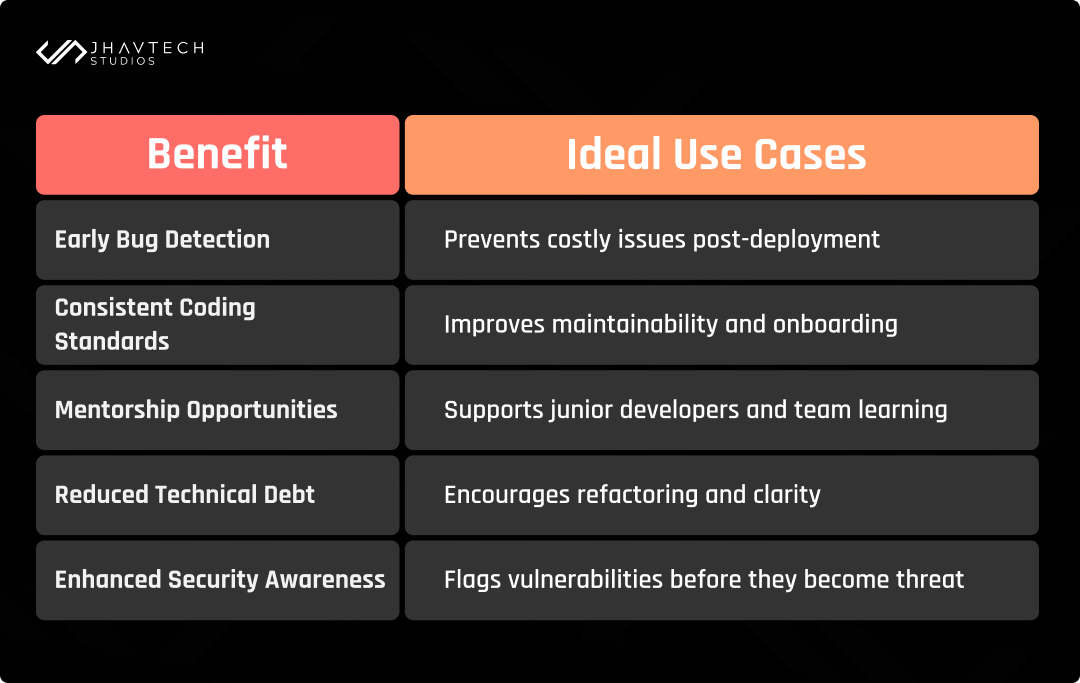%20Article%201%20-%20Body%201.png) ## Reducing Technical Debt and Ensuring Long-Term Maintainability Shortcuts made under pressure—like omitting unit tests or relying on hardcoded values—can quietly accumulate over time. The result is [technical debt](https://www.jhavtech.com.au/top-strategies-for-app-project-rescue/): a fragile codebase that becomes increasingly difficult to maintain or scale. Left unchecked, it can slow down development, introduce bugs, and increase long-term costs, making even simple updates feel like navigating a minefield. **A peer review process can catch these early. For instance:** - Suggesting test coverage for new features - Flagging duplicate logic - Recommending modular structures instead of monolithic functions When feedback loops are consistent, developers think more deliberately before pushing code. That shift, from reactive to proactive development—can save hundreds of hours in future rewrites. ## How Code Review Supports Team Growth and Collaboration 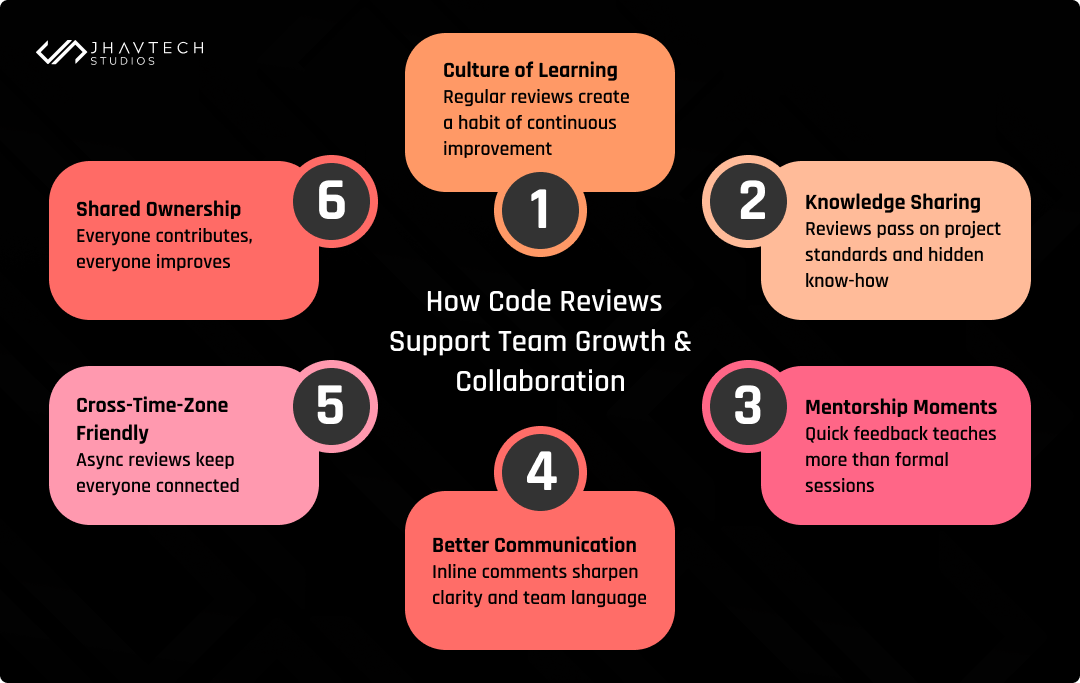%20Article%201%20-%20Body%202%202.png) A good code review isn’t just about improving code—it’s about elevating the people behind it. Every review session creates a learning moment, whether it’s helping a junior developer understand project conventions or giving a senior engineer the chance to fine-tune their feedback skills. Over time, this steady exchange of ideas shapes a team that not only writes cleaner code but collaborates more effectively. For distributed teams working across different time zones, review processes become even more valuable. In these asynchronous environments, inline comments, pull request discussions, and version tracking serve as critical touchpoints. They help teams stay in sync without the need for constant meetings, making the workflow more efficient and inclusive. What makes this process especially powerful is its informal mentorship. A quick comment explaining why one approach is better than another can often teach more than a formal training session. These small but frequent interactions build a shared understanding of best practices, reduce silos, and foster a culture of collective ownership. ## The Importance of Security in Every Line of Code Security flaws rarely come from dramatic errors—they’re often the result of small oversights: missing input validation, exposed API endpoints, or inconsistent access controls. While automated tools like static analyzers are useful for catching surface-level issues, they lack the deeper context that human reviewers bring. During a code review, a developer might notice hardcoded credentials, improper error handling that reveals system details, or the absence of rate limiting on an endpoint. These may seem minor in isolation, but in production, they can open the door to serious vulnerabilities. In highly regulated industries—like healthcare, finance, or education—these mistakes can have legal, financial, and reputational consequences. That’s why incorporating security awareness into peer reviews is critical. It’s one of the last—and most human—lines of defense against threats that automated tools might miss. By embedding secure coding principles into every review, teams foster a mindset where security isn’t a checklist item—it’s a shared responsibility baked into the development process. ## Adapting to Agile and CI/CD Workflows Some teams worry that peer feedback might slow down Agile or DevOps pipelines. The key is to integrate the review process into your development rhythm instead of treating it as a bottleneck. Modern tools like GitHub, GitLab, and Bitbucket make it easy to assign reviewers, leave inline comments, and trigger tests automatically. With the right setup, reviews can happen asynchronously, keeping your team moving. **Best practices include:** - Keeping pull requests small and focused - Setting clear review timelines (e.g., within 24 hours) - Automating low-level checks (formatting, linting, unit tests These habits allow you to maintain quality without sacrificing speed. ## Building a Culture of Quality Through Thoughtful Review When code review becomes a consistent part of the workflow, it naturally influences how developers think and work. Instead of writing code just to make it function, developers begin to write with clarity, context, and collaboration in mind. They anticipate feedback, add helpful comments, and align their work with shared team standards. Over time, this creates a development culture where quality isn’t just enforced—it’s expected. **The benefits ripple across the team:** - More maintainable code, with cleaner logic and better documentation - Stronger trust, as team members feel supported, not judged - Fewer regressions, since issues are caught early and lessons are shared - Faster onboarding, thanks to consistent patterns and readable code But perhaps the most powerful shift is in mindset: developers stop thinking in silos. Code becomes a shared responsibility—something the whole team owns and takes pride in, not just the person who wrote it. ## Real-World Impact: What the Numbers Say While the benefits of code review are easy to understand in theory, the real proof lies in the results. Across the industry, teams that consistently invest in peer review practices are seeing measurable improvements in code quality, delivery speed, and team satisfaction. These statistics highlight just how powerful code review can be when embedded into everyday workflows. **If you need more convincing, consider this:** - A study by Microsoft found that code review reduces defect density by up to 80%. - GitLab’s 2023 survey reported that 83% of [teams using peer feedback](https://moldstud.com/articles/p-devops-culture-in-crm-development-breaking-silos-for-enhanced-customer-engagement) delivered features faster and with fewer rollbacks. - Teams with consistent review practices also reported greater job satisfaction and lower turnover among developers. These aren’t just feel-good metrics. They translate directly to better business outcomes—faster releases, happier customers, and stronger team cohesion. ## Final Thoughts... Make Peer Review a Non-Negotiable Practice Peer review is one of the highest-leverage practices in software development. It reduces bugs, improves clarity, strengthens security, and empowers teams to grow together. Most importantly, it creates a culture of quality that extends beyond the codebase. For companies aiming to scale responsibly and deliver reliable products, building a culture that prioritizes expert feedback isn't just helpful—it’s essential. So the next time you hit “Submit” on a pull request, remember: every review is a chance to improve not just the code, but the team behind it. |
| json metadata | {"tags":["codereview","cleancode","devtips","softwareengineering","qualityassurance","teamefficiency","scalablecode","codequality"],"image":["https://cdn.steemitimages.com/DQmXF8JEHcjWoaikxVu4X9YMUb2zVhEbuRujNbCxF5htYYM/(7-11%20JULY)%20Article%201%20-%20Banner.png","https://cdn.steemitimages.com/DQmNMQvkxYiogQHphedspQf9c9oj8ZPU1ohmKeixuZwgnDc/(7-11%20JULY)%20Article%201%20-%20Body%201.png","https://cdn.steemitimages.com/DQmV8U9EqP4ZtDi1ZbMcDZTHMRiZjvYbtRexUxJ2SwrZSj6/(7-11%20JULY)%20Article%201%20-%20Body%202%202.png"],"links":["https://www.jhavtech.com.au/free-code-review/","https://www.jhavtech.com.au/top-strategies-for-app-project-rescue/","https://moldstud.com/articles/p-devops-culture-in-crm-development-breaking-silos-for-enhanced-customer-engagement"],"app":"steemit/0.2","format":"markdown"} |
| parent author | |
| parent permlink | codereview |
| permlink | the-code-review-advantage-how-expert-feedback-boosts-quality |
| title | The Code Review Advantage: How Expert Feedback Boosts Quality |
| Transaction Info | Block #97189032/Trx 5e122a3e6bb3d23c9ba7998da78a3fabef1791f0 |
View Raw JSON Data
{
"block": 97189032,
"op": [
"comment",
{
"author": "jhavtech",
"body": "%20Article%201%20-%20Banner.png)\n\nIn today’s competitive tech landscape, clean, reliable code isn’t a luxury—it’s a necessity. Whether you’re building a mobile app, a cloud platform, or an internal tool, product success depends heavily on the quality of your codebase. While rapid releases and flashy features often steal the spotlight, one practice quietly underpins long-term software excellence: code review. \n\nPeer reviews are one of the most effective ways to improve software quality, reduce bugs, and strengthen teams. In this article, we’ll explore how expert feedback can transform not just your code, but your entire development culture. And while it’s not about nitpicking semicolons, we’ll show how a balanced approach to reviewing code can elevate everything from security to scalability. \n \n\n## Why Code Review Is More Than Just a Second Set of Eyes \n\nAt its core, code review is more than just finding typos or missed semicolons. It’s a structured process for evaluating logic, checking alignment with architecture, identifying edge cases, and ensuring consistency. \n\nAccording to the 2024 Stack Overflow Developer Survey, over 70% of developers say they participate in regular peer reviews. And for good reason: thoughtful feedback leads to fewer bugs, stronger collaboration, and cleaner codebases. \n\nUnlike automated tools, peer reviews offer contextual insights. A reviewer might flag unclear logic, suggest better naming conventions, or spot redundant code. These little moments of feedback, when multiplied across a team and over time, dramatically improve the quality and readability of a codebase. \n\n## Key Benefits of Conducting a Code Review \n\nConducting a thorough code [review](https://www.jhavtech.com.au/free-code-review/) isn’t just about catching mistakes—it’s about reinforcing habits that lead to better software and stronger teams. When teams make reviewing code a consistent part of their workflow, the benefits go far beyond the immediate pull request. From reducing bugs to supporting junior developers, ripple effects can be seen across the entire development lifecycle. Here’s a quick look at how a well-executed review process contributes to team success: \n\n\n%20Article%201%20-%20Body%201.png)\n \n## Reducing Technical Debt and Ensuring Long-Term Maintainability \n \nShortcuts made under pressure—like omitting unit tests or relying on hardcoded values—can quietly accumulate over time. The result is [technical debt](https://www.jhavtech.com.au/top-strategies-for-app-project-rescue/): a fragile codebase that becomes increasingly difficult to maintain or scale. Left unchecked, it can slow down development, introduce bugs, and increase long-term costs, making even simple updates feel like navigating a minefield. \n \n**A peer review process can catch these early. For instance:**\n\n- Suggesting test coverage for new features \n- Flagging duplicate logic \n- Recommending modular structures instead of monolithic functions \n\nWhen feedback loops are consistent, developers think more deliberately before pushing code. That shift, from reactive to proactive development—can save hundreds of hours in future rewrites. \n\n## How Code Review Supports Team Growth and Collaboration \n \n \n%20Article%201%20-%20Body%202%202.png)\n\nA good code review isn’t just about improving code—it’s about elevating the people behind it. Every review session creates a learning moment, whether it’s helping a junior developer understand project conventions or giving a senior engineer the chance to fine-tune their feedback skills. Over time, this steady exchange of ideas shapes a team that not only writes cleaner code but collaborates more effectively. \n\nFor distributed teams working across different time zones, review processes become even more valuable. In these asynchronous environments, inline comments, pull request discussions, and version tracking serve as critical touchpoints. They help teams stay in sync without the need for constant meetings, making the workflow more efficient and inclusive. \n\nWhat makes this process especially powerful is its informal mentorship. A quick comment explaining why one approach is better than another can often teach more than a formal training session. These small but frequent interactions build a shared understanding of best practices, reduce silos, and foster a culture of collective ownership. \n\n \n## The Importance of Security in Every Line of Code \n\nSecurity flaws rarely come from dramatic errors—they’re often the result of small oversights: missing input validation, exposed API endpoints, or inconsistent access controls. While automated tools like static analyzers are useful for catching surface-level issues, they lack the deeper context that human reviewers bring. \n\nDuring a code review, a developer might notice hardcoded credentials, improper error handling that reveals system details, or the absence of rate limiting on an endpoint. These may seem minor in isolation, but in production, they can open the door to serious vulnerabilities. \n\nIn highly regulated industries—like healthcare, finance, or education—these mistakes can have legal, financial, and reputational consequences. That’s why incorporating security awareness into peer reviews is critical. It’s one of the last—and most human—lines of defense against threats that automated tools might miss. \n\nBy embedding secure coding principles into every review, teams foster a mindset where security isn’t a checklist item—it’s a shared responsibility baked into the development process. \n\n \n## Adapting to Agile and CI/CD Workflows \n \nSome teams worry that peer feedback might slow down Agile or DevOps pipelines. The key is to integrate the review process into your development rhythm instead of treating it as a bottleneck. \n \nModern tools like GitHub, GitLab, and Bitbucket make it easy to assign reviewers, leave inline comments, and trigger tests automatically. With the right setup, reviews can happen asynchronously, keeping your team moving. \n \n**Best practices include:**\n\n- Keeping pull requests small and focused \n- Setting clear review timelines (e.g., within 24 hours) \n- Automating low-level checks (formatting, linting, unit tests \n\nThese habits allow you to maintain quality without sacrificing speed. \n\n \n\n## Building a Culture of Quality Through Thoughtful Review \n\nWhen code review becomes a consistent part of the workflow, it naturally influences how developers think and work. Instead of writing code just to make it function, developers begin to write with clarity, context, and collaboration in mind. They anticipate feedback, add helpful comments, and align their work with shared team standards. \n\nOver time, this creates a development culture where quality isn’t just enforced—it’s expected. \n \n**The benefits ripple across the team:**\n\n- More maintainable code, with cleaner logic and better documentation \n- Stronger trust, as team members feel supported, not judged \n- Fewer regressions, since issues are caught early and lessons are shared \n- Faster onboarding, thanks to consistent patterns and readable code \n\nBut perhaps the most powerful shift is in mindset: developers stop thinking in silos. Code becomes a shared responsibility—something the whole team owns and takes pride in, not just the person who wrote it. \n \n## Real-World Impact: What the Numbers Say \n \nWhile the benefits of code review are easy to understand in theory, the real proof lies in the results. Across the industry, teams that consistently invest in peer review practices are seeing measurable improvements in code quality, delivery speed, and team satisfaction. These statistics highlight just how powerful code review can be when embedded into everyday workflows. \n \n**If you need more convincing, consider this:**\n\n- A study by Microsoft found that code review reduces defect density by up to 80%. \n- GitLab’s 2023 survey reported that 83% of [teams using peer feedback](https://moldstud.com/articles/p-devops-culture-in-crm-development-breaking-silos-for-enhanced-customer-engagement) delivered features faster and with fewer rollbacks. \n- Teams with consistent review practices also reported greater job satisfaction and lower turnover among developers. \n\nThese aren’t just feel-good metrics. They translate directly to better business outcomes—faster releases, happier customers, and stronger team cohesion. \n\n## Final Thoughts... Make Peer Review a Non-Negotiable Practice \n\nPeer review is one of the highest-leverage practices in software development. It reduces bugs, improves clarity, strengthens security, and empowers teams to grow together. Most importantly, it creates a culture of quality that extends beyond the codebase. \n\nFor companies aiming to scale responsibly and deliver reliable products, building a culture that prioritizes expert feedback isn't just helpful—it’s essential. So the next time you hit “Submit” on a pull request, remember: every review is a chance to improve not just the code, but the team behind it.",
"json_metadata": "{\"tags\":[\"codereview\",\"cleancode\",\"devtips\",\"softwareengineering\",\"qualityassurance\",\"teamefficiency\",\"scalablecode\",\"codequality\"],\"image\":[\"https://cdn.steemitimages.com/DQmXF8JEHcjWoaikxVu4X9YMUb2zVhEbuRujNbCxF5htYYM/(7-11%20JULY)%20Article%201%20-%20Banner.png\",\"https://cdn.steemitimages.com/DQmNMQvkxYiogQHphedspQf9c9oj8ZPU1ohmKeixuZwgnDc/(7-11%20JULY)%20Article%201%20-%20Body%201.png\",\"https://cdn.steemitimages.com/DQmV8U9EqP4ZtDi1ZbMcDZTHMRiZjvYbtRexUxJ2SwrZSj6/(7-11%20JULY)%20Article%201%20-%20Body%202%202.png\"],\"links\":[\"https://www.jhavtech.com.au/free-code-review/\",\"https://www.jhavtech.com.au/top-strategies-for-app-project-rescue/\",\"https://moldstud.com/articles/p-devops-culture-in-crm-development-breaking-silos-for-enhanced-customer-engagement\"],\"app\":\"steemit/0.2\",\"format\":\"markdown\"}",
"parent_author": "",
"parent_permlink": "codereview",
"permlink": "the-code-review-advantage-how-expert-feedback-boosts-quality",
"title": "The Code Review Advantage: How Expert Feedback Boosts Quality"
}
],
"op_in_trx": 0,
"timestamp": "2025-07-10T05:24:03",
"trx_id": "5e122a3e6bb3d23c9ba7998da78a3fabef1791f0",
"trx_in_block": 1,
"virtual_op": 0
}2025/04/14 09:33:00
2025/04/14 09:33:00
| delegatee | jhavtech |
| delegator | steem |
| vesting shares | 5587.824658 VESTS |
| Transaction Info | Block #94694866/Trx 27ad37b6ea3728a5a745361be3e4cc1b00209c41 |
View Raw JSON Data
{
  "block": 94694866,
  "op": [
    "delegate_vesting_shares",
    {
      "delegatee": "jhavtech",
      "delegator": "steem",
      "vesting_shares": "5587.824658 VESTS"
    }
  ],
  "op_in_trx": 0,
  "timestamp": "2025-04-14T09:33:00",
  "trx_id": "27ad37b6ea3728a5a745361be3e4cc1b00209c41",
  "trx_in_block": 0,
  "virtual_op": 0
}2025/01/13 06:48:36
2025/01/13 06:48:36
| author | jhavtech |
| permlink | top-5-strategies-to-strengthen-desktop-app-development-against-cyber-threats |
| voter | abdulmomin |
| weight | 1000 (10.00%) |
| Transaction Info | Block #92078357/Trx 849c6f1435123c1f4cce16cd06ed6a2d34a411b8 |
View Raw JSON Data
{
  "block": 92078357,
  "op": [
    "vote",
    {
      "author": "jhavtech",
      "permlink": "top-5-strategies-to-strengthen-desktop-app-development-against-cyber-threats",
      "voter": "abdulmomin",
      "weight": 1000
    }
  ],
  "op_in_trx": 0,
  "timestamp": "2025-01-13T06:48:36",
  "trx_id": "849c6f1435123c1f4cce16cd06ed6a2d34a411b8",
  "trx_in_block": 0,
  "virtual_op": 0
}jhavtechpublished a new post: top-5-strategies-to-strengthen-desktop-app-development-against-cyber-threats2025/01/13 06:45:30
jhavtechpublished a new post: top-5-strategies-to-strengthen-desktop-app-development-against-cyber-threats
2025/01/13 06:45:30
| author | jhavtech |
| body | %20(1).png) With the surge in cyber threats, securing desktop applications has become a critical focus for developers and businesses alike. Cybercriminals are constantly seeking vulnerabilities, making it essential to integrate robust security measures throughout your desktop app development process. Below are the top five strategies, each expanded to provide deeper insights and actionable steps for safeguarding your applications against cyber threats. ## 1. Prioritize Secure Coding Practices Secure coding is the cornerstone of any well-protected application. By writing clean, secure code, you minimize potential vulnerabilities that hackers could exploit. This approach encompasses several key practices: **Input Validation:** Ensure all user inputs are thoroughly validated to prevent injection attacks like SQL injection or cross-site scripting (XSS). For instance, sanitize input fields to reject any malicious code. **Avoid Hard-Coded Credentials:** Use environment variables or secure vaults to store sensitive information like API keys and passwords. Hard-coded credentials are an easy target for attackers. **Adopt Code Analysis Tools:**Implement static and dynamic code analysis tools to identify vulnerabilities early in the development cycle. For example, tools like SonarQube can provide detailed insights into your code’s security. **Regular Code Reviews:** Establish a routine for peer code reviews to ensure compliance with security standards and best practices. By embedding these principles into your [desktop app development](https://www.jhavtech.com.au/desktop-application-development-service/) process, you build a strong foundation for your application’s security. ## 2. Encrypt All Sensitive Data ## 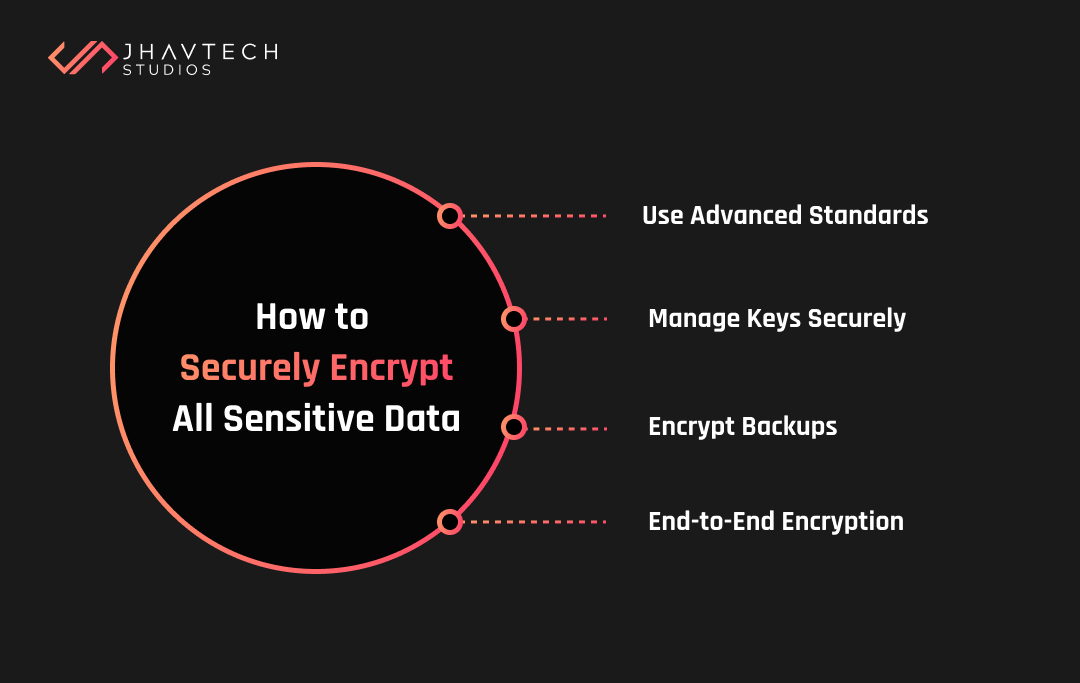%20(1).png) Encryption is essential for protecting sensitive data, whether it’s at rest or in transit. A lack of robust encryption exposes your application to data breaches and unauthorized access. To implement encryption effectively: **Use Advanced Standards:** Employ AES-256 encryption for data storage and [HTTPS protocols](https://www.geeksforgeeks.org/explain-working-of-https/) for secure data transmission. These standards ensure your data remains unintelligible to unauthorized entities. **Encrypt Backups:** Ensure all backups are encrypted to prevent data leaks in case of a breach. For example, database backups should be stored in encrypted formats. **Manage Keys Securely:** Use a dedicated key management system to handle encryption keys. Rotate keys periodically to reduce the risk of compromise. **End-to-End Encryption:** If your application handles sensitive communication, ensure that all data exchanges are encrypted from sender to recipient. Encryption acts as a protective shield, safeguarding sensitive information even if it falls into the wrong hands. This step is a vital aspect of any desktop app development project aimed at creating secure software solutions. ## 3. Implement Multi-Factor Authentication (MFA) ## Multi-factor authentication (MFA) adds an extra layer of protection, making it significantly harder for attackers to gain unauthorized access. Incorporating MFA into your desktop app development process provides numerous benefits while also enhancing the [user experience](https://www.jhavtech.com.au/what-is-ux-digital-experiences/) by balancing security and convenience: **Enhanced Security:** Even if an attacker obtains a user’s password, MFA ensures they cannot access the account without the additional authentication factor. **Diverse Authentication Methods:** Use methods such as biometric verification (e.g., fingerprints), time-based one-time passwords (TOTP), or hardware tokens for a robust MFA system. **User Awareness:** Educate users about the importance of MFA and guide them through its setup process for seamless adoption. By making MFA a standard feature, you can significantly reduce the risk of unauthorized access to your application. It also demonstrates your commitment to prioritizing security in desktop app development. ## 4. Conduct Regular Security Audits and Penetration Testing ## Proactive security measures like audits and penetration testing help identify and mitigate vulnerabilities before attackers exploit them. Here’s how to make these practices more effective: **Automated Scanning:** Use automated vulnerability scanning tools to detect potential weaknesses in your code and architecture. **Professional Penetration Testing:** Hire ethical hackers to simulate real-world attack scenarios and uncover hidden vulnerabilities. Ensure these tests are conducted periodically and after significant updates. **Compliance Checks:** Regularly evaluate your application against industry security standards and regulations to maintain compliance and build user trust. Integrating security audits and penetration testing into your desktop app development lifecycle ensures continuous improvement and resilience against evolving threats. These measures create a secure environment, fortifying your application against known and emerging risks. ## 5. Secure API Endpoints and External Integrations ## APIs often serve as a bridge between your application and external systems, making them a prime target for attackers. To secure your API endpoints, take note of the following: **Strong Authentication:** Implement OAuth2, API keys, or other robust authentication mechanisms to control access. **Data Validation:** Validate all incoming and outgoing data to prevent injection attacks or data corruption. **Rate Limiting and Monitoring:** Set rate limits to prevent abuse and monitor API usage for unusual activity, such as a spike in requests. **Encryption:** Ensure all API communications are encrypted to safeguard data in transit. By protecting your API endpoints, you eliminate a common entry point for cyber threats and enhance the overall security of your desktop app. Strong API security is integral to building trustworthy software in desktop app development. ## Final Thoughts… ## Securing desktop applications is an ongoing commitment that requires attention at every stage of development. By prioritizing secure coding, encryption, MFA, regular audits, and API security, you can build robust defenses against cyber threats. Remember, desktop app development is not just about functionality—it’s also about ensuring your applications remain safe for users in an increasingly hostile cyber environment. Staying proactive, continuously updating your defenses, and adhering to best practices will ensure long-term success and security for your software. |
| json metadata | {"tags":["cybersecurity","appdevelopment","desktopapps","cyberthreats","softwaresecurity","appsecurity","developmentstrategies","techsecurity"],"image":["https://cdn.steemitimages.com/DQmb5Qj8qyvGwDnMEzWyco2vWtwu8bEz6XwBiNNBy4d8C9T/Article%201%20-%20Banner%20(23-27%20dec)%20(1).png","https://cdn.steemitimages.com/DQmdzZgFUJhjk4ybzrz8jPLELdyAXDWonADnGNSEJ8ry6ki/Article%201%20-%20Body%20(23-27%20dec)%20(1).png"],"links":["https://www.jhavtech.com.au/desktop-application-development-service/","https://www.geeksforgeeks.org/explain-working-of-https/","https://www.jhavtech.com.au/what-is-ux-digital-experiences/"],"app":"steemit/0.2","format":"markdown"} |
| parent author | |
| parent permlink | cybersecurity |
| permlink | top-5-strategies-to-strengthen-desktop-app-development-against-cyber-threats |
| title | Top 5 Strategies to Strengthen Desktop App Development Against Cyber Threats |
| Transaction Info | Block #92078296/Trx ca95243385846e6bfc8f1df05334c1defa6fad80 |
View Raw JSON Data
{
"block": 92078296,
"op": [
"comment",
{
"author": "jhavtech",
"body": "%20(1).png)\n\nWith the surge in cyber threats, securing desktop applications has become a critical focus for developers and businesses alike. Cybercriminals are constantly seeking vulnerabilities, making it essential to integrate robust security measures throughout your desktop app development process. Below are the top five strategies, each expanded to provide deeper insights and actionable steps for safeguarding your applications against cyber threats. \n \n ## 1. Prioritize Secure Coding Practices\n\nSecure coding is the cornerstone of any well-protected application. By writing clean, secure code, you minimize potential vulnerabilities that hackers could exploit. This approach encompasses several key practices: \n\n**Input Validation:** Ensure all user inputs are thoroughly validated to prevent injection attacks like SQL injection or cross-site scripting (XSS). For instance, sanitize input fields to reject any malicious code. \n\n**Avoid Hard-Coded Credentials:** Use environment variables or secure vaults to store sensitive information like API keys and passwords. Hard-coded credentials are an easy target for attackers. \n\n**Adopt Code Analysis Tools:**Implement static and dynamic code analysis tools to identify vulnerabilities early in the development cycle. For example, tools like SonarQube can provide detailed insights into your code’s security. \n\n**Regular Code Reviews:** Establish a routine for peer code reviews to ensure compliance with security standards and best practices. \n\nBy embedding these principles into your [desktop app development](https://www.jhavtech.com.au/desktop-application-development-service/) process, you build a strong foundation for your application’s security. \n \n\n## 2. Encrypt All Sensitive Data ## \n\n%20(1).png)\n\n\nEncryption is essential for protecting sensitive data, whether it’s at rest or in transit. A lack of robust encryption exposes your application to data breaches and unauthorized access. To implement encryption effectively: \n\n**Use Advanced Standards:** Employ AES-256 encryption for data storage and [HTTPS protocols](https://www.geeksforgeeks.org/explain-working-of-https/) for secure data transmission. These standards ensure your data remains unintelligible to unauthorized entities. \n\n**Encrypt Backups:** Ensure all backups are encrypted to prevent data leaks in case of a breach. For example, database backups should be stored in encrypted formats. \n\n**Manage Keys Securely:** Use a dedicated key management system to handle encryption keys. Rotate keys periodically to reduce the risk of compromise. \n\n**End-to-End Encryption:** If your application handles sensitive communication, ensure that all data exchanges are encrypted from sender to recipient. \n\nEncryption acts as a protective shield, safeguarding sensitive information even if it falls into the wrong hands. This step is a vital aspect of any desktop app development project aimed at creating secure software solutions. \n\n## 3. Implement Multi-Factor Authentication (MFA) ## \n\nMulti-factor authentication (MFA) adds an extra layer of protection, making it significantly harder for attackers to gain unauthorized access. Incorporating MFA into your desktop app development process provides numerous benefits while also enhancing the [user experience](https://www.jhavtech.com.au/what-is-ux-digital-experiences/) by balancing security and convenience: \n\n**Enhanced Security:** Even if an attacker obtains a user’s password, MFA ensures they cannot access the account without the additional authentication factor. \n\n**Diverse Authentication Methods:** Use methods such as biometric verification (e.g., fingerprints), time-based one-time passwords (TOTP), or hardware tokens for a robust MFA system. \n\n**User Awareness:** Educate users about the importance of MFA and guide them through its setup process for seamless adoption. \n\nBy making MFA a standard feature, you can significantly reduce the risk of unauthorized access to your application. It also demonstrates your commitment to prioritizing security in desktop app development. \n \n## 4. Conduct Regular Security Audits and Penetration Testing ## \n\nProactive security measures like audits and penetration testing help identify and mitigate vulnerabilities before attackers exploit them. Here’s how to make these practices more effective: \n\n**Automated Scanning:** Use automated vulnerability scanning tools to detect potential weaknesses in your code and architecture. \n\n**Professional Penetration Testing:** Hire ethical hackers to simulate real-world attack scenarios and uncover hidden vulnerabilities. Ensure these tests are conducted periodically and after significant updates. \n\n**Compliance Checks:** Regularly evaluate your application against industry security standards and regulations to maintain compliance and build user trust. \n\nIntegrating security audits and penetration testing into your desktop app development lifecycle ensures continuous improvement and resilience against evolving threats. These measures create a secure environment, fortifying your application against known and emerging risks. \n\n## 5. Secure API Endpoints and External Integrations ## \n\nAPIs often serve as a bridge between your application and external systems, making them a prime target for attackers. To secure your API endpoints, take note of the following: \n\n**Strong Authentication:** Implement OAuth2, API keys, or other robust authentication mechanisms to control access. \n\n**Data Validation:** Validate all incoming and outgoing data to prevent injection attacks or data corruption. \n\n**Rate Limiting and Monitoring:** Set rate limits to prevent abuse and monitor API usage for unusual activity, such as a spike in requests. \n\n**Encryption:** Ensure all API communications are encrypted to safeguard data in transit. \n\nBy protecting your API endpoints, you eliminate a common entry point for cyber threats and enhance the overall security of your desktop app. Strong API security is integral to building trustworthy software in desktop app development. \n \n## Final Thoughts… ## \n\nSecuring desktop applications is an ongoing commitment that requires attention at every stage of development. By prioritizing secure coding, encryption, MFA, regular audits, and API security, you can build robust defenses against cyber threats. Remember, desktop app development is not just about functionality—it’s also about ensuring your applications remain safe for users in an increasingly hostile cyber environment. Staying proactive, continuously updating your defenses, and adhering to best practices will ensure long-term success and security for your software.",
"json_metadata": "{\"tags\":[\"cybersecurity\",\"appdevelopment\",\"desktopapps\",\"cyberthreats\",\"softwaresecurity\",\"appsecurity\",\"developmentstrategies\",\"techsecurity\"],\"image\":[\"https://cdn.steemitimages.com/DQmb5Qj8qyvGwDnMEzWyco2vWtwu8bEz6XwBiNNBy4d8C9T/Article%201%20-%20Banner%20(23-27%20dec)%20(1).png\",\"https://cdn.steemitimages.com/DQmdzZgFUJhjk4ybzrz8jPLELdyAXDWonADnGNSEJ8ry6ki/Article%201%20-%20Body%20(23-27%20dec)%20(1).png\"],\"links\":[\"https://www.jhavtech.com.au/desktop-application-development-service/\",\"https://www.geeksforgeeks.org/explain-working-of-https/\",\"https://www.jhavtech.com.au/what-is-ux-digital-experiences/\"],\"app\":\"steemit/0.2\",\"format\":\"markdown\"}",
"parent_author": "",
"parent_permlink": "cybersecurity",
"permlink": "top-5-strategies-to-strengthen-desktop-app-development-against-cyber-threats",
"title": "Top 5 Strategies to Strengthen Desktop App Development Against Cyber Threats"
}
],
"op_in_trx": 0,
"timestamp": "2025-01-13T06:45:30",
"trx_id": "ca95243385846e6bfc8f1df05334c1defa6fad80",
"trx_in_block": 3,
"virtual_op": 0
}jhavtechpublished a new post: the-pros-and-cons-of-building-a-cross-platform-mobile-app2025/01/02 08:42:51
jhavtechpublished a new post: the-pros-and-cons-of-building-a-cross-platform-mobile-app
2025/01/02 08:42:51
| author | jhavtech |
| body | .png) In today’s digital landscape, having a mobile app is no longer optional for businesses aiming to remain competitive. With over 7 billion mobile device users globally, businesses need to create apps that cater to both iOS and Android audiences. This growing demand has made cross-platform mobile app development a popular choice, offering efficiency and cost savings. However, this approach also has its challenges. Let’s dive into the pros and cons of building a cross-platform mobile app to help you decide whether it’s the right fit for your business. ## What is a Cross-Platform Mobile App? ## A cross-platform mobile app is developed using a single codebase, allowing it to function on multiple operating systems such as iOS and Android. Popular frameworks like Flutter, React Native, and Xamarin facilitate this approach, streamlining the development process. Unlike native apps, which require separate codebases for each platform, cross-platform apps are designed for quicker deployment and reduced costs, making them an appealing option for businesses of all sizes. ## Pros of Building a Cross-Platform Mobile App ## ### 1. Cost-Effectiveness ### Cross-platform mobile app development significantly reduces costs by eliminating the need to hire separate development teams for iOS and Android. A single codebase means fewer resources are required, making this an attractive option for startups and small businesses. According to a 2023 Clutch survey, businesses reported saving up to 40% in development costs by opting for cross-platform solutions. ### 2. Faster Development Time ### By leveraging frameworks like Flutter or React Native, developers can write code once and deploy it across platforms. This efficiency cuts down development time considerably. On average, [cross-platform mobile apps](https://www.jhavtech.com.au/xamarin-flutter-react-native/) take 30–50% less time to develop compared to native apps. Faster delivery allows businesses to launch quickly, adapt to user feedback, and implement updates more promptly. ### 3. Wider Audience Reach ### A cross-platform mobile app ensures simultaneous accessibility for iOS and Android users, maximizing market reach. As of 2024, Android holds approximately 70% of the global market share, with iOS accounting for 28%. Building a cross-platform app lets businesses tap into both segments without the need for separate development efforts, ensuring broader visibility and user engagement. ### 4. Easier Maintenance and Updates ### Since cross-platform apps share a single codebase, updates and bug fixes can be deployed across platforms simultaneously. This consistency simplifies maintenance and reduces long-term operational costs. Moreover, a unified codebase ensures that users on both operating systems experience consistent updates and improvements. ### 5. Consistent User Experience ### Cross-platform frameworks enable developers to create apps with a uniform design and functionality across devices. This consistency fosters a [seamless user experience](https://www.jhavtech.com.au/what-is-ux-digital-experiences/), regardless of whether the app is accessed on an Android or iOS device. In today’s competitive app market, a cohesive user experience is critical for building brand loyalty. ## Cons of Building a Cross-Platform Mobile App ## 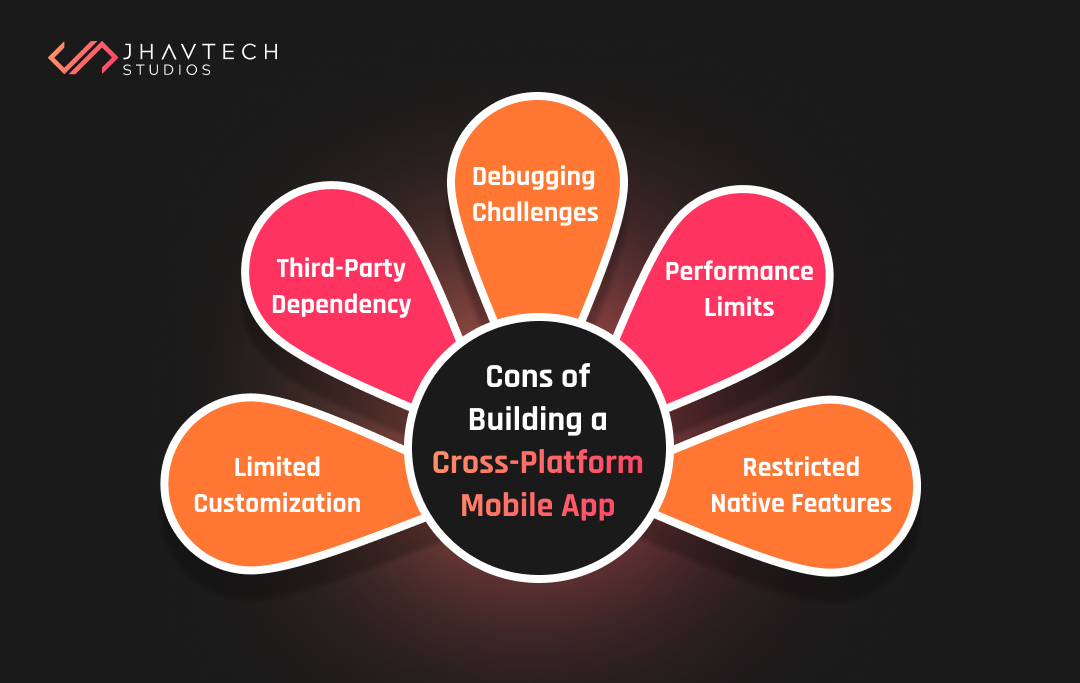.png) ### 1. Limited Performance ### Despite their advantages, cross-platform mobile apps often fall short of native apps in terms of performance. The additional layer of abstraction required to make the app compatible with multiple platforms can result in slower execution and occasional glitches. For resource-intensive applications, such as high-end gaming or augmented reality, this performance gap can be a critical limitation. ### 2. Limited Access to Native Features ### Cross-platform frameworks sometimes lack full support for native device features. While they cover basic functionalities, integrating advanced features like augmented reality or Bluetooth Low Energy (BLE) sensors can be challenging. Native apps, in contrast, offer direct access to platform-specific APIs, ensuring better performance and functionality. ### 3. Customization Constraints ### Achieving highly customized designs and interactions is more complex with cross-platform mobile apps. While frameworks like Flutter offer considerable flexibility, they may not match the level of customization achievable with native development. Businesses requiring unique [UI/UX design](https://www.jhavtech.com.au/ui-ux-design-service/) or platform-specific designs may face limitations. ### 4. Dependency on Third-Party Tools ### Cross-platform development relies heavily on frameworks like React Native or Flutter. If these frameworks face compatibility issues or bugs, it can disrupt development schedules and app functionality. Businesses must remain aware of updates and changes to their chosen tools to mitigate risks. ### 5. Increased Debugging Efforts ### Although cross-platform development reduces initial coding efforts, it may lead to platform-specific bugs that require individual debugging. This can offset some of the time saved during development, especially when ensuring compatibility across different devices and operating systems. ## When to Choose a Cross-Platform Mobile App ## Cross-platform mobile app development is ideal for businesses prioritizing cost efficiency, speed, and audience reach. For projects with tight deadlines or limited budgets, this approach can be a game-changer. It’s especially suitable for developing MVPs (Minimum Viable Products) to test market response quickly. ## When to Opt for Native Development ## If your mobile app requires high performance, advanced features, or extensive customization, native development is the better option. For example, apps involving complex graphics, gaming, or intricate hardware integration are best suited to native platforms to ensure optimal functionality and user experience. ## Final Thoughts... ## Building a cross-platform mobile app can be a strategic choice for businesses looking to save costs, accelerate development, and target a broader audience. However, it’s essential to weigh these benefits against the potential drawbacks, such as limited performance and access to native features. By understanding your business goals and project requirements, you can determine whether cross-platform development aligns with your needs. Ultimately, whether you choose a cross-platform or native approach, the key is to focus on delivering value and an exceptional user experience. With the right strategy, your mobile app can become a powerful tool to engage users, drive growth, and build lasting connections. |
| json metadata | {"tags":["crossplatformapps","mobileappdevelopment","appdevelopment","techtrends","iosapps","androidapps","mobiletechnology","appdesign"],"image":["https://cdn.steemitimages.com/DQmTaKxA7a1JktvJEtE5axyLE8Px4nim43YuUacg4tbTUjd/Article%201%20-%20Banner%20(23-27%20dec).png","https://cdn.steemitimages.com/DQmNqWWVfAt7VzdTWfejhBbDqbjVQCm1R7xpf2ZCnyZyAAG/Article%201%20-%20Body%20(23-27%20dec).png"],"links":["https://www.jhavtech.com.au/xamarin-flutter-react-native/","https://www.jhavtech.com.au/what-is-ux-digital-experiences/","https://www.jhavtech.com.au/ui-ux-design-service/"],"app":"steemit/0.2","format":"markdown"} |
| parent author | |
| parent permlink | crossplatformapps |
| permlink | the-pros-and-cons-of-building-a-cross-platform-mobile-app |
| title | The Pros and Cons of Building a Cross-Platform Mobile App |
| Transaction Info | Block #91764557/Trx 72dacdc7f3d620f98541c587e28dd26b1bcdfb0c |
View Raw JSON Data
{
"block": 91764557,
"op": [
"comment",
{
"author": "jhavtech",
"body": ".png)\n\nIn today’s digital landscape, having a mobile app is no longer optional for businesses aiming to remain competitive. With over 7 billion mobile device users globally, businesses need to create apps that cater to both iOS and Android audiences. \n\nThis growing demand has made cross-platform mobile app development a popular choice, offering efficiency and cost savings. However, this approach also has its challenges. Let’s dive into the pros and cons of building a cross-platform mobile app to help you decide whether it’s the right fit for your business. \n\n## What is a Cross-Platform Mobile App? ##\n\nA cross-platform mobile app is developed using a single codebase, allowing it to function on multiple operating systems such as iOS and Android. Popular frameworks like Flutter, React Native, and Xamarin facilitate this approach, streamlining the development process. Unlike native apps, which require separate codebases for each platform, cross-platform apps are designed for quicker deployment and reduced costs, making them an appealing option for businesses of all sizes. \n\n## Pros of Building a Cross-Platform Mobile App ## \n\n### 1. Cost-Effectiveness ###\n\nCross-platform mobile app development significantly reduces costs by eliminating the need to hire separate development teams for iOS and Android. A single codebase means fewer resources are required, making this an attractive option for startups and small businesses. According to a 2023 Clutch survey, businesses reported saving up to 40% in development costs by opting for cross-platform solutions. \n\n### 2. Faster Development Time ###\n\nBy leveraging frameworks like Flutter or React Native, developers can write code once and deploy it across platforms. This efficiency cuts down development time considerably. On average, [cross-platform mobile apps](https://www.jhavtech.com.au/xamarin-flutter-react-native/) take 30–50% less time to develop compared to native apps. Faster delivery allows businesses to launch quickly, adapt to user feedback, and implement updates more promptly. \n\n### 3. Wider Audience Reach ### \n\nA cross-platform mobile app ensures simultaneous accessibility for iOS and Android users, maximizing market reach. As of 2024, Android holds approximately 70% of the global market share, with iOS accounting for 28%. Building a cross-platform app lets businesses tap into both segments without the need for separate development efforts, ensuring broader visibility and user engagement. \n\n### 4. Easier Maintenance and Updates ###\n\nSince cross-platform apps share a single codebase, updates and bug fixes can be deployed across platforms simultaneously. This consistency simplifies maintenance and reduces long-term operational costs. Moreover, a unified codebase ensures that users on both operating systems experience consistent updates and improvements. \n\n### 5. Consistent User Experience ###\n\nCross-platform frameworks enable developers to create apps with a uniform design and functionality across devices. This consistency fosters a [seamless user experience](https://www.jhavtech.com.au/what-is-ux-digital-experiences/), regardless of whether the app is accessed on an Android or iOS device. In today’s competitive app market, a cohesive user experience is critical for building brand loyalty. \n\n## Cons of Building a Cross-Platform Mobile App ##\n\n.png)\n\n### 1. Limited Performance ###\n\nDespite their advantages, cross-platform mobile apps often fall short of native apps in terms of performance. The additional layer of abstraction required to make the app compatible with multiple platforms can result in slower execution and occasional glitches. For resource-intensive applications, such as high-end gaming or augmented reality, this performance gap can be a critical limitation. \n\n### 2. Limited Access to Native Features ### \n\nCross-platform frameworks sometimes lack full support for native device features. While they cover basic functionalities, integrating advanced features like augmented reality or Bluetooth Low Energy (BLE) sensors can be challenging. Native apps, in contrast, offer direct access to platform-specific APIs, ensuring better performance and functionality. \n\n### 3. Customization Constraints ### \n\nAchieving highly customized designs and interactions is more complex with cross-platform mobile apps. While frameworks like Flutter offer considerable flexibility, they may not match the level of customization achievable with native development. Businesses requiring unique [UI/UX design](https://www.jhavtech.com.au/ui-ux-design-service/) or platform-specific designs may face limitations. \n\n### 4. Dependency on Third-Party Tools ### \n\nCross-platform development relies heavily on frameworks like React Native or Flutter. If these frameworks face compatibility issues or bugs, it can disrupt development schedules and app functionality. Businesses must remain aware of updates and changes to their chosen tools to mitigate risks. \n\n### 5. Increased Debugging Efforts ### \n\nAlthough cross-platform development reduces initial coding efforts, it may lead to platform-specific bugs that require individual debugging. This can offset some of the time saved during development, especially when ensuring compatibility across different devices and operating systems. \n\n## When to Choose a Cross-Platform Mobile App ## \n\nCross-platform mobile app development is ideal for businesses prioritizing cost efficiency, speed, and audience reach. For projects with tight deadlines or limited budgets, this approach can be a game-changer. It’s especially suitable for developing MVPs (Minimum Viable Products) to test market response quickly. \n\n## When to Opt for Native Development ## \n\nIf your mobile app requires high performance, advanced features, or extensive customization, native development is the better option. For example, apps involving complex graphics, gaming, or intricate hardware integration are best suited to native platforms to ensure optimal functionality and user experience. \n\n## Final Thoughts... ## \n\nBuilding a cross-platform mobile app can be a strategic choice for businesses looking to save costs, accelerate development, and target a broader audience. However, it’s essential to weigh these benefits against the potential drawbacks, such as limited performance and access to native features. By understanding your business goals and project requirements, you can determine whether cross-platform development aligns with your needs. \n\nUltimately, whether you choose a cross-platform or native approach, the key is to focus on delivering value and an exceptional user experience. With the right strategy, your mobile app can become a powerful tool to engage users, drive growth, and build lasting connections.",
"json_metadata": "{\"tags\":[\"crossplatformapps\",\"mobileappdevelopment\",\"appdevelopment\",\"techtrends\",\"iosapps\",\"androidapps\",\"mobiletechnology\",\"appdesign\"],\"image\":[\"https://cdn.steemitimages.com/DQmTaKxA7a1JktvJEtE5axyLE8Px4nim43YuUacg4tbTUjd/Article%201%20-%20Banner%20(23-27%20dec).png\",\"https://cdn.steemitimages.com/DQmNqWWVfAt7VzdTWfejhBbDqbjVQCm1R7xpf2ZCnyZyAAG/Article%201%20-%20Body%20(23-27%20dec).png\"],\"links\":[\"https://www.jhavtech.com.au/xamarin-flutter-react-native/\",\"https://www.jhavtech.com.au/what-is-ux-digital-experiences/\",\"https://www.jhavtech.com.au/ui-ux-design-service/\"],\"app\":\"steemit/0.2\",\"format\":\"markdown\"}",
"parent_author": "",
"parent_permlink": "crossplatformapps",
"permlink": "the-pros-and-cons-of-building-a-cross-platform-mobile-app",
"title": "The Pros and Cons of Building a Cross-Platform Mobile App"
}
],
"op_in_trx": 0,
"timestamp": "2025-01-02T08:42:51",
"trx_id": "72dacdc7f3d620f98541c587e28dd26b1bcdfb0c",
"trx_in_block": 0,
"virtual_op": 0
}jhavtechpublished a new post: 5-must-have-tools-for-effective-desktop-app-development2024/12/24 08:46:45
jhavtechpublished a new post: 5-must-have-tools-for-effective-desktop-app-development
2024/12/24 08:46:45
| author | jhavtech |
| body | %201.png) Desktop app development remains a cornerstone of the software industry, even as mobile and web applications dominate the digital landscape. For developers, building robust and efficient desktop applications requires the right tools to streamline workflows and enhance productivity. Whether you're a seasoned professional or just starting, having the right tools is essential to succeed in this ever-evolving field. In this article, we explore five must-have tools that every developer should know about to make their journey smoother and more efficient. ## 1. Visual Studio: Your All-in-One Development Environment ## When it comes to building desktop applications, Visual Studio stands out as one of the most versatile and reliable [integrated development environments (IDEs)](https://aws.amazon.com/what-is/ide/). Developed by Microsoft, Visual Studio supports popular programming languages such as C++, C#, and Visual Basic, making it a top choice for developing Windows and macOS applications. One of the standout features of Visual Studio is its powerful debugging tools, which allow developers to quickly identify and resolve issues. The IDE also offers an intuitive user interface and a vast library of plugins and extensions to customize the environment for specific project needs. Moreover, its built-in Git integration ensures seamless version control, which is crucial for collaborative projects. Whether you’re building a Windows-only solution or cross-platform apps, Visual Studio simplifies complex workflows, enabling faster and more efficient development. ## 2. Electron: Simplifying Cross-Platform Development ## For developers aiming to create cross-platform desktop applications, Electron is an indispensable tool. Built on Chromium and Node.js, Electron enables you to build apps using familiar web technologies like HTML, CSS, and JavaScript. This makes it a favorite among developers transitioning from web to desktop development. Electron’s key advantage is its ability to package web apps as native-like applications that work seamlessly across Windows, macOS, and Linux. This cross-platform compatibility eliminates the need to write separate codebases for different operating systems. Moreover, with access to the extensive JavaScript ecosystem, developers can integrate a wide range of libraries and frameworks to add advanced features. Well-known applications like Slack, Visual Studio Code, and Discord were all built using Electron, showcasing its potential in modern [desktop app development](https://www.jhavtech.com.au/desktop-application-development-service/). ## 3. Qt: A Framework for High-Performance Native Apps ## %203.png) If your focus is on creating native applications, Qt is an excellent choice. Qt is a powerful cross-platform development framework widely used for building high-performance graphical user interfaces (GUIs) and backend functionalities. Supporting multiple languages like C++, Python, and JavaScript, Qt offers developers the flexibility to work in their preferred programming environment. One of Qt’s biggest strengths is its ability to create applications that deliver a consistent and visually appealing user experience (UI/UX) across platforms like Windows, macOS, and Linux. The framework includes a vast library of widgets and tools for [UI/UX design](https://www.jhavtech.com.au/ui-ux-design-service/), database integration, and networking, making it a one-stop solution for end-to-end development. Additionally, the Qt Creator IDE enhances productivity with features like syntax highlighting, debugging tools, and integrated build systems. ## 4. Xcode: Ideal for macOS Desktop App Development ## For developers working within the Apple ecosystem, Xcode is the go-to IDE for macOS desktop app development. As Apple’s official development platform, Xcode provides everything you need to design, code, and debug applications tailored for macOS. Xcode’s standout feature is its seamless integration with the Apple ecosystem, allowing developers to create applications that align perfectly with macOS’s design principles. The Interface Builder makes designing user interfaces straightforward and efficient, while Swift, Apple’s modern programming language, ensures fast and reliable performance. Furthermore, Xcode’s testing tools and simulators enable developers to identify and fix potential issues before deployment, enhancing the overall quality of desktop apps. ## 5. Unity: Bringing Advanced Graphics to Desktop Applications ## Although Unity is primarily known as a game development engine, its capabilities extend far beyond gaming. Unity is an excellent tool for desktop app development, especially for applications requiring advanced graphics, animations, or interactive features. From educational tools to immersive simulations, Unity’s versatility makes it a powerful choice for creative developers. Unity supports cross-platform development, enabling developers to build apps for Windows, macOS, and Linux with a single codebase. Its rich asset store and comprehensive libraries allow rapid prototyping and feature integration, saving developers significant time. Unity’s use of C# as its primary scripting language also makes it accessible to a broad range of developers. Whether you're building a training simulation or an innovative media app, Unity opens up possibilities for crafting visually compelling and dynamic desktop applications. ## Final Thoughts… ## Effective desktop app development hinges on the tools you choose. The five tools highlighted here—Visual Studio, Electron, Qt, Xcode, and Unity—each bring unique strengths to the table, catering to different project requirements and developer expertise. Visual Studio and Xcode are excellent choices for platform-specific development, while Electron and Qt simplify cross-platform development for diverse audiences. For developers pushing the boundaries of creativity and interactivity, Unity offers unparalleled flexibility. By leveraging these tools, you can streamline your development process and deliver high-quality applications that meet modern user expectations. Whether you're building a feature-rich native app or a cross-platform solution, the right tools can make all the difference in achieving your goals. |
| json metadata | {"tags":["desktopappdevelopment","softwaretools","developerresources","programmingtips","effectivedevelopment","techcontent","appdevelopment","techarticles"],"image":["https://cdn.steemitimages.com/DQmU7Te1hdJkxp1XdDn9sQC2RxATCj1vAYq7c4eC69XCdfF/Article%201%20-%20Banner%20(16-20%20dec)%201.png","https://cdn.steemitimages.com/DQmNMY1U6sBUtRLiiKnbgSuAPRNCgPRTsSAD88p2FrRm8Qp/Article%201%20-%20Body%20(2-6%20nov)%203.png"],"links":["https://aws.amazon.com/what-is/ide/","https://www.jhavtech.com.au/desktop-application-development-service/","https://www.jhavtech.com.au/ui-ux-design-service/"],"app":"steemit/0.2","format":"markdown"} |
| parent author | |
| parent permlink | desktopappdevelopment |
| permlink | 5-must-have-tools-for-effective-desktop-app-development |
| title | 5 Must-Have Tools for Effective Desktop App Development |
| Transaction Info | Block #91506061/Trx ed5768808a43baea273d1e438fa37340b52dc28a |
View Raw JSON Data
{
"block": 91506061,
"op": [
"comment",
{
"author": "jhavtech",
"body": "%201.png)\n \n\nDesktop app development remains a cornerstone of the software industry, even as mobile and web applications dominate the digital landscape. For developers, building robust and efficient desktop applications requires the right tools to streamline workflows and enhance productivity. Whether you're a seasoned professional or just starting, having the right tools is essential to succeed in this ever-evolving field. \n\nIn this article, we explore five must-have tools that every developer should know about to make their journey smoother and more efficient. \n\n## 1. Visual Studio: Your All-in-One Development Environment ## \n\nWhen it comes to building desktop applications, Visual Studio stands out as one of the most versatile and reliable [integrated development environments (IDEs)](https://aws.amazon.com/what-is/ide/). Developed by Microsoft, Visual Studio supports popular programming languages such as C++, C#, and Visual Basic, making it a top choice for developing Windows and macOS applications. \n\nOne of the standout features of Visual Studio is its powerful debugging tools, which allow developers to quickly identify and resolve issues. The IDE also offers an intuitive user interface and a vast library of plugins and extensions to customize the environment for specific project needs. Moreover, its built-in Git integration ensures seamless version control, which is crucial for collaborative projects. Whether you’re building a Windows-only solution or cross-platform apps, Visual Studio simplifies complex workflows, enabling faster and more efficient development. \n\n## 2. Electron: Simplifying Cross-Platform Development ## \n\nFor developers aiming to create cross-platform desktop applications, Electron is an indispensable tool. Built on Chromium and Node.js, Electron enables you to build apps using familiar web technologies like HTML, CSS, and JavaScript. This makes it a favorite among developers transitioning from web to desktop development. \n\nElectron’s key advantage is its ability to package web apps as native-like applications that work seamlessly across Windows, macOS, and Linux. This cross-platform compatibility eliminates the need to write separate codebases for different operating systems. Moreover, with access to the extensive JavaScript ecosystem, developers can integrate a wide range of libraries and frameworks to add advanced features. Well-known applications like Slack, Visual Studio Code, and Discord were all built using Electron, showcasing its potential in modern [desktop app development](https://www.jhavtech.com.au/desktop-application-development-service/). \n\n## 3. Qt: A Framework for High-Performance Native Apps ##\n\n%203.png)\n\nIf your focus is on creating native applications, Qt is an excellent choice. Qt is a powerful cross-platform development framework widely used for building high-performance graphical user interfaces (GUIs) and backend functionalities. Supporting multiple languages like C++, Python, and JavaScript, Qt offers developers the flexibility to work in their preferred programming environment. \n\nOne of Qt’s biggest strengths is its ability to create applications that deliver a consistent and visually appealing user experience (UI/UX) across platforms like Windows, macOS, and Linux. The framework includes a vast library of widgets and tools for [UI/UX design](https://www.jhavtech.com.au/ui-ux-design-service/), database integration, and networking, making it a one-stop solution for end-to-end development. Additionally, the Qt Creator IDE enhances productivity with features like syntax highlighting, debugging tools, and integrated build systems. \n\n## 4. Xcode: Ideal for macOS Desktop App Development ##\n\nFor developers working within the Apple ecosystem, Xcode is the go-to IDE for macOS desktop app development. As Apple’s official development platform, Xcode provides everything you need to design, code, and debug applications tailored for macOS. \n\nXcode’s standout feature is its seamless integration with the Apple ecosystem, allowing developers to create applications that align perfectly with macOS’s design principles. The Interface Builder makes designing user interfaces straightforward and efficient, while Swift, Apple’s modern programming language, ensures fast and reliable performance. Furthermore, Xcode’s testing tools and simulators enable developers to identify and fix potential issues before deployment, enhancing the overall quality of desktop apps. \n\n## 5. Unity: Bringing Advanced Graphics to Desktop Applications ##\n\nAlthough Unity is primarily known as a game development engine, its capabilities extend far beyond gaming. Unity is an excellent tool for desktop app development, especially for applications requiring advanced graphics, animations, or interactive features. From educational tools to immersive simulations, Unity’s versatility makes it a powerful choice for creative developers. \n\nUnity supports cross-platform development, enabling developers to build apps for Windows, macOS, and Linux with a single codebase. Its rich asset store and comprehensive libraries allow rapid prototyping and feature integration, saving developers significant time. Unity’s use of C# as its primary scripting language also makes it accessible to a broad range of developers. Whether you're building a training simulation or an innovative media app, Unity opens up possibilities for crafting visually compelling and dynamic desktop applications. \n\n## Final Thoughts… ##\n\nEffective desktop app development hinges on the tools you choose. The five tools highlighted here—Visual Studio, Electron, Qt, Xcode, and Unity—each bring unique strengths to the table, catering to different project requirements and developer expertise. \n\nVisual Studio and Xcode are excellent choices for platform-specific development, while Electron and Qt simplify cross-platform development for diverse audiences. For developers pushing the boundaries of creativity and interactivity, Unity offers unparalleled flexibility. \n\nBy leveraging these tools, you can streamline your development process and deliver high-quality applications that meet modern user expectations. Whether you're building a feature-rich native app or a cross-platform solution, the right tools can make all the difference in achieving your goals.",
"json_metadata": "{\"tags\":[\"desktopappdevelopment\",\"softwaretools\",\"developerresources\",\"programmingtips\",\"effectivedevelopment\",\"techcontent\",\"appdevelopment\",\"techarticles\"],\"image\":[\"https://cdn.steemitimages.com/DQmU7Te1hdJkxp1XdDn9sQC2RxATCj1vAYq7c4eC69XCdfF/Article%201%20-%20Banner%20(16-20%20dec)%201.png\",\"https://cdn.steemitimages.com/DQmNMY1U6sBUtRLiiKnbgSuAPRNCgPRTsSAD88p2FrRm8Qp/Article%201%20-%20Body%20(2-6%20nov)%203.png\"],\"links\":[\"https://aws.amazon.com/what-is/ide/\",\"https://www.jhavtech.com.au/desktop-application-development-service/\",\"https://www.jhavtech.com.au/ui-ux-design-service/\"],\"app\":\"steemit/0.2\",\"format\":\"markdown\"}",
"parent_author": "",
"parent_permlink": "desktopappdevelopment",
"permlink": "5-must-have-tools-for-effective-desktop-app-development",
"title": "5 Must-Have Tools for Effective Desktop App Development"
}
],
"op_in_trx": 0,
"timestamp": "2024-12-24T08:46:45",
"trx_id": "ed5768808a43baea273d1e438fa37340b52dc28a",
"trx_in_block": 1,
"virtual_op": 0
}jhavtechpublished a new post: user-interface-design-tips-to-boost-user-engagement-in-20252024/12/03 03:23:45
jhavtechpublished a new post: user-interface-design-tips-to-boost-user-engagement-in-2025
2024/12/03 03:23:45
| author | jhavtech |
| body | .png) In 2025, user interface design will be a critical factor in determining how well digital products retain and engage users. A seamless, intuitive interface is essential for creating memorable experiences. By implementing key design strategies, developers can ensure their interfaces are engaging and easy to navigate, boosting user retention and satisfaction. Here are some tips to help designers improve UI design for maximum user engagement. ## Embrace Minimalism for Clarity ## Minimalism is more important than ever in 2025. With users often overwhelmed by information overload, a clean, uncluttered layout is important. By presenting only crucial elements, designers reduce cognitive load, making the interface easier to navigate. Ample whitespace and clear typography allow users to focus on key actions and content without distractions. Prioritizing essential features and removing unnecessary elements not only creates a functional experience but also an aesthetically pleasing one. For example, apps like Apple’s iOS use minimalist design principles to guide users naturally through interfaces, improving usability. This focus on simplicity will remain a cornerstone of effective [user interface design](https://www.jhavtech.com.au/ui-ux-design-service/) in the coming year. ## Leverage Micro-Interactions for Engaging Feedback ## Micro-interactions are small but impactful visual or animated responses that occur when users interact with an element, such as a button changing color or an icon animating. These provide instant feedback and make the interaction feel more dynamic. In 2025, [micro-interactions](https://www.nngroup.com/articles/microinteractions/) will be an important part of user interface design, adding charm and delight to the user experience. For instance, when a user clicks a “like” button, it might briefly change color or show a subtle animation, giving them immediate feedback. These small touches not only improve usability by confirming actions but also enhance emotional engagement, making users feel more connected to the product. ## Prioritize Personalization to Enhance Engagement ## Personalization is a powerful strategy for enhancing UI design. By tailoring the interface to individual users based on their preferences, browsing history, or behavior, you can create a more engaging and relevant experience. Personalization can range from simple content recommendations to fully adaptive layouts that change based on user behavior. For example, a news app could highlight articles in categories the user frequently reads, while an e-commerce app might recommend products based on previous purchases. Personalization increases user satisfaction by making the interface feel more relevant, and users are more likely to engage with content that aligns with their preferences. ## Optimize for Mobile with Responsive Design ## .png) As mobile usage continues to dominate, optimizing user interface design for [mobile apps](https://www.jhavtech.com.au/mobile-application-development-service/) is imperative. A responsive design ensures that your interface adapts seamlessly to any screen size, providing a consistent experience across smartphones, tablets, and desktops. With mobile-first design, developers focus on touch-based interactions, such as large, easy-to-tap buttons and simplified navigation. For example, Google’s mobile interface offers intuitive navigation, ensuring that users can easily access essential features. By optimizing UI design for mobile, you can ensure that users have a smooth and enjoyable experience, regardless of the device they use. ## Offer Dark Mode and Theme Customization ## As dark mode continues to gain popularity, offering theme customization has become essential. Dark mode not only reduces eye strain but also extends battery life on OLED screens, making it an ideal choice for low-light environments. By allowing users to select from light or dark themes, or even customize their interface, you give them greater control over their viewing experience. This level of personalization enhances user satisfaction and promotes continued engagement. With more users now expecting theme options, providing this flexibility has become a key feature in delivering a user-friendly experience. ## Design for Accessibility and Inclusivity ## Accessibility is another crucial aspect of user interface design in 2025. Ensuring your interface is usable by individuals with disabilities not only broadens your user base but also shows a commitment to inclusivity. Key accessibility features include screen reader compatibility, high-contrast color schemes for those with visual impairments, and keyboard navigation for users who cannot use a mouse. For example, making sure your interface includes clear labels, alternative text for images, and an intuitive layout helps people with disabilities interact with your product seamlessly. By incorporating accessibility, you ensure that your design is inclusive, leading to better user engagement across diverse audiences. ## Streamline Navigation for Easier User Journeys ## Effective navigation is one of the cornerstones of good UI design. If users struggle to find what they need, they’ll quickly abandon the product. Clear and consistent navigation paths help users intuitively understand where they are and how to get to their destination. Using a familiar layout, grouping similar functions together, and offering features like search bars or breadcrumb trails can help users navigate effortlessly. For instance, websites like Amazon employ intuitive navigation structures that allow users to find products quickly and efficiently. Streamlined navigation reduces frustration and enhances the overall user experience. ## Final Thoughts... ## In 2025 and even in subsequent years, successful user interface design will prioritize clarity, personalization, accessibility, and responsiveness. By following these design principles, you can create interfaces that engage users, boost retention, and enhance overall satisfaction. Whether you’re designing a mobile app, a website, or any other digital product, focusing on user-centric design will be essential for long-term success in the competitive digital space. |
| json metadata | {"tags":["userinterfacedesign","uidesign","uxdesign","userengagement","designtrends","designtips","mobileui","uiux"],"image":["https://cdn.steemitimages.com/DQmQE3iYEaR8NmmHkVhyv8m6YFLM7YgJucgQFrQFskNHHc1/Article%201%20-%20Banner%20(2-6%20nov).png","https://cdn.steemitimages.com/DQmZPDXSeXywXhiXZAX3CmZbR292MzUvSRAWzYv9CXLMVvw/Article%201%20-%20Body%20(2-6%20nov).png"],"links":["https://www.jhavtech.com.au/ui-ux-design-service/","https://www.nngroup.com/articles/microinteractions/","https://www.jhavtech.com.au/mobile-application-development-service/"],"app":"steemit/0.2","format":"markdown"} |
| parent author | |
| parent permlink | userinterfacedesign |
| permlink | user-interface-design-tips-to-boost-user-engagement-in-2025 |
| title | User Interface Design Tips to Boost User Engagement in 2025 |
| Transaction Info | Block #90896311/Trx f9ace5f24b6cb872528faddb47d20180cf632912 |
View Raw JSON Data
{
"block": 90896311,
"op": [
"comment",
{
"author": "jhavtech",
"body": ".png)\n\nIn 2025, user interface design will be a critical factor in determining how well digital products retain and engage users. A seamless, intuitive interface is essential for creating memorable experiences. By implementing key design strategies, developers can ensure their interfaces are engaging and easy to navigate, boosting user retention and satisfaction. Here are some tips to help designers improve UI design for maximum user engagement. \n\n## Embrace Minimalism for Clarity ##\n\nMinimalism is more important than ever in 2025. With users often overwhelmed by information overload, a clean, uncluttered layout is important. By presenting only crucial elements, designers reduce cognitive load, making the interface easier to navigate. Ample whitespace and clear typography allow users to focus on key actions and content without distractions. \n\nPrioritizing essential features and removing unnecessary elements not only creates a functional experience but also an aesthetically pleasing one. For example, apps like Apple’s iOS use minimalist design principles to guide users naturally through interfaces, improving usability. This focus on simplicity will remain a cornerstone of effective [user interface design](https://www.jhavtech.com.au/ui-ux-design-service/) in the coming year. \n\n## Leverage Micro-Interactions for Engaging Feedback ##\n\nMicro-interactions are small but impactful visual or animated responses that occur when users interact with an element, such as a button changing color or an icon animating. These provide instant feedback and make the interaction feel more dynamic. In 2025, [micro-interactions](https://www.nngroup.com/articles/microinteractions/) will be an important part of user interface design, adding charm and delight to the user experience. \n\nFor instance, when a user clicks a “like” button, it might briefly change color or show a subtle animation, giving them immediate feedback. These small touches not only improve usability by confirming actions but also enhance emotional engagement, making users feel more connected to the product. \n\n## Prioritize Personalization to Enhance Engagement ##\n\nPersonalization is a powerful strategy for enhancing UI design. By tailoring the interface to individual users based on their preferences, browsing history, or behavior, you can create a more engaging and relevant experience. Personalization can range from simple content recommendations to fully adaptive layouts that change based on user behavior. \n\nFor example, a news app could highlight articles in categories the user frequently reads, while an e-commerce app might recommend products based on previous purchases. Personalization increases user satisfaction by making the interface feel more relevant, and users are more likely to engage with content that aligns with their preferences. \n\n## Optimize for Mobile with Responsive Design ##\n \n.png)\n\nAs mobile usage continues to dominate, optimizing user interface design for [mobile apps](https://www.jhavtech.com.au/mobile-application-development-service/) is imperative. A responsive design ensures that your interface adapts seamlessly to any screen size, providing a consistent experience across smartphones, tablets, and desktops. \n\nWith mobile-first design, developers focus on touch-based interactions, such as large, easy-to-tap buttons and simplified navigation. For example, Google’s mobile interface offers intuitive navigation, ensuring that users can easily access essential features. By optimizing UI design for mobile, you can ensure that users have a smooth and enjoyable experience, regardless of the device they use. \n\n## Offer Dark Mode and Theme Customization ##\n\nAs dark mode continues to gain popularity, offering theme customization has become essential. Dark mode not only reduces eye strain but also extends battery life on OLED screens, making it an ideal choice for low-light environments. \n\nBy allowing users to select from light or dark themes, or even customize their interface, you give them greater control over their viewing experience. This level of personalization enhances user satisfaction and promotes continued engagement. With more users now expecting theme options, providing this flexibility has become a key feature in delivering a user-friendly experience. \n\n## Design for Accessibility and Inclusivity ##\n\nAccessibility is another crucial aspect of user interface design in 2025. Ensuring your interface is usable by individuals with disabilities not only broadens your user base but also shows a commitment to inclusivity. Key accessibility features include screen reader compatibility, high-contrast color schemes for those with visual impairments, and keyboard navigation for users who cannot use a mouse. \n\nFor example, making sure your interface includes clear labels, alternative text for images, and an intuitive layout helps people with disabilities interact with your product seamlessly. By incorporating accessibility, you ensure that your design is inclusive, leading to better user engagement across diverse audiences. \n\n## Streamline Navigation for Easier User Journeys ##\n\nEffective navigation is one of the cornerstones of good UI design. If users struggle to find what they need, they’ll quickly abandon the product. Clear and consistent navigation paths help users intuitively understand where they are and how to get to their destination. \n\nUsing a familiar layout, grouping similar functions together, and offering features like search bars or breadcrumb trails can help users navigate effortlessly. For instance, websites like Amazon employ intuitive navigation structures that allow users to find products quickly and efficiently. Streamlined navigation reduces frustration and enhances the overall user experience. \n \n## Final Thoughts... ##\n\nIn 2025 and even in subsequent years, successful user interface design will prioritize clarity, personalization, accessibility, and responsiveness. By following these design principles, you can create interfaces that engage users, boost retention, and enhance overall satisfaction. Whether you’re designing a mobile app, a website, or any other digital product, focusing on user-centric design will be essential for long-term success in the competitive digital space.",
"json_metadata": "{\"tags\":[\"userinterfacedesign\",\"uidesign\",\"uxdesign\",\"userengagement\",\"designtrends\",\"designtips\",\"mobileui\",\"uiux\"],\"image\":[\"https://cdn.steemitimages.com/DQmQE3iYEaR8NmmHkVhyv8m6YFLM7YgJucgQFrQFskNHHc1/Article%201%20-%20Banner%20(2-6%20nov).png\",\"https://cdn.steemitimages.com/DQmZPDXSeXywXhiXZAX3CmZbR292MzUvSRAWzYv9CXLMVvw/Article%201%20-%20Body%20(2-6%20nov).png\"],\"links\":[\"https://www.jhavtech.com.au/ui-ux-design-service/\",\"https://www.nngroup.com/articles/microinteractions/\",\"https://www.jhavtech.com.au/mobile-application-development-service/\"],\"app\":\"steemit/0.2\",\"format\":\"markdown\"}",
"parent_author": "",
"parent_permlink": "userinterfacedesign",
"permlink": "user-interface-design-tips-to-boost-user-engagement-in-2025",
"title": "User Interface Design Tips to Boost User Engagement in 2025"
}
],
"op_in_trx": 0,
"timestamp": "2024-12-03T03:23:45",
"trx_id": "f9ace5f24b6cb872528faddb47d20180cf632912",
"trx_in_block": 3,
"virtual_op": 0
}jhavtechpublished a new post: apps-to-develop-in-the-healthcare-industry-trends-and-opportunities2024/11/27 07:22:18
jhavtechpublished a new post: apps-to-develop-in-the-healthcare-industry-trends-and-opportunities
2024/11/27 07:22:18
| author | jhavtech |
| body | %20(1).png) The healthcare industry has rapidly embraced technology, with healthcare apps playing a significant role in transforming patient care and enhancing healthcare delivery. From telemedicine consultations to mental health management, these apps have created new ways to engage patients and provide services efficiently. Let's explore the most promising healthcare app types and the opportunities they present for developers looking for apps to develop in this fast-growing sector. ## Telemedicine Apps ## Telemedicine apps have surged in popularity, especially following the recent pandemic. These apps enable patients to consult healthcare professionals remotely, eliminating the need for in-person visits. According to a study by the American Medical Association, [telehealth visits increased](https://www.cdc.gov/mmwr/volumes/69/wr/mm6943a3.htm) by 154% in 2020 alone. Through video calls, chat, or phone, patients can quickly reach doctors, therapists, and specialists. Telemedicine apps are a vital tool for people in remote areas or with mobility limitations, making healthcare more accessible. For developers, building a telemedicine app involves incorporating features like video and audio calling, appointment scheduling, and secure messaging. These apps must prioritize privacy and security to comply with health regulations like HIPAA (Health Insurance Portability and Accountability Act) in the United States, ensuring patient data is safe. Telemedicine continues to be a promising area for healthcare [app development](https://www.jhavtech.com.au/mobile-application-development-service/) due to its widespread adoption and potential to reduce healthcare costs. If you're looking for apps to develop, telemedicine is certainly an area to explore. ## Health and Fitness Tracking Apps ## .png) With increasing awareness of preventative healthcare, fitness tracking apps have become a staple for many. According to Statista, the global health and fitness app market is expected to reach over $14 billion by 2026. These apps allow users to track physical activities, monitor vital signs, and set personal fitness goals. Many integrate with wearable devices like smartwatches to offer real-time health insights such as heart rate monitoring and step counting. Health and fitness apps can also offer personalized workout plans, diet tracking, and wellness recommendations, making them more engaging. As users continue to seek a holistic approach to fitness, developers can seize opportunities to innovate with AI-driven analytics and integration with popular wearable devices. Fitness tracking apps are not only in high demand but are also essential tools for improving public health, making this one of the best apps to develop for those interested in healthcare. Examples of innovative solutions in this domain include MakeItFit, which provides tailored workout plans and progress tracking to help users achieve their fitness goals. Another noteworthy app is [MedicineWise](https://www.jhavtech.com.au/our-work/), which assists users in managing their medications and health routines effectively. These applications showcase how health-focused digital solutions can significantly enhance well-being while fostering a proactive approach to fitness and healthcare. ## Mental Health and Wellness Apps ## As mental health awareness grows, so does the demand for mental health and wellness apps. A report from the World Health Organization states that one in four people will be affected by mental or neurological disorders at some point in their lives. These apps help users manage stress, anxiety, depression, and more through techniques like guided meditation, journaling, and therapy exercises. Mental health apps have the potential to make therapy more accessible, private, and on-demand, and many now offer live consultations with professionals. Key features for developers include mood tracking, mindfulness exercises, and user-friendly interfaces. Mental health support is becoming increasingly important, and the demand for apps to develop in this space is rising. Apps that offer these services are a valuable way to contribute to mental wellness on a large scale. ## Chronic Disease Management Apps ## Chronic diseases like diabetes, hypertension, and asthma require continuous monitoring and self-management. According to the Centers for Disease Control and Prevention (CDC), 6 in 10 adults in the U.S. have a chronic disease. Chronic disease management apps allow patients to track symptoms, log vital signs, and access educational resources that help them manage their conditions. These apps enable patients to manage their conditions at home, reducing the need for frequent hospital visits and improving their quality of life. Features like daily health logs, symptom tracking, and data sharing with healthcare providers are essential in these apps. Integration with wearable devices further enhances functionality by enabling real-time monitoring of health metrics like blood glucose levels or heart rate. If you're looking for apps to develop, chronic disease management apps present a lucrative opportunity, given the increasing number of individuals living with chronic conditions. ## AI-Powered Diagnostic Apps ## Artificial Intelligence (AI) is revolutionizing diagnostics in healthcare by enabling faster, data-driven assessments. AI-powered diagnostic apps analyze medical data, such as images or test results, to support healthcare professionals in making more accurate diagnoses. In fact, a study published in JAMA Network Open found that AI-based diagnostic tools were able to detect diseases like pneumonia with greater accuracy than radiologists. AI-powered apps are beneficial in fields like radiology, pathology, and dermatology, where detailed image analysis is critical. These apps can help healthcare providers by automating time-consuming tasks, such as analyzing images or interpreting lab results. As healthcare becomes more data-driven, AI-powered diagnostic apps are set to grow exponentially, offering developers an exciting opportunity to create solutions that improve diagnostic accuracy and efficiency. ## Final Thoughts... ## Healthcare app development presents diverse and promising opportunities, from telemedicine and fitness tracking to AI-driven diagnostics and chronic disease management. Each type of app addresses specific needs within the healthcare ecosystem, contributing to improved patient outcomes, greater accessibility, and more efficient healthcare delivery. Developers looking for apps to develop in this field should focus on integrating robust security, personalization, and innovative features. As the healthcare industry continues to evolve, the demand for healthcare apps is only set to grow. Those who tap into these trends will have a meaningful impact while meeting industry demand. |
| json metadata | {"tags":["appstodevelop","healthcareapps","healthtech","appdevelopment","healthcareinnovation","digitalhealth","medtech","healthapptrends"],"image":["https://cdn.steemitimages.com/DQmaayAqrQznpehqy7S9CPi7pvdiBkLp64hXspdKjkz4WE1/Article%201%20-%20Banner%20(18-22)%20(1).png","https://cdn.steemitimages.com/DQmTZC3DMqqvqUk85W5rd1CK8qjwb2dECnxMSa67sQHE9cC/Article%201%20-%20Body%20(25-29).png"],"links":["https://www.cdc.gov/mmwr/volumes/69/wr/mm6943a3.htm","https://www.jhavtech.com.au/mobile-application-development-service/","https://www.jhavtech.com.au/our-work/"],"app":"steemit/0.2","format":"markdown"} |
| parent author | |
| parent permlink | appstodevelop |
| permlink | apps-to-develop-in-the-healthcare-industry-trends-and-opportunities |
| title | Apps to Develop in the Healthcare Industry: Trends & Opportunities |
| Transaction Info | Block #90728661/Trx f3d1c823a4291b70f258bbcb0263f8dc61383a98 |
View Raw JSON Data
{
"block": 90728661,
"op": [
"comment",
{
"author": "jhavtech",
"body": "%20(1).png)\n\n\nThe healthcare industry has rapidly embraced technology, with healthcare apps playing a significant role in transforming patient care and enhancing healthcare delivery. From telemedicine consultations to mental health management, these apps have created new ways to engage patients and provide services efficiently. Let's explore the most promising healthcare app types and the opportunities they present for developers looking for apps to develop in this fast-growing sector. \n\n## Telemedicine Apps ## \n\nTelemedicine apps have surged in popularity, especially following the recent pandemic. These apps enable patients to consult healthcare professionals remotely, eliminating the need for in-person visits. According to a study by the American Medical Association, [telehealth visits increased](https://www.cdc.gov/mmwr/volumes/69/wr/mm6943a3.htm) by 154% in 2020 alone. Through video calls, chat, or phone, patients can quickly reach doctors, therapists, and specialists. Telemedicine apps are a vital tool for people in remote areas or with mobility limitations, making healthcare more accessible. \n\nFor developers, building a telemedicine app involves incorporating features like video and audio calling, appointment scheduling, and secure messaging. These apps must prioritize privacy and security to comply with health regulations like HIPAA (Health Insurance Portability and Accountability Act) in the United States, ensuring patient data is safe. Telemedicine continues to be a promising area for healthcare [app development](https://www.jhavtech.com.au/mobile-application-development-service/) due to its widespread adoption and potential to reduce healthcare costs. If you're looking for apps to develop, telemedicine is certainly an area to explore. \n\n## Health and Fitness Tracking Apps ## \n\n\n.png)\n\nWith increasing awareness of preventative healthcare, fitness tracking apps have become a staple for many. According to Statista, the global health and fitness app market is expected to reach over $14 billion by 2026. These apps allow users to track physical activities, monitor vital signs, and set personal fitness goals. Many integrate with wearable devices like smartwatches to offer real-time health insights such as heart rate monitoring and step counting. \n\nHealth and fitness apps can also offer personalized workout plans, diet tracking, and wellness recommendations, making them more engaging. As users continue to seek a holistic approach to fitness, developers can seize opportunities to innovate with AI-driven analytics and integration with popular wearable devices. Fitness tracking apps are not only in high demand but are also essential tools for improving public health, making this one of the best apps to develop for those interested in healthcare. \n \nExamples of innovative solutions in this domain include MakeItFit, which provides tailored workout plans and progress tracking to help users achieve their fitness goals. Another noteworthy app is [MedicineWise](https://www.jhavtech.com.au/our-work/), which assists users in managing their medications and health routines effectively. These applications showcase how health-focused digital solutions can significantly enhance well-being while fostering a proactive approach to fitness and healthcare. \n\n## Mental Health and Wellness Apps ## \n\nAs mental health awareness grows, so does the demand for mental health and wellness apps. A report from the World Health Organization states that one in four people will be affected by mental or neurological disorders at some point in their lives. These apps help users manage stress, anxiety, depression, and more through techniques like guided meditation, journaling, and therapy exercises. \n\nMental health apps have the potential to make therapy more accessible, private, and on-demand, and many now offer live consultations with professionals. Key features for developers include mood tracking, mindfulness exercises, and user-friendly interfaces. Mental health support is becoming increasingly important, and the demand for apps to develop in this space is rising. Apps that offer these services are a valuable way to contribute to mental wellness on a large scale. \n\n## Chronic Disease Management Apps ## \n\nChronic diseases like diabetes, hypertension, and asthma require continuous monitoring and self-management. According to the Centers for Disease Control and Prevention (CDC), 6 in 10 adults in the U.S. have a chronic disease. Chronic disease management apps allow patients to track symptoms, log vital signs, and access educational resources that help them manage their conditions. These apps enable patients to manage their conditions at home, reducing the need for frequent hospital visits and improving their quality of life. \n\nFeatures like daily health logs, symptom tracking, and data sharing with healthcare providers are essential in these apps. Integration with wearable devices further enhances functionality by enabling real-time monitoring of health metrics like blood glucose levels or heart rate. If you're looking for apps to develop, chronic disease management apps present a lucrative opportunity, given the increasing number of individuals living with chronic conditions. \n\n## AI-Powered Diagnostic Apps ## \n\nArtificial Intelligence (AI) is revolutionizing diagnostics in healthcare by enabling faster, data-driven assessments. AI-powered diagnostic apps analyze medical data, such as images or test results, to support healthcare professionals in making more accurate diagnoses. In fact, a study published in JAMA Network Open found that AI-based diagnostic tools were able to detect diseases like pneumonia with greater accuracy than radiologists. \n\nAI-powered apps are beneficial in fields like radiology, pathology, and dermatology, where detailed image analysis is critical. These apps can help healthcare providers by automating time-consuming tasks, such as analyzing images or interpreting lab results. As healthcare becomes more data-driven, AI-powered diagnostic apps are set to grow exponentially, offering developers an exciting opportunity to create solutions that improve diagnostic accuracy and efficiency. \n\n## Final Thoughts... ##\n\nHealthcare app development presents diverse and promising opportunities, from telemedicine and fitness tracking to AI-driven diagnostics and chronic disease management. Each type of app addresses specific needs within the healthcare ecosystem, contributing to improved patient outcomes, greater accessibility, and more efficient healthcare delivery. Developers looking for apps to develop in this field should focus on integrating robust security, personalization, and innovative features. As the healthcare industry continues to evolve, the demand for healthcare apps is only set to grow. Those who tap into these trends will have a meaningful impact while meeting industry demand.",
"json_metadata": "{\"tags\":[\"appstodevelop\",\"healthcareapps\",\"healthtech\",\"appdevelopment\",\"healthcareinnovation\",\"digitalhealth\",\"medtech\",\"healthapptrends\"],\"image\":[\"https://cdn.steemitimages.com/DQmaayAqrQznpehqy7S9CPi7pvdiBkLp64hXspdKjkz4WE1/Article%201%20-%20Banner%20(18-22)%20(1).png\",\"https://cdn.steemitimages.com/DQmTZC3DMqqvqUk85W5rd1CK8qjwb2dECnxMSa67sQHE9cC/Article%201%20-%20Body%20(25-29).png\"],\"links\":[\"https://www.cdc.gov/mmwr/volumes/69/wr/mm6943a3.htm\",\"https://www.jhavtech.com.au/mobile-application-development-service/\",\"https://www.jhavtech.com.au/our-work/\"],\"app\":\"steemit/0.2\",\"format\":\"markdown\"}",
"parent_author": "",
"parent_permlink": "appstodevelop",
"permlink": "apps-to-develop-in-the-healthcare-industry-trends-and-opportunities",
"title": "Apps to Develop in the Healthcare Industry: Trends & Opportunities"
}
],
"op_in_trx": 0,
"timestamp": "2024-11-27T07:22:18",
"trx_id": "f3d1c823a4291b70f258bbcb0263f8dc61383a98",
"trx_in_block": 0,
"virtual_op": 0
}jhavtechpublished a new post: user-interface-design-elements-that-elevate-your-digital-product2024/11/19 06:18:18
jhavtechpublished a new post: user-interface-design-elements-that-elevate-your-digital-product
2024/11/19 06:18:18
| author | jhavtech |
| body | 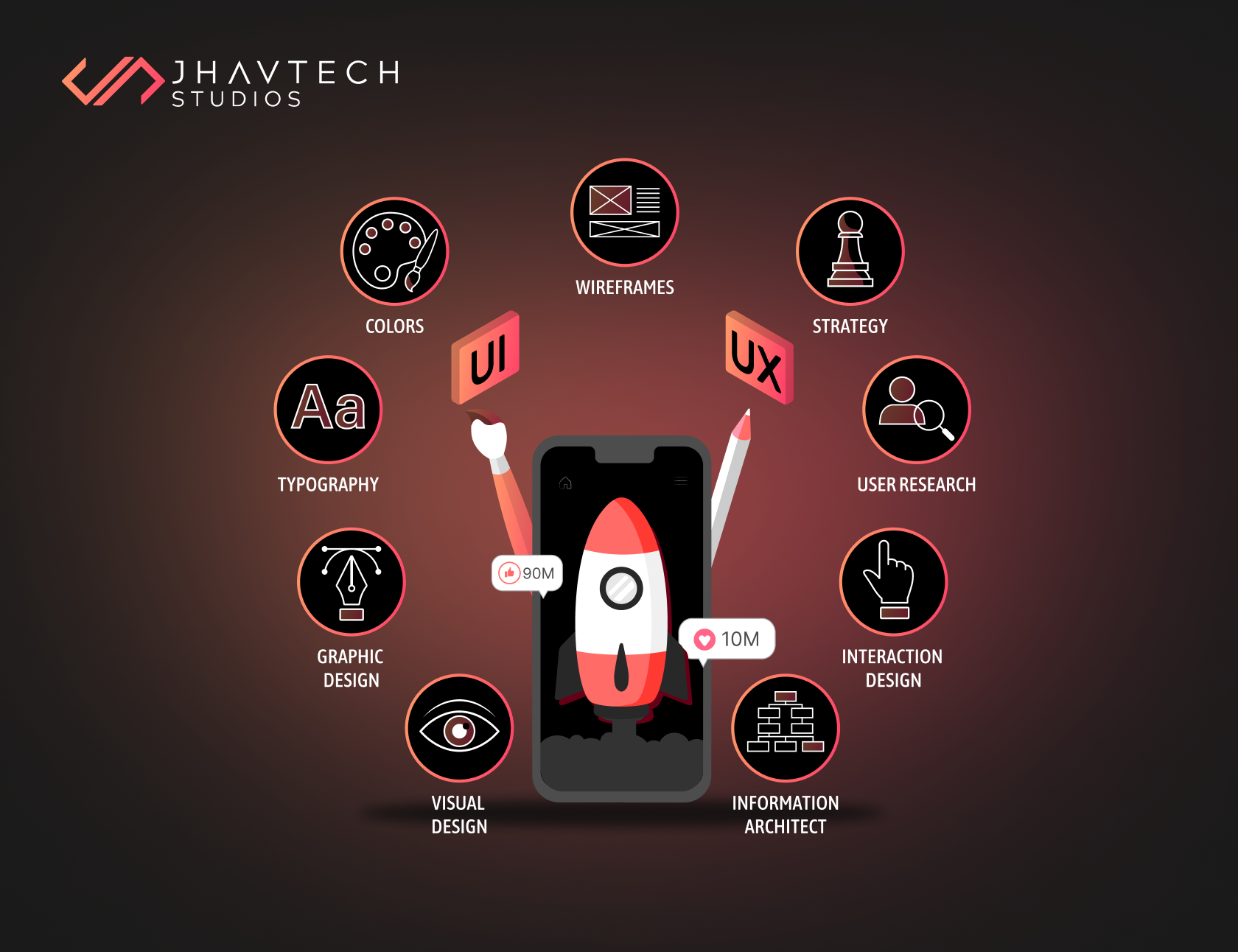.png) Creating an effective user interface design that is intuitive, visually appealing, and easy to navigate is crucial for the success of any digital product. As users increasingly engage with digital platforms, they expect seamless interactions, immediate access to information, and appealing design elements that enhance their experience. Effective user interface design not only improves satisfaction but also fosters deeper engagement and encourages retention. The right design choices can set a digital product apart, offering an experience that is both functional and enjoyable. This article explores essential user interface design elements that can significantly elevate a digital product by focusing on user-centric principles and optimizing elements to enhance usability. ## Simplicity and Clarity ## Simplicity is essential in [user interface design](https://www.jhavtech.com.au/ui-ux-design-service/). A clutter-free, clear layout helps users focus on content and navigate with ease. Simple designs, like Google’s minimalist homepage, improve user retention by reducing cognitive load and avoiding distractions. With clean layouts, ample white space, and straightforward labels, you create an environment where every element has a clear purpose, making interactions intuitive and efficient. ## Consistency Across the Interface ## Consistency in user interface design fosters familiarity, making interactions more intuitive. When elements like colors, fonts, and button styles remain uniform, users can predict how features will function, creating a smoother navigation experience. Consistency also extends to terminology and iconography, which reinforces user expectations and reduces the learning curve for new users. An excellent example of consistency is Apple’s ecosystem, where design elements like iconography, fonts, and interaction patterns remain uniform across devices. This consistency allows users to transition seamlessly from one [mobile app](https://www.jhavtech.com.au/mobile-application-development-service/) to another, reinforcing brand identity and improving overall satisfaction. In contrast, an inconsistent user interface design can confuse users, leading to frustration and potential abandonment. ## Visual Hierarchy and Layout ## Visual hierarchy is fundamental in guiding user attention, helping them prioritize information efficiently. Effective visual hierarchy is achieved through size, color contrast, and positioning of elements, directing users’ focus to the most essential information first. For instance, large headings immediately convey priority, while contrasting colors can highlight calls-to-action. Platforms like Pinterest use a structured layout that helps users navigate content easily. Establishing a clear visual hierarchy directs user attention strategically, ensuring they engage with the most critical aspects of your digital product first. ## Responsive Design for Multiple Devices ## .png) In today’s multi-device world, users expect a consistent experience across smartphones, tablets, and desktops. Responsive design adapts UIs to various screen sizes, ensuring usability and accessibility. This shift in user behavior emphasizes the importance of creating interfaces that can seamlessly adapt to different devices without compromising functionality or aesthetics. Airbnb’s website, for example, adjusts its layout and content based on the device, ensuring a smooth user experience on all platforms. By implementing responsive user interface design, you ensure that your digital product remains accessible and engaging for a broad audience, ultimately expanding your reach. ## Typography and Readability ## Typography plays a critical role in user interface design, impacting readability and the overall user experience. A well-chosen font, appropriate size, and line spacing can enhance legibility, helping users comprehend information easily. Clean, simple fonts that align with the brand’s personality and maintain legibility are key. Slack, for instance, uses a modern sans-serif typeface that’s easy to read and adapts well to various devices. By carefully considering typography in your user interface design, you can boost user engagement, enabling users to consume content comfortably without visual strain. ## Intuitive Navigation ## Navigation is the backbone of a successful digital product. Intuitive navigation structures allow users to locate information efficiently, reducing frustration and abandonment rates. Features like clear labels, logical categorization, and easy-to-find menus guide users throughout their journey. Dropbox’s navigation employed straightforward labels and grouped categories, helping users navigate smoothly. Features like [breadcrumb](https://webflow.com/glossary/breadcrumb) trails and organized menus enhance the user journey and encourage exploration. Incorporating search functionality into your navigation further empowers users to find specific content quickly, enhancing their overall experience. ## Effective Use of Color and Contrast ## Color significantly influences user behavior and perception in user interface design. Thoughtful color choices can enhance readability, particularly for users with visual impairments, and highlight essential actions. A well-coordinated color palette also reinforces brand identity. Spotify’s dark theme with vibrant accents is an excellent example of using color strategically. This balance not only improves navigation but also strengthens emotional engagement with users. Thoughtful color selections can evoke feelings and reactions that align with your brand, further enhancing the user experience. ## Accessibility in UI Design ## Accessibility ensures that everyone, regardless of ability, can interact with digital products. Designing with accessibility in mind not only broadens your audience but also improves usability for everyone. Implementing best practices, like high color contrast, alternative text for images, and keyboard navigability, creates an inclusive experience. Microsoft, for instance, prioritizes accessibility across its products, ensuring that users with disabilities can interact with its software effectively. Accessibility in user interface design is a moral and often legal requirement, demonstrating a commitment to inclusivity and fostering a more equitable digital landscape. ## Final Thoughts… ## User interface design elements are foundational to any digital product’s success, directly impacting user experience and engagement. By focusing on simplicity, consistency, visual hierarchy, responsiveness, typography, and interactivity, designers can create interfaces that are functional, enjoyable, and inclusive. Thoughtful design choices not only enhance satisfaction but also foster interaction and loyalty among users. Incorporating these user interface design principles can elevate a digital product, setting it apart and cultivating a loyal user base. As digital experiences evolve, keeping these elements at the forefront ensures that products remain user-centric, effective, and impactful. |
| json metadata | {"tags":["uiuxdesign","digitalproductdesign","userinterface","designelements","uxbestpractices","interfaceoptimization","productdesigntips","elevateyourproduct"],"image":["https://cdn.steemitimages.com/DQmTGFBcbecKuXtVnFNCX8g7TbiRp9PRStrJsFFrFb8LsRf/Article%201%20-%20Banner%20(18-22).png","https://cdn.steemitimages.com/DQmTQE4MA6p5SMyC3XSAXDRX5psBu2Gy17AKkYEYLdzMQa2/Article%201%20-%20Body%20(18-22).png"],"links":["https://www.jhavtech.com.au/ui-ux-design-service/","https://www.jhavtech.com.au/mobile-application-development-service/","https://webflow.com/glossary/breadcrumb"],"app":"steemit/0.2","format":"markdown"} |
| parent author | |
| parent permlink | uiuxdesign |
| permlink | user-interface-design-elements-that-elevate-your-digital-product |
| title | User Interface Design Elements That Elevate Your Digital Product |
| Transaction Info | Block #90497535/Trx f3029d180a41a6bb70fcf2203dabbfe66a2b7156 |
View Raw JSON Data
{
"block": 90497535,
"op": [
"comment",
{
"author": "jhavtech",
"body": ".png)\n\nCreating an effective user interface design that is intuitive, visually appealing, and easy to navigate is crucial for the success of any digital product. As users increasingly engage with digital platforms, they expect seamless interactions, immediate access to information, and appealing design elements that enhance their experience. \n\nEffective user interface design not only improves satisfaction but also fosters deeper engagement and encourages retention. The right design choices can set a digital product apart, offering an experience that is both functional and enjoyable. This article explores essential user interface design elements that can significantly elevate a digital product by focusing on user-centric principles and optimizing elements to enhance usability. \n\n## Simplicity and Clarity ## \n\nSimplicity is essential in [user interface design](https://www.jhavtech.com.au/ui-ux-design-service/). A clutter-free, clear layout helps users focus on content and navigate with ease. Simple designs, like Google’s minimalist homepage, improve user retention by reducing cognitive load and avoiding distractions. With clean layouts, ample white space, and straightforward labels, you create an environment where every element has a clear purpose, making interactions intuitive and efficient. \n\n## Consistency Across the Interface ## \n\nConsistency in user interface design fosters familiarity, making interactions more intuitive. When elements like colors, fonts, and button styles remain uniform, users can predict how features will function, creating a smoother navigation experience. Consistency also extends to terminology and iconography, which reinforces user expectations and reduces the learning curve for new users. \n\nAn excellent example of consistency is Apple’s ecosystem, where design elements like iconography, fonts, and interaction patterns remain uniform across devices. This consistency allows users to transition seamlessly from one [mobile app](https://www.jhavtech.com.au/mobile-application-development-service/) to another, reinforcing brand identity and improving overall satisfaction. In contrast, an inconsistent user interface design can confuse users, leading to frustration and potential abandonment. \n\n## Visual Hierarchy and Layout ## \n\nVisual hierarchy is fundamental in guiding user attention, helping them prioritize information efficiently. Effective visual hierarchy is achieved through size, color contrast, and positioning of elements, directing users’ focus to the most essential information first. \n\nFor instance, large headings immediately convey priority, while contrasting colors can highlight calls-to-action. Platforms like Pinterest use a structured layout that helps users navigate content easily. Establishing a clear visual hierarchy directs user attention strategically, ensuring they engage with the most critical aspects of your digital product first. \n\n## Responsive Design for Multiple Devices ## \n \n.png)\n\nIn today’s multi-device world, users expect a consistent experience across smartphones, tablets, and desktops. Responsive design adapts UIs to various screen sizes, ensuring usability and accessibility. This shift in user behavior emphasizes the importance of creating interfaces that can seamlessly adapt to different devices without compromising functionality or aesthetics. \n\nAirbnb’s website, for example, adjusts its layout and content based on the device, ensuring a smooth user experience on all platforms. By implementing responsive user interface design, you ensure that your digital product remains accessible and engaging for a broad audience, ultimately expanding your reach. \n\n## Typography and Readability ## \n\nTypography plays a critical role in user interface design, impacting readability and the overall user experience. A well-chosen font, appropriate size, and line spacing can enhance legibility, helping users comprehend information easily. Clean, simple fonts that align with the brand’s personality and maintain legibility are key. \n\nSlack, for instance, uses a modern sans-serif typeface that’s easy to read and adapts well to various devices. By carefully considering typography in your user interface design, you can boost user engagement, enabling users to consume content comfortably without visual strain. \n\n## Intuitive Navigation ## \n\nNavigation is the backbone of a successful digital product. Intuitive navigation structures allow users to locate information efficiently, reducing frustration and abandonment rates. Features like clear labels, logical categorization, and easy-to-find menus guide users throughout their journey. \n\nDropbox’s navigation employed straightforward labels and grouped categories, helping users navigate smoothly. Features like [breadcrumb](https://webflow.com/glossary/breadcrumb) trails and organized menus enhance the user journey and encourage exploration. Incorporating search functionality into your navigation further empowers users to find specific content quickly, enhancing their overall experience. \n\n## Effective Use of Color and Contrast ## \n\nColor significantly influences user behavior and perception in user interface design. Thoughtful color choices can enhance readability, particularly for users with visual impairments, and highlight essential actions. A well-coordinated color palette also reinforces brand identity. \n\nSpotify’s dark theme with vibrant accents is an excellent example of using color strategically. This balance not only improves navigation but also strengthens emotional engagement with users. Thoughtful color selections can evoke feelings and reactions that align with your brand, further enhancing the user experience. \n\n## Accessibility in UI Design ## \n\nAccessibility ensures that everyone, regardless of ability, can interact with digital products. Designing with accessibility in mind not only broadens your audience but also improves usability for everyone. Implementing best practices, like high color contrast, alternative text for images, and keyboard navigability, creates an inclusive experience. \n\nMicrosoft, for instance, prioritizes accessibility across its products, ensuring that users with disabilities can interact with its software effectively. Accessibility in user interface design is a moral and often legal requirement, demonstrating a commitment to inclusivity and fostering a more equitable digital landscape. \n\n## Final Thoughts… ##\n\nUser interface design elements are foundational to any digital product’s success, directly impacting user experience and engagement. By focusing on simplicity, consistency, visual hierarchy, responsiveness, typography, and interactivity, designers can create interfaces that are functional, enjoyable, and inclusive. Thoughtful design choices not only enhance satisfaction but also foster interaction and loyalty among users. \n\nIncorporating these user interface design principles can elevate a digital product, setting it apart and cultivating a loyal user base. As digital experiences evolve, keeping these elements at the forefront ensures that products remain user-centric, effective, and impactful.",
"json_metadata": "{\"tags\":[\"uiuxdesign\",\"digitalproductdesign\",\"userinterface\",\"designelements\",\"uxbestpractices\",\"interfaceoptimization\",\"productdesigntips\",\"elevateyourproduct\"],\"image\":[\"https://cdn.steemitimages.com/DQmTGFBcbecKuXtVnFNCX8g7TbiRp9PRStrJsFFrFb8LsRf/Article%201%20-%20Banner%20(18-22).png\",\"https://cdn.steemitimages.com/DQmTQE4MA6p5SMyC3XSAXDRX5psBu2Gy17AKkYEYLdzMQa2/Article%201%20-%20Body%20(18-22).png\"],\"links\":[\"https://www.jhavtech.com.au/ui-ux-design-service/\",\"https://www.jhavtech.com.au/mobile-application-development-service/\",\"https://webflow.com/glossary/breadcrumb\"],\"app\":\"steemit/0.2\",\"format\":\"markdown\"}",
"parent_author": "",
"parent_permlink": "uiuxdesign",
"permlink": "user-interface-design-elements-that-elevate-your-digital-product",
"title": "User Interface Design Elements That Elevate Your Digital Product"
}
],
"op_in_trx": 0,
"timestamp": "2024-11-19T06:18:18",
"trx_id": "f3029d180a41a6bb70fcf2203dabbfe66a2b7156",
"trx_in_block": 2,
"virtual_op": 0
}jhavtechpublished a new post: key-trends-shaping-the-future-of-desktop-app-development2024/11/12 06:19:45
jhavtechpublished a new post: key-trends-shaping-the-future-of-desktop-app-development
2024/11/12 06:19:45
| author | jhavtech |
| body | .png) Despite the rise of mobile and web applications, desktop app development remains crucial for sectors like enterprise solutions, gaming, and productivity tools. As technology advances, new trends continue to shape the field. Let’s explore these trends and the opportunities they present for developers. ## Cross-Platform Development ## One of the most prominent trends in [desktop app development](https://www.jhavtech.com.au/desktop-application-development-service/) is the use of cross-platform tools. Frameworks like Electron, Flutter, and Xamarin enable developers to create applications that work across Windows, macOS, and Linux from a single codebase. This approach reduces development time and cost, streamlining updates and maintenance. For example, Electron, which powers apps like Slack and Visual Studio Code, shows how cross-platform development supports consistent user experiences. Over 62% of developers now use cross-platform frameworks, underscoring the trend towards universal accessibility. As demand for compatibility across devices grows, cross-platform development is likely to dominate the future of desktop app development, offering seamless user experiences. ## Native-Like Experiences ## While cross-platform tools are convenient, users still expect desktop applications to deliver high performance and native-like experiences. Native apps are known for their speed and deep system integration, yet cross-platform frameworks are increasingly optimized to deliver similar quality. Spotify, for instance, is built on Electron but provides performance that competes with native apps, thanks to features like native notifications and platform-specific optimizations. Such advancements mean cross-platform apps can feel just as polished as native ones, ensuring users enjoy a familiar experience across different operating systems. ## Progressive Web Apps (PWAs) for Desktop ## Progressive Web Apps (PWAs) are becoming more common in desktop environments, bridging the gap between web and native app experiences. Initially popular in mobile and [web app development](https://www.jhavtech.com.au/web-application-development-service/), PWAs combine the accessibility of web apps with the performance of native desktop apps. Technologies like Service Workers and WebAssembly empower PWAs to function offline and offer near-native performance. Google Docs exemplifies a PWA with full offline functionality, delivering desktop-app-level features. PWAs’ ease of deployment, reduced storage needs, and cross-platform compatibility make them appealing for both desktop and web app development. By 2025, Gartner predicts that PWAs will replace half of native apps, marking them as a key trend in both desktop and web app development. ## AI and Machine Learning Integration ## AI and Machine Learning (ML) are transforming desktop app development by automating tasks, enhancing interfaces, and personalizing experiences. Applications like Microsoft Word and Google Docs use AI to offer smart writing suggestions, while Grammarly provides context-aware grammar checks. AI’s impact is also evident in creative industries, where Adobe Photoshop's Content-Aware Fill and Autodesk AutoCAD’s design optimization tools reduce manual effort. Additionally, apps like Dragon NaturallySpeaking use voice recognition to improve accessibility, while AI-driven task management tools help users prioritize tasks based on deadlines and behavior. As frameworks like TensorFlow and PyTorch become more accessible, more desktop applications will integrate intelligent features. From smarter user interfaces to enhanced productivity tools, AI and ML will make desktop applications more powerful and user-friendly. ## Enhanced Security and Privacy ## With cybersecurity threats on the rise, security is a top priority in desktop app development. Robust measures—such as multi-factor authentication, data encryption, and secure data storage—are essential, especially in industries that handle sensitive data, like finance and healthcare. A 2023 report from IBM highlighted that the average cost of a data breach is now $4.45 million. To mitigate such risks, future desktop apps will likely adopt advanced security measures, including biometric authentication and real-time threat detection, to protect user data. ## Cloud Integration and SaaS Models ## Cloud computing is reshaping desktop app development, especially through Software-as-a-Service (SaaS) models. Cloud-integrated apps allow users to store, share, and access data seamlessly across devices, which is invaluable for collaborative tools and enterprise solutions. Microsoft Office 365, primarily cloud-based, offers real-time data synchronization and collaboration. By 2025, it’s expected that 85% of enterprise software will be cloud-based, showing the significance of [cloud integration](https://www.esparkinfo.com/blog/cloud-computing-statistics.html) in desktop applications. Developers must focus on optimizing for cloud performance and security to meet the demands of today’s users. ## Virtual and Augmented Reality in Desktop Apps ## 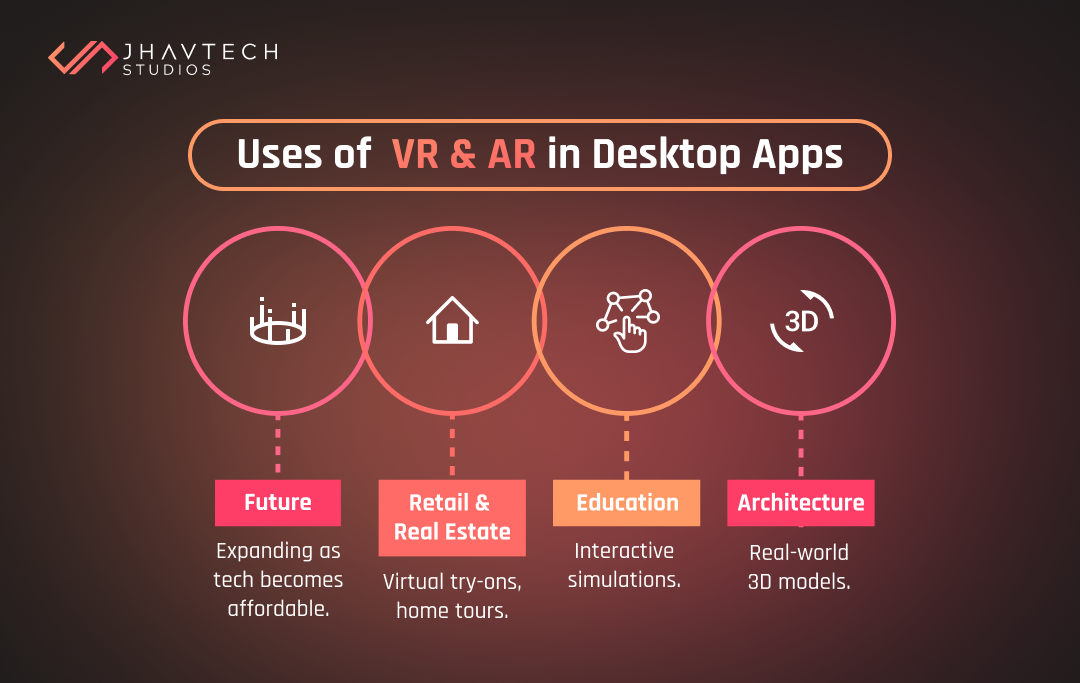.png) Virtual Reality (VR) and Augmented Reality (AR) are increasingly being integrated into desktop applications beyond gaming. These technologies offer new opportunities in fields like architecture, engineering, and education, where visualization and interaction are essential. For example, Autodesk Revit uses AR to help architects visualize 3D models in real-world contexts, enabling clients to better understand the spatial relationships of designs. As VR and AR hardware becomes more affordable, desktop applications across various sectors are likely to integrate these immersive technologies, enhancing user engagement and experience. In education, desktop applications such as zSpace provide students with interactive simulations, allowing them to engage with complex concepts through immersive experiences. From virtual surgeries for medical students to design simulations for engineering, VR and AR in desktop apps offer hands-on learning experiences without the need for physical models. ## Sustainability and Energy Efficiency ## As awareness of environmental concerns grows, developers are focusing on sustainability in desktop app development. Energy-efficient design is becoming more important, especially in fields where software runs resource-intensive processes for long periods. To reduce environmental impact, developers are optimizing applications to lower CPU and memory usage. Accenture estimates that green computing could reduce IT energy consumption by 40% by 2025. By prioritizing sustainable development practices, developers can build desktop apps that cater to an eco-conscious user base. ## Final Thoughts... ## The future of desktop app development is promising, with trends like cross-platform development, AI, security, and cloud integration driving innovation. By keeping pace with these advancements, developers can create applications that are functional, secure, and sustainable, meeting the evolving needs of modern users. Embracing new technologies and focusing on performance, security, and sustainability will help developers build desktop applications that stand the test of time in a digital landscape. |
| json metadata | {"tags":["desktopappdevelopment","appdevelopmenttrends","futureoftech","crossplatformapps","uiuxdesign","cloudintegration","vr","devops"],"image":["https://cdn.steemitimages.com/DQmWuhFCGyk2tuazYdo1uFZ2mh5qYw8nt4MawfEJHaTKHaS/Article%201%20-%20Banner%20(11-15).png","https://cdn.steemitimages.com/DQmVYc3mvZEum9WPEsq1NPWSo2ZUCY3Ej59UHBve8dWiB3u/Article%201%20-%20Infographics%20(11-15).png"],"links":["https://www.jhavtech.com.au/desktop-application-development-service/","https://www.jhavtech.com.au/web-application-development-service/","https://www.esparkinfo.com/blog/cloud-computing-statistics.html"],"app":"steemit/0.2","format":"markdown"} |
| parent author | |
| parent permlink | desktopappdevelopment |
| permlink | key-trends-shaping-the-future-of-desktop-app-development |
| title | Key Trends Shaping the Future of Desktop App Development |
| Transaction Info | Block #90296754/Trx 2e82d69a8372453539cd91cef592a554478bb7c3 |
View Raw JSON Data
{
"block": 90296754,
"op": [
"comment",
{
"author": "jhavtech",
"body": ".png)\n\nDespite the rise of mobile and web applications, desktop app development remains crucial for sectors like enterprise solutions, gaming, and productivity tools. As technology advances, new trends continue to shape the field. Let’s explore these trends and the opportunities they present for developers. \n\n## Cross-Platform Development ## \n\nOne of the most prominent trends in [desktop app development](https://www.jhavtech.com.au/desktop-application-development-service/) is the use of cross-platform tools. Frameworks like Electron, Flutter, and Xamarin enable developers to create applications that work across Windows, macOS, and Linux from a single codebase. This approach reduces development time and cost, streamlining updates and maintenance. \n\nFor example, Electron, which powers apps like Slack and Visual Studio Code, shows how cross-platform development supports consistent user experiences. Over 62% of developers now use cross-platform frameworks, underscoring the trend towards universal accessibility. As demand for compatibility across devices grows, cross-platform development is likely to dominate the future of desktop app development, offering seamless user experiences. \n\n## Native-Like Experiences ## \n\nWhile cross-platform tools are convenient, users still expect desktop applications to deliver high performance and native-like experiences. Native apps are known for their speed and deep system integration, yet cross-platform frameworks are increasingly optimized to deliver similar quality. \n\nSpotify, for instance, is built on Electron but provides performance that competes with native apps, thanks to features like native notifications and platform-specific optimizations. Such advancements mean cross-platform apps can feel just as polished as native ones, ensuring users enjoy a familiar experience across different operating systems. \n\n## Progressive Web Apps (PWAs) for Desktop ## \n\nProgressive Web Apps (PWAs) are becoming more common in desktop environments, bridging the gap between web and native app experiences. Initially popular in mobile and [web app development](https://www.jhavtech.com.au/web-application-development-service/), PWAs combine the accessibility of web apps with the performance of native desktop apps. Technologies like Service Workers and WebAssembly empower PWAs to function offline and offer near-native performance. \n\nGoogle Docs exemplifies a PWA with full offline functionality, delivering desktop-app-level features. PWAs’ ease of deployment, reduced storage needs, and cross-platform compatibility make them appealing for both desktop and web app development. By 2025, Gartner predicts that PWAs will replace half of native apps, marking them as a key trend in both desktop and web app development. \n\n## AI and Machine Learning Integration ## \n\nAI and Machine Learning (ML) are transforming desktop app development by automating tasks, enhancing interfaces, and personalizing experiences. Applications like Microsoft Word and Google Docs use AI to offer smart writing suggestions, while Grammarly provides context-aware grammar checks. \n\nAI’s impact is also evident in creative industries, where Adobe Photoshop's Content-Aware Fill and Autodesk AutoCAD’s design optimization tools reduce manual effort. Additionally, apps like Dragon NaturallySpeaking use voice recognition to improve accessibility, while AI-driven task management tools help users prioritize tasks based on deadlines and behavior. \n\nAs frameworks like TensorFlow and PyTorch become more accessible, more desktop applications will integrate intelligent features. From smarter user interfaces to enhanced productivity tools, AI and ML will make desktop applications more powerful and user-friendly. \n\n## Enhanced Security and Privacy ## \n\nWith cybersecurity threats on the rise, security is a top priority in desktop app development. Robust measures—such as multi-factor authentication, data encryption, and secure data storage—are essential, especially in industries that handle sensitive data, like finance and healthcare. \n\nA 2023 report from IBM highlighted that the average cost of a data breach is now $4.45 million. To mitigate such risks, future desktop apps will likely adopt advanced security measures, including biometric authentication and real-time threat detection, to protect user data. \n\n## Cloud Integration and SaaS Models ## \n\nCloud computing is reshaping desktop app development, especially through Software-as-a-Service (SaaS) models. Cloud-integrated apps allow users to store, share, and access data seamlessly across devices, which is invaluable for collaborative tools and enterprise solutions. \n\nMicrosoft Office 365, primarily cloud-based, offers real-time data synchronization and collaboration. By 2025, it’s expected that 85% of enterprise software will be cloud-based, showing the significance of [cloud integration](https://www.esparkinfo.com/blog/cloud-computing-statistics.html) in desktop applications. Developers must focus on optimizing for cloud performance and security to meet the demands of today’s users. \n\n## Virtual and Augmented Reality in Desktop Apps ## \n\n \n.png)\n\n\nVirtual Reality (VR) and Augmented Reality (AR) are increasingly being integrated into desktop applications beyond gaming. These technologies offer new opportunities in fields like architecture, engineering, and education, where visualization and interaction are essential. \n\nFor example, Autodesk Revit uses AR to help architects visualize 3D models in real-world contexts, enabling clients to better understand the spatial relationships of designs. As VR and AR hardware becomes more affordable, desktop applications across various sectors are likely to integrate these immersive technologies, enhancing user engagement and experience. \n\nIn education, desktop applications such as zSpace provide students with interactive simulations, allowing them to engage with complex concepts through immersive experiences. From virtual surgeries for medical students to design simulations for engineering, VR and AR in desktop apps offer hands-on learning experiences without the need for physical models. \n\n## Sustainability and Energy Efficiency ## \n\nAs awareness of environmental concerns grows, developers are focusing on sustainability in desktop app development. Energy-efficient design is becoming more important, especially in fields where software runs resource-intensive processes for long periods. \n\nTo reduce environmental impact, developers are optimizing applications to lower CPU and memory usage. Accenture estimates that green computing could reduce IT energy consumption by 40% by 2025. By prioritizing sustainable development practices, developers can build desktop apps that cater to an eco-conscious user base. \n\n## Final Thoughts... ##\n\nThe future of desktop app development is promising, with trends like cross-platform development, AI, security, and cloud integration driving innovation. By keeping pace with these advancements, developers can create applications that are functional, secure, and sustainable, meeting the evolving needs of modern users. Embracing new technologies and focusing on performance, security, and sustainability will help developers build desktop applications that stand the test of time in a digital landscape.",
"json_metadata": "{\"tags\":[\"desktopappdevelopment\",\"appdevelopmenttrends\",\"futureoftech\",\"crossplatformapps\",\"uiuxdesign\",\"cloudintegration\",\"vr\",\"devops\"],\"image\":[\"https://cdn.steemitimages.com/DQmWuhFCGyk2tuazYdo1uFZ2mh5qYw8nt4MawfEJHaTKHaS/Article%201%20-%20Banner%20(11-15).png\",\"https://cdn.steemitimages.com/DQmVYc3mvZEum9WPEsq1NPWSo2ZUCY3Ej59UHBve8dWiB3u/Article%201%20-%20Infographics%20(11-15).png\"],\"links\":[\"https://www.jhavtech.com.au/desktop-application-development-service/\",\"https://www.jhavtech.com.au/web-application-development-service/\",\"https://www.esparkinfo.com/blog/cloud-computing-statistics.html\"],\"app\":\"steemit/0.2\",\"format\":\"markdown\"}",
"parent_author": "",
"parent_permlink": "desktopappdevelopment",
"permlink": "key-trends-shaping-the-future-of-desktop-app-development",
"title": "Key Trends Shaping the Future of Desktop App Development"
}
],
"op_in_trx": 0,
"timestamp": "2024-11-12T06:19:45",
"trx_id": "2e82d69a8372453539cd91cef592a554478bb7c3",
"trx_in_block": 1,
"virtual_op": 0
}jhavtechpublished a new post: app-development-for-scalability-future-proof-your-business2024/11/05 05:55:42
jhavtechpublished a new post: app-development-for-scalability-future-proof-your-business
2024/11/05 05:55:42
| author | jhavtech |
| body | .png) In today’s rapidly evolving digital landscape, simply having an app is no longer enough for businesses looking to thrive. They need apps that can scale seamlessly, handle growing user demands, and adapt to new technologies without performance hiccups. This is where scalable app development comes into play. By focusing on scalability, businesses ensure that their applications are equipped to support their future growth and evolving customer needs. But what exactly does it mean for an app to be scalable? And why is this concept so critical to the long-term success of your business? In this article, we'll delve into the principles of scalable application development, why it's crucial for future-proofing your business, and how you can apply certain strategies to build an app that grows with your company. ## What Is Scalability in App Development? ## Scalability in [app development](https://www.jhavtech.com.au/mobile-application-development-service/) refers to an application’s ability to handle increased load—whether that’s a higher number of users, more data, or additional features—without compromising performance. In other words, as your business and user base grow, a scalable app should continue to run smoothly without crashing or slowing down. Imagine an app that performs perfectly with 100 users but begins to lag or crash when it hits 1,000 users. That’s an app that wasn’t designed for scalability. A scalable app, on the other hand, would be able to manage this influx of users seamlessly, ensuring that the user experience remains smooth and consistent no matter how many people are using the app at the same time. ## Why Is App Scalability Crucial for Business Success? ## Scalability isn’t just a technical requirement—it’s a critical factor for business success. As your company grows, so too will the demands placed on your app. If your app development process doesn’t account for scalability, it will negatively impact user experience, customer satisfaction, and ultimately, your bottom line. Consider this: A [recent study](https://www.thinktribe.com/post/did-you-know-53-of-mobile-users-abandon-sites-that-take-over-3-seconds-to-load#:~:text=53%25%20of%20mobile%20users%20will,facing%20the%20online%20business%20owner.) revealed that 53% of mobile users abandon an app if it takes longer than three seconds to load. If your app isn’t built to scale, it may struggle with performance issues as user traffic increases, leading to longer load times and a frustrating experience for end users. This can result in users abandoning your app for a competitor’s, especially in today’s fast-paced digital environment. Moreover, scalable apps allow businesses to innovate freely. Whether you're launching a marketing campaign, rolling out a new feature, or expanding into new markets, a scalable app can handle increased traffic without buckling under pressure. This flexibility allows you to focus on growth, knowing that your app development venture has laid a solid foundation to support your business’s evolving needs. ## Key Considerations in Building a Scalable App ## 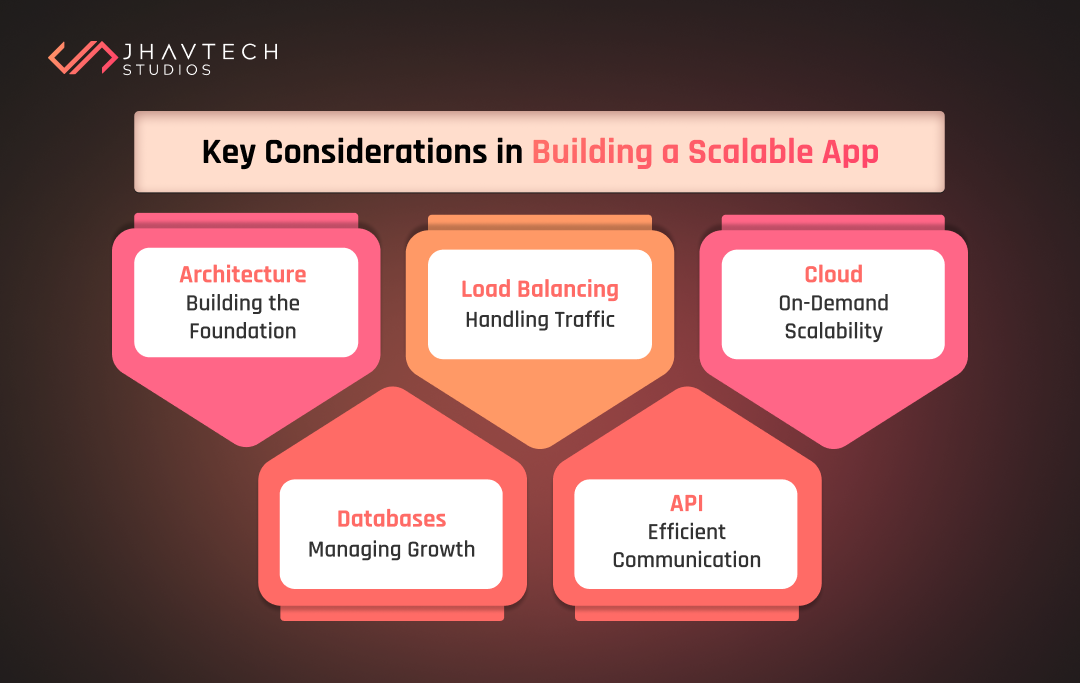.png) To future-proof your app for growth, scalability must be a top priority from the very start. Below are key considerations when building a scalable app. ### 1. Architecture Design: Laying the Right Foundation ### The architecture of your app is its backbone, determining how easily it can scale. Choosing the right architecture is critical. A microservices architecture, for example, breaks down an app into smaller, independent services that can be scaled individually. This modular approach allows for more flexibility, as each service can be updated or expanded without affecting the entire system. In contrast, monolithic architectures can be more challenging to scale. If one part of the system fails or slows down, it can bring the whole app to a standstill. As a result, opting for a modular, scalable architecture like microservices ensures your app development aligns with business growth, adapting to changing needs without bottlenecks. ### 2. Load Balancing: Managing User Traffic ### When your app experiences a surge in users, load balancing helps distribute this traffic across multiple servers. This prevents any one server from becoming overwhelmed, ensuring that your app remains responsive and functional even during peak usage times. A great real-life example is Spotify, which regularly experiences spikes in traffic when new music is released. Load balancing ensures that all users can stream their favorite songs without interruption, regardless of traffic levels. ### 3. Cloud Infrastructure: Scalability on Demand ### Cloud computing services like Amazon Web Services (AWS), Google Cloud, and Microsoft Azure offer flexible, scalable infrastructure. With cloud platforms, you can adjust your app’s resources on the fly, scaling up during high-demand periods and scaling down when traffic subsides. Cloud infrastructure also allows you to pay-as-you-go, making scalability cost-effective. Instead of investing heavily in physical servers that may not always be needed, you can use cloud resources that grow or shrink as needed, keeping operational costs manageable. ### 4. Scalable Databases: Managing Growing Data Loads ### As your app grows, so does the volume of data it handles. A scalable database is essential to ensure your app can process and store large amounts of data without slowing down. Techniques like database sharding —where large databases are broken down into smaller, more manageable pieces—can significantly enhance performance as your user base expands. For example, Facebook uses database sharding to ensure that their massive data is distributed across various servers, allowing millions of users to access and interact with content in real-time without lag. Scalable databases are a critical component of app development, ensuring that your app can grow without sacrificing performance. ### 5. API Management: Ensuring Efficient Communication ### APIs (Application Programming Interfaces) are essential for connecting different services in an app, and efficient API management is critical for scalability. As your app grows, more users and services will rely on these APIs, which can create bottlenecks if not managed properly. By optimizing your API strategy with techniques like rate limiting and caching, you can ensure that your app’s services scale smoothly and maintain high performance, even as demand increases. ## Testing for Scalability ## No matter how well-designed or feature-rich your app may be, thorough testing is essential to ensure that it can scale effectively as usage increases. Scalability testing helps to identify potential bottlenecks, optimize performance, and maintain [exceptional user experience](https://www.jhavtech.com.au/ui-ux-design-service/) when your app is subjected to varying loads, whether from increasing numbers of users, data, or transactions. By testing for scalability early on, you can prevent unexpected crashes, slowdowns, and performance issues that could negatively impact user satisfaction and business success. ### 1. Load Testing ### Load testing simulates real-world traffic scenarios to see how your app performs under pressure. By conducting regular load tests, you can identify performance bottlenecks and ensure that your app can handle increased traffic without failing. For instance, Netflix routinely performs load testing to simulate high-demand situations, ensuring that its streaming service performs optimally even during the busiest times, like when a new show is released. ### 2. Automation Testing ### Automation testing speeds up the testing process and ensures that your app performs well across various devices and operating systems. By automating these tests, you can continuously monitor your app’s performance as it scales, ensuring it remains efficient as you introduce new features or see an uptick in users. ## The Costs of Ignoring Scalability ## Overlooking scalability during app development can have significant financial and reputational costs. An app that can’t handle increased demand may experience crashes, long load times, or data processing delays, all of which can frustrate users. This often leads to customer churn, with users abandoning your app for more reliable alternatives. Moreover, retrofitting scalability into an existing app is costly and time-consuming. For instance, after Instagram was acquired by Facebook, it had to undergo extensive updates to scale its infrastructure to handle the sudden influx of millions of new users. If scalability had been prioritized during the initial app development process, Instagram could have avoided these challenges. ## Futureproofing for Emerging Technologies ## Building a scalable app isn't just about handling more users—it’s about being adaptable to future technological advancements. Whether it’s AI, machine learning, or IoT (Internet of Things), future-proofing your app ensures it can easily integrate emerging technologies. Take Tesla, for instance. The scalability of its app allows for seamless software updates, ensuring that drivers can take advantage of new features like self-driving capabilities without needing to upgrade their vehicles physically. ## Optimizing Performance for Scalability ## ### 1. Code Optimization ### Efficient, clean code is the foundation of a scalable app. Bloated, inefficient code can slow down performance as more users or features are added. Regularly reviewing and refactoring your code is crucial for keeping your app scalable. ### 2. Caching ### Caching frequently accessed data reduces the strain on your servers and improves response times. For example, caching ensures that users experience faster load times, which is essential for delivering a smooth user experience as your app scales. ## Conclusion: The Key to Long-Term Success ## Scalable app development is not just about ensuring technical performance—it’s about future-proofing your business for growth. By focusing on scalability, you ensure that your app can handle increased user traffic, adapt to new technologies, and meet your evolving business needs without breaking a sweat. From choosing the right architecture to leveraging cloud infrastructure, load balancing, and optimizing your code, scalable app development sets the stage for long-term success. Whether you're a startup gearing up for rapid growth or an established business expanding into new markets, scalability is key to ensuring your app remains competitive and robust. Investing in scalable app development today will save you time, money, and headaches tomorrow. By building a future-proof app, your business can thrive in an ever-changing digital world. |
| json metadata | {"tags":["appdevelopment","scalableapps","futureproof","techsolutions","businessgrowth","scalability","mobileappdevelopment","webappdevelopment"],"image":["https://cdn.steemitimages.com/DQmWVBFnfDMoCx7g5FTWMPiCMvMvomEYxmtgwZTkS5RftrL/Article%201%20-%20Banner%20(4-8).png","https://cdn.steemitimages.com/DQmQFBPPMkC3joRJc8mBq3L2PKSThLP2UaZSDmdY4BSjTzN/Article%201%20-%20Infographics%20(4-8).png"],"links":["https://www.jhavtech.com.au/mobile-application-development-service/","https://www.thinktribe.com/post/did-you-know-53-of-mobile-users-abandon-sites-that-take-over-3-seconds-to-load#:~:text=53%25%20of%20mobile%20users%20will,facing%20the%20online%20business%20owner.","https://www.jhavtech.com.au/ui-ux-design-service/"],"app":"steemit/0.2","format":"markdown"} |
| parent author | |
| parent permlink | appdevelopment |
| permlink | app-development-for-scalability-future-proof-your-business |
| title | App Development for Scalability: Future-Proof Your Business |
| Transaction Info | Block #90095231/Trx d486ccacb0aef43023718824b60cf7d93a32fe46 |
View Raw JSON Data
{
"block": 90095231,
"op": [
"comment",
{
"author": "jhavtech",
"body": ".png)\n\nIn today’s rapidly evolving digital landscape, simply having an app is no longer enough for businesses looking to thrive. They need apps that can scale seamlessly, handle growing user demands, and adapt to new technologies without performance hiccups. This is where scalable app development comes into play. By focusing on scalability, businesses ensure that their applications are equipped to support their future growth and evolving customer needs. \n\nBut what exactly does it mean for an app to be scalable? And why is this concept so critical to the long-term success of your business? In this article, we'll delve into the principles of scalable application development, why it's crucial for future-proofing your business, and how you can apply certain strategies to build an app that grows with your company. \n\n## What Is Scalability in App Development? ##\n\nScalability in [app development](https://www.jhavtech.com.au/mobile-application-development-service/) refers to an application’s ability to handle increased load—whether that’s a higher number of users, more data, or additional features—without compromising performance. In other words, as your business and user base grow, a scalable app should continue to run smoothly without crashing or slowing down. \n\nImagine an app that performs perfectly with 100 users but begins to lag or crash when it hits 1,000 users. That’s an app that wasn’t designed for scalability. A scalable app, on the other hand, would be able to manage this influx of users seamlessly, ensuring that the user experience remains smooth and consistent no matter how many people are using the app at the same time. \n\n## Why Is App Scalability Crucial for Business Success? ##\n\nScalability isn’t just a technical requirement—it’s a critical factor for business success. As your company grows, so too will the demands placed on your app. If your app development process doesn’t account for scalability, it will negatively impact user experience, customer satisfaction, and ultimately, your bottom line. \n\nConsider this: A [recent study](https://www.thinktribe.com/post/did-you-know-53-of-mobile-users-abandon-sites-that-take-over-3-seconds-to-load#:~:text=53%25%20of%20mobile%20users%20will,facing%20the%20online%20business%20owner.) revealed that 53% of mobile users abandon an app if it takes longer than three seconds to load. If your app isn’t built to scale, it may struggle with performance issues as user traffic increases, leading to longer load times and a frustrating experience for end users. This can result in users abandoning your app for a competitor’s, especially in today’s fast-paced digital environment. \n\nMoreover, scalable apps allow businesses to innovate freely. Whether you're launching a marketing campaign, rolling out a new feature, or expanding into new markets, a scalable app can handle increased traffic without buckling under pressure. This flexibility allows you to focus on growth, knowing that your app development venture has laid a solid foundation to support your business’s evolving needs. \n\n## Key Considerations in Building a Scalable App ##\n \n.png)\n\nTo future-proof your app for growth, scalability must be a top priority from the very start. Below are key considerations when building a scalable app. \n\n### 1. Architecture Design: Laying the Right Foundation ###\n\nThe architecture of your app is its backbone, determining how easily it can scale. Choosing the right architecture is critical. A microservices architecture, for example, breaks down an app into smaller, independent services that can be scaled individually. This modular approach allows for more flexibility, as each service can be updated or expanded without affecting the entire system. \n\nIn contrast, monolithic architectures can be more challenging to scale. If one part of the system fails or slows down, it can bring the whole app to a standstill. As a result, opting for a modular, scalable architecture like microservices ensures your app development aligns with business growth, adapting to changing needs without bottlenecks. \n\n### 2. Load Balancing: Managing User Traffic ### \n\nWhen your app experiences a surge in users, load balancing helps distribute this traffic across multiple servers. This prevents any one server from becoming overwhelmed, ensuring that your app remains responsive and functional even during peak usage times. \n\nA great real-life example is Spotify, which regularly experiences spikes in traffic when new music is released. Load balancing ensures that all users can stream their favorite songs without interruption, regardless of traffic levels. \n\n### 3. Cloud Infrastructure: Scalability on Demand ###\n\nCloud computing services like Amazon Web Services (AWS), Google Cloud, and Microsoft Azure offer flexible, scalable infrastructure. With cloud platforms, you can adjust your app’s resources on the fly, scaling up during high-demand periods and scaling down when traffic subsides. \n\nCloud infrastructure also allows you to pay-as-you-go, making scalability cost-effective. Instead of investing heavily in physical servers that may not always be needed, you can use cloud resources that grow or shrink as needed, keeping operational costs manageable. \n\n### 4. Scalable Databases: Managing Growing Data Loads ### \n\nAs your app grows, so does the volume of data it handles. A scalable database is essential to ensure your app can process and store large amounts of data without slowing down. Techniques like database sharding —where large databases are broken down into smaller, more manageable pieces—can significantly enhance performance as your user base expands. \n\nFor example, Facebook uses database sharding to ensure that their massive data is distributed across various servers, allowing millions of users to access and interact with content in real-time without lag. Scalable databases are a critical component of app development, ensuring that your app can grow without sacrificing performance. \n\n### 5. API Management: Ensuring Efficient Communication ###\n\nAPIs (Application Programming Interfaces) are essential for connecting different services in an app, and efficient API management is critical for scalability. As your app grows, more users and services will rely on these APIs, which can create bottlenecks if not managed properly. \n\nBy optimizing your API strategy with techniques like rate limiting and caching, you can ensure that your app’s services scale smoothly and maintain high performance, even as demand increases. \n\n## Testing for Scalability ##\n\nNo matter how well-designed or feature-rich your app may be, thorough testing is essential to ensure that it can scale effectively as usage increases. Scalability testing helps to identify potential bottlenecks, optimize performance, and maintain [exceptional user experience](https://www.jhavtech.com.au/ui-ux-design-service/) when your app is subjected to varying loads, whether from increasing numbers of users, data, or transactions. By testing for scalability early on, you can prevent unexpected crashes, slowdowns, and performance issues that could negatively impact user satisfaction and business success. \n\n### 1. Load Testing ###\n\nLoad testing simulates real-world traffic scenarios to see how your app performs under pressure. By conducting regular load tests, you can identify performance bottlenecks and ensure that your app can handle increased traffic without failing. \n\nFor instance, Netflix routinely performs load testing to simulate high-demand situations, ensuring that its streaming service performs optimally even during the busiest times, like when a new show is released. \n\n### 2. Automation Testing ###\n\nAutomation testing speeds up the testing process and ensures that your app performs well across various devices and operating systems. By automating these tests, you can continuously monitor your app’s performance as it scales, ensuring it remains efficient as you introduce new features or see an uptick in users. \n\n## The Costs of Ignoring Scalability ##\n\nOverlooking scalability during app development can have significant financial and reputational costs. An app that can’t handle increased demand may experience crashes, long load times, or data processing delays, all of which can frustrate users. This often leads to customer churn, with users abandoning your app for more reliable alternatives. \n\nMoreover, retrofitting scalability into an existing app is costly and time-consuming. For instance, after Instagram was acquired by Facebook, it had to undergo extensive updates to scale its infrastructure to handle the sudden influx of millions of new users. If scalability had been prioritized during the initial app development process, Instagram could have avoided these challenges. \n\n## Futureproofing for Emerging Technologies ##\n\nBuilding a scalable app isn't just about handling more users—it’s about being adaptable to future technological advancements. Whether it’s AI, machine learning, or IoT (Internet of Things), future-proofing your app ensures it can easily integrate emerging technologies. \n\nTake Tesla, for instance. The scalability of its app allows for seamless software updates, ensuring that drivers can take advantage of new features like self-driving capabilities without needing to upgrade their vehicles physically. \n\n## Optimizing Performance for Scalability ## \n\n### 1. Code Optimization ###\n\nEfficient, clean code is the foundation of a scalable app. Bloated, inefficient code can slow down performance as more users or features are added. Regularly reviewing and refactoring your code is crucial for keeping your app scalable. \n\n### 2. Caching ###\n\nCaching frequently accessed data reduces the strain on your servers and improves response times. For example, caching ensures that users experience faster load times, which is essential for delivering a smooth user experience as your app scales. \n\n## Conclusion: The Key to Long-Term Success ##\n\nScalable app development is not just about ensuring technical performance—it’s about future-proofing your business for growth. By focusing on scalability, you ensure that your app can handle increased user traffic, adapt to new technologies, and meet your evolving business needs without breaking a sweat. \n\nFrom choosing the right architecture to leveraging cloud infrastructure, load balancing, and optimizing your code, scalable app development sets the stage for long-term success. Whether you're a startup gearing up for rapid growth or an established business expanding into new markets, scalability is key to ensuring your app remains competitive and robust. \n\nInvesting in scalable app development today will save you time, money, and headaches tomorrow. By building a future-proof app, your business can thrive in an ever-changing digital world.",
"json_metadata": "{\"tags\":[\"appdevelopment\",\"scalableapps\",\"futureproof\",\"techsolutions\",\"businessgrowth\",\"scalability\",\"mobileappdevelopment\",\"webappdevelopment\"],\"image\":[\"https://cdn.steemitimages.com/DQmWVBFnfDMoCx7g5FTWMPiCMvMvomEYxmtgwZTkS5RftrL/Article%201%20-%20Banner%20(4-8).png\",\"https://cdn.steemitimages.com/DQmQFBPPMkC3joRJc8mBq3L2PKSThLP2UaZSDmdY4BSjTzN/Article%201%20-%20Infographics%20(4-8).png\"],\"links\":[\"https://www.jhavtech.com.au/mobile-application-development-service/\",\"https://www.thinktribe.com/post/did-you-know-53-of-mobile-users-abandon-sites-that-take-over-3-seconds-to-load#:~:text=53%25%20of%20mobile%20users%20will,facing%20the%20online%20business%20owner.\",\"https://www.jhavtech.com.au/ui-ux-design-service/\"],\"app\":\"steemit/0.2\",\"format\":\"markdown\"}",
"parent_author": "",
"parent_permlink": "appdevelopment",
"permlink": "app-development-for-scalability-future-proof-your-business",
"title": "App Development for Scalability: Future-Proof Your Business"
}
],
"op_in_trx": 0,
"timestamp": "2024-11-05T05:55:42",
"trx_id": "d486ccacb0aef43023718824b60cf7d93a32fe46",
"trx_in_block": 1,
"virtual_op": 0
}jhavtechpublished a new post: 8-steps-to-successfully-migrate-your-mobile-apps-to-the-cloud2024/10/29 08:27:51
jhavtechpublished a new post: 8-steps-to-successfully-migrate-your-mobile-apps-to-the-cloud
2024/10/29 08:27:51
| author | jhavtech |
| body |  Migrating mobile apps to the cloud is an essential move for businesses looking to enhance scalability, performance, and cost-efficiency. With 94% of enterprises already using cloud services in some form, it's evident that migrating mobile apps to the cloud is a critical strategy for staying competitive in today's digital landscape (Flexera, 2023). However, this process requires meticulous planning and execution to avoid disruptions and ensure a seamless transition. Here are eight key steps to successfully undertake the process. ## 1. Assess Your Current Mobile Apps Architecture Before diving into the process of migrating your [mobile apps](https://www.jhavtech.com.au/mobile-application-development-service/) to the cloud, it's crucial to thoroughly understand your existing app architecture. This involves inventorying all components of your applications, identifying dependencies, and pinpointing potential bottlenecks. For example, if your apps rely heavily on a specific database or have complex interdependencies with other systems, these need to be carefully mapped out. Conducting a comprehensive assessment allows you to identify which parts of your apps are cloud-ready and which may require modifications. This stage involves reviewing your codebase, documenting API integrations, and evaluating data storage solutions. The insights gathered here will form the foundation of your migration plan, enabling you to anticipate challenges and streamline the entire process. ## 2. Define Your Cloud Migration Goals Setting clear migration goals is vital for a successful transition to the cloud. Are you migrating to cut costs, improve performance, enhance scalability, or boost security? Defining these goals will guide your technical decisions and ensure alignment with your overall business strategy during the migration process. For instance, if reducing costs is your primary goal, you should focus on optimizing resource allocation and selecting cost-effective cloud services. On the other hand, if scalability is the main concern, choosing a cloud architecture that supports growth without compromising performance is crucial. Setting these objectives upfront helps establish measurable benchmarks to evaluate the success of the migration later. ## 3. Choose the Right Cloud Provider Selecting the right cloud provider is one of the most critical steps in migrating your applications to the cloud. Options like AWS, Google Cloud, and Microsoft Azure each offer unique services and pricing models, making the choice overwhelming. Consider factors such as the specific needs of your mobile apps, your budget, and the level of support and security you require. For example, AWS is known for its extensive range of services and global reach, while Google Cloud is highly regarded for its powerful analytics and machine learning capabilities. Microsoft Azure integrates well with existing Microsoft products, making it ideal if your infrastructure is already Microsoft-based. Additionally, 65% of companies prioritize security and compliance when choosing a cloud provider, highlighting the importance of these factors when you decide to migrate your mobile apps to the cloud (Gartner, 2023). ## 4. Plan the Migration Strategy %20(1).png) After selecting your cloud provider, the next step is to plan your migration strategy. There are three common approaches: **Lift and Shift**: Moves the existing applications to the cloud with minimal changes. It's quick and straightforward but might not fully utilize cloud-native features. **Refactoring**: Involves modifying the apps’ architecture to optimize them for the cloud. This approach can enhance performance and scalability but is more time-consuming. **Rebuilding**: Entails rebuilding the applications using cloud-native technologies. While the most resource-intensive option, it offers the greatest potential for optimization. Your strategy should include a detailed timeline for each phase of the migration, from initial testing to final deployment. Risk management is also crucial—identify potential risks like data loss or service downtime and develop contingency plans to mitigate them during the process. ## 5. Optimize and Refactor Your Mobile Apps Migration is more than just moving your applications; it's an opportunity to optimize them. This step involves reviewing the apps’ codebase and making adjustments to ensure they operate efficiently in a cloud environment. Refactoring might include rewriting parts of the code, decoupling services, or optimizing database queries to reduce latency. For example, cloud environments often require apps to be stateless to fully leverage auto-scaling features. This might mean refactoring your apps to store session data in a distributed cache instead of local memory. If your apps currently use a monolithic design, consider breaking them into smaller, independent microservices to enhance scalability and manageability. ## 6. Test the Migration Process Testing is critical to ensure everything works as expected before going live. Set up a [staging environment](https://www.techtarget.com/searchsoftwarequality/definition/staging-environment) that mirrors your production setup closely to identify and fix any issues before they impact users. Testing is essential as this will allow you to catch any unforeseen challenges. Focus on app performance, security, and user experience during testing. Load testing helps determine how well your applications handle increased traffic in the cloud. Security testing ensures data remains protected, and usability testing identifies any changes in user experience due to the migration. Conducting a rollback test is also wise to ensure you can revert to the previous setup if needed. ## 7. Execute the Migration With thorough planning and testing complete, it's time to execute the migration. Depending on the complexity of your mobile apps and chosen strategy, this can take anywhere from a few hours to several days. Clear communication is key—keep your team informed and ready to address any issues during the entire process. If migrating live apps, carefully manage downtime to minimize the impact on users. This may involve scheduling the migration during off-peak hours or using a phased approach. Monitoring tools should be in place to track the migration in real-time, allowing you to quickly identify and resolve problems. After migration, conduct a final round of testing to ensure everything functions as expected when your mobile apps are in the cloud. ## 8. Monitor and Optimize Post-Migration Migration doesn't end once you migrate your mobile apps to the cloud. Continuous monitoring and optimization are crucial for long-term success. Track performance metrics, analyze user feedback, and make adjustments to improve app performance and [user experience.](https://www.jhavtech.com.au/ui-ux-design-service/) Utilize cloud monitoring tools to keep an eye on resource usage, response times, and error rates. If any performance bottlenecks are identified, optimize further by adjusting resources, scaling infrastructure, or implementing additional cloud services. Regularly review your cloud provider’s offerings to identify new tools or services that could benefit your apps. Additionally, compare actual spending to your initial budget and look for cost optimization opportunities after completing the migration process. ## Final Thoughts… Migrating mobile apps to the cloud is a complex but worthwhile endeavor. By following these eight steps—from assessing your current architecture to continuous post-migration optimization—you can ensure a smooth transition. The key lies in thorough planning, detailed testing, and ongoing optimization. With the right approach, your mobile apps can thrive in the cloud, offering enhanced performance, scalability, and cost-efficiency. |
| json metadata | {"tags":["cloudmigration","mobileappmigration","cloudcomputing","mobileapps","digitaltransformation","cloudstrategy","appdevelopment","migrationbestpractices"],"image":["https://cdn.steemitimages.com/DQmSKpJLbEqds7GzGBm68GPCg8LF3vgs4CzhgGYBPyWCHKU/Article%201%20-%20Banner%203.png","https://cdn.steemitimages.com/DQmYBbUh2GmQYj9qVfQ52wvGdLvjC5zcVKZg87tSAasHtHX/Article%201%20-%20Body%20image%20(28-01st)%20(1).png"],"links":["https://www.jhavtech.com.au/mobile-application-development-service/","https://www.techtarget.com/searchsoftwarequality/definition/staging-environment","https://www.jhavtech.com.au/ui-ux-design-service/"],"app":"steemit/0.2","format":"markdown"} |
| parent author | |
| parent permlink | cloudmigration |
| permlink | 8-steps-to-successfully-migrate-your-mobile-apps-to-the-cloud |
| title | 8 Steps to Successfully Migrate Your Mobile Apps to the Cloud |
| Transaction Info | Block #89897184/Trx 56f04204f5ed6b1ab9f46fa128d7889079203998 |
View Raw JSON Data
{
"block": 89897184,
"op": [
"comment",
{
"author": "jhavtech",
"body": "\n\nMigrating mobile apps to the cloud is an essential move for businesses looking to enhance scalability, performance, and cost-efficiency. With 94% of enterprises already using cloud services in some form, it's evident that migrating mobile apps to the cloud is a critical strategy for staying competitive in today's digital landscape (Flexera, 2023). However, this process requires meticulous planning and execution to avoid disruptions and ensure a seamless transition. Here are eight key steps to successfully undertake the process. \n\n## 1. Assess Your Current Mobile Apps Architecture \n\nBefore diving into the process of migrating your [mobile apps](https://www.jhavtech.com.au/mobile-application-development-service/) to the cloud, it's crucial to thoroughly understand your existing app architecture. This involves inventorying all components of your applications, identifying dependencies, and pinpointing potential bottlenecks. For example, if your apps rely heavily on a specific database or have complex interdependencies with other systems, these need to be carefully mapped out. \n\nConducting a comprehensive assessment allows you to identify which parts of your apps are cloud-ready and which may require modifications. This stage involves reviewing your codebase, documenting API integrations, and evaluating data storage solutions. The insights gathered here will form the foundation of your migration plan, enabling you to anticipate challenges and streamline the entire process. \n\n## 2. Define Your Cloud Migration Goals \n\nSetting clear migration goals is vital for a successful transition to the cloud. Are you migrating to cut costs, improve performance, enhance scalability, or boost security? Defining these goals will guide your technical decisions and ensure alignment with your overall business strategy during the migration process. \n\nFor instance, if reducing costs is your primary goal, you should focus on optimizing resource allocation and selecting cost-effective cloud services. On the other hand, if scalability is the main concern, choosing a cloud architecture that supports growth without compromising performance is crucial. Setting these objectives upfront helps establish measurable benchmarks to evaluate the success of the migration later. \n\n## 3. Choose the Right Cloud Provider \n\nSelecting the right cloud provider is one of the most critical steps in migrating your applications to the cloud. Options like AWS, Google Cloud, and Microsoft Azure each offer unique services and pricing models, making the choice overwhelming. Consider factors such as the specific needs of your mobile apps, your budget, and the level of support and security you require. \n\nFor example, AWS is known for its extensive range of services and global reach, while Google Cloud is highly regarded for its powerful analytics and machine learning capabilities. Microsoft Azure integrates well with existing Microsoft products, making it ideal if your infrastructure is already Microsoft-based. Additionally, 65% of companies prioritize security and compliance when choosing a cloud provider, highlighting the importance of these factors when you decide to migrate your mobile apps to the cloud (Gartner, 2023). \n\n## 4. Plan the Migration Strategy \n\n\n%20(1).png)\n\n \nAfter selecting your cloud provider, the next step is to plan your migration strategy. There are three common approaches: \n\n**Lift and Shift**: Moves the existing applications to the cloud with minimal changes. It's quick and straightforward but might not fully utilize cloud-native features. \n\n**Refactoring**: Involves modifying the apps’ architecture to optimize them for the cloud. This approach can enhance performance and scalability but is more time-consuming. \n\n**Rebuilding**: Entails rebuilding the applications using cloud-native technologies. While the most resource-intensive option, it offers the greatest potential for optimization. \n\nYour strategy should include a detailed timeline for each phase of the migration, from initial testing to final deployment. Risk management is also crucial—identify potential risks like data loss or service downtime and develop contingency plans to mitigate them during the process. \n\n## 5. Optimize and Refactor Your Mobile Apps \n\nMigration is more than just moving your applications; it's an opportunity to optimize them. This step involves reviewing the apps’ codebase and making adjustments to ensure they operate efficiently in a cloud environment. Refactoring might include rewriting parts of the code, decoupling services, or optimizing database queries to reduce latency. \n\nFor example, cloud environments often require apps to be stateless to fully leverage auto-scaling features. This might mean refactoring your apps to store session data in a distributed cache instead of local memory. If your apps currently use a monolithic design, consider breaking them into smaller, independent microservices to enhance scalability and manageability. \n\n## 6. Test the Migration Process \n\nTesting is critical to ensure everything works as expected before going live. Set up a [staging environment](https://www.techtarget.com/searchsoftwarequality/definition/staging-environment) that mirrors your production setup closely to identify and fix any issues before they impact users. Testing is essential as this will allow you to catch any unforeseen challenges. \n\nFocus on app performance, security, and user experience during testing. Load testing helps determine how well your applications handle increased traffic in the cloud. Security testing ensures data remains protected, and usability testing identifies any changes in user experience due to the migration. Conducting a rollback test is also wise to ensure you can revert to the previous setup if needed. \n\n## 7. Execute the Migration \n\nWith thorough planning and testing complete, it's time to execute the migration. Depending on the complexity of your mobile apps and chosen strategy, this can take anywhere from a few hours to several days. Clear communication is key—keep your team informed and ready to address any issues during the entire process. \n\nIf migrating live apps, carefully manage downtime to minimize the impact on users. This may involve scheduling the migration during off-peak hours or using a phased approach. Monitoring tools should be in place to track the migration in real-time, allowing you to quickly identify and resolve problems. After migration, conduct a final round of testing to ensure everything functions as expected when your mobile apps are in the cloud. \n\n## 8. Monitor and Optimize Post-Migration \n\nMigration doesn't end once you migrate your mobile apps to the cloud. Continuous monitoring and optimization are crucial for long-term success. Track performance metrics, analyze user feedback, and make adjustments to improve app performance and [user experience.](https://www.jhavtech.com.au/ui-ux-design-service/) \n\nUtilize cloud monitoring tools to keep an eye on resource usage, response times, and error rates. If any performance bottlenecks are identified, optimize further by adjusting resources, scaling infrastructure, or implementing additional cloud services. Regularly review your cloud provider’s offerings to identify new tools or services that could benefit your apps. Additionally, compare actual spending to your initial budget and look for cost optimization opportunities after completing the migration process. \n\n## Final Thoughts… \n\nMigrating mobile apps to the cloud is a complex but worthwhile endeavor. By following these eight steps—from assessing your current architecture to continuous post-migration optimization—you can ensure a smooth transition. The key lies in thorough planning, detailed testing, and ongoing optimization. With the right approach, your mobile apps can thrive in the cloud, offering enhanced performance, scalability, and cost-efficiency.",
"json_metadata": "{\"tags\":[\"cloudmigration\",\"mobileappmigration\",\"cloudcomputing\",\"mobileapps\",\"digitaltransformation\",\"cloudstrategy\",\"appdevelopment\",\"migrationbestpractices\"],\"image\":[\"https://cdn.steemitimages.com/DQmSKpJLbEqds7GzGBm68GPCg8LF3vgs4CzhgGYBPyWCHKU/Article%201%20-%20Banner%203.png\",\"https://cdn.steemitimages.com/DQmYBbUh2GmQYj9qVfQ52wvGdLvjC5zcVKZg87tSAasHtHX/Article%201%20-%20Body%20image%20(28-01st)%20(1).png\"],\"links\":[\"https://www.jhavtech.com.au/mobile-application-development-service/\",\"https://www.techtarget.com/searchsoftwarequality/definition/staging-environment\",\"https://www.jhavtech.com.au/ui-ux-design-service/\"],\"app\":\"steemit/0.2\",\"format\":\"markdown\"}",
"parent_author": "",
"parent_permlink": "cloudmigration",
"permlink": "8-steps-to-successfully-migrate-your-mobile-apps-to-the-cloud",
"title": "8 Steps to Successfully Migrate Your Mobile Apps to the Cloud"
}
],
"op_in_trx": 0,
"timestamp": "2024-10-29T08:27:51",
"trx_id": "56f04204f5ed6b1ab9f46fa128d7889079203998",
"trx_in_block": 3,
"virtual_op": 0
}jhavtechpublished a new post: mobile-app-strategies-how-machine-learning-can-transform-your-app2024/10/22 05:00:33
jhavtechpublished a new post: mobile-app-strategies-how-machine-learning-can-transform-your-app
2024/10/22 05:00:33
| author | jhavtech |
| body | .png) The mobile app landscape is evolving at breakneck speed, with cutting-edge technologies transforming how apps operate and engage users. Among these technologies, machine learning (ML) stands out as a game-changer, offering a range of innovative solutions that enhance user experience, improve personalization, and optimize operational efficiency. This article explores the impact of machine learning on mobile apps, its transformative potential, and how you can leverage it to build better and more engaging applications. ## The Growing Importance of Machine Learning in Mobile Apps ## Machine learning, a subset of artificial intelligence (AI), involves the use of algorithms to enable systems to learn from data, identify patterns, and make decisions with minimal human intervention. This capability is particularly valuable in the realm of mobile apps, where user behavior and preferences are diverse and constantly evolving. According to a report by Allied Market Research, the global machine-learning market is projected to reach $209.91 billion by 2026, growing at a CAGR of 39.4% from 2019 to 2026. This surge reflects a rising demand for intelligent apps that offer personalized experiences and improved functionality. Mobile apps that integrate machine learning can analyze vast amounts of user data in real time, providing actionable insights that can drive strategic decision-making. The result is more intuitive, efficient, and user-friendly applications that can adapt to user needs and behaviors. ## Enhancing User Experience Through Personalization ## One of the most significant benefits of integrating machine learning into mobile apps is the ability to deliver highly personalized [user experiences.](https://www.jhavtech.com.au/ui-ux-design-service/) ML algorithms can analyze user data—such as browsing history, location, and interaction patterns—to predict user preferences and tailor content accordingly. For instance, Spotify uses machine learning to offer personalized playlists like "Discover Weekly." The app analyzes user listening habits and preferences to create customized playlists that keep users engaged. According to Spotify, 40 billion user-generated playlists were curated as of 2020, showcasing the app's capability to deliver highly personalized music recommendations through machine learning. Similarly, Netflix employs machine learning algorithms to recommend shows and movies based on users' viewing histories. A recent study revealed that 75% of what users watch on Netflix comes from its recommendation engine, highlighting the importance of ML-driven personalization in user retention and engagement. ## Improving App Performance with Predictive Analytics ## Predictive analytics, powered by machine learning, can significantly enhance the performance of mobile apps by anticipating user needs and behaviors. By analyzing historical data, machine learning models can predict potential outcomes, such as user churn, and provide actionable insights to mitigate these risks. Amazon, for example, utilizes predictive analytics in its mobile app to forecast customer buying patterns. The app suggests products based on users' browsing and purchase history, leading to increased sales and improved customer satisfaction. A 2021 report by Invest found that 37% of Amazon’s sales come from personalized recommendations, demonstrating how predictive analytics can drive business growth. For app developers and businesses, incorporating predictive analytics into mobile apps can result in more effective marketing strategies, enhanced customer service, and optimized product development processes. ## Boosting Security with ML-Based Anomaly Detection ## .png) In the digital age, cybersecurity plays a crucial role in [mobile app development,](https://www.jhavtech.com.au/mobile-application-development-service/) as developers must prioritize protecting users' data and ensuring secure applications. Machine learning can play a pivotal role in enhancing app security by identifying and preventing fraudulent activities through anomaly detection. ML algorithms can analyze user behavior patterns and detect deviations that could indicate potential security threats. For example, PayPal uses machine learning to monitor transactions and detect fraudulent activities in real time. By analyzing user behavior and transaction history, PayPal's ML algorithms can identify unusual patterns and flag them for further investigation. This approach not only reduces the risk of fraud but also enhances user trust and confidence in the app's security measures. Similarly, Facebook leverages machine learning for anomaly detection in its mobile app, identifying suspicious activities such as unauthorized logins and account takeovers. By promptly addressing these issues, Facebook ensures a safer environment for its users, thereby improving user retention and satisfaction. ## Streamlining Operations with Automated Customer Support ## Machine learning can also revolutionize customer support in mobile apps by enabling automated responses and solutions. Chatbots powered by [natural language processing (NLP),](https://www.ibm.com/topics/natural-language-processing) a branch of machine learning, can handle customer inquiries, provide instant support, and resolve issues efficiently without human intervention. H&M, the global fashion retailer, utilizes an AI-powered chatbot within its mobile app to assist customers with queries related to product availability, order status, and returns. This not only enhances the user experience by providing instant support but also reduces operational costs by minimizing the need for human customer service agents. According to a report by Juniper Research, chatbots are expected to save businesses up to $11 billion annually by streamlining customer support and improving user engagement. For mobile apps, integrating ML-based chatbots can lead to faster response times, enhanced customer satisfaction, and reduced operational expenses. ## Elevating User Engagement with AI-Driven Content Recommendations ## Content is king, and delivering the right content to the right users is crucial for maintaining engagement. Machine learning can help achieve this by analyzing user interactions and preferences to deliver relevant and personalized content. Instagram, for example, uses machine learning algorithms to curate users' feeds and suggest posts, stories, and ads based on their interests. The app's "Explore" tab is a prime example of ML-driven content recommendations that keep users engaged and encourage prolonged app usage. By leveraging machine learning for content recommendations, mobile apps can ensure that users are always presented with relevant, engaging, and personalized content, leading to higher user retention and loyalty. ## Key Considerations for Implementing Machine Learning in Mobile Apps ## While the benefits of machine learning in mobile apps are undeniable, it's essential to consider several factors when implementing this technology: **Data Privacy and Security**: Ensure that user data is collected, stored, and processed securely and in compliance with data protection regulations. **Algorithm Accuracy**: Regularly monitor and fine-tune ML algorithms to ensure they provide accurate and relevant recommendations. **User-Centric Approach**: Focus on delivering value to users by addressing their needs and preferences through personalized experiences. ## Final Thoughts… ## Machine learning is undeniably transforming the mobile app landscape, offering innovative solutions that enhance user experience, improve security, and optimize operational efficiency. By leveraging machine learning, app developers can build smarter, more personalized, and more engaging apps that stand out in today's competitive market. As the demand for intelligent mobile apps continues to grow, integrating machine learning into your app development strategy will be key to staying ahead of the curve. By embracing machine learning, you are not just building a mobile app—you are creating a dynamic, intelligent, and future-proof solution that can adapt to users' needs and expectations. |
| json metadata | {"tags":["mobileappdevelopment","machinelearning","aiinapps","appinnovation","techtransformation","appgrowth","aiintegration","mobiletech"],"image":["https://cdn.steemitimages.com/DQmWEwm97BENXoMGnUvsJtieF83EBYS97waSsjLtjG7ozET/Article%201%20-%20Banner%20(21-25th).png","https://cdn.steemitimages.com/DQmfKvsVtYqQWfuYyQmZtufHCe2Dfawfp7k58eLCph2UYmL/Article%201%20-%20Body%20image%20(21-25th).png"],"links":["https://www.jhavtech.com.au/ui-ux-design-service/","https://www.jhavtech.com.au/mobile-application-development-service/","https://www.ibm.com/topics/natural-language-processing"],"app":"steemit/0.2","format":"markdown"} |
| parent author | |
| parent permlink | mobileappdevelopment |
| permlink | mobile-app-strategies-how-machine-learning-can-transform-your-app |
| title | Mobile App Strategies: How Machine Learning Can Transform Your App |
| Transaction Info | Block #89692425/Trx d6e4f432169f3fd19b4ec3d0b683837361fbad61 |
View Raw JSON Data
{
"block": 89692425,
"op": [
"comment",
{
"author": "jhavtech",
"body": ".png)\n\nThe mobile app landscape is evolving at breakneck speed, with cutting-edge technologies transforming how apps operate and engage users. Among these technologies, machine learning (ML) stands out as a game-changer, offering a range of innovative solutions that enhance user experience, improve personalization, and optimize operational efficiency. This article explores the impact of machine learning on mobile apps, its transformative potential, and how you can leverage it to build better and more engaging applications. \n\n## The Growing Importance of Machine Learning in Mobile Apps ## \n\nMachine learning, a subset of artificial intelligence (AI), involves the use of algorithms to enable systems to learn from data, identify patterns, and make decisions with minimal human intervention. This capability is particularly valuable in the realm of mobile apps, where user behavior and preferences are diverse and constantly evolving. According to a report by Allied Market Research, the global machine-learning market is projected to reach $209.91 billion by 2026, growing at a CAGR of 39.4% from 2019 to 2026. This surge reflects a rising demand for intelligent apps that offer personalized experiences and improved functionality. \n\nMobile apps that integrate machine learning can analyze vast amounts of user data in real time, providing actionable insights that can drive strategic decision-making. The result is more intuitive, efficient, and user-friendly applications that can adapt to user needs and behaviors. \n\n## Enhancing User Experience Through Personalization ## \n\nOne of the most significant benefits of integrating machine learning into mobile apps is the ability to deliver highly personalized [user experiences.](https://www.jhavtech.com.au/ui-ux-design-service/) ML algorithms can analyze user data—such as browsing history, location, and interaction patterns—to predict user preferences and tailor content accordingly. \n\nFor instance, Spotify uses machine learning to offer personalized playlists like \"Discover Weekly.\" The app analyzes user listening habits and preferences to create customized playlists that keep users engaged. According to Spotify, 40 billion user-generated playlists were curated as of 2020, showcasing the app's capability to deliver highly personalized music recommendations through machine learning. \n\nSimilarly, Netflix employs machine learning algorithms to recommend shows and movies based on users' viewing histories. A recent study revealed that 75% of what users watch on Netflix comes from its recommendation engine, highlighting the importance of ML-driven personalization in user retention and engagement. \n\n## Improving App Performance with Predictive Analytics ##\n\nPredictive analytics, powered by machine learning, can significantly enhance the performance of mobile apps by anticipating user needs and behaviors. By analyzing historical data, machine learning models can predict potential outcomes, such as user churn, and provide actionable insights to mitigate these risks. \n\nAmazon, for example, utilizes predictive analytics in its mobile app to forecast customer buying patterns. The app suggests products based on users' browsing and purchase history, leading to increased sales and improved customer satisfaction. A 2021 report by Invest found that 37% of Amazon’s sales come from personalized recommendations, demonstrating how predictive analytics can drive business growth. \n\nFor app developers and businesses, incorporating predictive analytics into mobile apps can result in more effective marketing strategies, enhanced customer service, and optimized product development processes. \n\n## Boosting Security with ML-Based Anomaly Detection ## \n\n\n.png)\n\nIn the digital age, cybersecurity plays a crucial role in [mobile app development,](https://www.jhavtech.com.au/mobile-application-development-service/) as developers must prioritize protecting users' data and ensuring secure applications. Machine learning can play a pivotal role in enhancing app security by identifying and preventing fraudulent activities through anomaly detection. ML algorithms can analyze user behavior patterns and detect deviations that could indicate potential security threats. \n\nFor example, PayPal uses machine learning to monitor transactions and detect fraudulent activities in real time. By analyzing user behavior and transaction history, PayPal's ML algorithms can identify unusual patterns and flag them for further investigation. This approach not only reduces the risk of fraud but also enhances user trust and confidence in the app's security measures. \n\nSimilarly, Facebook leverages machine learning for anomaly detection in its mobile app, identifying suspicious activities such as unauthorized logins and account takeovers. By promptly addressing these issues, Facebook ensures a safer environment for its users, thereby improving user retention and satisfaction. \n\n## Streamlining Operations with Automated Customer Support ##\n\nMachine learning can also revolutionize customer support in mobile apps by enabling automated responses and solutions. Chatbots powered by [natural language processing (NLP),](https://www.ibm.com/topics/natural-language-processing) a branch of machine learning, can handle customer inquiries, provide instant support, and resolve issues efficiently without human intervention. \n\nH&M, the global fashion retailer, utilizes an AI-powered chatbot within its mobile app to assist customers with queries related to product availability, order status, and returns. This not only enhances the user experience by providing instant support but also reduces operational costs by minimizing the need for human customer service agents. \n\nAccording to a report by Juniper Research, chatbots are expected to save businesses up to $11 billion annually by streamlining customer support and improving user engagement. For mobile apps, integrating ML-based chatbots can lead to faster response times, enhanced customer satisfaction, and reduced operational expenses. \n\n## Elevating User Engagement with AI-Driven Content Recommendations ##\n\nContent is king, and delivering the right content to the right users is crucial for maintaining engagement. Machine learning can help achieve this by analyzing user interactions and preferences to deliver relevant and personalized content. \n\nInstagram, for example, uses machine learning algorithms to curate users' feeds and suggest posts, stories, and ads based on their interests. The app's \"Explore\" tab is a prime example of ML-driven content recommendations that keep users engaged and encourage prolonged app usage. \n\nBy leveraging machine learning for content recommendations, mobile apps can ensure that users are always presented with relevant, engaging, and personalized content, leading to higher user retention and loyalty. \n\n## Key Considerations for Implementing Machine Learning in Mobile Apps ##\n\nWhile the benefits of machine learning in mobile apps are undeniable, it's essential to consider several factors when implementing this technology: \n\n**Data Privacy and Security**: Ensure that user data is collected, stored, and processed securely and in compliance with data protection regulations. \n\n**Algorithm Accuracy**: Regularly monitor and fine-tune ML algorithms to ensure they provide accurate and relevant recommendations. \n\n**User-Centric Approach**: Focus on delivering value to users by addressing their needs and preferences through personalized experiences. \n\n## Final Thoughts… ## \n\nMachine learning is undeniably transforming the mobile app landscape, offering innovative solutions that enhance user experience, improve security, and optimize operational efficiency. By leveraging machine learning, app developers can build smarter, more personalized, and more engaging apps that stand out in today's competitive market. \n\nAs the demand for intelligent mobile apps continues to grow, integrating machine learning into your app development strategy will be key to staying ahead of the curve. By embracing machine learning, you are not just building a mobile app—you are creating a dynamic, intelligent, and future-proof solution that can adapt to users' needs and expectations.",
"json_metadata": "{\"tags\":[\"mobileappdevelopment\",\"machinelearning\",\"aiinapps\",\"appinnovation\",\"techtransformation\",\"appgrowth\",\"aiintegration\",\"mobiletech\"],\"image\":[\"https://cdn.steemitimages.com/DQmWEwm97BENXoMGnUvsJtieF83EBYS97waSsjLtjG7ozET/Article%201%20-%20Banner%20(21-25th).png\",\"https://cdn.steemitimages.com/DQmfKvsVtYqQWfuYyQmZtufHCe2Dfawfp7k58eLCph2UYmL/Article%201%20-%20Body%20image%20(21-25th).png\"],\"links\":[\"https://www.jhavtech.com.au/ui-ux-design-service/\",\"https://www.jhavtech.com.au/mobile-application-development-service/\",\"https://www.ibm.com/topics/natural-language-processing\"],\"app\":\"steemit/0.2\",\"format\":\"markdown\"}",
"parent_author": "",
"parent_permlink": "mobileappdevelopment",
"permlink": "mobile-app-strategies-how-machine-learning-can-transform-your-app",
"title": "Mobile App Strategies: How Machine Learning Can Transform Your App"
}
],
"op_in_trx": 0,
"timestamp": "2024-10-22T05:00:33",
"trx_id": "d6e4f432169f3fd19b4ec3d0b683837361fbad61",
"trx_in_block": 0,
"virtual_op": 0
}jhavtechpublished a new post: comparing-desktop-and-web-app-development-key-differences2024/10/15 08:02:30
jhavtechpublished a new post: comparing-desktop-and-web-app-development-key-differences
2024/10/15 08:02:30
| author | jhavtech |
| body | .png) In today's tech-driven world, the debate between desktop app development and web app development is more relevant than ever. Whether you're a developer or a business owner, understanding the nuances of each can significantly impact your project's success. In this article, we'll delve into the key differences between desktop and web app development, covering various aspects such as performance, user experience, development costs, and more. ## Understanding Desktop App Development Desktop app development refers to creating software applications that run natively on a desktop operating system like Windows, macOS, or Linux. These applications are installed directly onto the user's computer and can take full advantage of the system's hardware and resources. ### Advantages of Desktop Apps One of the primary advantages of desktop apps is their performance. Since they run locally on a user's device, they can leverage the full power of the hardware, resulting in faster and more responsive experiences. This is particularly crucial for resource-intensive applications such as video editing software, 3D rendering programs, and high-end gaming. Additionally, desktop apps can operate offline, providing uninterrupted access to the application's features without relying on an internet connection. This is a significant benefit for users in areas with unreliable connectivity or those who require access to their tools at all times. ### Challenges in Desktop App Development However, [desktop app development](https://www.jhavtech.com.au/desktop-application-development-service/) also comes with its own set of challenges. One major hurdle is platform dependency. Developers often need to create separate versions of their applications for different operating systems, which can be time-consuming and costly. Furthermore, ensuring compatibility across various hardware configurations can be complex. ## Understanding Web App Development Web app development, on the other hand, involves creating applications that run in a web browser. These applications are accessed via the Internet and do not require installation on the user's device. Web apps are typically built using technologies like HTML, CSS, JavaScript, and backend frameworks such as Node.js, Ruby on Rails, or Django. ### Advantages of Web Apps One of the standout advantages of web apps is their cross-platform compatibility. Since [web apps](https://www.jhavtech.com.au/web-application-development-service/) run in browsers, they can be accessed from any device with an internet connection, regardless of the operating system. This significantly broadens the potential user base and simplifies the development process, as developers only need to maintain one codebase. Moreover, web apps offer easier updates and maintenance. Updates are deployed on the server side, meaning users always have access to the latest version without needing to manually download and install updates. This ensures a consistent user experience and reduces the burden on users to keep their software up to date. ### Challenges in Web App Development Despite their advantages, web apps also face challenges. Performance can be a significant issue, particularly for applications that require intensive processing or low-latency interactions. While advancements in web technologies have improved performance, web apps still generally lag behind desktop apps in this regard. Additionally, web apps rely heavily on a stable internet connection. Without it, users may experience downtime or limited functionality, which can be a critical drawback for applications that require constant accessibility. ## Security Considerations Security is a crucial aspect of both desktop and web app development, but the approaches differ. Desktop apps, being locally installed, can be more secure in terms of data storage and offline operation. However, they are susceptible to security vulnerabilities related to the host operating system and potential malware attacks. Web apps, conversely, need robust server-side security measures to protect data transmitted over the internet. [SSL/TLS encryption,](https://www.f5.com/glossary/ssl-tls-encryption#:~:text=TLDR%3A%20SSL%2FTLS%20encrypts%20communications,internet%20or%20a%20computer%20network.) secure authentication methods, and regular security updates are essential to safeguard against cyber threats. While web apps can benefit from centralized security updates, they are also attractive targets for hackers due to their online nature. ## User Experience and Interface Design .png) When it comes to user experience and interface design, both desktop and web apps have unique considerations. Desktop apps can offer highly customized and optimized interfaces that take full advantage of the operating system's capabilities. This can result in a more seamless and integrated user experience. Web apps, however, need to be designed with responsiveness in mind. They must adapt to various screen sizes and resolutions, ensuring usability across desktops, tablets, and smartphones. Modern web development frameworks and libraries, such as React and Angular, provide tools to create responsive and interactive interfaces that can rival desktop applications. ## Development Costs and Timeframes The cost and time required for development can vary significantly between desktop and web apps. Desktop app development often requires more resources upfront due to the need for platform-specific versions and extensive testing across different hardware configurations. This can lead to higher initial development costs and longer timeframes. Web app development, while generally more cost-effective due to a single codebase and easier deployment, can still incur significant expenses, especially when considering ongoing server maintenance, hosting costs, and security measures. However, the ability to reach a wider audience with a single application can offset these costs in the long run. ## Scalability and Futureproofing Scalability is another critical factor to consider. Web apps are inherently more scalable, as they can handle increasing user loads by adjusting server resources and optimizing backend performance. Cloud-based infrastructure and services make it easier to scale web applications dynamically. Desktop apps, on the other hand, can face limitations in scalability due to hardware dependencies and the need for individual installations. However, they can still be scaled through updates and optimizations tailored to the specific hardware configurations of their user base. ## Final Thoughts… In conclusion, the choice between desktop and web app development depends on various factors, including performance requirements, user base, development resources, and scalability needs. Desktop apps offer superior performance and offline capabilities, making them ideal for resource-intensive tasks and environments with unreliable internet connectivity. Conversely, web apps provide cross-platform compatibility, easier maintenance, and scalability, making them suitable for a broader audience and dynamic user loads. Ultimately, the decision should be guided by the specific goals and constraints of the project. By understanding the key differences and weighing the pros and cons of each approach, developers and businesses can make informed choices that align with their objectives and deliver the best possible user experience. |
| json metadata | {"tags":["desktopdevelopment","webappdevelopment","softwaredevelopment","desktopvsweb","techdifferences","appdevelopment","webdevelopment","softwareengineering"],"image":["https://cdn.steemitimages.com/DQmdH1J8mow46dJwh5U4UhcWWAqX6qzX7HfudJ6m8yeXTT9/Article%201%20-%20Banner%20(14-18th).png","https://cdn.steemitimages.com/DQmPomsg2xWBZzQSqCf5tmjb2Da1dEhsuY9bZPC5jd5RGSn/Article%201%20-%20Body%20image%20(14-18th).png"],"links":["https://www.jhavtech.com.au/desktop-application-development-service/","https://www.jhavtech.com.au/web-application-development-service/","https://www.f5.com/glossary/ssl-tls-encryption#:~:text=TLDR%3A%20SSL%2FTLS%20encrypts%20communications,internet%20or%20a%20computer%20network."],"app":"steemit/0.2","format":"markdown"} |
| parent author | |
| parent permlink | desktopdevelopment |
| permlink | comparing-desktop-and-web-app-development-key-differences |
| title | Comparing Desktop and Web App Development: Key Differences |
| Transaction Info | Block #89495141/Trx 8a8571293b9cb3d97cfb901ec295b1bf1f7b04b9 |
View Raw JSON Data
{
"block": 89495141,
"op": [
"comment",
{
"author": "jhavtech",
"body": ".png)\n\nIn today's tech-driven world, the debate between desktop app development and web app development is more relevant than ever. Whether you're a developer or a business owner, understanding the nuances of each can significantly impact your project's success. In this article, we'll delve into the key differences between desktop and web app development, covering various aspects such as performance, user experience, development costs, and more. \n\n## Understanding Desktop App Development \n\nDesktop app development refers to creating software applications that run natively on a desktop operating system like Windows, macOS, or Linux. These applications are installed directly onto the user's computer and can take full advantage of the system's hardware and resources. \n\n### Advantages of Desktop Apps \n\nOne of the primary advantages of desktop apps is their performance. Since they run locally on a user's device, they can leverage the full power of the hardware, resulting in faster and more responsive experiences. This is particularly crucial for resource-intensive applications such as video editing software, 3D rendering programs, and high-end gaming. \n\nAdditionally, desktop apps can operate offline, providing uninterrupted access to the application's features without relying on an internet connection. This is a significant benefit for users in areas with unreliable connectivity or those who require access to their tools at all times. \n\n### Challenges in Desktop App Development \n\nHowever, [desktop app development](https://www.jhavtech.com.au/desktop-application-development-service/) also comes with its own set of challenges. One major hurdle is platform dependency. Developers often need to create separate versions of their applications for different operating systems, which can be time-consuming and costly. Furthermore, ensuring compatibility across various hardware configurations can be complex. \n\n## Understanding Web App Development \n\nWeb app development, on the other hand, involves creating applications that run in a web browser. These applications are accessed via the Internet and do not require installation on the user's device. Web apps are typically built using technologies like HTML, CSS, JavaScript, and backend frameworks such as Node.js, Ruby on Rails, or Django. \n\n### Advantages of Web Apps \n\nOne of the standout advantages of web apps is their cross-platform compatibility. Since [web apps](https://www.jhavtech.com.au/web-application-development-service/) run in browsers, they can be accessed from any device with an internet connection, regardless of the operating system. This significantly broadens the potential user base and simplifies the development process, as developers only need to maintain one codebase. \n\nMoreover, web apps offer easier updates and maintenance. Updates are deployed on the server side, meaning users always have access to the latest version without needing to manually download and install updates. This ensures a consistent user experience and reduces the burden on users to keep their software up to date. \n\n### Challenges in Web App Development \n\nDespite their advantages, web apps also face challenges. Performance can be a significant issue, particularly for applications that require intensive processing or low-latency interactions. While advancements in web technologies have improved performance, web apps still generally lag behind desktop apps in this regard. \n\nAdditionally, web apps rely heavily on a stable internet connection. Without it, users may experience downtime or limited functionality, which can be a critical drawback for applications that require constant accessibility. \n\n## Security Considerations \n\nSecurity is a crucial aspect of both desktop and web app development, but the approaches differ. Desktop apps, being locally installed, can be more secure in terms of data storage and offline operation. However, they are susceptible to security vulnerabilities related to the host operating system and potential malware attacks. \n\nWeb apps, conversely, need robust server-side security measures to protect data transmitted over the internet. [SSL/TLS encryption,](https://www.f5.com/glossary/ssl-tls-encryption#:~:text=TLDR%3A%20SSL%2FTLS%20encrypts%20communications,internet%20or%20a%20computer%20network.) secure authentication methods, and regular security updates are essential to safeguard against cyber threats. While web apps can benefit from centralized security updates, they are also attractive targets for hackers due to their online nature. \n\n## User Experience and Interface Design \n\n\n.png)\n\nWhen it comes to user experience and interface design, both desktop and web apps have unique considerations. Desktop apps can offer highly customized and optimized interfaces that take full advantage of the operating system's capabilities. This can result in a more seamless and integrated user experience. \n\nWeb apps, however, need to be designed with responsiveness in mind. They must adapt to various screen sizes and resolutions, ensuring usability across desktops, tablets, and smartphones. Modern web development frameworks and libraries, such as React and Angular, provide tools to create responsive and interactive interfaces that can rival desktop applications. \n\n## Development Costs and Timeframes \n\nThe cost and time required for development can vary significantly between desktop and web apps. Desktop app development often requires more resources upfront due to the need for platform-specific versions and extensive testing across different hardware configurations. This can lead to higher initial development costs and longer timeframes. \n\nWeb app development, while generally more cost-effective due to a single codebase and easier deployment, can still incur significant expenses, especially when considering ongoing server maintenance, hosting costs, and security measures. However, the ability to reach a wider audience with a single application can offset these costs in the long run. \n\n## Scalability and Futureproofing \n\nScalability is another critical factor to consider. Web apps are inherently more scalable, as they can handle increasing user loads by adjusting server resources and optimizing backend performance. Cloud-based infrastructure and services make it easier to scale web applications dynamically. \n\nDesktop apps, on the other hand, can face limitations in scalability due to hardware dependencies and the need for individual installations. However, they can still be scaled through updates and optimizations tailored to the specific hardware configurations of their user base. \n\n## Final Thoughts… \n\nIn conclusion, the choice between desktop and web app development depends on various factors, including performance requirements, user base, development resources, and scalability needs. Desktop apps offer superior performance and offline capabilities, making them ideal for resource-intensive tasks and environments with unreliable internet connectivity. Conversely, web apps provide cross-platform compatibility, easier maintenance, and scalability, making them suitable for a broader audience and dynamic user loads. \n\nUltimately, the decision should be guided by the specific goals and constraints of the project. By understanding the key differences and weighing the pros and cons of each approach, developers and businesses can make informed choices that align with their objectives and deliver the best possible user experience.",
"json_metadata": "{\"tags\":[\"desktopdevelopment\",\"webappdevelopment\",\"softwaredevelopment\",\"desktopvsweb\",\"techdifferences\",\"appdevelopment\",\"webdevelopment\",\"softwareengineering\"],\"image\":[\"https://cdn.steemitimages.com/DQmdH1J8mow46dJwh5U4UhcWWAqX6qzX7HfudJ6m8yeXTT9/Article%201%20-%20Banner%20(14-18th).png\",\"https://cdn.steemitimages.com/DQmPomsg2xWBZzQSqCf5tmjb2Da1dEhsuY9bZPC5jd5RGSn/Article%201%20-%20Body%20image%20(14-18th).png\"],\"links\":[\"https://www.jhavtech.com.au/desktop-application-development-service/\",\"https://www.jhavtech.com.au/web-application-development-service/\",\"https://www.f5.com/glossary/ssl-tls-encryption#:~:text=TLDR%3A%20SSL%2FTLS%20encrypts%20communications,internet%20or%20a%20computer%20network.\"],\"app\":\"steemit/0.2\",\"format\":\"markdown\"}",
"parent_author": "",
"parent_permlink": "desktopdevelopment",
"permlink": "comparing-desktop-and-web-app-development-key-differences",
"title": "Comparing Desktop and Web App Development: Key Differences"
}
],
"op_in_trx": 0,
"timestamp": "2024-10-15T08:02:30",
"trx_id": "8a8571293b9cb3d97cfb901ec295b1bf1f7b04b9",
"trx_in_block": 4,
"virtual_op": 0
}jhavtechpublished a new post: top-user-interface-design-mistakes-to-avoid-for-better-ux2024/10/09 04:40:00
jhavtechpublished a new post: top-user-interface-design-mistakes-to-avoid-for-better-ux
2024/10/09 04:40:00
| author | jhavtech |
| body | @@ -170,16 +170,17 @@ ).png)%0A%0A +%0A In today |
| json metadata | {"tags":["uxdesign","designmistakes","webdesign","appdesign","uxtips","designfails","uxbestpractices"],"image":["https://cdn.steemitimages.com/DQmUFfKrjwwj9Pgb1rnRQ8tUnNM1MvUMRuFAFng81JgxxdS/Article%201%20-%20Banner%20(07-10th%20oct)%20(1).png"],"links":["https://www.jhavtech.com.au/ui-ux-design-service/","https://www.jhavtech.com.au/top-5-mobile-app-engagement-and-user-retention-techniques/","https://www.marketingdive.com/news/google-53-of-mobile-users-abandon-sites-that-take-over-3-seconds-to-load/426070/#:~:text=New%20research%20by%20Google%20has,seconds%20on%20a%204G%20connection."],"app":"steemit/0.2","format":"markdown"} |
| parent author | |
| parent permlink | uidesign |
| permlink | top-user-interface-design-mistakes-to-avoid-for-better-ux |
| title | Common User Interface Design Mistakes to Avoid for Better UX |
| Transaction Info | Block #89319172/Trx 26c196c398d53cf6686b46cb2c291303c72138e9 |
View Raw JSON Data
{
  "block": 89319172,
  "op": [
    "comment",
    {
      "author": "jhavtech",
      "body": "@@ -170,16 +170,17 @@\n ).png)%0A%0A\n+%0A\n In today\n",
      "json_metadata": "{\"tags\":[\"uxdesign\",\"designmistakes\",\"webdesign\",\"appdesign\",\"uxtips\",\"designfails\",\"uxbestpractices\"],\"image\":[\"https://cdn.steemitimages.com/DQmUFfKrjwwj9Pgb1rnRQ8tUnNM1MvUMRuFAFng81JgxxdS/Article%201%20-%20Banner%20(07-10th%20oct)%20(1).png\"],\"links\":[\"https://www.jhavtech.com.au/ui-ux-design-service/\",\"https://www.jhavtech.com.au/top-5-mobile-app-engagement-and-user-retention-techniques/\",\"https://www.marketingdive.com/news/google-53-of-mobile-users-abandon-sites-that-take-over-3-seconds-to-load/426070/#:~:text=New%20research%20by%20Google%20has,seconds%20on%20a%204G%20connection.\"],\"app\":\"steemit/0.2\",\"format\":\"markdown\"}",
      "parent_author": "",
      "parent_permlink": "uidesign",
      "permlink": "top-user-interface-design-mistakes-to-avoid-for-better-ux",
      "title": "Common User Interface Design Mistakes to Avoid for Better UX"
    }
  ],
  "op_in_trx": 0,
  "timestamp": "2024-10-09T04:40:00",
  "trx_id": "26c196c398d53cf6686b46cb2c291303c72138e9",
  "trx_in_block": 4,
  "virtual_op": 0
}jhavtechpublished a new post: top-user-interface-design-mistakes-to-avoid-for-better-ux2024/10/09 04:31:03
jhavtechpublished a new post: top-user-interface-design-mistakes-to-avoid-for-better-ux
2024/10/09 04:31:03
| author | jhavtech |
| body | %20(1).png) In today’s digital landscape, user interface design is a critical factor that influences the success of any product, whether it's a mobile app, website, or software application. A seamless, intuitive user interface (UI) is crucial for providing users with a positive experience. Unfortunately, many designers fall into common traps that compromise the effectiveness of their designs. This article explores key UI design mistakes to avoid, ensuring your product remains engaging and user-friendly. ## The Importance of Avoiding UI Design Mistakes Avoiding mistakes in user interface design is essential because the interface is the first point of interaction between a user and your product. A poorly designed interface can lead to frustration, resulting in lost users, potential customers, and a tarnished brand reputation. Conversely, a well-crafted UI design enhances usability, improves user retention, and drives business objectives like higher conversion rates. The stakes are high because [user interface design](https://www.jhavtech.com.au/ui-ux-design-service/) mistakes affect not only user satisfaction but also the bottom line. A cumbersome or unintuitive design can cause users to abandon your platform, leading to increased bounce rates and reduced engagement. For e-commerce sites, subscription-based apps, or any digital product aiming to convert visitors into paying customers, avoiding these mistakes is crucial. ## Poor Navigation Design **Complex and Confusing Navigation** One of the most common mistakes in user interface design is creating complex navigation systems. When users find it difficult to locate what they need, frustration can quickly set in. An effective navigation system guides users effortlessly through your product, using intuitive labels, clear pathways, and logical structures. Users should be able to find what they need without having to think too hard. To enhance navigation, consider using visual cues such as icons, breadcrumbs, or progress bars to help users understand their location within your product. This is especially important for mobile users, who need a straightforward path due to smaller screens and limited space. **Overloaded Menus** Another mistake in user interface design is overloading menus with too many options. While it may seem helpful to offer a wide range of choices, an overcrowded menu can overwhelm users and make it difficult to decide. Group related items together and use dropdowns or a hierarchy of options to declutter the primary interface. Simplifying the menu can enhance user satisfaction and lead to [better engagement and retention.](https://www.jhavtech.com.au/top-5-mobile-app-engagement-and-user-retention-techniques/) ## Lack of Mobile Optimization Failing to optimize mobile devices is a significant mistake in today’s mobile-centric world. Mobile-first user interface design ensures your product functions seamlessly on smaller screens with touch-friendly features and responsive layouts. Many designers make the error of designing for desktop first and then adapting for mobile, which can result in a subpar experience. To optimize your UI design for mobile, focus on larger buttons, scalable text, and simplified navigation. Make sure the interface adapts fluidly across different screen sizes and orientations and prioritize performance—slow-loading mobile interfaces can lead to high abandonment rates. According to a [recent study](https://www.marketingdive.com/news/google-53-of-mobile-users-abandon-sites-that-take-over-3-seconds-to-load/426070/#:~:text=New%20research%20by%20Google%20has,seconds%20on%20a%204G%20connection.) conducted by Google, 53% of mobile users will leave a site that takes longer than three seconds to load. ## Inconsistent Design Elements **Visual Inconsistency** Maintaining a consistent visual language is crucial for an effective user interface design. One of the biggest mistakes is using inconsistent elements, such as varying colors, fonts, or button styles across different parts of your product. For instance, if your call-to-action buttons are blue on one page and green on another, users may become confused about the intended actions. Inconsistency can make your product feel unprofessional and disjointed. To avoid this, create a style guide that defines your color palette, typography, iconography, and other visual elements. Consistency fosters a sense of familiarity and trust, making it easier for users to navigate your interface confidently. **Functional Inconsistency** Besides visual inconsistency, functional inconsistency can also frustrate users. This occurs when similar elements behave differently across different parts of the interface. For example, if a button submits a form on one page but closes a window on another, it can cause confusion and errors. Users expect predictable behavior, so it’s essential to test your product thoroughly and ensure all interactive elements function consistently. ## Ignoring User Feedback Ignoring user feedback is a critical mistake in user interface design. User feedback provides invaluable insights into how real users interact with your product. Designers who neglect feedback may end up with an interface that doesn't meet user expectations or needs. Whether through usability testing, surveys, or focus groups, gathering and implementing user insights can help you avoid major design flaws. Research by Forrester indicates that improving the user experience can increase conversion rates by up to 400%. This highlights the importance of incorporating user feedback throughout the design process. ## Overuse of Animation and Visual Effects **Excessive Animation** While animations can enhance user interface design when used correctly, overusing them can lead to a cluttered and distracting experience. Excessive animations can slow down the interface, particularly on mobile devices, leading to performance issues. Additionally, animations that are too lengthy or complex can confuse users or even cause discomfort. To use animations effectively, ensure they serve a purpose, such as guiding user attention or indicating progress. Keep them simple, short, and purposeful to enhance rather than detract from the user experience. **Overuse of Visual Effects** Similarly, excessive use of visual effects, such as gradients, shadows, or flashy highlights, can detract from the user experience. While these effects might look appealing, overusing them can make the interface feel heavy and outdated. Prioritize clarity and functionality over aesthetics to create a more effective and engaging design. ## Poor Typography Choices Typography is a fundamental aspect of user interface design, yet many designers overlook its importance. Poor font choices, inconsistent sizes, and improper alignment can make content hard to read, negatively impacting user engagement. Ensure that your text is legible, with adequate contrast between the text and background. Stick to a maximum of two or three fonts and use them consistently throughout your design. Establish a clear hierarchy by using larger fonts for headings and smaller fonts for body text. Readable typography enhances comprehension and contributes to a better user experience. ## Final Thoughts… Creating an effective UI design involves avoiding common mistakes like poor navigation, lack of mobile optimization, inconsistency, ignoring feedback, and overusing animations and visual effects. By focusing on a user-centric approach, you can build a product that is not only visually appealing but also functional, intuitive, and aligned with user needs. A strong user interface design fosters engagement, supports business objectives, and enhances your brand's reputation. |
| json metadata | {"tags":["uidesign","uxdesign","designmistakes","webdesign","appdesign","uxtips","designfails","uxbestpractices"],"image":["https://cdn.steemitimages.com/DQmUFfKrjwwj9Pgb1rnRQ8tUnNM1MvUMRuFAFng81JgxxdS/Article%201%20-%20Banner%20(07-10th%20oct)%20(1).png"],"links":["https://www.jhavtech.com.au/ui-ux-design-service/","https://www.jhavtech.com.au/top-5-mobile-app-engagement-and-user-retention-techniques/","https://www.marketingdive.com/news/google-53-of-mobile-users-abandon-sites-that-take-over-3-seconds-to-load/426070/#:~:text=New%20research%20by%20Google%20has,seconds%20on%20a%204G%20connection."],"app":"steemit/0.2","format":"markdown"} |
| parent author | |
| parent permlink | uidesign |
| permlink | top-user-interface-design-mistakes-to-avoid-for-better-ux |
| title | Top User Interface Design Mistakes to Avoid for Better UX |
| Transaction Info | Block #89318994/Trx a77e4839538f1cf0a79fc461c9712553e8ee158c |
View Raw JSON Data
{
"block": 89318994,
"op": [
"comment",
{
"author": "jhavtech",
"body": "%20(1).png)\n\nIn today’s digital landscape, user interface design is a critical factor that influences the success of any product, whether it's a mobile app, website, or software application. A seamless, intuitive user interface (UI) is crucial for providing users with a positive experience. Unfortunately, many designers fall into common traps that compromise the effectiveness of their designs. This article explores key UI design mistakes to avoid, ensuring your product remains engaging and user-friendly. \n\n## The Importance of Avoiding UI Design Mistakes \n\nAvoiding mistakes in user interface design is essential because the interface is the first point of interaction between a user and your product. A poorly designed interface can lead to frustration, resulting in lost users, potential customers, and a tarnished brand reputation. Conversely, a well-crafted UI design enhances usability, improves user retention, and drives business objectives like higher conversion rates. \n\nThe stakes are high because [user interface design](https://www.jhavtech.com.au/ui-ux-design-service/) mistakes affect not only user satisfaction but also the bottom line. A cumbersome or unintuitive design can cause users to abandon your platform, leading to increased bounce rates and reduced engagement. For e-commerce sites, subscription-based apps, or any digital product aiming to convert visitors into paying customers, avoiding these mistakes is crucial. \n\n## Poor Navigation Design \n\n**Complex and Confusing Navigation**\n\nOne of the most common mistakes in user interface design is creating complex navigation systems. When users find it difficult to locate what they need, frustration can quickly set in. An effective navigation system guides users effortlessly through your product, using intuitive labels, clear pathways, and logical structures. Users should be able to find what they need without having to think too hard. \n\nTo enhance navigation, consider using visual cues such as icons, breadcrumbs, or progress bars to help users understand their location within your product. This is especially important for mobile users, who need a straightforward path due to smaller screens and limited space. \n\n**Overloaded Menus**\n\nAnother mistake in user interface design is overloading menus with too many options. While it may seem helpful to offer a wide range of choices, an overcrowded menu can overwhelm users and make it difficult to decide. Group related items together and use dropdowns or a hierarchy of options to declutter the primary interface. Simplifying the menu can enhance user satisfaction and lead to [better engagement and retention.](https://www.jhavtech.com.au/top-5-mobile-app-engagement-and-user-retention-techniques/) \n\n## Lack of Mobile Optimization \n\nFailing to optimize mobile devices is a significant mistake in today’s mobile-centric world. Mobile-first user interface design ensures your product functions seamlessly on smaller screens with touch-friendly features and responsive layouts. Many designers make the error of designing for desktop first and then adapting for mobile, which can result in a subpar experience. \n\nTo optimize your UI design for mobile, focus on larger buttons, scalable text, and simplified navigation. Make sure the interface adapts fluidly across different screen sizes and orientations and prioritize performance—slow-loading mobile interfaces can lead to high abandonment rates. According to a [recent study](https://www.marketingdive.com/news/google-53-of-mobile-users-abandon-sites-that-take-over-3-seconds-to-load/426070/#:~:text=New%20research%20by%20Google%20has,seconds%20on%20a%204G%20connection.) conducted by Google, 53% of mobile users will leave a site that takes longer than three seconds to load. \n\n## Inconsistent Design Elements \n\n**Visual Inconsistency**\n\nMaintaining a consistent visual language is crucial for an effective user interface design. One of the biggest mistakes is using inconsistent elements, such as varying colors, fonts, or button styles across different parts of your product. For instance, if your call-to-action buttons are blue on one page and green on another, users may become confused about the intended actions. Inconsistency can make your product feel unprofessional and disjointed. \n\nTo avoid this, create a style guide that defines your color palette, typography, iconography, and other visual elements. Consistency fosters a sense of familiarity and trust, making it easier for users to navigate your interface confidently. \n\n**Functional Inconsistency** \n\nBesides visual inconsistency, functional inconsistency can also frustrate users. This occurs when similar elements behave differently across different parts of the interface. For example, if a button submits a form on one page but closes a window on another, it can cause confusion and errors. Users expect predictable behavior, so it’s essential to test your product thoroughly and ensure all interactive elements function consistently. \n\n## Ignoring User Feedback \n\nIgnoring user feedback is a critical mistake in user interface design. User feedback provides invaluable insights into how real users interact with your product. Designers who neglect feedback may end up with an interface that doesn't meet user expectations or needs. Whether through usability testing, surveys, or focus groups, gathering and implementing user insights can help you avoid major design flaws. \n\nResearch by Forrester indicates that improving the user experience can increase conversion rates by up to 400%. This highlights the importance of incorporating user feedback throughout the design process. \n\n## Overuse of Animation and Visual Effects \n\n**Excessive Animation** \n\nWhile animations can enhance user interface design when used correctly, overusing them can lead to a cluttered and distracting experience. Excessive animations can slow down the interface, particularly on mobile devices, leading to performance issues. Additionally, animations that are too lengthy or complex can confuse users or even cause discomfort. \n\nTo use animations effectively, ensure they serve a purpose, such as guiding user attention or indicating progress. Keep them simple, short, and purposeful to enhance rather than detract from the user experience. \n\n**Overuse of Visual Effects**\n\nSimilarly, excessive use of visual effects, such as gradients, shadows, or flashy highlights, can detract from the user experience. While these effects might look appealing, overusing them can make the interface feel heavy and outdated. Prioritize clarity and functionality over aesthetics to create a more effective and engaging design. \n\n## Poor Typography Choices \n\nTypography is a fundamental aspect of user interface design, yet many designers overlook its importance. Poor font choices, inconsistent sizes, and improper alignment can make content hard to read, negatively impacting user engagement. Ensure that your text is legible, with adequate contrast between the text and background. \n\nStick to a maximum of two or three fonts and use them consistently throughout your design. Establish a clear hierarchy by using larger fonts for headings and smaller fonts for body text. Readable typography enhances comprehension and contributes to a better user experience. \n\n## Final Thoughts… \n\nCreating an effective UI design involves avoiding common mistakes like poor navigation, lack of mobile optimization, inconsistency, ignoring feedback, and overusing animations and visual effects. By focusing on a user-centric approach, you can build a product that is not only visually appealing but also functional, intuitive, and aligned with user needs. A strong user interface design fosters engagement, supports business objectives, and enhances your brand's reputation.",
"json_metadata": "{\"tags\":[\"uidesign\",\"uxdesign\",\"designmistakes\",\"webdesign\",\"appdesign\",\"uxtips\",\"designfails\",\"uxbestpractices\"],\"image\":[\"https://cdn.steemitimages.com/DQmUFfKrjwwj9Pgb1rnRQ8tUnNM1MvUMRuFAFng81JgxxdS/Article%201%20-%20Banner%20(07-10th%20oct)%20(1).png\"],\"links\":[\"https://www.jhavtech.com.au/ui-ux-design-service/\",\"https://www.jhavtech.com.au/top-5-mobile-app-engagement-and-user-retention-techniques/\",\"https://www.marketingdive.com/news/google-53-of-mobile-users-abandon-sites-that-take-over-3-seconds-to-load/426070/#:~:text=New%20research%20by%20Google%20has,seconds%20on%20a%204G%20connection.\"],\"app\":\"steemit/0.2\",\"format\":\"markdown\"}",
"parent_author": "",
"parent_permlink": "uidesign",
"permlink": "top-user-interface-design-mistakes-to-avoid-for-better-ux",
"title": "Top User Interface Design Mistakes to Avoid for Better UX"
}
],
"op_in_trx": 0,
"timestamp": "2024-10-09T04:31:03",
"trx_id": "a77e4839538f1cf0a79fc461c9712553e8ee158c",
"trx_in_block": 1,
"virtual_op": 0
}jhavtechfollowed @steemitblog2024/10/07 05:54:39
jhavtechfollowed @steemitblog
2024/10/07 05:54:39
| id | follow |
| json | ["follow",{"follower":"jhavtech","following":"steemitblog","what":["blog",""]}] |
| required auths | [] |
| required posting auths | ["jhavtech"] |
| Transaction Info | Block #89263511/Trx 21c249af1da786172e4e09c144c158144390b5ac |
View Raw JSON Data
{
  "block": 89263511,
  "op": [
    "custom_json",
    {
      "id": "follow",
      "json": "[\"follow\",{\"follower\":\"jhavtech\",\"following\":\"steemitblog\",\"what\":[\"blog\",\"\"]}]",
      "required_auths": [],
      "required_posting_auths": [
        "jhavtech"
      ]
    }
  ],
  "op_in_trx": 0,
  "timestamp": "2024-10-07T05:54:39",
  "trx_id": "21c249af1da786172e4e09c144c158144390b5ac",
  "trx_in_block": 1,
  "virtual_op": 0
}2024/10/01 10:17:30
2024/10/01 10:17:30
| author | jhavtech |
| body | .png) In today's digital landscape, the caliber of web application development is a critical factor that can make or break user experience. A fast, responsive web application can lead to increased user engagement, higher conversion rates, and better search engine rankings. On the other hand, a slow, sluggish application can drive users away and harm your brand's reputation. Here, we will explore various tips and techniques to optimize web application performance, ensuring that your users have the best possible experience. ## Efficient Use of Resources Efficient resource management is the cornerstone of web application development. One of the primary areas to focus on is minimizing HTTP requests. Each request to the server for resources like images, stylesheets, and scripts can add to the loading time. By combining files, using CSS sprites, and leveraging techniques like lazy loading, you can significantly reduce the number of requests and improve load times. Optimizing images is also crucial. Large, uncompressed images can severely impact loading speed. Tools like ImageOptim, TinyPNG, or even built-in features in modern development environments can compress images without losing quality. Using modern image formats such as WebP can provide better compression and quality compared to traditional formats like JPEG or PNG. According to Google, using WebP can reduce image file sizes by up to 34% compared to JPEG. ## Code Optimization Writing clean, efficient code is another key factor in [web application development](https://www.jhavtech.com.au/web-application-development-service/). Minifying CSS, JavaScript, and HTML files removes unnecessary characters, such as whitespace and comments, which can reduce file sizes and improve load times. Tools like UglifyJS for JavaScript, CSSNano for CSS, and HTMLMinifier for HTML can automate this process. In addition to minification, code splitting is a technique that breaks down code into smaller, manageable chunks. This approach ensures that only the necessary code for a particular page is loaded, reducing initial load times and improving overall performance. Modern JavaScript frameworks like React and Angular support code splitting out of the box. According to a study by the Nielsen Norman Group, users perceive web pages as faster when interactive elements load quickly, even if other parts of the page take longer. This highlights the importance of prioritizing the loading of critical resources. ## Server-Side Optimization Server-side performance is just as important as client-side performance in web application development. Using a Content Delivery Network (CDN) can significantly enhance the speed and reliability of your web application. CDNs distribute your content across multiple servers worldwide, allowing users to download resources from a server that is geographically closer to them. This reduces latency and speeds upload times. According to Akamai, a leading CDN provider, CDNs can improve website load times by up to 50%. Implementing server-side caching can also boost performance. Caching frequently accessed data can reduce the load on your server and speed up response times. Techniques such as database query caching, full-page caching, and object caching can be employed based on the specific needs of your application. ## Database Optimization Databases often become a bottleneck in web application development, so optimizing database performance is essential. Proper indexing is one of the simplest yet most effective ways to speed up database queries. Indexes allow the database to find and retrieve specific rows much faster than a full table scan. Another important aspect is query optimization. Writing efficient SQL queries and avoiding unnecessary data retrieval can significantly improve performance. Using techniques like query profiling can help identify slow queries and optimize them for better performance. Additionally, database caching can further enhance performance. Systems like Redis or Memcached can store frequently accessed data in memory, reducing the need for repeated database queries and speeding up response times. Based on a [recent study](https://www.gigaspaces.com/blog/amazon-found-every-100ms-of-latency-cost-them-1-in-sales) by Amazon found that every 100ms of latency cost them 1% in sales. This underscores the importance of optimizing every component of the web application development process, including the database. ## Front-End Optimization Front-end performance optimization focuses on delivering the best possible user experience. One effective technique is the use of asynchronous loading for JavaScript and CSS. This approach allows the browser to load and execute scripts without blocking the rendering of the page, resulting in faster load times and a smoother user experience. Reducing the number of DOM elements can also have a significant impact on performance. A complex DOM structure can slow down rendering and interaction. Simplifying the DOM by removing unnecessary elements and using efficient CSS selectors can improve performance. Implementing responsive design is another crucial aspect of front-end optimization. A responsive [UI/UX design](https://www.jhavtech.com.au/ui-ux-design-service/) ensures that your web application looks and performs well on all devices, from desktops to smartphones. Using media queries, flexible grids, and responsive images can help create a seamless user experience across different screen sizes. According to Google, 61% of users are unlikely to return to a site that is not mobile-friendly. ## Network Optimization Network performance plays a vital role in the overall outcome of web application development. One effective technique is the use of HTTP/2, the latest version of the HTTP protocol. HTTP/2 offers several performance enhancements over HTTP/1.1, such as multiplexing, header compression, and server push, which can significantly improve load times. Another important technique is the use of TLS (Transport Layer Security) to secure data transmission. While TLS can add some overhead, the benefits of secure, encrypted communication far outweigh the performance cost. Modern hardware and optimizations like TLS session resumption can mitigate the performance impact. Reducing latency is also critical for network performance. Techniques like DNS prefetching, preconnect, and prerendering can help reduce latency by resolving domain names, establishing connections, and loading resources before they are needed. ## Monitoring and Continuous Improvement Optimizing web application development is not a one-time task but an ongoing process. Regular monitoring and analysis are essential to identify performance bottlenecks and areas for improvement. Tools like Google Lighthouse, WebPageTest, and New Relic can provide valuable insights into your application's performance and help identify issues. Implementing a continuous integration and continuous deployment (CI/CD) pipeline can also enhance performance. Automated testing and deployment processes ensure that performance optimizations are consistently applied and that any regressions are quickly identified and addressed. Regularly reviewing and updating your dependencies and libraries is another important aspect of continuous improvement. Outdated libraries can introduce security vulnerabilities and performance issues. Keeping your dependencies up-to-date ensures that you benefit from the latest performance enhancements and bug fixes. ## Final Thoughts… Optimizing web application development is a multifaceted process that requires attention to detail and a commitment to continuous improvement. By efficiently managing resources, optimizing code, leveraging server-side and database optimizations, focusing on front-end performance, and implementing network enhancements, you can create a fast, responsive, and reliable web application. Regular monitoring and a proactive approach to performance optimization will ensure that your app remains competitive and delivers an exceptional user experience. Effective web application development involves a holistic approach, integrating these strategies to ensure the best outcomes for both the application and its users. |
| json metadata | {"tags":["webappdevelopment","webdevtips","performance","appdevelopment","codeoptimization","networkoptimization","fastwebapps","softwareengineering"],"image":["https://cdn.steemitimages.com/DQmaUZFMrsFN9whfUKArxt4ejFfGAjbLe7zz63pjzRDkUCv/Article%201%20-%20Banner%20(23-27th).png"],"links":["https://www.jhavtech.com.au/web-application-development-service/","https://www.gigaspaces.com/blog/amazon-found-every-100ms-of-latency-cost-them-1-in-sales","https://www.jhavtech.com.au/ui-ux-design-service/"],"app":"steemit/0.2","format":"markdown"} |
| parent author | |
| parent permlink | webappdevelopment |
| permlink | mastering-web-application-development-tips-and-techniques-for-optimizing-performance |
| title | Mastering Web Application Development: Tips and Techniques for Optimizing Performance |
| Transaction Info | Block #89096764/Trx 37b737a7e998c2725ee10c5f3570827444c91f5b |
View Raw JSON Data
{
"block": 89096764,
"op": [
"comment",
{
"author": "jhavtech",
"body": ".png)\n\nIn today's digital landscape, the caliber of web application development is a critical factor that can make or break user experience. A fast, responsive web application can lead to increased user engagement, higher conversion rates, and better search engine rankings. On the other hand, a slow, sluggish application can drive users away and harm your brand's reputation. Here, we will explore various tips and techniques to optimize web application performance, ensuring that your users have the best possible experience. \n\n## Efficient Use of Resources \n\nEfficient resource management is the cornerstone of web application development. One of the primary areas to focus on is minimizing HTTP requests. Each request to the server for resources like images, stylesheets, and scripts can add to the loading time. By combining files, using CSS sprites, and leveraging techniques like lazy loading, you can significantly reduce the number of requests and improve load times. \n\nOptimizing images is also crucial. Large, uncompressed images can severely impact loading speed. Tools like ImageOptim, TinyPNG, or even built-in features in modern development environments can compress images without losing quality. Using modern image formats such as WebP can provide better compression and quality compared to traditional formats like JPEG or PNG. According to Google, using WebP can reduce image file sizes by up to 34% compared to JPEG. \n\n## Code Optimization \n\nWriting clean, efficient code is another key factor in [web application development](https://www.jhavtech.com.au/web-application-development-service/). Minifying CSS, JavaScript, and HTML files removes unnecessary characters, such as whitespace and comments, which can reduce file sizes and improve load times. Tools like UglifyJS for JavaScript, CSSNano for CSS, and HTMLMinifier for HTML can automate this process. \n\nIn addition to minification, code splitting is a technique that breaks down code into smaller, manageable chunks. This approach ensures that only the necessary code for a particular page is loaded, reducing initial load times and improving overall performance. Modern JavaScript frameworks like React and Angular support code splitting out of the box. \n\nAccording to a study by the Nielsen Norman Group, users perceive web pages as faster when interactive elements load quickly, even if other parts of the page take longer. This highlights the importance of prioritizing the loading of critical resources. \n \n## Server-Side Optimization \n\nServer-side performance is just as important as client-side performance in web application development. Using a Content Delivery Network (CDN) can significantly enhance the speed and reliability of your web application. CDNs distribute your content across multiple servers worldwide, allowing users to download resources from a server that is geographically closer to them. This reduces latency and speeds upload times. According to Akamai, a leading CDN provider, CDNs can improve website load times by up to 50%. \n\nImplementing server-side caching can also boost performance. Caching frequently accessed data can reduce the load on your server and speed up response times. Techniques such as database query caching, full-page caching, and object caching can be employed based on the specific needs of your application. \n\n## Database Optimization \n\nDatabases often become a bottleneck in web application development, so optimizing database performance is essential. Proper indexing is one of the simplest yet most effective ways to speed up database queries. Indexes allow the database to find and retrieve specific rows much faster than a full table scan. \n\nAnother important aspect is query optimization. Writing efficient SQL queries and avoiding unnecessary data retrieval can significantly improve performance. Using techniques like query profiling can help identify slow queries and optimize them for better performance. \n\nAdditionally, database caching can further enhance performance. Systems like Redis or Memcached can store frequently accessed data in memory, reducing the need for repeated database queries and speeding up response times. \n\nBased on a [recent study](https://www.gigaspaces.com/blog/amazon-found-every-100ms-of-latency-cost-them-1-in-sales) by Amazon found that every 100ms of latency cost them 1% in sales. This underscores the importance of optimizing every component of the web application development process, including the database. \n\n## Front-End Optimization \n\nFront-end performance optimization focuses on delivering the best possible user experience. One effective technique is the use of asynchronous loading for JavaScript and CSS. This approach allows the browser to load and execute scripts without blocking the rendering of the page, resulting in faster load times and a smoother user experience. \n\nReducing the number of DOM elements can also have a significant impact on performance. A complex DOM structure can slow down rendering and interaction. Simplifying the DOM by removing unnecessary elements and using efficient CSS selectors can improve performance. \n\nImplementing responsive design is another crucial aspect of front-end optimization. A responsive [UI/UX design](https://www.jhavtech.com.au/ui-ux-design-service/) ensures that your web application looks and performs well on all devices, from desktops to smartphones. Using media queries, flexible grids, and responsive images can help create a seamless user experience across different screen sizes. According to Google, 61% of users are unlikely to return to a site that is not mobile-friendly. \n\n## Network Optimization \n\nNetwork performance plays a vital role in the overall outcome of web application development. One effective technique is the use of HTTP/2, the latest version of the HTTP protocol. HTTP/2 offers several performance enhancements over HTTP/1.1, such as multiplexing, header compression, and server push, which can significantly improve load times. \n\nAnother important technique is the use of TLS (Transport Layer Security) to secure data transmission. While TLS can add some overhead, the benefits of secure, encrypted communication far outweigh the performance cost. Modern hardware and optimizations like TLS session resumption can mitigate the performance impact. \n\nReducing latency is also critical for network performance. Techniques like DNS prefetching, preconnect, and prerendering can help reduce latency by resolving domain names, establishing connections, and loading resources before they are needed. \n\n## Monitoring and Continuous Improvement \n\nOptimizing web application development is not a one-time task but an ongoing process. Regular monitoring and analysis are essential to identify performance bottlenecks and areas for improvement. Tools like Google Lighthouse, WebPageTest, and New Relic can provide valuable insights into your application's performance and help identify issues. \n\nImplementing a continuous integration and continuous deployment (CI/CD) pipeline can also enhance performance. Automated testing and deployment processes ensure that performance optimizations are consistently applied and that any regressions are quickly identified and addressed. \n\nRegularly reviewing and updating your dependencies and libraries is another important aspect of continuous improvement. Outdated libraries can introduce security vulnerabilities and performance issues. Keeping your dependencies up-to-date ensures that you benefit from the latest performance enhancements and bug fixes. \n\n## Final Thoughts… \n\nOptimizing web application development is a multifaceted process that requires attention to detail and a commitment to continuous improvement. By efficiently managing resources, optimizing code, leveraging server-side and database optimizations, focusing on front-end performance, and implementing network enhancements, you can create a fast, responsive, and reliable web application. Regular monitoring and a proactive approach to performance optimization will ensure that your app remains competitive and delivers an exceptional user experience. Effective web application development involves a holistic approach, integrating these strategies to ensure the best outcomes for both the application and its users.",
"json_metadata": "{\"tags\":[\"webappdevelopment\",\"webdevtips\",\"performance\",\"appdevelopment\",\"codeoptimization\",\"networkoptimization\",\"fastwebapps\",\"softwareengineering\"],\"image\":[\"https://cdn.steemitimages.com/DQmaUZFMrsFN9whfUKArxt4ejFfGAjbLe7zz63pjzRDkUCv/Article%201%20-%20Banner%20(23-27th).png\"],\"links\":[\"https://www.jhavtech.com.au/web-application-development-service/\",\"https://www.gigaspaces.com/blog/amazon-found-every-100ms-of-latency-cost-them-1-in-sales\",\"https://www.jhavtech.com.au/ui-ux-design-service/\"],\"app\":\"steemit/0.2\",\"format\":\"markdown\"}",
"parent_author": "",
"parent_permlink": "webappdevelopment",
"permlink": "mastering-web-application-development-tips-and-techniques-for-optimizing-performance",
"title": "Mastering Web Application Development: Tips and Techniques for Optimizing Performance"
}
],
"op_in_trx": 0,
"timestamp": "2024-10-01T10:17:30",
"trx_id": "37b737a7e998c2725ee10c5f3570827444c91f5b",
"trx_in_block": 9,
"virtual_op": 0
}jhavtechpublished a new post: mastering-mobile-app-development-10-crucial-insights2024/09/26 05:25:48
jhavtechpublished a new post: mastering-mobile-app-development-10-crucial-insights
2024/09/26 05:25:48
| author | jhavtech |
| body |  In today's dynamic digital realm, mobile app development is essential for businesses to stay competitive. Recent studies reveal that mobile apps drive over 90% of online traffic, emphasizing their significance. Whether you're a startup or an established firm, a compelling mobile app can significantly boost brand visibility and revenue. With technology advancing rapidly, a robust strategy is crucial. This guide offers 10 indispensable tips for mastering mobile app development. From thorough market research to optimizing user experience, it provides insights into key aspects like defining target demographics and effective marketing. Armed with these insights, you'll be well-equipped to succeed in a crowded market, attracting loyal users and maximizing returns. Whether you're new to app development or experienced, this article offers valuable insights to overcome challenges and thrive in the evolving mobile landscape. ## Significance of Mobile App Development In our current digital age, [mobile app development](https://www.jhavtech.com.au/mobile-application-development-service/) is essential for business success. Enterprises ignoring app development risk losing a significant portion of their audience. Mobile apps offer unique opportunities for personalized customer engagement, surpassing the capabilities of websites with features like push notifications and offline access. Businesses leveraging dedicated apps can enhance brand experiences and build strong customer relationships, crucial for staying competitive in modern markets. To ensure success in mobile app development, defining clear objectives from the outset is crucial. Whether aiming to boost sales, improve customer service, or enhance brand recognition, setting goals guides development and ensures alignment with target audience preferences and needs. ## Planning Your Mobile App Development Project Before starting mobile app development, establish a clear plan. Start with comprehensive market research to understand your target audience, competitors, and industry trends. With over 2.9 million apps on Google Play and 2 million on the Apple App Store, identifying user preferences and market gaps is crucial. Set clear, measurable goals such as increasing user engagement, driving revenue, or improving customer satisfaction. The mobile app market is expected to grow to $407.31 billion by 2028, emphasizing the importance of focused objectives. Create a detailed project timeline and budget. Development can take 2-6 months and cost between $20,000 and $500,000. Careful planning ensures your app stays on track and within budget, from ideation to deployment.  ## Market Trends in Mobile App Development Staying current with market trends and technologies is essential for creating a successful mobile app. The rapidly evolving mobile app landscape introduces new platforms, frameworks, and design patterns regularly. Staying informed ensures your app remains relevant and offers a seamless user experience. **[Cross-Platform Development](https://www.jhavtech.com.au/xamarin-flutter-react-native/)**. A significant trend is the rise of cross-platform frameworks like React Native and Flutter. These allow developers to create apps for both iOS and Android using a single codebase, reducing development time and costs while ensuring a consistent user experience across devices. **App Performance and Optimization**. With high user expectations for speed and responsiveness, optimizing app performance is crucial. Focus on minimizing load times, reducing battery consumption, and optimizing resource usage. This enhances user experience, improves app store rankings, and boosts user retention. **AI and Machine Learning Integration**. The growing popularity of AI and machine learning opens new possibilities for mobile apps. Integrating these technologies can enable personalized recommendations, intelligent chatbots, and advanced data analytics, offering users a more tailored and intuitive experience. ## Mobile App Development Best Practices To ensure your mobile app development project's success, follow best practices and industry standards to create a high-quality app that meets user expectations. **Adopt Agile Methodology**. Using agile methods like Scrum and Kanban enhances efficiency through iterative development, team collaboration, and continuous feedback, leading to faster feature delivery and better alignment with user needs. **Conduct User Testing**: Regular user testing and feedback sessions help identify and address usability issues and bugs. Engaging real users provides insights into their preferences and pain points, enabling informed design decisions. **Maintain Clean Code**: Write clean, modular code for long-term maintainability and scalability. Use meaningful variable names, comment your code, and write unit tests to ensure future developers can easily understand and modify the codebase. **Ensure Security**: Protect your app and user data with secure authentication, encryption mechanisms, regular updates, and security audits to safeguard against vulnerabilities and data breaches.  ## Choosing the Right Mobile App Development Platform Selecting the right mobile app development platform is crucial for your project's success. There are several options, each with its own advantages: **Native Development**: Develop separate apps for iOS and Android using their respective languages and tools. This offers the best performance and access to platform-specific features but requires more time and resources. **Cross-Platform Development**: Frameworks like React Native and Flutter allow building apps for multiple platforms with a single codebase, reducing development time and costs. However, this may sacrifice some platform-specific features and performance. **Hybrid Development**: Use a single codebase to build apps running within a webview container. This combines web development benefits, such as code reusability and easy updates, with access to device features through plugins, but may not match native apps in performance and user experience. When choosing a platform, consider your target audience, budget, timeline, and required features. Evaluate the pros and cons to select the best fit for your project's needs and goals. ## User Interface and User Experience Design for Mobile Apps The user interface (UI) and user experience (UX) design are crucial for your mobile app's success. A well-designed app is visually appealing and provides a seamless, intuitive user experience. **UI Design**: Focus on simplicity, consistency, and clarity. Use a clean, minimalistic design, consistent colors, fonts, and icons to create a cohesive brand identity. Provide clear instructions and labels to guide users. **UX Design**: Prioritize usability and ease of navigation with intuitive gestures like swiping, tapping, and scrolling. Organize content logically, making key features easily accessible. **Responsive Design**: Ensure your app functions well on various screen sizes and resolutions, from smartphones to tablets. Test thoroughly on different devices to fix layout and usability issues. **User Feedback**: Conduct user testing to gather feedback on usability and satisfaction. Use this feedback to make informed design improvements, meeting the needs of your target audience. ## Testing and Debugging Your Mobile App Testing and debugging are essential to ensure your app's functionality, performance, and stability. **Functional Testing**. Verify all features and functionalities work as intended by testing various scenarios, inputs, and edge cases. Use automated tools like Appium and XCTest for consistent results across devices. **Performance Testing**. Ensure your app performs well under different conditions, such as low network connectivity or high user load. Test load times, responsiveness, and resource usage with tools like JMeter and Firebase Test Lab. **Usability Testing**. Evaluate the user experience by gathering feedback from real users. Observe their interactions to identify usability issues and make informed design improvements. **Compatibility Testing**. Test your app on various devices, operating systems, and screen sizes to ensure compatibility and consistency. Conduct device-specific testing to identify platform-specific issues and ensure a seamless user experience across all devices.  ## Launching and Marketing Your Mobile App Launching and marketing your mobile app is pivotal for its success and reaching your target audience. Here are essential tips for a successful app launch: **Develop a Comprehensive Marketing Strategy**. Plan pre-launch, launch, and post-launch activities to build anticipation. Utilize social media, blogging, and email marketing to generate buzz. Create a dedicated website highlighting your app's features and benefits. Offer early access or exclusive promotions to attract early adopters. **[Optimize Your App Store Presence](https://www.jhavtech.com.au/the-ultimate-guide-for-app-store-optimization/)**. Improve visibility by conducting keyword research and integrating relevant keywords into your app's metadata. Use captivating screenshots and videos to showcase features and entice users. **Leverage Influencer Marketing and Partnerships**. Collaborate with influencers or industry experts to expand your reach. Partner with complementary apps or businesses for cross-promotion to reach a wider audience. **Collect and Analyze User Feedback**. Encourage user reviews and promptly address any concerns raised. Use analytics tools to track engagement, retention, and conversion rates, enabling data-driven decisions for optimizing user satisfaction and app performance. ## Conclusion and Key Takeaways Mobile app development is a multifaceted journey demanding meticulous planning, execution, and continuous refinement. By adhering to these 10 essential tips, you can adeptly navigate the intricacies of [app development](https://www.jhavtech.com.au/), ensuring your app's success. From comprehensive market research to selecting the appropriate development platform and crafting an intuitive interface, each step is pivotal in delivering a top-notch app that resonates with users. Moreover, prioritizing testing, debugging, and marketing efforts lays a solid foundation for a successful app launch and audience engagement. Remember, mobile app development is an iterative process. Continuously soliciting user feedback, scrutinizing performance metrics, and refining features are imperative to maintain relevance and competitiveness. By heeding these insights and staying attuned to industry trends, you can develop a compelling mobile app that fuels business growth, amplifies brand presence, and delivers an unparalleled user experience. Embrace the journey ahead and leave an indelible mark on the mobile landscape. |
| json metadata | {"tags":["webapps","appdesign","appdevelopment","uiuxdesign","appstoreoptimization"],"image":["https://cdn.steemitimages.com/DQmSfZnX1VZBEFhn8fP55fq81Zxr5jrTvCPS2UXchZwRHrE/Artical%20image.png","https://cdn.steemitimages.com/DQmXgvsNxRY1e29i2x8zzi7cNRo1wW7zf6sZy7jWmCcoRrC/AIB%201.png","https://cdn.steemitimages.com/DQmRcQSMk6CsKjsseERWY7UVgDFBqyehsUdPkpGyLoFCuZ5/AIB%202.png","https://cdn.steemitimages.com/DQmRHKakgtMdrhssZJiN63CDsHLv7VTTaYyAhDXCinhVzf6/AIB%203.png"],"links":["https://www.jhavtech.com.au/mobile-application-development-service/","https://www.jhavtech.com.au/xamarin-flutter-react-native/","https://www.jhavtech.com.au/the-ultimate-guide-for-app-store-optimization/","https://www.jhavtech.com.au/"],"app":"steemit/0.2","format":"markdown"} |
| parent author | |
| parent permlink | mobileapps |
| permlink | mastering-mobile-app-development-10-crucial-insights |
| title | Mastering Mobile App Development: 10 Crucial Insights |
| Transaction Info | Block #88947267/Trx 8e80f686264d69ce9da8793cf1f4c05432a529f4 |
View Raw JSON Data
{
"block": 88947267,
"op": [
"comment",
{
"author": "jhavtech",
"body": "\n\nIn today's dynamic digital realm, mobile app development is essential for businesses to stay competitive. Recent studies reveal that mobile apps drive over 90% of online traffic, emphasizing their significance. Whether you're a startup or an established firm, a compelling mobile app can significantly boost brand visibility and revenue.\n\nWith technology advancing rapidly, a robust strategy is crucial. This guide offers 10 indispensable tips for mastering mobile app development. From thorough market research to optimizing user experience, it provides insights into key aspects like defining target demographics and effective marketing.\n\nArmed with these insights, you'll be well-equipped to succeed in a crowded market, attracting loyal users and maximizing returns. Whether you're new to app development or experienced, this article offers valuable insights to overcome challenges and thrive in the evolving mobile landscape.\n\n## Significance of Mobile App Development\n\nIn our current digital age, [mobile app development](https://www.jhavtech.com.au/mobile-application-development-service/) is essential for business success. Enterprises ignoring app development risk losing a significant portion of their audience.\n\nMobile apps offer unique opportunities for personalized customer engagement, surpassing the capabilities of websites with features like push notifications and offline access. Businesses leveraging dedicated apps can enhance brand experiences and build strong customer relationships, crucial for staying competitive in modern markets.\n\nTo ensure success in mobile app development, defining clear objectives from the outset is crucial. Whether aiming to boost sales, improve customer service, or enhance brand recognition, setting goals guides development and ensures alignment with target audience preferences and needs.\n\n## Planning Your Mobile App Development Project\n\nBefore starting mobile app development, establish a clear plan. Start with comprehensive market research to understand your target audience, competitors, and industry trends. With over 2.9 million apps on Google Play and 2 million on the Apple App Store, identifying user preferences and market gaps is crucial.\n\nSet clear, measurable goals such as increasing user engagement, driving revenue, or improving customer satisfaction. The mobile app market is expected to grow to $407.31 billion by 2028, emphasizing the importance of focused objectives.\n\nCreate a detailed project timeline and budget. Development can take 2-6 months and cost between $20,000 and $500,000. Careful planning ensures your app stays on track and within budget, from ideation to deployment. \n\n\n\n## Market Trends in Mobile App Development\n\nStaying current with market trends and technologies is essential for creating a successful mobile app. The rapidly evolving mobile app landscape introduces new platforms, frameworks, and design patterns regularly. Staying informed ensures your app remains relevant and offers a seamless user experience.\n\n**[Cross-Platform Development](https://www.jhavtech.com.au/xamarin-flutter-react-native/)**. A significant trend is the rise of cross-platform frameworks like React Native and Flutter. These allow developers to create apps for both iOS and Android using a single codebase, reducing development time and costs while ensuring a consistent user experience across devices.\n\n**App Performance and Optimization**. With high user expectations for speed and responsiveness, optimizing app performance is crucial. Focus on minimizing load times, reducing battery consumption, and optimizing resource usage. This enhances user experience, improves app store rankings, and boosts user retention.\n\n**AI and Machine Learning Integration**. The growing popularity of AI and machine learning opens new possibilities for mobile apps. Integrating these technologies can enable personalized recommendations, intelligent chatbots, and advanced data analytics, offering users a more tailored and intuitive experience.\n\n## Mobile App Development Best Practices\n\nTo ensure your mobile app development project's success, follow best practices and industry standards to create a high-quality app that meets user expectations. \n\n**Adopt Agile Methodology**. Using agile methods like Scrum and Kanban enhances efficiency through iterative development, team collaboration, and continuous feedback, leading to faster feature delivery and better alignment with user needs.\n\n**Conduct User Testing**: Regular user testing and feedback sessions help identify and address usability issues and bugs. Engaging real users provides insights into their preferences and pain points, enabling informed design decisions.\n\n**Maintain Clean Code**: Write clean, modular code for long-term maintainability and scalability. Use meaningful variable names, comment your code, and write unit tests to ensure future developers can easily understand and modify the codebase.\n\n**Ensure Security**: Protect your app and user data with secure authentication, encryption mechanisms, regular updates, and security audits to safeguard against vulnerabilities and data breaches.\n\n\n\n## Choosing the Right Mobile App Development Platform\n\nSelecting the right mobile app development platform is crucial for your project's success. There are several options, each with its own advantages:\n\n**Native Development**: Develop separate apps for iOS and Android using their respective languages and tools. This offers the best performance and access to platform-specific features but requires more time and resources.\n\n**Cross-Platform Development**: Frameworks like React Native and Flutter allow building apps for multiple platforms with a single codebase, reducing development time and costs. However, this may sacrifice some platform-specific features and performance.\n\n**Hybrid Development**: Use a single codebase to build apps running within a webview container. This combines web development benefits, such as code reusability and easy updates, with access to device features through plugins, but may not match native apps in performance and user experience.\n\nWhen choosing a platform, consider your target audience, budget, timeline, and required features. Evaluate the pros and cons to select the best fit for your project's needs and goals.\n\n## User Interface and User Experience Design for Mobile Apps\n\nThe user interface (UI) and user experience (UX) design are crucial for your mobile app's success. A well-designed app is visually appealing and provides a seamless, intuitive user experience.\n\n**UI Design**: Focus on simplicity, consistency, and clarity. Use a clean, minimalistic design, consistent colors, fonts, and icons to create a cohesive brand identity. Provide clear instructions and labels to guide users.\n\n**UX Design**: Prioritize usability and ease of navigation with intuitive gestures like swiping, tapping, and scrolling. Organize content logically, making key features easily accessible.\n\n**Responsive Design**: Ensure your app functions well on various screen sizes and resolutions, from smartphones to tablets. Test thoroughly on different devices to fix layout and usability issues.\n\n**User Feedback**: Conduct user testing to gather feedback on usability and satisfaction. Use this feedback to make informed design improvements, meeting the needs of your target audience.\n\n## Testing and Debugging Your Mobile App\n\nTesting and debugging are essential to ensure your app's functionality, performance, and stability. \n\n**Functional Testing**. Verify all features and functionalities work as intended by testing various scenarios, inputs, and edge cases. Use automated tools like Appium and XCTest for consistent results across devices. \n\n**Performance Testing**. Ensure your app performs well under different conditions, such as low network connectivity or high user load. Test load times, responsiveness, and resource usage with tools like JMeter and Firebase Test Lab. \n\n**Usability Testing**. Evaluate the user experience by gathering feedback from real users. Observe their interactions to identify usability issues and make informed design improvements. \n\n**Compatibility Testing**. Test your app on various devices, operating systems, and screen sizes to ensure compatibility and consistency. Conduct device-specific testing to identify platform-specific issues and ensure a seamless user experience across all devices.\n\n\n\n## Launching and Marketing Your Mobile App\n\nLaunching and marketing your mobile app is pivotal for its success and reaching your target audience. Here are essential tips for a successful app launch:\n\n**Develop a Comprehensive Marketing Strategy**. Plan pre-launch, launch, and post-launch activities to build anticipation. Utilize social media, blogging, and email marketing to generate buzz. Create a dedicated website highlighting your app's features and benefits. Offer early access or exclusive promotions to attract early adopters.\n\n**[Optimize Your App Store Presence](https://www.jhavtech.com.au/the-ultimate-guide-for-app-store-optimization/)**. Improve visibility by conducting keyword research and integrating relevant keywords into your app's metadata. Use captivating screenshots and videos to showcase features and entice users.\n\n**Leverage Influencer Marketing and Partnerships**. Collaborate with influencers or industry experts to expand your reach. Partner with complementary apps or businesses for cross-promotion to reach a wider audience.\n\n**Collect and Analyze User Feedback**. Encourage user reviews and promptly address any concerns raised. Use analytics tools to track engagement, retention, and conversion rates, enabling data-driven decisions for optimizing user satisfaction and app performance.\n\n## Conclusion and Key Takeaways\n\nMobile app development is a multifaceted journey demanding meticulous planning, execution, and continuous refinement. By adhering to these 10 essential tips, you can adeptly navigate the intricacies of [app development](https://www.jhavtech.com.au/), ensuring your app's success.\n\nFrom comprehensive market research to selecting the appropriate development platform and crafting an intuitive interface, each step is pivotal in delivering a top-notch app that resonates with users. Moreover, prioritizing testing, debugging, and marketing efforts lays a solid foundation for a successful app launch and audience engagement.\n\nRemember, mobile app development is an iterative process. Continuously soliciting user feedback, scrutinizing performance metrics, and refining features are imperative to maintain relevance and competitiveness.\n\nBy heeding these insights and staying attuned to industry trends, you can develop a compelling mobile app that fuels business growth, amplifies brand presence, and delivers an unparalleled user experience. Embrace the journey ahead and leave an indelible mark on the mobile landscape.",
"json_metadata": "{\"tags\":[\"webapps\",\"appdesign\",\"appdevelopment\",\"uiuxdesign\",\"appstoreoptimization\"],\"image\":[\"https://cdn.steemitimages.com/DQmSfZnX1VZBEFhn8fP55fq81Zxr5jrTvCPS2UXchZwRHrE/Artical%20image.png\",\"https://cdn.steemitimages.com/DQmXgvsNxRY1e29i2x8zzi7cNRo1wW7zf6sZy7jWmCcoRrC/AIB%201.png\",\"https://cdn.steemitimages.com/DQmRcQSMk6CsKjsseERWY7UVgDFBqyehsUdPkpGyLoFCuZ5/AIB%202.png\",\"https://cdn.steemitimages.com/DQmRHKakgtMdrhssZJiN63CDsHLv7VTTaYyAhDXCinhVzf6/AIB%203.png\"],\"links\":[\"https://www.jhavtech.com.au/mobile-application-development-service/\",\"https://www.jhavtech.com.au/xamarin-flutter-react-native/\",\"https://www.jhavtech.com.au/the-ultimate-guide-for-app-store-optimization/\",\"https://www.jhavtech.com.au/\"],\"app\":\"steemit/0.2\",\"format\":\"markdown\"}",
"parent_author": "",
"parent_permlink": "mobileapps",
"permlink": "mastering-mobile-app-development-10-crucial-insights",
"title": "Mastering Mobile App Development: 10 Crucial Insights"
}
],
"op_in_trx": 0,
"timestamp": "2024-09-26T05:25:48",
"trx_id": "8e80f686264d69ce9da8793cf1f4c05432a529f4",
"trx_in_block": 2,
"virtual_op": 0
}jhavtechcustom json: notify2024/09/26 05:24:27
jhavtechcustom json: notify
2024/09/26 05:24:27
| id | notify |
| json | ["setLastRead",{"date":"2024-09-26T05:24:27"}] |
| required auths | [] |
| required posting auths | ["jhavtech"] |
| Transaction Info | Block #88947240/Trx 851d515f6ffd85f6b27a90289e949901535834a6 |
View Raw JSON Data
{
  "block": 88947240,
  "op": [
    "custom_json",
    {
      "id": "notify",
      "json": "[\"setLastRead\",{\"date\":\"2024-09-26T05:24:27\"}]",
      "required_auths": [],
      "required_posting_auths": [
        "jhavtech"
      ]
    }
  ],
  "op_in_trx": 0,
  "timestamp": "2024-09-26T05:24:27",
  "trx_id": "851d515f6ffd85f6b27a90289e949901535834a6",
  "trx_in_block": 5,
  "virtual_op": 0
}jhavtechpublished a new post: best-backend-tools-for-app-development-a-comprehensive-overview2024/09/23 06:25:03
jhavtechpublished a new post: best-backend-tools-for-app-development-a-comprehensive-overview
2024/09/23 06:25:03
| author | jhavtech |
| body | @@ -616,16 +616,17 @@ ew. %0A%0A## + Node.js @@ -626,16 +626,16 @@ ode.js %0A - %0ANode.js @@ -1418,16 +1418,17 @@ ce. %0A%0A## + Django %0A @@ -2112,16 +2112,17 @@ ta. %0A%0A## + Ruby on @@ -2899,16 +2899,17 @@ et. %0A%0A## + Firebase @@ -3497,16 +3497,17 @@ on. %0A%0A## + Laravel @@ -4293,16 +4293,17 @@ ns. %0A%0A## + Spring B @@ -5002,16 +5002,17 @@ ms. %0A%0A## + Express. @@ -5691,16 +5691,17 @@ nt. %0A%0A## + ASP.NET @@ -6411,18 +6411,19 @@ ions. %0A%0A - ## + Final Th |
| json metadata | {"tags":["backendtools","techtools","mobileappdevelopment","softwaredevelopment","backenddevelopment","developerschoice"],"image":["https://cdn.steemitimages.com/DQmVG1BRaHdt4gkecQMyCR5UC2VVeAKuzwRaN2p63wxXqTv/Article%201%20-%20Banner-23rd-27thsep.png"],"links":["https://www.jhavtech.com.au/mobile-application-development-service/","https://en.wikipedia.org/wiki/Convention_over_configuration#:~:text=Convention%20over%20configuration%20","https://builtin.com/software-engineering-perspectives/laravel"],"app":"steemit/0.2","format":"markdown"} |
| parent author | |
| parent permlink | appdevelopment |
| permlink | best-backend-tools-for-app-development-a-comprehensive-overview |
| title | Best Backend Tools for App Development: A Comprehensive Overview |
| Transaction Info | Block #88862251/Trx d4cabafcdbbf31f37d61c4a3e199856fd381fcb1 |
View Raw JSON Data
{
  "block": 88862251,
  "op": [
    "comment",
    {
      "author": "jhavtech",
      "body": "@@ -616,16 +616,17 @@\n ew. %0A%0A##\n+ \n Node.js \n@@ -626,16 +626,16 @@\n ode.js %0A\n-\n %0ANode.js\n@@ -1418,16 +1418,17 @@\n ce. %0A%0A##\n+ \n Django %0A\n@@ -2112,16 +2112,17 @@\n ta. %0A%0A##\n+ \n Ruby on \n@@ -2899,16 +2899,17 @@\n et. %0A%0A##\n+ \n Firebase\n@@ -3497,16 +3497,17 @@\n on. %0A%0A##\n+ \n Laravel \n@@ -4293,16 +4293,17 @@\n ns. %0A%0A##\n+ \n Spring B\n@@ -5002,16 +5002,17 @@\n ms. %0A%0A##\n+ \n Express.\n@@ -5691,16 +5691,17 @@\n nt. %0A%0A##\n+ \n ASP.NET \n@@ -6411,18 +6411,19 @@\n ions. %0A%0A\n-\n ##\n+ \n Final Th\n",
      "json_metadata": "{\"tags\":[\"backendtools\",\"techtools\",\"mobileappdevelopment\",\"softwaredevelopment\",\"backenddevelopment\",\"developerschoice\"],\"image\":[\"https://cdn.steemitimages.com/DQmVG1BRaHdt4gkecQMyCR5UC2VVeAKuzwRaN2p63wxXqTv/Article%201%20-%20Banner-23rd-27thsep.png\"],\"links\":[\"https://www.jhavtech.com.au/mobile-application-development-service/\",\"https://en.wikipedia.org/wiki/Convention_over_configuration#:~:text=Convention%20over%20configuration%20\",\"https://builtin.com/software-engineering-perspectives/laravel\"],\"app\":\"steemit/0.2\",\"format\":\"markdown\"}",
      "parent_author": "",
      "parent_permlink": "appdevelopment",
      "permlink": "best-backend-tools-for-app-development-a-comprehensive-overview",
      "title": "Best Backend Tools for App Development: A Comprehensive Overview"
    }
  ],
  "op_in_trx": 0,
  "timestamp": "2024-09-23T06:25:03",
  "trx_id": "d4cabafcdbbf31f37d61c4a3e199856fd381fcb1",
  "trx_in_block": 5,
  "virtual_op": 0
}jhavtechpublished a new post: mastering-mobile-app-development-10-crucial-insights2024/09/23 06:21:45
jhavtechpublished a new post: mastering-mobile-app-development-10-crucial-insights
2024/09/23 06:21:45
| author | jhavtech |
| body |  In today's dynamic digital realm, mobile app development is essential for businesses to stay competitive. Recent studies reveal that mobile apps drive over 90% of online traffic, emphasizing their significance. Whether you're a startup or an established firm, a compelling mobile app can significantly boost brand visibility and revenue. With technology advancing rapidly, a robust strategy is crucial. This guide offers 10 indispensable tips for mastering mobile app development. From thorough market research to optimizing user experience, it provides insights into key aspects like defining target demographics and effective marketing. Armed with these insights, you'll be well-equipped to succeed in a crowded market, attracting loyal users and maximizing returns. Whether you're new to app development or experienced, this article offers valuable insights to overcome challenges and thrive in the evolving mobile landscape. ## Significance of Mobile App Development In our current digital age, [mobile app development](https://www.jhavtech.com.au/mobile-application-development-service/) is essential for business success. Enterprises ignoring app development risk losing a significant portion of their audience. Mobile apps offer unique opportunities for personalized customer engagement, surpassing the capabilities of websites with features like push notifications and offline access. Businesses leveraging dedicated apps can enhance brand experiences and build strong customer relationships, crucial for staying competitive in modern markets. To ensure success in mobile app development, defining clear objectives from the outset is crucial. Whether aiming to boost sales, improve customer service, or enhance brand recognition, setting goals guides development and ensures alignment with target audience preferences and needs. ## Planning Your Mobile App Development Project Before starting mobile app development, establish a clear plan. Start with comprehensive market research to understand your target audience, competitors, and industry trends. With over 2.9 million apps on Google Play and 2 million on the Apple App Store, identifying user preferences and market gaps is crucial. Set clear, measurable goals such as increasing user engagement, driving revenue, or improving customer satisfaction. The mobile app market is expected to grow to $407.31 billion by 2028, emphasizing the importance of focused objectives. Create a detailed project timeline and budget. Development can take 2-6 months and cost between $20,000 and $500,000. Careful planning ensures your app stays on track and within budget, from ideation to deployment.  ## Market Trends in Mobile App Development Staying current with market trends and technologies is essential for creating a successful mobile app. The rapidly evolving mobile app landscape introduces new platforms, frameworks, and design patterns regularly. Staying informed ensures your app remains relevant and offers a seamless user experience. **[Cross-Platform Development](https://www.jhavtech.com.au/xamarin-flutter-react-native/)**. A significant trend is the rise of cross-platform frameworks like React Native and Flutter. These allow developers to create apps for both iOS and Android using a single codebase, reducing development time and costs while ensuring a consistent user experience across devices. **App Performance and Optimization**. With high user expectations for speed and responsiveness, optimizing app performance is crucial. Focus on minimizing load times, reducing battery consumption, and optimizing resource usage. This enhances user experience, improves app store rankings, and boosts user retention. **AI and Machine Learning Integration**. The growing popularity of AI and machine learning opens new possibilities for mobile apps. Integrating these technologies can enable personalized recommendations, intelligent chatbots, and advanced data analytics, offering users a more tailored and intuitive experience. ## Mobile App Development Best Practices To ensure your mobile app development project's success, follow best practices and industry standards to create a high-quality app that meets user expectations. **Adopt Agile Methodology**. Using agile methods like Scrum and Kanban enhances efficiency through iterative development, team collaboration, and continuous feedback, leading to faster feature delivery and better alignment with user needs. **Conduct User Testing**: Regular user testing and feedback sessions help identify and address usability issues and bugs. Engaging real users provides insights into their preferences and pain points, enabling informed design decisions. **Maintain Clean Code**: Write clean, modular code for long-term maintainability and scalability. Use meaningful variable names, comment your code, and write unit tests to ensure future developers can easily understand and modify the codebase. **Ensure Security**: Protect your app and user data with secure authentication, encryption mechanisms, regular updates, and security audits to safeguard against vulnerabilities and data breaches.  ## Choosing the Right Mobile App Development Platform Selecting the right mobile app development platform is crucial for your project's success. There are several options, each with its own advantages: **Native Development**: Develop separate apps for iOS and Android using their respective languages and tools. This offers the best performance and access to platform-specific features but requires more time and resources. **Cross-Platform Development**: Frameworks like React Native and Flutter allow building apps for multiple platforms with a single codebase, reducing development time and costs. However, this may sacrifice some platform-specific features and performance. **Hybrid Development**: Use a single codebase to build apps running within a webview container. This combines web development benefits, such as code reusability and easy updates, with access to device features through plugins, but may not match native apps in performance and user experience. When choosing a platform, consider your target audience, budget, timeline, and required features. Evaluate the pros and cons to select the best fit for your project's needs and goals. ## User Interface and User Experience Design for Mobile Apps The user interface (UI) and user experience (UX) design are crucial for your mobile app's success. A well-designed app is visually appealing and provides a seamless, intuitive user experience. **UI Design**: Focus on simplicity, consistency, and clarity. Use a clean, minimalistic design, consistent colors, fonts, and icons to create a cohesive brand identity. Provide clear instructions and labels to guide users. **UX Design**: Prioritize usability and ease of navigation with intuitive gestures like swiping, tapping, and scrolling. Organize content logically, making key features easily accessible. **Responsive Design**: Ensure your app functions well on various screen sizes and resolutions, from smartphones to tablets. Test thoroughly on different devices to fix layout and usability issues. **User Feedback**: Conduct user testing to gather feedback on usability and satisfaction. Use this feedback to make informed design improvements, meeting the needs of your target audience. ## Testing and Debugging Your Mobile App Testing and debugging are essential to ensure your app's functionality, performance, and stability. **Functional Testing**. Verify all features and functionalities work as intended by testing various scenarios, inputs, and edge cases. Use automated tools like Appium and XCTest for consistent results across devices. **Performance Testing**. Ensure your app performs well under different conditions, such as low network connectivity or high user load. Test load times, responsiveness, and resource usage with tools like JMeter and Firebase Test Lab. **Usability Testing**. Evaluate the user experience by gathering feedback from real users. Observe their interactions to identify usability issues and make informed design improvements. **Compatibility Testing**. Test your app on various devices, operating systems, and screen sizes to ensure compatibility and consistency. Conduct device-specific testing to identify platform-specific issues and ensure a seamless user experience across all devices.  ## Launching and Marketing Your Mobile App Launching and marketing your mobile app is pivotal for its success and reaching your target audience. Here are essential tips for a successful app launch: **Develop a Comprehensive Marketing Strategy**. Plan pre-launch, launch, and post-launch activities to build anticipation. Utilize social media, blogging, and email marketing to generate buzz. Create a dedicated website highlighting your app's features and benefits. Offer early access or exclusive promotions to attract early adopters. **[Optimize Your App Store Presence](https://www.jhavtech.com.au/the-ultimate-guide-for-app-store-optimization/)**. Improve visibility by conducting keyword research and integrating relevant keywords into your app's metadata. Use captivating screenshots and videos to showcase features and entice users. **Leverage Influencer Marketing and Partnerships**. Collaborate with influencers or industry experts to expand your reach. Partner with complementary apps or businesses for cross-promotion to reach a wider audience. **Collect and Analyze User Feedback**. Encourage user reviews and promptly address any concerns raised. Use analytics tools to track engagement, retention, and conversion rates, enabling data-driven decisions for optimizing user satisfaction and app performance. ## Conclusion and Key Takeaways Mobile app development is a multifaceted journey demanding meticulous planning, execution, and continuous refinement. By adhering to these 10 essential tips, you can adeptly navigate the intricacies of [app development](https://www.jhavtech.com.au/), ensuring your app's success. From comprehensive market research to selecting the appropriate development platform and crafting an intuitive interface, each step is pivotal in delivering a top-notch app that resonates with users. Moreover, prioritizing testing, debugging, and marketing efforts lays a solid foundation for a successful app launch and audience engagement. Remember, mobile app development is an iterative process. Continuously soliciting user feedback, scrutinizing performance metrics, and refining features are imperative to maintain relevance and competitiveness. By heeding these insights and staying attuned to industry trends, you can develop a compelling mobile app that fuels business growth, amplifies brand presence, and delivers an unparalleled user experience. Embrace the journey ahead and leave an indelible mark on the mobile landscape. |
| json metadata | {"tags":["webapps","appdesign","appdevelopment","uiuxdesign","appstoreoptimization"],"image":["https://cdn.steemitimages.com/DQmSfZnX1VZBEFhn8fP55fq81Zxr5jrTvCPS2UXchZwRHrE/Artical%20image.png","https://cdn.steemitimages.com/DQmXgvsNxRY1e29i2x8zzi7cNRo1wW7zf6sZy7jWmCcoRrC/AIB%201.png","https://cdn.steemitimages.com/DQmRcQSMk6CsKjsseERWY7UVgDFBqyehsUdPkpGyLoFCuZ5/AIB%202.png","https://cdn.steemitimages.com/DQmRHKakgtMdrhssZJiN63CDsHLv7VTTaYyAhDXCinhVzf6/AIB%203.png"],"links":["https://www.jhavtech.com.au/mobile-application-development-service/","https://www.jhavtech.com.au/xamarin-flutter-react-native/","https://www.jhavtech.com.au/the-ultimate-guide-for-app-store-optimization/","https://www.jhavtech.com.au/"],"app":"steemit/0.2","format":"markdown"} |
| parent author | |
| parent permlink | mobileapps |
| permlink | mastering-mobile-app-development-10-crucial-insights |
| title | Mastering Mobile App Development: 10 Crucial Insights |
| Transaction Info | Block #88862185/Trx abe11627a8e3bd12975d49aa9addec3f075f7ee8 |
View Raw JSON Data
{
"block": 88862185,
"op": [
"comment",
{
"author": "jhavtech",
"body": "\n\nIn today's dynamic digital realm, mobile app development is essential for businesses to stay competitive. Recent studies reveal that mobile apps drive over 90% of online traffic, emphasizing their significance. Whether you're a startup or an established firm, a compelling mobile app can significantly boost brand visibility and revenue.\n\nWith technology advancing rapidly, a robust strategy is crucial. This guide offers 10 indispensable tips for mastering mobile app development. From thorough market research to optimizing user experience, it provides insights into key aspects like defining target demographics and effective marketing.\n\nArmed with these insights, you'll be well-equipped to succeed in a crowded market, attracting loyal users and maximizing returns. Whether you're new to app development or experienced, this article offers valuable insights to overcome challenges and thrive in the evolving mobile landscape.\n\n## Significance of Mobile App Development\n\nIn our current digital age, [mobile app development](https://www.jhavtech.com.au/mobile-application-development-service/) is essential for business success. Enterprises ignoring app development risk losing a significant portion of their audience.\n\nMobile apps offer unique opportunities for personalized customer engagement, surpassing the capabilities of websites with features like push notifications and offline access. Businesses leveraging dedicated apps can enhance brand experiences and build strong customer relationships, crucial for staying competitive in modern markets.\n\nTo ensure success in mobile app development, defining clear objectives from the outset is crucial. Whether aiming to boost sales, improve customer service, or enhance brand recognition, setting goals guides development and ensures alignment with target audience preferences and needs.\n\n## Planning Your Mobile App Development Project\n\nBefore starting mobile app development, establish a clear plan. Start with comprehensive market research to understand your target audience, competitors, and industry trends. With over 2.9 million apps on Google Play and 2 million on the Apple App Store, identifying user preferences and market gaps is crucial.\n\nSet clear, measurable goals such as increasing user engagement, driving revenue, or improving customer satisfaction. The mobile app market is expected to grow to $407.31 billion by 2028, emphasizing the importance of focused objectives.\n\nCreate a detailed project timeline and budget. Development can take 2-6 months and cost between $20,000 and $500,000. Careful planning ensures your app stays on track and within budget, from ideation to deployment. \n\n\n\n## Market Trends in Mobile App Development\n\nStaying current with market trends and technologies is essential for creating a successful mobile app. The rapidly evolving mobile app landscape introduces new platforms, frameworks, and design patterns regularly. Staying informed ensures your app remains relevant and offers a seamless user experience.\n\n**[Cross-Platform Development](https://www.jhavtech.com.au/xamarin-flutter-react-native/)**. A significant trend is the rise of cross-platform frameworks like React Native and Flutter. These allow developers to create apps for both iOS and Android using a single codebase, reducing development time and costs while ensuring a consistent user experience across devices.\n\n**App Performance and Optimization**. With high user expectations for speed and responsiveness, optimizing app performance is crucial. Focus on minimizing load times, reducing battery consumption, and optimizing resource usage. This enhances user experience, improves app store rankings, and boosts user retention.\n\n**AI and Machine Learning Integration**. The growing popularity of AI and machine learning opens new possibilities for mobile apps. Integrating these technologies can enable personalized recommendations, intelligent chatbots, and advanced data analytics, offering users a more tailored and intuitive experience.\n\n## Mobile App Development Best Practices\n\nTo ensure your mobile app development project's success, follow best practices and industry standards to create a high-quality app that meets user expectations. \n\n**Adopt Agile Methodology**. Using agile methods like Scrum and Kanban enhances efficiency through iterative development, team collaboration, and continuous feedback, leading to faster feature delivery and better alignment with user needs.\n\n**Conduct User Testing**: Regular user testing and feedback sessions help identify and address usability issues and bugs. Engaging real users provides insights into their preferences and pain points, enabling informed design decisions.\n\n**Maintain Clean Code**: Write clean, modular code for long-term maintainability and scalability. Use meaningful variable names, comment your code, and write unit tests to ensure future developers can easily understand and modify the codebase.\n\n**Ensure Security**: Protect your app and user data with secure authentication, encryption mechanisms, regular updates, and security audits to safeguard against vulnerabilities and data breaches.\n\n\n\n## Choosing the Right Mobile App Development Platform\n\nSelecting the right mobile app development platform is crucial for your project's success. There are several options, each with its own advantages:\n\n**Native Development**: Develop separate apps for iOS and Android using their respective languages and tools. This offers the best performance and access to platform-specific features but requires more time and resources.\n\n**Cross-Platform Development**: Frameworks like React Native and Flutter allow building apps for multiple platforms with a single codebase, reducing development time and costs. However, this may sacrifice some platform-specific features and performance.\n\n**Hybrid Development**: Use a single codebase to build apps running within a webview container. This combines web development benefits, such as code reusability and easy updates, with access to device features through plugins, but may not match native apps in performance and user experience.\n\nWhen choosing a platform, consider your target audience, budget, timeline, and required features. Evaluate the pros and cons to select the best fit for your project's needs and goals.\n\n## User Interface and User Experience Design for Mobile Apps\n\nThe user interface (UI) and user experience (UX) design are crucial for your mobile app's success. A well-designed app is visually appealing and provides a seamless, intuitive user experience.\n\n**UI Design**: Focus on simplicity, consistency, and clarity. Use a clean, minimalistic design, consistent colors, fonts, and icons to create a cohesive brand identity. Provide clear instructions and labels to guide users.\n\n**UX Design**: Prioritize usability and ease of navigation with intuitive gestures like swiping, tapping, and scrolling. Organize content logically, making key features easily accessible.\n\n**Responsive Design**: Ensure your app functions well on various screen sizes and resolutions, from smartphones to tablets. Test thoroughly on different devices to fix layout and usability issues.\n\n**User Feedback**: Conduct user testing to gather feedback on usability and satisfaction. Use this feedback to make informed design improvements, meeting the needs of your target audience.\n\n## Testing and Debugging Your Mobile App\n\nTesting and debugging are essential to ensure your app's functionality, performance, and stability. \n\n**Functional Testing**. Verify all features and functionalities work as intended by testing various scenarios, inputs, and edge cases. Use automated tools like Appium and XCTest for consistent results across devices. \n\n**Performance Testing**. Ensure your app performs well under different conditions, such as low network connectivity or high user load. Test load times, responsiveness, and resource usage with tools like JMeter and Firebase Test Lab. \n\n**Usability Testing**. Evaluate the user experience by gathering feedback from real users. Observe their interactions to identify usability issues and make informed design improvements. \n\n**Compatibility Testing**. Test your app on various devices, operating systems, and screen sizes to ensure compatibility and consistency. Conduct device-specific testing to identify platform-specific issues and ensure a seamless user experience across all devices.\n\n\n\n## Launching and Marketing Your Mobile App\n\nLaunching and marketing your mobile app is pivotal for its success and reaching your target audience. Here are essential tips for a successful app launch:\n\n**Develop a Comprehensive Marketing Strategy**. Plan pre-launch, launch, and post-launch activities to build anticipation. Utilize social media, blogging, and email marketing to generate buzz. Create a dedicated website highlighting your app's features and benefits. Offer early access or exclusive promotions to attract early adopters.\n\n**[Optimize Your App Store Presence](https://www.jhavtech.com.au/the-ultimate-guide-for-app-store-optimization/)**. Improve visibility by conducting keyword research and integrating relevant keywords into your app's metadata. Use captivating screenshots and videos to showcase features and entice users.\n\n**Leverage Influencer Marketing and Partnerships**. Collaborate with influencers or industry experts to expand your reach. Partner with complementary apps or businesses for cross-promotion to reach a wider audience.\n\n**Collect and Analyze User Feedback**. Encourage user reviews and promptly address any concerns raised. Use analytics tools to track engagement, retention, and conversion rates, enabling data-driven decisions for optimizing user satisfaction and app performance.\n\n## Conclusion and Key Takeaways\n\nMobile app development is a multifaceted journey demanding meticulous planning, execution, and continuous refinement. By adhering to these 10 essential tips, you can adeptly navigate the intricacies of [app development](https://www.jhavtech.com.au/), ensuring your app's success.\n\nFrom comprehensive market research to selecting the appropriate development platform and crafting an intuitive interface, each step is pivotal in delivering a top-notch app that resonates with users. Moreover, prioritizing testing, debugging, and marketing efforts lays a solid foundation for a successful app launch and audience engagement.\n\nRemember, mobile app development is an iterative process. Continuously soliciting user feedback, scrutinizing performance metrics, and refining features are imperative to maintain relevance and competitiveness.\n\nBy heeding these insights and staying attuned to industry trends, you can develop a compelling mobile app that fuels business growth, amplifies brand presence, and delivers an unparalleled user experience. Embrace the journey ahead and leave an indelible mark on the mobile landscape.",
"json_metadata": "{\"tags\":[\"webapps\",\"appdesign\",\"appdevelopment\",\"uiuxdesign\",\"appstoreoptimization\"],\"image\":[\"https://cdn.steemitimages.com/DQmSfZnX1VZBEFhn8fP55fq81Zxr5jrTvCPS2UXchZwRHrE/Artical%20image.png\",\"https://cdn.steemitimages.com/DQmXgvsNxRY1e29i2x8zzi7cNRo1wW7zf6sZy7jWmCcoRrC/AIB%201.png\",\"https://cdn.steemitimages.com/DQmRcQSMk6CsKjsseERWY7UVgDFBqyehsUdPkpGyLoFCuZ5/AIB%202.png\",\"https://cdn.steemitimages.com/DQmRHKakgtMdrhssZJiN63CDsHLv7VTTaYyAhDXCinhVzf6/AIB%203.png\"],\"links\":[\"https://www.jhavtech.com.au/mobile-application-development-service/\",\"https://www.jhavtech.com.au/xamarin-flutter-react-native/\",\"https://www.jhavtech.com.au/the-ultimate-guide-for-app-store-optimization/\",\"https://www.jhavtech.com.au/\"],\"app\":\"steemit/0.2\",\"format\":\"markdown\"}",
"parent_author": "",
"parent_permlink": "mobileapps",
"permlink": "mastering-mobile-app-development-10-crucial-insights",
"title": "Mastering Mobile App Development: 10 Crucial Insights"
}
],
"op_in_trx": 0,
"timestamp": "2024-09-23T06:21:45",
"trx_id": "abe11627a8e3bd12975d49aa9addec3f075f7ee8",
"trx_in_block": 0,
"virtual_op": 0
}jhavtechpublished a new post: best-backend-tools-for-app-development-a-comprehensive-overview2024/09/23 06:21:33
jhavtechpublished a new post: best-backend-tools-for-app-development-a-comprehensive-overview
2024/09/23 06:21:33
| author | jhavtech |
| body |  In the ever-evolving landscape of app development, choosing the right backend tools is crucial for the success and scalability of your application. Backend tools are the backbone of any app, handling data storage, server-side logic, authentication, and integration with other services. In this article, we will explore the best backend tools for app development and delve into interesting facts, statistics, and examples to provide a comprehensive overview. ##Node.js Node.js is a powerful, open-source, cross-platform runtime environment that allows developers to build scalable and high-performance applications. It uses JavaScript on the server side, making it an excellent choice for [app development](https://www.jhavtech.com.au/mobile-application-development-service/). An interesting fact about Node.js is its ability to handle thousands of simultaneous connections with high throughput, making it ideal for real-time applications like chat apps and online gaming. For instance, LinkedIn reported a 10x reduction in the number of servers and a 20x faster build time after switching to Node.js for their mobile backend. This demonstrates Node.js's efficiency in handling high-traffic applications, ensuring seamless performance and user experience. ##Django Django is a high-level Python web framework that encourages rapid development and clean, pragmatic design. It is known for its "batteries-included" philosophy, providing a plethora of features out of the box. According to a survey by Stack Overflow, Python is the third most popular programming language among developers, with Django being one of the top choices for web and app development. Instagram, one of the world's largest social media platforms, uses Django to handle its massive user base and vast amounts of data efficiently. Django's robust security features and scalability make it a preferred choice for large-scale applications that require handling sensitive data. ##Ruby on Rails Ruby on Rails, often referred to as Rails, is a server-side web application framework written in Ruby. It follows the [convention over configuration(CoC)](https://en.wikipedia.org/wiki/Convention_over_configuration#:~:text=Convention%20over%20configuration%20) and doesn't repeat yourself (DRY) principles, which speed up the app development process. Ruby on Rails includes a built-in testing framework, making it easier for developers to write and run tests for their applications. Airbnb, the popular vacation rental platform, uses Ruby on Rails to manage its backend, leveraging its flexibility and speed for rapid app development. This framework's emphasis on simplicity and productivity allows developers to build and iterate quickly, reducing time-to-market. ##Firebase Firebase is a Backend-as-a-Service (BaaS) platform developed by Google. It provides a comprehensive suite of tools and services to help developers build high-quality apps, including real-time databases, authentication, cloud storage, and analytics. Firebase powers millions of apps, with over 2 million developers using its services as of 2023, making it one of the most popular choices for app development. f. Firebase's seamless integration with other Google services and its real-time capabilities make it an attractive choice for apps that require instant data synchronization. ##Laravel Laravel is a PHP framework designed for web application development. It offers an elegant syntax and a robust set of tools for tasks such as routing, authentication, and caching. An interesting fact about [Laravel](https://builtin.com/software-engineering-perspectives/laravel) is its built-in task scheduler, which allows developers to automate repetitive tasks, improving efficiency and saving time during app development. Deltanet Travel, a travel management company, uses Laravel to manage its complex booking and reservation system, demonstrating the framework's capability to handle intricate backend processes. Laravel's comprehensive ecosystem, including tools like Eloquent ORM and Blade templating engine, streamlines the development and maintenance of web applications. ##Spring Boot Spring Boot is an open-source Java-based framework used to create stand-alone, production-grade Spring applications. It simplifies the configuration of Spring applications, making it easier to get started with app development. Java remains one of the top programming languages in the world, with Spring Boot being a popular choice for enterprise-level app development due to its robustness and scalability. Netflix uses Spring Boot to handle its backend services, managing millions of streaming requests daily while maintaining high performance and reliability. Spring Boot's microservices architecture support and extensive ecosystem make it ideal for building large, distributed systems. ##Express.js Express.js is a minimal and flexible Node.js web application framework that provides a robust set of features for web and mobile applications. It is known for its simplicity and speed, making it a popular choice for app development. Express.js has a thriving community and extensive middleware support, allowing developers to customize their applications easily. Uber uses Express.js to power its backend services, handling millions of ride requests and real-time updates with ease. The framework's lightweight nature and unopinionated design give developers the flexibility to structure their applications as they see fit, facilitating rapid development and deployment. ##ASP.NET Core ASP.NET Core is a cross-platform, high-performance framework for building modern, cloud-based, internet-connected applications. It is developed by Microsoft and supports multiple programming languages, including C# and F#. ASP.NET Core has seen significant growth in adoption, with over 60% of developers in a recent survey by JetBrains indicating they use it for app development. Stack Overflow, the largest online community for developers, uses ASP.NET Core to manage its extensive database of questions, answers, and user interactions. ASP.NET Core's performance optimizations and cross-platform capabilities make it a strong contender for developing scalable and high-performance web applications. ##Final Thoughts Choosing the right backend tool is essential for the success of any app development project. The tools listed above offer a range of features and capabilities to suit different needs and preferences. Whether you are building a real-time chat app, a social media platform, or a complex enterprise application, there is a backend tool that can help you achieve your goals efficiently. By understanding the strengths and unique features of each tool, you can make an informed decision and set your app development project on the path to success. The world of app development is vast and dynamic, and staying updated with the latest tools and technologies will ensure you remain competitive and innovative in this ever-changing industry. As you embark on your app development journey, consider the specific requirements of your project and choose the backend tool that best aligns with your goals and technical stack. |
| json metadata | {"tags":["backendtools","techtools","mobileappdevelopment","softwaredevelopment","backenddevelopment","developerschoice","codingtools"],"image":["https://cdn.steemitimages.com/DQmVG1BRaHdt4gkecQMyCR5UC2VVeAKuzwRaN2p63wxXqTv/Article%201%20-%20Banner-23rd-27thsep.png"],"links":["https://www.jhavtech.com.au/mobile-application-development-service/","https://en.wikipedia.org/wiki/Convention_over_configuration#:~:text=Convention%20over%20configuration%20","https://builtin.com/software-engineering-perspectives/laravel"],"app":"steemit/0.2","format":"markdown"} |
| parent author | |
| parent permlink | appdevelopment |
| permlink | best-backend-tools-for-app-development-a-comprehensive-overview |
| title | Best Backend Tools for App Development: A Comprehensive Overview |
| Transaction Info | Block #88862181/Trx db424834d21124da62ef5e7f758cddd2656e419c |
View Raw JSON Data
{
"block": 88862181,
"op": [
"comment",
{
"author": "jhavtech",
"body": "\n\nIn the ever-evolving landscape of app development, choosing the right backend tools is crucial for the success and scalability of your application. Backend tools are the backbone of any app, handling data storage, server-side logic, authentication, and integration with other services. In this article, we will explore the best backend tools for app development and delve into interesting facts, statistics, and examples to provide a comprehensive overview. \n\n##Node.js \n\nNode.js is a powerful, open-source, cross-platform runtime environment that allows developers to build scalable and high-performance applications. It uses JavaScript on the server side, making it an excellent choice for [app development](https://www.jhavtech.com.au/mobile-application-development-service/). An interesting fact about Node.js is its ability to handle thousands of simultaneous connections with high throughput, making it ideal for real-time applications like chat apps and online gaming. For instance, LinkedIn reported a 10x reduction in the number of servers and a 20x faster build time after switching to Node.js for their mobile backend. This demonstrates Node.js's efficiency in handling high-traffic applications, ensuring seamless performance and user experience. \n\n##Django \n\nDjango is a high-level Python web framework that encourages rapid development and clean, pragmatic design. It is known for its \"batteries-included\" philosophy, providing a plethora of features out of the box. According to a survey by Stack Overflow, Python is the third most popular programming language among developers, with Django being one of the top choices for web and app development. Instagram, one of the world's largest social media platforms, uses Django to handle its massive user base and vast amounts of data efficiently. Django's robust security features and scalability make it a preferred choice for large-scale applications that require handling sensitive data. \n\n##Ruby on Rails \n \nRuby on Rails, often referred to as Rails, is a server-side web application framework written in Ruby. It follows the [convention over configuration(CoC)](https://en.wikipedia.org/wiki/Convention_over_configuration#:~:text=Convention%20over%20configuration%20) and doesn't repeat yourself (DRY) principles, which speed up the app development process. Ruby on Rails includes a built-in testing framework, making it easier for developers to write and run tests for their applications. Airbnb, the popular vacation rental platform, uses Ruby on Rails to manage its backend, leveraging its flexibility and speed for rapid app development. This framework's emphasis on simplicity and productivity allows developers to build and iterate quickly, reducing time-to-market. \n\n##Firebase \n\nFirebase is a Backend-as-a-Service (BaaS) platform developed by Google. It provides a comprehensive suite of tools and services to help developers build high-quality apps, including real-time databases, authentication, cloud storage, and analytics. Firebase powers millions of apps, with over 2 million developers using its services as of 2023, making it one of the most popular choices for app development. f. Firebase's seamless integration with other Google services and its real-time capabilities make it an attractive choice for apps that require instant data synchronization. \n\n##Laravel \n\nLaravel is a PHP framework designed for web application development. It offers an elegant syntax and a robust set of tools for tasks such as routing, authentication, and caching. An interesting fact about [Laravel](https://builtin.com/software-engineering-perspectives/laravel) is its built-in task scheduler, which allows developers to automate repetitive tasks, improving efficiency and saving time during app development. Deltanet Travel, a travel management company, uses Laravel to manage its complex booking and reservation system, demonstrating the framework's capability to handle intricate backend processes. Laravel's comprehensive ecosystem, including tools like Eloquent ORM and Blade templating engine, streamlines the development and maintenance of web applications. \n\n##Spring Boot \n\nSpring Boot is an open-source Java-based framework used to create stand-alone, production-grade Spring applications. It simplifies the configuration of Spring applications, making it easier to get started with app development. Java remains one of the top programming languages in the world, with Spring Boot being a popular choice for enterprise-level app development due to its robustness and scalability. Netflix uses Spring Boot to handle its backend services, managing millions of streaming requests daily while maintaining high performance and reliability. Spring Boot's microservices architecture support and extensive ecosystem make it ideal for building large, distributed systems. \n\n##Express.js \n\nExpress.js is a minimal and flexible Node.js web application framework that provides a robust set of features for web and mobile applications. It is known for its simplicity and speed, making it a popular choice for app development. Express.js has a thriving community and extensive middleware support, allowing developers to customize their applications easily. Uber uses Express.js to power its backend services, handling millions of ride requests and real-time updates with ease. The framework's lightweight nature and unopinionated design give developers the flexibility to structure their applications as they see fit, facilitating rapid development and deployment. \n\n##ASP.NET Core \n\nASP.NET Core is a cross-platform, high-performance framework for building modern, cloud-based, internet-connected applications. It is developed by Microsoft and supports multiple programming languages, including C# and F#. ASP.NET Core has seen significant growth in adoption, with over 60% of developers in a recent survey by JetBrains indicating they use it for app development. Stack Overflow, the largest online community for developers, uses ASP.NET Core to manage its extensive database of questions, answers, and user interactions. ASP.NET Core's performance optimizations and cross-platform capabilities make it a strong contender for developing scalable and high-performance web applications. \n\n##Final Thoughts \n\nChoosing the right backend tool is essential for the success of any app development project. The tools listed above offer a range of features and capabilities to suit different needs and preferences. Whether you are building a real-time chat app, a social media platform, or a complex enterprise application, there is a backend tool that can help you achieve your goals efficiently. \n\nBy understanding the strengths and unique features of each tool, you can make an informed decision and set your app development project on the path to success. The world of app development is vast and dynamic, and staying updated with the latest tools and technologies will ensure you remain competitive and innovative in this ever-changing industry. As you embark on your app development journey, consider the specific requirements of your project and choose the backend tool that best aligns with your goals and technical stack.",
"json_metadata": "{\"tags\":[\"backendtools\",\"techtools\",\"mobileappdevelopment\",\"softwaredevelopment\",\"backenddevelopment\",\"developerschoice\",\"codingtools\"],\"image\":[\"https://cdn.steemitimages.com/DQmVG1BRaHdt4gkecQMyCR5UC2VVeAKuzwRaN2p63wxXqTv/Article%201%20-%20Banner-23rd-27thsep.png\"],\"links\":[\"https://www.jhavtech.com.au/mobile-application-development-service/\",\"https://en.wikipedia.org/wiki/Convention_over_configuration#:~:text=Convention%20over%20configuration%20\",\"https://builtin.com/software-engineering-perspectives/laravel\"],\"app\":\"steemit/0.2\",\"format\":\"markdown\"}",
"parent_author": "",
"parent_permlink": "appdevelopment",
"permlink": "best-backend-tools-for-app-development-a-comprehensive-overview",
"title": "Best Backend Tools for App Development: A Comprehensive Overview"
}
],
"op_in_trx": 0,
"timestamp": "2024-09-23T06:21:33",
"trx_id": "db424834d21124da62ef5e7f758cddd2656e419c",
"trx_in_block": 3,
"virtual_op": 0
}jhavtechpublished a new post: best-backend-tools-for-app-development-a-comprehensive-overview2024/09/23 06:18:36
jhavtechpublished a new post: best-backend-tools-for-app-development-a-comprehensive-overview
2024/09/23 06:18:36
| author | jhavtech |
| body |  In the ever-evolving landscape of app development, choosing the right backend tools is crucial for the success and scalability of your application. Backend tools are the backbone of any app, handling data storage, server-side logic, authentication, and integration with other services. In this article, we will explore the best backend tools for app development and delve into interesting facts, statistics, and examples to provide a comprehensive overview. ##Node.js Node.js is a powerful, open-source, cross-platform runtime environment that allows developers to build scalable and high-performance applications. It uses JavaScript on the server side, making it an excellent choice for [app development](https://www.jhavtech.com.au/mobile-application-development-service/). An interesting fact about Node.js is its ability to handle thousands of simultaneous connections with high throughput, making it ideal for real-time applications like chat apps and online gaming. For instance, LinkedIn reported a 10x reduction in the number of servers and a 20x faster build time after switching to Node.js for their mobile backend. This demonstrates Node.js's efficiency in handling high-traffic applications, ensuring seamless performance and user experience. ##Django Django is a high-level Python web framework that encourages rapid development and clean, pragmatic design. It is known for its "batteries-included" philosophy, providing a plethora of features out of the box. According to a survey by Stack Overflow, Python is the third most popular programming language among developers, with Django being one of the top choices for web and app development. Instagram, one of the world's largest social media platforms, uses Django to handle its massive user base and vast amounts of data efficiently. Django's robust security features and scalability make it a preferred choice for large-scale applications that require handling sensitive data. ##Ruby on Rails Ruby on Rails, often referred to as Rails, is a server-side web application framework written in Ruby. It follows the [convention over configuration(CoC)](https://en.wikipedia.org/wiki/Convention_over_configuration#:~:text=Convention%20over%20configuration%20) and doesn't repeat yourself (DRY) principles, which speed up the app development process. Ruby on Rails includes a built-in testing framework, making it easier for developers to write and run tests for their applications. Airbnb, the popular vacation rental platform, uses Ruby on Rails to manage its backend, leveraging its flexibility and speed for rapid app development. This framework's emphasis on simplicity and productivity allows developers to build and iterate quickly, reducing time-to-market. ##Firebase Firebase is a Backend-as-a-Service (BaaS) platform developed by Google. It provides a comprehensive suite of tools and services to help developers build high-quality apps, including real-time databases, authentication, cloud storage, and analytics. Firebase powers millions of apps, with over 2 million developers using its services as of 2023, making it one of the most popular choices for app development. f. Firebase's seamless integration with other Google services and its real-time capabilities make it an attractive choice for apps that require instant data synchronization. ##Laravel Laravel is a PHP framework designed for web application development. It offers an elegant syntax and a robust set of tools for tasks such as routing, authentication, and caching. An interesting fact about [Laravel](https://builtin.com/software-engineering-perspectives/laravel) is its built-in task scheduler, which allows developers to automate repetitive tasks, improving efficiency and saving time during app development. Deltanet Travel, a travel management company, uses Laravel to manage its complex booking and reservation system, demonstrating the framework's capability to handle intricate backend processes. Laravel's comprehensive ecosystem, including tools like Eloquent ORM and Blade templating engine, streamlines the development and maintenance of web applications. ##Spring Boot Spring Boot is an open-source Java-based framework used to create stand-alone, production-grade Spring applications. It simplifies the configuration of Spring applications, making it easier to get started with app development. Java remains one of the top programming languages in the world, with Spring Boot being a popular choice for enterprise-level app development due to its robustness and scalability. Netflix uses Spring Boot to handle its backend services, managing millions of streaming requests daily while maintaining high performance and reliability. Spring Boot's microservices architecture support and extensive ecosystem make it ideal for building large, distributed systems. ##Express.js Express.js is a minimal and flexible Node.js web application framework that provides a robust set of features for web and mobile applications. It is known for its simplicity and speed, making it a popular choice for app development. Express.js has a thriving community and extensive middleware support, allowing developers to customize their applications easily. Uber uses Express.js to power its backend services, handling millions of ride requests and real-time updates with ease. The framework's lightweight nature and unopinionated design give developers the flexibility to structure their applications as they see fit, facilitating rapid development and deployment. ##ASP.NET Core ASP.NET Core is a cross-platform, high-performance framework for building modern, cloud-based, internet-connected applications. It is developed by Microsoft and supports multiple programming languages, including C# and F#. ASP.NET Core has seen significant growth in adoption, with over 60% of developers in a recent survey by JetBrains indicating they use it for app development. Stack Overflow, the largest online community for developers, uses ASP.NET Core to manage its extensive database of questions, answers, and user interactions. ASP.NET Core's performance optimizations and cross-platform capabilities make it a strong contender for developing scalable and high-performance web applications. ##Final Thoughts Choosing the right backend tool is essential for the success of any app development project. The tools listed above offer a range of features and capabilities to suit different needs and preferences. Whether you are building a real-time chat app, a social media platform, or a complex enterprise application, there is a backend tool that can help you achieve your goals efficiently. By understanding the strengths and unique features of each tool, you can make an informed decision and set your app development project on the path to success. The world of app development is vast and dynamic, and staying updated with the latest tools and technologies will ensure you remain competitive and innovative in this ever-changing industry. As you embark on your app development journey, consider the specific requirements of your project and choose the backend tool that best aligns with your goals and technical stack. |
| json metadata | {"tags":["appdevelopment","webtoapp","mobileapp","webdesign","uxdesign","uiux","appdesign","webdevelopment"],"image":["https://cdn.steemitimages.com/DQmVG1BRaHdt4gkecQMyCR5UC2VVeAKuzwRaN2p63wxXqTv/Article%201%20-%20Banner-23rd-27thsep.png"],"links":["https://www.jhavtech.com.au/mobile-application-development-service/","https://en.wikipedia.org/wiki/Convention_over_configuration#:~:text=Convention%20over%20configuration%20","https://builtin.com/software-engineering-perspectives/laravel"],"app":"steemit/0.2","format":"markdown"} |
| parent author | |
| parent permlink | appdevelopment |
| permlink | best-backend-tools-for-app-development-a-comprehensive-overview |
| title | Best Backend Tools for App Development: A Comprehensive Overview |
| Transaction Info | Block #88862122/Trx 6c0805f539f2bc96c66931fbacdd61016652be95 |
View Raw JSON Data
{
"block": 88862122,
"op": [
"comment",
{
"author": "jhavtech",
"body": "\n\nIn the ever-evolving landscape of app development, choosing the right backend tools is crucial for the success and scalability of your application. Backend tools are the backbone of any app, handling data storage, server-side logic, authentication, and integration with other services. In this article, we will explore the best backend tools for app development and delve into interesting facts, statistics, and examples to provide a comprehensive overview. \n\n##Node.js \n\nNode.js is a powerful, open-source, cross-platform runtime environment that allows developers to build scalable and high-performance applications. It uses JavaScript on the server side, making it an excellent choice for [app development](https://www.jhavtech.com.au/mobile-application-development-service/). An interesting fact about Node.js is its ability to handle thousands of simultaneous connections with high throughput, making it ideal for real-time applications like chat apps and online gaming. For instance, LinkedIn reported a 10x reduction in the number of servers and a 20x faster build time after switching to Node.js for their mobile backend. This demonstrates Node.js's efficiency in handling high-traffic applications, ensuring seamless performance and user experience. \n\n##Django \n\nDjango is a high-level Python web framework that encourages rapid development and clean, pragmatic design. It is known for its \"batteries-included\" philosophy, providing a plethora of features out of the box. According to a survey by Stack Overflow, Python is the third most popular programming language among developers, with Django being one of the top choices for web and app development. Instagram, one of the world's largest social media platforms, uses Django to handle its massive user base and vast amounts of data efficiently. Django's robust security features and scalability make it a preferred choice for large-scale applications that require handling sensitive data. \n\n##Ruby on Rails \n \nRuby on Rails, often referred to as Rails, is a server-side web application framework written in Ruby. It follows the [convention over configuration(CoC)](https://en.wikipedia.org/wiki/Convention_over_configuration#:~:text=Convention%20over%20configuration%20) and doesn't repeat yourself (DRY) principles, which speed up the app development process. Ruby on Rails includes a built-in testing framework, making it easier for developers to write and run tests for their applications. Airbnb, the popular vacation rental platform, uses Ruby on Rails to manage its backend, leveraging its flexibility and speed for rapid app development. This framework's emphasis on simplicity and productivity allows developers to build and iterate quickly, reducing time-to-market. \n\n##Firebase \n\nFirebase is a Backend-as-a-Service (BaaS) platform developed by Google. It provides a comprehensive suite of tools and services to help developers build high-quality apps, including real-time databases, authentication, cloud storage, and analytics. Firebase powers millions of apps, with over 2 million developers using its services as of 2023, making it one of the most popular choices for app development. f. Firebase's seamless integration with other Google services and its real-time capabilities make it an attractive choice for apps that require instant data synchronization. \n\n##Laravel \n\nLaravel is a PHP framework designed for web application development. It offers an elegant syntax and a robust set of tools for tasks such as routing, authentication, and caching. An interesting fact about [Laravel](https://builtin.com/software-engineering-perspectives/laravel) is its built-in task scheduler, which allows developers to automate repetitive tasks, improving efficiency and saving time during app development. Deltanet Travel, a travel management company, uses Laravel to manage its complex booking and reservation system, demonstrating the framework's capability to handle intricate backend processes. Laravel's comprehensive ecosystem, including tools like Eloquent ORM and Blade templating engine, streamlines the development and maintenance of web applications. \n\n##Spring Boot \n\nSpring Boot is an open-source Java-based framework used to create stand-alone, production-grade Spring applications. It simplifies the configuration of Spring applications, making it easier to get started with app development. Java remains one of the top programming languages in the world, with Spring Boot being a popular choice for enterprise-level app development due to its robustness and scalability. Netflix uses Spring Boot to handle its backend services, managing millions of streaming requests daily while maintaining high performance and reliability. Spring Boot's microservices architecture support and extensive ecosystem make it ideal for building large, distributed systems. \n\n##Express.js \n\nExpress.js is a minimal and flexible Node.js web application framework that provides a robust set of features for web and mobile applications. It is known for its simplicity and speed, making it a popular choice for app development. Express.js has a thriving community and extensive middleware support, allowing developers to customize their applications easily. Uber uses Express.js to power its backend services, handling millions of ride requests and real-time updates with ease. The framework's lightweight nature and unopinionated design give developers the flexibility to structure their applications as they see fit, facilitating rapid development and deployment. \n\n##ASP.NET Core \n\nASP.NET Core is a cross-platform, high-performance framework for building modern, cloud-based, internet-connected applications. It is developed by Microsoft and supports multiple programming languages, including C# and F#. ASP.NET Core has seen significant growth in adoption, with over 60% of developers in a recent survey by JetBrains indicating they use it for app development. Stack Overflow, the largest online community for developers, uses ASP.NET Core to manage its extensive database of questions, answers, and user interactions. ASP.NET Core's performance optimizations and cross-platform capabilities make it a strong contender for developing scalable and high-performance web applications. \n\n##Final Thoughts \n\nChoosing the right backend tool is essential for the success of any app development project. The tools listed above offer a range of features and capabilities to suit different needs and preferences. Whether you are building a real-time chat app, a social media platform, or a complex enterprise application, there is a backend tool that can help you achieve your goals efficiently. \n\nBy understanding the strengths and unique features of each tool, you can make an informed decision and set your app development project on the path to success. The world of app development is vast and dynamic, and staying updated with the latest tools and technologies will ensure you remain competitive and innovative in this ever-changing industry. As you embark on your app development journey, consider the specific requirements of your project and choose the backend tool that best aligns with your goals and technical stack.",
"json_metadata": "{\"tags\":[\"appdevelopment\",\"webtoapp\",\"mobileapp\",\"webdesign\",\"uxdesign\",\"uiux\",\"appdesign\",\"webdevelopment\"],\"image\":[\"https://cdn.steemitimages.com/DQmVG1BRaHdt4gkecQMyCR5UC2VVeAKuzwRaN2p63wxXqTv/Article%201%20-%20Banner-23rd-27thsep.png\"],\"links\":[\"https://www.jhavtech.com.au/mobile-application-development-service/\",\"https://en.wikipedia.org/wiki/Convention_over_configuration#:~:text=Convention%20over%20configuration%20\",\"https://builtin.com/software-engineering-perspectives/laravel\"],\"app\":\"steemit/0.2\",\"format\":\"markdown\"}",
"parent_author": "",
"parent_permlink": "appdevelopment",
"permlink": "best-backend-tools-for-app-development-a-comprehensive-overview",
"title": "Best Backend Tools for App Development: A Comprehensive Overview"
}
],
"op_in_trx": 0,
"timestamp": "2024-09-23T06:18:36",
"trx_id": "6c0805f539f2bc96c66931fbacdd61016652be95",
"trx_in_block": 3,
"virtual_op": 0
}2024/07/19 20:08:27
2024/07/19 20:08:27
| author | kalvin34 |
| body | Marketing encompasses the strategies and actions taken to promote products, services, or ideas to potential customers or clients. It involves understanding consumer behavior, identifying target audiences, crafting compelling messages, and utilizing various channels to reach and engage with those audiences effectively. [Find out more at Top Offshore Casinos](https://bestonlinecasinos.ltd/) |
| json metadata | {"links":["https://bestonlinecasinos.ltd/"],"app":"steemit/0.2"} |
| parent author | jhavtech |
| parent permlink | unveiling-the-blueprint-key-features-of-every-successful-mobile-app |
| permlink | sgvzxx |
| title | |
| Transaction Info | Block #86985684/Trx 01e3cde8e89718ef400834d7e58dc2597ea7375d |
View Raw JSON Data
{
  "block": 86985684,
  "op": [
    "comment",
    {
      "author": "kalvin34",
      "body": "Marketing encompasses the strategies and actions taken to promote products, services, or ideas to potential customers or clients. It involves understanding consumer behavior, identifying target audiences, crafting compelling messages, and utilizing various channels to reach and engage with those audiences effectively. [Find out more at Top Offshore Casinos](https://bestonlinecasinos.ltd/)",
      "json_metadata": "{\"links\":[\"https://bestonlinecasinos.ltd/\"],\"app\":\"steemit/0.2\"}",
      "parent_author": "jhavtech",
      "parent_permlink": "unveiling-the-blueprint-key-features-of-every-successful-mobile-app",
      "permlink": "sgvzxx",
      "title": ""
    }
  ],
  "op_in_trx": 0,
  "timestamp": "2024-07-19T20:08:27",
  "trx_id": "01e3cde8e89718ef400834d7e58dc2597ea7375d",
  "trx_in_block": 0,
  "virtual_op": 0
}bluesnipersent 0.010 STEEM to @jhavtech- "Hello. Good to see you on Steem. To maximize your rewards, publish your post also on Hive ( hive.blog ) and Blurt ( blurt.blog ) blockchains. Use upvu, jsup or ctime and get instant upvotes"2024/06/25 04:21:00
bluesnipersent 0.010 STEEM to @jhavtech- "Hello. Good to see you on Steem. To maximize your rewards, publish your post also on Hive ( hive.blog ) and Blurt ( blurt.blog ) blockchains. Use upvu, jsup or ctime and get instant upvotes"
2024/06/25 04:21:00
| amount | 0.010 STEEM |
| from | bluesniper |
| memo | Hello. Good to see you on Steem. To maximize your rewards, publish your post also on Hive ( hive.blog ) and Blurt ( blurt.blog ) blockchains. Use upvu, jsup or ctime and get instant upvotes |
| to | jhavtech |
| Transaction Info | Block #86278337/Trx e44ecca88cb90adf7f07b789d3f3ea87e96c3365 |
View Raw JSON Data
{
  "block": 86278337,
  "op": [
    "transfer",
    {
      "amount": "0.010 STEEM",
      "from": "bluesniper",
      "memo": "Hello. Good to see you on Steem. To maximize your rewards, publish your post also on Hive ( hive.blog ) and Blurt ( blurt.blog ) blockchains. Use upvu, jsup or ctime and get instant upvotes",
      "to": "jhavtech"
    }
  ],
  "op_in_trx": 0,
  "timestamp": "2024-06-25T04:21:00",
  "trx_id": "e44ecca88cb90adf7f07b789d3f3ea87e96c3365",
  "trx_in_block": 7,
  "virtual_op": 0
}bluesniperupvoted (100.00%) @jhavtech / mastering-mobile-app-development-10-crucial-insights2024/06/25 04:20:39
bluesniperupvoted (100.00%) @jhavtech / mastering-mobile-app-development-10-crucial-insights
2024/06/25 04:20:39
| author | jhavtech |
| permlink | mastering-mobile-app-development-10-crucial-insights |
| voter | bluesniper |
| weight | 10000 (100.00%) |
| Transaction Info | Block #86278330/Trx 099f39187b722c320902393dad7d7761feae771a |
View Raw JSON Data
{
  "block": 86278330,
  "op": [
    "vote",
    {
      "author": "jhavtech",
      "permlink": "mastering-mobile-app-development-10-crucial-insights",
      "voter": "bluesniper",
      "weight": 10000
    }
  ],
  "op_in_trx": 0,
  "timestamp": "2024-06-25T04:20:39",
  "trx_id": "099f39187b722c320902393dad7d7761feae771a",
  "trx_in_block": 7,
  "virtual_op": 0
}Manabar
Voting Power100.00%
Downvote Power100.00%
Resource Credits100.00%
Reputation Progress37.39%
{
  "voting_manabar": {
    "current_mana": "5587824658",
    "last_update_time": 1744623180
  },
  "downvote_manabar": {
    "current_mana": 1396956164,
    "last_update_time": 1744623180
  },
  "rc_account": {
    "account": "jhavtech",
    "rc_manabar": {
      "current_mana": "7013081038",
      "last_update_time": 1777511016
    },
    "max_rc_creation_adjustment": {
      "amount": "5468842278",
      "precision": 6,
      "nai": "@@000000037"
    },
    "max_rc": "11056666936"
  }
}
Account Metadata
| POSTING JSON METADATA | |
| profile | {"profile_image":"https://cdn.steemitimages.com/DQmWiPN5pRxfBgzQNkLcunrA13wff3C6EL8BgiTm6MvQEFz/Jhavtech%20Logo.png","name":"Jhavtech Studios","about":"A tech hub specializing in web and mobile app development.","location":"Melbourne, Australia","website":"https://www.jhavtech.com.au/","version":2} |
| JSON METADATA | |
| None | |
{
  "posting_json_metadata": {
    "profile": {
      "profile_image": "https://cdn.steemitimages.com/DQmWiPN5pRxfBgzQNkLcunrA13wff3C6EL8BgiTm6MvQEFz/Jhavtech%20Logo.png",
      "name": "Jhavtech Studios",
      "about": "A tech hub specializing in web and mobile app development.",
      "location": "Melbourne, Australia",
      "website": "https://www.jhavtech.com.au/",
      "version": 2
    }
  },
  "json_metadata": {}
}
Auth Keys
Owner
Single Signature
Public Keys
STM6fuWNJ5Fjc4YW3SzFidyPvAtgZXSoz9q9atU3tunQUwxFZcBfs1/1
Active
Single Signature
Public Keys
STM7gRpRUGXySgAZGHXhyFbDMReRV4C5kNfi1BGUTiWBJcZAZcBqv1/1
Posting
Single Signature
Public Keys
STM7nhQsjfW2g7XLZTmcDTu1EMzUYGUYkJA4eU5Te3y2qzHnqhw7u1/1
Memo
STM5c3V9nnPkNzjRPGfcHKzRSpEXtPoc1EKJh8tae9Dum8VjAXjKg
{
  "owner": {
    "weight_threshold": 1,
    "account_auths": [],
    "key_auths": [
      [
        "STM6fuWNJ5Fjc4YW3SzFidyPvAtgZXSoz9q9atU3tunQUwxFZcBfs",
        1
      ]
    ]
  },
  "active": {
    "weight_threshold": 1,
    "account_auths": [],
    "key_auths": [
      [
        "STM7gRpRUGXySgAZGHXhyFbDMReRV4C5kNfi1BGUTiWBJcZAZcBqv",
        1
      ]
    ]
  },
  "posting": {
    "weight_threshold": 1,
    "account_auths": [],
    "key_auths": [
      [
        "STM7nhQsjfW2g7XLZTmcDTu1EMzUYGUYkJA4eU5Te3y2qzHnqhw7u",
        1
      ]
    ]
  },
  "memo": "STM5c3V9nnPkNzjRPGfcHKzRSpEXtPoc1EKJh8tae9Dum8VjAXjKg"
}
Witness Votes
0 / 30
No active witness votes.
[]