

VOTING POWER100.00%
DOWNVOTE POWER100.00%
RESOURCE CREDITS100.00%
REPUTATION PROGRESS0.00%
Net Worth
0.034USD
STEEM
0.000STEEM
SBD
0.000SBD
Effective Power
5.001SP
├── Own SP
0.634SP
└── Incoming DelegationsDeleg
+4.367SP
Detailed Balance
| STEEM | ||
| balance | 0.000STEEM | STEEM |
| market_balance | 0.000STEEM | STEEM |
| savings_balance | 0.000STEEM | STEEM |
| reward_steem_balance | 0.000STEEM | STEEM |
| STEEM POWER | ||
| Own SP | 0.634SP | SP |
| Delegated Out | 0.000SP | SP |
| Delegation In | 4.367SP | SP |
| Effective Power | 5.001SP | SP |
| Reward SP (pending) | 0.000SP | SP |
| SBD | ||
| sbd_balance | 0.000SBD | SBD |
| sbd_conversions | 0.000SBD | SBD |
| sbd_market_balance | 0.000SBD | SBD |
| savings_sbd_balance | 0.000SBD | SBD |
| reward_sbd_balance | 0.000SBD | SBD |
{
  "balance": "0.000 STEEM",
  "savings_balance": "0.000 STEEM",
  "reward_steem_balance": "0.000 STEEM",
  "vesting_shares": "1032.713314 VESTS",
  "delegated_vesting_shares": "0.000000 VESTS",
  "received_vesting_shares": "7110.946492 VESTS",
  "sbd_balance": "0.000 SBD",
  "savings_sbd_balance": "0.000 SBD",
  "reward_sbd_balance": "0.000 SBD",
  "conversions": []
}
Account Info
| name | moeez |
| id | 291101 |
| rank | 1,425,395 |
| reputation | 193037431 |
| created | 2017-08-01T00:49:30 |
| recovery_account | steem |
| proxy | None |
| post_count | 8 |
| comment_count | 0 |
| lifetime_vote_count | 0 |
| witnesses_voted_for | 0 |
| last_post | 2017-08-15T03:25:27 |
| last_root_post | 2017-08-15T03:25:27 |
| last_vote_time | 2017-08-11T02:21:12 |
| proxied_vsf_votes | 0, 0, 0, 0 |
| can_vote | 1 |
| voting_power | 0 |
| delayed_votes | 0 |
| balance | 0.000 STEEM |
| savings_balance | 0.000 STEEM |
| sbd_balance | 0.000 SBD |
| savings_sbd_balance | 0.000 SBD |
| vesting_shares | 1032.713314 VESTS |
| delegated_vesting_shares | 0.000000 VESTS |
| received_vesting_shares | 7110.946492 VESTS |
| reward_vesting_balance | 0.000000 VESTS |
| vesting_balance | 0.000 STEEM |
| vesting_withdraw_rate | 0.000000 VESTS |
| next_vesting_withdrawal | 1969-12-31T23:59:59 |
| withdrawn | 0 |
| to_withdraw | 0 |
| withdraw_routes | 0 |
| savings_withdraw_requests | 0 |
| last_account_recovery | 1970-01-01T00:00:00 |
| reset_account | null |
| last_owner_update | 1970-01-01T00:00:00 |
| last_account_update | 2017-08-01T01:22:54 |
| mined | No |
| sbd_seconds | 0 |
| sbd_last_interest_payment | 1970-01-01T00:00:00 |
| savings_sbd_last_interest_payment | 1970-01-01T00:00:00 |
{
  "id": 291101,
  "name": "moeez",
  "owner": {
    "weight_threshold": 1,
    "account_auths": [],
    "key_auths": [
      [
        "STM6dW9RjZqRxxhXfYau8wAJodPcJjrRFe6ja5P8Z8kGPVCQupLSk",
        1
      ]
    ]
  },
  "active": {
    "weight_threshold": 1,
    "account_auths": [],
    "key_auths": [
      [
        "STM66x5Aht4TjnKgEdmDxvqNKEBdsJZKun9yjJeLziQzZKyj9JNUr",
        1
      ]
    ]
  },
  "posting": {
    "weight_threshold": 1,
    "account_auths": [],
    "key_auths": [
      [
        "STM5pYz8uqp9msV8MPVLYqJW3EtafBzXdx4BnNM7qNYUdxasfegiF",
        1
      ]
    ]
  },
  "memo_key": "STM87ntnCMnvXsJjjcrjC6BrGapyFzCyknHPxZJyhJAQzRbqTX9LK",
  "json_metadata": "{\"profile\":{\"name\":\"Warload\"}}",
  "posting_json_metadata": "{\"profile\":{\"name\":\"Warload\"}}",
  "proxy": "",
  "last_owner_update": "1970-01-01T00:00:00",
  "last_account_update": "2017-08-01T01:22:54",
  "created": "2017-08-01T00:49:30",
  "mined": false,
  "recovery_account": "steem",
  "last_account_recovery": "1970-01-01T00:00:00",
  "reset_account": "null",
  "comment_count": 0,
  "lifetime_vote_count": 0,
  "post_count": 8,
  "can_vote": true,
  "voting_manabar": {
    "current_mana": "8143659806",
    "last_update_time": 1779076584
  },
  "downvote_manabar": {
    "current_mana": 2035914951,
    "last_update_time": 1779076584
  },
  "voting_power": 0,
  "balance": "0.000 STEEM",
  "savings_balance": "0.000 STEEM",
  "sbd_balance": "0.000 SBD",
  "sbd_seconds": "0",
  "sbd_seconds_last_update": "1970-01-01T00:00:00",
  "sbd_last_interest_payment": "1970-01-01T00:00:00",
  "savings_sbd_balance": "0.000 SBD",
  "savings_sbd_seconds": "0",
  "savings_sbd_seconds_last_update": "1970-01-01T00:00:00",
  "savings_sbd_last_interest_payment": "1970-01-01T00:00:00",
  "savings_withdraw_requests": 0,
  "reward_sbd_balance": "0.000 SBD",
  "reward_steem_balance": "0.000 STEEM",
  "reward_vesting_balance": "0.000000 VESTS",
  "reward_vesting_steem": "0.000 STEEM",
  "vesting_shares": "1032.713314 VESTS",
  "delegated_vesting_shares": "0.000000 VESTS",
  "received_vesting_shares": "7110.946492 VESTS",
  "vesting_withdraw_rate": "0.000000 VESTS",
  "next_vesting_withdrawal": "1969-12-31T23:59:59",
  "withdrawn": 0,
  "to_withdraw": 0,
  "withdraw_routes": 0,
  "curation_rewards": 0,
  "posting_rewards": 0,
  "proxied_vsf_votes": [
    0,
    0,
    0,
    0
  ],
  "witnesses_voted_for": 0,
  "last_post": "2017-08-15T03:25:27",
  "last_root_post": "2017-08-15T03:25:27",
  "last_vote_time": "2017-08-11T02:21:12",
  "post_bandwidth": 0,
  "pending_claimed_accounts": 0,
  "vesting_balance": "0.000 STEEM",
  "reputation": 193037431,
  "transfer_history": [],
  "market_history": [],
  "post_history": [],
  "vote_history": [],
  "other_history": [],
  "witness_votes": [],
  "tags_usage": [],
  "guest_bloggers": [],
  "rank": 1425395
}
Withdraw Routes
| Incoming | Outgoing |
|---|---|
Empty | Empty |
{
  "incoming": [],
  "outgoing": []
}From Date
To Date
2026/05/18 03:56:24
2026/05/18 03:56:24
| delegator | steem |
| delegatee | moeez |
| vesting shares | 7110.946492 VESTS |
| Transaction Info | Block #106147851/Trx b8d45a5e040ad0441f6f975f456ef59e7d8613d2 |
View Raw JSON Data
{
  "trx_id": "b8d45a5e040ad0441f6f975f456ef59e7d8613d2",
  "block": 106147851,
  "trx_in_block": 0,
  "op_in_trx": 0,
  "virtual_op": 0,
  "timestamp": "2026-05-18T03:56:24",
  "op": [
    "delegate_vesting_shares",
    {
      "delegator": "steem",
      "delegatee": "moeez",
      "vesting_shares": "7110.946492 VESTS"
    }
  ]
}2026/05/12 18:46:15
2026/05/12 18:46:15
| delegator | steem |
| delegatee | moeez |
| vesting shares | 4398.736087 VESTS |
| Transaction Info | Block #105993588/Trx 86e9da0d23dde348a6152f692591ca60023be28c |
View Raw JSON Data
{
  "trx_id": "86e9da0d23dde348a6152f692591ca60023be28c",
  "block": 105993588,
  "trx_in_block": 3,
  "op_in_trx": 0,
  "virtual_op": 0,
  "timestamp": "2026-05-12T18:46:15",
  "op": [
    "delegate_vesting_shares",
    {
      "delegator": "steem",
      "delegatee": "moeez",
      "vesting_shares": "4398.736087 VESTS"
    }
  ]
}2026/04/26 03:11:30
2026/04/26 03:11:30
| delegator | steem |
| delegatee | moeez |
| vesting shares | 7123.462248 VESTS |
| Transaction Info | Block #105515398/Trx 8a1644bcca731bee34cd5af20579fc230cec85ec |
View Raw JSON Data
{
  "trx_id": "8a1644bcca731bee34cd5af20579fc230cec85ec",
  "block": 105515398,
  "trx_in_block": 0,
  "op_in_trx": 0,
  "virtual_op": 0,
  "timestamp": "2026-04-26T03:11:30",
  "op": [
    "delegate_vesting_shares",
    {
      "delegator": "steem",
      "delegatee": "moeez",
      "vesting_shares": "7123.462248 VESTS"
    }
  ]
}2026/01/23 17:41:09
2026/01/23 17:41:09
| delegator | steem |
| delegatee | moeez |
| vesting shares | 4440.282906 VESTS |
| Transaction Info | Block #102863654/Trx 8592671229e1e3687565ecb649df2f4b3fadb28c |
View Raw JSON Data
{
  "trx_id": "8592671229e1e3687565ecb649df2f4b3fadb28c",
  "block": 102863654,
  "trx_in_block": 3,
  "op_in_trx": 0,
  "virtual_op": 0,
  "timestamp": "2026-01-23T17:41:09",
  "op": [
    "delegate_vesting_shares",
    {
      "delegator": "steem",
      "delegatee": "moeez",
      "vesting_shares": "4440.282906 VESTS"
    }
  ]
}2024/12/17 12:53:39
2024/12/17 12:53:39
| delegator | steem |
| delegatee | moeez |
| vesting shares | 4604.502103 VESTS |
| Transaction Info | Block #91309916/Trx 644dc93281a990ce8c2c760b106bca2ebbbffa9e |
View Raw JSON Data
{
  "trx_id": "644dc93281a990ce8c2c760b106bca2ebbbffa9e",
  "block": 91309916,
  "trx_in_block": 1,
  "op_in_trx": 0,
  "virtual_op": 0,
  "timestamp": "2024-12-17T12:53:39",
  "op": [
    "delegate_vesting_shares",
    {
      "delegator": "steem",
      "delegatee": "moeez",
      "vesting_shares": "4604.502103 VESTS"
    }
  ]
}2023/11/14 04:35:24
2023/11/14 04:35:24
| delegator | steem |
| delegatee | moeez |
| vesting shares | 4773.635635 VESTS |
| Transaction Info | Block #79864089/Trx 0e181eae5cc81550fc42199c179c1c7e9007e0a5 |
View Raw JSON Data
{
  "trx_id": "0e181eae5cc81550fc42199c179c1c7e9007e0a5",
  "block": 79864089,
  "trx_in_block": 8,
  "op_in_trx": 0,
  "virtual_op": 0,
  "timestamp": "2023-11-14T04:35:24",
  "op": [
    "delegate_vesting_shares",
    {
      "delegator": "steem",
      "delegatee": "moeez",
      "vesting_shares": "4773.635635 VESTS"
    }
  ]
}2023/09/22 07:36:09
2023/09/22 07:36:09
| delegator | steem |
| delegatee | moeez |
| vesting shares | 7710.544421 VESTS |
| Transaction Info | Block #78359529/Trx 76631dd2072873cbc9c8167a6e6a6d7a11e0a99d |
View Raw JSON Data
{
  "trx_id": "76631dd2072873cbc9c8167a6e6a6d7a11e0a99d",
  "block": 78359529,
  "trx_in_block": 1,
  "op_in_trx": 0,
  "virtual_op": 0,
  "timestamp": "2023-09-22T07:36:09",
  "op": [
    "delegate_vesting_shares",
    {
      "delegator": "steem",
      "delegatee": "moeez",
      "vesting_shares": "7710.544421 VESTS"
    }
  ]
}2022/11/03 15:25:39
2022/11/03 15:25:39
| delegator | steem |
| delegatee | moeez |
| vesting shares | 7932.595859 VESTS |
| Transaction Info | Block #69117708/Trx 966eb73a491028ba27ac6a65284ee5a933434e81 |
View Raw JSON Data
{
  "trx_id": "966eb73a491028ba27ac6a65284ee5a933434e81",
  "block": 69117708,
  "trx_in_block": 6,
  "op_in_trx": 0,
  "virtual_op": 0,
  "timestamp": "2022-11-03T15:25:39",
  "op": [
    "delegate_vesting_shares",
    {
      "delegator": "steem",
      "delegatee": "moeez",
      "vesting_shares": "7932.595859 VESTS"
    }
  ]
}2022/01/17 20:51:21
2022/01/17 20:51:21
| delegator | steem |
| delegatee | moeez |
| vesting shares | 8152.703460 VESTS |
| Transaction Info | Block #60821232/Trx 0d23062bdfde80c05f96f4acea60536b3efc4eb3 |
View Raw JSON Data
{
  "trx_id": "0d23062bdfde80c05f96f4acea60536b3efc4eb3",
  "block": 60821232,
  "trx_in_block": 6,
  "op_in_trx": 0,
  "virtual_op": 0,
  "timestamp": "2022-01-17T20:51:21",
  "op": [
    "delegate_vesting_shares",
    {
      "delegator": "steem",
      "delegatee": "moeez",
      "vesting_shares": "8152.703460 VESTS"
    }
  ]
}2021/06/14 04:08:33
2021/06/14 04:08:33
| delegator | steem |
| delegatee | moeez |
| vesting shares | 8336.897748 VESTS |
| Transaction Info | Block #54611690/Trx 4650aafec71747b8bef679c25efedafa5de24dc5 |
View Raw JSON Data
{
  "trx_id": "4650aafec71747b8bef679c25efedafa5de24dc5",
  "block": 54611690,
  "trx_in_block": 0,
  "op_in_trx": 0,
  "virtual_op": 0,
  "timestamp": "2021-06-14T04:08:33",
  "op": [
    "delegate_vesting_shares",
    {
      "delegator": "steem",
      "delegatee": "moeez",
      "vesting_shares": "8336.897748 VESTS"
    }
  ]
}2020/12/11 14:23:06
2020/12/11 14:23:06
| delegator | steem |
| delegatee | moeez |
| vesting shares | 8524.319722 VESTS |
| Transaction Info | Block #49359023/Trx 719537903f5d8745fc0376052e648abe60530a87 |
View Raw JSON Data
{
  "trx_id": "719537903f5d8745fc0376052e648abe60530a87",
  "block": 49359023,
  "trx_in_block": 5,
  "op_in_trx": 0,
  "virtual_op": 0,
  "timestamp": "2020-12-11T14:23:06",
  "op": [
    "delegate_vesting_shares",
    {
      "delegator": "steem",
      "delegatee": "moeez",
      "vesting_shares": "8524.319722 VESTS"
    }
  ]
}2020/12/06 07:59:03
2020/12/06 07:59:03
| delegator | steem |
| delegatee | moeez |
| vesting shares | 1912.543513 VESTS |
| Transaction Info | Block #49210554/Trx c6a00185045294acaba931e3f5da2a00b8d5675a |
View Raw JSON Data
{
  "trx_id": "c6a00185045294acaba931e3f5da2a00b8d5675a",
  "block": 49210554,
  "trx_in_block": 1,
  "op_in_trx": 0,
  "virtual_op": 0,
  "timestamp": "2020-12-06T07:59:03",
  "op": [
    "delegate_vesting_shares",
    {
      "delegator": "steem",
      "delegatee": "moeez",
      "vesting_shares": "1912.543513 VESTS"
    }
  ]
}2020/12/05 18:00:48
2020/12/05 18:00:48
| delegator | steem |
| delegatee | moeez |
| vesting shares | 8530.527576 VESTS |
| Transaction Info | Block #49194107/Trx 56cc9e9154df41f9999394db116306fc514825d5 |
View Raw JSON Data
{
  "trx_id": "56cc9e9154df41f9999394db116306fc514825d5",
  "block": 49194107,
  "trx_in_block": 5,
  "op_in_trx": 0,
  "virtual_op": 0,
  "timestamp": "2020-12-05T18:00:48",
  "op": [
    "delegate_vesting_shares",
    {
      "delegator": "steem",
      "delegatee": "moeez",
      "vesting_shares": "8530.527576 VESTS"
    }
  ]
}2020/11/02 22:23:21
2020/11/02 22:23:21
| delegator | steem |
| delegatee | moeez |
| vesting shares | 1920.017158 VESTS |
| Transaction Info | Block #48265753/Trx fec8673100bb0aa7eb9c91076c65579509872781 |
View Raw JSON Data
{
  "trx_id": "fec8673100bb0aa7eb9c91076c65579509872781",
  "block": 48265753,
  "trx_in_block": 1,
  "op_in_trx": 0,
  "virtual_op": 0,
  "timestamp": "2020-11-02T22:23:21",
  "op": [
    "delegate_vesting_shares",
    {
      "delegator": "steem",
      "delegatee": "moeez",
      "vesting_shares": "1920.017158 VESTS"
    }
  ]
}2020/05/09 09:00:06
2020/05/09 09:00:06
| delegator | steem |
| delegatee | moeez |
| vesting shares | 8733.332935 VESTS |
| Transaction Info | Block #43220856/Trx 3570450b7b7aab64a21fe46e9d6d2b1d2c83479d |
View Raw JSON Data
{
  "trx_id": "3570450b7b7aab64a21fe46e9d6d2b1d2c83479d",
  "block": 43220856,
  "trx_in_block": 17,
  "op_in_trx": 0,
  "virtual_op": 0,
  "timestamp": "2020-05-09T09:00:06",
  "op": [
    "delegate_vesting_shares",
    {
      "delegator": "steem",
      "delegatee": "moeez",
      "vesting_shares": "8733.332935 VESTS"
    }
  ]
}2020/05/08 13:06:03
2020/05/08 13:06:03
| delegator | steem |
| delegatee | moeez |
| vesting shares | 1953.311140 VESTS |
| Transaction Info | Block #43197539/Trx a864897e72fb8c57a15ebcc4ad48c6e202e5aac3 |
View Raw JSON Data
{
  "trx_id": "a864897e72fb8c57a15ebcc4ad48c6e202e5aac3",
  "block": 43197539,
  "trx_in_block": 17,
  "op_in_trx": 0,
  "virtual_op": 0,
  "timestamp": "2020-05-08T13:06:03",
  "op": [
    "delegate_vesting_shares",
    {
      "delegator": "steem",
      "delegatee": "moeez",
      "vesting_shares": "1953.311140 VESTS"
    }
  ]
}2020/04/16 01:58:24
2020/04/16 01:58:24
| delegator | steem |
| delegatee | moeez |
| vesting shares | 8746.220383 VESTS |
| Transaction Info | Block #42567615/Trx a2fc1fdbf8bb7fbd5a325a9e9a4d3f5d4ede35d0 |
View Raw JSON Data
{
  "trx_id": "a2fc1fdbf8bb7fbd5a325a9e9a4d3f5d4ede35d0",
  "block": 42567615,
  "trx_in_block": 0,
  "op_in_trx": 0,
  "virtual_op": 0,
  "timestamp": "2020-04-16T01:58:24",
  "op": [
    "delegate_vesting_shares",
    {
      "delegator": "steem",
      "delegatee": "moeez",
      "vesting_shares": "8746.220383 VESTS"
    }
  ]
}2019/08/01 01:26:48
2019/08/01 01:26:48
| parent author | moeez |
| parent permlink | the-greek-financial-mess-and-some-ways-bitcoin-might-help |
| author | steemitboard |
| permlink | steemitboard-notify-moeez-20190801t012647000z |
| title | |
| body | Congratulations @moeez! You received a personal award! <table><tr><td>https://steemitimages.com/70x70/http://steemitboard.com/@moeez/birthday2.png</td><td>Happy Birthday! - You are on the Steem blockchain for 2 years!</td></tr></table> <sub>_You can view [your badges on your Steem Board](https://steemitboard.com/@moeez) and compare to others on the [Steem Ranking](https://steemitboard.com/ranking/index.php?name=moeez)_</sub> ###### [Vote for @Steemitboard as a witness](https://v2.steemconnect.com/sign/account-witness-vote?witness=steemitboard&approve=1) to get one more award and increased upvotes! |
| json metadata | {"image":["https://steemitboard.com/img/notify.png"]} |
| Transaction Info | Block #35158955/Trx 10fbe1783d3ef7d004f70ea6238e6fc4c91d7309 |
View Raw JSON Data
{
  "trx_id": "10fbe1783d3ef7d004f70ea6238e6fc4c91d7309",
  "block": 35158955,
  "trx_in_block": 3,
  "op_in_trx": 0,
  "virtual_op": 0,
  "timestamp": "2019-08-01T01:26:48",
  "op": [
    "comment",
    {
      "parent_author": "moeez",
      "parent_permlink": "the-greek-financial-mess-and-some-ways-bitcoin-might-help",
      "author": "steemitboard",
      "permlink": "steemitboard-notify-moeez-20190801t012647000z",
      "title": "",
      "body": "Congratulations @moeez! You received a personal award!\n\n<table><tr><td>https://steemitimages.com/70x70/http://steemitboard.com/@moeez/birthday2.png</td><td>Happy Birthday! - You are on the Steem blockchain for 2 years!</td></tr></table>\n\n<sub>_You can view [your badges on your Steem Board](https://steemitboard.com/@moeez) and compare to others on the [Steem Ranking](https://steemitboard.com/ranking/index.php?name=moeez)_</sub>\n\n\n###### [Vote for @Steemitboard as a witness](https://v2.steemconnect.com/sign/account-witness-vote?witness=steemitboard&approve=1) to get one more award and increased upvotes!",
      "json_metadata": "{\"image\":[\"https://steemitboard.com/img/notify.png\"]}"
    }
  ]
}2019/05/12 19:04:36
2019/05/12 19:04:36
| delegator | steem |
| delegatee | moeez |
| vesting shares | 8941.837196 VESTS |
| Transaction Info | Block #32850493/Trx 245c88d8c9d251cb956c9a66c5b2cf0ed05af300 |
View Raw JSON Data
{
  "trx_id": "245c88d8c9d251cb956c9a66c5b2cf0ed05af300",
  "block": 32850493,
  "trx_in_block": 3,
  "op_in_trx": 0,
  "virtual_op": 0,
  "timestamp": "2019-05-12T19:04:36",
  "op": [
    "delegate_vesting_shares",
    {
      "delegator": "steem",
      "delegatee": "moeez",
      "vesting_shares": "8941.837196 VESTS"
    }
  ]
}2018/05/16 23:04:12
2018/05/16 23:04:12
| delegator | steem |
| delegatee | moeez |
| vesting shares | 9141.448064 VESTS |
| Transaction Info | Block #22493185/Trx 24e55521a55087d822e7fac761db5a3ed9b21704 |
View Raw JSON Data
{
  "trx_id": "24e55521a55087d822e7fac761db5a3ed9b21704",
  "block": 22493185,
  "trx_in_block": 49,
  "op_in_trx": 0,
  "virtual_op": 0,
  "timestamp": "2018-05-16T23:04:12",
  "op": [
    "delegate_vesting_shares",
    {
      "delegator": "steem",
      "delegatee": "moeez",
      "vesting_shares": "9141.448064 VESTS"
    }
  ]
}2018/01/09 06:42:51
2018/01/09 06:42:51
| delegator | steem |
| delegatee | moeez |
| vesting shares | 29692.475978 VESTS |
| Transaction Info | Block #18819653/Trx 7d1e0f6e0281e123eeeac4c3fb2afd73ade26604 |
View Raw JSON Data
{
  "trx_id": "7d1e0f6e0281e123eeeac4c3fb2afd73ade26604",
  "block": 18819653,
  "trx_in_block": 24,
  "op_in_trx": 0,
  "virtual_op": 0,
  "timestamp": "2018-01-09T06:42:51",
  "op": [
    "delegate_vesting_shares",
    {
      "delegator": "steem",
      "delegatee": "moeez",
      "vesting_shares": "29692.475978 VESTS"
    }
  ]
}2017/08/15 17:05:51
2017/08/15 17:05:51
| voter | atomicskuff |
| author | moeez |
| permlink | collecting-metal-the-inner-and-outer-worlds-of-jewelry-coins-bullion-bits-and-odd-shiny-things |
| weight | 10000 (100.00%) |
| Transaction Info | Block #14601261/Trx 8cf3b5f6c67d802c0db67c1d5fd5b987eb1bb31f |
View Raw JSON Data
{
  "trx_id": "8cf3b5f6c67d802c0db67c1d5fd5b987eb1bb31f",
  "block": 14601261,
  "trx_in_block": 35,
  "op_in_trx": 0,
  "virtual_op": 0,
  "timestamp": "2017-08-15T17:05:51",
  "op": [
    "vote",
    {
      "voter": "atomicskuff",
      "author": "moeez",
      "permlink": "collecting-metal-the-inner-and-outer-worlds-of-jewelry-coins-bullion-bits-and-odd-shiny-things",
      "weight": 10000
    }
  ]
}sivolupvoted (100.00%) @moeez / the-greek-financial-mess-and-some-ways-bitcoin-might-help2017/08/15 03:36:51
sivolupvoted (100.00%) @moeez / the-greek-financial-mess-and-some-ways-bitcoin-might-help
2017/08/15 03:36:51
| voter | sivol |
| author | moeez |
| permlink | the-greek-financial-mess-and-some-ways-bitcoin-might-help |
| weight | 10000 (100.00%) |
| Transaction Info | Block #14585084/Trx 59aedab19300660069459167f10802e91d175912 |
View Raw JSON Data
{
  "trx_id": "59aedab19300660069459167f10802e91d175912",
  "block": 14585084,
  "trx_in_block": 8,
  "op_in_trx": 0,
  "virtual_op": 0,
  "timestamp": "2017-08-15T03:36:51",
  "op": [
    "vote",
    {
      "voter": "sivol",
      "author": "moeez",
      "permlink": "the-greek-financial-mess-and-some-ways-bitcoin-might-help",
      "weight": 10000
    }
  ]
}miwakruqupvoted (100.00%) @moeez / the-greek-financial-mess-and-some-ways-bitcoin-might-help2017/08/15 03:34:39
miwakruqupvoted (100.00%) @moeez / the-greek-financial-mess-and-some-ways-bitcoin-might-help
2017/08/15 03:34:39
| voter | miwakruq |
| author | moeez |
| permlink | the-greek-financial-mess-and-some-ways-bitcoin-might-help |
| weight | 10000 (100.00%) |
| Transaction Info | Block #14585040/Trx 48c810ddcd29eaa56be2b24a248e2961cb909e9a |
View Raw JSON Data
{
  "trx_id": "48c810ddcd29eaa56be2b24a248e2961cb909e9a",
  "block": 14585040,
  "trx_in_block": 13,
  "op_in_trx": 0,
  "virtual_op": 0,
  "timestamp": "2017-08-15T03:34:39",
  "op": [
    "vote",
    {
      "voter": "miwakruq",
      "author": "moeez",
      "permlink": "the-greek-financial-mess-and-some-ways-bitcoin-might-help",
      "weight": 10000
    }
  ]
}galyanyupvoted (100.00%) @moeez / the-greek-financial-mess-and-some-ways-bitcoin-might-help2017/08/15 03:34:33
galyanyupvoted (100.00%) @moeez / the-greek-financial-mess-and-some-ways-bitcoin-might-help
2017/08/15 03:34:33
| voter | galyany |
| author | moeez |
| permlink | the-greek-financial-mess-and-some-ways-bitcoin-might-help |
| weight | 10000 (100.00%) |
| Transaction Info | Block #14585038/Trx dea2702fd397fe62b980978931658f771d13075c |
View Raw JSON Data
{
  "trx_id": "dea2702fd397fe62b980978931658f771d13075c",
  "block": 14585038,
  "trx_in_block": 13,
  "op_in_trx": 0,
  "virtual_op": 0,
  "timestamp": "2017-08-15T03:34:33",
  "op": [
    "vote",
    {
      "voter": "galyany",
      "author": "moeez",
      "permlink": "the-greek-financial-mess-and-some-ways-bitcoin-might-help",
      "weight": 10000
    }
  ]
}sezupvoted (100.00%) @moeez / the-greek-financial-mess-and-some-ways-bitcoin-might-help2017/08/15 03:32:27
sezupvoted (100.00%) @moeez / the-greek-financial-mess-and-some-ways-bitcoin-might-help
2017/08/15 03:32:27
| voter | sez |
| author | moeez |
| permlink | the-greek-financial-mess-and-some-ways-bitcoin-might-help |
| weight | 10000 (100.00%) |
| Transaction Info | Block #14584996/Trx 9de274e89993cdeab844dc16404bd0af3b33768f |
View Raw JSON Data
{
  "trx_id": "9de274e89993cdeab844dc16404bd0af3b33768f",
  "block": 14584996,
  "trx_in_block": 5,
  "op_in_trx": 0,
  "virtual_op": 0,
  "timestamp": "2017-08-15T03:32:27",
  "op": [
    "vote",
    {
      "voter": "sez",
      "author": "moeez",
      "permlink": "the-greek-financial-mess-and-some-ways-bitcoin-might-help",
      "weight": 10000
    }
  ]
}2017/08/15 03:28:06
2017/08/15 03:28:06
| parent author | moeez |
| parent permlink | the-greek-financial-mess-and-some-ways-bitcoin-might-help |
| author | motomania |
| permlink | re-moeez-the-greek-financial-mess-and-some-ways-bitcoin-might-help-20170815t032808660z |
| title | |
| body | Hi. I am a volunteer bot for @resteembot that upvoted you. Your post was chosen at random, as part of the advertisment campaign for @resteembot. @resteembot is meant to help minnows get noticed by re-steeming their posts ----- To use the bot, one must follow it for at least 3 hours, and then make a transaction where the memo is the url of the post. If you want to learn more - [read the introduction post of @resteembot](https://steemit.com/resteembot/@resteembot/how-to-use-resteembot). If you want help spread the word - [read the advertisment program post](https://steemit.com/resteembot/@resteembot/how-to-help-resteem-bot-spread-the-word). ----- Steem ON! |
| json metadata | |
| Transaction Info | Block #14584909/Trx 022b2f19b7036f6f95702015dde865dbc2196f72 |
View Raw JSON Data
{
  "trx_id": "022b2f19b7036f6f95702015dde865dbc2196f72",
  "block": 14584909,
  "trx_in_block": 6,
  "op_in_trx": 0,
  "virtual_op": 0,
  "timestamp": "2017-08-15T03:28:06",
  "op": [
    "comment",
    {
      "parent_author": "moeez",
      "parent_permlink": "the-greek-financial-mess-and-some-ways-bitcoin-might-help",
      "author": "motomania",
      "permlink": "re-moeez-the-greek-financial-mess-and-some-ways-bitcoin-might-help-20170815t032808660z",
      "title": "",
      "body": "Hi. I am a volunteer bot for @resteembot that upvoted you.\nYour post was chosen at random, as part of the advertisment campaign for @resteembot.\n@resteembot is meant to help minnows get noticed by re-steeming their posts\n-----\nTo use the bot, one must follow it for at least 3 hours, and then make a transaction where the memo is the url of the post.\nIf you want to learn more - [read the introduction post of @resteembot](https://steemit.com/resteembot/@resteembot/how-to-use-resteembot).\nIf you want help spread the word - [read the advertisment program post](https://steemit.com/resteembot/@resteembot/how-to-help-resteem-bot-spread-the-word).\n-----\nSteem ON!",
      "json_metadata": ""
    }
  ]
}motomaniaupvoted (100.00%) @moeez / the-greek-financial-mess-and-some-ways-bitcoin-might-help2017/08/15 03:26:06
motomaniaupvoted (100.00%) @moeez / the-greek-financial-mess-and-some-ways-bitcoin-might-help
2017/08/15 03:26:06
| voter | motomania |
| author | moeez |
| permlink | the-greek-financial-mess-and-some-ways-bitcoin-might-help |
| weight | 10000 (100.00%) |
| Transaction Info | Block #14584869/Trx 4747373cbcfbeda6c1e241e3e8cfa570ef6c9382 |
View Raw JSON Data
{
  "trx_id": "4747373cbcfbeda6c1e241e3e8cfa570ef6c9382",
  "block": 14584869,
  "trx_in_block": 15,
  "op_in_trx": 0,
  "virtual_op": 0,
  "timestamp": "2017-08-15T03:26:06",
  "op": [
    "vote",
    {
      "voter": "motomania",
      "author": "moeez",
      "permlink": "the-greek-financial-mess-and-some-ways-bitcoin-might-help",
      "weight": 10000
    }
  ]
}2017/08/15 03:25:45
2017/08/15 03:25:45
| parent author | moeez |
| parent permlink | the-greek-financial-mess-and-some-ways-bitcoin-might-help |
| author | cheetah |
| permlink | cheetah-re-moeezthe-greek-financial-mess-and-some-ways-bitcoin-might-help |
| title | |
| body | Hi! I am a robot. I just upvoted you! I found similar content that readers might be interested in: http://unenumerated.blogspot.com/2015/07/the-greek-financial-mess-and-some-ways.html |
| json metadata | |
| Transaction Info | Block #14584862/Trx 2c672b6afefd8a0101dd7978a04dc2773a5700b8 |
View Raw JSON Data
{
  "trx_id": "2c672b6afefd8a0101dd7978a04dc2773a5700b8",
  "block": 14584862,
  "trx_in_block": 11,
  "op_in_trx": 0,
  "virtual_op": 0,
  "timestamp": "2017-08-15T03:25:45",
  "op": [
    "comment",
    {
      "parent_author": "moeez",
      "parent_permlink": "the-greek-financial-mess-and-some-ways-bitcoin-might-help",
      "author": "cheetah",
      "permlink": "cheetah-re-moeezthe-greek-financial-mess-and-some-ways-bitcoin-might-help",
      "title": "",
      "body": "Hi! I am a robot. I just upvoted you! I found similar content that readers might be interested in:\nhttp://unenumerated.blogspot.com/2015/07/the-greek-financial-mess-and-some-ways.html",
      "json_metadata": ""
    }
  ]
}cheetahupvoted (0.10%) @moeez / the-greek-financial-mess-and-some-ways-bitcoin-might-help2017/08/15 03:25:42
cheetahupvoted (0.10%) @moeez / the-greek-financial-mess-and-some-ways-bitcoin-might-help
2017/08/15 03:25:42
| voter | cheetah |
| author | moeez |
| permlink | the-greek-financial-mess-and-some-ways-bitcoin-might-help |
| weight | 10 (0.10%) |
| Transaction Info | Block #14584861/Trx 59eb20da6791c65377bda2d2ebc32e2bf373c14a |
View Raw JSON Data
{
  "trx_id": "59eb20da6791c65377bda2d2ebc32e2bf373c14a",
  "block": 14584861,
  "trx_in_block": 2,
  "op_in_trx": 0,
  "virtual_op": 0,
  "timestamp": "2017-08-15T03:25:42",
  "op": [
    "vote",
    {
      "voter": "cheetah",
      "author": "moeez",
      "permlink": "the-greek-financial-mess-and-some-ways-bitcoin-might-help",
      "weight": 10
    }
  ]
}moeezpublished a new post: the-greek-financial-mess-and-some-ways-bitcoin-might-help2017/08/15 03:25:27
moeezpublished a new post: the-greek-financial-mess-and-some-ways-bitcoin-might-help
2017/08/15 03:25:27
| parent author | |
| parent permlink | greek |
| author | moeez |
| permlink | the-greek-financial-mess-and-some-ways-bitcoin-might-help |
| title | The Greek financial mess; and some ways Bitcoin might help |
| body | Many years of government debt buildup in Greece has ultimately resulted, in the last few days, in a political and financial maelstrom. The political maelstrom includes demonstrations in the run up to a referendum on obscure debt-restructuring provisions to be held this Sunday (July 5th). This article focuses on financial problems and some potential practical steps that can be taken to mitigate them. The imposition of capital controls is a disaster for a modern trade-driven economy, a catastrophe which however digital technology, and in particular the digital currency bitcoin (which given the Greek environment usually must involve direct use of the Bitcoin blockchain), has the potential to mitigate. This article will explore some of the severe practical problems that capital controls are causing Greek individuals and businesses, and suggest some potential bitcoin solutions, many of which could also be applied to other countries with some similar financial problems and controls such as Argentina and Venezuela. These aren't solutions that can be applied in time to help with the current 6 days of capital controls, but could substantially help some Greeks and some aspects of the Greek economy if some version of these controls is continued for months or years. At root the Greek financial problem is that the Greek government has spent more, compared to the GDP generated by its economy, than the vast majority of other governments. It has borrowed copious sums to do so, falling ever deeper into debt. Here is its payment schedule: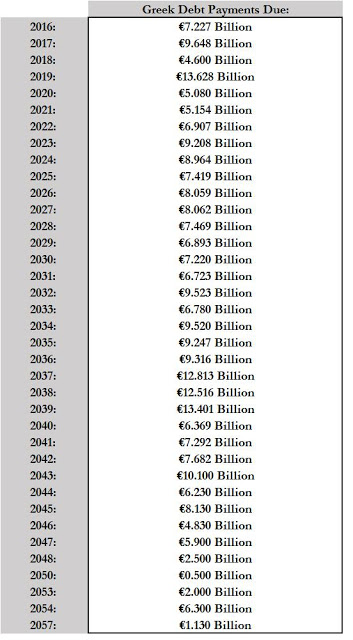 The only place the Greek government has left to go for money to fund its ongoing expenditures and pay these debts is Greek banks. Fearing capital controls and "haircuts" (government confiscation of certain fractions of bank deposits), many Greeks in recent months have, quite rationally, started withdrawing money out of their banks and sending it overseas. More trusting Greeks kept their savings in their banks, with the result that, with the imposition of capital controls last Monday, they have been locked out of their savings, and plans for "haircuts" of 30% or more have been reported (If somebody lopped off 30% of your head, you’d have more than a haircut). When capital controls were first rumored and then announced on Sunday, vast lines formed at ATMs as Greeks rushed to rescue what little of their life savings that they could: 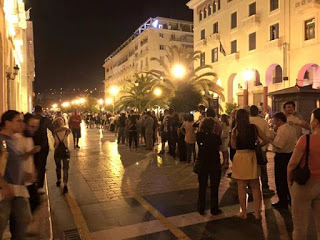 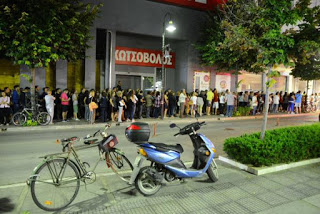 On Tuesday, the Greek government defaulted on its scheduled debt payment to the International Monetary Fund (IMF). Under capital controls, ATM withdrawals from Greek bank accounts are now limited to 60 euros a day. Debit cards can still be used for payments within the country, but the money simply gets transferred from one frozen bank account to another. As a result many businesses no longer accept debit cards, and many more are demanding a substantial premium price (in at least one business, double) for debit cards (transferred bank balances) versus hard cash. There is a growing shortage of such cash; as a result some stores are paying their suppliers in private "scrip", which can be used by the supplier's workers to purchase goods from the issuing store. (more on this below). Use of credit and debit cards to pay out of the country is banned and effectively blocked, resulting in a near-complete freeze-out of Greeks from Internet commerce. This restriction, along with the controls resulting in Greeks being excluded from the pan-European money settlement system, means that Greek businesses can't pay for imports. Many shipments into the country have been halted as a result. (The government plan is to create a whitelist of politically approved cases in which such payments for imports will be unblocked). A crucial feature of store-issued scrip is that it literally circulates through a complete closed cycle: store --> supplier --> workers --> store. Such specific cycles are a pattern that is commonly found when currencies are primitive or newly emerging, and every Bitcoin marketer and evangelist should be familiar with them. It doesn’t help much to sell bitcoin to isolated individuals: as a mere store of value its volatility is much greater than most existing currencies; as an investment it only makes sense as a tiny high-risk fraction of one's portfolio. Bitcoin does have some political-affinity and status value in developed countries; by contrast in many developing countries and in countries under financial crisis such as Greece, there are urgent needs bitcoin potentially can address. In terms of these needs Bitcoin is mainly useful as a way to send money across borders for investment in more stable assets overseas, and to substitute for cash or other substitute currencies in a money-starved environment. To have value as a medium of exchange, bitcoin must be taken up by a community of people who already frequently trade with each other, and who have a strong need to use it in these trades. It is especially important to market to the links in the cycle that have the strongest negotiating leverage with the others (in the case of Greek the Greek store scrip cycle, the store and its larger suppliers). The link in the cycle with the greatest incentives to switch to bitcoin here are likely the store's suppliers, because they don’t fully trust the store, nor the underlying currency, euro or post-euro, that is the “O” in an IOU, but are participating in the scrip because, sans bitcoin, they have no other choice. In bitcoin specific cycles create other cost savings. Almost everywhere they economize on the increasingly high KYC/AML (know your customer/anti-money-laundering) costs of going through a fiat-bitcoin exchange. What's more, in a capital controls environment like Greece specific cycles avoid the capital controls that would be imposed on a Greek-based fiat-bitcoin exchange, and avoid the need nearly all Greek customers using out-of-country exchanges would have to futilely try to tap into their frozen bank accounts in order to purchase bitcoin. Bitcoin will not, contrary to some feverish news reporting, help Greeks get money out of their frozen bank accounts. But bitcoin does have great potential to help in less obvious ways: for one thing, as a superior (not vulnerable to trust in an issuing store, and in any currency underlying an IOU) substitute for the emerging store scrips. For another, it could help greatly with the severe cross-border commerce issues that are emerging. Exporters, including freelancers working over the Internet, can bring bitcoin into the country, thereby avoiding earning wages that get deposited to frozen bank accounts (per Greek lore, be wary of a cave with many tracks coming in but few coming out). Importers can pay for goods with bitcoin while other electronic payment channels (European money settlements, Paypal, and credit & debit cards when paying foreign businesses, etc.) remain frozen. Again specific cycles must be set up: isolated marketing to just exporters or importers will be far less effective than organizing existing supply chains that involve both. There are likely many other, mostly highly non-obvious, niches in which bitcoin, and other cryptocurrencies, and smart contract platforms could play a quite valuable role in capital-controlled and other financially handicapped countries. Bitcoin is not easy to learn, either conceptually or in setting up businesses and individuals with the software (and preferably also the secure hardware) to accept it. This is especially the case in a capital controls climate where the traditional bitcoin exchanges and retail payment companies, with their consumer-friendly front ends, as they normally operate in developed countries, likely can't effectively operate. To take advantage of bitcoin many Greeks will have to use the Bitcoin blockchain directly. So it's too late for bitcoin to help much with the current 6 days of bank closure, but once the learning curves have been surmounted, the participants in specific cycles educated, bitcoin has great potential to address likely many ongoing problems with capital control, in Greece as long as they continue in various forms, and in many other parts of the world where such financial restrictions designed for a pre-digital era have been imposed. http://unenumerated.blogspot.com/search?q=bitcoin |
| json metadata | {"tags":["greek","financial","bitcoin"],"image":["https://steemitimages.com/DQmQnukLNw5npRm9UoLE1CQMAkRPXVUcFWbR5aiBKnpeGtb/GreekCrisisDebtSchedule.jpg","https://steemitimages.com/DQmXfrbLiPP2AadJt2tQV96Ya9BqMDgLryAPZWn2oFD1ccK/GreeceATMLineThessaloniki.jpg","https://steemitimages.com/DQmbSG5yx1CLULEfB51o6fTqE5ZU25reW4bDLZiqLUo6YCN/GreekCrisisATMLineLarissaCity.jpg"],"links":["http://unenumerated.blogspot.com/search?q=bitcoin"],"app":"steemit/0.1","format":"markdown"} |
| Transaction Info | Block #14584856/Trx bd8edae188f2648a40f5df00347296de73b3e165 |
View Raw JSON Data
{
"trx_id": "bd8edae188f2648a40f5df00347296de73b3e165",
"block": 14584856,
"trx_in_block": 3,
"op_in_trx": 0,
"virtual_op": 0,
"timestamp": "2017-08-15T03:25:27",
"op": [
"comment",
{
"parent_author": "",
"parent_permlink": "greek",
"author": "moeez",
"permlink": "the-greek-financial-mess-and-some-ways-bitcoin-might-help",
"title": "The Greek financial mess; and some ways Bitcoin might help",
"body": "Many years of government debt buildup in Greece has ultimately resulted, in the last few days, in a political and financial maelstrom. The political maelstrom includes demonstrations in the run up to a referendum on obscure debt-restructuring provisions to be held this Sunday (July 5th). This article focuses on financial problems and some potential practical steps that can be taken to mitigate them. The imposition of capital controls is a disaster for a modern trade-driven economy, a catastrophe which however digital technology, and in particular the digital currency bitcoin (which given the Greek environment usually must involve direct use of the Bitcoin blockchain), has the potential to mitigate. This article will explore some of the severe practical problems that capital controls are causing Greek individuals and businesses, and suggest some potential bitcoin solutions, many of which could also be applied to other countries with some similar financial problems and controls such as Argentina and Venezuela. These aren't solutions that can be applied in time to help with the current 6 days of capital controls, but could substantially help some Greeks and some aspects of the Greek economy if some version of these controls is continued for months or years.\n\nAt root the Greek financial problem is that the Greek government has spent more, compared to the GDP generated by its economy, than the vast majority of other governments. It has borrowed copious sums to do so, falling ever deeper into debt. Here is its payment schedule:\n\n\n\nThe only place the Greek government has left to go for money to fund its ongoing expenditures and pay these debts is Greek banks. Fearing capital controls and \"haircuts\" (government confiscation of certain fractions of bank deposits), many Greeks in recent months have, quite rationally, started withdrawing money out of their banks and sending it overseas. More trusting Greeks kept their savings in their banks, with the result that, with the imposition of capital controls last Monday, they have been locked out of their savings, and plans for \"haircuts\" of 30% or more have been reported (If somebody lopped off 30% of your head, you’d have more than a haircut).\n\nWhen capital controls were first rumored and then announced on Sunday, vast lines formed at ATMs as Greeks rushed to rescue what little of their life savings that they could:\n\n\n\n\nOn Tuesday, the Greek government defaulted on its scheduled debt payment to the International Monetary Fund (IMF).\n\nUnder capital controls, ATM withdrawals from Greek bank accounts are now limited to 60 euros a day. Debit cards can still be used for payments within the country, but the money simply gets transferred from one frozen bank account to another. As a result many businesses no longer accept debit cards, and many more are demanding a substantial premium price (in at least one business, double) for debit cards (transferred bank balances) versus hard cash. There is a growing shortage of such cash; as a result some stores are paying their suppliers in private \"scrip\", which can be used by the supplier's workers to purchase goods from the issuing store. (more on this below).\n\nUse of credit and debit cards to pay out of the country is banned and effectively blocked, resulting in a near-complete freeze-out of Greeks from Internet commerce. This restriction, along with the controls resulting in Greeks being excluded from the pan-European money settlement system, means that Greek businesses can't pay for imports. Many shipments into the country have been halted as a result. (The government plan is to create a whitelist of politically approved cases in which such payments for imports will be unblocked).\n\nA crucial feature of store-issued scrip is that it literally circulates through a complete closed cycle: store --> supplier --> workers --> store. Such specific cycles are a pattern that is commonly found when currencies are primitive or newly emerging, and every Bitcoin marketer and evangelist should be familiar with them. \n\nIt doesn’t help much to sell bitcoin to isolated individuals: as a mere store of value its volatility is much greater than most existing currencies; as an investment it only makes sense as a tiny high-risk fraction of one's portfolio. Bitcoin does have some political-affinity and status value in developed countries; by contrast in many developing countries and in countries under financial crisis such as Greece, there are urgent needs bitcoin potentially can address. In terms of these needs Bitcoin is mainly useful as a way to send money across borders for investment in more stable assets overseas, and to substitute for cash or other substitute currencies in a money-starved environment.\n\nTo have value as a medium of exchange, bitcoin must be taken up by a community of people who already frequently trade with each other, and who have a strong need to use it in these trades. It is especially important to market to the links in the cycle that have the strongest negotiating leverage with the others (in the case of Greek the Greek store scrip cycle, the store and its larger suppliers). The link in the cycle with the greatest incentives to switch to bitcoin here are likely the store's suppliers, because they don’t fully trust the store, nor the underlying currency, euro or post-euro, that is the “O” in an IOU, but are participating in the scrip because, sans bitcoin, they have no other choice.\n\nIn bitcoin specific cycles create other cost savings. Almost everywhere they economize on the increasingly high KYC/AML (know your customer/anti-money-laundering) costs of going through a fiat-bitcoin exchange. What's more, in a capital controls environment like Greece specific cycles avoid the capital controls that would be imposed on a Greek-based fiat-bitcoin exchange, and avoid the need nearly all Greek customers using out-of-country exchanges would have to futilely try to tap into their frozen bank accounts in order to purchase bitcoin. Bitcoin will not, contrary to some feverish news reporting, help Greeks get money out of their frozen bank accounts.\n\nBut bitcoin does have great potential to help in less obvious ways: for one thing, as a superior (not vulnerable to trust in an issuing store, and in any currency underlying an IOU) substitute for the emerging store scrips. For another, it could help greatly with the severe cross-border commerce issues that are emerging. Exporters, including freelancers working over the Internet, can bring bitcoin into the country, thereby avoiding earning wages that get deposited to frozen bank accounts (per Greek lore, be wary of a cave with many tracks coming in but few coming out). Importers can pay for goods with bitcoin while other electronic payment channels (European money settlements, Paypal, and credit & debit cards when paying foreign businesses, etc.) remain frozen. Again specific cycles must be set up: isolated marketing to just exporters or importers will be far less effective than organizing existing supply chains that involve both.\n\nThere are likely many other, mostly highly non-obvious, niches in which bitcoin, and other cryptocurrencies, and smart contract platforms could play a quite valuable role in capital-controlled and other financially handicapped countries.\n\nBitcoin is not easy to learn, either conceptually or in setting up businesses and individuals with the software (and preferably also the secure hardware) to accept it. This is especially the case in a capital controls climate where the traditional bitcoin exchanges and retail payment companies, with their consumer-friendly front ends, as they normally operate in developed countries, likely can't effectively operate. To take advantage of bitcoin many Greeks will have to use the Bitcoin blockchain directly. So it's too late for bitcoin to help much with the current 6 days of bank closure, but once the learning curves have been surmounted, the participants in specific cycles educated, bitcoin has great potential to address likely many ongoing problems with capital control, in Greece as long as they continue in various forms, and in many other parts of the world where such financial restrictions designed for a pre-digital era have been imposed.\n\n\nhttp://unenumerated.blogspot.com/search?q=bitcoin",
"json_metadata": "{\"tags\":[\"greek\",\"financial\",\"bitcoin\"],\"image\":[\"https://steemitimages.com/DQmQnukLNw5npRm9UoLE1CQMAkRPXVUcFWbR5aiBKnpeGtb/GreekCrisisDebtSchedule.jpg\",\"https://steemitimages.com/DQmXfrbLiPP2AadJt2tQV96Ya9BqMDgLryAPZWn2oFD1ccK/GreeceATMLineThessaloniki.jpg\",\"https://steemitimages.com/DQmbSG5yx1CLULEfB51o6fTqE5ZU25reW4bDLZiqLUo6YCN/GreekCrisisATMLineLarissaCity.jpg\"],\"links\":[\"http://unenumerated.blogspot.com/search?q=bitcoin\"],\"app\":\"steemit/0.1\",\"format\":\"markdown\"}"
}
]
}2017/08/15 03:01:42
2017/08/15 03:01:42
| voter | fankor |
| author | moeez |
| permlink | collecting-metal-the-inner-and-outer-worlds-of-jewelry-coins-bullion-bits-and-odd-shiny-things |
| weight | 10000 (100.00%) |
| Transaction Info | Block #14584381/Trx 6647d6a9dc47c264b4b825afcd85107f9dd14793 |
View Raw JSON Data
{
  "trx_id": "6647d6a9dc47c264b4b825afcd85107f9dd14793",
  "block": 14584381,
  "trx_in_block": 7,
  "op_in_trx": 0,
  "virtual_op": 0,
  "timestamp": "2017-08-15T03:01:42",
  "op": [
    "vote",
    {
      "voter": "fankor",
      "author": "moeez",
      "permlink": "collecting-metal-the-inner-and-outer-worlds-of-jewelry-coins-bullion-bits-and-odd-shiny-things",
      "weight": 10000
    }
  ]
}2017/08/15 02:52:21
2017/08/15 02:52:21
| parent author | moeez |
| parent permlink | collecting-metal-the-inner-and-outer-worlds-of-jewelry-coins-bullion-bits-and-odd-shiny-things |
| author | counterweight |
| permlink | re-moeez-collecting-metal-the-inner-and-outer-worlds-of-jewelry-coins-bullion-bits-and-odd-shiny-things-20170815t025223761z |
| title | |
| body | Hi. I am a volunteer bot for @resteembot that upvoted you. Your post was chosen at random, as part of the advertisment campaign for @resteembot. @resteembot is meant to help minnows get noticed by re-steeming their posts ----- To use the bot, one must follow it for at least 3 hours, and then make a transaction where the memo is the url of the post. If you want to learn more - [read the introduction post of @resteembot](https://steemit.com/resteembot/@resteembot/how-to-use-resteembot). If you want help spread the word - [read the advertisment program post](https://steemit.com/resteembot/@resteembot/how-to-help-resteem-bot-spread-the-word). ----- Steem ON! |
| json metadata | |
| Transaction Info | Block #14584194/Trx 64c9cb834cfd86998e9e89a0188da4adab5e17b7 |
View Raw JSON Data
{
  "trx_id": "64c9cb834cfd86998e9e89a0188da4adab5e17b7",
  "block": 14584194,
  "trx_in_block": 11,
  "op_in_trx": 0,
  "virtual_op": 0,
  "timestamp": "2017-08-15T02:52:21",
  "op": [
    "comment",
    {
      "parent_author": "moeez",
      "parent_permlink": "collecting-metal-the-inner-and-outer-worlds-of-jewelry-coins-bullion-bits-and-odd-shiny-things",
      "author": "counterweight",
      "permlink": "re-moeez-collecting-metal-the-inner-and-outer-worlds-of-jewelry-coins-bullion-bits-and-odd-shiny-things-20170815t025223761z",
      "title": "",
      "body": "Hi. I am a volunteer bot for @resteembot that upvoted you.\nYour post was chosen at random, as part of the advertisment campaign for @resteembot.\n@resteembot is meant to help minnows get noticed by re-steeming their posts\n-----\nTo use the bot, one must follow it for at least 3 hours, and then make a transaction where the memo is the url of the post.\nIf you want to learn more - [read the introduction post of @resteembot](https://steemit.com/resteembot/@resteembot/how-to-use-resteembot).\nIf you want help spread the word - [read the advertisment program post](https://steemit.com/resteembot/@resteembot/how-to-help-resteem-bot-spread-the-word).\n-----\nSteem ON!",
      "json_metadata": ""
    }
  ]
}2017/08/15 02:51:54
2017/08/15 02:51:54
| voter | counterweight |
| author | moeez |
| permlink | collecting-metal-the-inner-and-outer-worlds-of-jewelry-coins-bullion-bits-and-odd-shiny-things |
| weight | 10000 (100.00%) |
| Transaction Info | Block #14584185/Trx e613d257be1d236d811d7684da749a4182e60bc1 |
View Raw JSON Data
{
  "trx_id": "e613d257be1d236d811d7684da749a4182e60bc1",
  "block": 14584185,
  "trx_in_block": 5,
  "op_in_trx": 0,
  "virtual_op": 0,
  "timestamp": "2017-08-15T02:51:54",
  "op": [
    "vote",
    {
      "voter": "counterweight",
      "author": "moeez",
      "permlink": "collecting-metal-the-inner-and-outer-worlds-of-jewelry-coins-bullion-bits-and-odd-shiny-things",
      "weight": 10000
    }
  ]
}2017/08/15 02:51:21
2017/08/15 02:51:21
| parent author | moeez |
| parent permlink | collecting-metal-the-inner-and-outer-worlds-of-jewelry-coins-bullion-bits-and-odd-shiny-things |
| author | cheetah |
| permlink | cheetah-re-moeezcollecting-metal-the-inner-and-outer-worlds-of-jewelry-coins-bullion-bits-and-odd-shiny-things |
| title | |
| body | Hi! I am a robot. I just upvoted you! I found similar content that readers might be interested in: http://unenumerated.blogspot.com/2017/03/collecting-metal-inner-and-outer-worlds.html |
| json metadata | |
| Transaction Info | Block #14584174/Trx aa551490ae19d191d668dd45c76990dccc50561b |
View Raw JSON Data
{
  "trx_id": "aa551490ae19d191d668dd45c76990dccc50561b",
  "block": 14584174,
  "trx_in_block": 3,
  "op_in_trx": 0,
  "virtual_op": 0,
  "timestamp": "2017-08-15T02:51:21",
  "op": [
    "comment",
    {
      "parent_author": "moeez",
      "parent_permlink": "collecting-metal-the-inner-and-outer-worlds-of-jewelry-coins-bullion-bits-and-odd-shiny-things",
      "author": "cheetah",
      "permlink": "cheetah-re-moeezcollecting-metal-the-inner-and-outer-worlds-of-jewelry-coins-bullion-bits-and-odd-shiny-things",
      "title": "",
      "body": "Hi! I am a robot. I just upvoted you! I found similar content that readers might be interested in:\nhttp://unenumerated.blogspot.com/2017/03/collecting-metal-inner-and-outer-worlds.html",
      "json_metadata": ""
    }
  ]
}2017/08/15 02:50:51
2017/08/15 02:50:51
| voter | cheetah |
| author | moeez |
| permlink | collecting-metal-the-inner-and-outer-worlds-of-jewelry-coins-bullion-bits-and-odd-shiny-things |
| weight | 10 (0.10%) |
| Transaction Info | Block #14584164/Trx 462ed675bb62adb9b676439b5ccd7a1e6b85cc6f |
View Raw JSON Data
{
  "trx_id": "462ed675bb62adb9b676439b5ccd7a1e6b85cc6f",
  "block": 14584164,
  "trx_in_block": 7,
  "op_in_trx": 0,
  "virtual_op": 0,
  "timestamp": "2017-08-15T02:50:51",
  "op": [
    "vote",
    {
      "voter": "cheetah",
      "author": "moeez",
      "permlink": "collecting-metal-the-inner-and-outer-worlds-of-jewelry-coins-bullion-bits-and-odd-shiny-things",
      "weight": 10
    }
  ]
}2017/08/15 02:50:33
2017/08/15 02:50:33
| parent author | |
| parent permlink | gold |
| author | moeez |
| permlink | collecting-metal-the-inner-and-outer-worlds-of-jewelry-coins-bullion-bits-and-odd-shiny-things |
| title | Collecting metal: the inner and outer worlds of jewelry, coins, bullion bits, and odd shiny things |
| body | Millions of millennia ago, in our own Milky Way galaxy, but far upstream of where we are today, two neutron stars spiraled around each other, each embodying the mass of a sun but smaller and faster than a speeding planet. Each of these tiny gigaworlds, millions of times denser than our sun, had been produced, not by a mere exploding star, but by a far more powerful supernova. Each supernova, burning a nuclear fire with a far greater power density than a normal star such as our sun, had besides a neutron star also produced a cavalcade of new elements. For elements lighter than iron, this nuclear fusion releases energy; but for elements heavier than iron, including copper, silver, and gold, nuclear fusion requires a net energy input as well as astronomical power densities. Our supernovae were powerful enough to create many metals, including copper and silver, from the fusion of lighter elements. But they were not powerful enough to create gold. Gold awaited the current, far more powerful and rarer event. Our two stars, fortuitously set into collision course by two separate supernovae, approached each other and then, captured by each others’ gravity, entered a death spiral. They collided in an unimaginable explosion, unleashing a power density far greater than that of a mere supernova and trillions of times greater than if a mere mountain-sized asteroid had hit the earth. The collision was so intense that it created a black hole and a burst of extremely high energy light called gamma rays. Escaping the black hole along with the gamma rays was a spray of new, heavier metals, including gold. This gold-rich cloud in part expanded and in part coalesced, participating in the subsequent formation of new solar systems, including our own. Due to this collision of rare intensity, our unusual solar system was seeded with astronomically rare heavy metals such as gold along with the more common supernova products such as copper and silver. [Source] 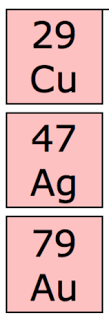 Billions of years later, naked apes evolved with hypertrophied brains and clever hands, living on a planet in this gold-dusted solar system. They dug out the gold and silver they could find and separated it from the more common earth. Other more common metals were more useful for concretely usable tools; instead they fashioned the precious metals into what looks to our eyes like jewelry. They formed these precious metals into shapes both repetitive and unique, bragged about them, displayed them, stored them as “treasure”, “wealth”, and “money”. They fashioned gold and silver into wearable objects, transferred them to each other or stole them, even injuring or killing each other in pursuit of them. They used the gold and silver to pay each other compensation for those and many other injuries. People transferred gold and silver to each other in order to satisfy important obligations as well as to obtain items of more direct and obvious use. Since the most important such obligations happened at many of the most fitness-critical junctures of life – marriage, death, injury, war – gold and silver, as treasure and as money, came to be greatly desired. Some metal collectibles came in a wide variety of artistically skilled forms. Others came in the form of coins: labeled, mass-produced pieces of metal stamped by the blow of a hammer or cast in molds, whereby a mostly-trusted brand named their alleged value. Still others came in forms that look odd to us, resembling neither coins nor fancy jewelry, but rather utilitarian-looking pieces that manage to make precious metals ugly, and that might have been worn but that look, long before the era of factories, like they were mass produced. . People around the world wore gold jewelry proudly, and globe-straddling monetary systems, on which economies were said to be based, were defined around gold and silver objects and debts denominated in weights of those metals. We can think of collectibles as coming at us at two levels, like railroads and trains, or like pipelines and the oil they carry. At the most basic or “inner layer” is the metal itself that constitutes the substance of the collectible: occasionally iron, more typically copper or bronze for the less valuable collectibles, and the precious metals, especially gold and silver, for the more valuable money and treasure. 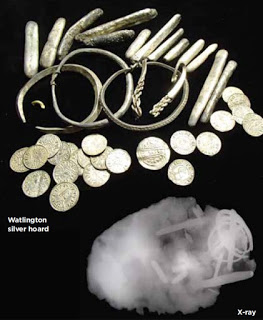 So important is the “lower layer” of the traditional cultural understanding of gold and silver, the natural substance itself, evaluated by its weight rather than by any value added via the craftsmanship or its form, that Europeans of earlier generations evolved a word for it: bullion. Bullion is the metal itself, considered and valued only for its substance. Jewelry, coins, and other ways of shaping precious metals are just various forms of the underlying bullion. The famous gold/silver ratio (exchange rate) operates at this basic level. The cost and supply of precious metals, given the technological similarity of the means for mining and processing each, are dominated by their natural origins in the stars above and the geology below. 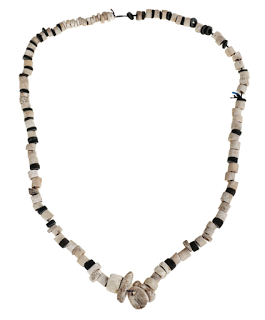 Legal or moral sanctions discourage transfer of objects from one sphere to another. In feudal European societies it was shameful and often even illegal to sell or mortgage land: a lord’s duty was to preserve his land and devise it intact to his eldest son. In modern Western society, weddings are one sphere of transfer (where a gift of a finger-ring is expected, as well as some household items from the guests and a feast or party thrown by the parents), whereas commerce and legal remedy in civil law is another (where payment of money is expected). Some aspects of our bodies (such as ownership of humans or payment for sex or body organs) are off limits to monetary compensation – one is expected to donate an organ, not to sell it – while many others are not (most health care, for example). All of these spheres can involve transfers of objects of substantial value, but it is disgraceful and/or illegal if they are the too obviously the wrong ones for the given sphere. The world’s oldest gold artifact – a small bead from the lower Danube river basin (4,600-4,500 BC). [Source] In the modern West, we consider the realm of jewelry and the realm of money to be very separate spheres of transfer. It is considered either a shameful betrayal or a grim necessity if the winner of an Olympic or Nobel Prize medal or a Super Bowl ring sells it to raise money. The finger-ring is a central feature of modern weddings, but few things would offend a typical modern bride more than being paid a bride price, she or her kin being indemnified by money as if she, as we would see it, were a prostitute on long-term contract. Meanwhile, our economists obsess over money while touching on the subject of jewelry hardly at all, and certainly not as any sort of form or variant of money. We moderns can hardly imagine confusing such seemingly very different things, and indeed the very idea offends our sensibilities. But in many non-Western and earlier Western cultures this was far from the case. For them the fundamental protocol layer, the substance itself, is cherished for its own sake, and forms the great majority of the value of the item, while its protocol layer two, the “outer layer”, the particular form it has been fashioned into, while often of considerable interest, is usually quite secondary in determining its value for purposes of the display and transfer of wealth. Recycling of gold jewelry in the United States: usually to be recast as bullion bars for central bank and gold exchange-traded-fund (ETF) reserves, or for export to Asia for making jewelry for which the gold content is far more important than in the West. Occasionally cast into gold coins for “gold bugs” and collectors. This modern Western restriction involves the more culturally local aspect of gold and silver, namely the particular form it takes (jewelry vs. coin), even though these objects are made out of the same underlying substance, and traditionally were mainly prized for the content by weight of that substance. Even in our own culture we have businesses that serve to transfer gold and silver from one sphere to another. Nevertheless, economists and other academicians often act as if money and jewelry are scientifically and objectively very distinct objects, when in fact this is a cultural convention that is largely confined to the modern West. Globe-trotting gold dealer Roy Sebag has [described] the differences between Asian and Western views of jewelry. As he describes it, over $2 trillion worth of jewelry is owned by about 2 billion people in India and China alone, constituting a much larger fraction of their wealth on average than in the West. The metal content of the gold jewelry constitutes the vast majority of its sales price and its assessed value as collateral, as it also does in Brazil, Russia, and most other countries outside of Western Europe, the British Commonwealth, and the United States. In the latter countries, precious metal content constitutes only a small fraction of the sales price or pawning value of jewelry. “Jewelry is money” is how Sebag summarizes his observations of the modern Asian jewelry market. In cultures without a strong distinction between decorative jewelry and money, they often didn’t even bother melting it down to switch from coins to lower velocity but more displayable forms of wealth. Roman gold coin minted c. 400 AD, converted in the 7th century into an Anglo- Saxon pendant: [Source] [See also] While the “lower" or "inner" layer of the metal collectible “protocol stack” is its natural substance, its “upper" or "outer" layer is the particular form it takes. Sometimes it is mass produced (as in coins and common bead shapes) and sometimes it is a unique work of exquisite and rare craftsmanship. Form and style is the “protocol layer” of gold artifact most highly valued and distinguished in modern Western jewelry; but it is far less valued, compared to the natural substance itself, in the vast majority of Asian and pre-modern Western jewelry. As with [pre-metal forms of collectibles], the form of metal collectibles can be sub-divided, in a way generalizable across nearly all known cultures, into treasure (typically of high value and not as an object fungible or divisible, unless melted down destroying the particular object) and money (objects such as coins that are meant to be efficiently transferred and combined with other such objects to create the particular amount of value needed). Metal or metaled treasure has taken the form of gilded objects, sculptures, various utilitarian objects enhanced artistically and made out of the scarcer metals, as well as jewelry. Treasure was, and sometimes still is, typically used for heirlooms, displays of wealth, as collateral for loans of money, and for large wealth transfers. In traditional societies these wealth transfers usually accompanied fitness-critical events. They often occurred at marriages, deaths, to satisfy obligations entered into to end wars, and as compensation for major injuries, as well as in helping to facilitate trade. The Stollhoff hoard – copper spirals and axe blades as well as gold discs from the upper Danube river watershed (modern Austria), c. 4000 BC. Spiral armbands were among the earliest large items worked from native copper, in the middle Danubian basin (modern Hungary) c. 5000-4500 BC. Money as this work defines it, on the other hand, can be distinguished from treasure by its fungibility and divisibility. In our Western tradition metal money and coins are practically synonymous, but with cross-cultural observations, as for example in [2] and [3], and even in modern Asia as Sebag has observed, the distinction between money and jewelry is far less clear-cut – with the proviso that in his mind, as well as in the minds of the jewelry customers and suppliers he observed, it is the divisibility and fungibility of the substance itself, not its form, that is paramount. Nevertheless, a significant fraction of the forms jewelry comes in, such as beads and constant-width wires, could be treated by their users if they so desired as fungible and divisible without destruction of even the form of the object. Indeed, such forms in jewelry, especially in the archaeological record, are more common than would seem likely if solely artistic and never monetary considerations had been involved in their original design. As a result of bringing their cultural assumptions to bear, endless energy has been wasted by Western observers trying to distinguish non-Western “money” or “primitive money” from non-Western “jewelry”. Boringly standard, divisible, and fungible, in its particular form as well as in the underlying metal, but boasting neither the kings and dates on coins desired by historians nor the fine craftsmanship of unique work beloved of museums, and categorizable by the dominant academic ideologies as neither money nor art nor ornament, so it sits packed in boxes in the cellar of the Danish National Museum, like many other such mundane but important artifacts underneath museums around the world. About 2,000 small gold spirals were buried in a fur-lined wooden box in Denmark between 900-700 B.C. [Source] Law and “money” Western (roughly speaking, European-derived) law, which now dominates the world, can be very flexible when it comes to applying itself to money. When supporting money with legal institutions, it tends to take a definition far more narrow the “medium of exchange and store of value” definition beloved of economists. When discouraging undesired forms, amounts, or velocities of money, on the other hand, law sometimes takes in a far broader scope of objects than Western economists think of as money. One of the more common modern legal definitions of “money”, used for laws that facilitate and support financial interchange (such as contracts for goods, checks, collateral for loans, etc.), is that money can only be an official government currency (see for example). By definition, no substance or form of matter or pattern of information of any kind, regardless of how it functions or how it is used, can be money, if has not been authorized or adopted by a government. You cannot write a legal check in any of the United States for ounces of gold or Bitcoin, because gold and Bitcoin are not, per the Uniform Commercial Code, “money”. Such definitions, while quite necessary to understand if you hope to deal with money in the majority of modern countries with such laws, are hopelessly specific to a certain kind of culture and politics, as well as being scientifically unsound as a basis for reasoning about even just the role of money in exchange even in cultures living under such laws, much less its actual much wider role in wealth transfers and in other cultures without such laws. Thus outside of this section we will neglect such official definitions of money in this work. Instead we use the objective definition presented here. This is certainly not the only possible definition of “money”; many far wider, far narrower, and very conflicting definitions of this word have been used in the ethnographic, anthropologic, archaeological, and economic literatures, usually implicitly rather than consciously, thereby causing the reader to join the author in being hopelessly confused about the subject. Thus when enforcing rules for modern financial institutions, modern law uses a very narrow definition of money; the many other ways of storing and transferring wealth are not allowed to benefit from these advanced institutions. But when cracking down on alleged abuses of money, law often restricts a far wider array of objects used to store and transfer wealth. A great illustration of the monetary nature of jewelry is given by the current (as of this writing) Indian demonetization law. The crackdown includes gold and focuses on its natural substance, not its mere form as coin (“money” to modern Western eyes) as opposed to jewelry (supposedly “ornament” not “money”). Under Indian law it is all subject to stringent controls alongside the notes and coins: …the rules governing when tax officials could seize gold: Nothing would happen “if the holding is limited to 500 grams per married woman, 250 grams per unmarried woman and 100 grams per male.” It also said that there would be no limits on jewelry “provided it is acquired… from inheritance.” [Source] When Mongol conqueror Kublai Khan issued paper currency in late medieval China, to make this poorly trusted scheme work his government confiscated gold and silver, jewelry and coin alike, gems and pearls as well as gold and silver, in a forced exchange for the paper notes. [7] Bullion bits and odd shiny things Divisible and fungible metal forms such as coins, small thin ingots (hack-silver), arm-rings and wire, and beads have to a greater or lesser extent, depending on the culture, been used for small or frequent payments made to people who commonly need to make small acquisitions (such as the wages of soldiers and laborers), as well as to round out a value of a large wealth transfer to a specific desired value, that otherwise mostly constitutes treasure, indivisible and of a unique value somewhat different than the value desired, via custom, law, or negotiations, for the wealth transfer. W.B. Dickinson observed the ubiquity, both as archaeological artifacts in many far-flung parts of Eurasia and in widespread use in East Asia and Indian Ocean regions, of precious metals (bullion) in wire, coil, and arm-ring, in bullion forms that looked more utilitarian than decorative, and noted the wear on such artifacts indicating that at least some had probably passed from hand to hand with a velocity more coin-like than treasure-like. He observed that their existence extended throughout countries extending from Syria, Arabia, Egypt, Socotra, the Persian Gulf to Ceylon, China, Japan, Siam, and the whole East, to the south-west coast of Africa, to the north of Europe, to England and to Ireland. That the people of so many places, and in so various ages, should have formed their bullion and other metals into this particular form solely for the purpose of barter, without attaching to it any monetary character, seems a conclusion very difficult to arrive at…these forms were to all intents and purposes the money of the respective lands.[4] Larger ingots, and modern central bank gold bars, and ingots of intermediate value, such as the medieval Chinese silver sycee, also called 元寶: “primary treasure”. Originally “sycee” was Cantonese for “fine silk”, when that costly cloth was a main form of treasure; later it was superseded as treasure by the boat-shaped silver ingots, which inherited the word “sycee”, since it by then had become the generic term in Cantonese for “treasure”. Even though large ingots come in a standard form, divisible and fungible at large granularities of value, they can by our organizational scheme more properly be categorized as treasure than as money, since they were typically used like treasure in larger wealth transfers and as collateral for loans or (during the recent historical gold standard era) issues of debt-money. Silver stamped sycee ingot. [Source] Our distinction between treasure and money, it should be apparent, is not clear-cut and is not of crucial economic or political importance. More important and much more scientifically observable is the distinction between collectibles like coins, beads, and works of laborious or uncommon craftsmanship on the one hand, and non-collectibles of concrete utility or trivial decoration on the other. I have described this distinction with many examples and much explanation in Artifacts of Wealth and Shelling Out: The Origins of Money. The collectible continuum – more like money as we go towards the top left, more like treasure as we go towards the bottom right. The main differences between ingots and traditional treasure were that the latter were also used as displays of wealth, whence their highly varied forms, which served to show off often high levels of craftsmanship as well as the precious metal itself. A great variety of very subtle and clever techniques were developed for maximizing the surface area covered by a given weight of gold or silver, more bling for the buck, since the metal was the main feature of the show. A great many cultures were observed to use non-coinage metal objects as money (by our definition), or treasure, or both, and a great many more probable such cases are implicit in the archaeological record. We can only mention a fraction of these as examples in this work. In Viking Iceland, silver rings (by weight) were used along with cloth and cattle to pay wergeld (compensation for injuries) and bridewealth, as well as a standard of value for exchange: Frithof breaks his ring in pieces and distributes it to his followers, so that they shall not be impecunious in the underworld. Rings were used in marriage payments and wergeld, the latter being estimated by haugatal or ring tale. A silver ring weighing 12 ounces was the compensation for the loss of a thrall, 100 rings or 100 head of cattle for a freeman. ([2] p284) Ring-money and hack-silver were also made and used in the rest of the pagan European north, including Scandinavia and early Anglo-Saxon England. In Celtic Ireland, “rings” in the form of divisible coils of gold or bronze were used along with cattle and slaves in injury compensation and bridewealth. ([4], [2] p287, [3] p238). In Homeric Greece, injury compensation, slave sales, and bridewealth often included gold by weight. ([5] p27, [11], [3] p91). In Rome before the introduction of coinage, bronze or copper ingots were used, per the Twelve Tables, to pay compensation for injuries. Non-coinage silver was also common until recent times in the vast Indian Ocean trade region as well as a number of inland cultures of south Asia. In Burma silver by weight was used for exchange and bridewealth: anybody wanting to transact business on the market must be provided with a lump of silver, a hammer, a chisel, weighing scales and weights.. he then quotes a price in weight. Thereupon they proceed to cut off from the lump of silver a corresponding piece which is then weighed. Often the operation has to be repeated several times until the correct weight is achieved. ([3] p95) In Siam, gold and silver “flowers” and “leaves” were used for bridewealth and tribute. ([2] p215, 219); various weights of silver “lumps” (small ingots) were also in widespread use ([3] p93). In the Hormuz and Lars in the Persian Gulf, and in some other parts around the Indian Ocean, were made the “fish-hook money” or silver larins used widely in the far-flung Indian Ocean trade. Such silver wires were accepted by weight across a dizzying variety of cultures. [2] p192-196 Larins, or silver wires bent double, and often stamped by maker; current in the very extensive Indian Ocean trade before and during the Age of Exploration. “If any suspect the goodness of the Plate it is the Custom to burn the Money in a fire red hot, and so put it in water; and if it be not then purely white it is not Currant Money.” ([2] p196) Such a technique would have worked for assaying a wide variety of wire-, coil-, or ring-like silver objects. Bronze bells manufactured in China were used to make high-value payments in several parts of the Chinese trading periphery, such as the Philippines. ([3] p84). In the Philippine lowlands, metal luxury goods (kettles, gongs, and jars) as well as gold beads were used for a variety of wealth display and transfer purposes ([2] p265). In China bells were the first objects that were uniquely metallic; other early metal objects such as knives, beads, etc. had been made out of other materials much earlier. Thus the Chinese adopted the word and pictograph of a bell 金 for metal (and even for gold in particular). Metal spades were styled 錢, which, via the spades that became stylized and stamped to invent early coins, became the Chinese term for “money”. [Source] Among the early coins – defined as standardized metal objects stamped with a standard value -- were the Chinese bronze spade money, c. 475-221 BC [Source] Copper crosses, rods, and similar shapes were popular forms of bridewealth and payment for exchange in the many cultures of the Congo ([2] p78-80). The Thonga, in what was then Portuguese East Africa, used brass rings along with mats, baskets, cattle, and beads for bridewealth, injury compensation, and fines. ([2] p104-5). The Ndebele and Nguni of Zimbabwe used brass rings and cattle for bridewealth and exchange. ([Source1], [Source2], and [2] p105) The people of Alor, a small island north of Timor in Indonesia, used brass gongs, pigs, and (for small change / rounding out of a specific value) arrows for exchange, bridewealth, burial feasts, and “complicated financial transactions” to build large clan houses. ([3] p84-6). Brass gongs and beads were also used for bridewealth by some cultures in nearby Borneo ([8] p10). Such gongs were used for injury compensation, bridewealth, large exchanges (memorialized in ceremony), and in peace-making payments also among the hill tribes of Siam, Burma and India ([2] p204-6, ) Brass pots and metal knives, axes, and hoes formed the largest part of the bridewealth of the Lakhers and Maras of the Lushai hills in India. ([8] p207). Most peoples indigenous to the Pacific Coast of America used shell beads as treasure or money (for example the Yurok). Among the few who also used copper were the Kwakiutl, who fished for abundant salmon and lived in villages in the Pacific Northwest. They used blankets and flat copper sheets (similar in form and function to hack-silver) for bridewealth, tribute, distributions to followers (roughly similar to wages paid to soldiers and laborers), and distributions at funeral ceremonies. According to the anthropologist Frans Boas who observed them, these copper sheets served the “same function as a high-denomination bank note for us [early 20th century European-Americans].” ([2] p15, 300) In their elaborate marketplaces, Aztecs used as payment gold dust measured out by volume from bone vials: The moment we arrived in this immense market, we were perfectly astonished at the vast numbers of people, the profusion of merchandise which was exposed for sale, and at the good police and order that reigned throughout…instruments of brass, copper, and tin [and] gold dust as it is dug out of the mines, which was exposed to sale in tubes made of the bones of large geese…The value of these tubes of gold was estimated according to their length and thickness, and were taken for exchange, for instance, for so many mantles [of] cacao nuts, slaves or other merchandise.[5] The Aztecs also used metal money modeled on hoes (or axes) as a medium of exchange, along with cocoa beans for small change. Gold dust was also used for purchases in some parts of Siam.[3 p93]. Why did such a wide variety of cultures use, and in some cases independently invent, the use of copper and its alloys, silver, and/or gold as a store of and medium for the transfer of value? Copper, silver, and gold have the same outermost electron cloud, giving them similar electrical, chemical, and material properties, such as resistance to oxidization -- albeit due to subtleties in this cloud gold resists oxidization better than silver, which resists it better than copper. These properties enhance their durability and divisibility. Their malleability and low melting point allow them to be recycled and formed into desired shapes and makes them readily divisible. Heating the metals hot enough to glow, an ancient low-tech form of spectroscopy, allows the metals to be distinguished from fraudulent materials. (We know now that the electron cloud around each atom gives, unique for each element, off a pattern of light at unique wavelengths, seen by the eye as a unique color). Coins Metal stamped or cast with the brand of a highly reputable mint – often highly reputable because they were a large creditor that consistently accepted the coin in satisfaction of obligations -- had a significant, though not always decisive, advantage over other forms of metal money. Where the need for a fungible and divisible money that could change hands rapidly at low transaction costs was paramount, it came to displace other forms of metal money, and even significant amounts of treasure often ended up being recycled into coins. Coins could change hands in a reasonably secure manner with much less frequent need for weighing and assaying operations. Coins spread quickly, though not until modern times universally, from their origins in Greek and Chinese city-states. In the Middle East and Europe coins were stamped; in China they were cast. Alongside coins grew marketplaces. As the Aztec gold dust, Persian Gulf larins, Burmese silver “lumps”, and many other examples too numerous to mention demonstrate, coins were not necessary for the existence of marketplaces, but they did help make them more efficient and widespread. The Greek conqueror Alexander the Great looted the treasuries of the Near East, converting low-velocity treasure to high-velocity coinage, making his soldiers and Near East tradesmen better-paid in the process. The subsequent Hellenistic, Roman, Persian, and Arabian empires were built on such coinage, as were medieval, Renaissance, and early industrial-era European economies. The European exploration explosion was fueled by the search for precious metals and their use to trade around the globe. As Peter Swetz, translator of The Treviso Arithmetic observes that a favorite textbook example, the alligation problem, which involved the mixing of substances in various ratios, was exemplified by the reminting of coins. “[T]he value of money [coin] was not determined by its face value, but rather its content of precious metal…throughout the sixteenth century, chapters on alligation in arithmetic books were particularly intended for German mint-masters …[and]…Italian goldsmiths.” This was not the only use of alligation – it also could be applied to compounding medicines, the mixing of wines, and to metallurgy more generally – but it was the most valuable and compelling example of the technique. Here is one of the problems as set forth for the student: A merchant has 46 marks 7 ounces of silver in which he knows there is 7 ¼ ounces of fine silver per mark. He wishes to reduce the purity of his silver to less than half [the example also serves to warn the apprentice merchant of such sharp practices], down to 3 ½ ounces of fine silver per mark. The question asks, “how much brass must be added to accomplish this”? Thereafter follows multiplication and division using some Renaissance-era shortcuts suitable for this kind of problem. And voila, the minter’s coins have been successfully reduced in value (hopefully along with their stated face value – the textbook does not mention that aspect) and increased in number. Touchstone and needles used by traditional European goldsmiths for assaying gold, silver, and copper, whether as coins or as jewelry. Each needle presents the visual difference made by different percentage compositions of the three metals. Outside of this western Eurasian area, however, many non-coinage forms of money persisted and forms of debt and fiat money represented by paper were invented. When paper debt-money reaches the West, with bills of exchange to send money across hostile lands and later bank notes representing vaults hopefully full of gold, we have reached a more recent period of monetary history and our minds have ventured far beyond the origins of money. We will end here. Non-Internet References [1] Bohannan, Paul (1959). "The Impact of money on an African subsistence economy". The Journal of Economic History. 19 (4): 491–503. [2] A. Hingston Quiggin, A Survey of Primitive Money: The Beginnings of Currency, Muethen & Co. Ltd., 1949 [3] Paul Einzig, Primitive Money in Its Ethnological, Historical, and Economic Aspects, Pergamon Press, 2nd ed. 1966 [4] W.B. Dickinson, “In Defense of Ring-Money as a Medium of Exchange”, The Numismatic Chronicle and Journal of the Numismatic Society, v. 16 (April 1853) [5] Grierson, Philip (1977) The origins of money. London: The Athlone Press, University of London. [6] Howard J. Erlichman, Conquest, Tribute, and Trade: The Quest for Precious Metals and the Birth of Globalization, Promethus Books 2010. Aztec gold dust quote on p97, quoting Bernal de Castillo in The True and Full Account of the Discovery and Conquest of Mexico and New Spain [7] Weatherford, Jack (1997). The History of Money. Crown Publishing Group. ISBN 978-0-307-55674-5 Jurors examining gold coins in a recent Trial of the Pyx. This assay and audit of the British Royal Mint has been conducted periodically since the Middle Ages. Isaac Newton and many other luminaries have been involved. It is structured much like an actual court trial, with a presiding judge, a jury of laymen, and a second jury of expert goldsmiths. It also includes the most advanced assay techniques available (today including detailed spectroscopy). The purpose of this elaborate audit and ceremony is to ensure and to communicate to outsiders that the mere local cultural form is “pure”, i.e. that the coins accurately label and embody the actual amount of the actually desired natural substance. The British love their traditions and the Trial of the Pyx continues to this day. http://unenumerated.blogspot.com/2017/03/collecting-metal-inner-and-outer-worlds.html |
| json metadata | {"tags":["gold","collecting","metal","shine"],"image":["https://steemitimages.com/DQmXfRFTmjwZNihyfsMCd4bdrDs52pzmnunKHJZF359Y1L1/CopperSilverGoldPeriodicTable.png","https://steemitimages.com/DQmYAyWa6tysfjU6TVUfyuHkd52vZmaHDx86DQjRmQpyktJ/VikingSilverHoard.jpg","https://steemitimages.com/DQmRH96BC5MMkKXBTqto87oYQxCZKg1dqJ67A7Bgtke8z7J/NecklaceSpondylusCopperFoltestiVadulCatagatei.png"],"links":["http://unenumerated.blogspot.com/2017/03/collecting-metal-inner-and-outer-worlds.html"],"app":"steemit/0.1","format":"markdown"} |
| Transaction Info | Block #14584158/Trx 19887738814f31b839deafdec47e79746d689b74 |
View Raw JSON Data
{
"trx_id": "19887738814f31b839deafdec47e79746d689b74",
"block": 14584158,
"trx_in_block": 3,
"op_in_trx": 0,
"virtual_op": 0,
"timestamp": "2017-08-15T02:50:33",
"op": [
"comment",
{
"parent_author": "",
"parent_permlink": "gold",
"author": "moeez",
"permlink": "collecting-metal-the-inner-and-outer-worlds-of-jewelry-coins-bullion-bits-and-odd-shiny-things",
"title": "Collecting metal: the inner and outer worlds of jewelry, coins, bullion bits, and odd shiny things",
"body": "Millions of millennia ago, in our own Milky Way galaxy, but far upstream of where we are today, two neutron stars spiraled around each other, each embodying the mass of a sun but smaller and faster than a speeding planet. Each of these tiny gigaworlds, millions of times denser than our sun, had been produced, not by a mere exploding star, but by a far more powerful supernova. Each supernova, burning a nuclear fire with a far greater power density than a normal star such as our sun, had besides a neutron star also produced a cavalcade of new elements. For elements lighter than iron, this nuclear fusion releases energy; but for elements heavier than iron, including copper, silver, and gold, nuclear fusion requires a net energy input as well as astronomical power densities. Our supernovae were powerful enough to create many metals, including copper and silver, from the fusion of lighter elements. But they were not powerful enough to create gold. Gold awaited the current, far more powerful and rarer event. \n\nOur two stars, fortuitously set into collision course by two separate supernovae, approached each other and then, captured by each others’ gravity, entered a death spiral. They collided in an unimaginable explosion, unleashing a power density far greater than that of a mere supernova and trillions of times greater than if a mere mountain-sized asteroid had hit the earth. The collision was so intense that it created a black hole and a burst of extremely high energy light called gamma rays. Escaping the black hole along with the gamma rays was a spray of new, heavier metals, including gold. This gold-rich cloud in part expanded and in part coalesced, participating in the subsequent formation of new solar systems, including our own. Due to this collision of rare intensity, our unusual solar system was seeded with astronomically rare heavy metals such as gold along with the more common supernova products such as copper and silver. [Source]\n\n\n\n\nBillions of years later, naked apes evolved with hypertrophied brains and clever hands, living on a planet in this gold-dusted solar system. They dug out the gold and silver they could find and separated it from the more common earth. Other more common metals were more useful for concretely usable tools; instead they fashioned the precious metals into what looks to our eyes like jewelry. They formed these precious metals into shapes both repetitive and unique, bragged about them, displayed them, stored them as “treasure”, “wealth”, and “money”. They fashioned gold and silver into wearable objects, transferred them to each other or stole them, even injuring or killing each other in pursuit of them. They used the gold and silver to pay each other compensation for those and many other injuries. People transferred gold and silver to each other in order to satisfy important obligations as well as to obtain items of more direct and obvious use. Since the most important such obligations happened at many of the most fitness-critical junctures of life – marriage, death, injury, war – gold and silver, as treasure and as money, came to be greatly desired.\n\nSome metal collectibles came in a wide variety of artistically skilled forms. Others came in the form of coins: labeled, mass-produced pieces of metal stamped by the blow of a hammer or cast in molds, whereby a mostly-trusted brand named their alleged value. Still others came in forms that look odd to us, resembling neither coins nor fancy jewelry, but rather utilitarian-looking pieces that manage to make precious metals ugly, and that might have been worn but that look, long before the era of factories, like they were mass produced. . People around the world wore gold jewelry proudly, and globe-straddling monetary systems, on which economies were said to be based, were defined around gold and silver objects and debts denominated in weights of those metals.\n\nWe can think of collectibles as coming at us at two levels, like railroads and trains, or like pipelines and the oil they carry. At the most basic or “inner layer” is the metal itself that constitutes the substance of the collectible: occasionally iron, more typically copper or bronze for the less valuable collectibles, and the precious metals, especially gold and silver, for the more valuable money and treasure.\n\n\n\nSo important is the “lower layer” of the traditional cultural understanding of gold and silver, the natural substance itself, evaluated by its weight rather than by any value added via the craftsmanship or its form, that Europeans of earlier generations evolved a word for it: bullion. Bullion is the metal itself, considered and valued only for its substance. Jewelry, coins, and other ways of shaping precious metals are just various forms of the underlying bullion.\n\nThe famous gold/silver ratio (exchange rate) operates at this basic level. The cost and supply of precious metals, given the technological similarity of the means for mining and processing each, are dominated by their natural origins in the stars above and the geology below.\n\nLegal or moral sanctions discourage transfer of objects from one sphere to another. In feudal European societies it was shameful and often even illegal to sell or mortgage land: a lord’s duty was to preserve his land and devise it intact to his eldest son. In modern Western society, weddings are one sphere of transfer (where a gift of a finger-ring is expected, as well as some household items from the guests and a feast or party thrown by the parents), whereas commerce and legal remedy in civil law is another (where payment of money is expected). Some aspects of our bodies (such as ownership of humans or payment for sex or body organs) are off limits to monetary compensation – one is expected to donate an organ, not to sell it – while many others are not (most health care, for example). All of these spheres can involve transfers of objects of substantial value, but it is disgraceful and/or illegal if they are the too obviously the wrong ones for the given sphere.\n\n\n\n\nThe world’s oldest gold artifact – a small bead from the lower Danube river basin (4,600-4,500 BC). [Source]\n\nIn the modern West, we consider the realm of jewelry and the realm of money to be very separate spheres of transfer. It is considered either a shameful betrayal or a grim necessity if the winner of an Olympic or Nobel Prize medal or a Super Bowl ring sells it to raise money. The finger-ring is a central feature of modern weddings, but few things would offend a typical modern bride more than being paid a bride price, she or her kin being indemnified by money as if she, as we would see it, were a prostitute on long-term contract. Meanwhile, our economists obsess over money while touching on the subject of jewelry hardly at all, and certainly not as any sort of form or variant of money. We moderns can hardly imagine confusing such seemingly very different things, and indeed the very idea offends our sensibilities. But in many non-Western and earlier Western cultures this was far from the case. For them the fundamental protocol layer, the substance itself, is cherished for its own sake, and forms the great majority of the value of the item, while its protocol layer two, the “outer layer”, the particular form it has been fashioned into, while often of considerable interest, is usually quite secondary in determining its value for purposes of the display and transfer of wealth.\n\n\nRecycling of gold jewelry in the United States: usually to be recast as bullion bars for central bank and gold exchange-traded-fund (ETF) reserves, or for export to Asia for making jewelry for which the gold content is far more important than in the West. Occasionally cast into gold coins for “gold bugs” and collectors.\nThis modern Western restriction involves the more culturally local aspect of gold and silver, namely the particular form it takes (jewelry vs. coin), even though these objects are made out of the same underlying substance, and traditionally were mainly prized for the content by weight of that substance. Even in our own culture we have businesses that serve to transfer gold and silver from one sphere to another. Nevertheless, economists and other academicians often act as if money and jewelry are scientifically and objectively very distinct objects, when in fact this is a cultural convention that is largely confined to the modern West. \n\n\nGlobe-trotting gold dealer Roy Sebag has [described] the differences between Asian and Western views of jewelry. As he describes it, over $2 trillion worth of jewelry is owned by about 2 billion people in India and China alone, constituting a much larger fraction of their wealth on average than in the West. The metal content of the gold jewelry constitutes the vast majority of its sales price and its assessed value as collateral, as it also does in Brazil, Russia, and most other countries outside of Western Europe, the British Commonwealth, and the United States. In the latter countries, precious metal content constitutes only a small fraction of the sales price or pawning value of jewelry. “Jewelry is money” is how Sebag summarizes his observations of the modern Asian jewelry market.\n\n\nIn cultures without a strong distinction between decorative jewelry and money, they often didn’t even bother melting it down to switch from coins to lower velocity but more displayable forms of wealth. Roman gold coin minted c. 400 AD, converted in the 7th century into an Anglo- Saxon pendant: [Source] [See also]\n\nWhile the “lower\" or \"inner\" layer of the metal collectible “protocol stack” is its natural substance, its “upper\" or \"outer\" layer is the particular form it takes. Sometimes it is mass produced (as in coins and common bead shapes) and sometimes it is a unique work of exquisite and rare craftsmanship. Form and style is the “protocol layer” of gold artifact most highly valued and distinguished in modern Western jewelry; but it is far less valued, compared to the natural substance itself, in the vast majority of Asian and pre-modern Western jewelry. As with [pre-metal forms of collectibles], the form of metal collectibles can be sub-divided, in a way generalizable across nearly all known cultures, into treasure (typically of high value and not as an object fungible or divisible, unless melted down destroying the particular object) and money (objects such as coins that are meant to be efficiently transferred and combined with other such objects to create the particular amount of value needed). \n\nMetal or metaled treasure has taken the form of gilded objects, sculptures, various utilitarian objects enhanced artistically and made out of the scarcer metals, as well as jewelry. Treasure was, and sometimes still is, typically used for heirlooms, displays of wealth, as collateral for loans of money, and for large wealth transfers. In traditional societies these wealth transfers usually accompanied fitness-critical events. They often occurred at marriages, deaths, to satisfy obligations entered into to end wars, and as compensation for major injuries, as well as in helping to facilitate trade.\n\n\nThe Stollhoff hoard – copper spirals and axe blades as well as gold discs from the upper Danube river watershed (modern Austria), c. 4000 BC. Spiral armbands were among the earliest large items worked from native copper, in the middle Danubian basin (modern Hungary) c. 5000-4500 BC.\nMoney as this work defines it, on the other hand, can be distinguished from treasure by its fungibility and divisibility. In our Western tradition metal money and coins are practically synonymous, but with cross-cultural observations, as for example in [2] and [3], and even in modern Asia as Sebag has observed, the distinction between money and jewelry is far less clear-cut – with the proviso that in his mind, as well as in the minds of the jewelry customers and suppliers he observed, it is the divisibility and fungibility of the substance itself, not its form, that is paramount. Nevertheless, a significant fraction of the forms jewelry comes in, such as beads and constant-width wires, could be treated by their users if they so desired as fungible and divisible without destruction of even the form of the object. Indeed, such forms in jewelry, especially in the archaeological record, are more common than would seem likely if solely artistic and never monetary considerations had been involved in their original design. As a result of bringing their cultural assumptions to bear, endless energy has been wasted by Western observers trying to distinguish non-Western “money” or “primitive money” from non-Western “jewelry”.\n\n\nBoringly standard, divisible, and fungible, in its particular form as well as in the underlying metal, but boasting neither the kings and dates on coins desired by historians nor the fine craftsmanship of unique work beloved of museums, and categorizable by the dominant academic ideologies as neither money nor art nor ornament, so it sits packed in boxes in the cellar of the Danish National Museum, like many other such mundane but important artifacts underneath museums around the world. About 2,000 small gold spirals were buried in a fur-lined wooden box in Denmark between 900-700 B.C. [Source]\nLaw and “money”\n\nWestern (roughly speaking, European-derived) law, which now dominates the world, can be very flexible when it comes to applying itself to money. When supporting money with legal institutions, it tends to take a definition far more narrow the “medium of exchange and store of value” definition beloved of economists. When discouraging undesired forms, amounts, or velocities of money, on the other hand, law sometimes takes in a far broader scope of objects than Western economists think of as money. \n\nOne of the more common modern legal definitions of “money”, used for laws that facilitate and support financial interchange (such as contracts for goods, checks, collateral for loans, etc.), is that money can only be an official government currency (see for example). By definition, no substance or form of matter or pattern of information of any kind, regardless of how it functions or how it is used, can be money, if has not been authorized or adopted by a government. You cannot write a legal check in any of the United States for ounces of gold or Bitcoin, because gold and Bitcoin are not, per the Uniform Commercial Code, “money”. \n\nSuch definitions, while quite necessary to understand if you hope to deal with money in the majority of modern countries with such laws, are hopelessly specific to a certain kind of culture and politics, as well as being scientifically unsound as a basis for reasoning about even just the role of money in exchange even in cultures living under such laws, much less its actual much wider role in wealth transfers and in other cultures without such laws. Thus outside of this section we will neglect such official definitions of money in this work. Instead we use the objective definition presented here. This is certainly not the only possible definition of “money”; many far wider, far narrower, and very conflicting definitions of this word have been used in the ethnographic, anthropologic, archaeological, and economic literatures, usually implicitly rather than consciously, thereby causing the reader to join the author in being hopelessly confused about the subject.\n\n\nThus when enforcing rules for modern financial institutions, modern law uses a very narrow definition of money; the many other ways of storing and transferring wealth are not allowed to benefit from these advanced institutions. But when cracking down on alleged abuses of money, law often restricts a far wider array of objects used to store and transfer wealth. A great illustration of the monetary nature of jewelry is given by the current (as of this writing) Indian demonetization law. The crackdown includes gold and focuses on its natural substance, not its mere form as coin (“money” to modern Western eyes) as opposed to jewelry (supposedly “ornament” not “money”). Under Indian law it is all subject to stringent controls alongside the notes and coins: \n\n …the rules governing when tax officials could seize gold: Nothing would happen “if the holding is limited to 500 grams per married woman, 250 grams per unmarried woman and 100 grams per male.” It also said that there would be no limits on jewelry “provided it is acquired… from inheritance.” [Source]\n\nWhen Mongol conqueror Kublai Khan issued paper currency in late medieval China, to make this poorly trusted scheme work his government confiscated gold and silver, jewelry and coin alike, gems and pearls as well as gold and silver, in a forced exchange for the paper notes. [7]\n\n\nBullion bits and odd shiny things\n\nDivisible and fungible metal forms such as coins, small thin ingots (hack-silver), arm-rings and wire, and beads have to a greater or lesser extent, depending on the culture, been used for small or frequent payments made to people who commonly need to make small acquisitions (such as the wages of soldiers and laborers), as well as to round out a value of a large wealth transfer to a specific desired value, that otherwise mostly constitutes treasure, indivisible and of a unique value somewhat different than the value desired, via custom, law, or negotiations, for the wealth transfer. \n\nW.B. Dickinson observed the ubiquity, both as archaeological artifacts in many far-flung parts of Eurasia and in widespread use in East Asia and Indian Ocean regions, of precious metals (bullion) in wire, coil, and arm-ring, in bullion forms that looked more utilitarian than decorative, and noted the wear on such artifacts indicating that at least some had probably passed from hand to hand with a velocity more coin-like than treasure-like. He observed that their existence extended\n\nthroughout countries extending from Syria, Arabia, Egypt, Socotra, the Persian Gulf to Ceylon, China, Japan, Siam, and the whole East, to the south-west coast of Africa, to the north of Europe, to England and to Ireland. That the people of so many places, and in so various ages, should have formed their bullion and other metals into this particular form solely for the purpose of barter, without attaching to it any monetary character, seems a conclusion very difficult to arrive at…these forms were to all intents and purposes the money of the respective lands.[4]\n\nLarger ingots, and modern central bank gold bars, and ingots of intermediate value, such as the medieval Chinese silver sycee, also called 元寶: “primary treasure”. Originally “sycee” was Cantonese for “fine silk”, when that costly cloth was a main form of treasure; later it was superseded as treasure by the boat-shaped silver ingots, which inherited the word “sycee”, since it by then had become the generic term in Cantonese for “treasure”. \n\nEven though large ingots come in a standard form, divisible and fungible at large granularities of value, they can by our organizational scheme more properly be categorized as treasure than as money, since they were typically used like treasure in larger wealth transfers and as collateral for loans or (during the recent historical gold standard era) issues of debt-money. \n\n\n\nSilver stamped sycee ingot. [Source]\n\nOur distinction between treasure and money, it should be apparent, is not clear-cut and is not of crucial economic or political importance. More important and much more scientifically observable is the distinction between collectibles like coins, beads, and works of laborious or uncommon craftsmanship on the one hand, and non-collectibles of concrete utility or trivial decoration on the other. I have described this distinction with many examples and much explanation in Artifacts of Wealth and Shelling Out: The Origins of Money.\n\n\n\n\nThe collectible continuum – more like money as we go towards the top left, more like treasure as we go towards the bottom right.\n\nThe main differences between ingots and traditional treasure were that the latter were also used as displays of wealth, whence their highly varied forms, which served to show off often high levels of craftsmanship as well as the precious metal itself. A great variety of very subtle and clever techniques were developed for maximizing the surface area covered by a given weight of gold or silver, more bling for the buck, since the metal was the main feature of the show.\n\nA great many cultures were observed to use non-coinage metal objects as money (by our definition), or treasure, or both, and a great many more probable such cases are implicit in the archaeological record. We can only mention a fraction of these as examples in this work.\n\nIn Viking Iceland, silver rings (by weight) were used along with cloth and cattle to pay wergeld (compensation for injuries) and bridewealth, as well as a standard of value for exchange:\n\nFrithof breaks his ring in pieces and distributes it to his followers, so that they shall not be impecunious in the underworld. Rings were used in marriage payments and wergeld, the latter being estimated by haugatal or ring tale. A silver ring weighing 12 ounces was the compensation for the loss of a thrall, 100 rings or 100 head of cattle for a freeman. ([2] p284)\nRing-money and hack-silver were also made and used in the rest of the pagan European north, including Scandinavia and early Anglo-Saxon England. In Celtic Ireland, “rings” in the form of divisible coils of gold or bronze were used along with cattle and slaves in injury compensation and bridewealth. ([4], [2] p287, [3] p238). \n\nIn Homeric Greece, injury compensation, slave sales, and bridewealth often included gold by weight. ([5] p27, [11], [3] p91). In Rome before the introduction of coinage, bronze or copper ingots were used, per the Twelve Tables, to pay compensation for injuries.\n\nNon-coinage silver was also common until recent times in the vast Indian Ocean trade region as well as a number of inland cultures of south Asia. In Burma silver by weight was used for exchange and bridewealth: \n\nanybody wanting to transact business on the market must be provided with a lump of silver, a hammer, a chisel, weighing scales and weights.. he then quotes a price in weight. Thereupon they proceed to cut off from the lump of silver a corresponding piece which is then weighed. Often the operation has to be repeated several times until the correct weight is achieved. ([3] p95)\n\nIn Siam, gold and silver “flowers” and “leaves” were used for bridewealth and tribute. ([2] p215, 219); various weights of silver “lumps” (small ingots) were also in widespread use ([3] p93).\n\nIn the Hormuz and Lars in the Persian Gulf, and in some other parts around the Indian Ocean, were made the “fish-hook money” or silver larins used widely in the far-flung Indian Ocean trade. Such silver wires were accepted by weight across a dizzying variety of cultures. [2] p192-196\n\n\nLarins, or silver wires bent double, and often stamped by maker; current in the very extensive Indian Ocean trade before and during the Age of Exploration. “If any suspect the goodness of the Plate it is the Custom to burn the Money in a fire red hot, and so put it in water; and if it be not then purely white it is not Currant Money.” ([2] p196) Such a technique would have worked for assaying a wide variety of wire-, coil-, or ring-like silver objects.\nBronze bells manufactured in China were used to make high-value payments in several parts of the Chinese trading periphery, such as the Philippines. ([3] p84). In the Philippine lowlands, metal luxury goods (kettles, gongs, and jars) as well as gold beads were used for a variety of wealth display and transfer purposes ([2] p265). In China bells were the first objects that were uniquely metallic; other early metal objects such as knives, beads, etc. had been made out of other materials much earlier. Thus the Chinese adopted the word and pictograph of a bell 金 for metal (and even for gold in particular). Metal spades were styled 錢, which, via the spades that became stylized and stamped to invent early coins, became the Chinese term for “money”. [Source]\n\n\n\nAmong the early coins – defined as standardized metal objects stamped with a standard value -- were the Chinese bronze spade money, c. 475-221 BC [Source]\n\nCopper crosses, rods, and similar shapes were popular forms of bridewealth and payment for exchange in the many cultures of the Congo ([2] p78-80). The Thonga, in what was then Portuguese East Africa, used brass rings along with mats, baskets, cattle, and beads for bridewealth, injury compensation, and fines. ([2] p104-5). The Ndebele and Nguni of Zimbabwe used brass rings and cattle for bridewealth and exchange. ([Source1], [Source2], and [2] p105)\n\nThe people of Alor, a small island north of Timor in Indonesia, used brass gongs, pigs, and (for small change / rounding out of a specific value) arrows for exchange, bridewealth, burial feasts, and “complicated financial transactions” to build large clan houses. ([3] p84-6). Brass gongs and beads were also used for bridewealth by some cultures in nearby Borneo ([8] p10). Such gongs were used for injury compensation, bridewealth, large exchanges (memorialized in ceremony), and in peace-making payments also among the hill tribes of Siam, Burma and India ([2] p204-6, ) Brass pots and metal knives, axes, and hoes formed the largest part of the bridewealth of the Lakhers and Maras of the Lushai hills in India. ([8] p207). \n\nMost peoples indigenous to the Pacific Coast of America used shell beads as treasure or money (for example the Yurok). Among the few who also used copper were the Kwakiutl, who fished for abundant salmon and lived in villages in the Pacific Northwest. They used blankets and flat copper sheets (similar in form and function to hack-silver) for bridewealth, tribute, distributions to followers (roughly similar to wages paid to soldiers and laborers), and distributions at funeral ceremonies. According to the anthropologist Frans Boas who observed them, these copper sheets served the “same function as a high-denomination bank note for us [early 20th century European-Americans].” ([2] p15, 300)\n\nIn their elaborate marketplaces, Aztecs used as payment gold dust measured out by volume from bone vials:\n\nThe moment we arrived in this immense market, we were perfectly astonished at the vast numbers of people, the profusion of merchandise which was exposed for sale, and at the good police and order that reigned throughout…instruments of brass, copper, and tin [and] gold dust as it is dug out of the mines, which was exposed to sale in tubes made of the bones of large geese…The value of these tubes of gold was estimated according to their length and thickness, and were taken for exchange, for instance, for so many mantles [of] cacao nuts, slaves or other merchandise.[5]\n\nThe Aztecs also used metal money modeled on hoes (or axes) as a medium of exchange, along with cocoa beans for small change. Gold dust was also used for purchases in some parts of Siam.[3 p93].\n\nWhy did such a wide variety of cultures use, and in some cases independently invent, the use of copper and its alloys, silver, and/or gold as a store of and medium for the transfer of value? Copper, silver, and gold have the same outermost electron cloud, giving them similar electrical, chemical, and material properties, such as resistance to oxidization -- albeit due to subtleties in this cloud gold resists oxidization better than silver, which resists it better than copper. These properties enhance their durability and divisibility. Their malleability and low melting point allow them to be recycled and formed into desired shapes and makes them readily divisible. Heating the metals hot enough to glow, an ancient low-tech form of spectroscopy, allows the metals to be distinguished from fraudulent materials. (We know now that the electron cloud around each atom gives, unique for each element, off a pattern of light at unique wavelengths, seen by the eye as a unique color).\n\nCoins\n\nMetal stamped or cast with the brand of a highly reputable mint – often highly reputable because they were a large creditor that consistently accepted the coin in satisfaction of obligations -- had a significant, though not always decisive, advantage over other forms of metal money. Where the need for a fungible and divisible money that could change hands rapidly at low transaction costs was paramount, it came to displace other forms of metal money, and even significant amounts of treasure often ended up being recycled into coins. Coins could change hands in a reasonably secure manner with much less frequent need for weighing and assaying operations. Coins spread quickly, though not until modern times universally, from their origins in Greek and Chinese city-states. In the Middle East and Europe coins were stamped; in China they were cast. \n\nAlongside coins grew marketplaces. As the Aztec gold dust, Persian Gulf larins, Burmese silver “lumps”, and many other examples too numerous to mention demonstrate, coins were not necessary for the existence of marketplaces, but they did help make them more efficient and widespread. The Greek conqueror Alexander the Great looted the treasuries of the Near East, converting low-velocity treasure to high-velocity coinage, making his soldiers and Near East tradesmen better-paid in the process. The subsequent Hellenistic, Roman, Persian, and Arabian empires were built on such coinage, as were medieval, Renaissance, and early industrial-era European economies. The European exploration explosion was fueled by the search for precious metals and their use to trade around the globe. \n\nAs Peter Swetz, translator of The Treviso Arithmetic observes that a favorite textbook example, the alligation problem, which involved the mixing of substances in various ratios, was exemplified by the reminting of coins. “[T]he value of money [coin] was not determined by its face value, but rather its content of precious metal…throughout the sixteenth century, chapters on alligation in arithmetic books were particularly intended for German mint-masters …[and]…Italian goldsmiths.” This was not the only use of alligation – it also could be applied to compounding medicines, the mixing of wines, and to metallurgy more generally – but it was the most valuable and compelling example of the technique. Here is one of the problems as set forth for the student:\n\nA merchant has 46 marks 7 ounces of silver in which he knows there is 7 ¼ ounces of fine silver per mark. He wishes to reduce the purity of his silver to less than half [the example also serves to warn the apprentice merchant of such sharp practices], down to 3 ½ ounces of fine silver per mark. The question asks, “how much brass must be added to accomplish this”? \n\nThereafter follows multiplication and division using some Renaissance-era shortcuts suitable for this kind of problem. And voila, the minter’s coins have been successfully reduced in value (hopefully along with their stated face value – the textbook does not mention that aspect) and increased in number.\n\n\nTouchstone and needles used by traditional European goldsmiths for assaying gold, silver, and copper, whether as coins or as jewelry. Each needle presents the visual difference made by different percentage compositions of the three metals.\nOutside of this western Eurasian area, however, many non-coinage forms of money persisted and forms of debt and fiat money represented by paper were invented. When paper debt-money reaches the West, with bills of exchange to send money across hostile lands and later bank notes representing vaults hopefully full of gold, we have reached a more recent period of monetary history and our minds have ventured far beyond the origins of money. We will end here.\n\nNon-Internet References\n\n[1] Bohannan, Paul (1959). \"The Impact of money on an African subsistence economy\". The Journal of Economic History. 19 (4): 491–503. \n\n[2] A. Hingston Quiggin, A Survey of Primitive Money: The Beginnings of Currency, Muethen & Co. Ltd., 1949\n\n[3] Paul Einzig, Primitive Money in Its Ethnological, Historical, and Economic Aspects, Pergamon Press, 2nd ed. 1966\n\n[4] W.B. Dickinson, “In Defense of Ring-Money as a Medium of Exchange”, The Numismatic Chronicle and Journal of the Numismatic Society, v. 16 (April 1853)\n\n[5] Grierson, Philip (1977) The origins of money. London: The Athlone Press, University of London.\n\n[6] Howard J. Erlichman, Conquest, Tribute, and Trade: The Quest for Precious Metals and the Birth of Globalization, Promethus Books 2010. Aztec gold dust quote on p97, quoting Bernal de Castillo in The True and Full Account of the Discovery and Conquest of Mexico and New Spain\n\n[7] Weatherford, Jack (1997). The History of Money. Crown Publishing Group. ISBN 978-0-307-55674-5\n\n\n\nJurors examining gold coins in a recent Trial of the Pyx. This assay and audit of the British Royal Mint has been conducted periodically since the Middle Ages. Isaac Newton and many other luminaries have been involved. It is structured much like an actual court trial, with a presiding judge, a jury of laymen, and a second jury of expert goldsmiths. It also includes the most advanced assay techniques available (today including detailed spectroscopy). The purpose of this elaborate audit and ceremony is to ensure and to communicate to outsiders that the mere local cultural form is “pure”, i.e. that the coins accurately label and embody the actual amount of the actually desired natural substance. The British love their traditions and the Trial of the Pyx continues to this day.\nhttp://unenumerated.blogspot.com/2017/03/collecting-metal-inner-and-outer-worlds.html",
"json_metadata": "{\"tags\":[\"gold\",\"collecting\",\"metal\",\"shine\"],\"image\":[\"https://steemitimages.com/DQmXfRFTmjwZNihyfsMCd4bdrDs52pzmnunKHJZF359Y1L1/CopperSilverGoldPeriodicTable.png\",\"https://steemitimages.com/DQmYAyWa6tysfjU6TVUfyuHkd52vZmaHDx86DQjRmQpyktJ/VikingSilverHoard.jpg\",\"https://steemitimages.com/DQmRH96BC5MMkKXBTqto87oYQxCZKg1dqJ67A7Bgtke8z7J/NecklaceSpondylusCopperFoltestiVadulCatagatei.png\"],\"links\":[\"http://unenumerated.blogspot.com/2017/03/collecting-metal-inner-and-outer-worlds.html\"],\"app\":\"steemit/0.1\",\"format\":\"markdown\"}"
}
]
}eredupvoted (100.00%) @moeez / bitcoin-what-took-ye-so-long-1998-20172017/08/15 00:57:42
eredupvoted (100.00%) @moeez / bitcoin-what-took-ye-so-long-1998-2017
2017/08/15 00:57:42
| voter | ered |
| author | moeez |
| permlink | bitcoin-what-took-ye-so-long-1998-2017 |
| weight | 10000 (100.00%) |
| Transaction Info | Block #14581901/Trx c0d7c3156e8836341b6c2afec4b4b88539a17d2f |
View Raw JSON Data
{
  "trx_id": "c0d7c3156e8836341b6c2afec4b4b88539a17d2f",
  "block": 14581901,
  "trx_in_block": 19,
  "op_in_trx": 0,
  "virtual_op": 0,
  "timestamp": "2017-08-15T00:57:42",
  "op": [
    "vote",
    {
      "voter": "ered",
      "author": "moeez",
      "permlink": "bitcoin-what-took-ye-so-long-1998-2017",
      "weight": 10000
    }
  ]
}2017/08/15 00:54:21
2017/08/15 00:54:21
| parent author | moeez |
| parent permlink | bitcoin-what-took-ye-so-long-1998-2017 |
| author | counterweight |
| permlink | re-moeez-bitcoin-what-took-ye-so-long-1998-2017-20170815t005423394z |
| title | |
| body | Hi. I am a volunteer bot for @resteembot that upvoted you. Your post was chosen at random, as part of the advertisment campaign for @resteembot. @resteembot is meant to help minnows get noticed by re-steeming their posts ----- To use the bot, one must follow it for at least 3 hours, and then make a transaction where the memo is the url of the post. If you want to learn more - [read the introduction post of @resteembot](https://steemit.com/resteembot/@resteembot/how-to-use-resteembot). If you want help spread the word - [read the advertisment program post](https://steemit.com/resteembot/@resteembot/how-to-help-resteem-bot-spread-the-word). ----- Steem ON! |
| json metadata | |
| Transaction Info | Block #14581834/Trx 3a0e2b3ec0e79f1fb85ad450308a332507ba6961 |
View Raw JSON Data
{
  "trx_id": "3a0e2b3ec0e79f1fb85ad450308a332507ba6961",
  "block": 14581834,
  "trx_in_block": 8,
  "op_in_trx": 0,
  "virtual_op": 0,
  "timestamp": "2017-08-15T00:54:21",
  "op": [
    "comment",
    {
      "parent_author": "moeez",
      "parent_permlink": "bitcoin-what-took-ye-so-long-1998-2017",
      "author": "counterweight",
      "permlink": "re-moeez-bitcoin-what-took-ye-so-long-1998-2017-20170815t005423394z",
      "title": "",
      "body": "Hi. I am a volunteer bot for @resteembot that upvoted you.\nYour post was chosen at random, as part of the advertisment campaign for @resteembot.\n@resteembot is meant to help minnows get noticed by re-steeming their posts\n-----\nTo use the bot, one must follow it for at least 3 hours, and then make a transaction where the memo is the url of the post.\nIf you want to learn more - [read the introduction post of @resteembot](https://steemit.com/resteembot/@resteembot/how-to-use-resteembot).\nIf you want help spread the word - [read the advertisment program post](https://steemit.com/resteembot/@resteembot/how-to-help-resteem-bot-spread-the-word).\n-----\nSteem ON!",
      "json_metadata": ""
    }
  ]
}2017/08/15 00:53:36
2017/08/15 00:53:36
| parent author | moeez |
| parent permlink | bitcoin-what-took-ye-so-long-1998-2017 |
| author | investigation |
| permlink | re-moeez-bitcoin-what-took-ye-so-long-1998-2017-20170815t005337971z |
| title | |
| body | Hi. I am a volunteer bot for @resteembot that upvoted you. Your post was chosen at random, as part of the advertisment campaign for @resteembot. @resteembot is meant to help minnows get noticed by re-steeming their posts ----- To use the bot, one must follow it for at least 3 hours, and then make a transaction where the memo is the url of the post. If you want to learn more - [read the introduction post of @resteembot](https://steemit.com/resteembot/@resteembot/how-to-use-resteembot). If you want help spread the word - [read the advertisment program post](https://steemit.com/resteembot/@resteembot/how-to-help-resteem-bot-spread-the-word). ----- Steem ON! |
| json metadata | |
| Transaction Info | Block #14581819/Trx 83bdb3fba1e0c5e0f103999800b9044871c3511b |
View Raw JSON Data
{
  "trx_id": "83bdb3fba1e0c5e0f103999800b9044871c3511b",
  "block": 14581819,
  "trx_in_block": 4,
  "op_in_trx": 0,
  "virtual_op": 0,
  "timestamp": "2017-08-15T00:53:36",
  "op": [
    "comment",
    {
      "parent_author": "moeez",
      "parent_permlink": "bitcoin-what-took-ye-so-long-1998-2017",
      "author": "investigation",
      "permlink": "re-moeez-bitcoin-what-took-ye-so-long-1998-2017-20170815t005337971z",
      "title": "",
      "body": "Hi. I am a volunteer bot for @resteembot that upvoted you.\nYour post was chosen at random, as part of the advertisment campaign for @resteembot.\n@resteembot is meant to help minnows get noticed by re-steeming their posts\n-----\nTo use the bot, one must follow it for at least 3 hours, and then make a transaction where the memo is the url of the post.\nIf you want to learn more - [read the introduction post of @resteembot](https://steemit.com/resteembot/@resteembot/how-to-use-resteembot).\nIf you want help spread the word - [read the advertisment program post](https://steemit.com/resteembot/@resteembot/how-to-help-resteem-bot-spread-the-word).\n-----\nSteem ON!",
      "json_metadata": ""
    }
  ]
}investigationupvoted (100.00%) @moeez / bitcoin-what-took-ye-so-long-1998-20172017/08/15 00:53:18
investigationupvoted (100.00%) @moeez / bitcoin-what-took-ye-so-long-1998-2017
2017/08/15 00:53:18
| voter | investigation |
| author | moeez |
| permlink | bitcoin-what-took-ye-so-long-1998-2017 |
| weight | 10000 (100.00%) |
| Transaction Info | Block #14581813/Trx 9732a080382fe8d5ab17fed0c0b343541cf86a3e |
View Raw JSON Data
{
  "trx_id": "9732a080382fe8d5ab17fed0c0b343541cf86a3e",
  "block": 14581813,
  "trx_in_block": 21,
  "op_in_trx": 0,
  "virtual_op": 0,
  "timestamp": "2017-08-15T00:53:18",
  "op": [
    "vote",
    {
      "voter": "investigation",
      "author": "moeez",
      "permlink": "bitcoin-what-took-ye-so-long-1998-2017",
      "weight": 10000
    }
  ]
}mister-futuristupvoted (100.00%) @moeez / bitcoin-what-took-ye-so-long-1998-20172017/08/15 00:52:39
mister-futuristupvoted (100.00%) @moeez / bitcoin-what-took-ye-so-long-1998-2017
2017/08/15 00:52:39
| voter | mister-futurist |
| author | moeez |
| permlink | bitcoin-what-took-ye-so-long-1998-2017 |
| weight | 10000 (100.00%) |
| Transaction Info | Block #14581800/Trx 97c32e8006a916bdd7258f7f4bb002bd2a29c825 |
View Raw JSON Data
{
  "trx_id": "97c32e8006a916bdd7258f7f4bb002bd2a29c825",
  "block": 14581800,
  "trx_in_block": 10,
  "op_in_trx": 0,
  "virtual_op": 0,
  "timestamp": "2017-08-15T00:52:39",
  "op": [
    "vote",
    {
      "voter": "mister-futurist",
      "author": "moeez",
      "permlink": "bitcoin-what-took-ye-so-long-1998-2017",
      "weight": 10000
    }
  ]
}phatezupvoted (100.00%) @moeez / bitcoin-what-took-ye-so-long-1998-20172017/08/15 00:52:27
phatezupvoted (100.00%) @moeez / bitcoin-what-took-ye-so-long-1998-2017
2017/08/15 00:52:27
| voter | phatez |
| author | moeez |
| permlink | bitcoin-what-took-ye-so-long-1998-2017 |
| weight | 10000 (100.00%) |
| Transaction Info | Block #14581796/Trx 3831b8a6cd20416d3cbe13702b01b6fb7134f9aa |
View Raw JSON Data
{
  "trx_id": "3831b8a6cd20416d3cbe13702b01b6fb7134f9aa",
  "block": 14581796,
  "trx_in_block": 11,
  "op_in_trx": 0,
  "virtual_op": 0,
  "timestamp": "2017-08-15T00:52:27",
  "op": [
    "vote",
    {
      "voter": "phatez",
      "author": "moeez",
      "permlink": "bitcoin-what-took-ye-so-long-1998-2017",
      "weight": 10000
    }
  ]
}counterweightupvoted (100.00%) @moeez / bitcoin-what-took-ye-so-long-1998-20172017/08/15 00:52:24
counterweightupvoted (100.00%) @moeez / bitcoin-what-took-ye-so-long-1998-2017
2017/08/15 00:52:24
| voter | counterweight |
| author | moeez |
| permlink | bitcoin-what-took-ye-so-long-1998-2017 |
| weight | 10000 (100.00%) |
| Transaction Info | Block #14581795/Trx 544e54b8e11a2025dc9d750f38eed76bdce3eb3b |
View Raw JSON Data
{
  "trx_id": "544e54b8e11a2025dc9d750f38eed76bdce3eb3b",
  "block": 14581795,
  "trx_in_block": 5,
  "op_in_trx": 0,
  "virtual_op": 0,
  "timestamp": "2017-08-15T00:52:24",
  "op": [
    "vote",
    {
      "voter": "counterweight",
      "author": "moeez",
      "permlink": "bitcoin-what-took-ye-so-long-1998-2017",
      "weight": 10000
    }
  ]
}2017/08/15 00:52:06
2017/08/15 00:52:06
| parent author | moeez |
| parent permlink | bitcoin-what-took-ye-so-long-1998-2017 |
| author | cheetah |
| permlink | cheetah-re-moeezbitcoin-what-took-ye-so-long-1998-2017 |
| title | |
| body | Hi! I am a robot. I just upvoted you! I found similar content that readers might be interested in: http://unenumerated.blogspot.ca/2011/05/bitcoin-what-took-ye-so-long.html |
| json metadata | |
| Transaction Info | Block #14581789/Trx eff94ff6a8cd20bfc8a5ee8af22acb57775009b4 |
View Raw JSON Data
{
  "trx_id": "eff94ff6a8cd20bfc8a5ee8af22acb57775009b4",
  "block": 14581789,
  "trx_in_block": 9,
  "op_in_trx": 0,
  "virtual_op": 0,
  "timestamp": "2017-08-15T00:52:06",
  "op": [
    "comment",
    {
      "parent_author": "moeez",
      "parent_permlink": "bitcoin-what-took-ye-so-long-1998-2017",
      "author": "cheetah",
      "permlink": "cheetah-re-moeezbitcoin-what-took-ye-so-long-1998-2017",
      "title": "",
      "body": "Hi! I am a robot. I just upvoted you! I found similar content that readers might be interested in:\nhttp://unenumerated.blogspot.ca/2011/05/bitcoin-what-took-ye-so-long.html",
      "json_metadata": ""
    }
  ]
}cheetahupvoted (0.10%) @moeez / bitcoin-what-took-ye-so-long-1998-20172017/08/15 00:52:03
cheetahupvoted (0.10%) @moeez / bitcoin-what-took-ye-so-long-1998-2017
2017/08/15 00:52:03
| voter | cheetah |
| author | moeez |
| permlink | bitcoin-what-took-ye-so-long-1998-2017 |
| weight | 10 (0.10%) |
| Transaction Info | Block #14581788/Trx 2167544133be6fdb9369ca2e12e4e4855a8ec4ac |
View Raw JSON Data
{
  "trx_id": "2167544133be6fdb9369ca2e12e4e4855a8ec4ac",
  "block": 14581788,
  "trx_in_block": 2,
  "op_in_trx": 0,
  "virtual_op": 0,
  "timestamp": "2017-08-15T00:52:03",
  "op": [
    "vote",
    {
      "voter": "cheetah",
      "author": "moeez",
      "permlink": "bitcoin-what-took-ye-so-long-1998-2017",
      "weight": 10
    }
  ]
}moeezpublished a new post: bitcoin-what-took-ye-so-long-1998-20172017/08/15 00:51:30
moeezpublished a new post: bitcoin-what-took-ye-so-long-1998-2017
2017/08/15 00:51:30
| parent author | |
| parent permlink | bitcoin |
| author | moeez |
| permlink | bitcoin-what-took-ye-so-long-1998-2017 |
| title | Bitcoin, what took ye so long? 1998 --2017 |
| body |  The short answer about why it took so long is that the bit gold/Bitcoin ideas were nowhere remotely close to being as obvious gwern suggests. They required a very substantial amount of unconventional thought, not just about the security technologies gwern lists (and I'm afraid the list misses one of the biggest ones, Byzantine-resilient peer-to-peer replication), but about how to choose and put together these protocols and why. Bitcoin is not a list of cryptographic features, it's a very complex system of interacting mathematics and protocols in pursuit of what was a very unpopular goal. While the security technology is very far from trivial, the "why" was by far the biggest stumbling block -- nearly everybody who heard the general idea thought it was a very bad idea. Myself, Wei Dai, and Hal Finney were the only people I know of who liked the idea (or in Dai's case his related idea) enough to pursue it to any significant extent until Nakamoto (assuming Nakamoto is not really Finney or Dai). Only Finney (RPOW) and Nakamoto were motivated enough to actually implement such a scheme. The "why" requires coming to an accurate understanding of the nature of two difficult and almost always misunderstood topics, namely trust and the nature of money. The overlap between cryptographic experts and libertarians who might sympathize with such a "gold bug" idea is already rather small, since most cryptographic experts earn their living in academia and share its political biases. Even among this uncommon intersection as stated very few people thought it was a good idea. Even gold bugs didn't care for it because we already have real gold rather than mere bits and we can pay online simply by issuing digital certificates based on real gold stored in real vaults, a la the formerly popular e-gold. On top of the plethora of these misguided reactions and criticisms, there remain many open questions and arguable points about these kinds of technologies and currencies, many of which can only be settled by actually fielding them and seeing how they work in practice, both in economic and security terms. Here are some more specific reasons why the ideas behind Bitcoin were very far from obvious: (1) only a few people had read of the bit gold ideas, which although I came up with them in 1998 (at the same time and on the same private mailing list where Dai was coming up with b-money -- it's a long story) were mostly not described in public until 2005, although various pieces of it I described earlier, for example the crucial Byzantine-replicated chain-of-signed-transactions part of it which I generalized into what I call secure property titles. (2) Hardly anybody actually understands money. Money just doesn't work like that, I was told fervently and often. Gold couldn't work as money until it was already shiny or useful for electronics or something else besides money, they told me. (Do insurance services also have to start out useful for something else, maybe as power plants?) This common argument coming ironically from libertarians who misinterpreted Menger's account of the origin of money as being the only way it could arise (rather than an account of how it could arise) and, in the same way misapplying Mises' regression theorem. Even though I had rebutted these arguments in my study of the origins of money, which I humbly suggest should be should be required reading for anybody debating the economics of Bitcoin. There's nothing like Nakamoto's incentive-to-market scheme to change minds about these issues. :-) Thanks to RAMs full of coin with "scheduled deflation", there are now no shortage of people willing to argue in its favor. (3) Nakamoto improved a significant security shortcoming that my design had, namely by requiring a proof-of-work to be a node in the Byzantine-resilient peer-to-peer system to lessen the threat of an untrustworthy party controlling the majority of nodes and thus corrupting a number of important security features. Yet another feature obvious in hindsight, quite non-obvious in foresight. (4) Instead of my automated market to account for the fact that the difficulty of puzzles can often radically change based on hardware improvements and cryptographic breakthroughs (i.e. discovering algorithms that can solve proofs-of-work faster), and the unpredictability of demand, Nakamoto designed a Byzantine-agreed algorithm adjusting the difficulty of puzzles. I can't decide whether this aspect of Bitcoin is more feature or more bug, but it does make it simpler. |
| json metadata | {"tags":["bitcoin","cryptocurrency","bitcash"],"image":["https://steemitimages.com/DQmUvZ4EQLqQaaNpvg43xvR7aQEJYQiHFb5vX2XZsoxDxaR/bitcoin-what-is.jpg"],"app":"steemit/0.1","format":"markdown"} |
| Transaction Info | Block #14581777/Trx d8e091ae814d1aad20c56304ce0764bf25794a01 |
View Raw JSON Data
{
"trx_id": "d8e091ae814d1aad20c56304ce0764bf25794a01",
"block": 14581777,
"trx_in_block": 44,
"op_in_trx": 0,
"virtual_op": 0,
"timestamp": "2017-08-15T00:51:30",
"op": [
"comment",
{
"parent_author": "",
"parent_permlink": "bitcoin",
"author": "moeez",
"permlink": "bitcoin-what-took-ye-so-long-1998-2017",
"title": "Bitcoin, what took ye so long? 1998 --2017",
"body": "\n\nThe short answer about why it took so long is that the bit gold/Bitcoin ideas were nowhere remotely close to being as obvious gwern suggests. They required a very substantial amount of unconventional thought, not just about the security technologies gwern lists (and I'm afraid the list misses one of the biggest ones, Byzantine-resilient peer-to-peer replication), but about how to choose and put together these protocols and why. Bitcoin is not a list of cryptographic features, it's a very complex system of interacting mathematics and protocols in pursuit of what was a very unpopular goal. \n\nWhile the security technology is very far from trivial, the \"why\" was by far the biggest stumbling block -- nearly everybody who heard the general idea thought it was a very bad idea. Myself, Wei Dai, and Hal Finney were the only people I know of who liked the idea (or in Dai's case his related idea) enough to pursue it to any significant extent until Nakamoto (assuming Nakamoto is not really Finney or Dai). Only Finney (RPOW) and Nakamoto were motivated enough to actually implement such a scheme.\n\nThe \"why\" requires coming to an accurate understanding of the nature of two difficult and almost always misunderstood topics, namely trust and the nature of money. The overlap between cryptographic experts and libertarians who might sympathize with such a \"gold bug\" idea is already rather small, since most cryptographic experts earn their living in academia and share its political biases. Even among this uncommon intersection as stated very few people thought it was a good idea. Even gold bugs didn't care for it because we already have real gold rather than mere bits and we can pay online simply by issuing digital certificates based on real gold stored in real vaults, a la the formerly popular e-gold. On top of the plethora of these misguided reactions and criticisms, there remain many open questions and arguable points about these kinds of technologies and currencies, many of which can only be settled by actually fielding them and seeing how they work in practice, both in economic and security terms. \n\nHere are some more specific reasons why the ideas behind Bitcoin were very far from obvious:\n\n(1) only a few people had read of the bit gold ideas, which although I came up with them in 1998 (at the same time and on the same private mailing list where Dai was coming up with b-money -- it's a long story) were mostly not described in public until 2005, although various pieces of it I described earlier, for example the crucial Byzantine-replicated chain-of-signed-transactions part of it which I generalized into what I call secure property titles.\n\n(2) Hardly anybody actually understands money. Money just doesn't work like that, I was told fervently and often. Gold couldn't work as money until it was already shiny or useful for electronics or something else besides money, they told me. (Do insurance services also have to start out useful for something else, maybe as power plants?) This common argument coming ironically from libertarians who misinterpreted Menger's account of the origin of money as being the only way it could arise (rather than an account of how it could arise) and, in the same way misapplying Mises' regression theorem. Even though I had rebutted these arguments in my study of the origins of money, which I humbly suggest should be should be required reading for anybody debating the economics of Bitcoin.\n\nThere's nothing like Nakamoto's incentive-to-market scheme to change minds about these issues. :-) Thanks to RAMs full of coin with \"scheduled deflation\", there are now no shortage of people willing to argue in its favor.\n\n(3) Nakamoto improved a significant security shortcoming that my design had, namely by requiring a proof-of-work to be a node in the Byzantine-resilient peer-to-peer system to lessen the threat of an untrustworthy party controlling the majority of nodes and thus corrupting a number of important security features. Yet another feature obvious in hindsight, quite non-obvious in foresight.\n\n(4) Instead of my automated market to account for the fact that the difficulty of puzzles can often radically change based on hardware improvements and cryptographic breakthroughs (i.e. discovering algorithms that can solve proofs-of-work faster), and the unpredictability of demand, Nakamoto designed a Byzantine-agreed algorithm adjusting the difficulty of puzzles. I can't decide whether this aspect of Bitcoin is more feature or more bug, but it does make it simpler.",
"json_metadata": "{\"tags\":[\"bitcoin\",\"cryptocurrency\",\"bitcash\"],\"image\":[\"https://steemitimages.com/DQmUvZ4EQLqQaaNpvg43xvR7aQEJYQiHFb5vX2XZsoxDxaR/bitcoin-what-is.jpg\"],\"app\":\"steemit/0.1\",\"format\":\"markdown\"}"
}
]
}2017/08/11 02:23:12
2017/08/11 02:23:12
| parent author | moeez |
| parent permlink | top-5-favorite-cryptocurrencies-8-20-17 |
| author | counterweight |
| permlink | re-moeez-top-5-favorite-cryptocurrencies-8-20-17-20170811t022311767z |
| title | |
| body | Hi. I am a volunteer bot for @resteembot that upvoted you. Your post was chosen at random, as part of the advertisment campaign for @resteembot. @resteembot is meant to help minnows get noticed by re-steeming their posts ----- To use the bot, one must follow it for at least 3 hours, and then make a transaction where the memo is the url of the post. If you want to learn more - [read the introduction post of @resteembot](https://steemit.com/resteembot/@resteembot/how-to-use-resteembot). If you want help spread the word - [read the advertisment program post](https://steemit.com/resteembot/@resteembot/how-to-help-resteem-bot-spread-the-word). ----- Steem ON! |
| json metadata | |
| Transaction Info | Block #14469159/Trx 691f0f906dd45266c721f257c6ab106b8a1964b5 |
View Raw JSON Data
{
  "trx_id": "691f0f906dd45266c721f257c6ab106b8a1964b5",
  "block": 14469159,
  "trx_in_block": 5,
  "op_in_trx": 0,
  "virtual_op": 0,
  "timestamp": "2017-08-11T02:23:12",
  "op": [
    "comment",
    {
      "parent_author": "moeez",
      "parent_permlink": "top-5-favorite-cryptocurrencies-8-20-17",
      "author": "counterweight",
      "permlink": "re-moeez-top-5-favorite-cryptocurrencies-8-20-17-20170811t022311767z",
      "title": "",
      "body": "Hi. I am a volunteer bot for @resteembot that upvoted you.\nYour post was chosen at random, as part of the advertisment campaign for @resteembot.\n@resteembot is meant to help minnows get noticed by re-steeming their posts\n-----\nTo use the bot, one must follow it for at least 3 hours, and then make a transaction where the memo is the url of the post.\nIf you want to learn more - [read the introduction post of @resteembot](https://steemit.com/resteembot/@resteembot/how-to-use-resteembot).\nIf you want help spread the word - [read the advertisment program post](https://steemit.com/resteembot/@resteembot/how-to-help-resteem-bot-spread-the-word).\n-----\nSteem ON!",
      "json_metadata": ""
    }
  ]
}counterweightupvoted (100.00%) @moeez / top-5-favorite-cryptocurrencies-8-20-172017/08/11 02:22:06
counterweightupvoted (100.00%) @moeez / top-5-favorite-cryptocurrencies-8-20-17
2017/08/11 02:22:06
| voter | counterweight |
| author | moeez |
| permlink | top-5-favorite-cryptocurrencies-8-20-17 |
| weight | 10000 (100.00%) |
| Transaction Info | Block #14469137/Trx 1169e62f7dd093c8d7a8ad145e661dc137123ebf |
View Raw JSON Data
{
  "trx_id": "1169e62f7dd093c8d7a8ad145e661dc137123ebf",
  "block": 14469137,
  "trx_in_block": 2,
  "op_in_trx": 0,
  "virtual_op": 0,
  "timestamp": "2017-08-11T02:22:06",
  "op": [
    "vote",
    {
      "voter": "counterweight",
      "author": "moeez",
      "permlink": "top-5-favorite-cryptocurrencies-8-20-17",
      "weight": 10000
    }
  ]
}moeezpublished a new post: top-5-favorite-cryptocurrencies-8-20-172017/08/11 02:21:42
moeezpublished a new post: top-5-favorite-cryptocurrencies-8-20-17
2017/08/11 02:21:42
| parent author | |
| parent permlink | steem |
| author | moeez |
| permlink | top-5-favorite-cryptocurrencies-8-20-17 |
| title | Top 5 favorite Cryptocurrencies - 8/2/17 |
| body | There are so many cryptocurrencies out there. Over 800 or so. The market is extremely volatile. One hour a coin could be up 20% or more, and then next hour you can find yourself in a severe hole. People take different approaches. Some are day traders and just want to take little bits of profit at a time, and some are playing the long-term game, hoping it will explode. Personally, I am playing a little bit of both. Here are some of my favorites. This is not financial advice. I will briefly explain why they are my favorite. Do what you will. 1. Ethereum (Pretty obvious right?) Long Term Play This is the coin everyone has been talking about. The currency that was around $80 in May is now hovering at ~$350+ to date. Incredible. Most sources are saying that this is "the new" Bitcoin. Ethereum has taken a chunk away from Bitcoin's market share. I'm playing this long-term. I see a bright future in this guy. 2. Litecoin (The safe one) Long Term Play This coin has been one of the more stable coins. From mid May to mid June it was hovering between 25-32 dollars, and recently jumped up to $45-$50 levels. This coin tends to stay steady after it rises, with little correction. I like how it looks on the charts and feel confident that this coin will be grow slowly (hopefully quicker) but surely. 3. Golem (My recent love) Short Term Play, could be Long Term Play This coin is less than a year old and has started to take shape this year around march. This coin has had a steady rise from around .03 cents in March to over ~.60 cents to date. This coin could blow at any time and grow to levels similar to those of Litecoin in my opinion. I was impressed with their website and their mission. Factom (Bullish) Long Term Play, but see a rise soon Factom just looks good all around. This coin was trading ~$15 in the beginning of the month and now to date its hovering a little over $30. Many sources are saying that this coin is solid. I like the RSI and moving average of all periods. I can stand behind this coin, even if it had a bad day. Steem (Duh!) Long Term Play, and why hasn't it blown up? In my opinion, Steem is way undervalued. With it's social media aspect, and reward building system, this could be the next Facebook. Why not get rewarded for making posts that have value and connect a community? Steem is great (tootin the horn). What coins do you like? Do you agree? Disagree? I would love to hear your input. Upvotes and Resteems are greatly appreciated! |
| json metadata | {"tags":["steem","ethereum","factom"],"app":"steemit/0.1","format":"markdown"} |
| Transaction Info | Block #14469129/Trx b4327351461f8c6df050f50bd58e59b979dd53f0 |
View Raw JSON Data
{
  "trx_id": "b4327351461f8c6df050f50bd58e59b979dd53f0",
  "block": 14469129,
  "trx_in_block": 9,
  "op_in_trx": 0,
  "virtual_op": 0,
  "timestamp": "2017-08-11T02:21:42",
  "op": [
    "comment",
    {
      "parent_author": "",
      "parent_permlink": "steem",
      "author": "moeez",
      "permlink": "top-5-favorite-cryptocurrencies-8-20-17",
      "title": "Top 5 favorite Cryptocurrencies - 8/2/17",
      "body": "There are so many cryptocurrencies out there. Over 800 or so. The market is extremely volatile. One hour a coin could be up 20% or more, and then next hour you can find yourself in a severe hole. People take different approaches. Some are day traders and just want to take little bits of profit at a time, and some are playing the long-term game, hoping it will explode. Personally, I am playing a little bit of both. Here are some of my favorites. This is not financial advice. I will briefly explain why they are my favorite. Do what you will.\n\n1. Ethereum (Pretty obvious right?) Long Term Play\n\nThis is the coin everyone has been talking about. The currency that was around $80 in May is now hovering at ~$350+ to date. Incredible. Most sources are saying that this is \"the new\" Bitcoin. Ethereum has taken a chunk away from Bitcoin's market share. I'm playing this long-term. I see a bright future in this guy.\n\n2. Litecoin (The safe one) Long Term Play\n\nThis coin has been one of the more stable coins. From mid May to mid June it was hovering between 25-32 dollars, and recently jumped up to $45-$50 levels. This coin tends to stay steady after it rises, with little correction. I like how it looks on the charts and feel confident that this coin will be grow slowly (hopefully quicker) but surely.\n\n3. Golem (My recent love) Short Term Play, could be Long Term Play\n\nThis coin is less than a year old and has started to take shape this year around march. This coin has had a steady rise from around .03 cents in March to over ~.60 cents to date. This coin could blow at any time and grow to levels similar to those of Litecoin in my opinion. I was impressed with their website and their mission.\n\nFactom (Bullish) Long Term Play, but see a rise soon\n\nFactom just looks good all around. This coin was trading ~$15 in the beginning of the month and now to date its hovering a little over $30. Many sources are saying that this coin is solid. I like the RSI and moving average of all periods. I can stand behind this coin, even if it had a bad day.\n\nSteem (Duh!) Long Term Play, and why hasn't it blown up?\n\nIn my opinion, Steem is way undervalued. With it's social media aspect, and reward building system, this could be the next Facebook. Why not get rewarded for making posts that have value and connect a community? Steem is great (tootin the horn).\n\nWhat coins do you like? Do you agree? Disagree? I would love to hear your input. Upvotes and Resteems are greatly appreciated!",
      "json_metadata": "{\"tags\":[\"steem\",\"ethereum\",\"factom\"],\"app\":\"steemit/0.1\",\"format\":\"markdown\"}"
    }
  ]
}moeezupvoted (100.00%) @moeez / top-5-favorite-cryptocurrencies-8-20-172017/08/11 02:21:12
moeezupvoted (100.00%) @moeez / top-5-favorite-cryptocurrencies-8-20-17
2017/08/11 02:21:12
| voter | moeez |
| author | moeez |
| permlink | top-5-favorite-cryptocurrencies-8-20-17 |
| weight | 10000 (100.00%) |
| Transaction Info | Block #14469119/Trx fdb13dc1fd201a0231a6836d67287c917848c5b0 |
View Raw JSON Data
{
  "trx_id": "fdb13dc1fd201a0231a6836d67287c917848c5b0",
  "block": 14469119,
  "trx_in_block": 5,
  "op_in_trx": 0,
  "virtual_op": 0,
  "timestamp": "2017-08-11T02:21:12",
  "op": [
    "vote",
    {
      "voter": "moeez",
      "author": "moeez",
      "permlink": "top-5-favorite-cryptocurrencies-8-20-17",
      "weight": 10000
    }
  ]
}moeezpublished a new post: top-5-favorite-cryptocurrencies-8-20-172017/08/11 02:20:48
moeezpublished a new post: top-5-favorite-cryptocurrencies-8-20-17
2017/08/11 02:20:48
| parent author | |
| parent permlink | steem |
| author | moeez |
| permlink | top-5-favorite-cryptocurrencies-8-20-17 |
| title | Top 5 favorite Cryptocurrencies - 8/20/17 |
| body | There are so many cryptocurrencies out there. Over 800 or so. The market is extremely volatile. One hour a coin could be up 20% or more, and then next hour you can find yourself in a severe hole. People take different approaches. Some are day traders and just want to take little bits of profit at a time, and some are playing the long-term game, hoping it will explode. Personally, I am playing a little bit of both. Here are some of my favorites. This is not financial advice. I will briefly explain why they are my favorite. Do what you will. 1. Ethereum (Pretty obvious right?) Long Term Play This is the coin everyone has been talking about. The currency that was around $80 in May is now hovering at ~$350+ to date. Incredible. Most sources are saying that this is "the new" Bitcoin. Ethereum has taken a chunk away from Bitcoin's market share. I'm playing this long-term. I see a bright future in this guy. 2. Litecoin (The safe one) Long Term Play This coin has been one of the more stable coins. From mid May to mid June it was hovering between 25-32 dollars, and recently jumped up to $45-$50 levels. This coin tends to stay steady after it rises, with little correction. I like how it looks on the charts and feel confident that this coin will be grow slowly (hopefully quicker) but surely. 3. Golem (My recent love) Short Term Play, could be Long Term Play This coin is less than a year old and has started to take shape this year around march. This coin has had a steady rise from around .03 cents in March to over ~.60 cents to date. This coin could blow at any time and grow to levels similar to those of Litecoin in my opinion. I was impressed with their website and their mission. Factom (Bullish) Long Term Play, but see a rise soon Factom just looks good all around. This coin was trading ~$15 in the beginning of the month and now to date its hovering a little over $30. Many sources are saying that this coin is solid. I like the RSI and moving average of all periods. I can stand behind this coin, even if it had a bad day. Steem (Duh!) Long Term Play, and why hasn't it blown up? In my opinion, Steem is way undervalued. With it's social media aspect, and reward building system, this could be the next Facebook. Why not get rewarded for making posts that have value and connect a community? Steem is great (tootin the horn). What coins do you like? Do you agree? Disagree? I would love to hear your input. Upvotes and Resteems are greatly appreciated! |
| json metadata | {"tags":["steem","ethereum","factom"],"app":"steemit/0.1","format":"markdown"} |
| Transaction Info | Block #14469111/Trx 658c6a3734e07200978486a72ec60fffa2919a79 |
View Raw JSON Data
{
  "trx_id": "658c6a3734e07200978486a72ec60fffa2919a79",
  "block": 14469111,
  "trx_in_block": 16,
  "op_in_trx": 0,
  "virtual_op": 0,
  "timestamp": "2017-08-11T02:20:48",
  "op": [
    "comment",
    {
      "parent_author": "",
      "parent_permlink": "steem",
      "author": "moeez",
      "permlink": "top-5-favorite-cryptocurrencies-8-20-17",
      "title": "Top 5 favorite Cryptocurrencies - 8/20/17",
      "body": "There are so many cryptocurrencies out there. Over 800 or so. The market is extremely volatile. One hour a coin could be up 20% or more, and then next hour you can find yourself in a severe hole. People take different approaches. Some are day traders and just want to take little bits of profit at a time, and some are playing the long-term game, hoping it will explode. Personally, I am playing a little bit of both. Here are some of my favorites. This is not financial advice. I will briefly explain why they are my favorite. Do what you will.\n\n1. Ethereum (Pretty obvious right?) Long Term Play\n\nThis is the coin everyone has been talking about. The currency that was around $80 in May is now hovering at ~$350+ to date. Incredible. Most sources are saying that this is \"the new\" Bitcoin. Ethereum has taken a chunk away from Bitcoin's market share. I'm playing this long-term. I see a bright future in this guy.\n\n2. Litecoin (The safe one) Long Term Play\n\nThis coin has been one of the more stable coins. From mid May to mid June it was hovering between 25-32 dollars, and recently jumped up to $45-$50 levels. This coin tends to stay steady after it rises, with little correction. I like how it looks on the charts and feel confident that this coin will be grow slowly (hopefully quicker) but surely.\n\n3. Golem (My recent love) Short Term Play, could be Long Term Play\n\nThis coin is less than a year old and has started to take shape this year around march. This coin has had a steady rise from around .03 cents in March to over ~.60 cents to date. This coin could blow at any time and grow to levels similar to those of Litecoin in my opinion. I was impressed with their website and their mission.\n\nFactom (Bullish) Long Term Play, but see a rise soon\n\nFactom just looks good all around. This coin was trading ~$15 in the beginning of the month and now to date its hovering a little over $30. Many sources are saying that this coin is solid. I like the RSI and moving average of all periods. I can stand behind this coin, even if it had a bad day.\n\nSteem (Duh!) Long Term Play, and why hasn't it blown up?\n\nIn my opinion, Steem is way undervalued. With it's social media aspect, and reward building system, this could be the next Facebook. Why not get rewarded for making posts that have value and connect a community? Steem is great (tootin the horn).\n\nWhat coins do you like? Do you agree? Disagree? I would love to hear your input. Upvotes and Resteems are greatly appreciated!",
      "json_metadata": "{\"tags\":[\"steem\",\"ethereum\",\"factom\"],\"app\":\"steemit/0.1\",\"format\":\"markdown\"}"
    }
  ]
}moeezfollowed @allfabeta2017/08/11 02:19:45
moeezfollowed @allfabeta
2017/08/11 02:19:45
| required auths | [] |
| required posting auths | ["moeez"] |
| id | follow |
| json | ["follow",{"follower":"moeez","following":"allfabeta","what":["blog"]}] |
| Transaction Info | Block #14469090/Trx 7acfa3f45da8a165fb3d8c247922ad5189f64328 |
View Raw JSON Data
{
  "trx_id": "7acfa3f45da8a165fb3d8c247922ad5189f64328",
  "block": 14469090,
  "trx_in_block": 13,
  "op_in_trx": 0,
  "virtual_op": 0,
  "timestamp": "2017-08-11T02:19:45",
  "op": [
    "custom_json",
    {
      "required_auths": [],
      "required_posting_auths": [
        "moeez"
      ],
      "id": "follow",
      "json": "[\"follow\",{\"follower\":\"moeez\",\"following\":\"allfabeta\",\"what\":[\"blog\"]}]"
    }
  ]
}2017/08/11 02:19:42
2017/08/11 02:19:42
| required auths | [] |
| required posting auths | ["moeez"] |
| id | follow |
| json | ["follow",{"follower":"moeez","following":"sochul","what":["blog"]}] |
| Transaction Info | Block #14469089/Trx 10d1e2df7cb9bbce19d12fe8ad92473cdc2f8181 |
View Raw JSON Data
{
  "trx_id": "10d1e2df7cb9bbce19d12fe8ad92473cdc2f8181",
  "block": 14469089,
  "trx_in_block": 3,
  "op_in_trx": 0,
  "virtual_op": 0,
  "timestamp": "2017-08-11T02:19:42",
  "op": [
    "custom_json",
    {
      "required_auths": [],
      "required_posting_auths": [
        "moeez"
      ],
      "id": "follow",
      "json": "[\"follow\",{\"follower\":\"moeez\",\"following\":\"sochul\",\"what\":[\"blog\"]}]"
    }
  ]
}moeezfollowed @knozaki20152017/08/11 02:19:39
moeezfollowed @knozaki2015
2017/08/11 02:19:39
| required auths | [] |
| required posting auths | ["moeez"] |
| id | follow |
| json | ["follow",{"follower":"moeez","following":"knozaki2015","what":["blog"]}] |
| Transaction Info | Block #14469088/Trx 967f89ffc672f1bfb4d091536aa0df29fbde0eb5 |
View Raw JSON Data
{
  "trx_id": "967f89ffc672f1bfb4d091536aa0df29fbde0eb5",
  "block": 14469088,
  "trx_in_block": 7,
  "op_in_trx": 0,
  "virtual_op": 0,
  "timestamp": "2017-08-11T02:19:39",
  "op": [
    "custom_json",
    {
      "required_auths": [],
      "required_posting_auths": [
        "moeez"
      ],
      "id": "follow",
      "json": "[\"follow\",{\"follower\":\"moeez\",\"following\":\"knozaki2015\",\"what\":[\"blog\"]}]"
    }
  ]
}2017/08/11 02:19:36
2017/08/11 02:19:36
| required auths | [] |
| required posting auths | ["moeez"] |
| id | follow |
| json | ["follow",{"follower":"moeez","following":"aggroed","what":["blog"]}] |
| Transaction Info | Block #14469087/Trx f148d747cbb5bb8b12ec53e3ffcddeacd3344358 |
View Raw JSON Data
{
  "trx_id": "f148d747cbb5bb8b12ec53e3ffcddeacd3344358",
  "block": 14469087,
  "trx_in_block": 12,
  "op_in_trx": 0,
  "virtual_op": 0,
  "timestamp": "2017-08-11T02:19:36",
  "op": [
    "custom_json",
    {
      "required_auths": [],
      "required_posting_auths": [
        "moeez"
      ],
      "id": "follow",
      "json": "[\"follow\",{\"follower\":\"moeez\",\"following\":\"aggroed\",\"what\":[\"blog\"]}]"
    }
  ]
}2017/08/11 02:19:33
2017/08/11 02:19:33
| required auths | [] |
| required posting auths | ["moeez"] |
| id | follow |
| json | ["follow",{"follower":"moeez","following":"ura-soul","what":["blog"]}] |
| Transaction Info | Block #14469086/Trx 278430cbf2251a6b42fa6e967f4f963dc86d96a2 |
View Raw JSON Data
{
  "trx_id": "278430cbf2251a6b42fa6e967f4f963dc86d96a2",
  "block": 14469086,
  "trx_in_block": 2,
  "op_in_trx": 0,
  "virtual_op": 0,
  "timestamp": "2017-08-11T02:19:33",
  "op": [
    "custom_json",
    {
      "required_auths": [],
      "required_posting_auths": [
        "moeez"
      ],
      "id": "follow",
      "json": "[\"follow\",{\"follower\":\"moeez\",\"following\":\"ura-soul\",\"what\":[\"blog\"]}]"
    }
  ]
}2017/08/11 02:19:30
2017/08/11 02:19:30
| required auths | [] |
| required posting auths | ["moeez"] |
| id | follow |
| json | ["follow",{"follower":"moeez","following":"damira","what":["blog"]}] |
| Transaction Info | Block #14469085/Trx 4657fa9e52370943b5be0d49e727c2a42ac3901d |
View Raw JSON Data
{
  "trx_id": "4657fa9e52370943b5be0d49e727c2a42ac3901d",
  "block": 14469085,
  "trx_in_block": 7,
  "op_in_trx": 0,
  "virtual_op": 0,
  "timestamp": "2017-08-11T02:19:30",
  "op": [
    "custom_json",
    {
      "required_auths": [],
      "required_posting_auths": [
        "moeez"
      ],
      "id": "follow",
      "json": "[\"follow\",{\"follower\":\"moeez\",\"following\":\"damira\",\"what\":[\"blog\"]}]"
    }
  ]
}2017/08/11 02:19:27
2017/08/11 02:19:27
| required auths | [] |
| required posting auths | ["moeez"] |
| id | follow |
| json | ["follow",{"follower":"moeez","following":"keepit","what":["blog"]}] |
| Transaction Info | Block #14469084/Trx b2d2d20933d8d36e91804870b70c1dc253d4df40 |
View Raw JSON Data
{
  "trx_id": "b2d2d20933d8d36e91804870b70c1dc253d4df40",
  "block": 14469084,
  "trx_in_block": 9,
  "op_in_trx": 0,
  "virtual_op": 0,
  "timestamp": "2017-08-11T02:19:27",
  "op": [
    "custom_json",
    {
      "required_auths": [],
      "required_posting_auths": [
        "moeez"
      ],
      "id": "follow",
      "json": "[\"follow\",{\"follower\":\"moeez\",\"following\":\"keepit\",\"what\":[\"blog\"]}]"
    }
  ]
}2017/08/11 02:19:24
2017/08/11 02:19:24
| required auths | [] |
| required posting auths | ["moeez"] |
| id | follow |
| json | ["follow",{"follower":"moeez","following":"skypilot","what":["blog"]}] |
| Transaction Info | Block #14469083/Trx fcf790a77eeaa8b306780b4649329995f8b2443d |
View Raw JSON Data
{
  "trx_id": "fcf790a77eeaa8b306780b4649329995f8b2443d",
  "block": 14469083,
  "trx_in_block": 11,
  "op_in_trx": 0,
  "virtual_op": 0,
  "timestamp": "2017-08-11T02:19:24",
  "op": [
    "custom_json",
    {
      "required_auths": [],
      "required_posting_auths": [
        "moeez"
      ],
      "id": "follow",
      "json": "[\"follow\",{\"follower\":\"moeez\",\"following\":\"skypilot\",\"what\":[\"blog\"]}]"
    }
  ]
}moeezfollowed @doitvoluntarily2017/08/11 02:19:21
moeezfollowed @doitvoluntarily
2017/08/11 02:19:21
| required auths | [] |
| required posting auths | ["moeez"] |
| id | follow |
| json | ["follow",{"follower":"moeez","following":"doitvoluntarily","what":["blog"]}] |
| Transaction Info | Block #14469082/Trx 396074849482b2fee8784fda942363f025568612 |
View Raw JSON Data
{
  "trx_id": "396074849482b2fee8784fda942363f025568612",
  "block": 14469082,
  "trx_in_block": 13,
  "op_in_trx": 0,
  "virtual_op": 0,
  "timestamp": "2017-08-11T02:19:21",
  "op": [
    "custom_json",
    {
      "required_auths": [],
      "required_posting_auths": [
        "moeez"
      ],
      "id": "follow",
      "json": "[\"follow\",{\"follower\":\"moeez\",\"following\":\"doitvoluntarily\",\"what\":[\"blog\"]}]"
    }
  ]
}2017/08/11 02:19:18
2017/08/11 02:19:18
| required auths | [] |
| required posting auths | ["moeez"] |
| id | follow |
| json | ["follow",{"follower":"moeez","following":"robrigo","what":["blog"]}] |
| Transaction Info | Block #14469081/Trx bc7de084cf380e934650ff2d9d757c349362e46d |
View Raw JSON Data
{
  "trx_id": "bc7de084cf380e934650ff2d9d757c349362e46d",
  "block": 14469081,
  "trx_in_block": 12,
  "op_in_trx": 0,
  "virtual_op": 0,
  "timestamp": "2017-08-11T02:19:18",
  "op": [
    "custom_json",
    {
      "required_auths": [],
      "required_posting_auths": [
        "moeez"
      ],
      "id": "follow",
      "json": "[\"follow\",{\"follower\":\"moeez\",\"following\":\"robrigo\",\"what\":[\"blog\"]}]"
    }
  ]
}moeezfollowed @barrydutton2017/08/11 02:19:15
moeezfollowed @barrydutton
2017/08/11 02:19:15
| required auths | [] |
| required posting auths | ["moeez"] |
| id | follow |
| json | ["follow",{"follower":"moeez","following":"barrydutton","what":["blog"]}] |
| Transaction Info | Block #14469080/Trx c7d81833ebe7aec83f1debb7d61164ffa4f62d18 |
View Raw JSON Data
{
  "trx_id": "c7d81833ebe7aec83f1debb7d61164ffa4f62d18",
  "block": 14469080,
  "trx_in_block": 19,
  "op_in_trx": 0,
  "virtual_op": 0,
  "timestamp": "2017-08-11T02:19:15",
  "op": [
    "custom_json",
    {
      "required_auths": [],
      "required_posting_auths": [
        "moeez"
      ],
      "id": "follow",
      "json": "[\"follow\",{\"follower\":\"moeez\",\"following\":\"barrydutton\",\"what\":[\"blog\"]}]"
    }
  ]
}moeezfollowed @kingscrown2017/08/11 02:18:45
moeezfollowed @kingscrown
2017/08/11 02:18:45
| required auths | [] |
| required posting auths | ["moeez"] |
| id | follow |
| json | ["follow",{"follower":"moeez","following":"kingscrown","what":["blog"]}] |
| Transaction Info | Block #14469070/Trx 321019a616de81949bfb2963ed4455fc887f6199 |
View Raw JSON Data
{
  "trx_id": "321019a616de81949bfb2963ed4455fc887f6199",
  "block": 14469070,
  "trx_in_block": 7,
  "op_in_trx": 0,
  "virtual_op": 0,
  "timestamp": "2017-08-11T02:18:45",
  "op": [
    "custom_json",
    {
      "required_auths": [],
      "required_posting_auths": [
        "moeez"
      ],
      "id": "follow",
      "json": "[\"follow\",{\"follower\":\"moeez\",\"following\":\"kingscrown\",\"what\":[\"blog\"]}]"
    }
  ]
}2017/08/11 02:18:39
2017/08/11 02:18:39
| voter | moeez |
| author | barrydutton |
| permlink | this-is-a-pay-it-forward-post-to-help-our-friend-dianargenti-here-her-father-passed-away-and-she-needs-funds-to-complete-the |
| weight | 10000 (100.00%) |
| Transaction Info | Block #14469068/Trx e26fd9f75e2188c560aaa459aa392bf63d10f829 |
View Raw JSON Data
{
  "trx_id": "e26fd9f75e2188c560aaa459aa392bf63d10f829",
  "block": 14469068,
  "trx_in_block": 11,
  "op_in_trx": 0,
  "virtual_op": 0,
  "timestamp": "2017-08-11T02:18:39",
  "op": [
    "vote",
    {
      "voter": "moeez",
      "author": "barrydutton",
      "permlink": "this-is-a-pay-it-forward-post-to-help-our-friend-dianargenti-here-her-father-passed-away-and-she-needs-funds-to-complete-the",
      "weight": 10000
    }
  ]
}moeezupvoted (100.00%) @kingscrown / 10-coins-crossed-today-1-billion-usd-market-capitalization2017/08/11 02:18:36
moeezupvoted (100.00%) @kingscrown / 10-coins-crossed-today-1-billion-usd-market-capitalization
2017/08/11 02:18:36
| voter | moeez |
| author | kingscrown |
| permlink | 10-coins-crossed-today-1-billion-usd-market-capitalization |
| weight | 10000 (100.00%) |
| Transaction Info | Block #14469067/Trx 73c2b545e47571b97cf8f8e97c1e1c23d72bb943 |
View Raw JSON Data
{
  "trx_id": "73c2b545e47571b97cf8f8e97c1e1c23d72bb943",
  "block": 14469067,
  "trx_in_block": 24,
  "op_in_trx": 0,
  "virtual_op": 0,
  "timestamp": "2017-08-11T02:18:36",
  "op": [
    "vote",
    {
      "voter": "moeez",
      "author": "kingscrown",
      "permlink": "10-coins-crossed-today-1-billion-usd-market-capitalization",
      "weight": 10000
    }
  ]
}2017/08/09 01:45:18
2017/08/09 01:45:18
| parent author | moeez |
| parent permlink | how-to-mine-xem |
| author | joeyarnoldvn |
| permlink | re-moeez-how-to-mine-xem-20170809t014518666z |
| title | |
| body | awesome |
| json metadata | {"tags":["nem"],"app":"steemit/0.1"} |
| Transaction Info | Block #14410864/Trx f24043c267975ee3ea8778bb213a5fd4256255dc |
View Raw JSON Data
{
  "trx_id": "f24043c267975ee3ea8778bb213a5fd4256255dc",
  "block": 14410864,
  "trx_in_block": 16,
  "op_in_trx": 0,
  "virtual_op": 0,
  "timestamp": "2017-08-09T01:45:18",
  "op": [
    "comment",
    {
      "parent_author": "moeez",
      "parent_permlink": "how-to-mine-xem",
      "author": "joeyarnoldvn",
      "permlink": "re-moeez-how-to-mine-xem-20170809t014518666z",
      "title": "",
      "body": "awesome",
      "json_metadata": "{\"tags\":[\"nem\"],\"app\":\"steemit/0.1\"}"
    }
  ]
}cheetahreplied to @moeez / cheetah-re-moeezhow-to-mine-xem2017/08/08 23:53:03
cheetahreplied to @moeez / cheetah-re-moeezhow-to-mine-xem
2017/08/08 23:53:03
| parent author | moeez |
| parent permlink | how-to-mine-xem |
| author | cheetah |
| permlink | cheetah-re-moeezhow-to-mine-xem |
| title | |
| body | Hi! I am a robot. I just upvoted you! I found similar content that readers might be interested in: https://blog.nem.io/how-to-mine-xem/ |
| json metadata | |
| Transaction Info | Block #14408619/Trx 983ed5b2b29ef0d19d1ccbabd11e894054988cff |
View Raw JSON Data
{
  "trx_id": "983ed5b2b29ef0d19d1ccbabd11e894054988cff",
  "block": 14408619,
  "trx_in_block": 14,
  "op_in_trx": 0,
  "virtual_op": 0,
  "timestamp": "2017-08-08T23:53:03",
  "op": [
    "comment",
    {
      "parent_author": "moeez",
      "parent_permlink": "how-to-mine-xem",
      "author": "cheetah",
      "permlink": "cheetah-re-moeezhow-to-mine-xem",
      "title": "",
      "body": "Hi! I am a robot. I just upvoted you! I found similar content that readers might be interested in:\nhttps://blog.nem.io/how-to-mine-xem/",
      "json_metadata": ""
    }
  ]
}cheetahupvoted (1.00%) @moeez / how-to-mine-xem2017/08/08 23:53:00
cheetahupvoted (1.00%) @moeez / how-to-mine-xem
2017/08/08 23:53:00
| voter | cheetah |
| author | moeez |
| permlink | how-to-mine-xem |
| weight | 100 (1.00%) |
| Transaction Info | Block #14408618/Trx 3487805324b7febe2e09adb8d279971f2a65787b |
View Raw JSON Data
{
  "trx_id": "3487805324b7febe2e09adb8d279971f2a65787b",
  "block": 14408618,
  "trx_in_block": 3,
  "op_in_trx": 0,
  "virtual_op": 0,
  "timestamp": "2017-08-08T23:53:00",
  "op": [
    "vote",
    {
      "voter": "cheetah",
      "author": "moeez",
      "permlink": "how-to-mine-xem",
      "weight": 100
    }
  ]
}moeezpublished a new post: how-to-mine-xem2017/08/08 23:52:39
moeezpublished a new post: how-to-mine-xem
2017/08/08 23:52:39
| parent author | |
| parent permlink | nem |
| author | moeez |
| permlink | how-to-mine-xem |
| title | How to “Mine” XEM |
| body | Do you want to mine XEM? Fortunately NEM uses a new and improved consensus method called POI that is ultra-light and energy efficient. For more about havesting on NEM (NEM's version of mining) please visit the following blogs 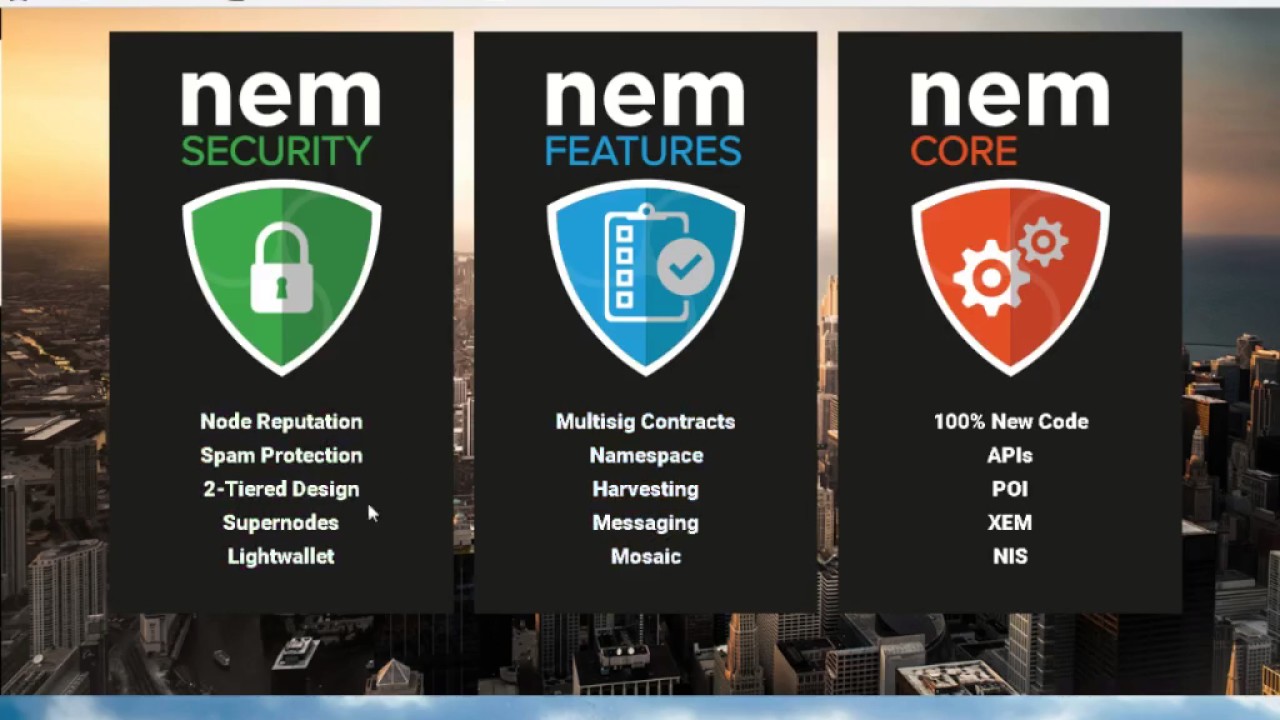 What is Proof-of-Importance (POI) and Why Is It Better, and What Is Vesting?(http://blog.nem.io/what-are-poi-and-vesting/) How do I get importance and make more blocks on NEM?(https://blog.nem.io/how-do-i-get-importance-on-the-nem-blockchain/) How to Enroll and Participate in Supernodes But some people like the original POW style of mining. As mentioned above, NEM uses harvesting which works from an accounts importance, but if you are still interested in POW style mining with video cards or ASICs what you can do, however, is mine other altcoins and move them to XEM at their exchange rates automatically. This has two main advantages for both you and the NEM ecosystem. You take advantage of NEM’s relatively stable/rising price for your asset holding. You slowly but surely increase the NEM market cap from the exchange rate of whatever coin to XEM. So, without further ado, let’s get started switching your mining rigs to XEM. Sign Up for Minergate Signup Link: Note that Minergate/Changelly are not endorsed by the NEM developers, use at your own risk. This service allows you to mine directly to Changelly, one of the exchanges with whom you can exchange NEM. This makes it so that you can withdraw your mining profits in XEM without having to sign up for another exchange! This is perfect for people who don’t want to sign up for an exchange but want XEM. Now it’s possible to mine to your NEM wallet. |
| json metadata | {"tags":["nem","mining"],"image":["https://steemitimages.com/DQmcMLxzuuAHL687Xh4JNNCVs8PDedg65EQbs18mPvPQRV8/maxresdefault.jpg"],"links":["http://blog.nem.io/what-are-poi-and-vesting/","https://blog.nem.io/how-do-i-get-importance-on-the-nem-blockchain/"],"app":"steemit/0.1","format":"markdown"} |
| Transaction Info | Block #14408611/Trx 58e9e97747906283810adabcd6725e2eb37554a2 |
View Raw JSON Data
{
"trx_id": "58e9e97747906283810adabcd6725e2eb37554a2",
"block": 14408611,
"trx_in_block": 34,
"op_in_trx": 0,
"virtual_op": 0,
"timestamp": "2017-08-08T23:52:39",
"op": [
"comment",
{
"parent_author": "",
"parent_permlink": "nem",
"author": "moeez",
"permlink": "how-to-mine-xem",
"title": "How to “Mine” XEM",
"body": "Do you want to mine XEM? Fortunately NEM uses a new and improved consensus method called POI that is ultra-light and energy efficient. For more about havesting on NEM (NEM's version of mining) please visit the following blogs\n\nWhat is Proof-of-Importance (POI) and Why Is It Better, and What Is Vesting?(http://blog.nem.io/what-are-poi-and-vesting/)\nHow do I get importance and make more blocks on NEM?(https://blog.nem.io/how-do-i-get-importance-on-the-nem-blockchain/)\nHow to Enroll and Participate in Supernodes\nBut some people like the original POW style of mining. As mentioned above, NEM uses harvesting which works from an accounts importance, but if you are still interested in POW style mining with video cards or ASICs what you can do, however, is mine other altcoins and move them to XEM at their exchange rates automatically.\nThis has two main advantages for both you and the NEM ecosystem.\nYou take advantage of NEM’s relatively stable/rising price for your asset holding. \nYou slowly but surely increase the NEM market cap from the exchange rate of whatever coin to XEM.\nSo, without further ado, let’s get started switching your mining rigs to XEM.\nSign Up for Minergate\nSignup Link: Note that Minergate/Changelly are not endorsed by the NEM developers, use at your own risk.\nThis service allows you to mine directly to Changelly, one of the exchanges with whom you can exchange NEM. This makes it so that you can withdraw your mining profits in XEM without having to sign up for another exchange!\nThis is perfect for people who don’t want to sign up for an exchange but want XEM. Now it’s possible to mine to your NEM wallet.",
"json_metadata": "{\"tags\":[\"nem\",\"mining\"],\"image\":[\"https://steemitimages.com/DQmcMLxzuuAHL687Xh4JNNCVs8PDedg65EQbs18mPvPQRV8/maxresdefault.jpg\"],\"links\":[\"http://blog.nem.io/what-are-poi-and-vesting/\",\"https://blog.nem.io/how-do-i-get-importance-on-the-nem-blockchain/\"],\"app\":\"steemit/0.1\",\"format\":\"markdown\"}"
}
]
}2017/08/08 20:27:36
2017/08/08 20:27:36
| parent author | moeez |
| parent permlink | as-with-mining-what-are-the-bitcoin-miners-really-solving-i-read-they-are-solving-hashes-but-what-does-that-really-mean-can-we |
| author | oznierosne |
| permlink | re-moeez-as-with-mining-what-are-the-bitcoin-miners-really-solving-i-read-they-are-solving-hashes-but-what-does-that-really-mean-can-we-20170808t202809917z |
| title | |
| body | Very interesting |
| json metadata | {"tags":["bitcoin"],"app":"steemit/0.1"} |
| Transaction Info | Block #14404510/Trx 33e303d4d9b625b56fc16846ddc2b224f1b53987 |
View Raw JSON Data
{
  "trx_id": "33e303d4d9b625b56fc16846ddc2b224f1b53987",
  "block": 14404510,
  "trx_in_block": 32,
  "op_in_trx": 0,
  "virtual_op": 0,
  "timestamp": "2017-08-08T20:27:36",
  "op": [
    "comment",
    {
      "parent_author": "moeez",
      "parent_permlink": "as-with-mining-what-are-the-bitcoin-miners-really-solving-i-read-they-are-solving-hashes-but-what-does-that-really-mean-can-we",
      "author": "oznierosne",
      "permlink": "re-moeez-as-with-mining-what-are-the-bitcoin-miners-really-solving-i-read-they-are-solving-hashes-but-what-does-that-really-mean-can-we-20170808t202809917z",
      "title": "",
      "body": "Very interesting",
      "json_metadata": "{\"tags\":[\"bitcoin\"],\"app\":\"steemit/0.1\"}"
    }
  ]
}2017/08/04 04:25:45
2017/08/04 04:25:45
| delegator | steem |
| delegatee | moeez |
| vesting shares | 29943.286686 VESTS |
| Transaction Info | Block #14270403/Trx 669bb566cf37823398d7f24f508ad1043d1a08cd |
View Raw JSON Data
{
  "trx_id": "669bb566cf37823398d7f24f508ad1043d1a08cd",
  "block": 14270403,
  "trx_in_block": 3,
  "op_in_trx": 0,
  "virtual_op": 0,
  "timestamp": "2017-08-04T04:25:45",
  "op": [
    "delegate_vesting_shares",
    {
      "delegator": "steem",
      "delegatee": "moeez",
      "vesting_shares": "29943.286686 VESTS"
    }
  ]
}2017/08/01 20:01:54
2017/08/01 20:01:54
| parent author | moeez |
| parent permlink | mobile-legends-game-play-2017-by-mrscary-ios-android-gameplay |
| author | steemitboard |
| permlink | steemitboard-notify-moeez-20170801t200154000z |
| title | |
| body | Congratulations @moeez! You have completed some achievement on Steemit and have been rewarded with new badge(s) : [](http://steemitboard.com/@moeez) You published your First Post [](http://steemitboard.com/@moeez) You got a First Vote [](http://steemitboard.com/@moeez) You made your First Vote Click on any badge to view your own Board of Honor on SteemitBoard. For more information about SteemitBoard, click [here](https://steemit.com/@steemitboard) If you no longer want to receive notifications, reply to this comment with the word `STOP` > By upvoting this notification, you can help all Steemit users. Learn how [here](https://steemit.com/steemitboard/@steemitboard/http-i-cubeupload-com-7ciqeo-png)! |
| json metadata | {"image":["https://steemitboard.com/img/notifications.png"]} |
| Transaction Info | Block #14202753/Trx e3b0b99c0757dc63117c90e9703b758769669767 |
View Raw JSON Data
{
"trx_id": "e3b0b99c0757dc63117c90e9703b758769669767",
"block": 14202753,
"trx_in_block": 4,
"op_in_trx": 0,
"virtual_op": 0,
"timestamp": "2017-08-01T20:01:54",
"op": [
"comment",
{
"parent_author": "moeez",
"parent_permlink": "mobile-legends-game-play-2017-by-mrscary-ios-android-gameplay",
"author": "steemitboard",
"permlink": "steemitboard-notify-moeez-20170801t200154000z",
"title": "",
"body": "Congratulations @moeez! You have completed some achievement on Steemit and have been rewarded with new badge(s) :\n\n[](http://steemitboard.com/@moeez) You published your First Post\n[](http://steemitboard.com/@moeez) You got a First Vote\n[](http://steemitboard.com/@moeez) You made your First Vote\n\nClick on any badge to view your own Board of Honor on SteemitBoard.\nFor more information about SteemitBoard, click [here](https://steemit.com/@steemitboard)\n\nIf you no longer want to receive notifications, reply to this comment with the word `STOP`\n\n> By upvoting this notification, you can help all Steemit users. Learn how [here](https://steemit.com/steemitboard/@steemitboard/http-i-cubeupload-com-7ciqeo-png)!",
"json_metadata": "{\"image\":[\"https://steemitboard.com/img/notifications.png\"]}"
}
]
}ubgupvoted (1.00%) @moeez / mobile-legends-game-play-2017-by-mrscary-ios-android-gameplay2017/08/01 01:53:00
ubgupvoted (1.00%) @moeez / mobile-legends-game-play-2017-by-mrscary-ios-android-gameplay
2017/08/01 01:53:00
| voter | ubg |
| author | moeez |
| permlink | mobile-legends-game-play-2017-by-mrscary-ios-android-gameplay |
| weight | 100 (1.00%) |
| Transaction Info | Block #14180994/Trx 60298c193874ea8397093745eda834ecc3b4e0ee |
View Raw JSON Data
{
  "trx_id": "60298c193874ea8397093745eda834ecc3b4e0ee",
  "block": 14180994,
  "trx_in_block": 10,
  "op_in_trx": 0,
  "virtual_op": 0,
  "timestamp": "2017-08-01T01:53:00",
  "op": [
    "vote",
    {
      "voter": "ubg",
      "author": "moeez",
      "permlink": "mobile-legends-game-play-2017-by-mrscary-ios-android-gameplay",
      "weight": 100
    }
  ]
}paranupvoted (100.00%) @moeez / mobile-legends-game-play-2017-by-mrscary-ios-android-gameplay2017/08/01 01:34:24
paranupvoted (100.00%) @moeez / mobile-legends-game-play-2017-by-mrscary-ios-android-gameplay
2017/08/01 01:34:24
| voter | paran |
| author | moeez |
| permlink | mobile-legends-game-play-2017-by-mrscary-ios-android-gameplay |
| weight | 10000 (100.00%) |
| Transaction Info | Block #14180625/Trx a1afb79079f0eec099f785873e231c95c1f73c1d |
View Raw JSON Data
{
  "trx_id": "a1afb79079f0eec099f785873e231c95c1f73c1d",
  "block": 14180625,
  "trx_in_block": 6,
  "op_in_trx": 0,
  "virtual_op": 0,
  "timestamp": "2017-08-01T01:34:24",
  "op": [
    "vote",
    {
      "voter": "paran",
      "author": "moeez",
      "permlink": "mobile-legends-game-play-2017-by-mrscary-ios-android-gameplay",
      "weight": 10000
    }
  ]
}Manabar
Voting Power100.00%
Downvote Power100.00%
Resource Credits100.00%
Reputation Progress0.00%
{
  "voting_manabar": {
    "current_mana": "8143659806",
    "last_update_time": 1779076584
  },
  "downvote_manabar": {
    "current_mana": 2035914951,
    "last_update_time": 1779076584
  },
  "rc_account": {
    "account": "moeez",
    "rc_manabar": {
      "current_mana": "10164408779",
      "last_update_time": 1779076584
    },
    "max_rc_creation_adjustment": {
      "amount": "2020748973",
      "precision": 6,
      "nai": "@@000000037"
    },
    "max_rc": "10164408779"
  }
}
Account Metadata
| POSTING JSON METADATA | |
| profile | {"name":"Warload"} |
| JSON METADATA | |
| profile | {"name":"Warload"} |
{
  "posting_json_metadata": {
    "profile": {
      "name": "Warload"
    }
  },
  "json_metadata": {
    "profile": {
      "name": "Warload"
    }
  }
}
Auth Keys
Owner
Single Signature
Public Keys
STM6dW9RjZqRxxhXfYau8wAJodPcJjrRFe6ja5P8Z8kGPVCQupLSk1/1
Active
Single Signature
Public Keys
STM66x5Aht4TjnKgEdmDxvqNKEBdsJZKun9yjJeLziQzZKyj9JNUr1/1
Posting
Single Signature
Public Keys
STM5pYz8uqp9msV8MPVLYqJW3EtafBzXdx4BnNM7qNYUdxasfegiF1/1
Memo
STM87ntnCMnvXsJjjcrjC6BrGapyFzCyknHPxZJyhJAQzRbqTX9LK
{
  "owner": {
    "weight_threshold": 1,
    "account_auths": [],
    "key_auths": [
      [
        "STM6dW9RjZqRxxhXfYau8wAJodPcJjrRFe6ja5P8Z8kGPVCQupLSk",
        1
      ]
    ]
  },
  "active": {
    "weight_threshold": 1,
    "account_auths": [],
    "key_auths": [
      [
        "STM66x5Aht4TjnKgEdmDxvqNKEBdsJZKun9yjJeLziQzZKyj9JNUr",
        1
      ]
    ]
  },
  "posting": {
    "weight_threshold": 1,
    "account_auths": [],
    "key_auths": [
      [
        "STM5pYz8uqp9msV8MPVLYqJW3EtafBzXdx4BnNM7qNYUdxasfegiF",
        1
      ]
    ]
  },
  "memo": "STM87ntnCMnvXsJjjcrjC6BrGapyFzCyknHPxZJyhJAQzRbqTX9LK"
}
Witness Votes
0 / 30
No active witness votes.
[]