

@sinosteelpipe
32Sinosteel Stainless Steel Pipe Technology (Shanxi) Co., Ltd. is the manufacturer of Stainless Steel Pipe and Special Alloy Pipe.
steemit.com/@sinosteelpipeVOTING POWER100.00%
DOWNVOTE POWER100.00%
RESOURCE CREDITS0.00%
REPUTATION PROGRESS64.66%
Net Worth
0.007USD
STEEM
0.002STEEM
SBD
0.014SBD
Effective Power
3.347SP
├── Own SP
0.000SP
└── Incoming DelegationsDeleg
+3.347SP
Detailed Balance
| STEEM | ||
| balance | 0.000STEEM | STEEM |
| market_balance | 0.000STEEM | STEEM |
| savings_balance | 0.000STEEM | STEEM |
| reward_steem_balance | 0.002STEEM | STEEM |
| STEEM POWER | ||
| Own SP | 0.000SP | SP |
| Delegated Out | 0.000SP | SP |
| Delegation In | 3.347SP | SP |
| Effective Power | 3.347SP | SP |
| Reward SP (pending) | 0.051SP | SP |
| SBD | ||
| sbd_balance | 0.000SBD | SBD |
| sbd_conversions | 0.000SBD | SBD |
| sbd_market_balance | 0.000SBD | SBD |
| savings_sbd_balance | 0.000SBD | SBD |
| reward_sbd_balance | 0.014SBD | SBD |
{
  "balance": "0.000 STEEM",
  "savings_balance": "0.000 STEEM",
  "reward_steem_balance": "0.002 STEEM",
  "vesting_shares": "0.000000 VESTS",
  "delegated_vesting_shares": "0.000000 VESTS",
  "received_vesting_shares": "5443.085758 VESTS",
  "sbd_balance": "0.000 SBD",
  "savings_sbd_balance": "0.000 SBD",
  "reward_sbd_balance": "0.014 SBD",
  "conversions": []
}
Account Info
| name | sinosteelpipe |
| id | 1923938 |
| rank | 1,443,042 |
| reputation | 5476591746 |
| created | 2025-01-03T01:30:30 |
| recovery_account | steemcurator01 |
| proxy | None |
| post_count | 29 |
| comment_count | 0 |
| lifetime_vote_count | 0 |
| witnesses_voted_for | 0 |
| last_post | 2026-04-14T01:48:54 |
| last_root_post | 2026-04-14T01:48:54 |
| last_vote_time | 2025-01-03T02:35:21 |
| proxied_vsf_votes | 0, 0, 0, 0 |
| can_vote | 1 |
| voting_power | 0 |
| delayed_votes | 0 |
| balance | 0.000 STEEM |
| savings_balance | 0.000 STEEM |
| sbd_balance | 0.000 SBD |
| savings_sbd_balance | 0.000 SBD |
| vesting_shares | 0.000000 VESTS |
| delegated_vesting_shares | 0.000000 VESTS |
| received_vesting_shares | 5443.085758 VESTS |
| reward_vesting_balance | 86.117745 VESTS |
| vesting_balance | 0.000 STEEM |
| vesting_withdraw_rate | 0.000000 VESTS |
| next_vesting_withdrawal | 1969-12-31T23:59:59 |
| withdrawn | 0 |
| to_withdraw | 0 |
| withdraw_routes | 0 |
| savings_withdraw_requests | 0 |
| last_account_recovery | 1970-01-01T00:00:00 |
| reset_account | null |
| last_owner_update | 1970-01-01T00:00:00 |
| last_account_update | 2025-01-03T01:54:03 |
| mined | No |
| sbd_seconds | 0 |
| sbd_last_interest_payment | 1970-01-01T00:00:00 |
| savings_sbd_last_interest_payment | 1970-01-01T00:00:00 |
{
  "id": 1923938,
  "name": "sinosteelpipe",
  "owner": {
    "weight_threshold": 1,
    "account_auths": [],
    "key_auths": [
      [
        "STM6vF1VpvqC4eAuygtYBNKe49sQiRSThGdZcLMLg8ETA57j8WCsm",
        1
      ]
    ]
  },
  "active": {
    "weight_threshold": 1,
    "account_auths": [],
    "key_auths": [
      [
        "STM7ixxPbFiMHmZUp4x8syht23L6CQvzeMhPLWH6XFFQhBHoWCJ4x",
        1
      ]
    ]
  },
  "posting": {
    "weight_threshold": 1,
    "account_auths": [],
    "key_auths": [
      [
        "STM7kQ92u8iU1GEM8cnntX1ep7EoSxJxBfASJDSvBXuEQ9kQMJDjS",
        1
      ]
    ]
  },
  "memo_key": "STM8UstPy4uw5nyURqmXBFDzCUDoJoUyU4YjiiRLZwX3rmUUdj69f",
  "json_metadata": "{}",
  "posting_json_metadata": "{\"profile\":{\"profile_image\":\"https://cdn.steemitimages.com/DQmYr8ZU5QGvnjshWKpHDkmUc2tYj4yc8LHvghLY5jToC8s/R7QxceNwE8_%E5%89%AF%E6%9C%AC.png\",\"cover_image\":\"https://cdn.steemitimages.com/DQmdPHVkEoasNtFvr97XFVVU8ijYQ2fUggC8SpLpYPY8Kaj/5397145633951198_2024_05_39675cdb5edf0591dbb3018c0522a95f.jpeg\",\"name\":\"Sinosteelpipe\",\"about\":\"Sinosteel Stainless Steel Pipe Technology (Shanxi) Co., Ltd. is the manufacturer of Stainless Steel Pipe and Special Alloy Pipe. \",\"location\":\"china\",\"website\":\"https://www.sinosteel-pipe.com/en\",\"version\":2}}",
  "proxy": "",
  "last_owner_update": "1970-01-01T00:00:00",
  "last_account_update": "2025-01-03T01:54:03",
  "created": "2025-01-03T01:30:30",
  "mined": false,
  "recovery_account": "steemcurator01",
  "last_account_recovery": "1970-01-01T00:00:00",
  "reset_account": "null",
  "comment_count": 0,
  "lifetime_vote_count": 0,
  "post_count": 29,
  "can_vote": true,
  "voting_manabar": {
    "current_mana": "5443085758",
    "last_update_time": 1775870826
  },
  "downvote_manabar": {
    "current_mana": 1360771439,
    "last_update_time": 1775870826
  },
  "voting_power": 0,
  "balance": "0.000 STEEM",
  "savings_balance": "0.000 STEEM",
  "sbd_balance": "0.000 SBD",
  "sbd_seconds": "0",
  "sbd_seconds_last_update": "1970-01-01T00:00:00",
  "sbd_last_interest_payment": "1970-01-01T00:00:00",
  "savings_sbd_balance": "0.000 SBD",
  "savings_sbd_seconds": "0",
  "savings_sbd_seconds_last_update": "1970-01-01T00:00:00",
  "savings_sbd_last_interest_payment": "1970-01-01T00:00:00",
  "savings_withdraw_requests": 0,
  "reward_sbd_balance": "0.014 SBD",
  "reward_steem_balance": "0.002 STEEM",
  "reward_vesting_balance": "86.117745 VESTS",
  "reward_vesting_steem": "0.051 STEEM",
  "vesting_shares": "0.000000 VESTS",
  "delegated_vesting_shares": "0.000000 VESTS",
  "received_vesting_shares": "5443.085758 VESTS",
  "vesting_withdraw_rate": "0.000000 VESTS",
  "next_vesting_withdrawal": "1969-12-31T23:59:59",
  "withdrawn": 0,
  "to_withdraw": 0,
  "withdraw_routes": 0,
  "curation_rewards": 0,
  "posting_rewards": 102,
  "proxied_vsf_votes": [
    0,
    0,
    0,
    0
  ],
  "witnesses_voted_for": 0,
  "last_post": "2026-04-14T01:48:54",
  "last_root_post": "2026-04-14T01:48:54",
  "last_vote_time": "2025-01-03T02:35:21",
  "post_bandwidth": 0,
  "pending_claimed_accounts": 0,
  "vesting_balance": "0.000 STEEM",
  "reputation": "5476591746",
  "transfer_history": [],
  "market_history": [],
  "post_history": [],
  "vote_history": [],
  "other_history": [],
  "witness_votes": [],
  "tags_usage": [],
  "guest_bloggers": [],
  "rank": 1443042
}
Withdraw Routes
| Incoming | Outgoing |
|---|---|
Empty | Empty |
{
  "incoming": [],
  "outgoing": []
}From Date
To Date
sinosteelpipepublished a new post: middle-east-conflict-and-global-offshore-market2026/04/14 01:48:54
sinosteelpipepublished a new post: middle-east-conflict-and-global-offshore-market
2026/04/14 01:48:54
| parent author | |
| parent permlink | middle |
| author | sinosteelpipe |
| permlink | middle-east-conflict-and-global-offshore-market |
| title | Middle East Conflict and Global Offshore Market |
| body | 1. The conflict in the Middle East has started an "accelerator" for rising energy prices. (1) Changes are taking place in the Middle East, and the energy market has entered a turbulent mode On February 28, 2026, the United States and Israel launched the "Epic Wrath" operation. The situation in the Middle East suddenly changed. The Strait of Hormuz, the global energy artery, was blocked. Energy facilities in various countries in the Middle East became targets. The price of Brent crude oil futures was close to US$120 per barrel and continued to fluctuate at high levels. European natural gas benchmark prices have risen rapidly, and Dutch front-month natural gas futures have increased by more than 50% compared with the beginning of the year. Safe-haven demand has led to a strengthening of the U.S. dollar. The U.S. dollar index rebounded rapidly from the pre-conflict range of about 97-98, once exceeding 100, pushing up global inflation expectations and intensifying global energy market turmoil. (2) Energy corridors have become the focus, and the shipping and oil services market is facing impact The disturbances in the Middle East and the statements of various countries affect the nerves of the global energy market. From the perspective of energy supply, the Middle East's daily crude oil production will account for approximately 31% of the world's total in 2025, and its natural gas production will account for approximately 17% of the world's. From the perspective of energy transportation, most of the energy exports of these countries need to pass through the Strait of Hormuz. Whether the Strait is unblocked directly affects the interests of energy importing countries. For example, about 95% of Japan's imported crude oil comes directly from the Middle East. India, South Korea and other countries are also highly dependent on the Middle East for crude oil and natural gas. The geo-risk premium has driven up the freight rates of energy transportation ships. Clarkson data shows that the one-year time charter rent of 310,000 dwt VLCC has doubled compared with before the conflict, and the time charter equivalent (TCE) of some routes in the spot market once exceeded US$400,000/day. The price of LNG ships has also doubled compared with the beginning of the year. However, it is currently in the off-season of market demand, and most of them are long-term leases. There is still a gap between the rent and the historical high. At the same time, ship insurance costs have undergone drastic changes, with the proportion rising from around 0.2%-0.25% (single voyage) to around 1%, with some quotes reaching 3% or even higher. Offshore ship operations in the Middle East have come to a standstill. Since offshore engineering vessels mainly serve the regional oil and gas market, oil and gas companies in the Middle East stopped or evacuated after the conflict. Some contractors suspended drilling operations, and offshore engineering vessels were forced to become idle. From a global perspective, since ships cannot be deployed to other regions around the world, rental levels in major regions have not increased significantly, and the short-term impact on global rental rates and utilization rates is limited. 2. Three possible energy price trends that conflict with future trends The offshore engineering market is closely related to international oil prices. Can international oil prices continue to rise in the long term in the future? Can the offshore engineering equipment industry fully recover? One of the important influencing factors is the duration of the current conflict, which will directly affect the sustainability of the rise in oil prices, and in turn affect the future investment willingness and medium- and long-term demand of the offshore industry. Judging from previous changes in the situation in the Middle East, future conflict situations will change rapidly, and the actual situation may switch or mix between the above three scenarios. However, no matter which scenario, this conflict has amplified anxiety about energy security. Mainstream institutions are optimistic about the subsequent trend of international oil prices, and it is generally expected that international oil prices in 2026 will be around US$80/barrel. 3. What is the impact on the global offshore engineering equipment market? (1) The energy supply pattern faces a new round of reshaping Compared with the conflict between Russia and Ukraine, the conflict in the Middle East has a wider impact. If the conflict continues, the negative impact of rising oil prices on the economy will be apparent, and countries will further increase their attention to the security of global energy supply. From the perspective of oil-producing countries, emerging oil and gas countries are once again ushering in a period of development opportunities, such as Brazil and Guyana, which are becoming "safe havens" from this energy crisis. Petrobras shares soared after the company said it had "alternative routes outside conflict zones, which bring security advantages and competitive costs to our operations while maintaining margins." From the perspective of oil-consuming countries, countries have adopted a variety of measures to deal with the crisis, and the pattern of energy imports is also undergoing a new round of transformation. Member states of the International Energy Agency (IEA) agreed to release 400 million barrels of strategic oil reserves to alleviate supply problems, but the actual daily release capacity is insufficient and has limited effect on alleviating supply shortages. The European Union has released updated guidance on REPowerEU natural gas regulations, aiming to improve the flexibility of the prior authorization process for non-Russian natural gas imports to ensure smooth channels for non-Russian natural gas imports. In the long term, the import sources of oil consuming countries will also undergo significant changes. For example, India's state-owned refineries have actively sought suppliers outside the Middle East, and Vietnam is also looking to Japan and South Korea to help increase its oil supply channels. The development of renewable energy may accelerate. Renewable energy has long been criticized for its high cost. In the context of high oil prices caused by the current conflict, the economics of renewable energy are improving. In addition, countries are changing from "calculating economic accounts" to "calculating security accounts." Even if the conflict ends soon, renewable energy will receive a higher degree of attention because of its ability to be produced locally. For example, the UK has recently announced that it will completely cancel import tariffs on 33 industrial products used to manufacture offshore wind power equipment starting from April 1. Japan, South Korea, etc. have also expressed their stance on accelerating green transformation and promoting the development of nuclear energy, offshore wind power and other industries. (2) Expected growth in investment in offshore oil and gas projects From an internal perspective in the Middle East, even if the conflict ends, the recovery of the energy supply gap will continue for some time. In the future, Middle Eastern countries may further increase upstream investment to restore production capacity, thereby driving demand for offshore ship operation services. Repairing facilities after damage is much more difficult than construction. Public data shows that energy facilities in various countries in the Middle East have been hit to varying degrees. For example, the Ras Laffan LNG production line in Qatar was severely damaged and is expected to take 3-5 years to be fully restored. Even if the conflict ends soon, the rapid recovery of production capacity will still take some time, and international oil prices will still face the risk of shortage on the supply side. In order to recover from conflicts as quickly as possible, countries in the Middle East also need to invest a lot of money in facility repairs and production capacity restoration. From a global perspective, high oil prices will improve the investment return rate of offshore oil and gas projects. Under the current expectations of high oil prices, some marginal deepwater projects that were originally near the break-even line have regained good commercial development value. Historically, increases in oil prices have been followed by increases in capital spending. For example, when the Arab Spring broke out in 2011, the civil war in Libya resulted in the supply of crude oil being cut off, and the situation in the Middle East was turbulent. The international oil price fluctuated around US$100/barrel that year, and offshore oil and gas capital expenditures rose sharply by 55% year-on-year. The fragility of the global supply chain has forced oil and gas companies to re-evaluate their asset portfolios. Diversified strategic layout has become an inevitable choice for oil and gas companies to deal with risks, and offshore oil and gas projects have become a new growth point. Although the cost of producing onshore oil fields in the Middle East is extremely low, once crude oil or LNG cannot be transported out of the Strait of Hormuz, the value of its assets will be greatly reduced. In contrast, although the initial investment in deep-sea projects is huge, as long as they are in safe waters and the transportation routes can avoid sensitive areas, their ability to resist geo-risks will be stronger. Some projects around the world that were not considered a priority may be put back on the agenda. Major oil and gas companies are diversifying geographically and by field type to increase resilience. For example, the Italian oil company Eni proposed diversifying the geographical structure of energy sources as the core of its strategy after the Russia-Ukraine conflict. (3) The growth of offshore engineering orders is generally controllable, and shipyard production capacity is still the main constraint. Judging from the latest market conditions, there will be a substantial rebound in demand for offshore engineering orders in 2025, but the order amount has fallen slightly. One of the main reasons is the limitation of shipyard capacity. Currently, the global order-holding guarantee coefficient is about 4 years, and the demand for merchant ships still maintains optimistic expectations. The production load of leading offshore engineering companies is sufficient, especially under the premise that the current market demand for transportation ships is stable. Shipyards tend to accept standardized and batch merchant ship orders. Therefore, the production capacity of high-quality offshore engineering companies is scarce, and whether offshore engineering orders can be implemented is still limited by the release of the shipyard’s effective production capacity. If the conflict continues for a long time and oil prices remain high, the cost-effectiveness of investment in offshore engineering projects will improve, and the demand for investment in offshore engineering orders is expected to accelerate recovery. 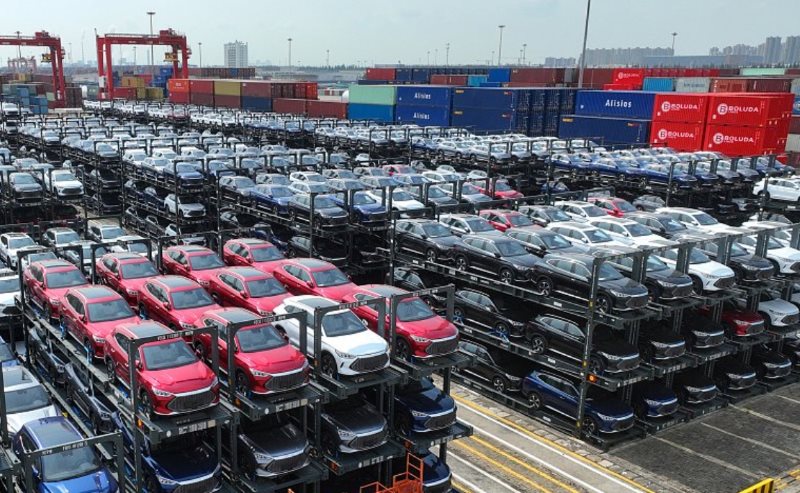 From: https://www.sinosteel-pipe.com/en/middle-east-conflict-and-global-offshore-market.html |
| json metadata | {"tags":["middle","east","conflict","ship"],"image":["https://cdn.steemitimages.com/DQmP85S9vmsgJofGPgQUCNm9byXS4Fb587YoxFanznyWtHr/%E5%BE%AE%E4%BF%A1%E6%88%AA%E5%9B%BE_20250716162504.jpg"],"links":["https://www.sinosteel-pipe.com/en/middle-east-conflict-and-global-offshore-market.html"],"app":"steemit/0.2","format":"markdown"} |
| Transaction Info | Block #105168946/Trx e0492bb8b076e6434f40e984b1111777d2a9201e |
View Raw JSON Data
{
"trx_id": "e0492bb8b076e6434f40e984b1111777d2a9201e",
"block": 105168946,
"trx_in_block": 0,
"op_in_trx": 0,
"virtual_op": 0,
"timestamp": "2026-04-14T01:48:54",
"op": [
"comment",
{
"parent_author": "",
"parent_permlink": "middle",
"author": "sinosteelpipe",
"permlink": "middle-east-conflict-and-global-offshore-market",
"title": "Middle East Conflict and Global Offshore Market",
"body": "1. The conflict in the Middle East has started an \"accelerator\" for rising energy prices.\n(1) Changes are taking place in the Middle East, and the energy market has entered a turbulent mode\nOn February 28, 2026, the United States and Israel launched the \"Epic Wrath\" operation. The situation in the Middle East suddenly changed. The Strait of Hormuz, the global energy artery, was blocked. Energy facilities in various countries in the Middle East became targets. The price of Brent crude oil futures was close to US$120 per barrel and continued to fluctuate at high levels. European natural gas benchmark prices have risen rapidly, and Dutch front-month natural gas futures have increased by more than 50% compared with the beginning of the year. Safe-haven demand has led to a strengthening of the U.S. dollar. The U.S. dollar index rebounded rapidly from the pre-conflict range of about 97-98, once exceeding 100, pushing up global inflation expectations and intensifying global energy market turmoil.\n(2) Energy corridors have become the focus, and the shipping and oil services market is facing impact\nThe disturbances in the Middle East and the statements of various countries affect the nerves of the global energy market. From the perspective of energy supply, the Middle East's daily crude oil production will account for approximately 31% of the world's total in 2025, and its natural gas production will account for approximately 17% of the world's. From the perspective of energy transportation, most of the energy exports of these countries need to pass through the Strait of Hormuz. Whether the Strait is unblocked directly affects the interests of energy importing countries. For example, about 95% of Japan's imported crude oil comes directly from the Middle East. India, South Korea and other countries are also highly dependent on the Middle East for crude oil and natural gas.\nThe geo-risk premium has driven up the freight rates of energy transportation ships. Clarkson data shows that the one-year time charter rent of 310,000 dwt VLCC has doubled compared with before the conflict, and the time charter equivalent (TCE) of some routes in the spot market once exceeded US$400,000/day. The price of LNG ships has also doubled compared with the beginning of the year. However, it is currently in the off-season of market demand, and most of them are long-term leases. There is still a gap between the rent and the historical high. At the same time, ship insurance costs have undergone drastic changes, with the proportion rising from around 0.2%-0.25% (single voyage) to around 1%, with some quotes reaching 3% or even higher.\nOffshore ship operations in the Middle East have come to a standstill. Since offshore engineering vessels mainly serve the regional oil and gas market, oil and gas companies in the Middle East stopped or evacuated after the conflict. Some contractors suspended drilling operations, and offshore engineering vessels were forced to become idle. From a global perspective, since ships cannot be deployed to other regions around the world, rental levels in major regions have not increased significantly, and the short-term impact on global rental rates and utilization rates is limited.\n2. Three possible energy price trends that conflict with future trends\nThe offshore engineering market is closely related to international oil prices. Can international oil prices continue to rise in the long term in the future? Can the offshore engineering equipment industry fully recover? One of the important influencing factors is the duration of the current conflict, which will directly affect the sustainability of the rise in oil prices, and in turn affect the future investment willingness and medium- and long-term demand of the offshore industry.\nJudging from previous changes in the situation in the Middle East, future conflict situations will change rapidly, and the actual situation may switch or mix between the above three scenarios. However, no matter which scenario, this conflict has amplified anxiety about energy security. Mainstream institutions are optimistic about the subsequent trend of international oil prices, and it is generally expected that international oil prices in 2026 will be around US$80/barrel.\n3. What is the impact on the global offshore engineering equipment market?\n(1) The energy supply pattern faces a new round of reshaping\nCompared with the conflict between Russia and Ukraine, the conflict in the Middle East has a wider impact. If the conflict continues, the negative impact of rising oil prices on the economy will be apparent, and countries will further increase their attention to the security of global energy supply. From the perspective of oil-producing countries, emerging oil and gas countries are once again ushering in a period of development opportunities, such as Brazil and Guyana, which are becoming \"safe havens\" from this energy crisis. Petrobras shares soared after the company said it had \"alternative routes outside conflict zones, which bring security advantages and competitive costs to our operations while maintaining margins.\"\nFrom the perspective of oil-consuming countries, countries have adopted a variety of measures to deal with the crisis, and the pattern of energy imports is also undergoing a new round of transformation. Member states of the International Energy Agency (IEA) agreed to release 400 million barrels of strategic oil reserves to alleviate supply problems, but the actual daily release capacity is insufficient and has limited effect on alleviating supply shortages. The European Union has released updated guidance on REPowerEU natural gas regulations, aiming to improve the flexibility of the prior authorization process for non-Russian natural gas imports to ensure smooth channels for non-Russian natural gas imports. In the long term, the import sources of oil consuming countries will also undergo significant changes. For example, India's state-owned refineries have actively sought suppliers outside the Middle East, and Vietnam is also looking to Japan and South Korea to help increase its oil supply channels.\nThe development of renewable energy may accelerate. Renewable energy has long been criticized for its high cost. In the context of high oil prices caused by the current conflict, the economics of renewable energy are improving. In addition, countries are changing from \"calculating economic accounts\" to \"calculating security accounts.\" Even if the conflict ends soon, renewable energy will receive a higher degree of attention because of its ability to be produced locally. For example, the UK has recently announced that it will completely cancel import tariffs on 33 industrial products used to manufacture offshore wind power equipment starting from April 1. Japan, South Korea, etc. have also expressed their stance on accelerating green transformation and promoting the development of nuclear energy, offshore wind power and other industries.\n(2) Expected growth in investment in offshore oil and gas projects\nFrom an internal perspective in the Middle East, even if the conflict ends, the recovery of the energy supply gap will continue for some time. In the future, Middle Eastern countries may further increase upstream investment to restore production capacity, thereby driving demand for offshore ship operation services. Repairing facilities after damage is much more difficult than construction. Public data shows that energy facilities in various countries in the Middle East have been hit to varying degrees. For example, the Ras Laffan LNG production line in Qatar was severely damaged and is expected to take 3-5 years to be fully restored. Even if the conflict ends soon, the rapid recovery of production capacity will still take some time, and international oil prices will still face the risk of shortage on the supply side. In order to recover from conflicts as quickly as possible, countries in the Middle East also need to invest a lot of money in facility repairs and production capacity restoration.\nFrom a global perspective, high oil prices will improve the investment return rate of offshore oil and gas projects. Under the current expectations of high oil prices, some marginal deepwater projects that were originally near the break-even line have regained good commercial development value. Historically, increases in oil prices have been followed by increases in capital spending. For example, when the Arab Spring broke out in 2011, the civil war in Libya resulted in the supply of crude oil being cut off, and the situation in the Middle East was turbulent. The international oil price fluctuated around US$100/barrel that year, and offshore oil and gas capital expenditures rose sharply by 55% year-on-year.\nThe fragility of the global supply chain has forced oil and gas companies to re-evaluate their asset portfolios. Diversified strategic layout has become an inevitable choice for oil and gas companies to deal with risks, and offshore oil and gas projects have become a new growth point. Although the cost of producing onshore oil fields in the Middle East is extremely low, once crude oil or LNG cannot be transported out of the Strait of Hormuz, the value of its assets will be greatly reduced. In contrast, although the initial investment in deep-sea projects is huge, as long as they are in safe waters and the transportation routes can avoid sensitive areas, their ability to resist geo-risks will be stronger. Some projects around the world that were not considered a priority may be put back on the agenda. Major oil and gas companies are diversifying geographically and by field type to increase resilience. For example, the Italian oil company Eni proposed diversifying the geographical structure of energy sources as the core of its strategy after the Russia-Ukraine conflict.\n(3) The growth of offshore engineering orders is generally controllable, and shipyard production capacity is still the main constraint.\nJudging from the latest market conditions, there will be a substantial rebound in demand for offshore engineering orders in 2025, but the order amount has fallen slightly. One of the main reasons is the limitation of shipyard capacity. Currently, the global order-holding guarantee coefficient is about 4 years, and the demand for merchant ships still maintains optimistic expectations. The production load of leading offshore engineering companies is sufficient, especially under the premise that the current market demand for transportation ships is stable. Shipyards tend to accept standardized and batch merchant ship orders. Therefore, the production capacity of high-quality offshore engineering companies is scarce, and whether offshore engineering orders can be implemented is still limited by the release of the shipyard’s effective production capacity. If the conflict continues for a long time and oil prices remain high, the cost-effectiveness of investment in offshore engineering projects will improve, and the demand for investment in offshore engineering orders is expected to accelerate recovery.\n\n\n\nFrom: https://www.sinosteel-pipe.com/en/middle-east-conflict-and-global-offshore-market.html",
"json_metadata": "{\"tags\":[\"middle\",\"east\",\"conflict\",\"ship\"],\"image\":[\"https://cdn.steemitimages.com/DQmP85S9vmsgJofGPgQUCNm9byXS4Fb587YoxFanznyWtHr/%E5%BE%AE%E4%BF%A1%E6%88%AA%E5%9B%BE_20250716162504.jpg\"],\"links\":[\"https://www.sinosteel-pipe.com/en/middle-east-conflict-and-global-offshore-market.html\"],\"app\":\"steemit/0.2\",\"format\":\"markdown\"}"
}
]
}steemdelegated 3.347 SP to @sinosteelpipe2026/04/11 01:27:06
steemdelegated 3.347 SP to @sinosteelpipe
2026/04/11 01:27:06
| delegator | steem |
| delegatee | sinosteelpipe |
| vesting shares | 5443.085758 VESTS |
| Transaction Info | Block #105082325/Trx 473bc8a0faba7203773b432c6623bf0b357fc60c |
View Raw JSON Data
{
  "trx_id": "473bc8a0faba7203773b432c6623bf0b357fc60c",
  "block": 105082325,
  "trx_in_block": 2,
  "op_in_trx": 0,
  "virtual_op": 0,
  "timestamp": "2026-04-11T01:27:06",
  "op": [
    "delegate_vesting_shares",
    {
      "delegator": "steem",
      "delegatee": "sinosteelpipe",
      "vesting_shares": "5443.085758 VESTS"
    }
  ]
}steemdelegated 10.080 SP to @sinosteelpipe2026/02/13 23:28:42
steemdelegated 10.080 SP to @sinosteelpipe
2026/02/13 23:28:42
| delegator | steem |
| delegatee | sinosteelpipe |
| vesting shares | 16393.398119 VESTS |
| Transaction Info | Block #103474137/Trx b9cc17d4ef9d61ebd431973b532952a03e518354 |
View Raw JSON Data
{
  "trx_id": "b9cc17d4ef9d61ebd431973b532952a03e518354",
  "block": 103474137,
  "trx_in_block": 0,
  "op_in_trx": 0,
  "virtual_op": 0,
  "timestamp": "2026-02-13T23:28:42",
  "op": [
    "delegate_vesting_shares",
    {
      "delegator": "steem",
      "delegatee": "sinosteelpipe",
      "vesting_shares": "16393.398119 VESTS"
    }
  ]
}sinosteelpipepublished a new post: why-aren-t-cars-made-of-stainless-steel2026/01/10 01:24:21
sinosteelpipepublished a new post: why-aren-t-cars-made-of-stainless-steel
2026/01/10 01:24:21
| parent author | |
| parent permlink | stainless |
| author | sinosteelpipe |
| permlink | why-aren-t-cars-made-of-stainless-steel |
| title | Why aren't cars made of stainless steel |
| body | @@ -7450,8 +7450,197 @@ cessary. +%0ASinosteel Stainless Steel Pipe is one of largest Stainless Steel Pipe and Special Alloy Pipe manufacturer in china.%C2%A0%0AMore info: https://www.sinosteel-pipe.com/en/blog-5677849774744585.html |
| json metadata | {"tags":["steel","sinosteelpipe"],"image":["https://cdn.steemitimages.com/DQmVSHaFbkE9WzoMCEHsmNBtsHPYLYwoaMYPAR2UHeTaw1E/%E4%BC%81%E4%B8%9A%E5%BE%AE%E4%BF%A1%E6%88%AA%E5%9B%BE_20251220145603.jpg","https://cdn.steemitimages.com/DQmVn93nAM7mswc2uVQ8RtBGnrX2GiuB1a1r4394CxsZTM4/%E4%BC%81%E4%B8%9A%E5%BE%AE%E4%BF%A1%E6%88%AA%E5%9B%BE_20251220145911.jpg","https://cdn.steemitimages.com/DQmdRdEfYNUCpGDfV581AhNtmhnVB8VfqTQZVEijZenyHhS/%E4%BC%81%E4%B8%9A%E5%BE%AE%E4%BF%A1%E6%88%AA%E5%9B%BE_20251220150213.jpg","https://cdn.steemitimages.com/DQmYJwMe1dDaLgZtHamwsxVWycBfecksTi67anJCk39oVRx/%E4%BC%81%E4%B8%9A%E5%BE%AE%E4%BF%A1%E6%88%AA%E5%9B%BE_20251220150555.jpg"],"app":"steemit/0.2","format":"markdown","links":["https://www.sinosteel-pipe.com/en/blog-5677849774744585.html"]} |
| Transaction Info | Block #102470777/Trx 0238d448772a4345fd55fe25d328a0be3aa1fd8f |
View Raw JSON Data
{
  "trx_id": "0238d448772a4345fd55fe25d328a0be3aa1fd8f",
  "block": 102470777,
  "trx_in_block": 1,
  "op_in_trx": 0,
  "virtual_op": 0,
  "timestamp": "2026-01-10T01:24:21",
  "op": [
    "comment",
    {
      "parent_author": "",
      "parent_permlink": "stainless",
      "author": "sinosteelpipe",
      "permlink": "why-aren-t-cars-made-of-stainless-steel",
      "title": "Why aren't cars made of stainless steel",
      "body": "@@ -7450,8 +7450,197 @@\n cessary.\n+%0ASinosteel Stainless Steel Pipe is one of largest Stainless Steel Pipe and Special Alloy Pipe manufacturer in china.%C2%A0%0AMore info: https://www.sinosteel-pipe.com/en/blog-5677849774744585.html\n",
      "json_metadata": "{\"tags\":[\"steel\",\"sinosteelpipe\"],\"image\":[\"https://cdn.steemitimages.com/DQmVSHaFbkE9WzoMCEHsmNBtsHPYLYwoaMYPAR2UHeTaw1E/%E4%BC%81%E4%B8%9A%E5%BE%AE%E4%BF%A1%E6%88%AA%E5%9B%BE_20251220145603.jpg\",\"https://cdn.steemitimages.com/DQmVn93nAM7mswc2uVQ8RtBGnrX2GiuB1a1r4394CxsZTM4/%E4%BC%81%E4%B8%9A%E5%BE%AE%E4%BF%A1%E6%88%AA%E5%9B%BE_20251220145911.jpg\",\"https://cdn.steemitimages.com/DQmdRdEfYNUCpGDfV581AhNtmhnVB8VfqTQZVEijZenyHhS/%E4%BC%81%E4%B8%9A%E5%BE%AE%E4%BF%A1%E6%88%AA%E5%9B%BE_20251220150213.jpg\",\"https://cdn.steemitimages.com/DQmYJwMe1dDaLgZtHamwsxVWycBfecksTi67anJCk39oVRx/%E4%BC%81%E4%B8%9A%E5%BE%AE%E4%BF%A1%E6%88%AA%E5%9B%BE_20251220150555.jpg\"],\"app\":\"steemit/0.2\",\"format\":\"markdown\",\"links\":[\"https://www.sinosteel-pipe.com/en/blog-5677849774744585.html\"]}"
    }
  ]
}sinosteelpipepublished a new post: why-aren-t-cars-made-of-stainless-steel2026/01/10 01:23:06
sinosteelpipepublished a new post: why-aren-t-cars-made-of-stainless-steel
2026/01/10 01:23:06
| parent author | |
| parent permlink | stainless |
| author | sinosteelpipe |
| permlink | why-aren-t-cars-made-of-stainless-steel |
| title | Why aren't cars made of stainless steel |
| body | The stainless steel we usually talk about does not actually never rust, but its "corrosion resistance" is relatively outstanding. For example, the stainless steel spoons and washbasins in our homes are made of "austenitic" 304 stainless steel, which will rust after being used for a long time. Many high-end watches are made of 316L stainless steel, which is fine if soaked in sea water. The more advanced Rolex uses 904L stainless steel, which has better "corrosion resistance". 1: Current anti-corrosion technology is sufficient The usage conditions of a car are much more complicated than that of a washbasin watch, and stainless steel will not be used directly on the car just because it has good "corrosion resistance". Moreover, the current automobile anti-rust technology can fully meet the demand. The performance of stainless steel is a bit excessive for cars.  (1) Galvanized steel sheet itself has certain anti-rust ability The steel plate used in modern cars is called "galvanized steel plate", and the purpose of galvanizing is to prevent corrosion. When the galvanizing amount is 350g/m², the service life of galvanized steel sheets outside the house is 15 to 18 years in rural areas and 3 to 5 years in industrial areas. This lifespan is already several times, even more than ten times, that of ordinary steel plates. (2) The spraying process can also play a role in preventing rust. In addition to the rust prevention of the material itself, the coating process is also helpful for rust prevention. What is the first step in painting? Electrophoresis rust prevention. After the car body is cleaned, it is placed in an electrified bath and immersed in it like a steamed bun. The paint ions will form a layer of electrophoretic paint on the car body under the action of the electric field force. This layer of paint is what we call primer in vernacular. It mainly plays the role of isolating water and air. It is similar to vacuum packaging. 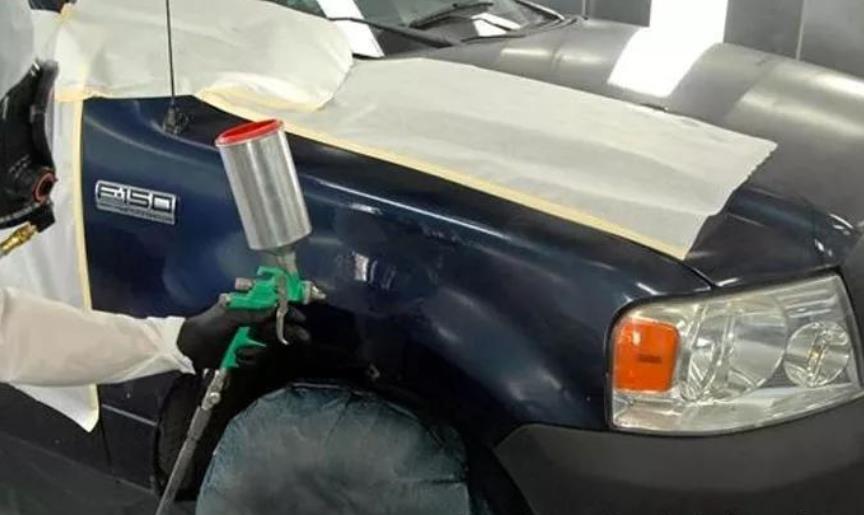 Usually, if the paint surface is scratched, whether or not to touch it up depends on whether the primer is damaged or not. After the primer is sprayed, it must go through intermediate coating, color paint, and varnish, which can also play a certain isolation role. Just like girls when they go out, they don’t just put on sunscreen. They have many things: face cream, eye cream, BB cream, etc. (3) Wax injection into the cavity can prevent rust inside the car body. Car paint mainly targets the surface of the car body. For the interior of the car body, manufacturers also have anti-rust methods - wax injection into the cavity. The car body is actually not solid. For parts with cavities, holes have been reserved during the design. First heat the car body, then inject liquid anti-rust wax from the reserved hole, and finally pour out the excess wax, forming a wax film with a thickness of several hundred microns on the inner wall of the cavity. The purpose of the wax film is also to isolate air, and the principle of electrophoresis is actually similar. 2: The cost of making stainless steel cars is too high (1) Stainless steel is more expensive, 3 times the price of galvanized steel plate In fact, in history, some manufacturers did use stainless steel to build cars, and Porsche did it before. In 1967, Porsche produced an all-stainless steel 911S, which is still stored in the Deutsche Museum in Munich. 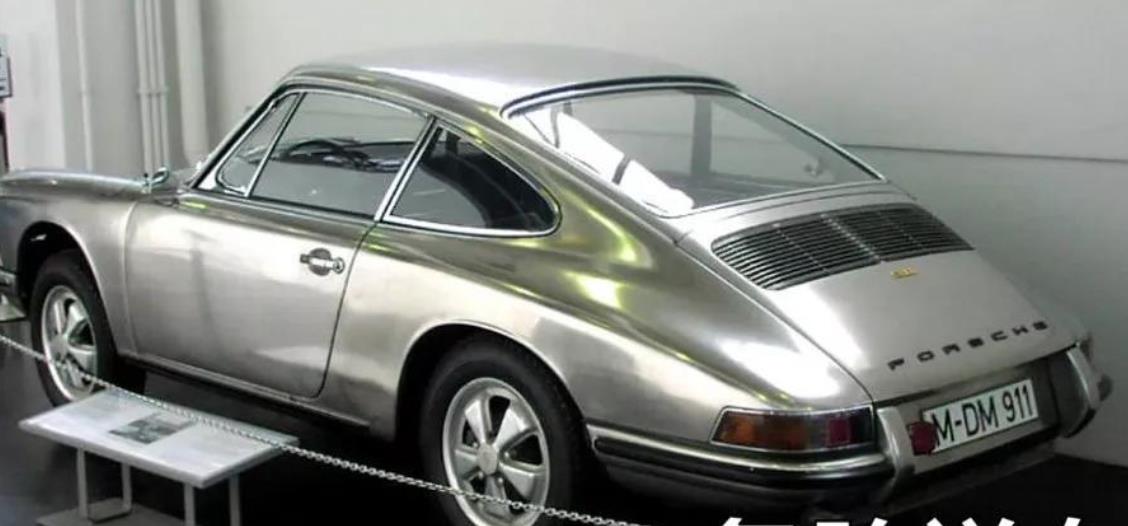 The reason why this stainless steel 911 was produced was because at that time, the car body anti-corrosion technology was not as developed as it is now, and it was an experimental product. However, because stainless steel was very expensive, its cost was twice that of the ordinary 911 at that time. For current manufacturers, galvanized steel sheets are easy to use and cheaper. There is no need to use stainless steel to build cars, right? (2) Heavier, not conducive to energy saving, emission reduction and fuel consumption reduction In addition, today's cars are developing towards lightweighting, using large areas of aluminum alloys and other advanced materials, as well as carbon fiber, which are used by Audi, Jaguar, etc., and they also use all-aluminum bodies, right? The density of aluminum alloy is about 2.7g/cm³, and the density of stainless steel is 7.64 to 8g/cm³, which is nearly three times heavier than aluminum alloy. Even compared with current automobile steel, it has no advantage. For manufacturers, in the context of energy conservation, emission reduction, and fuel consumption reduction, it is not cost-effective to use stainless steel that is three times heavier to make the body, and the fuel consumption is also high, right? 3: Insufficient strength of stainless steel In addition to cost reasons, the strength of stainless steel is not enough for the frame. (1) The yield strength is not enough and is not suitable for the frame Steel is divided into low-strength steel, high-strength steel, ultra-high-strength steel and hot-formed steel according to the yield strength range. For key parts such as A-pillar and B-pillar, manufacturers use hot-formed steel with a strength of about 1000MPa. Some manufacturers use boron steel with a strength of up to 1800MPa.  In the stainless steel family, the most widely used 304 stainless steel is already relatively high in strength. Its yield strength is about 205 to 400MPa. It is a high-strength steel, but it still cannot reach the level of ultra-high strength and hot-formed steel. (2) Automotive steel also depends on tensile strength Moreover, automotive steel cannot only look at yield strength, tensile strength is also very important. Most car body parts are made by stamping steel plates into the required shape. Stainless steel is actually not suitable for stamping processing. When stainless steel is cold worked, the greater the deformation, the higher the microscopic dislocation density, the more serious the internal stress and lattice distortion. Although the strength increases with deformation, the plasticity decreases. It doesn’t matter if you don’t understand. It means that stainless steel will become brittle after stamping. At this time, the annealing process must be used to eliminate the hardening phenomenon before pressing can continue, otherwise it will easily crack. Ordinary automobile steel plates are not that troublesome to get. Therefore, there are actually not many stainless steel accessories on current cars, mainly exhaust pipes and some decorative accessories. 4: Expensive, which is an important reason why stainless steel is not used to build cars. In general, the most important reason why manufacturers do not use stainless steel to build cars is that it is expensive. If it is purely for anti-corrosion, it is completely unnecessary. |
| json metadata | {"tags":["stainless","steel","sinosteelpipe"],"image":["https://cdn.steemitimages.com/DQmVSHaFbkE9WzoMCEHsmNBtsHPYLYwoaMYPAR2UHeTaw1E/%E4%BC%81%E4%B8%9A%E5%BE%AE%E4%BF%A1%E6%88%AA%E5%9B%BE_20251220145603.jpg","https://cdn.steemitimages.com/DQmVn93nAM7mswc2uVQ8RtBGnrX2GiuB1a1r4394CxsZTM4/%E4%BC%81%E4%B8%9A%E5%BE%AE%E4%BF%A1%E6%88%AA%E5%9B%BE_20251220145911.jpg","https://cdn.steemitimages.com/DQmdRdEfYNUCpGDfV581AhNtmhnVB8VfqTQZVEijZenyHhS/%E4%BC%81%E4%B8%9A%E5%BE%AE%E4%BF%A1%E6%88%AA%E5%9B%BE_20251220150213.jpg","https://cdn.steemitimages.com/DQmYJwMe1dDaLgZtHamwsxVWycBfecksTi67anJCk39oVRx/%E4%BC%81%E4%B8%9A%E5%BE%AE%E4%BF%A1%E6%88%AA%E5%9B%BE_20251220150555.jpg"],"app":"steemit/0.2","format":"markdown"} |
| Transaction Info | Block #102470752/Trx 49dc3398c1d0fe1c6d74ffe1fff01f0d02f4b5a0 |
View Raw JSON Data
{
"trx_id": "49dc3398c1d0fe1c6d74ffe1fff01f0d02f4b5a0",
"block": 102470752,
"trx_in_block": 0,
"op_in_trx": 0,
"virtual_op": 0,
"timestamp": "2026-01-10T01:23:06",
"op": [
"comment",
{
"parent_author": "",
"parent_permlink": "stainless",
"author": "sinosteelpipe",
"permlink": "why-aren-t-cars-made-of-stainless-steel",
"title": "Why aren't cars made of stainless steel",
"body": "The stainless steel we usually talk about does not actually never rust, but its \"corrosion resistance\" is relatively outstanding.\nFor example, the stainless steel spoons and washbasins in our homes are made of \"austenitic\" 304 stainless steel, which will rust after being used for a long time.\nMany high-end watches are made of 316L stainless steel, which is fine if soaked in sea water. The more advanced Rolex uses 904L stainless steel, which has better \"corrosion resistance\".\n1: Current anti-corrosion technology is sufficient\nThe usage conditions of a car are much more complicated than that of a washbasin watch, and stainless steel will not be used directly on the car just because it has good \"corrosion resistance\".\nMoreover, the current automobile anti-rust technology can fully meet the demand. The performance of stainless steel is a bit excessive for cars.\n\n\n\n\n\n(1) Galvanized steel sheet itself has certain anti-rust ability\nThe steel plate used in modern cars is called \"galvanized steel plate\", and the purpose of galvanizing is to prevent corrosion. When the galvanizing amount is 350g/m², the service life of galvanized steel sheets outside the house is 15 to 18 years in rural areas and 3 to 5 years in industrial areas. This lifespan is already several times, even more than ten times, that of ordinary steel plates.\n(2) The spraying process can also play a role in preventing rust.\nIn addition to the rust prevention of the material itself, the coating process is also helpful for rust prevention. What is the first step in painting? Electrophoresis rust prevention.\nAfter the car body is cleaned, it is placed in an electrified bath and immersed in it like a steamed bun. The paint ions will form a layer of electrophoretic paint on the car body under the action of the electric field force.\nThis layer of paint is what we call primer in vernacular. It mainly plays the role of isolating water and air. It is similar to vacuum packaging.\n\n\n\nUsually, if the paint surface is scratched, whether or not to touch it up depends on whether the primer is damaged or not.\nAfter the primer is sprayed, it must go through intermediate coating, color paint, and varnish, which can also play a certain isolation role.\nJust like girls when they go out, they don’t just put on sunscreen. They have many things: face cream, eye cream, BB cream, etc.\n\n(3) Wax injection into the cavity can prevent rust inside the car body.\nCar paint mainly targets the surface of the car body. For the interior of the car body, manufacturers also have anti-rust methods - wax injection into the cavity.\nThe car body is actually not solid. For parts with cavities, holes have been reserved during the design.\nFirst heat the car body, then inject liquid anti-rust wax from the reserved hole, and finally pour out the excess wax, forming a wax film with a thickness of several hundred microns on the inner wall of the cavity.\nThe purpose of the wax film is also to isolate air, and the principle of electrophoresis is actually similar.\n2: The cost of making stainless steel cars is too high\n(1) Stainless steel is more expensive, 3 times the price of galvanized steel plate\nIn fact, in history, some manufacturers did use stainless steel to build cars, and Porsche did it before.\nIn 1967, Porsche produced an all-stainless steel 911S, which is still stored in the Deutsche Museum in Munich.\n\n\n\nThe reason why this stainless steel 911 was produced was because at that time, the car body anti-corrosion technology was not as developed as it is now, and it was an experimental product. However, because stainless steel was very expensive, its cost was twice that of the ordinary 911 at that time.\nFor current manufacturers, galvanized steel sheets are easy to use and cheaper. There is no need to use stainless steel to build cars, right?\n(2) Heavier, not conducive to energy saving, emission reduction and fuel consumption reduction\nIn addition, today's cars are developing towards lightweighting, using large areas of aluminum alloys and other advanced materials, as well as carbon fiber, which are used by Audi, Jaguar, etc., and they also use all-aluminum bodies, right?\nThe density of aluminum alloy is about 2.7g/cm³, and the density of stainless steel is 7.64 to 8g/cm³, which is nearly three times heavier than aluminum alloy. Even compared with current automobile steel, it has no advantage.\nFor manufacturers, in the context of energy conservation, emission reduction, and fuel consumption reduction, it is not cost-effective to use stainless steel that is three times heavier to make the body, and the fuel consumption is also high, right?\n3: Insufficient strength of stainless steel\nIn addition to cost reasons, the strength of stainless steel is not enough for the frame.\n(1) The yield strength is not enough and is not suitable for the frame\nSteel is divided into low-strength steel, high-strength steel, ultra-high-strength steel and hot-formed steel according to the yield strength range.\nFor key parts such as A-pillar and B-pillar, manufacturers use hot-formed steel with a strength of about 1000MPa. Some manufacturers use boron steel with a strength of up to 1800MPa.\n\n\n\nIn the stainless steel family, the most widely used 304 stainless steel is already relatively high in strength. Its yield strength is about 205 to 400MPa. It is a high-strength steel, but it still cannot reach the level of ultra-high strength and hot-formed steel.\n(2) Automotive steel also depends on tensile strength\nMoreover, automotive steel cannot only look at yield strength, tensile strength is also very important.\nMost car body parts are made by stamping steel plates into the required shape. Stainless steel is actually not suitable for stamping processing.\nWhen stainless steel is cold worked, the greater the deformation, the higher the microscopic dislocation density, the more serious the internal stress and lattice distortion. Although the strength increases with deformation, the plasticity decreases.\nIt doesn’t matter if you don’t understand. It means that stainless steel will become brittle after stamping. At this time, the annealing process must be used to eliminate the hardening phenomenon before pressing can continue, otherwise it will easily crack.\nOrdinary automobile steel plates are not that troublesome to get.\nTherefore, there are actually not many stainless steel accessories on current cars, mainly exhaust pipes and some decorative accessories.\n4: Expensive, which is an important reason why stainless steel is not used to build cars.\nIn general, the most important reason why manufacturers do not use stainless steel to build cars is that it is expensive. If it is purely for anti-corrosion, it is completely unnecessary.",
"json_metadata": "{\"tags\":[\"stainless\",\"steel\",\"sinosteelpipe\"],\"image\":[\"https://cdn.steemitimages.com/DQmVSHaFbkE9WzoMCEHsmNBtsHPYLYwoaMYPAR2UHeTaw1E/%E4%BC%81%E4%B8%9A%E5%BE%AE%E4%BF%A1%E6%88%AA%E5%9B%BE_20251220145603.jpg\",\"https://cdn.steemitimages.com/DQmVn93nAM7mswc2uVQ8RtBGnrX2GiuB1a1r4394CxsZTM4/%E4%BC%81%E4%B8%9A%E5%BE%AE%E4%BF%A1%E6%88%AA%E5%9B%BE_20251220145911.jpg\",\"https://cdn.steemitimages.com/DQmdRdEfYNUCpGDfV581AhNtmhnVB8VfqTQZVEijZenyHhS/%E4%BC%81%E4%B8%9A%E5%BE%AE%E4%BF%A1%E6%88%AA%E5%9B%BE_20251220150213.jpg\",\"https://cdn.steemitimages.com/DQmYJwMe1dDaLgZtHamwsxVWycBfecksTi67anJCk39oVRx/%E4%BC%81%E4%B8%9A%E5%BE%AE%E4%BF%A1%E6%88%AA%E5%9B%BE_20251220150555.jpg\"],\"app\":\"steemit/0.2\",\"format\":\"markdown\"}"
}
]
}2025/11/10 09:27:45
2025/11/10 09:27:45
| parent author | |
| parent permlink | steel |
| author | sinosteelpipe |
| permlink | china-s-import-and-export-data-of-steel-rare-earths-automobiles-etc-from-january-to-october |
| title | China’s import and export data of steel, rare earths, automobiles, etc. from January to October |
| body | According to statistics from the General Administration of Customs of the People's Republic of China, China's import and export data of steel, rare earths, automobiles, etc. from January to October are as follows: 1. Steel In October 2025, China exported 9.782 million tons of steel, a decrease of 683,000 tons from the previous month and a month-on-month decrease of 6.5%. From January to October, China exported a total of 97.737 million tons of steel, a year-on-year increase of 6.6%. In October, China imported 503,000 tons of steel, a decrease of 45,000 tons from the previous month, and a month-on-month decrease of 8.2%; from January to October, China imported a total of 5.041 million tons of steel, a year-on-year decrease of 11.9%. 2. Rare earth In October 2025, China exported 4,343.5 tons of rare earths; from January to October, the cumulative exports of rare earths were 52,699.2 tons, a year-on-year increase of 10.5%. In October, China imported 6,991.0 tons of rare earths; from January to October, China imported a total of 85,890.3 tons, a year-on-year decrease of 23.3%. 3. Cars In October 2025, China exported 828,000 vehicles; from January to October, the cumulative exports were 6.513 million vehicles, a year-on-year increase of 23.3%. 4. Household appliances In October 2025, China exported 351.907 million units of household appliances; from January to October, the cumulative exports were 3711.632 million units, a year-on-year decrease of 0.3%. 5. Ships In October 2025, China exported 443 ships; from January to October, a total of 5,660 ships were exported, a cumulative year-on-year increase of 20.5%. 6. Copper In October 2025, China imported 438,000 tons of unwrought copper and copper products; from January to October, China imported 4.456 million tons of unwrought copper and copper products, a year-on-year decrease of 3.1%. In October 2025, China imported 2.451 million tons of copper ore and its concentrate; from January to October, China imported 25.086 million tons of copper ore and its concentrate, a year-on-year increase of 7.5%. 7. Iron In October, China imported 111.309 million tons of iron ore and its concentrates, a decrease of 5.017 million tons from the previous month and a month-on-month decrease of 4.3%; from January to October, China imported a total of 1,028.886 million tons of iron ore and its concentrates, a year-on-year increase of 0.7%. 8. Coal In October, China imported 41.737 million tons of coal and lignite, a decrease of 4.266 million tons from the previous month and a month-on-month decrease of 9.3%. From January to October, China imported a total of 387.623 million tons of coal and lignite, a year-on-year decrease of 11.0%. 9. Aluminum In October 2025, China exported 503,000 tons of unwrought aluminum and aluminum products; from January to October, the cumulative exports were 5.02 million tons, a year-on-year decrease of 8.6%. 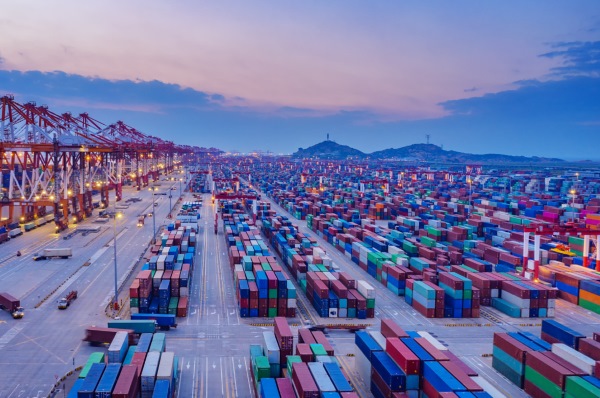 More info: https://www.sinosteel-pipe.com/en/blog-5662620069368915.html |
| json metadata | {"tags":["steel","rareearths"],"image":["https://cdn.steemitimages.com/DQmUVUnzdhZAGKMdbbdsG793fv99PivvhiXRxsmsAaNHYkb/%E4%BC%81%E4%B8%9A%E5%BE%AE%E4%BF%A1%E6%88%AA%E5%9B%BE_20251107140406.jpg"],"links":["https://www.sinosteel-pipe.com/en/blog-5662620069368915.html"],"app":"steemit/0.2","format":"markdown"} |
| Transaction Info | Block #100727826/Trx 692fc343281f5fca7480ef6df0cbf908155636b9 |
View Raw JSON Data
{
"trx_id": "692fc343281f5fca7480ef6df0cbf908155636b9",
"block": 100727826,
"trx_in_block": 1,
"op_in_trx": 0,
"virtual_op": 0,
"timestamp": "2025-11-10T09:27:45",
"op": [
"comment",
{
"parent_author": "",
"parent_permlink": "steel",
"author": "sinosteelpipe",
"permlink": "china-s-import-and-export-data-of-steel-rare-earths-automobiles-etc-from-january-to-october",
"title": "China’s import and export data of steel, rare earths, automobiles, etc. from January to October",
"body": "According to statistics from the General Administration of Customs of the People's Republic of China, China's import and export data of steel, rare earths, automobiles, etc. from January to October are as follows:\n1. Steel\nIn October 2025, China exported 9.782 million tons of steel, a decrease of 683,000 tons from the previous month and a month-on-month decrease of 6.5%. From January to October, China exported a total of 97.737 million tons of steel, a year-on-year increase of 6.6%.\nIn October, China imported 503,000 tons of steel, a decrease of 45,000 tons from the previous month, and a month-on-month decrease of 8.2%; from January to October, China imported a total of 5.041 million tons of steel, a year-on-year decrease of 11.9%.\n2. Rare earth\nIn October 2025, China exported 4,343.5 tons of rare earths; from January to October, the cumulative exports of rare earths were 52,699.2 tons, a year-on-year increase of 10.5%.\nIn October, China imported 6,991.0 tons of rare earths; from January to October, China imported a total of 85,890.3 tons, a year-on-year decrease of 23.3%.\n3. Cars\nIn October 2025, China exported 828,000 vehicles; from January to October, the cumulative exports were 6.513 million vehicles, a year-on-year increase of 23.3%.\n4. Household appliances\nIn October 2025, China exported 351.907 million units of household appliances; from January to October, the cumulative exports were 3711.632 million units, a year-on-year decrease of 0.3%.\n5. Ships\nIn October 2025, China exported 443 ships; from January to October, a total of 5,660 ships were exported, a cumulative year-on-year increase of 20.5%.\n6. Copper\nIn October 2025, China imported 438,000 tons of unwrought copper and copper products; from January to October, China imported 4.456 million tons of unwrought copper and copper products, a year-on-year decrease of 3.1%.\nIn October 2025, China imported 2.451 million tons of copper ore and its concentrate; from January to October, China imported 25.086 million tons of copper ore and its concentrate, a year-on-year increase of 7.5%.\n7. Iron\nIn October, China imported 111.309 million tons of iron ore and its concentrates, a decrease of 5.017 million tons from the previous month and a month-on-month decrease of 4.3%; from January to October, China imported a total of 1,028.886 million tons of iron ore and its concentrates, a year-on-year increase of 0.7%.\n8. Coal\nIn October, China imported 41.737 million tons of coal and lignite, a decrease of 4.266 million tons from the previous month and a month-on-month decrease of 9.3%. From January to October, China imported a total of 387.623 million tons of coal and lignite, a year-on-year decrease of 11.0%.\n9. Aluminum\nIn October 2025, China exported 503,000 tons of unwrought aluminum and aluminum products; from January to October, the cumulative exports were 5.02 million tons, a year-on-year decrease of 8.6%.\n\n\n\nMore info: https://www.sinosteel-pipe.com/en/blog-5662620069368915.html",
"json_metadata": "{\"tags\":[\"steel\",\"rareearths\"],\"image\":[\"https://cdn.steemitimages.com/DQmUVUnzdhZAGKMdbbdsG793fv99PivvhiXRxsmsAaNHYkb/%E4%BC%81%E4%B8%9A%E5%BE%AE%E4%BF%A1%E6%88%AA%E5%9B%BE_20251107140406.jpg\"],\"links\":[\"https://www.sinosteel-pipe.com/en/blog-5662620069368915.html\"],\"app\":\"steemit/0.2\",\"format\":\"markdown\"}"
}
]
}sinosteelpipepublished a new post: sinosteel-pipe-invites-you-to-participate-in-adipec2025/10/30 07:06:24
sinosteelpipepublished a new post: sinosteel-pipe-invites-you-to-participate-in-adipec
2025/10/30 07:06:24
| parent author | |
| parent permlink | adipec |
| author | sinosteelpipe |
| permlink | sinosteel-pipe-invites-you-to-participate-in-adipec |
| title | Sinosteel Pipe invites you to participate in ADIPEC |
| body | The 2025 Abu Dhabi International Oil and Gas Exhibition (ADIPEC 2025) will be held at the Abu Dhabi National Exhibition Center (ADNEC) from November 3 to 6. Relevant organizations from more than 54 countries and regions will participate, with more than 2,250 exhibitors and more than 200,000 visitors. As the third largest oil industry exhibition in the world, ADIPEC has become a benchmark for the energy industry in the Middle East since its inception in 1984. 1. Core highlights of the exhibition (1)Artificial intelligence drives energy transformation With "deep integration of AI and energy" as its core topic, ADIPEC 2025 will bring together global energy leaders to discuss the application of AI in exploration optimization, carbon emission management, supply chain intelligence and other fields. The exhibition has a special AI technology display area, covering scenarios such as intelligent drilling and predictive maintenance. (2) Low carbon technology demonstration and investment opportunities Zero-carbon projects: Abu Dhabi National Oil Company (ADNOC) will showcase the world’s first net-zero carbon dioxide emission natural gas projects (Hail and Ghasha projects) with a total investment of US$16.94 billion. Green investment: The UAE's "Dirham 300 Billion Action" plan promotes the coordinated development of renewable energy and the oil and gas industry. It is expected that investment in the energy field will exceed US$150 billion in 2025. (3) Global Energy Leaders Summit Dialogue During the same period of the exhibition, 10 international summits and 350+ sub-forums were held, covering topics: (1) Oil and gas production capacity upgrade in the Middle East (OPEC 2030 strategy) (2) Hydrogen energy commercialization path (3) Digital oilfield safety standards (4) Development of emerging markets in Africa 2. Sinosteel Pipe invites you to visit our booth Sinosteel Pipe booth is located at No. 13541 in Hall 13. Sinosteel Pipe is a high-tech enterprise dedicated to the research, development, production and sales of industrial stainless steel and special alloy pipes, pipe fittings, composite pipes and other pipe series products. 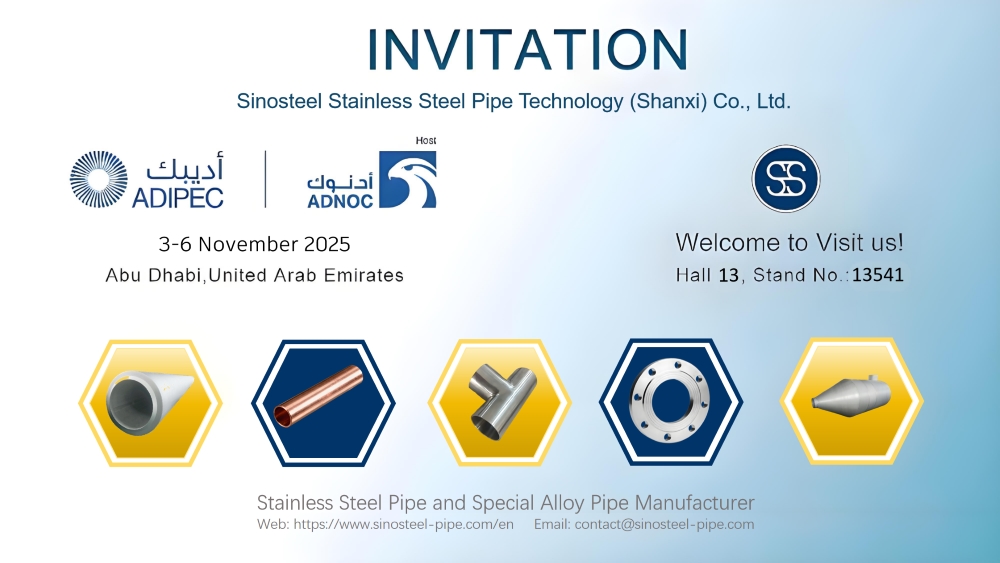 Sinosteel Pipe has more than 30 various international certifications, such as ISO, API, major classification societies, etc. Its products cover seamless pipes, welded pipes, bimetal composite pipes, pipe fittings, prefabricated parts, etc., with an annual production capacity of more than 200,000 tons. 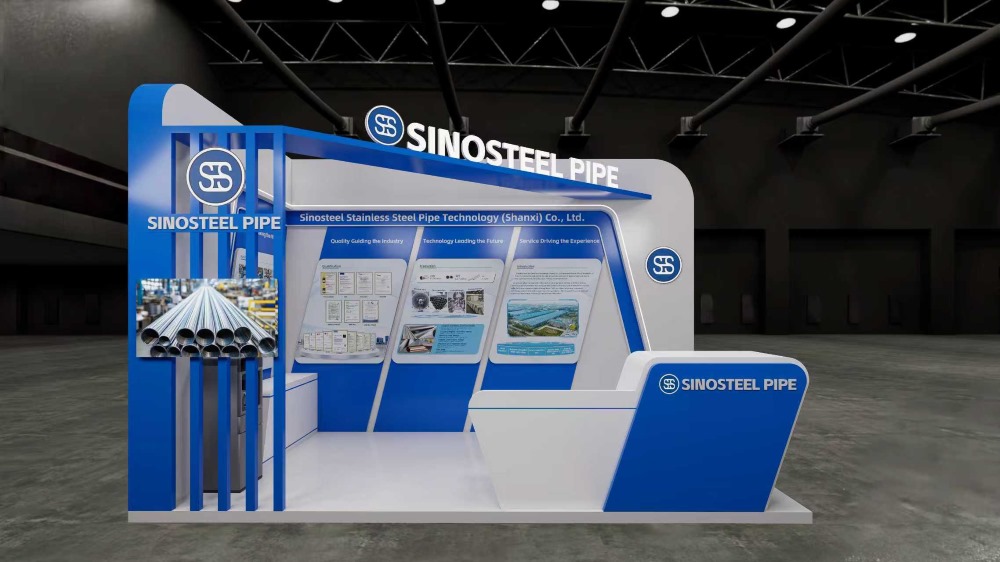 Sinosteel Pipe looks forward to gathering with you in the UAE to discuss the future and achieve win-win cooperation. |
| json metadata | {"tags":["adipec","sinosteelpipe"],"image":["https://cdn.steemitimages.com/DQmUSZDQQDobHv6FQ8VuRm2A9jDrfEqGWynnVn7WRbmdH8a/ADIPEC%20INV3.jpg","https://cdn.steemitimages.com/DQmP2PDHcxcMtrxXSM6qpViNLWA9WVi9GqohCagcqe1BdYA/8_46_74.jpg"],"app":"steemit/0.2","format":"markdown"} |
| Transaction Info | Block #100408907/Trx 973ef816cdb62787c5fc1e66e70fdf513a48ba00 |
View Raw JSON Data
{
"trx_id": "973ef816cdb62787c5fc1e66e70fdf513a48ba00",
"block": 100408907,
"trx_in_block": 0,
"op_in_trx": 0,
"virtual_op": 0,
"timestamp": "2025-10-30T07:06:24",
"op": [
"comment",
{
"parent_author": "",
"parent_permlink": "adipec",
"author": "sinosteelpipe",
"permlink": "sinosteel-pipe-invites-you-to-participate-in-adipec",
"title": "Sinosteel Pipe invites you to participate in ADIPEC",
"body": "The 2025 Abu Dhabi International Oil and Gas Exhibition (ADIPEC 2025) will be held at the Abu Dhabi National Exhibition Center (ADNEC) from November 3 to 6. Relevant organizations from more than 54 countries and regions will participate, with more than 2,250 exhibitors and more than 200,000 visitors. As the third largest oil industry exhibition in the world, ADIPEC has become a benchmark for the energy industry in the Middle East since its inception in 1984.\n1. Core highlights of the exhibition\n(1)Artificial intelligence drives energy transformation\nWith \"deep integration of AI and energy\" as its core topic, ADIPEC 2025 will bring together global energy leaders to discuss the application of AI in exploration optimization, carbon emission management, supply chain intelligence and other fields. The exhibition has a special AI technology display area, covering scenarios such as intelligent drilling and predictive maintenance.\n(2) Low carbon technology demonstration and investment opportunities\nZero-carbon projects: Abu Dhabi National Oil Company (ADNOC) will showcase the world’s first net-zero carbon dioxide emission natural gas projects (Hail and Ghasha projects) with a total investment of US$16.94 billion.\nGreen investment: The UAE's \"Dirham 300 Billion Action\" plan promotes the coordinated development of renewable energy and the oil and gas industry. It is expected that investment in the energy field will exceed US$150 billion in 2025.\n(3) Global Energy Leaders Summit Dialogue\nDuring the same period of the exhibition, 10 international summits and 350+ sub-forums were held, covering topics:\n(1) Oil and gas production capacity upgrade in the Middle East (OPEC 2030 strategy)\n(2) Hydrogen energy commercialization path\n(3) Digital oilfield safety standards\n(4) Development of emerging markets in Africa\n2. Sinosteel Pipe invites you to visit our booth\nSinosteel Pipe booth is located at No. 13541 in Hall 13. Sinosteel Pipe is a high-tech enterprise dedicated to the research, development, production and sales of industrial stainless steel and special alloy pipes, pipe fittings, composite pipes and other pipe series products.\n\n\n\nSinosteel Pipe has more than 30 various international certifications, such as ISO, API, major classification societies, etc. Its products cover seamless pipes, welded pipes, bimetal composite pipes, pipe fittings, prefabricated parts, etc., with an annual production capacity of more than 200,000 tons.\n\n\n\nSinosteel Pipe looks forward to gathering with you in the UAE to discuss the future and achieve win-win cooperation.",
"json_metadata": "{\"tags\":[\"adipec\",\"sinosteelpipe\"],\"image\":[\"https://cdn.steemitimages.com/DQmUSZDQQDobHv6FQ8VuRm2A9jDrfEqGWynnVn7WRbmdH8a/ADIPEC%20INV3.jpg\",\"https://cdn.steemitimages.com/DQmP2PDHcxcMtrxXSM6qpViNLWA9WVi9GqohCagcqe1BdYA/8_46_74.jpg\"],\"app\":\"steemit/0.2\",\"format\":\"markdown\"}"
}
]
}sinosteelpipepublished a new post: overview-of-nigerian-iron-and-steel-industry2025/10/28 08:34:12
sinosteelpipepublished a new post: overview-of-nigerian-iron-and-steel-industry
2025/10/28 08:34:12
| parent author | |
| parent permlink | nigerian |
| author | sinosteelpipe |
| permlink | overview-of-nigerian-iron-and-steel-industry |
| title | Overview of Nigerian Iron and Steel Industry |
| body | I. Overview of Nigeria It has a land area of 923768 square kilometers, a population of 227 million (2024), an official language of English, a capital of Abuja, and a total GDP of 374.9 billion US dollars in 2023, with a per capita GDP of 1690 US dollars. Rich in mineral resources, the petroleum industry is the pillar of the national economy. Since its independence, Nigeria has always regarded industrialization as a strategic path to achieve sustainable economic growth. Over the past decade, successive governments have taken many initiatives to achieve this goal, launching the Nigerian Industrial Revolution Plan (NIRP), which aims to promote economic diversification and promote the growth of agricultural processing and petrochemical sectors in manufacturing industry. The "anchor borrower program" was implemented to provide low-interest financing for agricultural processing enterprises and connect them with small farmers to ensure a stable supply of raw materials; in addition, special economic zones and industrial parks were introduced to attract investment by providing tax breaks, infrastructure subsidies, simplified regulatory procedures and other targeted incentives. Nigeria remains one of the most attractive countries in Africa for investment. As the most populous country in Africa, Nigeria has a growing middle class, coupled with various incentive policies introduced by the government, the potential for the revival of manufacturing industry is huge. In addition, Nigeria is rich in natural resources and has a good geographical location, which is the gateway to the African market. II. Overview of Nigerian Iron and Steel Nigeria's steel demand is highly dependent on imports. In 2023, the crude steel output is only 1.19 million tons. In 2024, the crude steel output is about 200,0000 tons. The actual demand is more than 10 million tons. The annual import value is more than 4 billion US dollars. The annual import of steel is more than 1.5 million tons, indicating that the steel demand is highly dependent on imports. In order to improve the self-sufficiency rate, the federal government is actively attracting foreign direct investment into the steel sector and is committed to achieving the target of 10 million tons of steel per year by 2030. Nigeria is rich in mineral resources, including oil, natural gas, iron ore and coal, which provide important support for economic development, but the steel industry contributes less to the national economy. From 2000 to 2023, Nigeria's economic growth has experienced three stages of rapid growth, steady development and slow growth, in which the economic structure is highly dependent on resource-based industries such as oil and natural gas, accounting for 6% of GDP, while the steel industry contributes less to GDP, accounting for about 0.2%. In recent years, Nigeria's iron and steel industry is undergoing structural changes, local production capacity is gradually released, and policy support and foreign investment jointly promote industrial upgrading. Despite infrastructure and technology bottlenecks, the country is accelerating its transformation from a major steel importer to a regional manufacturing center, relying on abundant iron ore resources and huge market demand. III. Major iron and steel enterprises in Nigeria The steel complex in Nigeria consists mainly of Ajaokuta Steel (Ajaokuta Steel Company, ASC) and Delta Steel (Delta Steel Company, DSC). At present, the two steel mills are not operating normally. The output is still dominated by small and medium-sized rolling mills. Although the Nigerian government has been committed to developing the steel industry for many years, many projects have failed to make substantial progress due to the shortage of raw materials and other problems. At present, iron and steel production is mainly dominated by private enterprises, while state-owned enterprises are facing difficulties for various reasons. From the perspective of production capacity, private steel enterprises occupy a dominant position in local steel production. As the largest local steel enterprise in Nigeria at present, KAM Steel has an annual crude steel production capacity of 600,000 tons and a rolling steel production capacity of 150,000 tons. With its large production capacity, KAM Steel has certain advantages in market competition and can meet the needs of large-scale customers. It has a wide range of customer groups in construction, manufacturing and other fields. With an annual production capacity of 500,000 tons, African Foundries Limited mainly produces steel billets and rebars, which has a high reputation and market share in the Nigerian construction market, and its stable capacity supply provides a guarantee for the smooth progress of local construction projects. In terms of products, the product variety and quality of enterprises have become the key factors in competition. By continuously introducing advanced production equipment and technology, KAM Steel can not only produce ordinary construction steel, but also produce some high-end special steel to meet the needs of different customers. African Foundries Limited pays attention to the improvement of product quality, and its billets and steel bars are recognized by the market for their stable quality and excellent performance, thus establishing a good brand image in the construction market. Enterprises such as Sunflag Steel Nigeria and Universal Steel Limited are also constantly optimizing product mix and improving product quality in order to enhance their market competitiveness. 1. State-owned steel enterprises: Nigerian state-owned steel enterprises can be traced back to 1979, when the Nigerian government set the goal of building a steel complex. The steel complex consists mainly of Ajaokuta Steel (Ajaokuta Steel Company, ASC) and Delta Steel (Delta Steel Company, DSC). At present, the two steel mills are not operating normally, specifically: (1) Ajaokuta Steel (ASC) Designed production capacity: ASC is produced by blast furnace, with an annual output of 1.3 million tons of liquid steel in the first stage, 2.6 million tons in the second stage and 5.2 million tons in the third stage. Status: Due to insufficient supply of iron ore and inefficient management, it has not been formally put into production so far. In 2005, ASC was handed over to Global Steel Holdings Nigeria Limited (GHNL), but the Nigerian government terminated its operation due to slow progress. In 2024, the government plans to resume production through privatization. (2) Delta Steel Corporation (DSC) Design capacity: The planned capacity of DSC is 1 million tons/year, and the direct reduction technology is adopted. Status: Due to the shortage of raw materials and energy problems, some facilities of DSC have been suspended. It was privatized and sold to India Global Infrastructure Nigeria (GINL) in 2005. GINL also acquired National Iron Ore Mining Company (NIOMCO), which changed ownership several times between 2005 and 2012 and is now managed by Premium Steel and Mines Limited. However, it has not yet resumed operations, and the production facilities have been sold. 2. Private steel enterprises: Private steel enterprises in Nigeria play a dominant role in crude steel production. It is estimated that there are dozens of steel enterprises, including: (1) KAM Steel: Located in Ogun State in the southwest and Kaduna State in the north of Nigeria, KAM Steel is currently the largest indigenous steel company in Nigeria. The annual crude steel production capacity is 600,000 tons, and the rolling steel production capacity is 150,000 tons. (2)African Foundries Limited: The company is located in Ogun State and mainly produces steel billets and rebars with an annual production capacity of 500,000 tons. (3)Sunflag Steel Nigeria: The company is located in Lagos State in the southwest of Nigeria and mainly produces steel billets and rolled steel with an annual production capacity of about 150,000 tons. (4)Universal Steel Limited: The company is located in Lagos State and mainly produces hot rolling with an annual capacity of 100,000 tons. 3. Investment of Chinese steel enterprises in Nigeria: With the layout of Chinese investment enterprises such as Kaduna Steel Plant and Yongxing Steel (annual capacity of 500000 tons), local production capacity is gradually released. Data show that in 2024, Nigeria's steel imports fell by 12% year-on-year, and the market share of local products increased to 35%. The two countries have a long history of cooperation in the field of steel. Since the signing of the protocol between the two governments in 1997, China Metallurgical Construction Group has been working to resume production at the Delta Steel Plant in Nigeria. Through technology export and management cooperation, the production capacity of the steel plant has been gradually restored to 100%, which has become a successful case of industrial cooperation between China and Nepal. Major Chinese-funded steel plants in Nigeria include: (1) Yongxing Steel, from Fujian Province, China, located in Edo State, Nigeria; (2) Hongxing Zhongyuan Steel, from Fujian Province, China, with a plant located in Abia State, Nigeria; (3) Yulong Steel Pipe, from Jiangsu Province, China, factory located in Lagos State, Nigeria; (4) Baoyao Steel, from Shanghai, China, with a plant located in Chris River State, Nigeria; (5) Tung Group, from Hong Kong, China, located in Ogun State, Nigeria. IV. Steel demand in Nigeria Nigeria is the most populous country in Africa. According to the data of the World Bank, the resident population will reach 228 million in 2023. The urbanization rate of Nigeria has also reached 60%. Factors such as land area, geographical location, population and economy determine that Nigeria has certain development potential, and it is also the key driver of the outbreak of steel demand. Nigeria's domestic demand for steel is mainly concentrated in construction, transportation, energy and other fields. With the advancement of infrastructure construction and the acceleration of industrialization, the consumption of iron and steel is increasing. The steel market in Nigeria has great potential. Its steel demand mainly comes from infrastructure construction and manufacturing, which account for more than 60% of consumption. With the steady progress of major projects such as the Lagos-Kano Railway, Nigeria's steel consumption is expected to be at least 3 million tons by 2030. In order to promote the innovation and development of Nigeria's steel industry, the government has formulated the National Industrial Revolution Plan, which aims to actively attract foreign investment through privatization, tax relief and infrastructure investment. (1)Capital constructio: The "2030 Industrialization Plan" will launch major projects such as coastal railways and trans-regional highway networks in 2025. The Nigerian government has been committed to improving the domestic infrastructure and has increased investment in transportation, energy and other fields. In terms of transportation, road construction projects are constantly advancing, and new and expanded highway networks require a large amount of steel for bridge construction, road guardrails and other facilities; railway construction is also gradually carried out, and steel is indispensable for rail laying, station construction and railway bridge construction. In the energy sector, the oil and gas industry is a pillar industry in Nigeria. With the further development of oil and gas resources, the demand for steel continues to grow in the construction of drilling platforms, pipeline laying and related supporting facilities. Large-scale housing construction and road reconstruction projects in Nigeria have made building materials the largest import category, among which cement, steel, aluminum alloy doors and windows and decorative materials are in the strongest demand. In terms of demand characteristics, as infrastructure projects are mostly concentrated in Lagos, Abuja and other large cities, the demand for building materials is large and the delivery is required to be timely; at the same time, considering the local high temperature and rainy climate, building materials with moisture-proof and corrosion-resistant properties are more popular. In terms of purchasing preference, Nigerian purchasers prefer mid-end products with high cost performance, are more sensitive to price, and prefer small batch and multi-frequency purchasing to reduce inventory pressure. For example, the demand for hot-dip galvanized steel pipes has surged in construction scaffolding and water supply pipeline projects because of their corrosion resistance. Lightweight partition board has become the preferred material for residential construction because of its convenient construction and low cost. (2) Manufacturing industry: Although the manufacturing industry is still in its infancy, it has shown a good momentum of development in recent years, and the demand for steel is gradually increasing. With the start of projects such as "steel + new energy + equipment manufacturing" industrial complex in Ogun State, the demand for high-strength steel structure, industrial plate and other steel products in manufacturing industry has increased sharply. In the field of automobile manufacturing, although Nigeria's automobile industry is relatively small, with the development of local automobile brands and the entry of international automobile manufacturers, the demand for automotive steel has begun to emerge, such as body sheet, engine parts steel and so on. Machinery and equipment manufacturing industry also needs a large number of steel as raw materials for the production of various machinery and equipment, such as agricultural machinery, engineering machinery and so on. V. Strengths and Weaknesses of Nigerian Steel 1. Advantages (1) Resource advantages: As a gateway country in West Africa, Nigeria has potential advantages in the process of industrialization by virtue of its abundant mineral resources, especially iron ore reserves. Nigeria's iron ore is mainly magnetite and hematite, with an average iron grade of 36% -41%. At present, the proven reserves are about 1 billion tons and the estimated reserves are more than 2 billion tons. In recent years, some new progress has been made in the development of iron and steel industry in Nigeria. (2) Geographical and population advantages: In addition, the country has a superior geographical location, which can radiate the market of more than 200 million people in West Africa and become a regional steel export hub. (3) Policy advantages National Industrial Revolution Plan (NIRP), Industrialization Plan 2030, etc. The federal government is actively attracting foreign direct investment in the steel sector and is committed to achieving the target of 10 million tons of steel per year by 2030. In December 2024, the Nigerian government decided to privatize the state-owned Ajaokuta Iron and Steel Company (Ajaokuta Steel Company, ASC) and its related iron ore mines in Itapei in order to attract investors and achieve long-term operation. This move is expected not only to revive long-stagnant steel production, but also to inject new vitality into the revival of the steel industry. 2.Insufficient (1) Although it has the seventh largest iron ore reserves in the world, its development rate is less than 10%, and it is in urgent need of foreign investment and technological upgrading. Nigeria's steel industry is undergoing structural changes, with the gradual release of local production capacity, policy support and foreign investment to jointly promote industrial upgrading. (2) Development status of iron ore A. Itakpe Iron Ore Mine (Itakpe): Located in Kogi State, it is the largest iron ore project in Nigeria, with reserves of about 200 million tons and an average iron grade of 36%. Managed by the National Iron Ore Mining Company (NIOMCO), it is planned to supply feedstock to Ajaokuta Steel (ASC) and Delta Steel (DSC). Status: Itakpe mining area started mining in 1987, with a planned annual output of 2.5 million tons of iron concentrate and a mine operation life of 15 years. However, due to the difficulty of beneficiation and the low grade of ore, the production has been interrupted for many times and has not resumed normal production so far. In 2005, the mine was leased to Global Steel Holdings (GINL) for a 10-year concession, but no significant progress has been made and it remains suspended. B. Ajabonoko Mine: Located in the Okeni area of Kogi State, with reserves of about 60 million tons and an average iron grade of 37%. Status: Ajabonoko mining area is small in scale, with scattered ore bodies and high transportation and beneficiation costs. Although the Nigerian government has provided support and completed some geological exploration work, there is no large-scale development plan at present. C. Agbaja Iron Ore Mine (Agbaja): The mine is located in the Lokoja area and has proved reserves of about 500 million tons, with an estimated 1 billion tons and an average iron grade of 45%. Status: Operated by Macro Metals in Australia, pilot plant testing completed. However, due to the high content of phosphorus, sulfur and alumina in the ore, the cost of beneficiation and purification is too high, and the project has not yet entered the stage of full development. Macro Metals is currently conducting a financial feasibility study. (2) Reasons for limitation of iron ore development Although Nigeria is rich in iron ore resources, its development and utilization have been at a low level for a long time due to various factors. The main reasons include: A. Iron ore grade is low: Nigerian iron ore is mainly low-grade ore with iron content of 36% -41%. Compared with high-grade ores in Brazil, South Africa and other countries, additional beneficiation and purification processes are needed, resulting in higher production costs. B. Scattered distribution: The iron ore resources in Nigeria are widely distributed, but the mining areas are small and scattered, lacking centralized development conditions. The distance between mining areas is long and the transportation cost is high, which further reduces the efficiency of resource development. C. Inadequate infrastructure: The mining areas are mostly located in remote areas, and the road traffic is inconvenient, which limits the transportation capacity of heavy vehicles. Power supply is unreliable, and many mining areas rely on diesel to generate electricity, further driving up costs. In addition, there are seasonal water shortages in some areas, which also affect the sustainability of the project. Due to the above reasons, the annual production of iron ore in Nigeria has been maintained at a low level for a long time. In 2011-2012, the annual production was about 70,000 tons, but after 2012, the iron ore production decreased significantly to about 2,000 tons per year. The main reason is that the DSC steel mill operated by GINL is in debt crisis, and the Nigerian government cancelled GINL's concession to NIOMCO, after which the NIOMCO iron ore project did not resume production. V. Main import sources of steel in Nigeria China is Nigeria's largest trading partner in terms of imports, followed by India, Belgium, the United States and France. From January to August 2025, China exported 1.27 million tons of steel to Nigeria, an increase of 620,000 over the same period last year. From January to August 2025, China's imports from China have reached the total steel imports of last year. China will import 1.27 million tons of steel in 2024, 980,000 tons in 2023 and 1.09 million tons in 2022. VI. Recent Investment Trends of Steel in Nigeria (I) Stellar Steel Co., Ltd., a subsidiary jointly controlled by China Galaxy Group and RSIN Group, plans to invest US $450 million to build a steel plant in Ogun State, Nigeria. The project is expected to be put into operation in mid-2026. After putting into operation, it will focus on the production of hot-rolled coils, steel doors and gas cylinders. In fact, in recent years, Ogun State has become the core area of attracting foreign investment in Nigeria by virtue of its superior location and policy advantages. At the end of 2024, the state received $500 million in power infrastructure investment through the Japan International Cooperation Agency (JICA) to upgrade the power supply network of the Lagos-Ogun Industrial Corridor. In May 2025, Mamuda Beverages, a subsidiary of Mamuda Group in Nigeria, announced an investment of $50 million to build a comprehensive industrial park covering food, personal care and agricultural products processing. In May 2025, CCETC, a Chinese energy enterprise, also reached cooperation with Ogun State to participate in the upgrading of the local power transmission network, and to build industrial parks and 3MW free power plants around the airport to provide energy security for industrial development. (2) In 2024, a modern steel plant in Kaduna State, Nigeria, entered the final stage of construction by the African Industrial Group, with a total investment of up to $1.5 billion. It is estimated that the annual production capacity of the plant will reach 1 million tons, mainly through the direct mining of iron ore to produce reduced iron, thus significantly improving the quality of steel. This important development marks the first large-scale steel production in Nigeria, which is expected to save more than $1 billion a year in foreign exchange expenditure and is expected to attract investment in downstream industries such as automobile manufacturing. (3) Hongxing Zhongyuan Company, a Chinese enterprise, announced an expansion plan of about 3.9 billion yuan in 2025, and the annual steel production capacity is planned to expand from 600000 tons to 2 million tons. (4) In September 2024, the Nigerian government signed a memorandum of understanding with the Russian consortium to resume the operation of Ajaokuta Iron and Steel Company (ASC) and the National Iron Ore Mining Company (NIOMCO) to enhance crude steel production capacity and raw material supply capacity. (5) In September 2024, Chart and Capstone Integrated Limited, a Nigerian local enterprise, signed a memorandum of understanding with China National Machinery Group (Sinomach) to invest US $1 billion in the construction of iron ore and steel projects in Kogi State. (6) In December 2024, the Nigerian government announced that it would privatize ASC and Itakpe iron ore mines to attract more investors and promote the sustainable development of the steel industry. More: https://www.sinosteel-pipe.com/en/overview-of-nigerian-iron-and-steel-industry.html 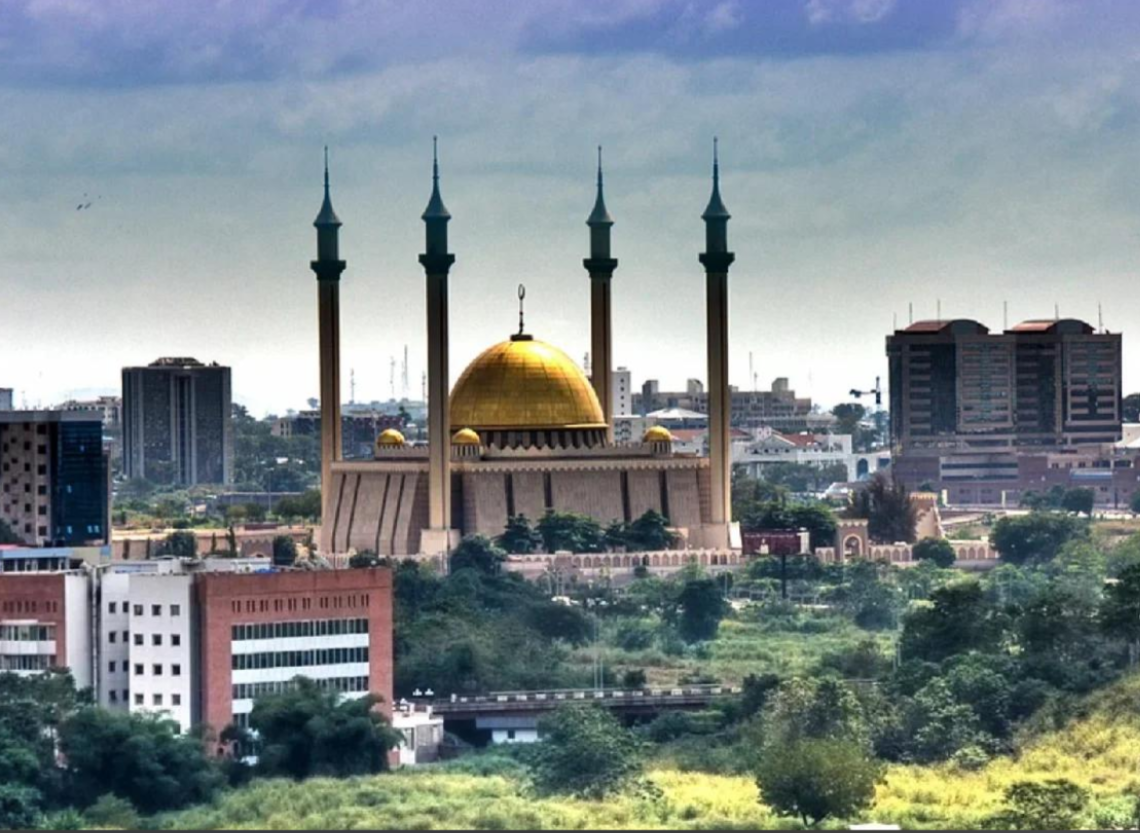 |
| json metadata | {"tags":["nigerian","steel","sinosteelpipe"],"image":["https://cdn.steemitimages.com/DQmPYYrQHVoGQEwnGghPcM33DGQNAcQegKmMLdDGj1oUBEW/nrly.png"],"links":["https://www.sinosteel-pipe.com/en/overview-of-nigerian-iron-and-steel-industry.html"],"app":"steemit/0.2","format":"markdown"} |
| Transaction Info | Block #100353358/Trx 865709d06e4824fe171b779ddea1b55768fcc8f7 |
View Raw JSON Data
{
"trx_id": "865709d06e4824fe171b779ddea1b55768fcc8f7",
"block": 100353358,
"trx_in_block": 0,
"op_in_trx": 0,
"virtual_op": 0,
"timestamp": "2025-10-28T08:34:12",
"op": [
"comment",
{
"parent_author": "",
"parent_permlink": "nigerian",
"author": "sinosteelpipe",
"permlink": "overview-of-nigerian-iron-and-steel-industry",
"title": "Overview of Nigerian Iron and Steel Industry",
"body": "I. Overview of Nigeria\n\nIt has a land area of 923768 square kilometers, a population of 227 million (2024), an official language of English, a capital of Abuja, and a total GDP of 374.9 billion US dollars in 2023, with a per capita GDP of 1690 US dollars. Rich in mineral resources, the petroleum industry is the pillar of the national economy.\n\nSince its independence, Nigeria has always regarded industrialization as a strategic path to achieve sustainable economic growth. Over the past decade, successive governments have taken many initiatives to achieve this goal, launching the Nigerian Industrial Revolution Plan (NIRP), which aims to promote economic diversification and promote the growth of agricultural processing and petrochemical sectors in manufacturing industry. The \"anchor borrower program\" was implemented to provide low-interest financing for agricultural processing enterprises and connect them with small farmers to ensure a stable supply of raw materials; in addition, special economic zones and industrial parks were introduced to attract investment by providing tax breaks, infrastructure subsidies, simplified regulatory procedures and other targeted incentives.\n\nNigeria remains one of the most attractive countries in Africa for investment. As the most populous country in Africa, Nigeria has a growing middle class, coupled with various incentive policies introduced by the government, the potential for the revival of manufacturing industry is huge. In addition, Nigeria is rich in natural resources and has a good geographical location, which is the gateway to the African market.\n\nII. Overview of Nigerian Iron and Steel\n\nNigeria's steel demand is highly dependent on imports. In 2023, the crude steel output is only 1.19 million tons. In 2024, the crude steel output is about 200,0000 tons. The actual demand is more than 10 million tons. The annual import value is more than 4 billion US dollars. The annual import of steel is more than 1.5 million tons, indicating that the steel demand is highly dependent on imports. In order to improve the self-sufficiency rate, the federal government is actively attracting foreign direct investment into the steel sector and is committed to achieving the target of 10 million tons of steel per year by 2030.\n\nNigeria is rich in mineral resources, including oil, natural gas, iron ore and coal, which provide important support for economic development, but the steel industry contributes less to the national economy. From 2000 to 2023, Nigeria's economic growth has experienced three stages of rapid growth, steady development and slow growth, in which the economic structure is highly dependent on resource-based industries such as oil and natural gas, accounting for 6% of GDP, while the steel industry contributes less to GDP, accounting for about 0.2%.\n\nIn recent years, Nigeria's iron and steel industry is undergoing structural changes, local production capacity is gradually released, and policy support and foreign investment jointly promote industrial upgrading. Despite infrastructure and technology bottlenecks, the country is accelerating its transformation from a major steel importer to a regional manufacturing center, relying on abundant iron ore resources and huge market demand.\n\nIII. Major iron and steel enterprises in Nigeria\n\nThe steel complex in Nigeria consists mainly of Ajaokuta Steel (Ajaokuta Steel Company, ASC) and Delta Steel (Delta Steel Company, DSC). At present, the two steel mills are not operating normally. The output is still dominated by small and medium-sized rolling mills.\n\nAlthough the Nigerian government has been committed to developing the steel industry for many years, many projects have failed to make substantial progress due to the shortage of raw materials and other problems. At present, iron and steel production is mainly dominated by private enterprises, while state-owned enterprises are facing difficulties for various reasons.\n\nFrom the perspective of production capacity, private steel enterprises occupy a dominant position in local steel production. As the largest local steel enterprise in Nigeria at present, KAM Steel has an annual crude steel production capacity of 600,000 tons and a rolling steel production capacity of 150,000 tons. With its large production capacity, KAM Steel has certain advantages in market competition and can meet the needs of large-scale customers. It has a wide range of customer groups in construction, manufacturing and other fields. With an annual production capacity of 500,000 tons, African Foundries Limited mainly produces steel billets and rebars, which has a high reputation and market share in the Nigerian construction market, and its stable capacity supply provides a guarantee for the smooth progress of local construction projects.\n\nIn terms of products, the product variety and quality of enterprises have become the key factors in competition. By continuously introducing advanced production equipment and technology, KAM Steel can not only produce ordinary construction steel, but also produce some high-end special steel to meet the needs of different customers. African Foundries Limited pays attention to the improvement of product quality, and its billets and steel bars are recognized by the market for their stable quality and excellent performance, thus establishing a good brand image in the construction market. Enterprises such as Sunflag Steel Nigeria and Universal Steel Limited are also constantly optimizing product mix and improving product quality in order to enhance their market competitiveness.\n\n1. State-owned steel enterprises: Nigerian state-owned steel enterprises can be traced back to 1979, when the Nigerian government set the goal of building a steel complex. The steel complex consists mainly of Ajaokuta Steel (Ajaokuta Steel Company, ASC) and Delta Steel (Delta Steel Company, DSC). At present, the two steel mills are not operating normally, specifically:\n\n(1) Ajaokuta Steel (ASC)\n\nDesigned production capacity: ASC is produced by blast furnace, with an annual output of 1.3 million tons of liquid steel in the first stage, 2.6 million tons in the second stage and 5.2 million tons in the third stage.\n\nStatus: Due to insufficient supply of iron ore and inefficient management, it has not been formally put into production so far. In 2005, ASC was handed over to Global Steel Holdings Nigeria Limited (GHNL), but the Nigerian government terminated its operation due to slow progress. In 2024, the government plans to resume production through privatization.\n\n(2) Delta Steel Corporation (DSC)\n\nDesign capacity: The planned capacity of DSC is 1 million tons/year, and the direct reduction technology is adopted.\n\nStatus: Due to the shortage of raw materials and energy problems, some facilities of DSC have been suspended. It was privatized and sold to India Global Infrastructure Nigeria (GINL) in 2005. GINL also acquired National Iron Ore Mining Company (NIOMCO), which changed ownership several times between 2005 and 2012 and is now managed by Premium Steel and Mines Limited. However, it has not yet resumed operations, and the production facilities have been sold.\n\n2. Private steel enterprises: Private steel enterprises in Nigeria play a dominant role in crude steel production. It is estimated that there are dozens of steel enterprises, including:\n\n(1) KAM Steel: Located in Ogun State in the southwest and Kaduna State in the north of Nigeria, KAM Steel is currently the largest indigenous steel company in Nigeria. The annual crude steel production capacity is 600,000 tons, and the rolling steel production capacity is 150,000 tons.\n\n(2)African Foundries Limited: The company is located in Ogun State and mainly produces steel billets and rebars with an annual production capacity of 500,000 tons.\n\n(3)Sunflag Steel Nigeria: The company is located in Lagos State in the southwest of Nigeria and mainly produces steel billets and rolled steel with an annual production capacity of about 150,000 tons.\n\n(4)Universal Steel Limited: The company is located in Lagos State and mainly produces hot rolling with an annual capacity of 100,000 tons.\n\n3. Investment of Chinese steel enterprises in Nigeria:\n\nWith the layout of Chinese investment enterprises such as Kaduna Steel Plant and Yongxing Steel (annual capacity of 500000 tons), local production capacity is gradually released. Data show that in 2024, Nigeria's steel imports fell by 12% year-on-year, and the market share of local products increased to 35%.\n\nThe two countries have a long history of cooperation in the field of steel. Since the signing of the protocol between the two governments in 1997, China Metallurgical Construction Group has been working to resume production at the Delta Steel Plant in Nigeria. Through technology export and management cooperation, the production capacity of the steel plant has been gradually restored to 100%, which has become a successful case of industrial cooperation between China and Nepal.\n\nMajor Chinese-funded steel plants in Nigeria include:\n\n(1) Yongxing Steel, from Fujian Province, China, located in Edo State, Nigeria;\n\n(2) Hongxing Zhongyuan Steel, from Fujian Province, China, with a plant located in Abia State, Nigeria;\n\n(3) Yulong Steel Pipe, from Jiangsu Province, China, factory located in Lagos State, Nigeria;\n\n(4) Baoyao Steel, from Shanghai, China, with a plant located in Chris River State, Nigeria;\n\n(5) Tung Group, from Hong Kong, China, located in Ogun State, Nigeria.\n\nIV. Steel demand in Nigeria\n\nNigeria is the most populous country in Africa. According to the data of the World Bank, the resident population will reach 228 million in 2023. The urbanization rate of Nigeria has also reached 60%. Factors such as land area, geographical location, population and economy determine that Nigeria has certain development potential, and it is also the key driver of the outbreak of steel demand. Nigeria's domestic demand for steel is mainly concentrated in construction, transportation, energy and other fields. With the advancement of infrastructure construction and the acceleration of industrialization, the consumption of iron and steel is increasing.\n\nThe steel market in Nigeria has great potential. Its steel demand mainly comes from infrastructure construction and manufacturing, which account for more than 60% of consumption. With the steady progress of major projects such as the Lagos-Kano Railway, Nigeria's steel consumption is expected to be at least 3 million tons by 2030.\n\nIn order to promote the innovation and development of Nigeria's steel industry, the government has formulated the National Industrial Revolution Plan, which aims to actively attract foreign investment through privatization, tax relief and infrastructure investment.\n\n(1)Capital constructio:\n\nThe \"2030 Industrialization Plan\" will launch major projects such as coastal railways and trans-regional highway networks in 2025. The Nigerian government has been committed to improving the domestic infrastructure and has increased investment in transportation, energy and other fields. In terms of transportation, road construction projects are constantly advancing, and new and expanded highway networks require a large amount of steel for bridge construction, road guardrails and other facilities; railway construction is also gradually carried out, and steel is indispensable for rail laying, station construction and railway bridge construction. In the energy sector, the oil and gas industry is a pillar industry in Nigeria. With the further development of oil and gas resources, the demand for steel continues to grow in the construction of drilling platforms, pipeline laying and related supporting facilities.\n\nLarge-scale housing construction and road reconstruction projects in Nigeria have made building materials the largest import category, among which cement, steel, aluminum alloy doors and windows and decorative materials are in the strongest demand. In terms of demand characteristics, as infrastructure projects are mostly concentrated in Lagos, Abuja and other large cities, the demand for building materials is large and the delivery is required to be timely; at the same time, considering the local high temperature and rainy climate, building materials with moisture-proof and corrosion-resistant properties are more popular. In terms of purchasing preference, Nigerian purchasers prefer mid-end products with high cost performance, are more sensitive to price, and prefer small batch and multi-frequency purchasing to reduce inventory pressure. For example, the demand for hot-dip galvanized steel pipes has surged in construction scaffolding and water supply pipeline projects because of their corrosion resistance. Lightweight partition board has become the preferred material for residential construction because of its convenient construction and low cost.\n\n(2) Manufacturing industry:\n\nAlthough the manufacturing industry is still in its infancy, it has shown a good momentum of development in recent years, and the demand for steel is gradually increasing. With the start of projects such as \"steel + new energy + equipment manufacturing\" industrial complex in Ogun State, the demand for high-strength steel structure, industrial plate and other steel products in manufacturing industry has increased sharply. In the field of automobile manufacturing, although Nigeria's automobile industry is relatively small, with the development of local automobile brands and the entry of international automobile manufacturers, the demand for automotive steel has begun to emerge, such as body sheet, engine parts steel and so on. Machinery and equipment manufacturing industry also needs a large number of steel as raw materials for the production of various machinery and equipment, such as agricultural machinery, engineering machinery and so on.\n\nV. Strengths and Weaknesses of Nigerian Steel\n\n1. Advantages\n\n(1) Resource advantages:\n\nAs a gateway country in West Africa, Nigeria has potential advantages in the process of industrialization by virtue of its abundant mineral resources, especially iron ore reserves. Nigeria's iron ore is mainly magnetite and hematite, with an average iron grade of 36% -41%. At present, the proven reserves are about 1 billion tons and the estimated reserves are more than 2 billion tons. In recent years, some new progress has been made in the development of iron and steel industry in Nigeria.\n\n(2) Geographical and population advantages:\n\nIn addition, the country has a superior geographical location, which can radiate the market of more than 200 million people in West Africa and become a regional steel export hub.\n\n(3) Policy advantages\n\nNational Industrial Revolution Plan (NIRP), Industrialization Plan 2030, etc. The federal government is actively attracting foreign direct investment in the steel sector and is committed to achieving the target of 10 million tons of steel per year by 2030. In December 2024, the Nigerian government decided to privatize the state-owned Ajaokuta Iron and Steel Company (Ajaokuta Steel Company, ASC) and its related iron ore mines in Itapei in order to attract investors and achieve long-term operation. This move is expected not only to revive long-stagnant steel production, but also to inject new vitality into the revival of the steel industry.\n\n2.Insufficient\n\n(1) Although it has the seventh largest iron ore reserves in the world, its development rate is less than 10%, and it is in urgent need of foreign investment and technological upgrading. Nigeria's steel industry is undergoing structural changes, with the gradual release of local production capacity, policy support and foreign investment to jointly promote industrial upgrading.\n\n(2) Development status of iron ore\n\nA. Itakpe Iron Ore Mine (Itakpe): Located in Kogi State, it is the largest iron ore project in Nigeria, with reserves of about 200 million tons and an average iron grade of 36%. Managed by the National Iron Ore Mining Company (NIOMCO), it is planned to supply feedstock to Ajaokuta Steel (ASC) and Delta Steel (DSC).\n\nStatus: Itakpe mining area started mining in 1987, with a planned annual output of 2.5 million tons of iron concentrate and a mine operation life of 15 years. However, due to the difficulty of beneficiation and the low grade of ore, the production has been interrupted for many times and has not resumed normal production so far. In 2005, the mine was leased to Global Steel Holdings (GINL) for a 10-year concession, but no significant progress has been made and it remains suspended.\n\nB. Ajabonoko Mine: Located in the Okeni area of Kogi State, with reserves of about 60 million tons and an average iron grade of 37%.\n\nStatus: Ajabonoko mining area is small in scale, with scattered ore bodies and high transportation and beneficiation costs. Although the Nigerian government has provided support and completed some geological exploration work, there is no large-scale development plan at present.\n\nC. Agbaja Iron Ore Mine (Agbaja): The mine is located in the Lokoja area and has proved reserves of about 500 million tons, with an estimated 1 billion tons and an average iron grade of 45%.\n\nStatus: Operated by Macro Metals in Australia, pilot plant testing completed. However, due to the high content of phosphorus, sulfur and alumina in the ore, the cost of beneficiation and purification is too high, and the project has not yet entered the stage of full development. Macro Metals is currently conducting a financial feasibility study.\n\n(2) Reasons for limitation of iron ore development\n\nAlthough Nigeria is rich in iron ore resources, its development and utilization have been at a low level for a long time due to various factors. The main reasons include:\n\nA. Iron ore grade is low: Nigerian iron ore is mainly low-grade ore with iron content of 36% -41%. Compared with high-grade ores in Brazil, South Africa and other countries, additional beneficiation and purification processes are needed, resulting in higher production costs.\n\nB. Scattered distribution: The iron ore resources in Nigeria are widely distributed, but the mining areas are small and scattered, lacking centralized development conditions. The distance between mining areas is long and the transportation cost is high, which further reduces the efficiency of resource development.\n\nC. Inadequate infrastructure: The mining areas are mostly located in remote areas, and the road traffic is inconvenient, which limits the transportation capacity of heavy vehicles. Power supply is unreliable, and many mining areas rely on diesel to generate electricity, further driving up costs. In addition, there are seasonal water shortages in some areas, which also affect the sustainability of the project.\n\nDue to the above reasons, the annual production of iron ore in Nigeria has been maintained at a low level for a long time. In 2011-2012, the annual production was about 70,000 tons, but after 2012, the iron ore production decreased significantly to about 2,000 tons per year. The main reason is that the DSC steel mill operated by GINL is in debt crisis, and the Nigerian government cancelled GINL's concession to NIOMCO, after which the NIOMCO iron ore project did not resume production.\n\nV. Main import sources of steel in Nigeria\n\nChina is Nigeria's largest trading partner in terms of imports, followed by India, Belgium, the United States and France. From January to August 2025, China exported 1.27 million tons of steel to Nigeria, an increase of 620,000 over the same period last year. From January to August 2025, China's imports from China have reached the total steel imports of last year. China will import 1.27 million tons of steel in 2024, 980,000 tons in 2023 and 1.09 million tons in 2022.\n\nVI. Recent Investment Trends of Steel in Nigeria\n\n(I) Stellar Steel Co., Ltd., a subsidiary jointly controlled by China Galaxy Group and RSIN Group, plans to invest US $450 million to build a steel plant in Ogun State, Nigeria. The project is expected to be put into operation in mid-2026. After putting into operation, it will focus on the production of hot-rolled coils, steel doors and gas cylinders.\n\nIn fact, in recent years, Ogun State has become the core area of attracting foreign investment in Nigeria by virtue of its superior location and policy advantages. At the end of 2024, the state received $500 million in power infrastructure investment through the Japan International Cooperation Agency (JICA) to upgrade the power supply network of the Lagos-Ogun Industrial Corridor. In May 2025, Mamuda Beverages, a subsidiary of Mamuda Group in Nigeria, announced an investment of $50 million to build a comprehensive industrial park covering food, personal care and agricultural products processing. In May 2025, CCETC, a Chinese energy enterprise, also reached cooperation with Ogun State to participate in the upgrading of the local power transmission network, and to build industrial parks and 3MW free power plants around the airport to provide energy security for industrial development.\n\n(2) In 2024, a modern steel plant in Kaduna State, Nigeria, entered the final stage of construction by the African Industrial Group, with a total investment of up to $1.5 billion. It is estimated that the annual production capacity of the plant will reach 1 million tons, mainly through the direct mining of iron ore to produce reduced iron, thus significantly improving the quality of steel. This important development marks the first large-scale steel production in Nigeria, which is expected to save more than $1 billion a year in foreign exchange expenditure and is expected to attract investment in downstream industries such as automobile manufacturing.\n\n(3) Hongxing Zhongyuan Company, a Chinese enterprise, announced an expansion plan of about 3.9 billion yuan in 2025, and the annual steel production capacity is planned to expand from 600000 tons to 2 million tons.\n\n(4) In September 2024, the Nigerian government signed a memorandum of understanding with the Russian consortium to resume the operation of Ajaokuta Iron and Steel Company (ASC) and the National Iron Ore Mining Company (NIOMCO) to enhance crude steel production capacity and raw material supply capacity.\n\n(5) In September 2024, Chart and Capstone Integrated Limited, a Nigerian local enterprise, signed a memorandum of understanding with China National Machinery Group (Sinomach) to invest US $1 billion in the construction of iron ore and steel projects in Kogi State.\n\n(6) In December 2024, the Nigerian government announced that it would privatize ASC and Itakpe iron ore mines to attract more investors and promote the sustainable development of the steel industry.\nMore: https://www.sinosteel-pipe.com/en/overview-of-nigerian-iron-and-steel-industry.html\n\n",
"json_metadata": "{\"tags\":[\"nigerian\",\"steel\",\"sinosteelpipe\"],\"image\":[\"https://cdn.steemitimages.com/DQmPYYrQHVoGQEwnGghPcM33DGQNAcQegKmMLdDGj1oUBEW/nrly.png\"],\"links\":[\"https://www.sinosteel-pipe.com/en/overview-of-nigerian-iron-and-steel-industry.html\"],\"app\":\"steemit/0.2\",\"format\":\"markdown\"}"
}
]
}steemdelegated 10.181 SP to @sinosteelpipe2025/09/28 06:54:33
steemdelegated 10.181 SP to @sinosteelpipe
2025/09/28 06:54:33
| delegator | steem |
| delegatee | sinosteelpipe |
| vesting shares | 16557.350237 VESTS |
| Transaction Info | Block #99489373/Trx e44ddc228e24ef2e6eb2c7ab3c6af01aab934614 |
View Raw JSON Data
{
  "trx_id": "e44ddc228e24ef2e6eb2c7ab3c6af01aab934614",
  "block": 99489373,
  "trx_in_block": 0,
  "op_in_trx": 0,
  "virtual_op": 0,
  "timestamp": "2025-09-28T06:54:33",
  "op": [
    "delegate_vesting_shares",
    {
      "delegator": "steem",
      "delegatee": "sinosteelpipe",
      "vesting_shares": "16557.350237 VESTS"
    }
  ]
}erica005upvoted (100.00%) @sinosteelpipe / overview-of-iran-s-steel-industry2025/09/16 12:29:18
erica005upvoted (100.00%) @sinosteelpipe / overview-of-iran-s-steel-industry
2025/09/16 12:29:18
| voter | erica005 |
| author | sinosteelpipe |
| permlink | overview-of-iran-s-steel-industry |
| weight | 10000 (100.00%) |
| Transaction Info | Block #99151553/Trx 9b700b1fb499fa40b0b283a3810ee93974133848 |
View Raw JSON Data
{
  "trx_id": "9b700b1fb499fa40b0b283a3810ee93974133848",
  "block": 99151553,
  "trx_in_block": 0,
  "op_in_trx": 0,
  "virtual_op": 0,
  "timestamp": "2025-09-16T12:29:18",
  "op": [
    "vote",
    {
      "voter": "erica005",
      "author": "sinosteelpipe",
      "permlink": "overview-of-iran-s-steel-industry",
      "weight": 10000
    }
  ]
}akdxupvoted (48.00%) @sinosteelpipe / overview-of-iran-s-steel-industry2025/09/16 12:13:24
akdxupvoted (48.00%) @sinosteelpipe / overview-of-iran-s-steel-industry
2025/09/16 12:13:24
| voter | akdx |
| author | sinosteelpipe |
| permlink | overview-of-iran-s-steel-industry |
| weight | 4800 (48.00%) |
| Transaction Info | Block #99151235/Trx 66448bde5f5fd6af0ce16a4dc29b31b7499ec1c8 |
View Raw JSON Data
{
  "trx_id": "66448bde5f5fd6af0ce16a4dc29b31b7499ec1c8",
  "block": 99151235,
  "trx_in_block": 1,
  "op_in_trx": 0,
  "virtual_op": 0,
  "timestamp": "2025-09-16T12:13:24",
  "op": [
    "vote",
    {
      "voter": "akdx",
      "author": "sinosteelpipe",
      "permlink": "overview-of-iran-s-steel-industry",
      "weight": 4800
    }
  ]
}sinosteelpipepublished a new post: overview-of-iran-s-steel-industry2025/09/16 12:03:18
sinosteelpipepublished a new post: overview-of-iran-s-steel-industry
2025/09/16 12:03:18
| parent author | |
| parent permlink | iran |
| author | sinosteelpipe |
| permlink | overview-of-iran-s-steel-industry |
| title | Overview of Iran's steel industry |
| body | 1. Overview of Iran Islamic Republic of Iran (Persian:جمهوریاسلامیایران, English: The Islamic Republic of Iran, abbreviated as Iran, Iran is an ancient civilization with a history of four or five thousand years. It is located in southwestern Asia and is known as the "European Land Bridge" and the "Eastern and West Air Corridor". It has an area of 1.645 million square kilometers, a coastline of 2,700 kilometers, and many plateaus in the territory. The east is basins and deserts, with a population of 88.55 million. Iran's GDP in 2023 is approximately US$401.5 billion, and its per capita GDP is US$4,500. Iran has rich oil and gas and mineral resources, and is known as the "World Mineral Museum". It ranks fourth in the world in oil reserves and second in the world in natural gas reserves. Zinc ore reserves rank first in the world, with copper ore reserves of 3.3 billion tons, accounting for about 4% of the world's total reserves, ranking third in the world; iron ore 4.7 billion tons, ranking tenth in the world. 2. Overview of Iran's steel Iran is the tenth largest steel producer in the world and the largest steel producer in the Middle East. The crude steel production accounts for more than 50% of the crude steel production in the Middle East. In 2024, Iran's crude steel production will be 31 million tons. "Vision 2025" was released in 2004, and the crude steel production capacity will reach 55 million tons by 2025. Iran has rich iron ore resources, ranking tenth in the world. Iranian iron ore contains high silica content and coarse particle size. It is a good ore distribution variety. The direct reduced iron produced by it has strong competitiveness in the international market. Iran is the second largest producer of direct reduction iron in the world (the first is India), with a production of 33.45 million tons, accounting for about one-quarter of the world's total output, and 90% of its direct reduction iron is produced through the Midrex process. Therefore, Iran's steel industry mainly adopts the direct reduction iron-electric furnace (electric arc furnace and induction furnace) process, accounting for about 90% of its total steel output, and only 10% of its capacity adopts the blast furnace-converter process. There are nearly 100 steel companies in Iran, and almost all important steel manufacturers in Iran are fully or partly affiliated with the Iranian Mining Development and Reform Organization (IMIDRIO) under the government. Iran's crude steel capacity utilization rate is slightly higher than the global average, but the steel capacity utilization rate is only 44.8%. 3. Iran's major steel enterprises 1. Mobarakeh Steel: Iran's largest steel producer and the largest long material manufacturer in the Middle East. It was founded in 1983 and is headquartered in Tehran. It has an annual production capacity of 11.8 million tons and has multiple production bases, mainly producing hot-rolled coils, cold-rolled coils, coated plates, etc. Their steel output accounts for about 50% of Iran, of which more than 95% are flat materials for automobiles. It also has Saba Steel and Hormuzgan Steel. 2. Esfahan Steel: Founded in 1994, it is headquartered in Isfahan. It mainly produces hot-rolled coil plates, cold-rolled coil plates, coated plates and other products, with an annual production capacity of about 4 million tons. It is the only manufacturer with large blast furnaces, and is also the largest manufacturer of steel structure products in Iran and the largest manufacturer of long materials. 3. Khouzestan Steel: Founded in 1986, it is headquartered in Avas. It mainly produces hot-rolled coils, cold-rolled coils, coated plates, etc., with an annual production capacity of about 5 million tons, occupying an important position in the Iranian steel industry. 4. National Iron and Steel Corporation of Iran (NISCO): Iran's largest wire and bar manufacturer, founded in 1994, headquartered in Shiraz, mainly produces wire and bar products of various specifications, with an annual production capacity of about 3 million tons. It has 5 steel mills under its jurisdiction. 5. South Kaveh Steel: The production capacity is about 2.4 million tons, and it also has a certain position in Iran's steel industry. 6. Iran's Zaland Steel Company (Zisco): In 2021, a blast furnace with a capacity of 1.7 million tons and corresponding converter steelmaking workshop were put into production, gradually making its mark in the steel field. 7. Khorasan Steel Company: Opened in the late 1980s in Khorasanlazavi Province, directly controlled by the Iranian Mining Development and Reform Organization. 4. Overview of Iran's steel import and export Iran is also a net exporter of steel. In recent years, under normal circumstances, the annual export volume of semi-finished and finished steel is about 10 million tons. The destination countries for Iran's steel exports are mainly in the Middle East, Southeast Asia, Africa and Europe. China imports an average of 10 million tons of iron ore to Iran every year.. In 2024, Iran continued to increase the import of finished steel. The total amount of steel products imported by Iran from China reached US$8.7 billion, with Chinese products accounting for as much as 45%. The plate market accounts for the largest share of the total import tonnage, with annual imports of about 1.5 million tons. Iran imports steel and metal products for construction projects, infrastructure development and manufacturing. Steel beams, steel pipes and coils are one of the main imported products, driving growth in the construction and manufacturing industries. 5. The advantages and challenges of Iranian steel A: Advantages: (1) Oil and gas and mineral resources are abundant, most of which can meet production needs and rely less on external minerals, which makes Iran's direct reduction iron (DRI) production cost the lowest in the world (about US$200-250/ton), far lower than that of India (US$300-350/ton), which is dependent on coal. (2) Iran has many steel plants and obvious production capacity advantages. (3) Iran's DRI technology originated from the US MIDREX process introduced in the 1970s, but under long-term sanctions, the country has gradually realized technological autonomy. For example, Saba Steel's "Iranian version of Midrex" adapts to the characteristics of local raw materials. This process proves that even under the technological blockade, resource + market + policy support can still promote industrial upgrading. B: Challenge (1) External sanctions: The long-term sanctions of the United States have restricted exchanges and cooperation between Iranian steel companies and the international market, hindered the introduction of advanced technologies and equipment, and the development of Iran's steel industry has been greatly affected. Despite facing economic sanctions, Iran's steel production has continued to grow, with an average annual growth rate of 6% to 10% since 2008. (2) Energy supply: The supply restrictions on electricity and natural gas affect the normal production of steel enterprises. Although Iran has abundant iron ore reserves, providing a foundation for the development of the steel industry, the country still faces the problem of supplying water, natural gas and electricity. In order to achieve a production capacity of 55 million tons of crude steel by 2025, Iran's annual steelmaking water consumption exceeds 250 million cubic meters, and natural gas energy consumption will also increase significantly. Since most steel mills in Iran use arc furnace technology to produce steel, this process requires a lot of electricity, and the tight power supply directly affects production capacity (2) Cybersecurity: In recent years, Iranian steel companies have been hacked many times, resulting in accidents such as suspension of production and affecting production operations. (3) Market competition: In terms of exports, Iran's long-material products are mainly sold to neighboring countries, while semi-finished steel is exported to the East Asian market. But in East Asia, Iran's semi-finished steel faces fierce competition from exported products from China. 6. Policy guidance for Iran's steel industry (1) Core industry: The Iranian government regards the steel industry as a core industry that reduces oil dependence and breaks through sanctions. (2) Suppress imports: In order to curb domestic dependence on imported steel, the government imposes heavy taxes on imported steel and cancels the loan policy of long-term preferential treatment for imported steel. (3) Industrial upgrading: Accelerate the transformation of old enterprises, and the government provides financial support; implement privatization and transformation of steel enterprises, and build private enterprises with an annual output of 4-5 million tons of steel within 2-3 years. Steel market participants are reducing their dependence on foreign products by increasing capacity utilization. Mobarakeh Steel, the country's leading plates company, is working to expand its product range to provide specific grades of products, planning and producing products previously supplied from abroad, and producing more than 35 products over the past three years, among the main measures. (4) Attract foreign investment: encourage foreign investment and give preferential policies, with no limit on the investment ratio, allowing foreign capital, profits and other interests to be transferred to Iran in foreign exchange or commodity form in accordance with the provisions of the investment license, and ensuring the freedom of foreign-invested enterprises to use and export goods produced, etc. Investors from the UAE, Türkiye, Afghanistan and Germany have the largest share of investment in Iran projects. China National Societe Group Co., Ltd. (NFC): It is the largest Chinese contractor in Iran's metallurgical engineering field. The cumulative contract amount exceeds US$5 billion, accounting for 40% of the share of Chinese companies in Iran's metallurgical projects. It will play an important role in Iran's metallurgical reconstruction. 7. Projects under construction and expected construction (1) Sabasteel builds the second direct restore iron plant On March 16, 2025, Sabasteel announced that it would invest 200 million euros (approximately US$221 million) to build its second direct restored iron plant to produce hot-pressed iron blocks (HBI). The project is led by the Iranian National Pension Fund and aims to significantly increase the production capacity of Saba Steel and enhance the strength of Iran's steel industry. Saba Steel is located in Iran's Hormuzgan Province, about 13 kilometers from the Persian Gulf Mining and Metal Industry Special Economic Zone in the Port of Abbas. Its first direct reduction iron plant has a production capacity of 1.3 million tons/year. The new direct reduction iron plant project covers an area of 10 hectares with an annual production capacity of 1.76 million tons. It is expected to create about 400 direct employment opportunities and about 5,000 indirect employment opportunities for the local area. It is reported that the local area is also planning to build a special power plant to meet the power needs of Saba Steel's new factory and other industries in the region. (2) Torbat Heidariye Iron and Steel Company promotes direct iron restoration project Iran's Torbat Heydariyeh Steel is promoting the construction of the first phase of its new steel plant in Torbat Heydariyeh City, Korrasanlazavi Province, according to a statement from the Mayor of Torbat Heydariyeh City. According to reports, the progress of the physical construction of a direct reduction iron (DRI) module with an annual output of 1.85 million tons has reached 71%. "The first phase of Torbat Hydariye Steel will be put into production next year (Iranian calendar; March 20, 2025 to March 20, 2026)," Mukhtaba Saujay told the Iran Student News Agency (ISNA). It is reported that in addition to direct reduction of iron modules, the project of Torbat Hydariye Steel also includes the construction of a steelmaking workshop with an annual output of 1.45 million tons and a thin slab continuous casting and rolling (CSP) plant with an annual output of 1.4 million tons. The total investment of the new steel plant is estimated to be Iranian riyals 65 trillion (about US$1.5 billion). (3) From Iran's Narizgadir Steel Company (NGHSCO) The company has officially announced plans to increase the capacity of its direct reduction iron plant in Fars province. This initiative aims to further expand production scale and better meet the needs of domestic and foreign markets. Specifically, NGHSCO's capacity improvement plan is divided into two stages. The first phase plans to increase the factory's annual production capacity from the existing 800,000 tons to 1 million tons, which is expected to be realized soon in the future. In the second phase, it is planned to further increase production capacity to 1.2 million tons to cope with the continued growth of the market. (5) Jahan Foolad Sirjan Steel Company (SJSCO) Jahan Foolad Sirjan Steel (SJSCO) has seen significant growth in production capacity, with the company's factory in Sirjan, Kermann Province, launching its second direct reduction iron plant of 1.05 million ton/year and a third direct reduction iron plant of 1.76 million ton/year in May 2024 and March 2025, respectively. So far, the company's direct reduction iron production capacity has reached 3.77 million tons/year. (6) In 2024/2025, three provincial steel plants in Iran have good development momentum after completing the second phase of construction, and the arc furnace steelmaking workshop is put into operation. Nerizgadir Steel Company (NGHSCO) put into production of a steelmaking workshop with an annual output of 1 million tons in October 2024; Ghaenat Steel Company produced the first batch of steel billets through its six-circulating casting machine (capacity of 800,000 tons/year) at the end of January 2025; Shadegan Steel Company put into production of a steelmaking workshop based on a 140-ton arc furnace with a production capacity of 800,000 tons/year in March 2025. Each steel plant also has a direct reduction iron factory based on PERED technology and a production capacity of 800,000 tons per year. (7) In July 2024, Faraz Foulad Dena Company (Dana Steel) opened a steelmaking workshop based on two 15-ton induction furnaces with a production capacity of 100,000 tons per year in Lazi Industrial City, Isfahan Province. (8) Isfahan Iron and Steel Company (ESCO) has completed the refining capacity expansion project by equipping its 3.6 million tons/year converter steelmaking workshop with a new 130 tons No. 3 ladle refining furnace, further enhancing the crude steel production capacity. Overall, Iran's steel production capacity increased by 5.6%. (9) Sarmad Abarkouh Iron and Steel launched a 450,000 tons/year wire rolling mill, increasing Iran's long-material rolling capacity by 1.3%. The rolling mill was put into production in September 2024 and can produce 5.5-16 mm of rebar and wire, which not only doubles the total rolling capacity of long materials, but also expands the product variety. (10) West Asia Steel Company (WASCO) has opened its third cold rolling mill at its Salafchegan plant in Kum Province, increasing the production capacity of Iran's cold rolling coils. After the addition of this unit, WASCO's cold-rolled coil production capacity has been increased to 800,000 tons/year. In addition, WASCO is building a 250,000 tons/year galvanized and color coating joint production line, which is expected to be put into production by the end of 2025. (11) At the end of June 2024, Foulad Yar Group officially launched a 260,000-ton annual hollow profile production line. The completion of the above projects will increase the steel production capacity of Iran, among which the iron concentrate production capacity will be increased to 71 million tons/year, the pellet mineral production capacity will be increased to 74 million tons/year, the HBI/DRI production capacity will be increased to nearly 47 million tons/year, the crude steel production capacity will be 51.2 million tons/year, the long material production capacity will be 34.5 million tons/year, and the cold-rolled coil production capacity will be 5 million tons/year. It is inferred from this that Iran is about to achieve the crude steel production capacity target of 55 million tons/year in the "Vision 2025". 8. Iran's steel prospects are good (1) Most of the young people:Median age is about 32 years old, the population under 30 accounts for more than 45%, and belongs to a "young society" (2) Large production capacity: many steel mills and strong technical upgrade capabilities. (3) Rich oil and gas and mineral resources: Rich resources can achieve the development of the entire steel industry chain. (4) Price advantage: Rich resources and young labor make production costs lower. (5) The Middle East market demand is strong: The overall crude steel in the Middle East is in a state of supply and demand. With the vigorous development of infrastructure construction and downstream manufacturing in countries in the Middle East, the demand for steel consumption continues to increase. According to data from the World Steel Association, the apparent consumption of crude steel in the Middle East in 2023 was 58.234 million tons, and the major steel-producing and consumer countries Iran, Saudi Arabia and the UAE accounted for 36.09%, 20.75% and 13.15% respectively. Among them, Iran's apparent consumption of crude steel has always remained ahead. Although it showed a slight decline in 2020, it resumed growth since 21 and reached its highest point in 2023 of 21.018 million tons, a year-on-year increase of 2.5%; Saudi Arabia's crude steel consumption has been highly volatile in recent years, down 6% year-on-year to 12.086 million tons in 2023; although the UAE has the lowest consumption among the three countries, its growth in 23 years is the highest among the three countries, with a year-on-year surge of 1631% to 7.657 million tons. As the UAE steel industry focuses more on meeting domestic construction needs and downstream processing products, coupled with the lack of raw materials, high dependence on imports of iron ore and scrap steel, the production cost of crude steel is relatively high. In recent years, the overall steel production of UAE has grown steadily, with the growth of steel bars and hot-rolled steel production particularly prominently, becoming the core driving force for the development of the industry. From 2020 to 2021, driven by the post-epidemic economic stimulus policies, steel production ushered in a period of rapid recovery, with the growth rate of major varieties significantly increasing and reaching a peak in 2022, with steel bar production reaching a year-on-year surge of 102.78%, and hot-rolled production increasing by 84.11% year-on-year. Since 2020, Saudi Arabia's steel production has grown rapidly, and the construction of large-scale projects has entered a period of concentrated construction in 22 years, and the demand for construction steel has reached a temporary peak. According to the International Monetary Fund (IMF), Saudi Arabia's GDP growth rate will reach 1.5% in 2024, and it is expected to reach 4.6% in 2025. In 2025, Saudi Arabia's "Vision 2030" will still be the core driving force for the development of the steel industry. To achieve this vision, Saudi Arabia will invest hundreds of billions of dollars to develop large-scale tourism, comprehensive use and leisure development projects nationwide. Currently, there are 14 super-large projects under development in Saudi Arabia (including the NEOM project, the Roushan economic housing construction project, Medina Holdings and Saudi Entertainment Complex (SEVEN), etc.), of which the largest project is worth US$500 billion, involving the construction of a new futuristic city in northwest Saudi Arabia, namely the "NEOM project". The project occupies a core position in Saudi Arabia's "Vision 2030". According to estimates by many foreign media, the actual cost may exceed US$1.5 trillion, which is currently the largest construction project in the world. Manar Al Moneef, chief investment officer of NEOM, pointed out that the project is consuming one-fifth of global steel production, and demand in logistics accounts for 5% of the global logistics market. Saudi Arabia currently has more than $1.15 trillion in future projects in progress, making it the largest market among all the GCC member states. Gulf countries have invested heavily in the field of infrastructure construction, and the demand gap in the Gulf region's building materials market in the future is relatively large. According to statistics, the Saudi building materials market is still dependent on foreign imports, with a proportion of up to 40-45%. Sinosteel Stainless Steel Pipe is one of largest Stainless Steel Pipe and Special Alloy Pipe manufacturer in china. More info : https://www.sinosteel-pipe.com/en/blog-5642534725223679.html 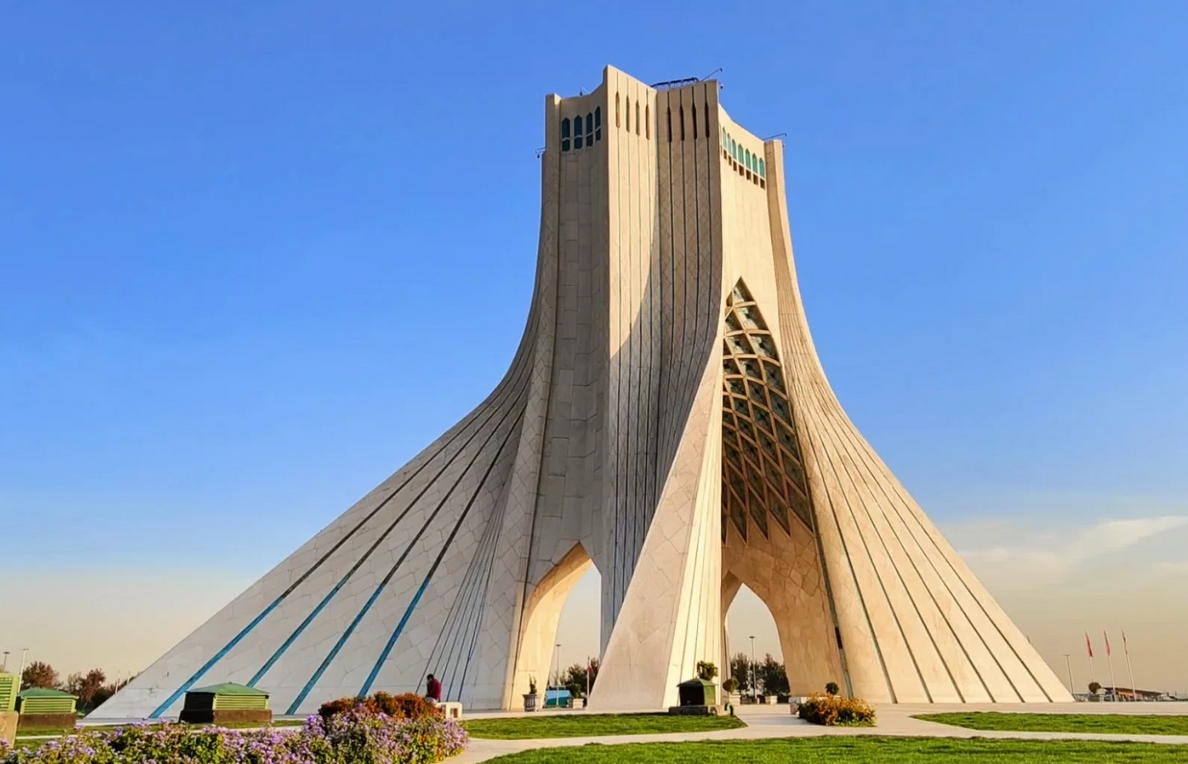 |
| json metadata | {"tags":["iran","steel"],"image":["https://cdn.steemitimages.com/DQmPZ2ZU4wVwhfuNbaTUFjcB3nebhqTcVN9feQUjyVgmDCk/%E4%BC%81%E4%B8%9A%E5%BE%AE%E4%BF%A1%E6%88%AA%E5%9B%BE_20250912093718.jpg"],"links":["https://www.sinosteel-pipe.com/en/blog-5642534725223679.html"],"app":"steemit/0.2","format":"markdown"} |
| Transaction Info | Block #99151033/Trx 8339ad33c2556f7fe25340d326b945e9425df41b |
View Raw JSON Data
{
"trx_id": "8339ad33c2556f7fe25340d326b945e9425df41b",
"block": 99151033,
"trx_in_block": 0,
"op_in_trx": 0,
"virtual_op": 0,
"timestamp": "2025-09-16T12:03:18",
"op": [
"comment",
{
"parent_author": "",
"parent_permlink": "iran",
"author": "sinosteelpipe",
"permlink": "overview-of-iran-s-steel-industry",
"title": "Overview of Iran's steel industry",
"body": "1. Overview of Iran\n\nIslamic Republic of Iran (Persian:جمهوریاسلامیایران, English: The Islamic Republic of Iran, abbreviated as Iran, Iran is an ancient civilization with a history of four or five thousand years. It is located in southwestern Asia and is known as the \"European Land Bridge\" and the \"Eastern and West Air Corridor\". It has an area of 1.645 million square kilometers, a coastline of 2,700 kilometers, and many plateaus in the territory. The east is basins and deserts, with a population of 88.55 million. Iran's GDP in 2023 is approximately US$401.5 billion, and its per capita GDP is US$4,500.\n\nIran has rich oil and gas and mineral resources, and is known as the \"World Mineral Museum\". It ranks fourth in the world in oil reserves and second in the world in natural gas reserves. Zinc ore reserves rank first in the world, with copper ore reserves of 3.3 billion tons, accounting for about 4% of the world's total reserves, ranking third in the world; iron ore 4.7 billion tons, ranking tenth in the world.\n\n2. Overview of Iran's steel\n\nIran is the tenth largest steel producer in the world and the largest steel producer in the Middle East. The crude steel production accounts for more than 50% of the crude steel production in the Middle East. In 2024, Iran's crude steel production will be 31 million tons. \"Vision 2025\" was released in 2004, and the crude steel production capacity will reach 55 million tons by 2025.\n\nIran has rich iron ore resources, ranking tenth in the world. Iranian iron ore contains high silica content and coarse particle size. It is a good ore distribution variety. The direct reduced iron produced by it has strong competitiveness in the international market.\n\nIran is the second largest producer of direct reduction iron in the world (the first is India), with a production of 33.45 million tons, accounting for about one-quarter of the world's total output, and 90% of its direct reduction iron is produced through the Midrex process. Therefore, Iran's steel industry mainly adopts the direct reduction iron-electric furnace (electric arc furnace and induction furnace) process, accounting for about 90% of its total steel output, and only 10% of its capacity adopts the blast furnace-converter process.\n\nThere are nearly 100 steel companies in Iran, and almost all important steel manufacturers in Iran are fully or partly affiliated with the Iranian Mining Development and Reform Organization (IMIDRIO) under the government.\n\nIran's crude steel capacity utilization rate is slightly higher than the global average, but the steel capacity utilization rate is only 44.8%.\n\n3. Iran's major steel enterprises\n\n1. Mobarakeh Steel: Iran's largest steel producer and the largest long material manufacturer in the Middle East. It was founded in 1983 and is headquartered in Tehran. It has an annual production capacity of 11.8 million tons and has multiple production bases, mainly producing hot-rolled coils, cold-rolled coils, coated plates, etc. Their steel output accounts for about 50% of Iran, of which more than 95% are flat materials for automobiles. It also has Saba Steel and Hormuzgan Steel.\n\n2. Esfahan Steel: Founded in 1994, it is headquartered in Isfahan. It mainly produces hot-rolled coil plates, cold-rolled coil plates, coated plates and other products, with an annual production capacity of about 4 million tons. It is the only manufacturer with large blast furnaces, and is also the largest manufacturer of steel structure products in Iran and the largest manufacturer of long materials.\n\n3. Khouzestan Steel: Founded in 1986, it is headquartered in Avas. It mainly produces hot-rolled coils, cold-rolled coils, coated plates, etc., with an annual production capacity of about 5 million tons, occupying an important position in the Iranian steel industry.\n\n4. National Iron and Steel Corporation of Iran (NISCO): Iran's largest wire and bar manufacturer, founded in 1994, headquartered in Shiraz, mainly produces wire and bar products of various specifications, with an annual production capacity of about 3 million tons. It has 5 steel mills under its jurisdiction.\n\n5. South Kaveh Steel: The production capacity is about 2.4 million tons, and it also has a certain position in Iran's steel industry.\n\n6. Iran's Zaland Steel Company (Zisco): In 2021, a blast furnace with a capacity of 1.7 million tons and corresponding converter steelmaking workshop were put into production, gradually making its mark in the steel field.\n\n7. Khorasan Steel Company: Opened in the late 1980s in Khorasanlazavi Province, directly controlled by the Iranian Mining Development and Reform Organization.\n\n4. Overview of Iran's steel import and export\n\n Iran is also a net exporter of steel. In recent years, under normal circumstances, the annual export volume of semi-finished and finished steel is about 10 million tons. The destination countries for Iran's steel exports are mainly in the Middle East, Southeast Asia, Africa and Europe. China imports an average of 10 million tons of iron ore to Iran every year..\n\n In 2024, Iran continued to increase the import of finished steel. The total amount of steel products imported by Iran from China reached US$8.7 billion, with Chinese products accounting for as much as 45%. The plate market accounts for the largest share of the total import tonnage, with annual imports of about 1.5 million tons. Iran imports steel and metal products for construction projects, infrastructure development and manufacturing. Steel beams, steel pipes and coils are one of the main imported products, driving growth in the construction and manufacturing industries.\n\n5. The advantages and challenges of Iranian steel\n\nA: Advantages:\n\n(1) Oil and gas and mineral resources are abundant, most of which can meet production needs and rely less on external minerals, which makes Iran's direct reduction iron (DRI) production cost the lowest in the world (about US$200-250/ton), far lower than that of India (US$300-350/ton), which is dependent on coal.\n\n(2) Iran has many steel plants and obvious production capacity advantages.\n\n(3) Iran's DRI technology originated from the US MIDREX process introduced in the 1970s, but under long-term sanctions, the country has gradually realized technological autonomy. For example, Saba Steel's \"Iranian version of Midrex\" adapts to the characteristics of local raw materials. This process proves that even under the technological blockade, resource + market + policy support can still promote industrial upgrading.\n\nB: Challenge\n\n(1) External sanctions: The long-term sanctions of the United States have restricted exchanges and cooperation between Iranian steel companies and the international market, hindered the introduction of advanced technologies and equipment, and the development of Iran's steel industry has been greatly affected. Despite facing economic sanctions, Iran's steel production has continued to grow, with an average annual growth rate of 6% to 10% since 2008.\n\n(2) Energy supply: The supply restrictions on electricity and natural gas affect the normal production of steel enterprises. Although Iran has abundant iron ore reserves, providing a foundation for the development of the steel industry, the country still faces the problem of supplying water, natural gas and electricity. In order to achieve a production capacity of 55 million tons of crude steel by 2025, Iran's annual steelmaking water consumption exceeds 250 million cubic meters, and natural gas energy consumption will also increase significantly. Since most steel mills in Iran use arc furnace technology to produce steel, this process requires a lot of electricity, and the tight power supply directly affects production capacity\n\n(2) Cybersecurity: In recent years, Iranian steel companies have been hacked many times, resulting in accidents such as suspension of production and affecting production operations.\n\n(3) Market competition: In terms of exports, Iran's long-material products are mainly sold to neighboring countries, while semi-finished steel is exported to the East Asian market. But in East Asia, Iran's semi-finished steel faces fierce competition from exported products from China.\n\n6. Policy guidance for Iran's steel industry\n\n(1) Core industry: The Iranian government regards the steel industry as a core industry that reduces oil dependence and breaks through sanctions.\n\n(2) Suppress imports: In order to curb domestic dependence on imported steel, the government imposes heavy taxes on imported steel and cancels the loan policy of long-term preferential treatment for imported steel.\n\n(3) Industrial upgrading: Accelerate the transformation of old enterprises, and the government provides financial support; implement privatization and transformation of steel enterprises, and build private enterprises with an annual output of 4-5 million tons of steel within 2-3 years. Steel market participants are reducing their dependence on foreign products by increasing capacity utilization. Mobarakeh Steel, the country's leading plates company, is working to expand its product range to provide specific grades of products, planning and producing products previously supplied from abroad, and producing more than 35 products over the past three years, among the main measures.\n\n(4) Attract foreign investment: encourage foreign investment and give preferential policies, with no limit on the investment ratio, allowing foreign capital, profits and other interests to be transferred to Iran in foreign exchange or commodity form in accordance with the provisions of the investment license, and ensuring the freedom of foreign-invested enterprises to use and export goods produced, etc. Investors from the UAE, Türkiye, Afghanistan and Germany have the largest share of investment in Iran projects. China National Societe Group Co., Ltd. (NFC): It is the largest Chinese contractor in Iran's metallurgical engineering field. The cumulative contract amount exceeds US$5 billion, accounting for 40% of the share of Chinese companies in Iran's metallurgical projects. It will play an important role in Iran's metallurgical reconstruction.\n\n7. Projects under construction and expected construction\n\n(1) Sabasteel builds the second direct restore iron plant\n\nOn March 16, 2025, Sabasteel announced that it would invest 200 million euros (approximately US$221 million) to build its second direct restored iron plant to produce hot-pressed iron blocks (HBI). The project is led by the Iranian National Pension Fund and aims to significantly increase the production capacity of Saba Steel and enhance the strength of Iran's steel industry.\n\nSaba Steel is located in Iran's Hormuzgan Province, about 13 kilometers from the Persian Gulf Mining and Metal Industry Special Economic Zone in the Port of Abbas. Its first direct reduction iron plant has a production capacity of 1.3 million tons/year. The new direct reduction iron plant project covers an area of 10 hectares with an annual production capacity of 1.76 million tons. It is expected to create about 400 direct employment opportunities and about 5,000 indirect employment opportunities for the local area. It is reported that the local area is also planning to build a special power plant to meet the power needs of Saba Steel's new factory and other industries in the region.\n\n(2) Torbat Heidariye Iron and Steel Company promotes direct iron restoration project\n\nIran's Torbat Heydariyeh Steel is promoting the construction of the first phase of its new steel plant in Torbat Heydariyeh City, Korrasanlazavi Province, according to a statement from the Mayor of Torbat Heydariyeh City.\n\nAccording to reports, the progress of the physical construction of a direct reduction iron (DRI) module with an annual output of 1.85 million tons has reached 71%. \"The first phase of Torbat Hydariye Steel will be put into production next year (Iranian calendar; March 20, 2025 to March 20, 2026),\" Mukhtaba Saujay told the Iran Student News Agency (ISNA).\n\nIt is reported that in addition to direct reduction of iron modules, the project of Torbat Hydariye Steel also includes the construction of a steelmaking workshop with an annual output of 1.45 million tons and a thin slab continuous casting and rolling (CSP) plant with an annual output of 1.4 million tons. The total investment of the new steel plant is estimated to be Iranian riyals 65 trillion (about US$1.5 billion).\n\n(3) From Iran's Narizgadir Steel Company (NGHSCO)\n\nThe company has officially announced plans to increase the capacity of its direct reduction iron plant in Fars province. This initiative aims to further expand production scale and better meet the needs of domestic and foreign markets.\n\nSpecifically, NGHSCO's capacity improvement plan is divided into two stages. The first phase plans to increase the factory's annual production capacity from the existing 800,000 tons to 1 million tons, which is expected to be realized soon in the future. In the second phase, it is planned to further increase production capacity to 1.2 million tons to cope with the continued growth of the market.\n\n(5) Jahan Foolad Sirjan Steel Company (SJSCO)\n\nJahan Foolad Sirjan Steel (SJSCO) has seen significant growth in production capacity, with the company's factory in Sirjan, Kermann Province, launching its second direct reduction iron plant of 1.05 million ton/year and a third direct reduction iron plant of 1.76 million ton/year in May 2024 and March 2025, respectively. So far, the company's direct reduction iron production capacity has reached 3.77 million tons/year.\n\n(6) In 2024/2025, three provincial steel plants in Iran have good development momentum after completing the second phase of construction, and the arc furnace steelmaking workshop is put into operation. Nerizgadir Steel Company (NGHSCO) put into production of a steelmaking workshop with an annual output of 1 million tons in October 2024; Ghaenat Steel Company produced the first batch of steel billets through its six-circulating casting machine (capacity of 800,000 tons/year) at the end of January 2025; Shadegan Steel Company put into production of a steelmaking workshop based on a 140-ton arc furnace with a production capacity of 800,000 tons/year in March 2025. Each steel plant also has a direct reduction iron factory based on PERED technology and a production capacity of 800,000 tons per year.\n\n(7) In July 2024, Faraz Foulad Dena Company (Dana Steel) opened a steelmaking workshop based on two 15-ton induction furnaces with a production capacity of 100,000 tons per year in Lazi Industrial City, Isfahan Province.\n\n(8) Isfahan Iron and Steel Company (ESCO) has completed the refining capacity expansion project by equipping its 3.6 million tons/year converter steelmaking workshop with a new 130 tons No. 3 ladle refining furnace, further enhancing the crude steel production capacity. Overall, Iran's steel production capacity increased by 5.6%.\n\n(9) Sarmad Abarkouh Iron and Steel launched a 450,000 tons/year wire rolling mill, increasing Iran's long-material rolling capacity by 1.3%. The rolling mill was put into production in September 2024 and can produce 5.5-16 mm of rebar and wire, which not only doubles the total rolling capacity of long materials, but also expands the product variety.\n\n(10) West Asia Steel Company (WASCO) has opened its third cold rolling mill at its Salafchegan plant in Kum Province, increasing the production capacity of Iran's cold rolling coils. After the addition of this unit, WASCO's cold-rolled coil production capacity has been increased to 800,000 tons/year. In addition, WASCO is building a 250,000 tons/year galvanized and color coating joint production line, which is expected to be put into production by the end of 2025.\n\n(11) At the end of June 2024, Foulad Yar Group officially launched a 260,000-ton annual hollow profile production line.\n\nThe completion of the above projects will increase the steel production capacity of Iran, among which the iron concentrate production capacity will be increased to 71 million tons/year, the pellet mineral production capacity will be increased to 74 million tons/year, the HBI/DRI production capacity will be increased to nearly 47 million tons/year, the crude steel production capacity will be 51.2 million tons/year, the long material production capacity will be 34.5 million tons/year, and the cold-rolled coil production capacity will be 5 million tons/year. It is inferred from this that Iran is about to achieve the crude steel production capacity target of 55 million tons/year in the \"Vision 2025\".\n\n8. Iran's steel prospects are good\n\n (1) Most of the young people:Median age is about 32 years old, the population under 30 accounts for more than 45%, and belongs to a \"young society\"\n\n (2) Large production capacity: many steel mills and strong technical upgrade capabilities.\n\n (3) Rich oil and gas and mineral resources: Rich resources can achieve the development of the entire steel industry chain.\n\n (4) Price advantage: Rich resources and young labor make production costs lower.\n\n (5) The Middle East market demand is strong:\n\nThe overall crude steel in the Middle East is in a state of supply and demand. With the vigorous development of infrastructure construction and downstream manufacturing in countries in the Middle East, the demand for steel consumption continues to increase. According to data from the World Steel Association, the apparent consumption of crude steel in the Middle East in 2023 was 58.234 million tons, and the major steel-producing and consumer countries Iran, Saudi Arabia and the UAE accounted for 36.09%, 20.75% and 13.15% respectively. Among them, Iran's apparent consumption of crude steel has always remained ahead. Although it showed a slight decline in 2020, it resumed growth since 21 and reached its highest point in 2023 of 21.018 million tons, a year-on-year increase of 2.5%; Saudi Arabia's crude steel consumption has been highly volatile in recent years, down 6% year-on-year to 12.086 million tons in 2023; although the UAE has the lowest consumption among the three countries, its growth in 23 years is the highest among the three countries, with a year-on-year surge of 1631% to 7.657 million tons.\n\nAs the UAE steel industry focuses more on meeting domestic construction needs and downstream processing products, coupled with the lack of raw materials, high dependence on imports of iron ore and scrap steel, the production cost of crude steel is relatively high. In recent years, the overall steel production of UAE has grown steadily, with the growth of steel bars and hot-rolled steel production particularly prominently, becoming the core driving force for the development of the industry. From 2020 to 2021, driven by the post-epidemic economic stimulus policies, steel production ushered in a period of rapid recovery, with the growth rate of major varieties significantly increasing and reaching a peak in 2022, with steel bar production reaching a year-on-year surge of 102.78%, and hot-rolled production increasing by 84.11% year-on-year.\n\nSince 2020, Saudi Arabia's steel production has grown rapidly, and the construction of large-scale projects has entered a period of concentrated construction in 22 years, and the demand for construction steel has reached a temporary peak. According to the International Monetary Fund (IMF), Saudi Arabia's GDP growth rate will reach 1.5% in 2024, and it is expected to reach 4.6% in 2025. In 2025, Saudi Arabia's \"Vision 2030\" will still be the core driving force for the development of the steel industry. To achieve this vision, Saudi Arabia will invest hundreds of billions of dollars to develop large-scale tourism, comprehensive use and leisure development projects nationwide. Currently, there are 14 super-large projects under development in Saudi Arabia (including the NEOM project, the Roushan economic housing construction project, Medina Holdings and Saudi Entertainment Complex (SEVEN), etc.), of which the largest project is worth US$500 billion, involving the construction of a new futuristic city in northwest Saudi Arabia, namely the \"NEOM project\". The project occupies a core position in Saudi Arabia's \"Vision 2030\". According to estimates by many foreign media, the actual cost may exceed US$1.5 trillion, which is currently the largest construction project in the world. Manar Al Moneef, chief investment officer of NEOM, pointed out that the project is consuming one-fifth of global steel production, and demand in logistics accounts for 5% of the global logistics market.\n\nSaudi Arabia currently has more than $1.15 trillion in future projects in progress, making it the largest market among all the GCC member states. Gulf countries have invested heavily in the field of infrastructure construction, and the demand gap in the Gulf region's building materials market in the future is relatively large. According to statistics, the Saudi building materials market is still dependent on foreign imports, with a proportion of up to 40-45%.\nSinosteel Stainless Steel Pipe is one of largest Stainless Steel Pipe and Special Alloy Pipe manufacturer in china.\nMore info : https://www.sinosteel-pipe.com/en/blog-5642534725223679.html\n",
"json_metadata": "{\"tags\":[\"iran\",\"steel\"],\"image\":[\"https://cdn.steemitimages.com/DQmPZ2ZU4wVwhfuNbaTUFjcB3nebhqTcVN9feQUjyVgmDCk/%E4%BC%81%E4%B8%9A%E5%BE%AE%E4%BF%A1%E6%88%AA%E5%9B%BE_20250912093718.jpg\"],\"links\":[\"https://www.sinosteel-pipe.com/en/blog-5642534725223679.html\"],\"app\":\"steemit/0.2\",\"format\":\"markdown\"}"
}
]
}sinosteelpipefollowed @songshunsteelbuy2025/09/10 08:28:15
sinosteelpipefollowed @songshunsteelbuy
2025/09/10 08:28:15
| required auths | [] |
| required posting auths | ["sinosteelpipe"] |
| id | follow |
| json | ["follow",{"follower":"sinosteelpipe","following":"songshunsteelbuy","what":["blog",""]}] |
| Transaction Info | Block #98974334/Trx 9f23be5bd9eb59389b6fb2908f4a1e920bec5d96 |
View Raw JSON Data
{
  "trx_id": "9f23be5bd9eb59389b6fb2908f4a1e920bec5d96",
  "block": 98974334,
  "trx_in_block": 3,
  "op_in_trx": 0,
  "virtual_op": 0,
  "timestamp": "2025-09-10T08:28:15",
  "op": [
    "custom_json",
    {
      "required_auths": [],
      "required_posting_auths": [
        "sinosteelpipe"
      ],
      "id": "follow",
      "json": "[\"follow\",{\"follower\":\"sinosteelpipe\",\"following\":\"songshunsteelbuy\",\"what\":[\"blog\",\"\"]}]"
    }
  ]
}2025/09/10 08:27:54
2025/09/10 08:27:54
| parent author | |
| parent permlink | steel |
| author | sinosteelpipe |
| permlink | from-january-to-august-china-s-import-and-export-information-of-steel-rare-earths-automobiles-electrical-appliances-etc |
| title | From January to August, China's import and export information of steel, rare earths, automobiles, electrical appliances, etc. |
| body | 1. Rare Earth Data from the General Administration of Customs on September 8, 2025 showed that China exported 5791.8 tons of rare earths in August 2025; the cumulative exports from January to August were 44,355.4 tons, an increase of 14.5% year-on-year. In August, China imported 5,020.8 tons of rare earths; from January to August, a total of 72,034.2 tons were imported, a year-on-year decrease of 21.4%. 2. Unforged copper and copper materials In August 2025, China imported 425,000 tons of unforged copper and copper materials; from January to August, China imported 3.536 million tons of unforged copper and copper materials, a year-on-year decrease of 2.1%. In August 2025, China imported 2.759 million tons of copper ore sand and its concentrate; from January to August, China imported 20.054 million tons of copper ore sand and its concentrate, an increase of 7.9% year-on-year. 3. Ship China exported 647 ships in August 2025; from January to August, a total of 4,719 ships were exported, a total of 24.4% year-on-year. 4. Steel In August 2025, China exported 9.51 million tons of steel, a decrease of 326,000 tons from the previous month, a decrease of 3.3% month-on-month; from January to August, a total of 77.49 million tons of steel were exported, a year-on-year increase of 10.0%. In August, China imported 500,000 tons of steel, an increase of 48,000 tons from the previous month, an increase of 10.6% month-on-month; from January to August, a total of 3.977 million tons of steel were imported, a decrease of 14.1% year-on-year. 5. Iron ore sand and its concentrate In August, China imported 105.225 million tons of iron ore and its concentrate, an increase of 602,000 tons from the previous month, an increase of 0.6% month-on-month; from January to August, a total of 801.618 million tons of iron ore and its concentrate were imported, a decrease of 1.6% year-on-year. 6. Coal and lignite In August, China imported 42.737 million tons of coal and lignite, an increase of 7.128 million tons from the previous month, an increase of 20.0% month-on-month; from January to August, a total of 299.937 million tons of coal and lignite were imported, a decrease of 12.2% year-on-year. 7. Household appliances In August 2025, China exported 403.8 million household appliances; from January to August, a total of 299.3412 million units were exported, an increase of 1.4% year-on-year. 8. Cars In August 2025, China exported 763,000 vehicles; from January to July, a total of 4.928 million vehicles were exported, an increase of 20.5% year-on-year. 9. Unforged aluminum and aluminum materials In August 2025, China exported 534,000 tons of unforged aluminum and aluminum; from January to August, a total of 3.996 million tons were exported, a year-on-year decrease of 8.2%. More: https://www.sinosteel-pipe.com/en/blog-5641437412057439.html  |
| json metadata | {"tags":["steel","china","rareearth"],"image":["https://cdn.steemitimages.com/DQmY2ERFomVNFtMZixdW8tBJMCL72XFVG5jYW32bKvRe4LF/%E5%BE%AE%E4%BF%A1%E6%88%AA%E5%9B%BE_20250811163851.png"],"links":["https://www.sinosteel-pipe.com/en/blog-5641437412057439.html"],"app":"steemit/0.2","format":"markdown"} |
| Transaction Info | Block #98974327/Trx 43cded697b03dab1f2e349a113afd012808085bc |
View Raw JSON Data
{
"trx_id": "43cded697b03dab1f2e349a113afd012808085bc",
"block": 98974327,
"trx_in_block": 0,
"op_in_trx": 0,
"virtual_op": 0,
"timestamp": "2025-09-10T08:27:54",
"op": [
"comment",
{
"parent_author": "",
"parent_permlink": "steel",
"author": "sinosteelpipe",
"permlink": "from-january-to-august-china-s-import-and-export-information-of-steel-rare-earths-automobiles-electrical-appliances-etc",
"title": "From January to August, China's import and export information of steel, rare earths, automobiles, electrical appliances, etc.",
"body": "1. Rare Earth\n\nData from the General Administration of Customs on September 8, 2025 showed that China exported 5791.8 tons of rare earths in August 2025; the cumulative exports from January to August were 44,355.4 tons, an increase of 14.5% year-on-year.\n\nIn August, China imported 5,020.8 tons of rare earths; from January to August, a total of 72,034.2 tons were imported, a year-on-year decrease of 21.4%.\n\n2. Unforged copper and copper materials\n\nIn August 2025, China imported 425,000 tons of unforged copper and copper materials; from January to August, China imported 3.536 million tons of unforged copper and copper materials, a year-on-year decrease of 2.1%.\n\nIn August 2025, China imported 2.759 million tons of copper ore sand and its concentrate; from January to August, China imported 20.054 million tons of copper ore sand and its concentrate, an increase of 7.9% year-on-year.\n\n3. Ship\n\nChina exported 647 ships in August 2025; from January to August, a total of 4,719 ships were exported, a total of 24.4% year-on-year.\n\n4. Steel\n\nIn August 2025, China exported 9.51 million tons of steel, a decrease of 326,000 tons from the previous month, a decrease of 3.3% month-on-month; from January to August, a total of 77.49 million tons of steel were exported, a year-on-year increase of 10.0%.\n\nIn August, China imported 500,000 tons of steel, an increase of 48,000 tons from the previous month, an increase of 10.6% month-on-month; from January to August, a total of 3.977 million tons of steel were imported, a decrease of 14.1% year-on-year.\n\n5. Iron ore sand and its concentrate\n\nIn August, China imported 105.225 million tons of iron ore and its concentrate, an increase of 602,000 tons from the previous month, an increase of 0.6% month-on-month; from January to August, a total of 801.618 million tons of iron ore and its concentrate were imported, a decrease of 1.6% year-on-year.\n\n6. Coal and lignite\n\nIn August, China imported 42.737 million tons of coal and lignite, an increase of 7.128 million tons from the previous month, an increase of 20.0% month-on-month; from January to August, a total of 299.937 million tons of coal and lignite were imported, a decrease of 12.2% year-on-year.\n\n7. Household appliances\n\nIn August 2025, China exported 403.8 million household appliances; from January to August, a total of 299.3412 million units were exported, an increase of 1.4% year-on-year.\n\n8. Cars\n\nIn August 2025, China exported 763,000 vehicles; from January to July, a total of 4.928 million vehicles were exported, an increase of 20.5% year-on-year.\n\n9. Unforged aluminum and aluminum materials\n\nIn August 2025, China exported 534,000 tons of unforged aluminum and aluminum; from January to August, a total of 3.996 million tons were exported, a year-on-year decrease of 8.2%.\n\nMore: https://www.sinosteel-pipe.com/en/blog-5641437412057439.html\n\n\n",
"json_metadata": "{\"tags\":[\"steel\",\"china\",\"rareearth\"],\"image\":[\"https://cdn.steemitimages.com/DQmY2ERFomVNFtMZixdW8tBJMCL72XFVG5jYW32bKvRe4LF/%E5%BE%AE%E4%BF%A1%E6%88%AA%E5%9B%BE_20250811163851.png\"],\"links\":[\"https://www.sinosteel-pipe.com/en/blog-5641437412057439.html\"],\"app\":\"steemit/0.2\",\"format\":\"markdown\"}"
}
]
}sinosteelpipepublished a new post: top-10-private-stainless-steel-pipe-enterprises-in-china2025/08/28 10:56:03
sinosteelpipepublished a new post: top-10-private-stainless-steel-pipe-enterprises-in-china
2025/08/28 10:56:03
| parent author | |
| parent permlink | sinosteel-pipe |
| author | sinosteelpipe |
| permlink | top-10-private-stainless-steel-pipe-enterprises-in-china |
| title | Top 10 Private Stainless Steel Pipe Enterprises in China |
| body | 1、久立 Jiuli 成立于1987年,专业生产工业用不锈钢及特种合金管材、双金属复合管材管件的综合型企业,上市公司。作为知名不锈钢管品牌,久立建有世界先进水平的无缝管生产线和FFX成型、JCO成型等焊接管生产线,成为国内数百家大中型企业的合格供应商,同时产品远销全球70余个国家和地区,在业内有着良好的口碑。 Established in 1987, it is a comprehensive enterprise specializing in the production of industrial stainless steel and special alloy pipes, bimetallic composite pipes and fittings. As a well-known stainless steel pipe brand, the listed company's products are exported to more than 70 countries and regions around the world, and have a good reputation in the industry. 2、青山钢管 Tsingshan Steel Pipe 青山钢管有限公司成立于2003年,是一家集研发、生产和销售一体化的企业,主要产品包括不锈钢无缝钢管、焊管和管件。 公司注册资本3.2亿元,生产基地坐落于--浙江省丽水市青田县工业区和福建省宁德市周宁县工业区,总占地320亩,员工1000多人。 Tsingshan Steel Pipe Co., Ltd. was established in 2003 and is an integrated enterprise that integrates research and development, production, and sales. Its main products include stainless steel seamless steel pipes, welded pipes, and fittings. The registered capital of the company is 320 million yuan, and the production bases are located in Qingtian County Industrial Zone, Lishui City, Zhejiang Province and Zhouning County Industrial Zone, Ningde City, Fujian Province, covering a total area of 320 acres and employing more than 1000 people. 3、中纲不锈管业 Sinosteel Pipe Sinosteel Pipe是一家致力于研发、生产、销售工业用不锈钢及特种合金管道、管配件、复合管等管道系列产品的国家级高新技术企业。年生产能力20万吨,焊管15万吨,无缝管6万吨。产品销往50多个国家和地区,占地500多亩,焊管厂占地300多亩,无缝管厂占地200多亩。 Sinosteel Stainless Steel Pipe is a national high-tech enterprise dedicated to the research and development, production, and sales of industrial stainless steel and special alloy pipes, pipe fittings, composite pipes, and other pipeline series products. The annual production capacity is 200000 tons, with 150000 tons of welded pipes and 60000 tons of seamless pipes. The products are sold to more than 50 countries and regions, covering an area of over 500 acres. The welded pipe factory covers an area of over 300 acres, and the seamless pipe factory covers an area of over 200 acres. 4、武进 Jiangsu Wujin 始创于1987年,2001年成立现公司,不锈钢管件领域的高新技术企业,于2016年上市,从事不锈钢及特种合金无缝管、焊接管和管件、法兰产品的研发、制造和销售。员工1500多人。 Founded in 1987 and established in 2001, the current company is a high-tech enterprise in the field of stainless steel pipe fittings. It went public in 2016 and is engaged in the research and development, manufacturing, and sales of stainless steel and special alloy seamless pipes, welded pipes and fittings, and flange products. More than 1500 employees. 5、德威 Zhejiang Dewei 浙江德威不锈钢管业股份有限公司创始于1986年,一家专业加工、制造大、中、小不锈钢工业焊接钢管、不锈钢无缝管、不锈钢管件及双金属复合管的高新技术企业,占地面积30万多平方米,年产不锈钢焊管10万吨以上,管件500万件。 Zhejiang Dewei Stainless Steel Pipe Industry Co., Ltd. was founded in 1986. It is a high-tech enterprise specializing in the processing and manufacturing of large, medium, and small stainless steel industrial welded steel pipes, stainless steel seamless pipes, stainless steel fittings, and bimetallic composite pipes. The company covers an area of over 300000 square meters and produces over 100000 tons of stainless steel welded pipes and 5 million fittings annually. 6、浙江宝丰 (Zhejiang BaoFeng) 浙江宝丰特材股份有限公司(原:宝丰钢业集团有限公司),创建于2000年,现有员工900余人,中国规模较大的不锈钢盘管生产企业和不锈钢管道制造企业之一,致力于不锈钢和高温镍基合金管材研究、开发、制造加工、材料推广和销售,产品涵盖不锈钢无缝管、不锈钢焊接钢管 Zhejiang Baofeng Special Materials Co., Ltd. (formerly known as Baofeng Steel Industry Group Co., Ltd.), founded in 2000, currently has more than 900 employees. It is one of the largest stainless steel coil production enterprises and stainless steel pipeline manufacturing enterprises in China, dedicated to the research, development, manufacturing and processing, material promotion and sales of stainless steel and high-temperature nickel based alloy pipe materials. Its products include stainless steel seamless pipes and stainless steel welded steel pipes 7、Shang Shang Desheng 上上德盛集团始创于2001年,是一家具设计、开发、制造经验丰富的大型不锈钢无缝钢管、焊管、管件的专业生产销售企业,在中国不锈钢管行业享有声誉。 Shangshang Desheng Group was founded in 2001 and is a professional production and sales enterprise with rich experience in furniture design, development, and manufacturing of large-scale stainless steel seamless steel pipes, welded pipes, and fittings. It enjoys a reputation in the Chinese stainless steel pipe industry. 8、华迪钢业 huadi 华迪钢业成立于1992年,是一家集冶炼、轧钢、穿孔、冷拔冷轧、检测、国际国内贸易为一体的不锈钢无缝管生产的大型民营企业。年产不锈钢棒35000吨-40000吨,年产不锈钢无缝管达25000多吨。 Huadi Steel Industry was established in 1992 and is a large private enterprise specializing in the production of stainless steel seamless pipes, integrating smelting, steel rolling, perforation, cold drawing and rolling, testing, and international and domestic trade. The annual production of stainless steel rods is 35000 to 40000 tons, and the annual production of stainless steel seamless pipes is over 25000 tons. 9、永上特材 Zhejiang Yongshang 浙江永上特材有限公司是一家不锈钢管制造企业,生产奥氏体不锈钢、超级奥氏不锈钢、双相钢、超级双相钢、耐蚀合金、镍基合金等产品。集无缝钢管、焊管、管件的生产、销售以及高新产品研发为一体。公司拥有20条无缝生产线,20条高速轧机生产线,3条穿孔生产线,5条焊管生产线。 Zhejiang Yongshang Special Materials Co., Ltd. is a stainless steel pipe manufacturing enterprise, producing austenitic stainless steel, super austenitic stainless steel, duplex steel, super duplex steel, corrosion-resistant alloys, nickel based alloys and other products. Integrating the production, sales, and high-tech product research and development of seamless steel pipes, welded pipes, and fittings. The company has 20 seamless production lines, 20 high-speed rolling mill production lines, 3 perforation production lines, and 5 welded pipe production lines. 10、华新丽华 Walsin Lihwa 中国台湾知名企业,公司创立于1966年,1972年于臺湾证券交易所挂牌上市,2024年合併营业额约新臺币1,793亿元,拥有员工约一万一千人。不锈钢事业生产不锈钢钢胚、盘元、棒材、无缝钢管及高镍合金、镍基超合金等各类高性能钢种。 It is a well-known enterprise in Taiwan, China, China. The company was founded in 1966 and listed on the Taiwan Stock Exchange in 1972. In 2024, it will have a combined turnover of about NT $179.3 billion and about 11000 employees. The stainless steel industry produces various high-performance steel grades such as stainless steel billets, plates, bars, seamless steel pipes, high nickel alloys, nickel based superalloys, etc. 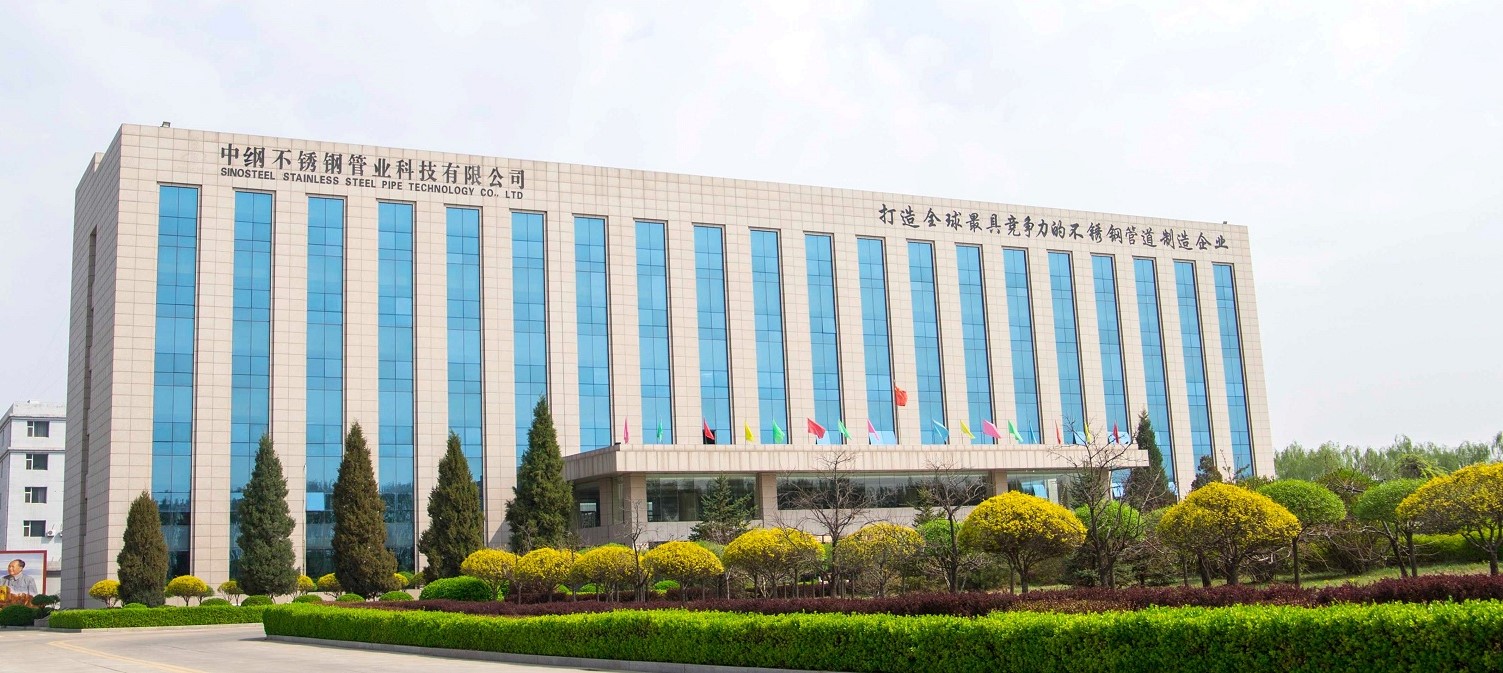 |
| json metadata | {"tags":["sinosteel-pipe","stainless","steel","pipe"],"image":["https://cdn.steemitimages.com/DQmSr7jyYppL5iv6nuoeHmNNnLd4F2qz2UBpZ8x5ASuHHyg/5397145633951198_2024_05_39675cdb5edf0591dbb3018c0522a95f.jpeg"],"app":"steemit/0.2","format":"markdown"} |
| Transaction Info | Block #98603901/Trx 09366e23f7f3b7acce241f09b1005e1c0d02bafc |
View Raw JSON Data
{
"trx_id": "09366e23f7f3b7acce241f09b1005e1c0d02bafc",
"block": 98603901,
"trx_in_block": 0,
"op_in_trx": 0,
"virtual_op": 0,
"timestamp": "2025-08-28T10:56:03",
"op": [
"comment",
{
"parent_author": "",
"parent_permlink": "sinosteel-pipe",
"author": "sinosteelpipe",
"permlink": "top-10-private-stainless-steel-pipe-enterprises-in-china",
"title": "Top 10 Private Stainless Steel Pipe Enterprises in China",
"body": "1、久立 Jiuli\n成立于1987年,专业生产工业用不锈钢及特种合金管材、双金属复合管材管件的综合型企业,上市公司。作为知名不锈钢管品牌,久立建有世界先进水平的无缝管生产线和FFX成型、JCO成型等焊接管生产线,成为国内数百家大中型企业的合格供应商,同时产品远销全球70余个国家和地区,在业内有着良好的口碑。\nEstablished in 1987, it is a comprehensive enterprise specializing in the production of industrial stainless steel and special alloy pipes, bimetallic composite pipes and fittings. As a well-known stainless steel pipe brand, the listed company's products are exported to more than 70 countries and regions around the world, and have a good reputation in the industry.\n2、青山钢管 Tsingshan Steel Pipe\n青山钢管有限公司成立于2003年,是一家集研发、生产和销售一体化的企业,主要产品包括不锈钢无缝钢管、焊管和管件。\n公司注册资本3.2亿元,生产基地坐落于--浙江省丽水市青田县工业区和福建省宁德市周宁县工业区,总占地320亩,员工1000多人。\nTsingshan Steel Pipe Co., Ltd. was established in 2003 and is an integrated enterprise that integrates research and development, production, and sales. Its main products include stainless steel seamless steel pipes, welded pipes, and fittings.\nThe registered capital of the company is 320 million yuan, and the production bases are located in Qingtian County Industrial Zone, Lishui City, Zhejiang Province and Zhouning County Industrial Zone, Ningde City, Fujian Province, covering a total area of 320 acres and employing more than 1000 people.\n3、中纲不锈管业 Sinosteel Pipe\nSinosteel Pipe是一家致力于研发、生产、销售工业用不锈钢及特种合金管道、管配件、复合管等管道系列产品的国家级高新技术企业。年生产能力20万吨,焊管15万吨,无缝管6万吨。产品销往50多个国家和地区,占地500多亩,焊管厂占地300多亩,无缝管厂占地200多亩。\nSinosteel Stainless Steel Pipe is a national high-tech enterprise dedicated to the research and development, production, and sales of industrial stainless steel and special alloy pipes, pipe fittings, composite pipes, and other pipeline series products. The annual production capacity is 200000 tons, with 150000 tons of welded pipes and 60000 tons of seamless pipes. The products are sold to more than 50 countries and regions, covering an area of over 500 acres. The welded pipe factory covers an area of over 300 acres, and the seamless pipe factory covers an area of over 200 acres.\n4、武进 Jiangsu Wujin\n始创于1987年,2001年成立现公司,不锈钢管件领域的高新技术企业,于2016年上市,从事不锈钢及特种合金无缝管、焊接管和管件、法兰产品的研发、制造和销售。员工1500多人。\nFounded in 1987 and established in 2001, the current company is a high-tech enterprise in the field of stainless steel pipe fittings. It went public in 2016 and is engaged in the research and development, manufacturing, and sales of stainless steel and special alloy seamless pipes, welded pipes and fittings, and flange products. More than 1500 employees.\n5、德威 Zhejiang Dewei\n浙江德威不锈钢管业股份有限公司创始于1986年,一家专业加工、制造大、中、小不锈钢工业焊接钢管、不锈钢无缝管、不锈钢管件及双金属复合管的高新技术企业,占地面积30万多平方米,年产不锈钢焊管10万吨以上,管件500万件。\nZhejiang Dewei Stainless Steel Pipe Industry Co., Ltd. was founded in 1986. It is a high-tech enterprise specializing in the processing and manufacturing of large, medium, and small stainless steel industrial welded steel pipes, stainless steel seamless pipes, stainless steel fittings, and bimetallic composite pipes. The company covers an area of over 300000 square meters and produces over 100000 tons of stainless steel welded pipes and 5 million fittings annually.\n6、浙江宝丰 (Zhejiang BaoFeng)\n浙江宝丰特材股份有限公司(原:宝丰钢业集团有限公司),创建于2000年,现有员工900余人,中国规模较大的不锈钢盘管生产企业和不锈钢管道制造企业之一,致力于不锈钢和高温镍基合金管材研究、开发、制造加工、材料推广和销售,产品涵盖不锈钢无缝管、不锈钢焊接钢管\nZhejiang Baofeng Special Materials Co., Ltd. (formerly known as Baofeng Steel Industry Group Co., Ltd.), founded in 2000, currently has more than 900 employees. It is one of the largest stainless steel coil production enterprises and stainless steel pipeline manufacturing enterprises in China, dedicated to the research, development, manufacturing and processing, material promotion and sales of stainless steel and high-temperature nickel based alloy pipe materials. Its products include stainless steel seamless pipes and stainless steel welded steel pipes\n7、Shang Shang Desheng\n上上德盛集团始创于2001年,是一家具设计、开发、制造经验丰富的大型不锈钢无缝钢管、焊管、管件的专业生产销售企业,在中国不锈钢管行业享有声誉。\nShangshang Desheng Group was founded in 2001 and is a professional production and sales enterprise with rich experience in furniture design, development, and manufacturing of large-scale stainless steel seamless steel pipes, welded pipes, and fittings. It enjoys a reputation in the Chinese stainless steel pipe industry.\n\n8、华迪钢业 huadi\n华迪钢业成立于1992年,是一家集冶炼、轧钢、穿孔、冷拔冷轧、检测、国际国内贸易为一体的不锈钢无缝管生产的大型民营企业。年产不锈钢棒35000吨-40000吨,年产不锈钢无缝管达25000多吨。\nHuadi Steel Industry was established in 1992 and is a large private enterprise specializing in the production of stainless steel seamless pipes, integrating smelting, steel rolling, perforation, cold drawing and rolling, testing, and international and domestic trade. The annual production of stainless steel rods is 35000 to 40000 tons, and the annual production of stainless steel seamless pipes is over 25000 tons.\n\n9、永上特材 Zhejiang Yongshang \n浙江永上特材有限公司是一家不锈钢管制造企业,生产奥氏体不锈钢、超级奥氏不锈钢、双相钢、超级双相钢、耐蚀合金、镍基合金等产品。集无缝钢管、焊管、管件的生产、销售以及高新产品研发为一体。公司拥有20条无缝生产线,20条高速轧机生产线,3条穿孔生产线,5条焊管生产线。\nZhejiang Yongshang Special Materials Co., Ltd. is a stainless steel pipe manufacturing enterprise, producing austenitic stainless steel, super austenitic stainless steel, duplex steel, super duplex steel, corrosion-resistant alloys, nickel based alloys and other products. Integrating the production, sales, and high-tech product research and development of seamless steel pipes, welded pipes, and fittings. The company has 20 seamless production lines, 20 high-speed rolling mill production lines, 3 perforation production lines, and 5 welded pipe production lines.\n\n10、华新丽华 Walsin Lihwa\n中国台湾知名企业,公司创立于1966年,1972年于臺湾证券交易所挂牌上市,2024年合併营业额约新臺币1,793亿元,拥有员工约一万一千人。不锈钢事业生产不锈钢钢胚、盘元、棒材、无缝钢管及高镍合金、镍基超合金等各类高性能钢种。\n\nIt is a well-known enterprise in Taiwan, China, China. The company was founded in 1966 and listed on the Taiwan Stock Exchange in 1972. In 2024, it will have a combined turnover of about NT $179.3 billion and about 11000 employees. The stainless steel industry produces various high-performance steel grades such as stainless steel billets, plates, bars, seamless steel pipes, high nickel alloys, nickel based superalloys, etc.\n\n\n",
"json_metadata": "{\"tags\":[\"sinosteel-pipe\",\"stainless\",\"steel\",\"pipe\"],\"image\":[\"https://cdn.steemitimages.com/DQmSr7jyYppL5iv6nuoeHmNNnLd4F2qz2UBpZ8x5ASuHHyg/5397145633951198_2024_05_39675cdb5edf0591dbb3018c0522a95f.jpeg\"],\"app\":\"steemit/0.2\",\"format\":\"markdown\"}"
}
]
}sinosteelpipepublished a new post: overview-of-brazil-s-steel-industry2025/08/25 05:49:27
sinosteelpipepublished a new post: overview-of-brazil-s-steel-industry
2025/08/25 05:49:27
| parent author | |
| parent permlink | steel |
| author | sinosteelpipe |
| permlink | overview-of-brazil-s-steel-industry |
| title | Overview of Brazil's steel industry |
| body | 1. Overview of Brazil The Federative Republic of Brazil (Portuguese: República Federativa do Brasil) is the largest country in Latin America. The capital is Brasilia. Portuguese is the official language. The total land area is 8.5104 million square kilometers and the population is 203 million. Brazil ranks first in Latin America and tenth in the world (2024). With developed agriculture and animal husbandry, it is the main producer and exporter of a variety of agricultural products. The output value of the service industry accounts for nearly 60% of the GDP, and the financial industry is relatively developed. Brazil has a relatively complete industrial system and a strong industrial foundation. The industries such as steel, automobiles, shipbuilding, petroleum, chemicals, electricity, and shoemaking are relatively developed, and the civil regional aircraft manufacturing and biofuel industries are at the world's leading level. The GDP in 2024 will reach 11.7 trillion reais (about 2 trillion US dollars). Brazil's 29 mineral reserves include niobium, manganese, titanium, bauxite, lead, tin, iron, and uranium. Niobium ore reserves have been proven to be 4.559 million tons, and the output accounts for more than 90% of the world's total output. It has proven iron ore reserves of 33.3 billion tons, accounting for 9.8% of the world, ranking fifth in the world and second in the world in production. The proven oil reserves are 15.3 billion barrels, ranking 15th in the world and second in South America (second only to Venezuela). Since the end of 2007, multiple extra-large subsalt oil and gas fields have been discovered along the coast, with expected reserves of 50 billion to 150 billion barrels, and are expected to enter the top ten oil storage countries in the world. 2. Overview of Brazilian steel Brazil is the ninth largest steel producer in the world and the largest steel producer in Latin America. It occupies an important position in the global steel industry. It has proven iron ore reserves of 33.3 billion tons, accounting for 9.8% of the world, ranking fifth in the world and second in the world in production. The crude steel output will be 34.1 million tons in 2022, the crude steel output will be 31.8 million tons in 2023, and the crude steel output will be 33.8 million tons in 2024. Voltaretonda is an important steel industrial city in the state of Rio de Janeiro, Brazil, located at the bend of the South Paraiba River. The city developed rapidly due to the establishment of a state-owned steel plant in 1941, and has been expanded many times to become the largest steel production base in Latin America. Its industrial development benefited from its geographical advantages in its proximity to mineral resources and the two major consumer markets, forming a steel industry cluster with Brazilian Iron and Steel Corporation (CSN) as its core. Achieve annual crude steel production capacity of more than 6 million tons and rolled product production capacity of 6 million tons. It adopts multi-furnace continuous ingot technology, and its products cover slabs, hot-rolled coils, cold-rolled sheets, etc., and are used in the fields of automobile manufacturing and construction engineering. It has iron ore self-mining capacity and port transportation system to form a complete mining-smelting-processing-logistics industry chain. Brazil's annual steel imports are more than 5 million tons and its annual exports are about 11 million tons. Brazil's domestic steel sales are about 20 million tons. The United States has always been the main destination for Brazil's pig iron and steel exports, accounting for about 40% of the exports to the United States. China is currently Brazil's largest steel importer. In the first quarter of 2025, Brazil imported 1.096 million tons of steel products from China, and the steel products imported from China are expected to exceed 3 million tons of annually. Brazil's per capita steel consumption has stagnated in recent years and is at a low level of international standards, with 110 kg in 2024. In 2024, the global per capita consumption of finished steel is 214.7 kg. 3. Market size and demand of Brazilian steel The size of Brazil's steel market will reach US$16.56 billion in 2024. CAGR predicts that the annual growth rate will be around 4% from 2025 to 2033, and the market is expected to reach US$24.85 billion by 2033. During the period 2025-2033. High domestic demand in important industries such as infrastructure, automobiles and construction is one of the market drivers that drive expansion. In addition, substantial investment in green steel manufacturing and technology is promoting greener practices, which helps actively expand Brazil's steel market share. One of the main factors driving Brazil’s steel market is the rapid growth of the country’s construction and infrastructure sectors. With the acceleration of urbanization, steel is widely used in the construction of residential, commercial and industrial buildings. In addition, the construction of roads, bridges and public transportation systems has also strengthened this need. Brazil's steel industry is expected to be the main engine of economic growth in the country as the government attaches great importance to large infrastructure projects. This trend supports the growing demand for steel products such as steel bars, steel plates and structural steel, making Brazil one of the largest steel markets in Latin America. For example, in March 2025, ArcelorMittal acquired the remaining 60% stake in Brazilian pipeline manufacturer Tuper and acquired full ownership. Tuper produces welded steel pipes, structural steel and galvanized steel with an annual production capacity of 826,000 tons. The acquisition strengthens ArcelorMittal's position in the Brazilian steel industry. 4. Major steel enterprises in Brazil (1) Gerdau SA Gerdau SA is Brazil's main long material manufacturer, ranking 12th in the world. The group has five major business departments, including: North America (including the United States and Canada), Brazilian Long Materials Branch, Brazilian Acominas Ouro Branco Branch, and Special Steel Branch (including Brazil and Spain). In addition to establishing factories in Brazil such as Recife, Saint José-Campus, Saint José dos Campos, Rio Grande, etc., the Brazilian Gaeldao Group also set up factories in many South American countries such as Chile, Bolivia, Argentina, Uruguay, and Colombia. Galdot Group controls 30% of Brazil's steel production capacity. The company mainly uses scrap and pig iron during the electric furnace production process to produce ordinary long steel, special steel and flat steel. Most of these scrap and pig iron are purchased from each factory's operating area (equivalent to small rolling mills) and also produce steel from iron ore (through blast furnaces and direct reduction). These products are mainly used in civil construction, industrial, automotive and agricultural sectors. Website: //www.gerdau.com.br (2) Usiminas Iron and Steel Company (Usiminas) In addition to producing steel, the company also provides various solutions for the Brazilian industry involving the use of steel structures and steel. The company can provide a series of solutions for automobiles, ships, oil drilling platforms, tractors, industrial machinery, home appliances (such as refrigeration and stoves, etc.). The company is the largest local steel joint venture in South America. The company currently has two large steel plants: one is located in Ipachenga, Minas State, and the other is located in Cuba pond in São Paulo State, with products mainly rolled plates. In addition, it has established a joint venture with Nippon Railway Corporation Unigal Usiminas to produce galvanized steel and other new steel varieties; Mineração Usiminas, the company's mining company, mines iron ore in Minas; Soluções Usiminas, a metal solution company under its jurisdiction, can provide a variety of metal distribution and processing solutions; and subsidiaries can provide a variety of capital products, technologies and service management. Website: //www.usiminas.com.br (3) Brazilian Iron and Steel Company (CSN-Companhia Siderúrgica Nacional) Brazilian State Steel Company, Brazilian state-owned enterprise, the second largest steel manufacturer. National Steel Company has the largest complete steel production system in Brazil and is also one of the largest crude steel production plants in South America. National Steel Corporation accounts for 49% of galvanized steel and 98% of tin rolled products sold in Brazil, and is also one of the world's important tin rolled products manufacturers. (4) ThyssenkrupCSA ThyssenKrupp CSA Siderurgica do Atlantico invested US$8.2 billion in Rio de Janeiro to build the largest steel company in Brazil. Its largest single investment in the Brazilian steel industry was completed in 2010 and employs more than 30,000 employees. ThyssenKrupp Steel accounts for 73.13% of the shares and Vale accounts for 26.87% (a 15-year contract with ThyssenKrupp to supply iron ore to steel mills). (5) Aperam It is engaged in the production and operation of stainless steel, silicon steel and special steel, and has three departments: stainless steel and silicon steel section, service and solution section, alloy and special product section. Aperam has a production capacity of 2.5 million tons of stainless steel flat materials in Europe and Brazil. Its production is mainly concentrated in six factories in Brazil, Belgium and France, with about 9,800 employees, accounting for 25% of Europe and 65% of South America's market share. Website: //www.aperam.com (6) Arcelor Mittal Group (Brazil name ArcelorMittalTubarão Grupo) The Arcelor Mittal Group is a global iron ore production and steel production enterprise, conducting business in more than 60 countries around the world, with employees up to 230,000. The steel products provided are used in the construction, home appliance manufacturing, packaging, and automobile industries. The products include various types of wire, plates, steel billets and corresponding derivative products, and also provide solutions for various steel structure needs. The crude steel production capacity in Brazil is 11 million tons and employs 11,000 people. Website: //brasil.arcelormittal.com.br/ (7) Vorantinim Group (Vorantinim) The Wotolanting Group is a steel company, mainly producing steel plates, bars, wires and mesh profiles. Its domestic market sales brand is Voraço. Its production capacity is 1.02 million tons of long materials and 550,000 tons of various finished materials. Website: www.vsiderurgia.com.br 5. Advantages and shortcomings of Brazil's steel industry (1) Advantages With its resource advantages, Brazil has become one of the countries with the lowest production costs of steel. Brazil is dependent on iron ore and cheap labor and faces challenges in environmental protection and sustainable development. Brazil's steel industry benefits from strong market demand, especially the huge demand for infrastructure construction. The industrial foundation of the southeast coastal areas is good, and cities such as Sao Paulo gather traditional industries such as steel and automobiles; the shipping conditions are superior, and the import and export logistics efficiency is high.; Hydraulic resources are fully developed. As a member of the "BRICS Five", Brazil's steel companies have good profitability, attracting many international steel giants to come and invest. Especially between 2010 and 2015, the increase in global steel demand further boosted the growth of Brazil's steel production. However, the future development of Brazil's steel industry will face greater pressure on environmental protection standards and sustainable development. How to protect the environment while developing the economy will become a key issue that Brazil's steel industry needs to consider. (2) Insufficient The proportion of industry in GDP dropped from 36% in 1985 to 21% in 2023, with serious loss of manufacturing jobs; excessive dependence on commodity exports (minerals and agricultural products accounted for 68% of exports in 2023), and weak economic risk resistance; the level of automation in the manufacturing industry (robot density 15 units per 10,000 people), lower than the global average; industrial electricity prices and logistics costs are 40% and 60% higher than that in China, weakening international competitiveness. 6. Brazil strengthens protection of local steel industry On July 27, 2025, the Brazilian Foreign Trade Commission (Camex) officially approved the extension of the steel import quota measures for 12 months, and significantly expanded the types of restricted products from 19 to 23. This policy adjustment continues Brazil's domestic steel industry protection strategy since 2024. Imports within the quota will still apply a tax rate of 9%-16%, but the part beyond the quota will face a high tariff of 25%. Anti-dumping measures are currently implemented on 26 steel products from 13 countries: including China, India, Germany, Russia, Malaysia, Taiwan, Romania, Ukraine, South Africa, Vietnam, Thailand, Indonesia and South Korea. In order to stimulate industrial activities and the development of the steel industry, the Brazilian government has implemented a series of measures such as accelerating depreciation plan, a green mobility and innovation (Mover) plan, encouraging the issuance of bonds and the development of letters of credit. At the same time, in order to attract foreign investment, the government has also implemented new accelerated growth plans (PAC) and tax reforms to reduce bureaucracy and lower interest rates for innovative projects to enhance the industry's international competitiveness. Looking around the world, Brazil is not the only country to tighten its steel import policy. In recent years, major economies such as the United States, the European Union, and India have strengthened their steel trade defense measures. This chain reaction indicates that international steel trade may enter a new round of rule reconstruction period. As the largest economy in Latin America, Brazil's policy direction is of the weather vane to the regional trade pattern. As the wave of protectionism swept the world, international trade in steel, the "industrial food", is becoming increasingly politicized. Brazil's decision to extend and expand the quota system is not only an escort to domestic industries, but also a response to the changing global trade order. 7. Capacity expansion and technology upgrade In May 2024, Brazil plans to invest 100 billion Brazilian real in the next five years to expand Brazil's steel production capacity, modernize and upgrade, establish new factories, and adopt advanced technologies to improve production efficiency and product quality. Major milestones are expected to be achieved by 2028. Some of the investment will focus on sustainable development and focus on greener technologies to minimize environmental impacts, including reducing carbon emissions and strengthening waste management. Sustainability is also a major trend supporting the growth of Brazil's steel market, especially as the global push for green steel. The Brazilian steel industry is driving the growth of the Brazilian steel market by adopting more sustainable processes, moving towards reducing carbon emissions. Steel producers are gradually turning to electric arc furnaces (EAF) and direct reduction iron (DRI) technologies that consume less energy and emit less greenhouse gases than traditional blast furnace processes. With the encouragement and investment support of the government, the use of green hydrogen as a reducing agent is also becoming increasingly prominent in Brazil. As Brazil strives to achieve global decarbonization goals, the growth of green steel manufacturing is expected to improve Brazil's competitiveness in the international steel market. 8. Brazil's industrial development momentum is good Brazil's total trade volume was US$599.5 billion in 2024, an increase of 3.3% year-on-year, the second highest since record in 1989. The "World Economic Situation and Outlook" recently released by the United Nations believes that Brazil's economy will maintain elastic growth and further stimulate the economic vitality of Latin America and the Caribbean. In 2024, Brazil's manufacturing exports were US$181.9 billion, a year-on-year increase of 2.7%, hitting a new high since 1997. In 2024, Brazil's industrial output value increased by 3.1% year-on-year, and manufacturing output value increased by 3.7%. Among them, the aviation manufacturing industry performed well. Embraer delivered a total of 206 aircraft in 2024, an increase of 14% year-on-year. The Brazilian government launched a new round of economic growth acceleration plan in 2024, involving projects such as highways, schools, housing, medical facilities, etc., with a total investment of approximately 55 billion reais. Large-scale infrastructure construction not only drives employment, but also provides more opportunities for foreign capital. The “Brazil’s New Industry” plan is rewriting the economic script. Through special financing of 300 billion reais and tax incentives, the government has leveraged public and private investment of 3.4 trillion reais, covering six major areas including agricultural technology, national defense industry, and digital transformation. The International Monetary Fund said that Brazil's economy has become more resilient in the past few years. In the medium term, tax reform, oil and gas production and green investment will further unleash Brazil's economic growth potential. International rating agency Moody's upgraded Brazil's public debt rating from Ba2 to Ba1 in October 2024, with a rating outlook of "positive". Brazilian President Lula also said on social media that he strives to make Brazil the sixth largest economy in the world by 2027.  More info: https://www.sinosteel-pipe.com/en/blog-5632589836187991.html |
| json metadata | {"tags":["brazil"],"image":["https://cdn.steemitimages.com/DQmcutUPxfHLmzchKfLCukgaXJPdRcWCGt2RQ5LV1Lwgp5Z/%E5%BE%AE%E4%BF%A1%E6%88%AA%E5%9B%BE_20250814175805.jpg"],"links":["https://www.sinosteel-pipe.com/en/blog-5632589836187991.html"],"app":"steemit/0.2","format":"markdown"} |
| Transaction Info | Block #98511558/Trx 3d4db29a5b178d2acd683c0b85a9bd9da7b686cb |
View Raw JSON Data
{
"trx_id": "3d4db29a5b178d2acd683c0b85a9bd9da7b686cb",
"block": 98511558,
"trx_in_block": 6,
"op_in_trx": 0,
"virtual_op": 0,
"timestamp": "2025-08-25T05:49:27",
"op": [
"comment",
{
"parent_author": "",
"parent_permlink": "steel",
"author": "sinosteelpipe",
"permlink": "overview-of-brazil-s-steel-industry",
"title": "Overview of Brazil's steel industry",
"body": "1. Overview of Brazil\n\nThe Federative Republic of Brazil (Portuguese: República Federativa do Brasil) is the largest country in Latin America. The capital is Brasilia. Portuguese is the official language. The total land area is 8.5104 million square kilometers and the population is 203 million.\n\nBrazil ranks first in Latin America and tenth in the world (2024). With developed agriculture and animal husbandry, it is the main producer and exporter of a variety of agricultural products. The output value of the service industry accounts for nearly 60% of the GDP, and the financial industry is relatively developed. Brazil has a relatively complete industrial system and a strong industrial foundation. The industries such as steel, automobiles, shipbuilding, petroleum, chemicals, electricity, and shoemaking are relatively developed, and the civil regional aircraft manufacturing and biofuel industries are at the world's leading level. The GDP in 2024 will reach 11.7 trillion reais (about 2 trillion US dollars).\n\nBrazil's 29 mineral reserves include niobium, manganese, titanium, bauxite, lead, tin, iron, and uranium. Niobium ore reserves have been proven to be 4.559 million tons, and the output accounts for more than 90% of the world's total output. It has proven iron ore reserves of 33.3 billion tons, accounting for 9.8% of the world, ranking fifth in the world and second in the world in production. The proven oil reserves are 15.3 billion barrels, ranking 15th in the world and second in South America (second only to Venezuela). Since the end of 2007, multiple extra-large subsalt oil and gas fields have been discovered along the coast, with expected reserves of 50 billion to 150 billion barrels, and are expected to enter the top ten oil storage countries in the world.\n\n2. Overview of Brazilian steel\n\nBrazil is the ninth largest steel producer in the world and the largest steel producer in Latin America. It occupies an important position in the global steel industry. It has proven iron ore reserves of 33.3 billion tons, accounting for 9.8% of the world, ranking fifth in the world and second in the world in production. The crude steel output will be 34.1 million tons in 2022, the crude steel output will be 31.8 million tons in 2023, and the crude steel output will be 33.8 million tons in 2024.\n\n Voltaretonda is an important steel industrial city in the state of Rio de Janeiro, Brazil, located at the bend of the South Paraiba River. The city developed rapidly due to the establishment of a state-owned steel plant in 1941, and has been expanded many times to become the largest steel production base in Latin America. Its industrial development benefited from its geographical advantages in its proximity to mineral resources and the two major consumer markets, forming a steel industry cluster with Brazilian Iron and Steel Corporation (CSN) as its core. Achieve annual crude steel production capacity of more than 6 million tons and rolled product production capacity of 6 million tons. It adopts multi-furnace continuous ingot technology, and its products cover slabs, hot-rolled coils, cold-rolled sheets, etc., and are used in the fields of automobile manufacturing and construction engineering. It has iron ore self-mining capacity and port transportation system to form a complete mining-smelting-processing-logistics industry chain.\n\n Brazil's annual steel imports are more than 5 million tons and its annual exports are about 11 million tons. Brazil's domestic steel sales are about 20 million tons. The United States has always been the main destination for Brazil's pig iron and steel exports, accounting for about 40% of the exports to the United States. China is currently Brazil's largest steel importer. In the first quarter of 2025, Brazil imported 1.096 million tons of steel products from China, and the steel products imported from China are expected to exceed 3 million tons of annually.\n\nBrazil's per capita steel consumption has stagnated in recent years and is at a low level of international standards, with 110 kg in 2024. In 2024, the global per capita consumption of finished steel is 214.7 kg.\n\n3. Market size and demand of Brazilian steel\n\nThe size of Brazil's steel market will reach US$16.56 billion in 2024. CAGR predicts that the annual growth rate will be around 4% from 2025 to 2033, and the market is expected to reach US$24.85 billion by 2033. During the period 2025-2033. High domestic demand in important industries such as infrastructure, automobiles and construction is one of the market drivers that drive expansion. In addition, substantial investment in green steel manufacturing and technology is promoting greener practices, which helps actively expand Brazil's steel market share.\n\n One of the main factors driving Brazil’s steel market is the rapid growth of the country’s construction and infrastructure sectors. With the acceleration of urbanization, steel is widely used in the construction of residential, commercial and industrial buildings. In addition, the construction of roads, bridges and public transportation systems has also strengthened this need. Brazil's steel industry is expected to be the main engine of economic growth in the country as the government attaches great importance to large infrastructure projects. This trend supports the growing demand for steel products such as steel bars, steel plates and structural steel, making Brazil one of the largest steel markets in Latin America. For example, in March 2025, ArcelorMittal acquired the remaining 60% stake in Brazilian pipeline manufacturer Tuper and acquired full ownership. Tuper produces welded steel pipes, structural steel and galvanized steel with an annual production capacity of 826,000 tons. The acquisition strengthens ArcelorMittal's position in the Brazilian steel industry.\n\n4. Major steel enterprises in Brazil\n\n(1) Gerdau SA\n\nGerdau SA is Brazil's main long material manufacturer, ranking 12th in the world. The group has five major business departments, including: North America (including the United States and Canada), Brazilian Long Materials Branch, Brazilian Acominas Ouro Branco Branch, and Special Steel Branch (including Brazil and Spain).\n\nIn addition to establishing factories in Brazil such as Recife, Saint José-Campus, Saint José dos Campos, Rio Grande, etc., the Brazilian Gaeldao Group also set up factories in many South American countries such as Chile, Bolivia, Argentina, Uruguay, and Colombia.\n\nGaldot Group controls 30% of Brazil's steel production capacity. The company mainly uses scrap and pig iron during the electric furnace production process to produce ordinary long steel, special steel and flat steel. Most of these scrap and pig iron are purchased from each factory's operating area (equivalent to small rolling mills) and also produce steel from iron ore (through blast furnaces and direct reduction). These products are mainly used in civil construction, industrial, automotive and agricultural sectors.\n\nWebsite: //www.gerdau.com.br\n\n(2) Usiminas Iron and Steel Company (Usiminas)\n\nIn addition to producing steel, the company also provides various solutions for the Brazilian industry involving the use of steel structures and steel. The company can provide a series of solutions for automobiles, ships, oil drilling platforms, tractors, industrial machinery, home appliances (such as refrigeration and stoves, etc.). The company is the largest local steel joint venture in South America.\n\nThe company currently has two large steel plants: one is located in Ipachenga, Minas State, and the other is located in Cuba pond in São Paulo State, with products mainly rolled plates. In addition, it has established a joint venture with Nippon Railway Corporation Unigal Usiminas to produce galvanized steel and other new steel varieties; Mineração Usiminas, the company's mining company, mines iron ore in Minas; Soluções Usiminas, a metal solution company under its jurisdiction, can provide a variety of metal distribution and processing solutions; and subsidiaries can provide a variety of capital products, technologies and service management.\n\nWebsite: //www.usiminas.com.br\n\n(3) Brazilian Iron and Steel Company (CSN-Companhia Siderúrgica Nacional)\n\nBrazilian State Steel Company, Brazilian state-owned enterprise, the second largest steel manufacturer. National Steel Company has the largest complete steel production system in Brazil and is also one of the largest crude steel production plants in South America. National Steel Corporation accounts for 49% of galvanized steel and 98% of tin rolled products sold in Brazil, and is also one of the world's important tin rolled products manufacturers.\n\n(4) ThyssenkrupCSA\n\nThyssenKrupp CSA Siderurgica do Atlantico invested US$8.2 billion in Rio de Janeiro to build the largest steel company in Brazil. Its largest single investment in the Brazilian steel industry was completed in 2010 and employs more than 30,000 employees. ThyssenKrupp Steel accounts for 73.13% of the shares and Vale accounts for 26.87% (a 15-year contract with ThyssenKrupp to supply iron ore to steel mills).\n\n(5) Aperam\n\nIt is engaged in the production and operation of stainless steel, silicon steel and special steel, and has three departments: stainless steel and silicon steel section, service and solution section, alloy and special product section. Aperam has a production capacity of 2.5 million tons of stainless steel flat materials in Europe and Brazil. Its production is mainly concentrated in six factories in Brazil, Belgium and France, with about 9,800 employees, accounting for 25% of Europe and 65% of South America's market share.\n\nWebsite: //www.aperam.com\n\n(6) Arcelor Mittal Group (Brazil name ArcelorMittalTubarão Grupo)\n\nThe Arcelor Mittal Group is a global iron ore production and steel production enterprise, conducting business in more than 60 countries around the world, with employees up to 230,000. The steel products provided are used in the construction, home appliance manufacturing, packaging, and automobile industries. The products include various types of wire, plates, steel billets and corresponding derivative products, and also provide solutions for various steel structure needs. The crude steel production capacity in Brazil is 11 million tons and employs 11,000 people.\n\nWebsite: //brasil.arcelormittal.com.br/\n\n(7) Vorantinim Group (Vorantinim)\n\nThe Wotolanting Group is a steel company, mainly producing steel plates, bars, wires and mesh profiles. Its domestic market sales brand is Voraço. Its production capacity is 1.02 million tons of long materials and 550,000 tons of various finished materials.\n\nWebsite: www.vsiderurgia.com.br\n\n5. Advantages and shortcomings of Brazil's steel industry\n\n(1) Advantages\n\nWith its resource advantages, Brazil has become one of the countries with the lowest production costs of steel. Brazil is dependent on iron ore and cheap labor and faces challenges in environmental protection and sustainable development. Brazil's steel industry benefits from strong market demand, especially the huge demand for infrastructure construction.\n\nThe industrial foundation of the southeast coastal areas is good, and cities such as Sao Paulo gather traditional industries such as steel and automobiles; the shipping conditions are superior, and the import and export logistics efficiency is high.; Hydraulic resources are fully developed.\n\nAs a member of the \"BRICS Five\", Brazil's steel companies have good profitability, attracting many international steel giants to come and invest. Especially between 2010 and 2015, the increase in global steel demand further boosted the growth of Brazil's steel production. However, the future development of Brazil's steel industry will face greater pressure on environmental protection standards and sustainable development. How to protect the environment while developing the economy will become a key issue that Brazil's steel industry needs to consider.\n\n(2) Insufficient\n\nThe proportion of industry in GDP dropped from 36% in 1985 to 21% in 2023, with serious loss of manufacturing jobs; excessive dependence on commodity exports (minerals and agricultural products accounted for 68% of exports in 2023), and weak economic risk resistance; the level of automation in the manufacturing industry (robot density 15 units per 10,000 people), lower than the global average; industrial electricity prices and logistics costs are 40% and 60% higher than that in China, weakening international competitiveness.\n\n6. Brazil strengthens protection of local steel industry\n\nOn July 27, 2025, the Brazilian Foreign Trade Commission (Camex) officially approved the extension of the steel import quota measures for 12 months, and significantly expanded the types of restricted products from 19 to 23. This policy adjustment continues Brazil's domestic steel industry protection strategy since 2024. Imports within the quota will still apply a tax rate of 9%-16%, but the part beyond the quota will face a high tariff of 25%. Anti-dumping measures are currently implemented on 26 steel products from 13 countries: including China, India, Germany, Russia, Malaysia, Taiwan, Romania, Ukraine, South Africa, Vietnam, Thailand, Indonesia and South Korea.\n\nIn order to stimulate industrial activities and the development of the steel industry, the Brazilian government has implemented a series of measures such as accelerating depreciation plan, a green mobility and innovation (Mover) plan, encouraging the issuance of bonds and the development of letters of credit. At the same time, in order to attract foreign investment, the government has also implemented new accelerated growth plans (PAC) and tax reforms to reduce bureaucracy and lower interest rates for innovative projects to enhance the industry's international competitiveness.\n\nLooking around the world, Brazil is not the only country to tighten its steel import policy. In recent years, major economies such as the United States, the European Union, and India have strengthened their steel trade defense measures. This chain reaction indicates that international steel trade may enter a new round of rule reconstruction period. As the largest economy in Latin America, Brazil's policy direction is of the weather vane to the regional trade pattern.\n\nAs the wave of protectionism swept the world, international trade in steel, the \"industrial food\", is becoming increasingly politicized. Brazil's decision to extend and expand the quota system is not only an escort to domestic industries, but also a response to the changing global trade order.\n\n7. Capacity expansion and technology upgrade\n\nIn May 2024, Brazil plans to invest 100 billion Brazilian real in the next five years to expand Brazil's steel production capacity, modernize and upgrade, establish new factories, and adopt advanced technologies to improve production efficiency and product quality. Major milestones are expected to be achieved by 2028. Some of the investment will focus on sustainable development and focus on greener technologies to minimize environmental impacts, including reducing carbon emissions and strengthening waste management.\n\nSustainability is also a major trend supporting the growth of Brazil's steel market, especially as the global push for green steel. The Brazilian steel industry is driving the growth of the Brazilian steel market by adopting more sustainable processes, moving towards reducing carbon emissions. Steel producers are gradually turning to electric arc furnaces (EAF) and direct reduction iron (DRI) technologies that consume less energy and emit less greenhouse gases than traditional blast furnace processes. With the encouragement and investment support of the government, the use of green hydrogen as a reducing agent is also becoming increasingly prominent in Brazil. As Brazil strives to achieve global decarbonization goals, the growth of green steel manufacturing is expected to improve Brazil's competitiveness in the international steel market.\n\n8. Brazil's industrial development momentum is good\n\nBrazil's total trade volume was US$599.5 billion in 2024, an increase of 3.3% year-on-year, the second highest since record in 1989. The \"World Economic Situation and Outlook\" recently released by the United Nations believes that Brazil's economy will maintain elastic growth and further stimulate the economic vitality of Latin America and the Caribbean.\n\nIn 2024, Brazil's manufacturing exports were US$181.9 billion, a year-on-year increase of 2.7%, hitting a new high since 1997. In 2024, Brazil's industrial output value increased by 3.1% year-on-year, and manufacturing output value increased by 3.7%. Among them, the aviation manufacturing industry performed well. Embraer delivered a total of 206 aircraft in 2024, an increase of 14% year-on-year.\n\nThe Brazilian government launched a new round of economic growth acceleration plan in 2024, involving projects such as highways, schools, housing, medical facilities, etc., with a total investment of approximately 55 billion reais. Large-scale infrastructure construction not only drives employment, but also provides more opportunities for foreign capital.\n\nThe “Brazil’s New Industry” plan is rewriting the economic script. Through special financing of 300 billion reais and tax incentives, the government has leveraged public and private investment of 3.4 trillion reais, covering six major areas including agricultural technology, national defense industry, and digital transformation.\n\nThe International Monetary Fund said that Brazil's economy has become more resilient in the past few years. In the medium term, tax reform, oil and gas production and green investment will further unleash Brazil's economic growth potential. International rating agency Moody's upgraded Brazil's public debt rating from Ba2 to Ba1 in October 2024, with a rating outlook of \"positive\". Brazilian President Lula also said on social media that he strives to make Brazil the sixth largest economy in the world by 2027.\n\n\n\n\nMore info: https://www.sinosteel-pipe.com/en/blog-5632589836187991.html",
"json_metadata": "{\"tags\":[\"brazil\"],\"image\":[\"https://cdn.steemitimages.com/DQmcutUPxfHLmzchKfLCukgaXJPdRcWCGt2RQ5LV1Lwgp5Z/%E5%BE%AE%E4%BF%A1%E6%88%AA%E5%9B%BE_20250814175805.jpg\"],\"links\":[\"https://www.sinosteel-pipe.com/en/blog-5632589836187991.html\"],\"app\":\"steemit/0.2\",\"format\":\"markdown\"}"
}
]
}sinosteelpipepublished a new post: overview-of-brazil-s-steel-industry2025/08/25 05:48:06
sinosteelpipepublished a new post: overview-of-brazil-s-steel-industry
2025/08/25 05:48:06
| parent author | |
| parent permlink | steel |
| author | sinosteelpipe |
| permlink | overview-of-brazil-s-steel-industry |
| title | Overview of Brazil's steel industry |
| body | 1. Overview of Brazil The Federative Republic of Brazil (Portuguese: República Federativa do Brasil) is the largest country in Latin America. The capital is Brasilia. Portuguese is the official language. The total land area is 8.5104 million square kilometers and the population is 203 million. Brazil ranks first in Latin America and tenth in the world (2024). With developed agriculture and animal husbandry, it is the main producer and exporter of a variety of agricultural products. The output value of the service industry accounts for nearly 60% of the GDP, and the financial industry is relatively developed. Brazil has a relatively complete industrial system and a strong industrial foundation. The industries such as steel, automobiles, shipbuilding, petroleum, chemicals, electricity, and shoemaking are relatively developed, and the civil regional aircraft manufacturing and biofuel industries are at the world's leading level. The GDP in 2024 will reach 11.7 trillion reais (about 2 trillion US dollars). Brazil's 29 mineral reserves include niobium, manganese, titanium, bauxite, lead, tin, iron, and uranium. Niobium ore reserves have been proven to be 4.559 million tons, and the output accounts for more than 90% of the world's total output. It has proven iron ore reserves of 33.3 billion tons, accounting for 9.8% of the world, ranking fifth in the world and second in the world in production. The proven oil reserves are 15.3 billion barrels, ranking 15th in the world and second in South America (second only to Venezuela). Since the end of 2007, multiple extra-large subsalt oil and gas fields have been discovered along the coast, with expected reserves of 50 billion to 150 billion barrels, and are expected to enter the top ten oil storage countries in the world. 2. Overview of Brazilian steel Brazil is the ninth largest steel producer in the world and the largest steel producer in Latin America. It occupies an important position in the global steel industry. It has proven iron ore reserves of 33.3 billion tons, accounting for 9.8% of the world, ranking fifth in the world and second in the world in production. The crude steel output will be 34.1 million tons in 2022, the crude steel output will be 31.8 million tons in 2023, and the crude steel output will be 33.8 million tons in 2024. Voltaretonda is an important steel industrial city in the state of Rio de Janeiro, Brazil, located at the bend of the South Paraiba River. The city developed rapidly due to the establishment of a state-owned steel plant in 1941, and has been expanded many times to become the largest steel production base in Latin America. Its industrial development benefited from its geographical advantages in its proximity to mineral resources and the two major consumer markets, forming a steel industry cluster with Brazilian Iron and Steel Corporation (CSN) as its core. Achieve annual crude steel production capacity of more than 6 million tons and rolled product production capacity of 6 million tons. It adopts multi-furnace continuous ingot technology, and its products cover slabs, hot-rolled coils, cold-rolled sheets, etc., and are used in the fields of automobile manufacturing and construction engineering. It has iron ore self-mining capacity and port transportation system to form a complete mining-smelting-processing-logistics industry chain. Brazil's annual steel imports are more than 5 million tons and its annual exports are about 11 million tons. Brazil's domestic steel sales are about 20 million tons. The United States has always been the main destination for Brazil's pig iron and steel exports, accounting for about 40% of the exports to the United States. China is currently Brazil's largest steel importer. In the first quarter of 2025, Brazil imported 1.096 million tons of steel products from China, and the steel products imported from China are expected to exceed 3 million tons of annually. Brazil's per capita steel consumption has stagnated in recent years and is at a low level of international standards, with 110 kg in 2024. In 2024, the global per capita consumption of finished steel is 214.7 kg. 3. Market size and demand of Brazilian steel The size of Brazil's steel market will reach US$16.56 billion in 2024. CAGR predicts that the annual growth rate will be around 4% from 2025 to 2033, and the market is expected to reach US$24.85 billion by 2033. During the period 2025-2033. High domestic demand in important industries such as infrastructure, automobiles and construction is one of the market drivers that drive expansion. In addition, substantial investment in green steel manufacturing and technology is promoting greener practices, which helps actively expand Brazil's steel market share. One of the main factors driving Brazil’s steel market is the rapid growth of the country’s construction and infrastructure sectors. With the acceleration of urbanization, steel is widely used in the construction of residential, commercial and industrial buildings. In addition, the construction of roads, bridges and public transportation systems has also strengthened this need. Brazil's steel industry is expected to be the main engine of economic growth in the country as the government attaches great importance to large infrastructure projects. This trend supports the growing demand for steel products such as steel bars, steel plates and structural steel, making Brazil one of the largest steel markets in Latin America. For example, in March 2025, ArcelorMittal acquired the remaining 60% stake in Brazilian pipeline manufacturer Tuper and acquired full ownership. Tuper produces welded steel pipes, structural steel and galvanized steel with an annual production capacity of 826,000 tons. The acquisition strengthens ArcelorMittal's position in the Brazilian steel industry. 4. Major steel enterprises in Brazil (1) Gerdau SA Gerdau SA is Brazil's main long material manufacturer, ranking 12th in the world. The group has five major business departments, including: North America (including the United States and Canada), Brazilian Long Materials Branch, Brazilian Acominas Ouro Branco Branch, and Special Steel Branch (including Brazil and Spain). In addition to establishing factories in Brazil such as Recife, Saint José-Campus, Saint José dos Campos, Rio Grande, etc., the Brazilian Gaeldao Group also set up factories in many South American countries such as Chile, Bolivia, Argentina, Uruguay, and Colombia. Galdot Group controls 30% of Brazil's steel production capacity. The company mainly uses scrap and pig iron during the electric furnace production process to produce ordinary long steel, special steel and flat steel. Most of these scrap and pig iron are purchased from each factory's operating area (equivalent to small rolling mills) and also produce steel from iron ore (through blast furnaces and direct reduction). These products are mainly used in civil construction, industrial, automotive and agricultural sectors. Website: //www.gerdau.com.br (2) Usiminas Iron and Steel Company (Usiminas) In addition to producing steel, the company also provides various solutions for the Brazilian industry involving the use of steel structures and steel. The company can provide a series of solutions for automobiles, ships, oil drilling platforms, tractors, industrial machinery, home appliances (such as refrigeration and stoves, etc.). The company is the largest local steel joint venture in South America. The company currently has two large steel plants: one is located in Ipachenga, Minas State, and the other is located in Cuba pond in São Paulo State, with products mainly rolled plates. In addition, it has established a joint venture with Nippon Railway Corporation Unigal Usiminas to produce galvanized steel and other new steel varieties; Mineração Usiminas, the company's mining company, mines iron ore in Minas; Soluções Usiminas, a metal solution company under its jurisdiction, can provide a variety of metal distribution and processing solutions; and subsidiaries can provide a variety of capital products, technologies and service management. Website: //www.usiminas.com.br (3) Brazilian Iron and Steel Company (CSN-Companhia Siderúrgica Nacional) Brazilian State Steel Company, Brazilian state-owned enterprise, the second largest steel manufacturer. National Steel Company has the largest complete steel production system in Brazil and is also one of the largest crude steel production plants in South America. National Steel Corporation accounts for 49% of galvanized steel and 98% of tin rolled products sold in Brazil, and is also one of the world's important tin rolled products manufacturers. (4) ThyssenkrupCSA ThyssenKrupp CSA Siderurgica do Atlantico invested US$8.2 billion in Rio de Janeiro to build the largest steel company in Brazil. Its largest single investment in the Brazilian steel industry was completed in 2010 and employs more than 30,000 employees. ThyssenKrupp Steel accounts for 73.13% of the shares and Vale accounts for 26.87% (a 15-year contract with ThyssenKrupp to supply iron ore to steel mills). (5) Aperam It is engaged in the production and operation of stainless steel, silicon steel and special steel, and has three departments: stainless steel and silicon steel section, service and solution section, alloy and special product section. Aperam has a production capacity of 2.5 million tons of stainless steel flat materials in Europe and Brazil. Its production is mainly concentrated in six factories in Brazil, Belgium and France, with about 9,800 employees, accounting for 25% of Europe and 65% of South America's market share. Website: //www.aperam.com (6) Arcelor Mittal Group (Brazil name ArcelorMittalTubarão Grupo) The Arcelor Mittal Group is a global iron ore production and steel production enterprise, conducting business in more than 60 countries around the world, with employees up to 230,000. The steel products provided are used in the construction, home appliance manufacturing, packaging, and automobile industries. The products include various types of wire, plates, steel billets and corresponding derivative products, and also provide solutions for various steel structure needs. The crude steel production capacity in Brazil is 11 million tons and employs 11,000 people. Website: //brasil.arcelormittal.com.br/ (7) Vorantinim Group (Vorantinim) The Wotolanting Group is a steel company, mainly producing steel plates, bars, wires and mesh profiles. Its domestic market sales brand is Voraço. Its production capacity is 1.02 million tons of long materials and 550,000 tons of various finished materials. Website: www.vsiderurgia.com.br 5. Advantages and shortcomings of Brazil's steel industry (1) Advantages With its resource advantages, Brazil has become one of the countries with the lowest production costs of steel. Brazil is dependent on iron ore and cheap labor and faces challenges in environmental protection and sustainable development. Brazil's steel industry benefits from strong market demand, especially the huge demand for infrastructure construction. The industrial foundation of the southeast coastal areas is good, and cities such as Sao Paulo gather traditional industries such as steel and automobiles; the shipping conditions are superior, and the import and export logistics efficiency is high.; Hydraulic resources are fully developed. As a member of the "BRICS Five", Brazil's steel companies have good profitability, attracting many international steel giants to come and invest. Especially between 2010 and 2015, the increase in global steel demand further boosted the growth of Brazil's steel production. However, the future development of Brazil's steel industry will face greater pressure on environmental protection standards and sustainable development. How to protect the environment while developing the economy will become a key issue that Brazil's steel industry needs to consider. (2) Insufficient The proportion of industry in GDP dropped from 36% in 1985 to 21% in 2023, with serious loss of manufacturing jobs; excessive dependence on commodity exports (minerals and agricultural products accounted for 68% of exports in 2023), and weak economic risk resistance; the level of automation in the manufacturing industry (robot density 15 units per 10,000 people), lower than the global average; industrial electricity prices and logistics costs are 40% and 60% higher than that in China, weakening international competitiveness. 6. Brazil strengthens protection of local steel industry On July 27, 2025, the Brazilian Foreign Trade Commission (Camex) officially approved the extension of the steel import quota measures for 12 months, and significantly expanded the types of restricted products from 19 to 23. This policy adjustment continues Brazil's domestic steel industry protection strategy since 2024. Imports within the quota will still apply a tax rate of 9%-16%, but the part beyond the quota will face a high tariff of 25%. Anti-dumping measures are currently implemented on 26 steel products from 13 countries: including China, India, Germany, Russia, Malaysia, Taiwan, Romania, Ukraine, South Africa, Vietnam, Thailand, Indonesia and South Korea. In order to stimulate industrial activities and the development of the steel industry, the Brazilian government has implemented a series of measures such as accelerating depreciation plan, a green mobility and innovation (Mover) plan, encouraging the issuance of bonds and the development of letters of credit. At the same time, in order to attract foreign investment, the government has also implemented new accelerated growth plans (PAC) and tax reforms to reduce bureaucracy and lower interest rates for innovative projects to enhance the industry's international competitiveness. Looking around the world, Brazil is not the only country to tighten its steel import policy. In recent years, major economies such as the United States, the European Union, and India have strengthened their steel trade defense measures. This chain reaction indicates that international steel trade may enter a new round of rule reconstruction period. As the largest economy in Latin America, Brazil's policy direction is of the weather vane to the regional trade pattern. As the wave of protectionism swept the world, international trade in steel, the "industrial food", is becoming increasingly politicized. Brazil's decision to extend and expand the quota system is not only an escort to domestic industries, but also a response to the changing global trade order. 7. Capacity expansion and technology upgrade In May 2024, Brazil plans to invest 100 billion Brazilian real in the next five years to expand Brazil's steel production capacity, modernize and upgrade, establish new factories, and adopt advanced technologies to improve production efficiency and product quality. Major milestones are expected to be achieved by 2028. Some of the investment will focus on sustainable development and focus on greener technologies to minimize environmental impacts, including reducing carbon emissions and strengthening waste management. Sustainability is also a major trend supporting the growth of Brazil's steel market, especially as the global push for green steel. The Brazilian steel industry is driving the growth of the Brazilian steel market by adopting more sustainable processes, moving towards reducing carbon emissions. Steel producers are gradually turning to electric arc furnaces (EAF) and direct reduction iron (DRI) technologies that consume less energy and emit less greenhouse gases than traditional blast furnace processes. With the encouragement and investment support of the government, the use of green hydrogen as a reducing agent is also becoming increasingly prominent in Brazil. As Brazil strives to achieve global decarbonization goals, the growth of green steel manufacturing is expected to improve Brazil's competitiveness in the international steel market. 8. Brazil's industrial development momentum is good Brazil's total trade volume was US$599.5 billion in 2024, an increase of 3.3% year-on-year, the second highest since record in 1989. The "World Economic Situation and Outlook" recently released by the United Nations believes that Brazil's economy will maintain elastic growth and further stimulate the economic vitality of Latin America and the Caribbean. In 2024, Brazil's manufacturing exports were US$181.9 billion, a year-on-year increase of 2.7%, hitting a new high since 1997. In 2024, Brazil's industrial output value increased by 3.1% year-on-year, and manufacturing output value increased by 3.7%. Among them, the aviation manufacturing industry performed well. Embraer delivered a total of 206 aircraft in 2024, an increase of 14% year-on-year. The Brazilian government launched a new round of economic growth acceleration plan in 2024, involving projects such as highways, schools, housing, medical facilities, etc., with a total investment of approximately 55 billion reais. Large-scale infrastructure construction not only drives employment, but also provides more opportunities for foreign capital. The “Brazil’s New Industry” plan is rewriting the economic script. Through special financing of 300 billion reais and tax incentives, the government has leveraged public and private investment of 3.4 trillion reais, covering six major areas including agricultural technology, national defense industry, and digital transformation. The International Monetary Fund said that Brazil's economy has become more resilient in the past few years. In the medium term, tax reform, oil and gas production and green investment will further unleash Brazil's economic growth potential. International rating agency Moody's upgraded Brazil's public debt rating from Ba2 to Ba1 in October 2024, with a rating outlook of "positive". Brazilian President Lula also said on social media that he strives to make Brazil the sixth largest economy in the world by 2027.  More info: https://www.sinosteel-pipe.com/en/blog-5632589836187991.html |
| json metadata | {"tags":["steel","brazil"],"image":["https://cdn.steemitimages.com/DQmcutUPxfHLmzchKfLCukgaXJPdRcWCGt2RQ5LV1Lwgp5Z/%E5%BE%AE%E4%BF%A1%E6%88%AA%E5%9B%BE_20250814175805.jpg"],"links":["https://www.sinosteel-pipe.com/en/blog-5632589836187991.html"],"app":"steemit/0.2","format":"markdown"} |
| Transaction Info | Block #98511531/Trx fda7c1a14ee19f749e3ea2d6610d13c3a9f6d169 |
View Raw JSON Data
{
"trx_id": "fda7c1a14ee19f749e3ea2d6610d13c3a9f6d169",
"block": 98511531,
"trx_in_block": 0,
"op_in_trx": 0,
"virtual_op": 0,
"timestamp": "2025-08-25T05:48:06",
"op": [
"comment",
{
"parent_author": "",
"parent_permlink": "steel",
"author": "sinosteelpipe",
"permlink": "overview-of-brazil-s-steel-industry",
"title": "Overview of Brazil's steel industry",
"body": "1. Overview of Brazil\n\nThe Federative Republic of Brazil (Portuguese: República Federativa do Brasil) is the largest country in Latin America. The capital is Brasilia. Portuguese is the official language. The total land area is 8.5104 million square kilometers and the population is 203 million.\n\nBrazil ranks first in Latin America and tenth in the world (2024). With developed agriculture and animal husbandry, it is the main producer and exporter of a variety of agricultural products. The output value of the service industry accounts for nearly 60% of the GDP, and the financial industry is relatively developed. Brazil has a relatively complete industrial system and a strong industrial foundation. The industries such as steel, automobiles, shipbuilding, petroleum, chemicals, electricity, and shoemaking are relatively developed, and the civil regional aircraft manufacturing and biofuel industries are at the world's leading level. The GDP in 2024 will reach 11.7 trillion reais (about 2 trillion US dollars).\n\nBrazil's 29 mineral reserves include niobium, manganese, titanium, bauxite, lead, tin, iron, and uranium. Niobium ore reserves have been proven to be 4.559 million tons, and the output accounts for more than 90% of the world's total output. It has proven iron ore reserves of 33.3 billion tons, accounting for 9.8% of the world, ranking fifth in the world and second in the world in production. The proven oil reserves are 15.3 billion barrels, ranking 15th in the world and second in South America (second only to Venezuela). Since the end of 2007, multiple extra-large subsalt oil and gas fields have been discovered along the coast, with expected reserves of 50 billion to 150 billion barrels, and are expected to enter the top ten oil storage countries in the world.\n\n2. Overview of Brazilian steel\n\nBrazil is the ninth largest steel producer in the world and the largest steel producer in Latin America. It occupies an important position in the global steel industry. It has proven iron ore reserves of 33.3 billion tons, accounting for 9.8% of the world, ranking fifth in the world and second in the world in production. The crude steel output will be 34.1 million tons in 2022, the crude steel output will be 31.8 million tons in 2023, and the crude steel output will be 33.8 million tons in 2024.\n\n Voltaretonda is an important steel industrial city in the state of Rio de Janeiro, Brazil, located at the bend of the South Paraiba River. The city developed rapidly due to the establishment of a state-owned steel plant in 1941, and has been expanded many times to become the largest steel production base in Latin America. Its industrial development benefited from its geographical advantages in its proximity to mineral resources and the two major consumer markets, forming a steel industry cluster with Brazilian Iron and Steel Corporation (CSN) as its core. Achieve annual crude steel production capacity of more than 6 million tons and rolled product production capacity of 6 million tons. It adopts multi-furnace continuous ingot technology, and its products cover slabs, hot-rolled coils, cold-rolled sheets, etc., and are used in the fields of automobile manufacturing and construction engineering. It has iron ore self-mining capacity and port transportation system to form a complete mining-smelting-processing-logistics industry chain.\n\n Brazil's annual steel imports are more than 5 million tons and its annual exports are about 11 million tons. Brazil's domestic steel sales are about 20 million tons. The United States has always been the main destination for Brazil's pig iron and steel exports, accounting for about 40% of the exports to the United States. China is currently Brazil's largest steel importer. In the first quarter of 2025, Brazil imported 1.096 million tons of steel products from China, and the steel products imported from China are expected to exceed 3 million tons of annually.\n\nBrazil's per capita steel consumption has stagnated in recent years and is at a low level of international standards, with 110 kg in 2024. In 2024, the global per capita consumption of finished steel is 214.7 kg.\n\n3. Market size and demand of Brazilian steel\n\nThe size of Brazil's steel market will reach US$16.56 billion in 2024. CAGR predicts that the annual growth rate will be around 4% from 2025 to 2033, and the market is expected to reach US$24.85 billion by 2033. During the period 2025-2033. High domestic demand in important industries such as infrastructure, automobiles and construction is one of the market drivers that drive expansion. In addition, substantial investment in green steel manufacturing and technology is promoting greener practices, which helps actively expand Brazil's steel market share.\n\n One of the main factors driving Brazil’s steel market is the rapid growth of the country’s construction and infrastructure sectors. With the acceleration of urbanization, steel is widely used in the construction of residential, commercial and industrial buildings. In addition, the construction of roads, bridges and public transportation systems has also strengthened this need. Brazil's steel industry is expected to be the main engine of economic growth in the country as the government attaches great importance to large infrastructure projects. This trend supports the growing demand for steel products such as steel bars, steel plates and structural steel, making Brazil one of the largest steel markets in Latin America. For example, in March 2025, ArcelorMittal acquired the remaining 60% stake in Brazilian pipeline manufacturer Tuper and acquired full ownership. Tuper produces welded steel pipes, structural steel and galvanized steel with an annual production capacity of 826,000 tons. The acquisition strengthens ArcelorMittal's position in the Brazilian steel industry.\n\n4. Major steel enterprises in Brazil\n\n(1) Gerdau SA\n\nGerdau SA is Brazil's main long material manufacturer, ranking 12th in the world. The group has five major business departments, including: North America (including the United States and Canada), Brazilian Long Materials Branch, Brazilian Acominas Ouro Branco Branch, and Special Steel Branch (including Brazil and Spain).\n\nIn addition to establishing factories in Brazil such as Recife, Saint José-Campus, Saint José dos Campos, Rio Grande, etc., the Brazilian Gaeldao Group also set up factories in many South American countries such as Chile, Bolivia, Argentina, Uruguay, and Colombia.\n\nGaldot Group controls 30% of Brazil's steel production capacity. The company mainly uses scrap and pig iron during the electric furnace production process to produce ordinary long steel, special steel and flat steel. Most of these scrap and pig iron are purchased from each factory's operating area (equivalent to small rolling mills) and also produce steel from iron ore (through blast furnaces and direct reduction). These products are mainly used in civil construction, industrial, automotive and agricultural sectors.\n\nWebsite: //www.gerdau.com.br\n\n(2) Usiminas Iron and Steel Company (Usiminas)\n\nIn addition to producing steel, the company also provides various solutions for the Brazilian industry involving the use of steel structures and steel. The company can provide a series of solutions for automobiles, ships, oil drilling platforms, tractors, industrial machinery, home appliances (such as refrigeration and stoves, etc.). The company is the largest local steel joint venture in South America.\n\nThe company currently has two large steel plants: one is located in Ipachenga, Minas State, and the other is located in Cuba pond in São Paulo State, with products mainly rolled plates. In addition, it has established a joint venture with Nippon Railway Corporation Unigal Usiminas to produce galvanized steel and other new steel varieties; Mineração Usiminas, the company's mining company, mines iron ore in Minas; Soluções Usiminas, a metal solution company under its jurisdiction, can provide a variety of metal distribution and processing solutions; and subsidiaries can provide a variety of capital products, technologies and service management.\n\nWebsite: //www.usiminas.com.br\n\n(3) Brazilian Iron and Steel Company (CSN-Companhia Siderúrgica Nacional)\n\nBrazilian State Steel Company, Brazilian state-owned enterprise, the second largest steel manufacturer. National Steel Company has the largest complete steel production system in Brazil and is also one of the largest crude steel production plants in South America. National Steel Corporation accounts for 49% of galvanized steel and 98% of tin rolled products sold in Brazil, and is also one of the world's important tin rolled products manufacturers.\n\n(4) ThyssenkrupCSA\n\nThyssenKrupp CSA Siderurgica do Atlantico invested US$8.2 billion in Rio de Janeiro to build the largest steel company in Brazil. Its largest single investment in the Brazilian steel industry was completed in 2010 and employs more than 30,000 employees. ThyssenKrupp Steel accounts for 73.13% of the shares and Vale accounts for 26.87% (a 15-year contract with ThyssenKrupp to supply iron ore to steel mills).\n\n(5) Aperam\n\nIt is engaged in the production and operation of stainless steel, silicon steel and special steel, and has three departments: stainless steel and silicon steel section, service and solution section, alloy and special product section. Aperam has a production capacity of 2.5 million tons of stainless steel flat materials in Europe and Brazil. Its production is mainly concentrated in six factories in Brazil, Belgium and France, with about 9,800 employees, accounting for 25% of Europe and 65% of South America's market share.\n\nWebsite: //www.aperam.com\n\n(6) Arcelor Mittal Group (Brazil name ArcelorMittalTubarão Grupo)\n\nThe Arcelor Mittal Group is a global iron ore production and steel production enterprise, conducting business in more than 60 countries around the world, with employees up to 230,000. The steel products provided are used in the construction, home appliance manufacturing, packaging, and automobile industries. The products include various types of wire, plates, steel billets and corresponding derivative products, and also provide solutions for various steel structure needs. The crude steel production capacity in Brazil is 11 million tons and employs 11,000 people.\n\nWebsite: //brasil.arcelormittal.com.br/\n\n(7) Vorantinim Group (Vorantinim)\n\nThe Wotolanting Group is a steel company, mainly producing steel plates, bars, wires and mesh profiles. Its domestic market sales brand is Voraço. Its production capacity is 1.02 million tons of long materials and 550,000 tons of various finished materials.\n\nWebsite: www.vsiderurgia.com.br\n\n5. Advantages and shortcomings of Brazil's steel industry\n\n(1) Advantages\n\nWith its resource advantages, Brazil has become one of the countries with the lowest production costs of steel. Brazil is dependent on iron ore and cheap labor and faces challenges in environmental protection and sustainable development. Brazil's steel industry benefits from strong market demand, especially the huge demand for infrastructure construction.\n\nThe industrial foundation of the southeast coastal areas is good, and cities such as Sao Paulo gather traditional industries such as steel and automobiles; the shipping conditions are superior, and the import and export logistics efficiency is high.; Hydraulic resources are fully developed.\n\nAs a member of the \"BRICS Five\", Brazil's steel companies have good profitability, attracting many international steel giants to come and invest. Especially between 2010 and 2015, the increase in global steel demand further boosted the growth of Brazil's steel production. However, the future development of Brazil's steel industry will face greater pressure on environmental protection standards and sustainable development. How to protect the environment while developing the economy will become a key issue that Brazil's steel industry needs to consider.\n\n(2) Insufficient\n\nThe proportion of industry in GDP dropped from 36% in 1985 to 21% in 2023, with serious loss of manufacturing jobs; excessive dependence on commodity exports (minerals and agricultural products accounted for 68% of exports in 2023), and weak economic risk resistance; the level of automation in the manufacturing industry (robot density 15 units per 10,000 people), lower than the global average; industrial electricity prices and logistics costs are 40% and 60% higher than that in China, weakening international competitiveness.\n\n6. Brazil strengthens protection of local steel industry\n\nOn July 27, 2025, the Brazilian Foreign Trade Commission (Camex) officially approved the extension of the steel import quota measures for 12 months, and significantly expanded the types of restricted products from 19 to 23. This policy adjustment continues Brazil's domestic steel industry protection strategy since 2024. Imports within the quota will still apply a tax rate of 9%-16%, but the part beyond the quota will face a high tariff of 25%. Anti-dumping measures are currently implemented on 26 steel products from 13 countries: including China, India, Germany, Russia, Malaysia, Taiwan, Romania, Ukraine, South Africa, Vietnam, Thailand, Indonesia and South Korea.\n\nIn order to stimulate industrial activities and the development of the steel industry, the Brazilian government has implemented a series of measures such as accelerating depreciation plan, a green mobility and innovation (Mover) plan, encouraging the issuance of bonds and the development of letters of credit. At the same time, in order to attract foreign investment, the government has also implemented new accelerated growth plans (PAC) and tax reforms to reduce bureaucracy and lower interest rates for innovative projects to enhance the industry's international competitiveness.\n\nLooking around the world, Brazil is not the only country to tighten its steel import policy. In recent years, major economies such as the United States, the European Union, and India have strengthened their steel trade defense measures. This chain reaction indicates that international steel trade may enter a new round of rule reconstruction period. As the largest economy in Latin America, Brazil's policy direction is of the weather vane to the regional trade pattern.\n\nAs the wave of protectionism swept the world, international trade in steel, the \"industrial food\", is becoming increasingly politicized. Brazil's decision to extend and expand the quota system is not only an escort to domestic industries, but also a response to the changing global trade order.\n\n7. Capacity expansion and technology upgrade\n\nIn May 2024, Brazil plans to invest 100 billion Brazilian real in the next five years to expand Brazil's steel production capacity, modernize and upgrade, establish new factories, and adopt advanced technologies to improve production efficiency and product quality. Major milestones are expected to be achieved by 2028. Some of the investment will focus on sustainable development and focus on greener technologies to minimize environmental impacts, including reducing carbon emissions and strengthening waste management.\n\nSustainability is also a major trend supporting the growth of Brazil's steel market, especially as the global push for green steel. The Brazilian steel industry is driving the growth of the Brazilian steel market by adopting more sustainable processes, moving towards reducing carbon emissions. Steel producers are gradually turning to electric arc furnaces (EAF) and direct reduction iron (DRI) technologies that consume less energy and emit less greenhouse gases than traditional blast furnace processes. With the encouragement and investment support of the government, the use of green hydrogen as a reducing agent is also becoming increasingly prominent in Brazil. As Brazil strives to achieve global decarbonization goals, the growth of green steel manufacturing is expected to improve Brazil's competitiveness in the international steel market.\n\n8. Brazil's industrial development momentum is good\n\nBrazil's total trade volume was US$599.5 billion in 2024, an increase of 3.3% year-on-year, the second highest since record in 1989. The \"World Economic Situation and Outlook\" recently released by the United Nations believes that Brazil's economy will maintain elastic growth and further stimulate the economic vitality of Latin America and the Caribbean.\n\nIn 2024, Brazil's manufacturing exports were US$181.9 billion, a year-on-year increase of 2.7%, hitting a new high since 1997. In 2024, Brazil's industrial output value increased by 3.1% year-on-year, and manufacturing output value increased by 3.7%. Among them, the aviation manufacturing industry performed well. Embraer delivered a total of 206 aircraft in 2024, an increase of 14% year-on-year.\n\nThe Brazilian government launched a new round of economic growth acceleration plan in 2024, involving projects such as highways, schools, housing, medical facilities, etc., with a total investment of approximately 55 billion reais. Large-scale infrastructure construction not only drives employment, but also provides more opportunities for foreign capital.\n\nThe “Brazil’s New Industry” plan is rewriting the economic script. Through special financing of 300 billion reais and tax incentives, the government has leveraged public and private investment of 3.4 trillion reais, covering six major areas including agricultural technology, national defense industry, and digital transformation.\n\nThe International Monetary Fund said that Brazil's economy has become more resilient in the past few years. In the medium term, tax reform, oil and gas production and green investment will further unleash Brazil's economic growth potential. International rating agency Moody's upgraded Brazil's public debt rating from Ba2 to Ba1 in October 2024, with a rating outlook of \"positive\". Brazilian President Lula also said on social media that he strives to make Brazil the sixth largest economy in the world by 2027.\n\n\n\n\nMore info: https://www.sinosteel-pipe.com/en/blog-5632589836187991.html",
"json_metadata": "{\"tags\":[\"steel\",\"brazil\"],\"image\":[\"https://cdn.steemitimages.com/DQmcutUPxfHLmzchKfLCukgaXJPdRcWCGt2RQ5LV1Lwgp5Z/%E5%BE%AE%E4%BF%A1%E6%88%AA%E5%9B%BE_20250814175805.jpg\"],\"links\":[\"https://www.sinosteel-pipe.com/en/blog-5632589836187991.html\"],\"app\":\"steemit/0.2\",\"format\":\"markdown\"}"
}
]
}2025/07/31 09:33:06
2025/07/31 09:33:06
| parent author | |
| parent permlink | metals |
| author | sinosteelpipe |
| permlink | the-use-of-metals-by-humans-the-past-present-and-future-of-metallic-materials |
| title | The use of metals by humans, the past, present, and future of metallic materials |
| body | I. The Development History of Metallic Materials Phase 1 – Use of Native Metals, Emergence of Iron and Steel (1) Around 5000 BCE: Use of native gold, copper, and lead; copper tools, gold artifacts, and combined use of copper and stone. Between 5040–4840 BCE, the most notable tools from this period are 38 pieces of native copper unearthed in Plocnik, southern Serbia, dating to 5040–4840 BCE with a total weight of about 16 kg. The Balkan Peninsula was also the cradle of various early metallurgical techniques, including the smelting of lead, gold, tin bronze, and silver. For example, at the Belovode site (~5200 BCE), lead slag was discovered, possibly marking the birth of lead smelting. Meanwhile, gold smelting began in eastern Bulgaria around 4650 BCE, with the most remarkable finds being 3,100 gold artifacts (totaling 5 kg) from the Varna cemetery. Tin bronze smelting technology also developed in southern Serbia and across Bulgaria, with tin bronze fragments from Plocnik providing precise dating evidence. These discoveries collectively underscore the Balkans' pivotal role in early metallurgical advancements. (2) Around 4000 BCE: Development of Copper Smelting Around 6,000 years ago, copper smelting in eastern Turkey had already reached a high level of sophistication and gradually spread to neighboring regions. During this period, low-arsenic copper began appearing in many areas. By ~5500 BCE, people started intentionally producing copper alloys like arsenical copper. (3) 4000–500 BCE: Emergence of Bronze to the Bronze Age Southern Iran and Mesopotamia were using bronze tools by 4000–3000 BCE, as was Europe during the same period. China’s earliest bronze artifacts date back to ~3000 BCE, while India and Egypt saw bronze use by 3000–2000 BCE. Africa adopted bronze later, no later than 1000 BCE–1 CE. By ~2000 BCE, bronze tools became widespread, marking the Bronze Age. The term "Bronze Age" refers to the period from 2000–500 BCE, during which various bronze vessels, tools, and weapons emerged. (4) Around 3000 BCE: Direct Use of Meteoric Iron from Nature In ancient Egypt (~3500 BCE), iron artifacts containing 7.5% nickel were discovered, clearly indicating their extraterrestrial origin—specifically, meteorites. In 2013, a study published in Archaeometry analyzed iron beads from ~3200 BCE Egypt, confirming they were made from iron meteorites. (5) 1500 BCE: Emergence of Iron Smelting Technology The world's oldest smelted iron artifact is a copper-handled iron-bladed dagger from a Hittite tomb in northern Anatolia (Turkey), dating to 4500 years ago (2500 BCE). Radiocarbon dating confirmed its smelted origin, making it exceptionally valuable due to the 1000-year gap between this find and the subsequent widespread adoption of smelted iron. China's oldest smelted iron artifacts are two iron bars from the Siwa culture tombs in Motan, Linxia County, Gansu Province, dating to 3510–3310 BCE (1510–1310 BCE). By 1800 BCE, iron smelting technology had emerged in India. Around 1500 BCE, the technique advanced, leading to widespread iron use in Egypt. From ~1400 BCE, the Hittites and Assyrians near the Black Sea began large-scale production of iron tools and weapons. (6) 1200 BCE: Advent of the Iron Age By 1200 BCE, the gradual proliferation of iron tools marked the dawn of the Iron Age. Middle East: Iron use began around 1200 BCE. Eastern Europe: The Iron Age commenced circa 1000 BCE. Central Europe: The period is divided into the Early Iron Age (800 BCE–450 CE) and Late Iron Age (from 450 BCE). Britain and Ireland: Ironworking knowledge reached Britannia by ~500 BCE. China: Widespread iron adoption occurred around 600 BCE. (7)B.C1000Year: The emergence of steel Metallurgists in the Iron Age have discovered that a by-product would occur accidentally during their iron smelting process - steel. One of the earliest sources of the word "steel" was BC 7 Herodotus, a Greek historian in the centuryHerodotus) depicted by Gracos of Chios (Glaucus) Inlaid in a bowl of text. B.C.3Century: India smelted "Uz Steel", and this material is still famous for its quality. China's steelmaking history can be traced back to BC2In the century, its steelmaking process was close to the "Bessemay acid converter steelmaking method" When steel and its superior properties were discovered, the Iron Age craftsmen made tools and weapons, such as knives. A new process soon emerged, such as quenching, which immerses the processed steel parts in water or oil to quickly cool them, thereby increasing their hardness. In an archaeology in Cyprus, it was discovered as early as BC 1100 Years of craftsmen knew how to make quenched and hardened knives. However, steelmaking was still a cumbersome and difficult process in ancient times, so few steel products were regarded as extremely precious. (8) 15th Century: Steel's Global Proliferation By the 15th century, steel was ubiquitous worldwide. Sword-making epitomized its virtues—blades required toughness, hardness, and sharpness. From Damascus and Toledo blades to Japanese katanas, steel reigned supreme in elite weaponry. Phase II - Foundations of Metallic Materials Science Establishing the disciplinary foundations: metallography, metal physics, phase transformations, and alloy steels. 1803: Dalton proposed the atomic theory, Avogadro proposed the molecular theory. 1830: Hessel identified 32 crystal classes, popularizing crystal indexing. 1891: Scientists in Russia, Germany, and Britain independently established the lattice structure theory. 1864: Sorby produced the first metallographic micrograph (9x magnification), a groundbreaking achievement. 1827: Karsten isolated Fe₃C from steel; Abel confirmed this in 1888. 1861: Russian scientist Chernov proposed the concept of critical transformation temperatures in steel. Late 19th century: Martensite research became fashionable; Gibbs formulated the phase rule, Roberts-Austen discovered the solid solution properties of austenite, and Roozeboom established the Fe-Fe₃C equilibrium diagram. Phase III - Major Advances in Microstructure Theory Development of alloy phase diagrams, invention and application of X-rays, establishment of dislocation theory. 1912: Discovery of X-rays, confirmation that α(δ)-Fe has bcc structure and γ-Fe has fcc structure; solid solution rules. 1931: Discovery of alloying elements' effects on expanding and contracting the γ-phase field. 1934: Polish scientist Polanyi, Hungarian Orowan, and British Taylor independently proposed dislocation theory to explain steel's plastic deformation and the crystallography of martensitic transformation. 1938: Invention of the electron microscope. 1910: Invention of A-type stainless steel, 1912 invention of F-type stainless steel, etc. 1990: Invention of the Brinell hardness tester; Griffith proposed that stress concentration leads to microcrack formation. Phase IV - In-depth Study of Microstructure Theory Advanced research in microstructure theory: investigation of atomic diffusion and its mechanisms; determination of TTT curves for steel; formation of comprehensive theories on bainite and martensite transformation. Development of dislocation theory: Invention of electron microscopy enabled observation of: • Second-phase precipitation in steel • Dislocation glide • Discovery of partial dislocations, stacking faults, dislocation walls, substructures, Cottrell atmospheres, etc. Advancement of dislocation theory Continuous invention of new scientific instruments: Electron probe microanalyzer (EPMA) Field ion microscope (FIM) and field emission microscope (FEM) Scanning transmission electron microscope (STEM) Scanning tunneling microscope (STM) Atomic force microscope (AFM) II. Modern Metallic Materials Research and development of advanced structural materials remains an eternal theme. Development of high-performance structural materials: Pursuing high strength, high-temperature resistance, corrosion resistance, and wear resistance, while reducing mechanical weight, enhancing performance, and extending service life. Widespread application of composite materials as structural materials, such as aluminum matrix composites. Development of various series of low-temperature austenitic steels for specific applications. Upgrading traditional structural materials: Key approaches include finer and more uniform microstructure, purer materials, and process optimization. "Next-generation steel materials" achieve twice the strength of conventional steels. The 9/11 attacks in the US revealed poor high-temperature softening resistance of structural steels, driving development of high-strength fire-resistant and weather-resistant hot-rolled steels. Development of other high-performance steels: New tool steels with excellent toughness and wear resistance have been created using advanced processes and methods. Economical alloying is a key direction for high-speed steel development, while various surface treatment technologies for tool materials are significant for new tool material innovation. Advanced manufacturing processes: Including semi-solid metal processing technology, maturation and application of Al-Mg alloy technologies. Pushing the boundaries of existing steel technologies and steel strengthening/toughening remain primary research directions. III. Sustainable Development and Trends of Metallic Materials In 2004, the concept of "Material Industry in a Circular Society - Sustainable Development of Material Industry" was proposed. Microbial Metallurgy: Waste-free production method already industrialized in many countries. In the US, 10% of total copper production comes from microbial metallurgy. Japan cultivates ascidians to extract vanadium. Seawater as a liquid mineral contains over 10 billion tons of alloy elements. Currently extractable elements include magnesium and uranium: • ~20% of global magnesium production comes from seawater • The US meets 80% of its magnesium demand from seawater sources Circular Material Industry: Adapting to contemporary needs by integrating ecological awareness into product and process design Improving material utilization efficiency Reducing environmental burden throughout production and usage cycles Developing an industrial ecosystem that forms a virtuous cycle of "Resources → Materials → Environment" Key trends in alloy development: Emphasis on low-alloying and universal alloys Formation of green/ecological material systems for better recyclability Focus on developing green materials closely related to daily life and environmentally friendly materials IV. Titanium Alloy: Known as the "Metal of Space" and the "Steel of the Future" Titanium alloy refers to a variety of metallic materials made by combining titanium with other metals. Developed as an important structural metal in the 1950s, titanium alloy boasts high strength, excellent corrosion resistance, and superior high-temperature performance. Between the 1950s and 1960s, the focus was on developing high-temperature titanium alloys for aero-engines and structural titanium alloys for aircraft airframes. Titanium alloy maintains high strength under both high and low temperatures, and its corrosion resistance is unparalleled. Although titanium is relatively abundant in the Earth's crust (0.6%), its complex extraction process and high cost have limited its widespread application. Titanium alloy is expected to be one of the metallic materials that will make significant contributions to humanity in the 21st century. In the 1970s, a series of corrosion-resistant titanium alloys were developed. Since the 1980s, corrosion-resistant titanium alloys and high-strength titanium alloys have seen further advancements. Titanium alloy is primarily used to manufacture compressor components for aircraft engines, followed by structural parts for rockets, missiles, and high-speed aircraft. Since the 1970s, titanium alloy has been extensively adopted in civil aircraft. For example, the Boeing 747 passenger plane uses over 3,640 kilograms of titanium. Aircraft with Mach numbers exceeding 2.5 utilize titanium mainly to replace steel, thereby reducing structural weight. A notable example is the U.S. SR-71 high-altitude, high-speed reconnaissance aircraft (with a flight Mach number of 3 and an operational altitude of 26,212 meters), where titanium accounts for 93% of the aircraft's structural weight, earning it the title of an "all-titanium" aircraft. V. Non-Ferrous Metals and Non-Ferrous Alloys The industry faces severe challenges in sustainable development, primarily due to serious resource destruction, extremely low utilization rates, and alarming waste. Deep processing technologies remain outdated, with a lack of high-end products; innovation achievements are limited, and the industrialization of high-tech outcomes is insufficient. The mainstream focus is on developing high-performance structural materials and advanced processing methods, such as aluminum-lithium alloys and rapidly solidified aluminum alloys. Functional materials based on non-ferrous metals also represent a key development direction. Non-ferrous metals, in the narrow sense (also called non-ferrous metals), refer to all metals except iron (sometimes excluding manganese and chromium) and iron-based alloys. They can be categorized into heavy metals (e.g., copper, lead, zinc), light metals (e.g., aluminum, magnesium), precious metals (e.g., gold, silver, platinum), and rare metals (e.g., tungsten, molybdenum, germanium, lithium, lanthanum, uranium). In the broad sense, non-ferrous metals also include non-ferrous alloys, which are alloys composed of one non-ferrous metal as the matrix (typically >50%) with one or more other elements added. Non-ferrous alloys generally exhibit higher strength and hardness than pure metals, greater electrical resistance, a smaller temperature coefficient of resistance, and superior comprehensive mechanical properties. Commonly used non-ferrous alloys include aluminum alloys, copper alloys, magnesium alloys, nickel alloys, tin alloys, tantalum alloys, titanium alloys, zinc alloys, molybdenum alloys, and zirconium alloys. Non-ferrous metals are indispensable basic materials and critical strategic resources for national economies, daily life, defense industries, and scientific/technological development. Modernization of agriculture, industry, defense, and science/technology all rely on non-ferrous metals. For instance, components of cutting-edge weapons (e.g., aircraft, missiles, rockets, satellites, nuclear submarines) and advanced technologies (e.g., nuclear energy, television, telecommunications, radar, computers) are predominantly made from light metals and rare metals among non-ferrous metals. Additionally, the production of alloy steels would be impossible without non-ferrous metals like nickel, cobalt, tungsten, molybdenum, vanadium, and niobium. In certain applications (e.g., power industry), the consumption of non-ferrous metals is also substantial. Many countries worldwide, especially industrialized nations, are competing to develop their non-ferrous metal industries and expand strategic reserves of these materials. More: https://www.sinosteel-pipe.com/en/blog-5626921601861015.html 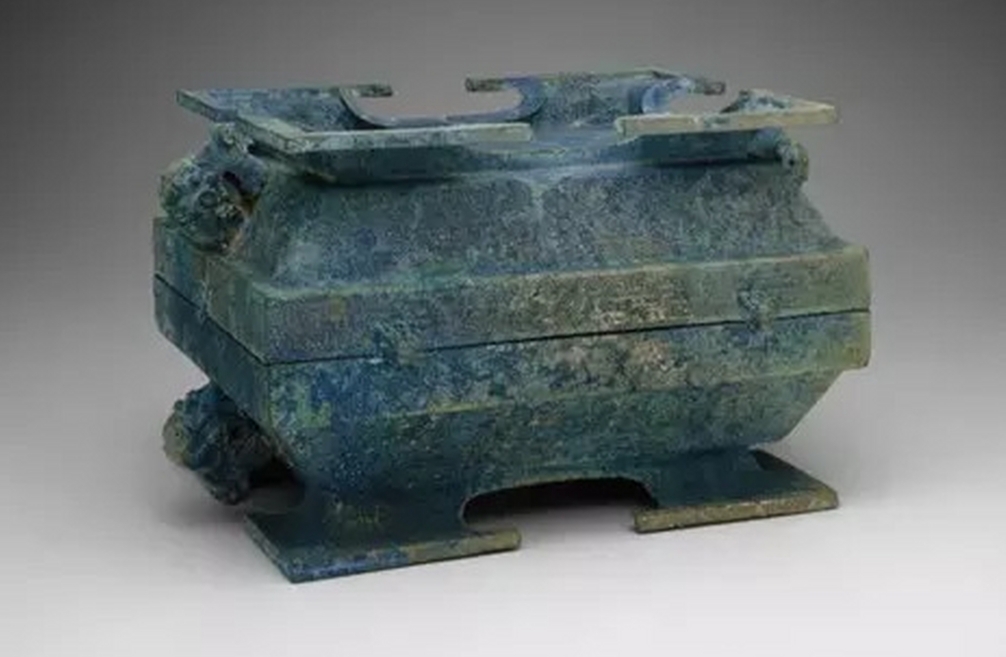 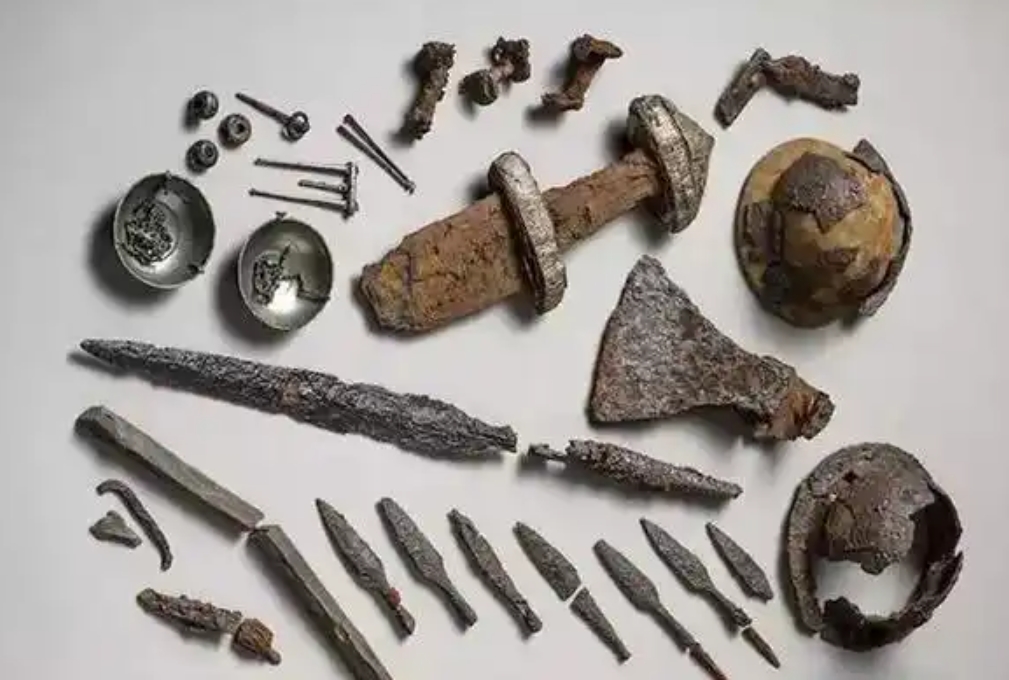 |
| json metadata | {"tags":["metals","sinosteel-pipe"],"image":["https://cdn.steemitimages.com/DQmU6fgoizzbD4pkv6RVRDGiv7o17sT6QWW356L584TXc7h/%E5%BE%AE%E4%BF%A1%E6%88%AA%E5%9B%BE_20250726171800.png","https://cdn.steemitimages.com/DQmPDKH4hLejFQJJKfWCP73WkNTYZKRgM9PqJ9g8kDjZyTJ/%E5%BE%AE%E4%BF%A1%E6%88%AA%E5%9B%BE_20250726171856.png"],"links":["https://www.sinosteel-pipe.com/en/blog-5626921601861015.html"],"app":"steemit/0.2","format":"markdown"} |
| Transaction Info | Block #97797703/Trx 3aef1bc9831ff1becaa8072b0d45227b58c13bac |
View Raw JSON Data
{
"trx_id": "3aef1bc9831ff1becaa8072b0d45227b58c13bac",
"block": 97797703,
"trx_in_block": 4,
"op_in_trx": 0,
"virtual_op": 0,
"timestamp": "2025-07-31T09:33:06",
"op": [
"comment",
{
"parent_author": "",
"parent_permlink": "metals",
"author": "sinosteelpipe",
"permlink": "the-use-of-metals-by-humans-the-past-present-and-future-of-metallic-materials",
"title": "The use of metals by humans, the past, present, and future of metallic materials",
"body": "I. The Development History of Metallic Materials\n\nPhase 1 – Use of Native Metals, Emergence of Iron and Steel\n(1) Around 5000 BCE: Use of native gold, copper, and lead; copper tools, gold artifacts, and combined use of copper and stone.\nBetween 5040–4840 BCE, the most notable tools from this period are 38 pieces of native copper unearthed in Plocnik, southern Serbia, dating to 5040–4840 BCE with a total weight of about 16 kg. The Balkan Peninsula was also the cradle of various early metallurgical techniques, including the smelting of lead, gold, tin bronze, and silver. For example, at the Belovode site (~5200 BCE), lead slag was discovered, possibly marking the birth of lead smelting. Meanwhile, gold smelting began in eastern Bulgaria around 4650 BCE, with the most remarkable finds being 3,100 gold artifacts (totaling 5 kg) from the Varna cemetery. Tin bronze smelting technology also developed in southern Serbia and across Bulgaria, with tin bronze fragments from Plocnik providing precise dating evidence. These discoveries collectively underscore the Balkans' pivotal role in early metallurgical advancements.\n\n(2) Around 4000 BCE: Development of Copper Smelting\nAround 6,000 years ago, copper smelting in eastern Turkey had already reached a high level of sophistication and gradually spread to neighboring regions. During this period, low-arsenic copper began appearing in many areas. By ~5500 BCE, people started intentionally producing copper alloys like arsenical copper.\n\n(3) 4000–500 BCE: Emergence of Bronze to the Bronze Age\nSouthern Iran and Mesopotamia were using bronze tools by 4000–3000 BCE, as was Europe during the same period.\nChina’s earliest bronze artifacts date back to ~3000 BCE, while India and Egypt saw bronze use by 3000–2000 BCE. Africa adopted bronze later, no later than 1000 BCE–1 CE.\nBy ~2000 BCE, bronze tools became widespread, marking the Bronze Age. The term \"Bronze Age\" refers to the period from 2000–500 BCE, during which various bronze vessels, tools, and weapons emerged.\n\n\n\n(4) Around 3000 BCE: Direct Use of Meteoric Iron from Nature\nIn ancient Egypt (~3500 BCE), iron artifacts containing 7.5% nickel were discovered, clearly indicating their extraterrestrial origin—specifically, meteorites. In 2013, a study published in Archaeometry analyzed iron beads from ~3200 BCE Egypt, confirming they were made from iron meteorites.\n\n(5) 1500 BCE: Emergence of Iron Smelting Technology\nThe world's oldest smelted iron artifact is a copper-handled iron-bladed dagger from a Hittite tomb in northern Anatolia (Turkey), dating to 4500 years ago (2500 BCE). Radiocarbon dating confirmed its smelted origin, making it exceptionally valuable due to the 1000-year gap between this find and the subsequent widespread adoption of smelted iron.\n\nChina's oldest smelted iron artifacts are two iron bars from the Siwa culture tombs in Motan, Linxia County, Gansu Province, dating to 3510–3310 BCE (1510–1310 BCE).\n\nBy 1800 BCE, iron smelting technology had emerged in India.\nAround 1500 BCE, the technique advanced, leading to widespread iron use in Egypt.\nFrom ~1400 BCE, the Hittites and Assyrians near the Black Sea began large-scale production of iron tools and weapons.\n\n\n\n(6) 1200 BCE: Advent of the Iron Age\nBy 1200 BCE, the gradual proliferation of iron tools marked the dawn of the Iron Age.\n\nMiddle East: Iron use began around 1200 BCE.\nEastern Europe: The Iron Age commenced circa 1000 BCE.\nCentral Europe: The period is divided into the Early Iron Age (800 BCE–450 CE) and Late Iron Age (from 450 BCE).\nBritain and Ireland: Ironworking knowledge reached Britannia by ~500 BCE.\nChina: Widespread iron adoption occurred around 600 BCE.\n\n\n(7)B.C1000Year: The emergence of steel\n\nMetallurgists in the Iron Age have discovered that a by-product would occur accidentally during their iron smelting process - steel.\n\nOne of the earliest sources of the word \"steel\" was BC 7 Herodotus, a Greek historian in the centuryHerodotus) depicted by Gracos of Chios (Glaucus) Inlaid in a bowl of text.\n\nB.C.3Century: India smelted \"Uz Steel\", and this material is still famous for its quality.\n\nChina's steelmaking history can be traced back to BC2In the century, its steelmaking process was close to the \"Bessemay acid converter steelmaking method\"\n\nWhen steel and its superior properties were discovered, the Iron Age craftsmen made tools and weapons, such as knives. A new process soon emerged, such as quenching, which immerses the processed steel parts in water or oil to quickly cool them, thereby increasing their hardness. In an archaeology in Cyprus, it was discovered as early as BC 1100 Years of craftsmen knew how to make quenched and hardened knives.\n\nHowever, steelmaking was still a cumbersome and difficult process in ancient times, so few steel products were regarded as extremely precious.\n\n\n\n(8) 15th Century: Steel's Global Proliferation\nBy the 15th century, steel was ubiquitous worldwide. Sword-making epitomized its virtues—blades required toughness, hardness, and sharpness. From Damascus and Toledo blades to Japanese katanas, steel reigned supreme in elite weaponry.\n\nPhase II - Foundations of Metallic Materials Science\nEstablishing the disciplinary foundations: metallography, metal physics, phase transformations, and alloy steels.\n\n1803: Dalton proposed the atomic theory, Avogadro proposed the molecular theory.\n1830: Hessel identified 32 crystal classes, popularizing crystal indexing.\n1891: Scientists in Russia, Germany, and Britain independently established the lattice structure theory.\n1864: Sorby produced the first metallographic micrograph (9x magnification), a groundbreaking achievement.\n1827: Karsten isolated Fe₃C from steel; Abel confirmed this in 1888.\n1861: Russian scientist Chernov proposed the concept of critical transformation temperatures in steel.\nLate 19th century: Martensite research became fashionable; Gibbs formulated the phase rule, Roberts-Austen discovered the solid solution properties of austenite, and Roozeboom established the Fe-Fe₃C equilibrium diagram.\n\n\nPhase III - Major Advances in Microstructure Theory\nDevelopment of alloy phase diagrams, invention and application of X-rays, establishment of dislocation theory.\n\n1912: Discovery of X-rays, confirmation that α(δ)-Fe has bcc structure and γ-Fe has fcc structure; solid solution rules.\n1931: Discovery of alloying elements' effects on expanding and contracting the γ-phase field.\n1934: Polish scientist Polanyi, Hungarian Orowan, and British Taylor independently proposed dislocation theory to explain steel's plastic deformation and the crystallography of martensitic transformation.\n1938: Invention of the electron microscope.\n1910: Invention of A-type stainless steel, 1912 invention of F-type stainless steel, etc.\n1990: Invention of the Brinell hardness tester; Griffith proposed that stress concentration leads to microcrack formation.\n\n\nPhase IV - In-depth Study of Microstructure Theory\nAdvanced research in microstructure theory: investigation of atomic diffusion and its mechanisms; determination of TTT curves for steel; formation of comprehensive theories on bainite and martensite transformation.\n\nDevelopment of dislocation theory:\n\nInvention of electron microscopy enabled observation of:\n• Second-phase precipitation in steel\n• Dislocation glide\n• Discovery of partial dislocations, stacking faults, dislocation walls, substructures, Cottrell atmospheres, etc.\nAdvancement of dislocation theory\nContinuous invention of new scientific instruments:\n\nElectron probe microanalyzer (EPMA)\nField ion microscope (FIM) and field emission microscope (FEM)\nScanning transmission electron microscope (STEM)\nScanning tunneling microscope (STM)\nAtomic force microscope (AFM)\n\n\nII. Modern Metallic Materials\nResearch and development of advanced structural materials remains an eternal theme.\n\nDevelopment of high-performance structural materials: Pursuing high strength, high-temperature resistance, corrosion resistance, and wear resistance, while reducing mechanical weight, enhancing performance, and extending service life. Widespread application of composite materials as structural materials, such as aluminum matrix composites. Development of various series of low-temperature austenitic steels for specific applications.\nUpgrading traditional structural materials: Key approaches include finer and more uniform microstructure, purer materials, and process optimization. \"Next-generation steel materials\" achieve twice the strength of conventional steels. The 9/11 attacks in the US revealed poor high-temperature softening resistance of structural steels, driving development of high-strength fire-resistant and weather-resistant hot-rolled steels.\nDevelopment of other high-performance steels: New tool steels with excellent toughness and wear resistance have been created using advanced processes and methods. Economical alloying is a key direction for high-speed steel development, while various surface treatment technologies for tool materials are significant for new tool material innovation.\nAdvanced manufacturing processes: Including semi-solid metal processing technology, maturation and application of Al-Mg alloy technologies. Pushing the boundaries of existing steel technologies and steel strengthening/toughening remain primary research directions.\n\n\nIII. Sustainable Development and Trends of Metallic Materials\nIn 2004, the concept of \"Material Industry in a Circular Society - Sustainable Development of Material Industry\" was proposed.\n\nMicrobial Metallurgy:\n\nWaste-free production method already industrialized in many countries.\nIn the US, 10% of total copper production comes from microbial metallurgy.\nJapan cultivates ascidians to extract vanadium.\nSeawater as a liquid mineral contains over 10 billion tons of alloy elements.\nCurrently extractable elements include magnesium and uranium:\n• ~20% of global magnesium production comes from seawater\n• The US meets 80% of its magnesium demand from seawater sources\nCircular Material Industry:\n\nAdapting to contemporary needs by integrating ecological awareness into product and process design\nImproving material utilization efficiency\nReducing environmental burden throughout production and usage cycles\nDeveloping an industrial ecosystem that forms a virtuous cycle of \"Resources → Materials → Environment\"\nKey trends in alloy development:\n\nEmphasis on low-alloying and universal alloys\nFormation of green/ecological material systems for better recyclability\nFocus on developing green materials closely related to daily life and environmentally friendly materials\nIV. Titanium Alloy: Known as the \"Metal of Space\" and the \"Steel of the Future\"\nTitanium alloy refers to a variety of metallic materials made by combining titanium with other metals. Developed as an important structural metal in the 1950s, titanium alloy boasts high strength, excellent corrosion resistance, and superior high-temperature performance. Between the 1950s and 1960s, the focus was on developing high-temperature titanium alloys for aero-engines and structural titanium alloys for aircraft airframes. Titanium alloy maintains high strength under both high and low temperatures, and its corrosion resistance is unparalleled. Although titanium is relatively abundant in the Earth's crust (0.6%), its complex extraction process and high cost have limited its widespread application. Titanium alloy is expected to be one of the metallic materials that will make significant contributions to humanity in the 21st century.\n\nIn the 1970s, a series of corrosion-resistant titanium alloys were developed. Since the 1980s, corrosion-resistant titanium alloys and high-strength titanium alloys have seen further advancements. Titanium alloy is primarily used to manufacture compressor components for aircraft engines, followed by structural parts for rockets, missiles, and high-speed aircraft.\n\nSince the 1970s, titanium alloy has been extensively adopted in civil aircraft. For example, the Boeing 747 passenger plane uses over 3,640 kilograms of titanium. Aircraft with Mach numbers exceeding 2.5 utilize titanium mainly to replace steel, thereby reducing structural weight. A notable example is the U.S. SR-71 high-altitude, high-speed reconnaissance aircraft (with a flight Mach number of 3 and an operational altitude of 26,212 meters), where titanium accounts for 93% of the aircraft's structural weight, earning it the title of an \"all-titanium\" aircraft.\n\nV. Non-Ferrous Metals and Non-Ferrous Alloys\nThe industry faces severe challenges in sustainable development, primarily due to serious resource destruction, extremely low utilization rates, and alarming waste. Deep processing technologies remain outdated, with a lack of high-end products; innovation achievements are limited, and the industrialization of high-tech outcomes is insufficient. The mainstream focus is on developing high-performance structural materials and advanced processing methods, such as aluminum-lithium alloys and rapidly solidified aluminum alloys. Functional materials based on non-ferrous metals also represent a key development direction.\n\nNon-ferrous metals, in the narrow sense (also called non-ferrous metals), refer to all metals except iron (sometimes excluding manganese and chromium) and iron-based alloys. They can be categorized into heavy metals (e.g., copper, lead, zinc), light metals (e.g., aluminum, magnesium), precious metals (e.g., gold, silver, platinum), and rare metals (e.g., tungsten, molybdenum, germanium, lithium, lanthanum, uranium). In the broad sense, non-ferrous metals also include non-ferrous alloys, which are alloys composed of one non-ferrous metal as the matrix (typically >50%) with one or more other elements added.\n\nNon-ferrous alloys generally exhibit higher strength and hardness than pure metals, greater electrical resistance, a smaller temperature coefficient of resistance, and superior comprehensive mechanical properties. Commonly used non-ferrous alloys include aluminum alloys, copper alloys, magnesium alloys, nickel alloys, tin alloys, tantalum alloys, titanium alloys, zinc alloys, molybdenum alloys, and zirconium alloys.\n\nNon-ferrous metals are indispensable basic materials and critical strategic resources for national economies, daily life, defense industries, and scientific/technological development. Modernization of agriculture, industry, defense, and science/technology all rely on non-ferrous metals. For instance, components of cutting-edge weapons (e.g., aircraft, missiles, rockets, satellites, nuclear submarines) and advanced technologies (e.g., nuclear energy, television, telecommunications, radar, computers) are predominantly made from light metals and rare metals among non-ferrous metals. Additionally, the production of alloy steels would be impossible without non-ferrous metals like nickel, cobalt, tungsten, molybdenum, vanadium, and niobium. In certain applications (e.g., power industry), the consumption of non-ferrous metals is also substantial. Many countries worldwide, especially industrialized nations, are competing to develop their non-ferrous metal industries and expand strategic reserves of these materials.\nMore: https://www.sinosteel-pipe.com/en/blog-5626921601861015.html\n\n\n\n",
"json_metadata": "{\"tags\":[\"metals\",\"sinosteel-pipe\"],\"image\":[\"https://cdn.steemitimages.com/DQmU6fgoizzbD4pkv6RVRDGiv7o17sT6QWW356L584TXc7h/%E5%BE%AE%E4%BF%A1%E6%88%AA%E5%9B%BE_20250726171800.png\",\"https://cdn.steemitimages.com/DQmPDKH4hLejFQJJKfWCP73WkNTYZKRgM9PqJ9g8kDjZyTJ/%E5%BE%AE%E4%BF%A1%E6%88%AA%E5%9B%BE_20250726171856.png\"],\"links\":[\"https://www.sinosteel-pipe.com/en/blog-5626921601861015.html\"],\"app\":\"steemit/0.2\",\"format\":\"markdown\"}"
}
]
}sinosteelpipepublished a new post: china-import-and-export-of-stainless-steel-pipes-from-january-to-june-20252025/07/28 07:50:15
sinosteelpipepublished a new post: china-import-and-export-of-stainless-steel-pipes-from-january-to-june-2025
2025/07/28 07:50:15
| parent author | |
| parent permlink | stainless |
| author | sinosteelpipe |
| permlink | china-import-and-export-of-stainless-steel-pipes-from-january-to-june-2025 |
| title | China import and export of stainless steel pipes from January to June 2025 |
| body | June: (1) The import volume of stainless steel pipes is about 2836 tons, a decrease of 8.9% month-on-month and a decrease of 30.3% year-on-year; (2) The export volume was about 65,000 tons, a decrease of 14.1% month-on-month and a decrease of 4.3% year-on-year; (3) The net export volume was about 62,200 tons, a decrease of 14.31% month-on-month and a decrease of 2.65% year-on-year. January to June: (1) The cumulative import volume of stainless steel pipes is about 22,979 tons, a decrease of 6,633 tons year-on-year, a decrease of 22.35%; (2) The cumulative export volume was about 393,800 tons, an increase of 60,000 tons year-on-year, an increase of 18%; (3) The cumulative net export volume was about 370,800 tons, an increase of 66,700 tons year-on-year, an increase of 21.92%. Sinosteel Stainless Steel Pipe is the Manufacturer and Supplier of Stainless Steel Pipe and Special Alloy Pipe, Steel pipes with an outer diameter from 8mm to 3600mm, with wall thicknesses from 0.2mm to 120mm. Factory covering an area of 333,000 square meters. Production capacity reaches 200,000 tons. |
| json metadata | {"tags":["stainless","steel","pipe","china"],"app":"steemit/0.2","format":"markdown"} |
| Transaction Info | Block #97709400/Trx 1d69f1fa290276a464a4aad38e675fa9cefe5497 |
View Raw JSON Data
{
  "trx_id": "1d69f1fa290276a464a4aad38e675fa9cefe5497",
  "block": 97709400,
  "trx_in_block": 0,
  "op_in_trx": 0,
  "virtual_op": 0,
  "timestamp": "2025-07-28T07:50:15",
  "op": [
    "comment",
    {
      "parent_author": "",
      "parent_permlink": "stainless",
      "author": "sinosteelpipe",
      "permlink": "china-import-and-export-of-stainless-steel-pipes-from-january-to-june-2025",
      "title": "China import and export of stainless steel pipes from January to June 2025",
      "body": "June:\n\n(1) The import volume of stainless steel pipes is about 2836 tons, a decrease of 8.9% month-on-month and a decrease of 30.3% year-on-year;\n\n(2) The export volume was about 65,000 tons, a decrease of 14.1% month-on-month and a decrease of 4.3% year-on-year;\n\n(3) The net export volume was about 62,200 tons, a decrease of 14.31% month-on-month and a decrease of 2.65% year-on-year.\n\nJanuary to June:\n\n(1) The cumulative import volume of stainless steel pipes is about 22,979 tons, a decrease of 6,633 tons year-on-year, a decrease of 22.35%;\n\n(2) The cumulative export volume was about 393,800 tons, an increase of 60,000 tons year-on-year, an increase of 18%;\n\n(3) The cumulative net export volume was about 370,800 tons, an increase of 66,700 tons year-on-year, an increase of 21.92%.\n\nSinosteel Stainless Steel Pipe is the Manufacturer and Supplier of Stainless Steel Pipe and Special Alloy Pipe, Steel pipes with an outer diameter from 8mm to 3600mm, with wall thicknesses from 0.2mm to 120mm. Factory covering an area of 333,000 square meters. Production capacity reaches 200,000 tons.",
      "json_metadata": "{\"tags\":[\"stainless\",\"steel\",\"pipe\",\"china\"],\"app\":\"steemit/0.2\",\"format\":\"markdown\"}"
    }
  ]
}2025/07/28 07:41:27
2025/07/28 07:41:27
| parent author | |
| parent permlink | steel |
| author | sinosteelpipe |
| permlink | world-crude-steel-production-in-the-first-half-of-2025-decreased-by-2-2-year-on-year |
| title | World crude steel production in the first half of 2025 decreased by 2.2% year-on-year |
| body | @@ -1950,16 +1950,91 @@ 0.5%25.%0A%0A +More info : https://www.sinosteel-pipe.com/en/blog-5626452253654398.html%0A%0A %0A!%5B%E5%BE%AE%E4%BF%A1%E6%88%AA%E5%9B%BE_ |
| json metadata | {"image":["https://cdn.steemitimages.com/DQmXNU1HtSsmmrBKGyn3zEZXqdPDomHwuN5UTrWymCtbMdL/%E5%BE%AE%E4%BF%A1%E6%88%AA%E5%9B%BE_20250728093146.png","https://cdn.steemitimages.com/DQmbTEn74EU1YDMxJ1R2hDFJGfbuBbqdWrxFcWi1FBiEieK/%E5%BE%AE%E4%BF%A1%E6%88%AA%E5%9B%BE_20250728093228.png"],"app":"steemit/0.2","format":"markdown","links":["https://www.sinosteel-pipe.com/en/blog-5626452253654398.html"]} |
| Transaction Info | Block #97709224/Trx f3322b423542b5793bbbeadd440278426ddb0018 |
View Raw JSON Data
{
  "trx_id": "f3322b423542b5793bbbeadd440278426ddb0018",
  "block": 97709224,
  "trx_in_block": 5,
  "op_in_trx": 0,
  "virtual_op": 0,
  "timestamp": "2025-07-28T07:41:27",
  "op": [
    "comment",
    {
      "parent_author": "",
      "parent_permlink": "steel",
      "author": "sinosteelpipe",
      "permlink": "world-crude-steel-production-in-the-first-half-of-2025-decreased-by-2-2-year-on-year",
      "title": "World crude steel production in the first half of 2025 decreased by 2.2% year-on-year",
      "body": "@@ -1950,16 +1950,91 @@\n  0.5%25.%0A%0A\n+More info :  https://www.sinosteel-pipe.com/en/blog-5626452253654398.html%0A%0A\n %0A!%5B%E5%BE%AE%E4%BF%A1%E6%88%AA%E5%9B%BE_\n",
      "json_metadata": "{\"image\":[\"https://cdn.steemitimages.com/DQmXNU1HtSsmmrBKGyn3zEZXqdPDomHwuN5UTrWymCtbMdL/%E5%BE%AE%E4%BF%A1%E6%88%AA%E5%9B%BE_20250728093146.png\",\"https://cdn.steemitimages.com/DQmbTEn74EU1YDMxJ1R2hDFJGfbuBbqdWrxFcWi1FBiEieK/%E5%BE%AE%E4%BF%A1%E6%88%AA%E5%9B%BE_20250728093228.png\"],\"app\":\"steemit/0.2\",\"format\":\"markdown\",\"links\":[\"https://www.sinosteel-pipe.com/en/blog-5626452253654398.html\"]}"
    }
  ]
}2025/07/28 07:40:33
2025/07/28 07:40:33
| parent author | |
| parent permlink | steel |
| author | sinosteelpipe |
| permlink | world-crude-steel-production-in-the-first-half-of-2025-decreased-by-2-2-year-on-year |
| title | World crude steel production in the first half of 2025 decreased by 2.2% year-on-year |
| body | According to statistics from the World Steel Association on 70 member economies, global crude steel production in June was 151.4 million tons, a year-on-year decrease of 5.8%. Production in the first half of the year was 934.3 million tons, a decrease of 2.2%. Among the 70 economies counted, their crude steel output accounts for about 98% of global crude steel output in 2024. China, the world's largest crude steel producer, produced 83.2 million tons in June, a decrease of 9.2%; production in the first half of the year was 514.8 million tons, a decrease of 3.0%. India's output in June was 13.6 million tons, an increase of 13.3%; the output in the first half of the year was 80.9 million tons, an increase of 9.2%. Japan's production in June was 6.7 million tons, a decrease of 4.4%; the output in the first half of the year was 40.6 million tons, a decrease of 5.0%. South Korea's output in June was 5 million tons, down 1.8%; the output in the first half of the year was 30.6 million tons, down 2.8%. Türkiye's production in June was 2.9 million tons, a decrease of 3.5%; the output in the first half of the year was 18.3 million tons, a decrease of 1.7%. The output of the 27 EU countries in June was 10.4 million tons, a decrease of 8.2%; the output in the first half of the year was 65.4 million tons, a decrease of 3.3%. Germany's output in June was 2.7 million tons, a decrease of 15.9%; the output in the first half of the year was 17.1 million tons, a decrease of 11.6%. Russia's output in June was 5.6 million tons, a decrease of 7.4%; the output in the first half of the year was 34.8 million tons, a decrease of 2.8%. The U.S. output in June was 6.9 million tons, an increase of 4.6%; the output in the first half of the year was 40.2 million tons, an increase of 0.8%. Brazil's production in June was 2.8 million tons, a decrease of 0.5%; production in the first half of the year was 16.5 million tons, a increase of 0.5%. 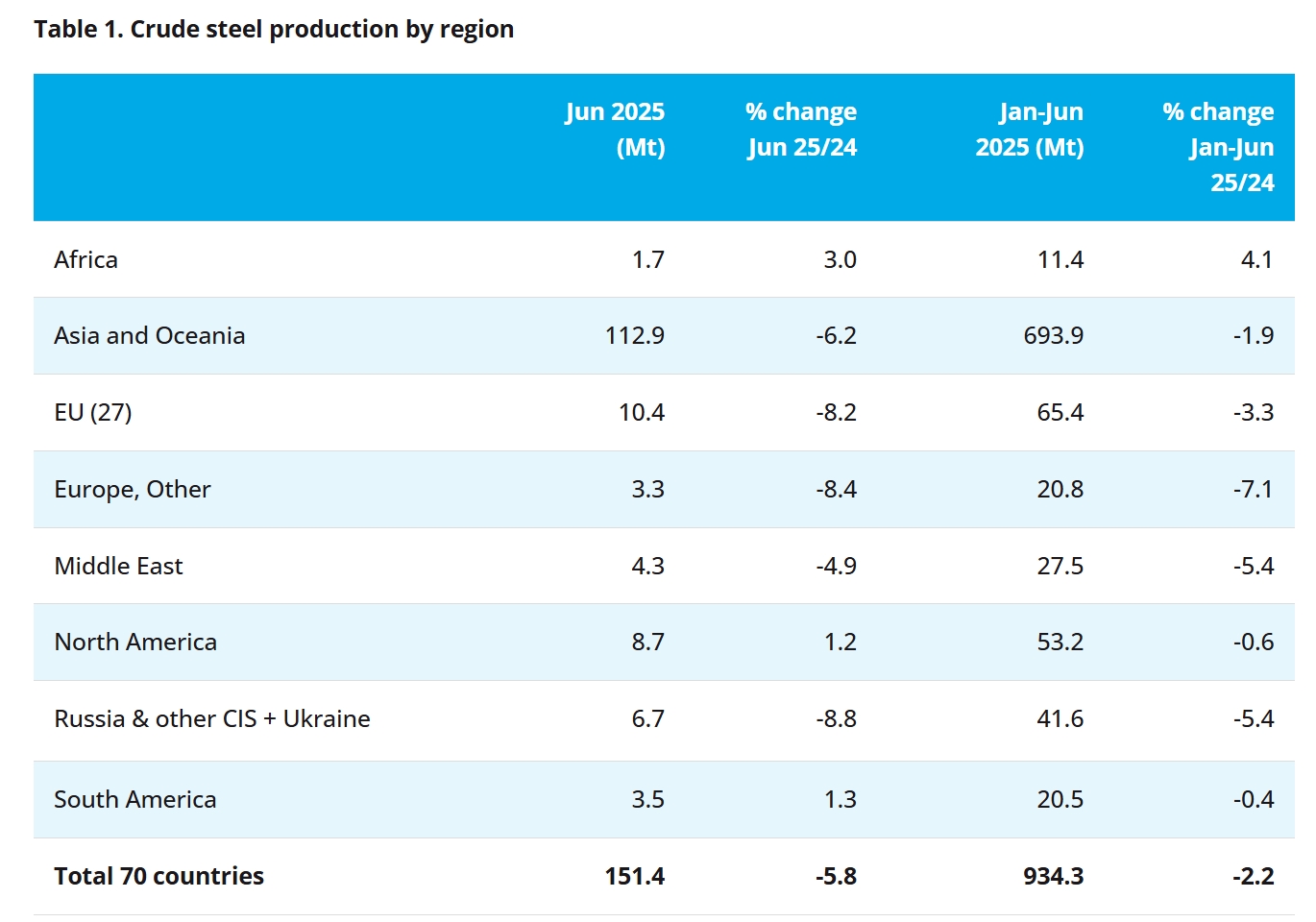 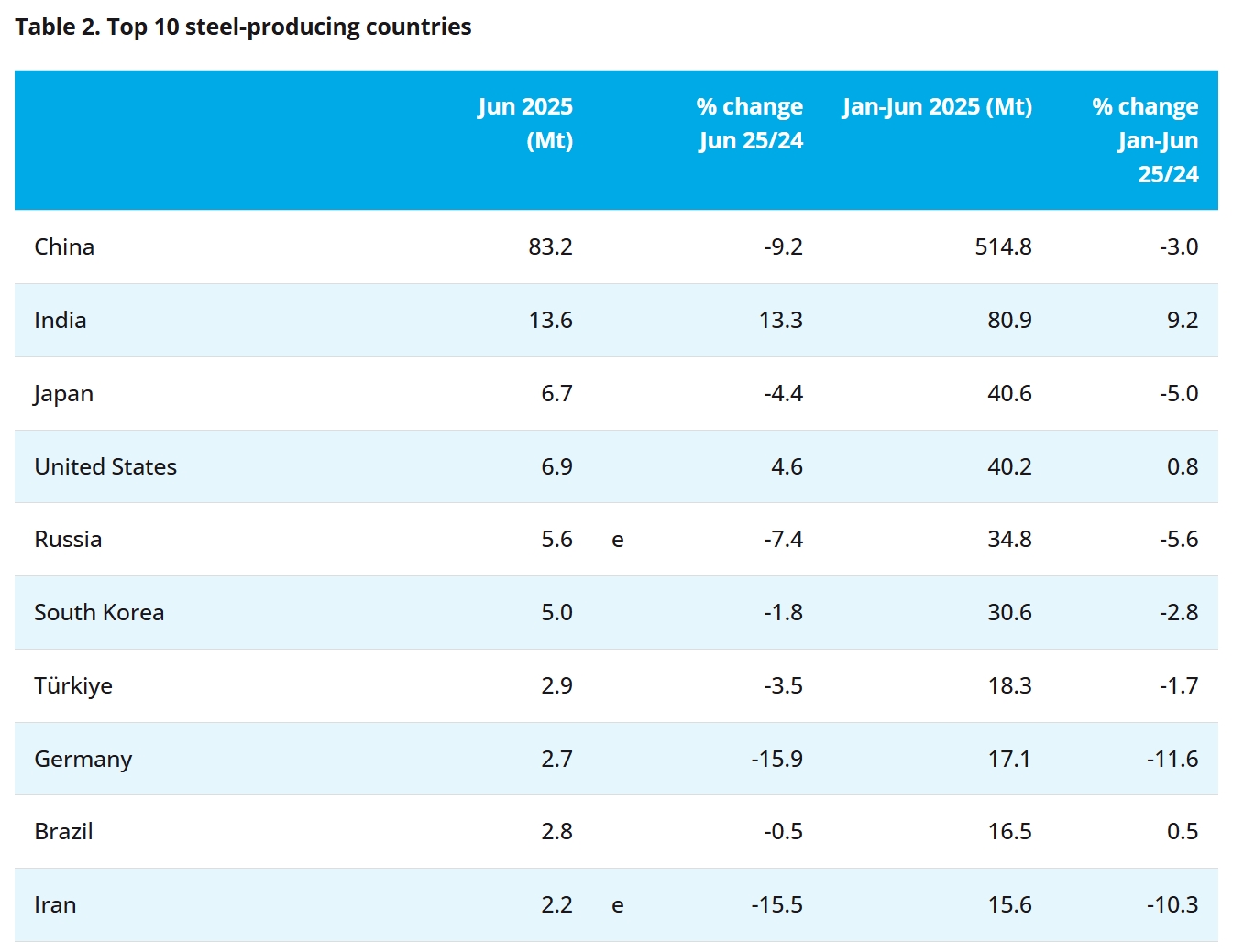 |
| json metadata | {"tags":["steel"],"image":["https://cdn.steemitimages.com/DQmXNU1HtSsmmrBKGyn3zEZXqdPDomHwuN5UTrWymCtbMdL/%E5%BE%AE%E4%BF%A1%E6%88%AA%E5%9B%BE_20250728093146.png","https://cdn.steemitimages.com/DQmbTEn74EU1YDMxJ1R2hDFJGfbuBbqdWrxFcWi1FBiEieK/%E5%BE%AE%E4%BF%A1%E6%88%AA%E5%9B%BE_20250728093228.png"],"app":"steemit/0.2","format":"markdown"} |
| Transaction Info | Block #97709206/Trx a2b2cf1d51a2bc400d5164b20a608f3fe2ef86ec |
View Raw JSON Data
{
"trx_id": "a2b2cf1d51a2bc400d5164b20a608f3fe2ef86ec",
"block": 97709206,
"trx_in_block": 2,
"op_in_trx": 0,
"virtual_op": 0,
"timestamp": "2025-07-28T07:40:33",
"op": [
"comment",
{
"parent_author": "",
"parent_permlink": "steel",
"author": "sinosteelpipe",
"permlink": "world-crude-steel-production-in-the-first-half-of-2025-decreased-by-2-2-year-on-year",
"title": "World crude steel production in the first half of 2025 decreased by 2.2% year-on-year",
"body": "According to statistics from the World Steel Association on 70 member economies, global crude steel production in June was 151.4 million tons, a year-on-year decrease of 5.8%. Production in the first half of the year was 934.3 million tons, a decrease of 2.2%.\n\nAmong the 70 economies counted, their crude steel output accounts for about 98% of global crude steel output in 2024.\n\n\n\nChina, the world's largest crude steel producer, produced 83.2 million tons in June, a decrease of 9.2%; production in the first half of the year was 514.8 million tons, a decrease of 3.0%.\n\nIndia's output in June was 13.6 million tons, an increase of 13.3%; the output in the first half of the year was 80.9 million tons, an increase of 9.2%.\n\nJapan's production in June was 6.7 million tons, a decrease of 4.4%; the output in the first half of the year was 40.6 million tons, a decrease of 5.0%.\n\nSouth Korea's output in June was 5 million tons, down 1.8%; the output in the first half of the year was 30.6 million tons, down 2.8%.\n\nTürkiye's production in June was 2.9 million tons, a decrease of 3.5%; the output in the first half of the year was 18.3 million tons, a decrease of 1.7%.\n\nThe output of the 27 EU countries in June was 10.4 million tons, a decrease of 8.2%; the output in the first half of the year was 65.4 million tons, a decrease of 3.3%.\n\nGermany's output in June was 2.7 million tons, a decrease of 15.9%; the output in the first half of the year was 17.1 million tons, a decrease of 11.6%.\n\nRussia's output in June was 5.6 million tons, a decrease of 7.4%; the output in the first half of the year was 34.8 million tons, a decrease of 2.8%.\n\nThe U.S. output in June was 6.9 million tons, an increase of 4.6%; the output in the first half of the year was 40.2 million tons, an increase of 0.8%.\n\nBrazil's production in June was 2.8 million tons, a decrease of 0.5%; production in the first half of the year was 16.5 million tons, a increase of 0.5%.\n\n\n\n\n",
"json_metadata": "{\"tags\":[\"steel\"],\"image\":[\"https://cdn.steemitimages.com/DQmXNU1HtSsmmrBKGyn3zEZXqdPDomHwuN5UTrWymCtbMdL/%E5%BE%AE%E4%BF%A1%E6%88%AA%E5%9B%BE_20250728093146.png\",\"https://cdn.steemitimages.com/DQmbTEn74EU1YDMxJ1R2hDFJGfbuBbqdWrxFcWi1FBiEieK/%E5%BE%AE%E4%BF%A1%E6%88%AA%E5%9B%BE_20250728093228.png\"],\"app\":\"steemit/0.2\",\"format\":\"markdown\"}"
}
]
}sinosteelpipepublished a new post: overview-of-vietnam-s-steel-market2025/07/08 07:01:57
sinosteelpipepublished a new post: overview-of-vietnam-s-steel-market
2025/07/08 07:01:57
| parent author | |
| parent permlink | vetnam |
| author | sinosteelpipe |
| permlink | overview-of-vietnam-s-steel-market |
| title | Overview of Vietnam's steel market |
| body | The Asian Development Bank (ADB) released a report projecting that Southeast Asian countries will achieve economic growth rates of 4.6% and 4.7% in 2024 and 2025 respectively, both higher than the 4.1% level recorded in 2023. The economic growth rates of the vast majority of Southeast Asian countries are expected to exceed last year’s figures this year and next. Among these countries, Vietnam, the Philippines, Cambodia, and Indonesia are leading in terms of growth momentum. The Southeast Asia Iron and Steel Institute (SEAISI) estimates that steel demand in the Southeast Asian region will reach 79.5 million tons in 2025, representing a year-on-year increase of 3.7%. According to SEAISI statistics, in 2023, the total steel demand of the six major steel-consuming ASEAN countries (ASEAN-6) stood at 73.5 million tons, a year-on-year decline of 1.9%; total production was 49.4 million tons, down 2.1% year-on-year; and total net imports were 24.3 million tons, a year-on-year decrease of 1.3%. Currently, steel demand in the Southeast Asian region is primarily concentrated in the construction industry, focusing on long products and flat products. Among these, the self-sufficiency rate for long products is generally high, but flat products remain highly dependent on imports. It is projected that the compound annual growth rate (CAGR) of apparent steel consumption in major steel-using ASEAN countries from 2022 to 2026 will reach 3.65%. I. Overview of Vietnam Since implementing its economic opening-up policy in 1985, Vietnam’s economy has consistently maintained steady positive growth. It not only successfully weathered the impacts of the 1999 Asian financial crisis and the 2008 global financial crisis but also demonstrated remarkable resilience amid the severe challenges posed by the 2019 pandemic. During the period from 2000 to 2020, Vietnam's economy achieved rapid development, with an average annual GDP growth rate of 7.37%, ranking among the top in ASEAN countries. Currently, Vietnam has a population of over 97 million, with a per capita income of approximately $4700 and a total GDP of approximately $476.3 billion by 2024. Vietnam’s economic structure is undergoing rapid transformation and upgrading. In 1985, agriculture dominated its economic system. However, following the reform and opening-up, Vietnam gradually shifted toward industrialization. Notably, since 2000, the service sector has emerged as a key driver, maturing the overall economic structure. Today, agriculture accounts for about 15% of Vietnam’s economy, industry for 34%, and the service sector for 51%. Vietnam’s apparent crude steel consumption has reached 23–25 million tons, ranking first among ASEAN countries. This figure underscores the significant progress Vietnam has made in industrial development, particularly in sectors with high steel demand such as manufacturing and construction. II. Vietnam's Steel Industry (1) Steel Production Capacity Vietnam has total iron ore reserves of approximately 2.3 billion tons. Steel mills are mainly distributed in industrial zones around Hanoi and in the Dong Nai border area, following the distribution of mineral resources. The Vietnamese government imposes strict legal restrictions on iron ore mining and utilization, and the quality of mined ore is relatively poor; thus, iron ore is still partially imported from Brazil and Australia. In 2024, Vietnam’s crude steel capacity is 30 million tons, including an annual hot-rolled coil capacity of 8-9 million tons and an annual construction steel capacity of approximately 15 million tons. It is expected that only 5.6 million tons of capacity will be put into operation in 2025 during the 2023-2030 period. Vietnam’s crude steel output has generally maintained a growth trend. In 2023, affected by the downturn in the real estate sector, Vietnam’s crude steel output was 19 million tons, with finished steel output reaching approximately 29 million tons. Among these, long products (wires, rebar, sections) accounted for 12.5 million tons, while hot-rolled coils and strip steel totaled around 6 million tons. In 2024, crude steel capacity is 30 million tons, with the top five enterprises (CR5) holding a market share of about 54%. The plan is to reach 50-60 million tons of capacity by 2030. Due to an underdeveloped domestic scrap steel recycling system and low ore grade, Vietnam relies on imports for 40% of its iron ore and 87% of its coking coal, primarily from Australia, China, and other sources. (2) Major Steel Enterprises A. Vietnam Hoa Phat Steel (Hoa Phat) Hoa Phat Group is Vietnam’s leading steel producer and one of the country’s most promising and competitive private enterprises. Established in 1992, the group was restructured and listed on Vietnam’s stock market in 2007 (Hoa Phat Group JSC). Hoa Phat operates in steel manufacturing, mineral mining, coking coal production, real estate, furniture, and construction machinery, with factories located in provinces and cities such as Hanoi, Hung Yen, Hai Duong, Lao Cai, An Phu, Ha Giang, Ho Chi Minh City, and Binh Duong. Its annual steel production capacity is approximately 7.2 million tons. B. Formosa Ha Tinh Steel Corporation (FHS) Established in 2008 and headquartered in the Yong An Economic Zone of Ha Tinh Province, FHS is a large-scale steel enterprise jointly established by Taiwan’s Formosa Plastics Group in Ha Tinh Province. It is also one of the largest foreign direct investment (FDI) projects in Vietnam’s history. FHS focuses on the production and sale of various steel products, including crude steel, hot-rolled coils, and wires. Additionally, the project constructed the Sơn Hưng International Deep-Water Port to support its steel production facilities. Currently, FHS has completed Phase I, which includes two blast furnaces with a total annual capacity of 7.5 million tons. In 2019, FHS announced two expansion plans: the first involves investing in the construction of Blast Furnace No. 3 (including auxiliary engineering systems) from 2021 to 2025, aiming to increase total annual capacity to 10.4 million tons; the second involves building Blast Furnace No. 4 and auxiliary systems from 2026 to 2035 to further boost capacity to approximately 14.8 million tons annually. C. Vietnam Steel Corporation (VNSteel) VNSteel is Vietnam’s largest steel enterprise, established on October 1, 2011, through the restructuring and integration of former state-owned enterprises. Headquartered in Lang Ha Ward, Dong Da District, Hanoi, the company centers on steel smelting, with an annual production capacity of 1.5 million tons of billets and over 2.5 million tons of rolled steel. D. Lao Cai Iron and Steel Plant Construction of the Lao Cai Iron and Steel Plant began in April 2011 and was completed in 2014. With a total investment of over $335 million, the project is a joint venture between Vietnam Steel Corporation and China’s Kunming Iron and Steel Group. The plant has a daily output of approximately 1,200 tons of billets. Construction was divided into two phases, with the completed Phase I achieving an annual output of 500,000 tons of iron and 500,000 tons of billets. E. Vietnam Thai Nguyen Iron and Steel Plant Since its groundbreaking in 1959, the plant officially began operations in 1963, with an annual production capacity of approximately 500,000 tons. (3) Competitive Landscape of the Steel Market Vietnam’s metallurgical and casting market has evolved into a three-way competitive landscape dominated by local giants, Chinese enterprises, and multinational groups: A. Local Leading Enterprises Local leaders represented by Hoa Phat Steel, Hoa Sen Steel, and Vietnam Steel Group dominate the construction steel market through cost advantages (product prices are 5-8% lower than those in China) and government support. These enterprises are penetrating high-value-added product sectors through technical cooperation with Chinese and European firms. For example, the Hoa Phat Group’s collaboration with MCC Southern to build the Rung Gio Steel Plant, targeting an annual capacity of 6 million tons, is poised to become Southeast Asia’s largest steel base. B. Multi-Dimensional Layout of Chinese Enterprises Chinese companies have established a multi-layered presence across Vietnam’s metallurgical industrial chain: Engineering Contracts: MCC Southern has undertaken the EPC turnkey project for Hoa Phat’s Rung Gio Steel Plant, driving exports of Chinese equipment and technical standards. Capacity Investment: Formosa Ha Tinh Steel has introduced Chinese technology to produce high-value-added automotive steel and home appliance steel. Local Manufacturing: Hebei Guangde Fluid Technology from China invested $12 million in Ba Ria-Vung Tau Province to establish a factory producing 500,000 sets of valves annually, serving the Southeast Asian market. International Enterprises’ Technological Dominance European engineering technology companies such as Siemens-MARCELS, Danieli, and Primetals Technologies maintain advantages in high-end metallurgical equipment, particularly in precision control areas like continuous casting and rolling, and automotive steel production. However, Chinese enterprises are narrowing the gap in terms of cost-effectiveness and localized services. III. Vietnam's Steel Demand Vietnam is the largest steel consumer in Southeast Asia. The Vietnamese government has consistently promoted large-scale infrastructure development, maintaining infrastructure investment at 10% of GDP from 2011 to 2023. Preliminary statistics show that Vietnam’s GDP rose to $430 billion in 2023, representing a year-on-year increase of 5.05%, with an average annual compound growth rate of 4.66% from 2019 to 2023. Therefore, as Vietnam’s GDP continues to grow, its stable infrastructure investment is expected to support steady growth in steel demand. According to statistics released by the Vietnam Steel Association (VSA) in 2022, the construction industry dominates steel consumption in Vietnam, accounting for approximately 89% of total consumption. Household appliances account for 4%, machinery for 3%, and automobiles, petroleum, and natural gas each for 2%. It is evident that the construction industry is Vietnam’s most critical steel-consuming sector, contributing nearly 90% of total consumption. In Vietnam, the development of the construction industry directly influences the dynamics of the entire steel demand market. The construction industry’s dominance in the steel market has driven growth in long product production and led to overcapacity, prompting Vietnam to divert excess capacity through exports. Overall, Vietnam’s dependence on foreign steel is 30%. Weak production capacity in flat products has resulted in a high reliance on imports for this category. Vietnam’s apparent consumption of finished steel reached 22 million tons in 2023, and it is projected to increase to over 23.3 million tons by 2025, ranking first among ASEAN countries. The Vietnamese government plans to invest $140 billion in infrastructure development over the next 5-10 years, covering the expansion of transportation networks, development of industrial zones, and urban construction projects, which will directly drive growth in the consumption of construction steel, pipes, and structural steel. As an important base for automobile manufacturing and home appliance production in Southeast Asia, Vietnam has a high dependence on imports of mid-to-high-end steel products such as cold-rolled sheets and galvanized sheets. IV. Shortcomings of Vietnam’s Steel Industry High-end products rely on imported technology, resulting in a “polarized” technological landscape in Vietnam’s metallurgical casting industry, with significant generational gaps in technical capabilities between domestic enterprises and foreign-invested firms. Technical bottlenecks of domestic enterprises: There are over 100 large-scale metallurgical and steel enterprises nationwide, 80% of which are electric arc furnace (EAF) steel plants, primarily relying on imported scrap steel for reprocessing. Domestic casting processes still primarily use traditional sand casting, with an automation rate of less than 30%. As a result, products are mostly concentrated in low-value-added categories such as construction rebar and angle steel, while there is a severe shortage of capacity for high-precision castings required by the automobile and machinery manufacturing industries. Vietnamese foundries generally face three major challenges: a shortage of skilled technical workers, weak independent innovation capabilities, and horizontal competition, which constrain the pace of industrial upgrading. Accelerated international technology input: Technology exports from Chinese and European enterprises are transforming Vietnam’s metallurgical landscape. A typical example is the Rung Gio Steel Plant built by MCC Southern for Vietnam’s Hoa Phat Group. This project introduced China’s independently developed automatic steelmaking system, rotary sub-lance technology, and typhoon-resistant construction techniques (capable of withstanding 17-level typhoons), reducing the mill’s maintenance cycle from 10-15 days under traditional processes to 4-5 days. In the casting sector, 3D sand printing technology represented by Beijing Sande Technology is beginning to gain traction in Vietnam. Its 3DPTEK-J2500 equipment achieves a printing accuracy of ±0.3mm, reducing the development cycle of complex castings by 85% and lowering costs by 30%, making it particularly suitable for the production of precision castings such as new energy vehicle components. V. Vietnam’s Steel Imports and Exports Preliminary data from the General Department of Customs of Vietnam shows that in April this year, Vietnam’s steel exports remained stable compared to the previous month, while both steel and scrap steel imports declined rapidly. April’s exports reached 1.11 million tons, a mere 0.9% increase from March. Meanwhile, export values remained stable, reflecting steady export prices over the past two months. Compared with the same period last year, exports increased by 14.4%. Total exports in the first four months of this year surged by 33.7% year-on-year to 4.34 million tons, with export values surging by 28.1%. In April, Vietnam imported 1.28 million tons of steel, a month-on-month decline of 10.7%, but a year-on-year increase of 24.3%. Total imports from January to April reached 5.37 million tons, with imports in this period increasing by 42.5% compared to the same period last year. Customs data shows that in April 2024, Vietnam’s imports of hot-rolled coil (HRC) continued to rise, reaching 890,000 tons. Of these, 71% were imported from China. Cumulatively, over the first four months of 2024, Vietnam imported 3.93 million tons of hot-rolled steel, a 32% increase from the same period in 2023, equivalent to 159% of the domestic hot-rolled coil industry’s total output. Imports from China accounted for 73% (2.9 million tons), more than doubling the same-period figure in 2023. In 2023, Vietnam became China’s largest steel export destination, with imports rising by 69.5% year-on-year to 9.249 million tons. In 2024, exports to Vietnam reached 12.738 million tons, accounting for nearly 50% of China’s total steel exports. According to Vietnamese media reports, the import price of Chinese hot-rolled coil is 32-59/ton lower than the average price in other markets. Compared with hot-rolled steel imports from South Korea, Chinese hot-rolled steel is 32−59/ton lower than the average price in other markets.Compared with hot−rolled steel imports from SouthKorea,Chinese hot−rolled steelis 123/ton cheaper. In 2024, Vietnam’s steel exports to the U.S. increased by 143.4% year-on-year to 1.2 million tons, with galvanized steel accounting for 35% (approximately $1.2 billion in export value). The U.S. is one of Vietnam’s key steel export markets. Vietnam also exports steel coils, galvanized sheets, and other products to ASEAN countries (such as Indonesia and Malaysia), with these exports accounting for about 30% of its total exports. The EU is another major market for Vietnamese steel exports, with key products including steel coils and galvanized steel sheets. VI. Policy Framework of “Encouragement and Restrictions Coexisting” A. Foreign Investment Incentives and Localization Requirements: Vietnam’s Investment Law provides tax incentives for foreign enterprises in high-tech sectors such as new energy vehicle battery factories under a “four-year exemption followed by nine-year halving” policy—corporate income tax is exempted for the first four years from profit generation, and the tax rate is halved (minimum 5%) for the subsequent nine years. However, foreign enterprises must meet industry-specific localization rate requirements. For government infrastructure projects, foreign enterprises are required to cooperate with Vietnamese partners and complete substantial processing in Vietnam to qualify for bidding. B. Stricter Environmental Regulations: Vietnam’s 2020 Environmental Protection Law mandates that steel mills install desulfurization equipment, significantly increasing compliance costs. Additionally, to address the EU’s Carbon Border Adjustment Mechanism (CBAM), Vietnam is promoting low-carbon technologies such as electric arc furnace (EAF) steelmaking and hydrogen-based metallurgy in the steel industry, aiming to achieve carbon neutrality by 2050. C. Special Support for the Aluminum Industry: The Vietnamese government has implemented special incentives for the aluminum processing industry, including: zero tariffs on high-end aluminum processing equipment worth over $1 million that falls under the Priority Development Technology List and cannot be produced domestically; exemptions or reductions in export taxes for deep-processed products exported to the EU and ASEAN countries; anti-dumping measures on imported aluminum materials; and financial credit support policies. These policies aim to attract foreign investment and domestic enterprises to collaborate in building an aluminum industrial cluster, shifting from raw material exports to high-value-added processing. Sinosteel Stainless Steel Pipe is the Manufacturer and Supplier of Stainless Steel Pipe and Special Alloy Pipe, Steel pipes with an outer diameter from 8mm to 3600mm, with wall thicknesses from 0.2mm to 120mm. Factory covering an area of 333,000 square meters. Production capacity reaches 200,000 tons. Web: https://www.sinosteel-pipe.com/en email: [email protected] |
| json metadata | {"tags":["vetnam","steel"],"links":["https://www.sinosteel-pipe.com/en"],"app":"steemit/0.2","format":"markdown"} |
| Transaction Info | Block #97133630/Trx 8dfe632682258f4cfa595001b2fc2cb54b84841b |
View Raw JSON Data
{
  "trx_id": "8dfe632682258f4cfa595001b2fc2cb54b84841b",
  "block": 97133630,
  "trx_in_block": 1,
  "op_in_trx": 0,
  "virtual_op": 0,
  "timestamp": "2025-07-08T07:01:57",
  "op": [
    "comment",
    {
      "parent_author": "",
      "parent_permlink": "vetnam",
      "author": "sinosteelpipe",
      "permlink": "overview-of-vietnam-s-steel-market",
      "title": "Overview of Vietnam's steel market",
      "body": "The Asian Development Bank (ADB) released a report projecting that Southeast Asian countries will achieve economic growth rates of 4.6% and 4.7% in 2024 and 2025 respectively, both higher than the 4.1% level recorded in 2023. The economic growth rates of the vast majority of Southeast Asian countries are expected to exceed last year’s figures this year and next. Among these countries, Vietnam, the Philippines, Cambodia, and Indonesia are leading in terms of growth momentum.\n\nThe Southeast Asia Iron and Steel Institute (SEAISI) estimates that steel demand in the Southeast Asian region will reach 79.5 million tons in 2025, representing a year-on-year increase of 3.7%. According to SEAISI statistics, in 2023, the total steel demand of the six major steel-consuming ASEAN countries (ASEAN-6) stood at 73.5 million tons, a year-on-year decline of 1.9%; total production was 49.4 million tons, down 2.1% year-on-year; and total net imports were 24.3 million tons, a year-on-year decrease of 1.3%. Currently, steel demand in the Southeast Asian region is primarily concentrated in the construction industry, focusing on long products and flat products. Among these, the self-sufficiency rate for long products is generally high, but flat products remain highly dependent on imports. It is projected that the compound annual growth rate (CAGR) of apparent steel consumption in major steel-using ASEAN countries from 2022 to 2026 will reach 3.65%.\n\nI. Overview of Vietnam\n\nSince implementing its economic opening-up policy in 1985, Vietnam’s economy has consistently maintained steady positive growth. It not only successfully weathered the impacts of the 1999 Asian financial crisis and the 2008 global financial crisis but also demonstrated remarkable resilience amid the severe challenges posed by the 2019 pandemic. During the period from 2000 to 2020, Vietnam's economy achieved rapid development, with an average annual GDP growth rate of 7.37%, ranking among the top in ASEAN countries. Currently, Vietnam has a population of over 97 million, with a per capita income of approximately $4700 and a total GDP of approximately $476.3 billion by 2024.\n\nVietnam’s economic structure is undergoing rapid transformation and upgrading. In 1985, agriculture dominated its economic system. However, following the reform and opening-up, Vietnam gradually shifted toward industrialization. Notably, since 2000, the service sector has emerged as a key driver, maturing the overall economic structure. Today, agriculture accounts for about 15% of Vietnam’s economy, industry for 34%, and the service sector for 51%.\n\nVietnam’s apparent crude steel consumption has reached 23–25 million tons, ranking first among ASEAN countries. This figure underscores the significant progress Vietnam has made in industrial development, particularly in sectors with high steel demand such as manufacturing and construction.\n\nII. Vietnam's Steel Industry\n(1) Steel Production Capacity\nVietnam has total iron ore reserves of approximately 2.3 billion tons. Steel mills are mainly distributed in industrial zones around Hanoi and in the Dong Nai border area, following the distribution of mineral resources. The Vietnamese government imposes strict legal restrictions on iron ore mining and utilization, and the quality of mined ore is relatively poor; thus, iron ore is still partially imported from Brazil and Australia. In 2024, Vietnam’s crude steel capacity is 30 million tons, including an annual hot-rolled coil capacity of 8-9 million tons and an annual construction steel capacity of approximately 15 million tons. It is expected that only 5.6 million tons of capacity will be put into operation in 2025 during the 2023-2030 period.\n\nVietnam’s crude steel output has generally maintained a growth trend. In 2023, affected by the downturn in the real estate sector, Vietnam’s crude steel output was 19 million tons, with finished steel output reaching approximately 29 million tons. Among these, long products (wires, rebar, sections) accounted for 12.5 million tons, while hot-rolled coils and strip steel totaled around 6 million tons. In 2024, crude steel capacity is 30 million tons, with the top five enterprises (CR5) holding a market share of about 54%. The plan is to reach 50-60 million tons of capacity by 2030. Due to an underdeveloped domestic scrap steel recycling system and low ore grade, Vietnam relies on imports for 40% of its iron ore and 87% of its coking coal, primarily from Australia, China, and other sources.\n\n(2) Major Steel Enterprises\nA. Vietnam Hoa Phat Steel (Hoa Phat)\nHoa Phat Group is Vietnam’s leading steel producer and one of the country’s most promising and competitive private enterprises. Established in 1992, the group was restructured and listed on Vietnam’s stock market in 2007 (Hoa Phat Group JSC). Hoa Phat operates in steel manufacturing, mineral mining, coking coal production, real estate, furniture, and construction machinery, with factories located in provinces and cities such as Hanoi, Hung Yen, Hai Duong, Lao Cai, An Phu, Ha Giang, Ho Chi Minh City, and Binh Duong. Its annual steel production capacity is approximately 7.2 million tons.\n\nB. Formosa Ha Tinh Steel Corporation (FHS)\nEstablished in 2008 and headquartered in the Yong An Economic Zone of Ha Tinh Province, FHS is a large-scale steel enterprise jointly established by Taiwan’s Formosa Plastics Group in Ha Tinh Province. It is also one of the largest foreign direct investment (FDI) projects in Vietnam’s history. FHS focuses on the production and sale of various steel products, including crude steel, hot-rolled coils, and wires. Additionally, the project constructed the Sơn Hưng International Deep-Water Port to support its steel production facilities. Currently, FHS has completed Phase I, which includes two blast furnaces with a total annual capacity of 7.5 million tons. In 2019, FHS announced two expansion plans: the first involves investing in the construction of Blast Furnace No. 3 (including auxiliary engineering systems) from 2021 to 2025, aiming to increase total annual capacity to 10.4 million tons; the second involves building Blast Furnace No. 4 and auxiliary systems from 2026 to 2035 to further boost capacity to approximately 14.8 million tons annually.\n\nC. Vietnam Steel Corporation (VNSteel)\nVNSteel is Vietnam’s largest steel enterprise, established on October 1, 2011, through the restructuring and integration of former state-owned enterprises. Headquartered in Lang Ha Ward, Dong Da District, Hanoi, the company centers on steel smelting, with an annual production capacity of 1.5 million tons of billets and over 2.5 million tons of rolled steel.\n\nD. Lao Cai Iron and Steel Plant\nConstruction of the Lao Cai Iron and Steel Plant began in April 2011 and was completed in 2014. With a total investment of over $335 million, the project is a joint venture between Vietnam Steel Corporation and China’s Kunming Iron and Steel Group. The plant has a daily output of approximately 1,200 tons of billets. Construction was divided into two phases, with the completed Phase I achieving an annual output of 500,000 tons of iron and 500,000 tons of billets.\n\nE. Vietnam Thai Nguyen Iron and Steel Plant\nSince its groundbreaking in 1959, the plant officially began operations in 1963, with an annual production capacity of approximately 500,000 tons.\n\n(3) Competitive Landscape of the Steel Market\nVietnam’s metallurgical and casting market has evolved into a three-way competitive landscape dominated by local giants, Chinese enterprises, and multinational groups:\n\nA. Local Leading Enterprises\nLocal leaders represented by Hoa Phat Steel, Hoa Sen Steel, and Vietnam Steel Group dominate the construction steel market through cost advantages (product prices are 5-8% lower than those in China) and government support. These enterprises are penetrating high-value-added product sectors through technical cooperation with Chinese and European firms. For example, the Hoa Phat Group’s collaboration with MCC Southern to build the Rung Gio Steel Plant, targeting an annual capacity of 6 million tons, is poised to become Southeast Asia’s largest steel base.\n\nB. Multi-Dimensional Layout of Chinese Enterprises\nChinese companies have established a multi-layered presence across Vietnam’s metallurgical industrial chain:\n\nEngineering Contracts: MCC Southern has undertaken the EPC turnkey project for Hoa Phat’s Rung Gio Steel Plant, driving exports of Chinese equipment and technical standards.\nCapacity Investment: Formosa Ha Tinh Steel has introduced Chinese technology to produce high-value-added automotive steel and home appliance steel.\nLocal Manufacturing: Hebei Guangde Fluid Technology from China invested $12 million in Ba Ria-Vung Tau Province to establish a factory producing 500,000 sets of valves annually, serving the Southeast Asian market.\nInternational Enterprises’ Technological Dominance\nEuropean engineering technology companies such as Siemens-MARCELS, Danieli, and Primetals Technologies maintain advantages in high-end metallurgical equipment, particularly in precision control areas like continuous casting and rolling, and automotive steel production. However, Chinese enterprises are narrowing the gap in terms of cost-effectiveness and localized services.\nIII. Vietnam's Steel Demand\nVietnam is the largest steel consumer in Southeast Asia. The Vietnamese government has consistently promoted large-scale infrastructure development, maintaining infrastructure investment at 10% of GDP from 2011 to 2023. Preliminary statistics show that Vietnam’s GDP rose to $430 billion in 2023, representing a year-on-year increase of 5.05%, with an average annual compound growth rate of 4.66% from 2019 to 2023. Therefore, as Vietnam’s GDP continues to grow, its stable infrastructure investment is expected to support steady growth in steel demand.\n\nAccording to statistics released by the Vietnam Steel Association (VSA) in 2022, the construction industry dominates steel consumption in Vietnam, accounting for approximately 89% of total consumption. Household appliances account for 4%, machinery for 3%, and automobiles, petroleum, and natural gas each for 2%. It is evident that the construction industry is Vietnam’s most critical steel-consuming sector, contributing nearly 90% of total consumption. In Vietnam, the development of the construction industry directly influences the dynamics of the entire steel demand market.\n\nThe construction industry’s dominance in the steel market has driven growth in long product production and led to overcapacity, prompting Vietnam to divert excess capacity through exports. Overall, Vietnam’s dependence on foreign steel is 30%. Weak production capacity in flat products has resulted in a high reliance on imports for this category. Vietnam’s apparent consumption of finished steel reached 22 million tons in 2023, and it is projected to increase to over 23.3 million tons by 2025, ranking first among ASEAN countries.\n\nThe Vietnamese government plans to invest $140 billion in infrastructure development over the next 5-10 years, covering the expansion of transportation networks, development of industrial zones, and urban construction projects, which will directly drive growth in the consumption of construction steel, pipes, and structural steel. As an important base for automobile manufacturing and home appliance production in Southeast Asia, Vietnam has a high dependence on imports of mid-to-high-end steel products such as cold-rolled sheets and galvanized sheets.\n\nIV. Shortcomings of Vietnam’s Steel Industry\nHigh-end products rely on imported technology, resulting in a “polarized” technological landscape in Vietnam’s metallurgical casting industry, with significant generational gaps in technical capabilities between domestic enterprises and foreign-invested firms.\n\nTechnical bottlenecks of domestic enterprises: There are over 100 large-scale metallurgical and steel enterprises nationwide, 80% of which are electric arc furnace (EAF) steel plants, primarily relying on imported scrap steel for reprocessing. Domestic casting processes still primarily use traditional sand casting, with an automation rate of less than 30%. As a result, products are mostly concentrated in low-value-added categories such as construction rebar and angle steel, while there is a severe shortage of capacity for high-precision castings required by the automobile and machinery manufacturing industries. Vietnamese foundries generally face three major challenges: a shortage of skilled technical workers, weak independent innovation capabilities, and horizontal competition, which constrain the pace of industrial upgrading.\n\nAccelerated international technology input: Technology exports from Chinese and European enterprises are transforming Vietnam’s metallurgical landscape. A typical example is the Rung Gio Steel Plant built by MCC Southern for Vietnam’s Hoa Phat Group. This project introduced China’s independently developed automatic steelmaking system, rotary sub-lance technology, and typhoon-resistant construction techniques (capable of withstanding 17-level typhoons), reducing the mill’s maintenance cycle from 10-15 days under traditional processes to 4-5 days. In the casting sector, 3D sand printing technology represented by Beijing Sande Technology is beginning to gain traction in Vietnam. Its 3DPTEK-J2500 equipment achieves a printing accuracy of ±0.3mm, reducing the development cycle of complex castings by 85% and lowering costs by 30%, making it particularly suitable for the production of precision castings such as new energy vehicle components.\n\nV. Vietnam’s Steel Imports and Exports\nPreliminary data from the General Department of Customs of Vietnam shows that in April this year, Vietnam’s steel exports remained stable compared to the previous month, while both steel and scrap steel imports declined rapidly. April’s exports reached 1.11 million tons, a mere 0.9% increase from March. Meanwhile, export values remained stable, reflecting steady export prices over the past two months. Compared with the same period last year, exports increased by 14.4%.\n\nTotal exports in the first four months of this year surged by 33.7% year-on-year to 4.34 million tons, with export values surging by 28.1%. In April, Vietnam imported 1.28 million tons of steel, a month-on-month decline of 10.7%, but a year-on-year increase of 24.3%. Total imports from January to April reached 5.37 million tons, with imports in this period increasing by 42.5% compared to the same period last year.\n\nCustoms data shows that in April 2024, Vietnam’s imports of hot-rolled coil (HRC) continued to rise, reaching 890,000 tons. Of these, 71% were imported from China. Cumulatively, over the first four months of 2024, Vietnam imported 3.93 million tons of hot-rolled steel, a 32% increase from the same period in 2023, equivalent to 159% of the domestic hot-rolled coil industry’s total output. Imports from China accounted for 73% (2.9 million tons), more than doubling the same-period figure in 2023.\n\nIn 2023, Vietnam became China’s largest steel export destination, with imports rising by 69.5% year-on-year to 9.249 million tons. In 2024, exports to Vietnam reached 12.738 million tons, accounting for nearly 50% of China’s total steel exports. According to Vietnamese media reports, the import price of Chinese hot-rolled coil is 32-59/ton lower than the average price in other markets. Compared with hot-rolled steel imports from South Korea, Chinese hot-rolled steel is 32−59/ton lower than the average price in other markets.Compared with hot−rolled steel imports from SouthKorea,Chinese hot−rolled steelis 123/ton cheaper.\n\nIn 2024, Vietnam’s steel exports to the U.S. increased by 143.4% year-on-year to 1.2 million tons, with galvanized steel accounting for 35% (approximately $1.2 billion in export value). The U.S. is one of Vietnam’s key steel export markets. Vietnam also exports steel coils, galvanized sheets, and other products to ASEAN countries (such as Indonesia and Malaysia), with these exports accounting for about 30% of its total exports. The EU is another major market for Vietnamese steel exports, with key products including steel coils and galvanized steel sheets.\n\nVI. Policy Framework of “Encouragement and Restrictions Coexisting”\nA. Foreign Investment Incentives and Localization Requirements: Vietnam’s Investment Law provides tax incentives for foreign enterprises in high-tech sectors such as new energy vehicle battery factories under a “four-year exemption followed by nine-year halving” policy—corporate income tax is exempted for the first four years from profit generation, and the tax rate is halved (minimum 5%) for the subsequent nine years. However, foreign enterprises must meet industry-specific localization rate requirements. For government infrastructure projects, foreign enterprises are required to cooperate with Vietnamese partners and complete substantial processing in Vietnam to qualify for bidding.\n\nB. Stricter Environmental Regulations: Vietnam’s 2020 Environmental Protection Law mandates that steel mills install desulfurization equipment, significantly increasing compliance costs. Additionally, to address the EU’s Carbon Border Adjustment Mechanism (CBAM), Vietnam is promoting low-carbon technologies such as electric arc furnace (EAF) steelmaking and hydrogen-based metallurgy in the steel industry, aiming to achieve carbon neutrality by 2050.\n\nC. Special Support for the Aluminum Industry: The Vietnamese government has implemented special incentives for the aluminum processing industry, including: zero tariffs on high-end aluminum processing equipment worth over $1 million that falls under the Priority Development Technology List and cannot be produced domestically; exemptions or reductions in export taxes for deep-processed products exported to the EU and ASEAN countries; anti-dumping measures on imported aluminum materials; and financial credit support policies. These policies aim to attract foreign investment and domestic enterprises to collaborate in building an aluminum industrial cluster, shifting from raw material exports to high-value-added processing.\nSinosteel Stainless Steel Pipe is the Manufacturer and Supplier of Stainless Steel Pipe and Special Alloy Pipe, Steel pipes with an outer diameter from 8mm to 3600mm, with wall thicknesses from 0.2mm to 120mm. Factory covering an area of 333,000 square meters. Production capacity reaches 200,000 tons.\nWeb: https://www.sinosteel-pipe.com/en\nemail: [email protected]",
      "json_metadata": "{\"tags\":[\"vetnam\",\"steel\"],\"links\":[\"https://www.sinosteel-pipe.com/en\"],\"app\":\"steemit/0.2\",\"format\":\"markdown\"}"
    }
  ]
}2025/06/18 09:06:15
2025/06/18 09:06:15
| parent author | |
| parent permlink | steel |
| author | sinosteelpipe |
| permlink | middle-east-market-steel-metal-processing-casting-and-forging-machine-tools-and-automation |
| title | Middle East Market: Steel, Metal Processing, Casting and Forging, Machine Tools and Automation |
| body | @@ -9576,8 +9576,256 @@ e East%22. +%0A!%5B00e93901213fb80e0d6553afc9a52d3eb8389492.jpeg%5D(https://cdn.steemitimages.com/DQmam7gNHn1Zteiws5ZSAmQWK7GmHxtAReqg67hzTTpmDs4/00e93901213fb80e0d6553afc9a52d3eb8389492.jpeg)%0A%0AMore info : https://www.sinosteel-pipe.com/en/blog-5612363175728871.html |
| json metadata | {"app":"steemit/0.2","format":"markdown","image":["https://cdn.steemitimages.com/DQmam7gNHn1Zteiws5ZSAmQWK7GmHxtAReqg67hzTTpmDs4/00e93901213fb80e0d6553afc9a52d3eb8389492.jpeg"],"links":["https://www.sinosteel-pipe.com/en/blog-5612363175728871.html"]} |
| Transaction Info | Block #96561908/Trx 280d7c90c51db7cd73b5f0820f39c5ed0979af1f |
View Raw JSON Data
{
  "trx_id": "280d7c90c51db7cd73b5f0820f39c5ed0979af1f",
  "block": 96561908,
  "trx_in_block": 1,
  "op_in_trx": 0,
  "virtual_op": 0,
  "timestamp": "2025-06-18T09:06:15",
  "op": [
    "comment",
    {
      "parent_author": "",
      "parent_permlink": "steel",
      "author": "sinosteelpipe",
      "permlink": "middle-east-market-steel-metal-processing-casting-and-forging-machine-tools-and-automation",
      "title": "Middle East Market: Steel, Metal Processing, Casting and Forging, Machine Tools and Automation",
      "body": "@@ -9576,8 +9576,256 @@\n e East%22.\n+%0A!%5B00e93901213fb80e0d6553afc9a52d3eb8389492.jpeg%5D(https://cdn.steemitimages.com/DQmam7gNHn1Zteiws5ZSAmQWK7GmHxtAReqg67hzTTpmDs4/00e93901213fb80e0d6553afc9a52d3eb8389492.jpeg)%0A%0AMore info : https://www.sinosteel-pipe.com/en/blog-5612363175728871.html\n",
      "json_metadata": "{\"app\":\"steemit/0.2\",\"format\":\"markdown\",\"image\":[\"https://cdn.steemitimages.com/DQmam7gNHn1Zteiws5ZSAmQWK7GmHxtAReqg67hzTTpmDs4/00e93901213fb80e0d6553afc9a52d3eb8389492.jpeg\"],\"links\":[\"https://www.sinosteel-pipe.com/en/blog-5612363175728871.html\"]}"
    }
  ]
}2025/06/18 09:04:30
2025/06/18 09:04:30
| parent author | |
| parent permlink | steel |
| author | sinosteelpipe |
| permlink | middle-east-market-steel-metal-processing-casting-and-forging-machine-tools-and-automation |
| title | Middle East Market: Steel, Metal Processing, Casting and Forging, Machine Tools and Automation |
| body | In recent years, as the Middle East has accelerated its pace of economic transformation, countries traditionally rely on oil as the pillars have promoted industrial upgrading through strategies such as "decarbonization, localization of manufacturing, and digital transformation". The fields of steel, metal processing, casting and forging, machine tools and industrial automation have thus ushered in new development opportunities. This article will focus on core markets such as Saudi Arabia, the UAE, and Egypt, and provide enterprises with reference for Middle East layout from multiple dimensions such as policy orientation, market demand, technology trends and industrial opportunities. 1. Infrastructure-driven demand is released, manufacturing equipment ushers in a window period The Middle East, especially the Gulf countries, are vigorously promoting urban infrastructure, energy engineering and industrial park construction: A: Under Saudi Arabia's "Vision 2030", super-large projects such as NEOM and The Line have put forward huge demands for steel structures, automation systems and manufacturing equipment; B: Egypt continues to promote the construction of the new administrative capital and six major industrial corridors, and the proportion of manufacturing industry has increased year by year, and the demand for machine tools, automation and core components is strong. C: The UAE’s “Make it in the Emirates” plan proposes that the industrial output value will reach 300 billion Ah by 2031, focusing on the development of 16 core industries such as metal processing and machinery manufacturing; according toData Bridge predicts that the Middle East steel market will grow from US$43.1 billion in 2024 to US$63.6 billion in 2033, with an annual compound growth rate of about 4.4%; while the industrial automation market will grow faster, with an annual compound growth rate of as high as 7.1%. Analysis of industry stock and potential gaps: (1) Steel field: Saudi Arabia produces steel9 million tons, but the consumption exceeds 13 million tons, and the annual imported steel exceeds 3 million tons, which are mainly used in infrastructure, pipelines, automobiles, and machinery manufacturing. (2) Casting forging and metal processing Regional local castings are insufficient annual production1 million tons, especially high-precision parts rely on imports. Egypt and Saudi Arabia are actively introducing small and medium-sized casting lines and forging equipment in China and India. (3) Machine tool market The current UAE and Saudi CNC machine tool markets are still mainly imported.The total demand for machine tool equipment in 2024 exceeded US$1.2 billion, with China, Japan and Germany as the main suppliers. (4) Automation equipment The demand for PLC, robots, sensors and industrial software has increased by more than 8% annually, mainly driven by petrochemical, metallurgy, water treatment and intelligent manufacturing transformation projects. Country Annual steel production (10 kt) Annual consumption of steel(10KT) Market size of machine tools (Billion USD) Annual growth rate of automation equipment(%) Annual production of castings(10KT) UAE 900 1300 6.5 8.2 45 Saudi Arabia 330 410 5.8 7.5 25 Egypt 780 1100 2.3 6.8 60 It can be seen that the Middle East market is not only active in material procurement, but also actively moving towards the transformation stage of efficient, green and intelligent manufacturing. Many industries are still in a state of unbalanced supply and demand, and foreign-funded enterprises are facing a good entry window. This figure shows the scale forecast of the industrial automation and machine tool market in the Middle East in the next few years: The industrial automation market is expected toIn 2024, it will grow by about US$10 billion to over US$16 billion in 2030, with an average annual growth rate of about 8%; The machine tool market is fromUSD 12 billion grew to more than USD 17 billion, with an average annual growth rate of more than 7%. The trends in the graph reflect the strong momentum of intelligent upgrades and equipment upgrades in manufacturing, bringing continuous business growth potential to related suppliers. (Chart description): The picture showsThe forecast curve of the Middle East industrial automation and machine tool market size between 2024 and 2030. The red line represents the machine tool market: it has grown steadily from US$12 billion in 2024 to US$17.1 billion in 2030, reflecting the trend of manufacturing companies continuing to update equipment and expand production. Orange Line stands for the automation market: fromUS$10 billion grew to US$16.3 billion, indicating that the region's investment in intelligent and digital control systems continues to increase. This figure intuitively reflects the Middle East manufacturing industryThe market momentum of the transformation of "technology-driven, efficiency-first" is suitable for market analysis reports or business negotiation display purposes. 2. Policies guide comprehensive efforts to manufacturing"Localization + greening" progresses simultaneously Middle Eastern countries are supporting the construction of local manufacturing systems and green and low-carbon transformation with strong policies: A. Saudi Arabia: Industrial City and Science and Technology Park Administration (MODON provides comprehensive policy support for land, water, electricity, taxation, etc.; the Industrial Development Fund (SIDF) provides long-term low-interest loans for manufacturing, metal processing and other projects. B. UAE: Ministry of Industry and Advanced Technology (MoIAT) implements the Industry 4.0 strategy, provides financing support through the China Development Bank; implements local procurement incentive mechanisms, and promotes the procurement of local machinery and metal products first. C. Egypt: Signed with the United StatesThe QIZ Agreement allows products manufactured in Qualified Industrial Zones (QIZs) to enjoy zero tariff export US policy; promote the "Made in Egypt" strategy, focusing on attracting the landing of basic industrial clusters such as casting, welding, molds and machine tools. 3. Industrial trends: Resource advantages and technology-driven, creating a manufacturing ecological chain A. Green metallurgy upgrade: Saudi Arabia, the UAE and other countries invest heavily in green hydrogen iron production (DRI) and other projects, using local solar energy and natural gas resources to develop the low-carbon steel industry; B. Speed up intelligent manufacturing: widely introduced by local industrial enterprisesAutomation solutions such as PLC control, remote operation and maintenance, and AI predictive maintenance promote the integration of "digitalization + automation" on industrial sites; C. Upstream and downstream ecological integration: such as EgyptLeading companies such as Ezz Steel and Saudi SABIC have gradually built a complete industrial chain from raw material-component-system manufacturing, providing intervention opportunities for related equipment and service providers. 4. Opportunities and challenges coexist opportunity: Super large infrastructure projects continue to release equipment and material procurement needs Policy incentives and park supporting facilities are improved, and foreign investment access channels are smooth The localization trend of manufacturing industry is clear, bringing a window of cooperation and investment Green and low-carbon and digital manufacturing drive a new round of industrial upgrading challenge: The market competition is fierce, and differentiated advantages need to be formed through technology and services. Access policies are complex and need to be implemented with the help of local partners Shortage of technical and operational talents affects local operation capabilities Geopolitical fluctuations affect investment security and project cycle 5. Overseas strategy suggestions: Focus on key areas and create brand value Priority will be given to high-potential markets such as Saudi Arabia and the UAE: These two countries have strong implementation capabilities and large market capacity, and are ideal export places for high-end equipment and automation solutions. Actively participate in local professional exhibitions and park connection activities: such asRiyadh Metal & Steel, Egypt Metal & Steel, Saudi Smart Manufacturing, etc., use the exhibition to establish initial customer relationships and quickly integrate into the local procurement chain. Build a localized service mechanism: set up a representative office or choose local channel dealers to cooperate to improve after-sales response efficiency and customer trust. Strengthen brand international expression and green technology label: highlight core advantages such as energy conservation and efficiency, smart and environmental protection, and fit the Middle EastThe main theme of "Sustainable Industrial Development". 6. Conclusion The Middle East is coming from"Resource output economy" leap to "manufacturing + technology-driven economy". Under the resonance of policies, markets and transformation, enterprises in the fields of steel, metal processing, machine tools and automation are facing unprecedented development windows. Manufacturing companies should take advantage of the policy trend, accurately enter sub-sectors, deepen their local service and cooperation networks, and fully release the strategic potential of "going overseas to the Middle East". |
| json metadata | {"tags":["steel"],"app":"steemit/0.2","format":"markdown"} |
| Transaction Info | Block #96561873/Trx 86edba33ade54cf75703b8a7a02661ee7cf4e5c6 |
View Raw JSON Data
{
"trx_id": "86edba33ade54cf75703b8a7a02661ee7cf4e5c6",
"block": 96561873,
"trx_in_block": 6,
"op_in_trx": 0,
"virtual_op": 0,
"timestamp": "2025-06-18T09:04:30",
"op": [
"comment",
{
"parent_author": "",
"parent_permlink": "steel",
"author": "sinosteelpipe",
"permlink": "middle-east-market-steel-metal-processing-casting-and-forging-machine-tools-and-automation",
"title": "Middle East Market: Steel, Metal Processing, Casting and Forging, Machine Tools and Automation",
"body": "In recent years, as the Middle East has accelerated its pace of economic transformation, countries traditionally rely on oil as the pillars have promoted industrial upgrading through strategies such as \"decarbonization, localization of manufacturing, and digital transformation\". The fields of steel, metal processing, casting and forging, machine tools and industrial automation have thus ushered in new development opportunities. This article will focus on core markets such as Saudi Arabia, the UAE, and Egypt, and provide enterprises with reference for Middle East layout from multiple dimensions such as policy orientation, market demand, technology trends and industrial opportunities.\n\n1. Infrastructure-driven demand is released, manufacturing equipment ushers in a window period\n\nThe Middle East, especially the Gulf countries, are vigorously promoting urban infrastructure, energy engineering and industrial park construction:\n\nA: Under Saudi Arabia's \"Vision 2030\", super-large projects such as NEOM and The Line have put forward huge demands for steel structures, automation systems and manufacturing equipment;\n\nB: Egypt continues to promote the construction of the new administrative capital and six major industrial corridors, and the proportion of manufacturing industry has increased year by year, and the demand for machine tools, automation and core components is strong.\n\nC: The UAE’s “Make it in the Emirates” plan proposes that the industrial output value will reach 300 billion Ah by 2031, focusing on the development of 16 core industries such as metal processing and machinery manufacturing;\n\naccording toData Bridge predicts that the Middle East steel market will grow from US$43.1 billion in 2024 to US$63.6 billion in 2033, with an annual compound growth rate of about 4.4%; while the industrial automation market will grow faster, with an annual compound growth rate of as high as 7.1%.\n\nAnalysis of industry stock and potential gaps:\n\n(1) Steel field:\n\nSaudi Arabia produces steel9 million tons, but the consumption exceeds 13 million tons, and the annual imported steel exceeds 3 million tons, which are mainly used in infrastructure, pipelines, automobiles, and machinery manufacturing.\n\n(2) Casting forging and metal processing\n\nRegional local castings are insufficient annual production1 million tons, especially high-precision parts rely on imports. Egypt and Saudi Arabia are actively introducing small and medium-sized casting lines and forging equipment in China and India.\n\n(3) Machine tool market\n\nThe current UAE and Saudi CNC machine tool markets are still mainly imported.The total demand for machine tool equipment in 2024 exceeded US$1.2 billion, with China, Japan and Germany as the main suppliers.\n\n(4) Automation equipment\n\nThe demand for PLC, robots, sensors and industrial software has increased by more than 8% annually, mainly driven by petrochemical, metallurgy, water treatment and intelligent manufacturing transformation projects.\n\nCountry\n\nAnnual steel production (10 kt)\n\nAnnual consumption of steel(10KT)\n\nMarket size of machine tools (Billion USD)\n\nAnnual growth rate of automation equipment(%)\n\nAnnual production of castings(10KT)\n\nUAE\n\n900\n\n1300\n\n6.5\n\n8.2\n\n45\n\nSaudi Arabia\n\n330\n\n410\n\n5.8\n\n7.5\n\n25\n\nEgypt\n\n780\n\n1100\n\n2.3\n\n6.8\n\n60\n\nIt can be seen that the Middle East market is not only active in material procurement, but also actively moving towards the transformation stage of efficient, green and intelligent manufacturing. Many industries are still in a state of unbalanced supply and demand, and foreign-funded enterprises are facing a good entry window.\n\n\n\nThis figure shows the scale forecast of the industrial automation and machine tool market in the Middle East in the next few years:\n\nThe industrial automation market is expected toIn 2024, it will grow by about US$10 billion to over US$16 billion in 2030, with an average annual growth rate of about 8%;\n\nThe machine tool market is fromUSD 12 billion grew to more than USD 17 billion, with an average annual growth rate of more than 7%.\n\nThe trends in the graph reflect the strong momentum of intelligent upgrades and equipment upgrades in manufacturing, bringing continuous business growth potential to related suppliers.\n\n(Chart description):\n\nThe picture showsThe forecast curve of the Middle East industrial automation and machine tool market size between 2024 and 2030.\n\nThe red line represents the machine tool market: it has grown steadily from US$12 billion in 2024 to US$17.1 billion in 2030, reflecting the trend of manufacturing companies continuing to update equipment and expand production.\n\nOrange Line stands for the automation market: fromUS$10 billion grew to US$16.3 billion, indicating that the region's investment in intelligent and digital control systems continues to increase.\n\nThis figure intuitively reflects the Middle East manufacturing industryThe market momentum of the transformation of \"technology-driven, efficiency-first\" is suitable for market analysis reports or business negotiation display purposes.\n\n2. Policies guide comprehensive efforts to manufacturing\"Localization + greening\" progresses simultaneously\n\nMiddle Eastern countries are supporting the construction of local manufacturing systems and green and low-carbon transformation with strong policies:\n\nA. Saudi Arabia: Industrial City and Science and Technology Park Administration (MODON provides comprehensive policy support for land, water, electricity, taxation, etc.; the Industrial Development Fund (SIDF) provides long-term low-interest loans for manufacturing, metal processing and other projects.\n\nB. UAE: Ministry of Industry and Advanced Technology (MoIAT) implements the Industry 4.0 strategy, provides financing support through the China Development Bank; implements local procurement incentive mechanisms, and promotes the procurement of local machinery and metal products first.\n\nC. Egypt: Signed with the United StatesThe QIZ Agreement allows products manufactured in Qualified Industrial Zones (QIZs) to enjoy zero tariff export US policy; promote the \"Made in Egypt\" strategy, focusing on attracting the landing of basic industrial clusters such as casting, welding, molds and machine tools.\n\n3. Industrial trends: Resource advantages and technology-driven, creating a manufacturing ecological chain\n\nA. Green metallurgy upgrade: Saudi Arabia, the UAE and other countries invest heavily in green hydrogen iron production (DRI) and other projects, using local solar energy and natural gas resources to develop the low-carbon steel industry;\n\nB. Speed up intelligent manufacturing: widely introduced by local industrial enterprisesAutomation solutions such as PLC control, remote operation and maintenance, and AI predictive maintenance promote the integration of \"digitalization + automation\" on industrial sites;\n\nC. Upstream and downstream ecological integration: such as EgyptLeading companies such as Ezz Steel and Saudi SABIC have gradually built a complete industrial chain from raw material-component-system manufacturing, providing intervention opportunities for related equipment and service providers.\n\n4. Opportunities and challenges coexist\n\nopportunity:\n\nSuper large infrastructure projects continue to release equipment and material procurement needs\n\nPolicy incentives and park supporting facilities are improved, and foreign investment access channels are smooth\n\nThe localization trend of manufacturing industry is clear, bringing a window of cooperation and investment\n\nGreen and low-carbon and digital manufacturing drive a new round of industrial upgrading\n\nchallenge:\n\nThe market competition is fierce, and differentiated advantages need to be formed through technology and services.\n\nAccess policies are complex and need to be implemented with the help of local partners\n\nShortage of technical and operational talents affects local operation capabilities\n\nGeopolitical fluctuations affect investment security and project cycle\n\n5. Overseas strategy suggestions: Focus on key areas and create brand value\n\nPriority will be given to high-potential markets such as Saudi Arabia and the UAE: These two countries have strong implementation capabilities and large market capacity, and are ideal export places for high-end equipment and automation solutions.\n\nActively participate in local professional exhibitions and park connection activities: such asRiyadh Metal & Steel, Egypt Metal & Steel, Saudi Smart Manufacturing, etc., use the exhibition to establish initial customer relationships and quickly integrate into the local procurement chain.\n\nBuild a localized service mechanism: set up a representative office or choose local channel dealers to cooperate to improve after-sales response efficiency and customer trust.\n\nStrengthen brand international expression and green technology label: highlight core advantages such as energy conservation and efficiency, smart and environmental protection, and fit the Middle EastThe main theme of \"Sustainable Industrial Development\".\n\n6. Conclusion\n\nThe Middle East is coming from\"Resource output economy\" leap to \"manufacturing + technology-driven economy\". Under the resonance of policies, markets and transformation, enterprises in the fields of steel, metal processing, machine tools and automation are facing unprecedented development windows. Manufacturing companies should take advantage of the policy trend, accurately enter sub-sectors, deepen their local service and cooperation networks, and fully release the strategic potential of \"going overseas to the Middle East\".",
"json_metadata": "{\"tags\":[\"steel\"],\"app\":\"steemit/0.2\",\"format\":\"markdown\"}"
}
]
}2025/05/28 09:13:12
2025/05/28 09:13:12
| parent author | |
| parent permlink | carbon |
| author | sinosteelpipe |
| permlink | carbon-steel-pipe-stainless-steel-pipe-alloy-steel-pipe-their-respective-advantages-and-applications |
| title | Carbon steel pipe, stainless steel pipe, alloy steel pipe: their respective advantages and applications |
| body | In the global industrial system, steel pipes, as "industrial blood vessels", undertake core functions such as transmission, support, and protection. Carbon steel pipes, stainless steel pipes and alloy steel pipes have formed completely different performance maps due to differences in composition and process. In the fields of automobile manufacturing, energy and chemical industry, aerospace, etc., the three have shown their strengths: carbon steel is the king for its cost-effectiveness, stainless steel is based on its corrosion resistance, and alloy steel breaks the deadlock with high strength. This article will take materials science as the anchor and combine the latest industry trends in 2025 to systematically analyze the performance boundaries and application logic of Class III steel pipes. 1. Carbon steel pipe: a classic balance between cost and strength (1)、Component characteristics and core advantages Basic composition: carbon content 0.06%-2.0% (common grades Q235, 20# steel), manganese and silicon elements adjust the strength. Cost Advantage: The raw material price is about 3,800-4,500 yuan/ton (data in April 2025), which is 1/3 of stainless steel and 1/5 of alloy steel. Processing friendly: The welding forming efficiency is 40% higher than that of stainless steel, and is suitable for mass production. (2)、Typical application scenarios Automotive field:Chassis structural parts: non-load-bearing beam (thickness 1.5-3mm), cold-rolled carbon steel (SPCC) is used to reduce weight by 10%. Fuel system: Ordinary oil pipeline (working pressure ≤5MPa), galvanized carbon steel (such as STKM12A) to prevent rust. Infrastructure field:Construction scaffolding (Φ48mm×3.5mm), yield strength ≥235MPa, single load bearing exceeds 1 ton.Urban gas medium and low pressure pipeline network (GB/T 3091 standard), annual demand exceeds 20 million tons. (3)、Breakthrough of limitations Anti-corrosion upgrade: The "zinc-aluminum-magnesium-coated carbon steel pipe" developed by Baosteel (corrosion resistance is increased by 3 times) has been used in coastal water pipeline networks. Lightweight innovation: Tesla Model 3 seat bracket uses laser welded carbon steel pipe, and the wall thickness has been reduced from 2mm to 1.2mm. 2. Stainless steel pipe: the technical depth of the corrosion resistance king (1)Material classification and performance labeling |Type | Representative grade | Chromium/nickel content | Temperature resistance limit | Corrosion resistance scenes ||Austenitic | 304/316L | 18%/10% | 800℃|Acid and alkali medium, marine environment ||Ferrite | 430/439 | 16%-18% | 600℃|Car exhaust and hot water system ||Duplex Steel | 2205 | 22%/5% | 300℃|High chloride ion environment (such as sea water) (2)Irreversible application highland New energy vehicles:Battery cooling pipeline: 316L stainless steel (resistant to electrolyte corrosion), inner wall Ra≤0.8μm reduces flow resistance. Hydrogen fuel storage tank: SUS444 ferrite stainless steel inner liner, anti-hydrogen embrittlement life exceeds 15 years. High-end manufacturing:Semiconductor clean room pipeline (EP grade electrolytic polishing), particle shedding amount <5 pieces/㎡.Supercritical boiler heat exchange tube (TP347H), withstand 650℃, 35MPa steam pressure. (3)Cost optimization path Nickel Reduction Technology: QN1803 stainless steel developed by TISCO (Nickel content reduced from 8% to 1.5%), a 20% reduction in cost. Composite pipe: outer layer of carbon steel + inner layer of 0.1mm stainless steel (composite ratio 1:9), saving 35% in comprehensive cost. 3. Alloy steel pipe: performance fortress under extreme working conditions (1)Alloyization logic and enhancement effect Chromium (Cr): Improves oxidation resistance (such as 15CrMo resistance 540℃ high temperature). Molybdenum (Mo): Strengthen high temperature strength (such as P91 steel used in ultrasupercritical units). Vanadium (V) + Niobium (Nb): Refined grains (API 5L X80 pipeline steel has 50% toughness). (2)Graphics of application in cutting-edge fields Aerospace:Rocket engine fuel tube (Inconel 718 alloy), withstands the temperature difference between liquid oxygen -196℃ and 3000℃ in the combustion chamber.Aircraft hydraulic system (30CrMnSiA), fatigue life exceeds 100,000 cycles. Automobile performance upgrade:Turbocharged exhaust manifold (4Cr25Ni35Nb), temperature resistant to 1050℃.Racing transmission shaft (30CrNiMo8), torsional strength up to 1200N·m. (3)Breakthrough cases The NM400 wear-resistant alloy steel pipe developed by Ansteel has a lifespan of 8 times higher than that of ordinary carbon steel, accounting for 60% of the mining machinery market. Pangang V-Ti microalloyed oil drill pipe breaks the US Grant Prideco monopoly. 4. Selection and Decision Matrix: The Ultimate Showdown of Class Three Steel Pipes (1)Performance parameter comparison |Indicators | Carbon Steel Pipe | Stainless Steel Pipe | Alloy Steel Pipe ||Tensile strength | 400-600MPa | 520-800MPa | 800-2000MPa ||Corrosion resistance | Need for surface treatment | Excellent (self-passivation) | Medium (rely plating-dependent) ||High temperature resistance limit | 300℃| 800℃ (austenitic) | 1200℃ ||Weight ratio | 1.0 (benchmark) | 1.05 | 0.95-1.1 (2)Economic model Full life cycle cost: Although the initial investment of stainless steel for chemical pipelines is 30% higher, the maintenance-free cycle is as long as 20 years. Premium technical scenario: The heat transfer pipe of the evaporator of the nuclear power plant must use Incoloy 800 alloy, with a unit price exceeding 500,000 yuan/ton. (3)Scenario Selection Guide Automobile exhaust system:Economy car: ferrite stainless steel (409L, cost 8,000 yuan/ton);Luxury car: Duplex stainless steel (2205, resistant to chloride ion corrosion) Deep-sea oil and gas pipeline:Shallow sea: X65 carbon steel + 3LPE anti-corrosion (comprehensive cost 12,000 yuan/ton); Ultra-deep water: bimetal composite tube (inner wall 625 alloy + outer layer X70). 5. Materials Revolution in the next ten years: Who will dominate the industry? (1)Carbon steel pipe: New opportunities for green regeneration Hydrogen metallurgy technology (such as HYBRIT) reduces carbon steel emissions by 95%, and Volvo has purchased "zero carbon steel pipes" for electric vehicle platforms. Bio-based coatings (such as chitosan) replace traditional galvanizing to achieve zero corrosion in the marine environment for 20 years. (2)Stainless steel pipe: functional upgrade wave Self-healing stainless steel (microcapsule corrosion inhibitor embedded in the matrix), the repair rate exceeds 90% 72 hours after scratching. TISCO is the world's first launch of 0.01mm ultra-thin stainless steel foil for flexible battery current collectors. (3)Alloy steel pipe: Extreme performance breakthrough again High-entropy alloy tube (more than 5 main elements): the neutron radiation resistance is increased by 10 times, making it the first choice for nuclear fusion devices. 4DPrint shape memory alloy tubes (such as NiTiNOL) to adapt to pressure fluctuations independently. 6. Conclusion When choosing carbon steel, stainless steel or alloy steel, the essence is to find the optimal solution between cost, performance and scenario requirements. With the maturity of technologies such as material genome planning and quantum computing simulation, steel pipes will no longer be the solo dance of a single material in the future, but a "symphony" of cross-matter collaboration - perhaps in 2030, we will see disruptive products such as carbon steel-graphene composite tubes, stainless steel-ceramic self-lubricated tubes, and infinite possibilities to redefine the industrial boundaries. 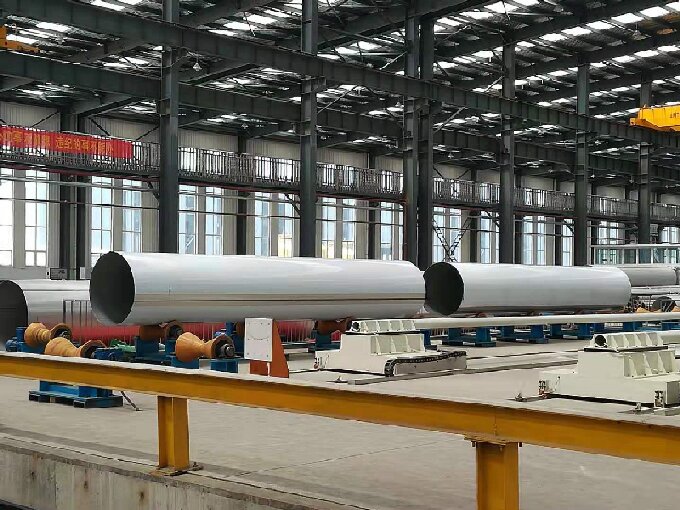 |
| json metadata | {"tags":["carbon","steel","pipe","ss"],"image":["https://cdn.steemitimages.com/DQmd65VsjcdYNj7H3J3Q9WAmpsfD8fkh8r64sCxQ6S3LaB6/tp2.jpg"],"app":"steemit/0.2","format":"markdown"} |
| Transaction Info | Block #95958798/Trx e528c89fc20e6d0191d25af6091ec8f8363a4e3a |
View Raw JSON Data
{
"trx_id": "e528c89fc20e6d0191d25af6091ec8f8363a4e3a",
"block": 95958798,
"trx_in_block": 5,
"op_in_trx": 0,
"virtual_op": 0,
"timestamp": "2025-05-28T09:13:12",
"op": [
"comment",
{
"parent_author": "",
"parent_permlink": "carbon",
"author": "sinosteelpipe",
"permlink": "carbon-steel-pipe-stainless-steel-pipe-alloy-steel-pipe-their-respective-advantages-and-applications",
"title": "Carbon steel pipe, stainless steel pipe, alloy steel pipe: their respective advantages and applications",
"body": "In the global industrial system, steel pipes, as \"industrial blood vessels\", undertake core functions such as transmission, support, and protection. Carbon steel pipes, stainless steel pipes and alloy steel pipes have formed completely different performance maps due to differences in composition and process. In the fields of automobile manufacturing, energy and chemical industry, aerospace, etc., the three have shown their strengths: carbon steel is the king for its cost-effectiveness, stainless steel is based on its corrosion resistance, and alloy steel breaks the deadlock with high strength. This article will take materials science as the anchor and combine the latest industry trends in 2025 to systematically analyze the performance boundaries and application logic of Class III steel pipes.\n1. Carbon steel pipe: a classic balance between cost and strength\n(1)、Component characteristics and core advantages\nBasic composition: carbon content 0.06%-2.0% (common grades Q235, 20# steel), manganese and silicon elements adjust the strength.\nCost Advantage: The raw material price is about 3,800-4,500 yuan/ton (data in April 2025), which is 1/3 of stainless steel and 1/5 of alloy steel.\nProcessing friendly: The welding forming efficiency is 40% higher than that of stainless steel, and is suitable for mass production.\n(2)、Typical application scenarios\nAutomotive field:Chassis structural parts: non-load-bearing beam (thickness 1.5-3mm), cold-rolled carbon steel (SPCC) is used to reduce weight by 10%.\nFuel system: Ordinary oil pipeline (working pressure ≤5MPa), galvanized carbon steel (such as STKM12A) to prevent rust.\nInfrastructure field:Construction scaffolding (Φ48mm×3.5mm), yield strength ≥235MPa, single load bearing exceeds 1 ton.Urban gas medium and low pressure pipeline network (GB/T 3091 standard), annual demand exceeds 20 million tons.\n(3)、Breakthrough of limitations\nAnti-corrosion upgrade: The \"zinc-aluminum-magnesium-coated carbon steel pipe\" developed by Baosteel (corrosion resistance is increased by 3 times) has been used in coastal water pipeline networks.\nLightweight innovation: Tesla Model 3 seat bracket uses laser welded carbon steel pipe, and the wall thickness has been reduced from 2mm to 1.2mm.\n2. Stainless steel pipe: the technical depth of the corrosion resistance king\n(1)Material classification and performance labeling\n|Type | Representative grade | Chromium/nickel content | Temperature resistance limit | Corrosion resistance scenes\n||Austenitic | 304/316L | 18%/10% | 800℃|Acid and alkali medium, marine environment\n||Ferrite | 430/439 | 16%-18% | 600℃|Car exhaust and hot water system\n||Duplex Steel | 2205 | 22%/5% | 300℃|High chloride ion environment (such as sea water)\n(2)Irreversible application highland\nNew energy vehicles:Battery cooling pipeline: 316L stainless steel (resistant to electrolyte corrosion), inner wall Ra≤0.8μm reduces flow resistance.\nHydrogen fuel storage tank: SUS444 ferrite stainless steel inner liner, anti-hydrogen embrittlement life exceeds 15 years.\nHigh-end manufacturing:Semiconductor clean room pipeline (EP grade electrolytic polishing), particle shedding amount <5 pieces/㎡.Supercritical boiler heat exchange tube (TP347H), withstand 650℃, 35MPa steam pressure.\n(3)Cost optimization path\nNickel Reduction Technology: QN1803 stainless steel developed by TISCO (Nickel content reduced from 8% to 1.5%), a 20% reduction in cost.\nComposite pipe: outer layer of carbon steel + inner layer of 0.1mm stainless steel (composite ratio 1:9), saving 35% in comprehensive cost.\n3. Alloy steel pipe: performance fortress under extreme working conditions\n(1)Alloyization logic and enhancement effect\nChromium (Cr): Improves oxidation resistance (such as 15CrMo resistance 540℃ high temperature).\nMolybdenum (Mo): Strengthen high temperature strength (such as P91 steel used in ultrasupercritical units).\nVanadium (V) + Niobium (Nb): Refined grains (API 5L X80 pipeline steel has 50% toughness).\n(2)Graphics of application in cutting-edge fields\nAerospace:Rocket engine fuel tube (Inconel 718 alloy), withstands the temperature difference between liquid oxygen -196℃ and 3000℃ in the combustion chamber.Aircraft hydraulic system (30CrMnSiA), fatigue life exceeds 100,000 cycles.\nAutomobile performance upgrade:Turbocharged exhaust manifold (4Cr25Ni35Nb), temperature resistant to 1050℃.Racing transmission shaft (30CrNiMo8), torsional strength up to 1200N·m.\n(3)Breakthrough cases\nThe NM400 wear-resistant alloy steel pipe developed by Ansteel has a lifespan of 8 times higher than that of ordinary carbon steel, accounting for 60% of the mining machinery market.\nPangang V-Ti microalloyed oil drill pipe breaks the US Grant Prideco monopoly.\n4. Selection and Decision Matrix: The Ultimate Showdown of Class Three Steel Pipes\n(1)Performance parameter comparison\n|Indicators | Carbon Steel Pipe | Stainless Steel Pipe | Alloy Steel Pipe\n||Tensile strength | 400-600MPa | 520-800MPa | 800-2000MPa\n||Corrosion resistance | Need for surface treatment | Excellent (self-passivation) | Medium (rely plating-dependent)\n||High temperature resistance limit | 300℃| 800℃ (austenitic) | 1200℃\n||Weight ratio | 1.0 (benchmark) | 1.05 | 0.95-1.1\n(2)Economic model\nFull life cycle cost: Although the initial investment of stainless steel for chemical pipelines is 30% higher, the maintenance-free cycle is as long as 20 years.\nPremium technical scenario: The heat transfer pipe of the evaporator of the nuclear power plant must use Incoloy 800 alloy, with a unit price exceeding 500,000 yuan/ton.\n(3)Scenario Selection Guide\nAutomobile exhaust system:Economy car: ferrite stainless steel (409L, cost 8,000 yuan/ton);Luxury car: Duplex stainless steel (2205, resistant to chloride ion corrosion)\nDeep-sea oil and gas pipeline:Shallow sea: X65 carbon steel + 3LPE anti-corrosion (comprehensive cost 12,000 yuan/ton); Ultra-deep water: bimetal composite tube (inner wall 625 alloy + outer layer X70).\n5. Materials Revolution in the next ten years: Who will dominate the industry?\n(1)Carbon steel pipe: New opportunities for green regeneration\nHydrogen metallurgy technology (such as HYBRIT) reduces carbon steel emissions by 95%, and Volvo has purchased \"zero carbon steel pipes\" for electric vehicle platforms.\nBio-based coatings (such as chitosan) replace traditional galvanizing to achieve zero corrosion in the marine environment for 20 years.\n(2)Stainless steel pipe: functional upgrade wave\nSelf-healing stainless steel (microcapsule corrosion inhibitor embedded in the matrix), the repair rate exceeds 90% 72 hours after scratching.\nTISCO is the world's first launch of 0.01mm ultra-thin stainless steel foil for flexible battery current collectors.\n(3)Alloy steel pipe: Extreme performance breakthrough again\nHigh-entropy alloy tube (more than 5 main elements): the neutron radiation resistance is increased by 10 times, making it the first choice for nuclear fusion devices.\n4DPrint shape memory alloy tubes (such as NiTiNOL) to adapt to pressure fluctuations independently.\n6. Conclusion\n When choosing carbon steel, stainless steel or alloy steel, the essence is to find the optimal solution between cost, performance and scenario requirements. With the maturity of technologies such as material genome planning and quantum computing simulation, steel pipes will no longer be the solo dance of a single material in the future, but a \"symphony\" of cross-matter collaboration - perhaps in 2030, we will see disruptive products such as carbon steel-graphene composite tubes, stainless steel-ceramic self-lubricated tubes, and infinite possibilities to redefine the industrial boundaries.\n",
"json_metadata": "{\"tags\":[\"carbon\",\"steel\",\"pipe\",\"ss\"],\"image\":[\"https://cdn.steemitimages.com/DQmd65VsjcdYNj7H3J3Q9WAmpsfD8fkh8r64sCxQ6S3LaB6/tp2.jpg\"],\"app\":\"steemit/0.2\",\"format\":\"markdown\"}"
}
]
}steemdelegated 10.283 SP to @sinosteelpipe2025/05/16 17:19:18
steemdelegated 10.283 SP to @sinosteelpipe
2025/05/16 17:19:18
| delegator | steem |
| delegatee | sinosteelpipe |
| vesting shares | 16722.935705 VESTS |
| Transaction Info | Block #95623595/Trx 01d3923008ac86ed8ed0c8e8d27143ea3933cb29 |
View Raw JSON Data
{
  "trx_id": "01d3923008ac86ed8ed0c8e8d27143ea3933cb29",
  "block": 95623595,
  "trx_in_block": 0,
  "op_in_trx": 0,
  "virtual_op": 0,
  "timestamp": "2025-05-16T17:19:18",
  "op": [
    "delegate_vesting_shares",
    {
      "delegator": "steem",
      "delegatee": "sinosteelpipe",
      "vesting_shares": "16722.935705 VESTS"
    }
  ]
}2025/05/16 08:32:15
2025/05/16 08:32:15
| parent author | |
| parent permlink | steel |
| author | sinosteelpipe |
| permlink | chinese-steel-enterprises-are-accelerating-their-investment-and-layout-in-the-middle-east-region |
| title | Chinese steel enterprises are accelerating their investment and layout in the Middle East region |
| body | Related research reports show that the scale of Middle East trade is expected to exceed $1.8 trillion in 2025, of which the proportion of non-oil trade will jump from 48% in 2023 to 55%. Emerging fields such as cross-border e-commerce, new energy equipment, and medical technology are growing at an average annual rate of over 25%. Against the backdrop of the Middle East accelerating its economic diversification process, the demand for steel in the Middle East continues to rise. The "infrastructure construction boom" has created a huge market for steel demand. Projects such as urban rail transit and commercial complexes are being continuously promoted, and the demand for medium- and high-end steel products is growing. At the same time, the development of strategic industrial fields such as oil and gas, shipbuilding, and marine engineering also puts forward higher requirements for special steel products. A set of data also illustrates this point: In 2024, the steel consumption in the Middle East was 57.9 million tons, and the steel demand in 2025 is expected to reach 59.5 million tons, a year-on-year increase of 2.8%. However, compared with the rising demand for steel, the steel production capacity in the Middle East appears insufficient, and there are structural contradictions in the steel supply system. Data shows that the local crude steel production capacity accounts for less than 3% of the global total, and more than two-thirds of the steel products rely on imports from outside the region, especially there is a large supply gap for high-end plates. The huge gap between production capacity and demand makes the Middle East a blue ocean market that global steel enterprises are vying for. Faced with the huge potential of the Middle East steel market, Chinese enterprises such as Baosteel Corporation, Shanxi Nangang Iron and Steel Co., Ltd., and Xinfeng Iron and Steel Co., Ltd. have invested and laid out in succession. By building production bases and supporting industrial parks, they are deeply involved in the construction of the Middle East steel industry. More info : https://www.sinosteel-pipe.com/en/chinese-steel-enterprises-are-accelerating-their-investment-and-layout-in-the-middle-east-region.html 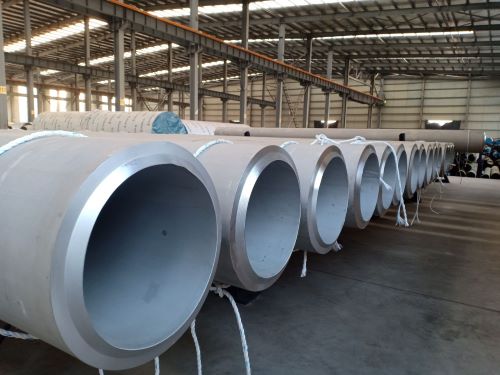 |
| json metadata | {"tags":["steel"],"image":["https://cdn.steemitimages.com/DQmQuAM8Sjs9nHabqyQoKpmucBnC2fosnT3YCXaicYzK6FZ/7f9bb0269f3.jpg"],"links":["https://www.sinosteel-pipe.com/en/chinese-steel-enterprises-are-accelerating-their-investment-and-layout-in-the-middle-east-region.html"],"app":"steemit/0.2","format":"markdown"} |
| Transaction Info | Block #95613073/Trx c1017fe4ebf4eef7bf125ab0129a6d8c7f2cc4fb |
View Raw JSON Data
{
"trx_id": "c1017fe4ebf4eef7bf125ab0129a6d8c7f2cc4fb",
"block": 95613073,
"trx_in_block": 0,
"op_in_trx": 0,
"virtual_op": 0,
"timestamp": "2025-05-16T08:32:15",
"op": [
"comment",
{
"parent_author": "",
"parent_permlink": "steel",
"author": "sinosteelpipe",
"permlink": "chinese-steel-enterprises-are-accelerating-their-investment-and-layout-in-the-middle-east-region",
"title": "Chinese steel enterprises are accelerating their investment and layout in the Middle East region",
"body": "Related research reports show that the scale of Middle East trade is expected to exceed $1.8 trillion in 2025, of which the proportion of non-oil trade will jump from 48% in 2023 to 55%. Emerging fields such as cross-border e-commerce, new energy equipment, and medical technology are growing at an average annual rate of over 25%.\n\nAgainst the backdrop of the Middle East accelerating its economic diversification process, the demand for steel in the Middle East continues to rise. The \"infrastructure construction boom\" has created a huge market for steel demand. Projects such as urban rail transit and commercial complexes are being continuously promoted, and the demand for medium- and high-end steel products is growing. At the same time, the development of strategic industrial fields such as oil and gas, shipbuilding, and marine engineering also puts forward higher requirements for special steel products.\n\nA set of data also illustrates this point: In 2024, the steel consumption in the Middle East was 57.9 million tons, and the steel demand in 2025 is expected to reach 59.5 million tons, a year-on-year increase of 2.8%.\n\nHowever, compared with the rising demand for steel, the steel production capacity in the Middle East appears insufficient, and there are structural contradictions in the steel supply system.\n\nData shows that the local crude steel production capacity accounts for less than 3% of the global total, and more than two-thirds of the steel products rely on imports from outside the region, especially there is a large supply gap for high-end plates.\n\nThe huge gap between production capacity and demand makes the Middle East a blue ocean market that global steel enterprises are vying for.\n\nFaced with the huge potential of the Middle East steel market, Chinese enterprises such as Baosteel Corporation, Shanxi Nangang Iron and Steel Co., Ltd., and Xinfeng Iron and Steel Co., Ltd. have invested and laid out in succession. By building production bases and supporting industrial parks, they are deeply involved in the construction of the Middle East steel industry.\nMore info : https://www.sinosteel-pipe.com/en/chinese-steel-enterprises-are-accelerating-their-investment-and-layout-in-the-middle-east-region.html\n\n",
"json_metadata": "{\"tags\":[\"steel\"],\"image\":[\"https://cdn.steemitimages.com/DQmQuAM8Sjs9nHabqyQoKpmucBnC2fosnT3YCXaicYzK6FZ/7f9bb0269f3.jpg\"],\"links\":[\"https://www.sinosteel-pipe.com/en/chinese-steel-enterprises-are-accelerating-their-investment-and-layout-in-the-middle-east-region.html\"],\"app\":\"steemit/0.2\",\"format\":\"markdown\"}"
}
]
}2025/05/07 08:20:45
2025/05/07 08:20:45
| parent author | |
| parent permlink | eu |
| author | sinosteelpipe |
| permlink | the-european-union-has-announced-a-plan-to-end-the-import-of-russian-energy-with-2027-set-as-the-deadline |
| title | The European Union has announced a plan to end the import of Russian energy, with 2027 set as the deadline |
| body | On May 6, Dan Jørgensen, the head of the European Union's energy affairs, announced a plan to end the EU's import of Russian energy at the plenary session of the European Parliament in Strasbourg, France. According to the plan, the EU has set 2027 as the deadline. By then, all 27 member states (from landlocked countries to coastal countries) must gradually stop purchasing the remaining Russian energy, especially liquefied natural gas transported by tankers. The plan will be implemented gradually. First, by the end of 2025, the signing of new short-term contracts will be prohibited. In the second phase, by the end of 2027, long-term contracts accounting for two-thirds of Russian natural gas supplies will be terminated. In addition, further restrictive measures will be implemented to crack down on the "shadow fleet" that secretly transports Russian oil, and the import of Russian uranium and other nuclear materials will be stopped. Moreover, each member state will be required to draft a national plan detailing how they intend to remove Russian natural gas, nuclear energy, and oil from their energy mix. According to reports from Euronews, last year, the EU purchased 31.62 billion cubic meters of Russian pipeline natural gas and 20.05 billion cubic meters of Russian liquefied natural gas, accounting for 19% of its total natural gas consumption. More : https://www.sinosteel-pipe.com/en/blog-5597454537497235.html 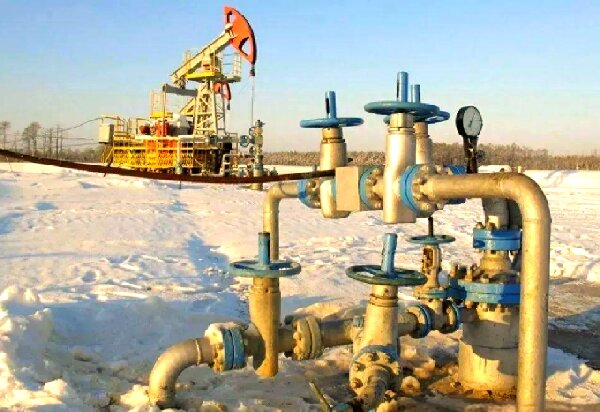 |
| json metadata | {"tags":["eu","russian","energy"],"image":["https://cdn.steemitimages.com/DQmbUvqpyAj1XjUkXFLfbzRvma1ycoiCDYuAwGFZTTv9KK8/%E5%BE%AE%E4%BF%A1%E6%88%AA%E5%9B%BE_20250507110251.jpg"],"links":["https://www.sinosteel-pipe.com/en/blog-5597454537497235.html"],"app":"steemit/0.2","format":"markdown"} |
| Transaction Info | Block #95354257/Trx ac0f73fd93002619172e274e7281bd091e239508 |
View Raw JSON Data
{
"trx_id": "ac0f73fd93002619172e274e7281bd091e239508",
"block": 95354257,
"trx_in_block": 4,
"op_in_trx": 0,
"virtual_op": 0,
"timestamp": "2025-05-07T08:20:45",
"op": [
"comment",
{
"parent_author": "",
"parent_permlink": "eu",
"author": "sinosteelpipe",
"permlink": "the-european-union-has-announced-a-plan-to-end-the-import-of-russian-energy-with-2027-set-as-the-deadline",
"title": "The European Union has announced a plan to end the import of Russian energy, with 2027 set as the deadline",
"body": "On May 6, Dan Jørgensen, the head of the European Union's energy affairs, announced a plan to end the EU's import of Russian energy at the plenary session of the European Parliament in Strasbourg, France.\n\nAccording to the plan, the EU has set 2027 as the deadline. By then, all 27 member states (from landlocked countries to coastal countries) must gradually stop purchasing the remaining Russian energy, especially liquefied natural gas transported by tankers.\n\nThe plan will be implemented gradually. First, by the end of 2025, the signing of new short-term contracts will be prohibited. In the second phase, by the end of 2027, long-term contracts accounting for two-thirds of Russian natural gas supplies will be terminated. In addition, further restrictive measures will be implemented to crack down on the \"shadow fleet\" that secretly transports Russian oil, and the import of Russian uranium and other nuclear materials will be stopped. Moreover, each member state will be required to draft a national plan detailing how they intend to remove Russian natural gas, nuclear energy, and oil from their energy mix.\n\nAccording to reports from Euronews, last year, the EU purchased 31.62 billion cubic meters of Russian pipeline natural gas and 20.05 billion cubic meters of Russian liquefied natural gas, accounting for 19% of its total natural gas consumption.\nMore : https://www.sinosteel-pipe.com/en/blog-5597454537497235.html\n\n",
"json_metadata": "{\"tags\":[\"eu\",\"russian\",\"energy\"],\"image\":[\"https://cdn.steemitimages.com/DQmbUvqpyAj1XjUkXFLfbzRvma1ycoiCDYuAwGFZTTv9KK8/%E5%BE%AE%E4%BF%A1%E6%88%AA%E5%9B%BE_20250507110251.jpg\"],\"links\":[\"https://www.sinosteel-pipe.com/en/blog-5597454537497235.html\"],\"app\":\"steemit/0.2\",\"format\":\"markdown\"}"
}
]
}sinosteelpipepublished a new post: global-crude-steel-production-in-march-20252025/04/25 07:25:30
sinosteelpipepublished a new post: global-crude-steel-production-in-march-2025
2025/04/25 07:25:30
| parent author | |
| parent permlink | crude |
| author | sinosteelpipe |
| permlink | global-crude-steel-production-in-march-2025 |
| title | Global crude steel production in March 2025 |
| body | @@ -2414,16 +2414,111 @@ up 3.7%25. +%0AMore info : https://www.sinosteel-pipe.com/en/global-crude-steel-production-in-march-2025.html %0A%0A!%5Bcrud |
| json metadata | {"tags":["steel"],"image":["https://cdn.steemitimages.com/DQmYMPzfNukDcJbLtxwNVoLPt1kYNRFcyBLSwFMg9RpfZpC/crude-steel-production.jpeg","https://cdn.steemitimages.com/DQmY8VwC2E5qwN1LpZbd1QrLvHMtSd6CuKwn2Qn2t5AgjoT/%E5%BE%AE%E4%BF%A1%E6%88%AA%E5%9B%BE_20250424110900.png","https://cdn.steemitimages.com/DQmTGPeNFvr2r3fpVFTukfmzExwi9uKm38spLtu4WBcvpGE/%E5%BE%AE%E4%BF%A1%E6%88%AA%E5%9B%BE_20250424111008.png"],"app":"steemit/0.2","format":"markdown","links":["https://www.sinosteel-pipe.com/en/global-crude-steel-production-in-march-2025.html"]} |
| Transaction Info | Block #95008349/Trx d08de51ac74c949083b8714076d7f2792c686aaa |
View Raw JSON Data
{
  "trx_id": "d08de51ac74c949083b8714076d7f2792c686aaa",
  "block": 95008349,
  "trx_in_block": 0,
  "op_in_trx": 0,
  "virtual_op": 0,
  "timestamp": "2025-04-25T07:25:30",
  "op": [
    "comment",
    {
      "parent_author": "",
      "parent_permlink": "crude",
      "author": "sinosteelpipe",
      "permlink": "global-crude-steel-production-in-march-2025",
      "title": "Global crude steel production in March 2025",
      "body": "@@ -2414,16 +2414,111 @@\n up 3.7%25.\n+%0AMore info : https://www.sinosteel-pipe.com/en/global-crude-steel-production-in-march-2025.html\n %0A%0A!%5Bcrud\n",
      "json_metadata": "{\"tags\":[\"steel\"],\"image\":[\"https://cdn.steemitimages.com/DQmYMPzfNukDcJbLtxwNVoLPt1kYNRFcyBLSwFMg9RpfZpC/crude-steel-production.jpeg\",\"https://cdn.steemitimages.com/DQmY8VwC2E5qwN1LpZbd1QrLvHMtSd6CuKwn2Qn2t5AgjoT/%E5%BE%AE%E4%BF%A1%E6%88%AA%E5%9B%BE_20250424110900.png\",\"https://cdn.steemitimages.com/DQmTGPeNFvr2r3fpVFTukfmzExwi9uKm38spLtu4WBcvpGE/%E5%BE%AE%E4%BF%A1%E6%88%AA%E5%9B%BE_20250424111008.png\"],\"app\":\"steemit/0.2\",\"format\":\"markdown\",\"links\":[\"https://www.sinosteel-pipe.com/en/global-crude-steel-production-in-march-2025.html\"]}"
    }
  ]
}sinosteelpipepublished a new post: global-crude-steel-production-in-march-20252025/04/25 07:24:51
sinosteelpipepublished a new post: global-crude-steel-production-in-march-2025
2025/04/25 07:24:51
| parent author | |
| parent permlink | crude |
| author | sinosteelpipe |
| permlink | global-crude-steel-production-in-march-2025 |
| title | Global crude steel production in March 2025 |
| body | World crude steel production for the 69 countries reporting to the World Steel Association (worldsteel) was 166.1 million tonnes (Mt) in March 2025, a 2.9% increase compared to March 2024. In January 2025, the global crude steel production of 69 countries/regions included in the World Steel Association's statistics was 151.4 million tons, a year-on-year decrease of 4.4%. In February 2025, the global crude steel production of these 69 countries/regions was 144.7 million tons, a year-on-year decrease of 3.4%. March was the first month this year to see a year-on-year increase after consecutive declines. Crude steel production by region Africa produced 1.9 Mt in March 2025, up 0.6% on March 2024. Asia and Oceania produced 123.6 Mt, up 3.9%. The EU (27) produced 11.7 Mt, up 0.2%. Europe, Other produced 3.6 Mt, down 7.2%. The Middle East produced 5.3 Mt, up 1.9%. North America produced 9.2 Mt, up 1.4%. Russia & other CIS + Ukraine produced 7.1 Mt, down 3.5%. South America produced 3.7 Mt, up 6.5%. The 69 countries included in this table accounted for approximately 98% of total world crude steel production in 2024. Regions and countries covered by the table: Africa: Algeria, Egypt, Libya, Morocco, South Africa, Tunisia Asia and Oceania: Australia, China, India, Japan, Mongolia, New Zealand, Pakistan, South Korea, Taiwan (China), Thailand, Viet Nam European Union (27): Austria, Belgium, Bulgaria, Croatia, Czechia, Finland, France, Germany, Greece, Italy, Luxembourg, Netherlands, Poland, Portugal, Romania, Slovakia, Slovenia, Spain, Sweden Europe, Other: Macedonia, Norway, Serbia, Türkiye, United Kingdom Middle East: Bahrain, Iran, Iraq, Jordan, Kuwait, Oman, Qatar, Saudi Arabia, United Arab Emirates, Yemen North America: Canada, Cuba, El Salvador, Guatemala, Mexico, United States Russia & other CIS + Ukraine: Kazakhstan, Russia, Ukraine South America: Argentina, Brazil, Chile, Colombia, Ecuador, Paraguay, Peru, Uruguay, Venezuela Top 10 steel-producing countries China produced 92.8 Mt in March 2025, up 4.6% on March 2024. India produced 13.8 Mt, up 7.0%. Japan produced 7.2 Mt, up 0.2%. The United States produced 6.7 Mt, down 1.5%. Russia is estimated to have produced 6.2 Mt, down 3.2%. South Korea produced 5.0 Mt, down 5.3%. Türkiye produced 3.1 Mt, down 2.8%. Germany is estimated to have produced 3.1 Mt, down 11.7%. Brazil produced 2.9 Mt, up 6.6%. Iran produced 3.3 Mt, up 3.7%. 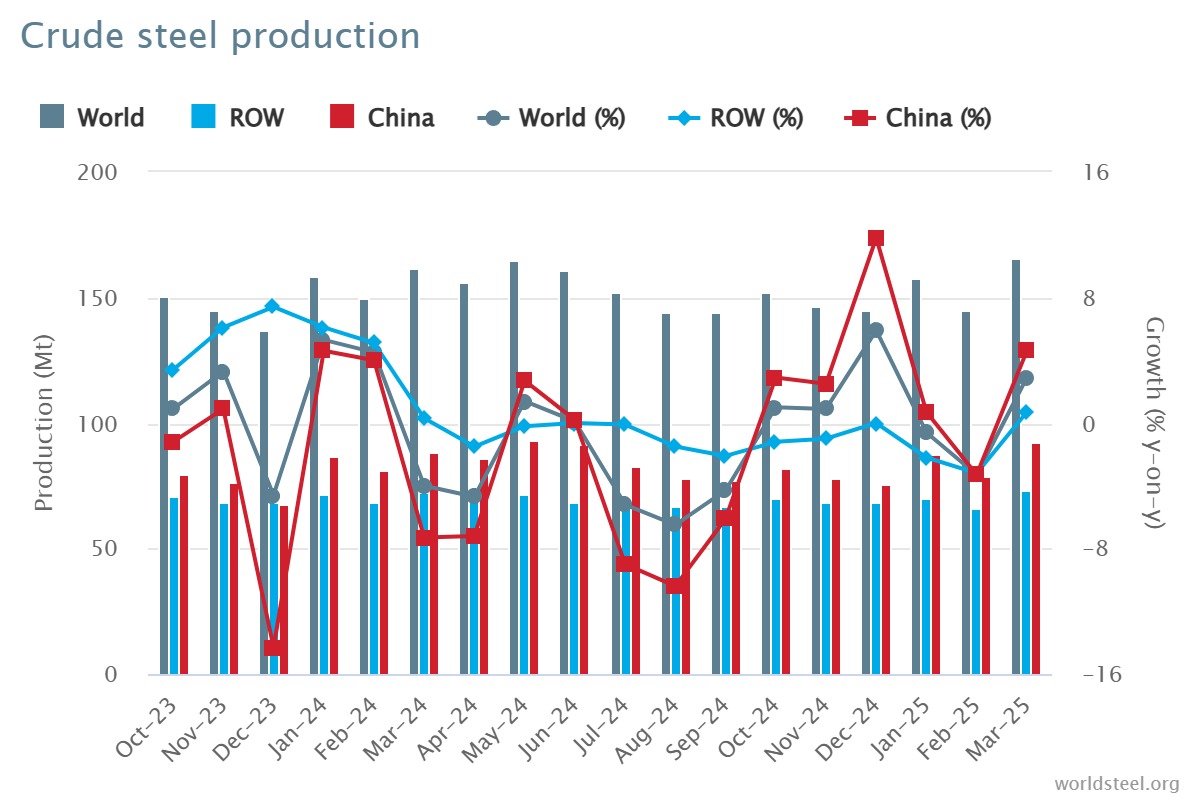 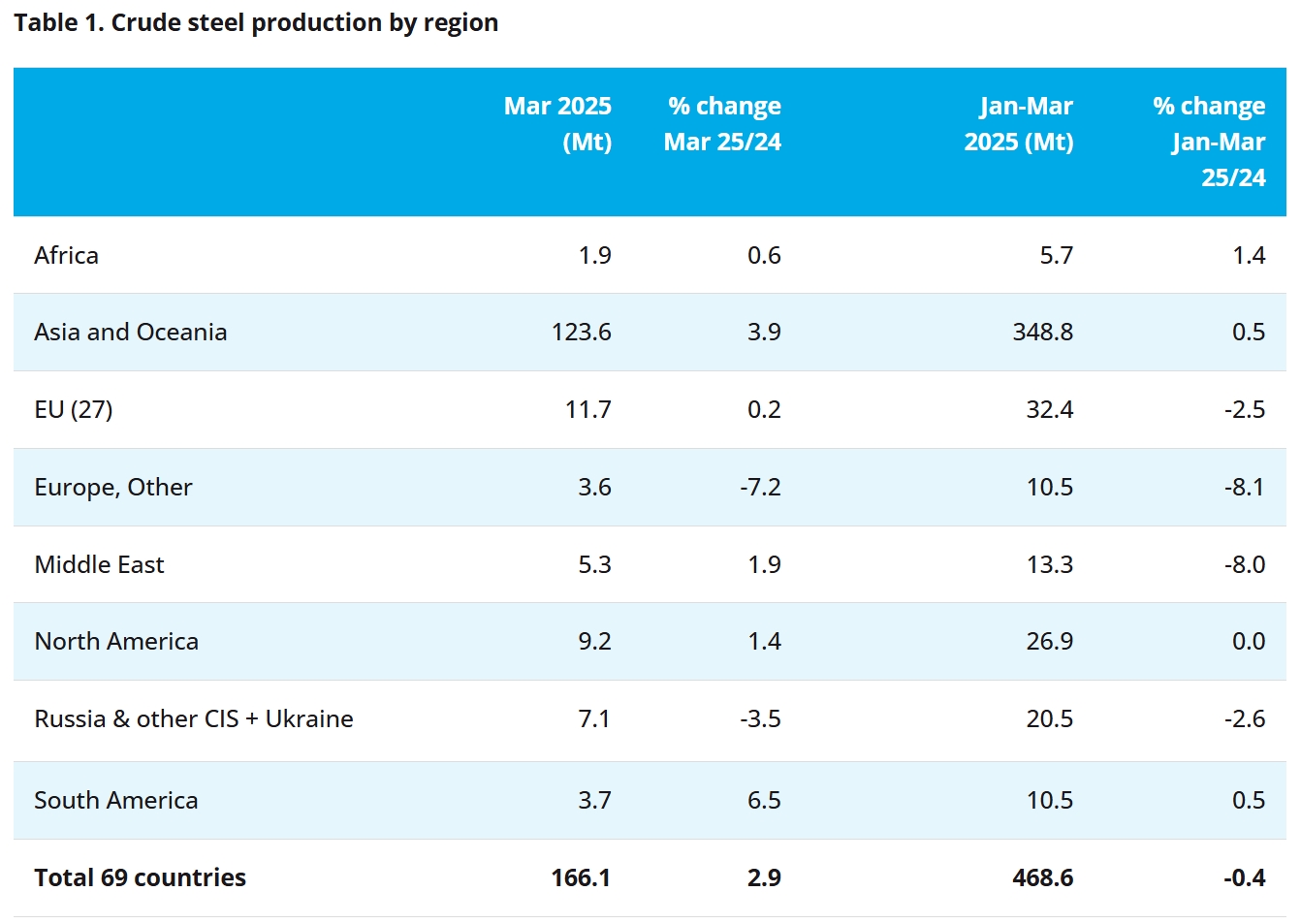 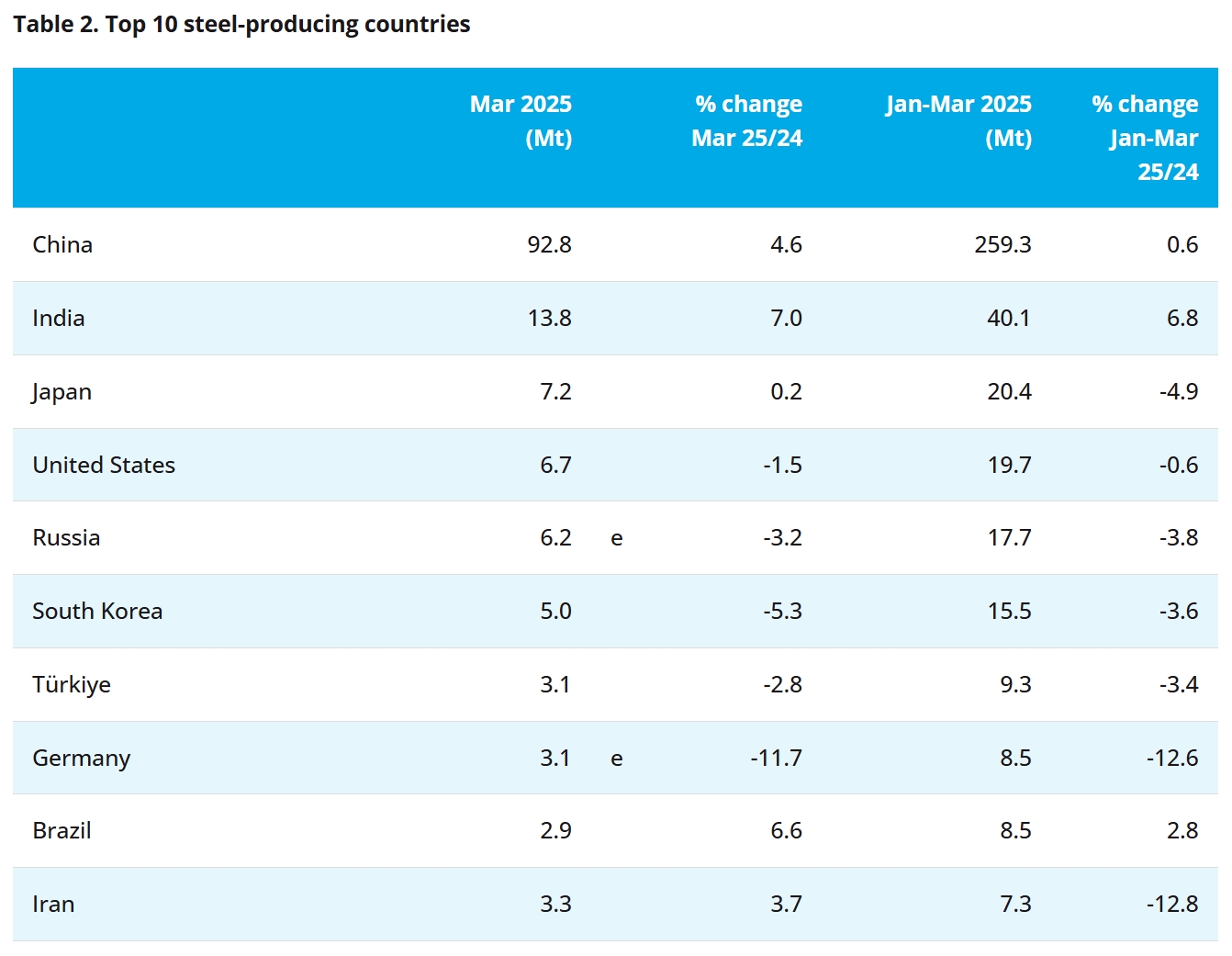 |
| json metadata | {"tags":["crude","steel"],"image":["https://cdn.steemitimages.com/DQmYMPzfNukDcJbLtxwNVoLPt1kYNRFcyBLSwFMg9RpfZpC/crude-steel-production.jpeg","https://cdn.steemitimages.com/DQmY8VwC2E5qwN1LpZbd1QrLvHMtSd6CuKwn2Qn2t5AgjoT/%E5%BE%AE%E4%BF%A1%E6%88%AA%E5%9B%BE_20250424110900.png","https://cdn.steemitimages.com/DQmTGPeNFvr2r3fpVFTukfmzExwi9uKm38spLtu4WBcvpGE/%E5%BE%AE%E4%BF%A1%E6%88%AA%E5%9B%BE_20250424111008.png"],"app":"steemit/0.2","format":"markdown"} |
| Transaction Info | Block #95008336/Trx c6c6b7908bfffffcaa28f502a81ccda6c43f146e |
View Raw JSON Data
{
"trx_id": "c6c6b7908bfffffcaa28f502a81ccda6c43f146e",
"block": 95008336,
"trx_in_block": 2,
"op_in_trx": 0,
"virtual_op": 0,
"timestamp": "2025-04-25T07:24:51",
"op": [
"comment",
{
"parent_author": "",
"parent_permlink": "crude",
"author": "sinosteelpipe",
"permlink": "global-crude-steel-production-in-march-2025",
"title": "Global crude steel production in March 2025",
"body": "World crude steel production for the 69 countries reporting to the World Steel Association (worldsteel) was 166.1 million tonnes (Mt) in March 2025, a 2.9% increase compared to March 2024.\nIn January 2025, the global crude steel production of 69 countries/regions included in the World Steel Association's statistics was 151.4 million tons, a year-on-year decrease of 4.4%.\nIn February 2025, the global crude steel production of these 69 countries/regions was 144.7 million tons, a year-on-year decrease of 3.4%.\nMarch was the first month this year to see a year-on-year increase after consecutive declines.\n\nCrude steel production by region\n\nAfrica produced 1.9 Mt in March 2025, up 0.6% on March 2024.\nAsia and Oceania produced 123.6 Mt, up 3.9%.\nThe EU (27) produced 11.7 Mt, up 0.2%.\nEurope, Other produced 3.6 Mt, down 7.2%.\nThe Middle East produced 5.3 Mt, up 1.9%.\nNorth America produced 9.2 Mt, up 1.4%.\nRussia & other CIS + Ukraine produced 7.1 Mt, down 3.5%.\nSouth America produced 3.7 Mt, up 6.5%.\n\n\nThe 69 countries included in this table accounted for approximately 98% of total world crude steel production in 2024.\n\nRegions and countries covered by the table:\n\nAfrica: Algeria, Egypt, Libya, Morocco, South Africa, Tunisia\nAsia and Oceania: Australia, China, India, Japan, Mongolia, New Zealand, Pakistan, South Korea, Taiwan (China), Thailand, Viet Nam\nEuropean Union (27): Austria, Belgium, Bulgaria, Croatia, Czechia, Finland, France, Germany, Greece, Italy, Luxembourg, Netherlands, Poland, Portugal, Romania, Slovakia, Slovenia, Spain, Sweden\nEurope, Other: Macedonia, Norway, Serbia, Türkiye, United Kingdom\nMiddle East: Bahrain, Iran, Iraq, Jordan, Kuwait, Oman, Qatar, Saudi Arabia, United Arab Emirates, Yemen\nNorth America: Canada, Cuba, El Salvador, Guatemala, Mexico, United States\nRussia & other CIS + Ukraine: Kazakhstan, Russia, Ukraine\nSouth America: Argentina, Brazil, Chile, Colombia, Ecuador, Paraguay, Peru, Uruguay, Venezuela\nTop 10 steel-producing countries\n\nChina produced 92.8 Mt in March 2025, up 4.6% on March 2024.\nIndia produced 13.8 Mt, up 7.0%.\nJapan produced 7.2 Mt, up 0.2%.\nThe United States produced 6.7 Mt, down 1.5%.\nRussia is estimated to have produced 6.2 Mt, down 3.2%.\nSouth Korea produced 5.0 Mt, down 5.3%.\nTürkiye produced 3.1 Mt, down 2.8%.\nGermany is estimated to have produced 3.1 Mt, down 11.7%.\nBrazil produced 2.9 Mt, up 6.6%.\nIran produced 3.3 Mt, up 3.7%.\n\n\n\n\n\n",
"json_metadata": "{\"tags\":[\"crude\",\"steel\"],\"image\":[\"https://cdn.steemitimages.com/DQmYMPzfNukDcJbLtxwNVoLPt1kYNRFcyBLSwFMg9RpfZpC/crude-steel-production.jpeg\",\"https://cdn.steemitimages.com/DQmY8VwC2E5qwN1LpZbd1QrLvHMtSd6CuKwn2Qn2t5AgjoT/%E5%BE%AE%E4%BF%A1%E6%88%AA%E5%9B%BE_20250424110900.png\",\"https://cdn.steemitimages.com/DQmTGPeNFvr2r3fpVFTukfmzExwi9uKm38spLtu4WBcvpGE/%E5%BE%AE%E4%BF%A1%E6%88%AA%E5%9B%BE_20250424111008.png\"],\"app\":\"steemit/0.2\",\"format\":\"markdown\"}"
}
]
}sinosteelpipepublished a new post: china-has-taken-a-series-of-measures-to-counteract-u-s-tariffs2025/04/08 12:13:51
sinosteelpipepublished a new post: china-has-taken-a-series-of-measures-to-counteract-u-s-tariffs
2025/04/08 12:13:51
| parent author | |
| parent permlink | tariffs |
| author | sinosteelpipe |
| permlink | china-has-taken-a-series-of-measures-to-counteract-u-s-tariffs |
| title | China has taken a series of measures to counteract U.S. tariffs |
| body | Starting from April 4, China has launched a series of countermeasures in response to U.S. actions. The Tariff Commission of the State Council, the Ministry of Commerce, and the General Administration of Customs of China have successively announced multiple countermeasures against the United States. These measures include imposing a 34% tariff on all U.S.-origin imported goods, filing a case against the U.S. at the World Trade Organization (WTO) dispute settlement mechanism, adding multiple U.S. entities to the export control list, implementing export controls on medium and heavy rare earth-related items, and suspending the qualifications of six U.S. companies for exporting to China. On the morning of April 5, six business associations, including the China Chamber of Commerce for Import and Export of Medicines and Health Products, the China Chamber of Commerce for Import and Export of Machinery and Electronic Products, and the China Chamber of Commerce for Import and Export of Foodstuffs, Native Produce and Animal By-Products, issued a statement firmly opposing the U.S. imposition of "tariffs of equivalence" and supporting the countermeasures taken by the Chinese government. (1)On April 4, 2025, China will impose a 34% tariff on all U.S.-origin imported goods starting from 12:01 AM on April 10. Filing a case against the U.S. at the WTO dispute settlement mechanism. (2)On April 4, 2025, the Ministry of Commerce of China announced the addition of 16 U.S. entities to the export control list: High Point Aerotechnologies Universal Logistics Holdings, Inc. Source Intelligence, Inc. Coalition For A Prosperous America Sierra Nevada Corporation Edge Autonomy Operations LLC Cyberlux Corporation Hudson Technologies Co. Saronic Technologies, Inc. Oceaneering International, Inc. Stick Rudder Enterprises LLC Cubic Corporation S3 AeroDefense TCOM, Limited Partnership TextOre ACT1 Federal (3)Implementing export controls on medium and heavy rare earth-related items: On April 4, the Ministry of Commerce of China, in conjunction with the General Administration of Customs, issued a notice on implementing export control measures for seven categories of medium and heavy rare earth-related items, including samarium, gadolinium, terbium, dysprosium, lutetium, scandium, and yttrium, which officially took effect on the date of publication. China has reactivated the "Unreliable Entities List" to impose sanctions on 11 companies involved in arms sales: Skydio Inc. BRINC Drones, Inc. Red Six Solutions SYNEXXUS, Inc. Firestorm Labs, Inc. Kratos Unmanned Aerial Systems, Inc. HavocAI Neros Technologies Domo Tactical Communications Rapid Flight LLC Insitu, Inc. (4)The Ministry of Commerce of China has decided to conduct an industrial competitiveness investigation into imported medical CT tubes starting from April 4, 2025, and has initiated an anti-dumping investigation into imported medical CT tubes originating from the United States and India. (5)The General Administration of Customs of China has announced the suspension of the qualification of U.S. company C&D (USA) INC. for exporting sorghum to China. The General Administration of Customs of China has issued a notice suspending the export of poultry products from two U.S. poultry companies to China. (6)The General Administration of Customs of China has announced the suspension of the qualification for exporting poultry bone meal to China for three companies, including American Proteins Inc. (7)The China Market Supervision Administration has launched an investigation into DuPont China Group Co., Ltd. for suspected violations of the "Anti-Monopoly Law of the People's Republic of China." (8)China, in collaboration with the European Union, Japan, and 16 other WTO members, is preparing to jointly submit objections. From : https://www.sinosteel-pipe.com/en/china-has-taken-a-series-of-measures-to-counteract-u.s.-tariffs.html |
| json metadata | {"tags":["tariffs"],"links":["https://www.sinosteel-pipe.com/en/china-has-taken-a-series-of-measures-to-counteract-u.s.-tariffs.html"],"app":"steemit/0.2","format":"markdown"} |
| Transaction Info | Block #94526429/Trx 354a9a4ccf20b6f9cb3f1180cb90270b3ddabd49 |
View Raw JSON Data
{
  "trx_id": "354a9a4ccf20b6f9cb3f1180cb90270b3ddabd49",
  "block": 94526429,
  "trx_in_block": 2,
  "op_in_trx": 0,
  "virtual_op": 0,
  "timestamp": "2025-04-08T12:13:51",
  "op": [
    "comment",
    {
      "parent_author": "",
      "parent_permlink": "tariffs",
      "author": "sinosteelpipe",
      "permlink": "china-has-taken-a-series-of-measures-to-counteract-u-s-tariffs",
      "title": "China has taken a series of measures to counteract U.S. tariffs",
      "body": "Starting from April 4, China has launched a series of countermeasures in response to U.S. actions. The Tariff Commission of the State Council, the Ministry of Commerce, and the General Administration of Customs of China have successively announced multiple countermeasures against the United States. These measures include imposing a 34% tariff on all U.S.-origin imported goods, filing a case against the U.S. at the World Trade Organization (WTO) dispute settlement mechanism, adding multiple U.S. entities to the export control list, implementing export controls on medium and heavy rare earth-related items, and suspending the qualifications of six U.S. companies for exporting to China.\n\nOn the morning of April 5, six business associations, including the China Chamber of Commerce for Import and Export of Medicines and Health Products, the China Chamber of Commerce for Import and Export of Machinery and Electronic Products, and the China Chamber of Commerce for Import and Export of Foodstuffs, Native Produce and Animal By-Products, issued a statement firmly opposing the U.S. imposition of \"tariffs of equivalence\" and supporting the countermeasures taken by the Chinese government.\n\n(1)On April 4, 2025, China will impose a 34% tariff on all U.S.-origin imported goods starting from 12:01 AM on April 10.\nFiling a case against the U.S. at the WTO dispute settlement mechanism.\n(2)On April 4, 2025, the Ministry of Commerce of China announced the addition of 16 U.S. entities to the export control list:\nHigh Point Aerotechnologies\nUniversal Logistics Holdings, Inc.\nSource Intelligence, Inc.\nCoalition For A Prosperous America\nSierra Nevada Corporation\nEdge Autonomy Operations LLC\nCyberlux Corporation\nHudson Technologies Co.\nSaronic Technologies, Inc.\nOceaneering International, Inc.\nStick Rudder Enterprises LLC\nCubic Corporation\nS3 AeroDefense\nTCOM, Limited Partnership\nTextOre\nACT1 Federal\n(3)Implementing export controls on medium and heavy rare earth-related items: On April 4, the Ministry of Commerce of China, in conjunction with the General Administration of Customs, issued a notice on implementing export control measures for seven categories of medium and heavy rare earth-related items, including samarium, gadolinium, terbium, dysprosium, lutetium, scandium, and yttrium, which officially took effect on the date of publication.\nChina has reactivated the \"Unreliable Entities List\" to impose sanctions on 11 companies involved in arms sales:\nSkydio Inc.\nBRINC Drones, Inc.\nRed Six Solutions\nSYNEXXUS, Inc.\nFirestorm Labs, Inc.\nKratos Unmanned Aerial Systems, Inc.\nHavocAI\nNeros Technologies\nDomo Tactical Communications\nRapid Flight LLC\nInsitu, Inc.\n(4)The Ministry of Commerce of China has decided to conduct an industrial competitiveness investigation into imported medical CT tubes starting from April 4, 2025, and has initiated an anti-dumping investigation into imported medical CT tubes originating from the United States and India.\n(5)The General Administration of Customs of China has announced the suspension of the qualification of U.S. company C&D (USA) INC. for exporting sorghum to China.\nThe General Administration of Customs of China has issued a notice suspending the export of poultry products from two U.S. poultry companies to China.\n(6)The General Administration of Customs of China has announced the suspension of the qualification for exporting poultry bone meal to China for three companies, including American Proteins Inc.\n(7)The China Market Supervision Administration has launched an investigation into DuPont China Group Co., Ltd. for suspected violations of the \"Anti-Monopoly Law of the People's Republic of China.\"\n(8)China, in collaboration with the European Union, Japan, and 16 other WTO members, is preparing to jointly submit objections.\nFrom : https://www.sinosteel-pipe.com/en/china-has-taken-a-series-of-measures-to-counteract-u.s.-tariffs.html",
      "json_metadata": "{\"tags\":[\"tariffs\"],\"links\":[\"https://www.sinosteel-pipe.com/en/china-has-taken-a-series-of-measures-to-counteract-u.s.-tariffs.html\"],\"app\":\"steemit/0.2\",\"format\":\"markdown\"}"
    }
  ]
}2025/04/03 06:16:21
2025/04/03 06:16:21
| parent author | |
| parent permlink | steel |
| author | sinosteelpipe |
| permlink | judging-from-the-collapse-of-the-steel-industry-has-the-uk-s-deindustrialization-gone-astray |
| title | Judging from the collapse of the steel industry, has the UK's deindustrialization gone astray? |
| body | Recently, British Steel, a UK-based steel company, plans to close two blast furnaces as early as June this year. Coincidentally, these two blast furnaces are the last ones in the UK. This news means that the UK is about to become the first major country to cease steel production since it embarked on the path of industrialization. Steel is everywhere in our daily lives, from large structures such as bridges and buildings to small daily necessities like pots and pans. Its importance is self-evident. British Steel is the "big brother" of the UK steel industry and has played a pivotal role in the development of the UK steel sector. Its predecessor can be traced back to the British Iron and Steel Company, which was nationalized through the Iron and Steel Act in 1949. In 1967, the Labour government nationalized the industry again, and British Steel Company (BSC) was officially established. At that time, it accounted for about 90% of the UK's steel production capacity, with approximately 268,500 employees. It had wholly-owned or partial subsidiaries in many locations around the world, making it a significant player in the global steel industry at that time. Later, after a series of changes, in 2016, the UK investment company Greybull Capital acquired Corus, which had been loss-making for some time, from Tata Steel for a symbolic £1 and restored its original name, British Steel. Subsequently, on March 9, 2020, a group from Hebei, China, completed the asset transfer of British Steel's operations in the UK and the Netherlands, marking a new chapter in the history of British Steel. However, now it is about to close its last two blast furnaces, and there are several reasons behind this. From an economic perspective, British Steel has been operating at a loss in recent years. Take the Port Talbot steelworks, formerly owned by Tata Steel, as an example. This steelworks, with a history of over a hundred years, has been losing $1.3 million per day in recent years. Under such prolonged and substantial losses, it is very difficult for the company to maintain operations. 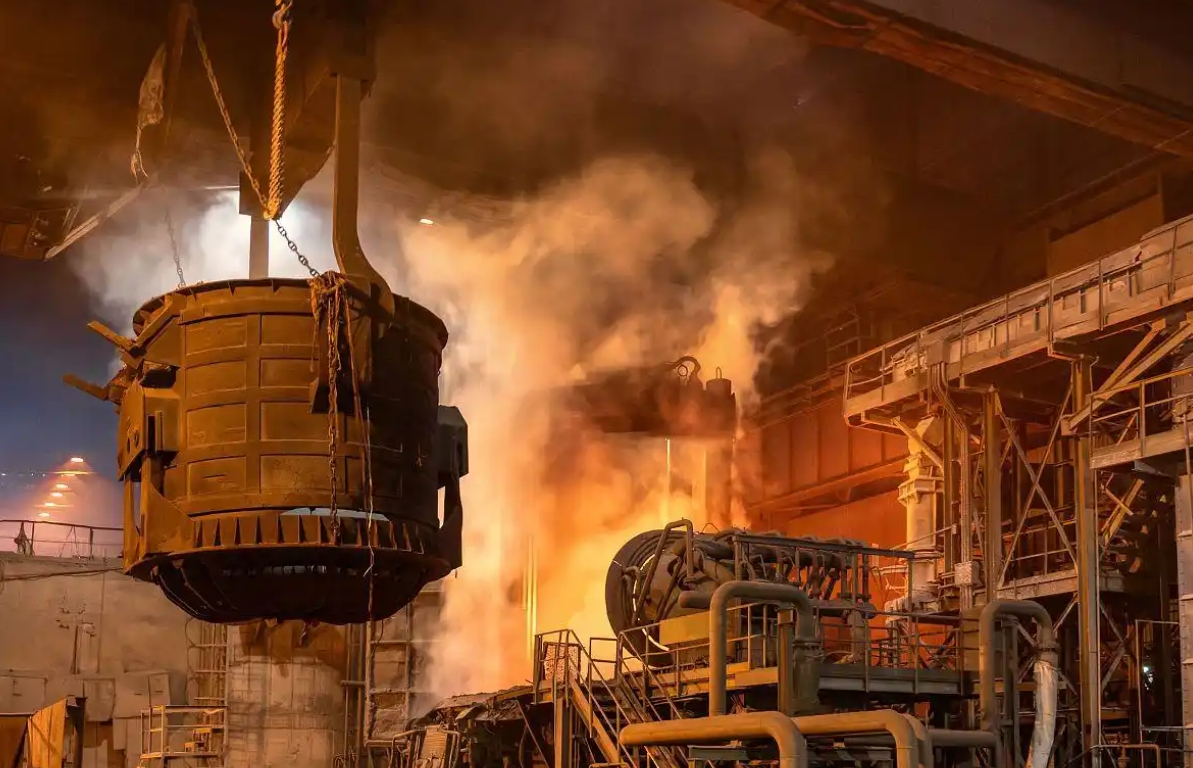 British Steel is also facing tremendous financial pressure. Persistent losses are like an inescapable "heavy burden" that is suffocating the company. Closing down blast furnaces seems to be an inevitable yet reluctant choice. Cost issues are also a key factor contributing to this situation. Although British Steel is a "major player" in the UK, when placed on the global market stage, it becomes evident that its cost competitiveness is severely lacking. With the development of the global steel industry, many emerging steel-producing countries have been rising. Relying on lower labor costs, more abundant raw material resources, and more efficient production technologies, they have occupied a place in the global steel market. When competing with these emerging steel enterprises, British Steel has no price advantage due to its persistently high costs. As a result, its products cannot be sold, and profits naturally become unattainable. Let's talk about industrial supporting facilities. The deindustrialization in the UK is not an empty statement. Once, the UK became the "workshop of the world" thanks to the Industrial Revolution, and its steel industry was booming. There was a complete upstream and downstream industrial supporting system around the steel industry. However, with the advancement of deindustrialization, a large number of related enterprises have closed down or relocated, and many industrial supporting links are missing. Take decarbonization and green transformation as an example. This is a major trend in the future development of the steel industry, and the UK government also intends to subsidize 500 million pounds for this transformation. The problem is that, domestically, due to deindustrialization, the UK cannot carry out the supporting work on its own. If it invites Chinese engineering companies to do it, it needs to go through complex procedures, and the costs cannot be controlled. Such a transformation would cost only 100 - 150 million pounds, but in the UK, due to industrial supporting issues, this transformation plan ultimately fell through. This also reflects, from the side, the difficulties faced by the UK steel industry due to the lack of industrial supporting facilities. The international environment has also dealt a heavy blow to the UK steel industry. The US steel and aluminum tariffs are like a "big knife" that has heavily hit the UK steel industry. The UK's domestic market is relatively limited, and a large proportion of its steel products rely on exports. The United States is one of the important markets for UK steel exports. After the US imposed steel and aluminum tariffs, the cost of UK steel exports to the US increased significantly, and its price competitiveness was greatly reduced. A large number of orders were lost, which is undoubtedly adding insult to injury to the already troubled UK steel industry. In addition, the UK steel industry has gradually fallen behind other countries in terms of technological innovation. Steel production technology is constantly evolving, and new production processes and technologies are emerging one after another, such as more efficient smelting technologies and more environmentally friendly production methods. Some major steel-producing countries have continuously increased their investment in technological research and development, updated equipment, and improved production processes, thereby improving production efficiency, reducing costs, and enhancing product quality. In contrast, due to the long-term lack of funds for technological research and development and equipment updates, the UK's steel production technology has gradually fallen behind the times, and its products' competitiveness in the international market is getting weaker. From the perspective of historical development, the UK's deindustrialization process started earlier and was more "thorough" than that of the United States. Once, the UK was the "leader" of the world's industry, the birthplace of the Industrial Revolution, and its industries such as steel, automotive, and machinery manufacturing were highly developed. However, later on, the UK gradually transferred some traditional manufacturing industries overseas and vigorously developed service industries such as finance. During this process, many industrial sectors gradually shrank, and the steel industry is a typical example. The UK no longer has a decent large-scale automotive industry. Its once well-known automotive brands have basically been sold, leaving only a few handcrafted luxury car brands built with craftsmanship. Their prospects are also not optimistic. More surprisingly, as one of the five permanent members of the United Nations Security Council, the UK is the only country that cannot build nuclear power plants on its own. All these phenomena indicate that due to deindustrialization, the domestic demand for steel in the UK is gradually drying up. Without the support of market demand, it is even more difficult for the steel industry to develop. The decline of the UK steel industry brings us many thought-provoking questions. For the UK, the decline of its once-proud steel industry will have a profound impact on its national economy, industrial structure, employment, and other aspects. Losing the steel industry means that the UK may face the risks of technological discontinuity and industrial hollowing out in some related high-end manufacturing fields. For other countries, this is also a warning. In the process of industrial development, one should not blindly transfer industries but pay attention to the rationality of the industrial structure and maintain the competitiveness of key industries. At the same time, governments should fully consider the long-term development of industries when formulating industrial policies and not just focus on short-term interests. In today's global economic integration, the industries of various countries are closely linked. The rise and fall of any industry may have a far-reaching impact. We must examine and address the problems that arise during the process of industrial development from multiple perspectives. All in all, the situation of the UK steel industry may seem like a simple event of a company closing down its blast furnaces on the surface, but behind it lies a complex set of factors involving the economy, industry, international environment, and more. Sinosteel Stainless Steel Pipe is the Manufacturer and Supplier of Stainless Steel Pipe and Special Alloy Pipe, Steel pipes with an outer diameter from 8mm to 3600mm, with wall thicknesses from 0.2mm to 120mm. Factory covering an area of 333,000 square meters. Production capacity reaches 200,000 tons. From : https://www.sinosteel-pipe.com/en/blog-5585416344651185.html |
| json metadata | {"tags":["steel","stainless"],"image":["https://cdn.steemitimages.com/DQmXiNKEPXttS4FvuB89newsJN9nkrCsCpvrWUo7dGbPiGj/%E5%BE%AE%E4%BF%A1%E6%88%AA%E5%9B%BE_20250403103255.png"],"links":["https://www.sinosteel-pipe.com/en/blog-5585416344651185.html"],"app":"steemit/0.2","format":"markdown"} |
| Transaction Info | Block #94375623/Trx fc4db5bed21d41a62091bd686f6b9e717d1d9700 |
View Raw JSON Data
{
"trx_id": "fc4db5bed21d41a62091bd686f6b9e717d1d9700",
"block": 94375623,
"trx_in_block": 0,
"op_in_trx": 0,
"virtual_op": 0,
"timestamp": "2025-04-03T06:16:21",
"op": [
"comment",
{
"parent_author": "",
"parent_permlink": "steel",
"author": "sinosteelpipe",
"permlink": "judging-from-the-collapse-of-the-steel-industry-has-the-uk-s-deindustrialization-gone-astray",
"title": "Judging from the collapse of the steel industry, has the UK's deindustrialization gone astray?",
"body": "Recently, British Steel, a UK-based steel company, plans to close two blast furnaces as early as June this year. Coincidentally, these two blast furnaces are the last ones in the UK.\n\nThis news means that the UK is about to become the first major country to cease steel production since it embarked on the path of industrialization.\n\nSteel is everywhere in our daily lives, from large structures such as bridges and buildings to small daily necessities like pots and pans. Its importance is self-evident.\n\nBritish Steel is the \"big brother\" of the UK steel industry and has played a pivotal role in the development of the UK steel sector.\n\nIts predecessor can be traced back to the British Iron and Steel Company, which was nationalized through the Iron and Steel Act in 1949. In 1967, the Labour government nationalized the industry again, and British Steel Company (BSC) was officially established.\n\nAt that time, it accounted for about 90% of the UK's steel production capacity, with approximately 268,500 employees. It had wholly-owned or partial subsidiaries in many locations around the world, making it a significant player in the global steel industry at that time.\n\nLater, after a series of changes, in 2016, the UK investment company Greybull Capital acquired Corus, which had been loss-making for some time, from Tata Steel for a symbolic £1 and restored its original name, British Steel.\n\nSubsequently, on March 9, 2020, a group from Hebei, China, completed the asset transfer of British Steel's operations in the UK and the Netherlands, marking a new chapter in the history of British Steel.\n\nHowever, now it is about to close its last two blast furnaces, and there are several reasons behind this.\n\nFrom an economic perspective, British Steel has been operating at a loss in recent years.\n\nTake the Port Talbot steelworks, formerly owned by Tata Steel, as an example. This steelworks, with a history of over a hundred years, has been losing $1.3 million per day in recent years. Under such prolonged and substantial losses, it is very difficult for the company to maintain operations.\n\n\nBritish Steel is also facing tremendous financial pressure. Persistent losses are like an inescapable \"heavy burden\" that is suffocating the company. Closing down blast furnaces seems to be an inevitable yet reluctant choice.\n\nCost issues are also a key factor contributing to this situation.\n\nAlthough British Steel is a \"major player\" in the UK, when placed on the global market stage, it becomes evident that its cost competitiveness is severely lacking.\n\nWith the development of the global steel industry, many emerging steel-producing countries have been rising. Relying on lower labor costs, more abundant raw material resources, and more efficient production technologies, they have occupied a place in the global steel market.\n\nWhen competing with these emerging steel enterprises, British Steel has no price advantage due to its persistently high costs. As a result, its products cannot be sold, and profits naturally become unattainable.\n\nLet's talk about industrial supporting facilities. The deindustrialization in the UK is not an empty statement.\n\nOnce, the UK became the \"workshop of the world\" thanks to the Industrial Revolution, and its steel industry was booming. There was a complete upstream and downstream industrial supporting system around the steel industry.\n\nHowever, with the advancement of deindustrialization, a large number of related enterprises have closed down or relocated, and many industrial supporting links are missing.\n\nTake decarbonization and green transformation as an example. This is a major trend in the future development of the steel industry, and the UK government also intends to subsidize 500 million pounds for this transformation.\n\nThe problem is that, domestically, due to deindustrialization, the UK cannot carry out the supporting work on its own. If it invites Chinese engineering companies to do it, it needs to go through complex procedures, and the costs cannot be controlled.\n\nSuch a transformation would cost only 100 - 150 million pounds, but in the UK, due to industrial supporting issues, this transformation plan ultimately fell through. This also reflects, from the side, the difficulties faced by the UK steel industry due to the lack of industrial supporting facilities.\n\nThe international environment has also dealt a heavy blow to the UK steel industry. The US steel and aluminum tariffs are like a \"big knife\" that has heavily hit the UK steel industry.\n\nThe UK's domestic market is relatively limited, and a large proportion of its steel products rely on exports. The United States is one of the important markets for UK steel exports.\n\nAfter the US imposed steel and aluminum tariffs, the cost of UK steel exports to the US increased significantly, and its price competitiveness was greatly reduced. A large number of orders were lost, which is undoubtedly adding insult to injury to the already troubled UK steel industry.\n\nIn addition, the UK steel industry has gradually fallen behind other countries in terms of technological innovation.\n\nSteel production technology is constantly evolving, and new production processes and technologies are emerging one after another, such as more efficient smelting technologies and more environmentally friendly production methods.\n\nSome major steel-producing countries have continuously increased their investment in technological research and development, updated equipment, and improved production processes, thereby improving production efficiency, reducing costs, and enhancing product quality.\n\nIn contrast, due to the long-term lack of funds for technological research and development and equipment updates, the UK's steel production technology has gradually fallen behind the times, and its products' competitiveness in the international market is getting weaker.\n\nFrom the perspective of historical development, the UK's deindustrialization process started earlier and was more \"thorough\" than that of the United States.\n\nOnce, the UK was the \"leader\" of the world's industry, the birthplace of the Industrial Revolution, and its industries such as steel, automotive, and machinery manufacturing were highly developed.\n\nHowever, later on, the UK gradually transferred some traditional manufacturing industries overseas and vigorously developed service industries such as finance. During this process, many industrial sectors gradually shrank, and the steel industry is a typical example.\n\nThe UK no longer has a decent large-scale automotive industry. Its once well-known automotive brands have basically been sold, leaving only a few handcrafted luxury car brands built with craftsmanship. Their prospects are also not optimistic.\n\nMore surprisingly, as one of the five permanent members of the United Nations Security Council, the UK is the only country that cannot build nuclear power plants on its own.\n\nAll these phenomena indicate that due to deindustrialization, the domestic demand for steel in the UK is gradually drying up. Without the support of market demand, it is even more difficult for the steel industry to develop.\n\nThe decline of the UK steel industry brings us many thought-provoking questions.\n\nFor the UK, the decline of its once-proud steel industry will have a profound impact on its national economy, industrial structure, employment, and other aspects.\n\nLosing the steel industry means that the UK may face the risks of technological discontinuity and industrial hollowing out in some related high-end manufacturing fields.\n\nFor other countries, this is also a warning. In the process of industrial development, one should not blindly transfer industries but pay attention to the rationality of the industrial structure and maintain the competitiveness of key industries.\n\nAt the same time, governments should fully consider the long-term development of industries when formulating industrial policies and not just focus on short-term interests.\n\nIn today's global economic integration, the industries of various countries are closely linked. The rise and fall of any industry may have a far-reaching impact. We must examine and address the problems that arise during the process of industrial development from multiple perspectives.\n\nAll in all, the situation of the UK steel industry may seem like a simple event of a company closing down its blast furnaces on the surface, but behind it lies a complex set of factors involving the economy, industry, international environment, and more.\nSinosteel Stainless Steel Pipe is the Manufacturer and Supplier of Stainless Steel Pipe and Special Alloy Pipe, Steel pipes with an outer diameter from 8mm to 3600mm, with wall thicknesses from 0.2mm to 120mm. Factory covering an area of 333,000 square meters. Production capacity reaches 200,000 tons.\n\nFrom : https://www.sinosteel-pipe.com/en/blog-5585416344651185.html",
"json_metadata": "{\"tags\":[\"steel\",\"stainless\"],\"image\":[\"https://cdn.steemitimages.com/DQmXiNKEPXttS4FvuB89newsJN9nkrCsCpvrWUo7dGbPiGj/%E5%BE%AE%E4%BF%A1%E6%88%AA%E5%9B%BE_20250403103255.png\"],\"links\":[\"https://www.sinosteel-pipe.com/en/blog-5585416344651185.html\"],\"app\":\"steemit/0.2\",\"format\":\"markdown\"}"
}
]
}sinosteelpipepublished a new post: trump-declared-a-national-emergency-and-imposed-tariffs-comprehensively2025/04/03 06:07:27
sinosteelpipepublished a new post: trump-declared-a-national-emergency-and-imposed-tariffs-comprehensively
2025/04/03 06:07:27
| parent author | |
| parent permlink | reciprocal |
| author | sinosteelpipe |
| permlink | trump-declared-a-national-emergency-and-imposed-tariffs-comprehensively |
| title | Trump declared a national emergency and imposed tariffs comprehensively |
| body | On April 2nd local time, the White House issued a statement saying that U.S. President Donald Trump declared a national emergency on the same day to enhance America's competitive edge, protect U.S. sovereignty, and strengthen national and economic security. The statement said that Trump will impose a 10% "base tariff" on all countries, which will take effect at 00:01 am Eastern Time on April 5th. In addition, Trump will impose personalized higher "reciprocal tariffs" on countries with the largest trade deficits with the United States, which will take effect at 00:01 am Eastern Time on April 9th. All other countries will continue to abide by the original 10% tariff benchmark. The statement also said that Trump has the "modification authority" and can raise or lower tariffs depending on the situation. 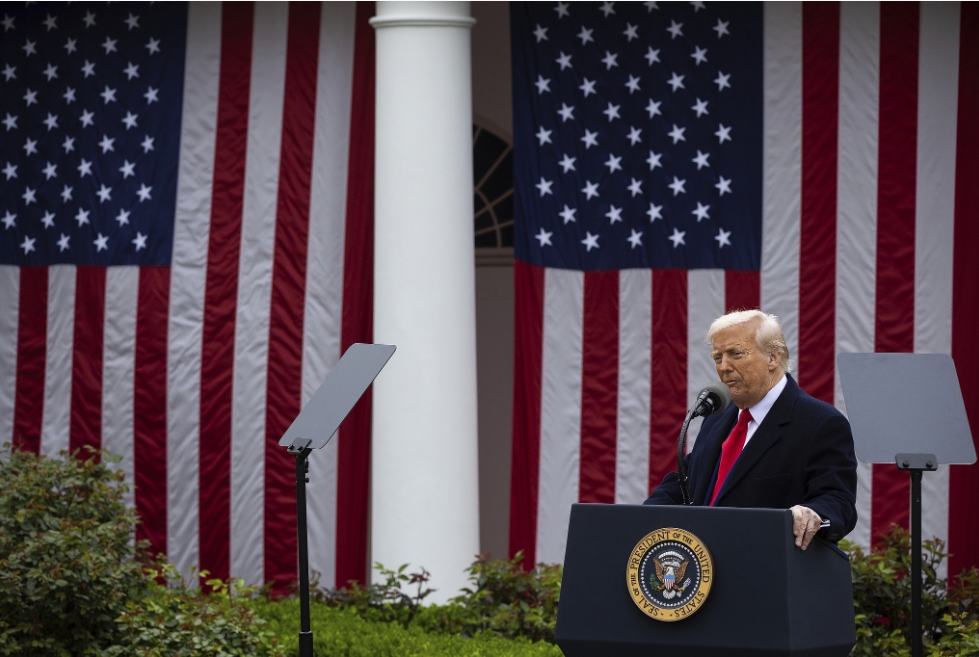 The statement said that some goods will not be subject to "reciprocal tariffs", including steel and aluminum products, automobiles and auto parts already subject to Section 232 tariffs, goods that may be subject to future Section 232 tariffs, as well as energy and certain other minerals not available in the United States. In addition, gold bars, copper, pharmaceuticals, semiconductors and wood products are also not subject to "reciprocal tariffs". The statement also said that for Canada and Mexico, goods that meet the requirements of the United States-Mexico-Canada Trade Agreement will continue to be exempted. Although Trump claimed that the imposition of tariffs would help bring in revenue for the U.S. government and revitalize American manufacturing, economists and business people have warned that these tariff measures will drive up prices, harm the interests of U.S. consumers and businesses, disrupt global trade, and be detrimental to global economic development. Previously, several U.S. trading partners had indicated that they would take countermeasures in response. 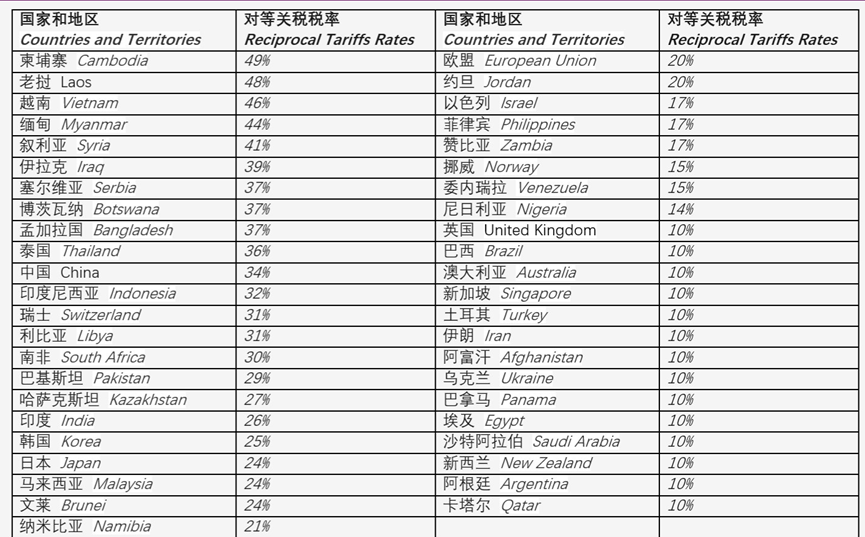 From : https://www.sinosteel-pipe.com/en/trump-declared-a-national-emergency-and-imposed-tariffs-comprehensively.html |
| json metadata | {"tags":["reciprocal","tariffs"],"image":["https://cdn.steemitimages.com/DQmXWXT17GJ1CESFcLbMpCEYmo4jrg5JuzGBLS2gJPsBNFi/20250403090437.png","https://cdn.steemitimages.com/DQmcmjQWGkiDzEqFwe5EYvHir5tavfKayq31oPhw1UvWNhe/image.png"],"links":["https://www.sinosteel-pipe.com/en/trump-declared-a-national-emergency-and-imposed-tariffs-comprehensively.html"],"app":"steemit/0.2","format":"markdown"} |
| Transaction Info | Block #94375447/Trx 5ca7205958e7991e8bfe5862118992f2ed6bb340 |
View Raw JSON Data
{
"trx_id": "5ca7205958e7991e8bfe5862118992f2ed6bb340",
"block": 94375447,
"trx_in_block": 1,
"op_in_trx": 0,
"virtual_op": 0,
"timestamp": "2025-04-03T06:07:27",
"op": [
"comment",
{
"parent_author": "",
"parent_permlink": "reciprocal",
"author": "sinosteelpipe",
"permlink": "trump-declared-a-national-emergency-and-imposed-tariffs-comprehensively",
"title": "Trump declared a national emergency and imposed tariffs comprehensively",
"body": "On April 2nd local time, the White House issued a statement saying that U.S. President Donald Trump declared a national emergency on the same day to enhance America's competitive edge, protect U.S. sovereignty, and strengthen national and economic security.\n\nThe statement said that Trump will impose a 10% \"base tariff\" on all countries, which will take effect at 00:01 am Eastern Time on April 5th. In addition, Trump will impose personalized higher \"reciprocal tariffs\" on countries with the largest trade deficits with the United States, which will take effect at 00:01 am Eastern Time on April 9th. All other countries will continue to abide by the original 10% tariff benchmark. The statement also said that Trump has the \"modification authority\" and can raise or lower tariffs depending on the situation.\n\n\nThe statement said that some goods will not be subject to \"reciprocal tariffs\", including steel and aluminum products, automobiles and auto parts already subject to Section 232 tariffs, goods that may be subject to future Section 232 tariffs, as well as energy and certain other minerals not available in the United States. In addition, gold bars, copper, pharmaceuticals, semiconductors and wood products are also not subject to \"reciprocal tariffs\".\n\nThe statement also said that for Canada and Mexico, goods that meet the requirements of the United States-Mexico-Canada Trade Agreement will continue to be exempted.\n\nAlthough Trump claimed that the imposition of tariffs would help bring in revenue for the U.S. government and revitalize American manufacturing, economists and business people have warned that these tariff measures will drive up prices, harm the interests of U.S. consumers and businesses, disrupt global trade, and be detrimental to global economic development. Previously, several U.S. trading partners had indicated that they would take countermeasures in response.\n\n\n\nFrom : https://www.sinosteel-pipe.com/en/trump-declared-a-national-emergency-and-imposed-tariffs-comprehensively.html",
"json_metadata": "{\"tags\":[\"reciprocal\",\"tariffs\"],\"image\":[\"https://cdn.steemitimages.com/DQmXWXT17GJ1CESFcLbMpCEYmo4jrg5JuzGBLS2gJPsBNFi/20250403090437.png\",\"https://cdn.steemitimages.com/DQmcmjQWGkiDzEqFwe5EYvHir5tavfKayq31oPhw1UvWNhe/image.png\"],\"links\":[\"https://www.sinosteel-pipe.com/en/trump-declared-a-national-emergency-and-imposed-tariffs-comprehensively.html\"],\"app\":\"steemit/0.2\",\"format\":\"markdown\"}"
}
]
}sinosteelpipepublished a new post: how-humanoid-robots-reshape-steel-demand2025/03/07 09:47:48
sinosteelpipepublished a new post: how-humanoid-robots-reshape-steel-demand
2025/03/07 09:47:48
| parent author | |
| parent permlink | humanoid |
| author | sinosteelpipe |
| permlink | how-humanoid-robots-reshape-steel-demand |
| title | How humanoid robots reshape steel demand |
| body | In recent years, the breakthroughs in humanoid robot technology and the acceleration of its commercialization process are having a profound impact on the global demand for industrial materials. The rise of this emerging industry not only brings about structural adjustments to the demand for traditional steel, but also gives rise to incremental markets for special steels and lightweight materials. The outbreak of the humanoid robot industry: The boost to demand is manifested as a "structural opportunity" rather than "scale expansion" The core structure of humanoid robots includes components such as skeletons, joints, and drive systems, with distinct hierarchical characteristics in material requirements. The steel consumption per humanoid robot ranges from 50 kilograms to 100 kilograms. Taking Tesla's humanoid robot Optimus as an example, with an expected production volume of 1 million units in 2030, Tesla alone could drive the demand for 50,000 tons to 100,000 tons of steel. However, this incremental demand should be considered in the context of the global crude steel production (approximately 1.8826 billion tons in 2024), where its direct impact is relatively limited, expected to account for only 0.02‰ to 0.06‰ of global steel demand. It is worth noting, however, that the demand driven by humanoid robots for steel is more of a "structural opportunity" rather than "scale expansion." For instance, the demand for precision cutting wires required for harmonic reducer processing is expected to increase by 35,000 tons by 2030. Such specialty steels have significantly higher requirements for precision and wear resistance compared to ordinary construction steels, resulting in a notable increase in added value. Additionally, key components such as servo motor housings and drive shafts need to use high-strength alloy steels, which can cost 2 to 3 times more than ordinary steel. Therefore, although the overall proportion is not high, the niche market for high-value-added steels will become an important growth point for steel companies. Differentiation of demand structure: the game between light - weight and high - strength. The extreme requirements of humanoid robots for material properties are reshaping the structural characteristics of steel demand. (1) The trend of lightweighting is squeezing the application space of traditional steel materials. The demand for flexible movement of humanoid robots has given rise to the wide application of lightweight materials. The density of magnesium alloy (1.74 grams per cubic centimeter) is only 22% that of steel, and it also has better shock absorption performance, making it one of the preferred materials for robot skeletons. According to estimates, the demand for lightweight materials for humanoid robots will reach 125,000 tons by 2030, with the demand elasticity of magnesium reaching as high as 12.5%, far exceeding that of aluminum at 0.2%. This trend may squeeze the share of traditional steel in structural parts. For example, the Walker S robot of UBTECH has adopted a magnesium alloy frame to replace some steel components, reducing the weight of a single machine by 30%. (2) The demand for high-strength special steels is growing against the trend. In components such as joints and gears that bear high loads, special steels remain irreplaceable. For example, the flexible wheel of a harmonic reducer requires carburized steel with a fatigue strength of over 1,200 megapascals, while the cycloid wheel of an RV reducer relies on high-precision bearing steel (such as GCr15). According to relevant research, the hardware requirements of impact-resistant actuators will drive the growth in the amount of steel used for planetary roller screws. In terms of their impact resistance performance ranking, planetary roller screws (mainly made of steel) are superior to harmonic reducers (mainly made of aluminum). The popularization of this technical path may boost the demand for special steels. (3) Give full play to the synergistic effect of composite materials. The research and development of new materials such as carbon fiber reinforced steel matrix composites have helped steel find a balance point between lightweighting and strength. For example, the leg joints of Tesla's humanoid robot Optimus Gen 2 adopt a structure with a carbon fiber-wrapped steel core, which not only meets the lightweight requirements but also maintains the torsional stiffness of the joints. Such innovations may open up new application scenarios for steel materials. Web: https://www.sinosteel-pipe.com/en email: [email protected] |
| json metadata | {"tags":["humanoid","robots","steel"],"links":["https://www.sinosteel-pipe.com/en"],"app":"steemit/0.2","format":"markdown"} |
| Transaction Info | Block #93604306/Trx 9c4d0c8c78ee4fe6cb89b4444e5a282d802d18d9 |
View Raw JSON Data
{
  "trx_id": "9c4d0c8c78ee4fe6cb89b4444e5a282d802d18d9",
  "block": 93604306,
  "trx_in_block": 2,
  "op_in_trx": 0,
  "virtual_op": 0,
  "timestamp": "2025-03-07T09:47:48",
  "op": [
    "comment",
    {
      "parent_author": "",
      "parent_permlink": "humanoid",
      "author": "sinosteelpipe",
      "permlink": "how-humanoid-robots-reshape-steel-demand",
      "title": "How humanoid robots reshape steel demand",
      "body": "In recent years, the breakthroughs in humanoid robot technology and the acceleration of its commercialization process are having a profound impact on the global demand for industrial materials. The rise of this emerging industry not only brings about structural adjustments to the demand for traditional steel, but also gives rise to incremental markets for special steels and lightweight materials.\n\nThe outbreak of the humanoid robot industry: The boost to demand is manifested as a \"structural opportunity\" rather than \"scale expansion\"\n\nThe core structure of humanoid robots includes components such as skeletons, joints, and drive systems, with distinct hierarchical characteristics in material requirements. The steel consumption per humanoid robot ranges from 50 kilograms to 100 kilograms. Taking Tesla's humanoid robot Optimus as an example, with an expected production volume of 1 million units in 2030, Tesla alone could drive the demand for 50,000 tons to 100,000 tons of steel. However, this incremental demand should be considered in the context of the global crude steel production (approximately 1.8826 billion tons in 2024), where its direct impact is relatively limited, expected to account for only 0.02‰ to 0.06‰ of global steel demand.\n\nIt is worth noting, however, that the demand driven by humanoid robots for steel is more of a \"structural opportunity\" rather than \"scale expansion.\" For instance, the demand for precision cutting wires required for harmonic reducer processing is expected to increase by 35,000 tons by 2030. Such specialty steels have significantly higher requirements for precision and wear resistance compared to ordinary construction steels, resulting in a notable increase in added value. Additionally, key components such as servo motor housings and drive shafts need to use high-strength alloy steels, which can cost 2 to 3 times more than ordinary steel. Therefore, although the overall proportion is not high, the niche market for high-value-added steels will become an important growth point for steel companies.\n\nDifferentiation of demand structure: the game between light - weight and high - strength.\n\nThe extreme requirements of humanoid robots for material properties are reshaping the structural characteristics of steel demand.\n(1) The trend of lightweighting is squeezing the application space of traditional steel materials.\nThe demand for flexible movement of humanoid robots has given rise to the wide application of lightweight materials. The density of magnesium alloy (1.74 grams per cubic centimeter) is only 22% that of steel, and it also has better shock absorption performance, making it one of the preferred materials for robot skeletons. According to estimates, the demand for lightweight materials for humanoid robots will reach 125,000 tons by 2030, with the demand elasticity of magnesium reaching as high as 12.5%, far exceeding that of aluminum at 0.2%. This trend may squeeze the share of traditional steel in structural parts. For example, the Walker S robot of UBTECH has adopted a magnesium alloy frame to replace some steel components, reducing the weight of a single machine by 30%.\n(2) The demand for high-strength special steels is growing against the trend.\nIn components such as joints and gears that bear high loads, special steels remain irreplaceable. For example, the flexible wheel of a harmonic reducer requires carburized steel with a fatigue strength of over 1,200 megapascals, while the cycloid wheel of an RV reducer relies on high-precision bearing steel (such as GCr15). According to relevant research, the hardware requirements of impact-resistant actuators will drive the growth in the amount of steel used for planetary roller screws. In terms of their impact resistance performance ranking, planetary roller screws (mainly made of steel) are superior to harmonic reducers (mainly made of aluminum). The popularization of this technical path may boost the demand for special steels.\n(3) Give full play to the synergistic effect of composite materials.\nThe research and development of new materials such as carbon fiber reinforced steel matrix composites have helped steel find a balance point between lightweighting and strength. For example, the leg joints of Tesla's humanoid robot Optimus Gen 2 adopt a structure with a carbon fiber-wrapped steel core, which not only meets the lightweight requirements but also maintains the torsional stiffness of the joints. Such innovations may open up new application scenarios for steel materials.\nWeb: https://www.sinosteel-pipe.com/en\nemail: [email protected]",
      "json_metadata": "{\"tags\":[\"humanoid\",\"robots\",\"steel\"],\"links\":[\"https://www.sinosteel-pipe.com/en\"],\"app\":\"steemit/0.2\",\"format\":\"markdown\"}"
    }
  ]
}2025/02/13 09:31:48
2025/02/13 09:31:48
| parent author | |
| parent permlink | steel |
| author | sinosteelpipe |
| permlink | development-and-prospect-of-china-s-steel-pipe-industry-in-75-years-since-founding-of-the-people-s-republic-of-china-excerpts |
| title | Development and Prospect of China's Steel Pipe Industry in 75 Years since Founding of the People's Republic of China (excerpts) |
| body | AUTHOR:ZHONG Xidi, YANG Fan, GAO Ruiquan Abstract: Since the 14th Five-Year Plan, under the background of multiple risks and challenges emerging at home and abroad.China's steel pipe production and apparent consumption have shown a declining trend. The steel pipe industry is facing the market depression, demand downtown, price decrease, efficiency decline and other difficulties, the industry supply and demand contradiction prominent. The output, import and export volume, apparent consumption of steel pipe industry at home and abroad were analyzed, the global steel pipe production and the transformation and upgrading measures taken after the steel production in developed countries such as the European Union reached the peak, the development status of the new quality productivity of China’s steel pipe industry under the new situation was summarized, the future development of steel pipe industry was proposed.Under the new situation, enterprises should take the initiative to adapt to changes in market demand, increase investment in research and development, adjust structure, improve quality, promote transformation, and accelerate the formation of new quality productive forces, so as to achieve the change of quantity competition in the incremental stage to quality competition in the reduction stage, and promote the high-quality development of China's steel pipe industry. Key words:steel pipe;production capacity;new quality productive forces;transformation. Ⅰ The development of China's steel pipe industry since the establishment of new China 1.1 Steel pipe production and apparent consumption At the beginning of the establishment of new China in 1949, China's welded steel pipe production was only 0.4 million tonnes. After nearly 30 years of development, as of 1978, China's steel pipe production has exceeded one million tonnes, reaching 1.682 million tonnes. By 1986, China's steel pipe production reached 3.754 million tonnes, and the production of steel pipe exceeded that of the United States; in 1990, the production of steel pipe reached 4.319 million tonnes, exceeding that of Germany; In 1999, steel pipe production reached 8.52 million tonnes, surpassing Japan, at which time China became the world's largest country in steel pipe production and manufacturing. Entering the 21st century, China's steel pipe industry and after 15 years, steel pipe production capacity, production by leaps and bounds. 2015 China's steel pipe production capacity exceeded 110 million tonnes, the output reached 98.02 million tonnes of the peak, accounting for more than 60% of the global steel pipe production. Among them, China's seamless steel pipe production accounted for more than 65 per cent of the world, China's welded steel pipe production accounted for nearly 60 per cent of the world. Since 2016, China's economy has entered a new stage of transformation and upgrading. In order to solve the structural contradiction of supply and demand, since the implementation of the policy of promoting the structural reform of the supply side, China's steel pipe industry has begun to turn to a new stage of development of reducing, adjusting the structure and high quality, and the steel pipe production and apparent consumption have shown to be the development of tumbling and reducing. Into 2024, the steel pipe industry is still facing the challenges of market downturn, falling demand, supply and demand contradiction, 2024 January-October steel pipe production still shows a negative growth trend. The main reason for the development of China's steel pipe industry production peaked after the reduction of the main reason is the end of 2015, the central economic work conference put forward the major initiatives of supply-side structural reform, focusing on the realization of the ‘three to one down and one to complement’ (to go to the production capacity, to go to the inventory, to go to the leverage to reduce the cost of making up short boards). 2015 is also the‘Twelfth Five-Year Plan’ ending year, during this period, China's economy is in a “gear shift” from high-speed growth to medium-high growth, the development of the new normal. 1.2 Import and export of steel pipes and tubes At the beginning of the founding of the country's basic dependence on imports of steel pipe, in 1950 China imported 21,000t of steel pipe, the peak of the 1985 imports of 2,264,000t of steel pipe, with the growing demand for the development of China's national economy, the steel pipe industry has also achieved rapid development of steel pipe imports are constantly decreasing, in 2023, imports of steel pipe 1,985,000t of steel pipe, the peak of the 1985 imports of steel pipe by the decline of the 196.55 million tonnes; to 1982, China began to export steel pipe 0.8 million tonnes, in 2003, China's exports of steel pipe 1.133 million tonnes, imports of steel pipe 1.123 million tonnes, import and export volume is basically flat. 2008 exports of steel pipe reached 9.895 million tonnes, and then with the changes in the international market, the export of steel pipe in general in a downward trend, 2023, China's exports of steel pipe and a new peak, reaching 1.085 million tonnes. The export of steel pipe is also a new peak. A new peak, reached 1007.33 million tonnes, exceeding ten million tonnes. So far, with the rapid decline of China's steel pipe imports and the substantial growth of exports and net exports, China's steel pipe import and export pattern has undergone significant changes, and its influence in the international arena has been expanding. The continuous optimisation of industrial structure has promoted the export growth of China's high-end steel pipe products, such as oil well pipe, pipeline steel pipe, high-pressure boiler pipe, large-diameter square tube exports in 2023 have shown about 20% growth, at the same time, China's exports of steel pipe types and industrial structure has also been further optimised. Ⅱ Analysis of the global steel pipe industry and the development of the steel industry in the EU and other developed countries The global steel pipe industry and the development of the steel industry in the EU and other developed countries. After the production reached a certain peak, they all entered a development stage of reducing the volume and adjusting the structure. Entering the 21st century, the global steel pipe production to a faster rate of growth, according to the data released by the World Steel Association, the steel pipe production in 2010 exceeded 100 million tonnes, reached 172.7 million tonnes in 2018, and then the overall presentation of the overall ups and downs of the reduction of the development trend. After the Second World War to 1974, the European Union steel production from 1949, 50 million t quickly climbed to 240 million t of the peak, after the steel production into the fluctuation of the depth of the decline in the adjustment period during this period, there is a serious overcapacity, a significant decline in the demand for the situation. Overall steel production fluctuations in the downward trend of the two bottoming out, to 1993 has been less than 190 million t. With the European Union was formally established on 1 November 1993, a new round of global steel growth in the context of the times, the European steel production also appeared in a new round of ‘steady growth’ situation, the output once again back to 240 million t. The production has once again returned to the historical peak of 240 million tonnes, thus creating a new situation of political and economic integration in Europe. In the U.S. subprime crisis, the European debt crisis, the new crown epidemic, Russia-Ukraine conflict, the European energy crisis, large-scale inflation triggered by the last round of interest rate hike cycle and other unprecedented changes in a hundred years in the context of the European Union steel industry has experienced a number of ‘winter’ invasion of steel production fluctuations in the downward trend again. Especially into the 21st century since the 20s, the EU steel enterprises cost advantage is not in, corporate efficiency is generally poor. During this period, the EU and countries to increase the green, low-carbon, intelligent equipment, such as R & D investment, with a view to obtaining greater competitiveness in the low-carbon production of iron and steel. From the United States, Japan, Germany and other countries, have experienced a new stage of cultivation, development, peak production, reduction, recovery after the peak production and stable development. Developed countries have basically completed industrialisation and urbanisation, steel demand has dropped significantly, which is the main reason for the decline in steel production. From the perspective of global steel production and the trend of changes in steel production in developed countries such as the European Union after reaching a certain peak, after reaching the peak, it has entered the stage of reducing and adjusting the structure of development, and its transformation and upgrading have mainly taken the following measures. (1)Product structure optimisation. Iron and steel enterprises in developed countries have gradually shifted their focus to exploring new technologies, shifting the centre of gravity of the industry, and actively upgrading the quality and value-added of steel to meet the new needs of the advanced manufacturing industry, and have begun to reduce the output of low- and medium-end products that are large in volume and low in local competitiveness. (2)Optimisation of industrial layout. Through the industrial layout gradually from the resource and energy-based layout to the near consumption, low labour costs, environmental requirements of the weak transfer of the region, Japan, Germany and other measures to enhance industrial concentration and competitiveness through mergers and acquisitions, elimination of backward production capacity to promote the optimization of the iron and steel industry layout, reduce homogenization of production capacity. (3)Expanding steel-using fields. Through the extension to downstream steel-using industries such as construction, automobile, home appliance and equipment manufacturing, and the joint development of near-final shape, lightweight and green products, we will stabilise and expand the demand for steel. (4)Continuous optimisation of production capacity. Promote merger and reorganisation and asset optimisation in a scientific and orderly manner, eliminate backwardness, remove differences and improve industrial concentration and competitiveness. (5)Promote technological progress, create high-end products, stabilise exports, and promote stable development of enterprises. Ⅲ Innovation and development of China's steel pipe industry in recent years 3.1 Seamless steel pipe In the manufacture of ultra-high strength oil casing, with the continuous development of China's deep well and ultra-deep well drilling technology, the pipe manufacturing technology continues to make progress, the domestic development of the world's first set of seamless steel pipe with full intellectual property rights to online control cooling equipment and key core technologies, the production of strength level of 1060MPa (155V) seamless steel pipe to meet the ultra-high-temperature and high-pressure as well as complex geological conditions. Meanwhile, it also promotes the leading demonstration of green and efficient manufacturing technology of hot rolled seamless steel pipe in China and the continuous iterative upgrading of products. In the manufacture of large diameter seamless pipes, the company has pioneered the production process of ‘medium-frequency heating and expanding + cold drawing’, which can produce pipes with a maximum diameter of 1,320 mm, a diameter-to-thickness ratio of 100, and a maximum length of 12 m. The products are widely used in the fields of petrochemicals, boilers and electric power, long-distance transmission pipeline networks, pressure vessels, etc. The differentiated development has also brought good economic benefits to the company. Differentiated development has also brought good economic benefits for the enterprise. In terms of energy saving and environmental protection, the company has developed the ‘continuous casting round pipe bad hot feed hot loading furnace technology’, which plays a key role in saving energy, improving the rate of material and shortening the production cycle, and realises the green, low-carbon, high-efficiency and low-cost production of hot-rolled seamless steel pipes. In terms of intelligent development, the Ф127 mm small-diameter seamless steel pipe production line, which is the first line in China with centralised control and intelligent production, has been successfully put into production. The whole line adopts the full three-dimensional digital design with the ‘light building’ intelligent construction platform as the carrier, to create an intelligent digital, green and environmentally friendly benchmark demonstration production line. 3.2 Welded steel pipes Oil and gas pipe, high-strength, large-diameter welded pipe research and development and application of technology to reach the international leading level, the development of X80M Ф1422 mm × 32.1 mm, long 18 m long straight-seam submerged arc welded pipe in the Sino-Russian East Natural Gas Pipeline, the Yangtze River Shield Project was successfully applied to ensure the smooth passage of the Sino-Russian East pipeline. Developed the world's highest strength CT150 Ф50.8 mm × 4.0 mm continuous pipe, the tensile strength of the pipe reached 1141MPa, tensile load reached 60.8t, the depth of the lower man up to 10,000 metres, the pipe within the bursting pressure of 196.2 MPa, the external extrusion pressure of 161.4 MPa, the elongation of 20%, fatigue life of 93.1% more than the CT110 continuous pipe, the better strong plasticity and plasticity of the pipe, the longer 18 m long straight seam submerged arc welded pipe was successfully applied in the shield project of the Yangtze River in the Russian East Natural Gas Pipeline. It has achieved better strong plasticity matching, and has been successfully applied in wells in Xinjiang oilfield. The future oil and gas pipe will be to the deep sea and other complex oil and gas exploration and development environment, as well as long distance and large capacity, high performance, multi-purpose and other directions, so that it not only has the function of transporting oil and gas, but also will be integrated with a variety of uses, such as data transmission, heat insulation, corrosion detection, etc. to achieve multi-purpose pipe to improve the comprehensive benefits of oil and gas pipelines. In the face of global energy transformation and green low-carbon development trend of major pipe enterprises focus on ‘hydrogen energy’ and ‘CCUS industry chain construction’, and actively promote the deep integration of industry chain and innovation chain. In the field of high-pressure pure hydrogen transport, they have developed L360MH grade HFW welded pipes and X60M grade LSAW pipes with good hydrogen embrittlement resistance, which can meet the needs of high-pressure pure hydrogen transport pipeline projects. In the field of hydrogen-doped transport, we have developed welded pipes for hydrogen-doped transport with a design pressure of 6.3MPa and a maximum hydrogen-doped ratio of 20%, providing strong equipment support for the development of China's hydrogen energy industry chain. In the field of carbon dioxide pipeline transmission, we have developed X65M steel-grade LSAW pipes and X65 steel-grade HFW pipes for supercritical carbon dioxide transmission, with low-temperature fracture toughness to meet the safe service requirements of supercritical carbon dioxide pipelines, which actively promotes the green and low-carbon development of China's welded pipe industry. In terms of energy storage pipe, in the Ulanqab compressed air energy storage demonstration project, the development of P460 Ф1422 mm × 35 mm, length of 18 m UOE welded pipe, for the first time to achieve the application of welded pipe in the field of containers. At the same time, developed 300MW compressed air energy storage with X70M steel grade Ф1016 mm × 33 mm, length 18 m UOE welded pipe. In terms of marine engineering, welded steel pipe is used in large-scale steel structure projects at sea, including offshore platforms, offshore wind power and offshore bridges, etc.; in terms of submarine pipeline transmission projects, such as the Chunxiao oil and gas field underwater 300 m submarine oil and gas pipeline and Liwan 3-1 underwater 1500m submarine oil and gas pipeline. At present, the domestic successful trial production of 3500m ultra-deep submarine pipeline with welded steel pipe, the product is able to withstand close to 9 ℃, 350 times the standard atmospheric pressure, for China's deep-sea oil and gas development to provide equipment support. China's steel pipe industry has become one of the world's most competitive industries, with the world's advanced technology, equipment and technology, built the world's most complete industrial chain, the largest steel pipe industry system. The steel pipe variety structure is complete, upgrading and upgrading is effective, fully meet the market demand. Therefore, it has the strength to go international, integrate into the world, make good use of the two markets at home and abroad, allocate two kinds of resources at home and abroad, further develop the new quality of productivity, and promote the high-quality development of the industry. Source:《WELDED PIPE AND TUBE》 Vol.48 No.1 Jan.2025 This article is reprinted and copyrighted. Web : https://www.sinosteel-pipe.com/en email: [email protected] |
| json metadata | {"tags":["steel","pipe","stainless"],"links":["https://www.sinosteel-pipe.com/en"],"app":"steemit/0.2","format":"markdown"} |
| Transaction Info | Block #92971999/Trx 99dd6d8f2793d2f2d6e098d6aa067cbabbef7715 |
View Raw JSON Data
{
  "trx_id": "99dd6d8f2793d2f2d6e098d6aa067cbabbef7715",
  "block": 92971999,
  "trx_in_block": 0,
  "op_in_trx": 0,
  "virtual_op": 0,
  "timestamp": "2025-02-13T09:31:48",
  "op": [
    "comment",
    {
      "parent_author": "",
      "parent_permlink": "steel",
      "author": "sinosteelpipe",
      "permlink": "development-and-prospect-of-china-s-steel-pipe-industry-in-75-years-since-founding-of-the-people-s-republic-of-china-excerpts",
      "title": "Development and Prospect of China's Steel Pipe Industry in 75 Years since Founding of the People's Republic of China (excerpts)",
      "body": "AUTHOR:ZHONG Xidi, YANG Fan, GAO Ruiquan\nAbstract: Since the 14th Five-Year Plan, under the background of multiple risks and challenges emerging at home and abroad.China's steel pipe production and apparent consumption have shown a declining trend. The steel pipe industry is facing the market depression, demand downtown, price decrease, efficiency decline and other difficulties, the industry supply and demand contradiction prominent. The output, import and export volume, apparent consumption of steel pipe industry at home and abroad were analyzed, the global steel pipe production and the transformation and upgrading measures taken after the steel production in developed countries such as the European Union reached the peak, the development status of the new quality productivity of China’s steel pipe industry under the new situation was summarized, the future development of steel pipe industry was proposed.Under the new situation, enterprises should take the initiative to adapt to changes in market demand, increase investment in research and development, adjust structure, improve quality, promote transformation, and accelerate the formation of new quality productive forces, so as to achieve the change of quantity competition in the incremental stage to quality competition in the reduction stage, and promote the high-quality development of China's steel pipe industry.\nKey words:steel pipe;production capacity;new quality productive forces;transformation.\n\nⅠ The development of China's steel pipe industry since the establishment of new China\n1.1 Steel pipe production and apparent consumption\nAt the beginning of the establishment of new China in 1949, China's welded steel pipe production was only 0.4 million tonnes. After nearly 30 years of development, as of 1978, China's steel pipe production has exceeded one million tonnes, reaching 1.682 million tonnes. By 1986, China's steel pipe production reached 3.754 million tonnes, and the production of steel pipe exceeded that of the United States; in 1990, the production of steel pipe reached 4.319 million tonnes, exceeding that of Germany; In 1999, steel pipe production reached 8.52 million tonnes, surpassing Japan, at which time China became the world's largest country in steel pipe production and manufacturing.\nEntering the 21st century, China's steel pipe industry and after 15 years, steel pipe production capacity, production by leaps and bounds. 2015 China's steel pipe production capacity exceeded 110 million tonnes, the output reached 98.02 million tonnes of the peak, accounting for more than 60% of the global steel pipe production. Among them, China's seamless steel pipe production accounted for more than 65 per cent of the world, China's welded steel pipe production accounted for nearly 60 per cent of the world.\nSince 2016, China's economy has entered a new stage of transformation and upgrading. In order to solve the structural contradiction of supply and demand, since the implementation of the policy of promoting the structural reform of the supply side, China's steel pipe industry has begun to turn to a new stage of development of reducing, adjusting the structure and high quality, and the steel pipe production and apparent consumption have shown to be the development of tumbling and reducing. Into 2024, the steel pipe industry is still facing the challenges of market downturn, falling demand, supply and demand contradiction, 2024 January-October steel pipe production still shows a negative growth trend.\nThe main reason for the development of China's steel pipe industry production peaked after the reduction of the main reason is the end of 2015, the central economic work conference put forward the major initiatives of supply-side structural reform, focusing on the realization of the ‘three to one down and one to complement’ (to go to the production capacity, to go to the inventory, to go to the leverage to reduce the cost of making up short boards). 2015 is also the‘Twelfth Five-Year Plan’ ending year, during this period, China's economy is in a “gear shift” from high-speed growth to medium-high growth, the development of the new normal.\n1.2 Import and export of steel pipes and tubes\nAt the beginning of the founding of the country's basic dependence on imports of steel pipe, in 1950 China imported 21,000t of steel pipe, the peak of the 1985 imports of 2,264,000t of steel pipe, with the growing demand for the development of China's national economy, the steel pipe industry has also achieved rapid development of steel pipe imports are constantly decreasing, in 2023, imports of steel pipe 1,985,000t of steel pipe, the peak of the 1985 imports of steel pipe by the decline of the 196.55 million tonnes; to 1982, China began to export steel pipe 0.8 million tonnes, in 2003, China's exports of steel pipe 1.133 million tonnes, imports of steel pipe 1.123 million tonnes, import and export volume is basically flat. 2008 exports of steel pipe reached 9.895 million tonnes, and then with the changes in the international market, the export of steel pipe in general in a downward trend, 2023, China's exports of steel pipe and a new peak, reaching 1.085 million tonnes. The export of steel pipe is also a new peak. A new peak, reached 1007.33 million tonnes, exceeding ten million tonnes. So far, with the rapid decline of China's steel pipe imports and the substantial growth of exports and net exports, China's steel pipe import and export pattern has undergone significant changes, and its influence in the international arena has been expanding.\nThe continuous optimisation of industrial structure has promoted the export growth of China's high-end steel pipe products, such as oil well pipe, pipeline steel pipe, high-pressure boiler pipe, large-diameter square tube exports in 2023 have shown about 20% growth, at the same time, China's exports of steel pipe types and industrial structure has also been further optimised.\n\nⅡ Analysis of the global steel pipe industry and the development of the steel industry in the EU and other developed countries\nThe global steel pipe industry and the development of the steel industry in the EU and other developed countries. After the production reached a certain peak, they all entered a development stage of reducing the volume and adjusting the structure. Entering the 21st century, the global steel pipe production to a faster rate of growth, according to the data released by the World Steel Association, the steel pipe production in 2010 exceeded 100 million tonnes, reached 172.7 million tonnes in 2018, and then the overall presentation of the overall ups and downs of the reduction of the development trend.\nAfter the Second World War to 1974, the European Union steel production from 1949, 50 million t quickly climbed to 240 million t of the peak, after the steel production into the fluctuation of the depth of the decline in the adjustment period during this period, there is a serious overcapacity, a significant decline in the demand for the situation. Overall steel production fluctuations in the downward trend of the two bottoming out, to 1993 has been less than 190 million t. With the European Union was formally established on 1 November 1993, a new round of global steel growth in the context of the times, the European steel production also appeared in a new round of ‘steady growth’ situation, the output once again back to 240 million t. The production has once again returned to the historical peak of 240 million tonnes, thus creating a new situation of political and economic integration in Europe. In the U.S. subprime crisis, the European debt crisis, the new crown epidemic, Russia-Ukraine conflict, the European energy crisis, large-scale inflation triggered by the last round of interest rate hike cycle and other unprecedented changes in a hundred years in the context of the European Union steel industry has experienced a number of ‘winter’ invasion of steel production fluctuations in the downward trend again. Especially into the 21st century since the 20s, the EU steel enterprises cost advantage is not in, corporate efficiency is generally poor. During this period, the EU and countries to increase the green, low-carbon, intelligent equipment, such as R & D investment, with a view to obtaining greater competitiveness in the low-carbon production of iron and steel.\nFrom the United States, Japan, Germany and other countries, have experienced a new stage of cultivation, development, peak production, reduction, recovery after the peak production and stable development. Developed countries have basically completed industrialisation and urbanisation, steel demand has dropped significantly, which is the main reason for the decline in steel production.\nFrom the perspective of global steel production and the trend of changes in steel production in developed countries such as the European Union after reaching a certain peak, after reaching the peak, it has entered the stage of reducing and adjusting the structure of development, and its transformation and upgrading have mainly taken the following measures.\n(1)Product structure optimisation. Iron and steel enterprises in developed countries have gradually shifted their focus to exploring new technologies, shifting the centre of gravity of the industry, and actively upgrading the quality and value-added of steel to meet the new needs of the advanced manufacturing industry, and have begun to reduce the output of low- and medium-end products that are large in volume and low in local competitiveness.\n(2)Optimisation of industrial layout. Through the industrial layout gradually from the resource and energy-based layout to the near consumption, low labour costs, environmental requirements of the weak transfer of the region, Japan, Germany and other measures to enhance industrial concentration and competitiveness through mergers and acquisitions, elimination of backward production capacity to promote the optimization of the iron and steel industry layout, reduce homogenization of production capacity.\n(3)Expanding steel-using fields. Through the extension to downstream steel-using industries such as construction, automobile, home appliance and equipment manufacturing, and the joint development of near-final shape, lightweight and green products, we will stabilise and expand the demand for steel.\n(4)Continuous optimisation of production capacity. Promote merger and reorganisation and asset optimisation in a scientific and orderly manner, eliminate backwardness, remove differences and improve industrial concentration and competitiveness.\n(5)Promote technological progress, create high-end products, stabilise exports, and promote stable development of enterprises.\n\nⅢ Innovation and development of China's steel pipe industry in recent years\n3.1 Seamless steel pipe\nIn the manufacture of ultra-high strength oil casing, with the continuous development of China's deep well and ultra-deep well drilling technology, the pipe manufacturing technology continues to make progress, the domestic development of the world's first set of seamless steel pipe with full intellectual property rights to online control cooling equipment and key core technologies, the production of strength level of 1060MPa (155V) seamless steel pipe to meet the ultra-high-temperature and high-pressure as well as complex geological conditions. Meanwhile, it also promotes the leading demonstration of green and efficient manufacturing technology of hot rolled seamless steel pipe in China and the continuous iterative upgrading of products.\nIn the manufacture of large diameter seamless pipes, the company has pioneered the production process of ‘medium-frequency heating and expanding + cold drawing’, which can produce pipes with a maximum diameter of 1,320 mm, a diameter-to-thickness ratio of 100, and a maximum length of 12 m. The products are widely used in the fields of petrochemicals, boilers and electric power, long-distance transmission pipeline networks, pressure vessels, etc. The differentiated development has also brought good economic benefits to the company. Differentiated development has also brought good economic benefits for the enterprise.\nIn terms of energy saving and environmental protection, the company has developed the ‘continuous casting round pipe bad hot feed hot loading furnace technology’, which plays a key role in saving energy, improving the rate of material and shortening the production cycle, and realises the green, low-carbon, high-efficiency and low-cost production of hot-rolled seamless steel pipes.\nIn terms of intelligent development, the Ф127 mm small-diameter seamless steel pipe production line, which is the first line in China with centralised control and intelligent production, has been successfully put into production. The whole line adopts the full three-dimensional digital design with the ‘light building’ intelligent construction platform as the carrier, to create an intelligent digital, green and environmentally friendly benchmark demonstration production line.\n\n3.2 Welded steel pipes\nOil and gas pipe, high-strength, large-diameter welded pipe research and development and application of technology to reach the international leading level, the development of X80M Ф1422 mm × 32.1 mm, long 18 m long straight-seam submerged arc welded pipe in the Sino-Russian East Natural Gas Pipeline, the Yangtze River Shield Project was successfully applied to ensure the smooth passage of the Sino-Russian East pipeline. Developed the world's highest strength CT150 Ф50.8 mm × 4.0 mm continuous pipe, the tensile strength of the pipe reached 1141MPa, tensile load reached 60.8t, the depth of the lower man up to 10,000 metres, the pipe within the bursting pressure of 196.2 MPa, the external extrusion pressure of 161.4 MPa, the elongation of 20%, fatigue life of 93.1% more than the CT110 continuous pipe, the better strong plasticity and plasticity of the pipe, the longer 18 m long straight seam submerged arc welded pipe was successfully applied in the shield project of the Yangtze River in the Russian East Natural Gas Pipeline. It has achieved better strong plasticity matching, and has been successfully applied in wells in Xinjiang oilfield. The future oil and gas pipe will be to the deep sea and other complex oil and gas exploration and development environment, as well as long distance and large capacity, high performance, multi-purpose and other directions, so that it not only has the function of transporting oil and gas, but also will be integrated with a variety of uses, such as data transmission, heat insulation, corrosion detection, etc. to achieve multi-purpose pipe to improve the comprehensive benefits of oil and gas pipelines.\nIn the face of global energy transformation and green low-carbon development trend of major pipe enterprises focus on ‘hydrogen energy’ and ‘CCUS industry chain construction’, and actively promote the deep integration of industry chain and innovation chain. In the field of high-pressure pure hydrogen transport, they have developed L360MH grade HFW welded pipes and X60M grade LSAW pipes with good hydrogen embrittlement resistance, which can meet the needs of high-pressure pure hydrogen transport pipeline projects. In the field of hydrogen-doped transport, we have developed welded pipes for hydrogen-doped transport with a design pressure of 6.3MPa and a maximum hydrogen-doped ratio of 20%, providing strong equipment support for the development of China's hydrogen energy industry chain. In the field of carbon dioxide pipeline transmission, we have developed X65M steel-grade LSAW pipes and X65 steel-grade HFW pipes for supercritical carbon dioxide transmission, with low-temperature fracture toughness to meet the safe service requirements of supercritical carbon dioxide pipelines, which actively promotes the green and low-carbon development of China's welded pipe industry.\nIn terms of energy storage pipe, in the Ulanqab compressed air energy storage demonstration project, the development of P460 Ф1422 mm × 35 mm, length of 18 m UOE welded pipe, for the first time to achieve the application of welded pipe in the field of containers. At the same time, developed 300MW compressed air energy storage with X70M steel grade Ф1016 mm × 33 mm, length 18 m UOE welded pipe.\nIn terms of marine engineering, welded steel pipe is used in large-scale steel structure projects at sea, including offshore platforms, offshore wind power and offshore bridges, etc.; in terms of submarine pipeline transmission projects, such as the Chunxiao oil and gas field underwater 300 m submarine oil and gas pipeline and Liwan 3-1 underwater 1500m submarine oil and gas pipeline. At present, the domestic successful trial production of 3500m ultra-deep submarine pipeline with welded steel pipe, the product is able to withstand close to 9 ℃, 350 times the standard atmospheric pressure, for China's deep-sea oil and gas development to provide equipment support.\nChina's steel pipe industry has become one of the world's most competitive industries, with the world's advanced technology, equipment and technology, built the world's most complete industrial chain, the largest steel pipe industry system. The steel pipe variety structure is complete, upgrading and upgrading is effective, fully meet the market demand. Therefore, it has the strength to go international, integrate into the world, make good use of the two markets at home and abroad, allocate two kinds of resources at home and abroad, further develop the new quality of productivity, and promote the high-quality development of the industry.\n\n\nSource:《WELDED PIPE AND TUBE》 Vol.48 No.1 Jan.2025\nThis article is reprinted and copyrighted.\n\nWeb : https://www.sinosteel-pipe.com/en\nemail: [email protected]",
      "json_metadata": "{\"tags\":[\"steel\",\"pipe\",\"stainless\"],\"links\":[\"https://www.sinosteel-pipe.com/en\"],\"app\":\"steemit/0.2\",\"format\":\"markdown\"}"
    }
  ]
}sinosteelpipepublished a new post: in-2024-china-s-steel-production2025/01/22 06:25:30
sinosteelpipepublished a new post: in-2024-china-s-steel-production
2025/01/22 06:25:30
| parent author | |
| parent permlink | ss |
| author | sinosteelpipe |
| permlink | in-2024-china-s-steel-production |
| title | In 2024, China's steel production |
| body | From January to December, China's crude steel production was 1005.09 million tons, a year-on-year decrease of 1.7%; The production of pig iron was 851.74 million tons, a year-on-year decrease of 2.3%; The steel production reached 1399.67 million tons, a year-on-year increase of 1.1%. https://www.sinosteel-pipe.com/en/aboutus.html |
| json metadata | {"tags":["ss","pipe"],"links":["https://www.sinosteel-pipe.com/en/aboutus.html"],"app":"steemit/0.2","format":"markdown"} |
| Transaction Info | Block #92336514/Trx 6cd1884b4c7fac2cff844cd527dc575d9272b1dd |
View Raw JSON Data
{
  "trx_id": "6cd1884b4c7fac2cff844cd527dc575d9272b1dd",
  "block": 92336514,
  "trx_in_block": 8,
  "op_in_trx": 0,
  "virtual_op": 0,
  "timestamp": "2025-01-22T06:25:30",
  "op": [
    "comment",
    {
      "parent_author": "",
      "parent_permlink": "ss",
      "author": "sinosteelpipe",
      "permlink": "in-2024-china-s-steel-production",
      "title": "In 2024, China's steel production",
      "body": "From January to December, China's crude steel production was 1005.09 million tons, a year-on-year decrease of 1.7%; The production of pig iron was 851.74 million tons, a year-on-year decrease of 2.3%; The steel production reached 1399.67 million tons, a year-on-year increase of 1.1%.\nhttps://www.sinosteel-pipe.com/en/aboutus.html",
      "json_metadata": "{\"tags\":[\"ss\",\"pipe\"],\"links\":[\"https://www.sinosteel-pipe.com/en/aboutus.html\"],\"app\":\"steemit/0.2\",\"format\":\"markdown\"}"
    }
  ]
}sinosteelpipepublished a new post: the-history-of-steel2025/01/16 08:14:39
sinosteelpipepublished a new post: the-history-of-steel
2025/01/16 08:14:39
| parent author | |
| parent permlink | ss |
| author | sinosteelpipe |
| permlink | the-history-of-steel |
| title | The history of steel |
| body | More than 4,000 years ago: the first steel Steel is one of the world's most important materials for basic applications and has permeated every aspect of human life, from infrastructure and transportation to tin cans for storing food. over 4,000 years ago, the ancient Egyptians and Mesopotamians discovered meteoric iron and utilized this “gift from the gods” for decorative purposes. more than 2,000 years later, humans began to produce iron from mined iron ore. More than 2,000 years later, humans began to produce iron from mined iron ore. Iron smelting dates back to 1800 B.C. in India. The Hittites of Anatolia began smelting iron around 1500 BC. In about 1200 BC, the Hittite Kingdom fell, and the tribes dispersed to Europe and Asia with their knowledge of iron smelting, thus the “Iron Age” began. Third century B.C.: Ancient Craftsmanship Iron Age craftsmen did not know the chemical process of smelting iron and steel; the smelting process was mysterious and the results depended on the skill of the blacksmith. The more skillful were the blacksmiths of South India. As early as the 3rd century B.C., they smelted cooked iron in charcoal-heated crucibles to produce “Uzi steel”, a material that is still known for its quality today. War was the driving force behind the development of steel Warfare was a driving force in the early development of steel, as armies needed powerful and durable weapons and armor. Many implements, including swords, axes, saws and chisels, became more durable and efficient when made of steel. 12th Century: Blast Furnace Steelmaking In the 12th century, processes such as blast furnace steelmaking had already begun to appear in Asia. Most steelmakers of the era had learned to produce steel by carburizing, a process in which carbon powder was infiltrated into the surface of wrought-iron rods over a long period of time to increase the carbon content of the alloy. This process could take days or weeks. Despite the increasing demand for steel, steelmaking remained a slow, time-consuming and expensive process. By the 15th century, steel was widely used throughout the world. 1740: Crucible Ironmaking Increases Production In 1740, an enigmatic and highly creative young Englishman, Benjamin Huntsman, revealed the new crucible iron-making process to the cutlery merchants of northern England. The application of clay crucibles, or crucibles, allowed the melting temperature of the bars to be high enough to meet the requirements of the carburizing process, while at the same time being able to cast the produced steel into uniform, high-quality ingots, which increased yields relative to the past. Although Huntsman's invention has not yet achieved the goal of producing high-quality steel at low cost and high yield, it still requires the continued efforts of future generations. But it was his technology that propelled Sheffield, England, to become one of the largest steelmaking centers of the 19th and 20th centuries. The 18th Century: The Industrial Revolution leads to a technological revolution As the Industrial Revolution progressed, the applications of iron and steel expanded. Steam pumps and the availability of coke made iron the new favorite building material, while steel provided sturdy tools for the age of powered machinery. Henry Cotter's technique of rolling thin plates was to open a new chapter in the steel industry. The rise of the London Metal Exchange (LME) signaled a boom in the trading of non-ferrous metals. Metallic materials were vital to the development of trade and transportation, and the railroad and shipbuilding industries demanded higher quality metal parts. Henry Cotter, a supplier to the shipbuilding industry, developed two landmark production techniques to meet the needs of shipbuilding, which were patented in 1783 and 1784 respectively. The first was to improve the quality of the iron by stirring the molten pig iron in the churning furnace, a process that increased the toughness and reduced the brittleness of the metal by reducing the carbon content. The second technology was rolling the metal before obtaining the final product, which resulted in a more ductile and stronger metal than the traditional hammering process. At the end of the 18th century, the seeds of steel were sown around the world with the wave of industrialization. Pioneers in North America, Japan and elsewhere brought with them advanced processes and technologies that promoted large-scale industrialized production. Not only did steel play a key role in the construction and transportation industries, but it also greatly contributed to the mechanization of agriculture. Steel plow trucks and steam-driven equipment gave agriculture a new look and ushered in the era of mechanization. The 19th century: the advent of steel pipes and welding In 1815, William Murdock connected a network of pipes made from discarded rifle chambers to carry gas for London's lighting system. His creation ushered in the age of steel tubing, which is now a fundamental material in modern society for the construction of infrastructure such as oil, steam and water transportation systems. The increasing demand for sealing of steel pipes has also promoted the development of welding technology and the development of new steel grades with good weldability, high temperature resistance and high strength. The progress of welding technology provides a solid guarantee for the wide application of steel pipe. The advent of steel pipes and welding technology not only changed the way energy is transported, but also laid the foundation for the development of modern industry and construction. Their combination has made the transportation systems for oil, steam and water safer and more efficient, and has greatly contributed to the progress of society. 1880s: Towards industrialized production The 1880s revolutionized the steel industry. The emergence of new technologies made mass production possible, and steel production was transformed from a slow and expensive manual process into continuous and efficient industrialized production. This not only improved the quality and consistency of steel, but also led to the rapid replacement of iron by steel in a wide range of applications, including railroads and building structures. With innovations in steel production, huge power turbines and generators were built, and water and steam were used to provide further power for industrialization. This not only drove the process of industrialization, but also marked the dawn of the age of electricity, laying the foundation for the formation of a modern industrial society. The 20th Century: The Dawn of the Steel Age At the beginning of the 20th century, steelmaking became an important industry, and scientific advances unveiled the mystery of steel. 1901, John Pierpont Morgan bought Andrew Carnegie's steel company and formed U.S. Steel, which promoted the further development of the steel industry. 1912, two German engineers from Krupp invented stainless steel, and the application of alloy steel became more and more widespread, the steel industry ushered in a golden age. 1960s: Entering the Age of Appliances after the War After the economic recession during World War II, trade and industry began to recover. Companies that had supplied steel for the production of tanks and battleships turned to meeting consumer demand for family cars and appliances. The period of population expansion also coincided with a real estate boom. As more and more people moved to the cities, buildings became more spacious and taller, and large quantities of steel were needed for main beams and reinforced concrete. By the 1960s, household appliances were increasingly used in homes, including refrigerators, freezers, washers, and dryers. There were also steel containers, which originated in 1955, providing a powerful and safe method of transportation by ship, road, and rail. The course of steel development is not only a leap in material science, but also a display of human wisdom and courage. From the dawn of the Industrial Revolution to the splendor of modern industry, every technological breakthrough has profoundly affected the progress of society and human life. It is not only the change of materials, but also the evolution of civilization. https://www.sinosteel-pipe.com/en/contact.html |
| json metadata | {"tags":["ss","pipe"],"links":["https://www.sinosteel-pipe.com/en/contact.html"],"app":"steemit/0.2","format":"markdown"} |
| Transaction Info | Block #92166263/Trx 9d883926d50807e9e752a9513826fe20be58a99f |
View Raw JSON Data
{
  "trx_id": "9d883926d50807e9e752a9513826fe20be58a99f",
  "block": 92166263,
  "trx_in_block": 0,
  "op_in_trx": 0,
  "virtual_op": 0,
  "timestamp": "2025-01-16T08:14:39",
  "op": [
    "comment",
    {
      "parent_author": "",
      "parent_permlink": "ss",
      "author": "sinosteelpipe",
      "permlink": "the-history-of-steel",
      "title": "The history of steel",
      "body": "More than 4,000 years ago: the first steel\nSteel is one of the world's most important materials for basic applications and has permeated every aspect of human life, from infrastructure and transportation to tin cans for storing food. over 4,000 years ago, the ancient Egyptians and Mesopotamians discovered meteoric iron and utilized this “gift from the gods” for decorative purposes. more than 2,000 years later, humans began to produce iron from mined iron ore. More than 2,000 years later, humans began to produce iron from mined iron ore.\nIron smelting dates back to 1800 B.C. in India. The Hittites of Anatolia began smelting iron around 1500 BC. In about 1200 BC, the Hittite Kingdom fell, and the tribes dispersed to Europe and Asia with their knowledge of iron smelting, thus the “Iron Age” began.\n\nThird century B.C.: Ancient Craftsmanship\nIron Age craftsmen did not know the chemical process of smelting iron and steel; the smelting process was mysterious and the results depended on the skill of the blacksmith. The more skillful were the blacksmiths of South India. As early as the 3rd century B.C., they smelted cooked iron in charcoal-heated crucibles to produce “Uzi steel”, a material that is still known for its quality today.\nWar was the driving force behind the development of steel\nWarfare was a driving force in the early development of steel, as armies needed powerful and durable weapons and armor. Many implements, including swords, axes, saws and chisels, became more durable and efficient when made of steel.\n\n12th Century: Blast Furnace Steelmaking\nIn the 12th century, processes such as blast furnace steelmaking had already begun to appear in Asia. Most steelmakers of the era had learned to produce steel by carburizing, a process in which carbon powder was infiltrated into the surface of wrought-iron rods over a long period of time to increase the carbon content of the alloy. This process could take days or weeks. Despite the increasing demand for steel, steelmaking remained a slow, time-consuming and expensive process. By the 15th century, steel was widely used throughout the world.\n\n1740: Crucible Ironmaking Increases Production\nIn 1740, an enigmatic and highly creative young Englishman, Benjamin Huntsman, revealed the new crucible iron-making process to the cutlery merchants of northern England. The application of clay crucibles, or crucibles, allowed the melting temperature of the bars to be high enough to meet the requirements of the carburizing process, while at the same time being able to cast the produced steel into uniform, high-quality ingots, which increased yields relative to the past. Although Huntsman's invention has not yet achieved the goal of producing high-quality steel at low cost and high yield, it still requires the continued efforts of future generations. But it was his technology that propelled Sheffield, England, to become one of the largest steelmaking centers of the 19th and 20th centuries.\n\nThe 18th Century: The Industrial Revolution leads to a technological revolution\nAs the Industrial Revolution progressed, the applications of iron and steel expanded. Steam pumps and the availability of coke made iron the new favorite building material, while steel provided sturdy tools for the age of powered machinery. Henry Cotter's technique of rolling thin plates was to open a new chapter in the steel industry. The rise of the London Metal Exchange (LME) signaled a boom in the trading of non-ferrous metals.\nMetallic materials were vital to the development of trade and transportation, and the railroad and shipbuilding industries demanded higher quality metal parts. Henry Cotter, a supplier to the shipbuilding industry, developed two landmark production techniques to meet the needs of shipbuilding, which were patented in 1783 and 1784 respectively. The first was to improve the quality of the iron by stirring the molten pig iron in the churning furnace, a process that increased the toughness and reduced the brittleness of the metal by reducing the carbon content. The second technology was rolling the metal before obtaining the final product, which resulted in a more ductile and stronger metal than the traditional hammering process.\nAt the end of the 18th century, the seeds of steel were sown around the world with the wave of industrialization. Pioneers in North America, Japan and elsewhere brought with them advanced processes and technologies that promoted large-scale industrialized production. Not only did steel play a key role in the construction and transportation industries, but it also greatly contributed to the mechanization of agriculture. Steel plow trucks and steam-driven equipment gave agriculture a new look and ushered in the era of mechanization.\n\nThe 19th century: the advent of steel pipes and welding\nIn 1815, William Murdock connected a network of pipes made from discarded rifle chambers to carry gas for London's lighting system. His creation ushered in the age of steel tubing, which is now a fundamental material in modern society for the construction of infrastructure such as oil, steam and water transportation systems. The increasing demand for sealing of steel pipes has also promoted the development of welding technology and the development of new steel grades with good weldability, high temperature resistance and high strength. The progress of welding technology provides a solid guarantee for the wide application of steel pipe.\nThe advent of steel pipes and welding technology not only changed the way energy is transported, but also laid the foundation for the development of modern industry and construction. Their combination has made the transportation systems for oil, steam and water safer and more efficient, and has greatly contributed to the progress of society.\n\n1880s: Towards industrialized production\nThe 1880s revolutionized the steel industry. The emergence of new technologies made mass production possible, and steel production was transformed from a slow and expensive manual process into continuous and efficient industrialized production. This not only improved the quality and consistency of steel, but also led to the rapid replacement of iron by steel in a wide range of applications, including railroads and building structures.\nWith innovations in steel production, huge power turbines and generators were built, and water and steam were used to provide further power for industrialization. This not only drove the process of industrialization, but also marked the dawn of the age of electricity, laying the foundation for the formation of a modern industrial society.\nThe 20th Century: The Dawn of the Steel Age\nAt the beginning of the 20th century, steelmaking became an important industry, and scientific advances unveiled the mystery of steel. 1901, John Pierpont Morgan bought Andrew Carnegie's steel company and formed U.S. Steel, which promoted the further development of the steel industry. 1912, two German engineers from Krupp invented stainless steel, and the application of alloy steel became more and more widespread, the steel industry ushered in a golden age.\n\n1960s: Entering the Age of Appliances after the War\nAfter the economic recession during World War II, trade and industry began to recover. Companies that had supplied steel for the production of tanks and battleships turned to meeting consumer demand for family cars and appliances. The period of population expansion also coincided with a real estate boom. As more and more people moved to the cities, buildings became more spacious and taller, and large quantities of steel were needed for main beams and reinforced concrete. By the 1960s, household appliances were increasingly used in homes, including refrigerators, freezers, washers, and dryers. There were also steel containers, which originated in 1955, providing a powerful and safe method of transportation by ship, road, and rail.\n\nThe course of steel development is not only a leap in material science, but also a display of human wisdom and courage. From the dawn of the Industrial Revolution to the splendor of modern industry, every technological breakthrough has profoundly affected the progress of society and human life. It is not only the change of materials, but also the evolution of civilization.\nhttps://www.sinosteel-pipe.com/en/contact.html",
      "json_metadata": "{\"tags\":[\"ss\",\"pipe\"],\"links\":[\"https://www.sinosteel-pipe.com/en/contact.html\"],\"app\":\"steemit/0.2\",\"format\":\"markdown\"}"
    }
  ]
}sinosteelpipereceived 0.002 STEEM, 0.014 SBD, 0.053 SP author reward for @sinosteelpipe / sinosteel-stainless-steel-pipe-technology-shanxi-co-ltd2025/01/10 01:40:27
sinosteelpipereceived 0.002 STEEM, 0.014 SBD, 0.053 SP author reward for @sinosteelpipe / sinosteel-stainless-steel-pipe-technology-shanxi-co-ltd
2025/01/10 01:40:27
| author | sinosteelpipe |
| permlink | sinosteel-stainless-steel-pipe-technology-shanxi-co-ltd |
| sbd payout | 0.014 SBD |
| steem payout | 0.002 STEEM |
| vesting payout | 86.117745 VESTS |
| Transaction Info | Block #91986001/Virtual Operation #3 |
View Raw JSON Data
{
  "trx_id": "0000000000000000000000000000000000000000",
  "block": 91986001,
  "trx_in_block": 4294967295,
  "op_in_trx": 0,
  "virtual_op": 3,
  "timestamp": "2025-01-10T01:40:27",
  "op": [
    "author_reward",
    {
      "author": "sinosteelpipe",
      "permlink": "sinosteel-stainless-steel-pipe-technology-shanxi-co-ltd",
      "sbd_payout": "0.014 SBD",
      "steem_payout": "0.002 STEEM",
      "vesting_payout": "86.117745 VESTS"
    }
  ]
}sinosteelpipepublished a new post: introduction-and-classification-of-stainless-steel-12025/01/06 09:46:39
sinosteelpipepublished a new post: introduction-and-classification-of-stainless-steel-1
2025/01/06 09:46:39
| parent author | |
| parent permlink | hive-180932 |
| author | sinosteelpipe |
| permlink | introduction-and-classification-of-stainless-steel-1 |
| title | Introduction and Classification of Stainless Steel (1) |
| body | Stainless steel is a high alloy steel that is resistant to corrosion and has a beautiful surface without surface rust prevention treatment such as color plating or paint. Generally speaking, stainless steel is a general term for stainless steel and acid-resistant steel. Stainless steel refers to the corrosion-resistant steel in the atmosphere and weak corrosive medium. If the corrosion rate is less than 0.01mm/a (mm/year), it is considered as "complete corrosion resistance"; if the corrosion rate is less than 0.1mm/a, it is considered as "corrosion resistance"; if the corrosion rate is greater than 0.1mm/a, it is considered as "no corrosion resistance". Acid-resistant steel refers to the steel that can resist corrosion in various strong corrosive media. If the corrosion rate is less than 0.1 mm/a, it is considered as "complete corrosion resistance"; if the corrosion rate is less than 1.0 mm/a, it is considered as "corrosion resistance"; if the corrosion rate is greater than 1.0 mm/a, it is considered as "no corrosion resistance". The corrosion resistance of stainless steel is directly related to the chromium content in the steel. The presence of chromium forms an invisible film on the surface of the steel, which can prevent oxidation and make the material "passive" or corrosion-resistant. The addition of other elements such as nickel and molybdenum can improve corrosion resistance, strength and temperature resistance. According to the metallographic structure, the common stainless steel is divided into three categories: austenitic stainless steel, ferritic stainless steel and martensitic stainless steel. Austenitic stainless steel, as its name implies, is a stainless steel with an austenitic structure with a face-centered cubic crystal structure at room temperature. Its main alloy elements are chromium (Cr) and nickel (Ni), of which the content of chromium is about 18% and the content of nickel is between 8% and 25%. This unique combination of components gives austenitic stainless steel the characteristics of non-magnetic, high toughness and plasticity, and also makes it a metal material with excellent corrosion resistance. When containing Mo, Cu and other elements, it can also resist the corrosion of sulfuric acid, phosphoric acid, formic acid, acetic acid, urea and other pickling media. Austenitic stainless steel has become an indispensable material in modern industry because of its excellent performance and wide range of applications. Austenitic stainless steel plays an important role with its unique charm in the fields of chemical industry, ocean engineering and biomedicine. Martensitic stainless steel contains 11.5% ~ 18% of chromium, 0.08% ~ 1.2% of carbon, and less than 2% ~ 3% of other alloying elements. They exist as austenite at high temperature and transform into martensite after proper cooling to room temperature. However, the steel often contains a certain amount of retained austenite, ferrite or pearlite. Martensitic stainless steel is characterized by high hardness, strength, wear resistance, good fatigue resistance and certain corrosion resistance. Martensitic stainless steels are well suited for aerospace, defense, and power hand tools because of their wear resistance, strength, and corrosion resistance. Ferritic stainless steels generally do not contain nickel, but contain 12% ~ 30% chromium, and some contain a small amount of molybdenum, titanium or niobium, which have good oxidation resistance, corrosion resistance and chloride corrosion fracture resistance. Ferritic stainless steel can be divided into low chromium, medium chromium and high chromium according to the content of chromium. Among them, the chromium content of low chromium ferritic stainless steel is 11% to 14%, which has good toughness, plasticity, cold deformability and weldability. The chromium content of medium chromium ferritic stainless steel is 14% ~ 18%, which has good corrosion resistance and rust resistance. The high chromium ferritic stainless steel contains 18% ~ 30% chromium, has good oxidation resistance, can be used continuously at 980 ℃, and can be used to manufacture industrial furnace parts. Although ferritic stainless steel is not as strong as martensitic stainless steel, it has high corrosion resistance. Compared with austenitic stainless steel, ferritic stainless steel does not add expensive nickel and is cheap. Because of its good cold formability, ferritic stainless steel is easy to design and process. It is usually used in kitchen utensils, industrial machinery and automotive industry. https://www.sinosteel-pipe.com/en/material.html |
| json metadata | {"tags":["stainless"],"links":["https://www.sinosteel-pipe.com/en/material.html"],"app":"steemit/0.2","format":"markdown"} |
| Transaction Info | Block #91880763/Trx 1cf9a9a999da0241b00393272547c6e6bf1f1b81 |
View Raw JSON Data
{
  "trx_id": "1cf9a9a999da0241b00393272547c6e6bf1f1b81",
  "block": 91880763,
  "trx_in_block": 0,
  "op_in_trx": 0,
  "virtual_op": 0,
  "timestamp": "2025-01-06T09:46:39",
  "op": [
    "comment",
    {
      "parent_author": "",
      "parent_permlink": "hive-180932",
      "author": "sinosteelpipe",
      "permlink": "introduction-and-classification-of-stainless-steel-1",
      "title": "Introduction and Classification of Stainless Steel (1)",
      "body": "Stainless steel is a high alloy steel that is resistant to corrosion and has a beautiful surface without surface rust prevention treatment such as color plating or paint. Generally speaking, stainless steel is a general term for stainless steel and acid-resistant steel. \n\nStainless steel refers to the corrosion-resistant steel in the atmosphere and weak corrosive medium. If the corrosion rate is less than 0.01mm/a (mm/year), it is considered as \"complete corrosion resistance\"; if the corrosion rate is less than 0.1mm/a, it is considered as \"corrosion resistance\"; if the corrosion rate is greater than 0.1mm/a, it is considered as \"no corrosion resistance\". \n\nAcid-resistant steel refers to the steel that can resist corrosion in various strong corrosive media. If the corrosion rate is less than 0.1 mm/a, it is considered as \"complete corrosion resistance\"; if the corrosion rate is less than 1.0 mm/a, it is considered as \"corrosion resistance\"; if the corrosion rate is greater than 1.0 mm/a, it is considered as \"no corrosion resistance\". \n\nThe corrosion resistance of stainless steel is directly related to the chromium content in the steel. The presence of chromium forms an invisible film on the surface of the steel, which can prevent oxidation and make the material \"passive\" or corrosion-resistant. The addition of other elements such as nickel and molybdenum can improve corrosion resistance, strength and temperature resistance.\n\nAccording to the metallographic structure, the common stainless steel is divided into three categories: austenitic stainless steel, ferritic stainless steel and martensitic stainless steel.\n\nAustenitic stainless steel, as its name implies, is a stainless steel with an austenitic structure with a face-centered cubic crystal structure at room temperature. Its main alloy elements are chromium (Cr) and nickel (Ni), of which the content of chromium is about 18% and the content of nickel is between 8% and 25%. This unique combination of components gives austenitic stainless steel the characteristics of non-magnetic, high toughness and plasticity, and also makes it a metal material with excellent corrosion resistance. When containing Mo, Cu and other elements, it can also resist the corrosion of sulfuric acid, phosphoric acid, formic acid, acetic acid, urea and other pickling media.\nAustenitic stainless steel has become an indispensable material in modern industry because of its excellent performance and wide range of applications. Austenitic stainless steel plays an important role with its unique charm in the fields of chemical industry, ocean engineering and biomedicine.\n\nMartensitic stainless steel contains 11.5% ~ 18% of chromium, 0.08% ~ 1.2% of carbon, and less than 2% ~ 3% of other alloying elements. They exist as austenite at high temperature and transform into martensite after proper cooling to room temperature. However, the steel often contains a certain amount of retained austenite, ferrite or pearlite.\nMartensitic stainless steel is characterized by high hardness, strength, wear resistance, good fatigue resistance and certain corrosion resistance. Martensitic stainless steels are well suited for aerospace, defense, and power hand tools because of their wear resistance, strength, and corrosion resistance.\n\nFerritic stainless steels generally do not contain nickel, but contain 12% ~ 30% chromium, and some contain a small amount of molybdenum, titanium or niobium, which have good oxidation resistance, corrosion resistance and chloride corrosion fracture resistance. Ferritic stainless steel can be divided into low chromium, medium chromium and high chromium according to the content of chromium. Among them, the chromium content of low chromium ferritic stainless steel is 11% to 14%, which has good toughness, plasticity, cold deformability and weldability. The chromium content of medium chromium ferritic stainless steel is 14% ~ 18%, which has good corrosion resistance and rust resistance. The high chromium ferritic stainless steel contains 18% ~ 30% chromium, has good oxidation resistance, can be used continuously at 980 ℃, and can be used to manufacture industrial furnace parts.\nAlthough ferritic stainless steel is not as strong as martensitic stainless steel, it has high corrosion resistance. Compared with austenitic stainless steel, ferritic stainless steel does not add expensive nickel and is cheap. Because of its good cold formability, ferritic stainless steel is easy to design and process. It is usually used in kitchen utensils, industrial machinery and automotive industry.\nhttps://www.sinosteel-pipe.com/en/material.html",
      "json_metadata": "{\"tags\":[\"stainless\"],\"links\":[\"https://www.sinosteel-pipe.com/en/material.html\"],\"app\":\"steemit/0.2\",\"format\":\"markdown\"}"
    }
  ]
}sinosteelpipepublished a new post: introduction-and-classification-of-stainless-steel-12025/01/06 09:44:21
sinosteelpipepublished a new post: introduction-and-classification-of-stainless-steel-1
2025/01/06 09:44:21
| parent author | |
| parent permlink | hive-180932 |
| author | sinosteelpipe |
| permlink | introduction-and-classification-of-stainless-steel-1 |
| title | Introduction and Classification of Stainless Steel (1) |
| body | Stainless steel is a high alloy steel that is resistant to corrosion and has a beautiful surface without surface rust prevention treatment such as color plating or paint. Generally speaking, stainless steel is a general term for stainless steel and acid-resistant steel. Stainless steel refers to the corrosion-resistant steel in the atmosphere and weak corrosive medium. If the corrosion rate is less than 0.01mm/a (mm/year), it is considered as "complete corrosion resistance"; if the corrosion rate is less than 0.1mm/a, it is considered as "corrosion resistance"; if the corrosion rate is greater than 0.1mm/a, it is considered as "no corrosion resistance". Acid-resistant steel refers to the steel that can resist corrosion in various strong corrosive media. If the corrosion rate is less than 0.1 mm/a, it is considered as "complete corrosion resistance"; if the corrosion rate is less than 1.0 mm/a, it is considered as "corrosion resistance"; if the corrosion rate is greater than 1.0 mm/a, it is considered as "no corrosion resistance". The corrosion resistance of stainless steel is directly related to the chromium content in the steel. The presence of chromium forms an invisible film on the surface of the steel, which can prevent oxidation and make the material "passive" or corrosion-resistant. The addition of other elements such as nickel and molybdenum can improve corrosion resistance, strength and temperature resistance. According to the metallographic structure, the common stainless steel is divided into three categories: austenitic stainless steel, ferritic stainless steel and martensitic stainless steel. Austenitic stainless steel, as its name implies, is a stainless steel with an austenitic structure with a face-centered cubic crystal structure at room temperature. Its main alloy elements are chromium (Cr) and nickel (Ni), of which the content of chromium is about 18% and the content of nickel is between 8% and 25%. This unique combination of components gives austenitic stainless steel the characteristics of non-magnetic, high toughness and plasticity, and also makes it a metal material with excellent corrosion resistance. When containing Mo, Cu and other elements, it can also resist the corrosion of sulfuric acid, phosphoric acid, formic acid, acetic acid, urea and other pickling media. Austenitic stainless steel has become an indispensable material in modern industry because of its excellent performance and wide range of applications. Austenitic stainless steel plays an important role with its unique charm in the fields of chemical industry, ocean engineering and biomedicine. Martensitic stainless steel contains 11.5% ~ 18% of chromium, 0.08% ~ 1.2% of carbon, and less than 2% ~ 3% of other alloying elements. They exist as austenite at high temperature and transform into martensite after proper cooling to room temperature. However, the steel often contains a certain amount of retained austenite, ferrite or pearlite. Martensitic stainless steel is characterized by high hardness, strength, wear resistance, good fatigue resistance and certain corrosion resistance. Martensitic stainless steels are well suited for aerospace, defense, and power hand tools because of their wear resistance, strength, and corrosion resistance. Ferritic stainless steels generally do not contain nickel, but contain 12% ~ 30% chromium, and some contain a small amount of molybdenum, titanium or niobium, which have good oxidation resistance, corrosion resistance and chloride corrosion fracture resistance. Ferritic stainless steel can be divided into low chromium, medium chromium and high chromium according to the content of chromium. Among them, the chromium content of low chromium ferritic stainless steel is 11% to 14%, which has good toughness, plasticity, cold deformability and weldability. The chromium content of medium chromium ferritic stainless steel is 14% ~ 18%, which has good corrosion resistance and rust resistance. The high chromium ferritic stainless steel contains 18% ~ 30% chromium, has good oxidation resistance, can be used continuously at 980 ℃, and can be used to manufacture industrial furnace parts. Although ferritic stainless steel is not as strong as martensitic stainless steel, it has high corrosion resistance. Compared with austenitic stainless steel, ferritic stainless steel does not add expensive nickel and is cheap. Because of its good cold formability, ferritic stainless steel is easy to design and process. It is usually used in kitchen utensils, industrial machinery and automotive industry. https://www.sinosteel-pipe.com/en/material.html |
| json metadata | {"tags":["hive-180932","stainless","steel","pipe"],"links":["https://www.sinosteel-pipe.com/en/material.html"],"app":"steemit/0.2","format":"markdown"} |
| Transaction Info | Block #91880717/Trx 19af9b485582469ef1c46c1c8767c5b0dc70fd91 |
View Raw JSON Data
{
  "trx_id": "19af9b485582469ef1c46c1c8767c5b0dc70fd91",
  "block": 91880717,
  "trx_in_block": 3,
  "op_in_trx": 0,
  "virtual_op": 0,
  "timestamp": "2025-01-06T09:44:21",
  "op": [
    "comment",
    {
      "parent_author": "",
      "parent_permlink": "hive-180932",
      "author": "sinosteelpipe",
      "permlink": "introduction-and-classification-of-stainless-steel-1",
      "title": "Introduction and Classification of Stainless Steel (1)",
      "body": "Stainless steel is a high alloy steel that is resistant to corrosion and has a beautiful surface without surface rust prevention treatment such as color plating or paint. Generally speaking, stainless steel is a general term for stainless steel and acid-resistant steel. \n\nStainless steel refers to the corrosion-resistant steel in the atmosphere and weak corrosive medium. If the corrosion rate is less than 0.01mm/a (mm/year), it is considered as \"complete corrosion resistance\"; if the corrosion rate is less than 0.1mm/a, it is considered as \"corrosion resistance\"; if the corrosion rate is greater than 0.1mm/a, it is considered as \"no corrosion resistance\". \n\nAcid-resistant steel refers to the steel that can resist corrosion in various strong corrosive media. If the corrosion rate is less than 0.1 mm/a, it is considered as \"complete corrosion resistance\"; if the corrosion rate is less than 1.0 mm/a, it is considered as \"corrosion resistance\"; if the corrosion rate is greater than 1.0 mm/a, it is considered as \"no corrosion resistance\". \n\nThe corrosion resistance of stainless steel is directly related to the chromium content in the steel. The presence of chromium forms an invisible film on the surface of the steel, which can prevent oxidation and make the material \"passive\" or corrosion-resistant. The addition of other elements such as nickel and molybdenum can improve corrosion resistance, strength and temperature resistance.\n\nAccording to the metallographic structure, the common stainless steel is divided into three categories: austenitic stainless steel, ferritic stainless steel and martensitic stainless steel.\n\nAustenitic stainless steel, as its name implies, is a stainless steel with an austenitic structure with a face-centered cubic crystal structure at room temperature. Its main alloy elements are chromium (Cr) and nickel (Ni), of which the content of chromium is about 18% and the content of nickel is between 8% and 25%. This unique combination of components gives austenitic stainless steel the characteristics of non-magnetic, high toughness and plasticity, and also makes it a metal material with excellent corrosion resistance. When containing Mo, Cu and other elements, it can also resist the corrosion of sulfuric acid, phosphoric acid, formic acid, acetic acid, urea and other pickling media.\nAustenitic stainless steel has become an indispensable material in modern industry because of its excellent performance and wide range of applications. Austenitic stainless steel plays an important role with its unique charm in the fields of chemical industry, ocean engineering and biomedicine.\n\nMartensitic stainless steel contains 11.5% ~ 18% of chromium, 0.08% ~ 1.2% of carbon, and less than 2% ~ 3% of other alloying elements. They exist as austenite at high temperature and transform into martensite after proper cooling to room temperature. However, the steel often contains a certain amount of retained austenite, ferrite or pearlite.\nMartensitic stainless steel is characterized by high hardness, strength, wear resistance, good fatigue resistance and certain corrosion resistance. Martensitic stainless steels are well suited for aerospace, defense, and power hand tools because of their wear resistance, strength, and corrosion resistance.\n\nFerritic stainless steels generally do not contain nickel, but contain 12% ~ 30% chromium, and some contain a small amount of molybdenum, titanium or niobium, which have good oxidation resistance, corrosion resistance and chloride corrosion fracture resistance. Ferritic stainless steel can be divided into low chromium, medium chromium and high chromium according to the content of chromium. Among them, the chromium content of low chromium ferritic stainless steel is 11% to 14%, which has good toughness, plasticity, cold deformability and weldability. The chromium content of medium chromium ferritic stainless steel is 14% ~ 18%, which has good corrosion resistance and rust resistance. The high chromium ferritic stainless steel contains 18% ~ 30% chromium, has good oxidation resistance, can be used continuously at 980 ℃, and can be used to manufacture industrial furnace parts.\nAlthough ferritic stainless steel is not as strong as martensitic stainless steel, it has high corrosion resistance. Compared with austenitic stainless steel, ferritic stainless steel does not add expensive nickel and is cheap. Because of its good cold formability, ferritic stainless steel is easy to design and process. It is usually used in kitchen utensils, industrial machinery and automotive industry.\nhttps://www.sinosteel-pipe.com/en/material.html",
      "json_metadata": "{\"tags\":[\"hive-180932\",\"stainless\",\"steel\",\"pipe\"],\"links\":[\"https://www.sinosteel-pipe.com/en/material.html\"],\"app\":\"steemit/0.2\",\"format\":\"markdown\"}"
    }
  ]
}gdauyreplied to @sinosteelpipe / spkke02025/01/04 15:01:15
gdauyreplied to @sinosteelpipe / spkke0
2025/01/04 15:01:15
| parent author | sinosteelpipe |
| parent permlink | sphr39 |
| author | gdauy |
| permlink | spkke0 |
| title | |
| body | 是代币 |
| json metadata | {"app":"steemit/0.2"} |
| Transaction Info | Block #91829575/Trx fc12ae8a6736b0464b4504659992db3c79b66248 |
View Raw JSON Data
{
  "trx_id": "fc12ae8a6736b0464b4504659992db3c79b66248",
  "block": 91829575,
  "trx_in_block": 0,
  "op_in_trx": 0,
  "virtual_op": 0,
  "timestamp": "2025-01-04T15:01:15",
  "op": [
    "comment",
    {
      "parent_author": "sinosteelpipe",
      "parent_permlink": "sphr39",
      "author": "gdauy",
      "permlink": "spkke0",
      "title": "",
      "body": "是代币",
      "json_metadata": "{\"app\":\"steemit/0.2\"}"
    }
  ]
}gdauyupvoted (100.00%) @sinosteelpipe / sphr392025/01/04 15:00:36
gdauyupvoted (100.00%) @sinosteelpipe / sphr39
2025/01/04 15:00:36
| voter | gdauy |
| author | sinosteelpipe |
| permlink | sphr39 |
| weight | 10000 (100.00%) |
| Transaction Info | Block #91829563/Trx 7178755a8a312a9573c9d7a20118d20906ac875e |
View Raw JSON Data
{
  "trx_id": "7178755a8a312a9573c9d7a20118d20906ac875e",
  "block": 91829563,
  "trx_in_block": 8,
  "op_in_trx": 0,
  "virtual_op": 0,
  "timestamp": "2025-01-04T15:00:36",
  "op": [
    "vote",
    {
      "voter": "gdauy",
      "author": "sinosteelpipe",
      "permlink": "sphr39",
      "weight": 10000
    }
  ]
}sinosteelpipecustom json: notify2025/01/03 06:37:15
sinosteelpipecustom json: notify
2025/01/03 06:37:15
| required auths | [] |
| required posting auths | ["sinosteelpipe"] |
| id | notify |
| json | ["setLastRead",{"date":"2025-01-03T06:35:10"}] |
| Transaction Info | Block #91790781/Trx 39a7695df87db4ecbc32e27a24c066934cedd0e0 |
View Raw JSON Data
{
  "trx_id": "39a7695df87db4ecbc32e27a24c066934cedd0e0",
  "block": 91790781,
  "trx_in_block": 0,
  "op_in_trx": 0,
  "virtual_op": 0,
  "timestamp": "2025-01-03T06:37:15",
  "op": [
    "custom_json",
    {
      "required_auths": [],
      "required_posting_auths": [
        "sinosteelpipe"
      ],
      "id": "notify",
      "json": "[\"setLastRead\",{\"date\":\"2025-01-03T06:35:10\"}]"
    }
  ]
}steemdelegated 10.386 SP to @sinosteelpipe2025/01/03 03:46:30
steemdelegated 10.386 SP to @sinosteelpipe
2025/01/03 03:46:30
| delegator | steem |
| delegatee | sinosteelpipe |
| vesting shares | 16890.209381 VESTS |
| Transaction Info | Block #91787375/Trx f5c6a8d2175725a67226882d2715d6843f86ecb8 |
View Raw JSON Data
{
  "trx_id": "f5c6a8d2175725a67226882d2715d6843f86ecb8",
  "block": 91787375,
  "trx_in_block": 3,
  "op_in_trx": 0,
  "virtual_op": 0,
  "timestamp": "2025-01-03T03:46:30",
  "op": [
    "delegate_vesting_shares",
    {
      "delegator": "steem",
      "delegatee": "sinosteelpipe",
      "vesting_shares": "16890.209381 VESTS"
    }
  ]
}andytherbgupvoted (100.00%) @sinosteelpipe / sphr392025/01/03 02:52:03
andytherbgupvoted (100.00%) @sinosteelpipe / sphr39
2025/01/03 02:52:03
| voter | andytherbg |
| author | sinosteelpipe |
| permlink | sphr39 |
| weight | 10000 (100.00%) |
| Transaction Info | Block #91786288/Trx 436e72ce5dca046cffb7ad07711e0b369865ec0a |
View Raw JSON Data
{
  "trx_id": "436e72ce5dca046cffb7ad07711e0b369865ec0a",
  "block": 91786288,
  "trx_in_block": 1,
  "op_in_trx": 0,
  "virtual_op": 0,
  "timestamp": "2025-01-03T02:52:03",
  "op": [
    "vote",
    {
      "voter": "andytherbg",
      "author": "sinosteelpipe",
      "permlink": "sphr39",
      "weight": 10000
    }
  ]
}sinosteelpipeupvoted (100.00%) @trafalgar / mini-led-oled2025/01/03 02:35:21
sinosteelpipeupvoted (100.00%) @trafalgar / mini-led-oled
2025/01/03 02:35:21
| voter | sinosteelpipe |
| author | trafalgar |
| permlink | mini-led-oled |
| weight | 10000 (100.00%) |
| Transaction Info | Block #91785954/Trx f0b590f277fc8d9e2ab8112c7941cac0de5f1718 |
View Raw JSON Data
{
  "trx_id": "f0b590f277fc8d9e2ab8112c7941cac0de5f1718",
  "block": 91785954,
  "trx_in_block": 1,
  "op_in_trx": 0,
  "virtual_op": 0,
  "timestamp": "2025-01-03T02:35:21",
  "op": [
    "vote",
    {
      "voter": "sinosteelpipe",
      "author": "trafalgar",
      "permlink": "mini-led-oled",
      "weight": 10000
    }
  ]
}sinosteelpipereplied to @trafalgar / sphr392025/01/03 02:35:12
sinosteelpipereplied to @trafalgar / sphr39
2025/01/03 02:35:12
| parent author | trafalgar |
| parent permlink | mini-led-oled |
| author | sinosteelpipe |
| permlink | sphr39 |
| title | |
| body | 这个显示的美元,是虚拟的?还是就在真的300多美元? 第一次注册这个平台,才知道这个平台,平台都好几年了不知道。您是这个持续玩了好几年,才有这收益是吧。 可以加微信学习下么 |
| json metadata | {"app":"steemit/0.2"} |
| Transaction Info | Block #91785951/Trx 2888c539888591396388bd839e555e12d54ca8a3 |
View Raw JSON Data
{
  "trx_id": "2888c539888591396388bd839e555e12d54ca8a3",
  "block": 91785951,
  "trx_in_block": 3,
  "op_in_trx": 0,
  "virtual_op": 0,
  "timestamp": "2025-01-03T02:35:12",
  "op": [
    "comment",
    {
      "parent_author": "trafalgar",
      "parent_permlink": "mini-led-oled",
      "author": "sinosteelpipe",
      "permlink": "sphr39",
      "title": "",
      "body": "这个显示的美元,是虚拟的?还是就在真的300多美元? 第一次注册这个平台,才知道这个平台,平台都好几年了不知道。您是这个持续玩了好几年,才有这收益是吧。  可以加微信学习下么",
      "json_metadata": "{\"app\":\"steemit/0.2\"}"
    }
  ]
}sinosteelpipefollowed @trafalgar2025/01/03 02:33:03
sinosteelpipefollowed @trafalgar
2025/01/03 02:33:03
| required auths | [] |
| required posting auths | ["sinosteelpipe"] |
| id | follow |
| json | ["follow",{"follower":"sinosteelpipe","following":"trafalgar","what":["blog",""]}] |
| Transaction Info | Block #91785908/Trx 20220d613e472a1b0086a981c7ef7447f287b6e5 |
View Raw JSON Data
{
  "trx_id": "20220d613e472a1b0086a981c7ef7447f287b6e5",
  "block": 91785908,
  "trx_in_block": 1,
  "op_in_trx": 0,
  "virtual_op": 0,
  "timestamp": "2025-01-03T02:33:03",
  "op": [
    "custom_json",
    {
      "required_auths": [],
      "required_posting_auths": [
        "sinosteelpipe"
      ],
      "id": "follow",
      "json": "[\"follow\",{\"follower\":\"sinosteelpipe\",\"following\":\"trafalgar\",\"what\":[\"blog\",\"\"]}]"
    }
  ]
}sinosteelpipefollowed @trafalgar2025/01/03 02:32:36
sinosteelpipefollowed @trafalgar
2025/01/03 02:32:36
| required auths | [] |
| required posting auths | ["sinosteelpipe"] |
| id | follow |
| json | ["follow",{"follower":"sinosteelpipe","following":"trafalgar","what":["blog","ignore"]}] |
| Transaction Info | Block #91785899/Trx 5b49f769bd6c0524193df440db2177dbffbfd20a |
View Raw JSON Data
{
  "trx_id": "5b49f769bd6c0524193df440db2177dbffbfd20a",
  "block": 91785899,
  "trx_in_block": 0,
  "op_in_trx": 0,
  "virtual_op": 0,
  "timestamp": "2025-01-03T02:32:36",
  "op": [
    "custom_json",
    {
      "required_auths": [],
      "required_posting_auths": [
        "sinosteelpipe"
      ],
      "id": "follow",
      "json": "[\"follow\",{\"follower\":\"sinosteelpipe\",\"following\":\"trafalgar\",\"what\":[\"blog\",\"ignore\"]}]"
    }
  ]
}sinosteelpipefollowed @trafalgar2025/01/03 02:17:03
sinosteelpipefollowed @trafalgar
2025/01/03 02:17:03
| required auths | [] |
| required posting auths | ["sinosteelpipe"] |
| id | follow |
| json | ["follow",{"follower":"sinosteelpipe","following":"trafalgar","what":["blog",""]}] |
| Transaction Info | Block #91785588/Trx 039362a351ac83bbfb9d19c3ac17d244bc3dff2c |
View Raw JSON Data
{
  "trx_id": "039362a351ac83bbfb9d19c3ac17d244bc3dff2c",
  "block": 91785588,
  "trx_in_block": 1,
  "op_in_trx": 0,
  "virtual_op": 0,
  "timestamp": "2025-01-03T02:17:03",
  "op": [
    "custom_json",
    {
      "required_auths": [],
      "required_posting_auths": [
        "sinosteelpipe"
      ],
      "id": "follow",
      "json": "[\"follow\",{\"follower\":\"sinosteelpipe\",\"following\":\"trafalgar\",\"what\":[\"blog\",\"\"]}]"
    }
  ]
}2025/01/03 02:14:06
2025/01/03 02:14:06
| voter | sinosteelpipe |
| author | steemitblog |
| permlink | steemit-update-december-31st-2024-community-curators-for-january |
| weight | 10000 (100.00%) |
| Transaction Info | Block #91785529/Trx 7d725037fa0fc140c0b39849c23fbed6c882dbe5 |
View Raw JSON Data
{
  "trx_id": "7d725037fa0fc140c0b39849c23fbed6c882dbe5",
  "block": 91785529,
  "trx_in_block": 1,
  "op_in_trx": 0,
  "virtual_op": 0,
  "timestamp": "2025-01-03T02:14:06",
  "op": [
    "vote",
    {
      "voter": "sinosteelpipe",
      "author": "steemitblog",
      "permlink": "steemit-update-december-31st-2024-community-curators-for-january",
      "weight": 10000
    }
  ]
}sinosteelpipeupdated their account properties2025/01/03 01:54:03
sinosteelpipeupdated their account properties
2025/01/03 01:54:03
| account | sinosteelpipe |
| json metadata | |
| posting json metadata | {"profile":{"profile_image":"https://cdn.steemitimages.com/DQmYr8ZU5QGvnjshWKpHDkmUc2tYj4yc8LHvghLY5jToC8s/R7QxceNwE8_%E5%89%AF%E6%9C%AC.png","cover_image":"https://cdn.steemitimages.com/DQmdPHVkEoasNtFvr97XFVVU8ijYQ2fUggC8SpLpYPY8Kaj/5397145633951198_2024_05_39675cdb5edf0591dbb3018c0522a95f.jpeg","name":"Sinosteelpipe","about":"Sinosteel Stainless Steel Pipe Technology (Shanxi) Co., Ltd. is the manufacturer of Stainless Steel Pipe and Special Alloy Pipe. ","location":"china","website":"https://www.sinosteel-pipe.com/en","version":2}} |
| extensions | [] |
| Transaction Info | Block #91785128/Trx 2e34a662bad4c3c4b314b330d0604c30d30435ae |
View Raw JSON Data
{
  "trx_id": "2e34a662bad4c3c4b314b330d0604c30d30435ae",
  "block": 91785128,
  "trx_in_block": 2,
  "op_in_trx": 0,
  "virtual_op": 0,
  "timestamp": "2025-01-03T01:54:03",
  "op": [
    "account_update2",
    {
      "account": "sinosteelpipe",
      "json_metadata": "",
      "posting_json_metadata": "{\"profile\":{\"profile_image\":\"https://cdn.steemitimages.com/DQmYr8ZU5QGvnjshWKpHDkmUc2tYj4yc8LHvghLY5jToC8s/R7QxceNwE8_%E5%89%AF%E6%9C%AC.png\",\"cover_image\":\"https://cdn.steemitimages.com/DQmdPHVkEoasNtFvr97XFVVU8ijYQ2fUggC8SpLpYPY8Kaj/5397145633951198_2024_05_39675cdb5edf0591dbb3018c0522a95f.jpeg\",\"name\":\"Sinosteelpipe\",\"about\":\"Sinosteel Stainless Steel Pipe Technology (Shanxi) Co., Ltd. is the manufacturer of Stainless Steel Pipe and Special Alloy Pipe. \",\"location\":\"china\",\"website\":\"https://www.sinosteel-pipe.com/en\",\"version\":2}}",
      "extensions": []
    }
  ]
}sinosteelpipepublished a new post: sinosteel-stainless-steel-pipe2025/01/03 01:51:36
sinosteelpipepublished a new post: sinosteel-stainless-steel-pipe
2025/01/03 01:51:36
| parent author | |
| parent permlink | stainless |
| author | sinosteelpipe |
| permlink | sinosteel-stainless-steel-pipe |
| title | Sinosteel Stainless Steel Pipe |
| body | 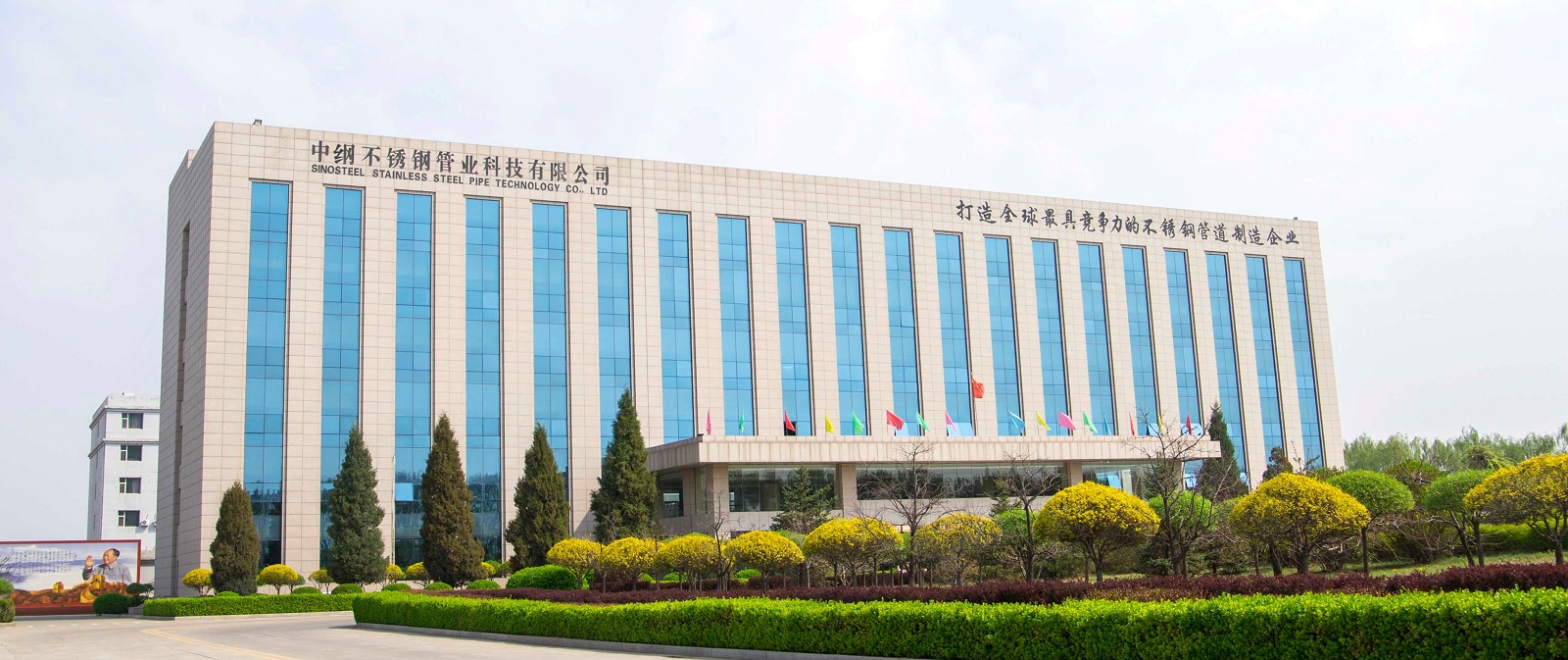 Sinosteel Stainless Steel Pipe Technology (Shanxi) Co., Ltd. A national high-tech enterprise dedicated to the research, development, production, and sales of industrial stainless steel and special alloy pipes, pipe fittings, composite pipes, and other pipeline series products. https://www.sinosteel-pipe.com/en/aboutus.html |
| json metadata | {"tags":["stainless","steel","pipe"],"image":["https://cdn.steemitimages.com/DQmdPHVkEoasNtFvr97XFVVU8ijYQ2fUggC8SpLpYPY8Kaj/5397145633951198_2024_05_39675cdb5edf0591dbb3018c0522a95f.jpeg"],"links":["https://www.sinosteel-pipe.com/en/aboutus.html"],"app":"steemit/0.2","format":"markdown"} |
| Transaction Info | Block #91785079/Trx e52cbf6d3a5d24df6297555ad22ac7fcf3964a7b |
View Raw JSON Data
{
"trx_id": "e52cbf6d3a5d24df6297555ad22ac7fcf3964a7b",
"block": 91785079,
"trx_in_block": 4,
"op_in_trx": 0,
"virtual_op": 0,
"timestamp": "2025-01-03T01:51:36",
"op": [
"comment",
{
"parent_author": "",
"parent_permlink": "stainless",
"author": "sinosteelpipe",
"permlink": "sinosteel-stainless-steel-pipe",
"title": "Sinosteel Stainless Steel Pipe",
"body": "\n\nSinosteel Stainless Steel Pipe Technology (Shanxi) Co., Ltd.\n\nA national high-tech enterprise dedicated to the research, development, production, and sales of industrial stainless steel and special alloy pipes, pipe fittings, composite pipes, and other pipeline series products.\nhttps://www.sinosteel-pipe.com/en/aboutus.html",
"json_metadata": "{\"tags\":[\"stainless\",\"steel\",\"pipe\"],\"image\":[\"https://cdn.steemitimages.com/DQmdPHVkEoasNtFvr97XFVVU8ijYQ2fUggC8SpLpYPY8Kaj/5397145633951198_2024_05_39675cdb5edf0591dbb3018c0522a95f.jpeg\"],\"links\":[\"https://www.sinosteel-pipe.com/en/aboutus.html\"],\"app\":\"steemit/0.2\",\"format\":\"markdown\"}"
}
]
}2025/01/03 01:45:39
2025/01/03 01:45:39
| voter | spam-filter |
| author | sinosteelpipe |
| permlink | sinosteel-stainless-steel-pipe-technology-shanxi-co-ltd |
| weight | 100 (1.00%) |
| Transaction Info | Block #91784962/Trx 1ce13310cc6d3b79ffbe3daad5a11501ac02153a |
View Raw JSON Data
{
  "trx_id": "1ce13310cc6d3b79ffbe3daad5a11501ac02153a",
  "block": 91784962,
  "trx_in_block": 0,
  "op_in_trx": 0,
  "virtual_op": 0,
  "timestamp": "2025-01-03T01:45:39",
  "op": [
    "vote",
    {
      "voter": "spam-filter",
      "author": "sinosteelpipe",
      "permlink": "sinosteel-stainless-steel-pipe-technology-shanxi-co-ltd",
      "weight": 100
    }
  ]
}2025/01/03 01:40:36
2025/01/03 01:40:36
| voter | steem.history |
| author | sinosteelpipe |
| permlink | sinosteel-stainless-steel-pipe-technology-shanxi-co-ltd |
| weight | 2000 (20.00%) |
| Transaction Info | Block #91784861/Trx 87d1f22f5f55666037ec871c9589c9c1b39602e2 |
View Raw JSON Data
{
  "trx_id": "87d1f22f5f55666037ec871c9589c9c1b39602e2",
  "block": 91784861,
  "trx_in_block": 1,
  "op_in_trx": 0,
  "virtual_op": 0,
  "timestamp": "2025-01-03T01:40:36",
  "op": [
    "vote",
    {
      "voter": "steem.history",
      "author": "sinosteelpipe",
      "permlink": "sinosteel-stainless-steel-pipe-technology-shanxi-co-ltd",
      "weight": 2000
    }
  ]
}2025/01/03 01:40:33
2025/01/03 01:40:33
| parent author | sinosteelpipe |
| parent permlink | sinosteel-stainless-steel-pipe-technology-shanxi-co-ltd |
| author | steem.history |
| permlink | re-sinosteelpipe-sinosteel-stainless-steel-pipe-technology-shanxi-co-ltd-20250103t014033103z |
| title | |
| body | Hello welcome to Steemit world! I'm @steem.history, who is steem witness. This is a recommended post for you.[Newcomers Guide](https://steemitdev.com/guide/@steemitblog/steemit-a-guide-for-newcomers) and [The Complete Steemit Etiquette Guide (Revision 2.0)](https://steemit.com/steem/@steem.history/the-complete-steemit-etiquette-guide-revision-20-homage-1598425779) and, recommended community [Newcomers Community](https://steemit.com/trending/hive-172186) I wish you luck to your steemit activities.<center> https://cdn.steemitimages.com/DQmXHwdcNs5VPcBft1iSosPdHLpBNBfjuG84g3ffWhMw5JQ/image.png <sub>(The bots avatar has been created using https://robohash.org/)</sub> @steem.history ### My witness activity - [My aspiration for STEEM witness](https://steemit.com/hive-185836/@steem.history/my-aspiration-for-steem-witness-1601280729) - Provides information on Steem. [Reference](https://steemit.com/trending/hive-130095) - Supporting the Steem project. [SPUD4STEEM project](https://steemit.com/trending/spud4steem) - Supporting the community. ### My featured posts - [The Complete Steemit Etiquette Guide (Revision 2.0) -Homage](https://steemit.com/steem/@steem.history/the-complete-steemit-etiquette-guide-revision-20-homage-1598425779) [](https://steemlogin.com/sign/account-witness-vote?witness=steem.history&approve=1) <sub>please click it!</sub>  <sub>(Go to https://steemit.com/~witnesses and type fbslo at the bottom of the page)</sub> </center> |
| json metadata | {"tsgs":["hello"]} |
| Transaction Info | Block #91784860/Trx f336a0be3367c727cd89abc56c5f6abc6378eabd |
View Raw JSON Data
{
"trx_id": "f336a0be3367c727cd89abc56c5f6abc6378eabd",
"block": 91784860,
"trx_in_block": 1,
"op_in_trx": 0,
"virtual_op": 0,
"timestamp": "2025-01-03T01:40:33",
"op": [
"comment",
{
"parent_author": "sinosteelpipe",
"parent_permlink": "sinosteel-stainless-steel-pipe-technology-shanxi-co-ltd",
"author": "steem.history",
"permlink": "re-sinosteelpipe-sinosteel-stainless-steel-pipe-technology-shanxi-co-ltd-20250103t014033103z",
"title": "",
"body": "Hello welcome to Steemit world! \n I'm @steem.history, who is steem witness. \n This is a recommended post for you.[Newcomers Guide](https://steemitdev.com/guide/@steemitblog/steemit-a-guide-for-newcomers) and [The Complete Steemit Etiquette Guide (Revision 2.0)](https://steemit.com/steem/@steem.history/the-complete-steemit-etiquette-guide-revision-20-homage-1598425779) and, recommended community [Newcomers Community](https://steemit.com/trending/hive-172186) \n I wish you luck to your steemit activities.<center> \n \n \n https://cdn.steemitimages.com/DQmXHwdcNs5VPcBft1iSosPdHLpBNBfjuG84g3ffWhMw5JQ/image.png \n <sub>(The bots avatar has been created using https://robohash.org/)</sub> \n @steem.history \n \n ### My witness activity \n - [My aspiration for STEEM witness](https://steemit.com/hive-185836/@steem.history/my-aspiration-for-steem-witness-1601280729) \n - Provides information on Steem. \n [Reference](https://steemit.com/trending/hive-130095) \n - Supporting the Steem project. \n [SPUD4STEEM project](https://steemit.com/trending/spud4steem) \n - Supporting the community. \n ### My featured posts \n - [The Complete Steemit Etiquette Guide (Revision 2.0) -Homage](https://steemit.com/steem/@steem.history/the-complete-steemit-etiquette-guide-revision-20-homage-1598425779) \n \n [](https://steemlogin.com/sign/account-witness-vote?witness=steem.history&approve=1) \n <sub>please click it!</sub> \n \n  \n <sub>(Go to https://steemit.com/~witnesses and type fbslo at the bottom of the page)</sub> \n \n </center>",
"json_metadata": "{\"tsgs\":[\"hello\"]}"
}
]
}sinosteelpipepublished a new post: sinosteel-stainless-steel-pipe-technology-shanxi-co-ltd2025/01/03 01:40:27
sinosteelpipepublished a new post: sinosteel-stainless-steel-pipe-technology-shanxi-co-ltd
2025/01/03 01:40:27
| parent author | |
| parent permlink | stainless |
| author | sinosteelpipe |
| permlink | sinosteel-stainless-steel-pipe-technology-shanxi-co-ltd |
| title | Sinosteel Stainless Steel Pipe Technology (Shanxi) Co., Ltd. |
| body | Sinosteel Stainless Steel Pipe Technology (Shanxi) Co., Ltd. is the manufacturer of Stainless Steel Pipe and Special Alloy Pipe. Steel pipes with an outer diameter from 8mm to 3600mm, with wall thicknesses from 0.2mm to 120mm. Factory covering an area of 333,000 square meters. Production capacity reaches 200,000 tons. Material: Austenitic stainless steel, Super Austenitic Stainless Steel,Duplex Stainless Steel, Nickel Based Alloy, Titanium and Titanium Alloy, Copper and Copper Alloy, Bimetal Composite. Sinosteel Stainless Steel Pipe Technology (Shanxi) Co., Ltd. has successively obtained ISO9001 Quality Management System Certification, GJB9001C Military Quality Management System Certification, ISO14001 Environmental Management System Certification, ISO45001 Occupational Health And Safety Management System Certification and the Manufacture License of Special Equipment of pressure piping component, Shanxi province Hygienic License for Drinking Water Hygiene and Safety Product, PED, European Pressure Equipment Directive, API 5LC / API 5LD certification of American Petroleum Institute, CU-TR (EAC) Certification and several national classification societies such as CCS, BV, DNV and LR. |
| json metadata | {"tags":["stainless","steel","pipe"],"app":"steemit/0.2","format":"markdown"} |
| Transaction Info | Block #91784858/Trx 530345aaecccd35d3c880b8ee06bcb0b5cba88e3 |
View Raw JSON Data
{
  "trx_id": "530345aaecccd35d3c880b8ee06bcb0b5cba88e3",
  "block": 91784858,
  "trx_in_block": 0,
  "op_in_trx": 0,
  "virtual_op": 0,
  "timestamp": "2025-01-03T01:40:27",
  "op": [
    "comment",
    {
      "parent_author": "",
      "parent_permlink": "stainless",
      "author": "sinosteelpipe",
      "permlink": "sinosteel-stainless-steel-pipe-technology-shanxi-co-ltd",
      "title": "Sinosteel Stainless Steel Pipe Technology (Shanxi) Co., Ltd.",
      "body": "Sinosteel Stainless Steel Pipe Technology (Shanxi) Co., Ltd. is the manufacturer of Stainless Steel Pipe and Special Alloy Pipe. Steel pipes with an outer diameter from 8mm to 3600mm, with wall thicknesses from 0.2mm to 120mm. Factory covering an area of 333,000 square meters. Production capacity reaches 200,000 tons.\nMaterial: Austenitic stainless steel, Super Austenitic Stainless Steel,Duplex Stainless Steel, Nickel Based Alloy, Titanium and Titanium Alloy, Copper and Copper Alloy, Bimetal Composite.\nSinosteel Stainless Steel Pipe Technology (Shanxi) Co., Ltd. has successively obtained ISO9001 Quality Management System Certification, GJB9001C Military Quality Management System Certification, ISO14001 Environmental Management System Certification, ISO45001 Occupational Health And Safety Management System Certification and the Manufacture License of Special Equipment of pressure piping component, Shanxi province Hygienic License for Drinking Water Hygiene and Safety Product, PED, European Pressure Equipment Directive, API 5LC / API 5LD certification of American Petroleum Institute, CU-TR (EAC) Certification and several national classification societies such as CCS, BV, DNV and LR.",
      "json_metadata": "{\"tags\":[\"stainless\",\"steel\",\"pipe\"],\"app\":\"steemit/0.2\",\"format\":\"markdown\"}"
    }
  ]
}steemdelegated 10.711 SP to @sinosteelpipe2025/01/03 01:30:33
steemdelegated 10.711 SP to @sinosteelpipe
2025/01/03 01:30:33
| delegator | steem |
| delegatee | sinosteelpipe |
| vesting shares | 17419.000000 VESTS |
| Transaction Info | Block #91784660/Trx b94881f95fea092752a45a249241cce6ea65b076 |
View Raw JSON Data
{
  "trx_id": "b94881f95fea092752a45a249241cce6ea65b076",
  "block": 91784660,
  "trx_in_block": 0,
  "op_in_trx": 0,
  "virtual_op": 0,
  "timestamp": "2025-01-03T01:30:33",
  "op": [
    "delegate_vesting_shares",
    {
      "delegator": "steem",
      "delegatee": "sinosteelpipe",
      "vesting_shares": "17419.000000 VESTS"
    }
  ]
}steemcurator01created a new account: @sinosteelpipe2025/01/03 01:30:30
steemcurator01created a new account: @sinosteelpipe
2025/01/03 01:30:30
| creator | steemcurator01 |
| new account name | sinosteelpipe |
| owner | {"weight_threshold":1,"account_auths":[],"key_auths":[["STM6vF1VpvqC4eAuygtYBNKe49sQiRSThGdZcLMLg8ETA57j8WCsm",1]]} |
| active | {"weight_threshold":1,"account_auths":[],"key_auths":[["STM7ixxPbFiMHmZUp4x8syht23L6CQvzeMhPLWH6XFFQhBHoWCJ4x",1]]} |
| posting | {"weight_threshold":1,"account_auths":[],"key_auths":[["STM7kQ92u8iU1GEM8cnntX1ep7EoSxJxBfASJDSvBXuEQ9kQMJDjS",1]]} |
| memo key | STM8UstPy4uw5nyURqmXBFDzCUDoJoUyU4YjiiRLZwX3rmUUdj69f |
| json metadata | {} |
| extensions | [] |
| Transaction Info | Block #91784659/Trx 20030e0209c1b5045444d3ae9ad24b59999803c1 |
View Raw JSON Data
{
  "trx_id": "20030e0209c1b5045444d3ae9ad24b59999803c1",
  "block": 91784659,
  "trx_in_block": 3,
  "op_in_trx": 0,
  "virtual_op": 0,
  "timestamp": "2025-01-03T01:30:30",
  "op": [
    "create_claimed_account",
    {
      "creator": "steemcurator01",
      "new_account_name": "sinosteelpipe",
      "owner": {
        "weight_threshold": 1,
        "account_auths": [],
        "key_auths": [
          [
            "STM6vF1VpvqC4eAuygtYBNKe49sQiRSThGdZcLMLg8ETA57j8WCsm",
            1
          ]
        ]
      },
      "active": {
        "weight_threshold": 1,
        "account_auths": [],
        "key_auths": [
          [
            "STM7ixxPbFiMHmZUp4x8syht23L6CQvzeMhPLWH6XFFQhBHoWCJ4x",
            1
          ]
        ]
      },
      "posting": {
        "weight_threshold": 1,
        "account_auths": [],
        "key_auths": [
          [
            "STM7kQ92u8iU1GEM8cnntX1ep7EoSxJxBfASJDSvBXuEQ9kQMJDjS",
            1
          ]
        ]
      },
      "memo_key": "STM8UstPy4uw5nyURqmXBFDzCUDoJoUyU4YjiiRLZwX3rmUUdj69f",
      "json_metadata": "{}",
      "extensions": []
    }
  ]
}Manabar
Voting Power100.00%
Downvote Power100.00%
Resource Credits0.00%
Reputation Progress64.66%
{
  "voting_manabar": {
    "current_mana": "5443085758",
    "last_update_time": 1775870826
  },
  "downvote_manabar": {
    "current_mana": 1360771439,
    "last_update_time": 1775870826
  },
  "rc_account": null
}
Account Metadata
| POSTING JSON METADATA | |
| profile | {"profile_image":"https://cdn.steemitimages.com/DQmYr8ZU5QGvnjshWKpHDkmUc2tYj4yc8LHvghLY5jToC8s/R7QxceNwE8_%E5%89%AF%E6%9C%AC.png","cover_image":"https://cdn.steemitimages.com/DQmdPHVkEoasNtFvr97XFVVU8ijYQ2fUggC8SpLpYPY8Kaj/5397145633951198_2024_05_39675cdb5edf0591dbb3018c0522a95f.jpeg","name":"Sinosteelpipe","about":"Sinosteel Stainless Steel Pipe Technology (Shanxi) Co., Ltd. is the manufacturer of Stainless Steel Pipe and Special Alloy Pipe. ","location":"china","website":"https://www.sinosteel-pipe.com/en","version":2} |
| JSON METADATA | |
| None | |
{
  "posting_json_metadata": {
    "profile": {
      "profile_image": "https://cdn.steemitimages.com/DQmYr8ZU5QGvnjshWKpHDkmUc2tYj4yc8LHvghLY5jToC8s/R7QxceNwE8_%E5%89%AF%E6%9C%AC.png",
      "cover_image": "https://cdn.steemitimages.com/DQmdPHVkEoasNtFvr97XFVVU8ijYQ2fUggC8SpLpYPY8Kaj/5397145633951198_2024_05_39675cdb5edf0591dbb3018c0522a95f.jpeg",
      "name": "Sinosteelpipe",
      "about": "Sinosteel Stainless Steel Pipe Technology (Shanxi) Co., Ltd. is the manufacturer of Stainless Steel Pipe and Special Alloy Pipe. ",
      "location": "china",
      "website": "https://www.sinosteel-pipe.com/en",
      "version": 2
    }
  },
  "json_metadata": {}
}
Auth Keys
Owner
Single Signature
Public Keys
STM6vF1VpvqC4eAuygtYBNKe49sQiRSThGdZcLMLg8ETA57j8WCsm1/1
Active
Single Signature
Public Keys
STM7ixxPbFiMHmZUp4x8syht23L6CQvzeMhPLWH6XFFQhBHoWCJ4x1/1
Posting
Single Signature
Public Keys
STM7kQ92u8iU1GEM8cnntX1ep7EoSxJxBfASJDSvBXuEQ9kQMJDjS1/1
Memo
STM8UstPy4uw5nyURqmXBFDzCUDoJoUyU4YjiiRLZwX3rmUUdj69f
{
  "owner": {
    "weight_threshold": 1,
    "account_auths": [],
    "key_auths": [
      [
        "STM6vF1VpvqC4eAuygtYBNKe49sQiRSThGdZcLMLg8ETA57j8WCsm",
        1
      ]
    ]
  },
  "active": {
    "weight_threshold": 1,
    "account_auths": [],
    "key_auths": [
      [
        "STM7ixxPbFiMHmZUp4x8syht23L6CQvzeMhPLWH6XFFQhBHoWCJ4x",
        1
      ]
    ]
  },
  "posting": {
    "weight_threshold": 1,
    "account_auths": [],
    "key_auths": [
      [
        "STM7kQ92u8iU1GEM8cnntX1ep7EoSxJxBfASJDSvBXuEQ9kQMJDjS",
        1
      ]
    ]
  },
  "memo": "STM8UstPy4uw5nyURqmXBFDzCUDoJoUyU4YjiiRLZwX3rmUUdj69f"
}
Witness Votes
0 / 30
No active witness votes.
[]